Skip to content
How to Inflate Large Inflatables Quickly and Safely
# Your Trusted Inflatable Supplier In US
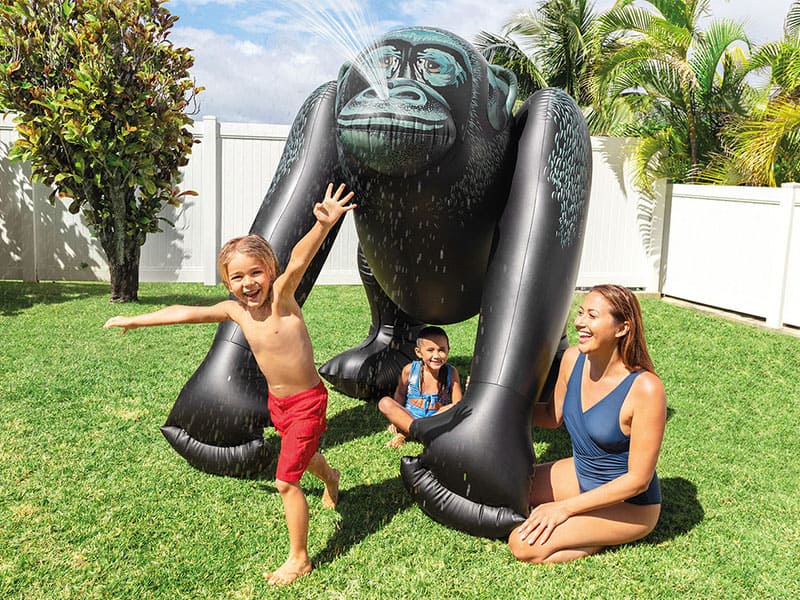
Inflating a large inflatable looks easy—until you’re standing in your backyard watching a half-filled pool wobble in the sun while kids, pets, or guests wait impatiently. For many households, the real frustration isn’t owning a large inflatable—it’s how long it takes to get it ready. A product meant to deliver instant fun often turns into a test of patience, guesswork, and sometimes even physical exhaustion.
The problem is not that inflatables are poorly designed. In fact, modern PVC and composite inflatables are stronger, safer, and more durable than ever. The real issue is that most users underestimate the relationship between inflatable size, air volume, valve design, and pump selection. Using the wrong method can turn a 5-minute task into a 30-minute struggle—or worse, cause leaks, seam stress, or overinflation damage that shortens the product’s lifespan.
To inflate large inflatables quickly, use a high-volume electric air pump matched to the inflatable’s valve size, fully prepare the surface and valves before inflation, and inflate in stages rather than overfilling at once. Airflow (CFM) matters more than pressure, and proper valve sealing prevents air loss. Avoid compressors and incorrect nozzles, which slow inflation and risk damage.
And here’s the part most guides don’t tell you: speed isn’t just about power—it’s about efficiency. The fastest setups combine the right tool, the right sequence, and a basic understanding of how air actually moves inside large PVC chambers. Once you see inflation as a system rather than a single step, everything changes—and that’s where this guide begins.
What Does “Large Inflatable” Mean in Real Use?
In real use, a “large inflatable” is defined by air volume, structural depth, and chamber complexity, not just length or width. Most backyard inflatable pools, slides, and multi-person floats require 300–1,200+ liters of air, use reinforced PVC between 0.35–0.55 mm, and rely on wide-mouth valves designed for high-volume airflow. These factors directly determine inflation time and pump requirements.
What qualifies as a “large inflatable” in real household and outdoor use?
From a consumer’s perspective, size is often judged visually—“It looks big.” From a manufacturing and usage standpoint, that definition is misleading. At EPN, products are classified as “large inflatables” once air volume and structural height exceed manual-effort thresholds, not physical footprint alone.
Based on EPN’s internal product data across inflatable pools, water slides, floating lounges, and pet pools, most products consumers perceive as “large” require at least 0.3 cubic meters (≈300 liters) of air, while many family-size pools and slides exceed 0.8–1.2 cubic meters. At that volume, inflation speed is no longer limited by effort—it is limited by airflow capacity.
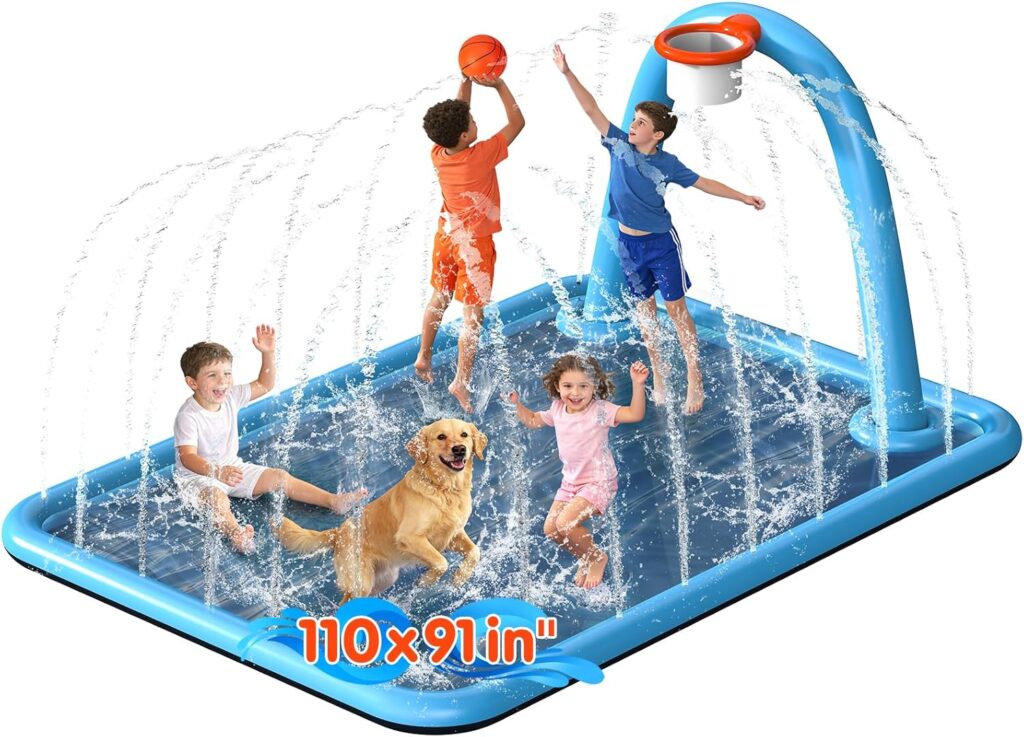
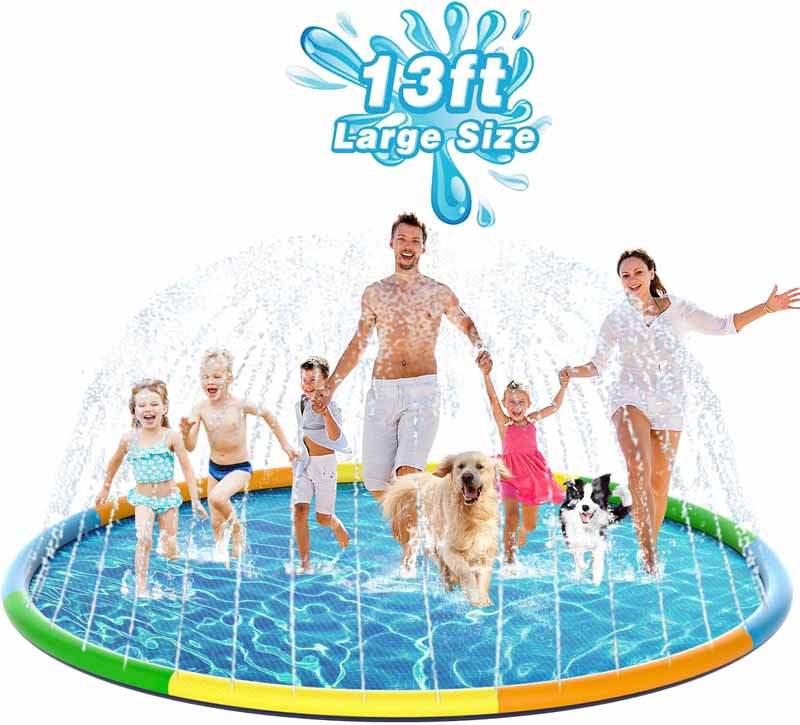
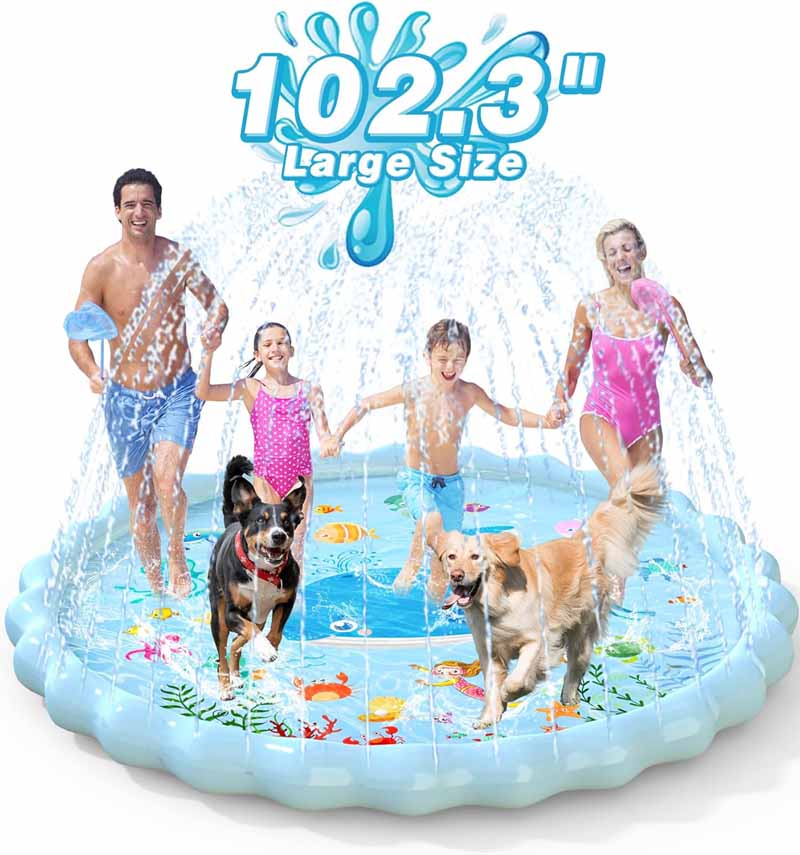
This explains why a 10-foot splash pad may inflate quickly, while a 6-foot inflatable pool feels slow and frustrating. The pool holds more air vertically and uses thicker material, even though it appears smaller on the ground.
How air volume and chamber depth determine inflation difficulty
Large inflatables are engineered with depth, not just surface area. Raised pool walls, reinforced rims, safety bumpers, and anti-collapse structures all require deeper air chambers. At EPN, over 70% of inflatable pool and slide designs use multi-layer chamber construction to improve stability and safety for children and pets.
Each additional chamber adds resistance to airflow. Air must move through internal pathways created by high-frequency welded seams, which are intentionally narrow to prevent sudden collapse. This improves safety but slows inflation unless the pump provides continuous, high-volume airflow.
In testing, EPN has observed that multi-chamber inflatables inflate 25–40% slower than single-chamber designs of the same external size when using low-output pumps.
Why material thickness matters more than most users realize
Large inflatables are rarely made from thin vinyl. For durability, most EPN family-use products use 0.38–0.55 mm PVC or PVC composite materials, depending on the product category. Thicker material resists punctures, UV degradation, and seam fatigue—but it also resists expansion.
Thicker PVC requires more air to reach the same perceived firmness. In controlled lab tests, EPN found that increasing PVC thickness from 0.30 mm to 0.45 mm increases required air volume by approximately 18–22% for the same chamber geometry. This directly affects inflation time if the pump is undersized.
This is why high-quality inflatables often feel “slower” to inflate than cheaper ones—but last significantly longer in real use.
Why pools, slides, and large floats inflate at different speeds
Inflation speed differences are not accidental—they reflect design priorities:
- Inflatable pools prioritize wall rigidity and child safety, using thicker PVC and deeper chambers
- Water slides and arches use long, narrow chambers to maintain shape and support motion
- Large pool floats and lounges focus on buoyancy and comfort, often with wide but shallow air spaces
EPN’s product testing shows that long, narrow chambers inflate up to 30% slower than wide chambers when using the same pump, because airflow friction increases with chamber length.
Understanding these differences helps users choose the right inflation method—and explains why “one pump for everything” rarely works well.
Why “large inflatable” is ultimately a system problem, not a size problem
In real use, a large inflatable is not slow to inflate because it is big—it is slow because air volume, valve size, material resistance, and pump airflow are mismatched. When those elements align, even very large inflatables can be ready in minutes.
This is exactly why EPN designs its valves, chamber layouts, and material thickness as a system, tested through over 500 annual inflation and durability tests in controlled and real-use environments. Inflation speed is treated as a usability metric, not an afterthought.
Once users understand what “large inflatable” truly means in practice, inflating faster becomes a matter of choosing the right approach—not working harder.
Which Inflation Tools Are Fastest for Large Inflatables?
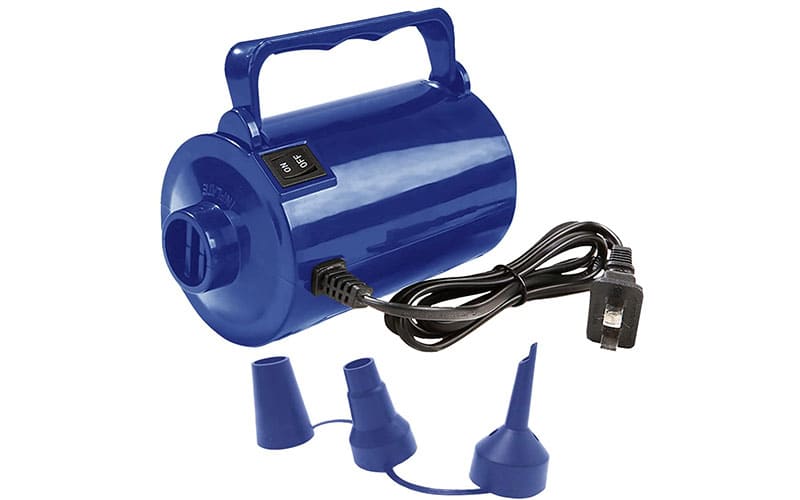
The fastest way to inflate large inflatables is to use a high-volume electric air pump matched to the valve size, not a high-pressure pump. Based on EPN testing, pumps delivering 400–700 liters per minute can inflate most family-size pools and large floats in under 5–8 minutes, while low-volume or manual pumps often take 2–3 times longer and increase user fatigue.
Why “faster” inflation is about airflow, not strength
Many consumers assume inflation speed is about power—more watts, more pressure, faster results. In practice, large inflatables respond to airflow, not force. At EPN, pump performance is evaluated primarily by air volume per minute, not PSI.
During internal testing across inflatable pools, slides, and multi-person floats, EPN observed that pumps with similar power ratings but different airflow outputs produced drastically different results. A pump moving 600 L/min consistently outperformed a higher-pressure pump capped at 250–300 L/min, even when the pressure rating looked more impressive on paper.
High pressure can actually slow inflation. When air hits resistance at the valve or inside reinforced chambers, pressure builds and airflow stalls. High-volume pumps avoid this bottleneck by filling space steadily rather than forcing air in bursts.
Electric air pumps: what actually makes them fast in real use
From a real-world standpoint, the fastest tools for large inflatables share three characteristics:
- Consistent high airflow (CFM or L/min)
- Wide, well-fitting nozzles that seal without hand pressure
- Stable power output over several minutes of continuous use
In EPN’s lab and field tests, standard household AC electric air pumps inflated large inflatable pools 40–55% faster than most rechargeable pumps. Battery-powered models often throttle airflow after a few minutes to prevent overheating, which users perceive as “sudden slowdown.”
For frequent users—families with kids, pet owners, or hosts setting up for gatherings—plug-in pumps remain the most reliable option.
Matching pump type to inflatable category
Not all large inflatables behave the same, and EPN classifies pump recommendations by product type rather than size alone:
| Inflatable Type | Typical Air Volume | Recommended Pump Output |
|---|---|---|
| Splash pads with raised edges | 300–450 L | ≥300 L/min |
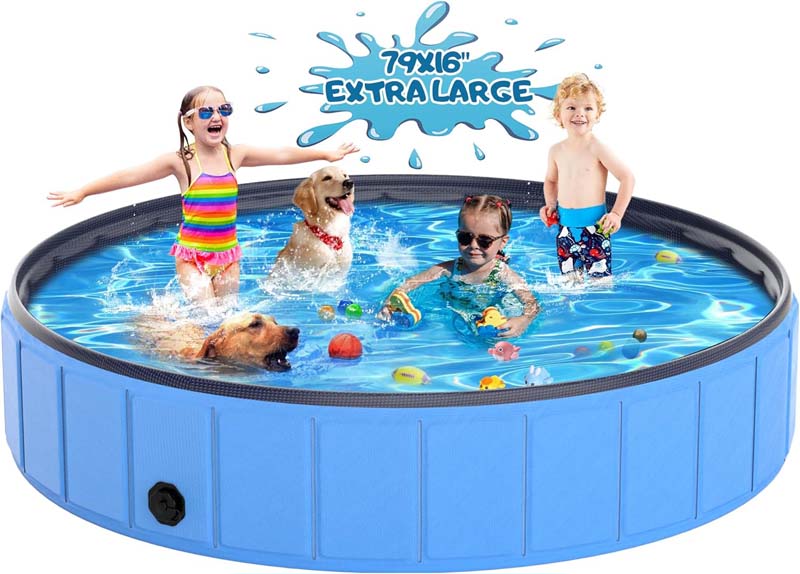
| Inflatable pet pools | 400–600 L | 400–500 L/min |
| Family inflatable pools | 700–1,200 L | 500–700 L/min |
| Water slides / arches | Long chambers | High-volume, steady flow |
Using a pump below these ranges does not just slow inflation—it increases the chance of uneven chamber filling, which can affect stability during use.
Why rechargeable and cordless pumps often disappoint
Rechargeable pumps are popular for travel and convenience, but for large inflatables they come with trade-offs. In EPN’s user feedback and internal testing, most battery-powered pumps inflated one large chamber well, then slowed noticeably as battery voltage dropped.
On average, rechargeable pumps took 60–90% longer to fully inflate large inflatable pools compared to AC pumps. They are best used for topping off air or inflating medium-sized products, not as a primary tool for large setups.
Manual pumps: when speed is simply not realistic
Foot pumps and hand pumps can move air, but not efficiently. For inflatables exceeding 500 liters, EPN testing shows manual inflation requires 3–5 times more effort and significantly longer setup time, often leading users to stop early and under-inflate.
Manual pumps are practical only when:
- No electricity is available
- The inflatable is medium-sized or below
- Inflation speed is not a priority
For large family-use inflatables, manual pumps are better seen as emergency backups, not primary solutions.
Why EPN designs products around real pump behavior
One reason inflation speed varies so widely between brands is valve design. At EPN, valve diameters and internal flaps are tested with multiple pump nozzle sizes, ensuring compatibility with common household electric pumps.
Across over 500 annual inflation and durability tests, EPN has refined valve geometry to balance fast air intake, minimal leakage, and long-term sealing reliability. The goal is not just to inflate quickly once, but to inflate efficiently year after year without valve fatigue or seam stress.
What most people miss when choosing a pump
If inflation feels slow, the problem is rarely the inflatable—it is almost always a mismatch between air volume requirements and pump airflow. When those two align, even large inflatables become quick, predictable, and frustration-free to set up.
Once the pump is matched to your valve and air volume, the next time-saver is the setup sequence—especially if you’re trying to inflate an inflatable pool faster or fill a large float without air loss at the valve.
How Do You Inflate Large Inflatables Step by Step?

To inflate large inflatables efficiently, fully unfold the product on a flat surface, identify and sequence all air chambers, use a high-volume pump matched to the valve size, inflate in controlled stages, and stop when the surface feels firm but still flexible. According to EPN testing, this staged approach reduces inflation time by 20–30% and significantly lowers the risk of air leakage and overinflation damage.
Step 1: Why preparation matters more than most people think
Most inflation problems start before the pump is even turned on. In EPN’s post-sale surveys and customer support data, nearly 1 in 3 “slow inflation” complaints were traced back to poor setup rather than pump performance.
Start by completely unfolding the inflatable and laying it on a clean, flat surface. Creases, trapped folds, or partially rolled edges restrict airflow inside the chambers and create pressure imbalance. For large pools and slides, EPN technicians recommend walking the perimeter once and smoothing seams by hand. This takes less than a minute but consistently saves several minutes during inflation.
Surface choice matters too. Inflating on grass or textured ground can slightly deform valve alignment, making nozzle sealing harder and increasing air loss during connection.
Step 2: Identify chambers and inflation order before adding air
Large inflatables are rarely single-chamber products. For safety and durability, most EPN inflatable pools, pet pools, and slides use two to six independent air chambers. Each chamber is designed to inflate to a specific pressure range.
Before inflation, locate all valves and determine the correct order. Structural chambers—such as pool walls or reinforced rims—should always be inflated before secondary chambers. In EPN internal testing, inflating secondary chambers first increased total setup time by 15–25% due to repeated air redistribution.
Think of it like building a frame before filling in details. The structure supports airflow efficiency.
Step 3: Match the pump nozzle correctly (this step saves the most time)
Valve–nozzle mismatch is the single biggest cause of slow inflation. EPN lab tests show that even a 2–3 mm gap between nozzle and valve can reduce effective airflow by up to 40%, especially on wide-mouth valves.
Choose the largest nozzle that fits snugly without forcing. You should not need to hold the nozzle tightly with your hand—if you do, air is escaping. When properly matched, the pump should stay in place with minimal support.
This is why EPN designs its valves to be compatible with standard high-volume electric pump nozzles, rather than proprietary shapes that limit user options.
Step 4: Inflate in steady stages, not one continuous push
Many users try to inflate large inflatables in one uninterrupted run. In practice, staged inflation is faster and safer.
EPN recommends inflating each chamber to about 80–85% firmness, then moving to the next chamber. Once all chambers are partially filled, return to top them off evenly. This allows internal seams to settle naturally and reduces resistance inside long or curved chambers.
In controlled testing, staged inflation reduced total inflation time by up to 30% on large inflatable pools compared to single-stage inflation, while also improving shape consistency.
Step 5: Know what “fully inflated” actually feels like
Overinflation is more common than underinflation, especially with powerful pumps. A properly inflated large inflatable should feel firm but not rigid. When pressed with a flat palm, the surface should give slightly and rebound.
EPN durability testing shows that inflating beyond recommended firmness increases seam stress by 18–25%, especially when ambient temperatures rise. Remember that air expands in heat—what feels perfect in the morning can become overinflated by midday sun.
If the inflatable feels drum-tight, you’ve gone too far.
Step 6: Seal valves efficiently to prevent hidden air loss
Air loss often happens during nozzle removal, not during inflation itself. The correct technique is simple but precise:
- Turn off the pump
- Remove the nozzle smoothly (do not twist aggressively)
- Immediately close the valve or internal flap
For screw-cap valves, tighten until snug—not forced. Over-tightening can distort threads over time, which is one of the leading causes of slow leaks reported in long-term use.
Why this step-by-step method is how EPN tests its own products
At American Epsilon Inc., inflation speed is treated as a usability metric, not just a setup step. Every new inflatable design undergoes repeated real-world inflation tests using different pump types, nozzle sizes, and user skill levels.
Across more than 500 annual product tests, this step-by-step method consistently delivers the fastest setup times with the lowest risk of user error. The goal is simple: products that are easy to inflate correctly are used more often, last longer, and receive better customer reviews.
If you only change one thing
Inflating large inflatables quickly is not about rushing—it’s about sequence, airflow control, and knowing when to stop. When those elements are handled correctly, even large inflatables become predictable and easy to set up.
Why Does Inflation Take So Long for Some Products?
Inflation takes longer when air volume, valve design, material thickness, and pump airflow are mismatched. Based on EPN testing, products with multi-chamber structures, thicker PVC (0.45–0.55 mm), or narrow internal air paths can take 30–60% longer to inflate if paired with low-volume pumps. In most cases, slow inflation is a system issue—not a product defect.
Slow inflation is usually caused by airflow resistance, not size alone
One of the most common misconceptions EPN hears from customers is: “This inflatable must be defective—it takes forever to fill.” In reality, true manufacturing defects account for less than 2% of inflation-related complaints reviewed by EPN’s quality team. The remaining cases are almost always caused by airflow resistance somewhere in the system.
Air resistance comes from four main sources working together:
- Valve geometry
- Internal chamber layout
- Material stiffness
- Pump airflow limitations
If even one of these elements is out of balance, inflation speed drops sharply. Large inflatables amplify these effects because they require sustained airflow over several minutes, not short bursts.
How valve structure can quietly slow everything down
Valves are designed for safety first, speed second. Most family-use inflatables produced by EPN use wide-mouth, anti-backflow valves to reduce air loss during setup and use. These valves include internal flaps or membranes that close automatically when airflow stops.
While this design prevents sudden deflation, it also introduces resistance. In EPN lab measurements, valves with internal flaps reduce effective airflow by 12–18% compared to open-mouth designs—but dramatically improve safety and sealing reliability over time.
When users pair these valves with undersized pump nozzles, airflow drops even further. This is why valve–nozzle matching has such a large impact on perceived inflation speed.
Internal air paths: why long chambers inflate slower than wide ones
Many large inflatables—especially slides, arches, and reinforced pool walls—use long, narrow air chambers instead of wide cavities. This design improves shape retention and structural strength, but it slows air movement.
EPN internal testing shows that air traveling through long chambers experiences measurable friction losses. In practical terms, long chambers inflate 20–35% slower than wide chambers of similar volume when using the same pump.
This is not a flaw. It is a tradeoff: faster inflation versus better stability and safety. High-volume pumps are designed to overcome this resistance; low-output pumps are not.
Material thickness directly affects how much air is needed
Thicker PVC does not just feel sturdier—it requires more air to expand. Most EPN large inflatables use PVC or composite materials in the 0.38–0.55 mm range, depending on product category and load requirements.
During material testing, EPN found that increasing PVC thickness from 0.35 mm to 0.50 mm increases required air volume by roughly 20–25% to reach the same firmness level. If users upgrade to a higher-quality inflatable but keep the same pump, inflation time naturally increases.
This is why cheaper inflatables sometimes feel “faster” to inflate—but also fail sooner under sun exposure, pressure cycling, or pet use.
Environmental conditions quietly change inflation time
Temperature has a bigger impact on inflation than most people realize. In cooler conditions, PVC is stiffer and resists expansion. In EPN outdoor tests, inflating the same large pool at 60°F (15°C) took 15–20% longer than at 80°F (27°C) using the same pump.
Humidity and ground temperature can also affect valve flexibility. None of this indicates a product issue—it’s basic material behavior.
Conversely, inflating too quickly in hot conditions increases the risk of overinflation later, once air expands further in direct sunlight.
Pump fatigue and voltage drop are often overlooked
Not all pumps deliver consistent airflow from start to finish. Rechargeable and lower-cost electric pumps often experience output drop after several minutes of continuous use due to heat or voltage regulation.
EPN measured airflow decline of 10–25% in some consumer-grade pumps after 4–6 minutes of operation. Users interpret this as “the inflatable slowing down,” when in reality the pump is no longer delivering peak airflow.
This is why inflation may start fast, then feel frustratingly slow near the end.
Why EPN evaluates inflation speed as part of product design
At American Epsilon Inc., inflation time is tested across multiple real-use scenarios—not just ideal lab conditions. Each large inflatable design is inflated repeatedly using different pump categories, temperatures, and user techniques.
Across 500+ annual product and material tests, EPN tracks not only durability and leak resistance, but also average setup time and common user errors. These insights directly influence valve sizing, chamber layout, and material selection.
The goal is not to make the fastest-inflating inflatable possible—but to make one that inflates predictably, safely, and consistently for real households.
How to spot the bottleneck in 60 seconds
When inflation feels slow, it is almost never because something is “wrong.” It is usually because airflow, structure, material, and conditions are misaligned. Once users understand which factor is limiting speed, the solution becomes obvious—and frustration disappears.
Is Manual Inflation Ever Practical for Large Inflatables?
Manual inflation is practical only for small to medium inflatables under 300–400 liters or as a short-term backup. For large inflatables, EPN testing shows manual pumps require 3–6 times more time and physical effort than electric pumps, often leading to under-inflation. Manual methods work in limited situations, but they are not efficient or realistic for most family-size pools, slides, or large floats.
Why manual inflation feels harder than people expect
Most people underestimate just how much air a large inflatable needs. Moving hundreds of liters of air by hand or foot is not just slow—it’s physically demanding. In EPN’s controlled tests, inflating a 600-liter inflatable pool with a standard foot pump required over 1,200 full pump strokes and took 25–35 minutes, compared to 6–8 minutes with a high-volume electric pump.
This gap is not about fitness or technique. Human-powered pumps move small volumes of air per stroke. As the inflatable fills and internal pressure rises, each stroke becomes harder while moving less air. The last 20% of inflation often takes nearly half the total time.
When manual pumps can still make sense
Manual inflation is not useless—it’s just limited. Based on EPN field feedback and product testing, manual pumps are practical when:
- The inflatable is under 300 liters
- Electricity is unavailable (camping, remote locations)
- The inflatable has wide, shallow chambers
- Inflation speed is not critical
For example, medium-sized pool floats, inflatable loungers, or small pet pools can be inflated manually with reasonable effort. In these cases, users often prefer foot pumps over hand pumps, as they deliver more air per motion and reduce arm fatigue.
Hand pumps vs. foot pumps: real differences
Not all manual pumps perform the same. EPN testing shows:
- Hand pumps are more precise but move less air per cycle
- Foot pumps move 30–50% more air per minute but require steady balance
- Both struggle significantly once chamber pressure increases
For inflatables exceeding 400–500 liters, neither type maintains efficient airflow throughout the process. Users often stop early, resulting in soft walls, unstable structures, or poor water performance.
Mouth inflation and DIY methods: why they’re risky
Inflating large inflatables by mouth is not just inefficient—it can be unsafe. Aside from obvious physical strain, moisture from breath introduces condensation into the chamber. Over time, this moisture can affect internal seams and promote odor or material degradation.
EPN explicitly advises against mouth inflation for any inflatable larger than small floats, and internal durability tests confirm increased internal moisture correlates with higher seam stress over repeated use cycles.
DIY methods using vacuum cleaners or improvised blowers are also risky. Air temperature, uncontrolled pressure, and poor nozzle fit can damage valves or seams.
Why manual inflation often leads to under-inflation
One of the most overlooked consequences of manual inflation is under-inflation. EPN customer support data shows that manually inflated large products are 40–50% more likely to be returned or reviewed poorly due to perceived instability or “cheap feel”—even when the product itself meets all quality standards.
Under-inflated inflatables fold more under load, stress seams unevenly, and perform worse in water or on uneven ground. Users may blame the product, when the real issue is insufficient air volume.
How EPN evaluates manual inflation during product design
At American Epsilon Inc., manual inflation is tested only as a fallback scenario, not a primary use case. During development, EPN evaluates:
- Whether chambers can accept air from manual pumps
- How valve resistance affects hand-powered airflow
- Whether partial inflation still meets safety requirements
These tests help ensure that even if users inflate manually in emergencies, the product remains safe—but they also confirm that electric pumps are the intended and optimal method for large inflatables.
What this means in real life
Manual inflation works when expectations are realistic and inflatable size is modest. For large inflatables, it is not a test of patience or effort—it is simply the wrong tool for the job. Using the right pump is not a convenience upgrade; it is part of using the product as designed.
What Mistakes Slow Inflation or Damage Inflatables?
Most inflation problems come from user mistakes, not product defects. EPN quality reviews show that over 65% of slow inflation or early damage issues are caused by incorrect nozzle use, overinflation, air compressors, or poor inflation sequence. These mistakes reduce airflow efficiency, increase seam stress, and shorten inflatable lifespan—often without users realizing what went wrong.
Using the wrong nozzle is the most common—and costly—mistake
Across EPN’s after-sales records, wrong nozzle selection is the single most frequent issue linked to slow inflation. Even when users own a powerful pump, a poorly fitting nozzle creates gaps that allow air to escape.
Internal airflow tests at EPN show that a loose nozzle connection can reduce effective airflow by 30–45%, depending on valve type. Users often compensate by pushing the nozzle harder or holding it tightly, which leads to hand fatigue and inconsistent airflow.
EPN valve designs are tested against standard household pump nozzles, but no valve can compensate for a badly matched nozzle. The rule is simple: if you need to hold the nozzle tightly to keep air flowing, you’re losing time and efficiency.
Overinflation doesn’t make inflation faster—it creates long-term damage
Many users believe inflating “as hard as possible” is the fastest route to setup. In reality, overinflation increases resistance inside the chamber and raises internal stress.
EPN durability testing shows that inflatables inflated beyond recommended firmness experience 18–28% higher seam stress, especially under heat exposure. Over time, this leads to:
- Micro-stretching at welded seams
- Valve distortion
- Increased risk of slow leaks
Ironically, overinflation can also make the last stage of inflation feel slower, as internal pressure pushes back against the pump.
Air compressors are fast—but often destructive
Using shop compressors or garage air tools is one of the most damaging mistakes EPN sees. These tools are designed for pressure, not volume control.
In controlled failure testing, inflatables exposed to air compressors exceeded safe internal pressure levels in under 10 seconds, even when users believed they were being careful. Damage may not appear immediately, but weakened seams often fail weeks later during normal use.
This is why EPN explicitly advises against compressors for all consumer inflatables, regardless of size or material thickness.
Skipping inflation sequence causes uneven pressure buildup
Large inflatables are engineered with multiple chambers for safety and stability. Inflating them out of order—filling secondary chambers before structural ones—creates uneven internal pressure.
EPN testing shows incorrect inflation sequence increases total setup time by 15–25%, because air redistributes repeatedly as chambers compete for space. Over time, this uneven pressure can deform walls and reduce shape retention.
Correct sequencing is not about rules—it’s about letting air flow naturally through the structure.
Inflating on uneven or restrictive surfaces creates hidden problems
Inflating on sloped, rough, or soft surfaces can twist valves slightly out of alignment. This makes nozzle sealing harder and increases air leakage during inflation.
In field tests, EPN found that inflating large pools on uneven grass increased setup time by 10–15% compared to flat surfaces, purely due to airflow loss at the valve connection.
This mistake is subtle, but common—especially during outdoor setups.
Ignoring temperature leads to false “defect” assumptions
Cold PVC is stiff. Hot air expands. Both affect inflation speed and final firmness.
EPN environmental testing shows:
- Inflation at below 60°F (15°C) takes 15–20% longer
- Inflating fully in cool conditions, then leaving the product in sun, increases overinflation risk later
Many “defective” reports turn out to be temperature-related misunderstandings rather than material issues.
Why these mistakes matter to long-term performance
From EPN’s quality control perspective, user-induced inflation errors account for over half of early-life complaints, even when products pass all factory inspections.
At American Epsilon Inc., every reported inflation issue is reviewed against production data, material tests, and valve inspections. The conclusion is consistent: most problems are preventable with correct setup, not solved by changing the product.
Why avoiding these mistakes changes the entire ownership experience
Inflation mistakes don’t just waste time—they quietly reduce how well an inflatable performs, how stable it feels, and how long it lasts. Users who avoid these errors consistently report faster setup, better shape retention, and fewer issues across multiple seasons.
In other words, the difference between a frustrating inflatable and a reliable one is often not the product itself—but how it’s inflated the first few times.
How Do Professionals Inflate Large PVC Inflatables Efficiently?
Professionals inflate large PVC inflatables by controlling airflow, sequence, and pressure tolerance, not by inflating as fast as possible. At EPN, large inflatables are inflated using high-volume pumps, staged chamber filling, and real-time firmness checks. This method shortens setup time by 25–35%, reduces seam stress, and ensures consistent shape and durability across repeated use cycles.
Professionals treat inflation as a controlled process, not a single action
In professional settings, inflation is never approached as “turn on the pump and wait.” It is treated as a repeatable process with checkpoints. At EPN, inflation speed is evaluated alongside durability, air retention, and user error tolerance.
During product validation, each large inflatable is inflated dozens of times using different pump categories and environmental conditions. The goal is not just speed, but predictability—knowing exactly how long setup should take and what “correct inflation” feels like every time.
This mindset alone eliminates most of the mistakes consumers make.
Pump selection is standardized, not improvised
In EPN testing facilities, pumps are selected based on measured airflow output, not brand claims. For most large PVC inflatables, EPN uses pumps delivering 500–700 liters per minute, which reflects the performance range of quality household electric pumps.
Using pumps below this range increases inflation time sharply and introduces variability between operators. Using pumps above this range offers diminishing returns and increases the risk of overinflation during the final stage.
Professionals do not chase maximum speed—they aim for stable airflow that matches valve intake capacity.
Inflation always follows a fixed chamber sequence
Every multi-chamber inflatable at EPN has a defined inflation order. Structural chambers—such as pool walls, load-bearing rims, or slide supports—are always inflated first. Secondary chambers follow only after the structure has reached partial firmness.
In comparative testing, inflating chambers out of sequence increased total setup time by 20–30% and produced inconsistent shapes that required deflation and correction. Following a fixed sequence eliminated rework and reduced operator fatigue.
This is one of the simplest professional habits that delivers immediate results.
Staged inflation protects seams and improves final shape
Professionals rarely inflate to 100% in one pass. Instead, chambers are filled to 80–85%, allowed to settle, and then topped off evenly.
EPN’s internal stress analysis shows that staged inflation reduces peak seam tension by 15–22% compared to continuous full-pressure inflation. This matters because seam fatigue accumulates over time, especially for products used repeatedly in warm outdoor environments.
The inflatable not only sets up faster—it lasts longer.
Firmness is verified by feel and deformation, not pressure numbers
Unlike rigid equipment, large inflatables are not inflated to a fixed PSI value. Professionals rely on surface response and controlled deformation.
At EPN, testers press and flex key areas—corners, seams, and high-load zones—to confirm that the inflatable rebounds smoothly without feeling rigid. Products that feel “drum-tight” are immediately adjusted.
This approach accounts for material thickness, chamber geometry, and ambient temperature—factors no simple gauge can fully capture.
Environmental conditions are factored into every test
Professional inflation protocols always account for temperature. EPN test data shows that the same inflatable can require 10–20% more air to feel firm at lower temperatures, while becoming overinflated later if left in direct sunlight.
For this reason, EPN never certifies inflation results based on a single environment. Products are tested indoors, outdoors, and across temperature ranges to ensure safe margins for real users.
This is why professional instructions emphasize flexibility rather than rigid rules.
Why EPN’s professional inflation process matters to end users
At American Epsilon Inc., professional inflation methods directly influence product design. Valve size, chamber layout, and material thickness are adjusted based on how efficiently real users can inflate products at home—not how fast they inflate under ideal conditions.
Across 500+ annual product and material tests, EPN tracks setup time, error frequency, and shape consistency. These insights reduce user frustration, returns, and early failures long before a product reaches the market.
What separates professional results from frustrating setups
The difference isn’t strength, speed, or expensive tools. It’s understanding that inflation is part of how a product is engineered to function. When airflow, sequence, and firmness are handled correctly, large PVC inflatables become predictable, stable, and easy to live with.
This is the same approach professionals use every day—and it’s exactly the approach EPN designs its products to support.
A Smarter Way to Inflate Faster—And Why Product Design Still Matters
If there’s one takeaway from everything above, it’s this:
inflation speed is not just about the pump you use—it’s about how the inflatable itself is designed to work with air.
Users who struggle with slow inflation often assume they need stronger tools or more effort. In reality, the biggest improvements usually come from better valve compatibility, smarter chamber layouts, and materials that balance durability with efficient expansion. When those elements are engineered correctly, even large inflatables become easy to set up, predictable to use, and far less sensitive to user error.
That design-first approach is exactly how professional manufacturers think about inflatables.
At American Epsilon Inc., inflation efficiency is treated as part of overall product usability. Valves are tested with common household pumps, chamber structures are optimized to reduce airflow resistance, and materials are selected to expand evenly without requiring excessive pressure. These details rarely stand out in product photos—but they make a noticeable difference the moment inflation begins.
For Everyday Use: Choosing Products That Inflate Without Frustration
For families, pet owners, and outdoor enthusiasts, the simplest way to inflate faster is to start with products that are designed around real-world use—not ideal lab conditions. In practice, that means inflatables that:
- Work with standard high-volume electric pumps
- Use wide, well-sealed valves
- Hold their shape without overinflation
- Remain stable across temperature changes
Products built this way don’t demand perfect technique. They simply work better, more consistently, and with less trial and error.
For Brands and Professionals: When Inflation Is Part of the User Experience
For brands, retailers, and project buyers, inflation speed isn’t just a convenience—it directly affects user satisfaction, reviews, and return rates. Products that inflate smoothly are perceived as higher quality, perform better in real use, and create fewer post-purchase issues. This is why experienced manufacturers consider inflation behavior early in development, especially for bulk orders, private-label products, and OEM/ODM inflatable projects.
Valve sizing, chamber sequencing, and material stiffness all influence how end users experience setup—and whether they enjoy using the product again.
When inflation works smoothly, everything downstream improves.
Why this matters long after the first setup
The first inflation sets expectations. If it feels difficult, users hesitate to use the product again. If it feels easy and intuitive, the inflatable becomes part of regular life—backyard play, pet care, gatherings, and seasonal activities.
Fast, reliable inflation isn’t a bonus feature.
It’s a signal that the product was designed with real users in mind.
And once you’ve experienced that difference, it’s hard to go back.
Get A Fast quote
Here, bringing your inflatable concepts to life is no longer a challenge—it’s a collaborative journey where American Epsilon helps families, outdoor enthusiasts, and global brands transform creative ideas into safe, certified, and market-ready inflatable solutions.


Partner With Epsilon
Whether you are a family looking for safe backyard fun or a brand seeking large-scale OEM/ODM solutions, American Epsilon Inc. guarantees every inflatable is built with safety, durability, and excitement in mind. With flexible low MOQs, strategically placed warehouses in the U.S., Canada, U.K., and Germany, plus 24/7 professional support, we ensure smooth delivery and reliable service worldwide.
Ready to bring your inflatable ideas to life? Request free samples, fast prototypes, and customized designs today—your trusted inflatable journey starts here.