Skip to content
Why Does My Garden Hose Not Fit the Splash Pad Connector?
For most household splash pads, replacing the garden hose should not be the first response. Connector style, thread type, male and female orientation, a missing supplied adapter, a quick-connect fitting already installed on the hose, damaged threads, or a missing sealing washer are often more relevant than the diameter printed on the hose packaging. In North America, for example, garden hoses with 1/2-inch, 5/8-inch, and 3/4-inch internal diameters commonly use the same 3/4-inch Garden Hose Thread connection at their ends. A 5/8-inch hose therefore does not automatically conflict with a fitting described as 3/4-inch GHT.
How to Inspect a New Splash Pad Before the First Use

A new backyard splash pad can look ready to use as soon as it comes out of the package, but the first few minutes after unpacking are the best opportunity to identify shipping damage, a poor hose connection, a damaged heat-sealed seam, an obstructed spray opening, or an unsuitable setup area before children begin playing. […]
How EPN Thinks About Kids, Pets, and Shared Family Use
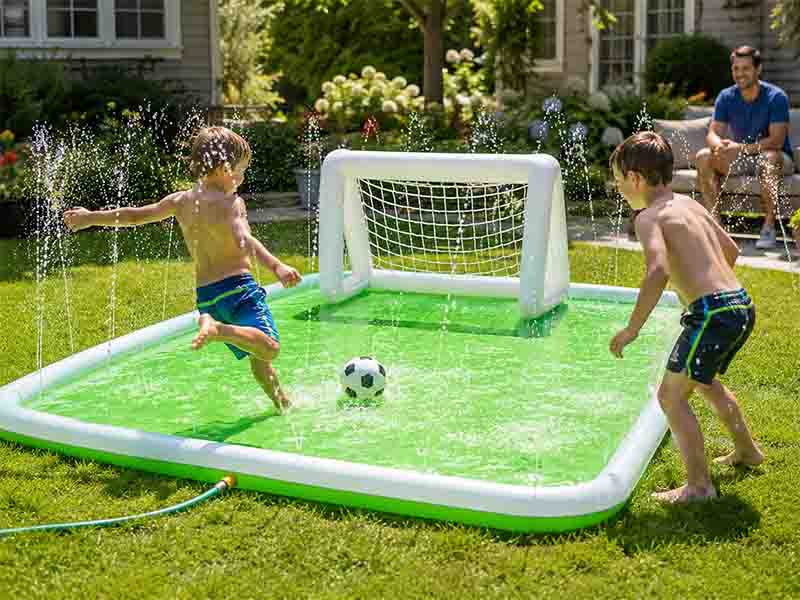
EPN designs shared-use PVC products by studying how children, pets, and caregivers move, apply pressure, control water, and maintain the product afterward. Material thickness, surface texture, wall support, seam placement, drainage, cleaning, and storage are considered together. The aim is not to suggest that one design suits every family, but to match each structure with realistic users, activities, and limits.
Why EPN Focuses on Material Thickness and Low Odor Formulas

Material thickness affects puncture resistance, abrasion tolerance, structural stability, weight, flexibility, folding behavior, and welded-seam performance. A low-odor formula improves the opening experience by controlling raw materials, printing, processing temperature, ventilation, storage, and packaging. EPN focuses on both because a dependable recreational product must feel acceptable when first opened and continue performing under water pressure, pet claws, foot traffic, cold weather, sunlight, and repeated folding.
The Complete Guide to a Non-Slip Dog Pool Base
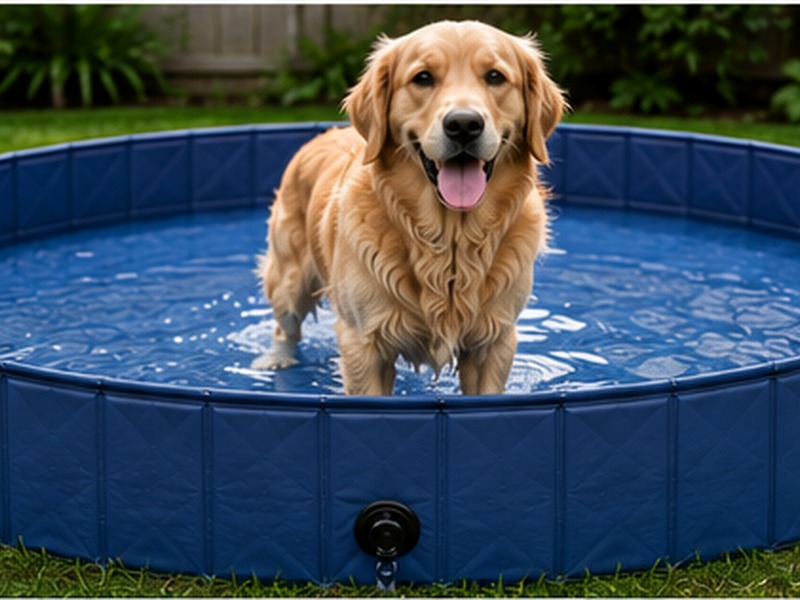
A non-slip dog pool base uses surface texture, material grip, floor support, and structural stability to help dogs maintain traction while entering, standing, turning, and playing. It matters because better footing can reduce uncontrolled sliding, improve confidence, support dogs with limited mobility, and make shallow-water activities more comfortable. However, no textured floor can replace level-ground setup, sensible water depth, nail care, and close supervision.
How to Store a Foldable Dog Pool: Complete Guide
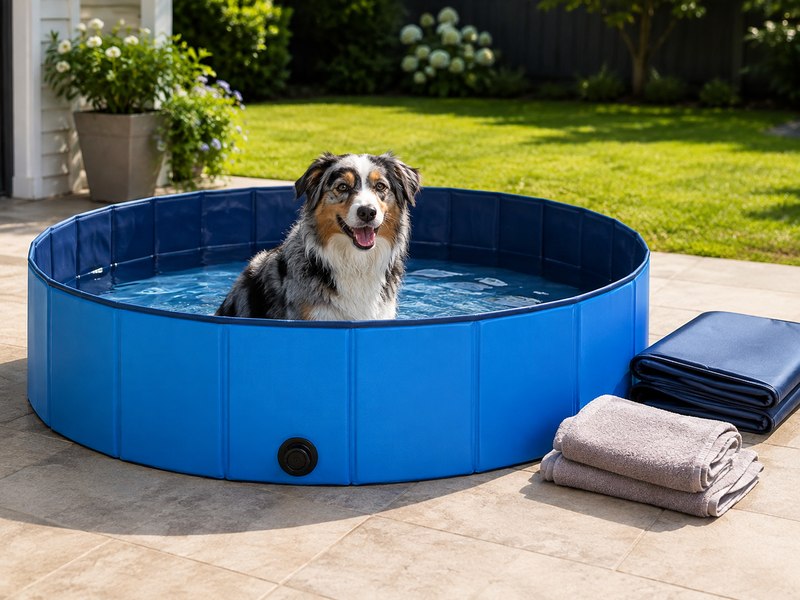
The challenge is that a pool can look empty while still holding moisture around its seams, textured bottom, drain fitting, and flexible panel joints. It can also look clean while dog hair, body oils, mud, and soap remain in areas that are difficult to see.
How Often to Change Dog Pool Water: Complete Guide
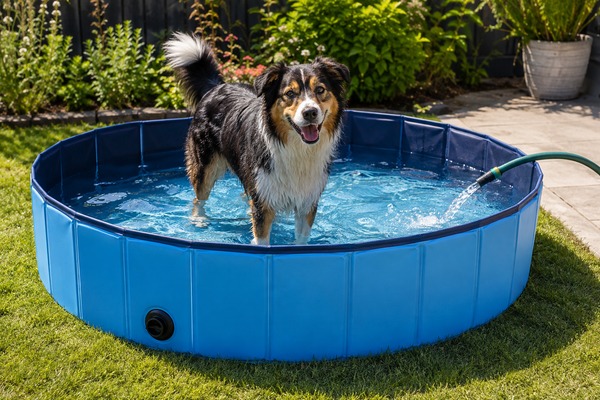
For an untreated and unfiltered dog pool, change the water after a dirty or active play session and no later than the end of the day. Drain it immediately if the water contains feces, vomit, urine, wildlife contamination, heavy debris, unusual foam, slime, odor, cloudiness, or discoloration. Multiple dogs, hot weather, muddy paws, and frequent drinking make earlier changes necessary.
How to Clean a Dog Pool: Complete Guide
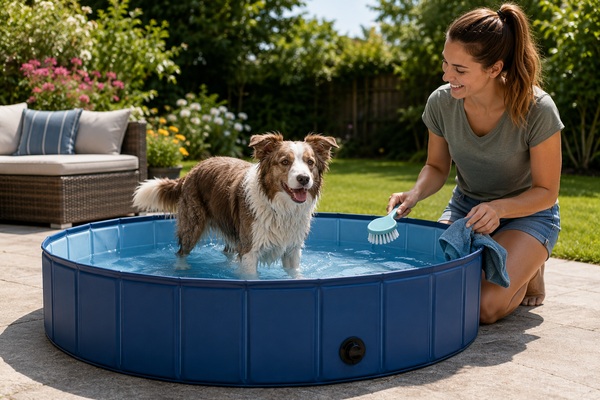
To clean a dog pool correctly, remove the dog and toys, drain all water, clear away hair and debris, wash every surface with a mild PVC-compatible cleaner, rinse until no foam or residue remains, and dry the pool completely before refilling or folding. Small unfiltered dog pools should receive fresh water frequently, especially after muddy, heavy or shared use.
Why Kids Splash Pads Work So Well for Summer Family Routines
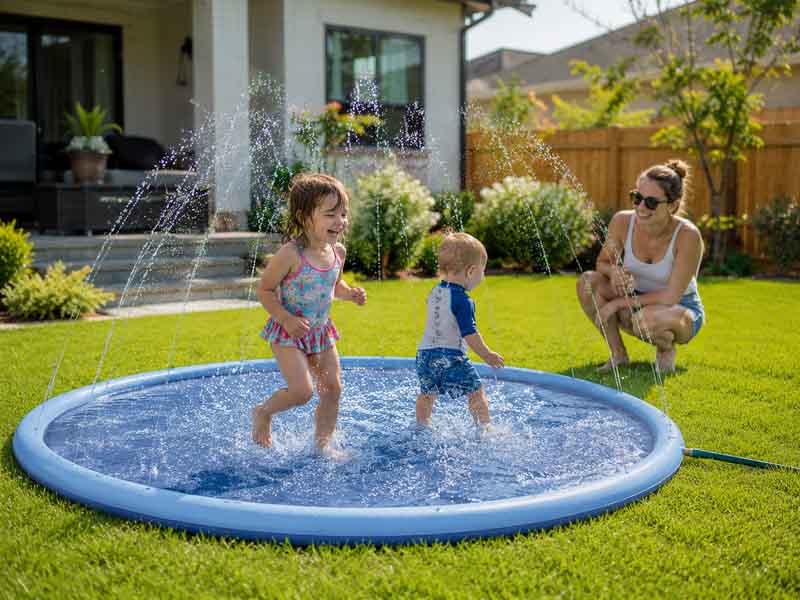
Summer with children is rarely as simple as “go outside and play.” Hot weather changes everything. Parents have to think about sun exposure, water breaks, cleanup, nap schedules, dinner timing, wet clothes, muddy feet, and whether the activity is worth the effort. A pool day sounds exciting, but it can easily become a half-day plan. […]
How to Dry and Store a Splash Pad Properly
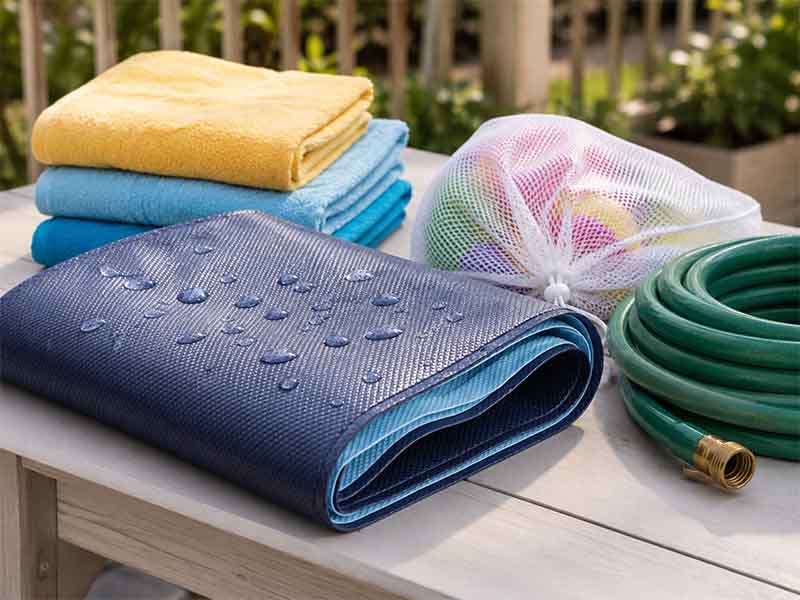
Most splash pad problems do not happen from one afternoon of play. They build slowly from small habits: water left inside the outer ring, grass stuck to the underside, pet hair folded into the PVC, sunscreen residue left on the play surface, or a hose connector pressed under heavy storage boxes. A splash pad is made for outdoor water play, but it still needs clean drying and low-pressure storage to stay fresh between uses.