Skip to content
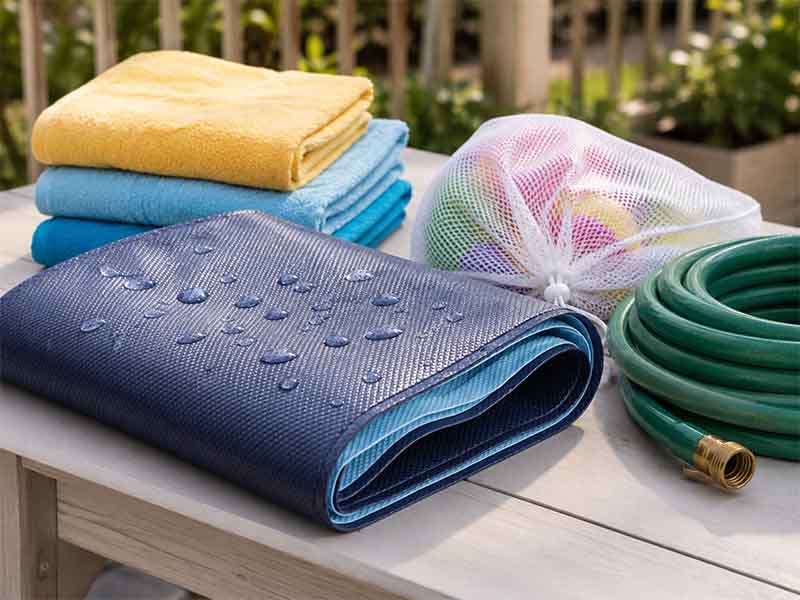
A splash pad can make a backyard feel ready for summer in just a few minutes. Connect the hose, adjust the water pressure, and children or pets can cool down without filling a large pool. The part many families overlook comes after the fun ends. A splash pad that is folded too quickly, packed while damp, or left in a hot garage can start to smell musty, develop sticky areas, hold deep crease marks, or become harder to set up the next time it is opened.
Most splash pad problems do not happen from one afternoon of play. They build slowly from small habits: water left inside the outer ring, grass stuck to the underside, pet hair folded into the PVC, sunscreen residue left on the play surface, or a hose connector pressed under heavy storage boxes. A splash pad is made for outdoor water play, but it still needs clean drying and low-pressure storage to stay fresh between uses.
To dry and store a splash pad properly, drain the water first, rinse away dirt, dry the top and bottom, wipe the spray ring and hose connector, then fold or roll it loosely before placing it in a cool, dry area. The underside, outer ring, spray holes, and connector need extra attention because they hold moisture longer than the center play area.
A good care routine does not require special tools. A hose, a soft cloth, an absorbent towel, airflow, and a few extra minutes after play are usually enough. The families who build that habit often open their splash pad weeks or months later and find it cleaner, flatter, and easier to use again.
Why Splash Pad Drying Matters
A splash pad needs full drying because trapped moisture can lead to odor, mildew marks, sticky surfaces, seam stress, and uneven spray performance. The outer ring, underside, connector, spray holes, and folded edges hold water longer than the visible center. Drying these areas protects the PVC surface and keeps the pad ready for repeated backyard use.
Splash Pad Mold Risk
Mold and mildew risk usually starts when moisture is sealed inside folded PVC. The center surface may look dry after 20–40 minutes on a warm day, but the underside and outer ring often need longer. These areas touch grass, hold water pressure, and receive less airflow, so they can stay damp even when the play surface looks ready to pack away.
The risk becomes higher when water mixes with organic residue. Grass clippings, soil, pollen, leaves, sunscreen, food crumbs, pet hair, and paw dirt can all stay on a wet splash pad after play. Once the pad is folded, those materials are trapped between PVC layers or inside the storage bag, where airflow is limited and moisture takes longer to escape.
The underside is usually the first place to check because it touches grass, patio dust, and muddy ground during use. The outer ring also needs attention, especially after long play sessions, because it holds water pressure and may keep small drops inside the edge. Spray holes, hose connectors, folded edges, and the entry area where children or pets step on and off can all stay damp longer than the center play surface.
For regular summer use, try to clean and dry the splash pad the same day it is used. Damp outdoor items can begin to develop odor within 24–48 hours when moisture and residue remain trapped. Warm garages, sealed plastic bags, shaded patio boxes, and damp sheds can make the problem happen faster.
Families using the splash pad for dogs should be more careful. Pet use often leaves fur, paw dirt, saliva, and natural oils on the surface. These residues are easy to miss while the pad is wet, but they can smell stronger after storage if the underside and outer ring are not rinsed and dried properly.
| Hidden Moisture Area | Why It Matters | Better Habit |
|---|---|---|
| Underside | Touches grass, mud, and patio dust | Flip and dry fully |
| Outer ring | Holds water after play | Drain slowly and towel the edge |
| Spray holes | Collect drops and debris | Wipe the spray line gently |
| Hose connector | Holds water around threads | Dry before folding |
| Folded edges | Trap moisture between PVC layers | Fold only when dry to the touch |
For more detail on how moisture and pressure can lead to small leaks, why some splash pads leak easily explains how seams, connectors, and edge areas are affected by repeated use.
Splash Pad Odor Causes
A musty smell usually comes from trapped moisture mixed with residue, not from water play alone. The smell often starts in the underside, outer ring, or storage bag. These areas can stay damp even after the top surface looks clean, especially when the pad was used on grass, near soil, or with pets.
Wet grass clippings, mud, sunscreen film, pet fur, paw dirt, body oils, and food crumbs can all create odor when they stay inside a folded splash pad. The underside is often the main trouble spot because it may look clean from a distance while still holding moisture from wet grass or patio dust. If the pad is folded with the damp bottom facing inward, water becomes trapped between layers. After several days, the pad may smell sour or musty when opened.
The outer ring can also hold small amounts of water after the center drains. This is normal because the ring supports spray pressure. Before storage, walk around the ring and check whether one area feels heavier than the rest. Lightly guide water toward the connector or the lowest side instead of pressing hard on the edge.
For most homes, odor prevention takes less time than odor removal. Rinse away visible dirt, dry both sides, wipe the connector, and leave the pad open longer if any area feels cool or damp. Fragrance sprays may cover a smell for a short time, but they do not remove the moisture or residue causing it.
Splash Pad Seam Care
Drying also protects the seams and bonded edges. The seams, spray ring, outer edge, and hose connector handle water pressure every time the pad is used. When the pad is folded damp, the PVC becomes heavier and more likely to hold sharp crease marks. Over time, repeated tight folding in wet areas can add stress near the bonded edges.
Water weight is easy to underestimate. One gallon of water weighs about 8.34 pounds. Even a thin layer of water left on a large splash pad can add several pounds during cleanup. If the pad is dragged while wet, that weight pulls against the underside, outer ring, spray line, and connector.
EPN splash pads are developed with attention to PVC flexibility, edge stability, spray distribution, and connector reliability. These design details support repeated backyard use, but daily care still matters. A stronger pad can still wear faster if it is stored damp, crushed under heavy items, or folded tightly around the same connector area all season.
The safest habit is to drain before moving the pad, dry both sides before folding, keep the connector away from hard folds, and avoid stacking heavy items on top. The material choice also matters. If you want to understand how PVC thickness, flexibility, and outdoor stability affect long-term use, read what material is best for a splash pad.
How to Drain a Splash Pad
A splash pad should be drained before it is moved, cleaned, folded, or stored. Turn off the water first, let the spray pressure drop, disconnect the hose gently, and guide standing water toward grass or a safe drainage area. The outer ring, spray line, and hose connector need extra attention because they often hold water after the center looks empty.
Splash Pad Water Flow
Good drainage begins before the hose is disconnected. Turn off the garden hose and wait until the spray stops fully. The outer ring may still feel firm for a short time because water remains inside the edge. If the hose is pulled too early, the connector area can take unnecessary sideways stress.
Once the spray pressure drops, lift one edge slowly and let standing water move across the surface. Do not drag the splash pad across the yard while water is still sitting on it. Water weight, ground friction, and rough surfaces can pull against seams and the hose inlet.
For smaller kids splash pads, draining may take 3–5 minutes. For larger family or pet splash pads, 8–15 minutes is more realistic, especially when the outer ring holds more water. The best drainage direction is toward lawn, gravel drainage, or a patio drain. Avoid sending water toward doorways, electrical outlets, outdoor furniture legs, or areas where children may continue running. Wet concrete can become slippery after play, so keep the walking path clear.
A good drainage routine should feel slow and controlled rather than rushed. Turn off the hose, let the spray pressure drop, remove the hose without pulling sideways, lift one edge gently, let the center water move away first, and then check the outer ring and connector before drying.
Splash Pad Edge Drainage
The outer edge usually takes the longest to drain. That is normal because the ring is designed to hold water during use and push spray through the holes. After the center play area looks empty, walk around the pad and check the ring by hand. If one side feels heavier, water is still sitting inside.
Do not press hard with your knees or body weight. Strong pressure can place stress on the bonded edge. Use light hand pressure to guide water toward the connector or the lowest side. If the splash pad is large, two adults can lift different sides carefully so water moves without twisting the material.
Edge drainage matters because trapped water often causes storage problems later. If water stays inside the ring and the pad is folded, that moisture collects in one fold or corner. After a few days in a garage or storage bag, the area may smell musty even if the top surface looked dry.
| Splash Pad Area | Drain Issue | What to Do |
|---|---|---|
| Center surface | Visible standing water | Lift one side slowly |
| Outer ring | Hidden water inside edge | Guide water with light hand pressure |
| Spray line | Small drops around holes | Wipe after draining |
| Hose connector | Water around threads | Towel-dry before storage |
| Bottom edge | Grass and mud buildup | Rinse before drying |
| Fold corners | Moisture collects after packing | Fold only after full drying |
If your splash pad is often used on a lawn, setup location affects both drainage and cleaning time. The article can you use a splash pad on grass gives more detail on lawn setup, ground checks, and grass-related care.

The hose connector should be handled carefully because it is used every time the splash pad is set up. Turn the water off first. Wait until the outer ring softens. Then disconnect the hose in a straight direction instead of pulling at an angle. A sideways pull can stress the inlet and the PVC area around it.
If the hose feels stuck, do not twist the splash pad to remove it. Move the hose closer, straighten the connection, and unscrew slowly. For threaded connectors, check whether grass, sand, or small debris is caught around the connection. Wipe the area clean before drying.
Hose placement also affects drainage. If the hose runs around patio furniture, garden pots, or children’s toys, it may pull the pad when someone moves it. Keep the hose path open during play and cleanup. After disconnecting, move the hose away from the drying area so it does not drag across the splash pad.
For EPN splash pads, the hose inlet and spray ring are important parts of the water-flow design. Keeping this area clean and dry helps maintain easier setup, smoother water connection, and more consistent spray during repeated summer use.
Splash Pad Drain Time
Drain time depends on pad size, water pressure, ground angle, and how much water the outer ring holds. A small splash pad may be ready for rinsing within a few minutes. A large pet splash pad or family-size splash pad may need more time because the edge structure holds more water.
The pad should feel light enough to lift without pulling before it moves to the drying stage. If one side still feels heavy, water is probably still trapped inside the edge. Keep the pad open, guide the water out, and check the ring again before folding or flipping.
| Use Situation | Drain Time | Extra Step |
|---|---|---|
| Small kids splash pad | 3–5 minutes | Wipe connector after hose removal |
| Medium backyard splash pad | 5–8 minutes | Check outer ring by hand |
| Large dog splash pad | 8–12 minutes | Rinse fur and paw dirt before drying |
| Oversized family pad | 10–15 minutes | Use two adults to avoid twisting |
| Grass setup after heavy play | Add 3–5 minutes | Rinse underside before drying |
| Muddy or pet use | Add 5–10 minutes | Clean before folding or storing |
How to Dry a Splash Pad
A splash pad should be dried on both sides before folding or storage. Start with the top surface, wipe the outer ring and hose connector, then flip the pad and dry the underside fully. The bottom, spray holes, folded edges, and connector area often stay wet longer than the center. Use towels for faster drying, then allow open-air drying until the whole pad feels dry to the touch.
Splash Pad Air Drying
Air drying is the safest way to remove moisture after draining, but the splash pad should stay fully opened while it dries. If the pad is folded halfway or left in a pile, air cannot reach the outer ring, underside, or spray line.
Place the splash pad on a clean, smooth area with good airflow. A dry lawn, smooth patio, deck mat, or clean outdoor rug can work. Before laying it out, remove sticks, stones, thorns, small toys, hose nozzles, and rough garden debris. Sharp objects under a wet splash pad can press into the PVC during cleanup.
The top surface usually dries faster than the rest of the pad. On a warm, dry day, visible water may disappear from the center play area in about 20–40 minutes. In shaded yards, humid weather, or after heavy use, drying may take 60–120 minutes. Larger splash pads need longer because the outer ring, spray holes, and bottom surface hold more moisture.
A towel can shorten drying time, but it should not replace airflow completely. Wipe the center first, then the outer ring, spray line, connector, and low spots where water collects. After the towel removes visible moisture, leave the pad open until all areas feel dry. Sunlight can help, but the pad should not be left baking for hours after it is already dry. Short sun exposure plus airflow is better than long heat exposure.
Splash Pad Bottom Drying
The bottom side needs more attention than many families expect. It touches grass, soil, patio dust, mud, small leaves, and pet hair during play. Even when the top looks dry, the underside may still feel damp because it receives less sunlight and airflow.
After the top surface is mostly dry, flip the splash pad carefully. For small pads, one adult can usually handle this easily. For larger family or pet splash pads, two adults should lift and turn the pad together to avoid twisting the edge or pulling against the connector area.
Once the bottom is facing up, check for dirt before drying. Grass clippings and mud should be rinsed off first. Pet hair should be wiped away while it is still damp because it becomes harder to remove once dry. If the pad was used on a muddy lawn, rinse the underside with clean water before towel drying.
Use the hand test before folding. Run your palm across the underside, especially near the edges and fold lines. If it feels cool, slick, or slightly tacky, keep drying. A dry splash pad should feel smooth, light, and flexible, not cold in one area or heavy on one side.
| Bottom Surface Issue | What It Means | Better Drying Step |
|---|---|---|
| Cool surface feel | Moisture still present | Leave open longer |
| Grass stuck to PVC | Lawn debris remains | Rinse before drying |
| Mud streaks | Soil trapped underneath | Clean with mild soap and water |
| Pet hair | Dog use residue | Wipe while damp |
| Wet fold corners | Hidden moisture | Open flat and towel-dry |
| Sticky feeling | Residue or soap left behind | Rinse again and air-dry |

Spray holes should be dried and checked because they control water direction during the next use. When tiny drops stay around the spray line, they can dry with grass dust, minerals, sunscreen, or dirt. Over time, this buildup may make some spray holes weaker or less even.
After draining, wipe around the spray ring with a soft cloth. Do not scrub hard. The goal is to remove water and light residue without changing the hole shape. If the splash pad was used on grass, rinse the spray line gently before drying. If the water spray looked uneven during play, clean the ring before storing the pad.
Do not use needles, pins, knives, metal tools, or sharp objects to clear spray holes. These can enlarge the holes or change the spray angle. If a hole seems blocked, use clean water flow and gentle wiping first.
For families who want consistent spray height, spray-hole drying is not a small detail. Clean, dry spray holes help the splash pad perform more evenly and make the next setup easier.
Splash Pad Drying Time
Drying time changes based on weather, pad size, ground surface, and how the splash pad was used. A small kids splash pad on a sunny lawn may dry quickly. A large dog splash pad used on wet grass may need much longer because the underside and edge collect more water and debris.
Do not fold by time alone. Use the drying table as a guide, then check the pad by touch. The top, bottom, outer ring, connector, and spray line should all feel dry before storage.
| Use Condition | Top Drying Time | Bottom Drying Time | Extra Care |
|---|---|---|---|
| Warm sunny day | 20–40 minutes | 30–60 minutes | Flip once before folding |
| Humid weather | 45–90 minutes | 60–120 minutes | Use towels before air drying |
| Shaded backyard | 60–120 minutes | 90–150 minutes | Move to better airflow if possible |
| Grass setup | 30–60 minutes | 60–120 minutes | Rinse underside first |
| Dog use | 30–60 minutes | 60–120 minutes | Remove fur and paw dirt |
| Muddy use | 45–90 minutes | 90–150 minutes | Clean before drying |
| Winter storage prep | Until fully dry | Until fully dry | Leave open longer indoors |
What to Clean on a Splash Pad
A splash pad should be cleaned before it is dried and stored, especially after use on grass, with pets, or during long outdoor play. The main areas to clean are the top play surface, underside, outer ring, spray holes, hose connector, and folded edges. Most cleaning only needs clean water, mild soap, and a soft cloth.
Splash Pad Grass Dirt
Grass is one of the most common setup surfaces for a splash pad because it feels softer under children’s feet and dog paws. It also protects the bottom better than rough concrete. The problem is that wet PVC can pick up grass clippings, loose soil, pollen, small leaves, and lawn dust very quickly.
Freshly cut grass needs extra attention. Small clippings can stick to the wet bottom and outer edge. If they are folded into the pad, they may dry into the PVC layers and create a musty smell later. After lawn use, rinse the underside before drying. A 30–60 second rinse is usually enough for light grass dust. For muddy lawns, use mild soap and a soft cloth before the final rinse.
The outer ring should also be checked because water often pushes grass and soil toward the edge during play. If children run through the spray for 1–2 hours, dirt can collect around the spray line and seam area. Wiping the edge after rinsing helps keep the pad cleaner for the next setup.
| Lawn Condition | Cleaning Need | Suggested Time |
|---|---|---|
| Clean dry grass | Light rinse | 1–2 minutes |
| Freshly cut grass | Rinse underside and edge | 2–4 minutes |
| Wet grass | Rinse and towel-wipe bottom | 3–5 minutes |
| Muddy lawn | Mild soap and rinse | 5–8 minutes |
| Grass with leaves | Remove debris before drying | 3–6 minutes |

A pet splash pad needs more careful cleaning than a kids-only splash pad because dogs bring fur, paw dirt, saliva, grass, and natural oils onto the surface. These residues are easy to miss when the pad is wet. Once folded and stored, they can become the source of odor, sticky spots, or dirty fold marks.
Pet hair should be removed while the pad is still damp. Wet hair is easier to wipe away than dried hair. Use a soft towel or microfiber cloth and move from the center toward the outer ring. Pay close attention to the ring edge because water movement often carries fur into that area.
Large dogs can also leave more dirt near the entry area. If the dog repeatedly steps on and off the pad from grass or mud, one side may be much dirtier than the rest. Clean that high-traffic side before flipping the pad. Paw dirt left underneath can spread when the pad is folded.
Pet owners should also check for scratch marks during cleaning. Small surface marks are easier to notice when the pad is clean and wet. If a dog digs, bites, or scratches at the spray line, stop that behavior early. Cleaning is not only about appearance; it is also a chance to check whether the splash pad is being used in a safe, reasonable way.
| Pet Use Situation | What to Clean | Better Habit |
|---|---|---|
| One small dog | Light fur and paw marks | Rinse and towel-wipe |
| Large dog | Paw dirt, hair, edge water | Rinse top and bottom |
| Multiple dogs | Heavy fur and soil | Clean after each play session |
| Long nails | Possible surface scratches | Trim nails before frequent use |
| Muddy paws | Entry area and underside | Rinse before drying |
| Dog digging | Spray ring and surface marks | Stop use and redirect play |
Splash Pad Safe Cleaners
Most splash pad cleaning should stay simple. Clean water, mild dish soap, and a soft cloth are enough for normal backyard dirt. Strong cleaners are usually not needed and may create other problems, especially if residue stays on the surface where children or pets play barefoot.
A safe cleaning mix can be very light. A few drops of mild soap in a small bucket of water is enough for regular use. The goal is to lift dirt and body residue, not soak the PVC in detergent. After wiping, rinse the pad with clean water until the surface no longer feels slippery.
Avoid harsh solvents, abrasive powders, stiff brushes, bleach-heavy mixtures, alcohol-based sprays, and sharp scraping tools. These can affect the PVC surface, printed pattern, spray holes, or bonded edges. If the splash pad is used by toddlers or pets, rinse more carefully after soap cleaning so no slick film remains before the next play session.
| Cleaning Problem | Better Cleaner | Avoid |
|---|---|---|
| Light dust | Clean water | Strong chemical spray |
| Grass marks | Mild soap and cloth | Abrasive brush |
| Pet hair | Water rinse and towel | Letting fur dry on PVC |
| Mud | Mild soap, rinse, repeat | Scraping with hard tools |
| Sunscreen film | Mild soap and warm water | Leaving soap residue |
| Musty smell | Clean both sides and air-dry | Fragrance spray only |
| Spray holes | Gentle rinse | Pins, needles, knives |
Splash Pad Sunscreen Residue
Sunscreen is easy to overlook, but it matters. During summer play, children often sit, crawl, or run on the splash pad after sunscreen has been applied. Some sunscreen formulas leave an oily film on PVC. If that film mixes with water and dirt, the surface can feel slippery or sticky after drying.
The areas most likely to collect sunscreen residue are the center play area, sitting spots, and places where children climb in and out. If the splash pad is used during a birthday party, BBQ, or long afternoon play session, sunscreen and body oils may build up more than usual.
Use mild soap and water to clean slick areas. Wipe in wide, gentle motions instead of scrubbing one spot hard. Rinse well afterward. If the pad still feels slippery, repeat with a fresh cloth and clean water. Do not store the pad with oily residue because it can attract dust and create an unpleasant surface feel the next time it is opened.
Splash Pad Spray Holes
Spray holes need light cleaning because they control water direction and spray height. Small particles can collect around the spray line during play, especially when the pad is used on grass or near soil. Hard water can also leave mineral marks around the holes after repeated use.
Clean spray holes gently. Rinse the spray ring with clean water and wipe around the holes with a soft cloth. Do not use needles, pins, knives, or metal tools. Sharp objects can enlarge the holes or change the spray direction. Once a spray hole is stretched or damaged, it may not spray evenly again.
If the spray becomes uneven, check the hose water pressure, the setup angle, and the spray line before assuming damage. Many uneven spray problems come from water pressure, uneven ground, or small debris rather than material failure.
How to Store a Splash Pad
A splash pad should be stored only after it is fully drained, cleaned, and dry on both sides. The safest method is to fold or roll it loosely, keep the hose connector away from hard pressure, place it in a clean storage bag or large bin, and keep it in a cool, dry, shaded area.
Splash Pad Folding Method
The way a splash pad is folded matters more than many families expect. A tight fold may save space, but it can create sharp pressure lines across the PVC, outer ring, spray holes, or hose connector. Those pressure lines may not show damage immediately, but after weeks or months in storage, they can turn into deep crease marks.
The best folding method is loose and gentle. Spread the dry splash pad flat first. Smooth the outer ring with your hands and make sure no water remains inside the edge. Check that the top and bottom both feel dry. Then fold the pad along wide, soft lines instead of pressing it into small, hard squares.
For round splash pads, fold one side toward the center, then fold the opposite side. Continue with wide folds until the pad fits into the bag or bin without forcing it. The hose connector should stay near the outside or in a low-pressure area. Rolling is often better for large splash pads because it spreads pressure more evenly. A loose roll can reduce crease marks and make the pad easier to open next time.
| Storage Method | Best For | Main Risk | Better Habit |
|---|---|---|---|
| Loose folding | Small and medium splash pads | Repeated crease lines | Change fold direction sometimes |
| Rolling | Large splash pads | Roll too tight | Keep the roll soft and wide |
| Original box | Short-term storage | Too compressed | Use only if the pad fits easily |
| Fabric bag | Summer use | Dust if left open | Keep bag clean and dry |
| Plastic bin | Winter storage | Trapped moisture | Use only after full drying |

Winter storage needs more care than short-term summer storage. During summer, a splash pad may only sit unused for a few days. During winter, it may stay folded for 3–6 months. Any moisture, grass, pet hair, or dirt left inside the folds has much more time to cause odor, stains, sticky spots, or material stress.
Before winter storage, clean the splash pad more carefully than usual. Rinse both sides, wipe the outer ring, clean the hose connector, check the spray line, and remove all visible debris. If the pad was used by dogs, remove pet hair and paw dirt before drying. If sunscreen, mud, or food residue is present, use mild soap and water, then rinse thoroughly.
The pad should be completely dry before packing. For end-of-season storage, do not rush. After outdoor drying, it can be helpful to leave the splash pad open indoors for several extra hours, especially if the weather is humid or the pad was dried in shade. The goal is to make sure hidden areas are dry, not just the visible center surface.
| Winter Storage Check | What to Look For | Why It Matters |
|---|---|---|
| Top surface | No dirt, soap film, or sticky feel | Keeps surface fresh for next season |
| Bottom surface | No grass, mud, or pet hair | Reduces odor and staining |
| Outer ring | No trapped water | Prevents musty folds |
| Spray holes | Clean and dry | Supports even spray next use |
| Hose connector | Dry and not crushed | Protects setup area |
| Storage bag | Clean and odor-free | Avoids transferring smell |
| Storage spot | Cool, dry, shaded | Reduces heat and moisture stress |
For families comparing different splash pad structures before purchase, how to choose a splash pad that lasts more than one summer gives a clear look at durability, storage, and repeat summer use.
Splash Pad Connector Care
The hose connector needs protection during storage because it is one of the most used parts of a splash pad. Every setup and cleanup involves twisting, pulling, pressure, and water flow around this area. If the connector is stored under pressure or folded sharply, future setup may become harder.
Before storage, wipe the connector dry. Check for grass, sand, or dirt around the threads or inlet. If debris dries in this area, the hose may not connect smoothly next time. A soft towel is enough for normal cleaning.
When folding or rolling the splash pad, keep the connector in a position where it will not be crushed. It should not sit under a heavy fold, under the weight of the entire pad, or against the side of a tight storage bin. For longer storage, position the connector near the outside of the fold and give it space.
For EPN splash pads, connector reliability and edge water flow are important parts of the product’s daily use design. Protecting the connector during storage helps support easier hose connection and more consistent spray performance next season.
Splash Pad Storage Mistakes
Most splash pad storage problems come from a few repeat habits: folding it damp, storing it in heat, crushing it under heavy items, leaving dirt on the underside, and ignoring the hose connector. These mistakes may not damage the pad in one day, but they can cause odor, crease marks, weak seams, uneven spray, sticky surfaces, and a shorter summer-use life.
Damp Splash Pad Folding
Folding a splash pad while damp is the most common storage mistake. The pad may look dry on the top surface, but moisture can still sit on the underside, inside the outer ring, around the spray holes, and near the hose connector. Once the pad is folded, airflow stops. That hidden water stays between PVC layers and can lead to musty odor, mildew marks, or a sticky feel the next time the pad is opened.
A better habit is to check the pad by touch, not by appearance. Run your hand across the top, underside, outer ring, spray line, connector, and fold-prone edges. If any area feels cool, slick, or slightly tacky, it needs more drying time.
| Area Checked | Ready to Store | Needs More Drying |
|---|---|---|
| Top surface | Smooth and dry | Cool or slick |
| Underside | Dry with no grass stuck | Damp, dirty, or cold |
| Outer ring | Light and dry | Heavy on one side |
| Spray holes | No water drops | Moisture around holes |
| Hose connector | Dry threads | Water near inlet |
| Fold edges | Flexible and dry | Sticky or wet |
Hot Splash Pad Storage
Heat can make storage problems worse. A splash pad stored in a hot shed, attic, garage corner, or direct sunlight may face higher temperatures than families expect. Closed storage spaces can become much warmer than the outdoor air, especially during summer afternoons. Heat can make trapped moisture smell stronger and may also increase crease marks when the pad is folded tightly.
A garage can work for short-term storage when the pad is dry, protected, and not crushed. For long winter storage, an indoor closet or utility room is usually safer. Avoid hot attics, sheds exposed to afternoon sun, damp garage floors, patio boxes that stay warm and wet, car trunks after summer use, and bins placed against sunny walls.
If a garage is the only available space, place the splash pad on a raised shelf, away from direct sunlight, chemicals, tools, and heavy boxes. The storage spot should feel dry, shaded, and easy to access, not hot, crowded, or damp.
Heavy Splash Pad Pressure
Heavy pressure can damage a splash pad slowly. The problem may not show up after one week, but several months under boxes, pool parts, garden tools, or sports equipment can leave hard crease marks. Pressure is especially risky around the outer ring, spray holes, and hose connector.
Storage boxes, pool ladders, garden tools, folding chairs, sports equipment, snow shovels, coolers, and pet crates should not sit on top of a folded splash pad. If storage space is limited, place the splash pad at the top of the stack, not the bottom. A loose roll or wide fold is better than a tight square.
The same idea applies when moving the pad. A wet splash pad is heavier than it looks. Dragging it across concrete or rough grass creates friction on the bottom and pulls against seams. Carry it after draining. For larger pads, two adults should move it together.

Leaving a splash pad outside after play is convenient, but it can create problems. Overnight moisture, insects, lawn debris, direct sun, pets, and temperature changes can all affect the pad. Even if it does not rain, dew can make the surface damp again by morning.
Outdoor storage is especially risky when the splash pad is left on wet grass overnight, near sprinklers, under trees with falling leaves, in direct sun for several days, where dogs can chew or scratch it, near patio furniture with sharp edges, or in a low area where water pools.
If the splash pad is used daily, families may want to leave it nearby. A better short-term habit is to drain it, dry it, fold it loosely, and place it in a shaded, covered, dry area. Do not leave it flat on grass for days. Grass moisture and insects can collect underneath, and sunlight can fade or stress outdoor materials over time.
Splash Pad Mistake Checklist
| Mistake | Why It Matters | Better Habit |
|---|---|---|
| Folding damp | Traps moisture and odor | Dry top and bottom first |
| Leaving grass underneath | Causes smell and stains | Rinse underside |
| Crushing connector | Affects hose setup | Keep connector outside hard folds |
| Storing in heat | Increases crease and odor risk | Choose cool, dry storage |
| Using a tight bag | Compresses PVC and edge | Use a larger bag or bin |
| Leaving outside | Adds dew, dirt, insects, sun exposure | Store after drying |
| Skipping pet cleanup | Fur and paw dirt cause odor | Rinse after dog use |
| Ignoring spray holes | Can affect spray direction | Wipe spray ring gently |
| Stacking heavy items | Creates pressure marks | Store on top shelf |
| Packing for winter too fast | Locks in seasonal dirt | Full clean and dry first |
Good storage is not complicated. The best results come from a few practical habits: drain completely, clean what the pad touched, dry both sides, protect the connector, avoid heavy pressure, and store in a cool, dry place.
Splash Pad Care FAQ
Can a Splash Pad Stay Outside?
A splash pad can stay outside during a play day, but it should not be left outside for long periods after use. Overnight moisture, lawn debris, insects, sunlight, and temperature changes can affect cleanliness and storage condition. After play, drain it, rinse it if needed, dry both sides, and store it away from direct sun.
Can a Splash Pad Grow Mold?
A splash pad can develop mold or mildew if it is folded wet or stored with grass, mud, pet hair, or food residue. The risk increases in sealed bags, warm garages, damp sheds, and shaded storage boxes. Drying the top and bottom before folding is the best prevention.
Should a Splash Pad Dry in Sun?
A splash pad can dry in mild sun for a short time. Sun and airflow help remove moisture quickly. However, it should not sit in harsh sun all day after drying. Once both sides are dry, move it to shade or indoor storage.
How Long to Dry a Splash Pad?
Drying time depends on weather, size, use, and ground condition. On a warm dry day, the top may dry in 20–40 minutes and the bottom in 30–60 minutes. In humid weather or after dog use, drying can take 60–120 minutes or longer. Always check the underside and outer ring before folding.
Where to Store a Splash Pad?
Store a splash pad in a cool, dry, shaded place. A closet, utility room, clean garage shelf, or dry storage cabinet is better than a damp floor or hot shed. Keep it away from sharp tools, pool chemicals, pests, heavy boxes, and direct sunlight.
How to Stop Splash Pad Smell?
To stop splash pad smell, open the pad fully, rinse both sides, wash dirty areas with mild soap, rinse again, and dry completely. Pay attention to the underside, outer ring, connector, and spray holes. Do not cover the smell with fragrance alone. Remove the moisture and residue causing it.
Is Rolling Better Than Folding?
Rolling is often better for large splash pads because it reduces sharp crease pressure. Folding can still work if it is loose and avoids the connector area. For winter storage, a loose roll or wide fold is safer than a tight fold pressed under heavy items.
Order EPN Splash Pads
A splash pad is more than a quick summer toy when it is designed and cared for properly. Families want a pad that sprays evenly, feels stable underfoot, connects easily to a garden hose, dries without trouble, and stores cleanly between seasons. Good aftercare helps, but material and structure still matter from the start.
EPN, part of American Epsilon Inc., develops PVC and composite-material items for family recreation, children’s water play, pet cooling, outdoor leisure, and seasonal sports. EPN designs splash pads around real backyard use, including edge stability, balanced spray holes, reliable hose connection, foldable storage, low-odor PVC material, and repeated summer setup.
For families, EPN splash pads are made for easier backyard play and practical storage. For retailers, distributors, and online sellers, Epsilon can also support custom splash pad programs. Custom options can include size, PVC thickness, color, pattern, packaging, instruction sheets, local-market labels, and structure updates for children, pets, or seasonal outdoor use.
To order EPN splash pads or request a custom quote, contact Epsilon with your target size, intended use, market, packaging needs, order quantity, and delivery plan. A splash pad that is easier to drain, dry, fold, and store gives families a better summer experience and gives sellers a stronger seasonal item to offer.