Skip to content


Shopping for a kids splash pad on Amazon often becomes harder after you open several listings, not easier. One product is described as “Extra Large,” another as “Heavy Duty,” another as “Thickened,” and several may show children surrounded by tall, perfectly even water arches. Star ratings can look reassuring, coupons can create urgency, and lifestyle photographs can make two very different sizes appear almost identical. The useful question is therefore not simply, “Which splash pad has the best listing?” It is, “Which parts of this listing can I actually verify, and which parts are only marketing shorthand?”
A careful comparison does not require laboratory equipment or hours of research. Most families can make a much better decision by checking a handful of measurable facts: the true expanded dimensions, the usable play area, PVC and seam construction, hose connection, how household water conditions affect spraying, what recent reviews repeatedly say, how the exact variation performs, and how much work the product creates after play is over. Those checks are especially useful for families with siblings, birthday-party hosts, gift purchasers, playdate families, and vacation-home users because their real problems are rarely limited to the purchase price. Space, setup, crowding, supervision, drying, storage, and water supply often matter just as much.
From a senior PVC product-development perspective, one principle is particularly useful: a single specification almost never tells the whole story of a finished flexible PVC product. Material gauge can matter, but so can welded seams, local stress around the inlet, folding behavior, surface condition, geometry, water distribution, and the way families actually handle the product. The same principle applies to Amazon information. One star rating, one photograph, one material number, or one impressive adjective should not carry the entire decision. The strongest comparisons come from several independent pieces of evidence pointing in the same direction.
1. Start With Evidence, Not Amazon Marketing Words
Learn to Separate a Claim From a Specification
Amazon titles have limited space and sellers naturally use short descriptive terms such as “Large,” “Extra Large,” “Premium,” “Heavy Duty,” “Upgraded,” “Durable,” or “Family Size.” Those words are not automatically dishonest, but they are poor measurement units. “Extra Large” has no universal inch value. “Heavy Duty” does not tell you PVC gauge, seam width, connector construction, or expected service life. “Easy Setup” does not explain whether you need an air pump, multiple adapters, separate inflatable parts, or a specific hose connection.
A more reliable comparison starts by translating every important marketing claim into a question you can verify. If a listing says “large,” ask for the exact dimensions. If it says “thickened PVC,” look for a material specification while remembering thickness is only one durability variable. If it says “non-slip,” look for a defined surface feature and real-use evidence. If it shows unusually high spray, look for water-pressure guidance. If it promises family play, compare the footprint with the number, ages, and play style of the children who will actually use it.
| Listing Claim | What the Claim Does Not Prove | Better Evidence to Look For |
|---|---|---|
| Extra Large | Actual size or usable play space | Exact dimensions in inches or feet |
| Heavy Duty | Long service life | Material information, seam design, inlet construction, repeated-use reviews |
| Thickened PVC | Overall durability | PVC gauge plus construction details |
| Non-Slip | No one can slip | Defined surface structure plus real-use evidence |
| Powerful Spray | Same spray at every home | Water-pressure and flow explanation |
| Family Size | A fixed number of children fit | Dimensions, activity style and customer-use evidence |
| Easy Setup | No preparation is required | Number of parts, hose connection and actual setup steps |
| 50% Off | Best value | Current checkout price versus usable specifications |
| 4.7 Stars | Best product for your household | Recent, relevant review patterns |
Use an Evidence Ladder Instead of a Yes-or-No Mindset
A useful way to read an Amazon listing is to rank evidence rather than immediately labeling a statement true or false. Marketing language sits near the bottom because it needs support. A numeric specification is stronger because it gives you something measurable. A close-up construction photograph is stronger still when it clearly shows the claimed feature. Real customer video adds context. Repeated reports from unrelated users can reveal patterns. The most convincing situation occurs when specifications, instructions, images, recent reviews, and independent sources all agree.
This approach also prevents a common overreaction. Some consumers become suspicious of every marketing phrase once they notice one exaggerated listing. That is not necessary. “Large,” “durable,” or “easy to use” can be perfectly reasonable descriptions. The point is simply to avoid letting the adjective replace the evidence. A clear seller should be able to support the important claims with dimensions, instructions, construction details, test information where relevant, or realistic explanations of variables such as household water pressure.
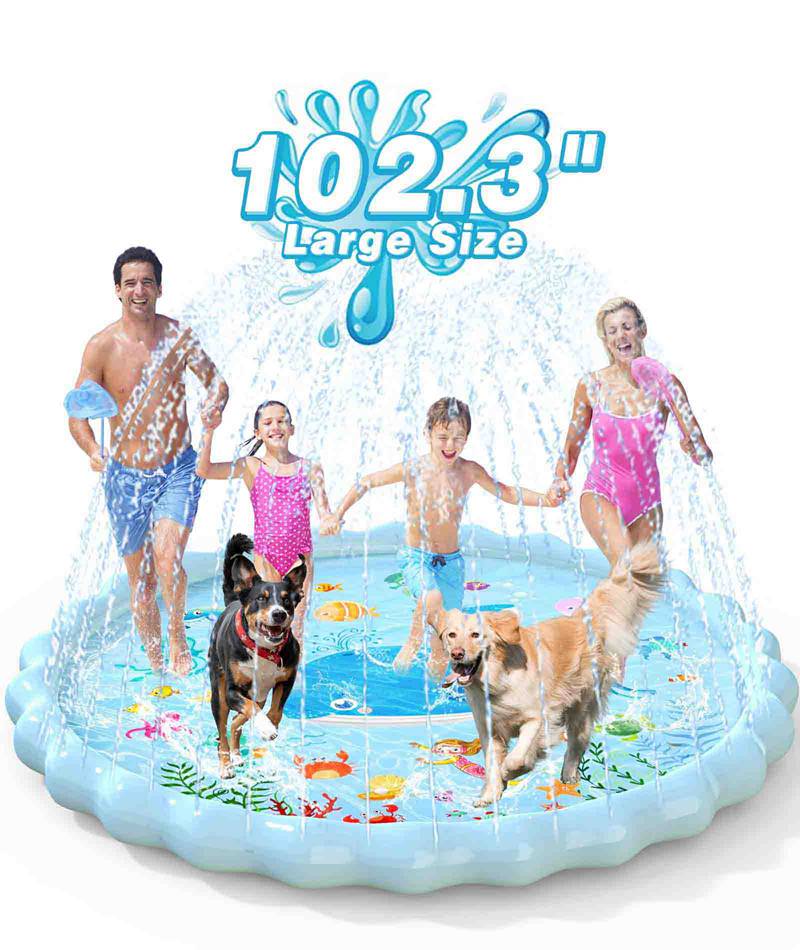
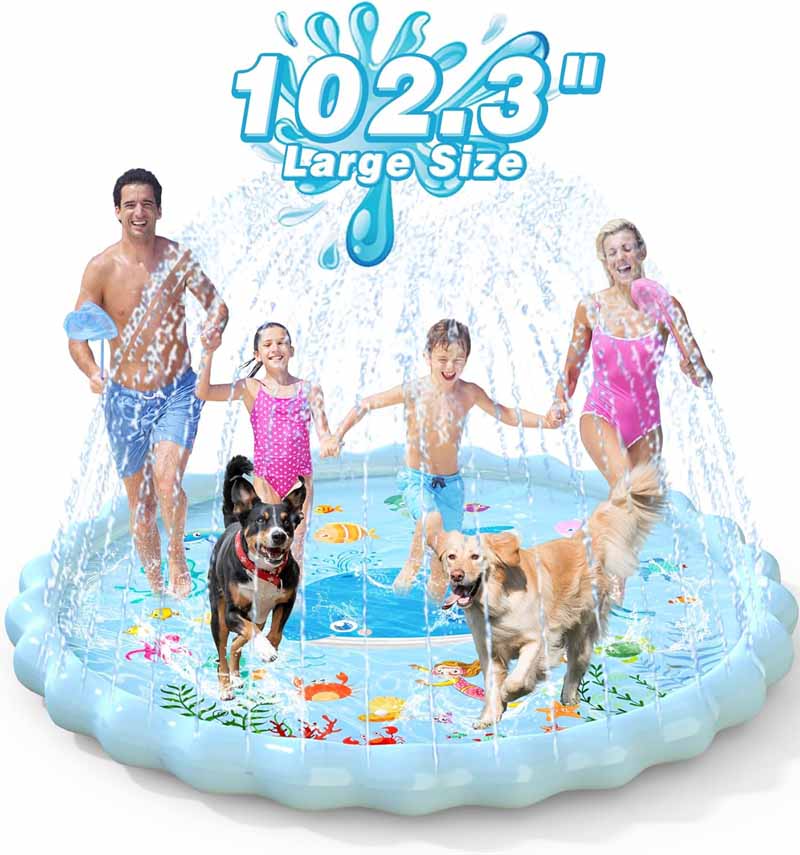
A practical example comes from a documented 102.3-inch whale-themed splash pad used in the underlying product fact library for this guide. Its verified facts include an approximately 102.3-inch expanded diameter, about 8.5 feet across, ages 3+, flexible PVC construction, heat-sealed sections, a standard garden-hose connection, and no air pump requirement. Its records also avoid unsupported promises about a fixed spray height, exact child capacity, or specialized non-slip texture. This is the kind of restraint consumers should appreciate: explaining what a product does not promise can make a listing more trustworthy, not less.
A useful habit before comparing any two products is to write down three columns: known, supported, and unknown. “Known” covers clearly stated specifications. “Supported” covers claims backed by visual or user evidence. “Unknown” covers important information missing from the page. Unknown information is not automatically negative, but it should remain unknown rather than being filled in with assumptions. This simple distinction prevents the attractive parts of a listing from quietly answering questions the seller never actually addressed.

2. Compare Real Size, Not “Large” or “Extra Large”
Convert the Listing Dimension Into Something You Can Picture
Size is one of the easiest specifications to verify and one of the easiest to misunderstand. A splash pad listed at 102.3 inches sounds large, but many people have a better sense of 8.5 feet. For a circular product, the radius would be about 4.26 feet. Using the standard circle formula, the full theoretical footprint is roughly 57.1 square feet. Those numbers are useful for yard planning, but the full circle area should never be presented as 57.1 square feet of unobstructed child play space because the perimeter sprinkler ring occupies part of it.
The distinction between product footprint and usable play area becomes important when several children will share the pad. The perimeter may contain water, raised sections, decorative structures, or spray holes. Children also naturally gather where the spray is strongest. A product can therefore have a generous outside diameter while offering less free-moving center space than a photograph suggests. When comparing two designs with similar outer dimensions, look at the width of the perimeter structure and any central obstacles before assuming their usable areas are equal.
Measure the Yard Instead of Measuring the Amazon Photo
The most practical size test costs almost nothing. Take the listed diameter or length and width outside, mark the footprint with a tape measure and soft rope, and walk around it. Check how close the edge comes to fences, patios, flower beds, play structures, drainage areas, or hard surfaces. Make sure the hose can reach the inlet without crossing the most common walking path. Leave enough room for an adult to approach the play area easily rather than squeezing the largest possible product into every inch of open grass.
Lifestyle photographs are useful for seeing the general play concept, but they are unreliable measuring tools. Camera height, wide-angle lenses, perspective, cropping, child height, and image composition can make an object look larger or smaller. A dimension diagram is more useful, while an actual backyard measurement is better still. If the listing shows a child standing on a pad but does not give precise measurements, do not estimate the diameter by comparing the child’s body to the product. Children vary too much in height, and image perspective adds another source of error.
For a gift purchaser or someone planning use at a vacation property, Google Earth can provide a preliminary estimate when no one is available to measure the yard immediately. Google Earth allows distance and area measurement and recommends a top-down view for better results, while also warning its measurements may not be completely accurate, particularly around 3D terrain and buildings. Use it to decide whether a product appears plausible for the property, then confirm critical dimensions onsite before ordering an unusually large model.
- External Measurement Tool — Google Earth Measure: Helpful for estimating a backyard or vacation-home space before a physical measurement is available.
Do Not Convert Diameter Into a Fake “Kids Capacity”
A frequent Amazon comparison mistake is assuming a certain diameter automatically means a certain number of children. There is no responsible universal formula such as “8 feet equals three kids” or “10 feet equals five kids.” A three-year-old standing and catching gentle spray uses space differently from several older children running, turning, carrying cups, and moving between spray zones. Personality matters too; one family may happily share a modest pad while another experiences crowding with the same number of children.
For siblings or playdates, a better question is, “What activity do we expect to happen inside this footprint?” If children mostly step through water and play with small cups, a moderate center area can work well. If they tend to chase each other, the same area can become crowded quickly. For birthday parties, it is often smarter to plan short turns or rotating water activities rather than buying the largest pad you can find and expecting every guest to use it simultaneously.
When a listing claims “fits 4–6 kids” without explaining how capacity was determined, treat the number as a marketing claim rather than a safety or engineering rating. Realistic language such as “room for siblings and friends” is often more defensible when no formal occupancy test exists. Product-development documentation for the example splash pad used in this guide specifically avoids a fixed-child-count claim in the absence of such testing, which is a sensible standard consumers can apply to other listings.

3. Look Beyond “Heavy Duty”: Compare PVC, Seams, and the Hose Inlet
PVC Gauge Matters, but Finished Construction Matters More Than One Number
PVC thickness is attractive because it gives shoppers a clean number to compare. The problem begins when the number is treated as a complete durability score. A flexible splash pad is a constructed system, not a loose sheet of material. The PVC must bend and fold, separate sections must be joined, water has to travel around the perimeter, spray holes interrupt the surface, and the inlet creates a local stress point. Ground condition, storage temperature, dragging, folding habits, pet claws, sticks, stones, and repeated wet-dry cycles can all influence actual service life.
In the product fact library used as one reference for this article, the verified internal PVC specification is 0.28 mm, paired with heat-sealed construction. The same documentation deliberately does not present 0.28 mm as a consumer-facing “thickness advantage,” because the number by itself does not prove longer life. This is an important example of technically responsible communication. When comparing Amazon products, a clearly stated gauge is useful, but it should be considered alongside seams, geometry, connection details, use instructions, storage recommendations, and long-term review patterns.
A seller using words such as “50% thicker” or “2X thicker” should ideally identify the comparison baseline. Thicker than what previous version, what competitor, or what original gauge? Without a baseline, the percentage may sound precise while providing little practical information. Exact gauge numbers are easier to compare, but even then, avoid turning the comparison into “highest number wins.” Different constructions can use material differently, and increasing stiffness can affect folding or handling as well as puncture resistance.
Inspect the Heat-Sealed Perimeter
Many flexible PVC splash pads create their water-carrying outer ring through heat sealing or welding. In practical terms, two pieces of PVC are joined along designed seam paths so the perimeter can hold and distribute incoming water. When water enters the ring, the seam system has to maintain the intended shape while water exits through many small spray holes. A clean seam path is therefore part of the product’s structure, not merely a cosmetic border.
When Amazon provides close-up photographs, inspect whether the perimeter seam looks consistent and whether transitions around decorative shapes appear orderly. More importantly, use customer photos and reviews to see how the area looks after repeated use. Search for reports mentioning the same seam position, corner, inlet transition, or outer ring. One isolated seam failure can happen in almost any mass-produced flexible product; several unrelated users describing a similar location deserve more attention because repetition begins to suggest a pattern rather than a random event.
From a PVC product-development standpoint, claims such as “never leaks,” “puncture-proof,” or “indestructible” deserve much more scrutiny than a reasonable description such as “heat-sealed PVC construction.” Flexible recreational products remain exposed to physical use and environmental conditions. Strong product communication explains construction and care instead of pretending ordinary consumer materials are immune to damage.
Give the Hose Inlet More Attention Than Most Shoppers Do
The hose inlet occupies very little space in a product photo, but it is one of the most mechanically interesting areas. A garden hose adds weight, the fitting is twisted during connection, the hose may pull sideways, and children can accidentally step over or tug the line. This produces a different type of stress from the flat center mat. If several reviews mention water leaking at the connector, do not automatically conclude the PVC sheet is too thin; the problem may involve a washer, fitting alignment, thread engagement, adapter, or the local transition around the inlet.
Before buying, zoom in on the connection photographs and read the included-component list. Check whether the pad accepts a standard garden hose directly or requires an adapter. After buying, route the hose so it approaches the connector with minimal sideways tension. Avoid using the connected hose as a handle when repositioning the pad. These are small details, yet repeated product development work with flexible welded PVC shows how often local stress points matter more than the large uninterrupted areas consumers naturally focus on.
Brands developing their own private-label splash pads can use the same consumer comparison framework as an early design checklist. Current custom development capability within the referenced welded-PVC product platform can include dimensions, shapes, artwork, Pantone colors, spray-hole positions, water-inlet position, PVC gauge, surface treatment, basketball hoops, sprinkler arches, packaging, instructions, and accessory combinations, provided the proposed structure is evaluated, prototyped, tested as needed, and shown to be repeatable in production. The underlying manufacturing fact library explicitly avoids claiming every inflatable or PVC concept is automatically manufacturable, which is the right boundary for responsible custom development.
4. Treat “Non-Slip” as a Claim That Needs Proof
A Colorful Surface Is Not the Same Thing as a Traction Structure
The word “non-slip” deserves careful handling because consumers naturally interpret it as a safety-related promise. A standard printed PVC surface, a lightly embossed film, and a deliberately engineered grip texture are not the same construction. In Amazon images, printed dots, waves, scales, bubbles, or decorative patterns can look like physical texture even when the graphic is only ink. If slip resistance is important to your decision, look for an actual close-up showing the surface structure and a written description explaining what feature supports the claim.
The example product fact library used in this guide offers a useful reminder. Its splash pad has a standard PVC water-play surface without a dedicated anti-slip texture or grip structure, so its approved consumer communication specifically avoids “Non-Slip,” “Anti-Slip,” and “Slip-Resistant.” Instead, it recommends placement on a flat, clean lawn, orderly supervised play, and appropriate water adjustment. A transparent statement like this is more useful than attaching a stronger safety-sounding label unsupported by the physical construction.
Even when a product genuinely includes a defined texture, do not translate “designed to improve traction” into “a child cannot slip.” Water, sunscreen, mud, grass clippings, sand, folds, slope, footwear, running speed, and play behavior can all influence real traction. The practical goal is not to find a magic PVC surface eliminating all risk; it is to combine an appropriate surface with sensible placement, clean conditions, active supervision, and rules suited to the number and ages of children using the area.
Use Customer Evidence to Test the Listing Claim
Search reviews for words such as slippery, slipped, grip, traction, running, surface, smooth, and texture. Look at customer videos when available and check whether the purchased variation matches the product you are considering. A useful review might say the surface felt fine during ordinary walking but became slippery during running. This does not necessarily mean the product listing is deceptive; it may reveal the practical limit of a traction claim and help your family set realistic play rules.
The strongest evidence appears when several pieces match: the listing defines a physical texture, detailed photographs show it, customer images appear consistent, and recent reviews do not repeatedly contradict the claimed behavior. If the title says “non-slip” while every image shows only a decorative print and the specifications never mention the surface, simply mark the claim unverified. You do not need to accuse the seller of lying to decide the evidence is insufficient for your comparison.
Inspect the Ground Before You Inspect the Spray
Before laying any flexible splash pad down, walk over the intended area and remove stones, sticks, hard seed pods, sharp toys, exposed irrigation parts, garden tools, and other objects capable of creating pressure points. Check for holes or abrupt slopes likely to make the pad wrinkle. CPSC’s playground checklist is written for playground environments rather than household splash-pad installation, so it is not a splash-pad standard, but its emphasis on identifying sharp points, rocks, exposed obstacles, and trip hazards is useful for the broader task of checking a children’s outdoor play area.
A quick ground check also improves comparison quality. If one family reports punctures after using a pad on gravel and another reports repeated summer use on a cleaned lawn, those experiences are not directly equivalent. Reading the context around a review can be more valuable than counting positive and negative comments without considering the setup.
- Video Resource — American Red Cross, “First Look Around: Is the Scene Safe and Sound?” This short animated lesson helps children and caregivers understand the habit of looking around a water-play environment before starting. The setting is broader than a backyard splash pad, but the visual idea of checking the scene first is easy to apply. Video URL: https://vimeo.com/910889732
The Red Cross also provides a downloadable Lesson 3 teaching resource covering environmental awareness and water-safety discussion. Families, childcare leaders, and party organizers can use portions of the lesson as general water-safety education. It should not be presented as a product certification or a household splash-pad installation manual.

5. Don’t Compare Spray Height Until You Understand Your Water Supply
Pressure and Flow Answer Different Questions
Spray performance causes some of the most confusing Amazon reviews because two households can connect the same product and see different results. Water pressure, normally measured in PSI in the United States, describes pressure in the plumbing system. Water flow, often measured in gallons per minute, describes how much water is delivered over time. A household can have a respectable static pressure reading while restrictions, hose length, fittings, narrow diameter, simultaneous water use, or kinks reduce the useful flow reaching an outdoor product.
EPA WaterSense explains a simple method for checking household service pressure with a gauge attached to a hose bibb while other water-using systems are off. WaterSense states household fixtures generally operate best with incoming service pressure between 45 and 60 psi. This number is useful context for household plumbing, but it is not a universal kids splash pad pressure recommendation. A splash pad’s manufacturer remains responsible for any product-specific limits or operating instructions.
- Evidence Source — EPA WaterSense Home Maintenance: Explains household service pressure, hose-bibb gauge testing, and WaterSense’s 45–60 psi home-service guidance.
This distinction matters because it prevents consumers from misusing authoritative information. If EPA says 45–60 psi is a useful household service-pressure range, it does not follow that every splash pad should be operated at exactly 60 psi. The sensible home procedure is to follow the product instructions, open the faucet gradually, observe the perimeter ring and spray, and stop increasing water when the play effect is appropriate or the manufacturer’s instructions indicate a limit.
Use a Bucket Test to Estimate Free-Flow Delivery
A bucket-and-stopwatch test can tell you more about your hose than a vague feeling of “good pressure.” Rain Bird describes a simple five-gallon test for estimating available flow: with other water use stopped, fully open the faucet, time how long it takes to fill a five-gallon container, and calculate GPM = 300 ÷ fill time in seconds. This measures available flow at the test point under those conditions; it does not tell you exactly how much water will move through a connected splash pad after its fitting, ring, and spray holes add resistance.
For practical reference:
- 5 gallons in 30 seconds ≈ 10 GPM
- 5 gallons in 40 seconds ≈ 7.5 GPM
- 5 gallons in 50 seconds ≈ 6 GPM
- 5 gallons in 60 seconds ≈ 5 GPM
- 5 gallons in 75 seconds ≈ 4 GPM
If your spray seems lower than a promotional image, repeat the bucket test using the same faucet and hose, then inspect obvious restrictions. Straighten kinks, check whether a splitter is feeding another device, confirm the faucet is fully opened when appropriate, inspect connectors for leakage, and note whether showers, appliances, or irrigation are being used elsewhere. This troubleshooting sequence gives you more useful information than immediately assuming the product or the review is wrong.
- Video Resource — Rain Bird Pressure and Flow Measurement: Rain Bird’s homeowner guide includes embedded step-by-step videos showing how to measure static pressure and maximum available flow. It is designed for irrigation planning, but the measurement concepts are directly useful for understanding household supply before judging a splash pad’s spray.
Hose Length and Diameter Can Change What Reaches the Pad
Longer hoses create more friction loss, and internal hose diameter matters because flow resistance rises as the passage becomes more restrictive. Washington State University’s garden-hose calculator allows users to explore how hose size, supply pressure, and length affect estimated free-flow output. Its page explicitly warns the calculation assumes an open hose end and may overestimate actual flow, recommending a known-volume stopwatch measurement for greater accuracy. This limitation makes the tool more useful, not less, because it clearly explains what its number does and does not represent.
- External Calculation Tool — WSU Garden Hose Flow Calculator: Use it to see how changing hose length, hose diameter, and supply pressure can alter theoretical free-flow delivery.
The practical takeaway is simple: do not compare two splash pads by promotional spray height unless you also understand the household water conditions behind the image or review. A more credible listing will explain spray as adjustable or dependent on supply conditions rather than presenting a photographed arc as a fixed specification. Product documentation for the 102.3-inch example used in this guide specifically notes household water pressure, flow, hose length, hose diameter, and faucet opening can influence actual spray height.
EPA also offers a one-page maintenance checklist encouraging homeowners to inspect water systems for leaks and periodically check service pressure. It is a general household water resource rather than splash-pad documentation, but it can be useful when outdoor water performance seems abnormal across multiple devices rather than only one toy.
6. Audit Amazon Reviews Without Pretending You Can Identify Every Fake
Stop Using Average Stars as the Final Answer
A 4.7-star splash pad is not automatically larger, safer, more durable, or more appropriate for your family than a 4.3-star pad. The average compresses many experiences into one number and may include different seasons, sizes, designs, or use patterns. A parent concerned about hose leakage should care more about repeated connector comments than a general rating. A family with several children may care more about real-use space. Someone with weaker outdoor water delivery needs reviews discussing spray at ordinary household pressure.
FTC consumer guidance specifically recommends looking at multiple sources, checking how recent reviews are, examining reviewer history where available, and watching for bursts of reviews appearing within a short period. The FTC also warns consumers not to assume fake reviews can always be identified simply by how they read; deceptive reviews can be difficult to distinguish by appearance alone.
- Evidence Source — FTC, How to Evaluate Online Reviews: Practical guidance on review recency, sources, reviewer patterns and the limits of visually identifying fake reviews.
This leads to a better goal: do not try to prove which individual review is fake; reduce the influence any one review can have on your decision. If five sources of evidence agree, one unusual comment matters less. If reviews repeatedly describe the same issue and the product images reveal a possible structural explanation, the pattern deserves more attention. If an alarming one-star comment has no detail and dozens of long-term reviews of the same variation describe a different experience, keep the isolated complaint in perspective.
Search Reviews by Failure Mode
Random scrolling is inefficient because emotionally strong reviews catch attention even when they do not address your needs. Use Amazon’s review search or your browser’s find function to investigate specific performance areas. For kids splash pads, useful terms include:
- leak
- seam
- hole
- tear
- connector
- adapter
- hose
- pressure
- spray
- weak
- slippery
- surface
- fold
- dry
- smell
- storage
After searching a term, read several results instead of stopping at the first complaint. Note the exact part of the product involved, how many uses occurred before the issue, the setup surface, whether the review identifies accidental damage, and whether the seller or customer describes a connector problem rather than a body leak. The objective is not to minimize negative experiences; it is to classify them properly.
Pay More Attention to Repeated Patterns Than Isolated Drama
Suppose one review says, “It leaked after one day.” That is worth reading, but it does not tell you whether the product has a systematic seam problem. Now suppose six unrelated recent reviews describe leakage around the same water inlet after several uses. The repeated location and timing make the pattern more meaningful. The same logic applies to slippery surfaces, uneven spray, difficult drainage, odor, or packaging damage.
| Review Pattern | What It May Tell You | What to Check Next |
|---|---|---|
| One isolated leak | Defect, puncture, setup damage or random failure | Read details and inspect other reviews |
| Repeated leak at same seam | Possible recurring construction issue | Search photos and recent reviews |
| Repeated connector drip | Washer, fitting or inlet problem | Check connector design and included parts |
| “Low spray” comments | Water supply or product distribution may be involved | Look for hose/pressure context |
| Several slippery comments | Surface behavior deserves attention | Check surface description and videos |
| Hard to dry/fold | Ownership burden may be higher than expected | Review cleanup instructions and product size |
| Reviews praise “huge size” | Useful but subjective | Confirm exact dimensions |
| Many reviews from another variation | Limited relevance to your chosen size | Filter or verify variation where possible |
Read the Middle-Star Reviews for Tradeoffs
Five-star reviews often describe satisfaction, while one-star reviews naturally concentrate on failures. Two-, three-, and four-star reviews frequently contain a useful “good, but…” structure. A parent might explain that children loved the size but the pad took a long time to dry, or that spray was fun but the connection needed adjustment. Such comments can reveal the tradeoffs hidden behind an overall rating.
This does not mean medium-star reviews are automatically more truthful. Their value lies in specificity. A detailed five-star review discussing water pressure, number of uses, setup surface, storage, and connector behavior may be far more useful than a vague three-star review. The strongest review is usually the one giving enough context for you to decide whether the writer’s situation resembles your own.
Check the Exact Size or Variation
Amazon listings can contain multiple sizes, patterns, colors, or product versions. When Amazon displays the purchased variation next to a review, check it. A review from a smaller pad can still teach you something about packaging or general material feel, but it may tell you little about water distribution or usable area on a much larger size. Larger versions can place different demands on water delivery and create different drying or storage requirements.
This is one of the easiest ways shoppers get misled without anyone making a false statement. The review may be genuine, and the star rating may be genuine, yet the experience may not belong to the exact product configuration sitting in your cart. Whenever the variation cannot be confirmed, classify the review as partially relevant instead of silently assuming full relevance.
Understand Vine Reviews Without Treating the Label as a Verdict
Amazon’s official community guidelines explain that invited Vine Voices can receive free products through the Vine program, and such reviews are labeled “Vine Customer Review of a free product.” Amazon also states Vine reviewers must follow review policies and provide honest, unbiased opinions. The free-product relationship matters and deserves to be noticed, but Vine status alone does not tell you how useful a specific review is.
- Amazon Evidence — Community Guidelines and Vine Reviews: Explains the Vine free-product disclosure and Amazon’s rules for Vine Voices.
A productive way to use a Vine review is to inspect its evidence density. Does the reviewer state how many times the pad was used? Do they describe setup, size, water behavior, material feel, drying, or limitations? Are there photographs? Does the review mention a disadvantage even though the product was free? Then compare those observations with later verified-purchase experiences. A detailed Vine review can provide valuable early-use information, while a one-line Vine review provides very little regardless of its star rating.
FTC rules also address deceptive practices involving fake or false reviews, incentives tied to a particular sentiment, certain undisclosed insider reviews, and review suppression. This reinforces the value of disclosure and cross-checking without supporting the exaggerated conclusion that every high rating is suspicious.
- Video Resource — FTC, Online Reviews and Recommendations: Consumer Tips: The FTC video explains in simple terms why consumers should search for credible opinions and compare information across multiple websites rather than relying on one recommendation.
7. Cross-Check the Entire Amazon Listing for Contradictions
Read the Listing Horizontally, Not Just From Top to Bottom
Most people read an Amazon page vertically: title, price, bullets, images, reviews. A stronger comparison reads it horizontally by checking the same fact in every location. Compare size in the title against the size graphic and product details. Compare age guidance across bullets and packaging. Compare materials in the bullet points with the technical section. Confirm whether “no pump required” is consistent with the instructions. Check whether every pictured accessory actually appears in the included-components list.
This technique quickly exposes information-quality problems. If the title says 110 inches, a graphic says 120 inches, and the technical field says 10 feet, you should not choose whichever figure is most attractive. The numbers could reflect a data-entry mistake, old image, different variation, or package dimension. Until the discrepancy is resolved, mark the actual size as uncertain. Consistency is not proof of quality, but inconsistency is a valid reason to slow down.
Do Not Confuse Package Size With Expanded Size
Flexible PVC products can fold into surprisingly compact packages, creating large numerical differences between packaging and use dimensions. The documented splash pad example used in this guide expands to about 102.3 inches across, while its folded package measures approximately 8.66 × 3.93 × 9.84 inches. Both sets of numbers can be correct, but only one describes backyard footprint. A comparison tool or article mixing package dimensions with expanded dimensions would create a misleading result even without inventing a number.
Whenever a listing shows several measurements, identify the object being measured:
- Expanded product dimensions
- Folded dimensions
- Shipping package dimensions
- Carton dimensions
- Accessory dimensions
- Inflatable feature dimensions, if applicable
The same principle applies to product weight. Shipping weight may include the retail box, inserts, connector, instructions, and other accessories. If weight is important for travel or storage, look for clarification instead of assuming every figure refers to the bare splash pad.
Confirm What Actually Comes in the Box
Lifestyle photography often includes buckets, cups, water guns, towels, lawn furniture, decorations, or other toys. These props make the scene easier to understand, but they do not necessarily belong to the package. Before comparing two prices, confirm each product’s included components. The documented 102.3-inch example includes the splash pad, hose connector, instruction manual, and box; unsupported accessories should not be added simply because a scene photograph might show other play items.
This becomes especially important when one listing looks cheaper. A lower checkout price can lose its advantage if you need a separate adapter or accessory before use. Conversely, more accessories do not automatically mean better value if your family will never use them. Value comes from the parts you need, not the number of objects a seller can display beside the product.
Search Current Product Recalls Before Purchase
Children’s products deserve a quick recall check, particularly when a brand, model, or marketplace seller is unfamiliar. The U.S. Consumer Product Safety Commission maintains a searchable recall and product-safety-warning database and updates the displayed data as new recalls are announced. CPSC also states its e-commerce team monitors online marketplaces for recalled and banned products.
- External Safety Tool — CPSC Recalls & Product Safety Warnings: Search by product name, brand, model, or related keyword before buying.
Not finding a product in the recall database does not prove it is risk-free. The check only answers a narrower question: whether the product or relevant identified item appears in current CPSC recall or warning information. Treat it as one layer in the decision process rather than a certification badge.

8. Compare Setup, Drainage, Drying, and Storage Before You Compare Discounts
The First Five Minutes Are Only Part of Ownership
A splash pad can be quick to start but annoying to own. Parents often focus on setup because excited children are waiting, yet cleanup happens every time the product is used. A typical hose-powered pad may require unfolding, positioning, connecting the fitting, attaching the hose, gradually opening the water, and adjusting spray. Afterward comes turning off the water, disconnecting, draining the perimeter, removing debris, rinsing when necessary, drying the top, drying the underside, folding, and storing.
For busy families, these ownership steps can matter more than one extra foot of diameter. User research supporting this guide repeatedly identifies cleanup, drying, folding, storage, water adjustment, and connector familiarity as real barriers to frequent use. Vacation users have the additional problem of packing a wet product before leaving temporary accommodation, while party hosts may face a large wet area after several hours of continuous play.
Count the Actual Setup Steps
When a listing says “setup in seconds,” read the instructions rather than timing the edited advertisement. Ask whether the pad itself needs inflation, whether decorative features need inflation, whether a pump is supplied or required, how many adapters are involved, and whether the outer ring is water-filled rather than air-filled. A simple hose-powered flat pad can eliminate the need for an air pump, but models with arches, hoops, inflatable animals, or additional play structures may require more preparation.
The documented whale-themed model referenced throughout this guide provides a useful example of a straightforward sequence: unfold and lay flat, connect the supplied hose fitting, attach a standard garden hose, open the faucet gradually, adjust water flow, and allow the outer ring to produce its spray effect. No air pump is required for the basic pad. Other products can be compared against this sequence without implying one design is universally better.
Drying Is a Real Product Feature Even When It Is Not Advertised
Large flexible PVC surfaces can hold water in folds and remain damp underneath after the visible top looks dry. If the product goes directly into a sealed bin or hot garage while wet, odor, sticking, staining, or unwanted biological growth can become more likely. Drying both sides before extended storage is therefore part of sensible product care. A larger pad needs more room to spread out, so the largest model can create a surprisingly inconvenient post-play task for a household with limited patio or lawn space.
CDC guidance for small plastic and inflatable water-play products recommends emptying water, removing debris, rinsing off dirt, and allowing the product to air dry. A household hose-fed splash pad is not identical to a small kiddie pool, and care instructions for the specific product should come first, but the broader principle of emptying and drying water-play equipment before storage is useful.
- Evidence Source — CDC Healthy Swimming Guidance for Small Plastic Water-Play Products: Useful background for emptying, rinsing and air-drying household water-play equipment.
Do Not Use the Discount Badge as Your Value Formula
A splash pad marked “50% OFF” is not automatically a better deal than one sold at a stable everyday price. The comparison should use the actual amount you pay and the specifications your family will use. If Product A costs $29 but is too small for your regular playdates, the low price does not create good value. If Product B costs more but fits your yard, has a clearly documented connector, simpler setup, and realistic storage size, its cost may make more sense for your household.
A useful mental formula is:
Practical Value = Relevant Features + Fit + Usability + Evidence of Reliability ÷ Actual Cost
This is not a mathematical scoring system; it is a reminder to compare useful ownership rather than promotional percentages. Also check the return window, return conditions, warranty language if offered, and who provides product support. Some durability issues only appear after several uses, so post-purchase policy can matter for seasonal outdoor products.
9. Match the Splash Pad to Your Children, Yard, and Actual Summer Routine
One Child and Four Children Do Not Need the Same Comparison Criteria
The phrase “best kids splash pad” hides many different households. A family with one three-year-old may prioritize gentler adjustable spray, visibility, simple setup, and enough room for calm water play. A family with several siblings may need more usable center space, fewer obstacles, more evenly distributed spray, and clear play rules. A birthday party might be better served by rotating groups than by putting every child on the pad simultaneously.
The underlying user research identifies multiple recurring groups: families with children ages three and up, households with siblings, families without pools, parents trying to simplify outdoor summer activities, birthday-party hosts, playdate families, gift purchasers, vacation users, and small supervised child-activity groups. Their problems overlap, but their priorities differ.
| Household or Use Case | Give More Weight To | Common Mistake to Avoid |
|---|---|---|
| One younger child | Gentle adjustment, clear visibility, simple setup | Buying the largest size automatically |
| Two or more siblings | Usable play area, spray distribution, play rules | Assuming diameter equals child capacity |
| Playdates | Shared space, hose route, cleanup | Letting children crowd one spray zone |
| Birthday party | Rotation plan, supervision, drying | Expecting every guest to play at once |
| Gift purchase | Age, backyard, faucet, storage | Choosing only by theme or rating |
| Vacation home | Hose compatibility, water conditions, drying time | Assuming destination water supply matches home |
| Busy household | Setup and cleanup workload | Comparing features without considering repeated use |
Gift Purchasers Need a Different Checklist
Grandparents, aunts, uncles, and family friends often shop from a different information position than parents. They may know the child’s age and interests but not know whether the household has a suitable lawn, garden hose, outdoor faucet, storage space, or rules around water play. In this situation, checking basic compatibility before comparing decorative features is more helpful than buying the visually most exciting listing.
A gift purchaser should confirm at least the child’s age range, approximate outdoor space, availability of a standard garden hose, seasonal weather, and whether the family is comfortable with a wet outdoor activity. If the product will be shipped directly as a surprise, sizing tools such as Google Earth can help with early planning, but the receiving family’s actual setup still matters more than an online estimate.
Vacation-Home Users Should Assume Water Performance May Change
A splash pad performing well at home may spray differently at a rental house because the supply pressure, hose length, hose diameter, well system, outdoor tap, or local plumbing configuration differs. Vacation families should therefore avoid promising children a specific spray height based on home use. Bring the correct connector, inspect the destination hose, open water gradually, and allow extra drying time before departure.
This user group also benefits from choosing products with manageable folding and storage. A wet large PVC product can be awkward to place beside luggage, and a temporary accommodation may not provide a clean outdoor area for several hours of drying. For short trips, ease of ownership can matter more than maximum footprint.
Supervision Becomes More Important as the Group Gets Larger
A flat home splash pad is not the same environment as a swimming pool, but children are still playing around water on wet surfaces. CPSC’s broader water-safety guidance recommends assigning an attentive adult Water Watcher and avoiding distractions when children are near water. The agency’s 2026 “Anatomy of a Water Watcher” video is pool-oriented, so it should not be presented as a product-specific splash-pad standard; its focused-supervision principle is nevertheless useful for backyard water play, especially during parties and playdates.
- Video Resource — CPSC, Anatomy of a Water Watcher: Shows what focused adult water supervision means in a simple, memorable format.Video URL: https://www.cpsc.gov/node/66725
When several adults attend a party, supervision can paradoxically become less clear because each person assumes someone else is watching. Assigning one responsible adult for a defined period removes ambiguity. Rotate responsibility as needed so the watcher can take breaks. Keep phones, food preparation, and long conversations from becoming simultaneous tasks for the person assigned to monitor water play.
CPSC also provides a broader annual pool-safety video covering attentive supervision and family water-safety habits. A household splash pad presents a different depth and design, so the resource should be used for general water-awareness rather than to imply a home mat has the same hazard profile as a pool.
- Video Resource — CPSC, 2025 Pool Safety Tips: Useful for reinforcing attentive water supervision during family gatherings.Video URL: https://www.cpsc.gov/node/65780
Summer Water Play Does Not Remove Heat Exposure
Children may feel cooler while being sprayed, but air temperature, humidity, direct sun, surface temperature, hydration, and length of exposure still matter. Plan shade and drinking-water breaks, particularly for younger children who may continue playing enthusiastically without noticing early heat discomfort. A splash pad should make outdoor play more enjoyable, not become a reason to ignore current weather conditions.
The National Weather Service provides a heat-index calculator using temperature and relative humidity. Heat index values are designed around shaded, light-wind conditions, and direct sunshine can make conditions feel hotter, so use the calculator as a planning aid rather than a precise backyard exposure limit.
- External Weather Tool — National Weather Service Heat Index Calculator: Useful when deciding whether to shorten, move, or postpone outdoor water play.
CDC also offers a short hot-weather safety video for caregivers. The video covers broader extreme-heat risks rather than splash-pad operation, but it is a useful reminder to keep summer water activities inside a wider heat-safety routine.
- Video Resource — CDC, Protect Your Kids When It’s Hot Outside: Short caregiver-focused summer heat-safety reminder.
10. Run a Five-Minute Amazon Splash Pad Audit Before You Click Buy
Minute 1: Verify the Physical Size
Start with the expanded dimensions and ignore the words “large,” “XL,” or “giant.” Convert inches into feet if it helps you visualize the footprint. For circular products, divide the diameter by two to get the radius and mark it outdoors. Check whether the hose path, adult supervision area, nearby hard surfaces, and access points remain practical. If you cannot identify whether a number refers to product size or package size, mark the size as unresolved.
Next, judge the expected activity instead of looking for a fixed child capacity. Ask whether the main use will be one toddler, siblings, a recurring playdate, or a birthday group. Look at the amount of unobstructed central area and the width of the water-filled perimeter. A product can fit physically while still being too crowded for the play style you expect.
Minute 2: Audit the Material and Construction Claims
Look for PVC or material information, seam construction, inlet photographs, surface structure, spray-hole layout, hose compatibility, and included components. If a listing emphasizes thickness, record the number but keep it beside other structural information rather than using it as the final quality score. If “non-slip” appears, find the physical evidence supporting the claim. If “heavy duty” appears, search reviews for repeated-use information rather than assuming the adjective proves durability.
Check whether the listing uses absolute claims such as “never leaks,” “indestructible,” or “100% slip-proof.” Strong absolute claims should have unusually strong evidence behind them. Flexible PVC water-play products experience real handling, outdoor surfaces, water pressure, folding, storage, and accidental damage, so more measured language is generally more credible.
Minute 3: Audit the Reviews
Search recent reviews using product-specific terms instead of scrolling randomly. Read several positive, mixed, and negative comments. Confirm the exact size or style where Amazon displays it. Separate connector leaks from body leaks, isolated punctures from repeated seam patterns, and household-pressure problems from proven product defects. Give more weight to detailed accounts describing setup, use duration, household context, and the exact variation.
Look at customer photos and videos for scale, perimeter construction, spray distribution, and folding. Do not let a single dramatic one-star review decide the purchase, but do not ignore a repeated pattern because the overall rating remains high. The goal is to understand what can go wrong, how often the same issue appears, and whether the issue matters for your household.
Minute 4: Cross-Check the Listing
Compare title, bullets, dimension images, product details, package contents, instructions, age guidance, and variation information. Search CPSC recalls using the product or brand name. Check whether current price and included components make sense against competitors. If a listing has conflicting critical dimensions or claims a feature unsupported anywhere else on the page, keep the product in the “compare again” category until the discrepancy is resolved.
Also look at what the listing does not say. Missing exact dimensions, unclear hose compatibility, no explanation of how spray is controlled, or vague package contents may matter more than a decorative feature. Unknown information is not proof of poor quality; it is simply risk you cannot currently evaluate.
Minute 5: Decide Buy, Compare Again, or Skip
Avoid assigning a fake score such as 92.6/100 unless you have a validated scoring model. Household fit is too personal for such precision. Use a simpler three-level decision. Buy when the critical facts are clear, the product fits your space and routine, and review patterns do not reveal a major concern. Compare Again when the product looks promising but one or two important questions remain unresolved. Skip when critical information repeatedly conflicts, important claims lack evidence, or the product clearly does not suit your yard, children, water supply, or cleanup routine.
| Final Comparison Check | Product A | Product B | Product C |
|---|---|---|---|
| Exact expanded dimensions verified | |||
| Yard footprint checked | |||
| Usable play area considered | |||
| Age guidance appropriate | |||
| PVC/material information understood | |||
| Seam/construction information available | |||
| Surface claim supported | |||
| Hose connection confirmed | |||
| Pump requirement confirmed | |||
| Spray variability explained | |||
| Included components confirmed | |||
| Recent reviews checked | |||
| Exact variation checked | |||
| Repeated failure patterns reviewed | |||
| Setup workload acceptable | |||
| Drying/storage practical | |||
| Recall search completed | |||
| Actual checkout price compared | |||
| Important unknowns remaining | |||
| Decision: Buy / Compare / Skip |
A static worksheet like this is more useful than a conversational recommendation generator because your household remains in control of the decision. Print the table, copy it into a spreadsheet, or fill it in while viewing two or three Amazon tabs. The blank cells are valuable; they reveal missing information instead of hiding uncertainty behind a recommendation.
Conclusion: A Better Amazon Comparison Is Mostly About Asking Better Questions
The easiest way to get misled while shopping for a kids splash pad is not necessarily encountering one false statement. More often, the problem comes from allowing several incomplete signals to add up into an assumption. “Extra Large” begins to feel like confirmed size. A tall spray photograph begins to feel like guaranteed performance. “Heavy Duty” begins to feel like proven durability. A high star rating begins to feel like evidence for the exact size in your cart. None of those shortcuts is necessary once you know what to verify.
A stronger decision begins with measurable dimensions, then moves through usable space, material and seam construction, inlet design, surface evidence, household water conditions, recent review patterns, variation relevance, setup, drying, storage, and real household fit. Numbers are helpful when they answer a real question, but numbers should never be made more precise than the evidence allows. PVC gauge does not equal guaranteed service life. Diameter does not equal a fixed child capacity. Household service pressure does not equal a universal splash-pad operating pressure. Review stars do not equal a laboratory performance rating.
The same discipline is useful on the manufacturing side. Custom splash pads and other welded PVC recreational products can be adjusted through shape, size, artwork, colors, spray-hole layout, inlet position, material specification, surface treatments, added play structures, packaging, instructions, and accessory combinations. Responsible customization starts by understanding the intended family use and then evaluating whether the proposed design can be prototyped, tested where needed, manufactured consistently, packed efficiently, and used as intended. It is much more useful to build the right specification than to place a stronger adjective on an ordinary one.
For families, the entire process can be reduced to six practical actions: measure the product, verify the construction, understand the water supply, read review patterns, cross-check the listing, and match the product to real life. Once you do those things, Amazon splash pads become much easier to compare—and much harder for polished marketing alone to influence.
Frequently Asked Questions
1. How can I tell if an Amazon splash pad is really as large as the photos make it look?
Ignore the perceived scale of the lifestyle photo and find the exact expanded dimensions in inches or feet. Convert those dimensions into measurements you can reproduce in your yard with a tape measure or soft rope. For a circular pad, remember the advertised diameter includes the outer sprinkler ring, so the entire circle is not necessarily unobstructed play space. Also check whether the dimension image, title and product-detail section all show the same number before treating the size as confirmed.
2. Is thicker PVC always better for a kids splash pad?
No. PVC gauge is a useful specification, but it cannot predict durability by itself. Finished performance also depends on heat-sealed or welded seams, inlet design, geometry, folding, ground condition, storage, temperature exposure, and how the family handles the product. When two listings provide different thicknesses, record the numbers but also inspect construction photographs and search recent reviews for repeated seam, connector, tear and puncture issues. The strongest product is not automatically the one displaying the largest material number.
3. How many children can use a large splash pad at the same time?
There is no reliable universal formula because children vary in age, size, activity level and play style. A calm group catching water or using cups requires less room than children running and moving between spray zones. The outer sprinkler ring also occupies some of the advertised footprint. Unless a manufacturer provides a documented capacity assessment, treat claims such as “fits six kids” cautiously. Measure the usable area and think about how your children actually play before deciding whether the pad is large enough.
4. Can I trust Amazon splash pad reviews?
Amazon reviews can be useful when you read them as evidence rather than as a vote. Look at recent comments, confirm the exact purchased variation when Amazon shows it, search for specific terms such as leak, connector, spray, pressure, slippery and dry, and look for repeated patterns among unrelated reviewers. Customer photos and videos help with scale and real-use context. Use FTC guidance as a reminder to compare information from several sources and avoid assuming you can identify every fake review by wording alone.
5. Do Vine reviews mean an Amazon splash pad review is unreliable?
No. Amazon identifies Vine reviews because invited reviewers can receive products for free through the official Vine program, so the relationship is relevant context. The label should not automatically make you accept or reject the review. Instead, evaluate how specific it is. A detailed Vine review describing the exact size, setup, water behavior, several uses and shortcomings may be more useful than a vague verified-purchase review. Compare early Vine observations with later customer experiences and repeated review patterns before reaching a conclusion.
6. Does household water pressure change how high a splash pad sprays?
Yes, household supply conditions can change the result, but pressure is only part of the picture. Hose length, internal hose diameter, kinks, splitters, faucet opening, connector restrictions and simultaneous household water use can also affect delivered flow. This is why two families can report different spray heights from the same product. Use a pressure gauge for household service context and a timed bucket test for approximate free-flow delivery, then follow the product instructions and increase water gradually rather than expecting a promotional photograph to represent a guaranteed height.
7. What are the biggest red flags when comparing kids splash pads on Amazon?
Pay attention when critical dimensions conflict across the title, images and specifications; when “non-slip,” “heavy duty,” or similar claims appear without supporting details; when included components are unclear; when recent reviews repeatedly describe the same structural problem; or when most useful reviews relate to a different variation. Also be cautious when discount percentages receive more attention than actual specifications. A missing fact is not proof of a bad product, but several unresolved critical facts make it reasonable to compare another listing before purchasing.