Skip to content
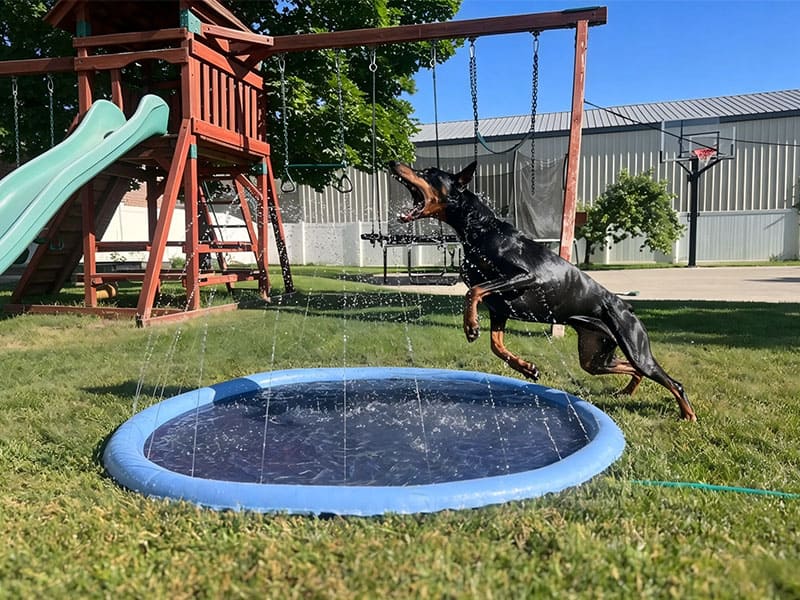
A dog splash pad looks simple at first: connect a hose, turn on the water, and let your dog enjoy the spray. But dogs do not use water toys gently. They run, jump, turn quickly, scratch with their nails, bite at moving water, and bring mud, grass, fur, and saliva onto the surface. That means the real safety question is not only whether a dog splash pad is fun. It is whether the material, surface, size, water pressure, and setup can handle the way dogs actually play.
A dog splash pad is generally safe for dogs when it is made from pet-suitable PVC or reinforced composite material, placed on flat ground, used with low to medium water pressure, and cleaned after play. The main risks are slipping, sharp nails, chewing, dirty water, overheating, and weak material that was not designed for active dog movement.
For a small calm dog, almost any well-made splash pad may feel easy to use. For a Labrador, German Shepherd, Husky, Golden Retriever, or other large active dog, the requirements are much higher. The pad needs better grip, stronger seams, reinforced material, and enough space for turning. Imagine a large dog sprinting across the mat, chasing the spray, then turning suddenly with wet paws. That one moment explains why safety depends on more than the product photo.
What Is a Dog Splash Pad?
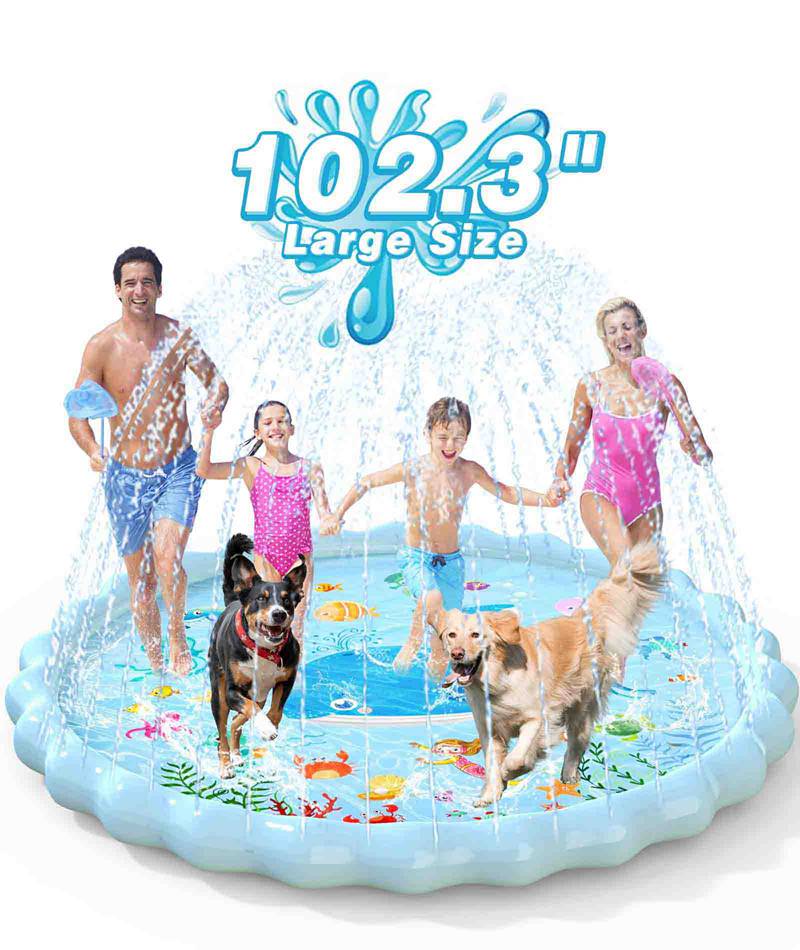
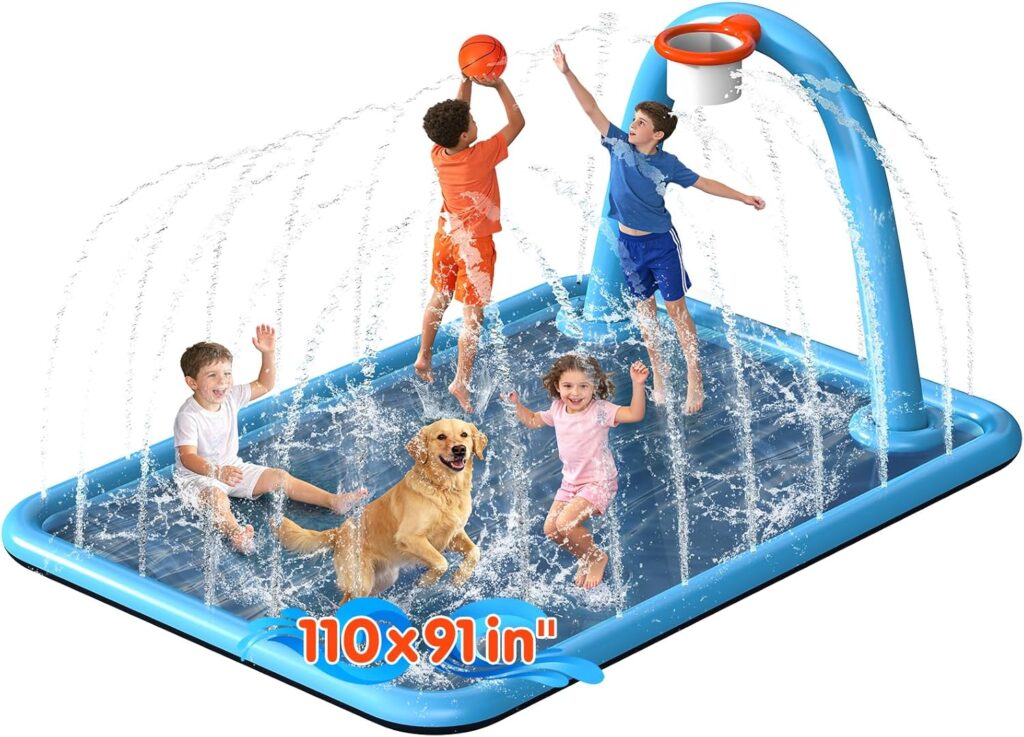
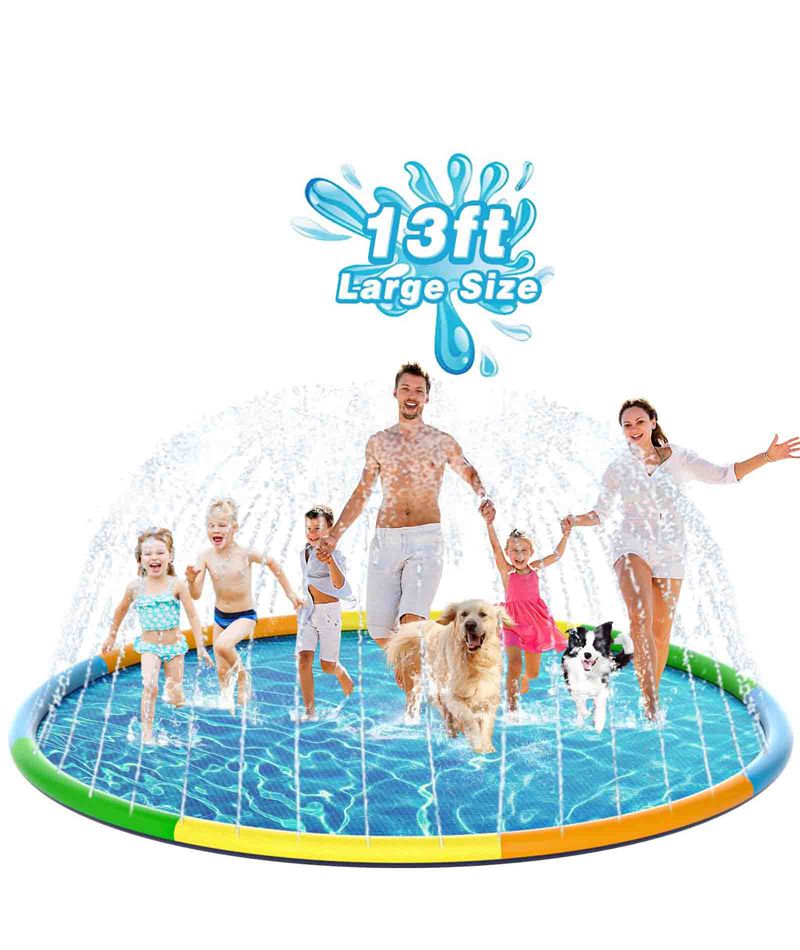
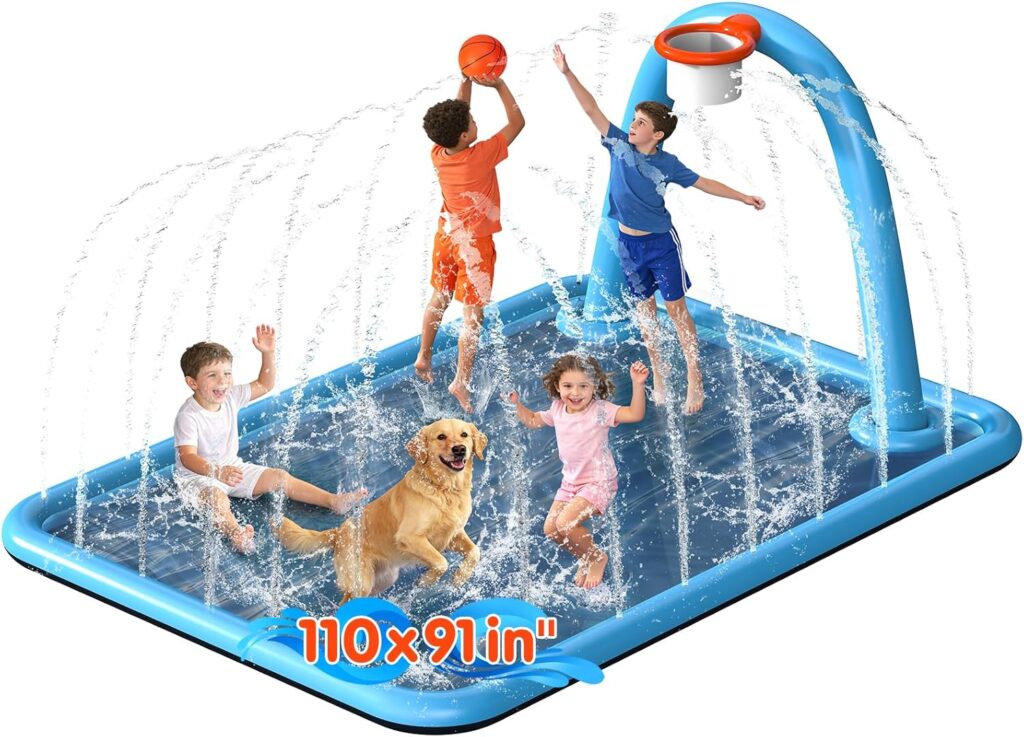
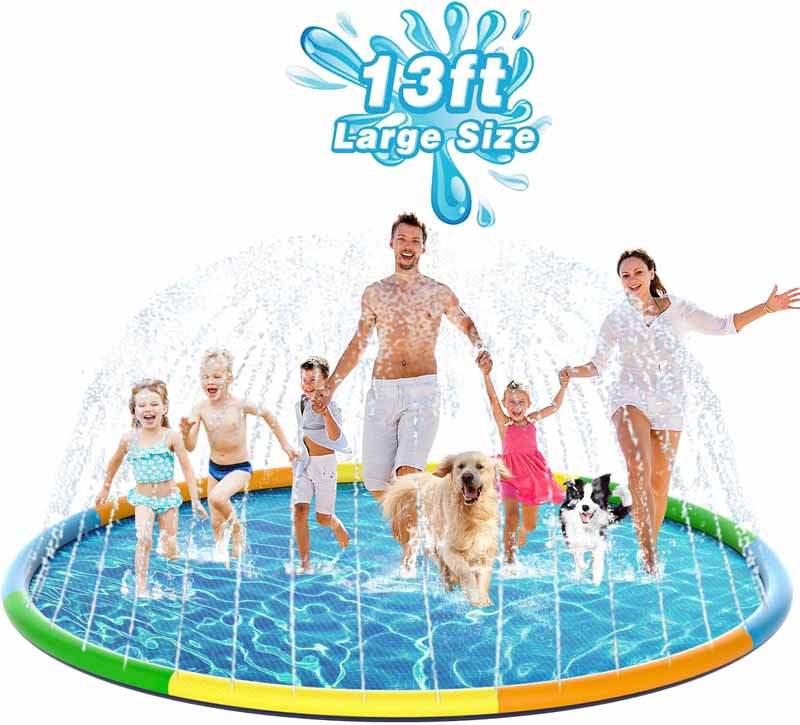
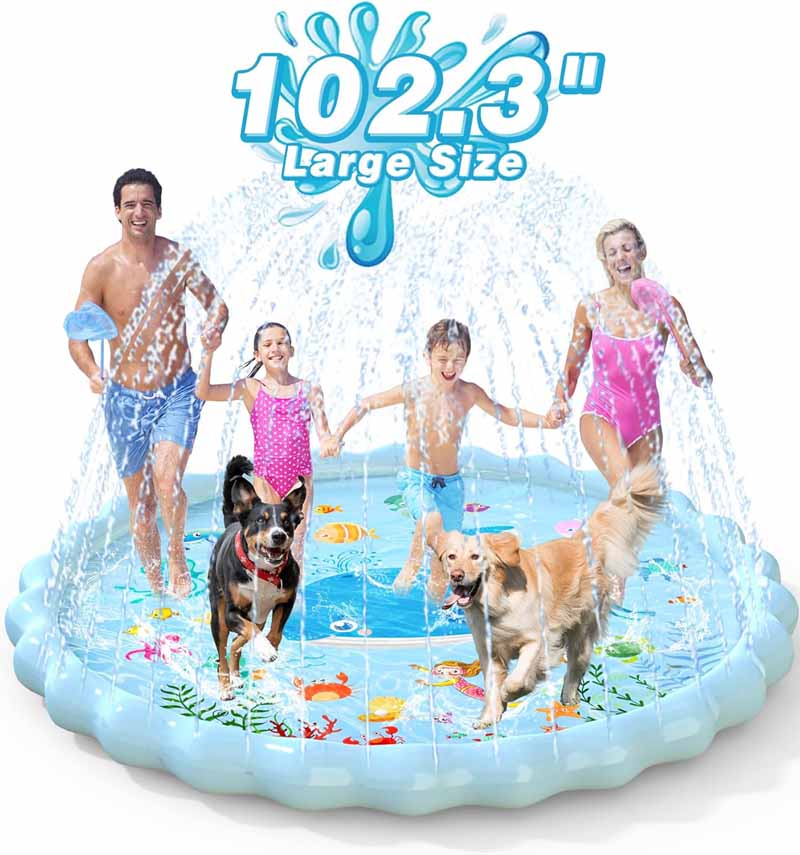
A dog splash pad is a flat outdoor water-play mat that connects to a garden hose and sprays water from small holes around the outer ring. It creates a shallow wet area where dogs can cool their paws, chase water, and play without needing to swim. For many families, it is easier to use than a dog pool because it sets up faster, drains quicker, and takes less storage space after summer play.
A good dog splash pad is not just a “kids splash pad with paw prints.” Dogs use the surface differently. They run with nails, turn suddenly, bite at spray streams, step hard near the edge, and sometimes drag the hose while playing. Because of that, a dog splash pad needs stronger material, better grip, stable water pressure, and a connector that can handle movement.
A dog splash pad should be judged by five real-use points:
- whether the surface stays grippy when wet
- whether the PVC can resist paw and nail pressure
- whether the outer ring holds water pressure evenly
- whether the hose connector leaks or twists easily
- whether the pad is easy to rinse, dry, fold, and store
For small calm dogs, basic backyard water play may be simple. For medium and large dogs, the product has to work much harder. A Labrador, Husky, German Shepherd, or Golden Retriever may put much more stress on the mat than a child casually standing on it.
| Real Use Factor | Why It Matters for Dogs |
|---|---|
| Paw pressure | Dogs concentrate weight through small paw contact areas |
| Nail contact | Long or sharp nails can scratch weak surfaces |
| Fast turning | Wet turning increases slip and surface stress |
| Chewing behavior | Some dogs bite spray, edges, or hose connector |
| Outdoor ground | Grass, patio, or concrete affects bottom wear |
| Water pressure | Ring and seam strength affect spray stability |
What Does a Dog Splash Pad Do?
A dog splash pad gives dogs a shallow water-play space for cooling, movement, and summer enrichment. It is especially useful for dogs that enjoy sprinklers but do not like deep pools. The dog can stay in control because the water layer is shallow and the surface remains open.
For owners, the main value is convenience. A dog pool must be filled, drained, cleaned, and stored. A splash pad usually only needs a hose connection and a flat outdoor surface. After play, the water can drain away much faster than a pool.
A dog splash pad can help with:
- cooling the paws and belly during warm weather
- encouraging light exercise in the yard
- giving high-energy dogs a fun activity
- helping nervous dogs experience water gently
- reducing the need for a large standing pool
- creating a shared play area for one or more dogs
The product is most useful for short play sessions. Many dogs do well with 10–20 minutes of water play, depending on weather, breed, age, and energy level. Puppies, senior dogs, overweight dogs, short-nosed breeds, and heavy-coated breeds may need shorter sessions and more rest.
| Dog Type | How a Dog Splash Pad Helps | What to Watch |
|---|---|---|
| Puppy | Gentle water introduction | Keep pressure low |
| Active adult dog | Exercise and cooling | Watch for overexcitement |
| Senior dog | Low-impact cooling | Avoid slippery setup |
| Large dog | Backyard water activity | Choose reinforced material |
| Nervous dog | Less intimidating than pool | Let dog approach slowly |
| Multiple dogs | Shared water play | Use larger size and supervise |
A dog splash pad works best when the owner treats it as supervised play equipment. It should not be used as a replacement for shade, drinking water, or rest during hot weather.

Dog Splash Pad vs Dog Pool
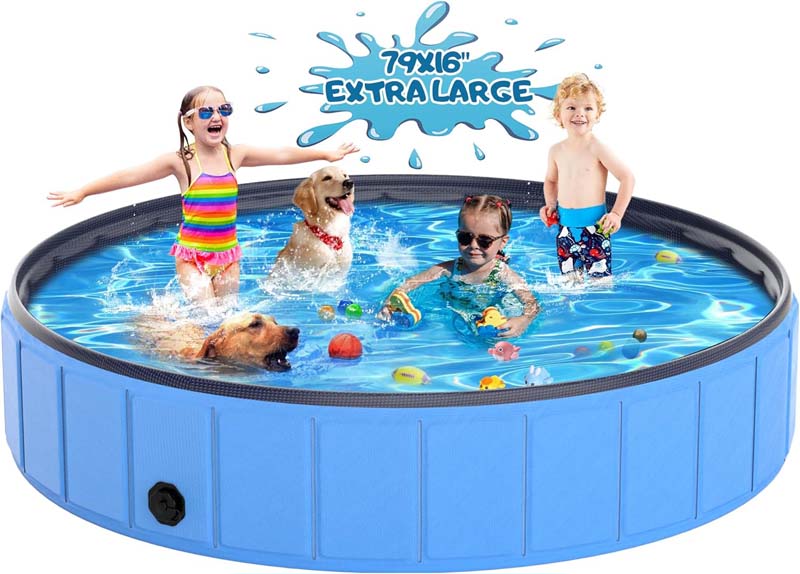
A dog splash pad and a dog pool are both water products for pets, but they fit different dog behaviors. A dog splash pad is better for movement. A dog pool is better for soaking.
A splash pad is usually better if the dog:
- likes chasing sprinklers
- prefers shallow water
- runs and plays rather than lies down
- is nervous around pools
- needs quick cooling breaks
- lives in a home with limited storage space
A dog pool is usually better if the dog:
- likes sitting or lying in water
- needs deeper soaking for cooling
- enjoys bathing or rinsing
- is calm around standing water
- needs a contained water area
The biggest difference is water depth. A splash pad uses moving water and a thin surface layer. A pool holds more standing water. That affects cleaning, storage, safety, and how dogs interact with the product.
| Feature | Dog Splash Pad | Dog Pool |
|---|---|---|
| Water depth | Very shallow | Deeper |
| Best for | Spray play, running, paw cooling | Soaking, sitting, bathing |
| Setup time | Usually faster | Slower because it must fill |
| Drainage | Faster | Slower depending on size |
| Cleaning | Surface rinse | More water and debris cleanup |
| Storage | Usually easier | Bulkier |
| Nervous dogs | Often easier to introduce | May feel intimidating |
| Active dogs | Very suitable | Can splash out water quickly |
| Large dogs | Needs reinforced PVC | Needs strong walls and bottom |
A dog pool can hold more dirt, fur, and saliva because the water stays in one place. A splash pad may be easier to rinse, but it still needs cleaning after use. Neither product is automatically cleaner or safer. The better choice depends on the dog’s behavior and the owner’s care routine.
For brands and retailers, this distinction matters. Customers often search for “dog water toy” or “dog cooling product” without knowing whether they need a splash pad or a pool. Clear comparison content helps reduce wrong purchases and customer complaints.
What Materials Are Used in a Dog Splash Pad?
Most dog splash pads are made from PVC-based material because PVC is waterproof, flexible, easy to print, and suitable for water-pressure products. For pet use, reinforced PVC or composite PVC is usually more reliable than thin standard PVC.
A dog splash pad has several important parts:
- center play surface
- outer water ring
- hose connector
- spray holes
- welded seams
- bottom ground-contact layer
Each part has a different job. The center surface supports paw movement. The ring holds water pressure. The connector handles the hose. The spray holes control water height. The seams keep the ring from leaking. The bottom layer protects against ground wear.
| Product Part | Function | Common Customer Problem if Weak |
|---|---|---|
| Center surface | Dog stands, runs, turns | Scratches, slipping, surface wear |
| Outer ring | Holds water pressure | Swelling, leaks, uneven spray |
| Hose connector | Connects garden hose | Leaking, twisting, pulling damage |
| Spray holes | Release water evenly | Clogging or uneven spray |
| Welded seams | Seal ring and structure | Slow leaks or seam separation |
| Bottom layer | Contacts ground | Abrasion or puncture |
A stronger material is especially important for medium and large dogs. Dog nails create concentrated pressure, especially when the dog turns quickly or digs at water. This is why a product made only for children may not always be suitable for dogs.
Material comparison:
| Material Direction | Best Use | Strength Level |
|---|---|---|
| Standard PVC | Small calm dogs, light use | Medium |
| Reinforced PVC | Medium and large dogs | High |
| Composite PVC | Active dogs, repeated use, multi-dog homes | Higher |
| Thin coated material | Low-cost light play | Lower for dog use |
Thickness helps, but thickness alone is not enough. A dog splash pad also needs strong welding, good connector design, balanced spray holes, and a bottom layer that can handle normal backyard surfaces.
How Does a Dog Splash Pad Work?
A dog splash pad works through water pressure. When the hose is turned on, water enters the outer ring. As the ring fills, pressure pushes water out through small holes around the edge. The spray usually points upward or inward, creating a wet play zone in the center.
Basic working process:
- connect the garden hose
- lay the pad flat
- turn water on slowly
- let the outer ring fill evenly
- adjust water pressure
- allow the dog to explore
Water pressure controls spray height. Low pressure creates gentle spray. Medium pressure creates balanced play. High pressure creates taller spray but can put more stress on the ring, seams, and connector.
| Water Pressure | Spray Result | Best For |
|---|---|---|
| Low | Gentle spray | Puppies, senior dogs, nervous dogs |
| Medium | Balanced spray | Most dogs |
| High | Tall spray | Use carefully; not needed for most dogs |
Many owners think higher spray means a better product. For dogs, that is not always true. Very high spray can scare nervous dogs, increase rough play, and stress the product. The best water setting is usually the lowest pressure that still creates enough spray for play.
A good splash pad should spray evenly. If one side sprays much higher than another, the pad may not be flat, the pressure may be too low, or some holes may be blocked. If the connector leaks or the ring becomes overly swollen, the pressure should be lowered.
Why Dog Splash Pad Design Matters
Dog splash pad design matters because dogs create different stress than children. A dog does not simply step on the mat. It may run, twist, jump, scratch, bite, and pull near the hose connector. These actions test the product in ways that are not obvious from a product photo.
Important design points include:
- larger usable center area
- enough ring strength for pressure
- anti-slip surface texture
- reinforced connector
- smooth but durable printed surface
- easy-drain structure
- foldable storage without seam damage
For large dogs, the size of the center area is especially important. If the pad is too small, the dog repeatedly steps on the outer ring or moves off the wet mat onto dry ground. That increases slip risk and edge stress.
Design concern table:
| Design Detail | Why It Matters |
|---|---|
| Anti-slip surface | Helps reduce slipping when wet |
| Reinforced ring | Supports water pressure |
| Strong connector | Reduces leak and hose-pull problems |
| Larger diameter | Gives dogs room to turn |
| Balanced spray holes | Creates even water play |
| Easy-clean surface | Reduces hygiene issues |
| Strong bottom layer | Protects against backyard wear |
For EPN-style product development, the strongest dog splash pads are designed around real pet behavior. The product should not only look fun. It should handle the way dogs actually play in the yard.
Is a Dog Splash Pad Safe?
A dog splash pad is generally safe for dogs when the product is made for pet use, placed on the right surface, and used with reasonable water pressure. Most safety problems do not come from the idea of a splash pad itself. They come from poor setup, slippery ground, sharp nails, rough play, dirty water, high pressure, or weak material that cannot handle dog movement.
For owners, the safest way to think about a dog splash pad is this: it should be treated like outdoor activity equipment, not a disposable summer toy. A dog may run across the mat, turn suddenly, bite at the spray, step on the outer ring, or dig at moving water. That means safety depends on the full use environment, not only the product.
A safer dog splash pad setup usually includes:
- reinforced PVC or composite PVC material
- anti-slip or textured surface
- flat grass or a soft outdoor base
- low to medium water pressure
- trimmed nails before frequent use
- fresh drinking water nearby
- shade or rest area close to the play zone
- supervision during play
- rinsing and drying after each use
The table below shows the main safety factors owners should check before letting dogs play.
| Safety Factor | Safer Choice | Higher-Risk Choice |
|---|---|---|
| Material | Reinforced PVC or composite PVC | Thin plastic or weak coated material |
| Surface | Flat grass or rubber outdoor mat | Gravel, slope, rough concrete |
| Water pressure | Low to medium | High pressure from the start |
| Dog nails | Trimmed and smooth | Long, sharp, or cracked nails |
| Supervision | Owner nearby | Dog left alone |
| Cleaning | Rinsed and dried after use | Stored wet and dirty |
| Weather | Warm but not extreme | Hot midday sun with no shade |
For small calm dogs, the safety requirements may be simple. For large dogs, puppies, senior dogs, and heavy chewers, the owner should pay more attention to product strength, water pressure, and play behavior.
Is a Dog Splash Pad Safe for Daily Use?
A dog splash pad can be safe for daily use during warm weather if each session is controlled, short enough, and followed by basic cleaning. Daily use does not mean the dog should play for hours. It means the product can become part of a healthy backyard routine when owners manage water, weather, surface, and dog behavior.
For many dogs, a short splash pad session is enough. A common safe range is around 10–20 minutes for many adult dogs, depending on temperature, breed, age, weight, coat type, and energy level. Puppies, senior dogs, overweight dogs, short-nosed breeds, and heat-sensitive dogs often need shorter sessions.
Daily use works best when owners follow a simple routine:
| Stage | What to Check | Why It Matters |
|---|---|---|
| Before play | Ground, nails, hose, connector | Prevents slipping, scratching, and leaks |
| Start play | Low water pressure | Helps dogs adjust safely |
| During play | Panting, slipping, chewing, digging | Stops problems early |
| After play | Rinse surface and drain water | Removes fur, mud, saliva, and grass |
| Before storage | Dry both sides | Reduces odor and mildew risk |
A daily-use dog splash pad should also be easy to clean. If owners need too much time to rinse and dry it, they may skip care steps. That is when hygiene problems start.
Daily use is safest when the dog is allowed to play naturally but not wildly. If the dog begins digging into the surface, biting the connector, or slipping repeatedly, the session should stop. A product that works well for gentle play may not survive rough chewing or clawing every day.
Dog Splash Pad Safety Risks
The main dog splash pad safety risks are slipping, nail damage, chewing, leaking, dirty water, overheating, and ground abrasion. These risks are common, but they are also manageable when owners know what to look for.
Slipping usually happens because the pad is on the wrong surface, the dog is running too fast, or the mat does not have enough grip. Grass is usually safer than concrete because it gives more cushion and traction around the pad.
Nail damage happens when long or sharp nails press into the surface during running or turning. This is especially important for large dogs. A 70 lb dog turning quickly on wet PVC can create much more surface stress than a small dog walking slowly.
Chewing is another real issue. Some dogs bite at the spray, edge, hose, or connector. This can damage the pad and may create loose pieces if the material tears.
| Risk | What Usually Causes It | Practical Fix |
|---|---|---|
| Slipping | Smooth surface, slope, high excitement | Use grass, lower pressure, supervise |
| Scratching | Long nails, hard turns, digging | Trim nails and choose reinforced material |
| Chewing | Dog bites spray or connector | Redirect and stop play if needed |
| Leaking | Weak seams or high pressure | Use medium pressure and inspect seams |
| Dirty water | Fur, saliva, mud, grass | Rinse after each use |
| Heat stress | Long play in hot weather | Add shade, water, and rest breaks |
| Bottom wear | Rough patio, gravel, concrete | Use grass or protective mat |
Owners should check the splash pad after each few uses. Look for small scratches, slow leaks, uneven spray, connector looseness, or seam stress. Small issues are easier to solve early than after the product fails.
For brands and retailers, reducing these risks starts with design. A dog splash pad should not simply be a children’s splash pad with pet graphics. It should be built for paw pressure, nail contact, cleaning, and outdoor surface use.
Silent Killers Around a Dog Splash Pad
The most serious hidden danger around dog splash pad play is heat stress. A splash pad can help dogs cool down, but it does not make hot weather harmless. Dogs can overheat while playing in water, especially if they are excited and keep running without resting.
Owners should watch for early warning signs:
- heavy or nonstop panting
- excessive drooling
- slowing down suddenly
- seeking shade
- red or dark gums
- wobbling or weakness
- vomiting or acting confused
- refusing to continue play
A splash pad should always be paired with shade and drinking water. If the dog is playing in direct sun, owners should shorten the session and give breaks.
Another hidden danger is hot ground. Concrete, patio stone, asphalt, and artificial turf can get very hot in summer. Even if the splash pad surface is wet, the area around it may burn paws or make the dog uncomfortable.
A simple paw-safety test:
| Ground Test | Meaning |
|---|---|
| You can hold your hand on the surface for 7 seconds | Usually more comfortable |
| You pull your hand away quickly | Too hot for paws |
| Surface is dark and in direct sun | Higher risk |
| Ground feels hot before water starts | Move to shade or grass |
Other quiet risks include dirty water, mold from damp storage, and old damage that has not been checked. A small leak or weak seam may not seem serious at first, but it can change how the pad holds pressure during play.
A safer routine is simple: play in cooler parts of the day, keep sessions short, offer drinking water, and stop before the dog looks exhausted.
Does Dog Splash Pad Water Pressure Matter?
Water pressure matters a lot. It affects spray height, outer ring stress, seam load, connector stability, and how comfortable the dog feels. Many owners think taller spray is better, but dogs usually do not need high pressure to enjoy the splash pad.
Low to medium pressure is usually best. It gives enough water movement for play while reducing stress on the product. High pressure may look exciting, but it can make nervous dogs back away, increase rough play, or cause leaks around weak seams and connectors.
| Water Pressure | Spray Result | Best For | Watch For |
|---|---|---|---|
| Low | Gentle short spray | Puppies, seniors, nervous dogs | Dog may lose interest if too weak |
| Medium | Balanced spray | Most dogs | Best everyday setting |
| High | Tall strong spray | Only if product supports it | Seam stress, connector leaks, fear response |
A safe water-pressure setup:
- lay the splash pad flat before adding water
- connect the hose straight, without twisting
- start with low pressure
- wait for the outer ring to fill evenly
- watch the dog’s reaction
- increase slowly if needed
- stop increasing once the spray is enough for play
If the outer ring becomes overly swollen, the connector leaks, or one side sprays unevenly, reduce pressure. Uneven spray may also mean some spray holes are blocked or the pad is not lying flat.
For large dogs, medium pressure is often the safest choice because large dogs already add more physical stress through movement.
Can Large Dogs Use a Dog Splash Pad Safely?
Large dogs can use a dog splash pad safely, but they need the right product and setup. The main issue is not only weight. It is movement force. Large dogs run harder, turn with more pressure, and place stronger force through their nails.
For large breeds, a safer splash pad should have:
- larger diameter
- reinforced PVC or composite PVC
- strong welded seams
- stable outer ring
- reinforced hose connector
- surface grip when wet
- enough open space around the pad
Size matters because large dogs need room to turn. If the pad is too small, they may step on the edge repeatedly or move quickly between wet and dry ground, which increases slipping.
| Dog Size | Suggested Splash Pad Size | Safety Reason |
|---|---|---|
| Under 25 lb | 40–55 inches | Enough for light play |
| 25–60 lb | 55–67 inches | More room for turning |
| 60–90 lb | 67 inches or larger | Reduces edge stress |
| Multiple dogs | 67–80 inches or larger | Reduces crowding |
| Very active dogs | Larger size preferred | Allows safer movement |
Nail care is especially important for large dogs. Long nails can reduce traction and increase surface scratching. Owners should also avoid rough concrete or gravel under the pad because large dogs push the bottom layer harder into the ground.
For large-dog households, choosing a reinforced dog splash pad is usually worth it because weak products may scratch, leak, or wear faster.
Is a Dog Splash Pad Safer Than a Dog Pool?
A dog splash pad can be safer than a dog pool for dogs that dislike deep water or do not swim well. It provides shallow water play without requiring the dog to climb into a pool or stay in deeper water. This can be helpful for puppies, nervous dogs, small dogs, and senior dogs.
However, a dog pool may be better for dogs that need soaking or enjoy lying in water. The safer option depends on the dog’s behavior.
| Safety Factor | Dog Splash Pad | Dog Pool |
|---|---|---|
| Water depth | Very shallow | Deeper |
| Drowning concern | Lower | Higher depending on depth |
| Slip risk | Wet surface turning | Entry and exit risk |
| Cooling style | Spray and wet surface | Soaking |
| Cleaning effort | Usually faster | More water cleanup |
| Best for | Active play and nervous dogs | Dogs that like resting in water |
A splash pad is often better for active dogs that like chasing water. A pool is often better for calm dogs that enjoy soaking. For safety, owners should not assume one is always better. The right choice depends on the dog’s size, confidence, energy level, and water preference.
For many families, a splash pad is the easier first step into water play because it feels less intimidating and requires less standing water.

How to Use a Dog Splash Pad?
A dog splash pad should be set up like a small backyard activity area, not just unfolded anywhere and turned on at full water pressure. The safest use starts with a clean, flat surface, low to medium water pressure, enough open space around the pad, and close supervision during play. Most problems happen because the product is placed on rough ground, used with too much pressure, left dirty after use, or matched with a dog that plays too aggressively for the material.
A safe setup should include:
- flat grass or a soft outdoor surface
- no stones, sticks, thorns, or sharp debris underneath
- low water pressure at the beginning
- a hose connection that is straight and secure
- enough space around the pad for running and turning
- fresh drinking water nearby
- shade or a rest area close to the play zone
- trimmed nails before frequent use
- cleaning and drying after play
For most dogs, the first session should be short. Let the dog sniff the pad, hear the water, and decide whether to step onto it. Some dogs will run in immediately. Others need a few minutes, or even a few sessions, before they feel comfortable.
Can I Take My Dog to a Splash Pad?
You can take your dog to a splash pad only if the location allows pets. Many public splash pads are designed for children and may not allow dogs because of hygiene rules, local regulations, water system concerns, or safety issues around children. Before bringing a dog to a public splash pad, check posted signs, city park rules, or the local parks department website.
For most dog owners, a home dog splash pad is the safer and more practical choice because you control:
- water pressure
- surface cleanliness
- dog behavior
- playtime length
- cleaning after use
- exposure to other dogs or children
Public splash pads can be risky for dogs because they are usually built for barefoot children, not dog nails. The surface may be hard, slick, or crowded. Some dogs may become overstimulated by children running, water jets, loud sounds, or other pets nearby.
| Splash Pad Type | Dog Suitability | What to Check |
|---|---|---|
| Public city splash pad | Often not allowed | Pet rules and hygiene policy |
| Children’s backyard splash pad | Sometimes suitable | Material strength and grip |
| Dog-specific splash pad | Best for home use | Size, PVC strength, connector quality |
| Dog park water area | Usually more suitable | Crowding, cleanliness, supervision |
If your dog is nervous, reactive, very large, or likely to chase children, a public splash pad is usually not a good idea. A backyard dog splash pad gives your dog a calmer environment and gives you better control over safety.
How to Set Up a Dog Splash Pad
A proper setup takes only a few minutes, but it can prevent most safety and durability problems. Before connecting the hose, choose the location carefully and inspect the ground.
Step-by-step setup:
- choose a flat area with enough open space
- remove stones, sticks, sharp mulch, or thorns
- unfold the pad completely
- smooth out wrinkles before adding water
- connect the hose straight into the connector
- make sure the hose is not pulling sideways
- start with low water pressure
- let the outer ring fill evenly
- increase pressure slowly only if needed
- watch how the dog reacts before letting play get too rough
A safe setup should avoid:
- gravel
- steep slopes
- rough concrete
- hot pavement
- sharp landscaping edges
- furniture corners
- garden tools
- hoses stretched across walking paths
| Setup Check | Safe Condition | Risky Condition |
|---|---|---|
| Ground | Flat, clean, soft | Sloped, rocky, sharp |
| Pad position | Fully flat | Wrinkled or folded |
| Hose | Straight and relaxed | Twisted or pulling |
| Water pressure | Low to medium | Full pressure immediately |
| Play area | Open space | Crowded with objects |
| Dog entry | Calm introduction | Forced onto pad |
For large dogs, setup matters even more. Their body weight pushes the pad harder against the ground, so even a small stone underneath can become a pressure point. If the dog runs hard or turns sharply, that pressure can damage the bottom layer faster.
Best Surface for a Dog Splash Pad
The best surface for a dog splash pad is flat grass. Grass gives dogs better footing around the pad, cushions movement, stays cooler than many hard surfaces, and helps protect the bottom layer from abrasion.
If grass is not available, a rubber outdoor mat can help. It creates a softer base and reduces direct contact between the splash pad and rough patio or deck surfaces.
| Surface | Safety Rating | Notes |
|---|---|---|
| Flat grass | 5/5 | Best balance of grip, softness, and bottom protection |
| Rubber outdoor mat | 5/5 | Good underlayer for patios or decks |
| Smooth patio | 3/5 | Easy to clean but may become slippery |
| Wood deck | 3/5 | Can be slick when wet |
| Concrete | 2/5 | May abrade the pad and heat up in sun |
| Artificial turf | 2/5 | Can get hot and may hold odor |
| Gravel | 1/5 | Not recommended due to puncture and paw risk |
| Sloped ground | 1/5 | Increases slip risk and uneven water flow |
Before use, do a quick ground check:
- run your hand over the surface
- remove sharp debris
- check for hot spots
- make sure the area is not slippery when wet
- press the ground lightly to see if any hard points stick up
Concrete is one of the most common problem surfaces. It may look clean and convenient, but rough concrete can wear the bottom layer, while smooth concrete can become slippery around the pad. If concrete is the only option, use a protective mat underneath and keep play calmer.
Do Dogs Need Supervision on a Splash Pad?
Yes. Dogs should be supervised on a splash pad, especially during first use, large-dog play, multi-dog play, or hot weather. A dog splash pad is shallow, but dogs can still slip, chew, overheat, or damage the product if play becomes too rough.
Supervision is most important for:
- puppies
- senior dogs
- large dogs
- heavy chewers
- nervous dogs
- multiple dogs
- short-nosed breeds
- dogs that dig or bite at water
What to watch during play:
| Dog Behavior | What It May Mean | What to Do |
|---|---|---|
| Biting hose or connector | Chewing risk | Redirect or stop play |
| Digging at surface | Puncture risk | Pause and redirect |
| Slipping repeatedly | Surface or pressure issue | Lower pressure or move pad |
| Heavy panting | Needs rest | Stop and cool down |
| Backing away from spray | Nervous response | Lower water pressure |
| Rough chasing | Collision risk | Separate dogs or pause play |
Supervision does not mean standing over the dog the entire time. It means staying close enough to respond quickly if the dog starts chewing, slipping, digging, or showing signs of heat stress.
For multi-dog use, supervision matters even more. Dogs may crowd the same area, chase each other across wet ground, or push smaller dogs off the pad. If one dog is much larger or more energetic, the owner should keep play short and controlled.
How to Adjust Dog Splash Pad Water
The best water setting is usually the lowest pressure that still creates enough spray for play. Dogs do not need the tallest spray to have fun. In fact, high water pressure can make some dogs nervous and can add unnecessary stress to the outer ring, seams, and connector.
Start low, then adjust slowly.
Water adjustment guide:
| Dog Type | Suggested Water Setting | Why |
|---|---|---|
| Puppy | Low | Gentle introduction |
| Senior dog | Low | Less slipping and stress |
| Nervous dog | Low | Reduces fear |
| Small dog | Low to medium | Avoids overwhelming spray |
| Medium dog | Medium | Balanced play |
| Large active dog | Medium | Enough fun without excess pressure |
| Multiple dogs | Medium | Keeps spray consistent |
Signs the pressure may be too high:
- the dog avoids the spray
- spray hits the dog’s face too strongly
- the outer ring looks overly swollen
- connector leaks or sprays sideways
- the pad shifts during play
- one side sprays much higher than another
- play becomes too wild too quickly
A good setup routine:
- start with the hose barely open
- let the dog approach naturally
- increase slowly until spray height is comfortable
- stop adjusting once the dog is engaged
- reduce pressure if the dog becomes nervous or rough
For product life, medium pressure is usually better than high pressure. It reduces seam stress while still giving dogs enough water movement to enjoy.
How Long Should Dogs Play on a Splash Pad?
Most dogs should start with short sessions, especially the first time. A good first session may last only 5–10 minutes. Once the dog is comfortable, many adult dogs can enjoy 10–20 minutes of splash pad play, depending on weather and energy level.
Suggested playtime guide:
| Dog Type | Suggested Session Length |
|---|---|
| Puppy | 5–10 minutes |
| Small adult dog | 10–15 minutes |
| Medium adult dog | 15–20 minutes |
| Large active dog | 15–25 minutes with breaks |
| Senior dog | 5–15 minutes |
| Heat-sensitive dog | Short sessions with close monitoring |
Longer is not always better. Dogs can get excited and ignore tiredness. Water play may feel cooling, but the dog is still running, turning, and using energy.
Stop or pause play if you notice:
- heavy panting
- slowing down
- repeated slipping
- excessive biting or digging
- seeking shade
- ignoring commands
- looking tired or unsteady
- lying down suddenly
After play, give the dog time to rest in shade and offer drinking water. Do not give heavy meals immediately after intense play.
What Should You Check After Use?
After-use care protects both the dog and the splash pad. Many product problems come from storing the pad dirty or damp. A quick post-use routine can prevent odor, mildew, clogged spray holes, and early wear.
After-use checklist:
- turn off water
- disconnect the hose gently
- drain remaining water
- rinse mud, fur, and saliva from the surface
- check the connector for dirt or grass
- check spray holes for clogging
- inspect seams and surface scratches
- dry both sides before folding
- store in a cool, dry place
| After-Use Check | Why It Matters |
|---|---|
| Surface rinse | Removes dirt, saliva, and fur |
| Spray hole check | Keeps water pattern even |
| Seam check | Finds early leak signs |
| Connector check | Prevents buildup and damage |
| Full drying | Reduces odor and mildew |
| Loose folding | Helps avoid hard crease stress |
If the splash pad was used by multiple dogs or placed on muddy grass, a deeper clean may be needed. Mild pet-safe soap and a soft cloth can help, followed by a full rinse and drying.
A dog splash pad is easiest to use safely when setup and cleanup become part of the routine. Put it on the right surface, start with gentle water, supervise play, and dry it before storage. That simple habit keeps the experience safer for dogs and helps the product last longer.
Is a Dog Splash Pad Hygienic?
A dog splash pad can be hygienic when it is rinsed, drained, and dried after each use. It is usually easier to clean than a dog pool because it holds less standing water and has a flat surface. But it is still a pet water product, which means fur, saliva, mud, grass, paw dirt, and outdoor debris can build up quickly if owners do not clean it properly.
The main hygiene issue is not the splash pad itself. It is what happens after play. If dirty water sits on the surface, or if the pad is folded while damp, odor and mildew can develop. If spray holes become clogged with grass, dirt, or mineral buildup, water flow may become uneven. If several dogs use the same pad, cleaning needs increase.
A clean dog splash pad routine should focus on:
- rinsing after each use
- draining water fully
- removing fur, mud, leaves, and grass
- drying both sides before storage
- checking spray holes and hose connector
- deep cleaning after muddy or multi-dog use
For most households, the easiest rule is simple: if the splash pad looks dirty enough that you would not want your dog licking it, rinse it before more play.
Is a Dog Splash Pad Cleaner Than a Pool?
A dog splash pad can be cleaner than a dog pool in many daily-use situations because it uses less standing water and is easier to drain. A dog pool holds a larger volume of water, so fur, saliva, mud, grass, and outdoor debris can sit in the water for longer. A splash pad usually has moving hose water and a shallow surface layer, so dirt is easier to rinse away.
That does not mean a splash pad is automatically clean. Dogs still step on it with wet paws, drool on the surface, bite at water streams, and carry in yard debris. The difference is that cleaning a splash pad usually takes less time.
| Hygiene Factor | Dog Splash Pad | Dog Pool |
|---|---|---|
| Standing water | Low | High |
| Fur buildup | Moderate | High |
| Mud buildup | Moderate | High |
| Cleaning time | Faster | Slower |
| Drying time | Faster | Longer |
| Water replacement | Quick rinse | Drain and refill |
| Odor risk | Low if dried | Higher if water sits |
| Storage hygiene | Good if fully dry | Depends on pool material and drying |
A dog pool may look cleaner at first because dirt spreads through more water, but that often means more water needs to be dumped and replaced. A splash pad shows dirt on the surface more clearly, which can actually help owners notice when cleaning is needed.
For daily backyard play, a dog splash pad is often more practical for hygiene because owners can rinse it quickly after each session.
How to Clean a Dog Splash Pad
Cleaning a dog splash pad should be quick but consistent. The goal is to remove dirt before it dries into the surface, blocks spray holes, or creates odor during storage.
A basic cleaning routine after each use:
- turn off the hose
- disconnect the hose gently
- drain remaining water
- rinse the top surface with clean water
- remove fur, grass, leaves, and mud
- wipe dirty spots with a soft cloth
- rinse the hose connector area
- check spray holes for buildup
- air dry both sides before folding
For heavier use, a deeper clean may be needed. This is especially true after muddy play, multiple dogs, or daily summer use.
A deeper cleaning routine:
- use mild pet-safe soap
- wipe with a soft sponge or cloth
- avoid rough brushes that may scratch the surface
- rinse thoroughly so no soap residue remains
- dry completely in shade or open air
- inspect seams, connector, and spray holes before storage
| Cleaning Task | Light Use | Heavy Use |
|---|---|---|
| Surface rinse | After each session | During and after play |
| Remove fur and debris | After each session | During and after play |
| Wipe dirty areas | As needed | After each session |
| Check spray holes | Weekly | Every few uses |
| Deep clean | 1–2 times monthly | 1–2 times weekly |
| Full drying | Every time | Every time |
Avoid strong bleach mixtures, harsh solvents, abrasive cleaners, and scented chemical sprays. Dogs may lick the surface during play, so cleaning products should be gentle and fully rinsed away.
What Food to Avoid After Dog Splash Pad Play
After splash pad play, many owners give dogs treats or fruit. That is fine when the food is safe, but some fruits and snacks should be avoided. The most important fruit dogs should not eat is grapes, including raisins. These can be dangerous for dogs and should not be given after water play or at any other time.
Avoid these foods after play:
- grapes
- raisins
- cherries with pits
- fruit seeds or cores
- chocolate-covered fruit
- heavily sweetened fruit snacks
- foods containing xylitol
- large amounts of sugary fruit
Safer small snacks may include:
- seedless watermelon
- blueberries
- apple slices without seeds
- cucumber pieces
- small banana pieces
| Food | Dog Safe? | Notes |
|---|---|---|
| Seedless watermelon | Yes, small amounts | Good cooling snack |
| Blueberries | Yes | Easy small treat |
| Apple slices | Yes, without seeds | Remove core and seeds |
| Cucumber | Yes | Light and hydrating |
| Grapes | No | Avoid completely |
| Raisins | No | Avoid completely |
| Cherries with pits | No | Pit and digestive risk |
| Xylitol foods | No | Dangerous for dogs |
This topic connects to splash pad safety because dogs may be excited and thirsty after play. Give fresh drinking water first, let the dog calm down, and avoid heavy meals immediately after intense running. Small safe snacks are better than sugary or risky foods.
How Often to Change Dog Splash Pad Water
A dog splash pad does not hold water like a pool, so “changing the water” usually means keeping water moving during play and draining the surface afterward. If water becomes muddy, cloudy, hairy, or slippery, rinse the pad immediately.
Water should be refreshed or rinsed when:
- fur builds up on the surface
- mud appears in the center
- the water looks cloudy
- the dog drools heavily
- grass or leaves collect
- multiple dogs are using the pad
- the surface feels slick
- the water smells unpleasant
| Use Situation | Water Care Needed |
|---|---|
| One small dog, short play | Rinse after use |
| One medium dog | Rinse after use and wipe dirty areas |
| Large active dog | Rinse and inspect surface |
| Multiple dogs | Rinse during and after play |
| Muddy yard | Stop and rinse immediately |
| Hot weather | Drain after play; do not leave water sitting |
| Before storage | Dry completely |
For hot days, do not leave dirty water sitting on the pad. Warm water mixed with saliva, fur, and grass can smell bad quickly. Even a thin layer of dirty water can create odor if the product is folded damp.
A good habit is to drain and rinse the pad as soon as play ends. It takes only a few minutes and protects both hygiene and product life.
Can Multiple Dogs Use a Splash Pad?
Multiple dogs can use a splash pad, but the pad should be large enough, strong enough, and cleaned more often. More dogs mean more paw pressure, more fur, more saliva, more dirt, and more rough movement.
Multi-dog use is safer and cleaner when:
- the splash pad is larger than a single-dog size
- dogs are comfortable playing together
- water pressure stays moderate
- the surface has enough grip
- owners supervise closely
- the pad is rinsed during long sessions
- the surface is cleaned after play
| Dog Group | Recommended Setup | Cleaning Need |
|---|---|---|
| Two small dogs | Medium splash pad | Rinse after use |
| Two medium dogs | Large reinforced splash pad | Rinse and inspect |
| One large + one small dog | Large pad, close supervision | Rinse and watch crowding |
| Three or more dogs | Extra-large pad if available | Rinse during and after use |
| Rough players | Reinforced PVC, short sessions | Inspect seams and surface |
Owners should pause play if dogs start crowding, guarding the water, knocking each other over, or biting the connector. Multi-dog play can become exciting fast, especially when water sprays from one side more strongly than another.
For retailers and brands, multi-dog households are important because these customers often care more about size, durability, and cleaning. A larger reinforced dog splash pad can better serve this group than a small, light-use product.
How to Store a Dog Splash Pad Cleanly
Storage is one of the biggest hygiene factors. A clean pad can still smell bad if it is folded while damp. The top surface may look dry, but the bottom layer often stays wet longer, especially after use on grass.
A safe storage routine:
- drain all water
- rinse surface debris
- wipe dirty areas
- dry the top surface
- flip and dry the bottom surface
- check seams and connector
- fold loosely without sharp creases
- store in a cool, dry place
| Storage Habit | Result |
|---|---|
| Folded clean and dry | Better product life |
| Folded damp | Odor and mildew risk |
| Stored in direct sun | Faster material aging |
| Stored under heavy items | Crease and pressure damage |
| Stored near sharp tools | Puncture risk |
| Stored loosely in bag | Better long-term condition |
For end-of-season storage, clean the pad more carefully before putting it away. Any leftover dirt, saliva, or moisture can become worse over weeks or months.
A dog splash pad can stay fresh through the summer if cleaning becomes part of the play routine. Rinse it, dry it, inspect it, and store it properly. That simple habit makes the product safer for dogs and more reliable for owners.

Which Dog Splash Pad Should You Choose?
The best dog splash pad is the one that matches your dog’s real size, weight, nail strength, energy level, and play style. A small calm dog may only need a simple splash pad for light cooling. A large dog that runs, digs, and bites at the spray needs a stronger product with reinforced PVC, better grip, a larger play area, and a stable hose connector.
Most poor purchases happen when customers choose by photo, color, or lowest price instead of real-use requirements. A dog splash pad may look similar online, but the difference shows up when a 70 lb dog runs across it, turns hard on wet PVC, or steps repeatedly on the outer ring.
A good dog splash pad should be judged by these practical points:
- dog size and weight
- material strength
- surface grip
- pad diameter
- hose connector quality
- seam strength
- spray balance
- cleaning and drying ease
- whether it is made for dogs or only for children
For pet owners, the goal is simple: choose a splash pad that feels fun for the dog, manageable for the owner, and strong enough for repeated backyard use.
Best Size for a Dog Splash Pad
Size is one of the most important buying factors because dogs need space to move naturally. A dog does not stand still in the center of the mat. It circles, jumps, turns, chases the spray, and may step on the edge repeatedly. If the splash pad is too small, the dog may slip between the wet mat and dry ground, crowd the hose connector, or put too much pressure on the outer water ring.
A practical size guide:
| Dog Size / Use Type | Suggested Dog Splash Pad Size | Why It Helps |
|---|---|---|
| Small dogs under 25 lb | 40–55 inches | Enough room for light stepping and cooling |
| Medium dogs 25–60 lb | 55–67 inches | Better space for turning and play |
| Large dogs 60–90 lb | 67 inches or larger | Reduces edge stress and crowding |
| Very active dogs | Larger size preferred | Gives more movement room |
| Two dogs | 67–80 inches or larger | Reduces collision and crowding |
| Three or more dogs | 80 inches or larger if available | Better shared play space |
For large breeds such as Labradors, Golden Retrievers, German Shepherds, Huskies, and Bernese Mountain Dogs, a larger diameter is usually safer and more comfortable. These dogs need enough space to turn without constantly stepping off the pad.
However, bigger is not always better for every home. A larger splash pad:
- uses more water
- takes longer to dry
- needs more yard space
- may be harder to fold and store
- may feel oversized for small dogs
A simple rule works well: choose the smallest size that still lets your dog turn comfortably without stepping off the pad every few seconds.
Which Dog Splash Pad Material Is Better?
For most dogs, reinforced PVC or composite PVC is a better choice than thin standard PVC. Dogs put concentrated pressure on the surface through their paws and nails. This is very different from children standing barefoot on a splash mat.
Material matters most when the dog is:
- medium or large
- active or playful
- likely to dig at water
- likely to bite the spray or edge
- using the splash pad often
- sharing the pad with other dogs
A good dog splash pad material should provide:
- waterproof performance
- enough flexibility for folding
- resistance against nail scratches
- stable seam bonding
- smooth but grippy surface
- stronger bottom layer for outdoor use
Material comparison:
| Material Type | Best For | Strength Level | Main Concern |
|---|---|---|---|
| Thin standard PVC | Small calm dogs, light use | Medium | May wear faster |
| Reinforced PVC | Medium and large dogs | High | Slightly higher cost |
| Composite PVC | Active dogs, repeated use, multi-dog homes | Higher | Higher product cost |
| Thin coated fabric | Low-cost light play | Low to medium | Less ideal for nails and water pressure |
Thickness helps, but thickness alone does not make a good product. A thicker splash pad can still fail if the seams are weak or the connector is poorly designed. For dog use, the best material decision is a full structure decision: surface, ring, seam, connector, and bottom layer all need to work together.
A stronger dog splash pad should feel flexible but not flimsy. It should lie flat, hold water pressure evenly, and not feel overly soft around the connector or outer ring.
Must-Have Dog Splash Pad Features
A good dog splash pad should be designed around real dog behavior. Dogs do not use the product gently, so practical features matter more than decoration.
Important features include:
- anti-slip or textured play surface
- reinforced PVC or composite PVC
- stable outer water ring
- strong hose connector
- even spray holes
- easy drainage
- easy-clean surface
- bottom layer with abrasion resistance
- clear setup and cleaning instructions
Feature checklist:
| Feature | Why It Matters |
|---|---|
| Anti-slip surface | Helps reduce slipping when wet |
| Reinforced material | Handles paws, nails, and repeated movement |
| Strong connector | Reduces leaks from hose pulling or twisting |
| Even spray holes | Creates balanced water play |
| Stable outer ring | Holds water pressure without uneven swelling |
| Easy drainage | Reduces dirty water sitting on the surface |
| Easy-clean surface | Makes daily rinsing realistic |
| Strong bottom layer | Protects against grass, patio, and ground contact |
Many customers focus on spray height, but spray height is not the most important feature. For dogs, a safer and better experience usually comes from balanced spray, comfortable surface grip, and stable construction.
The hose connector deserves special attention. It is one of the most common stress points because the hose can twist, pull, or get dragged during play. A weak connector can cause leaks even if the main material is strong.
For large dogs and multi-dog households, the connector, seams, and bottom layer are especially important.
Dog Splash Pad Buying Mistakes
The most common buying mistake is choosing a dog splash pad based only on price and appearance. Many products look similar online, but they do not perform the same in real backyard use.
Common mistakes include:
- buying a kids splash pad for a large dog
- choosing a size that is too small
- ignoring nail resistance
- focusing only on spray height
- using high water pressure from the start
- placing the pad on concrete or gravel
- not checking the hose connector
- folding the pad while wet
- leaving dogs unsupervised
- assuming all PVC splash pads are the same
Buying mistake guide:
| Mistake | What Happens Later | Better Choice |
|---|---|---|
| Choosing the cheapest option | Faster leaks or surface wear | Compare material and seam design |
| Buying too small | Dog steps off edge often | Choose by dog weight and activity |
| Ignoring nails | Scratches and slipping | Trim nails and choose reinforced PVC |
| Using high pressure | Connector or seam stress | Start low and use medium pressure |
| Using rough ground | Bottom abrasion | Place on grass or rubber mat |
| Storing wet | Odor and mildew | Dry fully before folding |
Another mistake is assuming that “pet-friendly” automatically means durable enough for large dogs. Some products are suitable for small pets but not for active large breeds. Customers should look for stronger material, larger size, and clear dog-use instructions.
What Should Large Dog Owners Look For?
Large dog owners should choose a dog splash pad more carefully because large dogs create stronger force through weight, speed, and nails. A large dog can stress the outer ring, surface, connector, and seams much more than a small dog.
Large dog owners should look for:
- 67 inches or larger size
- reinforced PVC or composite PVC
- textured surface for grip
- stronger hose connector
- good bottom layer
- wide center play area
- clear pressure guidance
- easy cleaning after use
Large-dog product checklist:
| Large Dog Need | Recommended Feature |
|---|---|
| More room to turn | Larger diameter |
| Strong paw pressure | Reinforced PVC |
| Fast movement | Anti-slip surface |
| Hose pulling risk | Strong connector |
| Nail contact | Thicker or reinforced surface |
| Repeated use | Better seam strength |
| Outdoor ground | Abrasion-resistant bottom |
Owners should also trim nails before frequent use. This protects the pad and helps the dog maintain better footing on wet surfaces. If the dog is a heavy chewer, the owner should supervise closely and stop play if the dog bites the connector or edge.
For large dogs, buying a stronger splash pad is usually more cost-effective than buying a cheaper one that fails quickly.
What Do Most Buyers Get Wrong?
Most buyers underestimate how rough dog play can be. They imagine the dog standing happily in the spray, but many dogs run, turn, bite, dig, and step hard near the edges. This is why photos do not tell the full story.
Customers often focus on:
- cute patterns
- low price
- spray height
- product diameter only
- quick shipping
But they should also check:
- whether the product is truly designed for dogs
- whether the surface has grip
- whether the connector is reinforced
- whether the bottom layer can handle the ground
- whether the product has clear cleaning instructions
- whether the size fits the dog’s real movement
A better buying process looks like this:
| Question to Ask | Why It Matters |
|---|---|
| How big is my dog? | Determines size and material need |
| How active is my dog? | Affects surface and seam stress |
| Does my dog chew? | Connector and edge durability matter |
| Where will I place it? | Ground surface affects wear and safety |
| How often will I use it? | Frequent use needs stronger material |
| Will multiple dogs use it? | Larger size and better cleaning matter |
A dog splash pad should be chosen like real pet activity gear. The right product makes play safer, cleaning easier, and product life longer. The wrong product may still look fun at first, but problems appear once dogs start using it the way dogs actually play.
Dog Splash Pad and Dog Behavior
A dog splash pad is not only a cooling product. It can also become a small training and bonding space when it is introduced correctly. Dogs react to water in very different ways. Some run straight into the spray, some bark at it, some bite the water streams, and others stand at the edge and watch for several minutes before stepping in.
A dog’s reaction depends on:
- age
- breed
- past water experience
- confidence level
- noise sensitivity
- energy level
- relationship with the owner
- whether the first introduction feels safe
For many dogs, the splash pad becomes more enjoyable when the owner treats it as a shared activity instead of simply turning on the hose and walking away. Dogs often look to their owners for emotional cues. If the owner is calm, encouraging, and patient, the dog is more likely to relax and explore.
How Dogs Show Love on a Splash Pad
Dogs do not say “I love you” in human words, but they show trust, affection, and comfort through body language. On a splash pad, those signs can be very easy to notice because the dog is in a playful environment.
Positive signs may include:
- loose tail wagging
- relaxed mouth
- soft eyes
- playful bouncing
- running back toward the owner
- bringing a toy to the splash pad
- looking back for encouragement
- choosing to return to the water voluntarily
A dog that feels safe may run into the spray, then glance back at the owner as if inviting them to join. Some dogs may place a toy in the water area. Others may lean into the owner after play or shake water nearby in a happy, messy way.
Behavior guide:
| Dog Behavior | What It Often Means |
|---|---|
| Loose tail wagging | Comfortable and happy |
| Returning to the pad | Interested and confident |
| Looking back at owner | Seeking connection or encouragement |
| Bringing toy | Inviting play |
| Play bow | Wants interaction |
| Staying near owner | Trust and comfort |
| Avoiding the pad | Needs slower introduction |
| Tucked tail or stiff body | Fear or discomfort |
Owners should not force affection or force play. If a dog avoids the splash pad, that is still communication. The best response is to lower water pressure, step back, use treats, and let the dog choose when to approach.
Does a Dog Splash Pad Build Trust?
Yes, a dog splash pad can help build trust when the experience is positive, calm, and controlled. Trust grows when the dog learns that the owner will not force it into uncomfortable situations. For water-shy dogs, this matters a lot.
A good trust-building routine:
- let the dog inspect the pad before water starts
- keep the hose pressure low
- stay nearby without pushing the dog
- use praise or small treats for calm curiosity
- stop before the dog becomes overwhelmed
- repeat short sessions over several days
For nervous dogs, the first goal is not play. The first goal is comfort. A dog may only sniff the edge on day one. That is still progress. On day two, it may step closer. Later, it may touch the water with one paw. This slow approach often works better than trying to make the dog “have fun” immediately.
Trust-building stages:
| Stage | Dog Action | Owner Response |
|---|---|---|
| First look | Watches from distance | Stay calm, no pressure |
| Curiosity | Sniffs pad edge | Praise gently |
| First contact | Touches wet surface | Reward calmly |
| Exploration | Walks across pad | Keep pressure low |
| Play | Chases spray or returns often | Continue short sessions |
| Confidence | Uses pad voluntarily | Maintain routine |
A splash pad can be especially useful for puppies because early positive water experiences may make future bathing, rinsing, and outdoor water play easier.
Why Some Dogs Fear a Splash Pad
Some dogs are afraid of splash pads because the product combines several unfamiliar things at once: moving water, spraying sound, wet footing, hose noise, and a new surface under their paws. A dog may not understand where the water is coming from or why the ground suddenly feels different.
Common reasons for fear include:
- spray hits the face too strongly
- water pressure is too high
- the surface feels slippery
- the hose makes sudden noise
- the dog had a bad water experience before
- children or other dogs make the area too chaotic
- the owner tries to force the dog onto the pad
Fear signs include:
| Fear Sign | What to Do |
|---|---|
| Backing away | Lower pressure and give space |
| Tucked tail | Stop and restart later |
| Barking at water | Let dog observe from distance |
| Stiff posture | Do not pull dog forward |
| Refusing treats | End session and try later |
| Jumping away suddenly | Turn water down or off |
For nervous dogs, start with the water off. Let the dog walk on the dry splash pad first. Then turn the water on very low. Some owners can place a favorite toy near the edge, but the dog should never be dragged or pushed onto the mat.
Why Some Dogs Bite the Water
Many dogs bite at splash pad water because moving water triggers play and chase behavior. The spray looks alive. It moves, changes direction, and reacts to pressure. For herding breeds, retrievers, terriers, and high-energy dogs, this can become very exciting.
Biting water is usually normal, but owners should watch what the dog is actually biting. Biting the spray is usually fine. Biting the hose, connector, outer ring, or spray holes can damage the product.
Biting behavior guide:
| What Dog Bites | Risk Level | Owner Action |
|---|---|---|
| Water spray | Low | Usually okay |
| Floating toy | Low | Good redirection |
| Hose | Medium | Redirect quickly |
| Connector | High | Stop play and protect area |
| Outer ring | High | Stop chewing behavior |
| Spray holes | High | Prevent damage |
Good redirection options include:
- floating water-safe toy
- rubber ball
- tug toy away from the connector
- treat break
- short training command before returning to play
If a dog is a heavy chewer, the splash pad should never be left unattended. A reinforced product helps with durability, but no splash pad is designed to be used as a chew toy.
How to Use a Dog Splash Pad for Training
A dog splash pad can be used for simple training because it gives the dog a fun reward while teaching calm behavior. This is especially useful for excited dogs that rush into water too aggressively.
Simple training ideas:
- “wait” before entering the pad
- “come” from the splash pad back to owner
- “leave it” around hose or connector
- “gentle” when biting at water
- “all done” when playtime ends
Training benefits:
| Command | Why It Helps |
|---|---|
| Wait | Prevents wild rushing |
| Come | Helps stop play safely |
| Leave it | Protects hose and connector |
| Gentle | Reduces biting and digging |
| All done | Builds a clear ending routine |
Short training works best. Ask for one easy behavior, reward it, then let the dog return to water play. The splash pad becomes the reward. This keeps training positive and prevents the dog from seeing commands as punishment.
For brands and retailers, this behavior angle matters because customers want more than a product. They want a better experience with their dog. A dog splash pad that supports play, trust, cooling, and simple training has stronger long-term value than a product positioned only as a summer toy.
Work With Epsilon for Dog Splash Pads
For brands, retailers, distributors, and e-commerce sellers, a dog splash pad is not just a seasonal water toy. It is a pet-use product that must handle paw pressure, nail contact, water pressure, outdoor surfaces, cleaning habits, and repeated storage.
American Epsilon Inc. specializes in PVC and composite inflatable and water-based products, including splash pads, pet water play products, inflatable pools, dog pools, and outdoor recreation products. With experience in material development, structure design, packaging, OEM/ODM production, and global supply, Epsilon can help businesses develop dog splash pads that are built for real backyard use.
Epsilon supports:
- custom dog splash pad sizes
- reinforced PVC and composite material options
- anti-slip surface design
- custom spray pattern development
- logo and graphic printing
- private label packaging
- multilingual instruction manuals
- sample development and mass production
For businesses, the goal is not only to make a product look attractive. The real goal is to reduce complaints, improve customer satisfaction, and create a product that dogs can actually use safely and comfortably.
Custom Dog Splash Pad Solutions
If you are planning to develop a dog splash pad for your brand, Epsilon can support product structure, material selection, surface design, spray layout, packaging, and production planning.
Request Dog Splash Pad Samples
Before placing a bulk order, samples help you test material feel, spray height, connector strength, surface grip, drainage, cleaning, and packaging presentation.
Request Dog Splash Pad Samples
Buy Ready-Stock Dog Splash Pads
If you want to purchase ready-stock dog splash pads for direct use or market testing, you can view the current product here:
Explore More Epsilon Pet and Outdoor Products
You can also guide readers to related tank pages:
Dog Pool With Sprinkler Manufacturer