Skip to content


Yes, in many backyard setups an expandable garden hose can work perfectly well with a splash pad. The hose does not need to be conventional rubber simply because the splash pad instructions say “garden hose.” What matters is whether the fittings connect correctly, the expandable hose reaches a stable working condition, enough water reaches the far end, and the splash pad develops a reasonably even spray pattern once its perimeter water chamber fills.
For a family standing in the backyard, this question is much easier to solve with a few practical observations than with a complicated plumbing calculation. If your existing expandable hose fully extends, stays connected without significant leaking, allows the perimeter ring to fill, and gives the spray holes around the splash pad enough water to operate normally, there is no practical reason to replace the hose simply because it expands and contracts.
A hose-fed PVC splash pad is a small hydraulic system rather than a single isolated product. Water starts at the outdoor faucet, travels through the hose and any valves or adapters, enters the splash pad connector, fills a welded perimeter chamber, and finally leaves through multiple spray holes. A restriction anywhere along this route can show up as weak spray, uneven jets, slow filling, or a hose that never reaches its normal working length. This is also why two families can use the same splash pad and report different spray heights without either family being wrong.
Expandable hoses add one more variable because their internal tube changes shape under water pressure. Current retail specifications for expandable products commonly describe hoses that extend substantially when pressurized and contract when drained. For example, one Home Depot listing describes expansion to roughly three times the empty length under water pressure, illustrating the basic operating principle of the category.
Evidence — How expandable hoses operate:
The useful question is therefore not simply, “Can an expandable hose connect to a splash pad?” A better question is, “Does my complete hose-and-splash-pad setup deliver enough usable water under the conditions in my yard?” The rest of this guide gives you a repeatable way to answer that question before buying another hose or assuming the splash pad is defective.
| Your Setup | Likely Result | Best Next Step |
|---|---|---|
| Short expandable hose, secure fittings, good household flow | Usually works well | Run a normal splash-pad test |
| Hose fully expands and spray is even | Compatible in practice | Keep using the hose |
| Very long or restrictive hose, weak spray | Possible flow limitation | Run a hose-end bucket test |
| Connector leaks continuously | Result cannot be judged yet | Fix the fitting or washer first |
| Regular hose performs much better on the same faucet | Expandable hose may be limiting flow | Compare measured GPM |
| Both hose types give weak spray | Problem may be upstream | Test the faucet and household supply |
Can You Really Use an Expandable Garden Hose with a Splash Pad?
The Short Answer: Yes, Usually
A typical household splash pad does not care whether the hose outside the product is made from conventional rubber, hybrid polymer, or an expandable inner tube wrapped in fabric. Its immediate requirement is much simpler: water needs to arrive through the inlet at a useful rate. Once the perimeter chamber begins filling, the combination of incoming flow, internal resistance, and spray-hole geometry determines the pattern children see around the edge.
Expandable hoses are widely sold with common household garden-hose fittings. One Lowe’s product example uses 3/4-inch connectors and describes a hose extending from 25 feet to 75 feet when water pressure is applied. This does not mean every expandable hose has the same internal diameter or hydraulic behavior, but it confirms there is nothing inherently unusual about using a pressurized expandable hose with common outdoor watering equipment.
Evidence — Expandable hose connection and operating example:
For an ordinary family, compatibility should be judged by the result rather than by a label. If the hose connects securely, expands normally, and produces enough flow for a stable splash-pad spray, the combination works. If the spray is disappointing, you then identify where the restriction occurs. Replacing equipment before completing this basic diagnosis can waste money because a missing washer, partly closed valve, kink, splitter, or weak faucet can produce symptoms similar to a restrictive hose.
Three Conditions Matter More Than “Expandable” or “Regular”
A useful compatibility decision can be reduced to three areas: the connector, the water delivery, and the final spray pattern. These are easy to inspect without specialist equipment. The connector tells you whether water is being lost before it enters the pad. Hose behavior tells you whether the expandable product is reaching a stable operating state. The final spray pattern shows whether the complete system is meeting the practical requirement.
Check the following points before drawing any conclusion:
- The hose fitting matches the splash-pad connector or correct adapter.
- Any required washer or gasket is present.
- Threads are aligned rather than cross-threaded.
- Hose shut-off valves are fully open during testing.
- The hose is not folded, pinched, trapped, or stretched tight.
- The expandable hose reaches a stable working length.
- The connection does not continuously leak.
- The splash-pad perimeter fills normally.
- Spray develops around most or all of the perimeter.
- The final spray is suitable for the intended play rather than merely “as high as possible.”
A family who passes all of these checks has already answered the main question. Measuring exact pressure is optional unless there is a performance problem to investigate. This matters because household water systems are variable, and a universal statement such as “all splash pads need 40 PSI” would create false precision. Different splash-pad sizes, hole layouts, connectors, and household supply conditions can produce different results even when the same nominal pressure appears on a gauge.

How an Expandable Hose Changes the Water-Delivery System
The Hose Itself Expands Before It Feeds the Splash Pad
A conventional garden hose keeps almost the same geometry whether it contains water or not. An expandable hose behaves more like a controlled flexible pressure tube. As water enters the inner tube, pressure causes it to expand longitudinally while an external sleeve limits and supports the movement. When water is released after shutdown, the tube contracts again. This design creates easy storage, but it also means normal operation depends partly on the water supply reaching the hose.
This movement is easy to observe in real life. The hose starts relatively short and light, then lengthens and changes diameter as the faucet opens. If a splash pad is already connected at the far end, water is simultaneously filling the hose, expanding the hose structure, entering the splash-pad ring, and escaping through multiple spray openings. A marginal household supply can therefore look different from the same hose attached to a closed hand nozzle.
Expandable hoses should not be described as automatically “low pressure.” Current products differ significantly. Retailers sell 5/8-inch and other expandable configurations, and some models are specifically marketed around improved flow. What you should take from these differences is not a particular marketing claim but a broader engineering lesson: internal diameter, valve design, liner geometry, and hose length can vary enough to make one expandable hose behave differently from another.
Evidence — Example of a 5/8-inch expandable hose designed around water flow:
Water Pressure and Water Flow Are Different Questions
People often use “pressure” and “flow” as interchangeable terms, but separating them makes splash-pad troubleshooting much easier. Pressure is the force available to push water through the system. Flow describes how much water passes during a given period, commonly measured as gallons per minute in the United States. A splash pad with many open spray holes continuously releases water, so the amount arriving every minute is an important part of its performance.
A narrow restriction illustrates the difference. Water may leave a small opening quickly and look forceful, yet the total amount of water passing through the restriction can still be limited. Conversely, a large hose can move substantial volume without producing a dramatic-looking open stream. In a splash pad, multiple perimeter outlets share the incoming supply, which is why total usable delivery matters when you are trying to create reasonably even spray around a large ring.
Professional irrigation references describe the same basic hydraulic behavior. Rain Bird publishes friction-loss charts specifically because moving water through piping reduces available pressure, while Hunter’s residential design guidance notes that friction loss increases as water velocity rises and decreases when pipe diameter increases. These references are written for irrigation systems rather than children’s PVC toys, so their numerical pipe charts should not be copied directly into a splash-pad specification. The physical principles remain useful for understanding hose behavior.
Evidence — Rain Bird Friction Loss Charts
Video — Water Pressure and Flow Rate Test:
This demonstration measures pressure and flow through approximately 150 feet of garden hose. It is useful because it shows in a real system how pressure and delivered flow can be discussed separately. It is not a splash-pad performance standard, but the experiment makes the hydraulic concept much easier to visualize.

Check the Connector Before You Blame the Hose
A Small Leak Can Distort the Entire Test
A leaking hose connection is one of the easiest problems to miss because the surrounding area is already wet. Families sometimes see a weak splash pad and immediately suspect “low water pressure,” even while a steady stream is escaping between the hose fitting and splash-pad adapter. Any water lost there never reaches the perimeter chamber, so judging spray performance before fixing the connection produces a misleading result.
Turn the faucet off and inspect the connection closely. Look for a missing rubber washer, a flattened or cracked washer, dirt on the sealing surface, damaged threads, or a quick-connect fitting that is not fully seated. If the connector uses threaded garden-hose fittings, start the threads carefully by hand. If the fitting resists almost immediately or sits at an angle, back it off rather than forcing it tighter.
Garden-hose leaks at threaded fittings are frequently related to washers. A Home Depot repair video, for example, explains replacement of a washer when leakage occurs at the faucet connection. A dedicated hose-connection video also demonstrates how a simple washer replacement can stop a leak. These are useful references because a low-cost seal should be checked before a family replaces an entire expandable hose.
Video — Garden Hose Washer Replacement:
This short tutorial shows where the sealing washer sits and how replacing a worn or missing washer can solve a leaking hose connection. Use it when water is escaping around a threaded fitting before the splash pad has had a fair performance test.
Quick-Connect Hoses May Need the Correct Adapter
Expandable hoses are often sold as convenience products, so many include a spray nozzle, shut-off valve, snap connector, or accessory kit. A splash pad may instead use a conventional threaded adapter. These systems can still be compatible, but you need to identify which piece should remain attached. In some cases the nozzle or quick connector unscrews, exposing a standard threaded hose end underneath.
Do not force a quick-connect fitting onto a threaded splash-pad inlet or stack several random adapters simply because the parts can be made to hold temporarily. Every additional fitting creates another possible restriction and another potential leak point. Use the simplest correctly matched connection available. If the splash pad includes its own adapter, start with the supplied part because its internal opening and washer arrangement were selected for the product.
After assembly, perform a low-flow test before opening the faucet further. Watch the connector while the perimeter begins filling. A few drops of residual water after shutdown are not the same as a continuous operational leak. If water steadily sprays or runs from the joint while the product is operating, correct the connection before judging hose performance.
Video — Quick and Easy Fix for a Leaking Garden Hose Connection:
This demonstration focuses on a common household hose-fitting leak and shows the sort of simple seal problem worth eliminating first. It is particularly useful when an expandable hose appears to “lose pressure” but visible water is escaping around the connection.
Connection Checklist
- Turn water off before changing fittings.
- Check the washer or gasket.
- Clean dirt from sealing surfaces.
- Align threaded parts carefully.
- Tighten securely by hand first.
- Confirm quick-connect fittings fully lock.
- Open any hose shut-off valve.
- Start with low water flow.
- Look directly at the joint for leakage.
- Fix leakage before increasing the faucet.
Run a Real Backyard Compatibility Test
Use the Exact Hose and Faucet You Plan to Use
The fastest useful test is performed in the same place where the family will actually play. Put the splash pad on a flat, clean surface, use the real outdoor faucet, and route the expandable hose over the distance you expect to use during summer. Testing a short spare hose beside the house tells you little if the normal setup requires 75 feet of expandable hose around a corner.
Before adding water, remove stones, sticks, sharp mulch, exposed sprinkler hardware, and other debris from beneath the flexible PVC surface. A slight slope may not prevent spraying, but it can affect how the water-filled perimeter settles and can make one part of the ring look stronger or weaker. Reducing these environmental variables first makes your hose comparison more reliable.
Connect the splash pad with the water off, then open the faucet gradually. Give the expandable hose time to reach its normal working length while watching the splash-pad perimeter. The goal is not to force the highest possible jet. You want to see a stable transition from an empty flexible ring to normal operating shape, followed by a spray pattern suitable for ordinary backyard play.
Once the ring stabilizes, walk around the entire perimeter. Pay special attention to the side farthest from the inlet. Look for large dead areas, obviously weak groups of holes, major connector leakage, or a hose that repeatedly contracts while the product operates. Small differences between individual jets can occur in flexible products because hole orientation, ground level, wind, household flow, and material position are not laboratory controlled.
A practical compatibility pass can be defined without inventing a fixed PSI requirement:
- Hose reaches a stable expanded condition.
- Connector remains secure.
- No major upstream water loss is visible.
- Perimeter ring develops normally.
- Most or all spray openings operate.
- Far-side spray remains usable.
- Water intensity can be adjusted with the faucet.
- Hose does not pull tightly on the connector.
- Hose route stays outside the main running path.
Video — Splash Pad Review and Setup Tutorial:
This video shows a household splash pad being unpacked, connected, and operated. The connector design may differ from your product, but the setup sequence is useful for first-time users who want to see how a flat sprinkler pad changes once a garden hose begins feeding the perimeter.
Give the System More Than Ten Seconds
A common mistake is opening the faucet, watching the first few jets for several seconds, and deciding the setup is weak. Flexible perimeter chambers need time to fill and distribute water. An expandable hose also needs time to reach its working length. A meaningful household check should continue long enough for both components to settle into normal operation before you compare near-side and far-side spray.
You do not need to run the product for hours. For an initial diagnostic check, a few minutes of controlled operation is usually enough to see whether the connector remains stable, the hose stays expanded, and the spray pattern settles. If you are evaluating a newly purchased product more broadly, a longer supervised use session can reveal changes that do not appear during the first minute, such as a fitting gradually loosening or a section of the perimeter folding as the surface becomes wet.
A successful test is not one where every spray hole reaches the same exact height. The useful standard is repeatable everyday performance. If the pad fills normally, spray reaches the intended play space, the connector stays stable, and the hose remains functional, the system has demonstrated compatibility under your household conditions.

Measure Hose Flow with a Bucket Test When Spray Is Weak
The Bucket Test Gives You a Real Number
If spray remains weak after the connector and hose route are checked, measure the water instead of describing it as “strong” or “weak.” A known-volume bucket and stopwatch provide one of the simplest household flow tests. Disconnect the splash pad, keep the actual expandable hose connected to the outdoor faucet, open the hose-end valve completely, and time how long it takes to fill a container of known volume.
The calculation is straightforward:
Approximate GPM = Bucket Volume in Gallons × 60 ÷ Fill Time in Seconds
For example, if a 5-gallon bucket fills in 40 seconds:
5 × 60 ÷ 40 = 7.5 GPM
If the same bucket requires 60 seconds:
5 × 60 ÷ 60 = 5 GPM
These numbers are useful for comparison, but they should not be presented as the operating flow inside a connected splash pad. Once the water enters the splash-pad adapter, perimeter chamber, and spray holes, the downstream resistance changes the hydraulic condition. The bucket result describes free discharge at the measurement point, which is exactly why it is useful for isolating the hose.
Video — How to Check the Flow Rate of Your Water Source:
This practical demonstration uses container volume and fill time to calculate GPM. The formula shown in the video follows the same basic method described above, so a homeowner can reproduce the measurement without buying a flow meter.
Compare the Faucet with the End of the Expandable Hose
One measurement is helpful, but two controlled measurements are much more diagnostic. First, measure free flow directly from the faucet if your setup allows safe bucket placement. Next, attach the expandable hose, extend it over the normal route, open any hose-end valve fully, and repeat the test at the far end. Keep the bucket size and basic test conditions consistent.
Imagine the faucet fills five gallons in 25 seconds while the expandable hose requires 45 seconds. The difference does not automatically prove the hose is defective, because every hose adds resistance, but it tells you the hose assembly is materially changing delivery. You can then compare a shorter hose, remove an unnecessary adapter, check a valve, or test a second hose to identify which change produces the largest improvement.
If the faucet and hose-end results are relatively close yet the connected splash pad remains poor, attention can move downstream. Inspect the splash-pad connector, perimeter position, spray openings, and product condition. This simple sequence prevents users from treating every weak-spray complaint as a hose problem.
Washington State University provides an especially useful garden-hose calculator based on hose internal diameter, supply pressure, and length. WSU explicitly notes that the calculation assumes a free-flowing hose end rather than a sprinkler or other downstream restriction. This limitation is important because it confirms the calculator should be used to understand the supply side, not to promise an exact splash-pad spray height.
External Tool — Washington State University Garden Hose Flow Rate and Time Calculator:
Use this calculator to explore how hose size, supply pressure, and hose length affect theoretical free-flow output. Do not copy its result into a product page as guaranteed splash-pad operating flow.
WSU also maintains a mobile calculator resource page that includes access to downloadable irrigation calculators in Microsoft Excel format. This is useful for readers who want offline calculation resources rather than an interactive website. The calculators are irrigation tools, not splash-pad certification files, so their role here is educational and diagnostic.
Download Resource — WSU Mobile Irrigation Calculator Resource Page:
| Test | Example Result | What It Tells You |
|---|---|---|
| Direct faucet, 5 gal in 25 sec | 12.0 GPM | Baseline free-flow supply |
| Hose end, 5 gal in 35 sec | 8.6 GPM | Delivery after hose losses |
| Hose end, 5 gal in 60 sec | 5.0 GPM | More substantial restriction |
| Splash pad connected | No bucket number | Final real-world performance |
| Second hose under same conditions | Compare directly | Helps isolate hose effect |
Do Not Turn a Free-Flow Number into a Fake Minimum Requirement
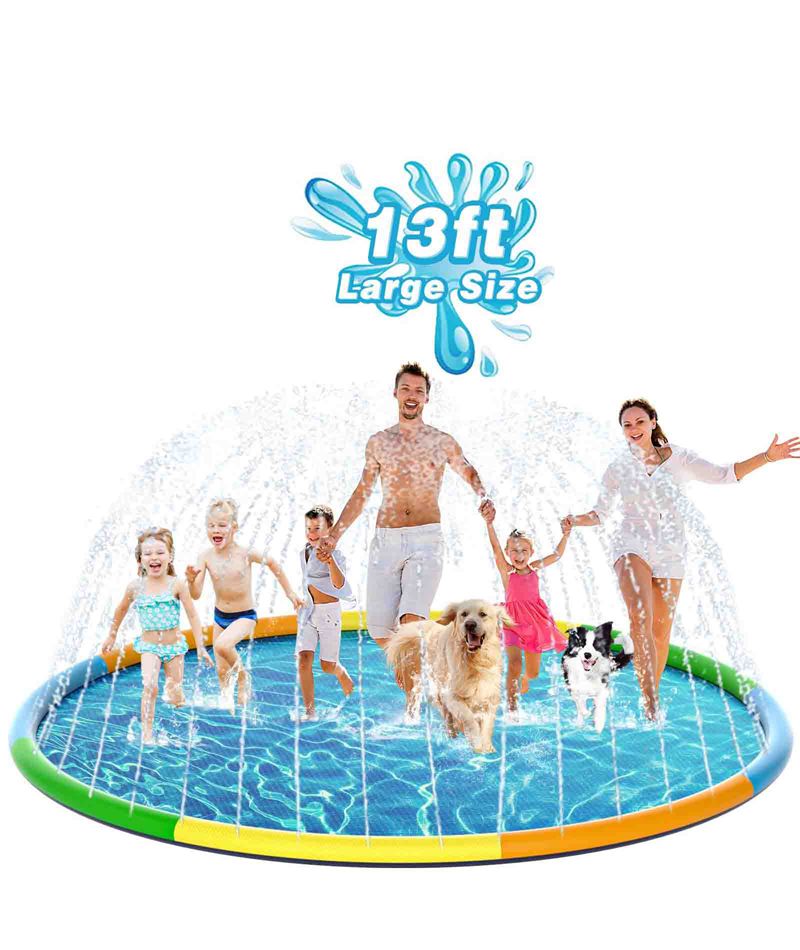
It is tempting to say something like “a splash pad requires at least 6 GPM,” but such a number cannot responsibly be applied to all designs. A 60-inch toddler pad, a 13-foot family splash pad, a soccer splash pad, and a custom product with unusually large spray holes do not share identical hydraulic demand. Hole count, hole diameter, hole angle, connector opening, ring cross-section, product diameter, and intended spray height all influence the result.
A better approach is to use measured flow as a comparison tool. Record your own successful condition. If the product performs well at home and a future session becomes weak, repeat the same bucket test. A large change gives you evidence that supply or hose conditions have changed. This household baseline is more useful than an arbitrary internet number because it is tied to the exact combination you know has worked before.
How Hose Length and Diameter Affect Splash Pad Performance
Hose Length Matters Because Friction Accumulates
A longer hose provides reach, but every additional section adds internal surface for water to travel past. Friction loss accumulates along the route, so using far more hose than the yard actually requires can reduce useful delivery. This does not mean a 100-foot hose is “too long for a splash pad.” It means 100 feet should be used when the distance requires it rather than because extra length is automatically beneficial.
A real-world hose test available on YouTube measures gallons per minute while additional 50-foot lengths of 5/8-inch hose are added to a residential spigot. The specific numbers in the video belong to one household and one test setup, so they should not be treated as universal. The important observation is the direction of the result: changing total hose length can measurably change delivered flow.
Video — Garden Lawn Hose Test: GPM vs. Length:
This experiment progressively adds lengths of garden hose and measures the resulting gallons per minute. It is one of the most useful visual demonstrations for families wondering whether a long hose route can contribute to weak splash-pad spray.
For practical backyard use, choose the shortest hose that reaches comfortably without being pulled tight. A little slack is helpful because an expandable hose changes length during startup and shutdown. Excessively tight routing can put lateral stress on the splash-pad connector, while large unnecessary loops create extra hose length and can enter children’s play paths.
Internal Diameter Can Matter as Much as the Length on the Box
Consumers see length first because manufacturers print “50 FT” or “100 FT” prominently on packaging. Internal water passage is often less obvious, yet it can have a major influence on flow. Hydraulic design guidance from Hunter notes that friction loss decreases when pipe diameter increases. Again, garden hoses and rigid irrigation pipe are not identical products, but the relationship explains why a larger open flow path generally provides more capacity under otherwise comparable conditions.
Technical Evidence — Hunter Residential Sprinkler System Design Guide:
Do not assume a 3/4-inch threaded connector proves the hose has a 3/4-inch internal tube. Garden-hose thread size and actual internal flow diameter are different specifications. An expandable hose can use familiar 3/4-inch outdoor fittings while the flexible inner tube is substantially smaller. When comparing products for a demanding long run, look for internal-diameter information rather than relying only on connector size.
Can a 50-Foot Expandable Hose Work?
Yes. Fifty feet is a very common residential hose length and can work well with a splash pad when household delivery is adequate. If your faucet is 35 feet from the play area, a 50-foot hose may be a sensible choice because it provides enough slack without adding large unused loops. Test the hose in its actual route and inspect the far side of the pad after the perimeter ring stabilizes.
The result becomes especially useful if you already own the hose. There is no need to replace a 50-foot expandable hose preemptively. Run the splash pad first. If spray is acceptable, the question is settled. If spray is weak, measure hose-end GPM and compare it with another available hose before spending money.
Can a 100-Foot Expandable Hose Work?
A 100-foot expandable hose can also work, particularly at homes where the outdoor faucet is far from the play area. Retailers currently sell expandable models at this length, confirming the format is common for general residential use. However, a longer run gives friction and any internal restrictions more distance over which to influence the result, so testing becomes more important.
Evidence — Example of a 100-foot expandable hose with common outdoor connectors:
If the splash pad is only 20 feet from the faucet, using an entire 100-foot hose offers little practical hydraulic advantage. If the pad genuinely sits 90 feet away, the length is necessary and may work perfectly well. In either case, actual hose-end flow and final spray performance are better decision criteria than the number printed on the package.
Troubleshoot Weak or Uneven Spray in the Right Order
Start with the Pattern, Not with a Replacement Purchase
Weak spray is a symptom. Before changing equipment, look at where the weakness appears. If almost every jet is low, investigate overall supply, faucet setting, hose condition, valves, and major leaks. If only one or two openings are weak while the rest of the perimeter works normally, a local spray-hole or product-position issue is more likely than a whole-house water shortage.
If the pattern was strong last weekend but weak today, look for changed conditions. The hose may be trapped beneath patio furniture, a valve may have been left partly closed, a connector washer may have shifted, or a second outdoor appliance may now be using the same supply. A hose that worked consistently in the past is less likely to have suddenly become fundamentally incompatible without some physical change.
| Symptom | Check First | More Likely Explanation |
|---|---|---|
| Every spray jet is low | Faucet and hose-end GPM | Overall delivery may be low |
| Hose does not fully expand | Valve, leak, restriction, supply | Hose is not reaching normal condition |
| Near jets are stronger than far jets | Flow, pad position, slope | Distribution may be limited |
| One or two jets are weak | Individual spray holes | Local blockage or deformation |
| Connector leaks continuously | Washer, threads, adapter | Water is lost upstream |
| Spray suddenly became weak | Kink, splitter, household use | Temporary restriction |
| Regular hose works much better | A/B bucket test | Expandable hose may limit flow |
| Both hoses remain weak | Faucet baseline | Problem may be upstream |
If the Hose Will Not Fully Expand
Disconnect the splash pad and run the expandable hose with an open end. If it expands normally when free-flowing but contracts substantially when the splash pad is connected, the combination of supply and downstream demand deserves further investigation. Measure hose-end flow, remove unnecessary fittings, and check whether the hose’s shut-off valve is fully open.
If the hose fails to expand even with the far end open, inspect the hose itself. Look for a kink inside a fabric sleeve, an obstructed valve, a damaged fitting, or a product-specific operating problem. Follow the hose manufacturer’s instructions because pressure limits vary widely. Do not increase home plumbing pressure beyond its normal configuration simply to make a garden toy spray higher.
Expandable-hose comparisons can also help users understand how much product designs vary. A real garden test comparing expandable and standard hoses shows differences in handling and practical use rather than presenting all expandable products as identical.
Video — Expandable vs. Standard Garden Hose: Real Garden Test:
This comparison tests several hose types under ordinary garden conditions. It is helpful when deciding whether switching hose style is likely to improve your setup, especially after you have already completed your own flow test.
If Only One Section of the Splash Pad Is Weak
Turn the water off and inspect the flexible perimeter. Make sure the ring is not folded underneath itself, twisted near the inlet, compressed by a child’s toy, or sitting sharply downhill. Flexible PVC changes shape more readily than rigid plumbing, so ground condition and material position can affect local water distribution.
Look at individual spray openings without inserting a needle, screwdriver, drill bit, or other sharp object. Enlarging a spray hole can permanently change the local flow balance and damage the PVC. If dirt or grass is visible, follow the cleaning method supplied with the product. When only one or two jets differ while the rest are normal, do not automatically increase household flow in an attempt to correct a local issue.
If All Spray Holes Are Weak
Return upstream. Confirm the faucet opening, remove a splitter if one is present, fully open the hose valve, correct any leak, and run the bucket test. If a shorter or different hose is available, repeat the test under the same faucet conditions. A controlled A/B comparison is one of the best ways to determine whether the expandable hose itself is a meaningful restriction.
For example, if an expandable hose delivers 4.5 GPM at the end while a standard hose of similar useful length delivers 8 GPM under comparable conditions, and the splash pad improves markedly with the second hose, the evidence points toward the first hose assembly. If both deliver approximately the same flow and both produce weak spray, changing hose type is much less likely to solve the real problem.

Expandable Hose vs. Regular Garden Hose: Which Should You Use?
Choose Based on Tested Performance, Not Hose Reputation
Expandable hoses are popular because they can be light and compact when drained. Conventional hoses remain popular because their working geometry is stable and they are available in many materials, wall thicknesses, and internal diameters. Each design has useful applications. A splash pad does not reward one category for being fashionable or traditional; it responds to the water arriving at its connector.
An expandable hose makes good sense when the distance is moderate, storage space is limited, the hose is easy for the household to handle, and real tests show adequate flow. A standard hose may be preferable when you need a long high-flow run, the expandable hose refuses to remain stable, or measurement consistently shows a major flow advantage with the conventional hose.
Independent garden-hose testing also supports choosing by use case rather than by category alone. Recent product-testing coverage notes significant differences in maneuverability, durability, pressure consistency, and storage among garden-hose designs, reinforcing the idea that product construction matters more than a simple “expandable versus standard” label.
Evidence — Garden hose testing and selection factors:
| Factor | Expandable Hose | Standard Garden Hose |
|---|---|---|
| Storage size | Usually compact after draining | Usually requires more storage |
| Empty handling | Often lightweight | Varies widely |
| Working length | Changes during fill and drain | Mostly fixed |
| Internal flow path | Highly model-dependent | Highly model-dependent |
| Long-distance use | Test before relying on it | Also depends on diameter and design |
| Connector options | May include quick-connect accessories | Often conventional threaded ends |
| Best splash-pad choice | Use if measured performance is good | Use if it performs better in testing |
Do You Need to Buy Another Hose?
If your current expandable hose works, no. This is one of the most important conclusions in the entire article. A family should not be encouraged to buy another product simply because an expandable hose is theoretically different from a conventional one. If the existing hose produces stable, comfortable spray without obvious leakage or routing problems, replacing it has no clear functional justification.
Consider replacement only after a repeatable problem is identified. Examples include an expandable hose that never reaches its normal length, a damaged internal tube, a restrictive valve, significantly lower measured hose-end flow than another available hose, or persistent weak spray that disappears when another hose is substituted under the same faucet conditions.
The same practical philosophy is useful for environmental and household spending decisions: diagnose the smallest correctable problem first. A missing washer might cost almost nothing. Removing an unnecessary splitter may cost nothing. Shortening the hose route may cost nothing. Only after these steps fail should a new hose become the leading solution.
Special Situations That Can Change the Answer
Vacation Homes and Grandparents’ Houses
Families often take a foldable splash pad to a vacation property, a grandparent’s house, or a rental home because the product itself is easy to transport. The unfamiliar variable is usually the water supply. A pad that sprays strongly at home may produce a gentler pattern elsewhere because the faucet, plumbing, available hose, distance, and simultaneous household water use are different.
Do not assume this difference means the splash pad has developed a problem during transport. Use the same process again: inspect the hose, check the connector, let the system stabilize, and run a bucket test if performance is unexpectedly poor. Keeping a record of your successful home GPM measurement can make the comparison especially useful.
Hose Splitters
A splitter allows two hoses or devices to share one faucet, but it also changes how available water is divided. If one branch feeds a splash pad while the other operates a lawn sprinkler, the splash pad may receive less flow than it did alone. During troubleshooting, close the second branch and test the splash pad by itself before deciding the main hose is inadequate.
The same reasoning applies to partially closed splitter valves. A valve handle that looks almost open can still introduce meaningful restriction depending on its design. Remove unnecessary fittings when performing your baseline test. Once normal performance is established, reintroduce the splitter and observe the change.
Other Household Water Use
A home does not always deliver identical water conditions throughout the day. Showers, washing machines, irrigation zones, hose use, well-pump behavior, and other simultaneous demand can change available flow at an outdoor faucet. You do not need to monitor the entire plumbing system, but if the splash pad works well at one time and poorly at another, consider whether household conditions changed before blaming the PVC product.
WSU’s hose calculator explains a related point by distinguishing dynamic pressure while water is flowing from static pressure when flow has stopped. The university also notes dynamic pressure can be lower because of losses in the plumbing leading to the hose bib. This is one reason a static pressure gauge reading alone does not tell you exactly how a splash pad will behave during operation.
Large Splash Pads and More Spray Holes
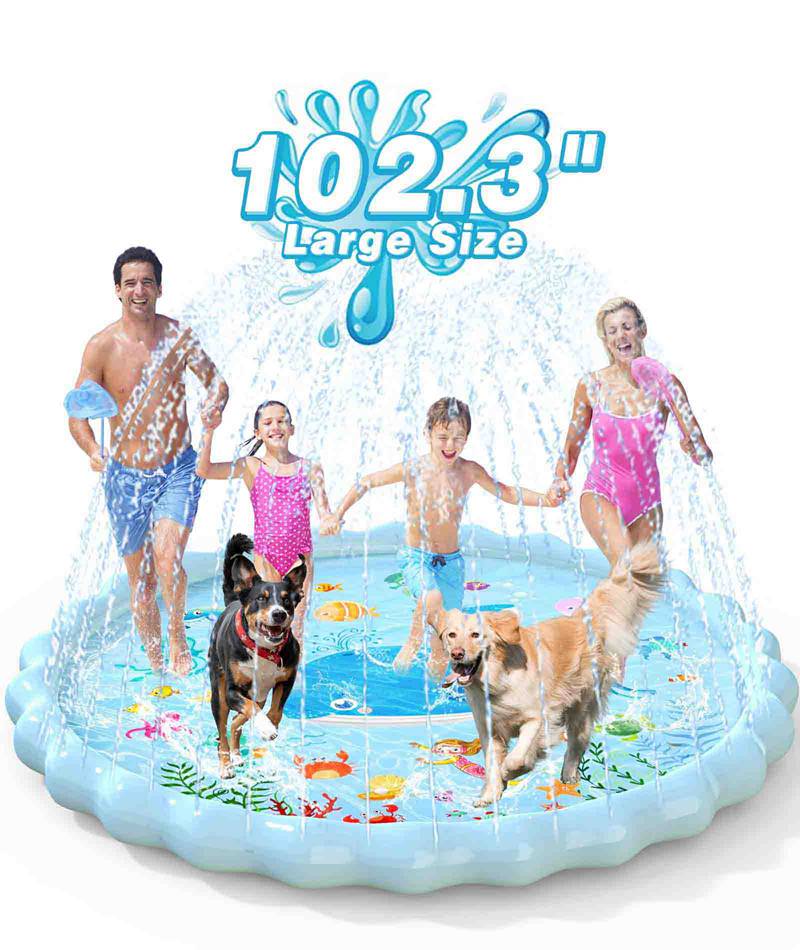
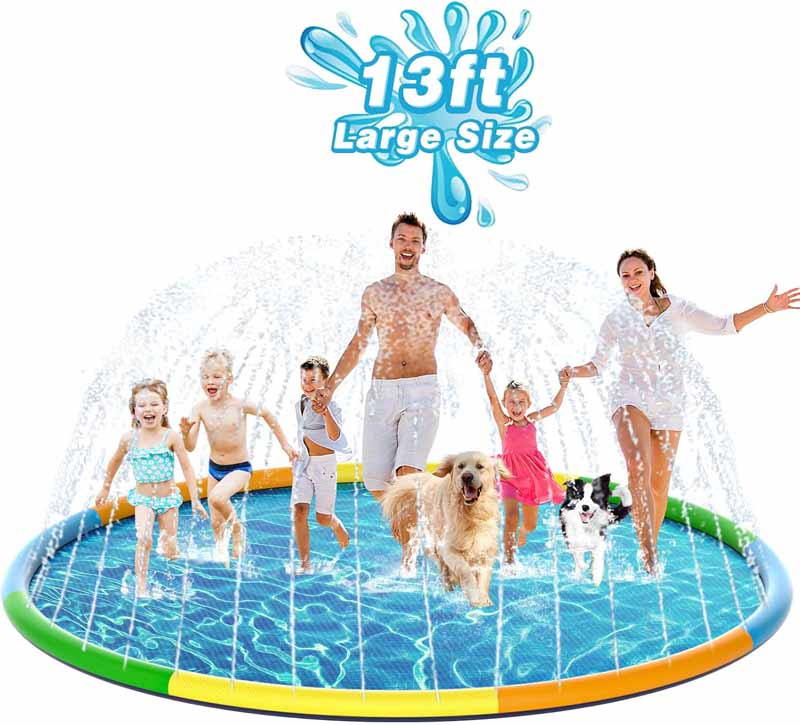
Larger splash pads often use longer perimeter chambers and may include more spray openings, although exact construction varies by model. More outlets can increase total water demand if the design aims to maintain a similar spray effect. However, diameter alone cannot be converted into a trustworthy universal GPM requirement because hole size, hole angle, ring cross-section, connector opening, and intended spray pattern all influence performance.
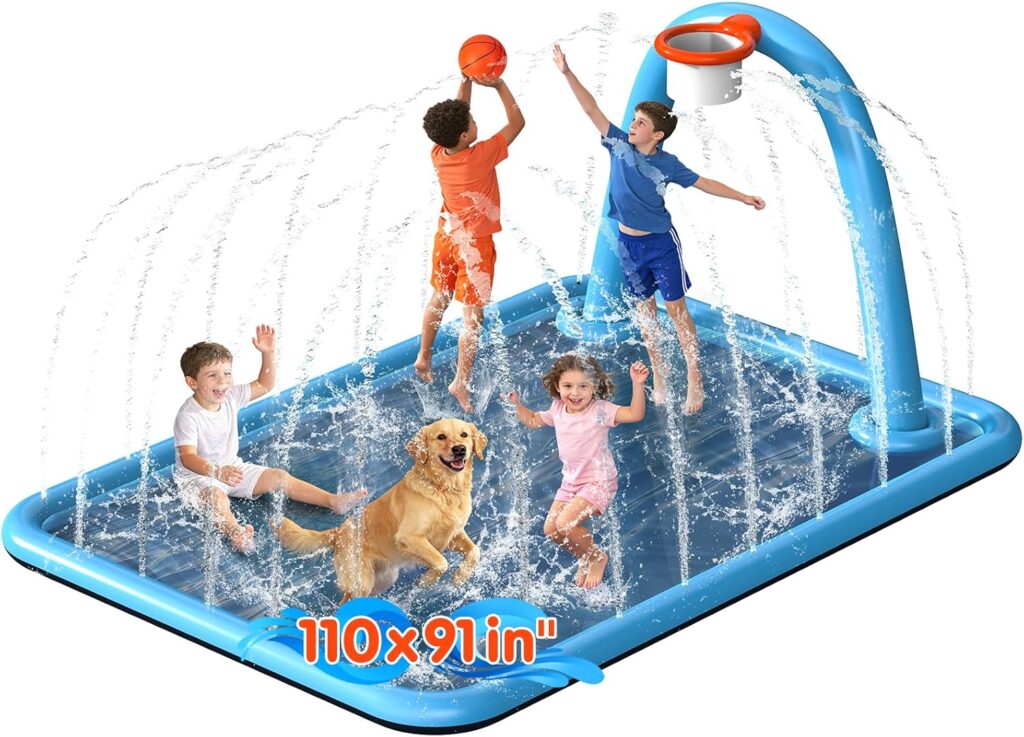
This is especially important for consumers comparing dramatic product photographs. A photograph showing tall spray does not establish a standardized performance level. The same product can look different at another home because household supply, hose length, hose diameter, wind, and faucet position change the operating condition. Evaluate whether the spray is even and usable for your family rather than trying to reproduce the tallest image on a listing.
What PVC Product Design Teaches Us About Hose Compatibility
The Hose Is Only One Part of the Product System
From the perspective of long-term PVC and composite-material product development, splash-pad performance begins well before a consumer attaches a hose. The manufacturer chooses the perimeter chamber width, inlet position, connector geometry, spray-hole layout, hole size, hole angle, welding path, PVC thickness, and overall product diameter. Each decision can influence how water travels around the finished product.
A strong design therefore should not be evaluated only at one high-pressure test point. Prototypes are more informative when tested under several realistic household supply conditions. A product may appear impressive with unusually strong factory water supply yet produce disappointing results in an ordinary backyard if the inlet or spray-hole system has been designed with insufficient margin.
For custom and private-label development, this creates an opportunity to turn consumer complaints into engineering requirements. A brand developing a new PVC splash pad can specify target product diameter, hose-connector arrangement, inlet reinforcement, spray direction, desired low/medium/high faucet behavior, hole distribution, seam design, and sample-test conditions rather than discussing artwork alone.
Useful prototype evaluation can include:
- Multiple household-like flow conditions
- Short and longer garden-hose runs
- Different hose diameters where relevant
- Far-side spray consistency
- Connector leakage inspection
- Spray-hole distribution
- Ring deformation under increasing flow
- Surface behavior on flat lawn
- Repeated wet/dry cycles
- Packaging folds around the inlet area
The practical benefit for consumers is simple: a well-developed splash pad should tolerate normal variation in household use without requiring one unusually narrow “perfect” water condition. The practical benefit for brands is equally clear: documenting water-supply assumptions during development reduces the chance of launching a design whose real-world performance depends too heavily on ideal laboratory conditions.
A focused PVC manufacturer can also modify more than graphics when a project remains within a proven low-pressure water-play platform. Relevant development areas can include overall dimensions, shape, spray-hole position, water inlet location, PVC construction, surface texture, accessories, packaging, and instructions. The most responsible custom projects begin with a prototype and measurable functional test rather than a promise based only on a rendering.
This is also where accurate consumer instructions matter. If spray height varies with water supply, the product page should say so. If a standard garden-hose connector is required, the instructions should show the fitting clearly. If a very large design was developed around particular flow conditions, those conditions should be validated before marketing language is finalized. Transparent limitations create fewer disappointed customers than exaggerated claims of “maximum pressure” or “perfect spray at every home.”
Use an Expandable Hose Safely Around a Kids’ Splash Pad
Route the Hose Outside the Main Play Path
Expandable hoses move as they fill and drain, so route the hose along the edge of the play zone rather than across the area where children repeatedly run. Leave enough slack for normal expansion without allowing large loose coils to surround the splash pad. Avoid stretching the hose so tightly that its movement pulls on the connector attached to the PVC perimeter.
A flat, clean surface also makes the setup easier to evaluate and safer to manage. Remove sharp sticks, stones, garden tools, exposed metal edging, and other obvious hazards before unfolding the pad. Flexible PVC is designed to fold for storage, but folding ability does not make it immune to puncture from hard or sharp ground debris.
Increase Water Gradually
Start with lower flow and increase gradually until the spray becomes stable and comfortable. Chasing maximum spray height can make troubleshooting harder because the flexible water chamber may change shape as flow increases. A moderate operating point is easier to compare from one test to another and may also be more comfortable for younger children.
Do not alter the home’s pressure regulator or make plumbing changes simply to improve a backyard splash pad without appropriate professional advice. If ordinary household supply cannot operate the product after the hose and connector have been checked, using a better-matched hose or a different play product is a more sensible response than forcing the plumbing outside normal operating conditions.
Keep Children Supervised and Use Sensible Water-Play Hygiene
Children should remain under active adult supervision during water play. CDC healthy-swimming guidance reminds caregivers not to let children swallow splash-pad water and to keep children with diarrhea out of splash-pad water. Most CDC splash-pad information focuses on public facilities, which can use recirculating or treated water systems, so public sanitation guidance should not be mechanically applied to every hose-fed backyard toy. The basic hygiene habits remain useful.
Health Evidence — CDC: What You Can Do to Stay Healthy at Splash Pads:
For small household water-play products, CDC also recommends emptying water, removing debris, rinsing with fresh water, and allowing small plastic pools or water slides to air dry as part of routine maintenance. A flat hose-fed splash pad does not have exactly the same structure as a kiddie pool, but the general practice of draining, cleaning visible dirt, and drying flexible plastic before extended storage is sensible.
Supporting Maintenance Evidence — CDC Small Inflatable or Plastic Pool Guidance:
After play, turn the faucet off before disconnecting fittings. Release water from the expandable hose according to its instructions so it can contract without spraying unexpectedly. Drain the splash pad, remove grass or dirt, and allow both sides to dry before long-term folded storage. Avoid making hard folds directly across rigid connectors or reinforced inlet areas when another folding direction is available.
Conclusion
Yes, an expandable garden hose can be used with a splash pad in many ordinary homes. The best evidence is not the word “expandable” on the hose package but the behavior of the complete system in your yard. A secure fitting, stable hose expansion, adequate hose-end flow, a properly filled perimeter chamber, and reasonably even spray provide a much stronger answer than a generic statement about hose pressure.
If performance is weak, troubleshoot in a deliberate order. Start with the connector and washer, remove obvious kinks or unnecessary fittings, confirm hose valves are open, let the system stabilize, and measure free-flow GPM at the hose end. Compare another hose only when needed. This sequence separates household supply problems from hose restrictions and separates both from splash-pad issues.
The most useful rule is simple: if your expandable hose passes the real backyard test, keep using it. If it fails, identify the specific reason before buying a replacement. For families, this saves money and frustration. For brands developing PVC water-play products, the same principle leads to better products: design and validate the complete water-delivery system rather than treating the garden-hose connector as an afterthought.
Frequently Asked Questions
Can an expandable garden hose reduce the spray height of a splash pad?
It can contribute to lower spray in some setups, but there is no universal percentage of pressure or flow lost by every expandable hose. Internal tube diameter, total length, valves, connectors, household supply, and the splash pad itself all affect the result. If you suspect the hose, compare free-flow GPM directly at the faucet and at the end of the expandable hose, then repeat the splash-pad test with another hose under similar conditions.
Can I use a 50-foot expandable hose with a splash pad?
Yes, a 50-foot expandable hose can work very well when it comfortably reaches the play area and delivers enough water at the far end. Fifty feet alone is not a problem. If the splash pad sprays evenly and the hose remains fully expanded, there is no reason to change it. If performance is weak, measure hose-end GPM and check for restrictions, valves, leaks, or unnecessary adapters before assuming the length is responsible.
Can I use a 100-foot expandable hose with a splash pad?
Yes, although the longer route creates more opportunity for friction loss and internal restrictions to affect delivered flow. If you genuinely need close to 100 feet to reach the splash pad, test the hose rather than rejecting it automatically. If the faucet is only 20 or 30 feet away, a shorter hose may provide a simpler route and potentially better flow while also reducing loose hose around the children’s play space.
Is a 5/8-inch hose better than a 1/2-inch hose for a splash pad?
A larger internal diameter generally has greater flow potential under comparable conditions because friction loss is lower, but nominal hose size is only one part of the system. Length, valve design, connector restriction, household supply, and the real internal diameter of an expandable tube also matter. Do not replace a working hose solely because another diameter sounds better. If your existing hose produces acceptable spray, the practical requirement has already been met.
Why does my splash pad spray strongly near the hose but weakly on the far side?
First make sure the pad sits flat and the perimeter is not twisted or folded. Then check hose-end flow, connector leakage, hose valves, and overall household supply. A large difference between near and far sections can occur when the system has limited available flow, but uneven ground or local spray-hole issues can create a similar appearance. Observe the whole ring and run a controlled bucket test before deciding which component is responsible.
Should I buy a regular garden hose instead of using my expandable hose?
Only if testing gives you a reason. If the expandable hose fully extends, does not leak, and runs the splash pad at a comfortable, even spray level, replacing it provides little practical benefit. A regular hose becomes a stronger option if measured flow is consistently better, the expandable hose repeatedly contracts during use, its valve restricts flow, or a controlled A/B test shows the splash pad performs substantially better with the conventional hose.
How do I know whether weak spray comes from the hose or the splash pad?
Disconnect the splash pad and measure free-flow output at the end of the hose using a known-volume bucket and stopwatch. Compare the result with direct faucet flow or another hose under similar conditions. If hose-end flow is clearly poor, investigate the hose and fittings. If delivery remains strong but the connected splash pad stays weak, inspect the product’s connector, perimeter position, spray holes, and structural condition. This step-by-step comparison avoids guessing.