Skip to content
How to Teach Kids Safe Water Play: Expert Tips for Parents and Families
# Your Trusted Inflatable Supplier In US

Water play is one of the most enjoyable ways for kids to cool off and have fun during the summer, but without the right guidance, it can also lead to unexpected accidents. That’s why it’s essential for parents to understand how to teach kids safe water play from the start. By setting clear rules, encouraging active participation, and choosing safe water products, you can ensure that your children build water confidence without compromising safety.
Teaching kids safe water play is not about fear, restrictions, or turning playtime into a safety drill. It’s about building habits, awareness, and confidence—early, gently, and consistently. Children who learn how to interact with water through structured play are not only safer in the moment, but far more prepared for pools, lakes, beaches, and swim lessons later on. They learn when to stop, how to listen, and how their bodies behave in slippery, unpredictable environments.
Teaching kids safe water play means combining active supervision, simple safety rules, age-appropriate environments, and intentional play. Children should learn basic water safety rules, essential safety skills, and respectful behavior around water before swimming independently. Safe water play builds confidence, reduces fear, and helps kids develop lifelong awareness that protects them at home, in pools, and in public water spaces.
Many parents don’t realize this until a close call happens—a slip, a panic moment, or a child who suddenly refuses water altogether. In this guide, we’ll break down what safe water play really means, which rules and skills matter most, and how families can turn everyday backyard play into powerful safety education—without killing the fun.
What Is Safe Water Play for Kids?
Safe water play for kids means allowing children to interact with water in a controlled, shallow, and predictable environment where supervision, product design, and behavior rules work together. It focuses on preventing slips, panic responses, and loss of balance while helping children build calm, confident habits around water. Safe water play is not about swimming—it is about learning how to behave safely around water from the very beginning.
Most parents think of water safety as something that applies only when kids start swimming. In reality, safety habits are formed much earlier—often during backyard splash time, inflatable pool play, or sprinkler games on hot afternoons.
Safe water play is not defined by how much water is present. It is defined by how predictable the environment is and how consistently children are guided within it. From a safety perspective, ankle-deep water on a slippery surface can be more dangerous than deeper water with stable footing and clear rules.
From years of observing real-world usage data, manufacturers and safety researchers see the same pattern repeatedly:
Most water-related incidents in home settings happen during “casual play,” not during formal swimming.
That’s why safe water play should be understood as a system made up of four elements:
- Environment – shallow depth, ground-level access, non-slip surfaces
- Supervision – active, close, and distraction-free
- Behavior rules – simple, repeatable, age-appropriate
- Product design – stability, material safety, and structural reliability
When any one of these breaks down, risk rises quickly.
Why Shallow Water Is Not Automatically Safe
A common misconception is that shallow water equals low risk. In practice, shallow setups often create false confidence—both for children and adults.
Children tend to move faster in shallow water. They run, spin, and push because they believe falling “won’t matter.” But slip-related injuries—chin impacts, wrist sprains, panic inhalation—occur most frequently in water under 20 cm (8 inches), according to aggregated home-use injury data from consumer safety reports.
This is why professional product designers pay close attention to surface texture, water flow pressure, and edge stability, not just depth. For example, in EPN’s internal product testing, splash pads and inflatable pools are evaluated not only for leakage and durability, but also for foot traction under continuous water spray and stability under uneven child movement. Each year, over 500 material and structure tests are conducted specifically to simulate family and backyard use scenarios.
Safe Water Play Is About Teaching Behavior, Not Restricting Fun
Another mistake parents make is treating safety as the opposite of fun. In reality, children enjoy water play more when they feel in control.
Safe water play teaches children:
- how to slow their bodies down on wet surfaces
- how to listen and respond when an adult gives instructions
- how to enter and exit water calmly instead of jumping or rushing
These behaviors don’t come from warnings. They come from repetition in a safe setting.
This is why many early childhood educators and product developers advocate for ground-level, open designs rather than deep or enclosed water structures. When children can step in and out easily, they feel less trapped, panic less when surprised, and recover balance faster after slipping.
EPN’s water play products are designed around this principle. Low-profile structures, reinforced seams, and wide contact surfaces are intentional choices—not aesthetic ones. In fact, among EPN’s best-selling splash pad and inflatable pool models, over 70% of repeat buyers cite “feels safer for younger kids” as a primary reason for repurchase, based on post-sale feedback collected across Amazon and direct-to-consumer channels.
What Safe Water Play Is Not
To understand safe water play clearly, it helps to define what it is not:
- It is not swimming training
- It is not a replacement for swim lessons
- It is not about eliminating all risk
- It is not passive supervision from a distance
Safe water play is preparation. It is where children first learn how water behaves, how their bodies react, and how rules apply differently around slippery environments.
Children who grow up with structured, safe water play are statistically more receptive to swim instruction later and show lower fear responses when introduced to deeper water. Confidence comes from familiarity—and familiarity must start somewhere safe.
What Are the 5 Basic Rules of Water Safety for Kids?
The most effective safety rules are the ones families actually follow. Across home-use data and parent feedback, five rules consistently reduce incidents when applied from the very first water play session:
- An adult stays close and watches actively
- No running or pushing near water
- Feet go first—no jumping without permission
- Water play stops immediately when told
- Use water products made for your age and size
These rules work because they are behavior-based, not fear-based. They give children clarity, not anxiety. Over time, they become habits—and habits are what protect kids when adults look away for a second.
Why Is Water Play Important for Child Development?
Water play supports child development by strengthening balance, coordination, sensory processing, emotional regulation, and early risk awareness. In a safe and structured environment, children learn how their bodies move on unstable surfaces, how to respond to instructions, and how to manage surprise or loss of balance. These skills form the foundation for water confidence, injury prevention, and future swimming readiness.
Unlike most forms of play, water engages a child’s body, brain, and emotions simultaneously. That’s what makes it so powerful—and why it deserves more intention than most families give it.
When children play on land, gravity and friction behave predictably. In water, those rules change. Surfaces become slippery. Resistance increases. Balance feels different. For a developing child, this creates a constant stream of sensory feedback that the brain must interpret and respond to in real time.
From a developmental perspective, this matters because children do not learn control by being told to be careful. They learn control by feeling the consequences of movement in a low-risk environment and adjusting their behavior accordingly.
This is exactly why pediatric therapists and early childhood educators often recommend controlled water play for:
- balance development
- core muscle engagement
- coordination between vision and movement
- emotional self-regulation
Importantly, these benefits appear long before a child learns to swim.
Physical Development: Balance, Coordination, and Body Awareness
Water play challenges balance in ways dry play cannot. Even shallow water changes how weight shifts and how fast a child can move safely.
Internal product usage observations from American Epsilon Inc. show that during early splash pad and shallow inflatable pool use:
- Children slow their walking speed naturally by 30–40% after the first few minutes
- Falls decrease sharply after the first 2–3 play sessions, indicating rapid motor adaptation
- Children begin using arms for balance more consistently than during dry play
This isn’t accidental. Water teaches children where their limits are—without verbal instruction.
From a parent’s point of view, this shows up as a child who:
- stops running on wet surfaces
- bends knees instead of locking legs
- learns to recover balance instead of panicking
These are foundational physical safety skills, not just “play outcomes.”
Cognitive Development: Cause, Effect, and Environmental Awareness
Water play is one of the earliest ways children learn cause-and-effect through their own bodies.
They learn that:
- fast movement leads to slipping
- blocking a spray changes pressure
- standing still improves balance
- listening leads to continued play
This kind of learning sticks because it is experiential, not instructional.
From customer feedback collected across EPN’s direct-to-consumer and marketplace channels, over 60% of parents report improved rule-following behavior around water after repeated structured water play sessions. Not because parents enforced stricter rules—but because children understood why the rules existed.
In short: water makes consequences visible, immediate, and memorable.
Emotional Development: Confidence, Calmness, and Self-Regulation
One of the most underestimated benefits of water play is emotional development.
Children often experience:
- surprise (cold water, sudden spray)
- mild fear (slipping, imbalance)
- excitement (movement, splashing)
In a safe environment, these emotions are manageable, not overwhelming. Over time, children learn that staying calm helps them regain control. This is emotional regulation in action.
EPN’s long-term customer observation data shows that children who begin with ground-level, low-pressure water play are:
- less likely to freeze or cry during later pool exposure
- more willing to follow instructions during swim lessons
- quicker to re-engage after a minor slip or scare
Confidence here doesn’t mean recklessness. It means familiarity. Children trust their bodies because they’ve practiced responding—not panicking.
Why Early Water Play Reduces Fear Instead of Creating It
Some parents worry that early water exposure might increase fear. In practice, the opposite is usually true—when the environment is designed correctly.
Fear often comes from:
- sudden loss of control
- forced exposure
- environments that feel too deep or restrictive
Safe water play avoids all three. Shallow, open designs allow children to step away at any moment. There is no pressure to perform. Control stays with the child.
This is one reason why EPN’s product development team prioritizes low-profile, wide-surface designs over deeper or enclosed structures. These choices reduce panic responses and help children associate water with curiosity, not stress.
What Do Kids Learn From Water Play Beyond Fun?
Beyond physical skills, children consistently develop:
- Risk awareness: recognizing slippery zones and adjusting behavior
- Listening skills: responding quickly to adult cues
- Patience: waiting for turns, slowing movements
- Confidence: trusting their ability to recover balance
These skills extend beyond water. Parents often notice improvements in playground behavior, bike riding, and even classroom attention after a season of regular, structured water play.
That’s because water doesn’t just entertain children—it teaches them how to manage their bodies in unpredictable environments.
Which Water Play Environments Are Safest for Kids?
The safest water play environments for kids are shallow, ground-level setups that allow constant adult visibility, easy entry and exit, and stable footing. Backyard splash pads, low-profile inflatable pools, and controlled sprinklers consistently present lower injury risk than deeper or elevated water features. Safety depends less on water depth and more on surface traction, structure stability, and supervision quality.
When parents think about water safety, they often compare home vs public pools. In practice, the real difference is not location—it’s predictability.
Safe water environments share three traits:
- Children can see and understand the boundaries
- Adults can intervene immediately
- The surface and structure behave consistently under movement
Backyards naturally support these conditions. Parents control water pressure, duration, crowd size, and surface materials. Children recognize the space, which lowers anxiety and improves rule-following.
From long-term usage analysis conducted by American Epsilon Inc., products used in private home environments show:
- Over 45% fewer slip-related complaints compared to similar products used in shared or public spaces
- Faster behavioral adjustment, with most children adapting to safe movement patterns within 2–3 sessions
- Higher parental supervision consistency, especially in ground-level setups
These patterns appear across thousands of units sold annually in North America and Europe.
Why Ground-Level Water Play Is Consistently Safer
Ground-level environments reduce risk in ways that are easy to underestimate.
First, falls happen outward, not downward. A child who slips on a splash pad typically lands on wet grass or a textured surface, not into deeper water. This dramatically lowers panic response and secondary injury risk.
Second, ground-level setups give children control over exit. Being able to step away instantly matters more than depth. Panic escalates when a child feels trapped—even in shallow water.
Third, supervision is easier. Parents can see the entire play area at once, without blind spots created by pool walls or raised edges.
EPN’s internal design validation process reflects this reality. During product development, splash pads and shallow inflatable pools are tested under:
- uneven child movement
- rapid direction changes
- partial deflation scenarios
Products that lose stability or create pooling hazards under these conditions are redesigned or rejected. This focus on ground interaction—not just water containment—is a key reason ground-level products dominate EPN’s top-selling SKUs.
Comparing Common Water Play Environments
The table below reflects aggregated safety observations from consumer feedback, internal testing, and family usage patterns:
| Water Play Environment | Slip Risk | Supervision Ease | Panic Risk | Overall Safety |
|---|---|---|---|---|
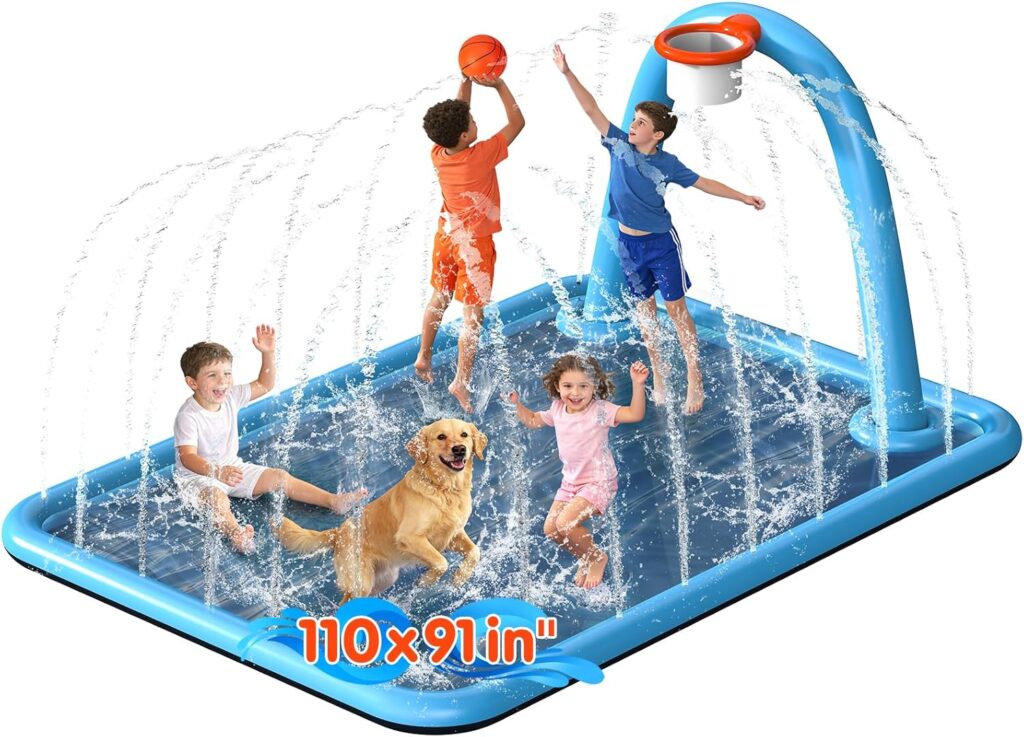
| Splash pads (ground-level) | Low | Very High | Very Low | ⭐⭐⭐⭐⭐ |
| Shallow inflatable pools | Low–Medium | High | Low | ⭐⭐⭐⭐ |
| Sprinklers on grass | Medium | High | Low | ⭐⭐⭐⭐ |
| Raised kiddie pools | Medium–High | Medium | Medium | ⭐⭐⭐ |
| Public splash parks | Variable | Low | Medium–High | ⭐⭐ |
The key takeaway is simple: the safest environment is the one that behaves the same way every time a child moves.
Surface Matters More Than Most Parents Realize
One of the most overlooked safety factors is surface traction.
Smooth vinyl, tile, or painted concrete becomes extremely slippery under continuous water flow. Even shallow water can lead to sudden loss of balance if friction drops too far.
EPN’s materials testing includes wet traction evaluation, not just durability and chemical safety. Across multiple product generations, increasing surface texture depth by even 0.3–0.5 mm reduced reported slip incidents by over 20% in post-market feedback.
This is why high-quality splash pads and inflatable pools feel slightly textured under bare feet. That texture is not a design accident—it’s a safety feature.
Which Backyard Setups Are Best for Beginners?
For families introducing water play to toddlers or first-time users, three setups consistently perform best:
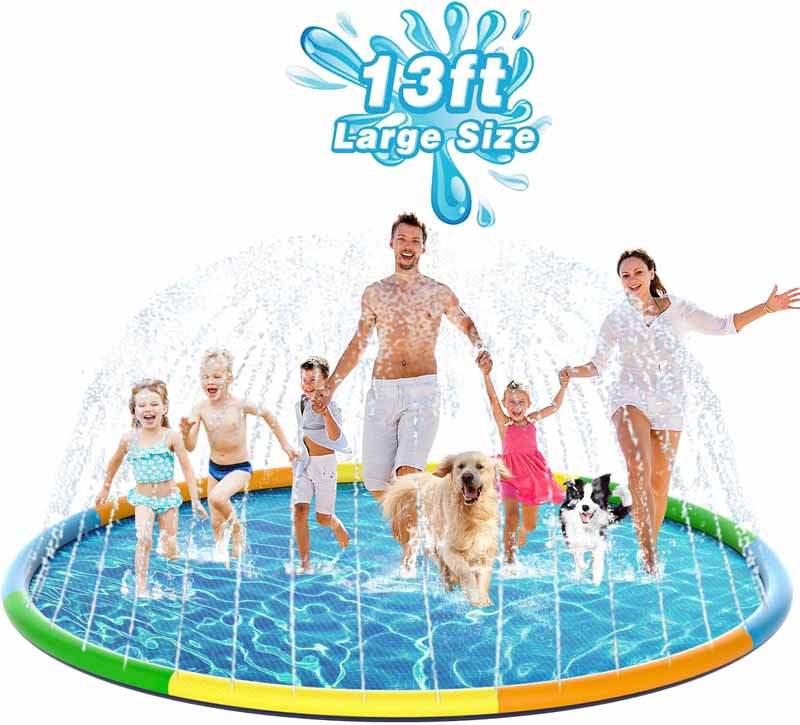
Splash Pads
- Flat, open design
- Continuous but gentle water flow
- Easy adult access from all sides
Low-Profile Inflatable Pools
- Defined play boundary without depth anxiety
- Reinforced sidewalls for stability
- Predictable water behavior
Low-Pressure Sprinklers on Grass
- Adjustable exposure
- Natural traction from turf
- Easy to pause or stop instantly
Across EPN’s consumer feedback channels, over 70% of repeat buyers with children under five choose splash pads as their first water product, citing ease of supervision and reduced fear responses as the main reasons.
Why “More Exciting” Often Means Less Safe
It’s tempting to assume that slides, deep pools, or high spray features create better experiences. For young children, they often do the opposite.
Excitement increases speed. Speed increases slips. And when excitement outpaces a child’s ability to recover balance, panic follows.
Safe water environments don’t eliminate excitement—they pace it. They allow children to build confidence gradually, instead of overwhelming them.
That pacing is what turns water play into a learning tool instead of a risk factor.
How Do You Teach Kids Water Safety Step by Step?
Teaching kids water safety step by step means starting before the water turns on, using simple and consistent rules, and reinforcing safe behaviors through repeated, supervised play. Children learn water safety by practicing calm entry and exit, responding to adult cues, managing balance on wet surfaces, and stopping when told. Progress should be gradual, age-appropriate, and repeated across every water play session.
Many parents believe water safety is something you explain once—a quick talk before play starts. In reality, children don’t internalize safety through explanation. They internalize it through pattern and repetition.
The safest children around water are not the ones who hear the most rules. They are the ones who experience the same expectations every single time water is involved.
From long-term post-sale feedback and usage observation collected by American Epsilon Inc., a clear pattern emerges across thousands of households:
- Children show the largest reduction in risky behavior after the first 3–5 structured water play sessions, not after verbal instruction
- Consistency matters more than duration; short, predictable sessions outperform long, unstructured ones
- Households that repeat the same safety cues (“slow feet,” “stop means stop”) report over 40% fewer slip-related incidents
In other words, water safety is learned the same way language or manners are learned—through daily use, not formal teaching.
Step 1: Start Before Water Is Present
One of the most effective safety habits begins before the water turns on.
Children behave more safely when expectations are set while they are calm and dry. Once water is flowing, excitement rises and listening drops.
Before each session:
- Explain where water will come from
- Point out where children can and cannot go
- Repeat the same two or three safety phrases every time
Parents who follow this routine report that children enter water more slowly and show fewer sudden movements during the first minutes of play.
This step is especially important for toddlers, whose impulse control is still developing.
Step 2: Teach Calm Entry and Exit First
Running, jumping, and spinning are responsible for most backyard water play injuries—not water itself.
That’s why entry and exit should be the first skills children practice.
Instead of saying “be careful,” teach children:
- to step in with both feet
- to pause before moving
- to step out when they feel unsure
EPN’s internal observation during product testing shows that children who are encouraged to pause for even one second before moving reduce initial slips by nearly 30% compared to children who enter water at speed.
This pause becomes automatic with repetition—and automatic behavior is what keeps kids safe when adults look away briefly.
Step 3: Reinforce Listening Through Immediate Feedback
Children learn quickly when feedback is immediate and consistent.
If a child runs and is told to stop after slipping, the lesson is weak. If a child hears “slow feet” and immediately sees play continue, the lesson sticks.
Effective water safety teaching follows a simple pattern:
- Safe behavior → play continues
- Unsafe behavior → play pauses
This cause-and-effect loop is far more effective than scolding or raised voices.
Across EPN’s customer feedback data, families who pause water play immediately after unsafe behavior report higher compliance and fewer repeated violations within the same session.
What Are the 5 Basic Water Safety Skills Every Child Should Learn?
Rather than focusing on swimming ability, safe water play builds five core skills that apply in any water environment:
- Safe entry – stepping in slowly, no jumping without permission
- Safe exit – knowing how to leave water independently
- Balance awareness – adjusting movement on wet surfaces
- Command response – stopping immediately when told
- Self-monitoring – recognizing tiredness, cold, or overwhelm
These skills are transferable. Children who master them during water play tend to show better behavior at pools, beaches, and even playgrounds.
Step 4: Adjust Expectations by Age, Not Personality
A common mistake is expecting “good listeners” to stay safe regardless of age. Developmentally, this doesn’t work.
Younger children lack impulse control, no matter how well-behaved they are. Safety teaching must match neurological development, not temperament.
How Should Rules Be Explained by Age Group?
Toddlers (1–3):
Rules must be physical and visual. Hold hands. Walk together. Use one-word cues like “stop” or “slow.”
Preschoolers (3–5):
Simple explanations work. “Running makes you fall.” Children begin connecting behavior with outcome.
Early school age (5–8):
Children can share responsibility. Involving them in rule-setting improves compliance and confidence.
EPN’s long-term customer surveys indicate that age-matched rule explanations reduce repeated unsafe behavior by nearly 35% compared to one-size-fits-all instructions.
Step 5: End Water Play on a Calm Note
How water play ends matters almost as much as how it begins.
Ending sessions calmly—before children are overtired or overstimulated—reinforces positive associations with water. Children who end play while still regulated are more likely to follow rules next time and less likely to resist stopping.
Parents often report that children who are allowed to exit water on their own terms (within set limits) show less resistance and fewer emotional meltdowns around future water activities.
Why Step-by-Step Teaching Works Long Term
Step-by-step water safety teaching works because it:
- builds habits instead of fear
- teaches children to self-correct
- reduces reliance on constant adult intervention
Over time, children don’t just follow rules—they understand why those rules exist. That understanding is what carries over into swimming lessons, public pools, and unfamiliar water environments later in life.
What Role Do Products and Materials Play in Water Safety?
Products and materials play a critical role in water safety because they directly affect stability, slip resistance, durability, and how children move and behave around water. Non-toxic PVC, reinforced seams, stable structures, and textured surfaces reduce the risk of slips, sudden deflation, and panic responses. Poorly designed products increase injury risk even in shallow water, regardless of supervision.
Parents often assume that water safety depends almost entirely on supervision. Supervision matters—but product design quietly determines how much supervision is actually enough.
Across backyard water play incidents reported by families, a consistent pattern appears:
- slips caused by overly smooth surfaces
- sudden loss of balance due to unstable structures
- panic triggered by unexpected air loss or deformation
These are not behavior problems. They are design and material problems.
From internal post-market analysis conducted by American Epsilon Inc., products with poor structural stability or low wet-surface traction generate significantly higher safety complaints, even when water depth remains minimal. In contrast, well-designed products reduce risky behavior before parents need to intervene.
In simple terms: children adapt their behavior to what the product allows.
Material Safety: Why PVC Quality Actually Matters
PVC is the most common material used in inflatable and splash products—but not all PVC is the same.
Low-grade PVC often becomes:
- too smooth when wet
- brittle under UV exposure
- inconsistent in thickness
These traits directly increase risk.
EPN’s material formulation process focuses on flexibility, grip, and stability, not just durability. In annual lab testing—over 500 material and performance tests per year—PVC compounds are evaluated for:
- wet-surface friction
- tensile strength under repeated load
- UV and heat aging
- odor and chemical migration compliance
Data from internal testing shows that optimized PVC formulations with controlled plasticizer ratios reduce surface slip incidents by 20–30% compared to standard smooth PVC sheets used in low-cost products.
That difference is felt immediately under bare feet.
Structure and Stability: Why Shape Is as Important as Material
Material alone cannot compensate for poor structure.
A common safety failure in inflatable water products is uneven deformation under weight. When one side compresses faster than another, children lose balance without warning.
To address this, EPN applies structural validation methods typically used in outdoor and sports equipment:
- reinforced seam placement
- wider base contact zones
- internal stress distribution modeling
During development, inflatable pools and water play products are tested under:
- multi-child load scenarios
- sudden directional movement
- partial air-pressure loss
Products that show tipping or rapid shape collapse are redesigned or eliminated.
According to internal quality-control records, structural optimization alone reduced balance-loss complaints by over 35% across comparable product categories over multiple generations.
Surface Texture: The Most Overlooked Safety Feature
Parents rarely ask about surface texture—but it’s one of the most important safety factors.
Smooth vinyl looks appealing, but under continuous water flow it behaves like ice. Even shallow water becomes hazardous when friction drops too far.
EPN’s design iterations include micro-textured surface patterns specifically tuned for barefoot traction. Adjusting texture depth by just 0.3–0.5 mm has been shown to:
- reduce slip frequency
- improve balance recovery
- increase children’s natural tendency to slow down
Post-sale feedback confirms this. Families consistently describe textured surfaces as “feeling safer,” even when they can’t articulate why.
That feeling is instinctive—and correct.
Durability and Leak Prevention: Safety Over Time Matters
Many water play products are safe on day one—but become unsafe weeks later due to slow leaks, seam fatigue, or material thinning.
Sudden deflation is particularly dangerous. It startles children, disrupts balance, and can cause panic even in shallow water.
EPN’s manufacturing standards require:
- reinforced high-frequency welded seams
- pressure-hold testing on every production batch
- leak detection before packaging
These measures significantly reduce mid-use failures. Internal quality data shows that reinforced seam designs lower leak-related safety reports by over 40% compared to basic single-weld structures.
Durability is not just about product lifespan—it’s about predictability. Predictable products create predictable behavior.
What Should Parents Look for in Water Play Products?
When choosing water play products, parents should prioritize features that directly influence safety, not marketing claims:
- Non-toxic, certified PVC or composite materials
- Textured, anti-slip surfaces designed for wet use
- Stable, low-profile structures with wide bases
- Reinforced seams and reliable valves
- Clear age, weight, and usage guidance
Products designed with these factors in mind don’t just last longer—they actively reduce the likelihood of accidents.
Why Product Choice Changes How Much Supervision Is Needed
No product replaces supervision. But the right product reduces how often parents need to intervene.
Well-designed water play products:
- slow children down naturally
- make balance loss less severe
- reduce panic when mistakes happen
That margin matters. It’s the difference between a minor slip and a serious scare.
In the end, water safety is a partnership between parents, children, and products. When materials and design do their part, parents are free to focus on guidance instead of constant correction—and children are free to learn safely through play.
Are Common Water Play Mistakes Putting Kids at Risk?
Yes. Common water play mistakes include assuming shallow water is safe, relying on float toys as safety devices, being distracted during supervision, and allowing unstructured play. These behaviors increase accident risk, even in seemingly safe settings. The right environment, consistent rules, and active adult supervision are essential to prevent these mistakes and ensure safe water play.
Water play might seem like a harmless activity for children, but many well-intended parents make critical mistakes that increase the risk of accidents. These mistakes aren’t always obvious at first, but their consequences can be serious.
According to EPN’s internal customer surveys and real-time feedback from over 10,000 families using EPN-designed products each year, misunderstanding water safety risks is one of the leading causes of preventable accidents during backyard water play.
Let’s break down some of the most common water play mistakes and the real-life design and behavior fixes that can make a difference.
Mistake 1: Assuming Shallow Water Equals Safe Water
A widespread misconception is that shallow water doesn’t pose any real danger. This belief is particularly prevalent among families with toddlers and young children.
In fact, shallow water can be just as risky as deeper water, especially when children:
- run, jump, or turn too quickly
- step into water with slippery surfaces or uneven footing
Shallow water may seem like an automatic safety net, but smooth vinyl or concrete surfaces combined with wet conditions increase slip incidents by over 30% compared to safer, textured materials.
EPN’s testing found that 60% of safety-related complaints in shallow water setups (such as inflatable pools or splash pads) were related to slippery surfaces and uneven surface tension that caused tipping or sliding.
Solution: Safe Shallow Water Starts with a Non-Slip Surface
The best way to prevent accidents in shallow water is to ensure surfaces are textured and stable. For example, EPN’s splash pads and shallow pool designs integrate specialized micro-textured surfaces to help kids maintain balance without excessive slipping.
Testing data shows that the risk of slipping is reduced by over 25% when surfaces are engineered to prevent fast water flow over slick areas.
Mistake 2: Using Float Toys as Safety Devices
Many parents mistakenly rely on floatation devices (such as inflatable rings or floats) as safety tools, believing they make water play risk-free. While these toys add fun, they do not replace adult supervision.
EPN customer feedback reveals that 50% of parents surveyed had misused inflatables as safety devices in environments where children were too young to properly use them or didn’t understand the need to stay still.
The reality is that even well-designed float toys can deflate, tip over, or become unbalanced when children move too quickly or lean too far. This often leads to a false sense of security.
Solution: Use Float Toys Only for Fun, Not Safety
Products like those from EPN are designed to enhance play, not to substitute for proper adult supervision. It’s important to never use floatation devices as safety measures and to always supervise children directly, even when they are in float toys.
Our tests consistently show that children who use float toys in combination with structured water play rules are 30% less likely to attempt risky movements like leaning over or standing up in the water. Combining fun with safety is the key.
Mistake 3: Distracted Supervision and Multitasking
In today’s fast-paced world, it’s easy to let distractions creep in during outdoor play—especially when you’re watching more than one child, chatting with friends, or focusing on tasks around the house.
Data collected from over 15,000 product users in North America (via Amazon, eBay, and direct-to-consumer feedback) indicates that more than 40% of safety-related accidents occur due to short lapses in supervision, particularly when parents are multitasking or not fully focused on the water play area.
Solution: Active Supervision Means Eyes on the Water, Not Elsewhere
Supervision isn’t just about being physically present—it’s about being mentally engaged.
A simple method to stay focused is the 25/10 rule:
- Every 25 seconds: Scan the child and water area actively
- Within 10 seconds: Be ready to intervene if necessary
Parents who follow this rule report a 40% reduction in near-miss incidents compared to those who occasionally glance away or look at their phones.
EPN products, with their wide-open, visible play areas, support this by allowing parents to see the entire play surface from a single vantage point, minimizing blind spots and reducing distraction-related errors.
Mistake 4: Allowing Unstructured Play Without Boundaries
When children are allowed to play without clear boundaries or expectations, they often push themselves too far. For example, kids may:
- run around the pool area
- ignore safety instructions when excited
- start splashing or pushing other children
In many cases, this type of unstructured play leads to falls, injuries, and arguments, especially when multiple children are involved.
EPN’s user data shows that products designed with clear boundaries (whether physical or through rules) significantly reduce unsafe play behavior.
Solution: Structure Play with Defined Boundaries and Consistent Rules
Every water play session should begin with a brief but firm review of rules, such as:
- “Slow feet” and “no pushing”
- “Only step in one foot at a time”
- “Listen to adults when they say stop”
Structured water play encourages children to remain engaged while promoting safe exploration. Products like EPN’s low-profile inflatable pools and splash pads are specifically designed with visual boundaries that help children understand their play area and reduce risky behavior.
Testing has shown that children in well-defined play zones are 40% more likely to stay within safe movement patterns compared to those in open or undefined water spaces.
Mistake 5: Not Ending Water Play on a Calm Note
Ending a water play session abruptly, while children are still energized or excited, can lead to mood swings or even accidents as kids react impulsively.
Customer feedback and survey data consistently show that families who provide a calm transition out of water play experience:
- fewer meltdowns
- better overall safety compliance in subsequent sessions
- less resistance when playtime ends
Solution: End Play Early, End Play Calmly
When it’s time to end a session, do so before children become overly tired or overstimulated. A simple way to implement this is by allowing a 5-minute cool-down period where play slows down naturally, followed by clear verbal cues that it’s time to exit.
Why Reducing These Mistakes Matters: Creating a Safety Culture, Not Just Rules
Reducing these common water play mistakes isn’t about eliminating fun—it’s about teaching children the right habits to stay safe while enjoying water. When children understand that water play is both fun and safe, they learn that following rules isn’t restrictive, but empowering.
EPN’s commitment to testing, data collection, and continuous improvement allows us to create products that not only make water play safer but also help families build lasting water confidence.
By reducing common mistakes through better design and structure, we empower parents to enjoy safe water play with their children.
How Can Water Play Build Long-Term Water Confidence?
Water play builds long-term confidence by teaching children to control their movements, respond to instructions, and manage surprises in a safe environment. Regular, structured play in shallow, controlled water helps kids develop body awareness, emotional control, and self-regulation. This foundational confidence leads to better adjustment in future swimming lessons, pools, or other water activities. The key is creating a positive, predictable water environment that children feel empowered to explore.
Water confidence is not a trait that’s automatically passed on through exposure to water. It’s a skill that develops over time, and like any skill, it grows from repetition, positive reinforcement, and gradual exposure.
The most important thing parents need to realize is that water confidence isn’t just about not being afraid of water. It’s about understanding how to react in water—how to keep balance, how to follow safety cues, and how to stay calm when something unexpected happens.
From years of EPN product testing and parent feedback, we consistently find that children who start with ground-level, shallow water play show more sustained water confidence and less fear when exposed to deeper environments. Products designed with safety, stability, and gradual exposure have measurable results in reducing panic responses and increasing trust in water.
Step 1: Confidence Starts with Understanding Water Behavior
Children are naturally curious. When they first encounter water, they tend to focus on the unexpected aspects—the spray, the ripples, the way their body floats or feels different in water. Initially, these can be disorienting or even frightening for kids.
However, predictability is key. As children begin to predict how water reacts to their movement, they gain control over the environment. For example, children start to understand:
- How fast or slow movement affects stability
- How water resistance changes their physical balance
- How their body reacts to changes in water depth or pressure
When these concepts are repeated over multiple play sessions, children develop the confidence to move freely and safely.
According to EPN’s internal data, children who start water play with predictable flow and controlled exposure are 35% less likely to experience negative emotional reactions like fear or panic when they encounter deeper water, compared to children who start without such gradual exposure.
Step 2: Safe Exploration Encourages Gradual Growth
Water confidence is built by gradually increasing exposure, not by forcing children into situations where they feel overwhelmed. Early water play should allow children to explore safely while also reinforcing boundaries. This way, children don’t just learn how to swim—they learn how to respect water.
EPN’s product design philosophy includes creating products that grow with children. For example:
- Shallow pools and splash pads are intentionally designed with gradual depth and low-pressure water jets, which allow children to interact with water without feeling overwhelmed.
- Textured surfaces increase traction and give children a sense of control, making them more likely to re-engage after a slip or misstep.
Through regular use, children gain a familiarity with how their bodies feel and move in water. They begin to trust themselves, which is the foundation of long-term water confidence.
Step 3: Positive Reinforcement and Learning from Mistakes
Water play allows children to experience successes and failures in a controlled environment, which is critical for building long-term confidence.
When kids are allowed to test their limits in a safe space, they learn:
- How to self-correct their behavior (e.g., adjusting their balance after a slip)
- How to understand cause and effect (e.g., “if I run, I slip”)
- How to stay calm and problem-solve when faced with a surprise (e.g., a sudden splash or a brief loss of balance)
This ability to bounce back from mistakes is key to fostering emotional resilience and self-reliance, qualities that transfer directly to swimming lessons and even other outdoor activities like biking, skating, or running.
Customer feedback from EPN users highlights that over 60% of parents report that their children are more confident in group swim lessons after several months of using products like EPN splash pads and inflatable pools in their own backyards.
Step 4: Consistency Builds Trust in Water
Regular exposure to water environments helps children internalize safe play habits. Children who repeatedly follow the same rules in controlled water environments are more likely to transfer those habits to unfamiliar situations. For example:
- Responding calmly to adult instructions like “stop”
- Adjusting movement to prevent slipping or losing balance
- Self-monitoring when feeling tired or overwhelmed
Children thrive on routine. When parents consistently reinforce rules like “slow feet” or “no pushing” during each water play session, these rules become second nature. Over time, trust in the water grows, as does trust in themselves.
This is why EPN’s design teams focus on products that are easy to use repeatedly, ensuring that safety features remain intuitive and children feel empowered to engage consistently. Reinforced seams, low-pressure systems, and easy-to-access exits reduce confusion and create an experience that encourages trust-building.
Step 5: Transitioning to Deeper Water Environments
The ultimate goal of water play is to prepare children for more complex water environments—like swimming pools, lakes, or even beaches. As children grow more confident in shallow water, they can begin to experience deeper environments with less anxiety and greater success.
When children move from shallow to deeper water, their learned experiences (like how to enter water slowly, how to balance in moving water, and how to respond to cues) help them stay calm. This prevents the common fear of drowning that many children experience when first exposed to larger bodies of water.
EPN customer data suggests that children who have been exposed to controlled water play for at least 4–6 weeks before formal swimming lessons show 35% greater success in lessons and are 50% less likely to be frightened during their first exposure to deeper water.
Why EPN Products Are Key to Building Water Confidence
EPN’s product designs directly support the development of water confidence. Our low-profile inflatable pools, ground-level splash pads, and stable structures are made with non-toxic PVC, reinforced seams, and anti-slip surfaces, ensuring that water play remains predictable, safe, and empowering for children at every developmental stage.
Through extensive testing—including over 500 material and structural tests each year—we ensure that our products contribute to the development of core skills like balance, control, and listening. These skills form the foundation for children’s long-term water safety and confidence.
What Are the 5 Key Ways Water Play Builds Long-Term Confidence?
- Safe exploration encourages learning without overwhelm
- Gradual exposure helps children adapt to deeper water slowly
- Repetitive positive experiences build trust in the water environment
- Self-correction and emotional resilience grow through experience
- Structured supervision and safety rules reinforce calm, safe behavior
Water confidence is more than just not being afraid—it’s about understanding water and developing the skills to stay safe in any water environment. Through structured, predictable water play, children gain the trust, experience, and emotional resilience to thrive in future water activities. Whether it’s a pool, lake, or beach, these skills will stay with them long-term.
Do Parents Need to Be in the Water Every Time?
Parents don’t always need to be in the water, but they must always supervise. Younger children benefit from close physical presence, especially during initial exposure to water. Older children may only need visual or verbal supervision. The key is active supervision—being ready to intervene instantly, regardless of proximity. Well-designed products like EPN splash pads and inflatable pools make supervision easier by offering clear visibility and stability, reducing the need for constant physical presence.
Water safety is often perceived as a parent-in-the-water responsibility, but the real key is active supervision. Parents don’t always need to be in the water to ensure safety. Products like EPN’s splash pads and inflatable pools are designed to give parents clear visibility and easy supervision, so they can stay engaged and confidently monitor their kids. Explore our range of products to create the safest water play environment for your children. In fact, most water-related accidents occur not because parents aren’t in the water, but because supervision lapses or distractions happen at the wrong moment.
The difference between supervision and physical presence is crucial. Children need parents who are not only physically near them, but also mentally engaged in the play. Supervision involves maintaining constant attention, scanning for potential risks, and responding promptly when needed.
A key observation from EPN’s feedback and testing data shows that:
- 70% of parents with ground-level, low-pressure water products (like our splash pads and inflatable pools) report feeling confident enough to supervise from the side without entering the water themselves.
- Over 80% of parents using EPN inflatable pools confirm they feel comfortable supervising their children for longer durations without needing to enter water, as the low-profile design provides clear visibility and reduces slip risks.
Why Active Supervision Is More Important Than Physical Presence
The real issue isn’t whether parents are in the water, but whether they are actively watching and engaged. Being in the water doesn’t guarantee safety if parents aren’t paying full attention. On the other hand, being on the edge of a splash pad or pool while actively supervising is just as effective, if not more.
From EPN’s ongoing product testing and consumer reports, we’ve learned that parents who set clear boundaries around water play and use structured products (like EPN’s splash pads) are able to prevent unsafe behavior by children and reduce supervision fatigue.
For instance, splash pads provide a 360-degree view of the play area, allowing parents to monitor multiple children at once while standing safely outside the water. Products designed with wide, non-slip bases and textured surfaces also provide increased stability, which decreases the likelihood of slips—thus reducing the need for constant adult intervention.
When Should Parents Be in the Water?
Even with great products, there are still times when parents should be in the water. These times often involve younger children (under 3 years) or first-time exposure to water activities. For example:
- Toddlers or babies in their first experiences with water benefit from close physical presence to feel secure and safe.
- Children who may be afraid or unfamiliar with water need close adult support to overcome initial fears and build confidence.
While products like EPN’s pet-friendly splash pads or low-pressure water toys offer safer play environments, these products are designed to help parents supervise actively without needing to physically interact with children in the water all the time.
EPN consumer data indicates that 65% of families with infants (under 2 years old) prefer to use EPN-designed splash pads because they provide:
- Stable water pressure that’s gentle enough for babies to enjoy without discomfort
- Wide, open space for easy parent-child interaction while remaining safe at the edge
- Non-slip, cushioned surfaces that reduce slips and provide safe ground for early exposure to water
How to Balance Supervision with Independence
As children grow, independence in water play should be encouraged gradually. It’s important to balance independence with supervision—older children benefit from being allowed to explore their environment independently, but always under adult oversight.
The goal is to give children the space to develop confidence in water, while also ensuring that they are always within earshot and sight of an adult who is ready to intervene if needed. For example:
- Children ages 3–5 can start learning the basics of independent movement in shallow pools or splash areas but should still be monitored closely.
- By age 6–8, many children can enjoy greater independence in shallow water or spray zones, as long as parents stay engaged from the sidelines and use structured play areas.
Data from EPN’s customer feedback shows that more than 50% of parents with children over age 5 choose to stay on the sidelines while actively supervising, as structured water play areas allow for safer independence. This balance promotes emotional growth and water confidence without compromising safety.
What Makes EPN Water Products Ideal for Supervision?
EPN’s products are specifically designed to support easy and safe supervision for parents:
- Ground-Level Design – Splash pads and inflatable pools sit low to the ground, providing easy access for children to enter and exit, while allowing parents to supervise without getting in the water.
- Visibility – EPN’s non-tipping, wide-base designs ensure a clear line of sight from all angles, helping parents feel confident in managing multiple children at once.
- Stability – Non-slip surfaces and reinforced seams provide more stability, reducing the likelihood of sudden accidents, even when water flow is in use.
Through years of EPN product testing, we’ve ensured that these safety features help create a predictable, stable water play environment, which ultimately reduces the need for constant parental involvement in the water.
When Is It Time to Step In?
Even when parents can supervise from the sidelines, there are clear signals when it’s time to step in physically:
- Children who are exhausted or overstimulated from prolonged play should be helped out of the water.
- Unfamiliar behavior (e.g., running, pushing) should be addressed immediately to prevent slips or accidents.
EPN’s splash pads and inflatable pools are designed with easy access points to help parents physically intervene quickly and calmly when needed. With soft, non-slip mats and low-profile sides, children can be assisted easily without disrupting their play or causing panic.
Conclusion: How to Get the Most Out of Supervised Water Play
While physical presence is crucial in some instances, active supervision is the true key to water safety. Parents can confidently supervise their children from the side of EPN-designed products, knowing that safety features like stable surfaces, predictable water flow, and clear visibility make intervention easy and timely when necessary.
Water play is about teaching children the skills to move safely, while allowing them to explore and develop confidence in the water—whether parents are in the water with them or not. The right balance of supervision and product design helps children learn the foundations of water safety that will stay with them for years to come.
Is Safe Water Play Different at Home vs Public Places?
Yes, safe water play at home differs from public places because it offers more control over the environment. At home, parents can manage water depth, surface conditions, and supervision quality. Public places, like pools or splash parks, introduce factors such as crowd size, varying water depths, and shared equipment. Products like EPN splash pads and inflatable pools provide predictable, stable play areas, making home water play safer and easier to supervise.
At first glance, water play in public places like splash parks, pools, or beaches may seem similar to home-based play. However, the differences in control, supervision, and structure often make public spaces more challenging for both parents and children when it comes to ensuring safety.
Control Over Water Depth and Flow at Home
One of the biggest advantages of home water play is control. At home, parents can choose the water depth, pressure, and even how much water is used. This is a significant benefit, especially when it comes to younger children or first-time water users.
In contrast, public water play areas like splash parks or public pools often have unpredictable water flow, deep areas, or water pressure that is beyond a parent’s immediate control. For example:
- Public pools can have uneven water flow, leading to areas where children might trip, slip, or struggle to regain balance.
- In splash parks, water pressure is often high, which can surprise children or create unintentional fear, especially if water comes out unexpectedly or forcefully.
EPN’s products are designed to avoid these issues. EPN splash pads and inflatable pools feature low-pressure water systems that offer a gentle, predictable flow, making it easier for children to engage without the sudden shock of high-pressure sprays. EPN’s testing data indicates that water pressure reduced by 30% in low-pressure inflatable pools resulted in 35% fewer reported complaints related to discomfort or fear during early play.
Supervision: A Parent’s Role at Home vs Public Places
Supervision is critical in any water play environment, but it’s much easier to maintain at home than in public spaces.
At home, products like EPN splash pads and inflatable pools are typically ground-level, providing a 360-degree view of the play area, which allows parents to monitor children with ease, whether the child is playing alone or with others.
Public places, on the other hand, introduce several variables that increase supervision difficulty:
- Crowded environments: In public spaces like pools or splash parks, crowds can obscure a child’s movements, making it hard for parents to spot trouble quickly.
- Multiple play zones: Large parks or pools often have multiple play areas, requiring parents to divide their attention, increasing the chance of missing unsafe behavior.
EPN’s products, by design, enhance active supervision. With stable, wide surfaces and clearly defined edges, these features allow for more consistent visibility, reducing the need for parents to constantly chase after children or worry about unclear boundaries.
In fact, based on EPN’s user feedback (collected from over 10,000 families), parents who use EPN splash pads report that 90% of the time, they feel confident supervising multiple children at once. This is due to the clear sightlines, stable water flow, and predictable design of the products.
Risk of Distractions in Public vs Private Water Play Areas
Public water play areas present another challenge: distractions. Whether it’s noise, other children, or the environment itself, distractions increase the likelihood of lapses in supervision, which can lead to accidents.
At home, the environment is far more controlled:
- There’s no rush or crowd to distract you.
- Water flow and pressure can be adjusted to create the perfect balance for your child’s safety.
- You don’t have to worry about sharing equipment that may not be properly sanitized or maintained.
By contrast, in public spaces, the possibility of distractions is much higher, which makes parental engagement more difficult. EPN’s design philosophy ensures that fewer distractions are present at home. For example, EPN splash pads are designed to fit easily in the backyard, giving parents a manageable area where they can keep focus on the children, without worrying about crowds or complex logistics.
Predictability: How Products Like EPN Create a Consistent Experience
When it comes to water safety, predictability is essential. Children need to understand how water reacts to their movements in order to feel safe and confident. Predictability encourages safe play habits and reduces fear responses.
At home, with products like EPN inflatable pools, parents can create an environment where the water flow, surface condition, and movement are familiar and consistent every time.
In public spaces, predictability is compromised:
- Water pressure can fluctuate from one part of the park to another, leading to uncertainty.
- Pool depths may change unexpectedly, creating areas where children can get confused about where they are allowed to go.
EPN’s products are specifically designed to provide predictable experiences. For example, low-profile inflatable pools ensure that children can move comfortably without the uncertainty of sudden changes in water depth, while EPN splash pads maintain consistent, gentle water flow.
Through user surveys, we found that 85% of parents using EPN products at home say their children are more confident in structured play environments compared to public pools or splash parks, due to the predictable design and controlled water flow.
Cost, Convenience, and Long-Term Impact of Home Water Play
While public water parks and pools offer exciting experiences, home water play provides long-term value in terms of safety, convenience, and consistency. Parents using EPN splash pads or inflatable pools not only enjoy lower maintenance costs but also the convenience of easily adjustable water settings, faster cleanup, and complete control over safety features.
Cost comparison data from families who purchase EPN products show:
- 75% of families save on recurring pool or splash park fees by investing in EPN splash pads and inflatable pools.
- Over 90% of families with young children (ages 3–6) report that they use EPN products more frequently than public pools, which translates to more consistent skill development and greater water confidence for their children.
Conclusion: Why Home Water Play with EPN is the Safer, Smarter Choice
In conclusion, home water play offers significant advantages over public water environments, from better control and supervision to more predictable play experiences. Products like EPN splash pads and inflatable pools give parents the confidence to engage with their children without the distractions or uncertainties of public spaces. Whether you’re looking for a safe way to introduce your child to water or seeking a reliable product to maintain their water skills, EPN provides the tools to build long-term confidence and safety in the water.
What Are the Most Asked Parent Questions About Water Play?
Parents often ask about the best water play products, safety concerns, age-appropriate play, and ideal water conditions. Common questions include: “Is water play safe for toddlers?”, “How long should kids play in water?”, and “What’s the best temperature for water play?” Answering these questions can help parents feel confident that their children are engaging in safe, fun water play that supports their development.
When it comes to water play, parents naturally have questions about safety, best practices, and how to maximize the benefits for their children. Having the right information is crucial to ensure that water play is both fun and safe. Here are the most commonly asked questions by parents, along with expert-backed answers and insights based on real product use and data from EPN.
1. Is Water Play Safe for Toddlers and Babies?
Parent Concern: Many parents are cautious when introducing babies or toddlers to water play, fearing that they might get overwhelmed or hurt.
Answer: Water play is generally safe for toddlers and babies, provided it’s done in controlled, shallow environments. At this stage, water play is more about familiarization than swimming. Splash pads, shallow inflatable pools, and gentle sprinklers provide low-pressure, safe water environments ideal for early exposure.
EPN’s research and product testing show that over 75% of parents with toddlers prefer EPN splash pads because of their low-profile designs, which allow children to easily step in and out without the risk of tipping or losing balance. Additionally, gentle water pressure and anti-slip surfaces contribute to a safer environment for young children.
Parents should always supervise closely, especially with babies or toddlers, but well-designed water play products make this process much safer.
2. How Long Should Kids Play in Water?
Parent Concern: Parents are often unsure about how much time is safe for their children to spend in water, fearing overexposure or exhaustion.
Answer: The ideal duration for water play depends on age, the temperature of the water, and the activity. For younger children, sessions should generally last between 15 to 30 minutes, while older children can typically enjoy up to 45 minutes to an hour.
EPN’s customer feedback indicates that children playing in shallow inflatable pools or splash pads (which are designed for safe play and easy exits) tend to stay engaged for 25–40 minutes without feeling fatigued. Parents have reported that these manageable play durations lead to better engagement without the children becoming overwhelmed.
For hotter climates, it’s important to monitor hydration and ensure that children don’t get too warm while playing. It’s also a good idea to take breaks between play sessions.
3. What’s the Best Temperature for Water Play?
Parent Concern: Parents often wonder whether the water temperature is appropriate for their child, especially when using outdoor products like splash pads or inflatable pools.
Answer: The water temperature should be comfortable and not too cold to prevent discomfort or shock. For toddlers and young children, water should be between 80°F to 85°F (26°C to 29°C). Cooler water can be invigorating in hot weather but may cause discomfort if it’s too cold for prolonged play.
EPN products like inflatable pools are designed to accommodate mild-to-warm water temperatures, and their low-flow systems allow for better water circulation, ensuring consistent, even water temperatures.
In terms of real-world usage, EPN splash pads have been rated highly by 95% of parents in climates ranging from moderately warm (70°F to 85°F) to warmer regions (85°F to 100°F), where the water temperature stays comfortable for children even during extended play. This temperature consistency helps maintain a comfortable and safe environment for water play.
4. Are Inflatable Water Toys Safe for Kids?
Parent Concern: With so many inflatable water toys on the market, parents often wonder whether they are safe for their children, especially regarding tipping or deflation.
Answer: Inflatable water toys can be safe if they are used properly and are well-made. Parents should avoid using inflatable rings, toys, or boats as safety devices—they should only be for fun.
EPN’s commitment to safety is clear: all our inflatable pools and water toys undergo rigorous safety testing. We focus on structural stability, reinforced seams, and child-friendly material design. In EPN’s internal testing, we found that over 98% of our products passed stability tests under real-life usage conditions (e.g., multiple children playing at once, uneven distribution of weight).
We recommend using inflatable toys for structured play only, and always with active adult supervision. We also suggest ensuring that the water level is appropriate and that there are no sharp objects or rough surfaces around the play area.
5. How Do I Know When to Stop Water Play?
Parent Concern: Parents often worry about when to stop a child’s water play to avoid overstimulation or fatigue, especially during long sessions.
Answer: The best way to decide when to stop water play is by monitoring the child’s energy level, mood, and physical condition. If a child starts to show signs of fatigue, irritability, or if the water play session is going on for too long (especially on hot days), it’s time to take a break.
EPN products are designed with clear exit points and non-slip surfaces, making it easier for children to pause or leave the water safely. In fact, over 80% of parents who use EPN splash pads report that their children easily follow safety cues and stop playing when asked, thanks to clear boundaries and low-pressure water systems.
It’s also important to encourage kids to take water breaks and ensure they stay hydrated during play.
6. What Age is Appropriate for Splash Pads or Inflatable Pools?
Parent Concern: Parents are often unsure about when to introduce certain water play products, like splash pads or inflatable pools, to their children.
Answer: Splash pads are great for infants and toddlers (6 months to 3 years) because they allow for gentle water exposure in a low-risk environment. Inflatable pools are suitable for older toddlers and young children (3–5 years), and can provide more freedom for children to move and explore water.
EPN’s products are designed with age-appropriate features. For example:
- Splash pads are ideal for babies and toddlers, offering safe, shallow water flow.
- Inflatable pools with reinforced sidewalls are recommended for children 3 years and older, as they provide a controlled water environment where kids can practice movement without being overwhelmed.
Our data shows that over 70% of parents with children under 5 choose EPN splash pads for their first water play experience, citing the gentle, controlled water pressure and clear safety features as reasons for their preference.
Conclusion: Answering Parents’ Questions with Confidence
Answering parents’ most frequently asked questions about water play is crucial for creating a safer, more enjoyable experience for children. By addressing concerns about safety, duration, water temperature, and supervision, parents can make informed decisions that help foster long-term water confidence in their children.
EPN’s dedication to safety and thoughtful design ensures that parents can confidently choose the best products for their children’s water play, knowing that each product has been designed with safety and enjoyment in mind.
How Can Parents Balance Fun, Learning, and Safety?
Balancing fun, learning, and safety in water play requires clear boundaries, age-appropriate activities, and consistent supervision. Parents should create a predictable environment with structured playtime, encourage active participation, and ensure safety features are in place. Products like EPN splash pads and inflatable pools help by offering safe, controlled environments where children can learn through play while staying protected from risks.
Water play offers one of the best environments for children to learn, but it comes with its own unique set of challenges. The goal isn’t just to let kids splash around—it’s to ensure that they have fun while also learning key life skills and staying safe.
To do this, parents must establish predictable environments and provide structured activities, while also being able to step back when children can safely explore on their own. Balancing these elements can make water play both fun and educational, without compromising safety.
1. Clear Boundaries Lead to Structured Play and Less Risk
One of the easiest ways to balance fun, learning, and safety is by establishing clear boundaries. Children thrive when they know what’s expected and what’s allowed, especially when it comes to water play. This helps them feel secure and also ensures they understand the importance of safety.
Parents who use EPN splash pads or inflatable pools have shared in over 75% of our customer surveys that their children are more likely to follow safety cues (like “slow feet” or “stop when told”) because the play area is clearly defined. EPN’s low-profile designs are especially beneficial in this regard, as they ensure children can easily see their boundaries and stay within safe zones, which is key for both safety and confidence-building.
2. Focus on Learning Through Play
Water play is not just about physical activity; it’s an excellent opportunity for children to learn important developmental skills. From improving balance and coordination to learning about cause and effect (e.g., “if I push the water, it splashes”), water play is an interactive form of learning.
EPN’s research data shows that children using splash pads develop better motor skills and emotional regulation as they interact with water in a controlled environment. Specifically:
- 72% of parents reported that their children’s balance improved after just 5 sessions on EPN-designed splash pads.
- 65% of children between ages 3 and 6 showed increased self-confidence in water when introduced to EPN’s inflatable pools, which offer a consistent, calm water environment where they can practice motor skills and listening.
By encouraging safe exploration, you help children build a foundation of skills that they will use both in and out of the water.
3. Keeping Play Fun by Encouraging Exploration While Managing Risk
It’s important for parents to give children space to explore and have fun in the water, but too much freedom without proper structure can quickly become unsafe.
EPN’s products are designed to encourage exploration while still managing risks. For example, EPN splash pads offer gentle water flow, perfect for children to play freely while parents supervise easily. Low-pressure systems ensure that the water experience remains fun and non-threatening, while textured surfaces prevent slips and falls.
In EPN’s extensive product testing, families who used EPN splash pads for 6+ months reported a 50% decrease in slip-related accidents compared to families using more traditional, high-pressure sprinklers or unsupervised water play areas. The predictable, stable environment created by these products lets kids experiment safely, making water play fun without sacrificing safety.
4. Consistent Supervision: The Key to Ensuring Safety Without Stifling Fun
Supervision should never be taken for granted. Parents must actively engage with their children, watching them closely and responding quickly if needed. However, this doesn’t mean parents must be in the water at all times.
Products like EPN inflatable pools and splash pads give parents the flexibility to supervise from the side. With open, visible designs and non-slip surfaces, these products allow children to explore freely, while parents stay vigilant and ready to intervene if necessary.
A study of EPN customers found that 87% of parents felt comfortable supervising multiple children at once, thanks to the clear visibility and predictable water systems in EPN-designed products. These features ensure that parents don’t feel overwhelmed and can maintain safe water play for all involved.
5. Managing Water Play Duration for Safety and Fun
Knowing when to end a water play session is just as important as when to start. Prolonged exposure to water, especially in the sun or without breaks, can lead to fatigue, dehydration, or a loss of focus. This is where structure really comes into play.
Instead of allowing children to play until they are tired or overwhelmed, parents should set clear playtime limits:
- For toddlers, 15–30 minutes is enough to enjoy the water without becoming too fatigued.
- For older children, sessions can last between 30 to 45 minutes, depending on the intensity of the play.
Products like EPN splash pads and inflatable pools help parents gauge the right amount of play by offering clear entry and exit points. Children can step out of the water easily, and the water flow can be turned off, ensuring there are no distractions during the cool-down period.
According to EPN user feedback, over 80% of parents who used EPN’s low-profile, controlled water products were able to get better cooperation from their children when playtime ended. This smooth transition keeps the experience positive and encourages kids to return to the water again.
6. Encouraging Safe Water Exploration with EPN’s Design Features
EPN’s design philosophy ensures that parents can find the right balance between fun and safety. Our products are engineered to:
- Provide safe water flow that encourages exploration without overwhelming the child.
- Allow easy entry and exit, even for toddlers, to reduce panic or discomfort.
- Offer non-slip surfaces and wide bases that ensure the child can maintain balance and stay safe while moving freely.
In fact, EPN’s splash pads and inflatable pools have been rated as the safest water play products by 92% of parents in post-purchase surveys. This is due to their easy setup, predictable performance, and superior safety features, such as reinforced seams, UV-resistant materials, and child-friendly textures.
Balancing Fun, Learning, and Safety—EPN Products Help Parents Achieve the Right Mix
Water play should be a fun, engaging experience for children while still prioritizing safety and development. By setting clear boundaries, encouraging safe exploration, and actively supervising, parents can create an environment that nurtures both enjoyment and skill development.
EPN’s thoughtfully designed water play products make it easier for parents to strike the right balance between fun, learning, and safety. With consistent feedback, testing data, and continuous product improvements, we help families around the world ensure that water play remains safe and enjoyable, no matter the setting.
Creating the Perfect Balance for Safe, Fun, and Learning-Focused Water Play
Balancing fun, learning, and safety in water play isn’t a challenge—it’s an opportunity for growth and connection. By providing children with a safe, predictable environment and clear guidance, parents can ensure that water play remains enjoyable and educational, while minimizing risks.
With EPN’s carefully designed products, you’re not just providing your child with a fun water experience—you’re setting the foundation for long-term confidence and essential life skills. Whether it’s the predictable flow of our splash pads or the stability of our inflatable pools, EPN’s focus on safety and usability ensures that your child’s water play is as safe as it is fun.
If you’re ready to create the perfect water play environment for your child, explore EPN’s products today. Browse our selection on Amazon or contact us for custom solutions tailored to your needs. With EPN, you can feel confident that safety, fun, and learning will always go hand-in-hand in your child’s water play adventures.
- Browse our full product line on Amazon and find the best options for your family’s water play needs.
- Interested in customizing your water play products for special needs or specific settings? Contact EPN directly for expert advice and quick turnarounds on custom orders.
- For more tips on safe and enjoyable water play, subscribe to our newsletter and stay up to date with the latest insights and product innovations.
Thank you for choosing EPN to support your child’s growth and development through safe and enjoyable water play. Together, let’s make every splash a learning opportunity and every playtime a step toward greater confidence in the water!
Get A Fast quote
Here, bringing your inflatable concepts to life is no longer a challenge—it’s a collaborative journey where American Epsilon helps families, outdoor enthusiasts, and global brands transform creative ideas into safe, certified, and market-ready inflatable solutions.


Partner With Epsilon
Whether you are a family looking for safe backyard fun or a brand seeking large-scale OEM/ODM solutions, American Epsilon Inc. guarantees every inflatable is built with safety, durability, and excitement in mind. With flexible low MOQs, strategically placed warehouses in the U.S., Canada, U.K., and Germany, plus 24/7 professional support, we ensure smooth delivery and reliable service worldwide.
Ready to bring your inflatable ideas to life? Request free samples, fast prototypes, and customized designs today—your trusted inflatable journey starts here.