Skip to content
Why Seam Strength Matters in Splash Pads
# Your Trusted Inflatable Supplier In US

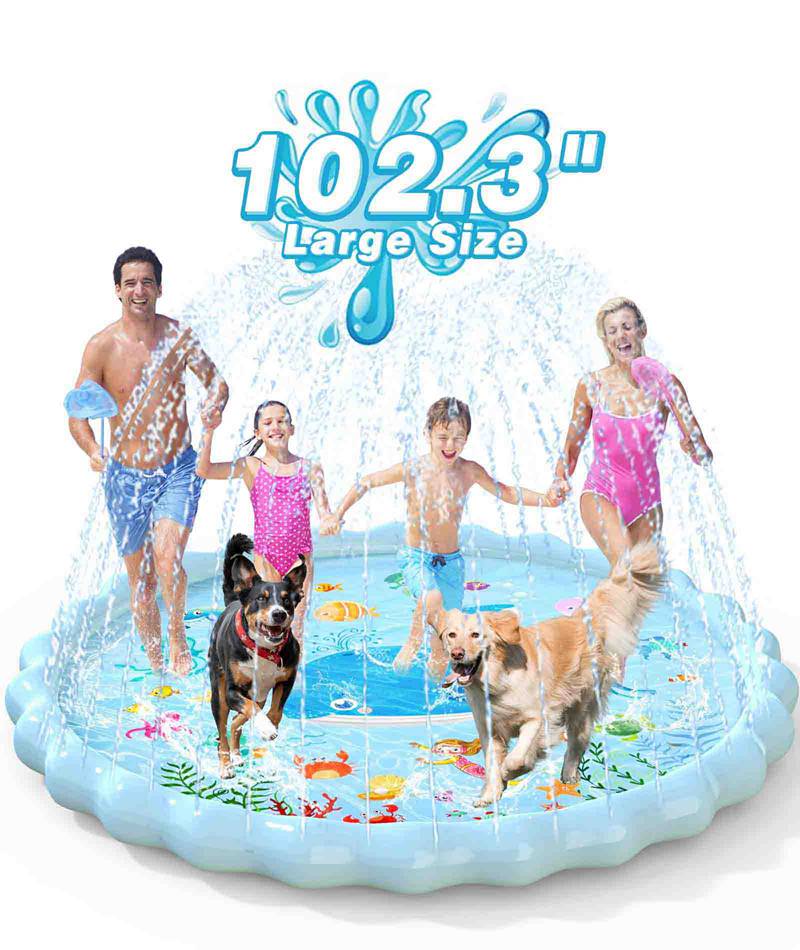
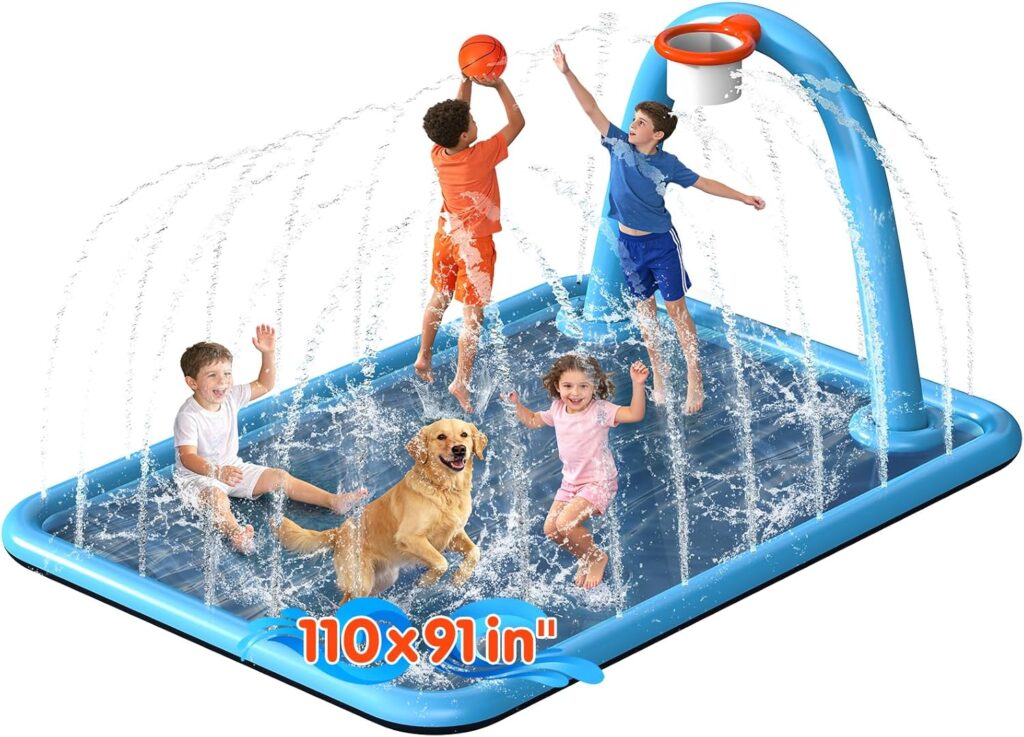
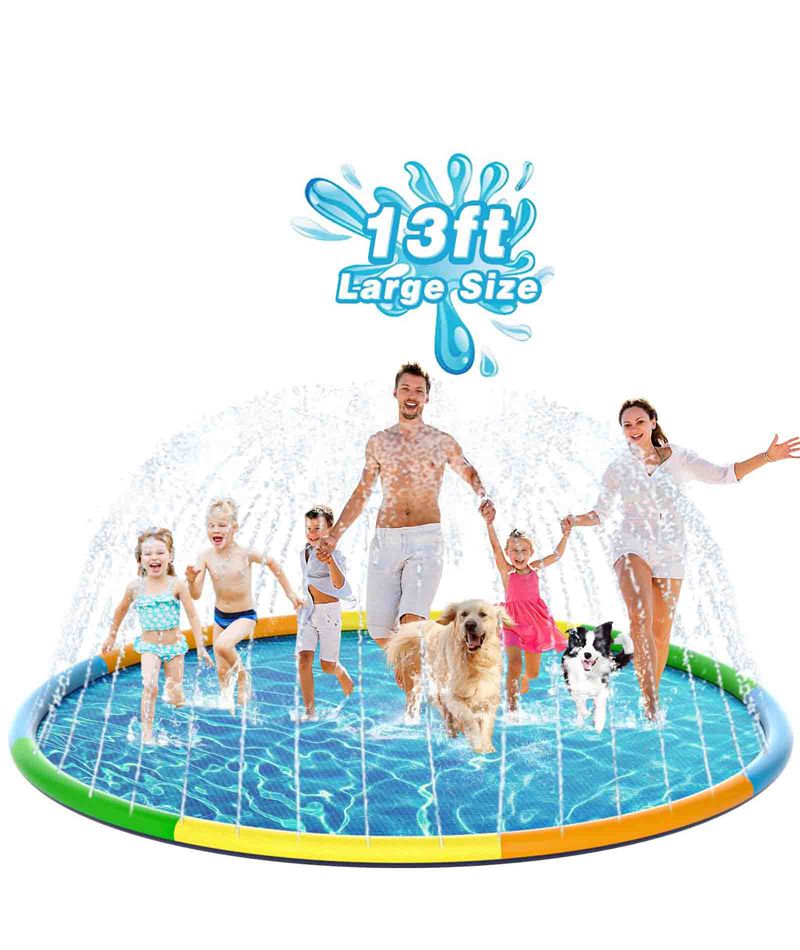
A splash pad looks simple at first. Lay it on the lawn, connect it to a garden hose, turn on the water, and the backyard becomes a summer play area within minutes. Most people naturally notice the size, color, pattern, and spray height first. Parents may check whether there is enough room for more than one child. Pet owners may look for a surface large enough for a dog to step, turn, and cool down comfortably.
But the part that often decides whether a splash pad lasts through repeated summer use is not the printed design or even the center surface. It is the seam.
Seam strength matters because the seam keeps the PVC layers sealed while the splash pad is under water pressure, foot traffic, folding, sunlight, and repeated outdoor handling. A stronger seam helps reduce edge leaks, uneven spray, water-ring splitting, hose-inlet damage, and early product failure. It is one of the clearest signs of whether a splash pad is built for more than a few weekends of play.
A thick PVC surface can still fail if the seam is narrow, uneven, or poorly bonded. A bright printed pattern cannot stop water from escaping through a weak edge. A large play area may look exciting, but if the outer ring loses pressure, the spray becomes uneven and the whole product experience changes quickly.
Picture a normal summer afternoon. One child runs across the spray. Another sits near the edge. A dog steps onto the water ring. The hose pulls slightly from one side. Someone turns the faucet higher to lift the spray. None of these actions feel unusual, but the seam is handling pressure, movement, friction, and bending all at once. That is why seam strength deserves a closer look before choosing a splash pad.

What Seam Strength Means
Seam strength is the ability of a joined material edge to stay sealed, stable, and bonded under pressure, movement, folding, and repeated use. In a splash pad, it mainly affects the outer water ring, hose inlet, spray balance, and long-term resistance to leaks.
How the Seam Works
In a PVC splash pad, the seam is where material layers are joined together to create a sealed structure. This sealed structure allows water to move through the outer ring and spray inward across the play area.
The seam is not just an edge line. It is part of the product’s working system.
A splash pad seam needs to:
- Hold water inside the outer ring
- Support spray pressure
- Keep the edge shape stable
- Resist pulling near the hose inlet
- Handle stepping and movement
- Survive folding and storage
- Stay sealed after repeated use
When the seam is strong, the splash pad feels more stable. The water ring fills more evenly, the spray stays more consistent, and the product is less likely to leak from the edge. When the seam is weak, the first signs may be small: lower spray on one side, a soft edge, a tiny leak, or a lifted area near the seam.
For EPN splash pads, seam strength is reviewed together with PVC thickness, edge width, heat-welding consistency, inlet structure, spray-hole layout, and the way families or pets are expected to use the product. A splash pad for toddlers, multiple children, or dogs needs a seam that can handle real backyard movement, not just a clean first setup.
Why the Seam Carries Pressure
The outer ring of a splash pad works like a soft water channel. Once the hose is connected, water flows into the ring and builds pressure before spraying through small openings. This pressure pushes outward against the sealed edge.
At the same time, the seam may face outside pressure from:
- Children stepping near the edge
- Dogs walking across the ring
- Grass or patio friction underneath
- Hose pulling around the inlet
- Folding after use
- Sun exposure during play
- Storage pressure between sessions
This means the seam is carrying more than water. It is carrying daily use.
A weak seam may not break right away. It may slowly lose stability after several rounds of filling, playing, draining, drying, and folding. Once a small weak point opens, water pressure can make it larger.
This is why seam strength is closely connected to the problems customers notice most:
- Edge leaking
- Uneven spray
- Low water pressure
- Soft or collapsed water ring
- Inlet leakage
- Short product life
- Early seam separation
If a splash pad starts losing pressure, the issue may not always be the hose or faucet. Sometimes water escapes through a weak seam before it reaches the spray holes. For practical leak checks, see these quick steps for a leaky splash pad.
Why Thickness Is Not Enough
PVC thickness matters, but it cannot work alone. Many customers assume a thicker splash pad must be stronger. In reality, the seam still has to hold the layers together. If the seam is narrow, uneven, or stressed by folding, the product can still fail early.
For many family-use splash pads, PVC thickness around 0.40–0.55 mm is often used to balance comfort, flexibility, wear resistance, and storage convenience. But the seam must match the material. A thicker PVC panel with a weak seam may leak sooner than a slightly thinner product with a wider, cleaner, better-bonded edge.
The best splash pad structure usually balances several details:
| Quality Area | Product Role | Daily Use Impact |
|---|---|---|
| PVC thickness | Supports surface strength | Helps resist stepping, grass friction, and small surface wear |
| Seam width | Adds more bonded area | Helps spread pressure along the edge |
| Welding consistency | Keeps the joined area stable | Reduces weak spots and early leaks |
| Edge shape | Supports the water ring | Helps keep spray more balanced |
| Inlet support | Protects the hose connection | Reduces pulling damage near the inlet |
| Folding flexibility | Helps with storage | Reduces sharp crease stress |
A durable splash pad is not created by one feature. It comes from how the surface, seam, edge, inlet, spray layout, and storage design work together.
Where Seams Usually Fail
Splash pad seams often fail around the outer ring, hose inlet, folded edge, or high-pressure areas. These sections carry water pressure, foot traffic, hose pulling, ground friction, and repeated folding, so small weaknesses can turn into leaks or separation over time.
Why the Outer Edge Fails First
The outer edge is the most active part of a splash pad. It holds water, supports spray, receives foot pressure, and often gets handled during setup and storage.
A seam around the edge may start failing when pressure pushes outward from inside the ring while children or pets press down from above. If the sealed area is too narrow or uneven, one small section can become overloaded.
Early signs of edge stress may include:
- A soft section of the water ring
- Lower spray on one side
- Small drops along the seam
- A bubble-like spot near the edge
- A lifted line between PVC layers
- A stretched or uneven seam area
These signs may look minor at first. But once water pressure finds a weak point, the opening can grow. A small leak can quickly become a larger edge problem after more play sessions.
The edge is also affected by the ground. Clean grass is more forgiving. Rough concrete, gravel, mulch, sticks, stones, or sharp grass clippings can press into the underside of the seam and increase wear.
A quick surface check before setup can prevent many seam problems. Remove debris, keep the pad flat, and avoid dragging the edge across rough ground. These small habits help protect the seam from pressure underneath while water pushes from inside the ring.

Why the Hose Inlet Needs Support
The hose inlet is one of the most important areas on a splash pad. It receives water flow and pulling force at the same time. Even if the rest of the edge is strong, a weak inlet area can still cause leaking, twisting, or deformation.
The inlet seam can be stressed when:
- The hose is stretched too tightly
- The connector is twisted at a sharp angle
- The pad is moved while the hose is attached
- Water pressure is turned on too quickly
- Children or pets step near the connection
- The surrounding PVC is not reinforced enough
A better inlet should look integrated into the water ring. It should not look like a small connector attached to a thin or fragile edge. The PVC around the inlet should have enough support so the hose does not pull directly on one weak seam line.
A simple setup routine can protect the inlet:
| Setup Step | Better Practice | Seam Protection Benefit |
|---|---|---|
| Lay the pad flat | Smooth out the edge before adding water | Reduces twisting around the inlet |
| Connect the hose | Keep the hose relaxed and straight | Lowers side-pulling stress |
| Start water slowly | Begin with low pressure | Allows the ring to fill evenly |
| Adjust spray gradually | Increase water flow step by step | Avoids sudden pressure spikes |
| Move after draining | Turn water off before repositioning | Protects the inlet and edge seam |
Small setup habits can make a real difference, especially for larger splash pads, dog splash pads, or products used frequently during summer.
How Seam Slippage Starts
Seam strength and seam slippage are related, but they are not the same.
Seam strength is about how much stress a seam can handle before it leaks, breaks, or separates. Seam slippage happens when material layers begin to shift, lift, or separate along the seam before a full leak or split appears.
In a splash pad, seam slippage may show up as:
- A lifted line near the edge
- A seam that looks stretched
- A water ring that fills unevenly
- A small opening that grows under pressure
- A fold area that no longer lies flat
- A weak spot near the hose inlet
Seam slippage can happen when the bonded area is too narrow, the welding is uneven, the PVC layers are not aligned well, or the product is folded sharply in the same place many times.
It can also happen when the hose pulls sideways or when a dog repeatedly steps near the water ring.
To reduce seam slippage, a splash pad needs:
- Enough bonded surface area
- Clean and even heat welding
- Balanced PVC flexibility
- Stable inlet support
- Smooth edge design
- Controlled water pressure
- Better folding and storage habits
A seam that does not slip easily is more likely to stay stable through repeated summer use.
What Makes a Seam Last
A longer-lasting seam usually has a wider bonded area, clean heat welding, suitable PVC flexibility, reinforced stress points, and stable water-pressure control. The best seam does not need to look bulky. It should look smooth, even, and well integrated into the splash pad structure.
Why a Wider Edge Helps
A wider bonded edge gives the seam more surface area to hold pressure. This helps spread stress across the edge instead of concentrating it on one narrow line.
This matters most around the outer water ring. The ring fills with water, supports spray, and receives most of the pressure during play. If the bonded area is too narrow, one weak spot can become the starting point for a leak.
Wider seam planning is especially useful for:
- Larger splash pads
- Multi-child play
- Pet splash pads
- Products used often during summer
- Splash pads placed on patios or firm surfaces
- Designs with higher spray pressure
However, width alone is not enough. A wide seam still needs clean bonding. If the welding is uneven, the seam can still fail. The real value comes from combining seam width with stable process control.
| Use Scene | Seam Design Focus | Customer Benefit |
|---|---|---|
| Toddler play | Smooth and stable edge | More comfortable sitting and crawling |
| Multi-child play | Wider bonded seam | Better resistance to repeated stepping |
| Dog water play | Stronger edge structure | Better paw-pressure resistance |
| Large splash pad | Balanced water-ring support | More stable spray across the pad |
| Frequent summer use | Reinforced seam and inlet | Longer use across repeated sessions |
For families, a wider bonded edge means less worry about edge leaks. For pet owners, it means better resistance where dogs often step. For EPN, it is one of the structural details considered when developing splash pads for different use scenes.
How Heat Welding Adds Stability
Most PVC splash pads use heat welding or heat pressing instead of stitching. The material layers are joined through heat, pressure, and controlled timing. When the process is well managed, this creates a sealed edge that can hold water and support the spray system.
The process needs balance. Too little heat may create a weak bond. Too much heat may damage the PVC or make the seam stiff and thin. Uneven pressure may leave one section stronger than another.
A good heat-welded seam usually has these signs:
- Smooth sealing line
- Even seam width
- No loose layers
- No burnt or rough edge
- No deep wrinkles near the seam
- No strange bulging when filled with water
A poor welded seam may still look closed at first, but it can fail when water pressure increases. This is why seam quality should not only be checked by appearance. It should also be reviewed under pressure, handling, and repeated folding.
For EPN splash pads, heat-welded seam strength is considered together with the full product structure. The seam must work with the PVC surface, outer ring, inlet, spray holes, and storage design. A good seam does not simply close the product. It helps the entire splash pad behave more reliably.
How Pressure Balance Protects Seams
Water pressure can make the play experience better, but it can also increase seam stress. A splash pad needs enough pressure to create enjoyable spray, but too much pressure can over-expand the ring and stress the edge.
A strong seam helps manage pressure, but the product also needs a balanced spray layout. If water exits unevenly, pressure may build up more in one part of the ring. Over time, that can stress the seam.
Pressure balance depends on:
- Spray-hole placement
- Water-ring shape
- Hose inlet position
- Seam width
- PVC flexibility
- Product size
- Customer water-pressure habits
Customers can protect seam strength by starting with low water pressure, then adjusting slowly until the spray height feels comfortable. For toddlers and dogs, moderate spray is often better than very high spray.
A splash pad does not need extreme water pressure to be fun. In many backyard settings, stable and even spray creates a better experience than high, forceful spray. When spray height feels uneven or weak, checking the hose connection, water flow, and spray ring can help before assuming the product is damaged. Understanding how splash pad water pressure works can also help families adjust the setup more safely.
How Backyard Use Tests Seams
Backyard use tests seam strength through repeated stepping, folding, pulling, sunlight, water pressure, grass friction, patio friction, and pet movement. The seam is most stressed around the outer ring and hose inlet, where water pressure and physical contact meet.
How Kids Stress the Edge
Children naturally test a splash pad. They run, sit, kneel, crawl, slide, step on the edge, and drag small toys across the surface. A splash pad made for family use should be ready for this kind of movement.
The seam is affected because children do not apply pressure evenly. A toddler sitting near the edge may place concentrated pressure on one small area. Older children may run across the same section again and again. During weekend gatherings, several children may step on the water ring repeatedly.
This kind of use can stress the seam in three main ways:
- Direct pressure from feet, knees, and sitting
- Movement across the seam area
- Repeated pressure during multiple play sessions
For parents, seam strength is about practical peace of mind. A stronger seam means fewer leaks, fewer interruptions, and a product that feels more reliable across the season.
Parents usually care about whether:
- The pad stays flat
- The spray remains even
- The edge leaks
- The surface feels comfortable
- The product can be reused after folding
- The splash pad survives more than a few sessions
A good seam supports these concerns quietly. It does not need to look technical. It simply helps the splash pad stay usable when children play the way children actually play.

How Dogs Add Edge Pressure
Dogs put different stress on a splash pad than children. Their paws create smaller pressure points, and claws can add extra surface wear. A dog may run toward the water, turn quickly, paw at the spray, or step repeatedly near the edge.
This makes seam strength especially important for pet splash pads. The outer ring is often the most stressed area because dogs enter and exit from the side. If the seam is weak, paw pressure and water pressure can work together to create early edge wear.
A dog splash pad should have:
- Stronger outer edge support
- Durable PVC surface
- Stable seam bonding
- Smooth water-ring shape
- Reliable hose inlet
- Easy-to-clean surface
- Moderate spray comfort
Pet owners can also help protect the seam by using the pad correctly:
- Keep dog nails trimmed when possible.
- Use the splash pad on clean grass or a smooth surface.
- Avoid gravel, sharp concrete, and rough mulch.
- Start with moderate water pressure.
- Supervise active dogs during play.
- Dry and fold the product after use.
For dogs, size and seam strength should be considered together. A larger dog needs enough room to step, turn, and cool down without constantly pressing the same edge area. Pet owners comparing different options can start with a dog-friendly splash pad that fits their dog’s size, activity level, and backyard surface.

How Surface and Storage Matter
The surface under a splash pad has a direct effect on seam life. Clean grass is usually the most forgiving option because it gives softer support. A smooth patio can work, but it adds more impact and friction. Gravel, mulch, rough concrete, sticks, and small stones can create pressure points under the seam.
The seam area is more sensitive than the center surface because it includes joined layers and pressure transitions. When water pressure pushes from inside and a hard object presses from below, the seam is stressed from both directions.
Before setup, customers should remove:
- Small stones
- Sticks and broken twigs
- Pet waste
- Garden clips
- Sharp grass clippings
- Outdoor toys
- Mulch pieces
- Rough debris
Storage also matters. A splash pad may only be used for a few months each year, but poor storage can weaken it between play sessions. Folding while wet, pressing the same hard crease, or storing under heavy objects can all stress the seam.
| Surface or Storage Condition | Seam Impact | Better Practice |
|---|---|---|
| Clean grass | Softer support | Best for regular family play |
| Smooth patio | More impact and slipping risk | Use moderate pressure and avoid dragging |
| Rough concrete | Higher edge abrasion | Avoid repeated use if possible |
| Gravel or mulch | Sharp pressure points | Not recommended |
| Wet folding | Traps moisture and adds crease stress | Dry before folding |
| Heavy storage pressure | Deepens fold lines | Store without crushing |
Product quality matters, but use conditions matter too. A strong seam lasts longer when the product is used on the right surface and stored with care.
How to Check Seam Strength
Customers can check seam strength by looking at the edge line, welded area, water-ring shape, hose inlet, fold marks, and product details. A good seam should look even, smooth, fully bonded, and stable, without loose layers, thin spots, deep wrinkles, or irregular bulging.
What a Strong Edge Looks Like
A strong seam often looks clean rather than dramatic. It does not need to look oversized or heavy. What matters is consistency.
When checking a splash pad, look closely at the edge. The seam should follow the shape of the product evenly. The bonded area should not suddenly become narrow. The PVC layers should not lift apart. The welded line should not look burnt, rough, or cracked.
Useful signs include:
- Smooth edge line
- Even sealed width
- Clean welded surface
- No loose PVC layers
- No obvious gaps
- No sharp wrinkles near the seam
- Balanced water-ring shape after filling
Warning signs include:
- Wavy or lifted seam line
- Thin or uneven sealed spots
- Peeling between layers
- Bulging in one section
- Cracking near folded areas
- Hose inlet pulling the edge out of shape
| Check Area | Stronger Detail | Possible Concern |
|---|---|---|
| Edge line | Smooth and consistent | Wavy or lifted |
| Welded area | Flat and clean | Burnt, rough, or cracked |
| PVC layers | Fully bonded | Visible gaps or peeling |
| Water ring | Balanced when filled | Bulging or collapsed sections |
| Corners | Rounded and stable | Sharp stress points |
| Surface near seam | Smooth transition | Deep wrinkles or distortion |
| Product photos | Edge and inlet shown clearly | Only lifestyle images shown |
A product page should make these details easier to see. Close-up images of the seam, inlet, and PVC surface help customers judge quality before purchasing.
Why the Inlet Area Matters
The hose inlet deserves special attention because it handles both water flow and pulling stress. A strong inlet should look supported, not fragile. It should feel like part of the water ring, not like a weak connector added onto the edge.
Before use, customers can check:
- Is the inlet firmly attached?
- Does the surrounding PVC look reinforced?
- Does the hose connect without twisting the edge?
- Does the inlet area stay stable when water starts flowing?
- Is there any leaking around the connector?
During setup, the hose should not pull the inlet sideways. The pad should lie flat first, then the hose can be connected gently. Water should start low and increase gradually.
This small setup habit can protect the seam from sudden stress. It also helps the water ring fill more evenly, which supports better spray performance.
For EPN splash pads, inlet stability is part of the product structure. The inlet, seam, and water ring need to work together so water enters smoothly and pressure does not concentrate in one weak area.

When Fold Marks Become a Risk
Fold marks are normal for PVC splash pads. These products need to be folded and stored after use. A fold mark by itself does not mean the seam is weak. The problem comes from repeated sharp folding along the same seam area, especially when the pad is wet or dirty.
When a seam is folded sharply many times, the bonded layers experience bending stress. If dirt or sand remains inside the fold, it can rub against the seam during storage. If heavy items are placed on top, the fold line can become deeper.
Better storage habits include:
- Drain the splash pad fully.
- Let the surface dry before folding.
- Wipe away grass, sand, and dirt.
- Fold loosely instead of pressing a hard crease.
- Avoid folding the same edge line every time.
- Store in a dry place away from direct sunlight.
- Keep heavy items off the folded product.
| Storage Habit | Better Method |
|---|---|
| Folding while wet | Drain and dry first |
| Pressing the same hard crease | Fold loosely and vary the fold line |
| Storing under heavy items | Keep it in a dry space without crushing |
| Leaving outside after use | Move to shade once dry |
| Folding with debris inside | Wipe or shake clean before storage |
| Pulling hard to unfold | Open gently from both center and edge |
Good storage does not take much time, but it can help protect the seam across the season.
Why Seam Strength Is Worth It
Seam strength is worth paying attention to because it affects leak resistance, spray stability, safety, product life, and everyday satisfaction. A stronger seam helps a splash pad perform better through repeated use, especially for families, pets, and backyard summer play.
How Strong Seams Support Safer Play
A stable seam supports safer water play because it helps the splash pad keep its intended shape. If the outer ring leaks, collapses, or twists, the pad may wrinkle or shift. Spray may become uneven, and the surface may feel less predictable.
For toddlers, this matters because they sit, kneel, crawl, stand, and lose balance more often than older children. A flatter and more stable play area is easier for them to enjoy.
For dogs, seam stability also matters. Dogs may step heavily near the edge, turn quickly, or paw at the water. A seam that holds well helps the ring resist sudden deformation.
Seam strength does not replace supervision. Children and pets should always be watched during water play. But stronger seams reduce avoidable product problems that can interrupt use or create unstable play conditions.
For EPN, safety is not treated as one label or one warning statement. It is connected to material choice, seam structure, edge stability, water pressure behavior, and practical use testing.
How Strong Seams Extend Summer Use
A splash pad that lasts longer gives better value. Families may use it for short sessions, but those sessions add up quickly across one summer.
A splash pad may be used for:
- After-school play
- Weekend backyard time
- Birthday parties
- Pet cooling sessions
- Family gatherings
- Hot afternoon water play
- Quick toddler outdoor activity
Even if each session lasts only 20–40 minutes, the product may go through many cycles of setup, filling, play, draining, drying, folding, and storage.
| Use Cycle | Seam Stress |
|---|---|
| Setup | Unfolding and hose connection |
| Filling | Water pressure inside the ring |
| Play | Stepping, sitting, running, pet movement |
| Draining | Handling while water remains inside |
| Drying | Heat, sunlight, and material movement |
| Folding | Bending along edge areas |
| Storage | Creases and compression |
| Reuse | Repeated stress across the season |
A weak seam may fail at any point in this cycle. A stronger seam gives the product more room to handle normal use.
The hidden cost of a weak seam is not only the price of replacing the product. It can also include:
- Interrupted playtime
- Water waste from leaks
- Uneven spray performance
- Extra cleanup
- Customer frustration
- Early replacement
- More return or complaint risk for sellers
This is why seam quality has real value, even if customers do not always notice it at first glance.
How EPN Reviews Splash Pad Seams
EPN, under American Epsilon Inc., develops PVC and composite products for family recreation, children’s toys, pet products, outdoor leisure, and seasonal use. Its splash pad development focuses on practical backyard performance rather than appearance alone.
For splash pads, EPN reviews seam strength together with:
- PVC thickness
- Edge shape
- Water-ring structure
- Hose inlet stability
- Spray-hole layout
- Pressure behavior
- Folding performance
- Surface wear
- Outdoor use conditions
The goal is not only to see whether the product looks sealed when new. The goal is to understand whether the seam can continue to perform after repeated setup, play, drying, folding, and storage.
| Test Area | Evaluation Focus | Practical Benefit |
|---|---|---|
| Water pressure stability | Outer ring pressure and seam response | Helps reduce edge leaks and unstable spray |
| Seam bonding review | Welded edge consistency | Helps catch weak bonding before shipment |
| Folding-use check | Seam response after repeated folding | Supports reuse across the summer season |
| Hose inlet reliability | Inlet stability under water flow and pulling | Reduces connection-area leaks |
| Spray distribution check | Water flow balance around the pad | Supports a better play experience |
| Surface wear review | PVC response to stepping, grass, and pet movement | Important for family and dog splash pads |
| Outdoor aging review | Material and seam response to heat and sunlight | Helps improve backyard durability |
This kind of review connects product quality with real customer experience. A seam that looks fine in a quick inspection may still fail if it is not designed for pressure changes, folding stress, outdoor surfaces, and repeated use.
That is why EPN considers seam strength as part of the full splash pad structure, not as a small edge detail.
Choosing a Better Splash Pad
A better splash pad should make quality easier to understand. Customers should be able to see the edge, check the inlet, understand the PVC structure, and know how the product is designed for repeated use. Seam strength is one of the clearest details to look at before choosing a splash pad.
What Families Should Look For
Families should look for a splash pad that balances comfort and strength. The product should feel flexible enough for children to sit and play on, but stable enough to hold water pressure. The seam should be smooth, not sharp or bulky. The edge should look evenly sealed.
Parents usually care about:
- Safe play
- Easy setup
- Comfortable surface
- Stable spray
- Leak resistance
- Simple storage
- Reuse across the season
Seam strength supports all of these points. It helps the pad stay sealed, keeps the spray more even, and reduces the chance that play stops because of a leak.
| Family Need | Seam Detail to Check | Expected Benefit |
|---|---|---|
| Toddler comfort | Smooth, flat edge | More comfortable sitting and kneeling |
| Leak resistance | Reinforced seam and stable ring | Fewer edge leaks |
| Easy setup | Strong inlet area | Less hose connection trouble |
| Spray control | Balanced water ring | More even water play |
| Storage | Fold-friendly PVC and seam layout | Easier seasonal reuse |
| Summer value | Durable edge structure | Better use across repeated sessions |
EPN splash pads are designed for practical family use, including water-ring stability, edge structure, spray performance, and storage convenience.
What Pet Owners Should Check
Pet owners should pay close attention to seam strength because dogs create concentrated pressure near the edge. A pet splash pad should handle paws, claws, repeated stepping, and outdoor movement.
A dog splash pad should have:
- Stronger outer edge support
- Durable PVC surface
- Stable seam bonding
- Smooth water-ring shape
- Reliable hose inlet
- Easy-to-clean surface
- Moderate spray comfort
| Pet Use Need | Seam Detail to Check | Expected Benefit |
|---|---|---|
| Paw pressure | Reinforced outer ring | Better edge stability |
| Claw contact | Durable PVC surface | Lower risk of surface wear |
| Repeated movement | Stronger seam bonding | Better resistance to stress |
| Hose setup | Stable inlet area | Fewer connection leaks |
| Cleaning | Smooth material and edge | Easier rinsing after use |
| Outdoor placement | Seam support on flat ground | Longer product life |
Pet owners should avoid gravel, rough mulch, and sharp concrete. Clean grass is usually a better surface. Nail trimming, supervision, and moderate water pressure can also help protect the seam.
Simple Checks Before Buying
Customers do not need to be engineers to choose a better splash pad. A few simple checks can help.
Before choosing a splash pad, look for:
- Clear product photos of the edge
- A visible hose inlet area
- Smooth seam lines
- Reinforced edge wording
- Stable water-ring structure
- PVC thickness information
- Use guidance for kids or pets
- Storage and care instructions
Avoid choosing only by size or pattern. A large splash pad with weak seams may become frustrating quickly. A bright print cannot prevent leaks. Thick PVC still needs good seam bonding.
| Product Detail | Stronger Sign | Weaker Sign |
|---|---|---|
| Edge seam | Clean and even | Loose, wavy, or unclear |
| Inlet area | Supported and integrated | Thin or fragile-looking |
| Product photos | Show edge and connection details | Only show lifestyle scenes |
| Material description | Mentions PVC, seam, and structure | Only says “strong” or “fun” |
| Storage design | Easy to drain and fold | No storage guidance |
| Use scene | Fits kids, pets, or family needs | One-size-fits-all claim |
A good splash pad does not need exaggerated claims. It should make quality visible through structure, detail, and practical use guidance.
Final Thoughts
Seam strength is one of the most important parts of splash pad quality because it affects the exact areas where real stress happens: the outer edge, hose inlet, water ring, fold lines, and pressure points. A splash pad can have a fun design, large play area, bright print, and thick PVC, but if the seam cannot hold steady under water pressure and repeated use, the product may not deliver the experience customers expect.
For families, strong seams mean fewer leaks, steadier spray, easier reuse, and better summer value. For pet owners, strong seams help the product resist paw pressure, edge movement, and repeated outdoor play. For anyone choosing a splash pad, seam strength is a practical sign that the product was built for more than one quick afternoon in the yard.
EPN designs PVC splash pads with attention to reinforced edge structure, seam bonding, inlet stability, spray balance, material selection, and repeated-use performance. The goal is simple: to create splash pads that feel easier to use, more stable during play, and more reliable across the season.
Explore EPN splash pads for everyday family and pet water play, or contact Epsilon for product details, bulk order support, or a custom splash pad inquiry when your project needs specific size, pattern, packaging, or structural requirements.
Get A Fast quote
Here, bringing your inflatable concepts to life is no longer a challenge—it’s a collaborative journey where American Epsilon helps families, outdoor enthusiasts, and global brands transform creative ideas into safe, certified, and market-ready inflatable solutions.


Partner With Epsilon
Whether you are a family looking for safe backyard fun or a brand seeking large-scale OEM/ODM solutions, American Epsilon Inc. guarantees every inflatable is built with safety, durability, and excitement in mind. With flexible low MOQs, strategically placed warehouses in the U.S., Canada, U.K., and Germany, plus 24/7 professional support, we ensure smooth delivery and reliable service worldwide.
Ready to bring your inflatable ideas to life? Request free samples, fast prototypes, and customized designs today—your trusted inflatable journey starts here.