Skip to content
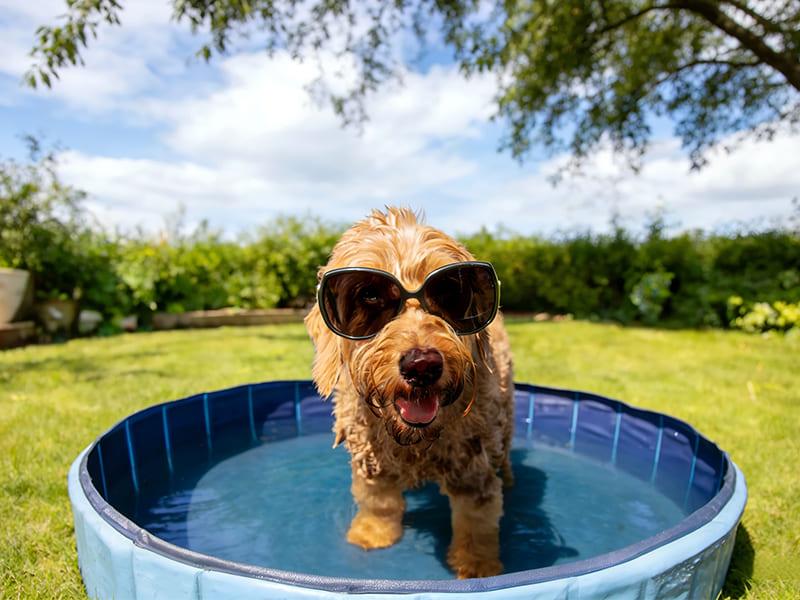
A lot of people think summer dog safety is simple: put out a bowl of water, find a shady spot, and everything should be fine. In real life, that is where many problems begin. Dogs do not cool themselves the way people do. They cannot sweat through most of their skin, and once body heat builds too quickly, the situation can go from mild discomfort to real danger much faster than most owners expect. That is especially true in backyards, patios, lawns, driveways, beaches, and parks where surfaces hold heat and direct sun adds stress even when the temperature does not seem extreme.
The most effective way to keep dogs safe and cool in summer is to reduce heat exposure, provide constant access to fresh water, avoid peak sun hours, watch closely for early signs of overheating, and use safe cooling methods such as shade, airflow, shallow water play, splash pads, or dog pools. The goal is not just to cool a dog after it gets too hot. The real goal is to stop dangerous heat buildup before it starts.
That sounds straightforward, but the details matter more than people think. A dog can have water and still overheat. A dog can sit in the shade and still struggle if the air is hot and still. A dog can seem happy, active, and excited right up to the moment its body starts failing to cope. Many owners only realize the risk when their dog suddenly slows down, lies flat on the ground, pants heavily, and stops responding normally. By then, the warning signs have already been there for a while. That is why a closer look at summer cooling safety is worth it.
Summer Cooling Safety for Dogs
Summer cooling safety for dogs is about controlling heat before it becomes a problem, not waiting until the dog is already struggling. In real life, most issues do not happen suddenly—they build up over time through repeated exposure to heat, sunlight, and activity without enough cooling support.
A safe summer setup focuses on four basic needs:
- limiting heat exposure
- providing continuous hydration
- reducing contact with hot surfaces
- creating easy, repeatable cooling options
When these four elements are in place, the risk of overheating drops significantly.

Why Do Dogs Overheat in Summer?
Dogs overheat because their bodies cannot release heat efficiently. They rely mainly on panting, which becomes less effective when:
- air temperature is high
- humidity is high
- airflow is limited
This creates a situation where heat builds faster than it can be released. Many owners focus only on air temperature, but overheating usually comes from combined heat sources:
- direct sunlight
- hot ground surfaces
- physical activity
- poor ventilation
A simple example:
| Condition | Risk Level |
|---|---|
| 82°F with shade and airflow | Moderate |
| 82°F with direct sun and hot pavement | High |
| 90°F with humidity and no airflow | Very high |
Surface heat is especially important. Dogs absorb heat through their paws and body contact.
| Surface Type | Temperature Increase |
|---|---|
| Grass (shade) | +0–5°F |
| Concrete | +20–30°F |
| Asphalt | +30–50°F |
This means a dog standing on asphalt at 86°F air temperature may actually be exposed to 120°F+ surface heat. Another factor is activity. A dog running or playing can generate internal heat quickly. Combined with external heat, this pushes the body beyond its cooling limit.
Which Dogs Need Cooling Safety?
Some dogs are much more sensitive to heat and require stricter cooling control.
High-risk dogs include:
- flat-faced breeds (Bulldogs, Pugs)
- thick-coated breeds (Huskies, Malamutes)
- overweight dogs
- senior dogs
- puppies
- dogs with breathing or heart conditions
Each group has a different limitation:
| Dog Type | Main Heat Challenge |
|---|---|
| Flat-faced breeds | Limited airflow when panting |
| Thick-coated dogs | Heat retention |
| Overweight dogs | Higher physical strain |
| Senior dogs | Slower recovery |
| Puppies | Poor self-regulation |
For example, brachycephalic breeds may overheat much faster even during light activity, especially in warm, humid conditions.
Size also matters. Smaller dogs are closer to the ground, so they experience stronger surface heat. Larger dogs generate more body heat during movement.
Another real-world factor is lifestyle. Dogs that are usually indoors may struggle more when suddenly exposed to long outdoor sessions during weekends, vacations, or family gatherings.
Is Summer Cooling Safety Important for Dogs?
Yes, because overheating can become dangerous faster than most people expect.
Dogs have a relatively narrow safe temperature range:
| Body Temperature | Condition |
|---|---|
| 101–102.5°F | Normal |
| 103–104°F | Overheating begins |
| 104–105°F | High risk |
| Above 105°F | Emergency |
The key issue is speed. Once a dog reaches the higher range, the body starts to lose control of temperature regulation.
What makes this more challenging is that early signs are often ignored:
- heavy panting seen as normal
- slowing down seen as tiredness
- lying down seen as rest
In reality, these may already be warning signals.
Another important point is that overheating is not only about extreme weather. It often happens during:
- midday play in the backyard
- long walks on warm surfaces
- outdoor family activities
- beach or park visits
In these situations, dogs may stay active longer than they should, especially when excited.
From a practical standpoint, summer cooling safety is about:
- preventing heat buildup
- reducing physical stress
- supporting recovery during activity
- avoiding emergency situations
A well-prepared setup makes a big difference.
For example, a safer outdoor environment usually includes:
- shaded areas that remain shaded over time
- access to water that is always available
- surfaces that are not heat-retaining
- a cooling option such as shallow water or splash play
Here is a simple comparison:
| Setup Type | Risk Level |
|---|---|
| No shade, no water | Very high |
| Shade only | High |
| Water only | Medium |
| Shade + water | Low |
| Full setup (shade + water + cooling area) | Lowest |
For most families, the goal is not to eliminate outdoor activity. It is to make it safer and more predictable.
When cooling is built into the environment, dogs naturally regulate themselves better. They move to shade, step into water, rest, and recover without needing constant intervention.
That is what summer cooling safety should look like in real life:
not reactive, but built into everyday use

Signs Dogs Need Cooling in Summer
The most reliable way to protect a dog in summer is to recognize heat stress early and act quickly. Most serious cases do not start with dramatic symptoms—they begin with small, easy-to-miss changes in breathing, posture, and behavior. When owners learn what to watch for, they can intervene early and avoid dangerous situations.
A dog usually shows signs before reaching a critical state. The key is knowing how to read those signs in real conditions like backyards, parks, patios, and outdoor play areas.
What Are Signs Dogs Are Too Hot in Summer?
The earliest signs of overheating are often visible within minutes of heat exposure, especially during activity.
Common early signs include:
- fast, heavy panting
- longer tongue extension than usual
- increased drooling or thick saliva
- warm or hot ears
- red or darkened gums
- slowing down during play
- frequent stops or lying down
These early warning signs are consistent with common veterinary hot-weather guidance, including the ASPCA’s advice on signs of overheating in dogs. These signs mean the dog is already trying to release excess heat.
As heat stress increases, symptoms become more noticeable:
- unsteady walking
- reluctance to move
- glazed or unfocused eyes
- excessive thirst
- mild disorientation
A simple way to track progression:
| Stage | What You May See |
|---|---|
| Early | Heavy panting, drooling |
| Mid | Slowing down, weakness |
| Advanced | Vomiting, confusion, collapse |
One detail many owners overlook is how long the signs last.
- normal panting after activity → should improve within a few minutes
- overheating panting → continues or worsens even at rest
Another important signal is posture. Dogs that are too hot may:
- stretch out flat on cool surfaces
- press their belly to the ground
- stay low and avoid movement
This behavior is not just resting—it is an attempt to release heat through body contact.
Is Your Dog Overheating in Summer?
A common challenge is telling the difference between a dog that is “just tired” and one that is overheating.
Here is a practical comparison:
| Normal Tiredness | Overheating Warning |
|---|---|
| Recovers quickly after rest | Panting stays intense |
| Moves normally after break | Hesitates or refuses to move |
| Responds to voice or commands | Slower or no response |
| Breathing gradually slows | Breathing remains rapid |
| Shows interest in activity again | Avoids activity |
Another useful check is recovery time.
👉 A healthy dog should start recovering within 3–5 minutes after stopping activity and moving to shade.
👉 If there is no clear improvement after 5–10 minutes, cooling should begin immediately.
Environmental context is also critical. Overheating is more likely when:
- the dog is in direct sunlight
- the ground is hot
- the air is still (no wind)
- humidity is high
- the dog has been active continuously
Many owners miss overheating because they focus only on the dog’s behavior and ignore the environment. In reality, both need to be considered together.
Another important factor is group activity. Dogs playing with children or other dogs often push themselves beyond safe limits. Excitement masks fatigue and heat stress.
How to Safely Cool Dogs in Summer?
Once signs appear, cooling should start immediately—but it must be done the right way. The goal is to lower body temperature gradually and safely, not shock the system.
Step-by-step cooling approach:
- move the dog out of direct sunlight
- stop all activity
- place the dog in shade or a cooler area
- offer small amounts of cool water
- apply water to body (especially belly, paws, inner legs)
- increase airflow if possible
Key cooling areas on a dog:
- belly (less fur, faster heat release)
- paw pads (help release heat)
- inner thighs
- lower chest
Water temperature matters:
| Water Type | Effect |
|---|---|
| Cool water | Safe and effective |
| Lukewarm water | Gentle cooling |
| Ice-cold water | Not recommended |
Very cold water can cause discomfort and may slow down natural cooling response.
What should be avoided:
- forcing the dog into deep water
- pouring ice water suddenly
- giving large amounts of water too quickly
- sending the dog back to play too soon
In real home environments, the most effective cooling methods are usually simple and repeatable:
- shallow dog pools
- splash pads
- wet ground surfaces
- shaded water play areas
These allow the dog to cool itself naturally. Another important point is monitoring after cooling begins.
Owners should watch for:
- breathing improvement
- more stable movement
- better responsiveness
If symptoms do not improve or worsen (vomiting, collapse, confusion), the situation becomes serious and requires immediate professional attention.
Additional Practical Observation Tips
Many experienced dog owners rely on small daily habits to catch overheating early:
- check gum color regularly in summer
- observe breathing patterns after play
- notice how quickly the dog recovers
- watch for changes in behavior across different days
Keeping these observations consistent helps detect subtle changes.
A useful habit is to think in terms of patterns, not single events.
For example:
- “My dog usually recovers in 2 minutes, but today it took 8 minutes”
- “My dog usually stays active, but today it stopped early”
These small differences often matter more than dramatic symptoms.
Simple Field Checklist
Before and during outdoor activity, ask:
- Is the ground too hot?
- Has the dog had water recently?
- Is there shade available?
- Has the dog been active for more than 10–15 minutes?
- Is the dog panting harder than usual?
If several answers raise concern, it is time to pause and cool. Recognizing the need for cooling is not complicated, but it requires attention. Most heat-related problems can be avoided when owners respond early instead of waiting for clear distress.
In summer, small decisions—when to stop, when to cool, when to rest—make the biggest difference.

How to Keep Dogs Cool in Summer
Keeping dogs cool in summer is less about one “perfect trick” and more about building a reliable routine that reduces heat buildup throughout the day. In real life, dogs overheat because several small factors add up—sun exposure, hot ground, continuous activity, and delayed cooling. When these are controlled together, the dog stays comfortable and safe even on warmer days.
A practical approach starts with understanding how heat accumulates. A dog does not suddenly become overheated—it happens gradually. For example, a dog that runs for 10 minutes on warm grass may feel fine, but if the same dog continues for another 10–15 minutes without shade or cooling, the internal temperature can rise beyond what panting can manage. That is why the goal is to interrupt heat buildup early and often, rather than waiting until the dog shows clear distress.
The most effective cooling routines usually combine the following elements:
- controlled outdoor timing (early morning or evening activity)
- shaded rest areas that remain cool over time
- constant access to fresh water
- low-impact activity instead of continuous running
- water-based cooling options for active heat reduction
These elements work together to create a balanced environment where the dog can play, cool down, and recover repeatedly without stress.
What Is the Best Way to Keep Dogs Cool in Summer?
The most effective way to keep dogs cool is to combine prevention and active cooling, rather than relying on a single solution like shade or water alone. Dogs need both reduced heat exposure and a way to release body heat efficiently.
In everyday use, this means setting up an environment where the dog can move between activity and cooling without needing constant intervention. For example, a dog that has access to shade, water, and a shallow cooling area will naturally adjust its behavior—running for a short period, then stepping into water, then resting.
A well-balanced cooling setup usually includes:
- a shaded area that blocks direct sunlight for extended periods
- a cooling surface such as grass, soil, or a damp area
- access to shallow water (pool, splash pad, or similar)
- short activity cycles instead of long continuous play
The difference between basic and effective cooling can be seen here:
| Setup Type | Real-World Result |
|---|---|
| Water only | Dog cools slowly, may still overheat |
| Shade only | Reduces heat gain but does not cool body |
| Shade + water | Balanced, moderate cooling |
| Shade + water + cooling area | Stable and repeatable cooling |
Water plays a key role because it helps remove heat from the body. Even shallow water contact—especially on the belly and paws—can significantly improve cooling speed. This is why many dogs naturally seek water when they feel hot.
Another important factor is consistency. Cooling should not happen only when the dog is already tired. It should be part of the normal activity cycle.
When Should Dogs Go Outside in Summer?
Timing is one of the simplest and most effective ways to reduce heat risk. Many overheating cases happen not because the weather is extreme, but because activity happens at the wrong time of day. This matches many standard summer safety tips for dogs, which recommend outdoor time in cooler parts of the day, along with shade and fresh water.
During summer, outdoor conditions change quickly throughout the day:
- early morning → cooler air and surfaces
- midday → peak heat and strongest sunlight
- late afternoon → surfaces still hot even if air cools slightly
A practical daily schedule looks like this:
| Time | Condition | Recommendation |
|---|---|---|
| Before 9 AM | Cool and stable | Best time for walks and play |
| 9–11 AM | Rising heat | Short, controlled activity |
| 11 AM–4 PM | Peak heat | Avoid outdoor activity |
| After 6–7 PM | Cooling down | Safe for activity again |
One detail that often gets ignored is surface heat lag. Even when the air starts cooling in the afternoon, surfaces like concrete and asphalt may still hold heat for hours.
For example:
- air temperature drops from 90°F to 82°F
- pavement may still remain above 100°F
This is why evening walks are safer than afternoon ones, but still require checking the ground.
A simple and reliable rule:
If the ground feels hot to your hand, it is too hot for your dog.
Adjusting timing alone can reduce a large percentage of summer heat problems. For busy households, shifting outdoor activity even 1–2 hours earlier or later can make a noticeable difference.
How Do Water and Shade Cool Dogs in Summer?
Water and shade serve different purposes, and using them together creates a much more effective cooling system.
Shade works by reducing incoming heat. It blocks direct sunlight and lowers the temperature of the immediate area. However, shade alone does not actively remove heat from the dog’s body. A dog resting in shade may still remain hot if the surrounding air is warm.
Water, on the other hand, works by removing heat directly from the body. When a dog’s paws, belly, or lower body come into contact with water, heat transfers away from the body into the water. This is why even shallow water can be effective.
A combined cooling setup looks like this:
| Element | Function | Result |
|---|---|---|
| Shade | Reduces heat exposure | Slows heat buildup |
| Water | Removes stored heat | Active cooling |
| Airflow | Improves evaporation | Faster cooling |
In real-life use, dogs respond well to setups where they can move freely between these elements. For example:
- running briefly in a shaded yard
- stepping into a shallow pool or splash area
- lying down on cooler ground
- returning to play after recovery
Water depth is also important. Dogs do not need deep water to cool down effectively.
- 2–6 inches of water → safe and sufficient for most dogs
- allows cooling of paws, legs, and belly
- reduces risk compared to deep immersion
Another advantage of water-based cooling is behavior. Dogs often choose when to cool themselves. This reduces stress and avoids forced cooling, which can sometimes make dogs uncomfortable.
In many households, combining shade and water creates a simple but highly effective cooling system that works consistently throughout the day.
Overall, keeping dogs cool in summer comes down to building a routine rather than reacting to problems. When timing, environment, and cooling methods are aligned, dogs can safely enjoy outdoor time without unnecessary risk.

Best Cooling Products for Dogs in Summer
Cooling products can make a real difference in summer, but only when they are used correctly and matched to how dogs actually behave. Many owners expect one product to solve everything, but in practice, cooling works best when products are part of a daily routine that includes shade, water, and controlled activity.
Dogs cool themselves by panting and releasing heat through their paws and skin contact. That means the most effective products are the ones that help remove heat from the body through contact or water, not just “feel cool” for a short time.
Research and practical testing both show that water-based cooling methods are the most effective, especially after activity. For example, partial water immersion cools dogs faster than other methods and results in lower body temperature after exertion . That is why products like dog pools and splash pads are widely used in real environments.
At the same time, other products like cooling mats or vests can help in specific situations, especially when water is not practical.
The key is understanding what each product does well, and where it fits into daily use.

Are Dog Pools and Splash Pads Good for Cooling Dogs in Summer?
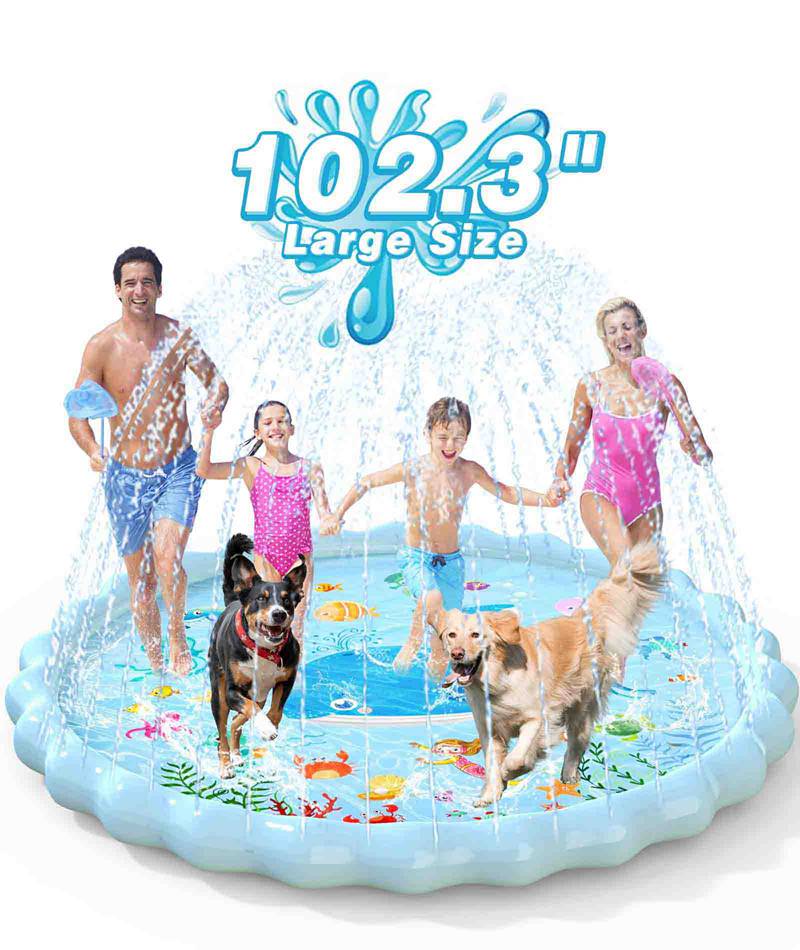
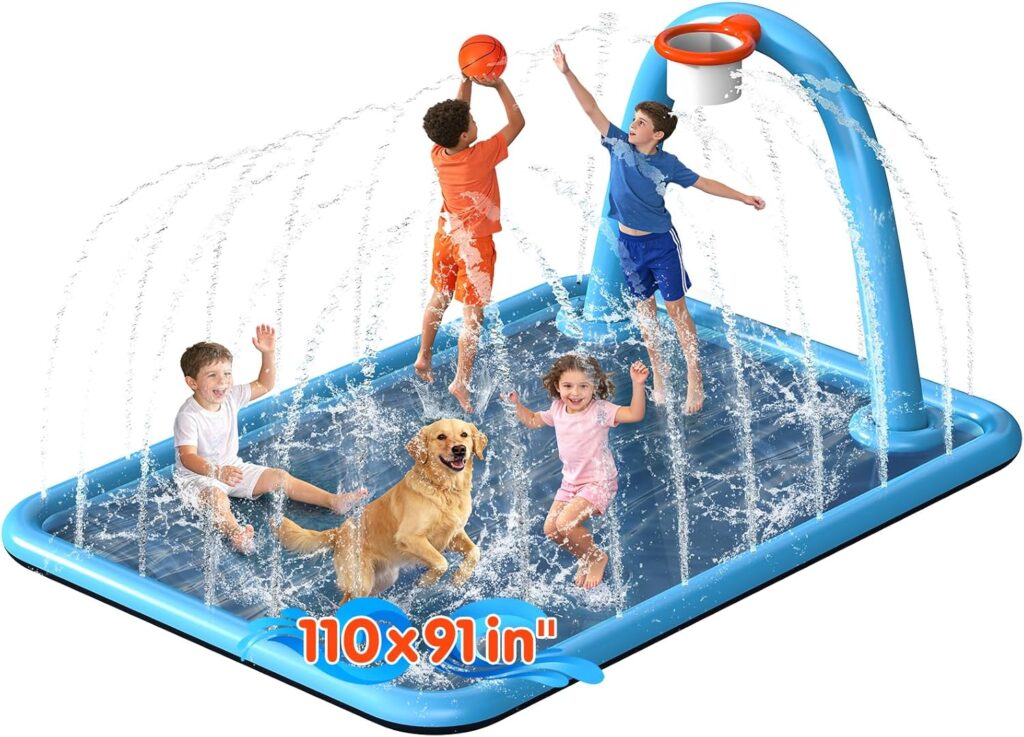
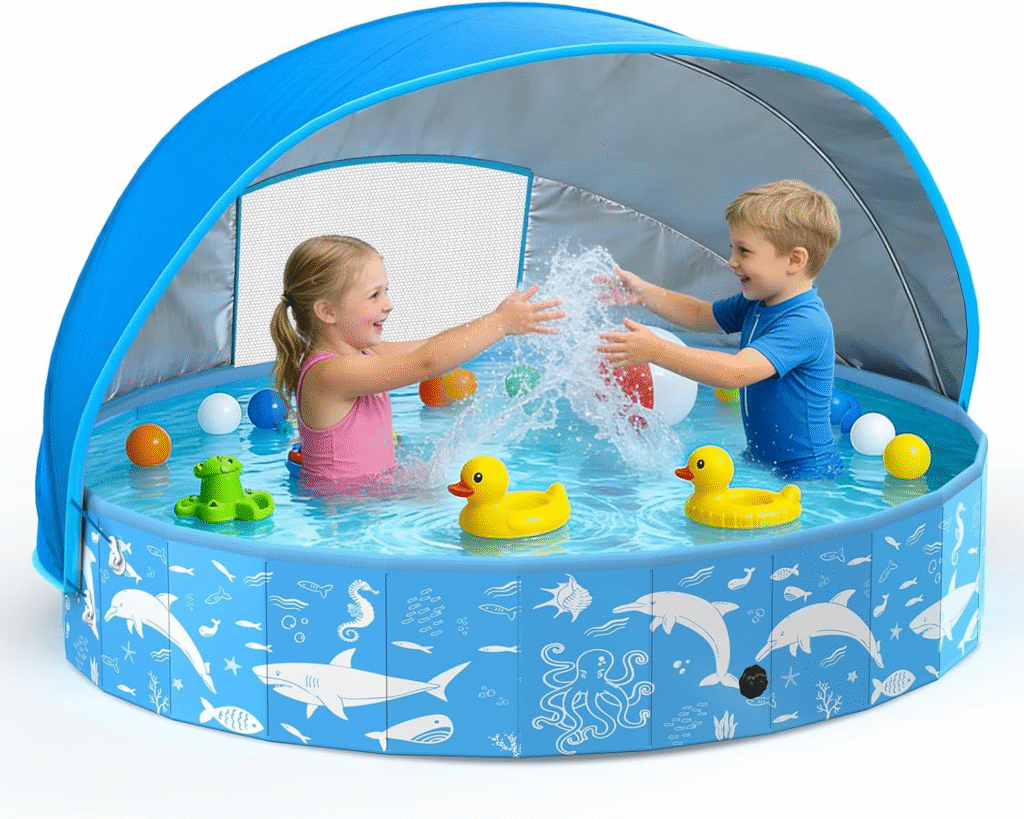
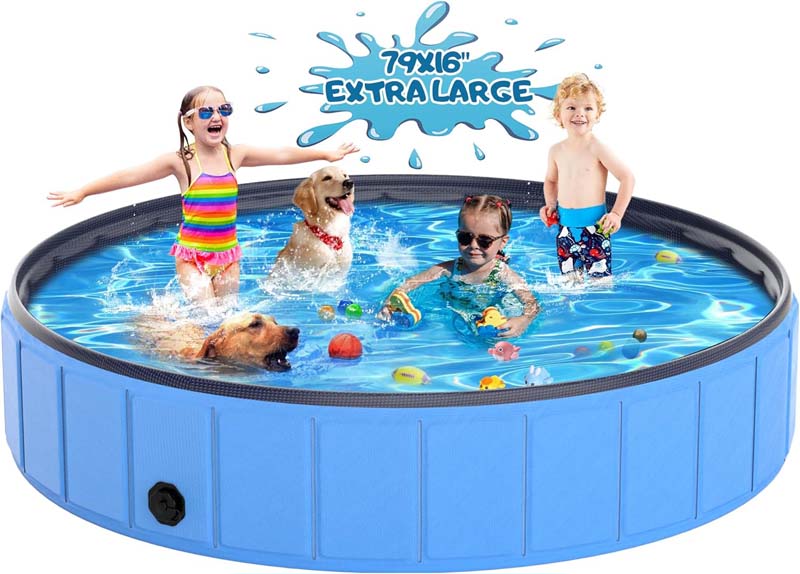
Dog pools and splash pads are among the most practical cooling tools because they allow continuous, self-controlled cooling.
Unlike temporary solutions (like spraying water or using a towel), these products give the dog a way to cool down repeatedly throughout the day without needing constant human intervention.
A dog pool works by allowing:
- paws and belly to stay in contact with water
- heat to transfer out of the body
- the dog to enter and exit freely
This creates a natural cooling behavior:
play → step into water → cool → rest → repeat
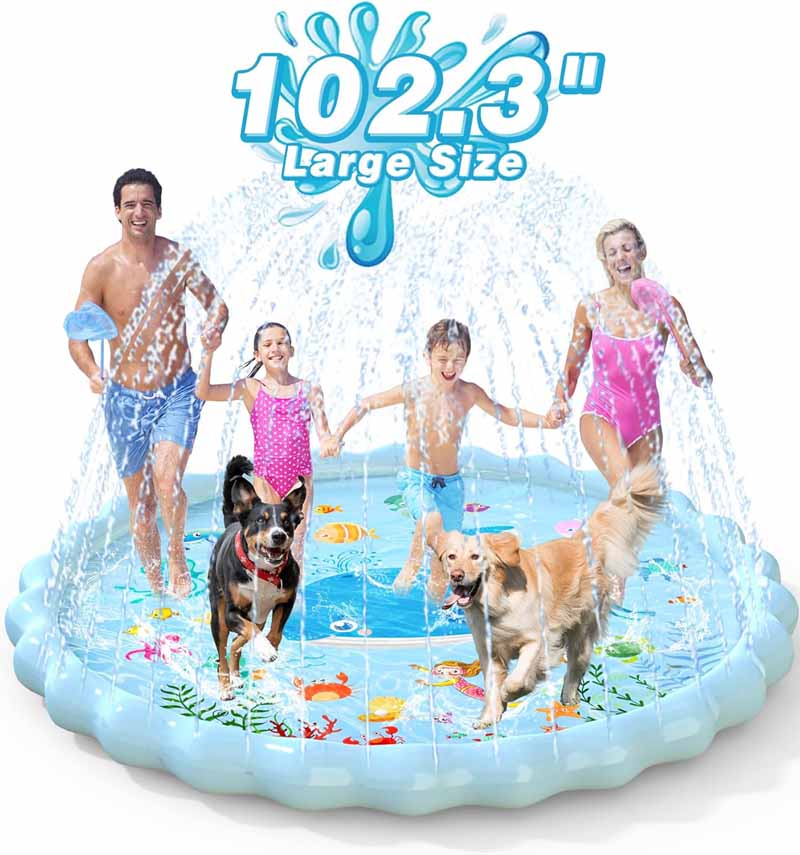
Splash pads add another benefit—movement. Instead of standing still, the dog stays active while being cooled at the same time.
Here is a comparison of how they perform in real use:
| Product | Cooling Type | Best Use |
|---|---|---|
| Dog pool | Passive water cooling | Rest + cooling |
| Splash pad | Active + water cooling | Play + cooling |
| Hose spray | Short-term cooling | Quick cooling only |
Dog pools are especially useful for:
- large dogs that need stable cooling
- multiple dogs in one household
- long outdoor sessions
- backyard environments
Splash pads are better for:
- active dogs
- families with children and pets
- interactive play
Another important advantage is safety control. Unlike lakes or rivers, pools and splash pads allow owners to control:
- water depth
- surface stability
- cleanliness
- entry and exit
From a real customer perspective, this matters more than features. Owners want something:
- easy to set up
- easy to clean
- safe for daily use
- durable enough for repeated use
That is why reinforced PVC structures and anti-slip surfaces are often preferred—they handle repeated stepping, scratching, and water pressure better over time.
Which Cooling Products Keep Dogs Cool in Summer?
Different cooling products work in different ways. The best choice depends on how and where the dog spends time.
Here is a practical breakdown:
| Product Type | How It Cools | When It Works Best |
|---|---|---|
| Dog pool | Water contact removes heat | Daily outdoor use |
| Splash pad | Moving water cools body | Active play |
| Cooling mat | Absorbs body heat | Indoor or shaded rest |
| Cooling vest | Evaporation cooling | Walking or travel |
| Elevated bed | Airflow under body | Dry environments |
Cooling mats are one of the most commonly used products, especially indoors. They work by absorbing heat from the dog’s body and dispersing it, which helps regulate temperature . Many mats use gel or water-based systems that activate when the dog lies down.
They are useful because:
- they do not require water or setup
- they are portable
- they provide a consistent cool surface
They are particularly helpful for:
- senior dogs
- indoor use
- crate environments
- travel
Studies and veterinary guidance suggest that cooling mats can help reduce overheating risk when used properly, especially for dogs resting during hot conditions .
However, mats have limitations:
- they cool only one contact area
- they are less effective in extreme heat
- they do not replace hydration or shade
Cooling vests and wearable products are useful for:
- short walks
- outdoor movement
- temporary cooling
But they are not ideal for long periods because:
- they dry out
- they require reactivation
- they may restrict movement
In real use, most households benefit from combining products:
- outdoor → dog pool or splash pad
- indoor → cooling mat
- travel → cooling vest
This combination covers different situations instead of relying on one solution.
How to Choose Dog Cooling Products for Summer?
Choosing the right product is less about brand and more about how the product fits real use conditions.
Many buyers focus on appearance or price, but long-term satisfaction usually depends on a few practical factors.
1. Material safety and durability
- non-toxic PVC or safe composite materials
- no strong chemical odor
- resistant to scratching and wear
Dogs interact with products using paws, claws, and teeth. Weak materials wear out quickly, especially in outdoor use.
2. Size and stability
| Dog Size | Recommended Setup |
|---|---|
| Small dogs | Compact pool or mat |
| Medium dogs | Standard pool or splash pad |
| Large dogs | Reinforced, larger pool |
A product that is too small limits movement and reduces effectiveness.
3. Ease of use
- quick setup
- easy to drain or clean
- foldable or portable
- minimal maintenance
Products that are difficult to set up are used less often, which reduces their value.
4. Behavior compatibility
This is often overlooked.
Some dogs:
- enjoy water and active play
- prefer lying down in cool areas
- avoid sudden or strong water pressure
Matching the product to behavior improves usage:
| Dog Behavior | Better Product Choice |
|---|---|
| Active, playful | Splash pad |
| Calm, resting | Dog pool or mat |
| Outdoor + indoor mix | Combination setup |
5. Environment suitability
- backyard → pool or splash pad
- apartment → cooling mat
- travel → portable cooling mat or vest
Products should match where the dog spends most time.
A cooling product is only useful if the dog actually uses it.
From real-world experience:
- dogs prefer shallow water over deep water
- dogs return more often to cooling areas that are easy to access
- dogs avoid unstable or slippery surfaces
- dogs cool more effectively when they can choose when to enter and exit
This is why simple designs often perform better than complex ones.

Extreme Summer Cooling Safety for Dogs
Extreme heat changes the rules. What feels “manageable” on a normal summer day can become unsafe during a heatwave because there is no real recovery window—air stays hot, surfaces stay hot, and even shaded areas can trap heat. In these conditions, dogs can overheat while resting, not just during play. That’s why heatwave safety is less about occasional cooling and more about continuous temperature control.
A practical way to think about extreme heat is to treat it like a 24-hour exposure problem. If temperatures remain high from morning through evening, the dog’s body never fully cools down. Small heat gains add up, and risk increases over time.
A safe heatwave plan focuses on:
- reducing total outdoor exposure time
- increasing access to active cooling (water, airflow)
- avoiding heat-retaining surfaces completely
- creating a controlled indoor or shaded cooling area
- monitoring the dog more frequently than usual
How to Keep Dogs Safe in a Summer Heatwave?
During a heatwave, daily routines should be adjusted, not just slightly changed. The goal is to limit heat exposure as much as possible while maintaining basic activity needs.
A safe heatwave routine usually looks like this:
- short outdoor breaks only (5–15 minutes max)
- outdoor time limited to early morning or late evening
- no continuous running or high-energy play
- immediate access to cooling after any activity
- shaded areas checked regularly (shade moves during the day)
Here is a practical safety guide:
| Activity Type | Safe Duration (Heatwave) |
|---|---|
| Quick bathroom break | 5–10 minutes |
| Light walk (early morning) | 10–15 minutes |
| Midday outdoor activity | Not recommended |
| Play sessions | Short and controlled |
Even when a dog “wants” to play, it should not be allowed to continue freely during extreme heat. Dogs often do not stop on their own until they are already overheated.
Another important factor is shade quality. Not all shade is equal:
- tree shade → better airflow, cooler ground
- umbrella shade → blocks sun but may trap heat
- wall shade → can reflect heat depending on surface
The best shade is one that allows air movement + minimal heat reflection.
Water access should also be increased:
- multiple bowls instead of one
- refilled more frequently
- placed in shaded areas
In extreme heat, even small improvements in environment can significantly reduce risk.
What Should You Avoid in Extreme Summer Heat?
Many overheating cases come from common, avoidable mistakes rather than extreme situations.
The most important risks to avoid include:
- walking dogs on hot pavement or sand
- leaving dogs in parked cars
- long outdoor exposure without cooling
- relying only on water without shade
- allowing continuous play without breaks
One of the most dangerous environments is a parked car.
| Outside Temperature | Inside Car (20–30 min) |
|---|---|
| 80°F | 109°F |
| 90°F | 124°F |
| 100°F | 140°F+ |
Even with windows slightly open, heat builds rapidly. This can become dangerous in a very short time.
Surface heat is another major risk that is often underestimated.
| Surface | Risk Level |
|---|---|
| Grass (shade) | Low |
| Concrete | Medium |
| Asphalt | High |
| Sand (beach) | Very high |
Hot surfaces can cause:
- paw burns
- faster body heat absorption
- reluctance to move, leading to stress
Another mistake is overcooling too quickly.
For example:
- placing a dog in ice water
- spraying very cold water suddenly
- forcing the dog into deep cold water
These methods can cause discomfort and may not help the body cool efficiently. Cooling should always be controlled and gradual.
How to Build Summer Cooling Safety for Dogs?
A safe setup during extreme heat should be simple, stable, and easy to maintain daily. The best approach is to create an environment where the dog can cool down without needing constant supervision.
A practical setup includes three main zones:
Cooling Zone (active cooling)
This is where the dog can lower body temperature quickly.
- shallow dog pool or splash pad
- water depth that allows standing and lying
- placed in partial shade
- non-slip surface
Rest Zone (recovery area)
This allows the dog to stabilize after cooling.
- full shade coverage
- cooler ground surface (grass preferred)
- airflow (natural or fan)
- quiet space with minimal disturbance
Hydration Zone (water access)
This supports ongoing temperature regulation.
- clean, fresh water
- shaded placement
- easy access from all areas
A simple structure:
| Zone | Purpose | Key Benefit |
|---|---|---|
| Cooling | Reduce body heat | Fast temperature drop |
| Rest | Stabilize body | Prevent stress buildup |
| Hydration | Maintain balance | Support recovery |
This creates a natural cycle:
short activity → cooling → rest → hydration
Dogs will move between these zones based on comfort. This reduces the need for constant intervention and lowers the chance of overheating.
Practical Daily Setup Example
A typical safe backyard setup during extreme heat might include:
- a shaded area under a tree or canopy
- a dog pool positioned partially in shade
- a water bowl placed near the cooling area
- grass or soft ground instead of hard surfaces
This allows the dog to:
- cool down immediately after movement
- avoid hot surfaces
- rest without heat buildup
Work With Epsilon for Dog Cooling Products
For brands, retailers, and distributors looking to develop or source dog cooling products, choosing the right manufacturing partner directly impacts product durability, safety, and long-term performance.
American Epsilon Inc. specializes in PVC and composite inflatable product manufacturing, including dog splash pads, dog pools, and outdoor cooling solutions designed for real-world use.
With integrated production capabilities, Epsilon supports the full process:
- material formulation and safety control
- structural design for durability and stability
- high-frequency welding for airtight construction
- pressure, wear, and safety testing
- packaging and global compliance standards
This ensures products are not only functional, but also reliable for repeated outdoor use.
Buy Ready-Stock Dog Cooling Products
If you are looking for ready-to-sell products, you can explore our available items below:
Dog Pool with Sprinkler (Amazon)
Product Development Capabilities
Epsilon supports flexible customization for dog cooling products:
- custom sizes for small, medium, and large dog breeds
- reinforced structures for scratching resistance
- anti-slip textured surfaces
- multi-layer PVC construction
- custom graphics and branding
- packaging localization for global markets
Typical development process:
| Stage | Description |
|---|---|
| Concept | Product idea and requirements |
| Design | Structure and material selection |
| Sampling | Prototype (3–5 days) |
| Testing | Durability and safety checks |
| Production | Mass manufacturing |
Request Custom Dog Cooling Products
If you are developing:
- dog splash pads
- dog pools
- pet cooling systems
- summer outdoor pet products
Epsilon can support:
- product design
- material selection
- structural optimization
- large-scale production
Request Custom Dog Cooling Product Solutions
Request Product Samples
Before placing bulk orders, many brands prefer to test product quality.
Epsilon provides:
- prototype samples
- material testing
- structural evaluation
Request a Sample for Dog Cooling Products
Explore More PVC Inflatable Products by Epsilon
If you are expanding your product line, you may also be interested in: