Skip to content
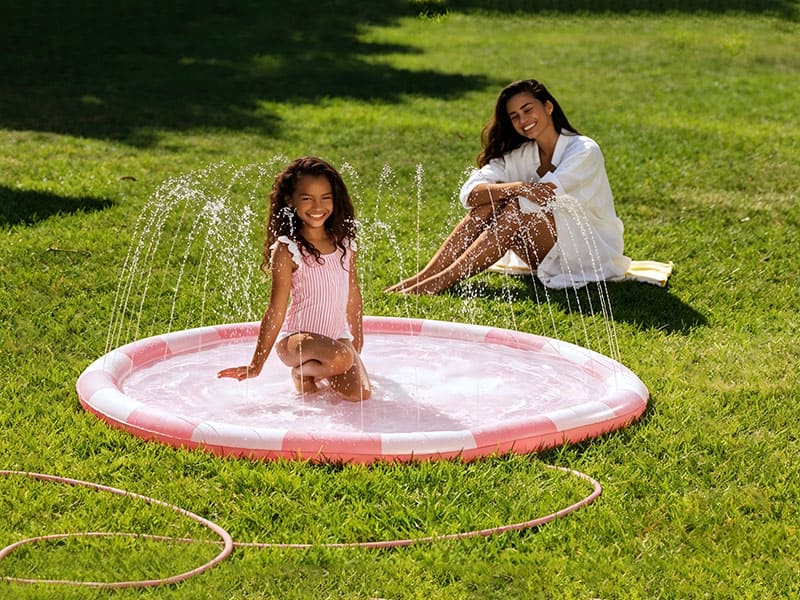
Most people do not ask how long a splash pad lasts because they want a technical definition. They ask because they are trying to decide whether this is a smart summer purchase or just another product that looks fun for one week and disappointing after that. A splash pad can make a great first impression. The graphics look bright. The spray feels exciting. The setup seems simple. But the real test starts later, after repeated hose hookups, after children run on the outer ring, after the product sits in strong sun, after the dog jumps in once or twice, and after the splash pad gets folded, stored, opened again, and used through real summer life.
A splash pad usually lasts longer when several things work together at the same time: stronger material, better seam construction, less stress from rough surfaces, less damage from sun and heat, and better care after each use. Real lifespan is shaped just as much by where and how the splash pad is used as by what it is made from. Flexible PVC products can perform well outdoors, but UV exposure, surface friction, connector stress, and poor storage habits all shorten useful life. RF or HF welding is also important because strong welded seams are one of the biggest reasons some splash pads hold pressure and resist leaks better than others.
That is why this topic matters for both families and business customers. Parents want to know whether the splash pad will still feel worth using later in the season. Retailers and brand owners want to know what build choices reduce complaints, returns, and weak reviews. Once you understand what wears out first and what speeds that process up, it becomes much easier to choose a splash pad that holds up better and feels worth the money.
How Long Does a Splash Pad Last?
For most families, a splash pad does not have one fixed lifespan like a battery or a light bulb. It lasts as long as its material, seams, connector, bottom surface, and daily care can keep working together without too much wear. That is why two splash pads that look very similar on the day they arrive can feel completely different after one summer. One still sprays evenly, the ring still feels firm, and the surface still looks decent. The other begins to drip near the connector, feel softer around one edge, or show bottom wear much earlier than expected.
This is the part customers care about most. They are not really asking for a factory-style answer. They are asking a real-life value question:
- Will this still feel good after repeated use?
- Will I still want to take it out next month?
- Will it survive one season, or several?
- Is this a cheap short-term toy, or a product that actually holds up?
The honest answer is that splash pad life depends on quality plus conditions.
A splash pad usually lasts longer when:
- the material is stronger and stays flexible
- the seams hold pressure well
- the connector area is reinforced
- the splash pad is used on smoother ground
- it is not left in strong sun all day
- it is rinsed, dried, and stored properly
A splash pad usually wears out faster when:
- it is used every day at high pressure
- it sits on rough concrete or gritty patios
- the hose is twisted or pulled carelessly
- children stomp hard on the outer ring repeatedly
- dogs scratch, spin, or jump on it often
- it is folded wet and stored badly
That means lifespan is not only a product question. It is also a use-pattern question.
A practical lifespan view looks like this:
| Real Use Pattern | What Families Can Usually Expect |
|---|---|
| Light weekend use on grass | Longer useful life |
| Regular summer use on lawn | Good lifespan if cared for |
| Frequent sibling play | More stress on seams and ring |
| Daily patio or concrete use | Faster bottom wear |
| Kids plus pet use | Higher wear unless build quality is stronger |
| Full-sun storage between uses | Faster aging |
For many families, the most useful way to judge lifespan is not by trying to guess an exact number of months. It is by asking whether the splash pad can stay fun, stable, and low-stress through the way their household actually plays.
How Long Does a Splash Pad Last?
A splash pad can last a surprisingly long time in one home and feel worn out much sooner in another, even when the products look similar. That is because “how long it lasts” is shaped by a combination of product quality and real outdoor use. A splash pad used by one toddler for short sessions on smooth grass usually takes much less stress than a splash pad used by two older children every hot afternoon on a patio. This is why there is no honest one-line answer like “all splash pads last one season” or “all good splash pads last several years.” Real life is more specific than that.
A splash pad often lasts longer in these conditions:
- one or two children only
- lower to medium water pressure
- smooth grass or soft ground
- limited direct sun between sessions
- careful rinsing and drying after play
- indoor or shaded storage
It often wears out sooner in these conditions:
- rough patio or concrete use
- strong sunlight every day
- repeated folding while damp
- dog use
- rough older-kid play
- frequent connector twisting
A simple lifespan comparison helps explain it:
| Household Situation | Lifespan Direction |
|---|---|
| Light toddler use, lawn, good storage | Longer |
| Average family use, mixed surfaces | Medium |
| Daily active use, patio, full sun | Shorter |
| Kids plus dog, rough use, weak storage habits | Shortest |
So the better answer is this: a splash pad lasts as long as the product is strong enough for the way the family uses it. The closer those two things match, the happier the customer usually is.
What Shortens a Splash Pad Life?
Most splash pads do not fail because of one dramatic mistake. They usually wear down through repeated small stress. That is what makes this category tricky. A splash pad may still spray, still look colorful, and still seem “mostly okay,” while already starting to lose life in the areas that matter most.
The biggest lifespan killers are usually:
- rough surfaces
- strong sun
- too much pressure
- poor storage
- connector strain
- repeated ring stress
Each one affects the product differently. Rough surfaces slowly wear the bottom. Sun and heat make the material age faster. High water pressure adds more stress to the seams and outer ring. Folding the splash pad while wet makes later use less pleasant and can speed up aging. Twisting the hose connection again and again weakens one of the highest-stress points on the whole product.
A stress breakdown looks like this:
| Lifespan Threat | What It Usually Damages First |
|---|---|
| Rough ground | Bottom layer |
| Direct sun | Material feel and printed surface |
| High pressure | Ring and seams |
| Bad storage | Fold areas and overall condition |
| Hose twisting | Connector area |
| Pet nails or scratching | Surface wear and weak spots |
This is why families sometimes say, “It didn’t break right away, but it got old fast.” That is often exactly what happened. The splash pad did not fail all at once. It lost condition faster than expected because too many small stresses added up.
How Does a Splash Pad Wear Out?
A splash pad usually wears out in stages. That is important because many customers are waiting for one obvious hole or one major leak. In reality, the early signs are often smaller.
The first things families usually notice are:
- spray becoming uneven
- one section of the ring feeling softer
- a small drip near the connector
- the bottom looking scuffed
- the material feeling a little stiffer
- the whole product feeling less “fresh” than before
These signs matter because they show the splash pad is already changing under normal use. It may still be usable, but it is no longer handling pressure, friction, or weather the same way.
A useful wear progression looks like this:
| Early Change | What It Often Means |
|---|---|
| Uneven spray | Pressure flow is changing |
| Soft ring section | Seam or ring strength is weakening |
| Small connector drip | Entry point is under stress |
| Bottom scuffing | Ground friction is building wear |
| Stiffer material feel | Heat and sun are aging the product |
This is why customers should think about splash pad life the same way they think about shoes, tires, or outdoor furniture. Wear often starts before total failure. The product may still function, but the quality of the experience begins to drop. That is the real answer to how long a splash pad lasts. It lasts until the material, seams, connector, and surface condition can no longer deliver a play experience that still feels stable, enjoyable, and worth using again.

Which Splash Pad Parts Wear Out?
A splash pad does not wear out evenly. This is one of the most important things customers should understand before buying. Many people assume the whole product ages at the same speed, but that is not how splash pads usually behave in real life. Some areas carry much more pressure, friction, bending, and movement than others. Those are the parts that usually weaken first. For most families, the splash pad does not become disappointing because the entire product suddenly fails. It becomes disappointing because one important area starts causing trouble first:
- the connector begins dripping
- one section of the ring loses firmness
- a seam starts feeling weak
- the bottom shows faster wear than expected
- one folded area begins to look stressed
A practical wear-zone view looks like this:
| Splash Pad Area | Main Stress Source | What Families Notice First |
|---|---|---|
| Hose connector | Water pressure, twisting, pulling | Drips, looseness, setup frustration |
| Outer ring | Internal water pressure, stepping | Uneven spray, soft ring sections |
| Edge seams | Pressure plus movement | Small leaks, weak-feeling edges |
| Bottom surface | Friction from grass, patio, concrete | Scuffing, thinning, faster wear |
| Fold lines | Repeated bending and storage | Crease stress, stiffness, weak points |
This is why some splash pads still look colorful and attractive but already feel less reliable. The graphics may still look fine, but the stress points are telling the real story. A longer-lasting splash pad usually performs better because these higher-stress parts were planned more carefully from the beginning. Better seam quality, better connector reinforcement, better ring balance, and better bottom-surface tolerance all matter more than many customers expect.
Which Splash Pad Seams Wear First?
The seams that usually wear first are the seams doing the hardest work. In most splash pads, that means the seams around the outer ring or water channel, because those seams are holding water pressure every minute the splash pad is in use. At the same time, children are stepping, stomping, and shifting weight around the same edge area. That combination matters a lot.
A seam is not only “closing” the product. It is also helping the splash pad keep its shape. If the seam starts weakening, families may notice:
- the ring feels softer in one area
- one side sprays less evenly
- a damp spot appears along the edge
- the ring no longer feels equally firm all around
The seams usually wear faster when:
- water pressure is kept high every use
- children step repeatedly on the ring
- the splash pad is used on rough ground
- the splash pad is folded hard at the same points
- the seam quality was only average to begin with
A simple seam-stress view:
| Seam Area | Why It Wears Faster |
|---|---|
| Outer ring seam | Holds constant water pressure |
| Edge seam near heavy stepping | Pressure plus body weight |
| Folded seam sections | Repeated bending stress |
| Connector-adjacent seam | Extra water-entry load |
This is why stronger seams matter so much in real life. Families may not talk about “seam construction,” but they notice the result immediately when the edge of the splash pad stops feeling solid and dependable.
How Does a Splash Pad Connector Wear?
The hose connector is one of the hardest-working parts of the entire splash pad. It handles water entry, hose pressure, repeated connection and disconnection, and a lot of accidental stress from daily use. In many homes, the connector wears out faster than customers expect because it is not treated gently.
Connector wear usually happens from:
- twisting the hose during setup
- pulling the hose sideways instead of disconnecting carefully
- using higher water pressure all the time
- allowing the hose to drag the connector off-angle
- frequent reattachment through the season
Families usually notice connector wear in practical ways:
- a small drip where the hose connects
- looseness that was not there before
- water pressure feeling less stable
- more effort needed to get the spray working correctly
A connector-wear guide looks like this:
| Connector Stress | What It Often Causes |
|---|---|
| Twisting during setup | Looseness or seal stress |
| Sideways pull from hose | Faster fatigue at the entry point |
| Repeated reconnection | Faster wear across the season |
| High pressure use | More strain around the joint |
This is one reason connector reinforcement matters so much. A splash pad can look excellent overall and still become annoying to use if the connector area starts weakening early. For many families, that is the first point where a splash pad feels “less worth it,” even before there is a major leak anywhere else.
Which Splash Pad Surface Wears Fast?
The bottom surface often wears faster than customers expect because it is under constant friction every time the splash pad is used. Families usually focus on the top spray area, but the underside is quietly taking damage from the ground below. That makes surface choice one of the biggest hidden durability factors.
Surfaces that usually wear the bottom faster include:
- rough concrete
- exposed stone
- gravel
- gritty patios
- cracked outdoor areas
- rough surfaces with hidden debris underneath
Surfaces that are usually easier on the splash pad include:
- smooth grass
- level lawn
- soft outdoor play surfaces
- smoother patios with a protective layer underneath
A bottom-wear comparison helps:
| Surface Type | Effect on Bottom Wear |
|---|---|
| Smooth grass | Lower wear |
| Level lawn | Lower wear |
| Soft outdoor mat | Lower wear |
| Smooth patio with protection | Medium |
| Rough concrete | Higher wear |
| Gravel or stone | Highest wear |
This is why two families can own similar splash pads and get very different results. One may say the splash pad held up well. Another may feel it wore out too quickly. Very often, the difference is not only the product itself. It is the surface underneath. A splash pad used repeatedly on a hard, rough patio usually faces more bottom stress every single session than one used on a softer lawn.
What Wear Shows Up First in Daily Use?
Most families do not notice “total failure” first. They notice small performance changes first. That is why it helps to know what early wear looks like, because the product often gives warning signs before a major problem appears.
The first things families usually notice are:
- spray becoming uneven
- the ring feeling softer on one side
- a drip around the connector
- visible scuffing on the bottom
- one folded area looking more stressed than the rest
- the splash pad no longer feeling as stable as before
A practical early-wear checklist:
| Early Sign | What It Usually Suggests |
|---|---|
| Uneven spray | Pressure balance is changing |
| Soft ring section | Ring seam or structure is weakening |
| Small connector drip | Hose entry area is under stress |
| Bottom scuffing | Ground friction is adding wear |
| Repeated stressed crease | Folding and storage pressure is building |
This is important because many customers wait too long to react. They assume the splash pad is fine because it still sprays. In reality, small changes often mean the product is already under growing stress. When families notice these early signs, they usually do better by:
- lowering water pressure
- using a smoother surface
- handling the connector more carefully
- drying and folding the splash pad more gently
- checking weak-looking areas before the next use
That is how a splash pad usually wears out in real life. Not all at once, but through the slow weakening of the parts doing the hardest work.
Why Do Some Splash Pad Parts Last Longer Than Others?
Some parts last longer simply because they are under less stress. The center play area, for example, may get a lot of foot traffic, but it is not always holding the same kind of internal pressure as the outer ring. The bottom may look plain, but on rough surfaces it may actually be aging faster than the visible top side. The connector may look small, but it may be taking more repeated strain than any printed part of the product. This is why better splash pad design matters so much. A longer-lasting splash pad usually handles wear better because stress is distributed more intelligently. It has:
- better ring balance
- better seam placement
- better connector support
- better tolerance for surface friction
- better material consistency across the product
A useful stress-balance table:
| Part of Splash Pad | Why It May Last Longer or Shorter |
|---|---|
| Center play area | Lower pressure load, but still affected by traffic |
| Outer ring | Shorter life if seam and pressure handling are weaker |
| Connector | Shorter life if setup habits are rough |
| Bottom layer | Shorter life on harder surfaces |
| Fold lines | Shorter life with careless storage |
That is the real reason some splash pad parts wear out first. They are not weaker by accident. They are simply carrying more of the product’s real-life workload.

How Do Weather and Use Change a Splash Pad?
Weather and daily use change a splash pad much more than many customers expect. This is one of the most important reasons a splash pad can look strong on the first day and still feel much older by the middle or end of summer. Families often judge a splash pad by how it looks when it comes out of the box, but lifespan is shaped far more by what happens after that: how much sun it gets, what surface it sits on, how often it is used, how roughly children play on it, whether pets use it too, and how carefully it is cleaned and stored after each session. In other words, the splash pad’s real life begins after purchase.
That is why two families can buy splash pads that seem similar and still get very different results. One family may use the splash pad on smooth grass once or twice a week, keep the spray at a moderate level, rinse it, let it dry, and store it indoors. Another family may use the splash pad almost every hot day on a patio, leave it in direct sun, let the hose pull at the connector, and fold it while still damp. Even if the two products looked close in quality at the beginning, they are no longer facing the same conditions.
For most households, the main outdoor stress factors are:
- direct sun and UV exposure
- heat buildup during summer use
- rough or hard ground under the splash pad
- repeated stepping, stomping, and edge pressure
- pet nails, scratching, or fast turning
- poor storage between uses
A practical outdoor-stress view looks like this:
| Outdoor Factor | What It Usually Changes |
|---|---|
| Strong sun | Fades print and ages material faster |
| Heat | Increases material stress and stiffness over time |
| Rough surfaces | Wears the bottom faster |
| Frequent use | Increases seam and ring fatigue |
| Dogs or pets | Add puncture and abrasion risk |
| Poor drying and storage | Shortens useful life over time |
This matters because a splash pad is not just lying flat like a picnic mat. It is a pressure product. Water is moving through the ring. Children are stepping on it. The bottom is rubbing against the ground. The connector is taking strain from the hose. The material is heating up, cooling down, folding, reopening, and going through the same cycle again and again. That is the real reason weather and use matter so much. They decide how quickly normal product stress turns into visible wear.
Does Sun Damage a Splash Pad?
Yes, it does, and this is one of the most common reasons a splash pad starts feeling old faster than families expected. [Sun damage](https://www.vecortech.com/blog/uv-protection-for-pvc?) usually does not look dramatic at first. Instead, it shows up gradually.
Families often notice it in these ways:
- printed graphics start fading
- the material feels drier or less flexible
- the splash pad seems “older” even though it still works
- fold areas feel stiffer later in the season
- the whole product becomes less pleasant to set up and store
This happens because splash pads are often used during the hottest, brightest part of the year. If the splash pad is also left outdoors between sessions, the sun keeps aging it even when nobody is using it.
A simple sun-exposure table makes this clearer:
| Sun Condition | Effect on Splash Pad Life |
|---|---|
| Used briefly, then stored away | Lower stress |
| Used often but kept out of sun after play | Moderate stress |
| Left outdoors in strong sun daily | Higher stress |
| Full sun on hot patio or concrete | Highest stress |
What families should understand is that a splash pad is built for outdoor use, but not for endless outdoor storage. There is a big difference between “used outdoors” and “living outdoors.”
For many customers, one of the easiest ways to improve lifespan is simply this:
- do not leave the splash pad outside all day if it is not being used
- avoid long exposure on hot concrete or patios
- dry it, then store it in a shaded or indoor area
This small habit often makes a noticeable difference over one full season.
What Splash Pad Surface Is Best?
The surface under the splash pad changes its lifespan more than many people first realize. Most families think about the surface only in terms of safety or convenience. But the surface is also one of the biggest wear factors because the bottom of the splash pad is rubbing against it every single session. Softer, smoother surfaces usually help the splash pad last longer. Harder, rougher surfaces usually wear it faster.
Surfaces that are usually easier on a splash pad include:
- smooth grass
- level lawn
- soft outdoor play surfaces
- smooth patio with a protective layer underneath
Surfaces that usually create more wear include:
- rough concrete
- exposed stone
- gravel
- cracked patio areas
- gritty ground with small hard debris
A practical surface comparison looks like this:
| Surface Type | Effect on Splash Pad Life |
|---|---|
| Smooth grass | Better |
| Level lawn | Better |
| Soft outdoor mat | Better |
| Smooth patio with protection | Usually workable |
| Rough concrete | Harder on the bottom surface |
| Gravel or stone | Worse |
This is why some customers feel their splash pad “did not last,” even when the product itself was not necessarily poor. In many cases, the ground under it was creating much more friction than they expected. There is also a convenience trade-off here. Grass usually feels softer and gentler on the splash pad, but it may create more dirt and cleanup. Concrete usually feels cleaner and tidier, but it often causes more bottom wear, especially if it is rough.
So the best surface is usually the one that balances:
- lower abrasion
- reasonable cleanliness
- safe play conditions
- the family’s actual yard setup
For many homes, that means the splash pad lasts best on grass, but smooth patio use can still work well if the family adds a protective layer and handles the product more carefully.
Can Dogs Wear Out a Splash Pad Faster?
Yes, in many homes they can. This is a very important point because many families buy a splash pad for children and then later discover that the dog loves it too. That sounds fun, and sometimes it is, but it changes the wear pattern a lot. Children and dogs do not stress a splash pad in the same way.
Children usually create:
- repeated stepping and stomping
- movement across the whole play area
- edge pressure
- normal splash and run-through play
Dogs often create:
- nail contact
- scratching or digging motions
- fast turning in one spot
- jumping with more concentrated force
- rougher repeated motion in the same area
This means dog use can speed up wear, especially if:
- the dog is large
- the dog is highly active
- the nails are long
- the splash pad is already on a rough surface
- the splash pad is used often by both kids and pets
A practical dog-use table looks like this:
| Dog-Use Factor | Effect on Splash Pad Wear |
|---|---|
| Small calm dog | Lower added wear |
| Medium active dog | Medium added wear |
| Large active dog | Higher added wear |
| Trimmed nails | Better for product life |
| Scratching or spinning behavior | Worse for surface life |
For many families, the smartest approach is simply to be honest from the beginning. If the dog is likely to use the splash pad often, that should be part of the buying decision. A splash pad that feels durable enough for light toddler use may age much faster once a large dog becomes part of regular play.
How Does Frequent Use Change a Splash Pad?
Frequent use does not automatically mean the splash pad is poor quality. But it does mean the product is under more repeated stress, and repeated stress always changes how fast wear appears. A splash pad used once in a while can often stay in good condition much longer than one used every day, even if both are handled reasonably well.
Frequent use increases stress in these areas:
- seams
- outer ring pressure areas
- hose connector
- bottom surface
- fold lines from repeated setup and takedown
A practical use-frequency chart helps:
| Use Level | Effect on Lifespan |
|---|---|
| Occasional weekend use | Lower wear |
| 2–3 times per week | Moderate wear |
| Daily summer use | Higher wear |
| Daily use with rough play | Highest wear |
This is why frequency should always affect purchase decisions. Families who expect daily use usually do better with:
- better material quality
- stronger seam construction
- more careful surface choice
- better maintenance habits
The splash pad may still look simple, but if it is being used almost every day, it should be treated more like an active outdoor-use product than a casual toy.
Is a Splash Pad Dirtier Than a Pool?
Not automatically, but the dirt pattern is different, and that difference matters. A pool usually has more standing water. A splash pad has more direct surface contact and more foot traffic across the play area. That means a splash pad can collect dirt, grass, sunscreen residue, pet contact, and outdoor debris very quickly, especially when children or pets move in and out constantly. This matters for two reasons. First, it affects the family’s comfort with using the product again. Second, it affects how quickly the splash pad starts feeling older than it really is.
A splash pad that is not rinsed and dried properly may not fail immediately, but it can become less pleasant much faster. That is one reason customers sometimes say the splash pad “still works, but feels kind of gross now.” That is already part of lifespan, because useful life is not only about whether the product still sprays. (CDC)
A practical hygiene comparison looks like this:
| Hygiene Issue | Splash Pad | Pool |
|---|---|---|
| Standing water | Lower | Higher |
| Surface contact | Higher | Medium |
| Easy rinse after use | Easier | Harder |
| Needs regular cleaning habit | Yes | Yes |
| Gets dirty from yard debris quickly | Yes | Less directly |
For many families, a splash pad is easier to keep clean than a pool, but only if they actually make rinsing and drying part of the routine. If they do not, the splash pad may feel dirtier faster, especially in a yard with grass, pets, or frequent traffic.
Why Do Some Splash Pads Age Faster Than Others?
This is the question behind almost all durability complaints. When customers ask why one splash pad lasted and another did not, the answer is usually a combination of:
- material quality
- seam quality
- sun exposure
- ground surface
- frequency of use
- pet use
- care habits
A simple aging-speed table helps explain it:
| Condition | Aging Speed |
|---|---|
| Good material + soft surface + careful care | Slower |
| Average material + normal lawn use | Medium |
| Rough surface + strong sun + frequent use | Faster |
| Pet use + rough ground + poor storage | Fastest |
That is the real way weather and use change a splash pad. They do not just affect one part. They affect the whole rhythm of the product’s life. A splash pad ages faster when normal summer fun turns into repeated product stress with no recovery in between.

How to Make a Splash Pad Last Longer
For most families, making a splash pad last longer is not about one special repair trick. It is about reducing everyday stress before that stress turns into visible wear. This is where many customers get the wrong idea. They assume lifespan is almost completely decided by the factory. The factory matters a lot, of course, but once the splash pad reaches a real home, daily habits start shaping its life very quickly.
A splash pad does not usually get ruined by one big dramatic mistake. It wears down through repeated small things:
- being used on rough ground
- running at maximum pressure too often
- getting left in strong sun between sessions
- being folded while still wet
- having the hose pull at the connector
- collecting grit, dirt, and debris on the bottom
- being used hard without quick checks in between
That is why a splash pad that looks fine at the beginning can feel much older by mid-season if the family treats it roughly. On the other hand, a splash pad that is rinsed, dried, checked briefly, and stored with a little care often stays in much better condition than people expect.
A practical “longer life” view looks like this:
| Daily Habit | Why It Helps |
|---|---|
| Better surface choice | Reduces bottom wear |
| Moderate water pressure | Reduces seam and ring stress |
| Rinse after use | Removes dirt and grit |
| Dry before folding | Protects material condition |
| Store out of strong sun | Slows aging |
| Quick checks | Helps catch small problems early |
For customers, this is good news. Most of the habits that make a splash pad last longer are simple, low-cost, and realistic. They do not require special tools. They just require consistency.
How Is a Splash Pad Maintained?
Splash pad maintenance should be simple enough that a family will actually do it every time. If the care routine feels too complicated, most people will skip parts of it, especially after a busy summer day. That is why the best maintenance routine is short, practical, and repeatable.
A good splash pad maintenance routine usually includes:
- turning off the water after play
- disconnecting the hose carefully
- draining remaining water
- rinsing away grass, dirt, dust, and sunscreen residue
- checking the seams and connector quickly
- drying the splash pad fully
- folding and storing it in a clean, dry place
This matters because a splash pad collects much more than water. It also collects:
- dirt from feet
- grass and yard debris
- pet residue if dogs use it
- fine grit from patios or concrete
- small particles that rub the material when folded later
A practical maintenance table:
| Maintenance Step | Main Benefit |
|---|---|
| Quick rinse | Removes abrasive dirt and debris |
| Seam check | Helps catch small weak spots early |
| Connector check | Helps find drips before they get worse |
| Full drying | Protects long-term material condition |
| Clean storage | Improves next-use condition |
Many families think maintenance is only about cleanliness. It is also about wear control. Dirt and grit left on the splash pad do not just look messy. They can increase friction when the product is folded, carried, and reopened again. A useful real-life rule is this: if the splash pad was dirty enough to notice during play, it is dirty enough to shorten lifespan if it is put away without care.
What Does Splash Pad Care Cost?
For most home splash pads, the direct money cost of care is usually low. Families are not dealing with a commercial water-play system, pumps, or formal maintenance contracts. But that does not mean care is free in a practical sense. Splash pad care usually costs in three ways:
- water
- time
- small protection items if needed
For most households, the main cost is not a repair bill. It is routine. A splash pad that is rinsed, dried, and stored properly usually does not require much extra spending. But a splash pad that is not cared for may need replacement much sooner, and that early replacement becomes the biggest hidden cost of all.
A practical cost table looks like this:
| Care Item | Real Household Impact |
|---|---|
| Normal water use | Ongoing but usually manageable |
| Quick rinse after use | Small added water use |
| Drying and folding time | Low money cost, important effort cost |
| Protective mat or layer | Small optional extra cost |
| Early replacement from poor care | Highest avoidable cost |
This is why the cheapest ownership pattern is often not “do nothing.”
The cheapest ownership pattern is:
- use it carefully
- clean it quickly
- dry it properly
- avoid early wear that forces replacement
In other words, care cost is usually small, but neglect cost is often high.
How Do You Prevent Splash Pad Leaks?
Most leaks begin as small stress problems before they become obvious failures. That is why leak prevention is not really about magic repairs. It is about lowering the pressure on the parts most likely to weaken first.
The most common leak areas are:
- the hose connector
- the outer ring seams
- fold-stressed areas
- worn bottom sections from rough surfaces
Families can reduce leak risk a lot by doing a few habits well:
- do not run the splash pad at maximum pressure every time
- keep the hose aligned as naturally as possible
- avoid twisting the connector during setup
- do not drag the splash pad across rough ground
- use smoother surfaces or a protective layer when needed
- react early to small drips or soft seam spots
A leak-prevention guide looks like this:
| Leak Risk | Better Habit |
|---|---|
| Too much pressure | Use moderate spray settings |
| Connector strain | Position hose more carefully |
| Rough ground wear | Choose better surfaces or add protection |
| Ignored small seam issues | Check after play and respond early |
| Rough folding | Dry first and fold more gently |
What families often miss is that leaks usually start before they become visually dramatic. Early warning signs often include:
- spray becoming uneven
- a seam feeling softer in one section
- a small drip around the connector
- the outer ring not feeling equally firm all the way around
A splash pad that is still “mostly working” may already be asking for less stress and better care.
How Should a Splash Pad Be Stored?
Storage is one of the biggest hidden lifespan factors. A splash pad can survive a play session well and still lose life quickly because it was stored badly. This is especially common when families are tired after play and just want to get everything out of the way quickly.
Bad storage usually looks like this:
- folding the splash pad while still wet
- stuffing it into a tight space
- leaving it outside in strong sun
- placing it near rough tools or sharp objects
- folding it harshly along the same lines every time
Good storage should do three things:
- reduce moisture stress
- reduce folding stress
- reduce heat and UV exposure between uses
A better storage routine usually looks like this:
- Turn off the water
- Disconnect the hose
- Drain the splash pad
- Rinse if needed
- Let it dry fully
- Fold it gently
- Store it in a dry, cooler place
A practical storage table:
| Storage Habit | Why It Matters |
|---|---|
| Dry before folding | Better material life and better next-use condition |
| Fold gently | Less stress on repeated crease areas |
| Store away from heat | Slows aging |
| Keep away from sharp objects | Lowers accidental damage risk |
| Store clean | Prevents dirt-related wear at the next use |
For many families, good storage is the difference between a splash pad that feels “still good” and one that feels old much too early.
What Surfaces Damage a Splash Pad Faster?
Surface choice is one of the fastest ways to shorten or extend splash pad life. Customers often think about the ground only in terms of convenience or child safety, but the ground also acts like a wear factor every single time the splash pad is used.
Surfaces that usually cause faster wear include:
- rough concrete
- gravel
- exposed stone
- cracked patios
- gritty outdoor areas
- ground with hidden small debris
Surfaces that are usually easier on the splash pad include:
- smooth grass
- level lawn
- soft outdoor play surfaces
- smooth patios with a protective layer underneath
A surface-wear comparison:
| Surface | Effect on Splash Pad Life |
|---|---|
| Smooth grass | Lower wear |
| Level lawn | Lower wear |
| Soft mat surface | Lower wear |
| Smooth patio with protection | Medium to lower wear |
| Rough concrete | Higher wear |
| Gravel or stone | Highest wear |
This is one reason families sometimes think the splash pad quality was poor when the real problem was that the product was being used on a much harder surface than they expected. A useful buying and care rule is this: the rougher the ground, the more careful the family needs to be with product choice, setup, and storage.
How Much Does Water Pressure Matter?
Water pressure matters much more than many people think. Most customers only think about water pressure as a fun setting. They ask whether the spray is high enough or lively enough. But pressure is also a durability setting.
Higher pressure usually means more stress on:
- the outer ring
- the seams
- the connector
- the spray balance over time
That does not mean families should always keep the splash pad weak and low. It means the smartest setting is usually a balanced one.
A practical pressure guide:
| Water Setting | Effect on Product Stress |
|---|---|
| Low | Lower stress |
| Medium | Best balance for many families |
| High | Higher seam and ring stress |
| Maximum every use | Highest stress |
For many homes, medium pressure is the best real-world choice because it keeps the splash pad fun without turning every session into maximum strain.
How Often Should a Splash Pad Be Checked?
Families do not need a full inspection every day, but quick regular checks can prevent a lot of disappointment later. A 30-second look before and after use is often enough to catch the early signs of growing stress.
The main things worth checking are:
- hose connector tightness
- ring firmness
- seam condition
- bottom wear
- spray balance
A simple check table:
| Checkpoint | What to Look For |
|---|---|
| Connector | Drips, looseness, stress marks |
| Outer ring | Soft or uneven sections |
| Seams | Damp spots or weak-looking areas |
| Bottom | Scuffing or worn patches |
| Spray pattern | Uneven or weaker spray areas |
The earlier a family notices a small problem, the easier it usually is to reduce stress before the splash pad becomes much less reliable.
What Daily Habits Make the Biggest Difference?
If a family only wants to focus on a few habits, these usually matter most:
- use the splash pad on a better surface
- keep the water pressure moderate
- rinse it after use
- dry it before folding
- store it out of strong sun
- do quick checks for weak spots
A final habit summary looks like this:
| Daily Habit | Main Benefit |
|---|---|
| Better surface choice | Less bottom wear |
| Moderate pressure | Less stress on seams and ring |
| Rinse after play | Less dirt-related abrasion |
| Dry storage | Better long-term condition |
| Quick checks | Problems caught earlier |
That is the real answer to making a splash pad last longer. It is not usually about one special fix. It is about using the splash pad in a way that keeps ordinary summer fun from turning into unnecessary product stress.

How to Pick a Longer-Lasting Splash Pad
Picking a longer-lasting splash pad is really about one thing: matching the product to the way it will actually be used. This is where many families make the wrong choice. They buy based on color, print, size, or one phrase like “heavy duty,” but they do not stop to think about what will really happen after the box is opened. Will the splash pad be used by one toddler or by three excited kids? Will it sit on soft grass, rough concrete, or a patio? Will the dog jump in too? Will it be used on weekends only, or almost every afternoon in July?
Those questions matter much more than many customers first expect. A splash pad that is perfectly fine for light lawn use may feel disappointing in a home where it gets used daily on a rough patio. A splash pad that feels durable enough for one toddler may age much faster once older siblings start stomping on the outer ring every day. That is why the best longer-lasting splash pad is usually not the biggest one, the cheapest one, or the one with the most dramatic spray. It is the one that fits the real stress level of the household.
For most families, the buying decision should be based on six practical factors:
- who will use it
- how often it will be used
- what surface it will sit on
- whether pets will use it too
- how much sun exposure it will get
- how carefully the family will clean, dry, and store it
A practical pre-buy table looks like this:
| Buying Factor | Why It Matters for Lifespan |
|---|---|
| User age | Changes movement style and how much pressure goes into the ring and seams |
| Use frequency | More use means more wear on seams, connector, and bottom surface |
| Ground surface | Rougher surfaces create faster bottom wear |
| Pet use | Nails and scratching increase stress quickly |
| Sun exposure | More sun usually means faster aging |
| Storage habits | Better care usually means longer useful life |
For many customers, this section is where the buying decision becomes much clearer. They stop asking, “Which splash pad looks the most fun?” and start asking, “Which splash pad will still feel like a good purchase after fifteen real uses?” That is a much smarter question.
Which Splash Pad Material Lasts Longer?
Material is one of the first things customers should think about, but not in a simplistic way. Many people look for one material word and expect that to answer everything. In real life, the better question is not just “What is it made of?” but “How well is that material likely to handle the way my family will use it?”
For splash pads, material affects:
- how well the bottom resists wear
- how flexible the product stays after repeated folding
- how well the seams hold over time
- how the splash pad reacts to heat and summer use
- how trustworthy the product feels after repeated sessions
Families usually notice material quality in practical ways:
- the splash pad still feels soft enough later in the season
- the bottom is not wearing out too fast
- the ring still feels stable
- the product does not feel “old” too early
A useful material comparison looks like this:
| Material Quality Question | What Customers Usually Experience |
|---|---|
| More flexible material | Easier folding and less stress at crease points |
| Tougher bottom feel | Better wear resistance on real ground surfaces |
| Better seam compatibility | Fewer early leak problems |
| Better outdoor tolerance | Slower aging in summer conditions |
So the splash pad material that lasts longer is usually the one that stays balanced across flexibility, wear resistance, and repeat-use comfort. Customers should not only ask whether the material sounds strong. They should ask whether it sounds right for the way they will really use the product.
Which Splash Pad Thickness Is Better?
Thickness matters, but it should not be treated as the whole answer. This is one of the biggest mistakes customers make. They assume the thickest splash pad must always be the longest-lasting one. Sometimes thicker material does help, especially when the splash pad will be used on patios, concrete, or in homes with heavier use. But thickness by itself does not guarantee a better product.
A thicker splash pad can still disappoint if:
- the seams are weak
- the connector area is poorly supported
- the ring loses pressure balance
- the product is hard to fold and gets stored badly
- the material is thick but not well matched to real outdoor use
On the other hand, a splash pad with moderate thickness but better seam quality and better overall structure may feel much more durable in normal family use.
A practical thickness guide:
| Use Condition | Thickness Importance |
|---|---|
| Light toddler use on grass | Moderate |
| Weekend family use | Moderate |
| Frequent sibling play | Higher |
| Patio or concrete use | Higher |
| Kids plus dog use | Higher |
| Daily summer use | Higher |
So the better question is not: “Which splash pad is thickest?”
The better question is: “Which thickness makes sense for the way my family will use it?”
That is what usually leads to a better purchase.
Are Reinforced Splash Pad Seams Worth It?
Yes, very often they are, because seams are one of the first places where a splash pad starts losing reliability. Most customers do not think about seams when they shop, but they absolutely notice seams later if the ring softens, a leak appears, or the spray starts becoming uneven.
The seams around the outer ring matter most because they are doing the hardest work. They are holding water pressure while also dealing with child movement, edge stepping, and repeated use over time.
Better seams help with:
- longer leak resistance
- better ring firmness
- more even spray performance
- less frustration later in the season
A seam-value comparison makes this clearer:
| Seam Condition | What Families Usually Notice |
|---|---|
| Strong, even seam | Better pressure hold and longer-lasting ring stability |
| Weak or uneven seam | Earlier soft spots and leaks |
| Good seam plus good material | Better overall lifespan |
| Thick material plus weak seam | Still disappointing in real use |
For many families, reinforced seams are worth caring about because seam-related issues are one of the fastest ways a splash pad stops feeling worth the money.
What Splash Pad Size Lasts Better?
Size affects lifespan more than many people realize. A bigger splash pad is not automatically worse, but larger size often changes how the product is used, and that changes wear.
A larger splash pad may mean:
- more children using it at once
- more total foot traffic
- more edge stepping
- more water spread
- more difficult drying and storage
A smaller or medium splash pad may actually last better in some households because:
- it is used by fewer children at a time
- it is easier to supervise
- it is easier to rinse, dry, and fold
- it often fits the yard more naturally
A size-and-lifespan guide looks like this:
| Size Choice | Lifespan Effect |
|---|---|
| Small splash pad | Often easier to manage and lower total stress |
| Medium splash pad | Best balance for many families |
| Large splash pad | Can face more shared-use stress if used heavily |
The best size for longer life is usually the one that matches the household honestly. If one child will use it quietly, smaller may be better. If three active children will use it together every day, the family may need something larger and stronger, but they should also expect more total wear.
Which Splash Pad Is Better for Kids or Pets?
This is a very important buying question because kids and pets wear a splash pad in different ways.
Children usually create:
- repeated stepping and stomping
- edge pressure
- spray-zone movement across the whole pad
- normal family play stress
Pets, especially dogs, often create:
- nail contact
- scratching or digging motion
- jumping with more concentrated force
- fast spinning or rough movement in one area
That means a splash pad that feels long-lasting enough for light child use may wear much faster in a mixed child-and-pet household.
A practical kids-versus-pets guide:
| Use Type | What Matters Most for Lifespan |
|---|---|
| Toddlers only | Manageable size, good ring stability, easier use pattern |
| Kids only | Good seams, balanced spray, reliable build |
| Older active kids | Better repeat-use durability and stronger structure |
| Kids plus dog | Better material toughness and higher wear tolerance |
| Dog-heavy use | Surface durability matters much more |
For many families, the best longer-lasting choice starts with being honest about who will really use the splash pad. If the dog is almost certain to jump in, that should be treated as part of the main use case, not as an afterthought.
How Should Surface Change the Buying Decision?
Surface should strongly influence which splash pad a family chooses. This is one of the most overlooked buying factors. A splash pad used mostly on smooth grass usually faces lower bottom wear than one used on rough patio, concrete, or gritty outdoor ground.
That means customers should think about surface before buying, not after the first signs of wear appear.
A surface-based buying guide looks like this:
| Main Surface | Better Splash Pad Choice |
|---|---|
| Smooth grass | Standard family-use durability may be enough |
| Level lawn | Balanced general-use splash pad often works well |
| Patio use | Better bottom durability becomes more important |
| Rough concrete | Stronger material and more careful setup matter more |
| Mixed lawn and patio use | Balanced durability is the safest choice |
This is one reason two families can buy similar splash pads and feel very differently about the value. One may say the splash pad held up well. Another may feel it wore out too quickly. The surface underneath may be a big part of the reason.
What Should You Check Before Buying a Splash Pad?
Before buying, customers usually do best when they check a few practical things instead of getting distracted by only the fun part.
A useful pre-buy checklist includes:
- Is this splash pad meant for light use or repeat use?
- Does the size fit the yard and the number of users?
- Will it be used on grass or hard ground?
- Could pets use it too?
- Does the product seem to have good seam and connector quality?
- Will the family really dry and store it properly?
A simple final checklist:
| Checkpoint | Why It Helps |
|---|---|
| Match to use frequency | Prevents underbuying for heavy use |
| Match to surface | Helps reduce wear surprises |
| Match to user type | Better fit for real play style |
| Think ahead about pets | Avoids faster-than-expected wear |
| Look at stress points | Helps judge long-term value better |
That is the real way to pick a longer-lasting splash pad. The best choice is usually not the loudest claim, the biggest size, or the lowest price. It is the splash pad that fits the family’s real summer routine closely enough that it still feels dependable after the first excitement wears off.
Why Choose Epsilon Splash Pads?
When customers ask why they should choose Epsilon splash pads, they are usually not asking for a generic company introduction. They are really asking a more practical question: Why should I trust this product more than the many other splash pads on the market?
That is exactly the right question. A splash pad is easy to underestimate. It looks simple, but a good splash pad has to do a lot of things at the same time. It has to hold water pressure around the ring, keep the spray balanced, handle repeated foot traffic, tolerate summer sun, resist wear from grass or patios, and still feel easy and enjoyable for families to use. If one important part is weak, the whole product starts feeling less reliable very quickly.
That is where Epsilon stands out. American Epsilon Inc. is not just selling splash pads as one isolated seasonal item. It is a U.S.-registered company built around PVC and composite material products for children’s water play, family entertainment, pet products, and seasonal outdoor use. That matters because splash pads perform better when the supplier understands the full chain behind the product:
- material formulation
- structure design
- seam strength
- connector reliability
- outdoor durability
- packaging
- market positioning
- real end-user behavior
This is especially important in the splash pad category because customers do not only judge the product by how it looks on day one. They judge it by what happens later:
- does it still feel solid after repeated use?
- does the ring hold up well?
- does the connector stay reliable?
- does the material still feel good later in the season?
- does the product feel worth buying again?
That is why Epsilon’s deeper manufacturing and product-development background matters so much.
From the company information you provided, Epsilon’s strength is built on several layers at once:
| Epsilon Capability | Why It Matters for Splash Pads |
|---|---|
| U.S.-registered company | Gives buyers more business confidence |
| Focus on PVC and composite materials | Helps improve real product durability |
| 27-person R&D team | Supports stronger material and structure decisions |
| 18+ design specialists | Helps improve usability, appearance, and market fit |
| 500+ material and product tests per year | Helps reduce weak points before products reach customers |
| 1,500+ product design projects annually | Shows strong development experience |
| 1,000+ new products launched each year | Shows active innovation and real category depth |
| Up to 12 million units annual output | Supports scaling for both retail and wholesale demand |
| OEM/ODM capability | Helps brands build custom splash pad lines |
| Cross-platform sales experience | Helps products fit real market demand |
This is the real difference between a general low-information supplier and a company like Epsilon. Epsilon is not only able to produce splash pads. It is able to think about splash pads in a more complete way.
That matters for both customer groups:
For retail customers, it means:
- better confidence in product quality
- a better chance of getting a splash pad that feels reliable after repeated use
- products developed with real family use in mind
- easier access to branded ready-to-ship items
For business customers, it means:
- better material and structure support
- stronger OEM and ODM development
- custom size, print, and packaging options
- better alignment between product design and market needs
- a stronger path from sample to mass production
A practical customer-value view looks like this:
| Customer Type | Why Epsilon Is a Better Fit |
|---|---|
| Family retail customer | Wants a splash pad that feels dependable and easy to trust |
| Amazon or e-commerce seller | Wants fewer complaints and better repeat sales potential |
| Brand owner | Wants custom development and stronger product differentiation |
| Distributor or wholesaler | Wants stable supply and broader category support |
| Startup brand | Wants product guidance, packaging support, and scalable production |
This is one of the biggest reasons Epsilon is valuable in this category. Splash pads can look very similar on the surface. But once customers start comparing real use, real wear, and real business support, the difference becomes much easier to see.
What Makes Epsilon Splash Pads Stronger?
Epsilon splash pads are stronger because the company is working from the inside out, not only from the outside in. In other words, the product is not built around graphics alone. It is built around how the splash pad will actually behave in real use.
A stronger splash pad usually depends on several hidden parts working well together:
- the material has to stay flexible enough
- the seams have to stay sealed under pressure
- the connector has to tolerate repeated hose use
- the outer ring has to hold pressure evenly
- the bottom layer has to cope with ground contact
- the product has to survive storage, folding, and weather changes
That is exactly where Epsilon’s internal capabilities matter.
From the company details you shared, Epsilon has:
- polymer and material specialists
- structure and mold engineers
- children’s product experience
- pet-use design understanding
- ergonomics knowledge
- large-scale testing support
That combination matters because splash pad strength is not one single feature. It is the result of many correct decisions.
A practical “stronger splash pad” table looks like this:
| Strength Area | Why It Matters in Real Use |
|---|---|
| Better material planning | Helps with flexibility, feel, and wear resistance |
| Better seam planning | Helps reduce leaks and weak edge areas |
| Better connector support | Helps reduce one of the most common stress failures |
| Better pressure balance | Helps the spray ring stay more stable |
| Better bottom tolerance | Helps the splash pad handle grass, patio, or mixed use better |
Families often describe this simply as: “this one just feels better made.”
That is usually the result of many small structural choices being made correctly.
How Does Epsilon Test Splash Pads?
Testing is one of the clearest reasons to trust Epsilon more. A splash pad does not fail in theory. It fails in real use. That is why testing matters so much. From your company information, Epsilon performs more than 500 material and product tests each year. These tests cover:
- weather resistance
- UV resistance
- compression strength
- durability simulation
- leak resistance
- safety evaluation
- child- and pet-behavior-based product thinking
That is highly relevant to splash pads because a splash pad faces repeated stress from:
- water pressure
- sunlight
- heat
- foot traffic
- bottom friction
- storage and folding
- occasional rough use from pets or active children
A practical testing table helps explain the value:
| Test Area | Why Customers Should Care |
|---|---|
| Leak testing | Helps reduce early seam and ring failure |
| Durability testing | Helps the splash pad stay useful after repeated use |
| UV and weather testing | Helps improve outdoor lifespan |
| Material consistency checks | Helps reduce quality variation between batches |
| Child- and pet-use evaluation | Helps products better match real family use |
For families, this testing shows up as a smoother product experience.
For retailers and brand owners, it shows up as:
- fewer quality surprises
- fewer complaints
- better repeat-purchase confidence
- better long-term brand trust
That is a very important advantage in a seasonal category where one weak product can damage customer confidence quickly.
Which Durable Splash Pads Can Epsilon Make?
One of Epsilon’s biggest strengths is range. Splash pads are not treated as one flat category. Epsilon can support different splash pad types based on different use cases, markets, and stress levels.
From the information you provided, Epsilon can support products such as:
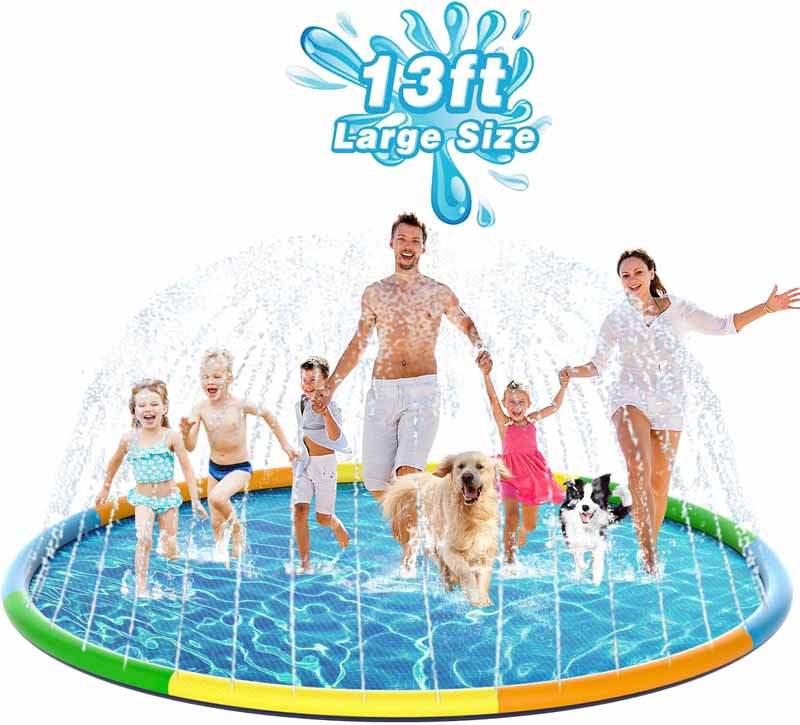
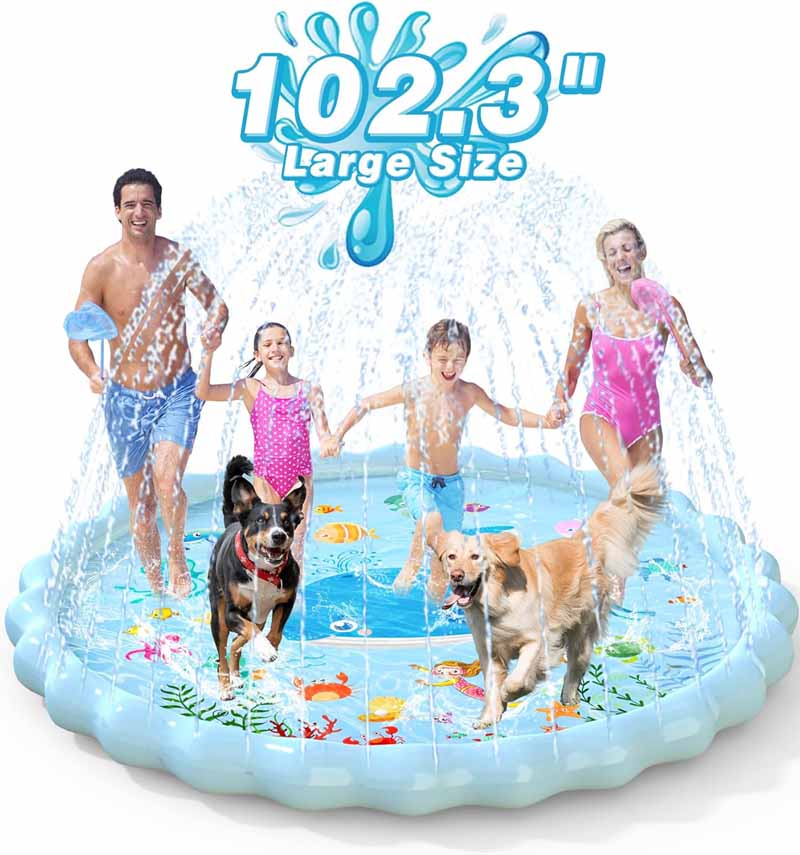
- round splash pads
- square splash pads
- dog splash pads
- soccer splash pads
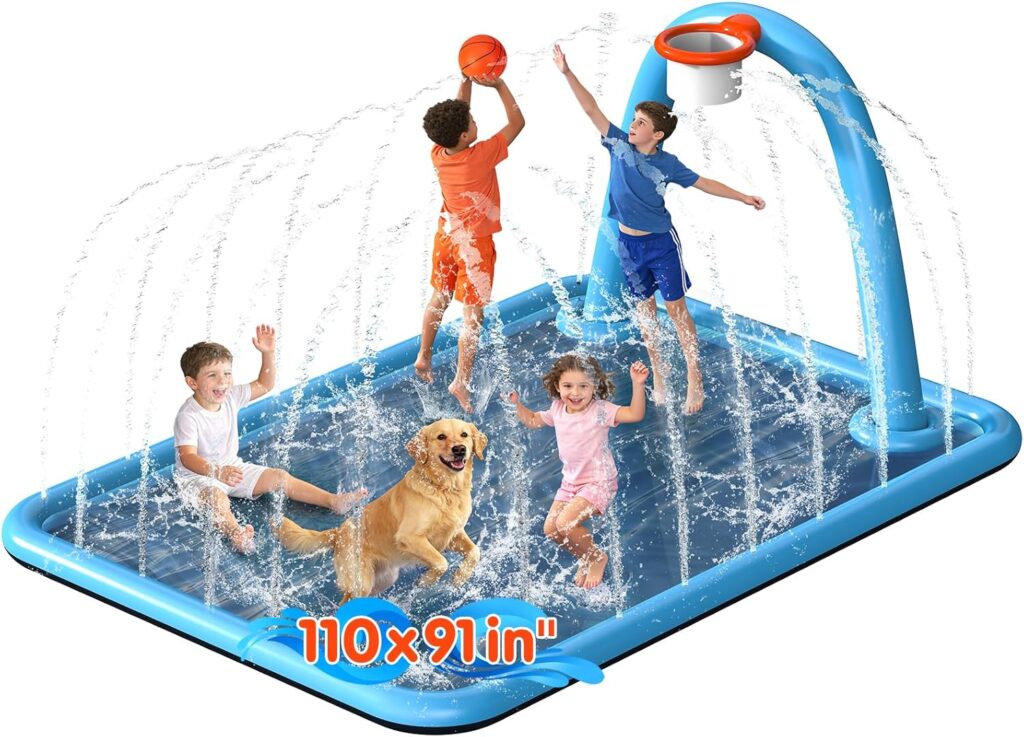
- splash pads with basketball hoops
- toddler-oriented splash pads
- private-label splash pads
- custom OEM/ODM splash pads
This matters because different splash pad types do not face the same kind of use.
For example:
- a toddler splash pad usually needs calmer, more manageable use logic
- a sports splash pad often faces more active play
- a dog splash pad usually needs better wear tolerance
- a square splash pad may need to fit different outdoor layouts
- a custom splash pad may need to match a retailer’s market positioning
A useful category table looks like this:
| Splash Pad Type | Main Product Focus |
|---|---|
| Round splash pad | General family-use balance |
| Square splash pad | Better fit for some spaces and layouts |
| Dog splash pad | Stronger wear tolerance |
| Soccer splash pad | More active play pattern |
| Basketball hoop splash pad | Higher interaction and play intensity |
| Toddler splash pad | Easier supervision and softer use style |
| Custom splash pad | Market-specific build and positioning |
That flexibility gives Epsilon a real advantage. For retail customers, it means a better chance of finding a splash pad that truly fits the family’s needs.
For business customers, it means:
- stronger category planning
- better product differentiation
- easier custom-line development
- more room to build a broader seasonal offering
Why Is Epsilon a Better Choice for OEM and ODM Splash Pads?
For business customers, this is one of the most important questions of all. A lot of suppliers can offer a product. Fewer can help shape a product into something more competitive, more market-ready, and more suitable for the customer’s target users. Epsilon’s OEM and ODM strength matters because the company can support much more than just production. It can support:
- custom splash pad sizes
- custom colors and print themes
- logo printing
- packaging customization
- multilingual packaging support
- faster sample development
- mass production planning
- market-specific product positioning
From the company information you shared, Epsilon can often support:
- rapid sampling in around 3–5 days
- standard production in around 20 days
- rush production in around 14 days in some cases
That is very useful for:
- seasonal launches
- Amazon and e-commerce brands
- retail importers
- distributors
- startups building a private-label line
A practical OEM/ODM value table:
| Custom Need | Why Epsilon Helps |
|---|---|
| Faster concept testing | Quick sample development |
| Better differentiation | Custom size, print, and packaging support |
| Better retail fit | Market-specific packaging and positioning |
| Easier scaling | Stronger production capacity |
| Stronger long-term cooperation | Factory plus development support |
This is why Epsilon is not only a manufacturer. It is also a product-development partner for customers who want stronger splash pad products and stronger market performance.
Ready to Buy Longer-Lasting Splash Pads or Start Your Custom Project?
If you are looking for a splash pad that is not only fun for families, but also built with better material planning, stronger seams, and more real-use lifespan behind it, Epsilon is ready to help. American Epsilon Inc. is a U.S.-registered company specializing in PVC and composite material products for children’s water play, family entertainment, pet products, and seasonal outdoor categories. Under the EPN brand, we offer ready-to-ship splash pad products and also support OEM and ODM development for brands, retailers, distributors, and importers.
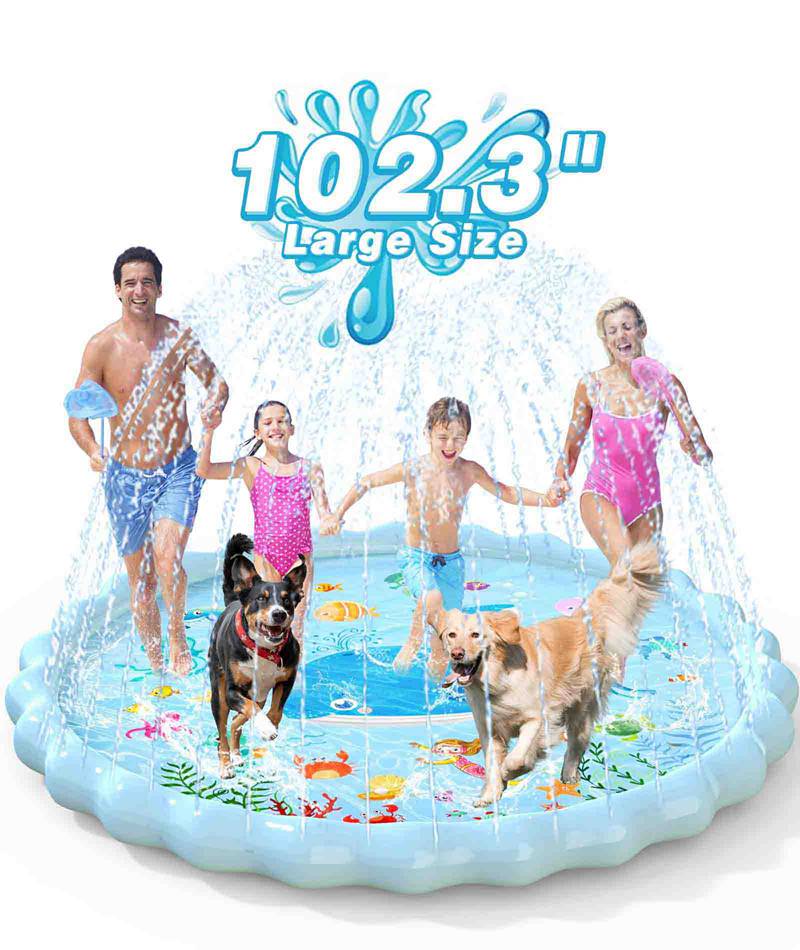
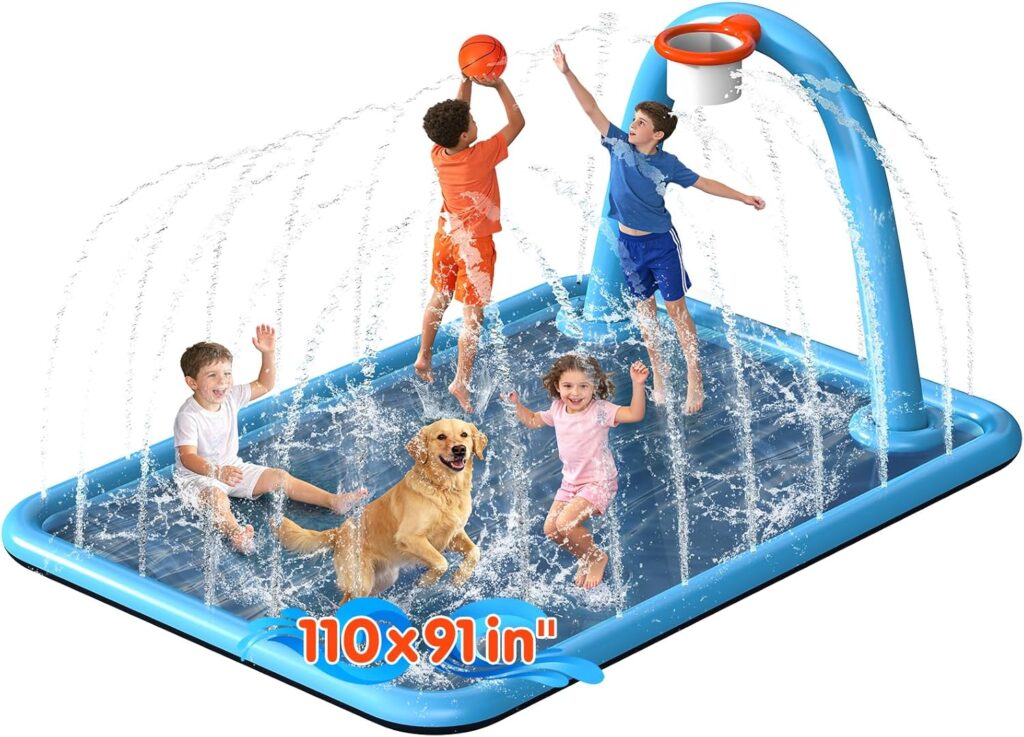
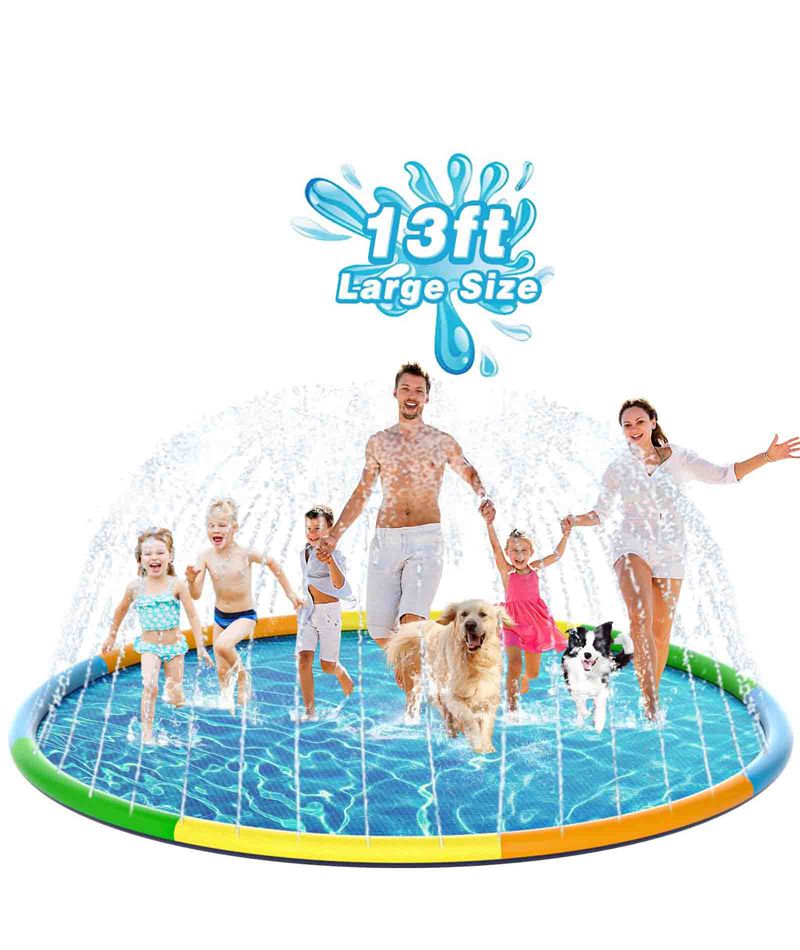
Our splash pad range includes round splash pads, square splash pads, dog splash pads, soccer splash pads, and splash pads with basketball hoops. Beyond splash pads, we also support related seasonal categories such as dog pools, dog pools with sprinklers, pool pillows, snow tubes, and punching bags.
Shop In-Stock Splash Pad Products
- Buy Round Splash Pad
- Buy Square Splash Pad
- Buy Dog Splash Pad
- Buy Soccer Splash Pad
- Buy Splash Pad with Basketball Hoop
Start a Custom Splash Pad Project
- Contact Us for Custom Splash Pads
Request a Sample
- Request a Splash Pad Sample
Explore More Related Product Pages
If you want to explore more seasonal PVC and outdoor family-use categories, you can continue browsing these related pages:
Whether you want to buy ready-to-ship splash pad products, request samples, or develop a custom longer-lasting splash pad line, Epsilon is ready to discuss your project in detail.