Skip to content
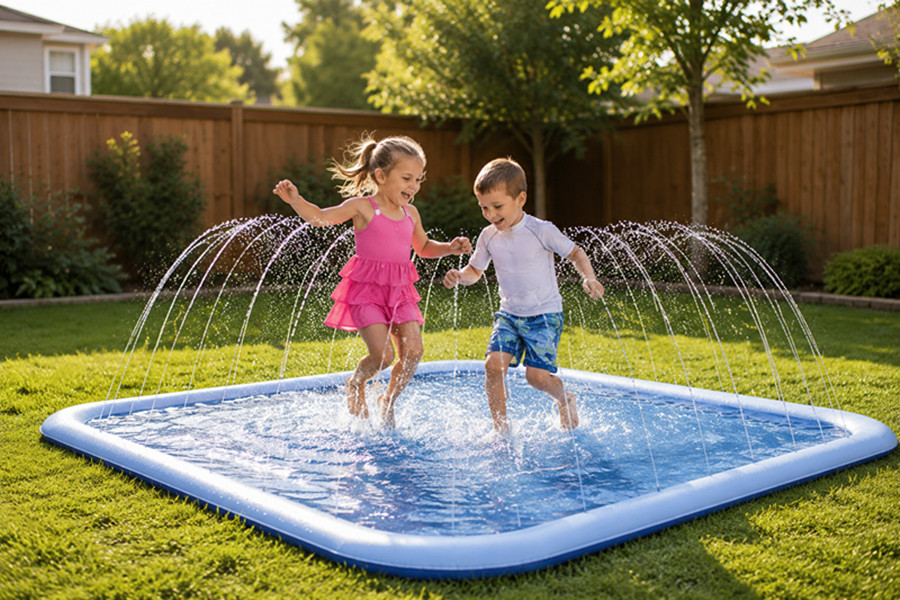
A splash pad looks simple when it is lying flat in the yard. Connect a garden hose, turn on the water, and children have an instant summer play area. But after a few uses, families start noticing the details that product photos do not always show: whether the surface feels too thin, whether the edge ring leaks, whether the pad shifts under wet feet, whether the material has a strong smell, and whether it can be folded again without deep creases.
The best material for a splash pad is durable PVC because it is water-resistant, flexible, easy to seal, suitable for colorful printing, and simple to store. For repeated backyard use, thicker PVC, often planned around 0.40–0.55 mm depending on size and structure, gives better stability than very thin plastic while still staying foldable for home storage.
This matters because a splash pad is used in a wet, active, outdoor setting. Children sit, crawl, kneel, run, splash, and step on the same surface many times. Pets may join for cooling. Parents may place the product on grass, patio, artificial turf, or another backyard surface. A good splash pad material needs to handle water pressure, ground friction, sunlight, repeated folding, and direct skin contact. The right material does not only help the product last longer. It makes the whole summer routine easier: setup, play, cleaning, drying, folding, and using it again on the next hot day.
What Is Splash Pad Material?
Splash pad material is the surface, edge, and water-channel structure that allows the product to hold water pressure, spray inward, feel comfortable underfoot, and fold for storage. Most home splash pads use PVC because it can be sealed into an outer spray ring, printed with bright designs, rinsed after use, and stored compactly.
What a Splash Pad Is Made Of
A splash pad is not only a printed mat. It is a small water-play system made from several connected parts. Each part affects how the product sprays, feels, drains, and lasts.
The visible top surface is usually printed PVC. This is the part children touch with their feet, hands, knees, and arms. It needs to feel smooth enough for barefoot play, but not so thin that it wrinkles or shifts easily.
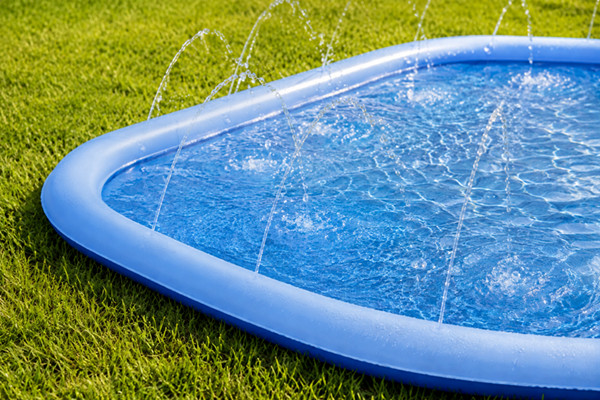
Around the outside, the splash pad has a sealed water ring. When a garden hose is connected, water enters this ring and builds pressure. Small spray holes on the outer ring direct water inward toward the center play area. Good spray-hole placement matters because water should stay inside the play zone instead of spraying away from the pad.
The center area usually stays flat and shallow. A splash pad is not designed like a deep pool. Children play on the surface, not inside a large amount of standing water. That is why the material needs to lie smoothly on the ground and feel stable when wet.
The hose connector and edge seam also matter. A weak connector makes setup frustrating. A weak seam can lead to early leakage. Even if the printed design looks attractive, poor structure can quickly turn a fun summer product into a complaint.
| Splash Pad Part | Common Structure | Why It Matters |
|---|---|---|
| Top surface | Printed PVC layer | Affects comfort, color, grip, and first impression |
| Outer water ring | Sealed PVC channel | Holds water pressure and creates the spray effect |
| Spray holes | Small holes on the outer ring | Controls spray direction, height, and coverage |
| Center play area | Flat PVC surface | Gives children room to sit, step, crawl, and splash |
| Hose connector | Water inlet connection | Affects setup speed and water flow stability |
| Edge seam | Heat-sealed or bonded edge | Helps reduce leakage risk during repeated use |
| Printed design | Surface graphics | Makes the product more engaging for children |
Why Splash Pad Material Matters
Splash pad material matters because the product is used in harsher conditions than many indoor toys. It is exposed to water, sunlight, grass, dirt, friction, folding, and active movement.
Families often describe material problems in simple words:
- “It started leaking.”
- “It feels too thin.”
- “The water ring does not stay stable.”
- “The surface is slippery.”
- “It smells strong after opening.”
- “It is hard to fold without damaging it.”
- “The mat moves too much when kids play.”
Most of these problems are connected to material thickness, edge sealing, surface texture, or ground contact.
Better splash pad material improves the whole use experience. It helps the pad lie flatter on the ground. It helps the outer ring handle water pressure more evenly. It gives children a more comfortable surface. It also makes the product feel worth drying and storing instead of being left outside after a few play sessions.
Many early splash pad problems begin at the material level. A thin surface, weak edge ring, or poorly reinforced seam can lead to small leaks even when the product looks fine at first. If water starts escaping around the edge or connector area, a few quick leak checks can help families decide whether the issue comes from setup, water pressure, or material damage.
For families, better material means fewer frustrating play days. For sellers, distributors, and product teams, it can also mean fewer avoidable complaints and stronger product trust.
Good Splash Pad Material Feels Strong
Good splash pad material should feel strong without feeling stiff. It should have enough body to sit smoothly on the ground, while still folding for storage.
A material that feels too thin may wrinkle, shift, or stretch around the water ring. A material that feels too rigid may be harder to fold, store, or place smoothly on grass. The better choice is flexible PVC with enough thickness to handle repeated summer use.
Families usually judge material quality through touch. When they open the product, they notice whether it feels light and flimsy or stable and well made. When children step on it, parents notice whether the pad stays in place. When the hose is turned on, they notice whether the ring fills evenly and the spray feels controlled.
| Family Concern | What Better Material Should Help With |
|---|---|
| Leakage | Stronger seam area and better pressure resistance |
| Comfort | Softer, more stable surface under bare feet |
| Reuse | Better resistance to folding stress and outdoor friction |
| Safer feel | Less flimsy movement when children step on it |
| Storage | Enough flexibility to dry, fold, and store after play |
A good splash pad does not have to feel heavy, but it should feel stable when parents unfold it, connect the hose, and watch children step onto the wet surface.
Best Material for a Splash Pad
The best material for a splash pad is PVC because it fits everyday backyard water play. PVC is water-resistant, flexible, easy to seal, suitable for printing, and simple to store. Compared with very thin plastic, better PVC gives families stronger edge structure, better underfoot stability, and more use through the summer.
Why PVC Splash Pad Material Works Best
PVC works well for splash pads because it can be shaped into both a flat play surface and a sealed outer water ring. This matters because a splash pad is not only a mat. It needs to hold water pressure and create controlled spray.
When a garden hose is connected, water enters the outer ring. The ring needs to fill evenly, hold pressure, and push water through the spray holes. PVC can be sealed into this structure while staying flexible enough for home storage.
PVC also works well with colorful surface designs. For children’s water-play products, appearance matters. Ocean animals, rainbows, sports themes, letters, and bright summer patterns can make the product more inviting. PVC allows these graphics to appear directly on a water-resistant surface.
Another useful advantage is cleaning. After outdoor play, the surface may have grass, mud, sunscreen, pet hair, or dust on it. PVC is usually easier to rinse and wipe than absorbent materials. A quick rinse, proper drying, and loose folding can help the product stay ready for the next use.
For families with limited space, PVC is easier to manage than rigid play equipment or a large pool. A foldable PVC splash pad can fit into a garage corner, patio box, storage bin, or shelf after it dries.
Why Thin Splash Pad Material Fails
Thin material often looks fine when new. The design may be bright, the package may look attractive, and the first setup may feel easy. The problem usually appears after real use.
Very thin material has less protection against friction, folding marks, pressure points, and small outdoor debris. A tiny stone under the splash pad may not seem important, but when a child steps on that spot, pressure concentrates in one small area. Over time, this can damage the underside.
Thin material can also make the product feel unstable. When wet children move quickly, the surface may wrinkle or shift. Around the outer ring, thin material may stretch unevenly when water pressure increases. Weak areas near seams, spray holes, or the hose connector can become early failure points.
Common problems linked to thin splash pads include:
- Early leakage near the edge ring
- Weak spray caused by poor pressure control
- Wrinkled surface during play
- Flimsy feel under bare feet
- Faster wear on patio or rough grass
- Sharp fold marks after storage
- Shorter usable life through summer
A low-cost splash pad may seem attractive at first. But if it fails after only a few sessions, families may feel they bought a temporary item instead of a summer toy they can bring out again.
Why Flexible Splash Pad Material Matters
A splash pad needs flexibility because families use and store it often. The product has to unfold smoothly, sit on outdoor ground, fill with water, drain after use, and fold again without becoming difficult to handle.
Flexible PVC helps with setup. Parents can spread the pad on grass, connect the hose, and adjust water pressure within a few minutes. After play, they can drain it, rinse it, dry it, and fold it away.
Flexibility also affects comfort. Children rarely play in one careful position. They sit, crawl, turn, splash, kneel, and move across the surface. A flexible material feels more natural than a hard surface, especially when placed on grass.
Flexible does not mean weak. A loose, thin sheet may fold easily but fail quickly. The better direction is flexible PVC with enough thickness and seam strength. It should bend for storage but still feel controlled when filled with water.
| Material Type | Strength | Flexibility | Cleaning | Storage | Fit for Repeated Splash Pad Use |
|---|---|---|---|---|---|
| Very thin plastic | Low | High | Easy | Easy | Weak |
| Standard PVC | Medium | High | Easy | Easy | Good for casual use |
| Thicker PVC | High | Medium-high | Easy | Easy-medium | Better for repeated use |
| Fabric-covered mat | Medium | Medium | Medium | Medium | Depends on structure |
| Rubber flooring | High | Low | Medium | Poor | Better as ground surface |
PVC Splash Pad Material
PVC splash pad material offers a useful mix of water resistance, sealed-edge structure, colorful printing, folding convenience, and outdoor use. It works well for home splash pads because families need a product that connects to a hose, sprays water, feels comfortable, cleans quickly, and stores without taking up much space.
PVC Splash Pad Handles Water Pressure
Water pressure is one of the most important tests for a splash pad. When the hose is turned on, the outer ring fills with water. The PVC material, edge seam, connector, and spray holes all need to work together.
If the PVC is too weak, the ring may bulge unevenly. If the seam is poorly sealed, the edge may leak. If the spray holes are too large or poorly placed, the water may spray outward, fall unevenly, or lose pressure too quickly. If the connector area is weak, setup becomes difficult and water may escape before the pad works properly.
A better PVC splash pad should help create:
- Even water flow through the outer ring
- Controlled inward spray
- Stable edge shape when filled
- Stronger seam performance
- Better hose connection area
- Moderate pressure without early leakage
For children and pets, higher water pressure is not always better. A gentle to moderate spray is often more comfortable. Strong pressure may make the surface wetter, increase slipping risk, and place more stress on the outer ring.
A good PVC splash pad does not need to create the tallest spray. It needs to create a steady, comfortable spray pattern that families can control.

PVC Splash Pad Folds for Easy Storage
Storage is one of the biggest reasons families choose a splash pad instead of a large pool. A PVC splash pad can be drained, dried, folded, and stored between uses. This makes it easier for smaller homes, shared yards, patios, garages, and seasonal storage.
But folding can also damage weak material. Every fold creates a stress point. If the PVC is too thin, if the pad is folded while wet, or if sharp creases are forced into the material, those areas may weaken over time.
A better PVC splash pad should fold without feeling like it is cracking or stretching. It should be flexible enough for regular storage but strong enough to handle repeated opening and packing.
A good storage routine helps protect the material:
- Turn off the hose before moving the pad.
- Let the outer ring drain fully.
- Rinse away grass, dirt, and sunscreen residue.
- Dry the top and bottom surfaces.
- Fold loosely instead of forcing hard creases.
- Store in a cool, shaded, dry place.
- Avoid placing heavy objects on top for long periods.
Cleaning and storage are part of material care. A PVC splash pad that is rinsed, dried, and folded correctly is more likely to stay flexible through the season. A simple clean-and-store routine after each play session can help reduce odor, surface residue, and fold-line stress.
Families are more likely to reuse a product that is easy to store. If a splash pad is hard to dry, hard to fold, or feels fragile after storage, it may not become a regular summer item.
PVC Splash Pad Feels Better Underfoot
A splash pad is usually used barefoot, so surface feel is not a small detail. Children may stand, sit, crawl, kneel, and move quickly across the wet surface. The material should feel comfortable, stable, and not overly sticky or rough.
PVC can create a smoother play surface than direct contact with grass, dirt, or patio. When the material has enough thickness, it feels more stable under small feet. This is especially important for toddlers because they are more likely to sit down suddenly, crawl across the surface, or lose balance while playing.
The surface should also lie smoothly. Wrinkles can create trip points or uncomfortable areas. A stronger PVC material with proper setup can help the pad stay flatter during use.
Parents should still prepare the ground before setup. PVC improves the play surface, but it does not remove every object underneath. Small stones, sticks, garden clips, sharp grass stems, or uneven soil can still press through and cause discomfort.
For the best underfoot experience:
- Use the pad on clean, flat grass when possible.
- Remove sharp or hard objects before setup.
- Avoid rough concrete and gravel.
- Start with moderate water pressure.
- Keep the surface free from soap or slippery residue.
- Dry and store the pad properly after use.
Splash Pad Material Thickness
Splash pad material thickness affects durability, comfort, edge stability, and how well the product holds up through repeated play. For many family-use PVC splash pads, a useful thickness range often falls around 0.40–0.55 mm depending on product size, structure, and price level. Thicker PVC usually feels more stable than thin plastic while still remaining foldable.
Thin Splash Pad Material Tears Faster
Thin splash pad material has less protection against outdoor stress. It may be easy to fold and low in cost, but it is more vulnerable to pressure, friction, and repeated use.
The most common weak points are the outer ring, seam area, hose connector, fold lines, and underside. These areas experience the most stress during use. The outer ring holds water pressure. The connector is handled during setup. Fold lines repeat after storage. The underside touches grass, patio, or outdoor ground.
Thin material is especially risky when used on:
- Rough concrete
- Gravel
- Mulch
- Uneven lawns
- Dry grass with sharp stems
- Patio edges
- Areas with small stones or sticks
The larger the splash pad, the more important thickness becomes. A larger pad creates more surface movement, more water pressure distribution, and more contact with the ground. A large but thin splash pad may look impressive online but feel weak in real use.
Thin material can work for very light, short-term use. But for repeated summer play, families usually have a better experience with a stronger PVC structure.
Thick PVC Splash Pad Feels More Stable
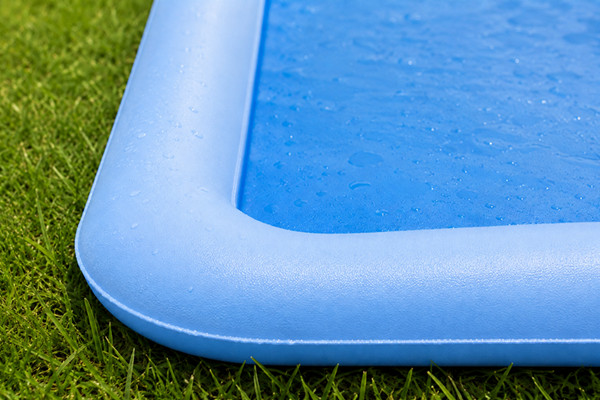
Thicker PVC gives a splash pad more body. It helps the pad feel flatter, more controlled, and more comfortable under bare feet. It can also improve the feeling of quality when parents handle the product.
Stability matters in several ways:
- Children feel more secure when standing.
- The center surface is less likely to feel flimsy.
- The outer ring feels more controlled when filled.
- The pad may resist small wrinkles better.
- The product feels more suitable for repeated use.
For toddlers, this can make play more comfortable. Toddlers often sit, crawl, and step repeatedly in the same area. A thin surface may move too much under them. A thicker PVC surface can feel more reliable.
For pet cooling, thicker PVC is also useful. Dogs may place more pressure on small points through their paws. Trimmed nails and supervision are still needed, but stronger PVC is a better direction than very thin plastic.
Thicker material does not make a splash pad indestructible. It still needs clean ground, moderate water pressure, and proper storage. But it gives the product a stronger base for normal family use.
What Splash Pad Thickness Is Better?
The better thickness depends on the product’s size, user group, surface, and expected use frequency. A small toddler splash pad for occasional play does not need the same material choice as a large family splash pad used by siblings, guests, and pets.
For repeated summer use, thicker PVC is usually the better choice. It may add a little weight and cost, but it can improve comfort, durability, and confidence.
| Use Situation | Better Material Choice | Why It Helps |
|---|---|---|
| Toddler play | Soft, flexible PVC with stable surface feel | More comfortable for sitting and crawling |
| Sibling play | Thicker PVC with stronger seam area | Handles more movement and repeated stepping |
| Family parties | Larger PVC design with stable outer ring | Works better for longer play sessions |
| Light pet cooling | Thicker PVC with careful setup | Better resistance to paw pressure |
| Patio use | Stronger PVC plus smooth ground | Helps reduce underside wear |
| Seasonal reuse | 0.40–0.55 mm range when suitable | Better mix of strength and foldability |
| Short-term use | Standard PVC or lighter material | Lower cost, but less strength for repeated use |
A good splash pad does not need to be the thickest product possible. It needs the right material thickness for its size and purpose. Too thin can feel disposable. Too heavy can become harder to handle. The right PVC thickness gives families a splash pad that feels strong but still easy to use.
Safe Splash Pad Material
Safe splash pad material should feel comfortable, have controlled odor, stay stable during play, and work well on common outdoor surfaces. For children and pets, safety depends on material quality, surface texture, ground preparation, water pressure, and adult supervision. Better PVC can reduce common concerns, but safe setup still matters.
Low-Odor Splash Pad Material for Kids
Odor is one of the first things families notice when opening a splash pad. A strong smell can make parents uncomfortable before the product is even connected to water. Since children play close to the surface, lower-odor PVC is important for family products.
A new PVC product may have a light material smell when first opened, especially after being sealed in packaging. However, the smell should not feel harsh or overwhelming. Material selection, printing process, production control, packaging time, and storage conditions all affect odor.
Families can improve the first-use experience by:
- Opening the product outdoors.
- Letting it air out before use.
- Rinsing the surface before first play.
- Avoiding long storage in hot cars or direct sun.
- Drying the pad fully before folding.
- Storing the product in a shaded, dry place.
For children’s products, odor affects trust. Even when the product performs well, a strong smell can create doubt. Lower-odor PVC helps the product feel cleaner and more comfortable when families open it for the first time.
Safer Splash Pad Material for Family Use
A family splash pad should be planned for supervised water play. Material safety includes both composition and physical use. The surface should feel smooth under bare feet. The edge should not feel sharp. The water ring should stay stable. The product should include clear instructions for setup, pressure control, and supervision.
For certain product lines, phthalate-free and lead-free material options may be important, especially for children’s products and stricter market requirements. Product development may also consider CPSIA, ASTM, REACH, RoHS, and other market standards depending on product type and sales region.
Physical safety is just as important. Families should consider:
- Is the surface flat before play starts?
- Is the water pressure too strong?
- Is the pad placed near stairs or hard corners?
- Is the ground clean and free of sharp objects?
- Are children running too fast?
- Is an adult nearby during play?
- Is the pad dried and stored after use?
No splash pad material can remove every risk from water play. But better PVC, stable structure, proper setup, and clear use habits can make the play experience more controlled.
Pet-Friendly Splash Pad Material Needs Strength
Pet use adds more stress to splash pad material. A dog may step harder than a child, turn suddenly, paw at water, or press nails into the surface. Even gentle pets can create concentrated pressure through their paws.
A thicker PVC splash pad is usually a better choice for light pet cooling than very thin plastic. It gives more resistance against wear and feels more stable on the ground. Still, a standard splash pad should not be treated as chew-proof, dig-proof, or suitable for every dog.
For pet use, setup matters:
- Trim pet nails before play.
- Use the splash pad on clean grass or smooth ground.
- Keep water pressure moderate.
- Avoid rough running, digging, or chewing.
- Supervise pets during use.
- Rinse and inspect the pad after play.
- Dry fully before storage.
For small and medium dogs that enjoy gentle cooling, a PVC splash pad can be a fun seasonal option. For larger dogs or pets that scratch aggressively, a heavier-duty pet pool may be more suitable.
Pet-friendly use is not only about material strength. It is also about matching the product to the pet’s behavior.
Splash Pad Material and Outdoor Surfaces
Even the best PVC splash pad can feel uncomfortable or wear faster if it is placed on sharp, uneven, or dirty ground. For most family backyards, grass is the easiest and most comfortable surface. Smooth patios, artificial turf, and rubber play mats can also work, but the ground should always be flat, clean, and safe before water is turned on.
Best Surfaces for Splash Pads
The best surface for a splash pad should protect both the child and the material. It should feel comfortable under bare feet, reduce hard impact, help the pad lie flat, and avoid sharp pressure points under the PVC.
Flat grass is usually the first choice for home splash pads. It gives a softer base than concrete and helps reduce direct friction against the underside of the pad. For toddlers, this matters because they often sit, crawl, kneel, stand, and fall back onto the surface many times during one play session.
Smooth artificial turf can work well for patios, small yards, and homes without natural grass. It should be checked before use because small stones, hard plastic pieces, dried leaves, or pet debris can hide in the fibers. Artificial turf can also become hot under strong sun, so parents should touch the surface before placing the splash pad.
A smooth patio can work for older children or quick setup, but it needs more care. Hard surfaces increase fall impact and may become slick when wet. If the splash pad is used on a patio, the area should be open, clean, level, and away from stairs, sharp furniture corners, grills, glass doors, and electrical items.
| Surface Type | Comfort for Kids | Slip Risk | PVC Protection | Best Use Scene |
|---|---|---|---|---|
| Flat clean grass | High | Low to medium | Good | Toddlers, family play, pets |
| Smooth artificial turf | Medium to high | Medium | Good if clean | Small yards, patios |
| Smooth patio | Medium | Medium to high | Medium | Older kids, short play sessions |
| Rubber play mat | High | Low to medium | Good if it drains well | Safer play zones |
| Rough concrete | Low | Medium | Poor | Better to avoid |
| Gravel, mulch, sharp ground | Low | High | Very poor | Not recommended |
Why Grass Works Well
Grass works well because it creates a softer layer under the splash pad. This makes the PVC surface feel more forgiving when children sit, kneel, or lose balance. It also helps reduce underside friction compared with rough concrete or stone.
Grass is especially useful for younger children. Toddlers may not control their movement well. They may step on the edge, sit suddenly, or crawl across the center play area. A grass base gives the splash pad a more natural and gentle foundation.
However, grass still needs preparation. A lawn can hide small objects that damage the pad or make children uncomfortable. Before setup, parents should walk the area and remove stones, sticks, dry branches, garden clips, pet waste, sharp weeds, and uneven soil clumps.
A good grass setup should be:
- Flat enough for the pad to sit smoothly
- Clean enough to protect the underside
- Soft enough for sitting and crawling
- Open enough for children to move safely
- Away from roots, slopes, fences, grills, and garden borders
- Well-drained enough to avoid mud buildup
Grass is not perfect if the yard is muddy, uneven, or full of debris. But when the lawn is clean and flat, it is one of the most family-friendly surfaces for a PVC splash pad.
Can Splash Pads Go on Patios?
Splash pads can go on patios when the surface is smooth, clean, level, and safe. This can be helpful for families without grass or for homes that want the splash pad closer to the house. Still, patio use needs more supervision than grass use.
The biggest concern is impact. A wet patio is much harder than grass. If a child slips, falls, or runs into the edge of the play area, the landing is less forgiving. The surface may also become slippery when mixed with sunscreen, soap residue, algae, mud, or spilled drinks from outdoor gatherings.
For patio use, a thicker PVC splash pad is usually better than a very thin plastic mat. Stronger PVC feels more stable underfoot and offers better resistance against ground friction. A thin pad may wrinkle more easily on a hard surface, especially when children turn or run.
Before using a splash pad on a patio, check these points:
- The surface is smooth, not rough or sharp.
- The area is flat, not sloped.
- There is enough open space around the pad.
- Water can drain without creating a slippery walking path.
- The pad is far from stairs, grills, furniture corners, and electrical items.
- Children are supervised closely throughout play.
A soft outdoor mat may help under the splash pad, but only if it lies flat and drains well. If the mat curls, slides, traps water, or creates raised edges, it may become another safety problem.
Best Playground Material for Water Play
The best playground material depends on the activity. A dry climbing area needs different ground support than a splash pad connected to a garden hose. For water play, the surface should be soft, flat, clean, and able to handle drainage.
Grass is one of the easiest choices for casual backyard water play. It feels soft, drains naturally, and works well with foldable PVC splash pads. Rubber flooring can help reduce impact, but it must drain well and stay flat. Artificial turf is clean and tidy, but it can heat up and may trap debris. Smooth patio surfaces are easy to clean, but they are harder and can become slippery.
For splash pad use, the ground should meet five basic standards:
- It should not puncture or rub the PVC.
- It should not become dangerously slick when wet.
- It should not create hard impact around the play area.
- It should allow water to move away safely.
- It should be easy for parents to inspect before play.
A good splash pad setup is not only about the pad itself. The material and the ground surface need to work together. Even thicker PVC can be damaged if placed on gravel. Even a textured surface can become slippery if placed on muddy or sloped ground.
Splash Pad Material and Slip Safety
Splash pad slip safety depends on material texture, ground condition, water pressure, play behavior, and adult supervision. A textured PVC surface can help improve grip, but families should also use clean flat ground, moderate water flow, and simple play rules such as no running, pushing, or jumping onto the edge ring.
Textured Splash Pad Material Helps Grip
A wet surface always has more slip risk than a dry surface. That is why texture matters. A lightly textured PVC surface can help children feel more stable when standing, turning, or stepping through shallow water.
The texture should be gentle. Children may sit, crawl, and kneel on the surface, so it should not feel rough against skin. The goal is to improve grip without making the play area uncomfortable.
Texture is only one part of safety. If the pad is placed on a slope, rough patio, muddy grass, or dirty ground, the surface may still move or feel unstable. If water pressure is too high, children may become more excited and move faster. If sunscreen or soap residue remains on the pad, the surface can become slick even when the material itself has texture.
A better anti-slip setup includes:
- A stable PVC surface
- Light surface texture
- Flat and clean ground
- Moderate spray height
- No soap or slippery residue
- Close supervision for toddlers
- Clear play rules before water is turned on
Surface texture can help improve grip, but slip safety also depends on water pressure, ground condition, residue, and play behavior. A safer backyard setup usually starts with flat ground, moderate spray, and a few simple anti-slip habits before children step onto the wet surface.
For young children, parents may also consider water shoes with grip. This can help toddlers who are still learning balance or children playing on patio surfaces.
Clean Ground Reduces Slipping
Clean ground helps the splash pad stay flatter. When there are sticks, leaves, dirt clumps, stones, toys, or uneven patches under the pad, the PVC may lift, wrinkle, or shift. Once the splash pad is uneven, children may trip or step awkwardly.
Clean ground also protects the material. Small hard objects under the pad can create pressure points. If a child steps on one spot repeatedly, that object presses upward into the PVC. This can cause discomfort first and wear later.
Before setup, families should spend one minute checking the play area. This short step can prevent many problems.
A clean setup area should be:
- Free of stones, sticks, and mulch pieces
- Free of pet waste
- Free of broken toys or garden clips
- Away from sharp lawn edging
- Away from tools, hoses, and cords
- Flat enough to avoid water pooling in one corner
- Open enough for children to move without bumping into objects
After play, cleaning still matters. Sunscreen, grass residue, mud, pet hair, and body oil can remain on the surface. If the pad is folded while dirty or damp, the next play session may feel less clean and more slippery.
For repeat summer use, rinsing and drying are not optional details. They protect both the material and the play experience.
Water Pressure Affects Safety
Water pressure changes how a splash pad behaves. Higher pressure can create taller spray, but taller spray is not always better. Strong water flow may surprise toddlers, splash outside the play area, and make children run more.
Moderate pressure is usually better for family play. It gives children enough water to enjoy the splash effect without making the surface too chaotic. It also reduces unnecessary stress on the outer ring and seams.
Parents should start with low water pressure and increase slowly. The right spray height depends on the child’s age, yard size, hose strength, and splash pad design. For toddlers and pets, a lower inward spray is often more comfortable.
High pressure may lead to:
- Strong spray hitting children’s faces
- More water collecting around the pad
- More slipping on nearby grass or patio
- More stress on the sealed outer ring
- Uneven spray if the ground is not level
- Faster water use during longer play sessions
A splash pad should feel fun, not hard to control. Better PVC material helps the structure hold water, but water pressure still needs to match the play scene.
Splash Pad Material Tests
Splash pad material tests should focus on water pressure, seam strength, wear, folding, heat aging, odor, and outdoor use. These checks help show whether the material can handle normal summer play. A product that looks good when new still needs to perform after water pressure, sunlight, grass contact, and repeated storage.
Pressure Tests for Spray Rings
Pressure testing is one of the most important checks for a splash pad because the outer ring controls the whole water effect. When the hose is connected, the ring fills with water and pushes spray through small holes. If the ring does not hold pressure well, the spray may look weak, uneven, or unstable.
A useful pressure test should review several areas together:
- Outer ring expansion
- Edge seam stability
- Hose connector fit
- Spray-hole consistency
- Inward spray direction
- Water flow balance
- Leakage around sealed areas
The material alone cannot solve every problem. The seam, connector, and spray holes must also be well designed. A strong PVC sheet with a weak edge seam can still leak. A good edge with poorly placed spray holes can still waste water.
For larger splash pads, pressure control becomes even more important. The outer ring is longer, so water needs to distribute more evenly around the full shape. Better material and stronger sealing help create a more consistent spray effect.
Families notice pressure quality quickly. If the spray is uneven, too weak, or leaking from the edge, the product feels disappointing no matter how nice the printed design looks.
Wear Tests for Outdoor Use
Wear testing matters because splash pads are not used on perfect surfaces. They are used on grass, patios, artificial turf, and sometimes surfaces that are less prepared than they should be. Children step, sit, crawl, and move across the surface repeatedly. Pets may add paw pressure.
The main wear areas include:
- Underside material touching the ground
- Center play area where children move most
- Outer ring where pressure and foot contact meet
- Fold lines created during storage
- Hose connector area
- Sealed edge seams
Wear resistance is not only about thickness. PVC formula, surface finish, seam quality, and ground preparation all matter. Still, thicker PVC gives the product a better starting point against normal outdoor friction.
| Use Situation | Material Stress | Better Practice |
|---|---|---|
| Clean flat grass | Low | Best daily setup |
| Smooth patio | Medium | Use moderate pressure and close supervision |
| Artificial turf | Medium | Check heat and remove debris first |
| Rough concrete | High | Avoid when possible |
| Gravel or mulch | Very high | Not suitable for splash pads |
| Light pet cooling | Medium | Trim nails and supervise |
| Pet digging or chewing | Very high | Use a heavier-duty pet product instead |
For families, good wear resistance means the splash pad can stay useful through more summer sessions. For sellers and product teams, it means fewer complaints about tearing, leaking, or early damage.
Heat Tests for Summer Storage
Splash pads are summer products, so heat exposure is part of real use. A splash pad may sit on a sunny lawn, dry on a patio, stay in a garage, or travel inside a hot delivery truck. Heat can affect material feel, odor, printing, flexibility, and seam performance.
Material aging checks help evaluate how PVC responds to elevated temperature. In quality-focused development, 60°C aging checks may be used to review how material performs under heat exposure. This does not mean users should leave the product in extreme heat. It means the material is reviewed with summer conditions in mind.
Heat-related problems may include:
- Stronger new-product odor
- Softer or stiffer surface feel
- More visible fold stress
- Changes in printed surface feel
- Faster material fatigue from poor storage
- Edge stress if the pad is folded while hot
Customers can help protect the splash pad by storing it correctly. After play, the pad should be dried fully and placed in a shaded, dry area. It should not be left folded in direct sun for long periods. Heavy objects should not be placed on top of sharp folds.
A better PVC material improves durability, but careful storage helps protect that material through the season.
Odor and Surface Feel Checks
Odor and touch are part of material quality. Parents notice them immediately because children play close to the surface. Even if a splash pad works well, a strong smell or sticky surface can reduce trust.
Odor is affected by material choice, printing, packaging, storage time, and temperature. A lower-odor PVC choice gives families a better first-use experience. The product should feel suitable for outdoor family play after opening, airing out, and rinsing.
Surface feel should also be checked. The PVC should not feel overly sticky, brittle, sharp, or rough. It should feel smooth enough for barefoot use and stable enough for wet movement.
A useful material check should ask:
- Does the surface feel comfortable under bare feet?
- Does the smell become acceptable after airing out?
- Does the pad fold without sharp cracking?
- Does the printed surface feel clean and smooth?
- Does the water ring feel stable when filled?
- Does the material stay flexible after normal storage?
These are the details families remember after the first play day.
PVC vs Other Splash Pad Materials
PVC is usually the most useful material for home splash pads because it offers water resistance, sealed spray-ring construction, colorful printing, foldable storage, and easy cleaning. Other materials can work in certain products, but they often give up portability, drying speed, durability, cost control, or spray performance.
PVC vs Thin Plastic
Thin plastic splash pads are usually lighter and lower in cost. They may look similar in online photos because they can still carry bright colors and playful graphics. The difference becomes clearer during use.
Thin plastic may wrinkle more easily, shift on wet ground, and feel less stable underfoot. It usually has less resistance around seams, spray holes, fold lines, and pressure points. For very light use, it may be acceptable. For repeated summer play, it is often less reliable.
PVC gives families a stronger choice. It can be made thicker while still staying foldable. It works well for sealed water-ring construction and colorful surface printing. It also feels more stable when children step, sit, or crawl on it.
The real question is not only product price. It is value per use. A cheaper splash pad that fails quickly can feel more expensive than a better PVC option used many times through summer.
PVC vs Fabric-Covered Mats
Fabric-covered mats may feel soft at first, but they are not always the easiest choice for water play. Fabric can hold water, dirt, sunscreen residue, grass, pet hair, and odor more easily than a smooth PVC surface. It may also take longer to dry.
For a hose-connected splash pad, easy cleaning matters. Families want to rinse, dry, fold, and store the product without a long maintenance process. PVC is usually easier to wipe and rinse after backyard use.
Fabric-covered designs may work for selected comfort-focused products, but they need careful construction. If the fabric layer dries slowly or traps dirt, families may stop using the product as often.
PVC also works well for bright surface designs and clear printed themes. For children’s summer products, this matters because the product needs to look fun while still being easy for parents to clean.
PVC vs Rubber Playground Flooring
Rubber playground flooring is useful for reducing impact under swings, slides, and climbing equipment. But rubber flooring is not the same as splash pad material. It is usually heavier, less foldable, and not designed to hold water pressure or connect to a garden hose.
A splash pad needs to be portable. It should fold, store, connect to a hose, hold water in an outer ring, and spray inward. PVC fits that structure better than rubber.
Rubber can still be useful as part of the play environment. A flat rubber play mat may help create a softer base under or near a splash pad if it drains well and does not slide. But rubber is usually better as a ground surface, not the main body of a foldable splash pad.
| Material | Main Strength | Main Limitation | Better Use |
|---|---|---|---|
| PVC | Water resistance, folding, sealing, printing | Needs clean surface and proper storage | Home splash pads |
| Thin plastic | Low cost and light weight | Tears and wrinkles more easily | Very light short-term use |
| Fabric-covered mat | Softer touch | Slower drying and harder cleaning | Selected comfort products |
| Rubber flooring | Impact protection | Not foldable, not ideal for spray rings | Playground ground surface |
| Artificial turf | Clean outdoor look | Can heat up and trap debris | Ground surface under play areas |
How to Choose Splash Pad Material
The best splash pad material should match how the product will be used, who will use it, and where it will be placed. For repeated family use, durable PVC, proper thickness, stable edge sealing, a reliable hose connector, and comfortable surface feel matter more than size alone.
Choose Splash Pad Material for Reuse
A splash pad used once or twice has different requirements from one used throughout summer. If a family plans to use it for weekend water play, birthday parties, pet cooling, and quick after-school fun, the material needs to handle repeated setup, water pressure, drying, folding, and storage.
Reusable splash pad material should handle:
- Repeated folding and unfolding
- Garden hose water pressure
- Children sitting, stepping, crawling, and kneeling
- Light pet cooling when supervised
- Contact with grass, patio, or artificial turf
- Rinsing, drying, and seasonal storage
- Moderate sun exposure during outdoor play
PVC works well because it can meet these needs without becoming too heavy for home use. A thicker PVC splash pad, often planned around 0.40–0.55 mm for many family-use designs, usually offers better use through the season than very thin plastic.
Families should also think about use frequency. If the splash pad will only be used once during a party, a lighter product may be acceptable. If it will be part of regular summer play, better PVC material is worth considering.
| Use Frequency | Material Priority | Better Choice |
|---|---|---|
| One-time party use | Low cost, easy setup | Standard PVC or lighter design |
| Weekend family play | Comfort, folding, basic durability | Standard to thicker PVC |
| Repeated summer use | Wear resistance, seam strength, stability | Thicker PVC |
| Kids and pets together | Stronger surface, better ground protection | Thicker PVC with careful setup |
| Patio use | Underside protection and surface stability | Thicker PVC plus smooth ground |
The best choice is not always the largest product. A medium or large splash pad with better material can feel more useful than an oversized thin one that wrinkles, shifts, or leaks early.
Check Splash Pad Edges and Hose Parts
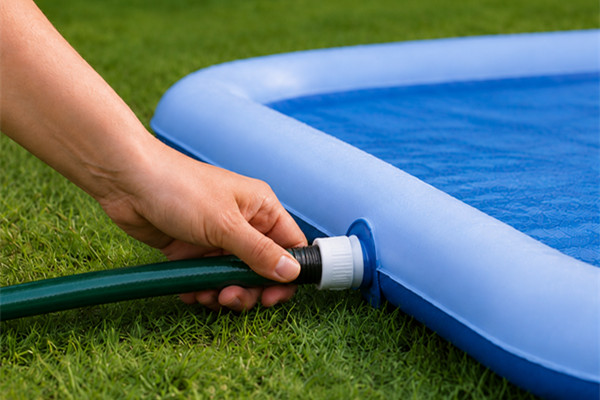
The edge and hose connector are easy to overlook, but they decide whether the splash pad works smoothly. The outer ring holds water pressure. The spray holes control water direction. The connector affects setup speed and water flow. If one of these parts is weak, the whole product feels less reliable.
Customers should look for clear product details showing:
- Sealed outer spray ring
- Small spray holes placed on the outer ring
- Inward spray direction
- Smooth edge finishing
- Stable hose connection area
- Flat center play area
- Material support around the connector
- Clear setup and water-pressure guidance
A splash pad can use good PVC but still disappoint families if the structure is poor. A weak edge seam may leak. A loose connector may waste water. Spray holes that are too large may reduce control. Poor spray direction may push water outside the play area instead of toward the center.
For brands and sellers, these small details strongly affect product reviews. Many complaints are not about the pattern or color. They are about leaking edges, weak spray, difficult connectors, unstable surfaces, or early damage around the seam. Material quality and structural design should be reviewed together.
Look Beyond Splash Pad Size
Large splash pads attract attention because they promise more play space. But size alone does not make a splash pad better. A larger pad also creates more material stress, more water demand, more ground contact, and more storage needs.
Before choosing a splash pad, customers should ask practical questions:
| Question | Why It Matters |
|---|---|
| How many children will use it? | Helps choose a size that fits real play |
| What ages are using it? | Toddlers need softer and more stable surfaces |
| Will pets use it too? | May require thicker PVC and better wear resistance |
| Is the yard grass or patio? | Affects slip risk and underside wear |
| How strong is the water pressure? | Edge ring and seam strength matter more |
| How often will it be folded? | Material flexibility and fold resistance matter |
| Where will it be stored? | Drying and storage size affect daily use |
A large splash pad made from weak material can create more problems than a smaller, stronger product. It may wrinkle more, shift more, and place more stress on the seams. For families, the better choice is usually a splash pad that fits the yard, feels stable underfoot, and can be stored easily after use.
For retailers and cross-border sellers, size also affects packaging, shipping cost, retail price, and product positioning. A balanced size with better material often performs better than a product designed only to look oversized in photos.
Why EPN Uses PVC Splash Pad Material
EPN uses PVC splash pad material because it fits everyday backyard play. PVC works well for water resistance, sealed spray-ring structure, colorful surface designs, foldable storage, and repeated family use. For children, pets, and summer outdoor products, PVC gives a useful mix of strength, comfort, and convenience.
PVC Splash Pad Material Fits Backyard Play
Backyard play is not perfectly controlled. One family may use a splash pad on flat grass for toddlers. Another may place it on a patio for older children. Some families may use it for weekend gatherings, birthday parties, summer BBQs, or light pet cooling.
PVC fits these scenes because it can be made into a product that is:
- Water-resistant
- Flexible for folding
- Strong enough for sealed edges
- Smooth enough for barefoot play
- Printable for colorful designs
- Easy to rinse after use
- Suitable for garden hose connection
- Convenient for seasonal storage
EPN focuses on splash pad products that fit family routines. Parents should be able to unfold the pad, connect the hose, adjust the spray, supervise play, drain the water, dry the surface, and store the product without a complicated process.
A good splash pad should not only look fun on the lawn. It should make summer play easier for the person setting it up and more comfortable for the children using it.
PVC Splash Pad Stores More Easily
Storage is one of the main reasons families choose a splash pad instead of a full pool or rigid backyard water toy. A PVC splash pad can usually be folded after use, which makes it better for smaller homes, patios, garages, shared outdoor spaces, and seasonal storage.
A storage-friendly splash pad should:
- Drain without heavy lifting
- Dry within a reasonable time
- Fold without sharp cracking
- Fit into a box, bin, shelf, or storage bag
- Stay flexible after repeated use
- Be easy to bring out again for the next play day
PVC fits this kind of routine because it can be rinsed, dried, folded, and brought out again without taking up much storage space. It can feel stronger than thin plastic without becoming too bulky for home use.
For families, easy storage affects how often the product is used. If a splash pad is difficult to clean, dry, fold, or store, it may be left in the yard or used only once. A product that stores easily is more likely to become part of regular summer play.
Better Splash Pad Material Supports Summer Use
Summer products face heat, water, sunlight, grass, friction, and frequent handling. A splash pad may be opened and packed away many times during one season. It may be dried on a patio, stored in a garage, carried to another yard, or used by both children and pets.
Better PVC material helps the product feel less flimsy, improves surface comfort, strengthens the outer spray ring, and gives families more confidence during repeated use.
| EPN Material Focus | What Families Notice |
|---|---|
| Thicker PVC choice | More stable feel and better use through the season |
| Sealed outer spray ring | More reliable water-spray structure |
| Flexible surface | Easier folding and home storage |
| Lower-odor PVC | Better first-use experience |
| Wear resistance | Better fit for grass, patio, and outdoor play |
| Smooth surface feel | More comfortable for kids and family use |
| Outdoor-use testing | More confidence during summer play |
A splash pad should feel fun, but it should not feel flimsy. When the PVC surface, edge structure, hose connection, and use guidance are planned together, families get a product that is easier to enjoy and easier to trust.
FAQ About Splash Pad Material
Splash pad material affects comfort, durability, spray performance, storage, and safe outdoor use. For most family water-play products, PVC is the most useful choice because it is water-resistant, foldable, easy to seal, and suitable for colorful backyard splash pad designs.
What is the best material for a splash pad?
PVC is usually the best material for a splash pad because it is water-resistant, flexible, easy to seal, and suitable for foldable outdoor water play.
What is a splash pad made of?
A splash pad is usually made of a PVC surface, sealed outer water ring, small spray holes, hose connector, flat center area, and edge seams.
Are PVC splash pads safe for kids?
PVC splash pads can be suitable for kids when used correctly. Use clean flat ground, moderate water pressure, and adult supervision during play.
What surfaces are best for splash pads?
Flat clean grass is usually best. Smooth patios, artificial turf, and rubber play mats can also work if they are level, clean, and free of sharp objects.
How do you make a splash pad less slippery?
Use flat clean ground, avoid soap residue, keep water pressure moderate, choose textured PVC when possible, and remind children not to run.
What is the best material for an outdoor playground?
It depends on the activity. Grass is soft, rubber flooring helps with impact, artificial turf is easy to maintain, and patios are easy to clean. For splash pads, clean grass is often the most useful surface.
Is thick PVC better for a splash pad?
Yes. Thick PVC usually feels more stable and handles repeated use better than very thin plastic, especially for family water play.
Can pets use a PVC splash pad?
Pets can use some PVC splash pads for light cooling under supervision. Trim nails, use clean ground, and avoid chewing, digging, or rough play.
Choose Better Splash Pad Material
Better splash pad material makes summer play easier, safer, and more enjoyable. A well-made PVC splash pad can work for backyard water play, toddler activity, light pet cooling, parties, and repeated seasonal use while staying foldable, cleanable, and easy to store at home.
Better Splash Pad Material Lasts Longer
A splash pad is a simple product, but material quality affects nearly every problem families notice. Leakage, tearing, strong odor, unstable spray, weak edges, slippery feel, and difficult storage are often connected to material or structure.
Better PVC gives the product a stronger starting point. It helps the splash pad lie flatter, feel more stable, and handle repeated water play. When paired with a clean surface and proper storage, it can offer better value through the summer season.
For families, this means fewer frustrating play days. For sellers and retailers, it means stronger product trust, better reviews, and fewer preventable complaints.
A durable splash pad should not only survive the first use. It should still feel useful after children have played on it, water has run through the ring, the surface has been cleaned, and the product has been folded for storage several times.
Better Splash Pad Material Feels Safer
Families want fun, but they also want confidence. A splash pad should not feel flimsy, unstable, sharp, sticky, or hard to control. Better material helps create a safer-feeling play area by improving comfort, surface stability, and edge strength.
A safer splash pad experience comes from several layers:
- Better PVC material
- Stable sealed edge ring
- Comfortable surface texture
- Clean grass or smooth ground
- Moderate water pressure
- Adult supervision
- Clear use instructions
- Proper drying and storage
No splash pad material removes every risk from water play. Children still need supervision. Running, pushing, jumping on the edge ring, and playing near hard objects should be avoided. But better material makes the product easier to manage and more comfortable for family use.
Safety is something parents feel in the details: the product lies flat, the smell is acceptable, the spray is controlled, and the surface does not feel flimsy underfoot.
Better Splash Pad Material Makes Play Easier
The best splash pad material is the one that fits real family life. Parents want a product that is easy to open, easy to connect, easy to adjust, easy to clean, easy to dry, and easy to store.
PVC fits that routine better than many alternatives. It can be strong without becoming rigid. It can be colorful without becoming hard to clean. It can be foldable without feeling disposable. That is why PVC remains one of the most useful choices for home splash pads.
For families, better material means more relaxed summer play. For pet owners, it means a more stable cooling surface when used with care. For retailers, distributors, and cross-border sellers, it means a product that can meet real customer expectations instead of only looking attractive in product photos.
Epsilon develops PVC and composite-material products with practical outdoor use in mind. Customers can order EPN-branded splash pad products for seasonal sales, family water play, backyard parties, and pet cooling scenes.
For brands, retailers, distributors, and cross-border sellers planning a splash pad product line, Epsilon can help review PVC material options, size needs, pattern ideas, packaging details, label requirements, and project pricing before production starts. Whether the goal is to order ready-to-sell EPN products or build a custom splash pad line, better material is the right place to start.