Skip to content
What Size Splash Pad Is Best for a Family Backyard
# Your Trusted Inflatable Supplier In US

Choosing the right splash pad size sounds simple until the product is actually in the backyard. A 60-inch splash pad may look cute online, but it can feel crowded once two children step into it. A 16 FT splash pad may look exciting, but it needs more open lawn space, steadier water pressure, and more time to drain and dry. For most families, the best splash pad is not always the biggest one. It is the one that fits the children, the yard, the water pressure, and the way the family actually plays.
For most family backyards, a 10–12 FT splash pad is the best size. It gives 2–4 children enough room to sit, walk, splash, and play without taking over the entire lawn. A 60–70 inch splash pad works better for one toddler or a compact patio. A 13–16 FT splash pad is better for large lawns, playdates, pets, and backyard parties.
A simple rule is helpful: choose 6–8 FT for one young child, 10–12 FT for most family backyards, and 13–16 FT only when the lawn is open, the hose pressure is steady, and several children or pets will use it together. This prevents two common mistakes: buying too small because the photo looks cute, or buying too large because “bigger” feels like better value.
A splash pad is more than a flat circle with water. The outer ring, spray holes, hose connector, PVC thickness, edge welding, ground surface, and storage routine all affect how well it works. A good size should make summer easier. Children should have enough space to move, while parents should still be able to set it up, supervise it, drain it, dry it, and put it away without turning a quick water activity into a whole backyard project.
Many families only discover the wrong size after the first setup. The hose runs across the walking path. The spray hits patio cushions. The toddler refuses to step into water that feels too strong. The older child says the pad is too small. A better size decision avoids those problems before they happen.

Best Splash Pad Size for a Family Backyard
A 10–12 FT splash pad is usually the easiest size for a family backyard. It is large enough for 2–4 children, but still manageable for setup, water flow, drying, folding, and storage. Smaller splash pads work well for toddlers or compact patios. Larger splash pads are better for open lawns, big families, pets, and summer parties.
What Splash Pad Size Works Best?
The best splash pad size should be chosen by real use, not only by the number printed on the package. A 10 FT splash pad may look large enough in a product photo, but once two children sit in the center, one child runs through the spray, and a few toys are added, the play area can feel smaller than expected.
For most family backyards, the size decision should start with three simple questions:
- How many children will use it at the same time?
- Is the backyard wide enough for the splash pad and walking space?
- Is the outdoor faucet strong enough to support the spray ring?
The most practical family range is usually 10–12 FT. This size gives enough open space for children to move naturally, but it does not usually require the lawn space or water pressure of a 16 FT splash pad. It also gives parents more control over water use and cleanup.
| Family Situation | Better Size | Better Clear Space | Why It Works |
|---|---|---|---|
| One toddler | 60–70 inches | 8 × 8 FT | Easy to supervise and dry |
| One young child | 6 FT | 10 × 10 FT | More room than toddler size |
| Two young kids | 8–10 FT | 12–14 FT wide | Good for light backyard play |
| Two to four kids | 10–12 FT | 16–18 FT wide | Best family balance |
| Big family or parties | 13–16 FT | 20–22 FT wide | More open play space |
A useful way to think about size is “usable play space.” The outer spray ring takes up part of the diameter, and children rarely stay in one place. They step in, step out, sit down, chase the spray, move toward the hose side, and sometimes bring toys or pets into the center. If children are constantly stepping on the edge ring, the pad is probably too small for the way they play.
A family choosing between two sizes should also think about how long the splash pad should remain useful. A small pad may work for one summer with a toddler. A 10–12 FT pad has more room for growth, siblings, and playdates. That is why the middle range often gives better value for families who want more than a one-time summer toy.
Families comparing materials before choosing a size may also want to read about what material is best for a splash pad, because a larger size needs stronger PVC, better edge welding, and a more stable spray ring.
Is 60 Inches Too Small?
A 60-inch splash pad is not always too small, but it should be treated as a toddler or compact-space size. It can work well for one young child who mainly sits, touches the water, and plays with small cups or floating toys. It can also fit small patios, townhomes, narrow lawns, or homes where parents want a quick cooling activity rather than a full backyard play setup.
The limitation is movement. A 60-inch splash pad is about 5 FT across. Once the outer ring takes up part of that space, the open center becomes smaller than many families expect. One toddler may enjoy it, but two children can crowd the center quickly.
A 60-inch splash pad works better when:
- Only one toddler will use it at a time.
- The child prefers sitting or gentle water play.
- The backyard or patio is very small.
- Parents want fast setup and fast drying.
- The play session is short and closely supervised.
It may feel too small when:
- Two or more children want to play together.
- The child likes running through water.
- Toys will be placed in the center.
- Pets may join the play area.
- The family wants a splash pad that lasts through several age stages.
For families who want one product to last beyond one summer, 6–8 FT is often more practical than 60 inches. Children grow quickly, and water play usually becomes more active after age 3. A slightly larger pad gives the child more room to move without making setup much harder.
Is 10–12 FT Enough?
For most family backyards, yes. A 10–12 FT splash pad gives a strong balance between fun and control. It is large enough for siblings, but still easy enough for parents to manage. It can fit into many backyard layouts without needing a very large open lawn.
A 10 FT splash pad works well for two or three younger children. A 12 FT splash pad feels better when children are older, more active, or likely to invite friends. The extra 2 FT may not sound like much, but it gives more room for turning, sitting, stepping out, and moving through the spray without crowding the edge.
A 10–12 FT size is also practical for water pressure. Very large splash pads need more steady water flow to keep the spray even around the whole ring. A 10–12 FT pad usually has a better chance of working with a normal garden hose, as long as the hose is not too long, kinked, or restricted.
Good uses for a 10–12 FT splash pad include:
- Two or three siblings playing together
- Backyard cooling on hot afternoons
- Weekend family water play
- Small birthday gatherings
- Children ages 3–8
- One toddler and one older sibling
- Light pet cooling under supervision
This size also supports more natural play. Children do not have to stand still. They can sit in the center, walk around, jump through low spray, or play simple water games. That freedom is what makes the size feel right for a family backyard.
For EPN splash pad development, this middle-size range is especially important. A family-size pad needs stable edge welding, balanced spray holes, and a reliable hose connection because more children usually means more stepping, pulling, folding, and repeated summer use.
Is 13–16 FT Too Big?
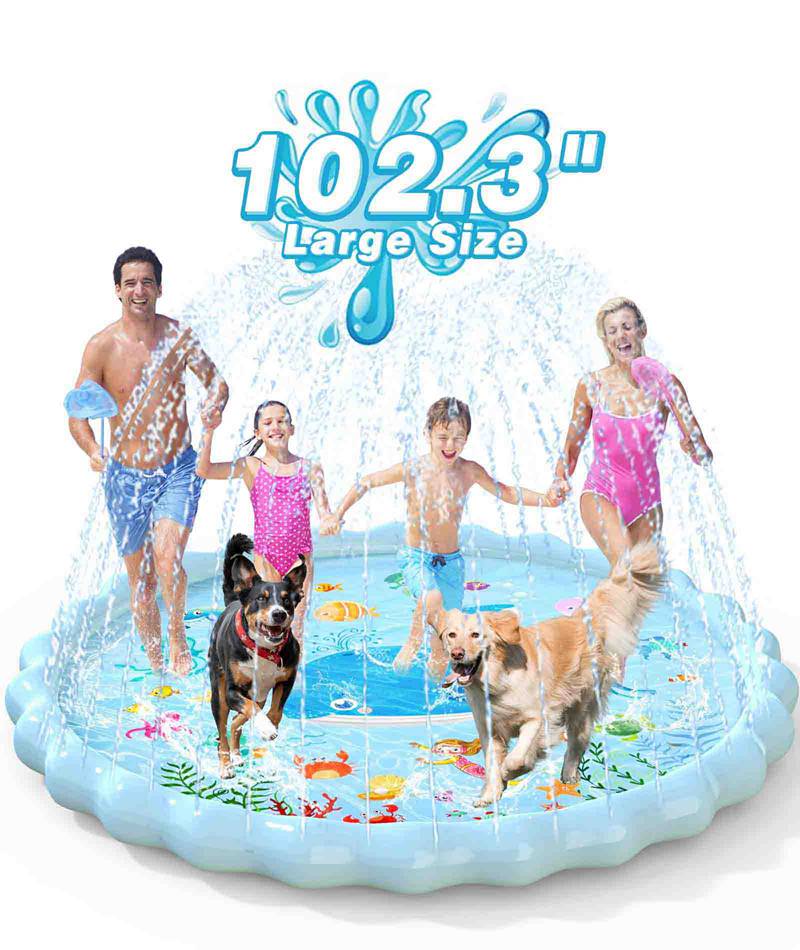
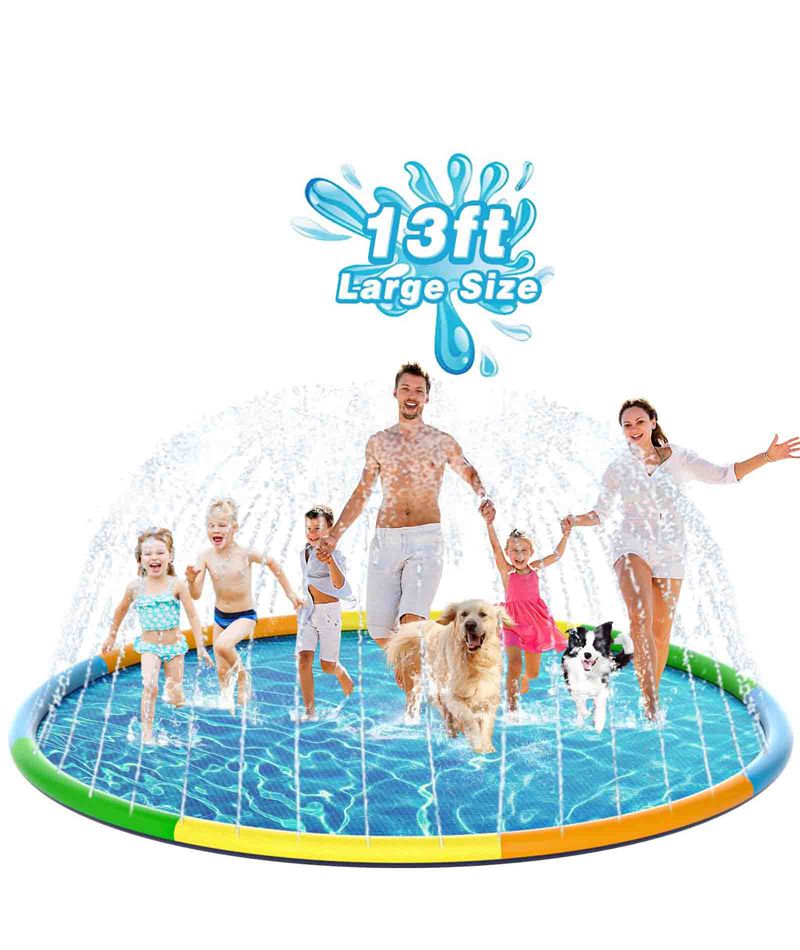
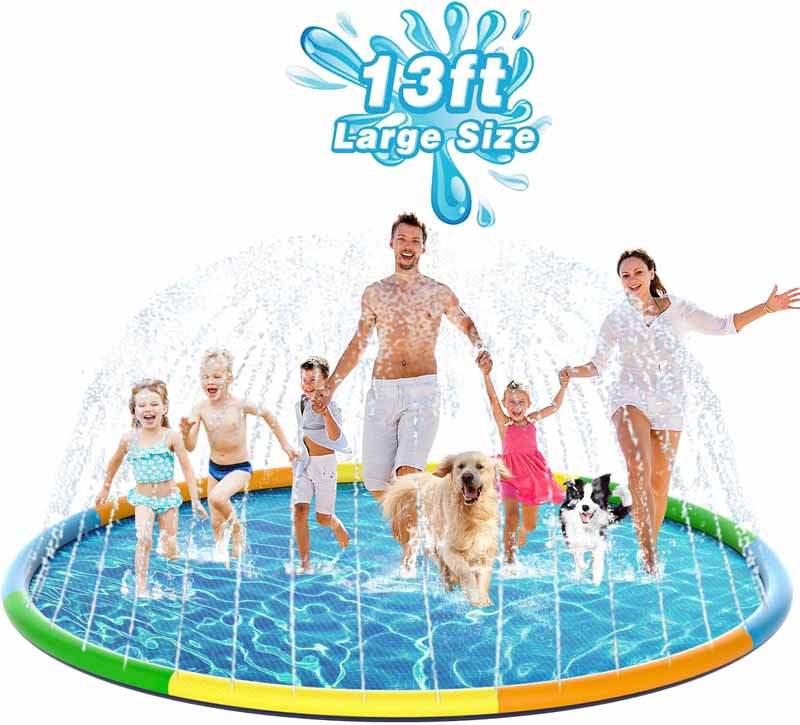
A 13–16 FT splash pad is not too big if the backyard has enough open space and the water pressure is strong enough. It can be a great choice for larger families, outdoor parties, pet owners, and homes with a wide lawn. The larger surface gives children more room to spread out and makes the play area feel more exciting.
However, large size adds more responsibility. A 16 FT splash pad needs more clearance around it. It may spray farther, take longer to fill, and need more time to drain and dry. If the yard is narrow, uneven, or close to outdoor furniture, the large size can feel inconvenient.
Before choosing 13–16 FT, families should check:
- Is there at least 20 × 20 FT of clear play space?
- Is the lawn flat enough for even water distribution?
- Is the outdoor faucet pressure strong and steady?
- Is there enough room to dry the pad after use?
- Can one adult fold and store it without difficulty?
- Will multiple children or pets use it often?
A larger pad also needs stronger construction. The longer edge ring has more surface area under water pressure. The seams, hose connection, and spray holes all need to perform well. If the material is thin or the edge is weak, a large splash pad can wear faster than a smaller one.
A 13–16 FT splash pad is best for families who have open lawn space and plan to use the pad for group play. If the yard is small or the water pressure is average, a 10–12 FT splash pad may give a better everyday experience.
Splash Pad Size by Family Needs
The right splash pad size depends heavily on who will use it. Toddlers need gentle spray and easy supervision. Older children need more room to move. Big families need more open space and stronger construction. A splash pad can feel easier to manage than a pool because the water is shallow, but it still needs adult supervision and a clean setup area.
Best Size for Toddlers
For one toddler, a 60–70 inch splash pad may be enough for short, gentle water play. However, a 6–8 FT splash pad can feel more comfortable if the child likes to move around, sit with toys, or play with a parent nearby.
Toddler water play is usually slower than older kids’ play. Many young children do not run straight into the water. They may watch the spray first, touch it with one hand, step in slowly, then sit near the center. A slightly larger pad gives them more space to adjust at their own pace.
A toddler-friendly splash pad should offer:
- Low starting spray
- Easy parent reach from the side
- Enough center space for sitting
- A soft and stable surface feel
- Clear visibility from every angle
- Simple draining after short play sessions
For toddlers, bigger is not always better. A 16 FT splash pad may look exciting, but it can feel too open or too wet for one young child. A 6–8 FT option often feels calmer and easier to control.
Parents should also consider water pressure. Toddlers usually prefer a lower spray setting at first. Start with gentle water, let the child watch from outside, and increase the flow only if the child feels comfortable. A splash pad should help toddlers enjoy water, not overwhelm them.
If the family wants one splash pad to last beyond one summer, choosing 6–8 FT instead of 60 inches may be more practical. Children grow quickly, and water play usually becomes more active after age 3.
Best Size for 2–3 Kids
For 2–3 kids, a 10 FT splash pad is usually the minimum comfortable family size. A 12 FT splash pad is better if the children are older, more active, or likely to play with friends.
When more than one child is using the pad, the biggest issue is crowding. Children move unpredictably. One may sit in the center, another may run through the spray, and another may stand near the edge. If the pad is too small, they end up stepping on the same area again and again.
A 10–12 FT splash pad works well for:
- Two siblings under age 6
- Three young children with light play
- One toddler and one older sibling
- Short backyard playdates
- Weekend cooling sessions
- Small family gatherings
This size range also gives parents a better view of the whole play area. The pad is large enough for movement but not so large that supervision becomes harder. A parent can sit nearby and still see the spray ring, the center area, and the hose side at the same time.
For families comparing different backyard water options, a guide on splash pad vs kiddie pool can help explain why some parents prefer shallow spray play over a deeper water setup.
Best Size for Big Families
For big families, 13–16 FT is often the better choice if the yard supports it. Larger splash pads reduce crowding and give children more freedom to play together. They also work well for cousins, neighbors, weekend gatherings, and mixed-age groups.
A larger pad can make play feel more relaxed. Older children can move through the spray while younger children stay closer to the center. A parent can keep everyone in one open water area instead of setting up several smaller water toys around the yard.
For big-family use, look for:
- 12 FT minimum for regular family use
- 13–16 FT for larger lawns
- Reinforced outer edge
- Inward spray direction
- Reliable hose connector
- PVC suited for repeated outdoor use
- Easy drain and dry routine
However, bigger families should pay more attention to material and structure. More children means more repeated stepping, twisting, pulling, and folding after use. A large splash pad needs a stable outer ring and strong seams because the edge takes much of the pressure from both water and movement.
A large splash pad should not just look big in photos. It should still spray evenly, stay flat, drain properly, and fold without excessive effort. A poorly built large pad can become more frustrating than a well-designed medium-size pad.
Are Splash Pads Safer Than Pools?
Splash pads can feel safer than pools for many families because the water is shallow and the play area is open. Children are not climbing into deep water, and parents can usually see the full surface from the side. This makes splash pads useful for toddlers, early water play, and families who want cooling without setting up a pool.
That said, splash pads still need supervision. Wet surfaces can be slippery. Children may run, bump into each other, or step on the outer ring. Water pressure can also feel too strong for small children if the hose is turned up too quickly.
Compared with pools, splash pads offer several practical advantages:
| Point | Splash Pad | Pool |
|---|---|---|
| Water depth | Very shallow | Can be deep |
| Setup | Temporary | May need filling and maintenance |
| Supervision view | Open surface | May have blocked angles |
| Storage | Can be drained and folded | Often needs cover or space |
| Best use | Cooling and active play | Swimming and soaking |
| Cleaning | Usually easier after each use | Often needs water treatment |
The key is to treat splash pads as supervised water play, not as a hands-off toy. Parents should keep the surface clean, adjust water pressure gradually, and stop children from running too aggressively. For toddlers, lower spray and shorter sessions often create a better experience.

Backyard Space for a Splash Pad
A portable splash pad can work in many backyards, but the pad itself is only part of the space plan. Families also need room for spray, walking, supervision, drainage, and drying. A splash pad that technically fits may still feel too large if there is no open space around it.
Can You Use One in a Backyard?
Yes, most portable splash pads are designed for backyard use. They connect to a garden hose, fill through the outer ring, and spray water inward or upward depending on the design. No permanent installation is needed for a standard PVC splash pad.
A backyard works well when it has:
- A flat surface
- A clean area free from sharp objects
- A garden hose nearby
- Enough open space around the pad
- A drainage path away from the house
- A place to dry the pad after play
Before placing the splash pad, families should clear the ground carefully. Small stones, dry sticks, rough mulch, broken toy pieces, and sharp grass roots can damage the bottom surface. Even a durable PVC splash pad performs better when it is placed on a clean base.
Backyard placement also affects supervision. The best location is where an adult can see the entire play area. Avoid placing the pad behind outdoor furniture, near steps, or too close to a fence. Children need room to enter and exit without tripping over hoses or patio items.
For EPN-style family water play, easy setup is part of the value. A good splash pad should fit real backyard habits: connect the hose, adjust the pressure, let children play, drain the water, dry the pad, and fold it away.
How Much Space Do You Need?
Before choosing a size, measure the actual open area where the splash pad will sit. Do not include space taken by grills, chairs, storage boxes, planters, steps, fences, or patio edges. Children need open space around the pad because they will move in and out during play.
A practical measuring method:
- Measure the flat open area from left to right.
- Measure the open area from front to back.
- Leave 3–5 FT around the pad when possible.
- Check where the hose will run.
- Make sure water drains away from the house.
- Avoid placing the pad beside outlets, doors, or delicate plants.
For example, if the open lawn area is around 16 × 16 FT, a 10–12 FT splash pad is usually more comfortable than a 16 FT splash pad. The larger size may fit on paper, but it leaves very little room for children to step out safely.
| Splash Pad Size | Minimum Area | Better Area | Best Backyard Fit |
|---|---|---|---|
| 60–70 inches | 6 × 6 FT | 8 × 8 FT | Small patio or toddler play |
| 6 FT | 8 × 8 FT | 10 × 10 FT | Compact lawn |
| 8 FT | 10 × 10 FT | 12 × 12 FT | One or two children |
| 10 FT | 13 × 13 FT | 16 × 16 FT | Standard family yard |
| 12 FT | 15 × 15 FT | 18 × 18 FT | Active family play |
| 16 FT | 20 × 20 FT | 22 × 22 FT+ | Large open lawn |
The “better area” matters more than many families expect. A 12 FT splash pad may technically fit into a 12 FT space, but children will have no room around it. The hose may sit in the walking path. Spray may hit nearby furniture. Cleanup may become harder.
Grass or Patio?
Grass is usually the most comfortable surface for a family splash pad. It feels softer underfoot, stays cooler than many hard surfaces, and gives children a more forgiving area if they sit or kneel during play.
Patio use can also work, but it needs more preparation. Concrete, tile, and stone can become slippery when wet. Rough patio textures may also rub against the bottom of the PVC. If the family uses a patio, the surface should be swept clean and checked for cracks, raised seams, or sharp edges.
| Surface | Advantage | Watch Out For |
|---|---|---|
| Grass | Softer, cooler, more child-friendly | Stones, roots, uneven ground |
| Concrete | Flat and easy to rinse | Slippery, rough texture |
| Patio tile | Clean look, easy setup | Hard surface, drainage issues |
| Deck | Convenient near seating area | Slipping, gaps, wood splinters |
| Artificial turf | Smooth and clean | Heat buildup, drainage |
A clean lawn is not automatically safe either. Dry sticks, hidden stones, roots, or rough mulch can damage the bottom of the pad. The best setup is a flat surface that has been cleared before every use.
Do You Need Splash Space?
Yes, splash space matters. A splash pad is not a flat circle that children stay perfectly inside. Kids move in and out, chase the spray, step around the edge, and bring toys into the water. Without enough space around the pad, the area can feel crowded and messy.
Splash space helps with three things: comfort, safety, and cleanup. Children need room to step out without landing on a hose or bumping into patio furniture. Parents need room to stand nearby and supervise. The yard needs enough space for water to spread without soaking everything around it.
For family backyards, plan splash space around:
- Hose direction
- Parent seating
- Patio doors
- Outdoor furniture
- Flower beds
- Electrical outlets
- Pet areas
- Drainage direction
A splash pad with inward spray direction can help keep more water in the center play area. This is useful for smaller yards because less water sprays toward furniture or nearby walls. EPN often focuses on spray distribution and edge structure because water direction strongly affects real backyard use.
If the yard is narrow, choose a medium size with controlled spray instead of the largest size. A well-fitted 10 FT splash pad can feel better than a 16 FT pad squeezed into a tight space.
Water Pressure and Splash Pad Size
Splash pad size directly affects spray performance. A larger splash pad has a longer outer ring, so the water has to travel farther before it reaches every spray hole. If the home has weak outdoor water pressure, a medium-size splash pad may work better than a very large one.
Does Size Affect Spray?
Yes, size affects spray height and spray balance. A small pad usually fills quickly and sprays easily. A larger pad needs steadier water flow because the ring is longer and has more spray holes to support.
This is why a 6 FT splash pad may spray higher than a 16 FT splash pad using the same garden hose. The larger option may still work well, but it needs stronger and more even water flow.
| Splash Pad Size | Water Flow Need | Spray Result |
|---|---|---|
| 60–70 inches | Low | Usually sprays easily |
| 6–8 FT | Low to medium | Good for most homes |
| 10–12 FT | Medium | Needs steady hose flow |
| 13–16 FT | Medium to high | May spray low with weak pressure |
Families often assume the biggest pad will create the best water play. In real use, a medium splash pad with steady inward spray can be more enjoyable than a large pad with weak or uneven spray.
Balanced spray matters more than height. Children usually enjoy a consistent water ring that covers the play area evenly. If only one side sprays well, the pad can feel disappointing even if the listed size looks impressive.
How High Should Water Spray?
The best spray height depends on child age and play style. For toddlers, low spray is usually better. For older children, a higher spray can be more exciting. The goal is to create fun water movement without making children uncomfortable or soaking the entire yard.
| Child Age / Use | Suggested Spray Feel | Notes |
|---|---|---|
| Toddlers | Low and gentle | Start slowly, avoid face-level spray |
| Ages 3–5 | Low to medium | Good for sitting and stepping |
| Ages 6–8 | Medium | Better for active play |
| Mixed ages | Adjustable | Start low, increase as needed |
| Pets | Low to medium | Avoid strong spray near face |
For most backyard use, water should spray inward and land near the center. If the water shoots too far outward, lower the faucet slightly. If spray barely rises, check the hose and connector first before assuming the pad has a problem.
Families often think higher spray means better performance. In reality, stable spray is more useful. A splash pad that sprays evenly around the edge creates a better play area than one that sprays high in only one spot.
EPN splash pad designs focus on water distribution because spray comfort affects the whole experience. A parent should be able to start with low spray for a toddler, then turn the water up a little when older children join.
Why Is the Spray Low?
Low spray is one of the most common backyard splash pad issues. It does not always mean the pad is defective. In many cases, the cause is water flow, hose setup, or placement.
Common reasons include:
- The faucet is not fully open.
- The garden hose is too long.
- The hose is kinked or twisted.
- The hose connector is leaking.
- The pad is sitting on a slope.
- The spray holes are partly blocked by dirt or grass.
- The outdoor water pressure is too weak for the pad size.
Start by checking the hose. A long or narrow hose can reduce water flow. Then check the connector. If water leaks at the connection, pressure drops before it reaches the spray ring. Finally, make sure the pad lies flat and the ring has enough time to fill.
| Problem | Likely Cause | What to Try |
|---|---|---|
| Low spray everywhere | Weak flow | Open faucet more, use shorter hose |
| One side sprays lower | Uneven filling | Lay pad flat, adjust position |
| Spray strong near hose only | Pressure imbalance | Let ring fill fully, reduce kinks |
| Water leaks at connector | Loose fitting | Tighten, check washer |
| Spray holes blocked | Dirt or grass | Rinse pad and holes |
| Water sprays outward | Too much pressure | Lower faucet slightly |
How to Adjust Water Flow?
Water flow should be adjusted gradually. Do not turn the faucet to full power immediately, especially when young children are using the splash pad. Start low, let the ring fill, then increase the water until the spray feels comfortable.
A simple setup routine:
- Place the splash pad on a clean, flat surface.
- Connect the hose tightly.
- Turn on the water slowly.
- Wait for the edge ring to fill.
- Increase pressure little by little.
- Check spray direction.
- Lower the pressure if water sprays outside the play area.
- Stop and reposition if one side stays low.
The right water flow should create a stable spray ring without making the edge twist or lift. Children should be able to walk through the spray without being hit too hard in the face. For toddlers, lower spray is often more enjoyable than strong spray.
If the splash pad is large, give the water more time to travel through the ring. Some families judge the spray too quickly before the ring has fully filled. A few extra minutes can make a noticeable difference.
Good water flow is not only about fun. It also protects the splash pad. Too much pressure can stress the edge ring and connector. Too little pressure can make children step on the ring trying to get more water. A balanced flow helps both play quality and product life.

Backyard Splash Pad Cost and Durability
A portable PVC splash pad is usually much easier and less expensive than a built-in backyard splash pad. For most families, the better long-term value comes from choosing the right size, stronger PVC, reinforced edges, balanced spray, and a simple care routine.
How Much Does It Cost?
The cost depends on whether the family wants a portable splash pad or a permanent backyard water feature. These are very different choices.
A portable PVC splash pad connects to a garden hose and can be folded away after use. It is designed for seasonal backyard play. A built-in splash pad is a construction project that may involve plumbing, drainage, pumps, surfacing, labor, and long-term maintenance.
| Option | Setup Type | Cost Level | Best For |
|---|---|---|---|
| Portable PVC splash pad | Garden hose | Low | Summer family play |
| Large portable splash pad | Garden hose | Low to medium | Bigger lawns and parties |
| Semi-permanent splash area | Basic yard planning | Medium | Long-term backyard use |
| Built-in splash pad | Plumbing and construction | High | Permanent home upgrade |
For most families, a portable splash pad is the more practical first choice. It does not require construction, permits, or permanent changes to the yard. It also lets families test what size works before investing in a larger water play setup.
The real value is not only the purchase price. A cheaper splash pad that leaks after a few uses may cost more in frustration than a better-made one that lasts through the season. Families should compare material, edge structure, connector quality, and care instructions before choosing by price alone.
For retailers, Amazon sellers, and private-label brands, EPN can support different price levels by adjusting splash pad size, material selection, artwork complexity, packaging type, and target market positioning.
Does PVC Thickness Matter?
PVC thickness matters because it affects wear resistance, structure, and long-term use. But thickness should not be judged alone. A splash pad also needs good welding, stable edges, proper softness, and reliable water flow.
For children’s water play, PVC should feel flexible enough for folding but strong enough for repeated outdoor use. If the material is too thin, it may wear quickly on grass or patio surfaces. If it is too stiff, it may be harder to fold and may create stronger crease marks after storage.
Key PVC factors include:
- Thickness
- Flexibility
- Low-odor performance
- Resistance to ground friction
- Sun exposure stability
- Foldability
- Seam compatibility
- Surface comfort
A family splash pad used by two or more children needs better material performance than a small one-child mat. Larger splash pads also place more stress on the outer ring because the water path is longer and the surface area is wider.
EPN works with PVC and composite materials across splash pads, pet pools, inflatable pools, snow tubes, water toys, and other outdoor products. For splash pads, material selection is matched to size and use scenario. A toddler splash pad, pet splash pad, and large family splash pad should not be developed with only one standard formula.
Families who want more detail can also read what material is best for a splash pad before comparing different sizes.
Are Strong Edges Better?
Strong edges are one of the most important parts of a splash pad. The outer ring is not just a border. It carries water, supports the spray holes, controls spray direction, and receives a lot of foot contact during play.
Weak edges can cause several problems:
- Uneven spray
- Water leaking near seams
- Edge twisting
- Poor shape stability
- Faster wear around spray holes
- Hose connection stress
- Children stepping on unstable areas
A strong edge helps the splash pad stay in shape while water flows through the ring. It also helps spray remain more consistent around the pad. For family-size splash pads, this matters because children often walk near the spray ring. They may step on it, sit beside it, or pull toys across it.
EPN’s splash pad structure planning often focuses on reinforced welded edges, stable connection points, and balanced spray-hole placement. These details may not be the first thing families notice in product photos, but they become important after repeated use.
A good edge should feel stable when filled with water, not overly soft or twisted. It should support spray direction without pushing water too far outward. It should also hold up to normal folding and storage when handled correctly.
What Usually Damages a Splash Pad?
Most splash pad damage does not happen from normal water play alone. It often comes from rough ground, poor storage, excessive water pressure, or dragging the pad while it is still full of water.
Common causes include:
- Small stones or sticks under the pad
- Rough concrete or patio seams
- Pulling the pad across the lawn while wet
- Folding the pad before it is fully dry
- Leaving it in direct sun long after play ends
- Letting pets scratch or chew the edge
- Using very high water pressure for long sessions
- Storing it with water trapped inside the ring
A good care routine is simple: clear the ground, use moderate pressure, drain fully, let the pad dry, and fold it loosely. These habits often matter as much as the material itself.
For families who want a product that can last beyond one summer, the guide on how to choose a splash pad that lasts more than one summer can be naturally linked here.
Do Bigger Splash Pads Leak More?
Bigger splash pads do not automatically leak more, but they have more stress points. A larger pad has longer welded seams, more spray holes, a bigger outer ring, and more surface area touching the ground. If the structure is weak, problems may appear faster on a large size.
Large splash pads are also handled more heavily in real life. They are pulled across lawns, folded by one person, stepped on by several children, and sometimes used with pets. The larger the pad, the more important proper setup and storage become.
A large splash pad should have:
- Strong edge welding
- Stable hose connection
- Balanced spray holes
- PVC suited for repeated outdoor use
- Clear drain and dry instructions
- Enough flexibility for folding
- Surface structure that stays comfortable underfoot
Large splash pads are not the problem. The real issue is whether the material, seams, spray ring, and storage design can handle the way families actually use them.
Families comparing leak risks can read why some splash pads leak easily to better understand how seams, water pressure, and storage habits affect product life.
Best Size Guide for Real Backyards
A good family splash pad choice should start with real backyard conditions. Count the children, measure the open space, check the hose pressure, and think about storage. Most families will be happy with 10–12 FT. Small yards may need 6–8 FT. Large lawns can support 13–16 FT if water pressure and drying space are suitable.
Family Size Chart
Use this chart as a practical starting point:
| Family Situation | Best Splash Pad Size | Why It Works |
|---|---|---|
| One toddler | 60–70 inches | Easy to supervise and dry |
| One toddler with parent sitting nearby | 6 FT | More comfort and space |
| Two young children | 8–10 FT | Better movement room |
| Two to four children | 10–12 FT | Best family balance |
| Big family | 13–16 FT | Less crowding |
| Kids plus dog | 12–16 FT | More shared cooling space |
| Small patio | 60 inches–6 FT | Easier fit |
| Open lawn | 10–16 FT | More play options |
Backyard Decision Points
Before buying, families should ask:
- How many children will use it at the same time?
- Will younger and older children use it together?
- Is the yard wide enough for splash space?
- Is the surface grass, patio, deck, or artificial turf?
- Is the outdoor faucet strong enough?
- Where will the water drain?
- Where will the pad dry after use?
- Can one adult fold and store it easily?
- Will pets use it?
- Is the product expected to last for more than one summer?
These questions prevent the most common sizing mistakes. Many families buy too small because the product photo looks cute. Others buy too large because they assume bigger means better. The best choice is the size that fits daily use.

Size Recommendation
For most homes, choose:
- 60–70 inches for one toddler and very small spaces
- 6–8 FT for small yards or one to two young children
- 10–12 FT for standard family backyard use
- 13–16 FT for large lawns, parties, pets, and several children
If the family is unsure between two sizes, consider the yard and water pressure first. If the yard is small or pressure is weak, choose the smaller option. If the yard is open and the family expects multiple children to play together, choose the larger option.
A well-fitted splash pad should make summer easier. It should not take over the yard, waste water, or create complicated cleanup. When size, structure, and care match the family’s routine, a splash pad can become one of the easiest backyard water toys to use again and again.
Why EPN Fits Family Backyard Water Play
A good splash pad looks simple from the outside, but the real difference is often hidden in the PVC, edge welding, spray ring, hose connector, and folding design. These are the details EPN focuses on when developing backyard water play products for families, children, and pets.
EPN develops PVC and composite-material products for family recreation, children’s toys, pet products, outdoor leisure, and seasonal sports. Splash pads are part of a larger product system that includes children’s splash pads, pet splash pads, inflatable pools, water slides, pet pools, water toys, and other backyard products.
For family splash pads, EPN focuses on more than surface pattern or size. A useful backyard splash pad needs to perform under real use. Children step on the edge, water pressure changes, sunlight affects the material, and families fold and store the product many times during summer.
A good family splash pad needs to work in real summer conditions:
- Children step on the outer ring.
- Water pressure changes from home to home.
- The pad may sit on grass, patio, or turf.
- Sunlight and heat affect the material.
- Parents need to drain, dry, fold, and store it.
- Some families may use the pad with pets.
- Retail customers may need clear packaging and size guidance.
EPN focuses on practical details such as PVC material matching, reinforced edge structure, spray-hole distribution, hose connector reliability, low-odor material direction, and foldable storage design. These are the details that decide whether a splash pad feels easy after several weekends of use.
For families, EPN splash pads are designed around simple backyard use: connect the hose, adjust the spray, let children play, drain the water, dry the pad, and store it for next time.
For retailers, Amazon sellers, distributors, and private-label brands, EPN can also support custom splash pad development. Size, artwork, color box packaging, warning labels, instruction inserts, logo placement, and market positioning can be adjusted for different sales channels.
A toddler splash pad, pet splash pad, and large family splash pad may look similar at first glance, but they should be planned differently. EPN can help turn one summer water play idea into a more complete product line that fits different families, spaces, and markets.
Find the Right Splash Pad Size for Your Backyard
A family splash pad does not need to be the largest option to feel fun. It needs to fit the way the backyard is used. For one toddler, a small 60–70 inch splash pad may be enough for short, gentle play. For most families with two to four children, a 10–12 FT splash pad usually gives the best balance of space, water flow, setup, and storage. For larger lawns, pets, playdates, or weekend parties, a 13–16 FT splash pad can create a more open play area if the hose pressure and yard space are ready for it.
Before choosing a size, it helps to look at the whole setup, not only the diameter:
- How many children will play at the same time?
- Is there enough space around the pad for walking and splashing?
- Will the surface be grass, patio, deck, or artificial turf?
- Is the water pressure strong enough for a larger spray ring?
- Can the pad be drained, dried, folded, and stored easily after use?
When these details match, a splash pad becomes one of the easiest summer water toys to use at home. It gives children a cool place to play, gives parents a simple setup, and avoids the maintenance work of a larger pool.
EPN offers backyard splash pad options for family water play, pet cooling, and outdoor summer activities. Families can contact Epsilon for available EPN products, while retailers, distributors, Amazon sellers, and private-label brands can request custom splash pad development, including size planning, PVC material selection, spray design, artwork, packaging, labeling, and OEM / ODM production support.
Get A Fast quote
Here, bringing your inflatable concepts to life is no longer a challenge—it’s a collaborative journey where American Epsilon helps families, outdoor enthusiasts, and global brands transform creative ideas into safe, certified, and market-ready inflatable solutions.


Partner With Epsilon
Whether you are a family looking for safe backyard fun or a brand seeking large-scale OEM/ODM solutions, American Epsilon Inc. guarantees every inflatable is built with safety, durability, and excitement in mind. With flexible low MOQs, strategically placed warehouses in the U.S., Canada, U.K., and Germany, plus 24/7 professional support, we ensure smooth delivery and reliable service worldwide.
Ready to bring your inflatable ideas to life? Request free samples, fast prototypes, and customized designs today—your trusted inflatable journey starts here.