Skip to content
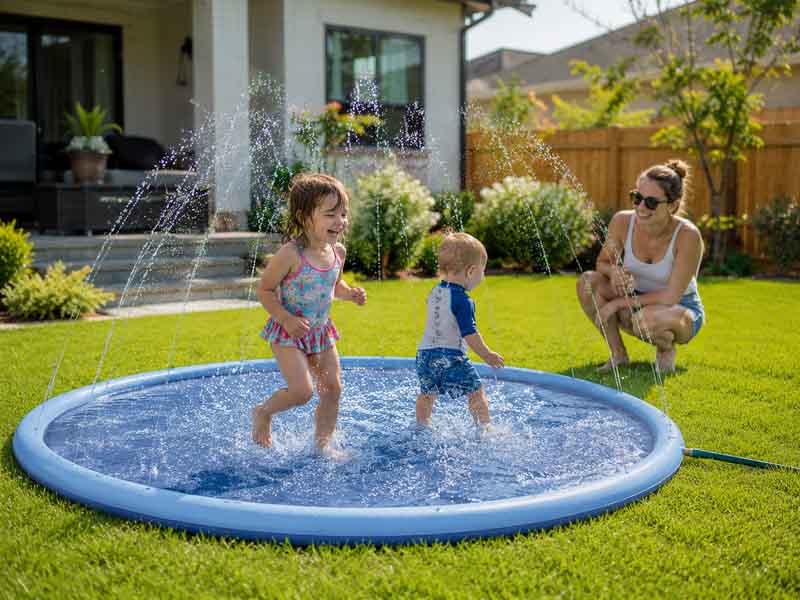
Summer with children is rarely as simple as “go outside and play.” Hot weather changes everything. Parents have to think about sun exposure, water breaks, cleanup, nap schedules, dinner timing, wet clothes, muddy feet, and whether the activity is worth the effort. A pool day sounds exciting, but it can easily become a half-day plan. A public splash park may be fun, but it usually means packing bags, driving, parking, watching crowds, and dealing with tired children on the way home.
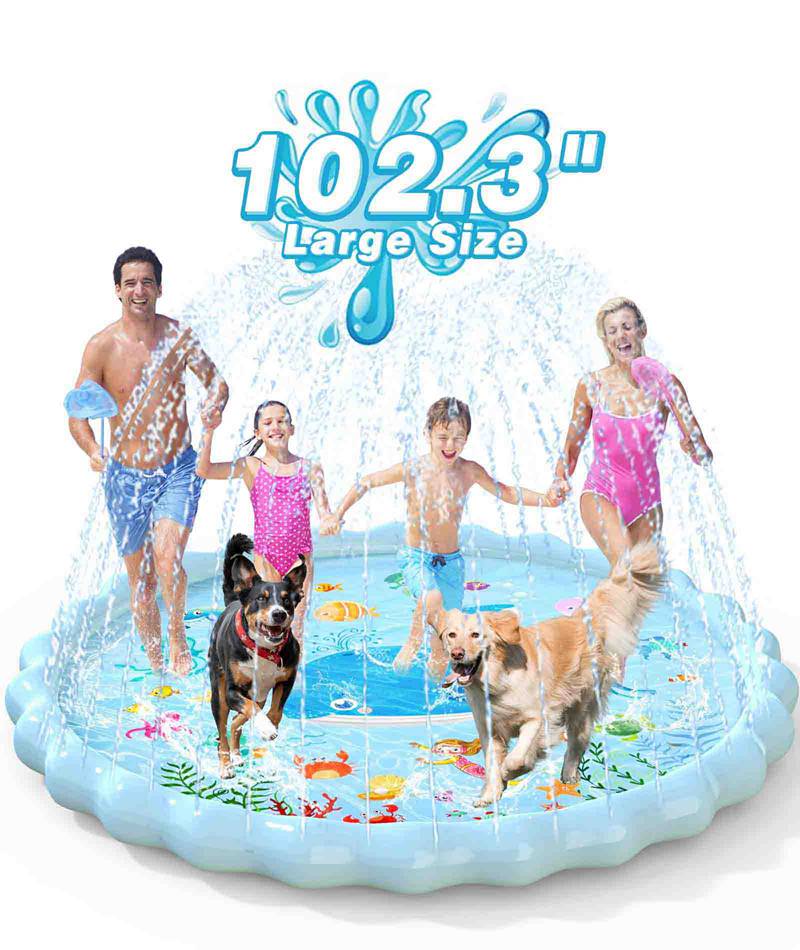
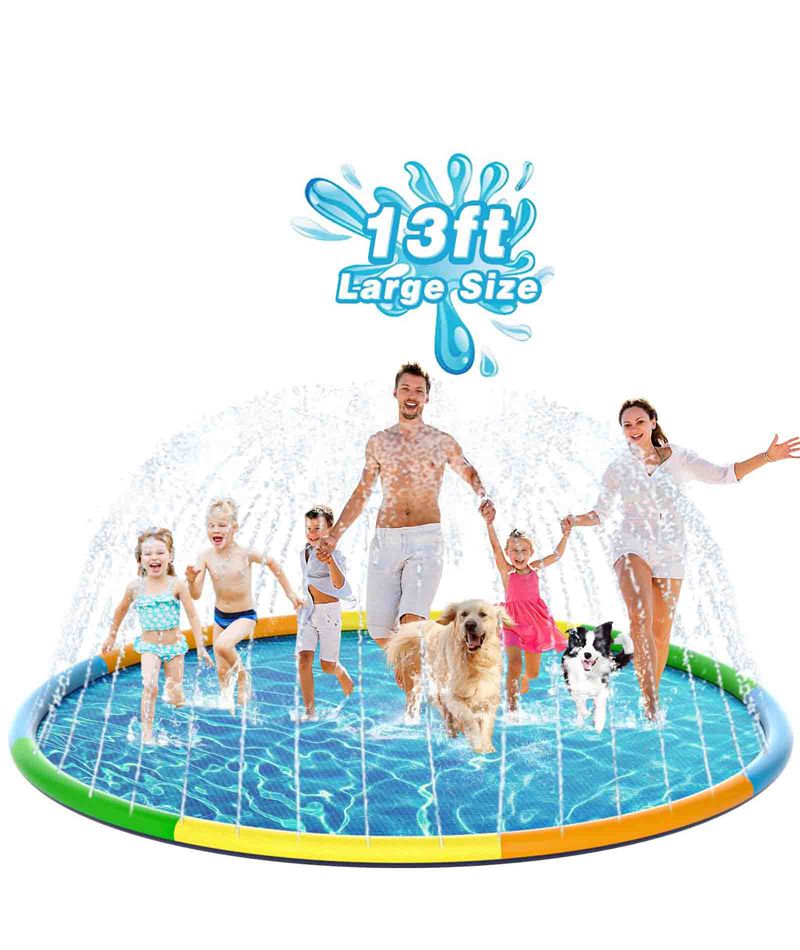
Kids splash pads work so well because they fit into the smaller, more realistic spaces of family life. They turn a backyard, lawn, or patio into a cooling play area without asking parents to build a full summer event around it. A family can connect the hose, check the ground, adjust the spray, and let children enjoy a short burst of water play before the next part of the day begins.
Kids splash pads support summer routines because they combine fast setup, shallow water play, gentle cooling, active movement, easier supervision, and simpler cleanup. They are especially useful after naps, after school, before dinner, during weekend backyard time, and on hot afternoons when children need movement but parents do not want a full pool setup.
The best part is repeat use. A splash pad is not valuable only because children enjoy the first play session. It becomes valuable when parents are willing to bring it out again tomorrow. That is why EPN kids splash pads are developed with practical details such as flexible PVC, reinforced seams, stable hose connection, balanced spray holes, and foldable storage. A good splash pad does more than spray water. It helps families create small summer moments that are easy to start, easy to end, and easy to repeat.
| Family Moment | Better Play Length | Parent Focus |
|---|---|---|
| After breakfast | 15–25 minutes | Use cooler morning air |
| After nap | 10–20 minutes | Keep spray gentle |
| After school | 15–30 minutes | Help kids release energy |
| Before dinner | 10–20 minutes | Keep cleanup simple |
| Weekend playdate | 20–40 minutes with breaks | Avoid crowding and rough play |
Families comparing backyard surfaces can also read Can You Use a Splash Pad on Grass before choosing where to place the pad.
Why Kids Splash Pads Fit Daily Life
Kids splash pads fit daily life because they make summer water play easier to start, easier to stop, and easier to repeat. Parents do not need to plan a full pool day or prepare a long outdoor setup. With a flat yard space, a garden hose, towels, and a few careful checks, children can enjoy cooling backyard play within a short family time window.
For many families, the hardest part of summer play is not finding something fun. It is finding something fun that does not create more work. Children may ask to go outside after breakfast, after a nap, or right before dinner, but parents are often working around meals, laundry, cleaning, calls, errands, and bedtime. A large inflatable pool or a public water park may be exciting, but both require more planning. A kids splash pad works because it fits into the small open pockets of the day.
A splash pad is especially useful for families with young children because the play session does not need to be long to feel successful. Ten to thirty minutes of spray play can help children cool down, move their bodies, and reset their mood. Parents can keep the activity close to the house, watch the full play area, and end the session before children become overtired.
That repeat-use value is where a well-made splash pad matters. A product that is hard to unfold, leaks near the connector, sprays unevenly, or takes too long to dry may be used once and then stored away. EPN kids splash pads are developed for real backyard routines, with attention to flexible PVC, reinforced seam areas, stable hose connection, balanced spray holes, and foldable storage. These details help the product feel practical, not just fun in a product photo.
| Daily Family Need | How Kids Splash Pads Help | What Parents Care About |
|---|---|---|
| Short play window | Supports 10–30 minute outdoor sessions | Easy to fit before meals, naps, or bedtime |
| Less preparation | Uses a garden hose and flat yard space | No pump, no large filling time, no travel |
| Lower cleanup pressure | Drains faster than a deeper pool | Less water removal and easier drying |
| Close supervision | Keeps play in the backyard | Parents can watch children more easily |
| Active cooling | Combines spray, movement, and shallow play | Helps kids release energy in hot weather |
| Repeat summer use | Can be folded and stored after drying | Better value across the whole season |
The strongest summer routine is not always the most expensive or the most dramatic. It is the one a family can actually repeat.
How Kids Splash Pads Save Time
Kids splash pads save time because they remove many of the small steps that make summer water play feel difficult. A family does not need to pack the car, drive to a public splash park, inflate tall pool walls, or wait for a large pool to fill. Parents can choose a flat spot, unfold the pad, connect the hose, start with low water pressure, and let children enter once the spray looks stable.
For parents, the time difference can be meaningful. A public water outing may take 20–40 minutes just to prepare before leaving the house. A larger inflatable pool may take another 15–30 minutes to inflate and fill, depending on size and water flow. A splash pad can often be ready much faster, especially when towels and hose parts are already stored nearby.
The time saving also matters after play. Parents are not only thinking about fun; they are thinking about wet clothes, muddy feet, sunscreen residue, and whether the product can be cleaned before the next task. A splash pad’s flat structure usually makes it easier to rinse, drain, air-dry, and fold. When the cleanup feels manageable, families are more likely to use the pad on an ordinary weekday, not only during a planned weekend.
This is where daily-use design becomes important. A splash pad with a reliable connector, balanced spray, and flexible material does not fight the parent during setup or cleanup. It simply becomes a quick way to give children outdoor water play without turning the afternoon into a project.
Why Kids Splash Pads Need Less Setup
Kids splash pads need less setup because they are built around shallow spray play instead of deep water play. There is no need to fill a large basin or manage heavy standing water. The spray comes from hose pressure, while the pad creates a defined play zone where children can move, step, sit, and splash.
Less setup does not mean no preparation. The surface still needs to be checked carefully. Families should avoid gravel, broken concrete, slopes, raised roots, sharp stones, garden tools, and pet debris. These small problems can affect both safety and product life. A flat grass area or smooth patio is usually easier to manage.
Water pressure should also be controlled. Parents should not turn the hose fully open at the start. A better method is to begin with low pressure, allow the outer edge to fill evenly, and then increase pressure until the spray height feels comfortable for the child’s age. Younger children may prefer lower spray, while older children may enjoy more active water movement.
EPN designs kids splash pads with daily setup in mind. The hose connector area needs to handle repeated attachment. The seams need to hold under water pressure. The spray holes need to distribute water evenly enough that parents are not constantly adjusting the hose. These are small design choices, but they affect whether the product feels easy to use again the next day.
When Kids Splash Pads Work Best
Kids splash pads work best when families use them as short, repeatable play moments throughout summer. They are not only for birthdays or weekend parties. They are useful during ordinary times when children need movement and parents need a simple activity that does not take over the day.
After nap time, a splash pad can help younger children wake up gently and move into the afternoon. Parents can keep spray low, limit play to 10–15 minutes, and use the water as a calm transition before snack or indoor play. After school, splash pads can help children release energy before dinner. Many children come home restless after sitting for long periods, and a short backyard splash session gives them movement without requiring parents to leave home.
On weekends, a splash pad can become a shared family activity. It works well for siblings, cousins, playdates, and backyard gatherings. Larger pads give children more space to move without crowding, while even spray helps keep the whole play area active.
For families, the value is convenience. For retailers and private-label brands, the value is repeat demand. A product that fits daily routines has a better chance of strong reviews, lower return pressure, and better summer sales performance. That is why EPN focuses not only on appearance, but also on structure, material, spray balance, and packaging options that support real family use.
How Kids Splash Pads Cool Summer Days
Kids splash pads cool summer days by turning heat relief into active backyard play. Instead of asking children to stay indoors all afternoon, parents can create a short water-play routine that combines gentle spray, movement, shade breaks, and drinking water. The best results come from controlled water pressure, limited play sessions, and close attention to how children respond to heat.
Hot weather changes the way families use their backyard. A lawn that feels comfortable in spring can feel too bright, dry, and tiring in midsummer. Children may still want to run outside, but parents need to think about sun exposure, hydration, surface temperature, and how quickly young kids can become tired. A kids splash pad helps because it gives children a cooler way to move without turning the afternoon into a full pool setup.
The cooling effect is practical, not complicated. Water spray touches the skin, shallow water moves under the feet, and children naturally alternate between running, standing, laughing, and resting. This makes splash pad play feel lively without requiring deep water. For many families, a 15–30 minute session is enough to reset the mood of a hot afternoon.
A splash pad is also easier to adjust than many larger water toys. Parents can start with low water pressure for toddlers, increase the spray slightly for older kids, and turn the water down when play becomes too rough. This level of control matters because not every child enjoys the same spray height. Some children love running through stronger water streams, while others prefer gentle spray that stays below the face.
EPN kids splash pads are designed around this kind of real family use. Balanced spray holes help water reach more of the play area. A stable outer edge helps the pad hold shape as water flows through it. Flexible PVC supports repeated folding, unfolding, and outdoor use across the season. These design details help families create cooling play that feels easy, controlled, and repeatable.
| Summer Concern | Parent Question | Splash Pad Cooling Value |
|---|---|---|
| Hot afternoon energy | How can kids move without overheating quickly? | Short water play supports active cooling |
| Strong sun | How long should children stay outside? | 15–30 minute sessions are easier to manage |
| Younger children | Will the spray feel too strong? | Water pressure can start low and rise slowly |
| Active kids | Can they run and play safely? | Open play area supports movement with rules |
| Backyard comfort | Is the ground too hot or rough? | Grass setup can feel cooler than hard surfaces |
| Family schedule | Can this fit before dinner or bath time? | Quick setup makes short cooling breaks practical |
A good cooling routine is not about keeping children outside as long as possible. It is about giving them a better way to enjoy outdoor play without making the day harder for parents.
For families that want more detail on material comfort and outdoor performance, What Material Is Best for a Splash Pad explains why PVC flexibility, odor control, and seam quality matter during summer use.

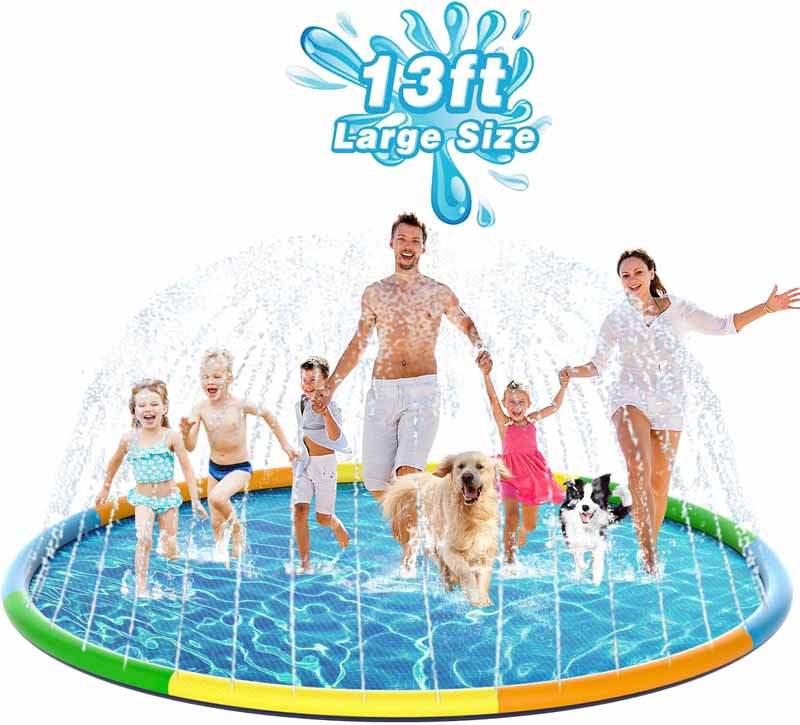
Kids splash pads use gentle spray by sending water through small holes around the pad’s edge. The spray usually points inward, creating a cooling play area where children can step, run, sit, and reach for the water. This makes the activity feel more playful than a regular sprinkler because the water surrounds the play space instead of coming from one fixed point.
Gentle spray is important for young children. Toddlers and preschoolers may enjoy water play but dislike sudden spray in the face. Parents can manage this by opening the hose slowly and keeping the first few minutes low. Once children feel comfortable, the pressure can be increased slightly.
Spray balance also affects comfort. If one side shoots too high and another side barely sprays, children tend to crowd the strongest area. That can lead to pushing, slipping, or frustration. EPN focuses on more even spray distribution so the whole pad feels usable, not just one corner.
The best spray level is not the tallest spray. It is the level children enjoy while parents can still keep the play calm and controlled. A toddler who is new to water play may need very low spray. A preschooler may enjoy low to medium spray. Older children may like a more active pattern, but they still need rules against rough running, hose pulling, or jumping onto the outer edge.
Why Kids Splash Pads Support Short Play
Kids splash pads support short play because they do not require a long setup or a long cleanup. This fits how summer family routines actually work. Parents often need an activity that can happen between lunch and nap time, after school and before dinner, or right before bath time. A splash pad can turn a small time window into real outdoor fun.
Short play is also better for managing heat. Children can become excited and ignore early signs of tiredness. A shorter session helps parents stay ahead of the problem. Instead of waiting until kids are exhausted, parents can stop while everyone is still comfortable.
A 20–30 minute cooling session often works well for young families. Parents can begin with low spray, let children adjust, allow free play for a short window, pause for water and shade, and lower the pressure again when children begin to slow down. This kind of rhythm gives children enough time to enjoy the water without letting play become too intense.
Short play works especially well for families with toddlers. A toddler may be thrilled by ten minutes of gentle spray, while an older child may enjoy several short rounds with breaks between. Parents do not need to force one long session for everyone.
EPN splash pads support repeat short use because they are designed to be unfolded, connected, drained, dried, and stored across many summer sessions. A product that handles repeated use well is more valuable than one that only looks exciting the first time.
Do Kids Splash Pads Help Active Kids?
Kids splash pads help active kids because they give movement a clear place and purpose. Children can run around the edge, step through spray, reach for water streams, play follow-the-leader, count spray holes, or create small backyard challenges. The water keeps them interested, while the open pad gives them room to move.
For active children, this can be more useful than passive cooling. Sitting indoors may not help them release energy. Sitting in a small pool may cool them down but may not give them enough movement. A splash pad offers both water contact and physical play.
Parents can guide active play with simple rules, but the rules do not need to feel strict. Children should know not to push, not to slide into the pad, not to jump onto the outer edge, not to pull the hose, and not to drink the water. Those limits protect both the children and the pad.
For older children, parents can add structure without making the activity feel forced. They can ask children to touch a certain number of spray streams, walk slowly around the pad without stepping outside, take turns choosing low or medium spray with adult help, or pretend the pad is an island, car wash, or obstacle course. The best splash pad play feels free, but it still has boundaries. That balance is what makes the activity work for active kids and tired parents at the same time.
Which Kids Splash Pad Features Improve Cooling?
Kids splash pad cooling depends on more than water flow. The best features help water move evenly, keep the play area comfortable, and make the product easy to use again. Parents often notice these details after several uses, not just on the first day.
Even inward spray helps more of the pad feel active. A stable edge structure helps water pressure spread properly. A comfortable PVC surface matters because children may play barefoot. A reliable hose connector helps reduce water loss and makes pressure easier to control. Easy drainage also matters because parents are more likely to reuse a splash pad that does not create a long cleanup job.
A larger splash pad may give siblings more space, but bigger is not always better if the yard is small or water pressure is weak. Parents should choose a size that matches the number of children, the available flat ground, and the hose pressure at home.
EPN considers these details in kids splash pad development because cooling play only works well when the product is easy to control. Parents should not have to fight uneven spray, leaking connectors, or unstable edges every time children want to play. A well-designed splash pad makes hot days feel simpler. Children get water, movement, and fun. Parents get a cooling activity they can start quickly, supervise clearly, and clean up without turning the whole afternoon into work.
Are Kids Splash Pads Easier Than Pools?
Kids splash pads are easier than pools for many summer family routines because they take less time to set up, use less standing water, drain faster, and fit shorter play sessions. They do not replace pools for swimming or floating, but they are often more practical for toddlers, after-school cooling, small yards, quick weekend play, and parents who want less cleanup.
The biggest difference is not only size. It is the amount of work around the play. A pool can be wonderful when families want a longer water activity. Children can sit, float, splash, and practice basic water confidence. But even a small inflatable pool asks for more preparation. Parents need to inflate it, fill it, watch water depth, clean the inner walls, drain a larger amount of water, dry the pool, and find storage space.
A kids splash pad is built for a different kind of day. It is for the afternoon when children are hot and restless, but parents do not want to build a full backyard water setup. It is for the family that has 20 minutes before dinner, not three hours before bedtime. It is for young children who want spray, movement, and laughter without needing deep water.
A splash pad can also feel easier because the play area stays open. Parents can see children from the side, guide the activity, and adjust the hose pressure as needed. The water does not need to be deep for children to feel excited. In many homes, the fun comes from chasing spray, stepping through water streams, sitting in shallow water, and making simple games around the pad.
That does not mean a splash pad is always the better choice. A pool is still better when the family wants soaking, floating, swim practice, or a longer water session. The stronger point is that splash pads are easier for frequent use. They are less like a big weekend plan and more like a summer tool parents can use again and again.
| Family Question | Kids Splash Pad | Inflatable Pool |
|---|---|---|
| How fast can play start? | Often faster because it connects to a hose and does not need deep filling | Usually slower because it may need inflation and more water |
| How much water sits inside? | Very shallow surface water | More standing water |
| Is it easy to stop play? | Easier to turn off, drain, rinse, and dry | More water needs to be drained and the walls need more drying |
| Is it good for short play? | Strong fit for 10–30 minute sessions | Better for longer supervised sessions |
| Is it good for swimming? | No, it is for spray and movement | Better for soaking and early swim comfort |
| Is it easier to store? | Usually folds flatter and stores smaller | Can be bulkier, especially in larger sizes |
| Is supervision still needed? | Yes, close watching is still needed | Yes, close watching is critical |
| Best family use | Quick backyard cooling and active play | Longer water play and sitting in water |
For EPN, this difference is important in product development. Kids splash pads need to feel easy from start to finish. The material should unfold without fighting the parent. The connector should hold water pressure without constant leaking. The spray holes should distribute water evenly enough that children can use the whole play zone. The edge should remain stable while water flows through it. These details make a splash pad easier than a pool not only in theory, but in real backyard use.
For customers who are comparing durability before buying, How to Choose a Splash Pad That Lasts More Than One Summer gives a deeper look at seams, connectors, PVC quality, and storage habits.
Why Kids Splash Pads Reduce Packing
Kids splash pads reduce packing because the play happens close to home. Parents do not need to load the car, prepare a full swim bag, bring extra shoes, manage lockers, or carry wet items back from a public pool. Most of what the family needs is already in the house or backyard.
For a public pool or splash park trip, parents may prepare swimwear, towels, sunscreen, snacks, water bottles, sandals, dry clothes, plastic bags for wet items, toys, stroller items, parking payment, and sometimes entry tickets. For families with toddlers, the list can get even longer. Diapers, wipes, hats, backup outfits, and comfort items may all become part of the outing.
For a backyard splash pad, the preparation is much lighter. Parents still need towels, drinking water, sun protection, dry clothes, and perhaps water shoes if the ground around the pad is uncomfortable, but the activity stays close to the home. That difference matters because summer play often happens in small time windows. Parents may not want to spend more time packing than the children spend playing.
The reduced packing also helps with children who dislike transitions. Many young children are excited to leave home but tired and upset when it is time to come back. Backyard water play avoids the drive, the crowded changing area, and the struggle of leaving a public place. Parents can end the session more gently: towel off, drink water, change clothes, and move into snack, dinner, bath, or indoor play.

Kids splash pads simplify supervision because the play area is flat, open, and easy to see. Parents can stand near the edge and watch children move across the whole pad. There are no high pool walls blocking the view, and there is no deep water area where children disappear below the edge line.
This open layout is especially useful for toddlers and preschoolers. Young children may sit, stand, crawl, or move unpredictably during water play. A flat splash pad lets parents see their feet, body position, and reactions more clearly. If a child slips, gets nervous, or starts drinking the water, an adult can respond quickly.
Supervision is still required at all times. A splash pad is easier to watch than many pool setups, but it is not a product children should use alone. Water, excitement, and slippery movement can change the situation quickly. Parents should stay close enough to step in immediately.
The flat format also helps parents manage different ages. A toddler may stay near the center, while an older sibling runs around the edge. Because the play area is visible, parents can guide both children without constantly moving around a deep pool. EPN kids splash pads support easier supervision through more controlled spray direction and stable edge design. When water sprays inward and the outer edge holds shape, the play zone feels more predictable.
Can Kids Splash Pads Work on Grass?
Kids splash pads can work on grass when the lawn is flat, clean, and free from sharp objects. Grass is one of the most common backyard surfaces for splash pad play because it usually feels softer and cooler than concrete. However, grass needs careful checking because it can hide stones, sticks, roots, pet debris, and small toys.
The best grass area is level, short, and well-drained. A sloped lawn can cause water to collect on one side of the pad. Long grass may stop the pad from sitting flat. Raised roots or hidden rocks can create pressure points under the PVC. These small problems can lead to slipping, uneven spray, or punctures.
Before placing a splash pad on grass, parents should walk the area slowly and check by hand if needed. The hose should reach the pad without crossing the main running path. There should also be enough open space around the pad so children do not run directly into furniture, hard walls, planters, or garden tools.
Grass can make cleanup easier if water drains well, but parents should avoid leaving the pad wet on the lawn for too long. After play, the pad should be drained, rinsed, and dried on both sides before storage. Folding a wet, grassy pad can create odor and make the next use less pleasant.
EPN splash pads are developed with backyard use in mind, including lawn placement. Still, the product’s life depends on setup habits. Even strong PVC can be damaged by sharp ground or rough dragging. A careful setup helps the splash pad perform better across the season.
Which Families May Still Prefer Pools?
Some families may still prefer pools when the goal is longer soaking, floating, or early swim practice. A splash pad is easier for short play, but it is not meant for swimming. If a child wants to sit in deeper water, use floating toys, or practice kicking with support, an inflatable pool may fit that need better.
The choice depends on the family’s routine. A pool is better for a planned afternoon. A splash pad is better for quick cooling. A pool may work well when parents have more time to set up, fill, supervise, drain, and clean. A splash pad works better when parents want outdoor fun without a long process.
Many families use both, but for different moments. The splash pad handles daily cooling. The pool handles longer water play. When positioned this way, the splash pad becomes a practical summer routine product rather than a replacement for every water activity.
For EPN customers, this distinction is useful. Retail listings, independent site pages, and product packaging should not oversell splash pads as pools. The stronger message is more believable: kids splash pads are easier for quick backyard water play, active cooling, and repeat summer routines.
How Kids Splash Pads Lower Cleanup Stress
Kids splash pads lower cleanup stress because they do not hold a large amount of standing water. When play ends, parents can turn off the hose, let water run off, lift one side gently, rinse the surface, and leave the pad open to dry. This process is usually easier than emptying and cleaning a deeper inflatable pool.
Cleanup is one of the biggest reasons families stop using summer products. If a toy is fun for 20 minutes but creates 40 minutes of cleanup, parents may avoid using it again. A splash pad has a better chance of becoming a repeat-use item because the cleanup feels more manageable.
Drying both sides is important. If the underside stays wet, the pad can smell musty the next time it is opened. If the pad is folded sharply while damp, the material may stick, crease, or wear faster.
EPN designs foldable splash pads for repeat summer handling, but proper drying and storage still matter. A product that is easier to clean is more likely to be used often, which means families get more value from it.
What Makes Kids Splash Pads Safer?
Kids splash pads become safer when good product design and good family habits work together. A flat setup area, controlled water pressure, clean play rules, adult supervision, and proper drying after use all matter. A splash pad can feel easier than a pool, but it still needs careful setup because wet surfaces, excited children, and outdoor ground conditions can change quickly.
Parents usually do not worry about splash pads in the same way they worry about deep water. That is understandable because a splash pad is designed for shallow spray play, not swimming. However, the main safety concerns are different. They are more about slipping, rough play, dirty water habits, sharp objects under the pad, strong water pressure, and whether an adult is close enough to step in when something changes.
A safer splash pad routine starts before the hose is turned on. The ground should be flat, clean, and large enough for children to move without stepping immediately onto hard edges, furniture, garden tools, or rough patio corners. Parents should also check the water pressure slowly, because a sudden high spray can surprise toddlers and put extra stress on the outer edge.
EPN kids splash pads are developed with these daily-use details in mind. Stable edge structure, reinforced connection areas, balanced spray holes, flexible PVC, and foldable storage all help create a more predictable play experience. Still, no splash pad should be treated as a hands-off toy. A well-made product gives families a better starting point, but safe use depends on how the pad is placed, watched, cleaned, and stored.
| Safety Concern | What Parents Should Check | Why It Matters |
|---|---|---|
| Slipping | Flat ground, no mud, no sharp slope | Helps children keep better footing |
| Water pressure | Start low and increase slowly | Prevents sudden spray and edge stress |
| Ground damage | Remove stones, sticks, roots, and toys | Reduces punctures and trip points |
| Hygiene | Rinse before and after play | Helps reduce dirt, odor, and residue |
| Supervision | Keep an adult close to the pad | Helps stop pushing, slipping, or unsafe play |
| Storage | Dry fully before folding | Helps prevent musty smell and material stress |
| Age difference | Separate rough play from toddler play | Reduces crowding and accidental bumps |
A safer splash pad is not only about one feature. It is about the full play routine from setup to storage.
Why Kids Splash Pads Need Flat Ground
Kids splash pads need flat ground because the play surface becomes wet, and water naturally moves toward the lowest area. If the pad is placed on a slope, one side may collect more water while another side feels dry. This can make children crowd one area, run unevenly, or step off the pad suddenly.
Flat ground also protects the product. When a splash pad sits on rocks, roots, broken concrete, or hard toy pieces, the pressure from children’s feet can push the PVC against those sharp points. Even strong material can be damaged if the surface underneath is rough. Many early leaks are caused by small objects under the pad rather than a visible product defect.
For toddlers, flat ground is even more important because they are still developing balance. A low spray height on a flat surface is usually easier for them to enjoy than a strong spray on uneven grass. Parents should also leave enough space around the pad so children are not running into outdoor furniture, planters, walls, or garden tools.

Kids splash pads stay cleaner when parents make rinsing and drying part of the normal routine. Water play often brings grass, sunscreen, dirt, mud, snack residue, and bare feet into the same space. If the pad is folded wet or dirty, the next use may start with odor, sticky material, or visible marks.
A simple cleaning routine is usually enough for daily backyard use. Parents can rinse the pad before children enter, especially if it has been stored for several days. After play, the surface should be rinsed again to remove grass, sunscreen, and dirt. If needed, a soft cloth and mild soap can be used on visible dirty areas, followed by a clean water rinse.
Food and sweet drinks should stay away from the play area. Children should not drink from spray holes or puddles. A child with stomach illness should skip shared water play until fully recovered. These habits help keep the experience cleaner and more comfortable for everyone.
Drying matters as much as rinsing. A pad that is stored damp may become unpleasant even if it was fun during the first use. For EPN, clean storage is also part of product value. Flexible PVC and foldable structure help with repeated use, but families still need to dry the product properly to protect its feel, appearance, and service life.
Do Kids Splash Pads Still Need Watching?
Kids splash pads still need watching because children can move quickly when water is involved. Even shallow water play can lead to slipping, pushing, hose pulling, or rough games. A splash pad is easier to supervise than many deeper water setups, but it should never be treated as something children use alone.
Active supervision means an adult is close enough to respond immediately. The adult should be watching the play area, not only listening from indoors or checking occasionally through a window. This is especially important for toddlers, mixed-age groups, and children who become very excited around water.
Parents can also create a water watcher rule. When the splash pad is being used, one adult is responsible for watching the children. That person is not cooking, working, texting, or doing yard tasks at the same time.
This does not make splash pad play stressful. It simply keeps the routine controlled. Children can still laugh, run, and splash, but the adult stays close enough to guide the activity before small problems become bigger ones.
How Kids Splash Pads Reduce Slip Risk
Kids splash pads reduce slip risk when the surface, water level, and play behavior are controlled. The pad should be placed flat, the water pressure should start low, and children should be reminded not to sprint, push, or jump onto the outer edge. Even if a splash pad has a textured surface, it can still become slippery when children run too fast.
Slip risk often comes from a combination of small issues. The ground may be slightly sloped. Grass may become muddy near the entrance. Older children may chase each other. A toddler may sit near the edge while another child runs past. The hose may cross the walkway. None of these problems is dramatic by itself, but together they can make play less safe.
EPN’s stable edge design and balanced spray layout help make the play area more predictable. When spray is uneven or water pools in one corner, children may crowd or run toward one area. More even spray helps spread play across the pad, which can reduce pushing and congestion.
Why Kids Splash Pads Need Water Pressure Control
Kids splash pads need water pressure control because spray height affects comfort, safety, and product stress. Stronger water pressure does not always mean better play. For toddlers, a lower spray can be more enjoyable. For older children, medium spray may create enough excitement without making the surface too chaotic.
Parents should avoid turning the hose fully open at the start. A better method is to increase pressure slowly. The outer edge should fill evenly before children begin running. If the spray becomes too high, too loud, or too forceful, the pressure should be reduced.
Water pressure also affects durability. Too much pressure can place extra force on seams, spray holes, and the hose connection area. EPN reinforces key connection and seam areas, but normal controlled use is still important. Parents should choose the pressure children actually need, not the maximum spray height the hose can create.
What Safety Features Should Parents Look For?
Parents should look for safety-related features that support real use, not only attractive photos. The most helpful features are the ones that make setup more stable, play more controlled, and cleanup easier.
Useful safety-related features include flexible PVC that feels comfortable underfoot, low-odor material for family use, a stable outer edge that holds shape under water pressure, balanced inward spray holes, a reinforced hose connector area, stronger seam bonding, easy drainage, and compact folding after the pad is fully dry.
These features do not remove the need for supervision, but they make the play experience easier to manage. A splash pad that sprays evenly, stays flatter, and connects securely gives parents fewer problems to correct during play.
For EPN, safety is closely connected to material and structure. The company’s product development includes PVC material matching, seam structure improvement, connector design, spray pattern review, and repeat-use testing. This helps EPN kids splash pads better support the way families actually use them in backyards, on grass, and during repeated summer sessions.
A safer product is not the one with the most claims. It is the one that feels stable, predictable, and easy for parents to control.
Which Kids Splash Pads Last Longer?
Kids splash pads last longer when the material, seams, spray holes, hose connector, edge structure, and storage habits all work together. A thicker-looking pad is not always the most durable choice. Parents should look for flexible PVC, reinforced welded seams, stable water flow, a secure connector area, and a design that can handle repeated folding, drying, and backyard use.
Durability is one of the biggest reasons families hesitate before buying a kids splash pad. Many products look similar online. They may show bright colors, happy children, and tall water spray, but parents usually discover the real quality after several uses. The first day is easy. The real test is whether the pad still sprays evenly, connects tightly, dries cleanly, and avoids leaks after repeated summer play.
A longer-lasting kids splash pad should survive the full family-use cycle: unfolding, lawn or patio placement, hose connection, water-pressure adjustment, children stepping and running, draining, drying, folding, storing, and using again. If one part of that cycle is weak, the product may fail early.
The most common durability problems usually come from a few areas. The hose connector may leak or loosen after repeated use. The outer edge seam may open under water pressure. Spray holes may become uneven or weak on one side. The PVC may feel stiff after drying and folding. Rough ground can create punctures. Wet storage can cause odor or sticky areas. High-heat storage may make the pad harder to unfold.
For parents, durability means fewer ruined afternoons. For retailers and private-label customers, durability means fewer returns, fewer complaints, and stronger seasonal reviews. EPN develops kids splash pads with these practical concerns in mind, using PVC and composite material experience across children’s water toys, pet water products, inflatable pools, floating products, snow tubes, and outdoor seasonal products.
EPN’s development support includes 27 R&D staff, 18+ designers, 500+ material and product performance tests each year, and 1,500+ annual design projects. For kids splash pads, the durability focus is not only appearance. It includes material flexibility, seam strength, water-pressure stability, spray balance, connector reliability, folding behavior, and outdoor-use performance.
For families who have had leaks before, Why Some Splash Pads Leak Easily explains the common causes, including connector stress, rough ground, overpressure, weak seams, and poor storage habits.
| Durability Area | What Can Go Wrong | What Longer-Lasting Kids Splash Pads Need |
|---|---|---|
| PVC material | Stiff feel, strong odor, early cracking | Flexible, low-odor PVC matched to outdoor water play |
| Seam welding | Edge leaks after a few uses | Wider bonding area and reinforced stress points |
| Hose connector | Side leakage or loose connection | Stable connector structure for repeated setup |
| Spray holes | Uneven spray or weak water flow | Balanced hole placement and controlled inward spray |
| Outer edge | Twisting, curling, or uneven filling | Stable edge shape under water pressure |
| Ground contact | Punctures from stones or roots | Smooth underside and proper setup guidance |
| Storage | Musty smell, sticking, sharp creases | Full drying and loose folding after use |
A splash pad that lasts longer does not depend on one impressive claim. It depends on dozens of small design and use details that protect the product across the whole season.

Kids splash pads that use better PVC usually feel flexible, smooth, and steady when unfolded. The material should not feel brittle, overly thin, or sharply creased straight out of the package. It should also avoid a strong plastic smell that makes parents uncomfortable during first use.
PVC quality matters because a kids splash pad has to handle water pressure, sunlight, foot movement, folding, and storage. A material that looks fine in a photo may still perform poorly if it is too stiff, too weak, or not well matched to outdoor play. Families often notice this after the third or fourth use, when a weaker pad starts showing stress around the edge or connector area.
A good PVC splash pad should balance several needs. It should feel comfortable under children’s feet, fold without sharp cracking, hold water pressure in the outer edge, stay stable during repeated outdoor use, rinse cleanly after play, and support colorful printing without feeling sticky.
Parents should not judge material only by thickness. A thicker pad can still leak if the seams are weak. A thinner pad may still perform better if the PVC is flexible, the welding is strong, and the product is used on safe ground. The best choice is a well-balanced structure, not just the largest number in the listing.
EPN works with PVC and composite materials across many inflatable and water-filled products. This helps the team choose suitable material properties for different uses. A kids splash pad needs a different material feel than a pet pool, snow tube, or pool pillow. For children’s summer water play, comfort, flexibility, low odor, and repeated folding performance are especially important.
Why Kids Splash Pads Need Even Spray
Kids splash pads need even spray because water distribution affects both fun and product life. If one side sprays strongly while another side barely sprays, children naturally crowd the strongest area. That can lead to more slipping, more pushing, and more pressure on one part of the pad.
Even spray also helps parents feel that the product is working correctly. When water comes out smoothly around the play zone, children can use more of the pad. The activity feels more balanced, and parents do not need to keep adjusting the hose. Uneven spray, on the other hand, often makes families think something is wrong with the product, even when the problem may be poor water pressure or spray-hole design.
Spray performance depends on spray-hole size, spray-hole spacing, outer edge shape, connector position, hose pressure, and seam consistency around the water channel. A longer-lasting splash pad should not need extreme water pressure to perform well. If a product only looks good when the hose is turned fully open, the edge and seams may experience more stress. A better design can create enjoyable spray at a reasonable pressure level.
EPN focuses on balanced inward spray because it improves the whole play experience. More even spray helps children enjoy the full pad, reduces crowding, and makes the product feel more dependable across repeated use.
How Kids Splash Pads Avoid Early Leaks
Kids splash pads avoid early leaks through stronger seam design, better connector support, stable edge structure, and proper family use. Early leaks often happen at stress points, not randomly across the center of the pad. The most common areas are the hose connector, outer ring seam, spray-hole line, folded corners, and sections placed over rough ground.
A leak can ruin the play experience quickly. Children are ready to splash, the pad starts losing pressure, the spray drops, and parents have to stop the activity to inspect the problem. This is why leak prevention should be part of both product design and daily setup.
Families can reduce early leaks by placing the splash pad only on flat grass or smooth patio, removing sharp debris before use, keeping the hose from being pulled, using controlled water pressure, preventing children from jumping on the water-filled outer edge, and drying the pad fully before folding.
EPN designs kids splash pads with reinforced stress areas because the connector and seams handle repeated pressure every time the product is used. The goal is to reduce weak points before they become customer problems.
How Kids Splash Pads Handle Sun and Heat
Kids splash pads need to handle sun and heat because summer use often means outdoor exposure, warm grass, strong light, and repeated drying. A splash pad may be used in direct sun for short sessions and then left outside while drying. If the material is poorly matched to outdoor conditions, it may become stiff, faded, sticky, or easier to crease.
Parents can protect the product by managing sun exposure wisely. A splash pad does not need to stay outside all day after play ends. Once it is rinsed and mostly dry, it should be moved to a shaded area or stored indoors. Leaving any PVC water toy under strong sun for long periods can shorten its useful life.
EPN’s broader outdoor product experience helps with material matching. Products such as splash pads, pet pools, floating toys, snow tubes, and pool pillows all face different temperature and stress conditions. For kids splash pads, the focus is on flexible summer use, repeated handling, and stable outdoor play rather than one-time display quality.
Why Kids Splash Pads Need Strong Connectors
Kids splash pads need strong connectors because the hose area is one of the hardest-working parts of the product. Every play session begins with connection and water pressure. If the connector is weak, loose, or poorly supported, families may see side leakage, reduced spray height, or sudden water loss during play.
The connector also faces movement. Children may step near the hose, trip over it, or pull it accidentally. Parents may move the hose while adjusting the play area. These small movements create stress around the connection point. A splash pad with better connector support can handle repeated use more reliably.
For private-label customers and retailers, connector quality is especially important because it affects first impressions. If water leaks before play even starts, families may judge the whole product as low quality. EPN pays attention to connector reliability because it directly affects setup experience, spray performance, and customer trust.
How Kids Splash Pads Last Through Storage
Kids splash pads last through storage when they are cleaned, dried, folded gently, and kept away from heat, moisture, and heavy pressure. Many durability problems happen after play, not during play. A pad that is folded wet, stored in a hot shed, or crushed under heavy items may develop odor, sticking, creases, or weakened areas.
Parents should treat storage as part of the product’s life. After every use, the pad should be rinsed, drained, and air-dried on both sides. The underside is easy to forget, but it often holds moisture from grass or patio contact. If the underside stays wet, the pad may smell musty when opened again.
A well-designed splash pad should be easy to store, but families still need the right routine. Proper storage helps the product feel fresh every time summer play starts again.
What Makes EPN Kids Splash Pads a Durable Choice?
EPN kids splash pads are developed for repeat backyard use, not only for first-use appearance. The company focuses on PVC material matching, seam strength, spray balance, connector support, edge stability, and packaging options that fit different markets and sales channels.
American Epsilon Inc. supports both EPN-branded products and OEM/ODM custom projects. For business customers, this means splash pads can be developed around target size, artwork style, material direction, packaging format, label language, and market positioning. For families, it means the product is backed by a team that understands outdoor PVC use and seasonal water-play demands.
EPN’s durability-related strengths include 27 R&D staff working across materials, structure, molds, and use scenarios; 18+ designers supporting product design, packaging, graphics, and localization; 500+ annual material and product performance tests; and 1,500+ yearly design projects. EPN also has experience across children’s water toys, pet splash pads, pools, snow tubes, float products, and pool accessories.
Durability is not only about preventing failure. It is about making the product easy to trust. When a splash pad sets up smoothly, sprays evenly, dries cleanly, and stores well, families are more likely to use it throughout the summer. That is the kind of product experience EPN aims to support.
How Kids Splash Pads Build Summer Routines
Kids splash pads build summer routines because they give families a simple activity that can be used again and again without heavy planning. They fit short play windows after naps, after school, before dinner, during weekends, and on hot days when families want outdoor fun without packing, driving, or setting up a full pool.
The best summer products are not always the ones children use once for a big event. They are the ones families can bring out many times because the setup feels easy, the play feels worth it, and the cleanup does not create more work than the fun itself. This is why kids splash pads fit so well into family routines. They are not only for parties or special weekends. They can become part of how a household handles hot afternoons, restless children, screen-time breaks, and backyard play.
A splash pad gives parents control over time. A session can last 10 minutes for a toddler, 20 minutes after school, or 40 minutes during a weekend playdate with breaks in between. Parents can lower the water pressure for younger children, increase it slightly for older kids, and end play quickly when it is time for dinner, bath, or rest. That flexibility is difficult to get with a larger pool or public water outing.
Routine also depends on repeat comfort. If a splash pad is hard to unfold, sprays unevenly, leaks at the connector, or stays wet and smelly after storage, families may stop using it. If it sets up smoothly, dries well, stores easily, and feels reliable after several uses, it becomes a product parents reach for throughout the season.
EPN kids splash pads are developed with this repeat-use mindset. The focus is not only on bright graphics or first-use excitement. Product details such as flexible PVC, reinforced seam areas, stable hose connection, balanced spray holes, and foldable storage all help support the way families actually use splash pads across summer.
| Family Routine Moment | Parent Need | How Kids Splash Pads Help |
|---|---|---|
| Morning outdoor time | A gentle activity before the day gets too hot | Short spray play with lower heat exposure |
| After nap | A calm transition from rest to movement | Gentle water play for 10–20 minutes |
| After school | Energy release before homework or dinner | Active play without leaving home |
| Before dinner | Quick activity while parents manage evening tasks | Easy setup and clear ending time |
| Weekend play | Backyard entertainment for siblings or friends | Shared water play without full pool setup |
| Before bath | Water play that naturally leads into cleanup | Easier transition to indoor routine |
| Hot afternoon | Cooling break when dry play feels uncomfortable | Spray, shade, and water breaks in short rounds |
| Family gathering | Simple activity for children during adult time | Open play zone with close supervision |
A kids splash pad becomes more valuable when it solves more than one problem. It cools children down, keeps them moving, supports outdoor time, reduces the need for travel, and helps parents create small summer moments without turning every day into a major plan.
Why Kids Splash Pads Fit Nap Time
Kids splash pads fit nap time because they give younger children a gentle way to move from rest into active play. After waking up, some toddlers feel slow and clingy, while others wake up full of energy. A splash pad can work for both situations because parents can control the spray level, play length, and pace.
For younger children, the first few minutes after nap time should feel calm. Parents can start with low water pressure and allow the child to touch the spray with their hands before stepping fully onto the pad. This gives children time to adjust instead of being surprised by strong water. A short 10–15 minute session may be enough for toddlers, especially on warm days.
This routine helps parents avoid the common post-nap struggle where children are restless but not ready for a big activity. The splash pad creates a soft reset. It gives children sensory play, movement, and cooling water without requiring a trip outside the home.
For product design, after-nap use also shows why gentle spray matters. A splash pad that only works well with high pressure may feel too intense for toddlers. EPN’s focus on balanced spray and controllable water flow helps families adjust play for different ages and moods.

Kids splash pads help after school because children often come home with energy that needs somewhere to go. After hours of sitting, listening, and following classroom rules, many kids want movement before they can settle into homework, dinner, or evening routines. A splash pad gives them an outdoor activity that feels like a reward without creating a full outing.
After-school splash play works especially well because it can be short. Parents do not need to commit to a long session. A 15–25 minute play window can help children cool down, laugh, move their bodies, and shift out of school mode. This can be much easier than trying to keep them indoors when they are restless.
Parents can make the routine smoother by keeping towels, sunscreen, water bottles, a soft cleaning cloth, water shoes if needed, and the hose connector in one easy-to-reach place near the back door or garage. When everything is ready, the activity feels easier to start.
After-school routines work best when the rules are clear before the hose turns on. Children should know not to push, pull the hose, jump on the outer edge, or drink the water. These simple rules help keep the play active but controlled.
For EPN, this type of daily use is important. A splash pad that performs well only once is not enough. Families need a product that can handle repeated setup after school, repeated folding, and repeated water pressure throughout summer.
Why Kids Splash Pads Work for Weekends
Kids splash pads work for weekends because they can turn an ordinary backyard into a shared play space without requiring a full pool setup. They are useful for siblings, cousins, playdates, birthday afternoons, family cookouts, and relaxed Saturday play. The setup is simple, but children often experience it as a special event.
Weekend use usually puts more pressure on the product than weekday use. More children may use the pad, play may last longer, and the water may stay on through several rounds. This is when parents notice whether the spray is even, whether the connector leaks, whether the edge holds shape, and whether the surface feels strong enough for active play.
For weekend play, size selection matters. A smaller splash pad may be enough for one toddler, but siblings and friends need more space. If the pad is too small for the number of children, crowding can lead to pushing, slipping, and arguments. A larger splash pad with balanced spray helps children spread out and use more of the play area.
For families, weekend use creates memories. For retailers and private-label brands, weekend use creates word-of-mouth value. Parents take photos, guests ask where the splash pad came from, and product quality becomes visible. If the splash pad works well during a busy weekend session, families are more likely to trust it and recommend it.
How Kids Splash Pads Reduce Screen Time
Kids splash pads can help reduce screen time because they offer a strong reason for children to go outside. Many parents do not simply want to say no screens. They want an easy replacement activity that children actually want to do. Water play is one of the few backyard activities that can compete with indoor entertainment on hot days.
The key is making the activity easy to start. If parents need 30 minutes to prepare it, the screen often wins. If the splash pad can be set up quickly, it becomes a realistic option before tablets, TV, or gaming. Children are more likely to choose outdoor play when the experience feels immediate and exciting.
A splash pad also encourages social play. Children can create games, take turns, chase spray streams, count water jets, or pretend the pad is an island, car wash, ocean, or obstacle course. These small games keep children engaged without many extra toys.
This does not mean families need to remove screens completely. The stronger benefit is balance. A splash pad gives parents a practical tool for adding more outdoor movement into the day.
EPN splash pads support this routine by focusing on repeat use. When a product is easy to set up, comfortable to play on, and simple to store, parents are more likely to offer it as a screen-time alternative.
How Kids Splash Pads Support Playdates
Kids splash pads support playdates because they give children a shared activity with simple rules and low preparation. Parents do not need to plan a full party. A flat yard, a hose, towels, drinks, and a splash pad can create enough structure for children to play together.
Playdates can be difficult when children have different interests. One child may want to run. Another may want to sit and splash. A younger sibling may want gentle water, while an older child wants games. A splash pad works because it supports different play styles at the same time. Children can step through the spray, sit near the center, run around the outside, or invent simple challenges.
If younger children are included, the water pressure should be set for the youngest child, not the oldest. This helps prevent the play from becoming too rough.
A larger splash pad may work better for playdates because it gives children room to move without crowding. Even spray is also important. If only one side has strong water, children may gather in that area and bump into each other. EPN’s focus on balanced spray distribution helps the whole play area feel more usable.
Which Kids Splash Pad Features Help Routines?
The best kids splash pad features for routines are the ones that make the product easier to use repeatedly. Families may notice the design, colors, and size first, but the details that affect repeat use are usually more practical: setup, comfort, spray control, drainage, drying, and storage.
Routine-friendly features include flexible PVC that unfolds smoothly, low-odor material for family comfort, a stable hose connector for repeated setup, balanced inward spray holes, reinforced seams around the water channel, a comfortable play surface for bare feet, suitable size for the number of children, fast drainage after play, foldable storage, and clear use instructions.
| Feature | Why It Helps Families | Routine Benefit |
|---|---|---|
| Balanced spray | Children use more of the pad | Less crowding and fewer adjustments |
| Strong connector | Less side leakage | Faster setup and better pressure control |
| Flexible PVC | Easier to unfold and store | Better repeat use |
| Reinforced seams | Helps reduce early leaks | More reliable summer play |
| Easy drainage | Less cleanup work | Parents use it more often |
| Compact storage | Fits garage, shed, or closet | Easier to keep ready |
EPN designs kids splash pads with these real-use details in mind. The goal is not only to make a product that looks good in a listing image. The goal is to make a splash pad that families can use on Monday, again on Wednesday, again on Saturday, and still feel glad they bought it.
Order EPN Kids Splash Pads or Request Custom Splash Pad Projects
A good kids splash pad should make summer easier for both children and parents. It should cool, entertain, store well, and survive repeated backyard use. EPN develops kids splash pads with flexible PVC, reinforced seams, balanced spray, stable connectors, and family-friendly use in mind.
Epsilon supports EPN-branded orders and OEM/ODM custom splash pad projects for retailers, distributors, Amazon sellers, and private-label brands. Custom options can include size, shape, color, printed pattern, packaging, label language, instruction design, and market-ready presentation.
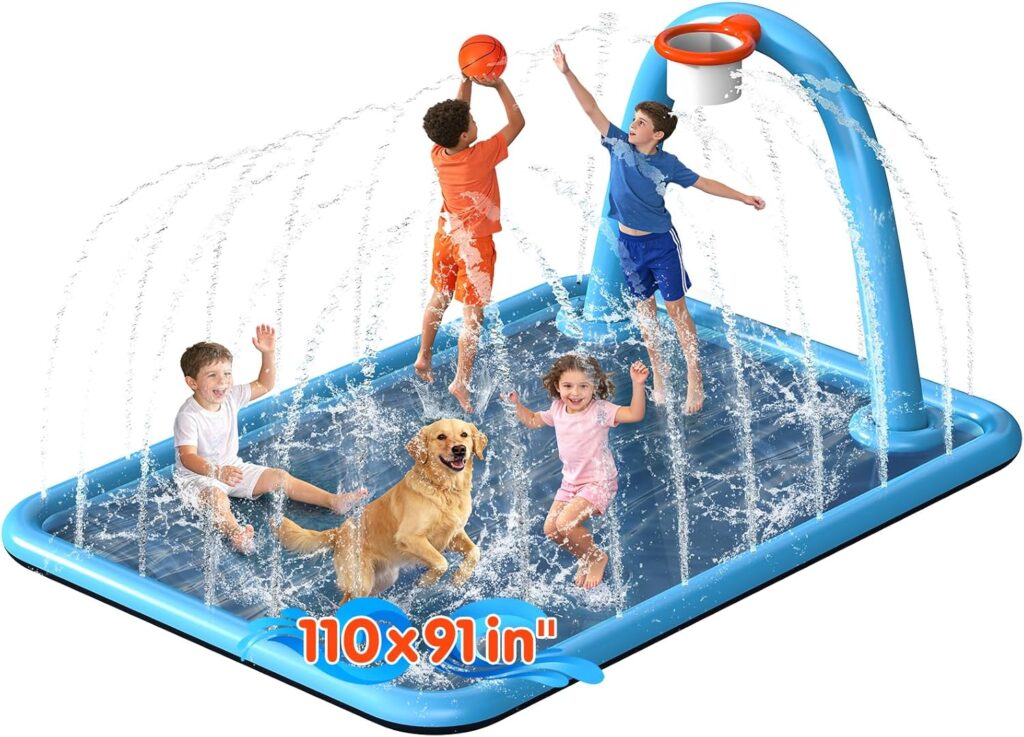
American Epsilon Inc. also supports a wider range of PVC and composite products, including kids splash pads, pet splash pads, basketball splash pads, inflatable pools, children’s pools, pet pools, water slides, splash arches, floating products, snow tubes, pool pillows, and other seasonal outdoor products.
For business customers, the advantage is not only one item. It is the full development and delivery system: R&D, design, material matching, mold support, packaging, testing, production, and multi-market shipment coordination. EPN can help customers test a product concept, adjust details, prepare packaging, and move toward seasonal sales with more confidence.
To order EPN kids splash pads or request a custom splash pad quote, contact Epsilon with your target market, size needs, order quantity, packaging direction, compliance requirements, and delivery timeline. The team can help recommend a suitable product structure and development path for summer sales.
A good kids splash pad does more than spray water. It helps families create easy summer routines. That is the kind of product worth building, selling, and using again.