Skip to content
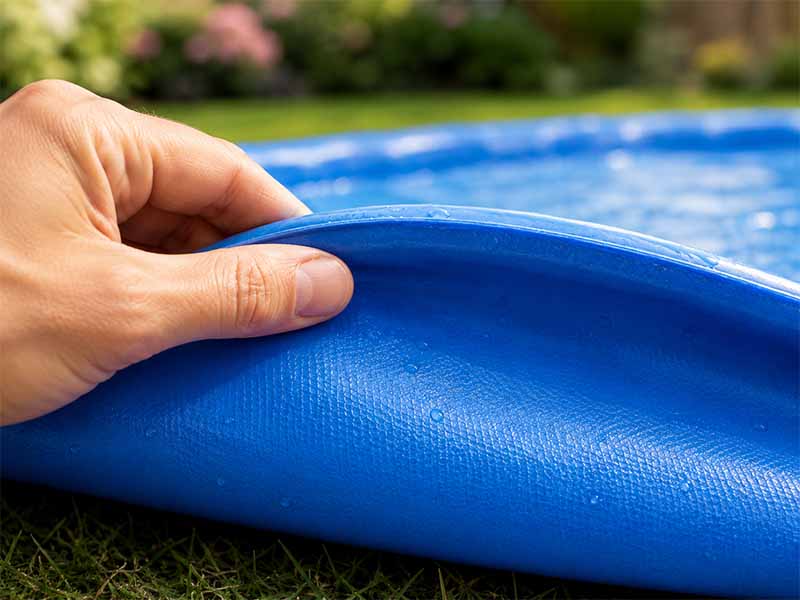
A dog pool may look like a simple backyard item, but durability becomes clear only after real use starts. Dogs do not step into water gently every time. They run in, turn quickly, press against the wall, scratch at moving water, and push down on the edge when climbing out. Add water weight, sunlight, grass, concrete, folding, drying, and storage, and the pool needs to handle far more than a calm product photo can show.
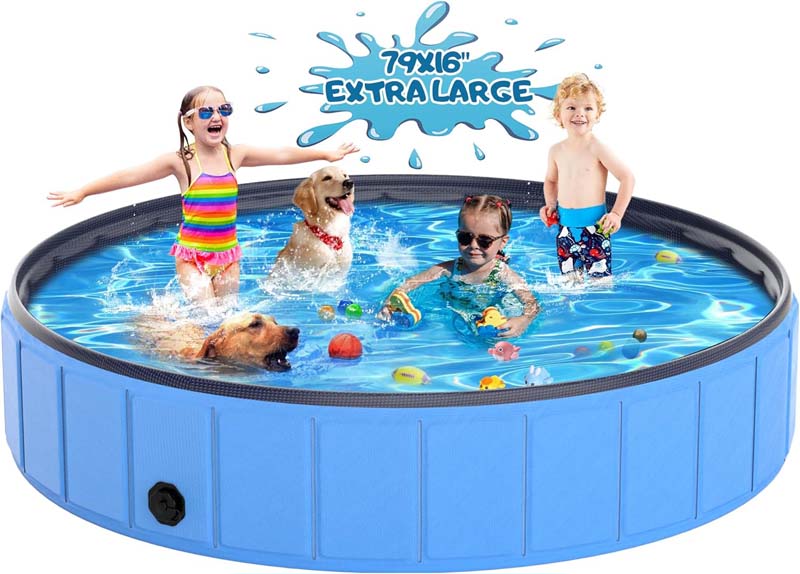
A durable dog pool is built with thickened PVC, stable wall support, reinforced seams, a textured bottom, and a drain plug that seals securely after repeated use. For active dogs, PVC around 0.50–0.55 mm, PP support panels, clean seam bonding, and a non-slip base can help reduce early leaks, wall collapse, bottom wear, and slipping during summer play.
Many pet owners only notice durability details after the first weak pool fails. The bottom becomes slick. The wall bends. A corner starts to leak. The drain plug drips. The pool becomes hard to clean or fold. A stronger dog pool avoids these problems by treating durability as a full structure, not a single material claim. That is the difference between a pool that survives one weekend and one that becomes part of a reliable summer routine.
What Is a Durable Dog Pool?
A durable dog pool is a pet water pool designed to handle water weight, paw pressure, claw movement, outdoor heat, draining, folding, and repeated setup. It should stay stable when filled, feel secure under a dog’s paws, resist early leaks, and remain practical for daily backyard use through the summer season.
Durable Dog Pool Meaning
A durable dog pool is not just a plastic container that holds water. It is a pool built around how dogs actually move. Many dogs enter quickly, stand with concentrated paw pressure, turn in tight circles, paw at moving water, and push down on the edge when climbing out. These movements place stress on the bottom, wall, seams, fold lines, and drain area.
For dog owners, durability usually means the pool does not leak after a few uses, the wall does not collapse when a dog leans on it, the bottom does not become dangerously slippery, and the pool can be drained, dried, folded, and stored without damage.
A stronger dog pool works as a connected system. The PVC surface protects against water and abrasion. The support panel helps the wall stay upright. The bottom texture improves paw grip. The seam bonding keeps water inside. The drain plug helps owners empty the pool without dragging or flipping it while full.
| Durable Area | What It Must Handle | What Owners Should Look For |
|---|---|---|
| Bottom | Paw friction, nails, ground contact | Textured thickened PVC |
| Sidewall | Leaning, stepping, water pressure | PVC with PP panel support |
| Seams | Water tension, folding, side pressure | Wide and clean bonded seams |
| Drain plug | Opening, closing, water load | Tight seal and reinforced outlet |
| Fold lines | Repeated storage | Planned folds without sharp creases |
A pool may look strong when empty, but real durability appears after water, sunlight, dog movement, cleanup, and storage happen again and again.
Durable Dog Pool Value
A durable dog pool gives pet owners a reliable way to help dogs cool down, rinse off dirt, and enjoy outdoor play. It can be used after walks, after muddy yard time, during hot afternoons, or as a simple bathing space. When the pool works well, it becomes part of the household routine instead of a one-time summer toy.
Use frequency makes durability easier to understand. A family using a dog pool 4 times per week for 10 summer weeks creates about 40 setup cycles in one season. Each cycle includes filling, splashing, draining, rinsing, drying, folding, and storage. If two dogs use the same pool, paw movement and wall contact can increase quickly.
Water weight also matters. Water weighs about 8.34 lb per gallon. A dog pool holding 40 gallons carries over 330 lb of water before the dog steps in. Add a 60–80 lb dog turning, standing, or leaning inside the pool, and the wall, bottom, and seams are under real stress.
For brands and retailers, durability also affects reputation. A pool that leaks early can lead to complaints, returns, and poor reviews. A pool that feels stable, drains easily, and lasts through repeated use gives customers more confidence in the brand.
Durable Dog Pool Structure
A durable dog pool should balance strength and convenience. If the pool is too soft, the sidewall may collapse when filled. If it is too rigid, it may become difficult to fold and may develop stress at the corners. A well-built foldable dog pool needs enough support to stay upright and enough flexibility to store without damage.
For active pet use, PVC around 0.50–0.55 mm is a stronger direction than thin seasonal plastic. This thickness helps improve resistance against paw movement, light scratching, and ground abrasion. However, thickness alone does not make a pool durable. A thick pool with weak seams, poor wall panels, or a loose drain plug can still fail early.
A stronger structure depends on how each part works together. The PVC surface needs enough thickness to resist water, claws, and outdoor wear. The wall support should keep the pool stable when dogs lean, step, or turn. The bottom texture should help paws grip the wet surface, while reinforced seams and a reliable drain plug reduce the chance of early leaks. When these details are designed together, the pool feels stronger in daily use instead of relying on one single material claim.
EPN develops PVC and composite products across dog pools, pet splash pads, kids splash pads, inflatable pools, water toys, and seasonal outdoor items. That product background helps EPN look at durability from several angles: material thickness, heat-bonded seams, support panels, non-slip texture, drain sealing, UV exposure, folding fatigue, and repeated water pressure.
If material choice is the main concern, What Material Is Best for a Splash Pad gives another helpful look at PVC performance in backyard water products.
Which Durable Dog Pool Material?
A durable dog pool material should be waterproof, flexible, abrasion-resistant, and strong enough to handle repeated paw movement. Thickened PVC is a strong choice for foldable dog pools because it balances water resistance, outdoor use, and easy storage. For better wall stability, PVC combined with PP support panels can help the pool keep its shape when dogs step, turn, or lean against the side.

PVC is one of the most practical materials for a durable dog pool because it can handle water contact, folding, outdoor use, and repeated cleaning. A dog pool is filled, drained, dried, folded, and reopened many times during one summer. The material has to stay flexible enough for storage but strong enough to resist paw friction and ground contact.
For pet use, PVC should not feel too thin or too stiff. Thin plastic may be lighter and cheaper, but it often wears faster on the bottom and may bend too easily at the wall. Overly rigid material may look strong at first, but it can become harder to fold and may create stress around corners or fold lines.
A better PVC dog pool should feel firm when opened, smooth enough for easy cleaning, and flexible enough to fold without deep cracking. It also needs stable bonding performance because the seams, drain area, and wall panels all depend on how well the material works during production.
For EPN dog pool development, PVC is selected based on real pet use rather than appearance alone. The material needs to support water resistance, lower odor, abrasion resistance, folding performance, and outdoor stability. A dog pool is not used in a controlled indoor room. It sits on grass, patios, decks, and sometimes slightly uneven backyard surfaces.
Durable Dog Pool Thickness
Thickness is one of the first details customers notice, but it should be understood correctly. A thicker PVC layer usually gives better resistance against paw movement, nails, and bottom abrasion. For active dogs, PVC around 0.50–0.55 mm is a stronger direction than thin seasonal plastic, especially for the bottom and sidewall areas.
However, thickness alone does not make a pool durable. A 0.55 mm PVC pool can still fail early if the seam bonding is weak, the drain plug is loose, or the wall has poor support. A good dog pool uses thickness as one part of a complete structure.
| PVC Thickness Direction | Better For | Possible Weakness |
|---|---|---|
| Under 0.35 mm | Light, short-term use | Easier to wear, bend, or puncture |
| Around 0.40–0.45 mm | Small dogs, occasional backyard use | May not be enough for active large dogs |
| Around 0.50–0.55 mm | Medium and large dogs, repeated summer use | Needs good folding and seam design |
| Above 0.60 mm | Heavy-duty positioning | Heavier, harder to fold, higher cost |
For most family dog pool use, the best material choice is not always the thickest option. It is the option that balances thickness, flexibility, support, and easy storage. A dog owner should be able to open the pool quickly, fill it safely, drain it without dragging, and fold it without fighting the material.
For brands and retailers, the right thickness range depends on dog size, pool size, target price, expected use frequency, packaging size, and shipping cost. A pool that is too thin may lead to complaints. A pool that is too heavy may feel inconvenient. The best material choice should match both the pet-use scene and the sales channel.
Durable Dog Pool Core
The inner support core is one of the most important details in a foldable dog pool. Many stronger dog pools use PP support panels inside the wall. These panels help the sidewall stand upright after water is added and reduce the chance of the wall folding inward when a dog leans on it.
PVC provides the waterproof and wear-resistant surface, while PP panels provide shape support. This combination works well because dogs create both surface wear and side pressure. When a dog steps into the pool, the bottom takes friction. When the dog turns or climbs out, the wall takes pressure. A PVC-only wall may feel soft if the dog is active or heavy.
The support core should be strong, but not harsh. If the panel is too weak, the wall may collapse. If the panel is too rigid or poorly fitted, it may create sharp stress points inside the PVC. A better structure uses the right panel stiffness, clean panel spacing, and planned fold lines so the pool can stay stable when open and still fold neatly after use.
For larger dog pools, the support core becomes even more important. Water weighs about 8.34 lb per gallon. A pool holding 50 gallons of water carries more than 400 lb of water before the dog even steps inside. When a 60–80 lb dog moves against one side, the wall and seam area need real support.
Durable Dog Pool Material Match
The best durable dog pool material depends on dog size, activity level, and use environment. A small dog that mainly sits and cools down does not create the same stress as a large dog that jumps in and turns quickly. A pool used once a week on soft grass has different material needs from a pool used daily on a patio.
| Use Scenario | Material Priority | Better Material Direction |
|---|---|---|
| Small dog cooling | Easy entry and light structure | Flexible PVC with stable bottom grip |
| Medium dog play | Paw friction and wall support | Thickened PVC with PP panels |
| Large dog use | Side pressure and bottom wear | 0.50–0.55 mm PVC with reinforced structure |
| Multiple dogs | More movement and repeated stress | Stronger wall support and wider seams |
| Patio or deck use | Underside abrasion | Thicker bottom and clean setup guidance |
| Frequent summer use | Folding and drainage cycles | Flexible PVC, reliable drain, planned folds |
Customers often ask, “How thick is it?” A better question is, “Can the material, wall, bottom, drain, and seams handle my dog’s real behavior?”
EPN develops dog pool materials around that full-use question. With experience in PVC and composite products, EPN can adjust material thickness, surface feel, wall support, color direction, packaging, and structure for different markets. For branded EPN products and OEM/ODM projects, this makes it easier to match the pool to the customer’s dog size, sales channel, retail price point, and expected durability level.
How Durable Dog Pool Walls Hold?
Durable dog pool walls hold through a combination of panel support, seam bonding, wall height, edge flexibility, and water-pressure control. A strong wall should stay upright when the pool is filled, resist leaning pressure from dogs, and return to shape after normal stepping or climbing. If the wall bends too easily, the pool may spill water, stress the seams, or feel unstable during play.
Durable Dog Pool Seams
Seams are one of the first places to check when judging dog pool wall strength. The wall and base are constantly pulled in different directions once the pool is filled. Water pushes the wall outward, the bottom carries downward weight, and dogs add sudden pressure when they step, turn, or lean against one side.
A durable dog pool needs clean, wide, and consistent seam bonding. A narrow or uneven seam may look acceptable when the pool is empty, but it can become weak after repeated filling, draining, folding, and outdoor exposure. The risk becomes higher around corners and fold lines, where pressure is concentrated.
Water weight also explains why seam strength matters. Water weighs about 8.34 lb per gallon. A pool holding 40 gallons already carries about 334 lb of water before the dog enters. When a 60–80 lb dog presses against the wall, the seam must handle both water load and side pressure.
| Wall Area | Stress Source | Better Wall Detail |
|---|---|---|
| Bottom seam | Water weight and paw pressure | Wider bonded contact area |
| Side seam | Leaning and turning pressure | Clean alignment and stable bonding |
| Corner seam | Folding and water tension | Reinforced corner control |
| Drain-side seam | Water pull and plug movement | Strong sealing area near the outlet |
Wall strength should not be judged only by how tall the pool looks. A durable wall needs seam control, panel support, and resistance to repeated side pressure.
Durable Dog Pool Edges
The top edge of a dog pool takes more pressure than many owners expect. Dogs often press down on the edge when stepping in or climbing out. Larger dogs may place both front paws on the wall, push down with body weight, or lean against the rim while playing. If the edge is too soft, the wall may fold inward. If it is too stiff, it may create uncomfortable contact or sharper stress around the panel.
A better edge should bend slightly under normal pressure, then return to shape. This controlled flexibility helps the pool stay comfortable for dogs while reducing sudden wall collapse. The edge also helps keep water inside when dogs move quickly.
Edge stability is especially important for older dogs, puppies, and nervous dogs. If the wall feels unstable, they may hesitate to enter or may jump out too quickly. A stable edge gives dogs a more secure entry point and helps owners use the pool with less worry.
For EPN, edge design is linked with PVC thickness, PP panel support, seam width, and fold layout. These details work together to make the wall feel stable without making the pool difficult to fold and store.

Support panels decide whether a foldable dog pool wall can stand upright during real use. Many stronger foldable dog pools use PP support panels inside the wall. The PVC surface provides waterproof protection, while the panel gives the wall shape and support.
Panel strength matters most when dogs lean, turn, or climb out. A small dog may create light pressure, but a medium or large dog can push hard against one wall. Without enough support, the wall may bow outward, sag inward, or lose its original shape after repeated use.
Panel design also affects storage. Panels that are too weak may not hold the pool shape. Panels that are too rigid may make the pool hard to fold and may create stress near the fold lines. A durable dog pool needs a balanced panel structure: strong enough to support water and paw pressure, but flexible enough for normal folding.
| Dog Size | Wall Pressure Level | Panel Support Need |
|---|---|---|
| Under 25 lb | Low | Basic wall support |
| 25–60 lb | Medium | Stronger PP panel support |
| Over 60 lb | High | Thickened wall and stable panel layout |
| Multiple dogs | Higher repeated stress | Wider support and stronger seam control |
A wall that stands straight when empty is not enough. It should still feel stable when water, movement, and repeated use are added.
Durable Dog Pool Stress Points
Dog pool walls do not fail evenly. Weakness often starts in specific stress points: corners, fold lines, seam edges, drain-side panels, and the upper rim where dogs climb in and out. These areas take repeated pressure every time the pool is used.
Corners carry both water tension and folding pressure. Fold lines bend during storage. The upper rim takes downward pressure from dogs stepping over it. The drain-side wall may experience pulling when the plug is opened or when water flows out quickly. If these areas are not designed well, early bending or leaking can appear even when the main wall material still looks fine.
A strong wall structure should control these stress points before they become problems. That means using suitable PVC thickness, stable PP panels, clean seam bonding, planned fold lines, and reinforced drain placement.
For more detail on why water products fail at seams or edges, Why Some Splash Pads Leak Easily gives useful background that also applies to dog pool construction.
Which Durable Dog Pool Bottom?
A durable dog pool bottom should be thick enough to resist paw friction, textured enough to reduce slipping, and strong enough to handle ground contact during repeated outdoor use. The bottom carries water weight, dog weight, claw movement, and surface abrasion at the same time. For active dogs, a textured PVC bottom with good thickness and a clean setup surface can make a major difference in long-term durability.
Durable Dog Pool Grip
Grip is one of the most important details on a dog pool bottom. When the bottom becomes slippery, dogs may spread their paws, scratch harder, or jump out quickly. That sudden movement does not only affect safety. It also increases wear on the pool surface because claws press and scrape against the same area with more force.
A good durable dog pool bottom should give dogs a steady feeling under their paws. The texture does not need to be rough or uncomfortable. It should create enough friction to help dogs stand, turn, sit, and move without sliding across the wet surface. This matters more for puppies, senior dogs, short-legged breeds, and large dogs with heavier body weight.
A smooth bottom may look clean in product photos, but it can become less practical once water, dog hair, soap residue, mud, or grass particles are added. In real backyard use, the pool bottom is rarely perfectly clean for long.
A bottom with better grip helps dogs feel more stable from the moment they step into the pool. It can reduce sudden paw sliding, lower panic scratching, and make turning easier for heavier dogs. For senior dogs or first-time users, a steadier surface also makes the pool feel less intimidating, which often leads to calmer movement and less damage to the bottom surface.
Durable Dog Pool Wear
The bottom of a dog pool wears from both sides. The top side faces paws, nails, water movement, dirt, and repeated turning. The underside faces grass, patio surfaces, deck boards, concrete, small stones, and hidden debris. This is why bottom durability is not only about the visible surface.
Use frequency makes the difference very clear. A family using a dog pool 4 times per week for 10 summer weeks creates about 40 setup cycles in one season. If the pool is used by two dogs, the number of paw turns, scratches, and stepping movements may be much higher. A weak bottom may survive one or two play sessions, but repeated movement exposes material weakness quickly.
Dog weight also matters. A 20 lb dog and an 80 lb dog do not create the same pressure. When a large dog stands on one paw while turning, the pressure is concentrated in a small area. If the bottom material is thin or too soft, that repeated pressure can lead to surface wear, small dents, or puncture risk.
| Use Condition | Bottom Stress Level | Better Bottom Detail |
|---|---|---|
| Small dog cooling | Low | Light texture and easy cleaning |
| Medium dog play | Medium | Thicker PVC with stable grip |
| Large dog turning | High | Reinforced bottom and stronger surface |
| Multiple dogs | High repeated stress | Better abrasion resistance |
| Patio or deck use | Medium to high | Ground mat or thicker underside |
| Concrete use | High abrasion risk | Avoid dragging and add protection |
A durable bottom should be designed for repeated use, not just first-time setup.
Durable Dog Pool Ground
The ground under the pool has a direct effect on how long the bottom lasts. Grass is usually the friendliest surface, but it can hide small stones, roots, or broken branches. Concrete is flat and stable, but it can scrape the underside if the pool is dragged. Wooden decks look clean, but rough boards, gaps, or screw heads may create pressure points.
Before filling the pool, owners should check the surface carefully. Small debris that feels harmless by hand can become a problem once the pool is filled with water and the dog steps inside. Water weight presses the bottom down, and dog movement adds extra friction.
Water weighs about 8.34 lb per gallon. A pool holding 40 gallons carries about 334 lb of water before the dog enters. If an active 60 lb dog jumps in, the bottom is pressed between the dog, the water, and the ground surface. A clean setup area is not only a care habit. It directly protects the pool structure.
A ground mat can be useful when the pool is placed on concrete, rough decking, or uneven yard surfaces. It adds a protective layer between the pool and the ground, reducing underside abrasion and helping the pool sit flatter.
For more ground setup guidance, Can You Use a Splash Pad on Grass covers similar surface-preparation logic for backyard water play.
Durable Dog Pool Cleaning
Cleaning also affects bottom life. Mud, sand, small stones, dog hair, and soap residue can increase surface friction or make the bottom slippery. After use, the pool should be drained, rinsed, and allowed to dry before folding. This helps reduce odor, sticking, and hidden debris that may scratch the PVC during storage.
Owners should avoid harsh brushes or sharp cleaning tools on the bottom. A soft cloth, gentle rinse, and mild cleaning method are usually enough for daily care. If the dog pool is used after muddy play, rinsing it soon after use helps prevent dirt from drying into the texture.
A drain plug makes cleaning easier because owners do not need to flip or drag the pool while full. This protects the bottom from unnecessary scraping. For larger pools, drainage becomes especially important because the water weight can be too heavy to handle safely by lifting.
Clear cleaning guidance can make the product feel more useful. Many customers do not want a pool that requires complicated care. They want something they can fill, use, drain, rinse, dry, and fold without stress. EPN supports packaging and instruction design that helps customers understand these steps quickly.
How Durable Dog Pool Leaks Start?
Durable dog pool leaks usually start at repeated stress points instead of the whole pool surface. The most common areas are seams, corners, fold lines, drain plug zones, and the bottom where paws and ground friction meet. Leaks often begin as small moisture marks or slow water loss before becoming visible damage.
Durable Dog Pool Leak Points
Most dog pool leaks do not appear randomly. They usually begin where pressure repeats again and again. The corner may bend every time the pool is folded. The drain plug may be opened after every use. The bottom may rub against grass, deck boards, or concrete. The sidewall seam may stretch each time water pushes outward.
A small leak often starts before the owner can clearly see it. The first sign may be a lower water level after one hour, a damp spot under one edge, or a soft area near a corner. If the pool is placed on uneven ground, the leak may be harder to notice because water can spread into grass or soil.
| Leak Area | Why It Fails First | What Helps Reduce Risk |
|---|---|---|
| Corners | Folding pressure and water tension meet | Clean fold design and reinforced corner control |
| Bottom seam | Water weight pushes downward and outward | Wider bonded seam area |
| Drain plug zone | Repeated opening, closing, and pulling | Tight seal and reinforced outlet area |
| Fold lines | Repeated bending during storage | Flexible PVC and planned fold spacing |
| Bottom surface | Paw movement and ground friction | Textured thickened PVC and clean setup ground |
A durable dog pool should be designed around these weak points before the problem appears. Strong material helps, but leak control depends on how well each stress area is built.

The drain plug is one of the most useful features in a dog pool, but it is also a common leak-risk area if it is not built correctly. Owners open and close the drain often, especially during summer use. Each time the plug is pulled, twisted, or pressed back into place, the surrounding material takes stress.
A good drain should empty the pool without forcing the owner to flip or drag it. This matters because lifting or dragging a water-filled pool can stretch seams, bend panels, and scrape the bottom. A low-position or side-position drain can make cleanup easier and protect the pool from unnecessary handling.
The drain area needs strong sealing. A loose plug may cause slow dripping. A thin outlet area may deform after repeated use. If the drain sits where dogs step frequently, it can wear faster. The best design keeps the drain easy to reach, tight after closing, and supported by enough material around the outlet.
| Drain Issue | Customer Problem | Better Design Direction |
|---|---|---|
| Loose plug | Slow water loss | Tighter sealing structure |
| Weak outlet area | Cracking or deformation | Reinforced PVC around drain |
| Poor placement | Hard draining or dog stepping | Practical side or low-position drain |
| Forced pulling | Material stress | Smooth open-close experience |
| Water left inside | Hard cleaning | Better drainage angle |
A drain should make the pool easier to use, not become the first place where it fails.
Durable Dog Pool Fold Lines
Fold lines are convenient, but they are also natural stress points. A foldable dog pool is opened, filled, drained, dried, folded, and stored many times. If the fold line is too sharp or the panel spacing is poorly designed, the material may weaken over time.
Leak problems around fold lines often come from repeated bending rather than one dramatic tear. The PVC may first show whitening, deep creasing, or a small surface crack. If water pressure keeps pushing against that area, the crack can slowly become a leak.
A durable fold structure should guide the pool into natural folding positions. The panels should help the pool close neatly without forcing the material into random creases. The owner should not need to press hard, twist the wall, or fold across the drain plug.
Drying before storage also helps protect fold lines. Folding a wet pool can trap moisture, dirt, and small debris inside the crease. Over time, that can increase odor, sticking, and surface wear. Clear storage instructions can help customers keep the product in better condition after each use.
Durable Dog Pool Pressure
Water pressure is one reason small weak points become leaks. A pool does not need to be deep to carry a heavy load. Even moderate water volume creates strong outward and downward force.
| Water Volume | Approximate Water Weight | Leak Risk Area |
|---|---|---|
| 20 gallons | 167 lb | Bottom seam and small fold points |
| 40 gallons | 334 lb | Sidewall seams and corners |
| 60 gallons | 500 lb | Drain area and wall support |
| 80 gallons | 667 lb | Panel structure and bottom surface |
| 100 gallons | 834 lb | Full wall and seam system |
When a dog enters the pool, the load changes. A 60–80 lb dog standing on one paw while turning can create concentrated pressure in a very small area. That pressure can push the bottom into the ground or pull the sidewall seam at an angle.
A durable dog pool should be built for this kind of uneven pressure. The structure needs to handle more than still water. It needs to handle moving water, moving paws, and repeated use during the hottest weeks of the year.
What Durable Dog Pool Should Customers Choose?
Customers should choose a durable dog pool based on dog size, activity level, backyard surface, use frequency, drainage needs, storage habits, and test reliability. The best choice is not always the largest or thickest pool. A good pool should give the dog enough room to stand and turn, stay stable when filled, drain without heavy lifting, and fold without damaging the wall or seams.
Durable Dog Pool Size
Size is one of the first choices, but it is also one of the easiest to get wrong. A pool that is too small may force the dog to turn sharply, step on the wall, or scratch the same bottom area again and again. A pool that is too large may hold too much water, take longer to drain, and become harder for one person to move or clean.
For small dogs, the main goal is easy entry, light cooling, and simple rinsing. For medium dogs, the pool should offer enough space for standing, sitting, and turning without constant wall pressure. For large dogs, wall support, bottom strength, and drain design become more important because each movement creates more pressure on the structure.
| Dog Size | Common Pool Use | Better Choice |
|---|---|---|
| Under 25 lb | Cooling, paw rinse, light bathing | Lower wall, easy entry, light structure |
| 25–60 lb | Standing, turning, splashing | Stable wall, textured bottom, medium size |
| Over 60 lb | Heavy paw pressure, leaning, active play | Thickened PVC, PP support, reinforced seams |
| Two dogs or more | Shared play, more movement | Wider pool, stronger wall, faster drain |
| Senior dogs | Gentle cooling, slow entry | Low entry height, non-slip bottom, stable edge |
A durable dog pool should fit the dog’s body and behavior, not only the product photo.
Durable Dog Pool Use
Use frequency changes what kind of pool makes sense. A dog pool used once or twice a month does not face the same stress as one used several times per week during hot weather. If a family uses the pool 4 times per week for 10 summer weeks, that creates about 40 setup cycles in one season. Each cycle includes filling, dog movement, draining, rinsing, drying, and folding.
Active dogs also create more wear than calm dogs. A dog that quietly stands in the pool after a walk puts less stress on the bottom than a dog that jumps in, digs at the water, and spins around. Multiple dogs increase the pressure even further because wall contact, paw friction, and water movement happen more often.
For frequent summer use, the better choice is a dog pool with thickened PVC, PP panel support, a textured bottom, reinforced seams, and a drain plug that can seal tightly after repeated use. Around 0.50–0.55 mm PVC is a stronger direction for active dogs, but the full structure still matters more than thickness alone. A pool used several times a week should also be easy to drain, dry, and fold, because poor handling after use can shorten the product’s life just as much as weak material.
For more long-term selection logic, How to Choose a Splash Pad That Lasts More Than One Summer offers a useful comparison point for repeat-use outdoor water products.

The drain plug is one of the most useful features in a dog pool, but it is also a common leak-risk area if it is not built correctly. Owners open and close the drain often, especially during summer use. Each time the plug is pulled, twisted, or pressed back into place, the surrounding material takes stress.
A good drain should empty the pool without forcing the owner to flip or drag it. This matters because lifting or dragging a water-filled pool can stretch seams, bend panels, and scrape the bottom. A low-position or side-position drain can make cleanup easier and protect the pool from unnecessary handling.
The drain area needs strong sealing. A loose plug may cause slow dripping. A thin outlet area may deform after repeated use. If the drain sits where dogs step frequently, it can wear faster. The best design keeps the drain easy to reach, tight after closing, and supported by enough material around the outlet.
| Drain Issue | Customer Problem | Better Design Direction |
|---|---|---|
| Loose plug | Slow water loss | Tighter sealing structure |
| Weak outlet area | Cracking or deformation | Reinforced PVC around drain |
| Poor placement | Hard draining or dog stepping | Practical side or low-position drain |
| Forced pulling | Material stress | Smooth open-close experience |
| Water left inside | Hard cleaning | Better drainage angle |
A drain should make the pool easier to use, not become the first place where it fails.
Durable Dog Pool Fold Lines
Fold lines are convenient, but they are also natural stress points. A foldable dog pool is opened, filled, drained, dried, folded, and stored many times. If the fold line is too sharp or the panel spacing is poorly designed, the material may weaken over time.
Leak problems around fold lines often come from repeated bending rather than one dramatic tear. The PVC may first show whitening, deep creasing, or a small surface crack. If water pressure keeps pushing against that area, the crack can slowly become a leak.
A durable fold structure should guide the pool into natural folding positions. The panels should help the pool close neatly without forcing the material into random creases. The owner should not need to press hard, twist the wall, or fold across the drain plug.
Drying before storage also helps protect fold lines. Folding a wet pool can trap moisture, dirt, and small debris inside the crease. Over time, that can increase odor, sticking, and surface wear. Clear storage instructions can help customers keep the product in better condition after each use.
Durable Dog Pool Pressure
Water pressure is one reason small weak points become leaks. A pool does not need to be deep to carry a heavy load. Even moderate water volume creates strong outward and downward force.
| Water Volume | Approximate Water Weight | Leak Risk Area |
|---|---|---|
| 20 gallons | 167 lb | Bottom seam and small fold points |
| 40 gallons | 334 lb | Sidewall seams and corners |
| 60 gallons | 500 lb | Drain area and wall support |
| 80 gallons | 667 lb | Panel structure and bottom surface |
| 100 gallons | 834 lb | Full wall and seam system |
When a dog enters the pool, the load changes. A 60–80 lb dog standing on one paw while turning can create concentrated pressure in a very small area. That pressure can push the bottom into the ground or pull the sidewall seam at an angle.
A durable dog pool should be built for this kind of uneven pressure. The structure needs to handle more than still water. It needs to handle moving water, moving paws, and repeated use during the hottest weeks of the year.
What Durable Dog Pool Should Customers Choose?
Customers should choose a durable dog pool based on dog size, activity level, backyard surface, use frequency, drainage needs, storage habits, and test reliability. The best choice is not always the largest or thickest pool. A good pool should give the dog enough room to stand and turn, stay stable when filled, drain without heavy lifting, and fold without damaging the wall or seams.
Durable Dog Pool Size
Size is one of the first choices, but it is also one of the easiest to get wrong. A pool that is too small may force the dog to turn sharply, step on the wall, or scratch the same bottom area again and again. A pool that is too large may hold too much water, take longer to drain, and become harder for one person to move or clean.
For small dogs, the main goal is easy entry, light cooling, and simple rinsing. For medium dogs, the pool should offer enough space for standing, sitting, and turning without constant wall pressure. For large dogs, wall support, bottom strength, and drain design become more important because each movement creates more pressure on the structure.
| Dog Size | Common Pool Use | Better Choice |
|---|---|---|
| Under 25 lb | Cooling, paw rinse, light bathing | Lower wall, easy entry, light structure |
| 25–60 lb | Standing, turning, splashing | Stable wall, textured bottom, medium size |
| Over 60 lb | Heavy paw pressure, leaning, active play | Thickened PVC, PP support, reinforced seams |
| Two dogs or more | Shared play, more movement | Wider pool, stronger wall, faster drain |
| Senior dogs | Gentle cooling, slow entry | Low entry height, non-slip bottom, stable edge |
A durable dog pool should fit the dog’s body and behavior, not only the product photo.
Durable Dog Pool Use
Use frequency changes what kind of pool makes sense. A dog pool used once or twice a month does not face the same stress as one used several times per week during hot weather. If a family uses the pool 4 times per week for 10 summer weeks, that creates about 40 setup cycles in one season. Each cycle includes filling, dog movement, draining, rinsing, drying, and folding.
Active dogs also create more wear than calm dogs. A dog that quietly stands in the pool after a walk puts less stress on the bottom than a dog that jumps in, digs at the water, and spins around. Multiple dogs increase the pressure even further because wall contact, paw friction, and water movement happen more often.
For frequent summer use, the better choice is a dog pool with thickened PVC, PP panel support, a textured bottom, reinforced seams, and a drain plug that can seal tightly after repeated use. Around 0.50–0.55 mm PVC is a stronger direction for active dogs, but the full structure still matters more than thickness alone. A pool used several times a week should also be easy to drain, dry, and fold, because poor handling after use can shorten the product’s life just as much as weak material.
For more long-term selection logic, How to Choose a Splash Pad That Lasts More Than One Summer offers a useful comparison point for repeat-use outdoor water products.

EPN’s testing approach focuses on how products perform after repeated use. For PVC and composite products, the company can evaluate water pressure stability, leak resistance, folding fatigue, UV exposure, high-temperature aging, low-temperature performance for related seasonal products, and surface wear.
For dog pools, practical testing can include claw-wear simulation, long-time water holding, seam checks, drain sealing, and base abrasion review. These tests help answer practical customer concerns: whether the pool leaks near the seams or drain, whether the bottom becomes slippery, whether the wall keeps its shape after repeated use, whether the material resists daily paw movement, and whether the pool still folds correctly after one season.
EPN has 27 R&D personnel and 18+ designers supporting material development, structure design, pet behavior adaptation, product appearance, packaging, and multilingual localization. The company completes 1500+ new design projects each year and can launch 1000+ new products annually across related categories. This allows EPN to support both ready-style products and custom development with stronger speed and structure control.
EPN Durable Dog Pool Customization
EPN supports OEM and ODM dog pool projects for brands, retailers, distributors, e-commerce sellers, and seasonal product programs. Custom options can include size, color, print pattern, PVC thickness direction, wall structure, drain plug design, packaging, labels, instruction sheets, barcode labels, and platform-ready carton information.
Different markets may need different product directions. Some customers want compact bathing pools for small dogs. Some need large foldable pools for bigger breeds. Some want a softer family-style design for independent sites. Some need stronger retail packaging for offline stores. Some want low MOQ testing before scaling into larger seasonal orders.
EPN’s supply chain covers material coordination, PVC and composite processing, accessory manufacturing, packaging printing, finished product inspection, and shipment support. Regular projects can support fast sampling, while production timing depends on product size, structure, packaging requirements, order scale, and customization level.
Durable Dog Pool FAQ
What Makes a Dog Pool Durable?
A dog pool becomes durable when the material, wall support, seams, bottom texture, drain plug, and fold structure work together. Thickened PVC helps resist wear. PP support panels help the wall stay upright. A textured bottom improves paw grip. Reinforced seams and a reliable drain help reduce early leaks.
Which Durable Dog Pool Material Is Best?
Heavy-duty PVC is a strong choice for foldable dog pools because it is waterproof, flexible, and suitable for repeated outdoor use. For better support, PVC combined with PP panels can help the pool hold shape when dogs step, turn, or lean against the sidewall.
How Thick Should a Durable Dog Pool Be?
For active dogs, PVC around 0.50–0.55 mm is a stronger direction than thin seasonal plastic. This thickness range helps improve abrasion resistance and structure. However, thickness should be checked together with seam quality, wall support, drain design, and bottom texture.
Can Dog Claws Damage a Dog Pool?
Dog claws can damage weak pool material, especially when dogs scratch, dig, jump, or turn quickly. A durable dog pool should be designed to handle normal paw movement and light scratching. Trimmed nails, a textured bottom, and a clean setup surface can help extend pool life.
How Long Should a Durable Dog Pool Last?
Lifespan depends on material quality, dog size, use frequency, ground surface, sun exposure, and storage habits. A well-built dog pool used on clean flat ground, drained after use, dried before folding, and stored properly can last much longer than a thin pool used on rough surfaces or folded while wet.
Order EPN Durable Dog Pool
A durable dog pool should make summer easier for pet owners. It should give dogs a safe cooling space, help families enjoy outdoor time, and reduce the frustration that comes from leaking, slipping, collapsing, or difficult cleanup.
EPN offers durable dog pool products and supports OEM/ODM development for brands, retailers, distributors, Amazon sellers, independent-site operators, and seasonal product programs. Whether the project needs an EPN ready-style dog pool, a custom size, a different color direction, upgraded PVC thickness, stronger wall support, retail packaging, multilingual instructions, or private-label development, Epsilon can support product planning from material direction to finished shipment.
For branded product orders or custom dog pool inquiries, contact Epsilon with the target market, dog size range, preferred pool size, material needs, packaging requirements, order plan, and expected launch schedule. A stronger dog pool starts with better structure, and EPN can help turn that structure into a ready-to-sell product.