Skip to content
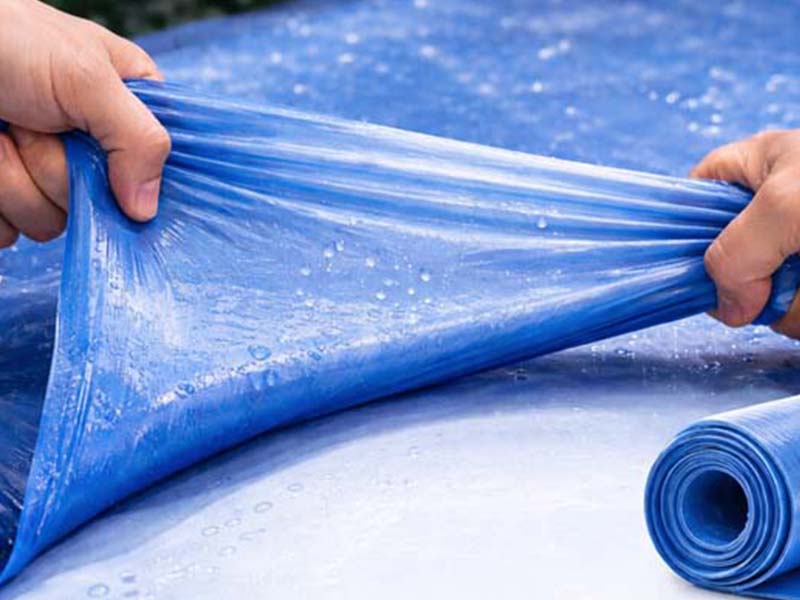
A dog pool may look like a simple container for water, but its material has to manage several kinds of pressure at the same time. Wet claws press into the floor, dogs rotate their paws while turning, and larger breeds often lean against the wall when entering or leaving. Underneath the pool, grass, concrete, roots, and small stones create another source of friction. Once the water is drained, the same material may be rinsed, dried, folded, carried, and stored dozens of times during a single summer.
For most households, reinforced foldable PVC is the best dog pool material because it balances claw resistance, wet traction, wall support, drainage, portability, and compact storage. Rigid plastic is better for frequent use in one permanent area, galvanized metal offers the highest puncture resistance, and inflatable vinyl is better reserved for calm dogs that do not dig, chew, or jump heavily.
The material name alone does not reveal how well a pool will perform. Two pools may both be described as PVC, yet one may have a thin floor and narrow seams while the other uses reinforced flooring, rigid wall panels, textured traction, and a protected drain.
Picture an excited Labrador entering from the same side every afternoon. Its front paws land near the lower wall, its body sends water outward, and its rear claws rotate against the floor as it turns. That one ordinary movement places pressure on the surface, seams, panels, and ground underneath. Choosing the right material starts with understanding how those parts work together.
What Dog Pool Material Types Exist?
Dog pools are mainly made from reinforced foldable PVC, molded rigid plastic, inflatable vinyl, or galvanized metal. Foldable PVC provides the best balance for households that need seasonal storage. Rigid plastic and metal withstand direct claw contact more easily but occupy more space. Inflatable vinyl stores compactly, although its air chambers are more vulnerable to punctures, chewing, and valve damage.
What Is PVC Dog Pool Material?
A foldable PVC dog pool is normally a composite structure rather than a single unsupported sheet. The visible waterproof layer is commonly PVC, while polypropylene or composite panels inside the sidewalls provide the stiffness needed to keep the pool upright.
Flexible joints between those panels allow the structure to fold. When the pool is opened and filled, the support panels maintain the wall shape while the weight of the water stabilizes the lower edge. No inflation pump is needed, and there are no air chambers that can slowly lose pressure during use.
That combination is practical for homes where a pool cannot stay outside throughout the season. The same pool can be used for backyard cooling, outdoor bathing, rinsing muddy paws, shallow play, or helping a nervous dog become more familiar with water. Once the interior and underside are dry, it can be folded and placed in a garage, shed, closet, or vehicle.
The floor may not use exactly the same construction as the walls. It receives concentrated paw pressure from above and continuous contact with the ground below, so floor reinforcement can matter more than a slightly thicker sidewall. The wall panels, meanwhile, have to resist leaning, bending, and repeated folding.
One EPN foldable pet pool specification uses 0.55 mm PVC with 5 mm polypropylene support panels. These measurements describe two different functions. The PVC manages waterproofing, paw contact, cleaning, and folding, while the thicker polypropylene panels support the walls.
A higher PVC thickness may improve scratch resistance, but it should not be treated as proof of overall quality. A moderately thick pool with a reinforced floor, even welds, and well-supported walls may last longer than a thicker pool with weak seams or a poorly attached drain.
The same construction principles apply to other flexible outdoor water products. A closer explanation of how thickness, reinforcement, and welded structure work together appears in What Material Is Best for a Splash Pad.
What Is Plastic Dog Pool Material?
Rigid dog pools are commonly molded from polyethylene, polypropylene, or another hard plastic. Their one-piece body does not depend on air chambers, folding joints, or internal wall boards.
This construction makes rigid plastic difficult to puncture during ordinary walking and turning. It also remains upright when a large dog leans against the side. Surface scratches may appear over time, especially when a dog digs, but those marks are less likely to become sudden leaks than they would in a thin flexible pool.
Cleaning is usually simple because the solid shell has fewer joints and folds. Mud, loose hair, grass, and shampoo can be rinsed away, and the surface can be brushed gently without having to work around multiple wall panels.
The main disadvantage is storage. A 60-inch rigid pool still needs a five-foot-wide area after the water is removed. Large models may be difficult to carry through side gates, garage doors, narrow walkways, or vehicle openings.
Entry height also deserves attention. A deep rigid pool may work well for an athletic Labrador but be difficult for a Dachshund, Corgi, puppy, senior dog, or dog with reduced hip movement. A strong wall is not useful when the dog has to jump every time it enters or leaves.
Rigid plastic is most suitable when the pool will remain in one location for much of the season. It becomes less convenient when the yard needs to be cleared after every session or when indoor winter storage is limited.
What Is Inflatable Dog Pool Material?
Inflatable dog pools are generally made from flexible PVC or vinyl divided into sealed air chambers. The air gives the walls their shape and creates a softer rim around the water.
Their main advantage is compact storage. Once deflated, an inflatable pool may fit into a much smaller area than rigid plastic or metal. The softer edge may also feel comfortable for a small dog that rests against the side.
The limitation is that wall stability depends on air pressure. A small puncture may soften one chamber, distort the pool, or allow a section of wall to fold inward. Valve damage and internal weld failure can cause similar problems even when the water-holding floor remains intact.
The lower chamber close to the floor often receives the most contact because paws land near the sidewall. The upper rim is also vulnerable when dogs place their front feet on it or try to bite it. Corners may weaken when the material is repeatedly compressed into tight folds.
Inflatable vinyl can work for a calm small dog that steps slowly into shallow water. It is less suitable for jumping, digging, chewing, rough play, or frequent use by several dogs.
Air pressure should be checked before each session. A wall that is too soft may collapse inward, while excessive inflation can place additional stress on the seams as outdoor heat expands the air.

Metal can work well for large dogs, active dogs, or households where the pool remains in one permanent outdoor position. The walls stay upright when a dog leans against them, and the surface is generally easy to rinse.
The same rigidity creates practical limitations. A large tank is heavy, maintains its full size when empty, and may require two people to move. Complete drainage can also be difficult when the outlet sits above the lowest point of the floor.
The rim and fittings need regular inspection. Damaged coating, rough edges, corrosion around a scratched area, or exposed hardware can create avoidable problems. Entry height is another concern because tall metal walls may be difficult for puppies, short-legged breeds, senior dogs, or dogs with joint limitations.
Metal also transfers heat more quickly than flexible PVC or molded plastic. A rim exposed to direct sunlight may become uncomfortable even while the water still feels cool. Partial shade and a quick hand check before use are sensible in hot weather.
| Dog Pool Material | Claw Resistance | Wall Structure | Storage After Use | Main Limitation | Best Fit |
|---|---|---|---|---|---|
| Reinforced foldable PVC | Good to very good during normal use | PVC surface with rigid internal panels | Folds into a smaller shape | Can be damaged by digging, chewing, or rough ground | Most homes and seasonal use |
| Molded rigid plastic | Very good | One-piece rigid shell | Keeps its full diameter | Requires permanent storage space | Frequent backyard use |
| Inflatable vinyl | Low to moderate | Air-supported chambers | Very compact when deflated | A small puncture may weaken the wall | Calm small dogs |
| Galvanized metal | Excellent | Fully rigid metal body | Keeps its full size | Heavy, difficult to move, and may heat in sun | Permanent outdoor setups |
Foldable PVC does not outperform metal in direct puncture resistance. Its advantage comes from combining useful durability with easier drainage, movement, and storage. That balance is why it suits more homes even though it is not the hardest material in the comparison.
Which Dog Pool Material Resists Claws?
Galvanized metal and molded rigid plastic provide the strongest direct resistance to claws. Reinforced foldable PVC is usually the strongest practical choice when storage and portability also matter. Claw resistance depends on floor reinforcement, nail shape, dog behavior, turning space, and ground preparation—not simply the material name or thickness number.
How Do Claws Damage Dog Pool Material?
Dog claws do not always create one obvious puncture. Most wear develops gradually.
When a dog walks through shallow water, the paws press downward while the nails move slightly across the surface. When the dog turns, the paws rotate and create sideways friction. When it pushes itself out of the pool, the rear feet may press more firmly into the floor.
Dogs also tend to use the same entry and turning areas repeatedly. The floor closest to the owner, hose, patio, or back door may receive most of the wear while the opposite side remains relatively untouched.
Light surface marks do not always mean the pool has failed. Reinforced PVC may show scratches while remaining watertight. Damage becomes more concerning when a cut exposes an internal layer, reaches a welded seam, creates a raised flap, or allows moisture to appear beneath the pool.
Nail condition makes a noticeable difference. Freshly trimmed nails may still have sharp corners. Filing those edges after trimming creates a smoother contact point and can reduce repeated scoring.
Chewing creates a different kind of damage. A flexible rim may tolerate normal paw contact but tear quickly when a dog repeatedly bites the same spot. A pool that works well for a dog that walks and rests calmly may be unsuitable for a dog that treats the rim like a chew toy.
Does Thick Dog Pool Material Help?
Greater thickness can improve resistance to scratching, stretching, and punctures, especially on the floor. It does not compensate for weak seams, thin flooring, unstable wall panels, or poor ground preparation.
The floor carries more than the dog’s body weight. It supports the water above, receives pressure from the paws, and presses against the surface below. A small stone underneath can become a hard pressure point when several hundred pounds of water push the material downward.
A thick wall with a weak floor may therefore perform worse than a moderately thick pool with reinforced flooring and stronger welded joints. The complete structure needs to spread pressure rather than concentrate it in one area.
Thickness figures can also be misleading when two materials are built differently. A multilayer sheet with internal reinforcement may perform better than a thicker single-layer PVC film. Coatings, embedded fabric, plastic formulation, and weld quality all influence durability.
Instead of judging thickness alone, check whether the floor, walls, seams, support panels, and drain can handle repeated paw movement together.
Where Does Dog Pool Material Wear?
The first signs of wear usually appear around the entry floor, turning area, lower wall, fold joints, or drain. These are the points where body weight, paw rotation, water pressure, and handling overlap.
| Dog Behavior or Contact Point | Main Damage Pattern | Risk to Foldable PVC | Better Material or Setup |
|---|---|---|---|
| Calm walking | Light surface scuffing | Low | Reinforced PVC usually works well |
| Repeated turning | Circular floor abrasion | Moderate | Provide more turning space and textured flooring |
| Jumping into the same area | Concentrated entry-floor impact | Moderate to high | Reinforced entry area or rigid plastic |
| Digging at water | Repeated scratching in one location | High | Rigid plastic or metal |
| Leaning on the rim | Wall and panel pressure | Moderate | Strong support boards and suitable wall height |
| Biting the edge | Tearing and edge separation | High | Rigid plastic or metal |
| Several dogs playing | Combined floor and wall pressure | High | Larger rigid pool or heavy reinforced PVC |
A calm 80-pound dog may be easier on a pool than a 35-pound dog that digs continuously. Material choice should follow behavior as well as body weight.
The pool is easier to inspect when it is empty and dry. Water reflections can hide fine scratches, seam changes, and small damp areas. Entry points, corners, fold lines, and the material around the drain deserve the closest attention.

Large dogs generally need stronger floors and better wall support, but body weight alone does not determine the risk.
A large dog that steps into the pool slowly creates gradual pressure. The same dog jumping from a running start produces a concentrated impact near the edge. If the pool is too small, the dog may then twist its paws sharply while pressing its shoulders or hips against the wall.
Usable diameter is therefore as important as material thickness. The dog should be able to turn without colliding with the sides during every movement.
Measure the dog from the nose to the base of the tail while it is standing naturally. The inner pool diameter should extend beyond that body length. A dog measuring about 45 inches may need a pool close to 60 inches across for basic turning. Broad-chested breeds, highly active dogs, and two-dog households may need considerably more space.
Wall height should also match mobility. A taller wall holds more water but can encourage jumping. A lower entry may be more practical for senior dogs, short-legged breeds, or dogs that are unsure around water.
Which Dog Pool Material Handles Digging?
Digging is much harder on a pool than ordinary walking. The claws strike and drag across the same small area several times within a few seconds.
Metal provides the greatest resistance to this behavior, followed by molded rigid plastic. Reinforced PVC can manage normal walking, turning, and occasional scratching, but it should not be expected to withstand continuous digging in one location.
Inflatable vinyl is the least suitable option because damage may affect either the water-holding floor or the air chamber that supports the wall.
Some dogs dig because they are chasing reflections, bubbles, or toys resting on the bottom. Removing that trigger may reduce damage more effectively than changing the pool material.
For a dog that digs occasionally, reinforced PVC may remain practical with close supervision. For a dog that digs during every session, rigid plastic or metal is usually a better long-term choice.
How Does the Ground Affect Claw Resistance?
The surface beneath the pool can be just as important as the material itself.
Grass may appear soft while hiding stones, exposed roots, hard seed pods, sprinkler fittings, or broken sticks. Concrete may look smooth but still contain rough aggregate or sharp debris. Decking can have raised screws, splinters, or uneven joints.
The setup principles explained in Can You Use a Splash Pad on Grass also help protect flexible dog pool floors.
A protective mat can reduce abrasion on concrete, decking, or rough grass. It should extend beyond the base rather than stopping short of the outer edge. A smaller mat may protect the center while leaving the floor-to-wall connection exposed.
The pool should always be positioned while empty. Dragging it after filling forces the base and lower seams to carry the entire water load sideways across the ground.
Is PVC Dog Pool Material Best?
Reinforced foldable PVC is the best overall dog pool material for many households. It provides enough durability for normal supervised use while remaining easier to drain, move, and store than rigid plastic or metal. Its performance depends on floor reinforcement, wall panels, seams, wet traction, and drain construction rather than thickness alone.
Why Choose PVC Dog Pool Material?
PVC is well suited to dog pools because it can remain waterproof while bending and folding. It can also be textured for grip, reinforced for wear, printed with patterns, and heat welded into a continuous water-holding structure.
For everyday use, convenience is one of its strongest advantages. A foldable PVC pool can be opened without a pump, filled with a garden hose, drained through a side outlet, and stored after both sides are dry.
This matters in homes where the yard is also used for children’s play, lawn care, gardening, meals, or seasonal activities. A rigid pool may remain in the way even when empty, while a foldable pool can be removed after use.
The same pool may serve several purposes. It can provide a cooling area during warm weather, a place to rinse muddy paws, an outdoor bathing station, or a shallow introduction to water.
A side drain is especially useful in larger pools. Lifting or tipping a filled pool can stress the floor and lower seams. Gradual drainage is safer for the material and easier for the person handling it.
PVC sits between two extremes. It offers more structural reliability than an inflatable pool and requires much less permanent storage space than rigid plastic or metal.
How Much Weight Must PVC Support?
Water places far more weight on a dog pool than the dog alone. One US gallon of water weighs approximately 8.34 pounds.
The estimated volume of a round pool can be calculated with:
Estimated gallons = π × radius² × water depth ÷ 231
The water weight is then:
Water weight = gallons × 8.34 pounds
| Inner Diameter | Water Depth | Estimated Volume | Approximate Water Weight | What It Means |
|---|---|---|---|---|
| 48 inches | 4 inches | 31 gallons | 261 pounds | Even shallow cooling water places far more load on the floor than the dog alone |
| 48 inches | 6 inches | 47 gallons | 392 pounds | Stones or rough concrete can press strongly into flexible flooring |
| 63 inches | 6 inches | 81 gallons | 675 pounds | The floor, wall panels, seams, and drain share a substantial load |
| 63 inches | 8 inches | 108 gallons | 901 pounds | The pool should never be dragged while filled |
| 79 inches | 8 inches | 170 gallons | 1,416 pounds | Uneven ground may place excessive pressure on one wall section |
These values are estimates because actual inner diameter, wall movement, fill level, and dog displacement vary.
A 63-inch pool with eight inches of water carries close to 900 pounds before the dog steps inside. This is why floor reinforcement, level ground, and a reliable drain matter more than many decorative features.
The figures also explain why a filled pool should never be dragged. The floor and seams are designed to hold water vertically, not to move hundreds of pounds sideways across grass, concrete, or decking.

A strong PVC dog pool relies on several connected parts.
The waterproof surface resists paw movement and cleaning. Internal panels support the walls. The floor manages pressure from above and abrasion from below. Welded seams connect the structure, while the drain allows water to leave without lifting the pool.
The drain is especially important because it is handled more often than most other parts. Strong PVC cannot prevent leakage if the surrounding material stretches or the fitting becomes loose.
One EPN pool specification combines 0.55 mm PVC with 5 mm polypropylene support panels. The PVC provides flexibility and waterproofing, while the thicker panels provide structural support.
Epsilon reports carrying out more than 500 material and product performance tests each year. For pet water products, relevant work may include claw abrasion, water-pressure stability, wall support, fold cycling, drain operation, UV exposure, heat aging, and low-temperature brittleness.
The results show whether the pool can still hold water, support the walls, and drain properly after repeated use.
Slow leaks often begin around seams, corners, and fittings rather than in the center of the PVC sheet. Why Some Splash Pads Leak Easily explains why those connection points matter so much in flexible water products.
Is Thicker PVC Always Better?
A thicker PVC layer may resist scratches and stretching more effectively, but the highest number is not automatically the best choice.
A multilayer sheet containing internal reinforcement may perform better than a thicker single-layer film. Weld quality, plastic formulation, floor structure, and surface coating all change how the material reacts to paw contact and repeated folding.
Very stiff PVC can create a different problem. If the material does not fold naturally along the panel joints, sharp creases may develop during storage. Low temperatures can make the surface feel even stiffer.
A suitable dog pool material needs enough thickness for repeated paw contact while remaining flexible enough for storage. Thickness is most useful when the wall, floor, and reinforcement layers are clearly described.
A single number without context does not explain how the pool will perform under water weight, dog movement, and outdoor conditions.
Does PVC Stay Stable and Grippy?
PVC alone does not hold a foldable wall upright. Stability comes from internal support panels, the spacing between them, the wrapped top edge, and the outward pressure of the water.
The walls should remain useful at shallow fill levels because many dogs do not need the pool filled to the top. Puppies, small breeds, senior dogs, and nervous dogs may use only a few inches of water.
Before filling, the pool should be opened fully so each panel sits in its intended position. A partly folded joint can create uneven pressure and cause neighboring walls to lean.
The floor surface is equally important. Smooth waterproof material may become slippery when covered with water, loose hair, mud, shampoo, or natural skin oils. A textured floor should provide grip across the main standing area without using sharp ridges that feel uncomfortable against the paws.
Reliable footing is especially important for puppies, senior dogs, large breeds, nervous dogs, and animals with reduced hip strength. A dog that slips may spread its legs, scratch harder, or try to jump out suddenly.
Water depth also affects confidence. Small dogs may need only two to four inches for cooling. Medium dogs may use four to seven inches, while larger dogs may use six to ten inches depending on leg height and familiarity with water.
Deeper water is not automatically better. Many dogs are more relaxed when all four paws remain firmly on the floor.
How Does PVC Handle Sun and Cleaning?
PVC can be formulated for outdoor use, but sunlight and heat still affect it over time.
UV exposure may contribute to fading, surface stiffness, reduced flexibility, or changes around folds and seams. Dark surfaces can also become warmer than lighter colors in direct sunlight.
“UV resistant” should not be interpreted as permanent protection. Partial shade, sensible water temperatures, and indoor seasonal storage still help extend useful life.
After play, the pool should be drained and rinsed. Hair often gathers near corners, fold joints, and the lower wall, so these areas may need a quick wipe. Mild soap can be used when necessary, but all residue should be removed before the next session.
The interior and underside should both be completely dry before folding. Moisture trapped between wall panels may lead to odor, staining, mildew, or surface sticking.
Strong solvents, wire brushes, and rough abrasive pads may damage the texture, printed surface, or seams.
Repeated sunlight, dragging, damp folding, and incorrect storage can shorten the life of any outdoor PVC item. Similar care principles appear in How to Choose a Splash Pad That Lasts More Than One Summer.
When Is PVC Not Best?
PVC is not ideal for every dog or backyard.
Rigid plastic or metal may be more suitable when the dog digs continuously, chews flexible edges, or shares the pool with several large and highly active dogs every day. These materials also make more sense when the pool will remain permanently installed and storage space is not a concern.
Inflatable vinyl may still suit a small, calm dog that uses the pool occasionally and does not scratch, bite, or jump heavily.
Foldable PVC is strongest when the household needs a balanced solution. It is not the hardest material, but it combines practical durability with easier drainage, transport, cleaning, and storage.
How Is Dog Pool Material Tested?
Dog pool material should be checked under conditions that resemble real backyard use. A quick leak check on a new pool is not enough. Water pressure, wet claws, wall contact, repeated folding, drain operation, sunlight, heat, cold, and cleaning can reveal weaknesses that are not visible when the pool is first opened.
How Is Water Holding Tested?
A water-holding check begins with the pool placed on dry, level ground. Dry surroundings make slow leaks easier to identify.
The pool can first be filled to a shallow level so the lower seams, floor connection, and drain area can be inspected. It can then be filled closer to its normal operating depth.
Attention should be given to the floor-to-wall seam, welded corners, fold joints, drain fitting, and underside. Slow seepage may take time to appear, especially around fittings and corner welds.
A medium or large pool may support several hundred pounds of water. The observation period should be long enough to show whether the walls remain stable and whether moisture develops underneath.
The pool should also be checked after abrasion and folding. Material that holds water when new may behave differently after repeated storage cycles.

Claw-abrasion checks should focus on the places a dog is most likely to use repeatedly: the entry floor, turning area, lower wall, and fold joints.
Pressure should be concentrated in those locations rather than spread evenly across the entire surface. Real dogs do not wear every part of the pool equally.
After repeated contact, the material can be checked for deep scratches, exposed reinforcement, raised edges, white stress marks, peeling, or water seepage.
Wet traction should be judged separately. A floor that feels secure when dry may become slippery after water, mud, hair, or shampoo covers it.
The surface should provide enough resistance for a dog to stand, turn, and leave without scrambling. Texture should improve grip without creating sharp or uncomfortable contact points.
How Are Walls and Seams Tested?
Foldable walls should be observed when the pool is empty, partly filled, and filled near the intended water level.
Pressure should be applied near the expected entry side because this is where dogs are most likely to lean or place their front paws. Weak support may appear as bowing panels, walls collapsing inward, twisted joints, uneven wall height, or permanent bending.
Some controlled flexibility is useful because it softens contact. The wall should bend slightly without collapsing or remaining deformed.
Seams should be checked after filling, draining, wall pressure, folding, and temperature changes. A strong weld should appear even in width and free from gaps, burned areas, deep wrinkles, or lifted edges.
White stress lines, damp corners, peeling layers, or sticky edges may indicate a developing problem. Corner seams deserve close attention because several material pieces meet in a small area.
How Are Drains and Folds Tested?
The drain is opened and closed more frequently than most other components. A reliable outlet should remain sealed when closed and should not stretch or twist the surrounding PVC during use.
The cap should remain secure, and the drain should release most of the water without forcing the owner to tip or drag the pool.
Drain size affects convenience. A narrow outlet may take so long to empty that owners are tempted to lift or pull the pool while it still contains substantial water.
Fold testing checks whether the material, wall panels, seams, and drain remain functional after repeated storage. The pool should open and close along its intended panel joints.
After repeated folding, the PVC should not develop severe white creases, the seams should remain closed, and the panels should return to their proper position. The drain should not become trapped between panels.
Cold PVC may feel stiffer. A pool stored in an unheated garage or shed should be allowed to warm before it is unfolded.
How Are Sun and Cold Tested?
Outdoor material may face direct sunlight, summer heat, winter storage, moisture, and repeated drying.
After exposure, the surface can be inspected for fading, cracking, stiffness, stickiness, seam changes, odor changes, and loss of flexibility.
Low-temperature checks are useful for pools stored in garages, warehouses, vehicles, or sheds during winter. High-temperature and UV checks help show how the material may change during summer use.
Epsilon’s material development work includes UV exposure, heat aging, and low-temperature brittleness checks for PVC and composite products used across different seasons.
| Test Area | What Is Checked | Why It Matters |
|---|---|---|
| Water-holding test | Floor, seams, corners, and drain while filled | Helps reveal slow leaks and weak fittings |
| Claw-abrasion test | Repeated contact near entry and turning areas | Shows whether the surface stays watertight after paw wear |
| Wet-traction check | Floor grip with water and debris present | Helps reduce slipping and sudden scratching |
| Wall-pressure test | Repeated pressure near the entry side | Checks whether support panels bend or remain deformed |
| Seam inspection | Welds after filling, folding, and temperature changes | Helps identify lifting, cracking, and corner weakness |
| Fold-cycle test | Repeated opening, folding, and storage | Reveals crease damage and panel deformation |
| Drain-cycle test | Repeated opening, closing, and sealing | Checks cap retention and drain reinforcement |
| UV and heat aging | Color, flexibility, seams, and surface condition | Shows how the material may change outdoors |
| Low-temperature check | Folds, seams, and flexibility after cold exposure | Important for winter storage and cold shipping conditions |
Epsilon reports completing more than 500 material and product performance tests each year. For pet water products, the most useful checks are those that show whether the floor, seams, walls, and drain continue to work after filling, play, cleaning, folding, and storage.
What Should Owners Check at Home?
Dog owners do not need laboratory equipment to notice many early problems.
Before filling, inspect the underside for cuts, confirm that the drain is secure, open every wall panel fully, and remove stones or other sharp objects from the ground.
After draining, look for damp areas underneath, new scratches near the entry point, changes around the drain, exposed inner layers, or a wall panel that remains bent after the water is gone.
| Condition | Continue Using? | Recommended Action |
|---|---|---|
| Light surface scuffs | Usually | Clean and monitor |
| Small shallow scratch | Usually | Recheck after later use |
| Deep cut without leakage | With caution | Repair before continued use |
| Exposed reinforcement | No | Repair or replace |
| Opening seam | No | Stop using the pool |
| Loose drain fitting | No | Repair before filling |
| Cracked support panel | No | Replace the pool |
| Water beneath the pool | Investigate | Drain and locate the leak |
Which Dog Pool Material Should You Buy?
The right dog pool material should match the dog’s body size, movement, nail condition, confidence around water, and use frequency. It should also fit the household’s yard, storage area, drainage plan, and cleaning routine. Reinforced foldable PVC suits most homes, while rigid plastic and metal are better for heavy scratching, digging, or permanent placement.
Which Material Fits Dog Size?
Small dogs need a low entry, dependable floor grip, and enough room to turn. They do not always need the smallest available pool.
Reinforced PVC is practical because it feels comfortable under the paws, drains easily, and stores compactly. Shallow rigid plastic is another good option when permanent storage space is available. Inflatable vinyl may suit a calm small dog that does not scratch or chew.
Medium dogs need more turning space and stronger wall support, especially when they use the pool for play rather than resting. Reinforced PVC works well for seasonal use, while rigid plastic may be better when the dog scratches frequently.
Large dogs need a reinforced floor, stable walls, strong seams, and enough internal diameter to turn without pressing against the sides.
| Dog Body Length | Suggested Inner Diameter | Starting Water Depth | Better Material Choice | Main Concern |
|---|---|---|---|---|
| Under 24 inches | 32–40 inches | 2–3 inches | Foldable PVC or shallow rigid plastic | Low entry and confidence |
| 24–32 inches | 40–48 inches | 3–5 inches | Reinforced PVC or rigid plastic | Turning space and floor grip |
| 32–42 inches | 48–63 inches | 4–7 inches | Reinforced PVC or rigid plastic | Wall support and entry wear |
| 42–48 inches | 63–71 inches | 5–8 inches | Heavy PVC, rigid plastic, or metal | Concentrated paw pressure |
| Over 48 inches | 71 inches or larger | 6–10 inches | Heavy PVC, rigid plastic, or metal | Turning room and total water load |
These ranges are practical starting points rather than fixed rules. Long-bodied dogs, broad-chested breeds, active dogs, and multi-dog households may need a larger diameter.
Water depth should match leg height and confidence rather than the maximum wall height. Many dogs need only shallow water for cooling.
Which Material Fits Dog Behavior?
Behavior can matter as much as body size.
A calm large dog may use reinforced PVC without causing serious wear. A smaller dog that digs, bites, or jumps may need rigid plastic or metal.
Active dogs create impact, sideways friction, and wall pressure. Reinforced PVC works when portability matters, while rigid plastic or metal is more suitable when digging and heavy wall contact occur regularly.
Senior dogs need a low wall, shallow water, dependable grip, and a stable floor. Textured PVC often provides a more comfortable surface than metal, while shallow rigid plastic can also work well.
Multiple dogs create more movement, faster water contamination, and greater pressure on the walls. Heavy reinforced PVC may suit calm shared use, while rigid plastic or metal is more appropriate for frequent group play involving large or energetic dogs.
Material strength lowers damage risk, but supervision remains important. Calm entry, enough turning space, and early interruption of digging or rim biting can add more useful life than relying on thickness alone.

Foldable PVC is usually the best choice for a small or shared yard because it can be removed after use. The full diameter, garden hose reach, drainage direction, walking clearance, and folded storage space should all be measured before ordering.
Leaving approximately 18 to 24 inches of access space on at least one side makes supervision, drainage, and cleaning easier. Water should not flow toward foundations, electrical equipment, slippery walkways, or neighboring property.
Rigid plastic is practical when the pool remains in one location for most of the season. Metal is suitable when a permanent shaded space is available and the owner does not need to move the pool.
Frequency also matters. A pool used once or twice per month does not face the same demands as one used every afternoon.
Occasional use may suit reinforced PVC or a carefully managed inflatable pool. Weekly use calls for stronger PVC or rigid plastic. Daily use by active dogs places greater demands on the floor, wall support, drain, and cleaning routine.
A material that is difficult to drain or store may receive less care, even when it is structurally strong. The best choice should fit the routine the household can realistically maintain.
Which Material Offers Better Value?
Value is not determined by purchase price alone. It depends on how often the pool is used, how long it remains functional, and how easily it fits into the household routine.
A low-cost inflatable pool may provide reasonable value for a calm small dog that uses it a few times each summer. It may provide poor value for an active dog that damages it quickly.
Metal may last for years, but it can be unnecessarily difficult to move, shade, or store. Rigid plastic provides strong value when the pool remains in one place and is used frequently.
Reinforced foldable PVC often provides the strongest overall value because it combines normal pet-use durability, no inflation, easy drainage, multiple size options, and seasonal storage.
Cost per season is more meaningful than the original purchase price. A pool used 30 times over several summers may provide better value than a cheaper pool replaced repeatedly.
Which Dog Pool Material Is Best Overall?
For most homes, reinforced foldable PVC is the best dog pool material because it balances durability, traction, drainage, portability, and storage.
Rigid plastic is better for repeated scratching or fixed backyard use. Galvanized metal is better for maximum puncture resistance and permanent placement. Inflatable vinyl is more suitable for gentle, occasional use by calm dogs.
| Household Need | Recommended Material | Why |
|---|---|---|
| Best overall balance | Reinforced foldable PVC | Combines useful durability, drainage, portability, and storage |
| Dog digs frequently | Molded rigid plastic or metal | Better resistance to concentrated scratching |
| Permanent backyard use | Rigid plastic or metal | No need to fold or move the pool |
| Limited garage space | Foldable PVC | Requires much less storage space |
| Calm small dog | Foldable PVC or inflatable vinyl | Comfortable contact and manageable water depth |
| Large active dog | Heavy reinforced PVC, rigid plastic, or metal | Stronger floor and wall support |
| Daily multi-dog use | Rigid plastic, metal, or heavy reinforced PVC | Better under repeated movement and heavy cleaning |
| Camping or travel | Foldable PVC | Portable without relying on air chambers |
| Senior dog | Low-wall textured PVC or shallow rigid plastic | Easier entry and more stable footing |
EPN develops foldable pet pools around reinforced PVC surfaces, supportive wall panels, non-slip floors, drainage, and practical storage. Dog owners can select a pool according to body length, activity level, available yard space, and seasonal storage needs.
Epsilon also supports OEM and ODM dog pool development for brands, retailers, distributors, and online sellers. Custom options may include pool diameter, wall height, PVC structure, floor reinforcement, support-panel thickness, surface texture, drain position, colors, printed patterns, repair accessories, retail packaging, instructions, and multilingual labels.
Epsilon reports a team of 27 research and development specialists and more than 18 designers working across materials, product structure, packaging, graphics, and market localization. The company also reports completing more than 500 material and product performance tests and more than 1,500 design projects each year.
Regular samples can often be completed in approximately three to five days. Standard production commonly takes around 20 to 30 days, while suitable urgent projects may be completed in about 14 days. Final timing depends on material structure, size, printing, packaging, testing, and order quantity.
For most dog owners, the best choice is not simply the hardest material or the highest thickness number. It is the pool that gives the dog steady footing and enough turning room while giving the owner a manageable routine for drainage, cleaning, drying, and storage.
Dog owners can order an EPN dog pool for backyard cooling, bathing, and supervised water play. Commercial customers can contact Epsilon for product recommendations, customized specifications, sample development, private-label quotations, and OEM or ODM cooperation.
What Is the Best Dog Pool Material Overall?
For most households, reinforced foldable PVC offers the best overall balance of durability, paw comfort, drainage, portability, and storage. It is strong enough for normal supervised use, does not require inflation, and can be folded away when the season ends. Rigid plastic is a better choice for dogs that scratch frequently or for pools that remain in one backyard location. Galvanized metal provides the strongest puncture resistance, while inflatable vinyl is better suited to calm, lightweight dogs and occasional use.
Material alone does not determine how long a dog pool will last. Floor reinforcement, wall support, seam quality, drain construction, usable diameter, ground preparation, nail condition, and daily care all affect performance. A larger or thicker pool is not automatically better if the dog cannot turn comfortably, the floor becomes slippery, or the drain is difficult to use.
Before ordering, measure the dog’s body length, check the entry height, consider how the dog moves around water, and confirm where the pool will be drained and stored. Choosing a pool that fits both the dog and the household routine usually provides better value than selecting one based only on price or material thickness.
EPN develops foldable pet pools with reinforced PVC surfaces, supportive wall panels, textured floors, practical drainage, and seasonal storage in mind. Dog owners can choose an EPN pool for backyard cooling, bathing, and supervised water play. Brands, retailers, distributors, and online sellers can also contact Epsilon for customized dimensions, material structures, packaging, private-label samples, and OEM or ODM quotations.