Skip to content
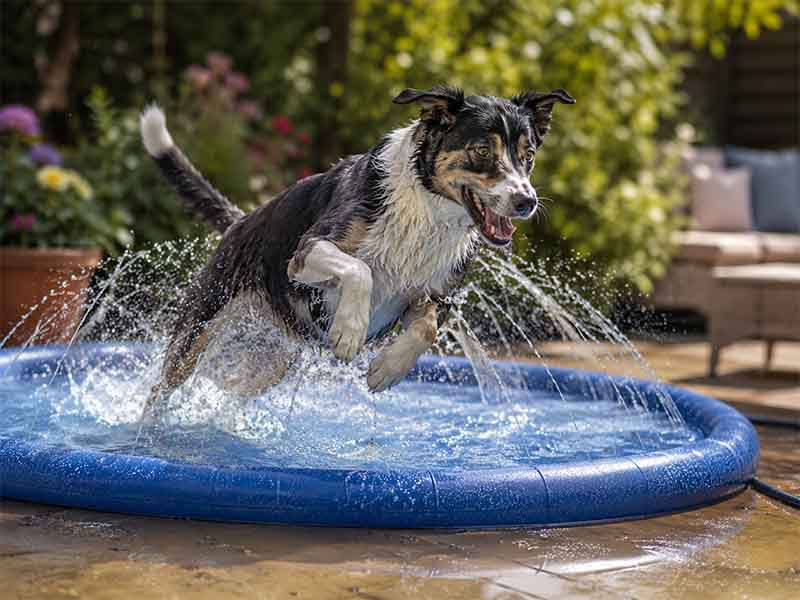
A backyard can look comfortable from the kitchen window and still be difficult for a dog to use during summer. Grass that feels cool at breakfast may lose all shade by early afternoon. A clean stone patio may become too hot for paws, while a large pool may remain untouched because the wall is too high, the floor feels unstable, or the dog cannot see an easy way out. Good planning begins with daily behavior rather than decorative features.
A dog-friendly summer backyard needs secure fencing, reliable afternoon shade, clean drinking water, comfortable walking surfaces, supervised enrichment, and a direct route indoors. The most practical layout separates resting, movement, and water play without making the yard feel divided. Plants, drainage, surface temperature, product dimensions, and the dog’s mobility should all be checked before equipment is added.
Useful clues are often already visible. A worn strip beside the fence may be a valued patrol route rather than damaged landscaping. Disturbed soil beneath a shrub may mark the coolest place in the yard. A dog that refuses to enter a deep pool may happily follow gentle spray across a shallow pad. When those habits guide the layout, the finished backyard is easier for the dog to understand and easier for the household to maintain.
What Does Your Dog Need Outdoors?
A dog needs more than open space. A useful backyard provides secure boundaries, dependable shade, fresh water, stable footing, quiet rest, and activities suited to the dog’s age and temperament. The dog should be able to move between active and calm areas without crossing hot surfaces or waiting for someone to open a route indoors.
Which Dogs Need Extra Heat Protection?
Every dog can become overheated, but some dogs need shorter activity periods and closer supervision. Flat-faced breeds may have more difficulty releasing heat through panting. Puppies often continue playing without recognizing fatigue, while older dogs may recover more slowly. Overweight dogs and animals with breathing, heart, joint, or mobility conditions may also become uncomfortable sooner during warm and humid weather.
The yard should be arranged around the dog with the lowest heat tolerance rather than the most energetic one. A young retriever may continue chasing water while an older bulldog is already looking for a place to lie down. In a multi-dog household, the resting area should sit far enough from active play that a tired dog can recover without being repeatedly invited back into the game.
Behavior is usually more useful than a single temperature reading. Heavy panting that does not slow during rest, excessive drooling, repeated attempts to find shade, slower movement, delayed responses, and loss of interest in a familiar activity all suggest that the session should end. Weakness, confusion, vomiting, breathing difficulty, seizures, or collapse require urgent veterinary attention.
| Dog Profile | Main Summer Concern | Practical Adjustment |
|---|---|---|
| Flat-faced dog | Less efficient cooling through panting | Shorter sessions and fast indoor access |
| Senior dog | Slower recovery and reduced mobility | Lower entry points and stable ground |
| Puppy | Poor activity control and frequent chewing | Constant supervision and fewer loose items |
| Thick-coated dog | Heat retained close to the body | Ventilated shade and frequent dry rest |
| Overweight dog | Greater physical effort | Gentle movement and shorter activity routes |
| Highly driven dog | May ignore fatigue | Planned breaks before visible exhaustion |
Heat tolerance can change after illness, medication, weight gain, or aging. A routine that worked the previous summer may no longer be suitable. Reviewing the dog’s condition at the beginning of each warm season makes it easier to adjust activity length, water depth, shade placement, and the distance between the yard and the nearest cool indoor room.
How Does Your Dog Use the Yard?
Before moving furniture or purchasing equipment, spend several normal outdoor sessions watching how the dog behaves. Note where it rests, which route it repeats, what causes excitement, where it urinates, and when it begins looking toward the house. A simple sketch can reveal patterns that are difficult to notice when the yard is viewed only as a landscaped space.
A worn path beside the fence is often a preferred patrol route. Blocking it with decorative pots may simply push the dog into a flower bed or create a new path elsewhere. Preserving the route and improving the surface is usually more effective. A shaded strip of grass, compacted fine gravel, or stable paving can protect nearby planting while allowing the dog to continue a familiar routine.
Digging also needs to be understood before it is corrected. Some dogs dig to reach cooler soil, some follow smells, and others use digging as an outlet for unused energy. A designated digging area can work when it is placed in shade, filled with clean loose material, and kept away from irrigation lines, electrical cables, roots, and garden chemicals.
Water preferences vary just as widely. One dog may enjoy standing quietly in shallow water, while another avoids a pool but follows low spray with enthusiasm. Nervous dogs often respond better to a gradual introduction with low water levels and a clearly visible exit. The goal is not to keep the dog active constantly, but to provide several safe choices between exploration, cooling, drinking, and rest.

No single square-foot figure guarantees a useful dog-friendly backyard. A large lawn without shade, fresh water, or comfortable footing can offer less value than a small patio with clearly planned areas. Space should be judged by what the dog can do safely rather than by the total size shown on a property plan.
Most backyards work better when three functions are considered separately. The rest area needs full shade, airflow, drinking water, and a dry surface. The movement area needs a clear route for walking, sniffing, retrieving, or gentle running. The water area needs level ground, hose access, drainage, and enough space for an adult to reach the dog without stepping over furniture.
These areas do not require permanent fences. A change in ground material, planting, or furniture placement can guide movement without making the garden feel divided. In a small yard, a foldable pool may occupy part of a shaded patio during use and return to storage afterward. In a larger yard, the water area may sit farther from the house and require a second drinking bowl.
Working clearance matters as much as product diameter. Whenever the yard permits, leaving approximately 60 to 90 centimeters of open space along the main supervision side makes inspection, cleaning, drainage, and emergency access easier. A pool that fills the available space edge to edge may technically fit but remain awkward to use.
The route indoors should remain direct. A wet dog should not need to cross hot paving, climb several steps, squeeze between furniture, or pass another excited dog before reaching a cool room. A short route improves safety and also makes it easier to dry paws before the dog re-enters the house.
What Should You Assess First?
The backyard should be inspected at several times of day because shade, surface heat, and airflow change continuously. An area that feels comfortable at 9 a.m. may be fully exposed by early afternoon. Walking the yard in the morning, around the hottest part of the day, and again in late afternoon provides a more accurate picture of how the space behaves.
Start with the fence and gate, then move through the yard at ground level. Look for gaps, loose panels, sharp branches, broken plastic, exposed wire, unstable furniture, unknown plants, mushrooms, compost, and recently treated soil. Surfaces such as concrete, dark decking, artificial turf, and gravel should be checked after several hours of direct sun.
Drainage should be planned before any water product is filled. A medium foldable pool can hold several hundred liters depending on its diameter and water depth. Emptying that volume onto one small patch of lawn can create mud, damage planting, or send water toward a doorway. The drain direction, ground slope, and distance from the house should be understood before setup begins.
Visibility matters as well. The main water-play area should not sit behind dense planting, a shed, or large outdoor furniture. An adult needs to see the dog’s posture, breathing, and movement clearly. Sound alone may not reveal slipping, panic, or early heat stress.
The first improvements should always address escape routes, toxic materials, sharp hazards, shade, and drinking water. Pools, sprinklers, toys, and decorative features should be added only after the essential safety conditions are reliable.
How Do You Make the Backyard Safe?
Backyard safety depends on the complete environment rather than one pet product. Fencing, gates, plants, ground surfaces, tools, chemicals, cooking areas, and water equipment must work together. Regular inspections remain necessary because weather, soil movement, chewing, digging, and changes in furniture placement can create new risks over time.
Is the Fence Secure?
Inspect the fence from the dog’s height rather than only from an adult’s standing position. Gaps beneath panels, loose sections hidden behind shrubs, and spaces beside utility boxes are often difficult to see from above. Check whether the dog can push through, dig under, climb over, or use nearby furniture as a step.
Fence height should reflect the individual dog’s behavior. A calm small dog may remain secure behind a relatively low boundary, while an athletic dog may clear a much taller one. Height alone will not prevent escape when the gate can be pushed open or the soil beneath the fence is easy to excavate.
Gate hardware should close fully without being lifted by a nose or paw. Hinges, screws, latch movement, and the gap beneath the gate should be checked regularly. Ground settling can gradually create an opening large enough for a small dog to pass through. A self-closing gate is useful only when it still closes with enough force for the latch to engage every time.
Objects placed near the boundary deserve attention. Chairs, storage bins, firewood, boxes, and planters can create climbing points. Dense vegetation may conceal damaged panels or soft soil. After storms, heavy rain, gardening work, or the installation of new equipment, the entire boundary should be checked again rather than assuming it remains unchanged.
Tethering should not replace a secure enclosure. A tether can wrap around plants, furniture, or water equipment and may prevent the dog from reaching shade or drinking water. Repeated escape attempts may also indicate boredom, visual stimulation from outside the yard, or insufficient exercise. Physical repairs and behavior management often need to work together.
Which Plants Are Dog-Safe?
Every plant within reach should be identified before the dog receives unrestricted access. Common names are not always dependable because similar names may refer to different species. Unknown plants should be checked by scientific name through a veterinary poison-control resource, a veterinarian, or a qualified horticultural professional.
Plants are only one part of garden safety. Fertilizers, herbicides, insecticides, rodent products, compost, bulbs, mushrooms, and moldy fruit can be more accessible than owners realize. Open bags, leaking containers, and recently treated soil may create exposure even when the visible garden looks well maintained.
Garden products should remain in their original containers and be stored inside a closed cabinet or locked shed. High shelving alone is not always enough because bags can fall or leak. Keeping a simple record of lawn and garden treatments helps every household member understand when an area was treated and when normal access can resume.
Compost requires particular care because it may contain onions, garlic, grapes, coffee grounds, moldy food, or other unsuitable materials. A rigid container with a secure lid is safer than an open pile. Fallen fruit, nuts, and seed pods should also be collected before they ferment, become moldy, or attract insects.
Raised beds and low barriers can protect delicate planting, but they should not create narrow dead ends where a dog can become trapped during play. A clear route through the garden is usually more effective than placing small barriers in every direction. Thorny plants should be kept away from movement paths, and dense planting should not block airflow around shaded resting areas.
A dog-friendly garden can remain attractive and varied. The aim is not to remove every plant, but to make sure that everything within reach is known, suitable, and manageable.

Surface choice affects heat exposure, traction, drainage, cleaning, and long-term maintenance. No material performs best in every location. Natural grass is often cooler underfoot but can become muddy or worn. Concrete is easy to rinse but may become very hot. Artificial turf drains well when installed correctly but may retain heat and odor without regular care.
The entire route from the house to the activity area should be considered. A shaded pool does not solve the problem when the dog must cross hot paving to reach it. A cooler path can be created with grass, overhead shade, or a stable outdoor mat that does not curl or slide when wet.
| Surface | Heat Exposure | Drainage | Maintenance | Suitable Use |
|---|---|---|---|---|
| Natural grass | Low to moderate | Moderate | Mowing, repair, and waste removal | General movement and rest |
| Concrete | High in direct sun | Low unless sloped | Easy to rinse | Shaded utility areas |
| Pavers | Moderate to high | Depends on base and joints | Joint and level maintenance | Paths and patios |
| Artificial turf | Variable and often warm | Good with a correct base | Frequent rinsing | Controlled activity zones |
| Fine rounded gravel | Moderate | High | Raking and replacement | Paths and toilet areas |
| Rubber surface | Varies by product and color | Product-dependent | Regular cleaning | Selected play areas |
A hand test can identify an obviously hot surface but should not be treated as a guarantee. Direct sunlight, color, exposure time, paw condition, airflow, and moisture all affect comfort. Several points should be checked, especially where the dog tends to stop or turn.
Wet traction is particularly important around pools and splash pads. A surface that feels stable when dry may become slippery once the dog begins running or turning. Testing the complete setup with water before the first full session reveals more than examining the material while it is dry.
A mixed-surface backyard often works better than one material used everywhere. Grass can support general movement, stable paving can serve as the cleaning area, and a shaded mat can create a safer connection between the water zone and the house.
How Do You Prevent Backyard Injuries?
Most backyard injuries involve ordinary objects left in the wrong place. Gardening tools, exposed screws, broken toys, sharp stakes, damaged furniture, loose wire, and small plastic pieces should be removed before the dog enters. Inspecting from ground level often reveals hazards hidden by grass, furniture, or low planting.
Transition areas need particular attention. Door thresholds, deck steps, pool walls, and narrow gaps between furniture can create more slips and collisions than open lawn. Large dogs may knock over lightweight chairs, umbrellas, or folding tables. Portable shade structures should remain stable when bumped and should not use low cords across movement routes.
A hose left in direct sunlight can hold very warm water. It should be flushed before filling a pool or directing spray toward the dog. The hose should run along the edge of the water area rather than across a running route. A tight bend near the connector can also place sideways pressure on the fitting and cause movement or leaks.
Electrical equipment should remain far from wet ground. Outdoor sockets need suitable protection, and extension cables should not cross the water zone. Barbecue equipment, fire pits, and cooking areas should remain inaccessible during use and while surfaces are still hot.
Play items should be inspected for cracked seams, loose valves, exposed internal material, sharp edges, and small detachable parts. Children’s inflatables and garden decorations are not automatically suitable for dog use. Materials designed for occasional human contact may not tolerate claws, chewing, or repeated outdoor play.
Visibility is part of injury prevention. The main activity and water zones should be placed where an adult can observe the dog’s breathing, posture, turning, and exit behavior without relying on sound alone.
How Do You Keep the Yard Cool?
A cooler backyard provides shade that remains available through the afternoon, clean drinking water, comfortable movement routes, and a direct return indoors. Pools and sprinklers can support cooling, but they do not remove the risk of prolonged exercise in extreme heat. Session length should be controlled before the dog reaches visible exhaustion.
Where Should Shade Be Placed?
Shade should follow the dog’s actual resting and movement patterns. Marking the shadow line in the morning, early afternoon, and late afternoon shows whether a chosen area remains protected during the hottest part of the day. Trees and buildings that provide useful morning shade may leave the same surface fully exposed later.
Suitable shade can come from mature trees, roofed patios, shade sails, open-sided canopies, or stable umbrellas. Enclosed doghouses can trap warm air when ventilation is limited, so a roof alone does not guarantee comfort. Open sides, airflow, roof material, and reflected heat from nearby walls all influence the temperature inside a sheltered area.
The main rest zone should be large enough for the dog to lie fully stretched out without touching a sun-heated edge. Multi-dog households need more than one resting position so dogs do not compete for the only cool place. The drinking bowl should sit well inside the shade rather than at an edge that will become sunny later.
At least one shaded area should remain dry and separate from spray. Dogs need somewhere to recover without standing on wet ground or being drawn back into active play. A short shaded section along the route indoors is also useful when surrounding paving becomes hot.
Portable shade equipment should be checked after strong wind or heavy rain. Poles, joints, anchor points, and cords need to remain secure and outside the dog’s movement path. Shade should reduce heat exposure without creating a confined area that restricts airflow.

Drinking water should be provided separately from recreational water. A pool or splash pad quickly collects hair, soil, saliva, leaves, and paw debris. Dogs may also overturn or contaminate play water, so a clean bowl needs to remain available in a quieter location.
A broad, stable bowl works better than a light container that tips easily. It should sit on level ground away from the main running route. A larger yard may need a second bowl near the house or another frequently used resting point so the dog does not need to cross the entire space to drink.
Water should be replaced whenever it becomes warm, cloudy, dirty, or low. Adding fresh water to a dirty bowl does not remove the film that develops on the sides and base. The bowl needs to be washed, rinsed, and refilled rather than continually topped up.
During a long outdoor period, checking the drinking station every 30 to 60 minutes is a useful operating habit. More frequent checks may be needed when several dogs share the yard or when leaves and soil enter the bowl easily. Visible contamination should always trigger immediate replacement regardless of the time interval.
A full bowl does not prove that the dog remains safe outdoors. Excited dogs may ignore water, while tired dogs may drink rapidly after intense activity. Bringing the dog to a shaded recovery area and allowing breathing to slow is more useful than encouraging immediate heavy drinking.
Hydration works together with shade, rest, airflow, and indoor cooling. None of these controls should be treated as a substitute for the others.
Which Areas Become Too Hot?
The hottest part of a yard may not be the most visibly sunny area. West-facing walls can reflect heat onto patios and artificial turf. Enclosed corners may have little airflow, while dark decking and concrete can remain warm after direct sunlight has moved away.
The route from the house to the water area should be checked first, followed by concrete beside doors, artificial turf near reflective walls, dark pavers, decking, gravel around fences, and the surface surrounding pools or splash pads. The dog’s favorite resting point should also be checked because habitual locations are not always the coolest ones.
Cooling routes matter as much as cooling destinations. A shaded pool surrounded by hot paving may still be difficult to reach safely. A strip of grass, overhead cover, or stable mat can connect the water area to the house and reduce the time spent on heat-retaining surfaces.
Water can create a misleading impression of comfort. Wet fur does not always mean the dog is cooling effectively, particularly when it continues sprinting or chasing spray. Active muscles keep generating body heat, and highly motivated dogs may not stop voluntarily.
Changes in movement often provide the clearest warning. A dog that leaves the spray repeatedly, lies down earlier than usual, slows during turns, looks toward the door, or stops responding quickly is showing that the environment or activity level needs to change.
When Should Outdoor Play Stop?
There is no single temperature that is safe for every dog. Humidity, direct sunlight, airflow, body condition, muzzle length, coat, health, and activity intensity all affect heat stress. The decision to stop should be based on both weather conditions and visible behavior.
Outdoor play should end when panting becomes unusually heavy, drooling increases, movement slows, or the dog repeatedly seeks shade. The dog should be brought into a cooler, well-ventilated area and given access to clean water. Recovery should begin before the animal becomes unable to continue.
Weakness, confusion, vomiting, labored breathing, poor coordination, seizures, or collapse require immediate veterinary attention. Emergency clinic details should be prepared before summer begins, especially in areas where the nearest service may be some distance away.
Energetic activity is usually easier to manage during cooler morning or evening periods. Shorter sessions with planned breaks are safer than one prolonged period. During sprinkler play, some dogs remain focused on moving water and continue long after normal fatigue would stop another activity.
A practical session can begin with several minutes of low-intensity exploration before activity increases. During energetic water play, a pause every 10 to 15 minutes allows the dog to move into dry shade and recover. These intervals are management examples rather than universal medical limits. Heat-sensitive dogs may need much shorter sessions, and some weather conditions make outdoor play unsuitable altogether.
Which Water-Play Setup Works Best?
Choose a water-play product according to the dog’s body size, mobility, confidence, and preferred activity. Foldable pools suit standing, soaking, and wading. Splash pads suit shallow movement and dogs attracted to spray. Usable dimensions, entry height, traction, drainage, construction, and storage matter more than decorative printing or broad size labels.
Is a Dog Pool or Splash Pad Better?
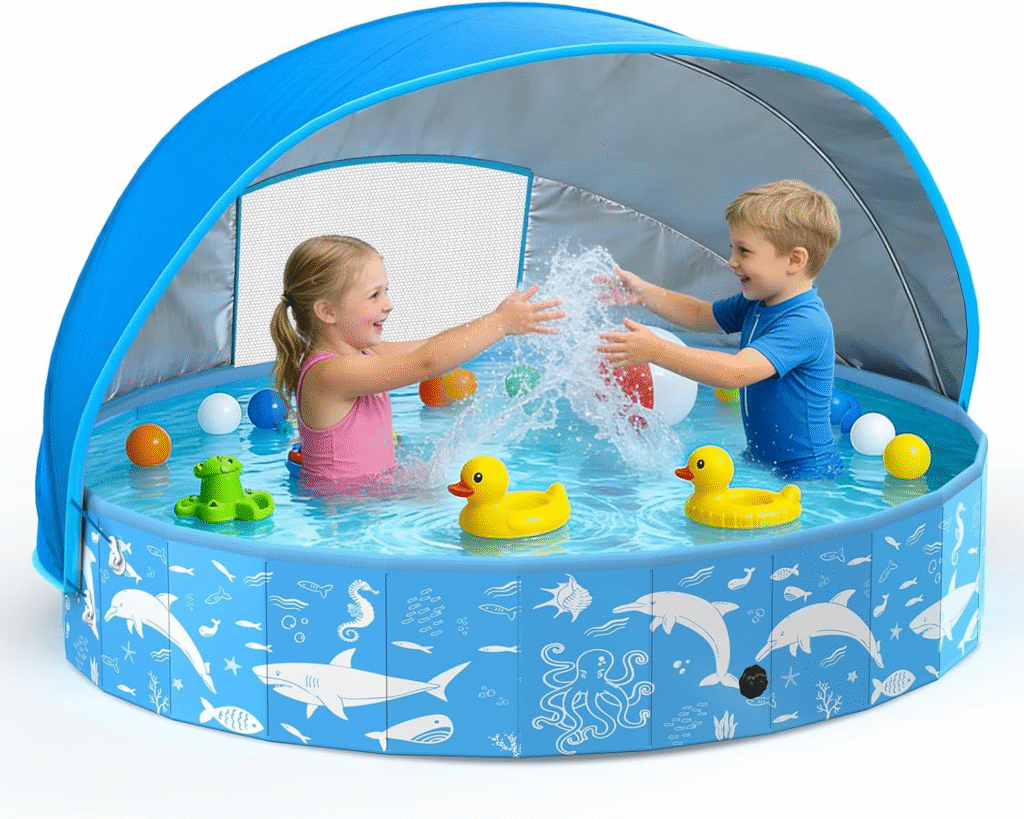
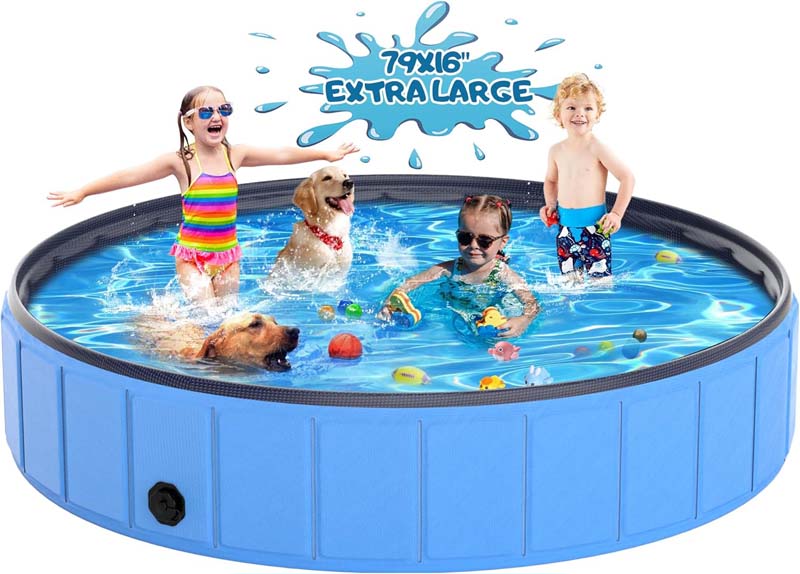
A foldable dog pool holds a controlled volume of water inside supported walls. It works well for dogs that enjoy standing, sitting, soaking, or walking through shallow water. Water depth can be adjusted, but the filled product becomes heavy and requires level ground and a planned drainage area.
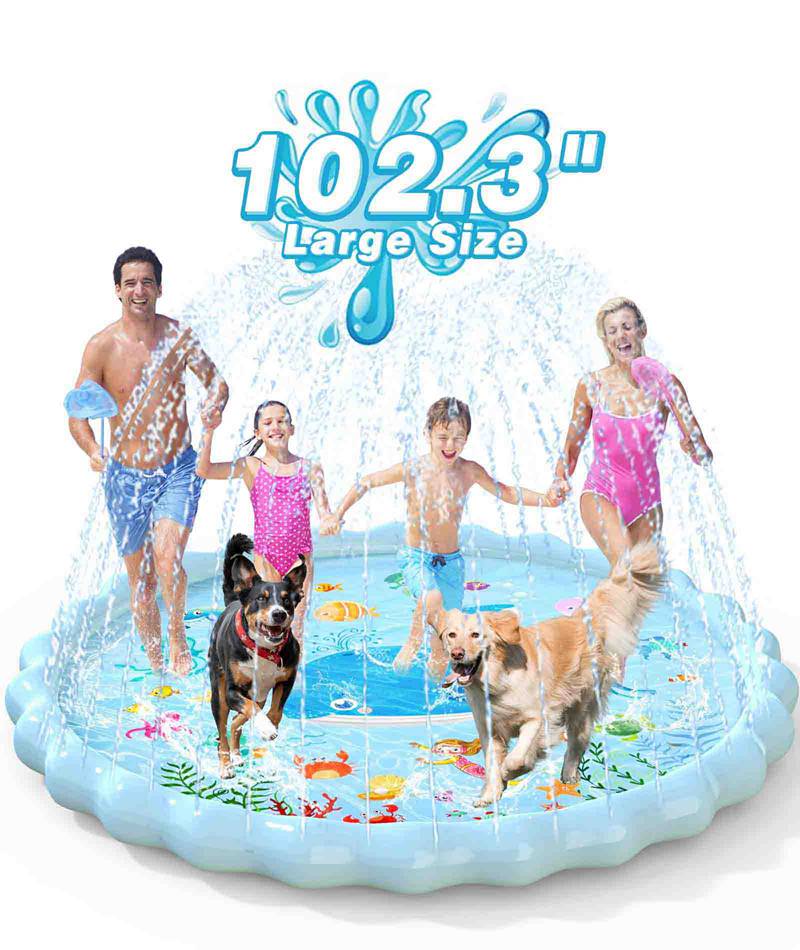
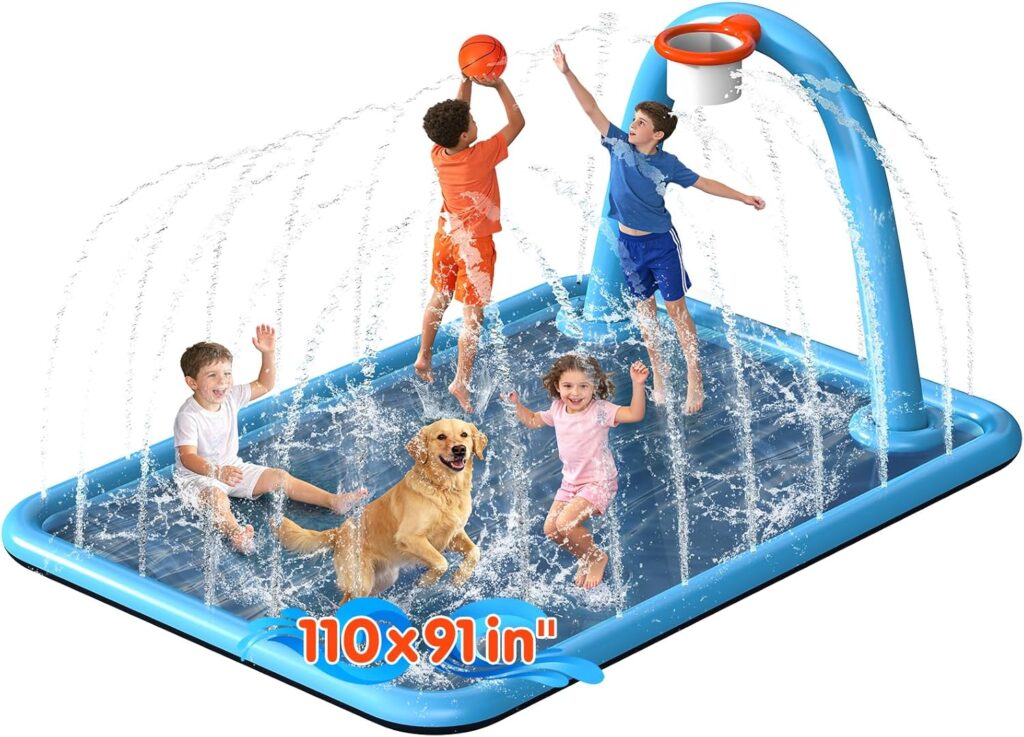
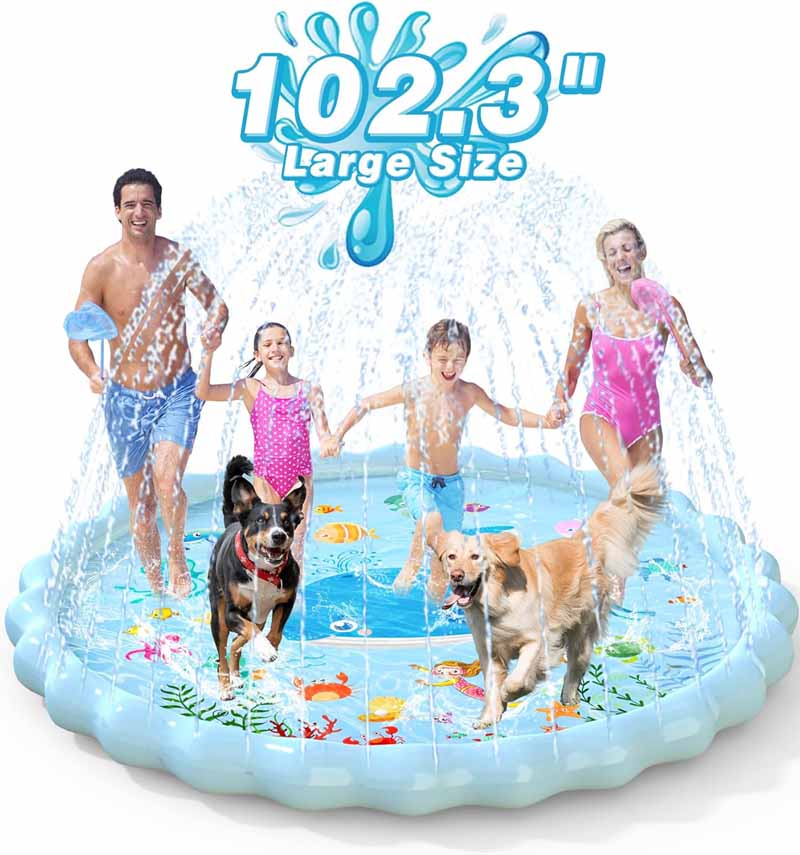
A splash pad connects to a hose and directs water through openings around an outer channel. The central area remains shallow and easy to enter. It suits dogs that prefer moving water or avoid stepping over a pool wall. Spray height changes with water pressure, and water continues flowing during operation.
| Decision Factor | Foldable Dog Pool | Dog Splash Pad |
|---|---|---|
| Main activity | Wading, soaking, and splashing | Chasing spray and shallow movement |
| Entry | Step over a supported wall | Low-profile access |
| Water depth | Adjustable | Minimal |
| Water use | Fixed fill volume | Continuous flow |
| Drainage | Large release when emptied | Continuous runoff |
| Best suited to | Dogs comfortable with standing water | Dogs attracted to moving spray |
| Storage | Folded panel structure | Flat folded structure |
| Supervision | Required throughout use | Required throughout use |
A pool may suit a household with limited hose flow but enough space to empty a larger water volume. A splash pad may be easier to fold and store but requires a secure hose connection and reliable runoff during every session.
Either format should be introduced gradually. Shallow water or low spray gives the dog time to understand the surface and exit. Calm investigation should be encouraged, while fear, repeated avoidance, or frantic movement should end the session.
Water confidence should not be assumed from breed. A dog commonly associated with swimming may still dislike water, while a small dog may enjoy shallow play. Individual behavior remains the more reliable guide.

The dog and the setup area both need to be measured. Body length, shoulder height, turning diameter, and step-over ability are more useful than labels such as medium or extra-large.
For a foldable pool, the dog should be able to stand without touching both walls, turn around comfortably, lie down without pressing against the sides, and leave without jumping. For a splash pad, the outside diameter should not be confused with the active center because the water-filled outer ring reduces the usable flat area.
As a general planning reference, an active area around 100 to 120 centimeters may be sufficient for one small dog. Medium dogs often benefit from approximately 140 to 170 centimeters, while large dogs or two-dog use may need 180 to 200 centimeters or more. These ranges are not universal suitability claims because body shape, wall height, behavior, and product structure still matter.
Clear access around the product is equally important. Whenever possible, approximately 60 to 90 centimeters of open space should remain along the main supervision side. Additional room is needed for the hose, connector, drainage direction, a nearby dry resting area, and a direct path indoors.
Senior dogs and short-legged breeds often benefit from lower walls or low-profile entry. Deeper water is not automatically more effective for cooling. Shallow water that the dog uses willingly is more useful than a deeper pool the dog avoids.
Multi-dog use requires behavioral judgment as well as physical measurement. Two relaxed dogs may share a large pool comfortably, while guarding, chasing, or rough play may make separate sessions safer.
Which PVC Features Matter?
PVC thickness affects wear resistance, but it should not be used as the only quality measure. Material formulation, heat-sealed seams, support panels, reinforcement zones, floor design, connectors, drains, and folding points all influence performance.
Pet splash pads often use PVC within an approximate 0.40 to 0.55 millimeter range, depending on size, spray pressure, print coverage, and reinforcement. Foldable dog pools may combine PVC outer layers with internal support panels around 4 to 5 millimeters thick. Larger diameters, taller walls, or repeated commercial use may require different structures.
Consistent seam width is important because weak or uneven sealing can become a failure point even when the material is thick. Hose connectors and drains need local reinforcement because repeated pulling, twisting, and opening concentrate stress in a small area. The floor should also be designed for repeated paw contact and placed on ground cleared of stones and sharp debris.
Wet-surface texture matters as much as thickness. A durable floor that becomes slippery under moving paws does not provide a good user experience. Rounded exposed edges, accessible drains, and folding lines positioned away from high-stress zones also improve handling and storage.
No responsible PVC dog product should be presented as claw-proof or indestructible. Dog nails should be maintained, the setup surface should be prepared, and chewing should be stopped. Even a reinforced bottom can be punctured when a sharp stone concentrates pressure beneath a filled pool.
For private-label development, a useful specification should identify material thickness by product area, internal support material, seam construction, floor reinforcement, connector attachment, drain size and position, printing method, folded dimensions, package weight, and production inspection points.
The heaviest product is not always the best one. Excessive material can increase transport cost, make folding difficult, and create stiff edges. Product development needs to balance durability, handling, storage, weight, and target retail price.
How Do You Make Water Play Safer?
Water-play products should be placed on flat ground cleared of stones, branches, tools, and sharp debris. The hose should run around the edge of the activity area rather than across the dog’s route. Water should drain away from doors, electrical equipment, and busy walkways.
Before each use, the empty product should be inspected for seam damage, wall deformation, loose connectors, and debris beneath the floor. The drain plug should be secured, the hose flushed, and the water temperature tested. A new or cautious dog should begin with shallow water or low spray.
The dog needs to understand how to leave before active play begins. The exit should remain visible and unobstructed, and a dry shaded resting place should sit nearby. An adult should remain close enough to intervene immediately rather than supervising from inside the house.
Repeated slipping, chewing, coughing, fear, or excessive water swallowing should end the session. Frantic chasing also needs interruption because high excitement can reduce awareness of fatigue and footing. A life jacket may help some dogs around deeper water, but it does not replace direct supervision.
After use, the product should be drained into a suitable area. A large pool should not release water toward a doorway, foundation, neighboring property, or delicate planting bed. Hair, soil, and saliva should be rinsed away before both sides are allowed to dry.
Dogs and children should not share a water product without close supervision and clear hygiene routines. Water depth, spray pressure, toys, and play intensity should be adjusted to the least confident participant rather than the most energetic one.
How Do You Maintain the Backyard?
Regular maintenance prevents small issues from becoming safety failures. The yard should be checked before use, wet areas cleaned after play, and the full setup inspected each week. Contaminated water needs to be replaced, drainage kept clear, waste removed promptly, and PVC products dried fully before storage.
How Often Should Water Areas Be Cleaned?
Cleaning frequency should follow actual use and contamination. Hair, saliva, soil, leaves, insects, and waste can enter a pool during one session. A product shared by several dogs may need to be drained and rinsed after every use.
| Timing | Maintenance Task |
|---|---|
| Before each use | Check the floor, seams, connector, drain, and water condition |
| After each session | Remove hair and debris, then rinse visible dirt |
| When water becomes cloudy or dirty | Drain and replace immediately |
| Before folding | Clean as needed and dry both sides |
| Weekly during frequent use | Inspect the full structure and setup area |
| Before seasonal storage | Wash, dry, fold carefully, and store indoors |
Warm stagnant water should not remain in pools, buckets, bowls, or low areas of the yard. Standing water collects insects, plant material, wildlife contamination, and algae. Drinking bowls require separate cleaning because adding fresh water does not remove residue from the surface.
Cleaning products should be compatible with PVC, printing, valves, and support materials. Strong chemicals may leave residue or affect the surface. Mild soap, thorough rinsing, and complete drying are usually sufficient for normal household use.
Drying should not be rushed. Water can remain between wall folds or beneath the floor even when the top looks dry. The product should be turned, opened, and checked along seams before it is stored.
Commercial pet facilities benefit from a written cleaning record that includes the date, responsible person, water replacement, visible damage, and corrective action. A consistent record is more dependable than informal verbal responsibility.

Mud and odor usually point to drainage, repeated foot traffic, trapped moisture, or delayed waste removal. Adding fragrance does not solve saturated soil or dirty surfaces.
Water flow should be observed during both use and draining. Discharge should not cross a doorway, collect beside the foundation, or repeatedly soak one lawn patch. Rotating the setup location or creating a planned drainage route toward a permeable area can reduce long-term damage.
High-traffic paths near gates and fences often become muddy because the dog repeats the same movement every day. A stable strip of suitable paving, rounded gravel, or reinforced grass may work better than reseeding the same area several times each season.
Artificial turf needs drainage beneath the surface. Water and urine should not remain trapped in the base. Concrete and pavers should slope away from the house, while grass may need rest periods after repeated pool drainage.
Odor inside a folded pool often begins with moisture trapped between layers. Hair and soil can collect around seams, drains, and lower folds. Both sides should be cleaned, opened fully, and dried before storage in a ventilated location away from damp floors, sharp tools, direct heat, and heavy objects.
Prompt waste removal, regular bowl washing, rinsing of artificial turf, and keeping wet mats off the ground all contribute to a cleaner yard. Good drainage and complete drying are more effective than fragrance-based solutions.
What Should You Inspect Each Week?
Using the same inspection route each week makes small changes easier to notice. Begin at the house, follow the dog’s normal movement path, and finish at the farthest fence corner.
Gate alignment, latch operation, loose panels, digging, soil erosion, and objects placed near the fence should be checked first. The ground should then be examined for stones, broken material, damaged paving, exposed roots, mud, standing water, slippery algae, and uneven mats.
Water equipment should be inspected while empty. Abrasion, seam separation, loose connectors, damaged drains, deformed walls, and moisture trapped inside folds are easier to see before filling. The product should then be observed again during use because some faults appear only under pressure or load.
The hose connector should be tested from the direction the hose normally pulls. Side pressure can loosen a fitting that appears secure when the hose is straight. The drain should remain easy to reach and should not be pressed against a fence or hidden beneath the product.
Recurring problems should be recorded rather than treated as unrelated incidents. Wear in the same floor area may indicate uneven ground. A connector that moves repeatedly may need a different hose route. A pool that remains difficult to dry may need another cleaning or storage process.
For product development, repeated maintenance complaints provide useful evidence. Problems involving drainage, folded size, unstable walls, unclear dimensions, or connector movement can be converted into clearer design requirements and production inspection points.
How Can the Yard Adapt Over Time?
A dog-friendly backyard should change as the dog’s body, confidence, and household routine change. Puppies need secure boundaries, constant supervision, and protection from chewing hazards. Healthy adults may use longer movement routes and more energetic water play. Senior dogs often need shorter distances, lower entry points, and more dependable footing.
The layout should be reviewed after changes in mobility, health, body weight, or medication. The arrival of another pet or a child also changes how the space is shared. A feature that worked for one dog may create crowding, guarding, or collision risks when several users enter the yard together.
Seasonal changes matter as well. Tree pruning can remove afternoon shade, new furniture may block the route indoors, and landscaping work may expose gaps beneath the fence. More frequent use of a pool or splash pad may reveal drainage and wear patterns that were not visible during occasional use.
A product does not always need to be replaced. A pool may become easier for an older dog when it is moved closer to the house, filled more shallowly, or approached from a stable mat. A splash pad may feel less intimidating when water pressure is reduced.
Equipment that the dog consistently avoids should be removed. Unused products occupy movement space, create cleaning work, and can become obstacles. Every feature should remain because it is used safely and regularly rather than because it looked attractive when purchased.
A practical dog-friendly summer backyard combines secure boundaries, dependable shade, clean drinking water, comfortable ground, and water play that matches the dog’s real behavior. The best layout is not necessarily the largest or most expensive. It is the one that allows the dog to choose between activity and rest, move comfortably between zones, and return indoors before heat becomes dangerous.
Pet brands, outdoor retailers, importers, and private-label distributors developing foldable dog pools, splash pads, or other PVC water-play products can provide EPN with target dimensions, intended dog sizes, expected order quantities, destination markets, sales channels, packaging requirements, and current product concerns.
Custom development can cover PVC thickness, heat-sealed structures, support panels, surface texture, drain systems, hose connectors, artwork, Pantone colors, folded size, instructions, accessories, and retail packaging. Clear project information allows the manufacturing team to assess whether an existing platform, a modified structure, or a new design offers the most practical route toward sampling and production.