Skip to content
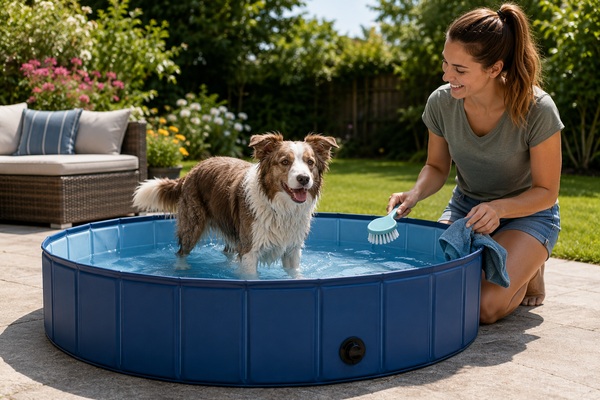
A dog pool can look clean from several feet away while still holding a surprising mixture of hair, saliva, body oils, grass, mud and outdoor debris. Unlike a large swimming pool with a pump and filtration system, most foldable dog pools simply hold the same water until someone drains them. Every paw, floating toy and excited splash introduces something new, and warm summer temperatures can turn a small amount of residue into cloudiness, odor or a slippery surface much faster than many dog owners expect.
To clean a dog pool correctly, remove the dog and toys, drain all water, clear away hair and debris, wash every surface with a mild PVC-compatible cleaner, rinse until no foam or residue remains, and dry the pool completely before refilling or folding. Small unfiltered dog pools should receive fresh water frequently, especially after muddy, heavy or shared use.
Good cleaning is not about making pool care complicated. It is about doing simple tasks in the right order. A quick rinse may remove visible dirt, but it often leaves oils inside floor textures, folds, seams and drain components. That hidden film is where the next unpleasant smell or slippery patch usually begins.
Imagine opening a folded dog pool on the first hot weekend of summer and finding the panels stuck together with a musty odor trapped inside. That problem rarely starts during storage. It usually begins with a small amount of water that was never fully removed. The following routine helps prevent that outcome while protecting the pool, the dog and the time spent enjoying the backyard.

Why Does a Dog Pool Need Regular Cleaning?
A dog pool needs regular cleaning because untreated water quickly collects hair, saliva, skin oils, soil and outdoor debris. These materials can settle into textured surfaces, create slippery buildup and produce odors, even when the water still appears reasonably clear.
What Makes Dog Pool Water Dirty?
Dogs bring natural coat oils, loose hair, dirt and microorganisms into the water. Outdoor conditions add pollen, leaves, insects and dust, increasing the amount of material that must be removed.
A dog does not need to look muddy to make pool water dirty. Loose undercoat, dust, pollen and small particles can remain hidden in the fur until water releases them. Long-haired dogs may carry debris around the legs, chest and tail, while short-haired dogs often bring fine dust and body oils that are less visible but still collect on the pool surface.
Paws are another major source of contamination. Soil becomes trapped between the paw pads and around the nails. When a dog walks through grass, mulch, sand or a muddy part of the yard before entering the pool, that material is transferred directly into the water. Once wet, heavier particles fall to the floor while lighter material floats or settles along the walls.
Saliva enters the water when dogs pant, drink, bite at splashes or carry toys. Natural skin oils, coat conditioners, sunscreen and topical pet products may create a thin film around the waterline. This film can make the walls feel greasy even before the water becomes visibly cloudy.
The surrounding environment also matters. Wind can carry grass clippings, pollen, seed pods and insects into an uncovered dog pool. Pools placed below trees may collect leaves, sap and fruit. A pool beside a frequently used pathway may receive dust every time someone walks past.
Because most dog pools do not use continuous filtration, these materials remain in the water until the pool is drained. The smaller the water volume, the greater the effect of each muddy paw or clump of hair.
Which Signs Show a Dog Pool Needs Cleaning?
Changes in color, smell, texture and debris levels are the clearest signs. A pool should be cleaned whenever the water or PVC surface no longer looks, smells or feels fresh.
Water appearance is the easiest place to begin. Fresh water should not appear green, brown, milky or unusually foamy. A slight haze may come from soil or suspended hair, but it still indicates that the water is carrying material that fresh water would not contain.
Look at the bottom of the pool after the dog stops moving. Fine sediment often settles quickly, creating dark lines in the floor texture or around the lower edge. Hair may collect near the drain or become trapped where the wall meets the base. Leaves and grass are obvious, but smaller particles deserve attention because they repeatedly rub against the PVC as the dog moves.
Smell provides another useful warning. Clean water should not have a sour, swampy or musty odor. A strong wet-dog smell usually means that coat oils, saliva and organic residue have collected on the walls or floor. Replacing the water without washing the surface may improve the smell temporarily, but the odor can return soon after refilling.
Touch is especially important. Run a clean hand across the empty wet floor. A clean PVC surface should feel like the original material. If it feels greasy, sticky or unusually slick, a deeper wash is needed.
Common signs include:
- Cloudy or discolored water
- Hair gathering near the drain
- Slippery walls or floor
- Green, brown or black spots
- Sour or musty odors
- Foam that remains after movement stops
- Sediment trapped in floor textures
- Dogs hesitating to enter the water
A pool should also be cleaned when the dog has been especially muddy, even if the water still looks acceptable. Waiting for a visible problem generally creates more work later.
Is a Slimy Dog Pool Unsafe?
A slimy dog pool may contain body oils, algae or biofilm. It can also reduce paw traction, making the surface less comfortable and potentially more difficult for dogs to move across safely.
Slime is not simply an appearance issue. It usually means that organic material has remained on a wet surface long enough to form a noticeable layer. This layer may consist of coat oils, detergent residue, algae or biofilm—a mixture of microorganisms and debris that adheres to a damp surface.
A small amount of buildup may begin in areas that stay wet longest. The lowest point of the floor, shaded walls, textured grooves and the drain area are common starting locations. Because these areas are not always visible from above, the pool can appear clean while the floor already feels slippery.
Reduced traction matters because dogs do not move slowly and carefully inside a pool. They turn quickly, jump toward toys and push against the floor when climbing out. A slick base can cause the paws to slide, especially for senior dogs, puppies, large breeds and dogs with joint or mobility concerns.
When slime is present, remove the dog immediately and drain the pool. Rinsing alone may not remove the layer. Use a soft brush with a mild cleaning solution, paying attention to textured areas and seams. Continue washing until the surface no longer feels slick, then rinse thoroughly.
Do not attempt to hide slime with fragrance or by adding chemicals to the existing water. The goal is to physically remove the buildup from the PVC. Fresh water should only be added after the surface has been cleaned and checked.
How Does Dirt Affect a PVC Dog Pool?
Dirt can act like an abrasive when dogs move across the floor. Residue also hides scratches, stressed seams and small punctures, making regular cleaning an important part of product inspection.
PVC is widely used in foldable dog pools because it can provide water resistance, flexibility and practical support. However, it still needs protection from repeated abrasion. Fine sand, grit and small stones can remain underneath a dog’s paws. As the dog walks, turns or scratches, those particles rub against the floor.
One session may not cause visible damage, but repeated grinding in the same area can affect the surface over time. Textured floors can hold small particles more easily than smooth walls, which is why pre-rinsing and soft brushing are important.
Mud and organic film can also hide early signs of wear. A light scrape, stressed fold or small seam separation may not be visible until the pool has been cleaned. Regular washing gives the owner a chance to inspect the drain, reinforced edges, floor, side panels and joining areas.
Cleaning methods can also affect PVC life. A wire brush, rough scouring pad or aggressive solvent may remove dirt quickly, but it can scratch or weaken the material. Hot water can soften some flexible components, while strong chemicals may affect printed details or surface coatings.
The best approach is controlled cleaning: remove grit before scrubbing, use a soft tool, apply moderate pressure and choose a cleaner suitable for flexible PVC.
| Dog Pool Condition | Likely Cause | Recommended Response |
|---|---|---|
| A few floating hairs | Light use or shedding | Skim the hair and inspect the water |
| Mud marks on the floor | Soil carried on paws | Drain, rinse and gently scrub |
| Cloudy water | Suspended soil, saliva and oils | Replace the water and wash the pool |
| Slippery PVC | Oil, soap residue, algae or biofilm | Stop use and perform a full cleaning |
| Strong wet-dog odor | Organic residue on the surface | Wash the walls, floor and drain |
| Green or brown patches | Algae or embedded outdoor debris | Scrub promptly and dry completely |
| Scratches under dirt | Abrasion from grit or rough ground | Clean, inspect and repair if necessary |

Which Cleaners Are Safe for a Dog Pool?
A mild, unscented soap diluted in water is suitable for most routine dog pool cleaning. Strong fragrances, abrasive powders and concentrated chemicals are usually unnecessary. Always keep dogs away during cleaning and rinse every surface before the pool is used again.
What Is the Best Dog Pool Cleaner?
The best routine dog pool cleaner is usually a small amount of mild, unscented soap mixed with water. It removes everyday dirt and oils without requiring aggressive scrubbing or complicated chemical treatment.
For most dog pools, effective cleaning comes from the combination of water, mild soap and physical movement from a cloth or brush. The cleaner does not need to be highly concentrated. In fact, too much soap creates more work because foam becomes trapped inside grooves, seams and the drain.
Prepare the solution in a bucket rather than pouring soap directly onto the pool. This distributes the cleaner more evenly and prevents a strong concentration from remaining on one area of PVC. The water can be cool or comfortably warm, but it should not be extremely hot.
An unscented product is preferable because fragrance can remain after visible foam has disappeared. Dogs have a stronger sense of smell than people, so a heavily perfumed pool may discourage them from entering or encourage excessive licking.
For stubborn buildup, a cleaner specifically labeled as compatible with PVC or vinyl may be used. Read the directions carefully and test it on a small hidden area before applying it across printed or decorative surfaces.
The ideal cleaner should remove the problem without changing the feel, color or flexibility of the material. It should also rinse away easily. Stronger is not automatically better, especially when ordinary mud, saliva and coat oils can be removed with a gentler routine.
Is Vinegar Safe for Cleaning a Dog Pool?
Diluted white vinegar may help remove light mineral deposits and stale odors from an empty dog pool. It should be tested first, used briefly and completely rinsed before the pool is refilled.
White vinegar is often used for light water marks and mineral film. It can be helpful when ordinary soap removes dirt but leaves a chalky line around the previous water level. It may also reduce mild stale odors on a clean, empty pool.
Vinegar should not be treated as a universal cleaning solution. It is not the best choice for heavy mud, greasy residue or thick slime. Physical scrubbing with mild soap is usually more effective for organic material.
When using vinegar, dilute it with water and test it on a small area. Printed graphics, surface coatings and certain decorative finishes may respond differently from plain PVC. Apply the solution with a soft cloth, allow a short contact period and gently wipe the area.
Do not leave vinegar on the pool until it dries. Rinse with clean water and continue rinsing until the sharp smell is gone. Dogs should not return while any cleaning odor remains.
Vinegar must never be mixed with bleach or chlorine-based products. Combining an acidic product with bleach can create dangerous fumes. If another cleaner has already been used, rinse the pool completely before considering a different product.
Vinegar is most useful as an occasional treatment for a specific problem, not as something that should be added to every pool of water.
Can You Use Bleach to Clean a Dog Pool?
Bleach is not necessary for routine dog pool cleaning. It should only be considered for specific disinfection needs, used according to the product label and fully rinsed before dogs return.
Ordinary hair, mud, saliva and body oils do not usually require bleach. Mild soap, fresh water and scrubbing can handle normal maintenance without introducing concentration and residue concerns.
Bleach becomes more relevant when there has been biological contamination, such as feces, vomit or contact with an infectious illness. Even then, the process should not begin by pouring an estimated amount into a pool. Household bleach products vary in concentration and may contain fragrances, thickeners or additional cleaners.
Never add bleach while a dog is inside the pool. Remove all dogs, children, toys, food bowls and accessories from the area. Wear suitable gloves, provide ventilation and follow the disinfectant label for dilution, contact time and rinsing.
Bleach must never be mixed with vinegar, ammonia or other cleaning products. Mixing chemicals can release toxic gases. Do not assume that rinsing once is enough after disinfection. The pool must be rinsed repeatedly until no chemical odor or slippery residue remains.
For a small dog pool, complete draining and washing are often more practical than trying to maintain chemically treated water. If serious contamination has occurred and the correct disinfection method is unclear, consult the pool manufacturer, a veterinarian or the disinfectant supplier before proceeding.
Which Tools Protect a PVC Dog Pool?
Soft, nonabrasive tools remove dirt without scratching flexible PVC. A soft brush, sponge, microfiber cloth, plastic scoop and ordinary garden hose are enough for most dog pool cleaning tasks.
A soft-bristle brush is especially useful on textured floors. The bristles reach into shallow grooves while spreading pressure across the surface. Choose a brush with rounded edges and avoid pressing so hard that the material bends or stretches.
Microfiber cloths work well on smooth walls and around printed areas. A nonabrasive sponge can remove light oil around the waterline. Keep these tools exclusively for the dog pool so they do not carry automotive chemicals, pesticides, paint or household cleaner residue.
A plastic net or scoop helps remove leaves and hair before draining. This reduces the amount of debris that can collect in the valve. A regular garden hose is suitable for rinsing; an extremely strong pressure washer is unnecessary and may place stress on seams or reinforced areas.
Avoid:
- Wire brushes
- Steel wool
- Metal scrapers
- Rough scouring pads
- Sharp-edged tools
- Brushes used with solvents
- High-pressure water jets
- Steam-cleaning equipment
Small brushes can be useful around a drain, but they should not be forced deeply into moving parts. Wipe the cap, threads and surrounding material without pulling or twisting the component beyond its intended movement.
| Cleaning Product or Tool | Best Use | Main Limitation |
|---|---|---|
| Fresh water | Loose dirt and frequent rinsing | Does not always remove oils |
| Mild unscented soap | Mud, hair, saliva and body oil | Requires thorough rinsing |
| Diluted white vinegar | Light mineral film and mild odor | Never combine with bleach |
| PVC-compatible cleaner | Stubborn surface residue | Must be tested and label-approved |
| Bleach-based disinfectant | Specific contamination events | Not suitable for casual routine use |
| Soft-bristle brush | Textured floors and seams | Excessive force may stress material |
| Microfiber cloth | Smooth walls and printed surfaces | Must be clean and chemical-free |
| Garden hose | General rinsing | High-pressure settings are unnecessary |

How Do You Clean a Dog Pool Step by Step?
Clean a dog pool by removing dogs and accessories, skimming debris, draining the water, rinsing loose dirt, scrubbing with diluted mild soap and rinsing repeatedly. Dry the pool fully when it will be folded or stored.
How Do You Drain a Dog Pool Safely?
Safe draining begins with removing the dog, clearing large debris and planning where the water will flow. The pool should be emptied before it is lifted, moved or folded.
Move the dog to a shaded, secure location before cleaning. Provide fresh drinking water and prevent the dog from returning while the drain is open. Many dogs associate the pool with play and may try to jump back into dirty or soapy water.
Remove toys, ramps, floating accessories and brushes. These items should be cleaned separately because they can carry saliva, mud and organic residue back into freshly changed water.
Before opening the valve, scoop out leaves, sticks and clumps of hair. Large debris may block a narrow drain opening or become trapped around the cap. If the pool does not have a drain, remove water with a small bucket until the pool is light enough to tip without stressing the sides.
Consider where the water will travel. Direct it away from doors, foundations, electrical equipment and areas that will become muddy. Water containing cleaning chemicals should not be released toward plants, natural waterways or storm drains without checking local requirements.
Do not drag a filled pool across grass, concrete or decking. Water creates significant downward pressure, pressing the PVC against every rough point below it. Drain the pool first, then lift the empty structure carefully. Larger pools may require two people to keep the side panels from bending sharply.
How Do You Remove Debris From a Dog Pool?
Remove leaves, hair, mud and grit before applying soap. Cleaning loose debris first prevents particles from scratching the PVC and keeps the drain from becoming blocked during rinsing.
Once the main water has drained, the remaining wet debris is usually easy to collect. Hair often gathers along the lowest edge, inside floor textures or around the drain. A damp microfiber cloth can lift wet hair more effectively than a dry brush.
Tilt the pool gently to guide dirty water toward the opening. Support the wall while doing this, especially if the pool contains internal support panels. Do not create a sharp bend that does not follow the pool’s natural folding direction.
Use the hose to rinse from the upper wall downward. This moves dirt toward the floor instead of returning it to areas that have already been cleaned. Remove grit before scrubbing because sand can act like an abrasive when pressed against the PVC.
Check the following areas carefully:
- The floor-wall connection
- Textured or non-slip sections
- The drain cap and surrounding PVC
- Natural fold lines
- Reinforced side edges
- Areas below printed graphics
Clean toys separately. Smooth rubber or plastic toys can usually be washed and dried. Rope, fabric and other porous toys may hold contaminated water longer. If a toy remains sour-smelling after cleaning and drying, it may need replacement.
When loose debris has been removed, inspect the ground under the pool. A sharp root, stone or broken object may explain repeated dirt marks or a new surface scrape.
How Do You Scrub a PVC Dog Pool?
Scrub a PVC dog pool with diluted mild soap and a soft brush. Work from the walls toward the floor, giving extra attention to textured areas, seams, corners and the drain.
Mix a small amount of mild soap into a bucket of water. The solution should create light suds, not a thick layer of foam. Apply it in manageable sections so the cleaner does not dry onto the surface before it can be rinsed.
Begin with the side walls. Clean from the top downward using overlapping movements. The previous waterline often holds a thin film of body oil, pollen and saliva, so spend extra time on that area.
Move to the floor after the walls. A non-slip texture may hide dirt inside shallow grooves. Allow the soapy water to remain for a few minutes to loosen residue, but do not leave it long enough to dry. Use moderate brush pressure and repeat the movement instead of scrubbing aggressively.
Corners and seams deserve close attention because sediment naturally moves toward low points. A smaller soft brush or folded cloth can reach these areas. Clean the drain last, wiping around the opening, cap and external surface.
Printed areas should be handled gently. Use a soft cloth instead of a stiff brush and stop if color transfers. Different inks and finishes may have different cleaning limits.
If a greasy or slippery patch remains, apply fresh diluted solution and clean the area again. Adding more pressure or a stronger chemical is not always the best response. Repeated mild cleaning is safer for flexible PVC.
How Do You Rinse a Dog Pool Completely?
A dog pool is fully rinsed only when no foam, fragrance or slippery residue remains. Rinse from the upper walls downward and check seams, textures and drain components with clean water.
Open the drain and begin rinsing at the top of the walls. Allow clean water to carry the soap toward the lowest point. Move around the pool in sections rather than spraying randomly, which can spread foam back onto cleaned areas.
When visible bubbles disappear, use a clean wet hand to check the floor and walls. Soap residue often feels slick, even when it cannot be seen. Spray any slippery area again and rub it with a clean cloth.
The drain assembly needs separate attention. Soap may remain around the cap, threads or flap. Open and close the component as permitted by the design, rinse the accessible surfaces and wipe them with clean water.
Smell can also indicate whether the pool is ready. A strong fragrance means cleaning product remains somewhere on the surface. Dogs have sensitive noses and may lick the walls, paws or water, so the pool should not smell like detergent when refilled.
Do not add vinegar or another product to remove excess soap. Additional chemicals may create new residue or an unsafe combination. Continue rinsing with fresh water until the surface feels and smells neutral.
Finish with one final full rinse. Let clean water pass over the walls, floor, seams and drain before deciding whether to refill or dry the pool.
How Do You Dry and Inspect a Dog Pool?
Drying prevents musty odors, sticking and moisture damage during storage. Inspection while the pool is clean helps reveal scratches, stressed seams, punctures and drain problems before the next use.
If the pool will be refilled immediately, complete air drying is not required, but all cleaning product must be removed. If the pool will be folded, transported or stored, both the interior and underside must dry completely.
Leave the drain open and tilt the empty pool to remove remaining water. A clean towel can absorb puddles around the floor edge and drain. Place the pool open in a well-ventilated area and allow air to reach every surface.
Once the interior is mostly dry, turn the empty pool carefully and check the underside. Moisture can remain trapped between the base and grass, concrete or a ground mat. Dry the protective mat separately before storing it.
Run a dry cloth along folds and seams. These areas may feel cool when moisture remains. The pool should not be folded until no damp pockets are found.
Cleaning also creates the best opportunity for inspection. Examine the floor, side walls, reinforced edges, drain and joining lines under good light. Look for:
- Deep scratches
- Raised or thinning material
- Small punctures
- Seam separation
- Distorted support panels
- Damage around the drain
- Sharp embedded debris
Minor repairs should be completed according to the product instructions before the pool is placed back into service. Do not cover damage with dirt or rely on water pressure to hold a stressed area together.
| Cleaning Stage | Main Action | How to Check Completion |
|---|---|---|
| Preparation | Remove dogs, toys and accessories | The work area is clear |
| Debris removal | Scoop leaves, hair and grit | No loose particles remain |
| Draining | Release water without dragging | The pool is light enough to handle |
| Washing | Scrub walls, floor, seams and drain | No oily or slimy patches remain |
| Rinsing | Remove all cleaning solution | No foam, fragrance or slick feel |
| Drying | Air-dry both sides | Folds and seams feel completely dry |
| Inspection | Examine PVC and structural areas | No hidden damage remains unnoticed |
How Often Should You Clean a Dog Pool?
Check a dog pool before every use and replace the water whenever it becomes dirty, cloudy, slimy or contaminated. During regular summer use, remove debris after each session, change unfiltered water frequently and wash the pool before storage.
Do You Need to Change Dog Pool Water Daily?
Small dog pools without filtration generally benefit from fresh water every day they are used. Water should be replaced sooner after muddy play, heavy shedding, contamination or visible changes.
Daily water replacement is a practical baseline for small pools because the water is not continuously filtered. Hair, saliva and soil remain in the pool until someone removes them. Warm temperatures and sunlight can also change water quality throughout the day.
Daily does not mean that one fill is automatically suitable for every dog and every situation. A dog that enters with muddy paws may make the water dirty within minutes. Multiple dogs can introduce enough hair and saliva to require a change between sessions.
The water should be drained immediately when it shows any of the following:
- Cloudiness
- Green or brown color
- Strong odor
- Slippery surface film
- Feces or vomit
- Blood or wound discharge
- Dead insects or animals
- Chemical contamination
- Heavy mud or plant debris
Clear water is not always clean water. A thin layer of oil or slime may remain on the floor while the water above it still looks transparent. Check the surface by touch and smell rather than depending only on appearance.
Keeping water for several days may seem more convenient, but small pools are not designed to operate like permanently treated swimming pools. Fresh water and regular draining are usually simpler than trying to calculate and maintain chemical levels without filtration or testing equipment.
How Does Heavy Use Change Dog Pool Cleaning?
Large dogs, shedding breeds, muddy conditions and repeated play sessions increase the amount of material entering the pool. Cleaning frequency should follow actual use rather than a fixed weekly calendar.
One dog standing quietly in shallow water for ten minutes does not create the same cleaning demand as several dogs chasing toys for an afternoon. More movement releases more hair and stirs settled dirt back into the water.
Breed and coat type also matter. Double-coated dogs can shed large amounts of undercoat when wet. Long fur may carry grass and soil, while dogs with oily coats may leave a more noticeable waterline film.
The condition of the yard can change the schedule. A pool located near dry soil may collect dust, while a rainy week can create mud around the entry area. A clean walking path or washable mat can reduce the amount carried into the pool.
Hot weather can make stale odors and surface buildup appear more quickly. Direct sun warms a small pool rapidly. Shade can improve comfort, but shaded pools may dry more slowly after use. Owners should balance water temperature, drying time and debris from nearby trees.
Rather than assigning one rule to every situation, inspect the water after each session. Heavy use may require draining more than once in a day. Light use may only require skimming and a routine water replacement at the end of the day.
Are Shared Dog Pools Harder to Clean?
Shared dog pools need closer monitoring because several dogs contribute hair, saliva and dirt. Illness history may also be unknown, increasing the need for clear cleaning and exclusion rules.
A multi-dog household, daycare, grooming facility or pet event faces a different level of cleaning responsibility. Each dog exits the pool, walks across the surrounding ground and may return with another layer of soil. Toys also move between mouths and water.
Dogs showing diarrhea, vomiting, skin infection, open wounds or other signs of illness should not use a shared pool. A fresh-water bowl should be placed nearby so dogs are less likely to drink from the play water.
Shared pools should have a clear routine for monitoring and closure. Staff or owners need to know when play must stop, not simply when the scheduled cleaning time arrives. Feces, vomit, blood or a strong odor requires immediate removal of all dogs and complete draining.
Washable toys are preferable to absorbent toys. Rope and fabric can hold moisture, saliva and dirt, then return those materials to clean water. Toys should be removed, washed and dried at the end of the session.
Commercial facilities may benefit from a simple cleaning record showing the date, time, water change, contamination incident and condition of the pool. This improves consistency between employees and provides useful information when deciding whether a pool needs repair or replacement.
When Does a Dog Pool Need Immediate Cleaning?
Immediate cleaning is required after biological contamination, chemical exposure, illness or severe water-quality changes. In these cases, ordinary skimming or partial water replacement is not sufficient.
Feces, vomit, blood and wound discharge should be treated differently from ordinary mud. Stop play immediately and keep dogs away from the pool area. Wear disposable gloves and avoid splashing contaminated water.
Remove solid material with a disposable or washable tool, then drain the entire pool. Clean every water-contact surface, including the walls, floor, seams, drain and any accessories that were inside.
If disinfection is necessary, use a product suitable for the situation and compatible with the material. Follow the label precisely. Do not mix products or estimate concentrations. Rinse completely and allow the pool to dry when required before refilling.
Chemical contamination also requires immediate action. Fertilizer, pesticide, fuel, paint, solvent and concentrated household cleaner should not be handled as ordinary dirt. Keep the dog away and contact the relevant product manufacturer or animal poison resource if exposure may have occurred.
A dog that becomes unwell after using a pool may require veterinary attention. Cleaning the pool prevents further exposure, but it does not replace professional care.
| Dog Pool Use Pattern | Water Check | Recommended Cleaning Level |
|---|---|---|
| One dog, short clean-paw session | Before and after play | Skim debris and replace water frequently |
| One dog, daily summer use | At least once each day | Daily water change with routine washing |
| Muddy or heavily shedding dog | Throughout the session | Drain and rinse after use |
| Several household dogs | Before each group enters | More frequent water changes and washing |
| Daycare or public event | Continuous monitoring | Written cleaning and contamination rules |
| Pool prepared for storage | After the final use | Full wash, inspection and complete drying |
How Do You Keep a Dog Pool Clean Longer?
Keep a dog pool cleaner by choosing a clean setup area, rinsing muddy paws, brushing loose hair and removing toys after use. Covers may block leaves temporarily, but they do not replace water changes, washing or complete drying.
How Does Dog Pool Placement Reduce Dirt?
A clean, level setup area reduces mud, grit and puncture risks. Good placement also makes draining easier and prevents dirty runoff from flowing back toward the pool.
Inspect the ground before every setup, even when the pool is always used in the same location. Stones, sticks, sharp roots, burrs and broken toy pieces can appear between uses. Sweep hard surfaces and remove grass clippings from lawns.
A protective mat can create a cleaner base and reduce contact with rough ground. It should be larger than the pool base, flat and free from wrinkles. The mat must also be dried separately because moisture can remain trapped between two surfaces.
Avoid positioning the entry point beside loose soil or mulch. Dogs tend to enter and exit through the same area, wearing the ground into mud. A washable outdoor mat, clean artificial turf section or short paved path can reduce soil transfer.
Trees provide shade but may drop leaves, sap, insects and fruit. An area with controlled shade from a patio cover or sunshade may require less cleaning than a pool directly below branches.
Drainage should be planned before filling. The valve should face an area where water can flow safely without creating mud, flooding a doorway or reaching electrical equipment. Good positioning prevents the need to rotate or drag a full pool later.
How Can You Reduce Dirt Before Dog Pool Use?
Rinsing paws, brushing loose fur and providing clean drinking water can reduce contamination before it enters the pool. These small habits make each water change and cleaning session easier.
A quick paw rinse is one of the most effective ways to reduce mud. Use a hose, shallow tray or paw-washing cup to remove soil from the pads and nails. Pay attention to long hair around the feet, where grit can remain hidden.
Brush dogs that are actively shedding before they enter. Loose undercoat spreads throughout the pool once wet and may block the drain. Removing it while dry is faster than collecting it from floor textures later.
Keep a bowl of fresh drinking water beside the pool. Dogs may still taste the pool water, but a clean bowl offers a better option. Replace drinking water regularly and keep it away from dirty runoff.
Avoid feeding meals, chews or crumb-producing treats inside the pool. Food adds organic material and may encourage guarding behavior when several dogs are present.
Choose toys that can be washed and dried easily. Smooth balls and solid floating toys are simpler to maintain than thick rope or fabric. Remove toys after play rather than leaving them in standing water.
Teach the dog to pause briefly before entering. This creates time to check the paws, remove debris and confirm that the water is ready. A consistent entry routine can reduce contamination without reducing the fun of pool time.
Do Dog Pool Covers Keep Water Clean?
A dog pool cover can block leaves and insects during short breaks, but it cannot preserve untreated water indefinitely. Covered water still requires inspection and frequent replacement.
A fitted cover may be useful when the pool will be used again later the same day. It can reduce windblown debris and stop leaves from settling into the water. The cover should be secure enough that it cannot blow away but easy to remove completely before the dog approaches.
Loose tarps can create entanglement risks and should not be left where dogs or children can access them. Never allow a dog to walk onto a covered pool, even when the water is shallow.
Covering the pool may trap heat. Warm water and organic residue can develop odors even when no new leaves enter. A cover does not filter saliva, body oil or dirt already in the water.
Inspect covered water before every reuse. Check color, smell, temperature and surface feel. Replace the water if it has been standing overnight, becoming warm or showing any sign of film.
For many small dog pools, draining after the session is more practical than attempting to preserve the water. A cover should be viewed as temporary debris control, not a replacement for cleaning.
The cover itself also needs care. Rinse away dirt, dry both sides and store it separately. Placing a wet, dirty cover directly against a clean folded pool can reintroduce the same odor and moisture the cleaning routine was intended to prevent.
Which Dog Pool Cleaning Mistakes Damage PVC?
The most damaging mistakes include abrasive scrubbing, concentrated chemicals, extreme heat, dragging a filled pool and folding it while damp. Gentle, consistent care is safer than occasional aggressive cleaning.
Using too much cleaner is a common mistake. A concentrated layer of soap may remain in textured areas and require repeated rinsing. Strong solvents or household degreasers can affect flexibility, printed graphics or surface coatings.
Abrasive tools create fine scratches that trap more dirt during future use. Those scratches may also experience repeated claw contact. Use a soft brush and allow the cleaner time to loosen residue instead of applying heavy force.
Very hot water and steam are unnecessary. Flexible PVC should be cleaned with cool or comfortably warm water. Heat may affect the shape of panels, valves or joining areas.
Dragging a pool while it contains water places unnecessary stress on the floor and seams. Even a shallow layer adds considerable weight. Drain first, then lift the empty pool.
Another mistake is folding the pool immediately after rinsing. Water remains inside seams and natural creases long after the broad floor looks dry. Folding traps this moisture and can create odor, sticking or staining.
Owners should also avoid forcing the material into a smaller package than its natural folds allow. Sharp new creases may become stress points after repeated storage.

How Do You Store a Clean Dog Pool?
A dog pool should be stored only after it has been washed, rinsed, inspected and completely dried. Loose folding and a cool indoor location help protect PVC during long periods of nonuse.
Begin by opening the pool fully and checking both sides. The floor, walls, seams and drain should feel dry. A cool area may feel damp even when no water is visible, so use a clean cloth to check folds and corners.
Inspect the pool before folding. Repair small punctures according to the product instructions and allow repairs to cure fully. Storage should not be used to postpone a known problem until the next season.
Fold along the existing lines rather than forcing new sharp creases. Keep the drain cap protected and avoid placing heavy boxes on top. Continuous pressure can flatten support panels or create hard folds.
Choose a cool, dry storage location away from:
- Direct sunlight
- Rodents
- Sharp tools
- Fuel and oil
- Paint and solvents
- Strong household chemicals
- Heating equipment
- Areas with condensation
A clean storage bin or shelf can protect the pool from dust. Do not seal it inside a container until every surface is completely dry. Accessories, covers and ground mats should also be dried before being stored nearby.
When the next warm season arrives, unfold the pool and allow the material to relax. Inspect the setup area, rinse away storage dust and test the drain before filling it completely.
How Can Dog Pool Design Simplify Cleaning?
Accessible drains, stable walls, practical floor textures and easy-to-reach seams can reduce cleaning effort. Maintenance should be considered during product design, not only after the pool reaches the backyard.
A drain located close to the lowest point helps remove more water without repeated lifting. A cap that is easy to reach and operate also reduces the chance of owners dragging a partly filled pool.
Wall stability matters during cleaning. Panels that remain open allow the owner to reach the floor and corners without continuously holding the sides. Rounded internal transitions are easier to wipe than narrow dirt-trapping angles.
Floor texture requires balance. A completely smooth base may provide less traction, while very deep grooves can trap hair and sediment. A practical pet pool texture should support the paws while remaining accessible to a soft brush.
Material thickness, reinforcement and seam design also influence maintenance. Repeated filling, draining, drying and folding place different stresses on the product than a single use. Pet-oriented designs should consider claw contact, frequent movement and regular cleaning.
EPN develops PVC and composite-material products for pet, family and outdoor applications. For private-label and custom dog pool projects, dimensions, colors, printing, material structures, packaging, labels and selected structural details can be adjusted according to the target market.
For brands, retailers and distributors, cleaning behavior is an important part of the ownership experience. A dog pool that drains efficiently, dries evenly and is easy to inspect can provide more value than a product designed only around its appearance.
Conclusion
Learning how to clean a dog pool the right way is less about finding one powerful cleaning product and more about building a reliable routine. Fresh water, gentle washing, complete rinsing and thorough drying solve most problems before they become difficult.
Start by inspecting the pool and surrounding ground before every use. Rinse muddy paws, brush loose fur and provide separate drinking water. During play, watch for hair, cloudiness, debris and slippery areas. When the water changes in appearance, smell or texture, stop using it and replace it.
After draining, remove grit before scrubbing. Use a mild, PVC-compatible cleaner with a soft brush or cloth. Clean the walls, floor, seams and drain, then rinse until no foam, fragrance or slick residue remains. When the pool will be folded, dry both the interior and underside completely.
Chemical disinfectants should be reserved for situations that genuinely require them. They must be used according to their labels, kept away from dogs and never mixed with other products. For routine care, consistent mild cleaning is usually safer and easier.
A well-maintained pool offers better traction, cleaner water and a more comfortable play space. It also gives owners an opportunity to notice wear before a small scrape or stressed seam develops into a larger problem.
EPN, part of American Epsilon Inc., develops PVC and composite-material products for pet, family and outdoor use. Our approach considers repeated filling, paw traffic, draining, cleaning, folding and storage—not only how a product looks when first opened.
For pet brands, retailers, distributors and custom project partners, EPN supports OEM and ODM dog pool development, including size, thickness, color, artwork, packaging, labels and selected structural solutions. A better dog pool should create enjoyable summer play for dogs while making cleaning, care and storage easier for the people who look after them.