Skip to content
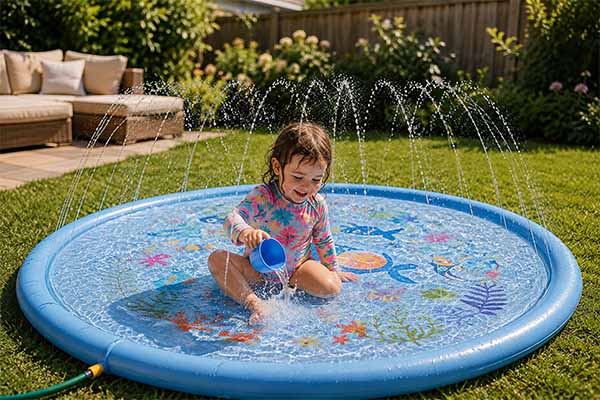
A splash pad can look almost effortless on a hot afternoon: children run through streams of water, the ground stays relatively shallow, and there is no obvious pool to fill before play begins. What is less obvious is that “splash pad” describes several different water-play systems. A city park may use permanent jets, underground pipes, drains, pumps, and water-treatment equipment, while a family backyard may use a foldable PVC pad that starts working as soon as a garden hose is connected.
A splash pad is an interactive water-play area that uses sprays, jets, fountains, or sprinkler openings instead of relying on deep swimming water. Public splash pads are usually permanent recreational facilities, while portable backyard splash pads commonly use household hose pressure to fill an integrated PVC water channel and create controlled spray around a shallow or nearly flat play surface.
That distinction is more important than it first appears. Public spray parks, portable PVC splash pads, lawn sprinklers, kiddie pools, and swimming pools may all provide summer water play, but they behave differently once people actually start using them. Their water management, materials, cleaning needs, play styles, storage requirements, and safety considerations are not interchangeable. Understanding those differences helps families choose more confidently and also explains why some seemingly simple splash pads perform much better than others after an entire summer of repeated use.
What Is a Splash Pad?
A splash pad is a defined water-play area where moving water provides most of the activity. Instead of requiring enough standing water for swimming, it uses jets, spray holes, fountains, arches, or similar features. The category includes permanent public splash parks and portable backyard products, so users should identify which type they are researching before comparing safety, maintenance, materials, or water use.
What Does “Splash Pad” Mean?
In public recreation, the term splash pad may overlap with names such as spray pad, spray park, interactive fountain, wet deck, or water playground. The common feature is not a particular material or shape but a style of recreation built around sprayed or jetted water. CDC describes splash pads as interactive aquatic venues that spray or jet water onto users and notes that they are typically designed so water does not collect in areas accessible to users.
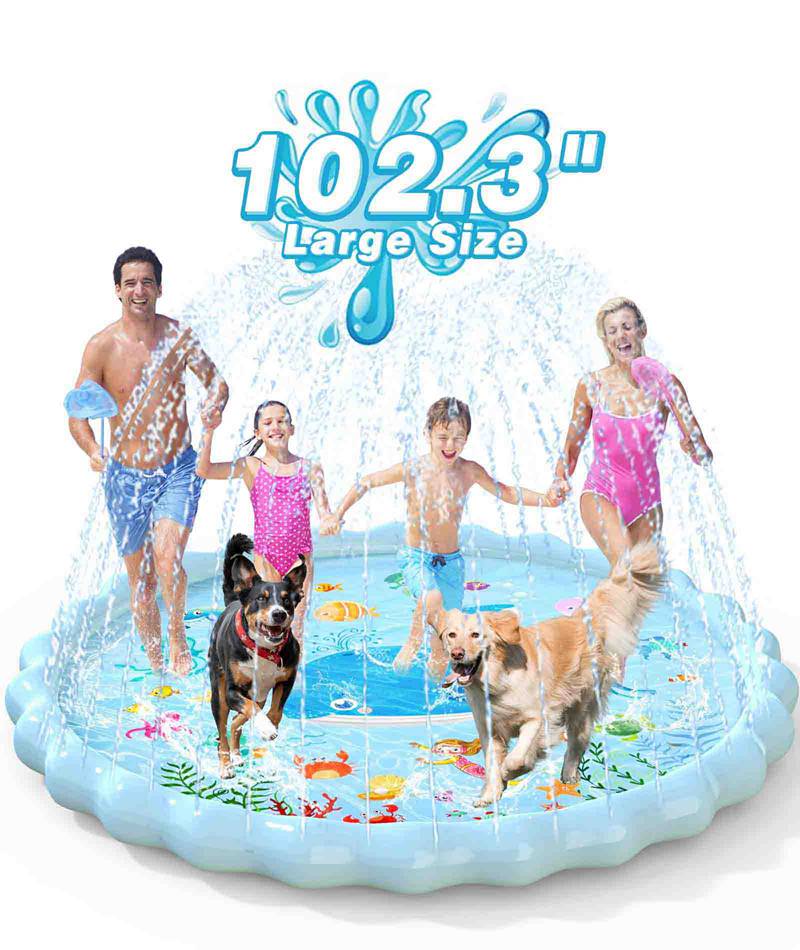
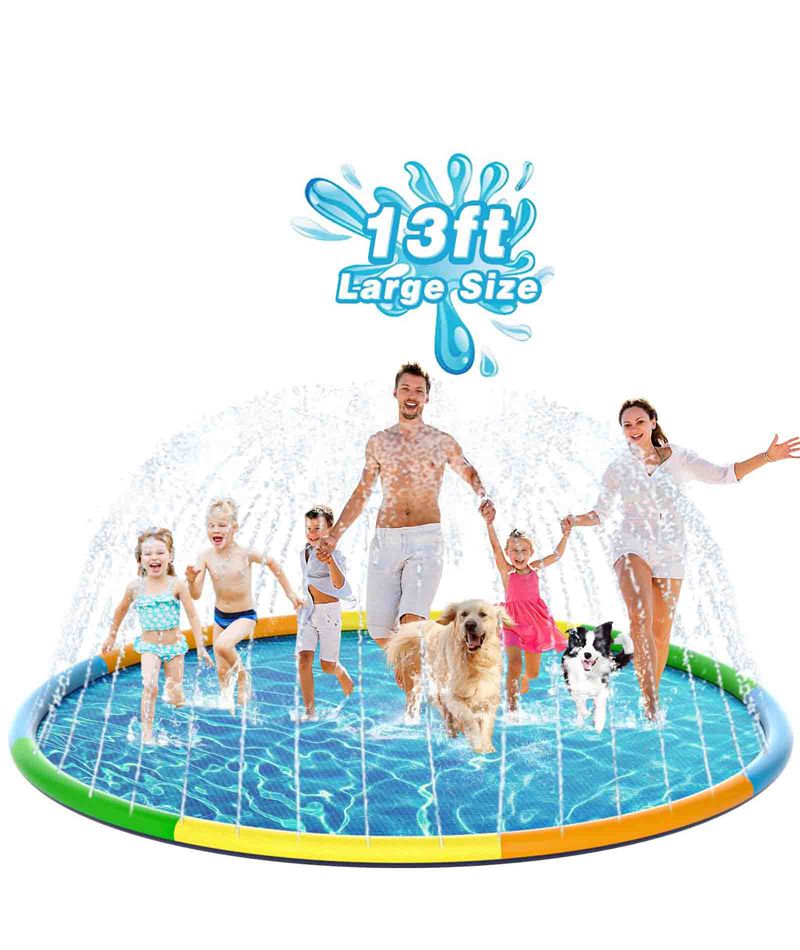
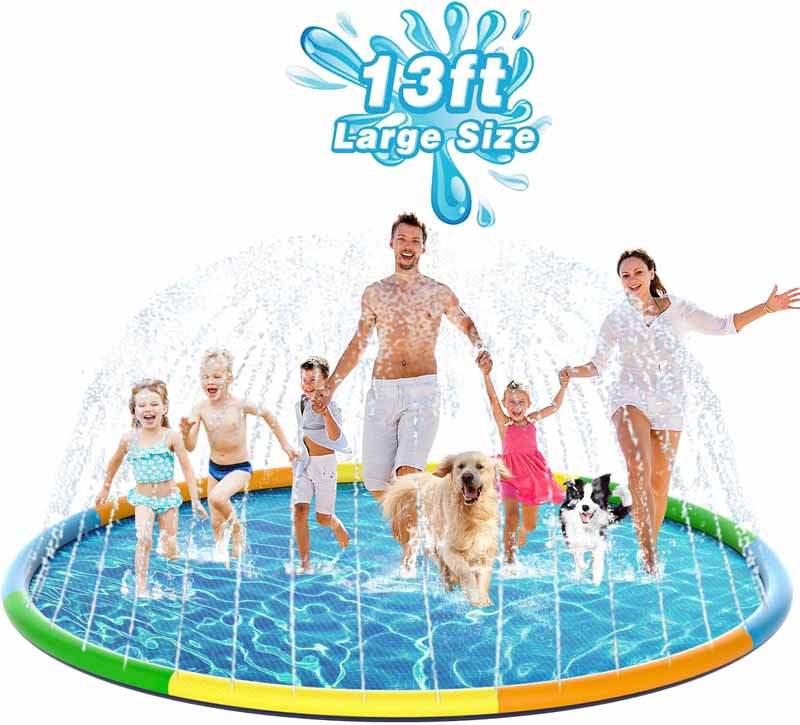
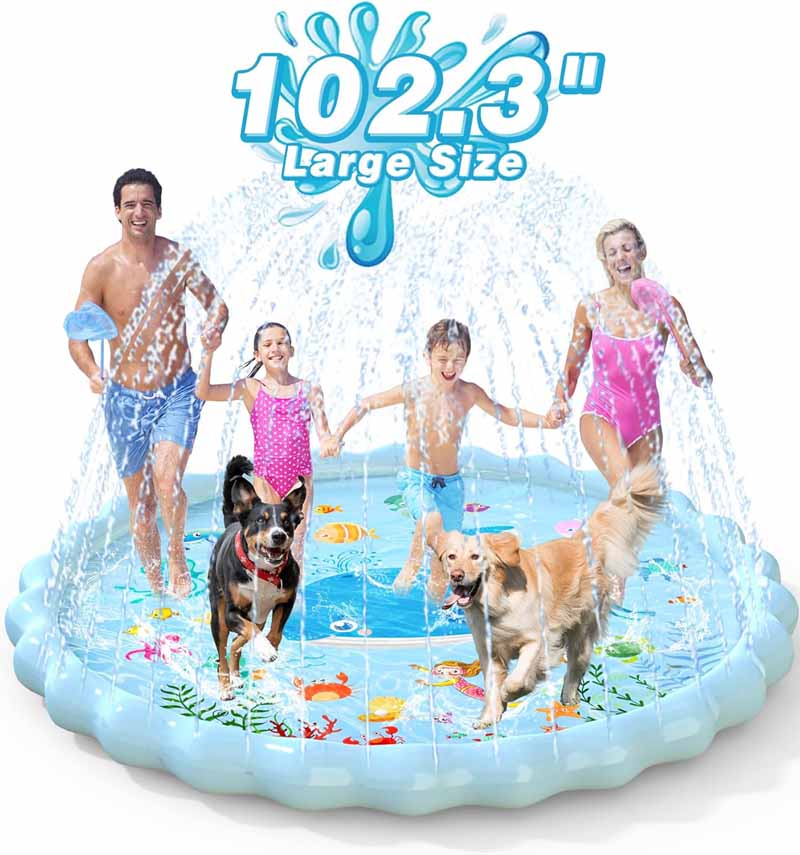
That public definition helps explain the category, but it does not completely describe products sold for home use. A portable backyard splash pad is typically a flexible mat with an integrated water channel. Once connected to a garden hose, the perimeter fills and small openings release water toward or above the center. Some designs remain nearly flat, while raised-edge versions can retain a shallow layer of water during play.
This distinction prevents several common misunderstandings. A public recirculating splash pad may require filtration, disinfection, pumps, and municipal maintenance, while a backyard pad can operate directly from household water. A permanent facility may use concrete or resilient surfacing, while a home product needs a material that can handle wet play and still fold into a box after drying.
The name therefore describes the play concept more reliably than the construction. When comparing products or reading safety advice, the first question should be whether the information refers to a public facility, a permanently installed residential system, or a portable hose-connected splash pad.
Which Splash Pad Types Exist?
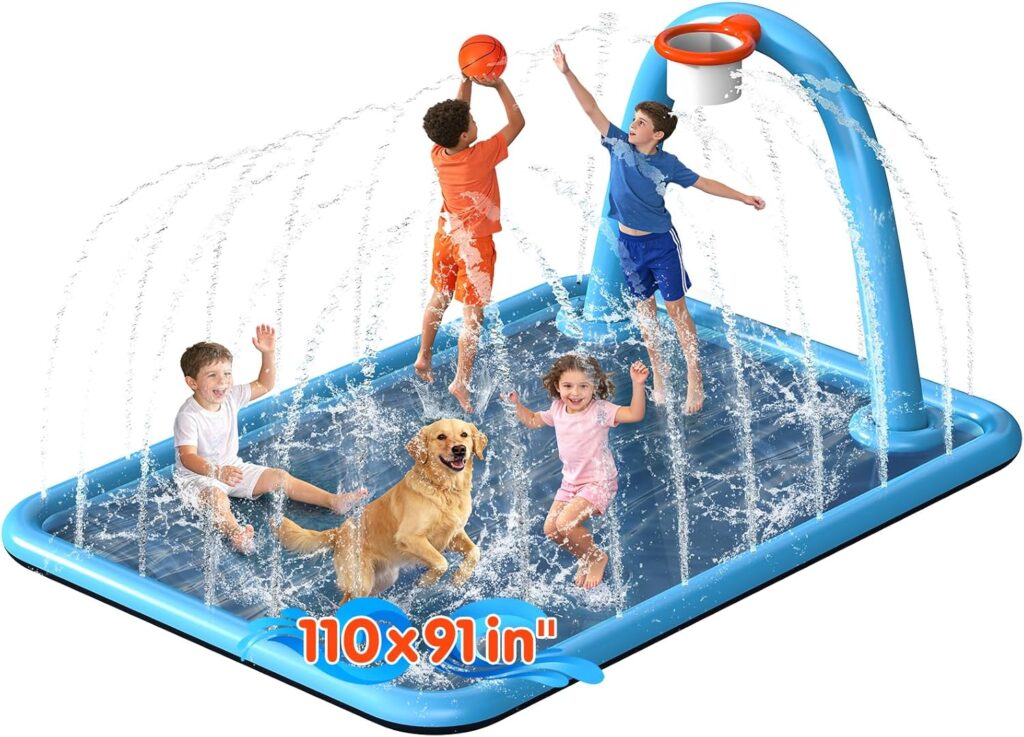
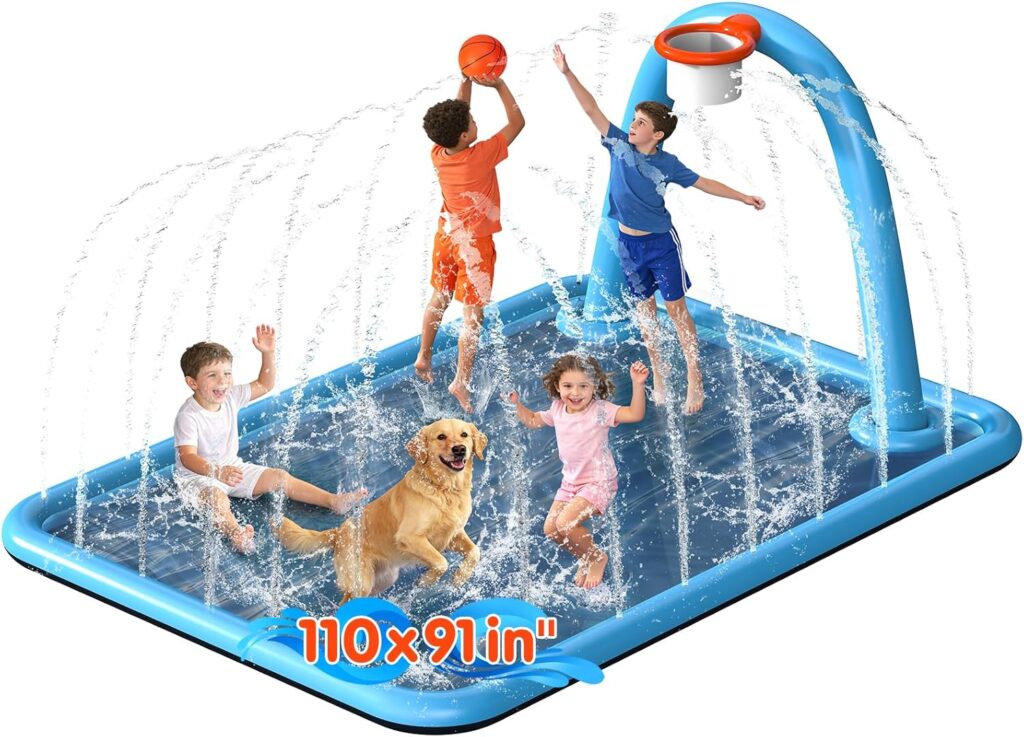
Splash pads now cover a wider range of designs than the familiar round sprinkler mat. Public installations can include ground jets, arches, dump features, fountains, and multiple programmed spray zones. Residential products may be circular, square, rectangular, irregularly shaped, raised around the edge, or combined with goals, arches, animal sprayers, slides, and other interactive components.
| Splash Pad Type | Typical Water Source | Main Structure | Water in Play Area | Common Setting |
|---|---|---|---|---|
| Public splash pad | Municipal or recirculating system | Permanent surface and underground plumbing | Usually little or no standing water | Parks, schools, resorts |
| Installed home splash pad | Residential plumbing | Permanent hardscape and spray fixtures | Usually minimal | Private yards |
| Flat PVC splash pad | Garden hose | Flexible mat with perimeter spray channel | Minimal to shallow | Lawns and patios |
| Raised-edge PVC pad | Garden hose | Flexible base with defined outer edge | Shallow water may collect | Family backyards |
| Interactive PVC pad | Garden hose | Pad with goal, arch, animal, or game feature | Minimal to shallow | Active family play |
The structure has a direct effect on usable play space. A simple circular pad may leave most of its center open, while a large inflatable goal or decorative animal can occupy a meaningful portion of the advertised footprint. Two products with the same external diameter can therefore feel very different when several children are playing at the same time.
The structure also changes the engineering. EPN’s current splash-pad manufacturing range includes round, square, irregular, soccer-goal, sprinkler-arch, animal-character, and other interactive designs. Published examples range from smaller products near 120–170 cm to larger interactive designs around 150–280 cm, showing how product geometry changes with the intended activity rather than simply scaling one design larger.
For families, the useful question is not “Which shape looks most exciting?” but “Which structure leaves enough usable room for the way my children actually play?” For product developers, the question goes further: every change in shape affects water travel, seam loading, material use, spray direction, folding, packaging, and quality-control requirements.

What Is a Backyard Splash Pad?
A backyard splash pad is a portable outdoor water-play product designed to create a temporary spray area without requiring permanent plumbing or a pool-sized volume of stored water. Most models can be spread over a suitable lawn or patio, connected to an ordinary garden hose, adjusted through the faucet, drained after play, dried, and folded for seasonal storage.
That convenience explains much of the category’s popularity, but it also creates a demanding use cycle. The product may be unfolded dozens of times during a summer, filled under water pressure, walked across with wet feet, pulled at the hose connector, exposed to grass and sunlight, emptied, dried, folded, and stored again. The first afternoon tells relatively little about how well it will handle those repeated cycles.
PVC is well suited to this type of product because it can combine water resistance, flexibility, printing, heat-sealing, and compact storage. For many stronger family splash pads, a practical PVC specification can fall around 0.40–0.55 mm, depending on diameter, structure, expected activity, and target product level. EPN uses this range in selected larger backyard splash-pad programs rather than treating one thickness as appropriate for every size.
Thickness alone should never become a shortcut for quality. A heavier sheet can still fail if seams are poorly bonded, while a moderate-thickness pad with well-designed water channels and reinforced stress zones may perform more consistently. Material, welding, connector construction, spray layout, and intended use need to be evaluated as one system.
What Makes a Splash Pad Different?
The clearest difference is how the water creates the activity. A swimming pool stores water so users can sit, wade, float, or swim. A lawn sprinkler projects water across existing ground. A splash pad brings the water-distribution system and the play zone together, making sprayed water part of an intentionally designed surface or recreational space.
That changes what matters during product selection. In a portable splash pad, families should pay attention to usable center area, spray consistency, wet-surface feel, water-channel stability, connector construction, seam quality, drainage, and storage. Those details have more influence on everyday use than an unusually tall spray shown in a product image.
The same logic explains why adding more spray holes does not automatically make a better product. Every opening releases part of the available water. If the total outlet area becomes too large for the household supply, pressure can fall and distant sections may spray poorly. EPN’s published manufacturing references show approximately 40–100 sprinkler openings on typical perimeter rings depending on splash-pad diameter and design rather than using one fixed hole count for every model.
A splash pad is therefore best understood as a small water-distribution system that happens to be fun to play on. Once users think of it that way, differences in price, material, size, and performance become much easier to understand.
How Does a Splash Pad Work?
A splash pad works by moving water from a supply source through a controlled distribution path and releasing it through jets or spray openings. Public facilities may use pumps, underground pipes, drains, filtration, and disinfection equipment. Portable backyard pads usually rely directly on household hose pressure, using an integrated PVC channel to distribute water around the play surface.
How Do Public Splash Pads Work?
Public splash pads commonly use either single-pass or recirculating water arrangements. In a single-pass system, supplied water moves through the spray features, reaches drains after use, and normally leaves the splash-pad system. A recirculating installation collects used water, treats it, and sends it back toward the play features through pumps and distribution equipment.
A visitor may never see most of that system. Beneath the play surface can be pipes, drains, balancing tanks, filtration equipment, disinfectant controls, pumps, valves, sensors, and electronic controllers. More sophisticated installations can operate different zones independently or change water effects depending on timing and user interaction.
This matters because public water systems serve many people. A venue without a deep pool can still require careful recreational-water management. CDC’s splash-pad guidance and outbreak surveillance make clear that reducing standing water does not eliminate the need for properly operated systems and appropriate user behavior.
A home splash pad should not be evaluated using the same plumbing assumptions. Most portable products do not recirculate water through a holding tank and do not contain public-facility filtration equipment. Recognizing that difference keeps safety and maintenance information relevant rather than transferring municipal requirements directly onto a garden-hose product.

How Do Backyard Splash Pads Work?
A portable backyard splash pad usually begins with a simple connection: an outdoor faucet supplies water through a garden hose to an inlet welded or attached to the product. The water then moves into a sealed perimeter chamber or another integrated sprinkler structure.
As the channel fills, pressure builds inside it. Water exits through small openings distributed around the ring, creating streams that typically angle upward and inward. Turning the faucet higher usually raises the spray, while reducing flow lowers it. The perimeter becomes firmer as water pressure increases, even though the structure may contain little or no air.
This is one reason some products described casually as “inflatable splash pads” are not actually inflated in the same way as an inflatable pool toy. Their outer ring may receive its operating shape from water pressure rather than air pressure. More complex models can combine both systems, using air-filled arches or decorative structures together with water-filled sprinkler channels.
The simplicity of the hose connection does not make the internal design unimportant. A poor inlet can restrict flow. An uneven ring can cause weak areas. A fold across the channel can reduce delivery to distant holes. Consistent spray depends on everything between the faucet and the final outlet.
How Does Water Pressure Affect Spray?
Water pressure and available flow determine how firmly the outer channel fills and how high the streams rise. Residential systems vary substantially, but around 40–60 PSI is often used as a practical reference range when developing household hose-connected sprinkler products. EPN uses this type of range during sprinkler and water-distribution testing rather than assuming every customer has exceptionally high water pressure.
| Water Condition | Likely Result | Useful Check |
|---|---|---|
| Low available flow | Soft outer ring and short spray | Open faucet gradually and inspect the supply |
| Stable household flow | Balanced spray around most of the pad | Adjust to comfortable play height |
| Very long or narrow hose | Reduced delivery at the pad | Test a shorter direct hose |
| Hose splitter in use | Flow shared with another outlet | Connect directly when possible |
| Bent perimeter channel | One section sprays poorly | Flatten folds and reposition the product |
| Excessive flow | Very firm ring and unnecessary spray height | Reduce faucet opening gradually |
Pressure and flow are related but not identical. A faucet may show reasonable static pressure while a long hose, small connector, splitter, regulator, or kink reduces the water volume that reaches the pad while it is running. For that reason, weak spray should not automatically be treated as a manufacturing defect.
A useful troubleshooting sequence begins at the water source. Check whether the faucet is fully functional, whether another outlet is sharing the supply, whether the hose is kinked, and whether the connector is restricted. Only after those factors are ruled out does it make sense to inspect the internal water channel or spray openings.
Maximum pressure is rarely the goal. Younger children often enjoy lower spray, and a moderate setting keeps more water within the defined play zone. It can also reduce unnecessary stress on seams and connector areas while limiting runoff into surrounding parts of the yard.
What Controls Even Spray?
Even spray depends on several dimensions working together: inlet diameter, available household flow, perimeter-channel volume, spray-hole size, total number of openings, hole spacing, and outlet angle. Changing one variable can affect the rest of the ring, particularly on larger products where water travels farther from the connector.
Suppose a manufacturer adds many large holes because the design looks impressive on paper. The total outlet area may then exceed what ordinary household flow can support, causing pressure to drop around the ring. The first openings may spray well while those farther from the inlet become weak. A well-designed system balances visual coverage with realistic water supply.
Hole direction matters too. Streams angled too far outward can send a large share of the water beyond the usable surface. Inward-facing spray generally makes more efficient use of the defined play zone, although the ideal angle depends on pad width, intended spray height, user age, and surrounding structures.
At EPN, water-channel geometry, sprinkler-hole placement, connector position, PVC structure, and final dimensions are considered together during splash-pad development. That manufacturing approach is more reliable than treating the spray pattern as a row of decorative holes added after the rest of the product has already been designed.
How Is a Splash Pad Different from a Pool?
A splash pad is designed around active spray and shallow water interaction, while a pool is built to hold enough water for sitting, wading, floating, or swimming. A portable splash pad also differs from a lawn sprinkler because its water system is integrated into a dedicated play surface. Those differences affect setup, storage, water behavior, cleaning, supervision, and the type of play children experience.
Is a Splash Pad a Kiddie Pool?
A splash pad and a kiddie pool can appeal to similar families, but their primary functions are different. A kiddie pool is a container. Water is stored inside a basin and children sit, pour, scoop, or wade in that stored volume. A splash pad is primarily a spray environment where moving water provides the main activity.
The boundary is not always perfectly sharp. Raised-edge splash pads can hold a shallow layer of water in the center, while very shallow pools may also be used for active splashing. The most useful distinction is still the dominant function: if the perimeter sprinkler system is central to how the product is enjoyed, it behaves more like a splash pad.
This affects cleanup and storage. A flat sprinkler mat usually contains less water to empty after play and can often fold into a smaller package than a rigid or high-wall pool. A kiddie pool may provide a better environment for children who prefer seated water activities, cups, toys, and shallow wading rather than running through spray.
Neither format should be treated as supervision-free. A shallow product can reduce exposure to deep swimming water, but children still need active adult attention around water and on wet outdoor surfaces.

Is a Splash Pad a Sprinkler?
A splash pad uses the same basic principle as a sprinkler—pressurized water exits through small openings—but adds a defined surface where users can stand, sit, crawl, or run. A traditional lawn sprinkler simply projects water across whatever ground already exists.
That integrated surface changes the product considerably. A splash pad has to tolerate wet foot traffic while its perimeter remains under pressure. The connector experiences water flow and hose movement. The underside touches grass or another outdoor surface. The material is then drained and repeatedly folded back into storage.
Those conditions explain why a splash pad cannot be judged only by spray height. A dramatic stream may look good in a product photograph but says little about seam durability, wet-surface feel, drainage, fold recovery, or whether the far side receives enough water.
Families who mainly want children to run through a few streams of water may find a simple sprinkler sufficient. A splash pad becomes more useful when they want a clear play area, younger children sitting closer to the water, themed games, toys, or a surface that separates the wet activity from surrounding grass.
Which Water Play Fits Best?
No single backyard water product is best for every family because each format supports a different style of activity. The practical choice depends on whether users want swimming, shallow sitting, active spray, minimal setup, or a combination of these features.
| Feature | Backyard Splash Pad | Kiddie Pool | Swimming Pool | Lawn Sprinkler |
|---|---|---|---|---|
| Main activity | Spray and movement | Sitting and wading | Swimming and general water recreation | Running through spray |
| Standing water | Minimal to shallow | Shallow to moderate | Substantial | Almost none |
| Water during play | Usually continuous flow | Primarily stored | Stored and managed | Continuous flow |
| Dedicated play surface | Yes | Yes | Yes | No |
| Setup effort | Usually low | Low to moderate | High | Very low |
| Seasonal storage | Usually compact | Varies | Significant | Very compact |
| Best fit | Active backyard play | Quiet shallow play | Swimming and longer sessions | Simple spray play |
A toddler who enjoys sitting and pouring cups of water may prefer a small pool, while siblings who constantly run and chase each other may use an open splash pad more naturally. Children learning to swim need an appropriate swimming environment rather than a sprinkler mat.
Yard layout matters equally. A portable splash pad can work well where a seasonal pool would occupy too much space or create more maintenance than the household wants. Families with an existing swimming pool may still use a pad as a separate area for younger children or short play sessions.
Instead of asking which product is “better,” compare the activity the family wants, the amount of available space, the cleanup they are willing to handle, and how easily the product can be stored when summer ends.
Is Less Water Always Better?
A splash pad generally holds much less standing water than a pool, but that does not guarantee lower total water consumption. Most hose-connected models require running water throughout the play session, so actual use depends on flow rate and operating time.
Consider the difference between stored volume and throughput. A pool can hold a large amount of water but reuse that water over many sessions when properly maintained. A splash pad stores very little at any one moment but continuously receives fresh water while operating. A lawn sprinkler behaves similarly from a water-use perspective.
That is why claims that splash pads “always save water” should be treated cautiously. A modest spray setting used for thirty minutes may consume far less than a high-flow setup left running for several hours. Local climate, runoff, drainage, household pressure, and user behavior all influence the result.
Families can make operation more practical by using only enough flow to maintain enjoyable spray. Very tall water arcs are rarely necessary. Moderate pressure usually keeps more water near the play area, feels gentler for younger children, and reduces unnecessary runoff into paths, walls, or neighboring parts of the yard.
Are Splash Pads Safe for Kids?
Splash pads reduce exposure to deep standing water, but they are not risk-free. Wet surfaces can become slippery, children can collide while running, outdoor materials may heat in direct sun, and contaminated water can transmit illness. Safer use depends on active adult supervision, suitable ground, sensible water pressure, age-appropriate play, good hygiene, and regular inspection of the product and surrounding area.
What Safety Risks Matter?
Slipping is one of the most obvious concerns because splash pads deliberately combine water with active movement. Textured PVC can provide more tactile contact than a completely smooth surface, but no responsible manufacturer should describe a wet surface as impossible to slip on. Sunscreen, soil, soap, grass residue, food, body oils, or algae can change traction further.
Trips and collisions are another practical issue. A hose stretched across the main entry path can become a hazard. A stone, tree root, irrigation head, or raised paving edge beneath flexible material may create an unexpected bump. When several children of different ages use a compact pad together, faster movement can also increase the chance of accidental contact.
Temperature deserves attention before water is turned on. Outdoor materials exposed to strong sunlight can become uncomfortable against bare feet or knees. Checking the surface before children enter is a simple habit, especially when the product has been lying in direct sun.
A useful pre-play inspection takes less than a minute but can prevent many avoidable problems. Look beneath the pad, follow the hose route, check seams and the connector, remove nearby hard objects, and make sure adults have a clear view of the entire play area.

How Can Parents Reduce Slips?
Start with the ground underneath the pad. Flexible PVC does not correct an uneven surface; it follows it. A mat placed across a root, stone, drain cover, steep slope, or raised paving joint can create unstable footing even if the PVC itself has a textured finish.
Grass is often a practical base because it is comparatively forgiving, but it still needs inspection. Remove sticks and stones, identify irrigation fittings, and avoid areas with sharp weeds or hidden debris. Hard patios may provide a flatter base, although a fall outside the product will generally be less forgiving than on soft lawn.
Surface texture helps, but it works best as part of a broader setup. EPN treats anti-slip texturing as one engineering consideration in flat and raised-edge splash-pad development, alongside water-channel stability and seam construction. The goal is to improve the wet-use environment rather than suggest that texture alone removes slipping risk.
Soap and shampoo deserve special caution. They can significantly reduce traction on wet PVC, particularly when several children are running or changing direction. Unless a product is specifically designed and instructed for bathing use, adding soap simply to create bubbles can make the play surface much harder to manage safely.
Do Splash Pads Spread Germs?
Public splash pads can spread waterborne illness when contaminated water enters a shared system and treatment does not adequately control pathogens. This is particularly relevant to recirculating facilities, where many visitors may interact with water that is collected, treated, and returned to the play features.
CDC’s 2024 surveillance summary identified 60 reported waterborne disease outbreaks associated with splash pads in the United States during 1997–2022. Those reported outbreaks were associated with 10,611 cases, 152 hospitalizations, 99 emergency-department visits, and no reported deaths. Cryptosporidium was involved in 40 of the reported outbreaks and accounted for most of the reported illnesses.
Those figures need to be interpreted correctly. They describe reported outbreaks associated primarily with public aquatic venues and should not be presented as incidence statistics for portable household PVC mats connected directly to fresh tap water. Public recirculation, user volume, treatment practices, and environmental conditions create a very different exposure pattern.
Home products still need basic hygiene. Children experiencing diarrhea should not participate in shared water play. Food, pet waste, soil, and dirty toys should be kept away from the active area where possible. Children should not intentionally drink the water simply because it originally entered through a household hose.
After play, visible dirt and organic residue should be rinsed away rather than allowed to dry onto the product. Hygiene is easier when cleaning is treated as part of normal shutdown rather than something saved until the pad has already been folded for storage.
Does Shallow Water Remove Drowning Risk?
One reason splash pads are attractive for younger children is that they do not rely on the deep water required for swimming. CDC notes that public splash pads are typically designed so water does not accumulate in accessible areas, which helps minimize drowning risk compared with deeper aquatic venues.
“Lower risk” should not be translated into “no supervision needed.” Young children can still fall, become distressed by unexpectedly strong spray, collide, leave the play surface, or move toward other hazards in the yard. A splash pad located next to steps, a swimming pool, a driveway, or hard furniture may create risks unrelated to the depth of water on the mat itself.
The surrounding environment therefore matters as much as the product. Adults should position themselves where the whole activity zone is visible. The hose should not create a route toward an unsafe area, and children should have enough open space to move without repeatedly colliding.
Water pressure can also be adapted to the users. Toddlers may prefer low streams that fall gently near the center, while older children may enjoy stronger spray. Adjusting the product to the children is more useful than operating every session at the highest possible flow.
Which Splash Pad Fits Backyard Use?
The right backyard splash pad fits the real yard, number and age of users, water supply, ground conditions, and expected frequency of play. Outer dimensions alone are not enough. Usable space, PVC specification, seam quality, surface texture, hose-inlet construction, spray distribution, drainage, and storage behavior determine whether a product remains practical after repeated summer use rather than only looking impressive when first opened.
Which Size Fits Your Yard?
Measure the usable play area before choosing a splash pad. Product photography can make a mat seem larger than the space children actually receive because the outer sprinkler channel, raised edge, arches, goals, or decorative structures all occupy part of the advertised dimensions.
A 10-foot-diameter circular product has a theoretical total footprint of approximately 78.5 square feet, but the completely open play area will be smaller after the outer water channel is deducted. If the same product includes an inflatable goal or large character in the center, the usable movement area decreases further.
Families should also allow clearance outside the product. Children run onto and off the mat, adults need access to the hose, and spray can extend beyond the physical edge. Placing a pad tightly between outdoor furniture, steps, walls, or a grill can turn a seemingly adequate footprint into an uncomfortable play area.
For multiple children, the shape of the open center may be more important than the largest advertised dimension. A simpler 8- or 10-foot design with an unobstructed middle can sometimes provide more useful movement than a larger product filled with decorative structures.
Before ordering, mark the proposed footprint on the ground, check hose reach, observe where runoff will move, and imagine where an adult will stand while supervising. Those practical measurements reveal far more than a product photo alone.
What PVC Features Matter?
PVC is widely used for foldable splash pads because it combines water resistance, flexibility, weldability, print compatibility, and compact storage. Thickness influences product feel and resistance to everyday outdoor stress, but it should always be considered with seam design and intended use.
For many family-oriented splash pads, approximately 0.35–0.50 mm can be a useful working range, with stronger large-format or mixed-use products sometimes moving toward approximately 0.40–0.55 mm depending on structure. EPN’s current material references show this kind of progression rather than treating the heaviest sheet as automatically superior.
| PVC / Design Reference | Typical Use Direction | Main Advantage | Main Watch Point |
|---|---|---|---|
| 0.30–0.35 mm PVC | Smaller or lighter-use pads | Easy folding and lower weight | Less margin for rough use |
| 0.35–0.45 mm PVC | Regular family splash pads | Balanced flexibility and structure | Seam quality still matters |
| 0.45–0.50 mm PVC | Larger or more active family use | More substantial repeated-use feel | Slightly heavier to fold |
| 0.50–0.55 mm PVC | Selected heavy-duty or mixed-use designs | Added material body | Not necessary for every child-use model |
| Textured surface | Wet barefoot play | Better tactile contact | Still requires supervision |
| Reinforced inlet | Repeated hose connection | Reduces concentrated connector stress | Welding and geometry matter |
| Consistent perimeter seam | Pressurized spray ring | Helps maintain water channel | Must tolerate repeated pressure cycles |
Thickness alone does not prevent failure. In flexible PVC products, problems frequently concentrate around transitions: connectors, corners, curved seams, welded overlaps, fold lines, and areas where users regularly step across the pressurized edge.
This is why EPN’s engineering approach pairs material selection with water-channel geometry, high-frequency welding, stress-zone reinforcement, and product-use conditions. For backyard products, reinforcing the areas that actually receive concentrated load can be more useful than increasing material thickness uniformly everywhere.
Readers comparing materials in more detail should therefore look beyond a single millimeter figure. Surface feel, flexibility, odor, seam integrity, reinforcement, fold recovery, and compatibility with the intended ground surface all affect the way a splash pad performs over a season.

How Do Spray Design and Structure Matter?
The outer sprinkler ring is one of the most important structural components of a portable splash pad. It has to carry water around the full product, maintain enough shape under pressure, and hold the outlet holes at angles that direct water where children can actually use it.
Hole size creates a trade-off. Small openings can produce narrow, defined streams but may be more sensitive to debris. Larger openings release more water and can reduce pressure across the rest of the ring. Total hole count also matters because every outlet adds to the water demand placed on the household supply.
EPN’s published splash-pad design references show approximately 40–100 sprinkler holes on typical perimeter rings depending on diameter. That range is useful because it demonstrates that hole count is a design variable, not a universal quality score. A larger pad may need more openings, but those holes still have to be matched to ring volume and realistic residential flow.
Spray direction deserves equal attention. Water aimed too far outside the pad can create attractive photography while wasting much of the usable flow. Inward-facing arcs generally keep more of the water around the children and defined play surface.
For custom products, this is also where visual design and engineering meet. Moving a hose connector, adding an arch, changing a circle into a square, increasing diameter, or placing a goal across the ring can alter water paths and seam loads. A good custom design should be tested as a working water system rather than approved only from a two-dimensional artwork file.
How Do You Clean and Store It?
A splash pad should be drained, rinsed, dried completely, inspected, and folded before long-term storage. Drying is the step most likely to be rushed, yet it has a major influence on odor, residue, surface sticking, staining, and the condition of the PVC when the product is opened again.
After use, turn off the faucet and allow pressure to leave the ring before forcing the product into a folded shape. Disconnect the hose, remove remaining water, and rinse away grass, soil, sunscreen residue, food, or pet hair. Cleaning methods should remain compatible with the manufacturer’s instructions because aggressive solvents or abrasive tools can affect flexible PVC or printed surfaces.
Both sides need air exposure. A top surface can appear perfectly dry while moisture remains trapped underneath against grass. Turning or moving the pad so the underside can dry is worth the extra effort, particularly before the product will remain folded for several days or months.
Before seasonal storage, inspect the connector, welded perimeter, spray openings, underside, and frequently folded areas. Store the dry product away from sharp garden tools and avoid leaving heavy objects on top of the same fold lines for long periods.
The most useful durability question is not how attractive a splash pad looks when it first comes out of the box. Ask how easily it drains, cleans, unfolds, and sprays on the tenth or twentieth use. Products designed around that repeated routine are usually much easier to live with than those optimized mainly for a first-day impression.
A splash pad turns a relatively simple water supply into an active outdoor play environment, but the term covers very different systems. Public splash pads can hide substantial plumbing and water-management infrastructure beneath the surface, while portable backyard pads depend on a much simpler relationship between a garden hose, PVC water channel, spray openings, welded seams, and a flexible play area.
For families, that understanding makes shopping easier. Choose the size according to real usable space rather than photography, use enough water pressure for comfortable spray rather than maximum height, look at material and seam construction together, and plan for drainage and drying before the first session begins. A splash pad that fits those everyday conditions is more valuable than one that wins only on diameter, spray height, or artwork.
The same lesson applies to product development. EPN’s experience with splash pads and other PVC recreational products shows that material thickness, high-frequency welding, water distribution, stress zones, surface feel, connector design, and storage behavior have to be considered together. A colorful sprinkler mat may look simple, but dependable repeated use comes from dozens of small design decisions that users may never notice when everything is working correctly.
Frequently Asked Questions
What age is a splash pad best for?
Splash pads are commonly used by toddlers and young children, but there is no single age range that applies to every product. Families should follow the manufacturer’s specific age guidance and consider spray intensity, surface size, structures on the pad, and the child’s ability. Younger children need particularly close supervision, and lower water pressure may provide a more comfortable introduction to spray play.
Does a splash pad need to be inflated?
Not always. Many flat backyard splash pads use water pressure rather than air to give the perimeter ring its operating shape. The garden hose fills the outer channel and water exits through spray openings. More complex models may include air-inflated goals, arches, slides, or animal structures alongside a water-fed base, so users should check whether the product requires water, air, or both before setup.
Can you put a splash pad on concrete?
Some splash pads may be placed on a suitable hard surface if the manufacturer permits it, but concrete offers much less cushioning than grass and can become slippery around the wet area. Flexible PVC is also more exposed to abrasion on rough paving. A clean, level lawn is often a more forgiving choice when available, provided sticks, stones, roots, irrigation heads, and other sharp objects are removed first.
How much water pressure does a splash pad need?
Most household hose-connected splash pads are designed around ordinary residential water supplies rather than specialist pumps. Around 40–60 PSI is often used as a practical development reference, but actual performance depends on flow, hose length, connector size, splitters, regulators, and the pad’s spray layout. Users should begin at moderate flow and increase gradually until the spray reaches a comfortable, stable height.
How long can kids play on a splash pad?
There is no universal maximum session time because weather, child age, water temperature, sun exposure, physical activity, and supervision all matter. Children should take breaks, drink water, and leave the pad if they become cold, tired, overheated, or uncomfortable. During longer sessions, adults should also monitor sunscreen needs, changes in surface condition, and whether runoff is accumulating around the play area.
How do you keep a splash pad from getting moldy or smelly?
The most important habit is drying the product completely before folding it. Drain the perimeter, rinse away dirt and organic residue, and expose both the top and underside to moving air. Folding damp PVC can trap moisture between large surfaces and contribute to unpleasant odor, staining, residue, or microbial growth during storage. Long-term storage should begin only when the product is fully clean and dry.
Is a splash pad better than a kiddie pool?
Neither option is universally better because they support different activities. A splash pad is usually better suited to running, sprinkler play, quick setup, and minimal standing water, while a kiddie pool provides more stored water for sitting, scooping, and shallow wading. Yard space, children’s preferred activities, water use, supervision, cleaning effort, and seasonal storage should determine which option fits a particular household.