Skip to content
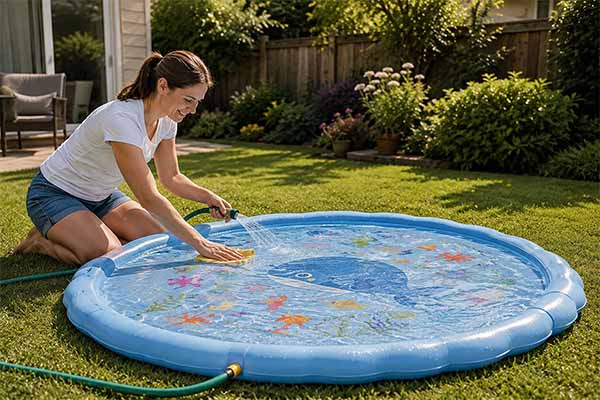
A dog pool can look clean when the hose is first turned on and very different twenty minutes later. Wet paws carry grass and soil into the water, loose fur settles along the bottom, saliva and coat oils create a light film, and repeated movement pushes fine dirt into the textured floor. If the same pool is used for bathing, shampoo and loosened coat residue add another layer of contamination. Warm weather makes these changes happen faster, especially when water is left standing between play sessions.
That does not mean dog-pool maintenance needs to become complicated. Portable PVC pools are different from permanent swimming pools because most of them do not have continuous filtration, circulation, or measured sanitizer systems. In many cases, the most practical solution is not adding more chemicals but removing dirty water, cleaning the surface properly, and starting again with fresh water.
The safest way to clean a portable dog pool is to remove loose hair and debris, drain the used water, rinse the PVC, wash dirty areas with diluted mild detergent and a soft cloth or brush, rinse until no cleaner remains, flush the drain and fittings, and allow the inside and underside to dry completely before folding or storage. Dirty standing water is usually better replaced than repeatedly treated.
The details matter more than the basic sequence. A pool can appear dry while moisture remains underneath. A drain can look clear while wet hair is wrapped around the sealing surface. A textured floor can look bright yet still feel slippery because a thin residue remains. These are the small maintenance issues that determine whether the pool stays easy to use through the season or gradually becomes harder to clean.
What Should You Do Before Cleaning a Dog Pool?
Before cleaning a dog pool, remove the dog, toys, hair, grass, leaves, and other loose debris, then drain the used water through the intended outlet. Once the pool is mostly empty, inspect the floor, sidewalls, seams, drains, hose fittings, and underside. Starting with controlled drainage and a quick inspection makes cleaning faster and reduces unnecessary stress on flexible PVC.
Drain Before Washing
A portable dog pool is easier to clean after most of the water has been removed. Scrubbing while the pool is still full simply releases dirt back into the same water, making it difficult to see whether mud and surface film have actually left the floor. Hair, soil, saliva, coat oils, shampoo, and grass also tend to settle into low areas around the drain and the connection between the wall and floor.
Draining first is also safer for the product itself. Water is heavy: one liter weighs approximately one kilogram. A large dog pool with only a shallow layer of water may still be carrying several hundred kilograms of total load. Pulling that weight across concrete, rough paving, gravel, or uneven lawn increases abrasion against the bottom PVC and places unnecessary stress on wall connections and drain fittings.
The built-in drain should do most of the work. Before opening it completely, remove visible clumps of wet hair and larger leaves so they do not gather at the entrance. If the pool is a sprinkler model, it may have a lower outlet for complete emptying and another opening positioned higher on the wall for controlling the operating water level. These fittings serve different purposes, so it is worth understanding them before cleaning.
For a large pool, the safest habit is simple: leave it where it is, drain the water first, and move the product only after most of the load has disappeared.
Remove Hair and Debris
Wet dog hair is one of the most common reasons a pool becomes frustrating to clean. Dry fur is easy to sweep away, but once wet it sticks to embossed PVC, wraps around outlets, and mixes with fine soil into dense clumps. Long-haired and double-coated dogs can release even more coat during water play, particularly during seasonal shedding.
It is usually faster to remove this material before adding any detergent. A gloved hand, microfiber cloth, soft plastic scoop, or gentle water flow can deal with most visible contamination without stressing the surface. Sharp objects should not be used around drains, even when the opening looks blocked. A few minutes spent removing hair safely is far preferable to damaging the fitting or surrounding PVC while trying to clear it.
The most useful places to inspect are not always the most obvious. Hair and sediment often collect at the wall-to-floor joint, while fine dirt sits inside shallow floor texture. The lower drain deserves special attention because almost every loose particle in the pool eventually moves toward it. The underside should also be checked before the pool is repositioned, particularly after use on grass or bare soil.
| Area to Inspect | Common Contamination | Practical Check |
|---|---|---|
| Center floor | Fine mud, paw debris, hair | Feel for sediment or slippery film |
| Floor-wall edge | Fur, grass, soil | Inspect around folds and panel bases |
| Lower drain | Hair, leaves, grit | Confirm water flows without restriction |
| Hose inlet | Soil, mineral residue | Wipe around the connector |
| Sprinkler rim | Mud, shampoo residue | Check for uneven spray |
| Underside | Grass, sand, small stones | Inspect before moving or folding |
Removing debris at this stage means the detergent can work on the actual PVC surface instead of being wasted on material that could have been lifted away by hand.
Inspect PVC and Fittings
An empty pool creates a good opportunity to inspect areas that are difficult to see while it is filled. Small signs of wear are much easier to deal with before the next use than after the pool has been refilled. Look for cuts, abrasion, unusual fold marks, lifting near seams, loose fittings, distorted drain caps, or material that has repeatedly rubbed against the same rough point underneath.
Construction type changes where attention is most useful. A foldable dog pool normally combines flexible PVC with internal wall-support panels, while an inflatable pool relies on sealed air chambers. Panel-supported pools therefore deserve closer inspection around panel divisions, the wall-to-floor connection, drains, and repeated fold lines. Inflatable models need additional attention around valves and air-chamber seams.
Material thickness is part of durability but does not make a pool immune to poor handling. EPN’s foldable sprinkler dog-pool platform, for example, uses approximately 0.55 mm PVC with internal PP support panels. That is a substantial construction for repeated recreational use, yet sharp stones, rough concrete, or dragging the pool while loaded with water can still damage the floor.
Fittings should be handled carefully as well. Drain caps and hose connectors need to seal securely, but overtightening plastic parts can deform threads or stress the surrounding PVC. A fitting that closes correctly with normal hand pressure rarely benefits from being forced tighter.

Prepare the Cleaning Area
The surface beneath the pool matters during cleaning because wet PVC is easier to mark or abrade when it is dragged over rough ground. Washing directly on muddy lawn may also mean that the underside becomes dirty again immediately after the interior has been cleaned. A flat, relatively smooth surface with controlled drainage is much easier to work on.
A clean patio, smooth tarp, rubber mat, or well-maintained lawn can all be suitable once stones and sharp debris have been removed. The pool should be positioned so dirty water can leave without flowing toward a pet’s drinking area, sensitive plants, or places where children may immediately walk through cleaning residue.
The tools needed are simple. A soft-bristle brush, microfiber cloth, non-abrasive sponge, bucket, mild detergent, garden hose, clean towel, and gloves are enough for most maintenance. Dedicated tools are useful because brushes used elsewhere in the home or workshop can carry grease, solvent, bleach, or other residues that are not ideal for flexible PVC.
Preparation may seem like a small part of the job, but it prevents the common situation where the owner cleans one side of the pool while simultaneously dragging the other side through dirt.
How Do You Clean a Dog Pool Step by Step?
Clean a dog pool by draining it, removing loose debris, rinsing from the upper walls toward the lower drain, washing the floor and sidewalls with diluted mild detergent, gently cleaning textured areas and fittings, and rinsing again until no soap remains. Finish by draining residual water and allowing the interior, underside, fittings, and folds to dry before reuse or storage.
Rinse From Top to Drain
The first rinse should move contamination in one direction. Start along the upper wall and work downward, guiding soil and hair toward the floor and finally toward the lower drain. This approach avoids repeatedly washing dirty water back over areas that have already been cleaned.
Normal garden-hose pressure is enough for most portable PVC pools. The surface does not need the kind of concentrated force used to clean concrete or stone. High-pressure washing at close range can place unnecessary stress on printed areas, welded seams, and plastic fittings without offering much benefit for ordinary dog-pool dirt.
Pools used for bathing often need extra attention at the waterline and lower corners. Shampoo and coat oils can leave a thin film that is difficult to see while the material is wet. If fresh rinse water creates repeated foam in one area, the surface may still be holding detergent or shampoo residue.
Rinsing becomes more efficient when the direction of water flow is deliberate. Clean the walls first, guide the runoff toward the floor, push loosened debris toward the outlet, and then flush the drain. Once the first rinse is complete, the actual condition of the PVC is much easier to judge.
Wash Textured PVC
Textured flooring helps provide more contact for wet paws, but it also gives fine soil and organic residue more places to settle. This is why a pool can appear visually clean from standing height while still feeling slick when touched by hand.
A small amount of mild detergent diluted in water is usually enough for routine washing. Mixing the solution in a bucket provides better control than pouring concentrated soap directly onto the PVC. Apply it with a microfiber cloth, soft sponge, or soft-bristle brush and work across the surface with moderate pressure.
Dried mud should be allowed to soften before scrubbing. Rewetting the area and giving the water a little time to work is safer than immediately reaching for a harder tool. Rough scouring pads, metal brushes, abrasive powders, and workshop cleaning blocks can dull printed material, alter embossed texture, and leave small scratches that make later cleaning more difficult.
The lower wall, wall-to-floor connection, drain flange, and areas that receive repeated paw traffic deserve more attention than broad open surfaces. These are also the locations where oily film and fine sediment often remain after a quick rinse.
A clean PVC surface does not need to look polished. It should simply feel free from mud, greasy residue, slime, and cleaner that could enter the next refill.
Clean Drains and Sprinklers
The drain is often the dirtiest fitting in the entire pool because hair, grass, leaves, and sediment naturally move toward it during emptying. Once most of the water is gone, inspect the opening and remove any visible fur manually or with a soft cloth. A final flush with clean water helps clear remaining fine particles.
The sealing area of the cap deserves just as much attention as the opening itself. A few strands of hair or grains of sand between the sealing surfaces can cause slow dripping even when the drain fitting has no actual defect.
Sprinkler dog pools introduce another cleaning point around the rim channel. Small outlet holes can collect soil, shampoo residue, or mineral deposits over repeated use. If several jets become weaker or uneven, flush the channel with clean water and wipe visible residue before assuming the structure is damaged.
Sharp tools should not be inserted into sprinkler holes. A needle, knife, or drill can permanently alter the opening size, which changes flow distribution around the rim. On a system designed with one hose inlet, an upper water-level outlet, and a lower drain, keeping each pathway clear allows the pool to operate and empty as intended without forcing the fittings.

Rinse and Dry Completely
The second rinse is where a cleaned pool becomes ready for reuse. Soap left on the PVC can make the floor feel slippery, attract dust in storage, and dissolve into fresh water the next time the pool is filled. Dogs may also lick the surface or groom their paws afterward, so eliminating residue is important.
Continue rinsing until visible foam disappears and the water leaving the drain runs clear. A quick hand check is useful: if the floor feels unusually slick or fresh water still produces bubbles, additional rinsing is needed. This is also why using a modest amount of detergent at the washing stage saves time later.
Once the rinse is finished, let the lower drain remove as much water as possible and wipe remaining puddles with a clean towel. Drying should not stop when the center of the floor looks dry. Moisture frequently remains under the pool, around the drain flange, inside the folds between wall panels, and near the hose fitting.
A large dog pool that has been sitting on grass can become dry inside while the underside remains damp for much longer. Reposition the empty pool so air can reach the bottom and the wall sections. Before folding, run a hand across the areas that will touch each other in storage. If either surface still feels damp, allow more drying time.
This physical check is more reliable than giving every pool the same drying time because humidity, airflow, sunlight, pool size, and ground conditions vary widely.
Which Cleaners Are Safe for a Dog Pool?
For routine dog-pool cleaning, fresh water and a small amount of mild, easily rinsed detergent are usually the best starting point. Stronger disinfectants should be reserved for specific hygiene situations and used only when they are compatible with the pool material. Solvent cleaners, abrasive powders, uncontrolled chemical mixtures, and concentrated swimming-pool chemicals should not be used casually on PVC surfaces dogs directly contact.
Mild Soap for Routine Cleaning
Most everyday dog-pool contamination is a normal cleaning problem rather than a reason to reach immediately for a disinfectant. Mud, coat oils, saliva, grass, shampoo residue, and loose hair usually respond well to water, a small amount of mild detergent, and gentle physical cleaning.
Using less detergent often produces a better overall result because the cleaning solution is easier to rinse completely. Large pools have a substantial PVC surface area, and excessive soap can turn the final rinse into the longest part of the job. Diluting the detergent in a bucket also prevents concentrated product from sitting on one area of the floor.
The most useful routine cleaner is mild, non-abrasive, simple to dilute, and easy to wash away. The label should still be followed because formulations vary between brands.
This matters more with pet products than many owners realize. Dogs may lick the floor, drink small amounts of water, lean against the wall, or groom their paws immediately after leaving the pool. A cleaner that is acceptable for household use still needs to be thoroughly removed from a surface the dog directly contacts.
Routine cleaning is therefore less about finding a strong chemical and more about matching the cleaner to the actual contamination. Fresh mud generally needs washing, not aggressive disinfection.
Vinegar and Household Remedies
Vinegar is commonly discussed in household cleaning because it can help with some light mineral residue and odor. However, being familiar or “natural” does not automatically mean it is necessary for every dog pool or compatible with every printed PVC construction.
If diluted vinegar is being considered, the manufacturer’s care instructions should be checked first. It should be used cautiously and rinsed away afterward. Ordinary soil, hair, and light organic residue usually do not require vinegar if mild detergent and fresh water already produce a clean surface.
The more important safety point is chemical mixing. Vinegar and other acidic products should never be combined with chlorine bleach because incompatible chemicals can release dangerous gases. The safer rule is to avoid mixing cleaners unless their labels clearly permit the combination.
Owners sometimes add household products directly to dirty standing water in an attempt to extend the time between water changes. For portable pools without filtration or controlled chemistry, this can make maintenance more complicated rather than easier. If the water is visibly dirty, slimy, or heavily contaminated, draining and refilling after cleaning is usually the more predictable solution.
A simple portable pool does not need to be managed like a permanent treated swimming pool.

Bleach and Disinfection
Cleaning and disinfection solve different problems. Cleaning removes physical contamination such as soil, oils, fur, and organic residue. Disinfection uses an appropriate chemical process to reduce microorganisms after visible contamination has been removed.
Normal recreational use does not mean the entire pool needs strong disinfection after every session. A more intensive process may be appropriate after fecal contamination, certain illnesses, or another defined hygiene concern, but the chemical still needs to be compatible with the flexible PVC, printed surfaces, fittings, and welded seams.
General pet-item hygiene guidance may use diluted bleach for certain washable items under specific conditions. That does not automatically mean every PVC dog pool can be treated the same way. Material formulations and coatings vary, so manufacturer instructions and the disinfectant label should both be followed.
When stronger disinfection is genuinely necessary, the visible dirt should always be cleaned away first. The disinfectant must then be diluted and applied according to its instructions, allowed the correct contact time, and rinsed or dried as required before the pet returns.
Concentrated chlorine, pool shock, and algicide should not be treated as substitutes for ordinary surface cleaner. They are designed for controlled swimming-pool water treatment and can present significant risk when handled incorrectly in concentrated form.
| Cleaning Method | Routine Use | Main Consideration |
|---|---|---|
| Fresh water | Excellent | May not remove oily film alone |
| Mild diluted detergent | Excellent | Rinse completely |
| Diluted vinegar | Conditional | Check PVC compatibility |
| Suitable disinfectant | Conditional | Use when hygiene requires it |
| Diluted bleach | Specific situations | Verify compatibility and instructions |
| Chlorine concentrate | Poor for routine cleaning | Concentrated chemical hazard |
| Solvent cleaner | Avoid | May affect PVC, inks, or coatings |
| Abrasive cleaner | Avoid | Can damage textured surfaces |
Avoid Aggressive Cleaning
A durable PVC product is not the same as a chemically resistant industrial container. Flexible PVC may include plasticizers, printing, coatings, welded seams, internal support elements, and plastic fittings. A cleaner that works well on metal, tile, or concrete may interact very differently with a flexible pool.
Solvents are especially questionable because they can affect PVC surfaces or printed layers. Abrasive methods create another type of damage by physically changing the material. A rough pad can remove a stain quickly while also smoothing embossed texture or leaving scratches that collect dirt later.
Pressure washers can create similar problems when used too close to the material. Concentrating water force on a seam or fitting provides little benefit for ordinary mud and increases unnecessary mechanical stress.
When a stain is stubborn, soften it first and repeat the mild cleaning process. Increasing contact time is usually a better first response than increasing chemical strength or abrasion. For most dog-pool contamination, a second gentle wash is safer than permanently altering the PVC surface in an attempt to save a few minutes.
How Often Should You Clean a Dog Pool?
Clean a dog pool according to its actual condition rather than one fixed number of days. Remove visible hair and debris after use, replace water when it becomes cloudy, muddy, slimy, heavily contaminated, or unpleasant-smelling, and wash the pool whenever rinsing alone no longer restores a clean surface. Multiple dogs, bathing, heavy shedding, warm weather, and muddy yards usually increase cleaning frequency.
Judge the Water Each Session
There is no universal water-change schedule that fits every portable dog pool. Water quality changes according to temperature, sunlight, number of dogs, coat condition, pool volume, ground surface, and the amount of organic material introduced during play.
One clean dog using a shaded pool for a short cooling session creates a very different maintenance load from several dogs repeatedly running between muddy soil and water during a hot afternoon. This is why the actual condition of the water is more useful than simply counting the number of days since it was filled.
Before each session, look at clarity and surface condition and pay attention to smell and feel. Cloudy water, visible sediment, large amounts of hair, unusual odor, persistent foam, or a slippery floor are all signs that the pool needs attention. Bathing water containing shampoo and loosened coat residue should also be treated differently from ordinary play water.
Portable dog pools normally do not have the continuous filtration and sanitizer control used in permanent swimming pools. In many cases, fresh water replacement is more practical than trying to maintain a relatively small volume for an extended period.
Dogs should also have separate fresh drinking water available so the pool does not become their main water source.
Adjust for Use Intensity
Cleaning frequency should rise with contamination. The number of dogs matters, but coat type, ground conditions, activity level, and purpose of use can matter just as much.
A long-haired or double-coated dog may release a large amount of fur into the water, particularly during seasonal shedding. Dogs running between bare soil and the pool introduce fine dirt with every entry. Bathing adds shampoo, skin oils, and loosened coat residue, which can make water cloudy even when the dog looked clean before washing.
The table below is more useful than a rigid weekly rule because it links the cleaning response to what actually happened during use.
| Use Condition | Immediate Action | Maintenance Priority |
|---|---|---|
| One clean dog, light play | Remove visible debris and inspect water | Low to moderate |
| Several dogs | Check water after each session | Moderate |
| Muddy paws | Drain and rinse | High |
| Heavy shedding | Remove fur before drainage | High |
| Shampoo bathing | Drain wash water and rinse surfaces | High |
| Slime or unusual odor | Stop use, drain, wash thoroughly | Very high |
| Fecal contamination | Stop use immediately | Immediate cleaning and hygiene assessment |
| Seasonal storage | Full wash and complete drying | Essential |
Hot weather can make standing water change more quickly because warm conditions and organic residue encourage biological activity. That does not mean every warm day requires a full deep clean, but it does mean the water should be checked more carefully.
Early maintenance keeps the work simple. Removing hair while it is still loose takes seconds; removing the same fur after it has dried into slime around a drain takes much longer.

Watch for Early Warning Signs
A dog pool often needs more thorough cleaning before dramatic green water appears. Surface feel is one of the most useful early indicators because a thin film may develop before it becomes visually obvious.
A textured floor that feels noticeably more slippery than it did after filling deserves attention. Repeated foam, residue along the waterline, slower drainage, uneven sprinkler flow, green or brown discoloration, and dirt that remains in embossed areas after rinsing are other useful clues.
The lowest points of the pool should be checked carefully because they retain water and sediment longer than broad open surfaces. Drain areas, wall-panel folds, and the underside can remain damp while the visible center looks fine.
If unusual green growth or heavy slime appears, stop using the pool and replace the water after cleaning. There is little benefit in trying to preserve questionable standing water in a portable pool that can be emptied and refilled relatively easily.
The best maintenance schedule is therefore not based only on time. It combines time with observation and reacts to small changes before they become larger cleaning problems.
Deep Clean Before Storage
Seasonal storage deserves a more thorough cleaning even if the pool still looks reasonably good at the end of use. Fine mud, shampoo residue, hair, and organic material can dry into stubborn deposits once the product remains folded for weeks or months.
Moisture is an even bigger concern. A small amount trapped between PVC surfaces can produce odor, sticking, or visible marks during storage. Panel-supported pools have many wall sections that rest against one another when folded, making complete drying especially important.
Before long-term storage, clean the walls and floor, flush the drains and fittings, rinse away detergent, and let both sides dry. Inspect the product while it is still open so punctures, abrasion, or drain issues can be dealt with before the next season.
The simplest final test is to touch the surfaces that will be folded together. If either side feels cool and damp compared with the surrounding PVC, allow more drying time.
A pool stored clean and dry is much more likely to reopen without stale odor, sticky folds, or old debris around the drain.
How Do You Prevent Algae, Odor, and PVC Damage?
Prevent algae and odor by removing organic debris early, replacing dirty standing water, cleaning developing surface film, and drying the pool whenever it will not be used. Protect PVC by preparing the ground, using soft cleaning tools, avoiding dragging, keeping drains clear, discouraging digging, and storing the product dry without sharp objects or heavy pressure on fittings and fold lines.
Control Standing Water
Algae and slime are easier to prevent than to remove. Warm standing water combined with sunlight and nutrients from soil, hair, grass, saliva, and other organic residue creates increasingly favorable conditions for surface growth.
Portable dog pools have a practical advantage because the water can normally be replaced without managing a permanent circulation system. When contamination becomes obvious or the pool will sit unused for an extended period, draining is often more sensible than repeatedly trying to preserve the same water.
Good prevention begins with small habits. Hair should be removed before it accumulates around the outlet, leaves should be taken out before they begin to break down, bathing water should be drained instead of left standing, and early slippery film should be cleaned before it becomes heavy.
Shade can help keep water cooler during use, but it does not replace cleaning. In the same way, adding random household products or concentrated pool chemicals does not solve an underlying maintenance routine in which dirty water remains too long.
If slime returns repeatedly, look at the entire use cycle. The water may be standing for too long, organic material may be building up, drainage may be incomplete, or the pool may never be receiving a true dry period between longer gaps in use.
Dry Against Mold and Odor
Storage odor often begins with a pool that was folded before it was genuinely dry. The center of the floor can look fine while moisture remains underneath, around the drain flange, or between wall sections.
After the final rinse, the lower outlet should remain open until water stops flowing. Visible puddles can then be wiped away, but airflow is still needed. A pool that has been resting on damp grass should be lifted or repositioned so the underside receives the same drying attention as the interior.
EPN’s foldable sprinkler dog-pool platform uses approximately 0.55 mm PVC with internal PP support panels, allowing the structure to collapse into a smaller form without inflatable air chambers. That convenience also means many flexible surfaces rest directly against one another in storage, so even a small amount of trapped moisture can remain enclosed.
The best drying check is tactile rather than visual. Run a hand over the lower drain area, panel folds, underside, and any surface that will touch another surface after folding. If those areas feel dry and free from residue, the pool is ready to store.
A cool, dry storage area away from sharp tools, rodents, excessive heat, and heavy objects is preferable to leaving the folded pool exposed outdoors for long periods.

Protect PVC During Use
Long-term PVC care starts before the hose is turned on. Many floor failures begin with something underneath the pool rather than with visible damage from above. Small stones, hard seed pods, metal fragments, and sharp gravel can become pressure points once the water weight and the dog’s movement are added.
The setup area should therefore be checked before filling. A smooth ground mat can help on rough surfaces, provided the mat itself is flat and free of sharp edges. Once the pool contains water, it should not be dragged to a new position. Even a shallow layer dramatically increases the total load and the friction between the bottom and the ground.
Normal paw movement is expected, but repeated digging and clawing in one location should be discouraged. Dog pools are designed for cooling, splashing, standing, and ordinary water play, not for sustained scratching against the PVC.
Material specification still matters. A 0.55 mm PVC body, internal support panels, properly made seams, reinforced fittings, and textured flooring can provide a more substantial structure than very lightweight temporary designs. However, thickness is only one part of durability. Ground preparation, handling, seam quality, support design, and maintenance all work together.
A well-built pool can tolerate normal recreational use, but no material should be expected to overcome sharp ground debris and poor handling indefinitely.
Choose Easy-Clean Features
Cleaning convenience begins with design. Drain location, floor texture, wall structure, fitting accessibility, and folding geometry all influence how much effort maintenance requires after the dog leaves the pool.
A low-positioned main drain helps remove more water without lifting the pool. An accessible cap makes it easier to clear hair. Floor embossing should provide useful contact for wet paws while remaining shallow enough to rinse without trapping excessive sediment.
Sprinkler designs benefit from separating water-control functions. An upper outlet can regulate water depth while the garden hose continues to feed the sprinkler rim, while a lower outlet handles final drainage.
EPN’s current foldable sprinkler dog-pool platform combines approximately 0.55 mm PVC, built-in PP support panels, textured flooring, one water inlet, an upper water-level outlet, and a lower drain. The 79-inch model is approximately 200 cm in diameter with a 12-inch sidewall, giving larger dogs useful play space while remaining foldable after cleaning and drying.
For retailers, pet brands, and companies developing custom dog pools, these details are worth considering alongside appearance, printing, packaging, and size. A product that looks attractive when new but is difficult to empty, clean, or dry may create more frustration over time than a simpler design with better maintenance features.
A useful product-development test is not only how the pool looks when first filled. Let dogs use it, allow hair and mud to accumulate, drain it, clean the floor texture, flush the fittings, dry the underside, and fold it again. That complete cycle reveals whether the design works in real ownership.
Conclusion
Cleaning a dog pool safely is less about finding a powerful chemical and more about maintaining a consistent routine. Loose hair should be removed before it gathers around the drain, dirty water should be replaced before it becomes difficult to manage, flexible PVC should be washed with mild compatible methods, and the pool should be completely dry before it is folded.
The most reliable sequence remains simple: remove debris, drain, rinse, wash gently, rinse thoroughly, inspect, dry, and store. The drain, floor texture, wall-floor connection, sprinkler openings, underside, and fold lines deserve more attention than broad open surfaces because those areas naturally hold more dirt and moisture.
Good product design makes these habits easier. Practical drainage, accessible fittings, appropriate PVC thickness, supported walls, manageable floor texture, and sensible folding construction all affect how convenient the pool remains after the first few weeks of use.
A well-maintained dog pool should reopen clean, dry, and free from stale odor, old hair, or sticky surfaces. That result usually comes from regular attention rather than stronger chemicals. Small maintenance steps completed at the right time are what keep cleaning easy through the season.
Frequently Asked Questions
Can I use dish soap to clean a dog pool?
A small amount of mild dish detergent can generally be suitable for routine cleaning when the pool’s care instructions permit it. Dilute the detergent in water rather than applying it directly, wash with a soft cloth or brush, and rinse until no visible foam or slippery residue remains before allowing the dog to use the pool again.
How often should I change the water in a dog pool?
There is no universal number of hours or days that applies to every portable dog pool. Check the water before use and replace it when it becomes cloudy, muddy, heavily covered with hair, unusually smelly, slimy, or contaminated by bathing or animal waste. Multiple dogs and muddy conditions usually require more frequent water changes.
How do I keep a dog pool from turning green?
Remove hair, grass, leaves, and soil regularly, avoid leaving dirty standing water for long periods, and clean developing surface film early. Portable pools are generally easier to drain and refill than to maintain chemically like permanent swimming pools, and allowing the pool to dry during longer periods without use can also reduce recurring slime.
Can I use bleach in a PVC dog pool?
Bleach should not automatically be used on every PVC dog pool. It may be appropriate for specific disinfection situations when correctly diluted, but the disinfectant instructions and the pool manufacturer’s material-care guidance should both be checked first because PVC formulations, printing, seams, and fittings can vary.
How do I remove dog hair from the drain?
Remove large clumps of wet hair by hand or with a soft cloth before opening the drain fully. Once most of the water has left, flush clean water through the outlet and wipe the cap and sealing surface. Avoid knives, needles, screwdrivers, or other sharp tools because they can damage the fitting or surrounding PVC.
Should I dry a dog pool before folding it?
Yes. The interior, underside, fittings, and fold lines should be dry before a foldable dog pool is stored. Moisture trapped between PVC layers can contribute to odor, sticking, or surface marks. Pools used on grass require particular attention because the underside often remains damp after the visible interior has already dried.
What is the easiest way to clean a muddy dog pool?
Remove hair and grass first, drain the dirty water, rinse loose soil toward the lower outlet, and wash the remaining mud with diluted mild detergent and a soft brush. Rinse until the runoff is clear and no soap remains, then dry both sides before folding. Fresh mud is much easier to remove than dried sediment trapped in textured PVC.