Skip to content


A dog running through a backyard splash pad looks like one of the simplest summer activities to manage. The water is shallow, there is usually no need for swimming, and setup may take little more than unfolding the pad and connecting a garden hose. That simplicity is useful, but it can also make owners underestimate what actually determines whether the experience is safe. Wet-surface traction, spray pressure, excessive water swallowing, heat, dog nails, chewing, dirty water, hose placement, and the dog’s individual movement pattern all influence the result.
For most healthy dogs, a properly installed splash pad can provide a safe form of supervised shallow-water play. The safest setup combines a level surface, dependable wet traction, moderate water pressure, clean water, enough room to move, access to shade and drinking water, and active supervision. Puppies, senior dogs, flat-faced breeds, and dogs with mobility or medical concerns may require shorter or more carefully managed sessions.
The useful distinction is that a splash pad is not automatically safe simply because it contains very little water. Consider two dogs using the same product. One walks through low spray, pauses for a drink, rests in the shade, and returns when ready. Another circles the pad continuously and spends most of the session snapping at every jet. The equipment has not changed, yet water intake, heat load, traction demands, and supervision needs are completely different. Understanding those differences gives owners a much more useful safety framework than a simple yes-or-no answer.
Are Dog Splash Pads Safe for Dogs?
For many dogs, a splash pad can be a suitable backyard water-play option when the product matches the dog’s size and activity level and is used on stable ground under supervision. Its shallow design reduces the need for swimming, but safe use still depends on traction, water pressure, temperature, cleanliness, product condition, and the dog’s own behavior around moving water.
What Makes a Splash Pad Safe?
A safer splash-pad setup depends on several ordinary details working together rather than one headline feature. The ground should be level and free from stones, roots, sticks, irrigation fittings, or other hard points that could affect either the dog or the PVC surface. The pad itself should lie reasonably flat, without large folds that interfere with the dog’s stride, and the hose should remain outside the main running route so that the dog is less likely to trip or pull the inlet sideways.
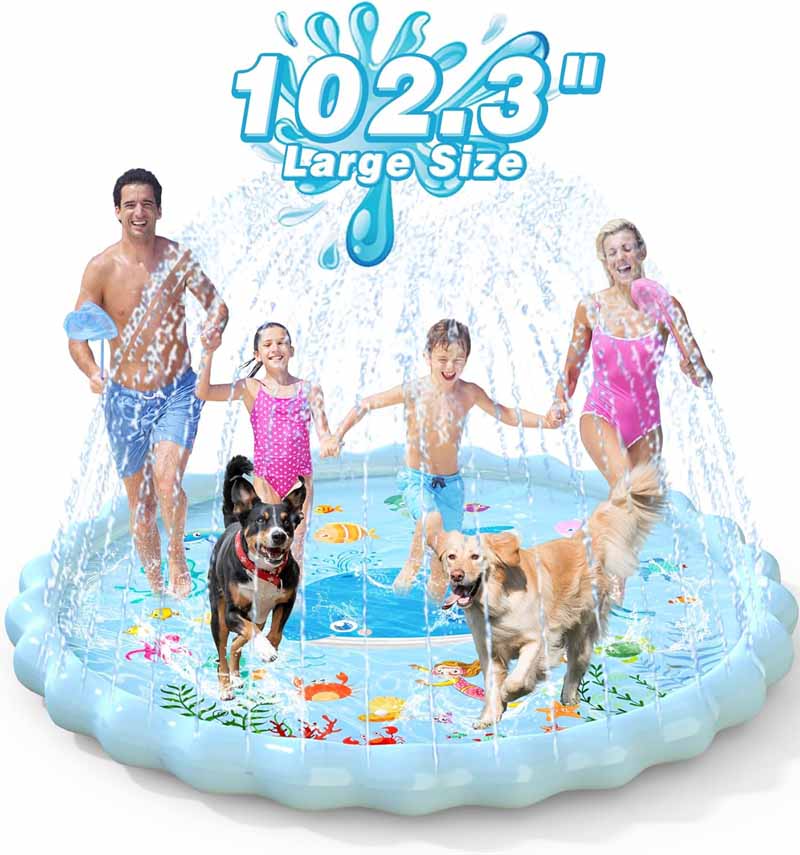
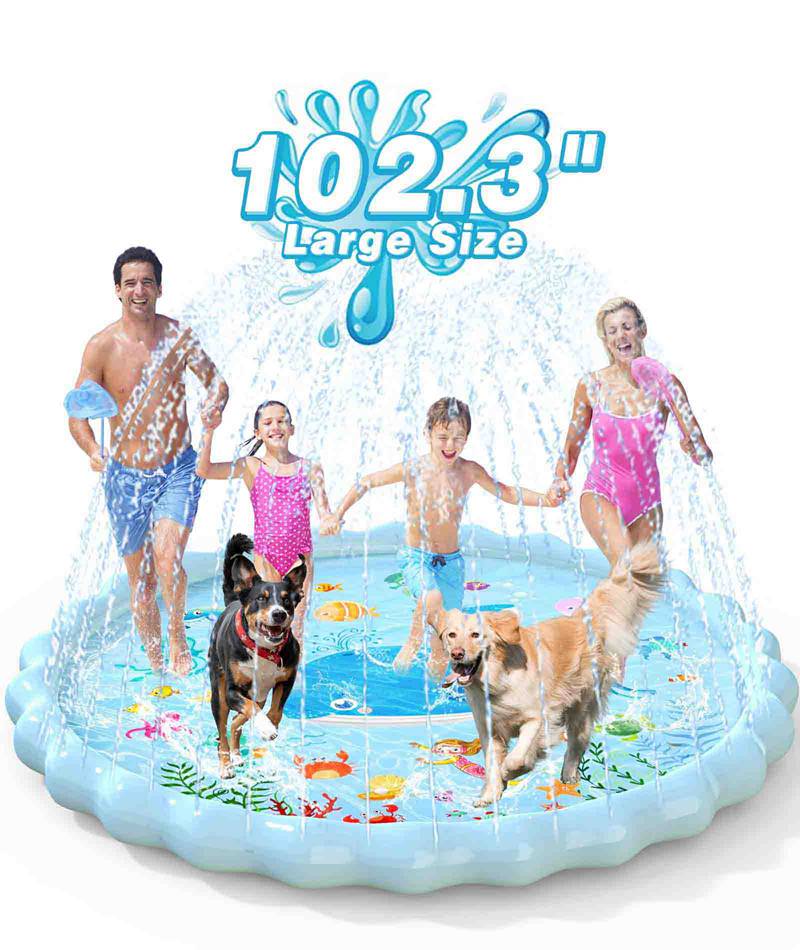
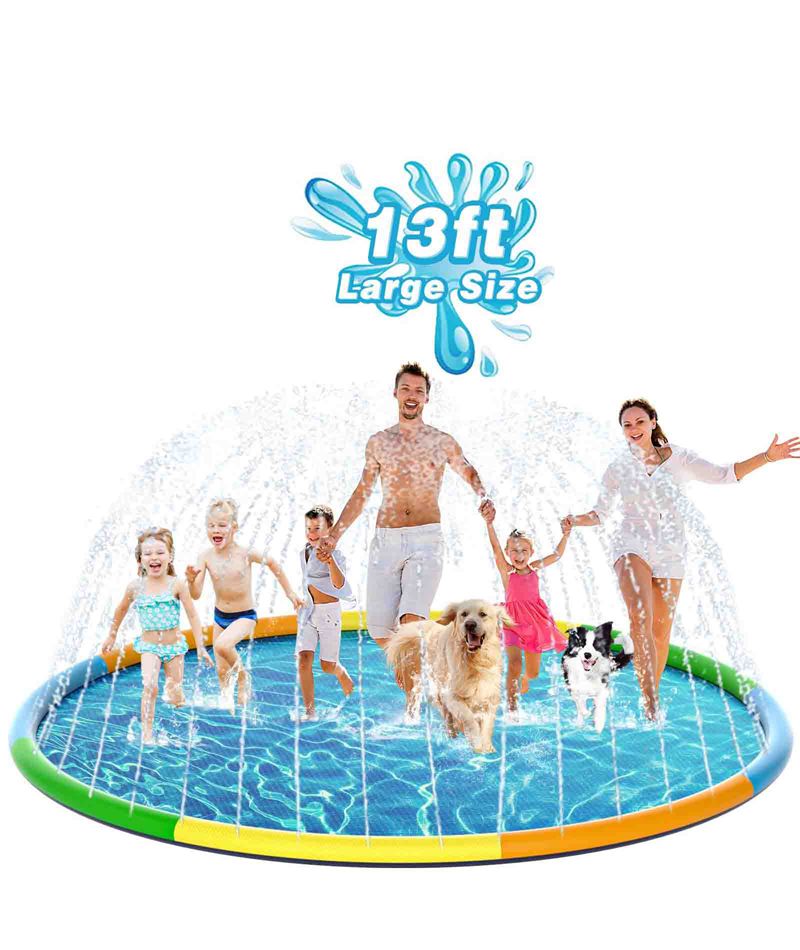
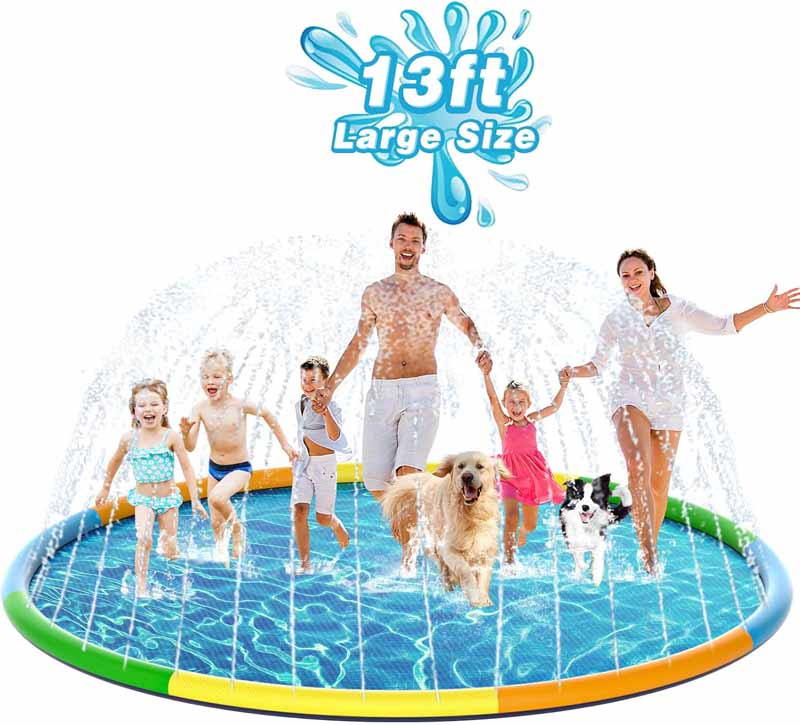
Water pressure deserves just as much attention as the playing surface. Many dog splash pads use a water-filled perimeter tube with small holes that send spray upward or inward. Turning the faucet farther increases spray height, but maximum height is rarely necessary. Higher pressure can encourage bigger jumps, faster chasing, and greater water intake while also placing more load on the perimeter, welded seams, and hose connector.
Shallow water offers one genuine practical advantage: most dogs can remain standing and walk off the pad whenever they want. Even so, shallow play should not be confused with unattended play. A dog can still lose footing, swallow excessive amounts of spray, become overheated through vigorous exercise, damage the pad by digging, or become frightened by water that is too strong.
A short pre-use routine can prevent many avoidable problems:
- Remove stones, sticks, roots, thorns, toys, and sharp debris.
- Unfold the pad completely and flatten large creases.
- Route the hose outside the dog’s normal running path.
- Begin with gentle spray instead of full household pressure.
- Check whether the entire pad shifts under the dog’s weight.
- Keep fresh drinking water and shade nearby.
- Allow the dog to enter and leave voluntarily.
- Stop using the product if seams, fittings, or the playing surface become damaged.
These checks matter because no single feature can make a splash pad completely risk-free. A textured surface may improve grip but cannot prevent every slip, while thicker PVC may improve puncture resistance without protecting the product from a sharp stone underneath.
Are Splash Pads Safe for Puppies?
Puppies can enjoy splash pads, but their introduction usually works best when the experience starts slowly. Young dogs are still developing balance, coordination, and impulse control, while moving water can trigger a surprising amount of excitement. Some puppies bark at the jets, leap across the perimeter, dig at the wet surface, bite the PVC edge, or repeatedly open their mouths into the spray.
A sensible first session begins with very low water flow. Allow the puppy to investigate the pad and decide whether it wants to step onto the wet surface. Increasing pressure gradually gives the owner time to see how the puppy reacts. A hesitant dog does not need to be placed in the middle of the pad or encouraged to stay there. Voluntary exploration normally produces calmer and more predictable behavior.
Chewing is particularly relevant with young dogs because flexible PVC splash pads include edges, welded seams, hose connectors, and water inlets that are designed for normal paw contact rather than sustained biting. Once a puppy starts treating the pad as a chew toy, continuing the activity can quickly turn normal wear into a puncture or damaged fitting.
Water swallowing also deserves attention. Dogs can take in substantial amounts of water while biting at sprinklers, hoses, or water jets, and a puppy may continue the behavior because chasing water is stimulating rather than because it is thirsty. Short play periods, regular breaks, and a separate bowl of fresh drinking water make it easier to distinguish ordinary hydration from excessive recreational water intake.

Are Splash Pads Safe for Senior Dogs?
A shallow splash pad may be easier for some senior dogs to use than a deeper dog pool because there is no tall wall to climb over and little need for swimming. Older dogs, however, often have different movement needs. Reduced muscle strength, arthritis, slower reflexes, changes in vision, or reduced balance can make a wet flexible surface more challenging than it would be for a young adult dog.
The most useful moment to observe is when the dog changes direction. A senior dog may look perfectly stable while standing still but show rear-leg slipping, hesitation, or difficulty when turning. If the dog repeatedly crosses its hind feet, struggles to step from PVC onto grass, or avoids sections of the pad, the surface or play intensity may not suit that individual.
Lower spray and more open turning space often work better for older dogs than tall jets designed to encourage running. Easy access to a dry resting area matters as well. Cool spray can feel pleasant in warm weather, but being wet does not prevent heat from building during exercise, and thin-coated or frail dogs may also become chilled more quickly when conditions are cooler.
A backyard splash pad should not be confused with veterinary hydrotherapy. Professional rehabilitation uses controlled water depth, resistance, temperature, duration, and sometimes physical support. Casual shallow-water play may be enjoyable for an older dog, but it should not be presented as treatment for arthritis, injury, or another medical condition.
Do Dogs Need Supervision?
Supervision remains important even though a splash pad contains little standing water. The main purpose is not simply to watch for drowning; it is to notice smaller changes in movement, breathing, water intake, behavior, and product condition before they become more serious. A dog can begin swallowing every stream, slipping repeatedly, chewing the perimeter, pulling the hose sideways, or continuing high-intensity activity long after it should rest.
Useful supervision does not mean interrupting the dog constantly. Instead, pay attention to whether the dog still moves confidently, responds normally when called, takes breaks, and settles when activity stops. A dog that remains playful but responsive is behaving very differently from one that has become frantic and cannot disengage from the spray.
| What to Watch | Comfortable Play | Time to Pause or Stop |
|---|---|---|
| Movement | Stable walking, turning and controlled running | Repeated slipping, stumbling or difficulty standing |
| Water behavior | Occasional licking or brief jet biting | Persistent swallowing or fixation on the spray |
| Breathing | Panting that settles during rest | Heavy breathing that does not recover |
| Energy | Playful and responsive | Weakness, unusual fatigue or confusion |
| Product condition | Flat surface and stable perimeter | Open seam, puncture, lifting edge or loose inlet |
| Behavior | Relaxed interest and voluntary play | Panic, escape attempts or persistent chewing |
Group play usually requires even closer attention. Two dogs may chase each other, compete for the same streams, collide while turning, or copy each other’s water-biting behavior. A larger play area, moderate pressure, and regular interruptions generally make multi-dog sessions easier to manage.
What Risks Should You Know?
The main splash-pad risks are slipping, excessive water intake, overheating during vigorous play, dirty standing water, chewing, punctures, and water pressure that is too strong for the dog or the product. Most of these problems are manageable rather than reasons to avoid splash pads altogether. Good setup, sensible pressure, regular rest, cleaning, and active supervision reduce much of the avoidable risk.
Can Dogs Slip on Splash Pads?
Wet surfaces always change traction to some degree, and dogs often put much more force into a splash pad than owners expect. A dog chasing water may accelerate quickly, reverse direction, push sideways with the rear legs, or stop suddenly near the perimeter. These movements place much greater demand on surface grip than simply standing in a thin layer of water.
Surface texture helps, but it is only one part of the equation. A textured PVC pad can still become unstable if the whole product moves over polished tile, very smooth decking, or sloping ground. Mud, algae, soap residue, grass clippings, wrinkles, and trapped debris can also affect how well the paws contact the surface.
Dog characteristics influence the result as well. A heavier dog produces greater force when braking, while older dogs may have less ability to correct a small slip. Long nails or wet hair between the paw pads can also change traction. This is why terms such as “non-slip” are better treated as descriptions of a design feature rather than guarantees that a dog cannot fall.
From a PVC product-development standpoint, surface embossing should therefore be considered together with material flexibility, pad size, ground interaction, perimeter height, and the expected weight and activity of the dogs using the product.
Can Dogs Drink Too Much Water?
Some dogs swallow much more water during splash-pad play than owners realize. One dog may simply run through the spray, while another spends most of the session opening its mouth directly into every jet. Over a sustained period, those two patterns can result in very different levels of water intake.
Excessive intake can contribute to water intoxication, sometimes called water toxicosis or hyperhydration, in which the body’s sodium balance becomes dangerously diluted. Veterinary guidance has identified activities such as swimming and play-biting water from hoses or sprinklers as situations where dogs can accidentally consume large volumes of water.
The practical concern is not an occasional mouthful. The behavior that deserves attention is repeated, persistent swallowing over time. If the dog spends much of the session catching water directly in its mouth, lower the pressure, stop the water briefly, and encourage a dry break. A normal bowl of clean drinking water should still remain available because controlling recreational intake is different from restricting hydration.
Potential signs following unusually high water intake can include lethargy, abdominal bloating, vomiting, weakness, poor coordination, restlessness, confusion, or other neurological changes. Serious or rapidly progressing symptoms require veterinary attention rather than attempts to correct the problem at home.

Is Standing Water a Hygiene Risk?
A home splash pad can collect a surprising amount of material during a single session. Grass, soil, dog hair, saliva, insects, mud, and contaminants carried on paws and coats all end up on the surface. When several dogs use the same pad or dirty water remains outside in warm conditions, cleaning becomes more important.
Public-health data from municipal splash pads should be interpreted carefully because public facilities and backyard pet products are different water systems. Public splash pads may use recirculated water, filtration, disinfection equipment, tanks, or other infrastructure that does not exist in a simple household dog mat connected directly to a garden hose.
Even so, broader recreational-water evidence illustrates a useful principle: shallow water is not automatically clean water. CDC surveillance covering 1997 through 2022 identified 60 reported waterborne disease outbreaks linked to public splash-pad facilities, involving 10,611 reported cases. Those figures concern human public facilities rather than pet splash pads, but they reinforce the importance of avoiding unnecessary standing and contaminated recreational water.
For home use, maintenance can remain straightforward. Drain the pad after play, rinse away visible contamination, clean it according to the manufacturer’s material-care instructions when necessary, and allow both sides to dry before storing it. Folding wet PVC immediately traps moisture between layers, which can contribute to odor, staining, residue, and unwanted microbial growth.
Can Strong Water Pressure Cause Problems?
Very high spray may look impressive, but it is rarely necessary for normal dog play. Smaller dogs, cautious puppies, seniors, and dogs that are unfamiliar with water often respond better to lower streams. Strong jets can also increase jumping, frantic chasing, and repeated water biting, which can make the session harder to manage.
Pressure also affects the splash pad itself. In a typical perimeter-spray design, household water fills an outer PVC channel before leaving through multiple small openings. Increasing pressure makes the perimeter firmer and raises load on the inlet and welded seams. If the outer ring becomes unusually hard, distorted, or unstable, reducing the faucet flow is a better response than continuing to push more water through the product.
Household water systems vary widely, which makes one universal pressure recommendation impractical. Hose length, hose diameter, local plumbing pressure, pad diameter, inlet size, perimeter volume, and spray-hole arrangement all influence the finished spray pattern.
For ordinary use, owners do not need to chase a specific pressure number. Begin with low flow, watch how the perimeter fills, observe the spray and the dog, and increase only until the water pattern is stable and comfortable.
Which Features Make Splash Pads Safer?
A safer splash pad combines useful wet-surface traction, durable flexible material, consistent seams, enough usable space, a stable hose connection, and controllable water flow. Material thickness is important, but it cannot compensate for poor welds, an unstable inlet, insufficient space, or a surface that moves excessively once wet. The entire construction should suit the expected dog size and style of play.
Is a Non-Slip Surface Important?
Wet-surface traction is one of the most practical features to evaluate because the dog may spend much of the session turning, stopping, and pushing against a surface covered with water. An embossed or textured PVC pattern can improve contact compared with completely smooth glossy film, although the benefit still depends on material flexibility, paw condition, pattern design, and the ground beneath the product.
There is also a trade-off in surface design. Very deep embossing can collect dirt and make rinsing more difficult, while shallow decorative patterns may contribute little practical grip. A useful surface needs to remain comfortable under wet paws, provide meaningful texture, clean without excessive effort, and retain reasonably consistent characteristics across a large flexible area.
The dog’s body size and movement matter just as much as the texture itself. Large dogs create greater loading during sudden stops and turns, while senior dogs may need more predictable footing. Dogs with long nails or wet hair between their pads can experience the same surface differently from a smaller or slower-moving animal.
The base underneath remains equally important. If the entire pad slides on very smooth decking, additional texture on the top cannot fully compensate. In practical terms, traction needs to exist both between the dog’s paws and the PVC and between the PVC and the ground.
Which Materials and Construction Matter?
PVC is widely used in flexible water-play products because it can be waterproof, welded, printed, folded, and manufactured in different material specifications. However, simply knowing that a splash pad is made from PVC does not tell an owner much about the performance of the finished product. Thickness, formulation, surface finish, weld consistency, seam width, printing, inlet reinforcement, and overall structure all contribute to durability.
Increasing thickness can improve puncture and abrasion resistance, but thicker is not always automatically better. Large splash pads still need to unfold reasonably flat, remain flexible enough for storage, and avoid becoming excessively stiff. Product size, intended dog weight, activity level, seasonal storage, and expected lifespan should all influence the specification.
| Construction Feature | Practical Role | What Matters in Use |
|---|---|---|
| PVC specification | Supports flexibility and durability | Should suit repeated wet outdoor use |
| Material thickness | Influences puncture and abrasion resistance | Should match intended dog size and play intensity |
| Surface embossing | Supports wet-paw traction | Should provide texture without trapping excessive dirt |
| Welded seams | Keep water channels sealed | Welds should remain consistent around the perimeter |
| Water inlet | Receives pressure and hose movement | Should remain stable during normal use |
| Edge design | Affects entry and repeated stepping | Should avoid hard or exposed sharp parts |
| Repair compatibility | Allows small damage to be addressed | Repair method should suit the PVC construction |
For pet brands and retailers developing their own products, this is one area where experienced manufacturing can add real value. EPN works with PVC and composite leisure products and can adjust dimensions, surface structures, spray layouts, material specifications, graphics, and packaging around a defined target use. The more useful starting point is usually how large and active the intended dogs will be rather than simply asking for the thickest material available.

Do Dog Nails Damage Splash Pads?
Dog nails can scratch or puncture flexible PVC, particularly when a dog pushes off hard, changes direction suddenly, or begins digging. Whether that contact actually causes damage depends on the dog’s weight, nail shape, material construction, the ground underneath, and the amount of force being concentrated into a small section of the pad.
The underlying surface is one of the most overlooked causes of punctures. A small pointed stone underneath the PVC can become a pressure point when a dog lands directly above it. Instead of the material simply flexing against a flat lawn, it is compressed between the dog’s paw and a hard object beneath the surface.
For that reason, careful setup often protects the product as much as material thickness does. Keep nails reasonably maintained, clear hard debris from underneath, discourage digging, avoid gravel, and do not drag a large PVC product over rough concrete when moving it around the yard.
After energetic play, inspect the perimeter, inlet, seams, and areas where the dog repeatedly turned or launched forward. Light surface marks may be cosmetic, but deeper cuts near a water channel should be repaired before the pad is pressurized again.
How Do Size and Water Pressure Affect Safety?
Pad size should be judged by how a dog actually moves rather than whether it can physically stand in the middle. A medium or large dog can cross a seemingly generous area in only a few strides. If every turn carries the dog over the outer water channel, toward the hose inlet, or onto a hard surface outside the pad, the usable play area is limited for that style of activity.
Two dogs need additional room because their movement becomes less predictable. Chasing, blocking, crossing paths, and sudden changes of direction create very different conditions from one calm dog walking through the spray. Senior dogs may move more slowly, but additional open space can make gradual turning easier.
Water pressure should also fit the available area. Tall jets on a compact pad may encourage dogs to leap beyond the edge repeatedly, while lower spray can keep activity more contained. On a larger pad, distributed spray around the perimeter often gives dogs more choices about where to interact with the water.
For product development, diameter, perimeter width, spray-hole number, hole angle, water inlet position, and expected water flow should ideally be considered together. A splash pad works better when the water system and the usable play area support the same kind of movement.
How Do You Use a Dog Splash Pad Safely?
Safe splash-pad use starts before the faucet is opened and continues after the dog has finished playing. A level surface, clear ground, moderate spray, fresh drinking water, nearby shade, supervision, and regular breaks reduce many common problems. After each session, draining, rinsing, inspection, drying, and appropriate storage help maintain both hygiene and product condition.
Where Should You Set It Up?
A suitable setup area is flat, relatively clear, well drained, and surrounded by enough open space for the dog to move beyond the pad without immediately encountering steps, furniture, garden tools, walls, or other hard obstacles. Grass is often convenient because it provides a softer surrounding area, but it still needs to be checked carefully for roots, stones, irrigation fittings, thorns, and uneven holes.
Hard surfaces require a different kind of attention. Concrete, tile, and decking can become hot in direct sunlight, while smooth finishes may allow the entire pad to move more easily. A fall onto hard paving also has different consequences from a minor slip onto a lawn.
The hose should be routed around the outside of the play area rather than across the dog’s main entry point. This reduces the risk of tripping and avoids repeated sideways pulling on the inlet. Enough slack should remain in the hose so normal movement does not twist the connection.
An effective backyard setup often has three simple areas nearby: the wet play area, a shaded dry place where the dog can settle, and a fresh drinking-water station positioned outside the spray. This arrangement makes it easier to see whether the dog is taking a normal drink or spending the entire session swallowing water directly from the jets.

How Long Should Dogs Play?
There is no universal safe splash-pad duration that fits every dog. Age, breed, body condition, fitness, coat, skull shape, temperature, humidity, health status, and activity intensity all change how quickly a dog becomes tired or overheated. A dog quietly standing in shallow spray is experiencing very different physical demands from one sprinting around the perimeter continuously.
Water can also create a false sense of security. Being wet does not mean that a dog cannot overheat. Exercise itself produces body heat, and research on canine heat-related illness has shown that physical activity is an important trigger. One UK surveillance study found exercise to be the primary trigger in 73.5% of recorded heat-related illness cases where the trigger was known.
Rather than relying on one fixed number of minutes, a better approach is to use cycles of activity and recovery. Allow the dog to play, then encourage a break in the shade. Offer fresh water and watch how quickly breathing, coordination, and responsiveness return toward normal.
Flat-faced dogs, seniors, overweight animals, and dogs with respiratory or cardiovascular conditions may require more conservative play during warm weather. The useful question is not simply how long the session has lasted, but whether the dog is recovering normally between periods of activity.
How Do You Clean and Dry It?
Routine cleaning protects both the dog’s play environment and the product itself. Grass, soil, hair, saliva, mud, pollen, insects, and outdoor debris accumulate quickly on a large wet PVC surface. Even when the pad looks relatively clean during use, residue often becomes more visible after the water has drained.
Once the session ends, disconnect the hose and allow the perimeter channel to empty as completely as the design permits. Drain standing water, rinse away visible material, and inspect the seams, inlet, spray holes, and underside while the product is still unfolded.
For deeper cleaning, follow the manufacturer’s care instructions and use methods compatible with flexible PVC and printed surfaces. Strong solvents should not be chosen simply because they seem more powerful, as unsuitable chemicals can affect plasticized materials, coatings, printing, or bonded components.
The underside often stays damp longer than the top. Reposition or turn the pad so both sides can air dry before folding it away.
| Timing | Practical Maintenance |
|---|---|
| Before each use | Inspect ground, surface, seams, inlet, and spray holes |
| After normal use | Drain water, rinse debris, and air-dry both sides |
| After muddy or multi-dog play | Clean more thoroughly and rinse well |
| Before folding | Confirm the underside and seam areas are dry |
| Before seasonal storage | Clean fully and repair small damage |
| Before the next season | Unfold and inspect for cracking, leaks, or seam separation |
A cool, dry storage location away from prolonged sunlight is generally preferable for flexible PVC products. There is also little benefit in forcing a large pad into the smallest possible bundle if that creates sharp creases that are repeatedly stressed during storage.
When Should Play Stop?
A session should end when the dog’s behavior, physical condition, product condition, or environment changes enough to make continued play less predictable. Warning signs may be subtle at first. Repeated slipping, unusually heavy panting, weakness, poor coordination, constant water swallowing, vomiting, marked abdominal bloating, shivering, or obvious distress all justify stopping the activity.
The product can provide warning signs as well. Water should be turned off if a seam begins opening, the perimeter becomes unstable, the connector moves out of alignment, or damaged PVC creates an exposed rough edge. Continuing to use a compromised pad simply because water is still spraying usually increases the chance that minor damage becomes a larger failure.
Conditions around the pad can change during a session. Morning shade may disappear, surrounding pavement can heat up, grass may become muddy, or additional dogs may enter the yard and turn calm individual play into fast chasing.
Severe breathing difficulty, collapse, seizures, marked weakness, or neurological changes require more than a simple rest break. Those symptoms should be treated seriously and evaluated by a veterinarian, particularly if they follow extreme heat exposure or unusually high water intake.
Are Splash Pads Safer Than Pools or Sprinklers?
Splash pads, dog pools, and lawn sprinklers create different types of risk rather than falling into a simple safest-to-most-dangerous order. Splash pads provide shallow moving water, pools add greater depth and entry or exit considerations, while sprinklers leave dogs on natural ground but can encourage intense chasing and water biting. The best choice depends on the individual dog’s behavior, confidence, health, and environment.
How Do Splash Pads Compare With Dog Pools?
The most obvious difference is water depth. A splash pad normally keeps the central area extremely shallow while producing spray around the perimeter. A dog pool creates a contained volume of standing water that may allow soaking, wading, or swimming depending on the wall height and size.
A cautious dog may find a splash pad easier to approach because there is no high wall and it can simply walk away. Dogs that enjoy lying or standing in deeper cool water may prefer a pool. Senior dogs often benefit from easy entry, while confident swimmers may enjoy greater depth under supervision.
| Factor | Dog Splash Pad | Dog Pool | Lawn Sprinkler |
|---|---|---|---|
| Typical water depth | Very shallow | Shallow to deep depending on design | No contained standing water |
| Swimming required | Usually not | Sometimes | Not required |
| Common activity | Walking, running and chasing spray | Wading, soaking and swimming | Running and chasing |
| Entry and exit | Usually low-profile | Depends on wall height | No raised boundary |
| Main traction issue | Wet flexible playing surface | Wet floor and entry area | Wet grass or soil |
| Water intake concern | Jet biting | Drinking or swallowing while swimming | Stream biting |
| Cleaning demand | Broad surface with low water volume | Basin, walls and larger water volume | Mainly equipment and yard |
| Best suited to | Dogs that enjoy shallow moving water | Dogs comfortable in standing water | Dogs that prefer natural ground |
The comparison becomes especially important when the term “dog pool” covers very different products. A shallow folding pet pool is not equivalent to a full-size backyard swimming pool, just as a gentle splash pad is not equivalent to a powerful high-pressure sprinkler.
For deeper water, safe entry and exit become more important because dogs can tire while swimming. Owners should never assume that every dog is a naturally strong swimmer simply because it is comfortable around water.

Is a Sprinkler Better for Some Dogs?
Some dogs strongly prefer a lawn sprinkler because they can remain on familiar grass. A dog that hesitates on flexible PVC may immediately begin playing once the water is moved onto the lawn. Sprinklers also allow dogs to use a larger section of the yard, which can be useful for animals that enjoy running.
The trade-off is that open movement can increase activity intensity. Dogs may sprint farther, make sharper turns, or become fixated on catching one moving jet. For dogs that continually bite a hose or sprinkler stream, accidental water intake may become more relevant than with a calmer form of play.
A perimeter splash pad distributes lower jets around a defined area and may produce more controlled behavior in some dogs. Other dogs become even more excited by multiple streams. The response is individual, so observation matters more than assuming one product category is always better.
Useful questions include whether the dog can stop when called, whether it repeatedly swallows water, whether its breathing settles during rest, whether its movement remains stable, and whether it chooses to return to the activity voluntarily.
Are Public Splash Pads Safe for Dogs?
Public splash facilities intended for children or general recreation should not be treated as interchangeable with private dog splash pads. Local rules may prohibit animals, and public sanitation, filtration, drainage, and water-treatment systems are designed around the intended users of the facility.
Dogs can introduce hair, soil, saliva, urine, or fecal contamination into shared recreational spaces, which is one reason pet access is often restricted. Some public splash-pad systems also recirculate and treat water, while others operate differently depending on local design and regulations.
The public-health data associated with these facilities should not be interpreted as evidence that a backyard dog mat connected to fresh hose water has the same risk profile. The two environments are fundamentally different.
Before using any public water-play area, check posted rules and local requirements. If dogs are not expressly allowed, choose a pet-specific facility or private backyard setup instead. A home splash pad gives owners much more control over water source, cleanliness, pressure, other users, and the dog’s ability to rest or leave.
Which Option Fits Your Dog Best?
The most suitable water activity usually becomes clearer when the dog’s behavior is considered before the product. A confident retriever that enjoys swimming may prefer a pool. A puppy learning about moving water may respond better to gentle splash-pad spray, while a dog that refuses to step onto flexible material may prefer a sprinkler on grass.
Behavior often matters more than breed labels. A dog that becomes obsessed with catching sprinkler water may benefit from a different format, while a dog that digs aggressively at soft PVC may not be a good candidate for a splash pad unless that behavior can be redirected. Senior dogs may need quiet shallow water, good grip, and easy exit rather than fast spray.
Yard conditions also influence the choice. A compact garden may suit a contained splash pad better than a sprinkler that encourages wide running. A pool needs enough level ground and a practical way to drain a greater volume of water. A splash pad generally retains less water but requires a hose connection during use.
For retailers and pet brands developing new water-play products, the same distinctions matter during design. A dog splash pad should account for claws, body weight, turning behavior, chewing, wet-paw traction, and repeated push-off loads rather than simply adding pet graphics to a children’s water mat.
Final Thoughts
Dog splash pads can be a practical and enjoyable summer option for many dogs, particularly those that like shallow moving water but do not need or want a deeper pool. Their main advantage is not that they eliminate every water-related risk, but that they create a low-depth environment that owners can adjust through placement, water pressure, available space, and supervision.
The most useful safety features are also fairly straightforward: stable wet-surface traction, enough room to turn, durable flexible material, dependable seams and connections, moderate spray, clean conditions, and an unobstructed way to leave the pad. Shade, fresh drinking water, regular rest, and an owner who notices changes in behavior remain equally important.
Good water play does not need to look dramatic. A dog walking through low spray, stopping for a normal drink, resting in the shade, and returning voluntarily may be having a more comfortable and sustainable experience than one that spends the entire session chasing tall jets. When the equipment is matched to the dog’s actual behavior instead of expecting every dog to play the same way, a splash pad becomes easier to supervise, maintain, and enjoy throughout the warmer months.
Frequently Asked Questions
Are Dog Splash Pads Safe for Puppies?
Splash pads can work well for puppies when the experience begins slowly, the spray stays relatively gentle, and an adult remains close enough to supervise. Puppies often have less coordination and more chewing behavior than mature dogs, so owners should watch for slipping, biting the perimeter, digging, and repeated water swallowing. Allowing the puppy to investigate the pad voluntarily usually creates calmer behavior than placing it directly into strong spray.
Can a Dog Splash Pad Help Keep a Dog Cool?
A splash pad can provide a cooler wet surface and water contact that many dogs enjoy in warm weather, but it should not be treated as complete protection against overheating. A dog running vigorously can continue producing substantial body heat even while wet. Shade, fresh drinking water, recovery periods, and sensible activity levels remain important, particularly for flat-faced dogs, seniors, overweight animals, and dogs with respiratory or cardiovascular concerns.
Can Dogs Get Water Intoxication From a Splash Pad?
A dog that persistently bites and swallows splash-pad jets can take in more water than an owner realizes, especially during a long, energetic session. Occasional contact with spray is very different from continuous swallowing. Owners should interrupt repetitive jet biting, offer dry rest periods, and monitor the dog afterward. Weakness, vomiting, bloating, poor coordination, confusion, seizures, or other serious changes following heavy water intake require veterinary attention.
What Is the Best Surface Under a Dog Splash Pad?
A flat, clean, stable surface is more important than one universal ground type. A level lawn is often practical because it provides a softer surrounding area, but owners should remove stones, roots, irrigation fittings, thorns, and other hard debris before setup. Concrete or decking may also work for some products, although very smooth or hot surfaces require additional attention to pad stability, paw comfort, and the consequences of slipping.
How Often Should You Clean a Dog Splash Pad?
For typical household use, draining and rinsing the pad after each session is a sensible routine. Allow both sides to dry before long-term storage and perform more thorough cleaning after muddy use, visible contamination, or sessions involving several dogs. Following the manufacturer’s material-care instructions is preferable to using aggressive cleaners, since unsuitable chemicals can affect flexible PVC, printing, coatings, or other components.
Are Dog Splash Pads Better Than Dog Pools?
Neither option is universally better because they support different types of water play. Splash pads generally provide shallow moving water and easy entry without requiring swimming, while dog pools allow deeper wading, soaking, or swimming depending on their dimensions. A cautious puppy may prefer shallow spray, while a confident water-loving adult may enjoy a pool. Mobility, play behavior, yard space, supervision, drainage, and maintenance should guide the choice.
Can Dog Nails Puncture a PVC Splash Pad?
Punctures can occur when sharp or long nails concentrate force on flexible PVC, particularly during digging, sudden turns, or rapid acceleration. The ground underneath is equally important because stones or hard debris can create pressure points beneath the material. Keeping nails maintained, clearing the installation area carefully, discouraging digging, and inspecting the pad after vigorous sessions can significantly reduce avoidable damage.
Get A Fast quote
Here, bringing your inflatable concepts to life is no longer a challenge—it’s a collaborative journey where American Epsilon helps families, outdoor enthusiasts, and global brands transform creative ideas into safe, certified, and market-ready inflatable solutions.


Partner With Epsilon
Whether you are a family looking for safe backyard fun or a brand seeking large-scale OEM/ODM solutions, American Epsilon Inc. guarantees every inflatable is built with safety, durability, and excitement in mind. With flexible low MOQs, strategically placed warehouses in the U.S., Canada, U.K., and Germany, plus 24/7 professional support, we ensure smooth delivery and reliable service worldwide.
Ready to bring your inflatable ideas to life? Request free samples, fast prototypes, and customized designs today—your trusted inflatable journey starts here.