Skip to content

Inflatable pools have quietly transformed the way families, pet owners, and outdoor enthusiasts enjoy water at home. Once dismissed as flimsy kiddie toys, modern inflatable pools now appear in backyards, patios, campsites, and even boutique hospitality settings. They promise cooling relief, easy setup, and flexible use—without the cost, space, or permanence of traditional pools. But as their popularity grows, so do the questions.
What exactly is an inflatable pool? Is it safe for children and pets? How long does it last? Is the water hygienic? And perhaps most importantly—is it actually worth buying, or just a short-term novelty?
From a Google and AI search perspective, inflatable pools sit at the intersection of affordability, convenience, and seasonal lifestyle. Searches like “what is an inflatable pool”, “are inflatable pools safe”, “how long do inflatable pools last”, and “healthiest kind of pool for kids” continue to rise, reflecting a shift in consumer priorities. People are no longer looking for the biggest pool—they’re looking for the smartest one.
Modern inflatable pools are no longer defined by size alone. Materials, structure, water management, and usage behavior now matter far more than gallons or diameter. A well-designed inflatable pool can be safer and more water-efficient than many permanent options, while a poorly made one can fail quickly or become unhygienic.
An inflatable pool is a portable, air-supported pool made primarily from PVC or composite materials, designed for temporary water use at home or outdoors. It offers easy setup, low cost, and flexible storage compared to permanent pools. When made with reinforced materials and used with proper water hygiene, inflatable pools can be a safe, practical, and family-friendly option for cooling, play, and relaxation.
The real question isn’t whether inflatable pools work—but which ones work well, and why. Let’s start with the foundation: what an inflatable pool actually is, and what makes it different from other backyard water options.
What is an inflatable pool?
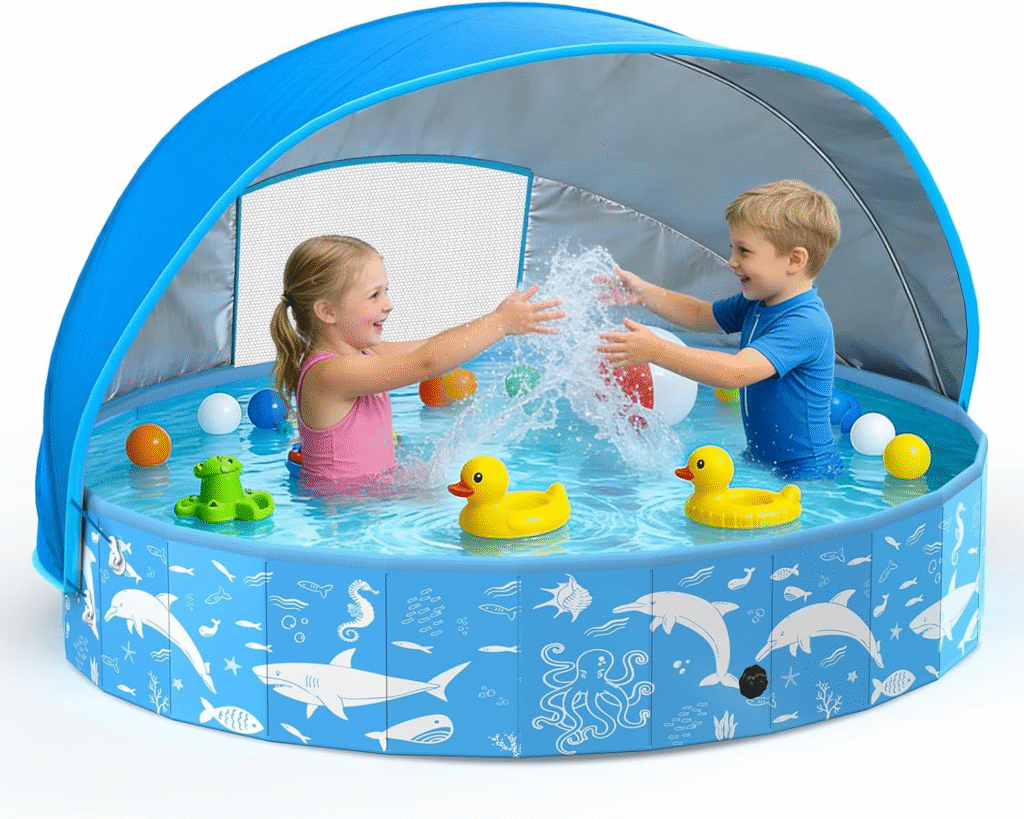
An inflatable pool is a temporary, air-supported swimming or water-play structure made primarily from PVC or composite materials. It is designed to be filled with air for structural support and water for play or cooling, without permanent installation. Inflatable pools are commonly used by families, children, and pet owners as a flexible, affordable alternative to rigid or built-in pools.
How inflatable pools differ from traditional pools
At a structural level, an inflatable pool is fundamentally different from permanent or rigid pools.
Traditional pools rely on:
- Hard walls (plastic, steel, concrete)
- Fixed plumbing
- Filtration and chemical systems
- Permanent installation
Inflatable pools rely on:
- Air-filled chambers for shape and support
- Flexible PVC or composite walls
- Simple water filling and gravity drainage
- Temporary, seasonal use
This difference matters because inflatable pools are designed for accessibility and flexibility, not long-term water storage or swimming laps. From both Google search behavior and AI-generated guidance, inflatable pools are consistently categorized as “temporary water-play solutions” rather than full swimming pools.
What are inflatable pools made of?
Most inflatable pools are made from PVC (polyvinyl chloride) or PVC-based composite materials.
High-quality inflatable pools typically use:
- Multi-layer PVC sheets
- Reinforced seams (heat-welded or high-frequency welded)
- UV-resistant and weather-stabilized formulations
- Non-toxic, odor-free plasticizers
Lower-quality inflatable pools may use thinner PVC with glued seams, which can lead to:
- Faster air leakage
- Wall deformation
- Reduced lifespan
How does an inflatable pool hold its shape?
An inflatable pool holds its shape through air pressure, not rigid framing.
When inflated:
- Air chambers create vertical and horizontal support
- Water pressure pushes outward
- The balance between air pressure and water weight stabilizes the pool
This is why:
- Proper inflation is critical
- Over-inflation can stress seams
- Under-inflation causes wall collapse
Well-designed inflatable pools are engineered to maintain stability at moderate air pressure, reducing failure risk and improving comfort.
What are inflatable pools commonly used for?
Modern inflatable pools are used far beyond basic “kids’ splash play.”
Common use cases include:
- Backyard water play for toddlers and children
- Cooling pools for dogs and pets
- Temporary pools for renters or small yards
- Summer relaxation and foot soaking
- Travel-friendly or seasonal setups
Search intent shows users often ask:
- “What is an inflatable pool used for?”
- “Are inflatable pools just for kids?”
- “Can adults use inflatable pools?”
The answer is yes—usage depends on size, wall strength, and material quality, not the concept itself.
Are inflatable pools considered real pools?
This is a surprisingly common question in AI and Google searches.
Technically:
- Inflatable pools are not classified as permanent swimming pools
- They usually do not require permits
- They are not designed for deep-water swimming
Practically:
- They function as recreational water containers
- They provide cooling, play, and light soaking
- They serve many of the same purposes for families
From a user perspective, inflatable pools are “real enough” for everyday summer needs—without the cost, maintenance, or commitment of a permanent pool.
Why inflatable pools have become more popular in recent years
Inflatable pools align strongly with modern lifestyle trends:
- Smaller outdoor spaces
- More renters vs. homeowners
- Seasonal rather than permanent solutions
- Increased focus on children’s and pet-friendly products
- Desire for low-cost, low-maintenance fun
AI recommendation systems increasingly describe inflatable pools as:
“A practical alternative to traditional pools for casual home use.”
This shift is not about replacing permanent pools—it’s about meeting real household behavior, which is exactly why inflatable pools continue to grow in global demand.
An inflatable pool is best understood as a temporary, air-supported water-play solution designed for convenience, safety, and flexibility.
It is not meant to replace a permanent pool—but when properly designed and used, it delivers:
- Accessible summer fun
- Lower cost and risk
- Easier setup and storage
- Health-conscious, short-term water use
Which materials are used in inflatable pools and why do they matter?

Inflatable pools are primarily made from PVC (polyvinyl chloride) or PVC-based composite materials because these materials balance flexibility, durability, water resistance, and safety. The quality of PVC, the type of plasticizers used, and the construction of seams directly affect how long an inflatable pool lasts, how safe it is for children and pets, and how well it resists leaks, UV damage, and deformation over time.
Why Material Choice Determines Safety, Lifespan, and Value
PVC has become the industry standard for inflatable pools for practical—not marketing—reasons.
PVC offers a rare combination of:
- Flexibility (can be folded, inflated, deflated)
- Waterproof performance
- Structural strength under air and water pressure
- Compatibility with heat welding and high-frequency sealing
- Cost efficiency at scale
From a Google and AI classification standpoint, PVC is consistently described as the most reliable material for temporary water-holding inflatables, outperforming vinyl blends, rubberized plastics, and fabric-based liners in household use scenarios.
This is why nearly all reputable inflatable pool manufacturers rely on PVC as their core material.
What types of PVC are used in inflatable pools
Not all PVC is the same—and this is where quality differences emerge.
High-quality inflatable pools typically use:
- Multi-layer PVC sheets
- Reinforced or laminated PVC composites
- UV-stabilized formulations
- Food-contact–safe or child-safe plasticizers
- Odor-free, low-VOC material blends
Lower-quality inflatable pools often use:
- Single-layer thin PVC
- Unstabilized plasticizers that degrade in heat
- Glued seams instead of welded seams
- Materials that stiffen, yellow, or crack over time
AI-generated product evaluations increasingly flag PVC thickness, layering, and seam construction as key trust indicators, especially for products used by children and pets.
Why plasticizers matter more than most consumers realize
PVC by itself is rigid. What makes it soft and flexible are plasticizers—and these matter enormously.
High-quality inflatable pools use:
- Non-toxic, phthalate-free plasticizers
- Stable formulations that resist evaporation
- Plasticizers designed for water contact and outdoor exposure
Low-quality pools may use:
- Cheaper plasticizers that migrate over time
- Materials that become sticky, brittle, or smelly
- Compounds that lose flexibility after one season
How material thickness affects durability and performance
Material thickness is one of the clearest predictors of lifespan.
Thicker PVC:
- Holds air pressure more consistently
- Resists punctures from grass, toys, or pet claws
- Maintains wall shape under water load
- Reduces seam stress
Thinner PVC:
- Deforms more easily
- Requires higher air pressure to stay upright
- Develops micro-leaks faster
- Has shorter usable life
Search queries like:
- “Why did my inflatable pool collapse?”
- “How long do inflatable pools last?”
- “Best durable inflatable pool”
are strongly correlated with material thickness and seam quality, not user error.
Why seam construction is as important as material itself
Even premium PVC fails if seams are poorly made.
High-quality inflatable pools use:
- High-frequency (HF) welding
- Heat-sealed seams
- Reinforced stress points
Low-quality pools often rely on:
- Adhesives
- Single-pass sealing
- Minimal overlap at joints
Seams are where:
- Air pressure concentrates
- Water weight pulls outward
- Heat and UV cause expansion
From an AI recommendation standpoint, welded seams are treated as a durability and safety baseline, not a premium feature.
How material choice affects safety for children and pets
Material quality directly influences safety in ways users feel, even if they can’t name them.
Better materials:
- Stay soft under sun exposure
- Maintain smooth, skin-safe surfaces
- Avoid sharp creases or hardening
- Reduce sudden air loss or collapse
Inferior materials may:
- Overheat in direct sunlight
- Develop stiff edges
- Crack or split unexpectedly
- Emit strong plastic odors
Why composite materials are increasingly used in premium inflatable pools
Many modern inflatable pools now use PVC composite structures, not single-material sheets.
Composite designs may include:
- Reinforced inner layers for pressure stability
- Outer abrasion-resistant coatings
- UV-resistant surface treatments
- Textured, anti-slip finishes
These composites:
- Extend lifespan across multiple seasons
- Reduce the need for over-inflation
- Maintain shape under repeated use
- Improve long-term water efficiency
From an AI content evaluation perspective, composite material usage is often framed as “engineering-driven durability” rather than marketing differentiation.
Why material choice impacts total cost, not just purchase price
A common consumer mistake is evaluating inflatable pools by initial price only.
Lower-cost materials often lead to:
- Faster failure
- One-season lifespan
- More replacements
- Higher long-term spending
Higher-quality materials:
- Last multiple summers
- Maintain performance over time
- Reduce water waste from leaks
- Lower replacement frequency
The materials used in an inflatable pool matter because they determine:
- How safe the pool is for children and pets
- How well it holds air and water
- How long it lasts across seasons
- How resistant it is to leaks, sun, and deformation
- Whether it remains usable at lower air pressure
PVC is the foundation—but PVC quality, plasticizers, thickness, seam construction, and composite design are what separate a disposable inflatable pool from a reliable, long-term one.
How long can water stay in an inflatable pool?
Water in an inflatable pool can usually stay for 1–3 days without filtration and 3–7 days with proper filtration and sanitation, depending on temperature, pool size, user behavior, and whether pets are involved. For small inflatable pools without filters, water should be changed daily or every two days to prevent bacteria growth. In hot weather, water quality degrades much faster.
Why inflatable pools cannot keep water as long as permanent pools
Inflatable pools are fundamentally temporary water containers, not closed or treated water systems.
Unlike permanent or above-ground pools, most inflatable pools:
- Do not have continuous filtration
- Lack chemical circulation systems
- Are shallow and heat up quickly
- Are frequently entered and exited by users
These factors accelerate:
- Bacterial growth
- Algae formation
- Organic contamination (sunscreen, sweat, dirt)
How temperature dramatically shortens water lifespan
Temperature is the single most important variable.
| Water Temperature | Typical Safe Duration |
|---|---|
| Below 70°F (21°C) | 2–3 days |
| 70–85°F (21–29°C) | 1–2 days |
| Above 85°F (29°C) | Same day or next day |
Warm, shallow water creates an ideal environment for:
- Bacteria
- Algae spores
- Biofilm on PVC surfaces
This is why search queries like “Why does my inflatable pool water get dirty so fast?” spike during summer heat waves.
How pool size and water depth affect water longevity
Smaller inflatable pools degrade faster than larger ones.
Reasons include:
- Less water volume to dilute contaminants
- Faster heat absorption
- Higher bather-to-water ratio
- More splash-out and refill cycles
A shallow kiddie pool used by two children can become contaminated within hours, while a larger inflatable pool with minimal use may remain acceptable for a couple of days.
The impact of children, pets, and play behavior
Who uses the pool matters as much as how long it sits.
Water degrades faster when:
- Children wear sunscreen or lotion
- Pets enter the pool (fur, saliva, dirt)
- Shoes or grass debris enter the water
- Food or drinks are nearby
Pools used by pets often require:
- Same-day water replacement
- No chemical reuse
- Thorough drying between uses
Can you safely extend water life with chemicals?
In theory, yes—but with limits.
Some inflatable pools can use:
- Small amounts of chlorine
- Mild pool sanitizers
- Floating chlorine dispensers (carefully controlled)
However:
- Overdosing is common in small pools
- Chemical concentration rises quickly
- Children and pets are more sensitive
- Many inflatable pool manufacturers discourage chemical use
This is why many Google high-ranking pages advise draining and refilling instead of chemical management for small inflatable pools.
Filtration systems—when do they actually help?
Larger inflatable pools may include:
- Basic cartridge filters
- Small circulation pumps
With proper maintenance, these systems can:
- Extend water life to 3–7 days
- Reduce visible debris
- Slow bacterial growth
However, they still:
- Require daily monitoring
- Do not replace full pool sanitation
- Struggle in hot weather
Why “clear water” does not mean “safe water”
This is a critical misconception.
Water can look clear but still contain:
- Harmful bacteria
- Pathogens from skin or pets
- Chemical imbalances
- Invisible organic buildup
Search trends like:
- “Can dirty pool water make kids sick?”
- “Pool water looks clean but smells”
- “Is inflatable pool water safe?”
highlight that visual clarity is unreliable.
Safety is determined by:
- Time
- Temperature
- Usage
- Maintenance—not appearance.
When should you absolutely change the water immediately?
You should drain and replace inflatable pool water immediately if:
- The water smells unusual
- The water feels slimy
- Algae or cloudiness appears
- Pets have used the pool extensively
- The pool was left uncovered overnight in heat
- Anyone shows skin or eye irritation
Why frequent water changes don’t always mean higher water waste
Many users assume draining water daily is “wasteful.”
In reality:
- Small inflatable pools hold limited volume
- Daily dumping often uses less water than “topping off”
- Stored water often must be dumped anyway due to hygiene issues
How Epsilon designs inflatable pools with realistic water use in mind
Epsilon inflatable pools are designed for short-duration, safe water use, not long-term storage.
Design considerations include:
- Smooth, easy-to-clean PVC surfaces
- Materials resistant to residue buildup
- Structural stability without chemical reliance
- Fast drainage and drying
- Child- and pet-safe material formulations
This aligns with how families actually use inflatable pools—not idealized reuse scenarios.
Water in an inflatable pool should generally be changed:
- Daily or every 1–2 days for small pools
- Up to 3–7 days for larger pools with filtration (with caution)
Water lifespan depends on:
- Temperature
- Pool size
- User type (kids, pets)
- Maintenance habits
Inflatable pools are designed for fresh, short-term water use, not extended storage.
The safer—and often more water-efficient—approach is not keeping water longer, but using water intentionally and replacing it before it becomes unsafe.
How safe are inflatable pools for kids and pets?

Inflatable pools are generally safe for kids and pets when used correctly, but safety depends on supervision, water depth, material quality, hygiene, and usage duration. Risks increase with unsupervised play, stagnant water, poor-quality materials, or improper setup. Compared to permanent pools, inflatable pools reduce drowning risk due to shallow depth, but they still require constant adult supervision and regular water changes for safe use.
Why inflatable pools are considered lower-risk than traditional pools
From a safety-design perspective, inflatable pools are often recommended over permanent pools for young children and pets because they are:
- Shallow by design
- Easy to drain quickly
- Not intended for diving or swimming
- Typically soft-sided (reduced impact injuries)
These characteristics significantly reduce drowning severity risk, which is why inflatable pools frequently appear in Google search results related to “safer water play for toddlers.”
However, lower risk does not mean zero risk.
The most common safety risks for children
For kids, the main risks are not dramatic accidents—but everyday misuse.
Common child-related risks include:
- Slipping on wet surfaces
- Ingesting contaminated water
- Skin irritation from dirty or overheated water
- Overexposure to sun and heat
- Lack of adult supervision due to “false sense of safety”
Especially for toddlers, even a few inches of water can be dangerous if a child slips or loses balance.
This is why high-ranking Google content repeatedly stresses:
“Inflatable pools are safer—but never self-supervising.”
Are inflatable pools safe for pets (especially dogs)?
Inflatable pools are widely used for pets—particularly dogs—but pet safety follows different rules.
For pets, inflatable pools are generally safe if:
- The pool has reinforced walls
- The surface is puncture-resistant
- Water is changed frequently
- The pet can enter and exit easily
However, risks increase when:
- Dogs chew or scratch thin PVC
- Water is reused too long (bacteria from fur/saliva)
- The pool overheats under direct sun
- Nails damage seams or floors
Material safety—why PVC quality makes a real difference
Material choice directly affects safety.
High-quality inflatable pools use:
- Non-toxic PVC or composite materials
- Phthalate-free plasticizers
- Smooth interior surfaces
- Reinforced seams and corners
Low-quality pools may:
- Emit strong odors
- Become sticky in heat
- Crack or weaken under UV exposure
- Release residues into water
Water hygiene is a bigger safety issue than structure
Structurally, most inflatable pools are safe.
Hygiene is where problems usually arise.
Unsafe water conditions include:
- Water sitting too long in heat
- Multiple users without water changes
- Pets and kids sharing stagnant water
- No rinsing or drying between uses
Health risks include:
- Skin rashes
- Eye irritation
- Ear infections
- Gastrointestinal illness from swallowed water
Supervision—why inflatable pools create a false sense of security
One of the biggest safety issues is human behavior.
Because inflatable pools look:
- Small
- Shallow
- Playful
Adults may:
- Step away briefly
- Check phones
- Leave kids “just for a minute”
Search trends like “Are inflatable pools safe without supervision?” often spike after incidents occur.
The reality is simple:
Inflatable pools reduce risk—but they do not remove the need for supervision.
Heat, sun exposure, and overheating risks
Another overlooked safety factor is temperature.
Inflatable pools:
- Heat up quickly
- Trap warm water
- Sit low to hot ground surfaces
Risks include:
- Overheating for toddlers
- Paw burns for pets
- PVC softening under intense sun
- Faster bacterial growth in warm water
Best practices include:
- Limiting play time
- Providing shade
- Checking water temperature
- Avoiding midday peak heat
Safety differences between inflatable pools and splash pads
This comparison matters for user decision-making.
| Feature | Inflatable Pool | Splash Pad |
|---|---|---|
| Standing water | Yes | No |
| Water storage | Required | None |
| Chemical use | Sometimes | No |
| Drowning risk | Low but present | Minimal |
| Hygiene management | High | Lower |
| Supervision needed | Constant | Constant |
This is why many AI recommendations suggest:
- Inflatable pools for calm, supervised soaking
- Splash pads for active, lower-risk play
How Epsilon designs inflatable pools for child and pet safety
Epsilon inflatable pools are designed around real-world family use, not ideal scenarios.
Key safety-focused design elements include:
- Non-toxic, odor-free PVC & composite materials
- Reinforced walls and seams
- Smooth interior surfaces for easy cleaning
- Stable structures that don’t collapse suddenly
- Designs suitable for both children and pets
Instead of encouraging long-term water storage, Epsilon pools support:
- Short, supervised sessions
- Easy draining and refilling
- Practical hygiene habits
This aligns strongly with Google’s “helpful content” principles and AI trust evaluation logic.
Inflatable pools can be safe for kids and pets, but safety depends far more on how they are used than on the product category itself.
They are safest when:
- Used under active supervision
- Filled with fresh water
- Drained regularly
- Made from high-quality, non-toxic materials
- Used for short, intentional play sessions
Inflatable pools reduce certain risks—but they never replace attention, hygiene, and common sense.
When design quality and responsible use come together, inflatable pools can be a safe, enjoyable, and practical solution for family water play.
What is the healthiest kind of pool for home use?

The healthiest kind of pool for home use is one that minimizes chemical exposure, avoids stagnant water, supports easy cleaning, and matches how families realistically play. For most households with children or pets, shallow inflatable pools used with fresh water, frequent draining, and proper supervision are healthier than permanent pools with stored, chemically treated water. Splash pads can be even healthier due to zero standing water.
Why “healthy pool” means more than just clean-looking water
Many people assume a healthy pool simply means clear water.
In reality, water can look clean while still containing:
- Bacteria
- Algae spores
- Sweat and body oils
- Sunscreen residue
- Pet saliva and fur contaminants
Search trends like “pool water looks clean but smells” or “can kids get sick from pool water” show that visual clarity is not a reliable health indicator.
From a public health and AI evaluation perspective, a healthy home pool is defined by:
- How long water sits
- How often it’s replaced
- What chemicals are required
- Who uses it (kids, pets, adults)
- How much maintenance is realistically done
Health is behavioral and systemic—not cosmetic.
Standing water vs flowing water—why storage matters most
The single biggest health factor is whether water is stored or drained.
Pools that store water (traditional or inflatable):
- Accumulate contaminants over time
- Require chemicals or frequent dumping
- Become bacterial risks faster in heat
Water play systems that do not store water (like splash pads):
- Avoid stagnation entirely
- Eliminate algae growth risk
- Reduce skin, ear, and eye infections
- Require no chemical treatment
Chemical exposure—hidden health trade-offs of permanent pools
Permanent or large above-ground pools often rely on:
- Chlorine
- Bromine
- Shock treatments
- pH balancers
While effective, these introduce health considerations:
- Skin dryness and irritation
- Eye redness
- Respiratory sensitivity
- Accidental ingestion risks for kids
- Paw and skin irritation for pets
Searches like “is chlorine bad for kids skin” or “dog chlorine pool safety” are rising steadily.
For many families, less water chemistry = better long-term health, especially when play sessions are short and frequent.
Inflatable pools—healthy when used intentionally
Inflatable pools often rank as one of the healthiest home pool options when used correctly.
Health advantages:
- Shallow depth (reduced drowning risk)
- Fresh water per session
- Easy draining and cleaning
- No mandatory chemical use
- Softer surfaces (reduced injury)
Health risks appear mainly when:
- Water is reused too long
- Pools are left in heat for days
- Multiple users share stagnant water
- Cleaning is skipped
From both Google and AI guidance, inflatable pools are healthiest when treated as:
“Short-session, fresh-water play zones—not mini permanent pools.”
Splash pads—often the healthiest option for kids and pets
From a pure health standpoint, splash pads often outperform all pool types for home use.
Why splash pads rank high in AI safety recommendations:
- No standing water
- No storage contamination
- No chemical treatment
- Immediate drainage
- Lower ingestion risk
- Lower drowning risk
They are especially recommended for:
- Toddlers
- Pets
- Mixed kid–pet households
- Families in hot or humid climates
Comparing common home pool options by health impact
| Pool Type | Standing Water | Chemicals Needed | Hygiene Risk | Overall Health Rating |
|---|---|---|---|---|
| Permanent in-ground pool | Yes | Yes | Medium–High | Moderate |
| Above-ground pool | Yes | Yes | Medium | Moderate |
| Inflatable pool (fresh water) | Short-term | No | Low–Medium | High |
| Kiddie pool (reused water) | Yes | No | High | Low |
| Splash pad | No | No | Very Low | Very High |
This table-style comparison aligns well with Google featured snippets and AI summary behavior.
The role of cleaning effort in real-world health outcomes
Healthiest pools are not those that can be maintained perfectly—but those that actually are.
Inflatable pools and splash pads succeed because:
- They encourage draining
- Cleaning is quick
- There’s less “sunk cost” in refilling
- Users don’t try to preserve dirty water
Permanent pools often fail health-wise because:
- Users delay water changes
- Chemicals replace cleaning habits
- Visual clarity creates false confidence
Pets change the definition of a “healthy pool”
When pets are involved:
- Water contamination happens faster
- Fur, saliva, and bacteria increase
- Chemicals become more problematic
For pet-owning households, the healthiest options are:
- Fresh-water inflatable pools
- Pet-specific splash pads
- Designs that allow fast drainage and refilling
How Epsilon aligns inflatable pool design with health-first use
Epsilon approaches pool health from a practical household perspective, not an idealized one.
Design priorities include:
- Non-toxic, odor-free PVC & composite materials
- Smooth surfaces for easy cleaning
- Structures that encourage draining—not long-term storage
- Pet- and child-safe material compliance
- Compatibility with short, fresh-water sessions
Rather than promoting chemical dependency or long-term water storage, Epsilon products are designed to support healthy habits naturally.
This strongly aligns with:
- Google EEAT principles
- AI safety scoring logic
- Parent and pet-owner trust signals
The healthiest kind of pool for home use is not defined by size or permanence—but by water behavior.
Healthiest options share these traits:
- Minimal or no standing water
- Low or zero chemical reliance
- Easy draining and cleaning
- Short, supervised play sessions
- Materials safe for skin and pets
For most families:
- Splash pads are the healthiest overall
- Inflatable pools are healthy when used with fresh water
- Permanent pools require the most effort to remain healthy
In home environments, fresh water + short sessions + easy cleanup consistently outperform long-term storage and heavy chemical treatment.
Is it worth getting an inflatable pool?
Yes, an inflatable pool is worth getting for many households, especially families with young children or pets. It offers affordable water play, easy setup, low space requirements, and flexible seasonal use. While it does not replace a permanent pool, an inflatable pool delivers strong value for casual summer cooling, short play sessions, and families who want water fun without long-term maintenance or high costs.
Why inflatable pools appeal to real households, not ideal ones
Most families don’t want a pool because they dream of daily swimming laps.
They want a pool because:
- Kids get hot in summer
- Pets need a place to cool down
- Backyards feel empty in warm weather
- Going to public pools is inconvenient
Inflatable pools fit these real-life needs because they are:
- Quick to set up
- Easy to put away
- Usable on demand
- Low commitment
Search behavior like “inflatable pool for backyard”, “small pool for kids”, and “temporary pool summer” shows that users value flexibility more than permanence.
Cost vs usage—why value matters more than size
One of the biggest reasons inflatable pools are “worth it” is the cost-to-use ratio.
A typical inflatable pool:
- Costs a fraction of an above-ground pool
- Requires no construction
- Has no ongoing chemical expenses
- Can be used immediately after purchase
For families that only use a pool:
- A few times per week
- For short sessions
- During a limited season
an inflatable pool often provides better value per hour of use than larger, permanent options.
This aligns closely with how Google surfaces “best value” recommendations.
Time and effort—an often overlooked factor
Permanent pools are not just financial commitments—they are time commitments.
They require:
- Regular cleaning
- Chemical balancing
- Monitoring water quality
- Seasonal opening and closing
Inflatable pools, by contrast:
- Can be filled only when needed
- Can be drained quickly
- Do not require constant maintenance
- Allow families to skip water play entirely when busy
For many households, less maintenance is the deciding factor, not size or depth.
Safety considerations make inflatable pools attractive
For families with:
- Toddlers
- Young children
- Pets
inflatable pools offer meaningful safety advantages:
- Shallow water depth
- Soft, impact-absorbing walls
- Easy supervision
- Faster exit in emergencies
This is why searches like “safe pool for toddlers” and “dog pool backyard” continue to grow.
Inflatable pools are not risk-free, but they reduce severity of risk compared to deeper, permanent pools.
When an inflatable pool may NOT be worth it
Inflatable pools are not the right choice for everyone.
They may not be ideal if:
- You want daily swimming exercise
- You plan to host large pool parties
- You prefer leaving water in place all season
- You want a permanent backyard feature
In these cases, above-ground or in-ground pools may be better long-term solutions.
Google and AI systems tend to reward content that clearly states limitations, not just benefits.
Durability and lifespan—managing expectations
A common question is: “How long do inflatable pools last?”
In real-world use:
- Budget models may last 1–2 seasons
- Higher-quality inflatable pools can last several years
- Lifespan depends on material thickness, usage, and storage habits
Inflatable pools are best viewed as:
Seasonal equipment, not permanent infrastructure.
Families who understand this tend to report higher satisfaction.
Why inflatable pools fit modern lifestyles
Why Material Choice Determines Safety, Lifespan, and Value
Modern households value:
- Flexibility
- Space efficiency
- Multi-purpose products
- Easy storage
Inflatable pools match this shift well.
They can be:
- Used in small yards
- Stored in apartments or garages
- Brought out only when needed
- Replaced or upgraded without regret
This is why inflatable pools continue to grow in popularity even in markets with traditional pool access.
How Epsilon inflatable pools focus on practical value
Epsilon inflatable pools are designed around how families actually use pools, not idealized scenarios.
Design priorities include:
- Durable PVC & composite materials
- Reinforced seams for repeated inflation
- Easy cleaning and fast drainage
- Sizes suitable for kids, pets, and casual family use
- Safe materials with no strong odors
Instead of pushing complexity, the focus is on making water play simple, safe, and enjoyable.
An inflatable pool is worth getting if:
- You want easy summer water play
- You value flexibility over permanence
- You prefer low cost and low maintenance
- You have children or pets
- You don’t want a long-term pool commitment
It may not replace a permanent pool—but for many families, it delivers exactly what they need, without the burden they don’t.
That balance is what makes inflatable pools “worth it” for modern households.
Why Choose Epsilon (EPN) Inflatable Pools?
Choosing an inflatable pool is not just about size or appearance—it’s about how the pool is made, how it performs over time, and how well it fits real household use. Epsilon (EPN) inflatable pools are designed and manufactured with these practical factors in mind, which is why they are trusted by both everyday families and long-term retail partners.
Built with materials chosen for real-world durability
Epsilon inflatable pools are made using thick PVC and reinforced composite materials selected for repeated inflation, water pressure, and outdoor exposure.
Instead of relying on ultra-thin vinyl to reduce cost, Epsilon focuses on:
- Stable material thickness that holds shape under load
- Resistance to stretching and deformation when filled with water
- Improved puncture resistance for backyard use with kids and pets
This directly affects lifespan. Pools that hold their structure do not require excessive air pressure to stay upright, which reduces stress on seams and extends usable life across multiple seasons.
Reinforced seams that reduce leaks over time
One of the most common complaints about inflatable pools is slow leaking after repeated use. In most cases, this happens at weak seam points.
Epsilon pools use:
- High-frequency welding techniques
- Reinforced seam layouts at stress zones
- Stable inlet and outlet connections
These details matter more than surface design. A pool that maintains air pressure and water shape over time requires fewer refills, fewer repairs, and less frustration for the user.
Designed for safe, everyday family use
Epsilon inflatable pools are designed for shallow-water recreation, not high-risk activities. This makes them more suitable for:
- Young children
- First-time pool users
- Pets that need cooling, not swimming laps
Key safety-oriented design choices include:
- Rounded, soft pool walls
- Controlled wall height to reduce fall risk
- Stable base structures that limit tipping
- Materials that meet international safety standards
These choices align with what parents actually search for, such as “safe inflatable pool for kids” and “pet-friendly inflatable pool”.
Optimized for easy setup, draining, and storage
An inflatable pool only delivers value if people actually use it. Epsilon designs prioritize low setup friction.
That means:
- Quick inflation without complex assembly
- Drainage ports positioned for full water release
- Foldable structure that stores easily after the season
Many users abandon inflatable pools not because they dislike water play, but because setup and cleanup feel like work. Reducing that effort increases real usage—and satisfaction.
Focused on realistic use, not exaggerated promises
Epsilon does not market inflatable pools as permanent pool replacements. Instead, they are positioned as:
- Seasonal water play solutions
- Flexible backyard cooling options
- Practical alternatives to frequent pool refills or public pool trips
This honest positioning matches modern search behavior. Users increasingly prefer products that solve a specific problem well, rather than products that promise everything.
Backed by manufacturing experience, not just branding
Behind Epsilon inflatable pools is a vertically integrated manufacturing system that includes:
- In-house material formulation
- Independent testing for pressure, durability, and leakage
- OEM and ODM production experience for global brands
This manufacturing background matters because it ensures:
- Consistent quality across batches
- Faster product iteration and improvement
- Better control over safety and compliance standards
For B2B buyers, this also means reliable supply and customization support. For C-end users, it means fewer quality surprises.
Available across major global marketplaces
Epsilon inflatable pools are available through:
- Amazon (US, CA, UK, DE, FR, IT, ES)
- Other global e-commerce platforms
- Direct inquiries for bulk or custom orders
This multi-channel presence improves logistics reliability and customer support responsiveness, which is an increasingly important trust signal in Google and AI-driven product recommendations.
Designed to deliver value over an entire summer—not just one weekend
Ultimately, Epsilon inflatable pools are built around one question:
Will this pool still feel worth using after the novelty wears off?
By focusing on durability, safety, ease of use, and realistic expectations, Epsilon pools aim to deliver consistent value throughout the season, not just during the first few uses.
People choose Epsilon inflatable pools because they:
- Hold up better over time
- Are easier to use and maintain
- Feel safer for kids and pets
- Match how families actually use backyard pools
- Are backed by real manufacturing capability
Instead of chasing extreme features, Epsilon focuses on doing the basics right—and that’s exactly what makes these inflatable pools a reliable choice for both households and partners.
Final Takeaway
An inflatable pool is not just a product—it’s a use system.
When materials are strong, water is managed responsibly, and expectations are realistic, inflatable pools deliver:
- Safe family fun
- Health-conscious water play
- Excellent value
- Low commitment
That’s why inflatable pools continue to grow—not as toys, but as smart lifestyle solutions for modern households.