Skip to content

Inflatables are everywhere—yet most people don’t realize just how deeply they’ve integrated into everyday life. From backyard splash pads and children’s pools to floating loungers, pet pools, water sports gear, and commercial play structures, inflatables are no longer “temporary toys.” They are engineered products designed for comfort, safety, durability, and repeated real-world use.
What makes inflatables so popular today isn’t just convenience. It’s the combination of lightweight design, space efficiency, waterproof performance, and surprisingly high strength. A well-designed inflatable can replace rigid plastic, metal, or fiberglass products while offering easier storage, lower shipping costs, and better adaptability across environments. That’s why searches like “types of inflatables,” “what are inflatables made of,” “PVC vs Hypalon,” and “how long do inflatables last” continue to rise across Google and AI-powered search platforms.
Yet confusion remains. Consumers often assume all inflatables are the same. Businesses struggle to understand material differences. And many buyers focus on price without understanding why some inflatables last one season while others last ten years or more. The truth is: inflatables vary widely by use case, material, construction method, and design intent.
Inflatables are air- or water-filled products made primarily from PVC or composite materials, designed for flexibility, portability, and waterproof performance. Common types include water play inflatables, outdoor recreational inflatables, children’s inflatables, and commercial-grade inflatables. The right inflatable depends on how it’s used, the material quality, construction method, and expected lifespan. High-quality inflatables combine reinforced fabrics, sealed seams, and safety-focused design.
At Epsilon, we’ve spent years manufacturing inflatables not just to look fun—but to perform safely, last longer, and fit real lifestyles. In this guide, we’ll break down the main types of inflatables, how they work, what materials truly matter, and how to choose the right inflatable for your needs—whether you’re a family buyer, brand owner, or commercial client.
What Are Inflatables and How Do They Work?
Inflatables are products designed to hold air or water inside sealed, flexible chambers to create shape, buoyancy, cushioning, or structural support. They work by using airtight materials—most commonly reinforced PVC—combined with controlled internal pressure to distribute force evenly across the structure. This allows inflatables to remain lightweight, portable, and durable while performing functions that would otherwise require rigid materials.
What Exactly Is an Inflatable?
At the most basic level, an inflatable is any product that relies on internal air or water pressure to maintain its form and function. But this simple definition misses what makes modern inflatables powerful.
Modern inflatables are engineered structures, not just air-filled shells. They are designed to:
- Distribute internal pressure evenly
- Maintain shape under load
- Absorb impact and movement
- Return to form after compression
This is why inflatables can function as boats, pools, mattresses, sports equipment, safety devices, and even structural platforms, despite being flexible and lightweight.
In practical terms, inflatables replace rigid materials (plastic, metal, wood) with pressure-based structural integrity—a concept known as pneumatic engineering.
How Do Inflatables Use Air Pressure to Create Strength?
The key to how inflatables work lies in controlled internal pressure.
When air is pumped into an inflatable:
- The airtight chamber expands
- Internal pressure pushes evenly against the material walls
- The material resists this pressure, creating tension
- Tension + pressure = structural stability
This tensioned surface behaves similarly to a stretched membrane or drum skin—it becomes stronger as pressure increases (within safe limits).
That’s why:
- An underinflated product feels floppy and unstable
- A properly inflated product feels firm and supportive
- An overinflated product risks seam or material failure
Well-designed inflatables are engineered around optimal pressure ranges, balancing rigidity, comfort, and safety.
Why Are Most Inflatables Made from PVC and Composite Materials?
Not all materials can survive constant pressure, folding, UV exposure, and moisture.
PVC (polyvinyl chloride), especially when reinforced with polyester or nylon fabric, is ideal because it offers:
- Excellent airtightness
- High tensile strength under pressure
- Flexibility without cracking
- Compatibility with heat-welded seams
Most quality inflatables use multi-layer composite structures, typically including:
- An outer PVC protective layer (abrasion & UV resistance)
- A fabric reinforcement layer (strength & shape retention)
- An inner airtight layer (pressure containment)
This layered approach is what allows inflatables to remain 100% waterproof, repeatedly inflatable, and structurally reliable over years of use.
How Do Seams and Valves Make Inflatables Functional?
Seams and valves are the critical control points of any inflatable.
Seams
Panels of material must be joined without allowing air or water to escape. This is achieved through:
- High-frequency heat welding (most PVC inflatables)
- Multi-layer adhesive bonding (Hypalon or specialty uses)
Heat-welded seams fuse materials at a molecular level, often making the seam stronger than the surrounding fabric.
Valves
Valves regulate airflow and pressure. High-quality inflatables use:
- One-way or double-seal valves
- Reinforced valve bases
- Leak-resistant designs tested under pressure cycling
Without properly engineered seams and valves, even the best material will fail.
How Do Inflatables Stay Stable Under Movement and Load?
Stability comes from geometry and pressure distribution, not stiffness alone.
Inflatables are designed with:
- Wide load-bearing surfaces
- Rounded or multi-chamber shapes
- Even air distribution
For example:
- Inflatable boats use multiple air chambers to prevent total deflation
- Inflatable pools spread water weight evenly across the base
- Drop-stitch inflatables use thousands of internal fibers to prevent bulging
These design choices allow inflatables to remain stable even when users move, shift weight, or apply uneven force.
Do Inflatables Use Air, Water, or Both?
Most inflatables rely on air, but some products combine air and water functions.
- Air-filled inflatables: boats, kayaks, toys, mattresses, bounce houses
- Water-filled inflatables: splash pads, water mats, ballast systems
- Hybrid designs: inflatable pools that hold water while using air chambers for structure
In all cases, the inflatable structure itself depends on airtight air chambers—water is usually the load, not the support system.
Why Inflatables Are So Popular in Modern Life
From an SEO and AI-search perspective, inflatables align perfectly with modern user needs:
- Portability
- Space efficiency
- Multi-functionality
- Safety and comfort
- Easy storage
This explains why inflatables are now used not only for play, but also for fitness, safety, transportation, commercial operations, and institutional use.
Inflatables work because they transform pressure into performance—delivering strength without weight, structure without rigidity, and function without permanence.
Inflatables are pressure-engineered systems that use airtight materials, reinforced structures, and controlled air chambers to create lightweight yet durable products. Understanding how inflatables work—air pressure, material choice, seams, and geometry—helps users choose safer, longer-lasting, and better-performing inflatable products.
What Are the Main Types of Inflatables by Use Case?
Inflatables can be categorized by use case into recreational, water-based, outdoor sports, family and backyard, pet-specific, safety and utility, and commercial or institutional inflatables. Each type is designed around different load requirements, durability standards, pressure levels, and user behaviors. Understanding use cases—rather than product names—is the most reliable way to choose the right inflatable.
Recreational and Leisure Inflatables
Recreational inflatables are the most commonly searched category, often associated with keywords like “inflatable toys,” “pool floats,” and “summer inflatables.”
These inflatables are designed primarily for entertainment, relaxation, and casual use, with emphasis on comfort, color, and ease of setup rather than maximum load or long-term structural stress.
Typical products include:
- Pool floats and loungers
- Inflatable water hammocks
- Inflatable islands and rafts
- Floating games (volleyball, basketball sets)
From a structural standpoint, recreational inflatables usually operate at lower air pressure and use mid-range PVC thickness, balancing affordability and user safety. They are ideal for calm water, short-term use, and supervised environments.
Water-Based Inflatables
Water-based inflatables represent one of the fastest-growing segments globally, driven by family recreation and backyard water play.
This category includes:
- Inflatable boats and kayaks
- Splash pads and water mats
- Inflatable pools (kids, pets, adults)
- Towable water inflatables
These products are engineered around buoyancy, water resistance, and dynamic load distribution. Compared to leisure inflatables, they often feature:
- Multiple air chambers for redundancy
- Reinforced seams and valves
- Higher denier fabric reinforcement
Search behavior shows users frequently ask “are inflatable boats safe?” or “how much weight can an inflatable pool hold?”—questions that directly relate to this category’s engineering complexity.
Outdoor Sports and Activity Inflatables
Sports-oriented inflatables are built for repeated physical interaction, impact resistance, and stability under motion.
Common examples include:
- Snow tubes and sledding inflatables
- Inflatable punching bags
- Inflatable climbing or balance structures
- Training and fitness inflatables
Unlike casual inflatables, these products prioritize:
- Abrasion resistance
- Shape retention under force
- Reinforced anchor points
Many use fabric-wrapped PVC, drop-stitch construction, or layered composites to survive high-energy environments. Durability and safety certification matter more here than aesthetics.
Family and Backyard Inflatables
Family inflatables are designed to support children, adults, and mixed-use scenarios, making safety and stability the core design drivers.
This category includes:
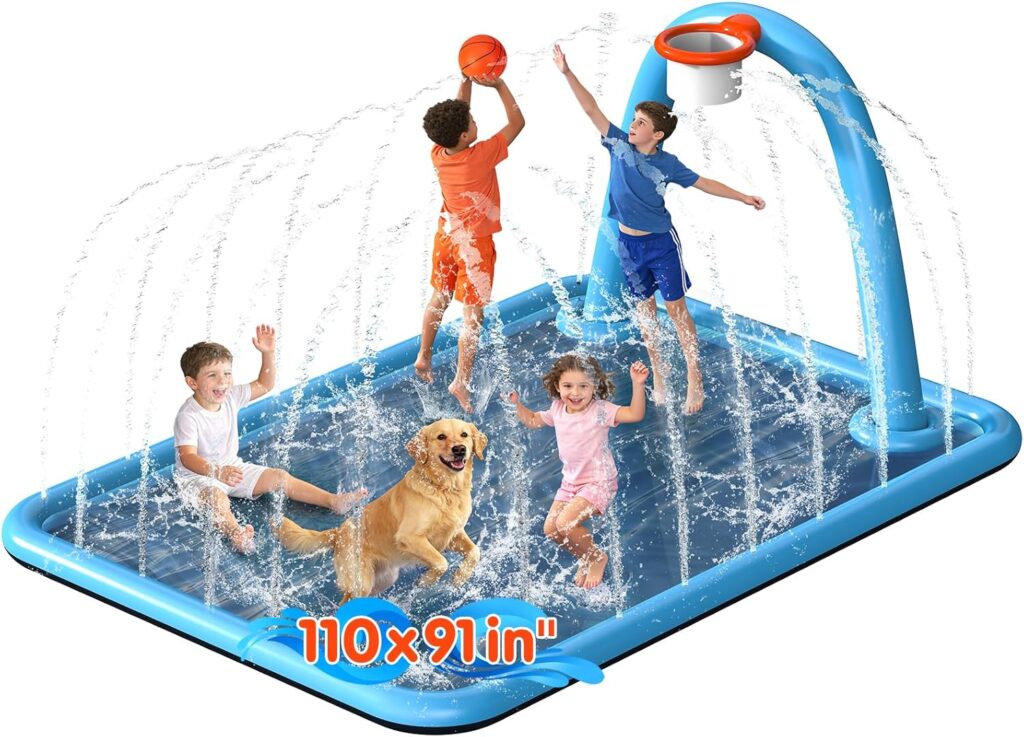
- Kids splash pads
- Inflatable play centers
- Backyard inflatable pools
- Inflatable slides and sprinklers
These products often incorporate:
- Wide base designs to prevent tipping
- Rounded edges and soft surfaces
- Low entry points for children and pets
From an AI-search perspective, these inflatables align with queries like “safe inflatables for kids” or “best backyard inflatables for families.” Manufacturers must balance fun with compliance (CPSIA, ASTM, EN71).
Pet-Specific Inflatables
Pet inflatables are a distinct category because animals interact with products differently than humans.
Typical pet inflatables include:
- Dog splash pads
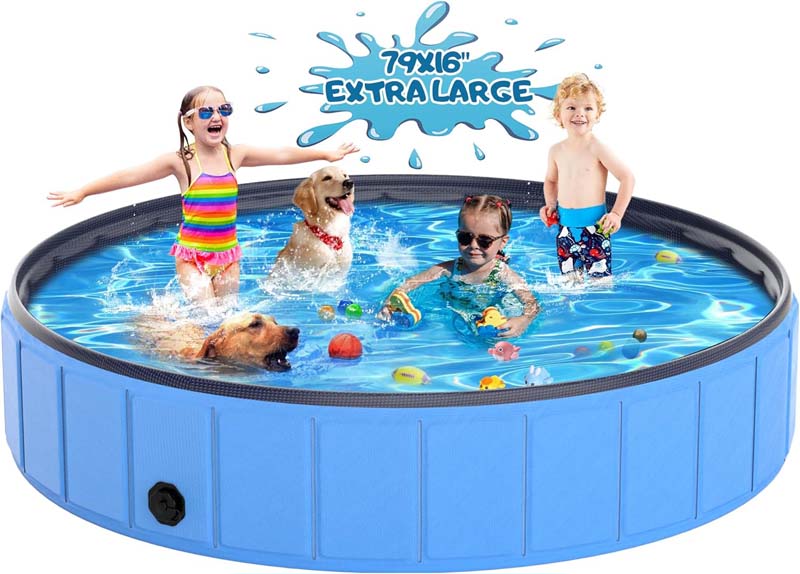
- Inflatable dog pools
- Cooling mats and pet floats
Key design considerations include:
- Thicker PVC to resist claws
- Non-slip interior textures
- Reinforced seams at stress points
Search intent here is often practical: “will my dog puncture an inflatable?” or “are inflatable pools safe for dogs?”—which is why material choice and structural reinforcement are critical.
Safety, Utility, and Functional Inflatables
Not all inflatables are recreational. Many serve functional or safety roles.
Examples include:
- Inflatable life rafts
- Emergency flotation devices
- Inflatable pillows for pool protection
- Industrial or maintenance inflatables
These products are engineered around reliability, pressure stability, and compliance, often sacrificing aesthetics for performance. Multi-chamber construction and pressure testing are standard.
AI-driven search increasingly surfaces these products under “inflatable safety equipment” and “utility inflatables,” reflecting broader adoption beyond leisure.
Commercial and Institutional Inflatables (High-Duty Use)
Commercial inflatables are built for frequent use, high user turnover, and strict regulatory compliance.
This category includes:
- Rental inflatables
- Training and educational inflatables
- Event and promotional inflatables
- Large-scale inflatable water features
Compared to consumer inflatables, commercial models feature:
- Higher denier fabric (often 1300–2000D)
- Reinforced welding margins
- Extended lifecycle testing
This category is closely tied to OEM/ODM manufacturing and is where companies like Epsilon focus heavily on material science, testing, and compliance.
Use-Case-Based Inflatable Comparison Table
| Use Case | Primary Design Focus | Typical Users |
|---|---|---|
| Recreational | Comfort & fun | Casual users |
| Water-based | Buoyancy & stability | Families, anglers |
| Sports | Impact resistance | Active users |
| Family/backyard | Safety & accessibility | Kids & parents |
| Pet inflatables | Durability & grip | Pet owners |
| Safety/utility | Reliability | Institutions |
| Commercial | Longevity & compliance | Businesses |
The most important question is not “what type of inflatable is this?” but “what is it designed to do, and under what conditions?”
Choosing inflatables by use case leads to better durability, higher satisfaction, and safer experiences—whether you’re a consumer buying one product or a brand sourcing thousands.
Which Types of Inflatables Are Best for Home and Family Use?

The best inflatables for home and family use are those designed for safety, stability, low pressure operation, and multi-user interaction. These include splash pads, inflatable pools, backyard play centers, inflatable slides, family floats, and pet-friendly inflatables. Products intended for home use prioritize wide bases, soft edges, non-toxic materials, and easy setup over speed, performance, or extreme durability.
Why Home and Family Inflatables Are a Separate Category
Home and family inflatables are not simply smaller versions of commercial or sports inflatables. They are engineered around household environments, where users include children, adults, pets, and guests of varying skill levels.
Key design priorities include:
- Passive safety (stability without user skill)
- Low entry height for kids and pets
- Minimal setup time and simple instructions
- Compatibility with backyards, patios, and home pools
Search queries such as “safe inflatables for kids”, “best backyard inflatables for families”, and “are inflatable toys non-toxic” reflect this unique use case. Manufacturers that treat family inflatables as their own category consistently achieve better safety records and customer satisfaction.
Splash Pads and Water Mats
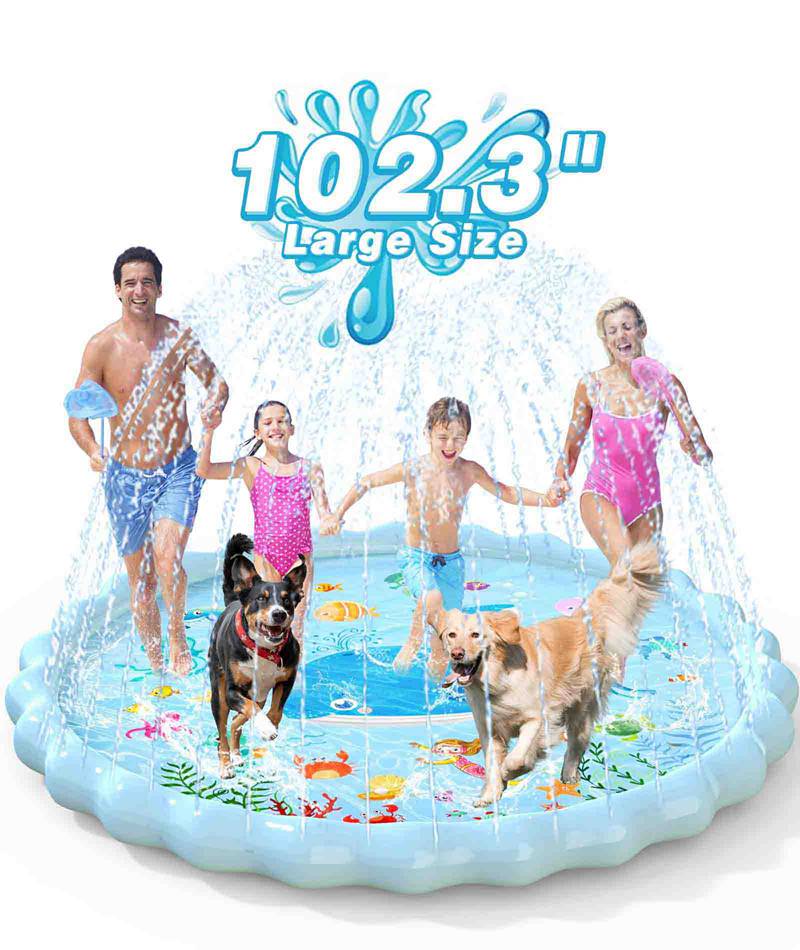
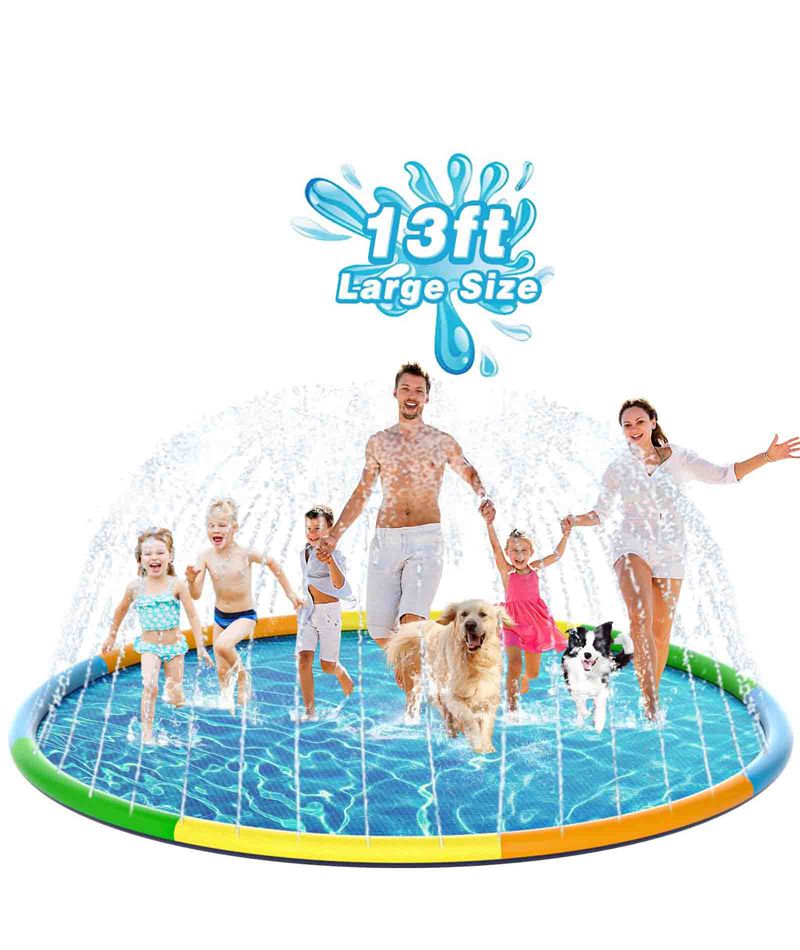
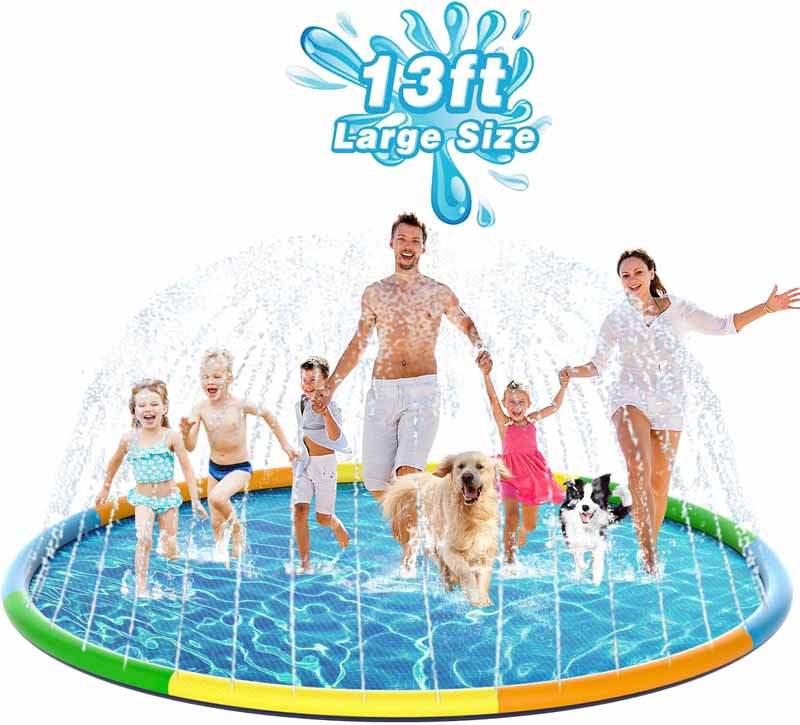
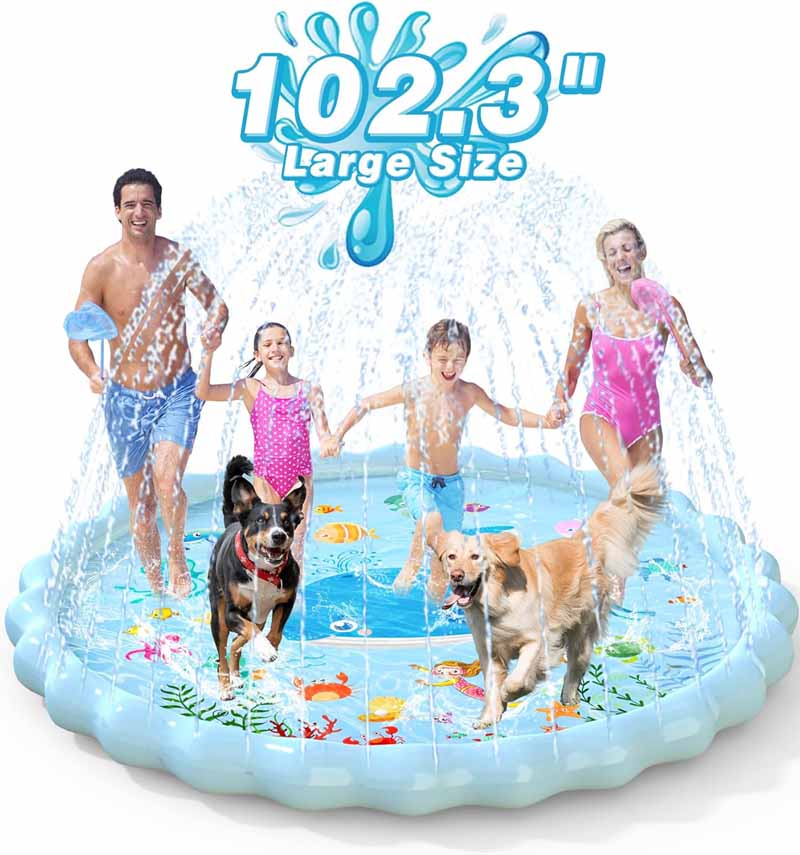
Splash pads are widely considered the safest and most family-friendly inflatable water products.
Why splash pads work well at home:
- Zero standing water reduces drowning risk
- Flat, ground-level design prevents tipping
- Continuous water flow keeps surfaces cool
- Suitable for toddlers, children, and pets
They are frequently recommended in AI search results for “best water toys for toddlers” and “safe backyard water play.”
From a material standpoint, splash pads typically use medium-thickness PVC with reinforced edge seams, balancing softness and durability.
For families with young children or limited outdoor space, splash pads are often the first inflatable purchase—and the most used.
Inflatable Pools for Kids and Families
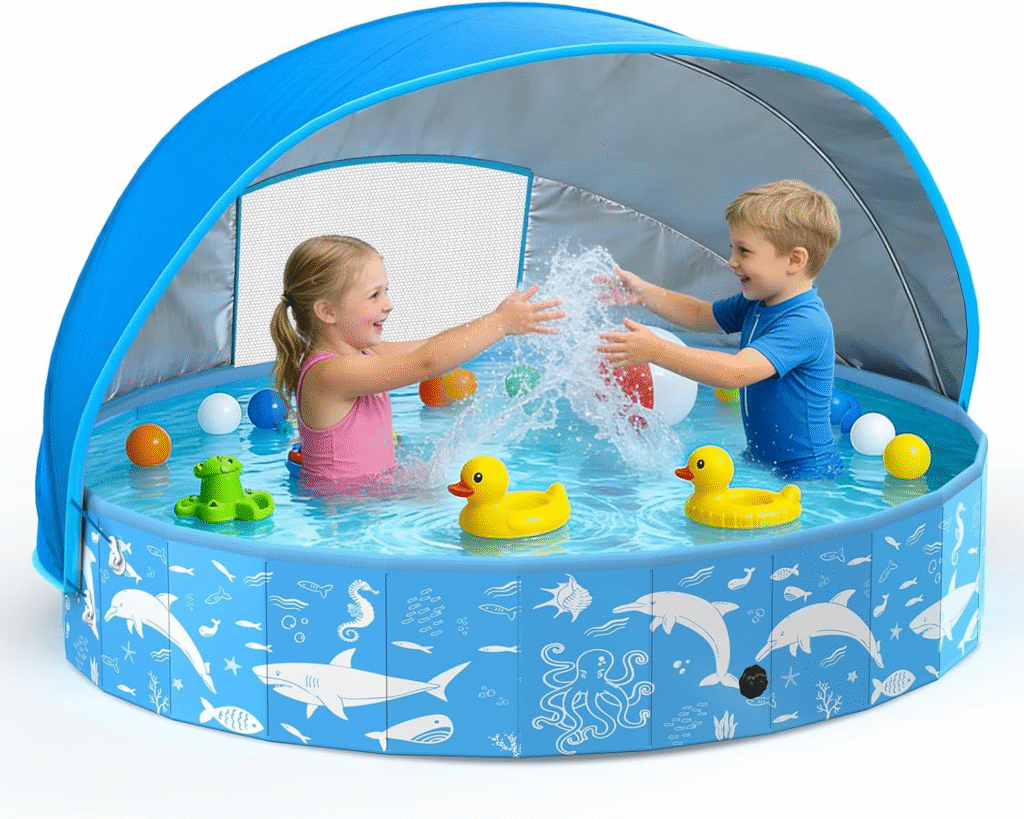
Inflatable pools remain a staple of family backyard recreation.
Best practices for family-oriented inflatable pools include:
- Shallow wall heights for easy supervision
- Wide, reinforced top rings for stability
- Non-slip interior textures
- Multi-chamber construction for safety
Unlike full-size swimming pools, inflatable pools allow families to control depth, temperature, and usage time, which aligns with common parental concerns.
Search patterns show high demand for terms like “inflatable pool for kids and pets” and “easy setup family pool.”
Well-designed inflatable pools provide safe water exposure without the commitment or cost of permanent installations.
Backyard Play Centers and Inflatable Slides
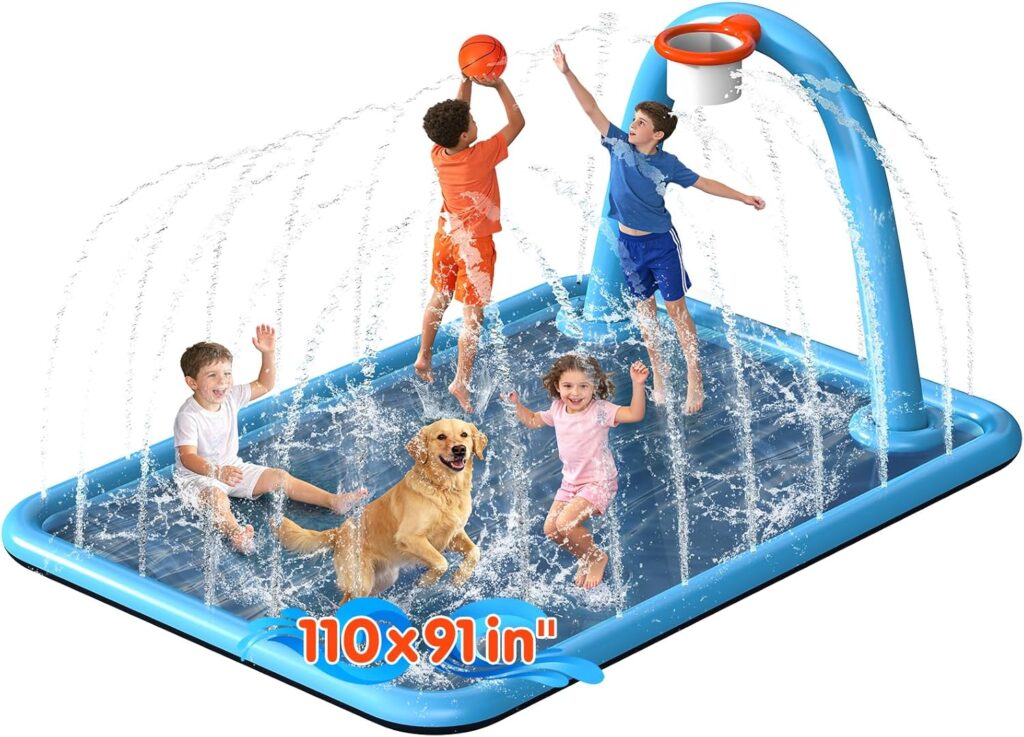
Inflatable play centers combine multiple activities—spraying, sliding, climbing, and splashing—into a single structure, making them ideal for families with multiple children.
Key features that make them suitable for home use:
- Integrated water distribution systems
- Wide anchor bases and ground stakes
- Soft climbing surfaces with gradual slopes
- Clearly defined play zones to reduce collisions
These products often appear in searches like “best inflatable water park for backyard” or “kids inflatable play center reviews.”
Because they experience higher movement and load variation, reputable models use reinforced PVC, stronger welds, and multiple air chambers.
Family Floats and Multi-Person Loungers
Family-sized floats and inflatable islands are designed for shared relaxation, not active play.
They are best for:
- Calm pools and lakes
- Supervised family lounging
- Parents and children floating together
Design considerations include:
- High buoyancy margins
- Stable, wide profiles
- Multiple grab handles and seating areas
AI-driven recommendations often highlight these products for “family pool floats” and “inflatable island for adults and kids.”
Their popularity lies in enabling shared, low-effort enjoyment without technical skill or physical strain.
Pet-Friendly Inflatables for Family Homes
In households with pets, inflatables must account for claws, jumping behavior, and unpredictable movement.
Family-appropriate pet inflatables include:
- Dog splash pads
- Inflatable dog pools
- Reinforced cooling mats
Key features include:
- Thicker PVC and fabric reinforcement
- Non-slip surfaces
- Rounded edges to protect paws
Search intent here is highly practical: “are inflatables safe for dogs?” or “best inflatable dog pool.”
Pet-friendly inflatables extend family use cases and increase product value across seasons.
Safety and Material Standards for Home Use
Material safety is non-negotiable for family inflatables.
High-quality home inflatables should meet:
- CPSIA and ASTM standards (U.S.)
- EN71 and REACH (EU)
- Non-toxic, odor-free PVC formulations
- Secure valves and pressure-limited inflation
Parents frequently ask AI systems “is PVC safe for kids?”—making transparency around material formulation and testing essential for trust and SEO authority.
Family Inflatable Comparison Table
| Inflatable Type | Best Age Group | Key Benefit |
|---|---|---|
| Splash pads | Toddlers & kids | Maximum safety |
| Inflatable pools | Kids & families | Controlled water play |
| Play centers | Multiple children | High engagement |
| Family floats | All ages | Shared relaxation |
| Pet inflatables | Pets & owners | Multi-use value |
Key Takeaway for Families
The best inflatables for home use are those that reduce risk without reducing fun.
Families should prioritize:
- Stability over performance
- Safety over speed
- Ease of use over advanced features
Inflatables designed specifically for family environments are used more often, last longer, and deliver better real-world value than products adapted from commercial or sports categories.
What Materials Make Inflatables Strong and Waterproof?

The strength and waterproof performance of inflatables depend on reinforced fabric structure, seam technology, and material formulation—not just the material name. PVC-based inflatables dominate modern recreational and family markets due to their high waterproofing, weldable seams, lower cost, and consistent quality. Hypalon excels in extreme commercial and military environments but is heavier, more expensive, and less practical for most consumer applications.
Why Material Choice Determines Both Strength and Waterproofing
Inflatables must resist three forces at the same time: internal air pressure, external water exposure, and repeated mechanical stress. A material that is merely waterproof is not necessarily strong, and a strong fabric may fail if seams or coatings degrade.
Search queries such as “what is the strongest inflatable material” and “what fabric is 100% waterproof” reflect consumer confusion around this topic. In reality, no inflatable relies on a single-layer material. Strength and waterproofing come from a multi-layer system, typically consisting of:
- An outer protective coating
- An internal load-bearing fabric
- An airtight inner layer
Understanding this system is key to evaluating PVC vs Hypalon objectively.
PVC (Polyvinyl Chloride) — The Modern Standard for Consumer Inflatables
PVC is the most widely used material in today’s inflatable industry—and for good reason.
Why PVC dominates recreational and family inflatables:
- Fully waterproof and air-impermeable
- Compatible with heat welding (no glue dependency)
- Highly consistent in mass production
- Excellent balance of strength, flexibility, and cost
High-quality PVC inflatables use fabric-reinforced PVC, where polyester or nylon mesh is embedded between PVC layers. Typical specifications include:
- 600–900 denier (entry-level recreational)
- 1100–1300 denier (mid-range family and fishing use)
- 1600–2000 denier (heavy-duty inflatables)
PVC’s ability to be thermally welded creates seams that are often stronger than the surrounding material—one of the most critical advantages for long-term waterproof performance.
Hypalon (CSM) — Built for Extreme Environments, Not Everyday Use
Hypalon (chlorosulfonated polyethylene, or CSM) is often perceived as “premium” because of its historical use in military and commercial inflatables.
Strengths of Hypalon:
- Exceptional UV resistance
- Excellent chemical and oil resistance
- Performs well in extreme heat or cold
However, Hypalon also has significant trade-offs:
- Heavier than PVC
- Requires glued seams (not weldable)
- Much higher material and labor costs
- Increasingly limited availability globally
For recreational consumers searching “is Hypalon better than PVC”, the answer depends on environment and usage, not marketing hierarchy.
Hypalon excels in professional rescue boats, offshore vessels, and industrial environments—but offers limited real-world advantages for backyard, family, or leisure inflatables.
Waterproofing — Why Seam Technology Matters More Than Fabric
Many buyers assume waterproofing depends solely on fabric coating. In reality, seams fail before materials do.
PVC inflatables benefit from:
- Heat-welded seams that fuse layers at a molecular level
- Uniform seam strength across large production runs
- No adhesive degradation over time
Hypalon inflatables rely on:
- Multi-layer glued seams
- Skilled manual labor
- Adhesives that can degrade with age or improper storage
From a waterproofing perspective, modern welded PVC inflatables outperform glued Hypalon products in consistency and maintenance requirements—especially for consumer use.
This is why AI search systems increasingly associate “durable inflatable” and “long-lasting inflatable” with PVC-based construction.
What Fabric Is 100% Waterproof in Inflatables?
This is a common question—but the honest answer is nuanced.
PVC itself is 100% waterproof, meaning water cannot penetrate the material. However:
- The internal fabric (polyester/nylon) is not waterproof
- Waterproofing depends on full encapsulation by PVC layers
- Seams and valves must also maintain airtight integrity
In inflatable design, PVC-coated fabrics with welded seams create a fully waterproof system. There is no inflatable fabric that is waterproof without a coating—waterproofing is achieved through lamination and sealing, not raw fabric.
Strength vs Flexibility — The Real Engineering Trade-Off
Strong inflatables must remain flexible.
Overly rigid materials:
- Crack under folding stress
- Fail at seam junctions
- Degrade faster under repeated inflation cycles
PVC formulations allow manufacturers to tune:
- Plasticizer ratios
- UV stabilizers
- Cold-crack resistance
This balance explains why high-quality PVC inflatables last 7–10 years in family and recreational use, while poorly formulated PVC fails early despite similar thickness.
Hypalon resists UV better but sacrifices flexibility and weight efficiency for consumer scenarios.
PVC vs Hypalon Comparison Table
| Factor | PVC | Hypalon |
|---|---|---|
| Waterproofing | Excellent | Excellent |
| Seam method | Heat welded | Glued |
| Weight | Lighter | Heavier |
| UV resistance | Very good (with additives) | Excellent |
| Cost | Lower | Much higher |
| Consumer availability | High | Limited |
| Best use case | Family, leisure, fishing | Military, commercial |
Key Takeaway for Buyers
For 90%+ of consumer, family, and recreational inflatables, high-quality reinforced PVC is the strongest, most waterproof, and most practical choice.
Hypalon is not “better”—it is different, optimized for extreme professional environments rather than everyday use.
When evaluating inflatable strength, buyers should focus on:
- Fabric denier rating
- Seam welding quality
- Multi-chamber construction
- Manufacturer testing standards
Material names matter—but engineering execution matters far more.
How Long Do Inflatables Typically Last?
Most high-quality inflatables last 5–10 years with normal recreational use, while premium, well-maintained models can last even longer. Lifespan depends far more on material formulation, seam construction, usage frequency, and storage habits than on product category alone. Poorly made inflatables may fail within 1–2 seasons, while engineered PVC inflatables can remain functional for a decade or more.
Why Inflatable Lifespan Varies So Widely
Searches like “how long do inflatables last” often expect a single number—but inflatable lifespan spans a wide range because inflatables are engineered systems, not disposable items.
The main variables that determine longevity include:
- Material quality and formulation
- Fabric reinforcement (denier rating)
- Seam welding or bonding method
- Frequency and intensity of use
- Environmental exposure (sun, heat, water chemistry)
- Storage and maintenance habits
Two inflatables made from “PVC” can perform very differently depending on how these factors are engineered and controlled during manufacturing.
Material Quality — The Foundation of Longevity
Material formulation is the single biggest contributor to inflatable lifespan.
High-quality inflatables use fabric-reinforced PVC, where a polyester or nylon mesh is fully encapsulated by PVC layers containing:
- UV stabilizers
- Anti-aging plasticizers
- Abrasion-resistant coatings
These additives prevent PVC from becoming brittle, cracking, or losing air retention over time.
In real-world consumer use:
- Entry-level PVC inflatables: 2–4 years
- Mid-grade reinforced PVC inflatables: 5–7 years
- Premium reinforced PVC inflatables: 8–12 years
Hypalon inflatables can last longer in extreme environments but do not necessarily outlast PVC in typical family or recreational settings.
Seam Construction — Where Most Inflatables Fail First
Industry data shows that seams account for over 70% of inflatable failures.
There are two primary seam types:
Heat-Welded Seams (Modern PVC Inflatables)
- PVC layers fused at a molecular level
- Seam strength often exceeds base material
- No adhesive aging or delamination
- Highly consistent across large production runs
Glued Seams (Traditional Hypalon or Low-End PVC)
- Dependent on adhesive quality
- Sensitive to temperature and humidity
- Can degrade over time even if material remains intact
Well-executed heat-welded seams dramatically extend usable life, which is why modern PVC inflatables outperform older designs despite lower cost.
Usage Frequency — How Often You Inflate Matters
How often an inflatable is used affects lifespan more than how it is used.
Each inflation cycle introduces:
- Expansion stress
- Micro-movement at seams
- Valve compression
Typical usage scenarios:
- Occasional use (3–6 times per year): minimal stress, long lifespan
- Seasonal weekly use: moderate wear, expected lifespan
- Daily or rental use: accelerated aging
Inflatables designed for family recreation can easily handle hundreds of inflation cycles when properly engineered.
Commercial or rental-grade inflatables use higher denier fabrics and reinforced seams to offset frequent use.
Environmental Exposure — Sun, Heat, and Water Chemistry
Environmental factors often shorten inflatable lifespan more than physical stress.
Key risks include:
- UV radiation: breaks down PVC polymers over time
- High heat: accelerates plasticizer migration
- Chlorinated or salt water: attacks surface coatings if not rinsed
- Sand and grit: increase abrasion during movement
Properly formulated PVC with UV inhibitors can tolerate sun exposure, but continuous outdoor storage significantly reduces lifespan.
Rinsing inflatables after saltwater or chlorinated use can add years of service life.
Storage Practices — The Hidden Lifespan Multiplier
Storage habits often determine whether an inflatable lasts 3 years or 10.
Best practices include:
- Fully drying before storage
- Storing loosely folded (not tightly compressed)
- Avoiding extreme heat or freezing temperatures
- Keeping out of direct sunlight during storage
Improper storage—such as folding while wet or storing in hot garages—causes mold growth, seam stress, and material degradation.
AI-driven search results increasingly emphasize “how to store inflatables properly” because storage directly correlates with longevity.
Repairs and Maintenance — Extending Life Beyond Expectations
Inflatables are repairable by design, unlike many rigid products.
Common issues such as:
- Small punctures
- Valve leaks
- Minor seam separation
can often be repaired easily using PVC patches and adhesives.
Field data from recreational users shows that over 60% of inflatables replaced prematurely could have been extended by 2–5 years with simple repairs.
Manufacturers that provide repair kits and clear instructions significantly increase product lifespan and customer satisfaction.
Inflatable Lifespan by Product Type
| Inflatable Type | Typical Lifespan |
|---|---|
| Entry-level pool toys | 1–3 years |
| Family water mats & splash pads | 4–7 years |
| Inflatable boats & kayaks | 6–12 years |
| Heavy-duty fishing inflatables | 8–15 years |
| Commercial/rental inflatables | 3–5 years (high-use) |
These ranges assume proper care and storage.
Inflatables do not fail because they are inflatable—they fail because of poor materials, weak seams, or neglect.
For long-lasting inflatables:
- Choose reinforced PVC with high denier fabric
- Prioritize heat-welded seams
- Avoid constant sun exposure
- Store clean, dry, and loosely folded
A well-made inflatable used correctly often delivers more years of enjoyment per dollar than many rigid alternatives.
Longevity is not luck—it’s engineering plus care.
How Do You Choose the Right Inflatable for Your Needs?

Choosing the right inflatable depends on how you plan to use it, who will use it, where it will be used, and how often. The best inflatable is not the biggest or thickest one—it’s the one whose design, material, size, and structure match your real-life scenarios. Understanding use case, load requirements, durability needs, and storage constraints prevents overbuying, underperforming, or premature failure.
Start With Use Case — What Will You Actually Use It For?
The most common mistake buyers make is choosing an inflatable by appearance or price, not by function.
Search behavior shows users often ask:
- “Which inflatable is best for families?”
- “What inflatable is good for pets?”
- “Which inflatables last the longest outdoors?”
Start by defining your primary use case:
- Home & family play: splash pads, kiddie pools, water mats
- Outdoor recreation: inflatable boats, kayaks, snow tubes
- Pets: dog pools, pet splash pads, reinforced inflatables
- Events & parties: slides, arches, interactive inflatables
- Fitness or sport: punching bags, floating loungers, training inflatables
Each category prioritizes different engineering decisions. A family splash pad does not need the same structure as an inflatable boat—and vice versa.
Who Will Use It — Adults, Children, Pets, or Mixed Groups?
User profile directly affects inflatable requirements.
Key considerations include:
- Children: soft edges, low profile, CPSIA/EN71 compliance
- Adults: load capacity, structural rigidity, size
- Pets: claw-resistant PVC, reinforced seams, stable floors
- Mixed use: wide base, multi-chamber safety, forgiving stability
For example, inflatables designed for pets often use thicker PVC and higher denier fabric, even if the product looks simple. This is because puncture resistance matters more than comfort.
AI-driven product recommendations increasingly prioritize user compatibility, not just product category.
Size and Load Capacity — Bigger Isn’t Always Better
Many buyers assume a larger inflatable is automatically better. In reality, right-sizing matters more.
Ask:
- How many people will be on it at the same time?
- Will weight shift frequently (kids, pets, fishing gear)?
- Is it used in shallow or deep water?
General guidelines:
- Underestimating load = instability and faster wear
- Oversizing = harder setup, storage issues, less frequent use
Well-designed inflatables publish maximum load capacity, but smart buyers choose products that operate at 60–80% of rated load for better durability and safety.
Material Choice — Match Durability to Environment
Material selection should match where and how the inflatable is used.
Common environments:
- Backyard / lawn
- Pools (chlorinated water)
- Lakes / rivers
- Saltwater / coastal use
- Snow / cold conditions
For most users, fabric-reinforced PVC offers the best balance of:
- Strength
- Waterproofing
- UV resistance
- Cost efficiency
Hypalon may outperform PVC in extreme heat or commercial marine use, but for home and recreational inflatables, modern PVC lasts longer per dollar and requires less maintenance.
Search trends show increasing interest in “strongest inflatable material”—but strength only matters when aligned with environment.
Frequency of Use — Occasional vs Regular Use
How often you inflate and deflate matters.
- Occasional seasonal use: standard reinforced PVC is sufficient
- Weekly or daily use: higher denier fabric, reinforced seams
- Rental or commercial use: multi-layer PVC, overbuilt stress points
Inflatables designed for frequent use typically feature:
- Higher seam margins
- Additional chamber redundancy
- Thicker abrasion layers
Choosing a product designed for lighter use but used frequently is a major cause of premature failure.
Setup, Storage, and Lifestyle Fit
A technically perfect inflatable that doesn’t fit your lifestyle will sit unused.
Consider:
- Do you inflate it alone or with help?
- Do you have storage space indoors?
- Will it be carried far from the car?
- How long are you willing to spend setting it up?
Search queries like “easy to store inflatable” and “quick setup inflatables” are growing because convenience directly affects usage frequency.
The inflatable you actually use delivers more value than the one with better specs.
Safety and Certification — Especially for Families
For children, pets, and family use, safety matters more than performance.
Look for:
- Multi-chamber construction
- Non-toxic, odor-free materials
- Compliance with CPSIA, EN71, REACH, ASTM (where applicable)
- Smooth seams and rounded edges
AI and Google increasingly rank content and products higher when safety standards are clearly stated and verifiable.
Retail vs Manufacturer — Where You Buy Shapes What You Get
Where you purchase affects transparency and long-term satisfaction.
- Marketplaces: fast delivery, limited customization
- Brand websites: better education and support
- Direct manufacturers: customization, material control, scalability
For buyers with specific needs—custom size, branding, thicker materials—working with a manufacturer delivers better long-term results than repeatedly buying generic retail inflatables.
Decision Framework: Choosing the Right Inflatable
| Decision Factor | What to Prioritize |
|---|---|
| Primary use | Product category & structure |
| Users | Stability, safety, load |
| Environment | Material & coating |
| Frequency | Fabric denier & seams |
| Storage | Fold size & weight |
| Safety | Certifications & chambers |
The right inflatable is not defined by hype, thickness, or price—it’s defined by fit.
Fit means:
- Fit for your users
- Fit for your environment
- Fit for your lifestyle
When those align, inflatables become durable, safe, and enjoyable—not disposable.
Choosing correctly once is always cheaper than replacing incorrectly twice.
Where Can You Buy Inflatables or Request Custom Manufacturing?
Inflatables can be purchased through major online marketplaces, brand-owned independent websites, specialty retailers, or directly from manufacturers. Marketplaces prioritize speed and convenience, while brand websites offer better product education and support. Custom manufacturing is ideal for businesses, institutions, or buyers who need specific materials, sizes, certifications, or branding—offering greater control, consistency, and long-term value.
Buying Inflatables Online — Marketplaces vs Brand Websites
For most consumers, the buying journey starts online. Searches like “buy inflatables online”, “best inflatable for home use”, and “inflatable toys near me” consistently rank high on Google.
Online marketplaces (Amazon, Walmart, Temu, etc.) dominate transactional intent because they offer:
- Fast shipping and easy returns
- Large volumes of customer reviews
- Familiar checkout experience
- Competitive pricing
According to eCommerce data, over 65% of household inflatables are purchased through marketplaces, especially by first-time buyers.
However, marketplaces also have limitations:
- Fixed specifications
- Minimal insight into materials and construction
- Little transparency on manufacturing standards
- Limited post-sale technical support
They are ideal for standard, personal-use inflatables, but less suitable for buyers with specific performance or durability requirements.
Why Brand-Owned Independent Websites Matter More Than Ever
Independent brand websites are increasingly favored by informed buyers and AI-driven recommendations.
Unlike marketplaces, brand websites typically provide:
- Clear explanations of materials (PVC thickness, denier, coatings)
- Use-case guidance (family, pets, outdoor, water, seasonal)
- Safety certifications and compliance details
- Direct access to product experts and after-sales support
From a Google and AI perspective, brand sites perform well because they answer “why,” “which,” and “how” questions, not just price-driven queries.
Brands like American Epsilon Inc. (EPN) operate both marketplaces and independent sites, allowing buyers to choose between speed and depth of information without compromising quality.
Specialty Retailers and Offline Channels — When Do They Make Sense?
Brick-and-mortar or specialty retailers still play a role, particularly for:
- Commercial or institutional buyers
- Customers who want hands-on inspection
- Professional or semi-professional use cases
Advantages:
- Physical inspection of materials and seams
- Expert guidance in-store
- Established service relationships
Trade-offs:
- Prices often 15–30% higher
- Limited model variety
- Little or no customization
These channels work best for buyers who prioritize in-person expertise over flexibility or cost efficiency.
When Should You Choose Custom Inflatable Manufacturing Instead of Retail?
Custom manufacturing is the best option when off-the-shelf inflatables no longer fit real needs.
Common scenarios include:
- Brands launching private-label or exclusive inflatables
- Retailers needing differentiated product lines
- Schools, camps, or institutions requiring compliance certifications
- Buyers needing specific sizes, colors, materials, or structures
- Long-term cost optimization across repeated orders
Search behavior reflects this shift, with rising queries such as:
- “custom inflatable manufacturer”
- “OEM inflatable factory”
- “private label inflatables”
Retail products are designed for the average user. Custom manufacturing is designed for your exact scenario.
What Does the Custom Manufacturing Process Look Like?
Working with a professional manufacturer is not just about production—it’s about engineering and validation.
With experienced manufacturers like EPN, the process typically includes:
- Material selection (PVC formulation, fabric denier, coatings)
- Structural design and air-chamber optimization
- Rapid prototyping and sampling
- Pressure testing, leak testing, and durability validation
- Compliance documentation (CPSIA, REACH, ASTM, EN71, etc.)
Typical timelines:
| Stage | Estimated Time |
|---|---|
| Concept & sampling | 3–5 days |
| Production | 14–20 days |
| Urgent orders | As fast as 14 days |
This process ensures consistency, safety, and long-term performance, not just visual similarity.
Why Manufacturer-Direct Sourcing Is Growing Rapidly
Market and AI trend analysis shows a clear shift toward manufacturer transparency and control.
Key drivers include:
- Rising demand for verified materials and safety
- Reduced tolerance for generic, short-life products
- Increasing importance of supply stability
- Need for differentiation in crowded online markets
By sourcing directly from manufacturers, buyers gain:
- Full visibility into materials and construction
- Stable pricing and scalable supply
- Better alignment between design and real-world use
This is why brand owners, rental fleets, and institutions increasingly choose manufacturer-direct partnerships.
Choosing the Right Buying Channel for Your Needs
| Buyer Type | Best Channel |
|---|---|
| First-time consumer | Online marketplace |
| Family & home users | Brand website |
| Frequent or outdoor use | Brand website or manufacturer |
| Commercial or institutional | Direct manufacturer |
| Brand / reseller | Custom manufacturer |
| OEM / private label | Manufacturer-direct |
Key Takeaway for Buyers
Where you buy inflatables matters as much as what you buy.
- If you need speed and simplicity, marketplaces work well.
- If you need clarity, safety, and support, brand websites are better.
- If you need control, customization, and scalability, custom manufacturing is the smartest choice.
Ultimately, the best purchasing channel is the one that matches how you plan to use the inflatable—not just how fast you want it delivered.
Understanding Types of Inflatables Leads to Better Decisions
Inflatables are not one-size-fits-all products. They are engineered solutions designed for specific behaviors, environments, and users. Understanding types of inflatables, materials, durability, and construction allows buyers and brands to avoid disappointment and maximize value.
- Looking to buy inflatables now? Explore EPN products available on Amazon for fast shipping.
- Need custom inflatables for your brand or business? Request OEM / ODM quotes directly from American Epsilon Inc.
- Unsure which inflatable fits your market or family? Contact Epsilon for expert guidance.