Skip to content
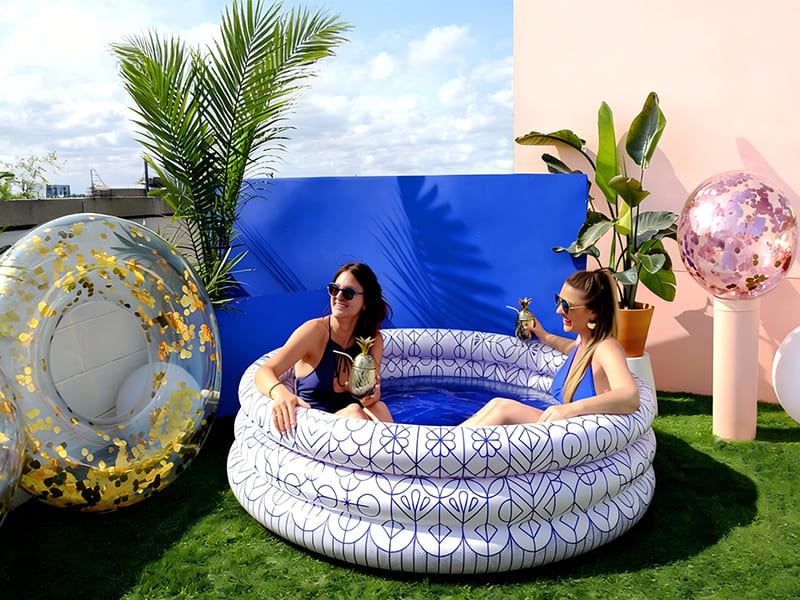
People don’t usually regret buying an inflatable pool because it was “the wrong color.” They regret it because it didn’t match real life: the space wasn’t as flat as they thought, the water warmed up faster than expected, the kids climbed in and out 50 times a day, or the dog treated the pool like a launch pad. That’s why the same category creates extreme reviews—one family uses the pool all summer, another throws it away after a weekend.
Here’s the honest takeaway: “types of inflatable pools” isn’t a simple list. Each type is built around a different pattern of use—quick splash play, family hanging out, adult cooling off, sun-managed backyard time, or pet rinsing and heat relief. If you pick the right type, your pool feels effortless. If you pick the wrong one, it becomes work: constant refills, slow leaks, awkward storage, and water that you no longer feel good about putting kids in.
And if you’ve ever had that moment—standing there with a half-inflated ring, a pump that keeps overheating, and kids asking “Is it ready yet?”—you already know why choosing the right inflatable pool upfront saves your whole weekend. Let’s fix that before it happens.
What types of inflatable pools are there?
Choosing among types of inflatable pools is easiest when you match the design to the real job: quick toddler splash time, multi-kid weekend play, adult cool-down lounging, sun-managed midday use, or pet cooling/rinsing. The practical differences between inflatable pools come down to water depth, wall stability, floor toughness, and how realistically you can refresh the water. Pick the right type and setup feels effortless—your inflatable pool gets used often. Pick the wrong type and you’ll deal with leaks, wobble, or a maintenance routine that’s heavier than your schedule can handle.
What are the 3 pool types vs inflatable pools?
When shoppers say “What are the three types of pools?” they’re usually comparing how pools are built:
1) Inflatable pools (air-supported walls)
2) Frame pools (metal/resin frame + liner)
3) Rigid pools (hard-wall or permanent)
Here’s what that means in normal life—time, effort, and what you get for it:
| Pool Build Type | Typical Setup Time | Typical Water Volume Range | Storage After Season | Best Fit For | Common Pain Point |
|---|---|---|---|---|---|
| Inflatable pools | 5–20 minutes | ~20–800+ gallons (varies widely) | folds small | renters, patios, quick family play | puncture/heat sensitivity if unprotected |
| Frame pools | 30–120 minutes | ~500–5,000+ gallons | bulky | longer “leave it up” summers | assembly/storage effort |
| Rigid pools | days–weeks | very large | permanent | long-term home pool owners | cost, permits, space |
Why inflatable pools stay popular: most families don’t want “a project.” They want a pool they can use today, drain when needed, and store without sacrificing a garage corner for 10 months.
What are toddler inflatable pools?

Toddler inflatable pools are built around safe, shallow play and fast water refresh. Most parents end up using toddler inflatable pools in short sessions (15–45 minutes), often multiple times a week, which is why small volume can be a feature—it’s easier to dump and refill.
What toddler inflatable pools typically look like in practice:
- Depth: usually shallow enough for sitting and splashing rather than swimming
- Footprint: small enough for patios, balconies, tiny lawns
- Goal: easy setup + easy cleanup, not “big pool vibes”
What to prioritize (real customer checklist):
- Stability at the rim: toddlers lean on edges constantly; wide base rings reduce tipping and “folding in.”
- Soft interior + no hard edges: bumps happen; smooth inner walls matter more than patterns.
- Easy drain behavior: if draining feels annoying, water sits too long. Choose a size you can empty quickly.
What are family inflatable pools?

Family inflatable pools are for multiple kids at once (and sometimes adults sitting in the water). These are the classic backyard rings or rectangular family pools where the main stress isn’t “water pressure”—it’s kids climbing, pushing, and bouncing against the walls.
How family inflatable pools behave differently from toddler pools:
- More entry/exit cycles (walls get leaned on constantly)
- More debris (grass, dirt, sunscreen, snacks)
- More movement (sloshing, splashing, toys scraping floors)
Key buying factors customers usually care about:
- Wall structure: multi-ring walls tend to feel steadier than a single big ring.
- Floor toughness: family pools fail from floor abrasion more often than people expect—especially on patios.
- Usable space vs. maintenance: bigger pools hold more water, but they also demand a clearer refresh plan.
Practical selection advice:
- If your surface isn’t perfectly flat, going slightly smaller often makes the pool feel more stable and more enjoyable, because the water stays level and the walls don’t warp.
What are soft-wall inflatable pools?
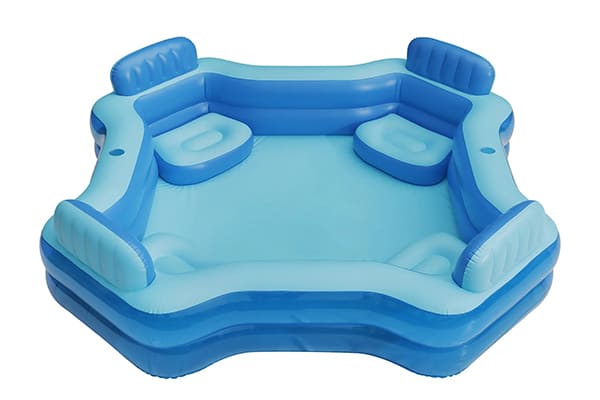
Soft-wall inflatable pools are the comfort upgrade: taller, cushioned sides that feel better when adults sit and lean. They’re often chosen by households that want the pool to serve both kids and adults, not just splash play.
Why people like soft-wall inflatable pools:
- More comfortable leaning: the wall feels supportive instead of flimsy
- Better “hangout” feel: you can sit longer without feeling awkward
- Often better shape retention: in higher-quality builds, the walls don’t collapse as easily
What customers should think about before buying:
- Water volume and routine: soft-wall inflatable pools usually take longer to fill and drain. If you don’t have an easy drain spot, it becomes a hassle.
- Heat behavior: taller air chambers can get tight in strong sun; you need to avoid overinflation.
Best fit:
- Families who will use the pool repeatedly through the week and are willing to keep a simple water routine (cover, refresh schedule, wipe-down).
What are seat inflatable pools?
Seat inflatable pools are built for lounging: integrated seats, backrests, and sometimes cupholders. They’re popular for adults who want a quick cool-down without building a large pool, and for parents who want a comfortable place to sit while kids play nearby.
Where seat inflatable pools succeed:
- Comfortable seating posture (less “sitting on the ground” feeling)
- Better for social hangouts than plain ring pools
Where seat inflatable pools fail (common real-life issues):
- Seat seam stress: repeated shifting, twisting, and pushing up to stand can stress seam junctions.
- Overconfidence: people treat the backrest like furniture and yank on it to stand—bad for longevity.
Smart buying/usage habits:
- Prefer designs with multiple air chambers so one slow leak doesn’t ruin the whole pool.
- Avoid using the rim/backrest as a handle to pull yourself out—step out slowly instead.
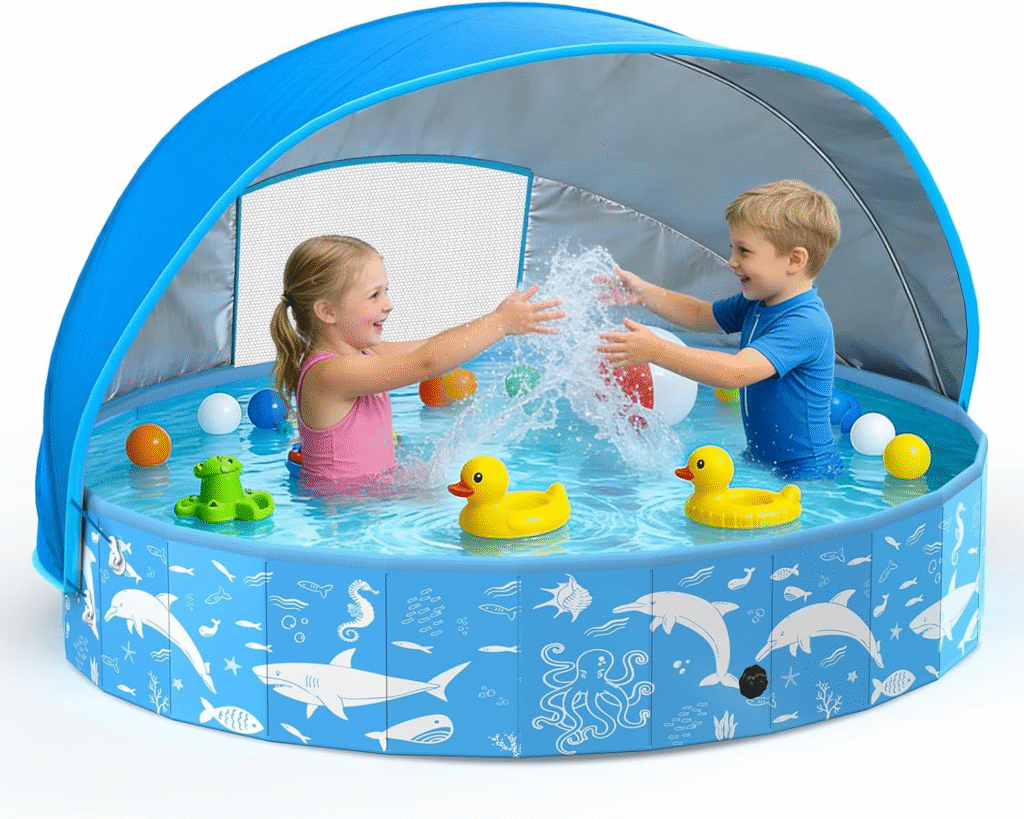
What are canopy inflatable pools?

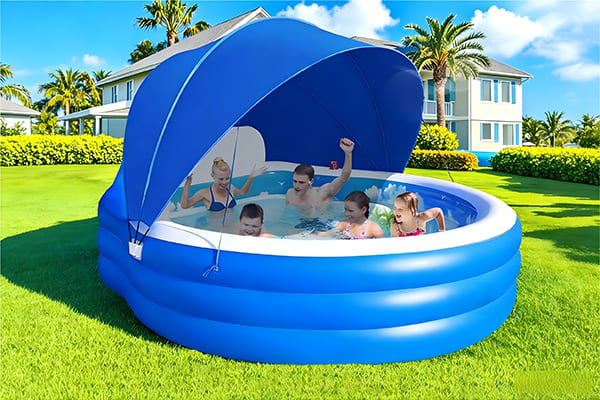
Canopy inflatable pools add shade to reduce sun discomfort and help keep surfaces cooler. This is especially useful in peak summer hours when kids still want to play but sun exposure is intense.
Why customers love canopy inflatable pools:
- Kids tolerate play longer under shade
- The pool feels less “hot” on contact
- Sun glare is reduced, making supervision easier
What customers often overlook:
- Wind: canopies can catch wind like a sail. If your yard gets breezy, you’ll want a stable base and a low-profile shade design.
- Placement matters: canopy inflatable pools work best near a fence line or partial natural shade rather than in the windiest open space.
Practical setup tip:
- A ground cloth plus thoughtful placement (less wind, less sharp debris) improves both comfort and durability more than most “premium” add-ons.
Extra: Quick “Type Picker” Table
| If your goal is… | Pick these types of inflatable pools | Why it works |
|---|---|---|
| Easy daily play for little kids | toddler inflatable pools | quick refresh, low hassle |
| Multiple kids + weekend fun | family inflatable pools | more space, simple structure |
| Adults want comfort too | soft-wall inflatable pools | better leaning and seating |
| Backyard lounging vibe | seat inflatable pools | built for sitting longer |
| Sunny midday play | canopy inflatable pools | shade and comfort |
Which inflatable pools size is best?
The best inflatable pools size is the one that fits your space and fits your routine. Most people only look at the diameter, then get surprised later by three things: (1) the pool doesn’t feel as roomy as expected once walls and waterline take up space, (2) filling and draining takes longer than they imagined, and (3) the “perfect size” becomes annoying if the ground isn’t flat. A smart size choice balances usable play area, safe depth, and a water volume you’re willing to refresh.
Which inflatable pools fit toddlers?
For toddlers, smaller usually wins because you can refresh water easily and keep the play shallow and controlled.
What sizes work well in real homes
- 1–2 toddlers: small round or small rectangular inflatable pools
- 2–3 toddlers: medium toddler/family crossover size, still shallow
- Balcony/patio use: smaller footprint is safer and easier to supervise
Why “too big” becomes a problem
- Larger pools hold more water, so families delay draining
- Water warms faster and gets dirty faster with snacks, grass, diapers, and sunscreen
- Toddlers lean on walls; bigger pools often have taller walls that invite climbing
Toddler sizing habits that reduce issues
- Pick a size you can empty in minutes, not a size you “hope grows with them”
- Keep depth low enough that kids can sit, splash, and stand confidently
- Choose a wide base ring so leaning doesn’t fold the wall inward
Quick toddler checklist
- Low wall height for easy entry/exit
- Stable footprint
- Size that matches your refill tolerance (daily or near-daily is common for toddler use)
Which inflatable pools fit adults?
Adults don’t need a true “swim” pool in most backyards—they need a cool-down pool that feels comfortable to sit in. Adult comfort is driven more by diameter and wall support than by extreme depth.
What “comfortable” often means
- Enough room to sit without knees jammed
- Space to stretch legs partially or change posture
- Walls that don’t collapse when you lean your elbows or back
Adult sizing patterns that work
- 1 adult cooling off: medium soft-wall or seat inflatable pools
- 2 adults: larger diameter is more important than extra depth
- Adults + kids: prioritize width and stability (kids move water constantly)
Common adult mistake
- Buying a basic thin ring pool sized “for adults,” then realizing the rim collapses when leaned on. If adults will use it more than occasionally, soft-wall or seat inflatable pools tend to feel better even at similar size.
Which inflatable pools depth is safer?
Depth affects behavior. Shallow inflatable pools encourage sitting and splashing. Deeper inflatable pools invite dunking, rough play, and fast accidents.
A safer depth approach
- Choose depth based on the youngest child who will use the inflatable pool
- If you want “more fun,” go wider rather than deeper
- Avoid filling to the maximum line if it creates sloshing and spill zones
Safety realities customers notice
- Uneven ground makes one side deeper than the other
- Kids push down on the rim, shifting water and changing depth at the edge
- Overfilled pools spill water outside, creating slippery areas around the pool
Practical rule
- If you can’t clearly see the bottom everywhere (because of glare, depth, or pattern), reduce fill level and improve placement.
Which inflatable pools shape saves space?
Shape matters more than people think, because it determines whether the pool “fits” your space without awkward dead zones.
Round inflatable pools
- Best for tight spaces and patios
- Easier to position on small flat areas
- Usually feels stable with fewer corner stress points
Rectangular inflatable pools
- More usable play area for kids (toys spread out better)
- Can fit along a fence line nicely
- Requires flatter ground; corners can warp on slopes
Space-saving truth
The biggest space-waster isn’t shape—it’s picking an inflatable pool that’s too large for your flat area. If only 80% of your patio is level, a slightly smaller pool will feel better than a larger pool that tilts and sloshes.
Quick slope test
Place a ball on the ground where the pool will sit. If it rolls, your waterline will tilt too—choose smaller or level the surface.
Which inflatable pools work for dogs?
Dogs add a different set of sizing needs: confident footing, easy exit, and less wall collapse from jumping in.
Dog-friendly sizing priorities
- Shallow enough for standing (most dogs dislike losing footing)
- Wide enough for turning around without clawing at the wall
- Wall height low enough for easy entry/exit (or use a step-in approach)
Common dog sizing mistake
Buying a tall-wall inflatable pool that looks great, then your dog either refuses to enter or panics trying to climb out, scratching the wall and floor.
If you want inflatable pools for dogs
- Go wider, not deeper
- Protect the floor (ground cloth)
- Keep water shallow so the dog stands confidently
- Treat nail trimming as part of “pool season”
Practical “Size vs Routine” Table
| Household Use | Best Inflatable Pools Size Direction | Why It Works |
|---|---|---|
| Toddler daily splash | smaller + shallow | easy drain/refill, safer play |
| Multiple kids weekends | medium-to-large + stable walls | space without insane maintenance |
| Adults cooling off | medium-to-large diameter + supportive walls | comfort without huge water volume |
| Small patio | round or smaller rectangle | fits limited flat area |
| Dogs included | wider footprint + shallow fill | footing confidence + easier exit |
A simple way to avoid sizing regret
Before buying, ask yourself one honest question:
“How often will I refresh the water in these inflatable pools?”
- If your answer is “often,” choose smaller.
- If your answer is “rarely,” you either need a much bigger maintenance plan (cover, treatment, testing) or you should reconsider size/type.
If you share your space dimensions (flat usable area) and who will use the inflatable pool (ages, number of kids, pets), I can recommend a size range and the best shape with a simple fill/drain routine that fits your household.
Quick Data Table: Matching Inflatable Pools to Real Use
Here’s a practical way to choose types of inflatable pools based on what customers usually want:
| Use Case | Best Types of Inflatable Pools | Why It Works | Common Mistake |
|---|---|---|---|
| Toddlers (daily play) | toddler inflatable pools | easy refill, safer depth | buying too big to maintain |
| Multiple kids | family inflatable pools | space + simple setup | ignoring ground slope |
| Adults cooling off | soft-wall inflatable pools | comfort + wall support | choosing thin rings for adult leaning |
| Backyard lounging | seat inflatable pools | built for sitting longer | underestimating seam stress |
| Hot sunny areas | canopy inflatable pools | shade + comfort | not considering wind/anchoring |
| Dogs | tougher inflatable pools / pet-focused designs | durability + entry/exit | slick floor + sharp nails |
How do inflatable pools last longer?

Inflatable pools last longer when you control the three things that destroy them fastest: heat/UV, abrasion under the floor, and repeated stress on seams and valves. Most “it broke in a week” stories come from predictable situations—setting an inflatable pool directly on rough concrete, overinflating it in hot sun, dragging it while partly filled, letting kids sit on the rim daily, or storing it damp. The good news is you don’t need fancy gear. A few practical habits and the right setup can easily add weeks or even multiple seasons of use.
Below are the real-world steps customers use to stop slow leaks, seam splits, and floor punctures—plus some numbers and simple checks that make a big difference.
What inflatable pools materials matter most?
When people say “this inflatable pool feels better,” they usually mean the floor feels tougher, the walls hold shape, and it doesn’t stink or stretch in the sun. Those outcomes come from material grade and how layers are built.
What actually matters more than marketing terms
- Floor strength > wall thickness for most households The floor takes shoes, knees, toys, and pet nails. If the floor scuffs, it becomes easier to puncture.
- Reinforcement > “just thicker” A thick ring can still stretch if it isn’t reinforced or if the plastic softens in heat.
- Heat behavior In hot sun, PVC/vinyl softens. Softer material stretches more, which stresses seams.
Practical “material choices by household”
- Toddlers only (short sessions): basic PVC/vinyl is often fine if you protect the floor
- Multiple kids daily: reinforced feel (tougher floor + better shape retention)
- Adults leaning and sitting: soft-wall or stronger wall structure to reduce collapse
- Dogs: toughest floor you can get, plus surface protection every time
What to look for at home (no lab needed)
- Press your thumb into the floor when inflated:
- If it feels “paper-thin” and easy to crease, protect it aggressively.
- If it feels firm and springy without sharp creases, it’s more abrasion-tolerant.
- Tug the wall lightly: better materials return to shape instead of slowly “stretching out.”
Which inflatable pools seams leak less?
Most inflatable pool leaks are either:
- tiny seam leaks that slowly worsen, or
- stress tears where seams meet (junction points)
Where leaks start most often (high-stress zones)
- Floor-to-wall seam (especially near corners on rectangular pools)
- Ring junctions (where the ring connects)
- Seat/backrest areas (seat inflatable pools)
- Around valve bases (tiny gaps become slow leaks)
A simple “day-one seam test” that prevents 80% of headaches
- Inflate fully and let it sit for 20–30 minutes
- Wipe seams dry
- Use a light soap-water wipe along:
- floor-to-wall seam
- corners
- valve base
- Mark any bubble point with tape and patch early
Early patching matters because a micro-leak forces you to overinflate repeatedly, and that repeated pressure cycling is what turns “small” into “ruined.”
Seam habits that keep inflatable pools alive
- Don’t let kids sit on the rim daily (rim sitting is seam fatigue)
- Keep the pool level so one side isn’t overloaded
- Avoid dragging the pool with water inside (seam shear damage)
How do inflatable pools handle sun and heat?
Heat is a silent killer for inflatable pools because it changes both the material and the air pressure.
What heat does in real life
- Midday sun makes air expand → walls get tighter
- Tight walls stretch seams → leaks start or seams split
- Hot surfaces soften PVC/vinyl → floors scuff easier, walls deform easier
A practical heat routine (works for real households)
- Inflate to “firm but not drum-tight”
- If your pool sits in full sun:
- check the wall at midday
- if it feels rock hard, release a little air
- top up again later when it cools This single habit prevents many blowouts.
Shade improves longevity
- Partial shade, canopy inflatable pools, or even shifting use to morning/evening reduces heat stress
- A cover when not in use also reduces surface heating and slows material aging
Fast tip
If the pool is too hot to comfortably touch with your hand, the material is also stressed. That’s a good cue to shade it or stop use until it cools.
Do thicker inflatable pools really help?
Thicker inflatable pools can help, but only if thickness is applied where damage happens.
Thickness helps most with
- Floor puncture resistance
- Abrasion tolerance (less scuff-through)
- Wall stability when kids lean
Thickness doesn’t automatically fix
- Poor seam welding (bad seams still leak)
- Weak valve bases
- UV weakness (sun can still age thick material)
The better question
Instead of “Is it thick?”, ask:
- Is the floor tougher than the wall? (it should be)
- Do the corners and floor seam look reinforced?
- Does the pool keep its shape after several inflate/deflate cycles?
Dog households
Floor toughness matters far more than rim thickness. Dogs rarely puncture a rim; they damage floors and lower seams.
Which inflatable pools parts fail first?
If you want inflatable pools to last longer, protect the parts that fail first:
1) The floor (most common failure)
Why it fails: abrasion + pressure points
Examples: rough concrete, pebbles, dragging, dog nails, hard toys
How to prevent it:
- Always use a ground cloth
- Clear the surface of grit
- Never drag the pool when it has water
- Keep sharp toys out
2) The valve system
Why it fails: dirt in threads, cross-threading, stepping on valve zones
How to prevent it:
- Keep caps clean
- Don’t overtighten
- Don’t place the pool so the valve sits on a high-pressure point (like a bump under it)
3) Floor-to-wall seam junction
Why it fails: uneven ground load + leaning + overinflation
How to prevent it:
- Level placement
- Reduce rim sitting
- Manage heat-driven overpressure
4) Seat/backrest structures (seat inflatable pools)
Why it fails: repeated adult shifting and using backrest as a handle
How to prevent it:
- Step out instead of pulling up on the backrest
- Choose multi-chamber designs so one leak doesn’t collapse the structure
Which is better: frame vs inflatable pools?
If your priority is “lasts longer,” frame pools often have an advantage because the frame carries structure and the liner isn’t required to hold the entire shape with air pressure. But inflatable pools can still last a long time when used correctly—especially for families who drain and store between uses.
Here’s a practical comparison customers actually feel:
| Factor | Inflatable Pools | Frame Pools |
|---|---|---|
| Setup effort | easy, fast | slower, more parts |
| Storage | compact | bulky |
| Durability potential | high if protected from heat/abrasion | generally high for long seasons |
| Best routine | drain/refresh often, dry and store | keep filled longer, manage like a real pool |
| Common failure | puncture/leak from heat + abrasion | liner wear, frame rust (if neglected) |
| Best for | renters, patios, quick family play | bigger volume, “leave it up” summer |
A simple decision rule
- If you want a pool you’ll set up spontaneously and store easily → inflatable pools
- If you want a pool that stays up for weeks with big water volume → frame pools
Quick “Make It Last” Checklist
| What You Do | What It Prevents | How Often |
|---|---|---|
| Ground cloth every time | floor punctures, scuff wear | every setup |
| Don’t overinflate | seam stress, blowouts | every inflate |
| Midday pressure check in sun | heat expansion damage | hot days |
| Keep water below rim | spills, slippery zones, rim stress | every fill |
| Patch micro-leaks early | seam failure later | as needed |
| Dry fully before storage | odor, mildew, surface breakdown | every storage |
How do you keep inflatable pools safe?
Keeping inflatable pools safe comes down to four things families can actually control: supervision, access, water freshness, and the physical setup around the pool. Most problems people run into are predictable: kids slip on wet concrete, water sits too long in hot weather, toddlers wander back to the pool when adults think it’s “done for the day,” or the pool is placed on a slope so one side becomes deeper than expected. If you set up inflatable pools with the same mindset as a trampoline—clear rules, controlled access, and a routine—you prevent the majority of accidents and gross-water issues.
Below is a practical, detailed safety guide with numbers and routines that match real households.
Do inflatable pools need daily draining?
For small inflatable pools used by toddlers and young kids, daily draining is often the safest and easiest routine, because small water volumes get dirty fast. Many parents try to “keep it for a few days,” then end up with cloudy water, slippery film, and complaints about smell.
Why small inflatable pools get dirty so quickly
- Kids track in grass, soil, sunscreen, snacks, and sweat
- Warm sun speeds up bacteria growth and “slime” formation
- Diapers/potty training accidents can contaminate water instantly
- Even “clean-looking” water can be unpleasant after sitting warm
A realistic drain schedule most families can follow
- Toddler inflatable pools (very small): drain the same day, especially if used for more than 30–60 minutes
- Medium family inflatable pools: refresh every 1–3 days depending on use and weather
- Large inflatable pools kept filled: refresh more often if many kids use it daily, or if the pool sits in full sun
Fast decision rule
Drain sooner if you notice any of these:
- water looks cloudy instead of clear
- water smells “stale” or sweet/chemical from sunscreen buildup
- floor feels slippery or slimy
- visible debris keeps returning even after skimming
A tip that makes daily draining less annoying
Place the pool where draining is easy (near a yard drain path or where water can be directed). People delay draining when the location makes it inconvenient—then safety and hygiene both drop.
Are inflatable pools water germs a risk?
Yes, inflatable pools can carry higher germ risk than people assume because the water is shallow, warm, and heavily used. The risk increases with:
- lots of kids sharing water
- long play sessions with sunscreen and snacks
- water staying for multiple days
- hot weather (water warms quickly)
What makes inflatable pool water “go bad” fast
- Heat: warm water speeds up growth of bacteria and algae
- Organic load: sunscreen, dirt, grass, body oils create a food source
- Small volume: there’s less water to “dilute” contamination
- Constant mixing: kids stir everything up from the floor
Simple habits that reduce germ risk without turning it into a chemistry class
- No food in inflatable pools. This one rule alone reduces a huge amount of contamination.
- Quick foot rinse before entry. A small rinse bucket near the pool is enough.
- Cover the pool when not in use. Even a clean tarp reduces debris and bugs dramatically.
- Wipe the floor after draining. A towel wipe removes slippery film so the next fill starts clean.
High-risk situations
- toddlers in swim diapers
- potty training stage
- playdates with lots of kids
- pets sharing the same water
If your inflatable pool use includes those scenarios, shorter water cycles (drain/refill) are usually the safest approach.
Do inflatable pools need chlorine?
Sometimes they do, but many families don’t need chlorine if they use the right routine.
When inflatable pools usually do NOT need chlorine
- toddler inflatable pools that are drained same day
- small pools used for short sessions
- households that refresh water frequently
When inflatable pools MAY need chlorine (or another treatment plan)
- larger inflatable pools kept filled for several days
- frequent use with multiple children
- hot climates where water warms quickly
- situations where draining is difficult and water stays longer
The real caution with chlorine in inflatable pools
Small pools have small volumes, which means it’s easy to overdo chemicals. Overdosing can irritate skin and eyes, and strong chemical levels can create unpleasant smell and user complaints.
A practical and safe approach for many households
- If your inflatable pool is small enough to drain easily → drain/refill instead of chemical management
- If it’s large and you keep it filled → treat it like a real pool with consistent testing and careful dosing, or plan a fixed refresh schedule
Many families choose the simpler path: pick a size of inflatable pools that supports frequent water refresh and skip complicated chemical routines.
How do inflatable pools prevent slips?
Slips are one of the most common inflatable pool accidents, especially on patios. Most slips happen outside the pool, not in it—wet feet + smooth concrete = trouble.
Slip prevention starts with placement
- Avoid smooth tile and steep concrete slopes
- Use a ground cloth (it also helps durability)
- Keep the surrounding area clear of hoses, toys, and clutter
Control the “wet zone”
Inflatable pools spill water when:
- kids splash aggressively
- the pool is overfilled
- kids climb on the rim and push it down
- the pool is placed on a slope (water sloshes to one side)
Simple ways to reduce slippery spill zones
- Fill below the top ring by a safe margin (less slosh = less spill)
- Make a “no rim sitting” rule (rim sitting causes spill and seam stress)
- Put towels or a non-slip mat where kids exit
- Use a dedicated entry/exit side so you can manage the wet area
Kid behavior rules that actually work
- “Walk, don’t run” around inflatable pools
- “Feet first only” for entry
- No jumping in from outside (jumping creates spills and wall collapse)
A lot of families find that one consistent rule is easier than many rules:
“If you run, pool time ends.”
It sounds strict, but it prevents most slip injuries.
Extra safety topics families often overlook
1) Access control after play
The biggest toddler risk isn’t while everyone is actively playing—it’s after, when adults think the fun is over.
Practical access steps:
- Drain inflatable pools when you’re done for the day (for small pools)
- Store the pool out of reach if toddlers are around
- Don’t leave inflatable pools filled overnight if kids can access the yard
- If the pool must stay filled, block access (fence, locked gate, or constant supervision plan)
2) Level ground = predictable depth
A small slope can make one side much deeper than expected. That changes risk quickly.
Quick ground check:
- Place a ball on the ground. If it rolls, the pool will tilt.
- Choose a smaller pool or level the surface.
3) Sun + heat safety
Hot surfaces cause burns and discomfort, especially for toddlers.
Practical steps:
- Check surface temperature with your hand before play
- Use shade or canopy inflatable pools during peak heat
- Avoid midday play if surfaces are too hot
4) Pet safety
If dogs use inflatable pools:
- keep water shallow so they stand confidently
- make entry/exit easy
- avoid slippery placement surfaces
- trim nails to reduce puncture and panic scratching
Simple “Inflatable Pools Safety Checklist”
| Safety Risk | What Causes It | What To Do |
|---|---|---|
| Toddler wandering back | unattended access | drain or block access immediately after play |
| Slips on patio | wet concrete + running | towels/mat at exit, strict no-running rule |
| Dirty water | warm small volume | frequent refresh, cover when idle, no food rule |
| Uneven depth | sloped ground | smaller pool or level surface |
| Wall collapse | rim sitting, overfill | keep fill below rim, no rim sitting |
| Heat discomfort | direct sun | shade, morning/evening play, surface temperature check |
A safe routine most families can actually keep
If you want a routine that feels doable, here’s a simple one:
- Set inflatable pools on a protected, flat spot
- Fill below the rim and enforce “walk only” rules
- Short sessions, especially for toddlers
- Drain same day for small pools; refresh on schedule for bigger pools
- Wipe dry and store properly when done
Which inflatable pools should you buy?
You should buy inflatable pools based on three hard realities: who’s using them, where they sit, and how often you’ll refresh the water. The biggest buying regrets usually come from picking a pool that’s too big to maintain, too tall for the youngest kid, or too fragile for the surface (especially concrete and dogs). A “good” inflatable pool is the one that still feels easy on day 10—because you can fill it, keep it clean, and pack it away without drama.
Before choosing a model, you can watch this short product showcase to see the structure and design differences across our inflatable pools.
Which inflatable pools match your use?
Start with your primary use case, then choose a type that fits the stress pattern.
1) Quick toddler splash
- Best fit: toddler inflatable pools (small, shallow)
- Why: easiest to drain and refresh, lower spill zone
- Common mistake: buying a large family pool “so they grow into it,” then water sits too long
2) Two to four kids playing together
- Best fit: family inflatable pools
- Why: larger footprint, simple structure, more play area
- Common mistake: placing a large pool on a slight slope (one side becomes “deep,” one side becomes useless)
3) Parents want comfort too
- Best fit: soft-wall inflatable pools or seat inflatable pools
- Why: walls are more comfortable, better for adult use
- Common mistake: picking thin rings—adults lean, walls fold, seams fatigue
4) Strong sun or midday play (comfort + heat management)
- Best fit: canopy inflatable pools (or partial shade placement)
- Why: less glare, cooler touch, kids tolerate play longer
- Common mistake: ignoring wind (shade structures can catch gusts)
5) Dogs included (nails + traction + jumping)
- Best fit: inflatable pools with tougher floors and lower entry/exit
- Common mistake: tall walls + slippery floor = dog panic scratch damage
Fast “match” table
| Main Use | Best Inflatable Pools Type | What You’re Really Optimizing |
|---|---|---|
| Toddler daily splash | toddler inflatable pools | easy drain + safe depth |
| Weekend kid play | family inflatable pools | space + wall stability |
| Adult cool-down | soft-wall / seat inflatable pools | comfort + support |
| Sunny yard | canopy inflatable pools | shade + lower heat stress |
| Pets | tougher-floor inflatable pools | puncture resistance + footing |
Which inflatable pools features are worth it?
Many listings push features that look exciting but don’t change real performance. The features below are the ones customers actually feel.
Worth paying for (high impact)
- Tougher floor (abrasion resistance): reduces punctures and scuff-through on patios
- Multiple air chambers: one slow leak doesn’t ruin the whole pool
- Stable base / wide lower ring: less wall collapse when kids lean
- Drain plug (especially for larger inflatable pools): makes water refresh realistic
- Reinforced corners/junctions (rectangular pools): fewer corner seam issues
Nice-to-have (comfort, not longevity)
- Cupholders, fancy prints, novelty shapes
Often misunderstood
- “Extra capacity” claims: more water usually means more maintenance, not more happiness
Feature truth table
| Feature on Inflatable Pools | Helps With | Who Benefits Most | What It Doesn’t Fix |
|---|---|---|---|
| Thicker/stronger floor | puncture, patio use, dog nails | dogs, patios, daily use | poor seams |
| Multi-chamber design | less catastrophic leaks | everyone | bad placement/slope |
| Wide base ring | stability, less tipping | toddlers, kids | overfilling spills |
| Drain plug | easier refresh | larger pools | dirty habits (food, debris) |
| Shade/canopy | comfort, lower heat | sunny climates | wind issues |
How do inflatable pools set up faster?
“Fast setup” is mostly about choosing the right spot and not fighting the pool shape.
A setup routine that keeps inflatable pools easy
- Pick a flat zone (the flattest area you have). A small slope makes the pool feel smaller and messier.
- Use a ground cloth every time (this also improves durability).
- Inflate in stages:
- Inflate the bottom ring a bit → straighten and center it
- Inflate upper rings/chambers → re-check alignment
- Don’t overinflate (heat expands air; overinflation is a top cause of seam stress).
- Fill below the rim (less spill zone, less wall collapse, safer perimeter).
Real-life time expectations
- Small toddler inflatable pools: often feel “ready” quickly because water volume is low
- Large family inflatable pools: the inflation is quick; the fill time is what surprises people
If you want inflatable pools to feel effortless, match the size to the time you’re willing to spend filling and draining.
What inflatable pools accessories do you need?
You don’t need many accessories—just the ones that prevent the common failures.
Core kit (high value)
- Ground cloth / protective mat: prevents punctures and reduces floor wear
- Repair patches: turns tiny leaks into a 10-minute fix instead of a return
- Pump matched to pool size: large pools feel miserable with weak pumps
- Cover (even a clean tarp): reduces debris and keeps water cleaner between sessions
If kids use inflatable pools a lot
- A simple foot-rinse bucket near the entry side cuts down dirt dramatically
- A soft wipe cloth/brush for quick floor cleaning before storage
If dogs use inflatable pools
- Nail trim routine + extra floor protection are not optional if you want it to last
Which is better: Intex or EPN inflatable pools?
People search this because Intex is widely available, while EPN inflatable pools (by American Epsilon Inc.) can be positioned around material choices, durability-focused construction, and OEM/ODM flexibility.
A fair way to compare is: retail convenience vs build-and-custom depth.
Example: what “big inflatable pool” really means in gallons
Intex’s Easy Set line shows clearly how volume jumps with size:
- 8′ x 24″ Easy Set: water capacity 513 gallons (80%), water depth listed as 18 in.
- 12′ x 30″ Easy Set: water capacity 1,485 gallons (80%), water depth listed as 23 in.
That difference matters because it changes your lifestyle:
- 513 gallons is already a meaningful fill/drain job.
- 1,485 gallons is a much bigger commitment (time, water handling, and cleanliness plan).
How the choice usually plays out
- Choose Intex inflatable pools when:
- you want a well-known brand with broad retail availability
- you’re okay selecting from fixed consumer models
- you value easy replacement and familiarity
- Choose EPN inflatable pools (Epsilon) when:
- you care more about durability decisions (stronger floor, better stability, reinforced construction)
- your use case is tougher (frequent play, adults leaning, hot sun, patio concrete, pets)
- you’re a business/brand that needs customization: size, material options, artwork, packaging, manuals, compliance labeling, or product differentiation
Decision table
| What You Care About Most | Better Fit |
|---|---|
| quick purchase from mainstream retail | Intex inflatable pools |
| a pool engineered around tougher use | EPN inflatable pools |
| custom sizes / branding / packaging | EPN inflatable pools |
| basic seasonal family fun with known models | Intex inflatable pools |
Are inflatable pools rules and labels important?
Yes—because inflatable pools are small, warm, and heavily used. Clear rules reduce both safety issues and gross-water problems. For example, the CDC notes that small inflatable/plastic kiddie pools don’t provide the same protection against germs as pools and gives guidance around cleaning/disinfecting steps for incidents like poop/vomit (including draining the water).
Rules that prevent most household problems
- No running near inflatable pools (slip injuries happen outside the pool)
- No sitting on the rim (reduces spills and seam fatigue)
- No food in the water (massively reduces contamination)
- Drain small pools after use / refresh on schedule for larger pools
- Store dry to prevent odor and surface breakdown
A simple “no-regrets” buying checklist for inflatable pools
Before you buy, answer these five questions honestly:
- Who is the youngest user? (this controls safe depth and wall height)
- Grass or concrete? (this controls floor toughness and need for a ground cloth)
- Full sun or partial shade? (this controls heat stress and comfort)
- Will adults lean/sit regularly? (this controls wall support needs)
- Will pets use it? (this controls puncture/traction risk)
If you want, tell me:
- your flat usable area size (e.g., 10 ft x 12 ft),
- who uses it (ages + pets),
- and whether it’s full sun,
and I can recommend the best inflatable pools type + a realistic size range + the minimum accessory kit that keeps it safe, clean, and durable.
Ready to order EPN inflatable pools or request a custom quote?
If you’re looking for inflatable pools that you can use this season without waiting, we keep strong “summer-ready” inventory through Amazon—so you can get fast delivery, easy returns, and a product that’s ready for backyard weekends.
Shop in-stock water products on Amazon :
Kids Pool (Portable / Foldable)
If you’re a brand, retailer, or fast-growing online seller, we also support custom inflatable pools and related water products—size adjustments, thicker floors, reinforced seams, composite materials, pet-focused durability, custom colors, branding, packaging, manuals, and multi-market compliance. Tell us your target users (toddlers, older kids, pets), your size range, your usage surface (grass, concrete, patio, travel), and your sales channel—and we’ll recommend a practical spec that reduces leaks, returns, and negative reviews.
Contact American Epsilon Inc. for OEM/ODM pricing and development.
Explore More Product Pages on Our Site
Before you leave, you can also visit our website to learn about our other products, especially if you are planning to launch a wider range of seasonal products: