Skip to content
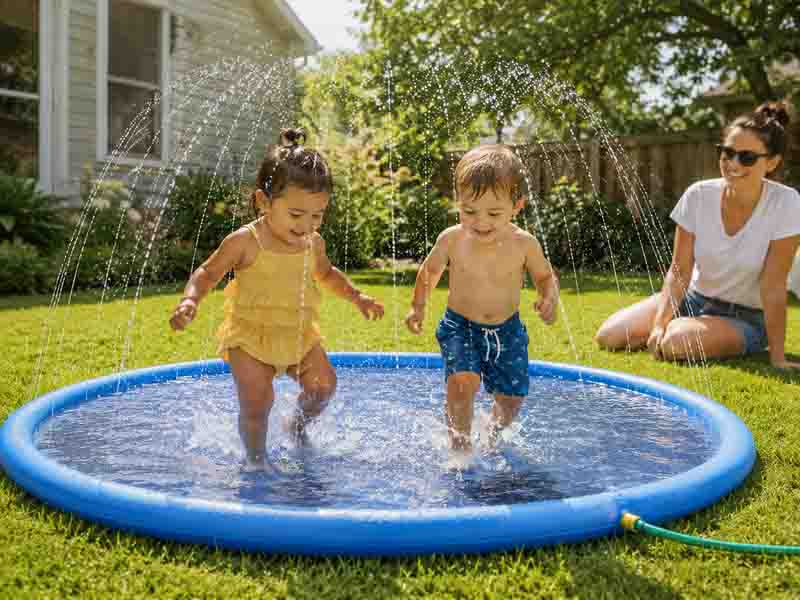
A splash pad for toddlers looks simple at first. Connect a garden hose, turn on the water, and let children enjoy a cool backyard play area. For many families, it feels like an easier summer option than setting up a kiddie pool, visiting a crowded public splash area, or managing a larger inflatable pool. Families comparing spray play with seated water play may also find it helpful to understand the difference between a splash pad vs kiddie pool before choosing a toddler-friendly backyard setup. But once parents start comparing different options, the decision becomes more detailed. Some splash pads feel too thin. Some spray too strongly for a 2 year old. Some look bright and fun online but leak around the hose inlet or edge ring after only a few uses. Others are difficult to dry, fold, or store after summer play.
The best splash pad for toddlers should offer gentle inward spray, shallow water play, soft but durable PVC material, reinforced seams, a stable hose connection, easy drainage, and a size that allows close supervision. For young children, comfort, control, and safe setup matter more than extreme spray height or the largest play area.
Toddlers do not play like older children. They stop suddenly, sit down in the middle, touch the spray with one hand, step out, run back in, and often need time to feel comfortable with moving water. A good toddler splash pad should support that natural rhythm. It should not overwhelm the child, create a slippery mess around the yard, or require parents to adjust the hose every few minutes.
For EPN, a brand under American Epsilon Inc., splash pad development is closely connected with PVC material selection, edge stability, water-pressure control, and repeated-use testing. The goal is not only to create a fun summer water toy, but to make backyard water play easier, safer, and more reliable for families who want a product they can use again and again.

What Is a Splash Pad for Toddlers?
A splash pad for toddlers is a flat water play mat that connects to a garden hose and sprays water from the outer edge. It creates a shallow backyard play area where young children can step, sit, splash, and cool down without needing a deeper pool.
How a Splash Pad for Toddlers Works
A home splash pad works through a simple water-flow structure. Water enters through the hose connector, fills the outer ring, and sprays through small holes around the edge. For toddler use, inward spray is usually better because it sends water toward the center instead of spraying outward into the yard.
That design helps create a more controlled play area. The child can stand in the middle, watch the water, and decide how close to the spray edge they want to be. Parents can also stay near the side without being hit by strong outward spray.
A good splash pad for toddlers should respond well to water pressure. At low pressure, the spray should stay soft and low. At medium pressure, the spray can rise higher for more active play. If the water shoots sharply from one side while another side barely sprays, the design may not be well balanced.
For young children, the first few minutes matter. A toddler who feels surprised by strong spray may refuse to step back onto the mat. A gentle start gives the child time to explore, listen to the water, and decide when they feel ready to step in.
Why Parents Like a Splash Pad for Toddlers
Parents often choose a splash pad because it fits real family routines. Toddlers may not want a long water session. Sometimes 15 minutes of cooling play is enough before they need a snack, towel, or shade break. A splash pad is easier to manage for short sessions than a larger pool.
A splash pad also works well for families who want:
- A quick backyard cooling activity
- A shallow water play option
- Easier setup than an inflatable pool
- Less standing water than a kiddie pool
- A foldable summer toy for storage
- A play area that siblings can share with rules
- A gentle way to introduce toddlers to water spray
A splash pad can also support sensory play. Toddlers hear the sound of water, feel spray on the skin, watch water move across the surface, and learn how their feet behave on a wet mat. These small experiences help children become more comfortable around outdoor water play.
Families comparing shallow spray play with seated water play can review splash pad vs kiddie pool before deciding which option better matches their backyard and child’s age.
What 2 Year Olds Can Use Instead
A 2 year old does not need a deep pool to enjoy summer water play. Many toddlers are still developing balance, body control, and comfort around moving water. Good options include splash pads, water tables, shallow kiddie pools, soft pouring cups, low sprinklers, and supervised hose play.
A splash pad sits between a water table and a kiddie pool. It gives more movement than a water table but usually has less standing water than a pool. For many families, that balance makes it easier to supervise.
| Water Play Option | Water Level | Best Use | Parent Effort | Toddler Fit |
|---|---|---|---|---|
| Splash pad | Very shallow | Cooling, stepping, splashing | Low to medium | High |
| Water table | Minimal | Pouring, scooping, sensory play | Low | High |
| Kiddie pool | Shallow to moderate | Sitting and water toys | Medium | Medium to high |
| Low sprinkler | No pool depth | Running and spray play | Low | Medium |
| Inflatable pool | Varies | Longer water play | Higher | Depends on depth |
| Public splash area | Varies | Group play | Medium | Depends on crowd level |
For toddlers, the better choice is usually the one that gives parents better control. Control includes water depth, spray strength, cleaning, supervision, and how easily play can stop when the child gets tired.

Is a Splash Pad for Toddlers Safe?
A splash pad for toddlers can be safe when it is placed on a clean flat surface, used with gentle water pressure, paired with proper swimwear, cleaned after play, and supervised closely. Main risks include slipping, strong spray, sun exposure, germs, and unsafe ground conditions.
How Safe Is a Splash Pad for Toddlers?
A splash pad is often easier to manage than a deeper pool because the water level is usually very shallow. Still, shallow water does not remove every risk. Toddlers can slip, fall, swallow water, bump into siblings, or run from the wet mat onto a harder surface.
Safety begins before the hose is connected. Parents should check the setup area carefully. Grass should be free of stones, sticks, sharp mulch, roots, pet waste, and yard tools. Patio surfaces should be checked for heat and slipperiness. The splash pad should lie flat without large wrinkles, folded corners, or raised hose sections.
A safer toddler setup usually includes:
- Flat ground with no sharp objects underneath
- Low water pressure at the beginning
- Inward spray instead of harsh outward spray
- A smooth mat surface
- Enough walking space around the pad
- Adults close enough to help immediately
- No rough running by older children
- Full drainage after play
Safety is not only about the splash pad itself. It comes from the full play environment. A well-made splash pad can still become unsafe if it is placed on a slope, used at full water pressure, or left wet and unattended after play. If the play area becomes slippery, these anti-slip tips for splash pads can help parents review surface checks, footwear, water pressure, and playtime habits.
Toddler Safety Signs to Watch
Parents should watch the child’s reaction during play. Toddlers often show discomfort through movement before they say anything clearly. If the child keeps stepping away, rubbing eyes, turning the face from the spray, or sitting quietly without playing, the setup may need adjustment.
For many 2 year olds, a first session of 10–20 minutes is enough. On hot days, parents should add water breaks, shade breaks, and towel breaks. Water play may cool the skin, but children can still become tired in the sun.
| Parent Observation | Possible Reason | Better Adjustment |
|---|---|---|
| Child avoids the center | Spray feels too strong | Lower water pressure |
| Child rubs eyes | Water hits the face too often | Reduce spray height |
| Child slips repeatedly | Surface or ground is slick | Move to grass or add water shoes |
| Child becomes quiet | Play may be too long | Stop and rest |
| Child runs off the mat | Spray may feel overwhelming | Start again at lower pressure |
| Older child runs across the mat | Collision risk | Set rules or separate play time |
A safe splash pad experience should feel calm, not chaotic. If the toddler looks uncomfortable, the best answer is usually to slow everything down.
What Toddlers Should Wear
Toddlers should wear swimwear that supports easy movement and sun protection. For children who are not fully toilet trained, a swim diaper is usually needed. A rash guard or sun-protective swim shirt can help cover the shoulders, back, and chest during outdoor play.
Water shoes can help on patios, decks, rough grass, or areas where children walk between wet and dry surfaces. On clean soft grass, bare feet may be comfortable, but parents should still check the ground first.
| Item | Why It Helps | When to Use |
|---|---|---|
| Swim diaper | Helps manage accidents | For toddlers not fully toilet trained |
| Rash guard | Adds sun coverage | Outdoor play in direct sunlight |
| Swim bottoms | Allows easy movement | Every water play session |
| Water shoes | Adds grip and foot protection | Patio, deck, rough grass |
| Sun hat | Helps shade face and scalp | Sunny yards |
| Towel nearby | Keeps child warm after play | Breaks and cleanup |
Avoid heavy cotton clothing, oversized shirts, loose dresses, or any clothing that becomes heavy when wet. Toddlers need to sit, stand, and step without fighting against soaked fabric.
How to Keep Spray Gentle
The spray should match the child’s comfort level. A high spray arc may look exciting in photos, but many toddlers prefer lower water movement. A gentle spray lets the child explore at their own pace.
Start with the hose turned low. Allow the edge ring to fill slowly. Watch how the water rises. If the spray reaches the child’s face too often, lower the pressure. If the child only wants to touch the water from outside the mat, that is still a good first step.
A practical pressure range for toddlers:
| Water Pressure Level | Spray Result | Toddler Use |
|---|---|---|
| Very low | Light bubbling or short spray | First contact |
| Low | Ankle-level spray | Cautious toddlers |
| Medium | Knee-level spray | Active toddlers |
| Medium-high | Higher arcs | Older children |
| Full pressure | Strong spray | Usually not ideal for toddlers |
EPN splash pad designs focus on spray-hole balance and edge stability because toddlers need predictable water movement. Even spray helps parents keep the pressure lower while still giving the child a fun water experience.
Why Supervision Still Matters
A splash pad should never be treated as an unsupervised toy. Toddlers move quickly, lose balance easily, and do not always understand risk. An adult should stay close enough to help immediately.
Good supervision includes:
- Watching the child, not only the water
- Keeping phones and distractions away
- Staying near the play area
- Stopping play when the child is tired
- Preventing rough sibling play
- Draining the splash pad after use
When play ends, water should end too. Drain the splash pad, rinse it, and move it out of casual reach. A shallow water play area can still attract a curious toddler after adults think playtime is finished.
What Size Splash Pad for Toddlers Is Best?
The best size splash pad for toddlers depends on the child’s age, yard space, play style, and whether siblings will join. For one toddler, a small or medium splash pad is often easier to supervise, clean, dry, and store.
Small Splash Pad for Toddlers
A small splash pad works well for one toddler, especially in a compact backyard, side yard, or patio. It creates a clear play zone and helps parents stay close. For cautious children, a smaller splash pad can feel less overwhelming than a large mat with water spraying from a wide edge.
Small splash pads are also easier to manage. They usually require less space, less drying time, and less storage room. Parents who want quick weekday water play may prefer a smaller or medium size because setup and cleanup feel less demanding.
Small size works best when:
- One toddler is using it
- Yard space is limited
- Parents want fast setup
- The child is new to water spray
- Cleaning and storage convenience matter most
The main limitation is growth. A very small splash pad may feel crowded as the child becomes more active or when siblings join. Families planning for more than one season may prefer a medium option.
Large Splash Pad for Toddlers
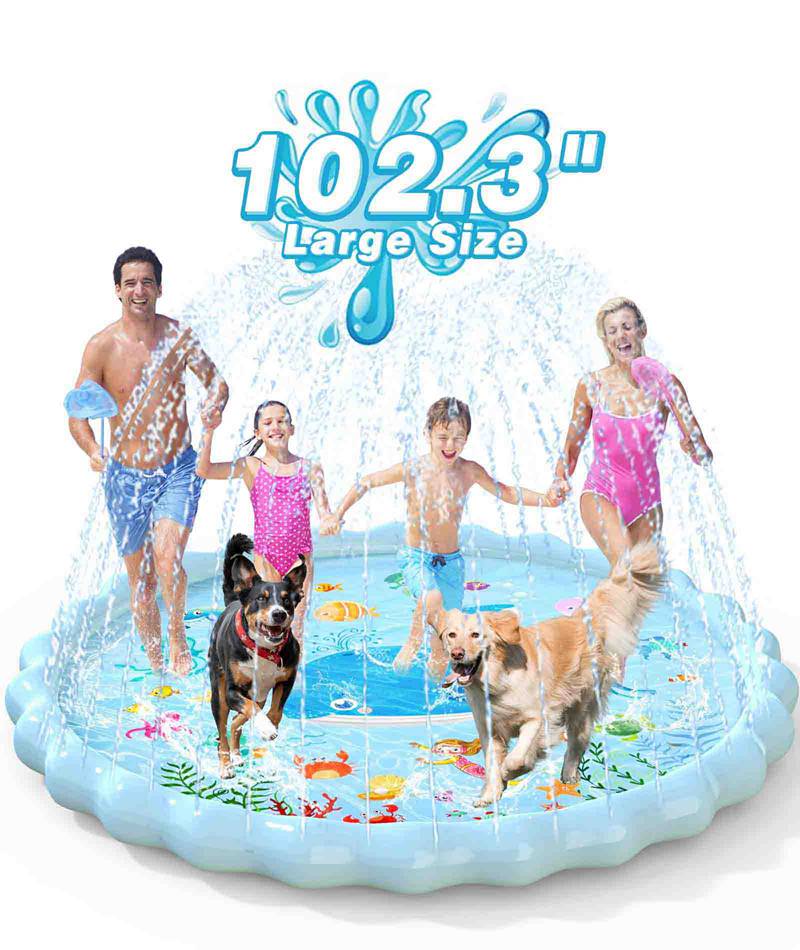
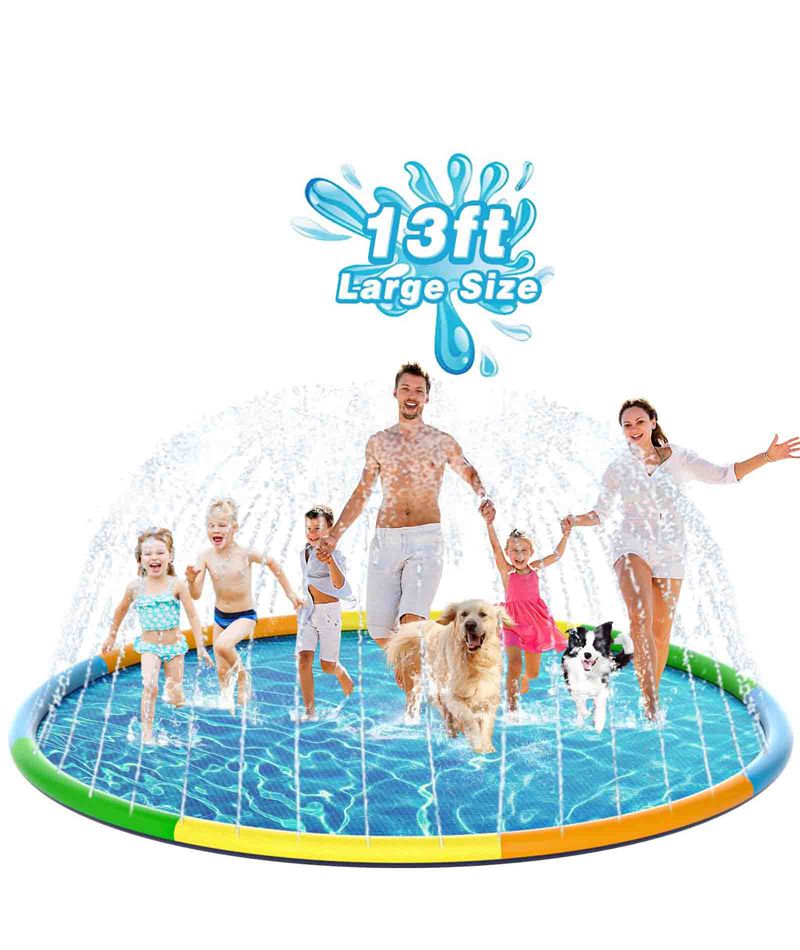
A large splash pad gives more room for movement, toys, siblings, and parent-child play. It works best on open lawns with enough flat space. A larger center area can also help toddlers avoid standing too close to the spray edge.
Large sizes are useful when:
- Two or more children will play together
- Older siblings will join
- Parents want more open movement space
- The yard has a flat lawn area
- Playdates are common during summer
However, bigger is not always better for toddlers. A large splash pad needs more water coverage, more drying space, and more attention to ground level. If the yard is uneven, one side may collect more water. If the pad is placed too close to a patio edge, garden border, or furniture, the larger size may create more risk instead of more fun.
The best size is the largest size that still allows easy supervision, safe movement, and simple cleanup.
Size by Age and Backyard Space
Parents should choose size based on use scene, not only product photos. A 2 year old may be happiest with a controlled medium area, while a 4 year old may enjoy a larger activity zone.
| Child Age / Use Scene | Better Size Direction | Why It Works |
|---|---|---|
| 18–24 months | Small to medium | Easier first water play |
| 2–3 years old | Medium | Good balance of space and control |
| 3–5 years old | Medium to large | More room for active play |
| One toddler only | Small to medium | Easier supervision and cleaning |
| Toddler with siblings | Medium to large | Less crowding |
| Small patio | Compact or medium | Helps control overspray |
| Open lawn | Medium to large | Better for family play |
Parents should also measure the area around the splash pad. The mat itself is only one part of the safe play zone. Children need room to enter and exit. Adults need room to walk around. Water needs a safe drainage direction.
Space Around the Splash Pad
A splash pad should not be placed directly against hard edges, steps, glass doors, grills, sharp landscaping stones, or metal patio furniture. Wet toddlers often move quickly without watching where they step.
Before setup, check:
- Is there at least a small dry walking area nearby?
- Can an adult reach the child from more than one side?
- Will the hose become a tripping point?
- Will water drain toward a door or walkway?
- Will the grass become muddy after 15–20 minutes?
- Is there shade nearby for breaks?
Room for Siblings
Sibling play can make a splash pad more fun, but it needs rules. Older children may run faster, splash harder, and forget that toddlers need more space.
Simple sibling rules help protect both the child and the splash pad:
- No jumping on the outer ring
- No pulling the hose
- No blocking spray holes
- No pushing or chasing younger children
- No hard toys on the mat
- Stop when the toddler looks tired or upset
For mixed-age play, a medium or large splash pad usually works better than a compact mat. More space reduces crowding and gives toddlers room to step away from active siblings.

What Material Is Best for a Splash Pad for Toddlers?
The best material for a splash pad for toddlers is soft but durable PVC or PVC-based composite material that can handle water pressure, folding, sunlight, and repeated outdoor use. Thickness, seam strength, odor level, and edge stability matter more than the printed pattern.
PVC Splash Pad for Toddlers
PVC is widely used for splash pads because it is flexible, waterproof, printable, and suitable for heat-sealed water structures. For toddler use, the material should not feel too thin or too stiff. It needs to be comfortable for sitting and stepping while still strong enough to hold water pressure.
A good PVC splash pad should:
- Lie flat after unfolding
- Fill evenly around the outer ring
- Feel smooth under bare feet
- Resist small ground friction
- Fold without sharp cracking
- Keep spray holes aligned
- Support repeated summer use
Many low-cost splash pads look similar online. The real difference often appears after repeated use. Weak seams, thin edge rings, strong odor, poor hose inlet support, and uneven spray are common signs of lower-quality design.
Soft but Durable Material
Toddlers sit, crawl, squat, and step unevenly. A surface that feels fine to an adult may feel uncomfortable to a young child. The material should feel soft enough for direct contact but not so thin that it wrinkles, shifts, or wears quickly.
Durability depends on more than thickness. A thick mat can still leak if the seams are weak. A soft mat can still fail if the hose inlet is poorly reinforced. The best splash pad material balances softness, strength, flexibility, and outdoor stability.
Epsilon’s product development system includes more than 500 material and product performance tests each year. For splash pad products, relevant testing may include water-pressure checks, leak testing, UV exposure, high-temperature aging, folding performance, and repeated-use simulation.
Those details matter because families rarely use a splash pad only once. A toddler may use it many times during one summer. The mat may be placed on grass, dried in the sun, folded after play, and stored between uses. Material quality decides how well it handles that cycle.
Material Details That Affect Real Use
Parents often notice quality problems in the same areas: the edge ring, seams, hose inlet, spray holes, and fold lines. These areas carry the most stress during setup, water play, and storage.
| Material Detail | Low-Quality Risk | Better Design Direction |
|---|---|---|
| Thin PVC | Wrinkles, faster wear, weak pressure support | Balanced PVC thickness |
| Weak seam welding | Leaks after repeated use | Wider and cleaner welded seams |
| Poor hose inlet | Water leaks near connector | Reinforced inlet structure |
| Strong plastic odor | Poor first-use experience | Lower-odor PVC formula |
| Poor UV stability | Fading or hardening outdoors | Outdoor-use material matching |
| Stiff surface | Less comfortable for toddlers | Softer touch with stable structure |
| Poor folding recovery | Creases and stress marks | Flexible PVC after drying |
When parents complain about splash pads leaking, the issue often starts from structure, not color. Thin edge rings, weak hose inlets, uneven spray holes, or seams that cannot handle repeated folding can shorten usable life. EPN focuses on PVC material matching, reinforced edge design, water-pressure stability, and repeated-use performance to support real backyard use.
Thicker Edge and Seams
The outer edge is the water channel of a splash pad. It controls spray direction, holds water pressure, and supports the shape of the mat. A weak outer edge can twist, collapse, leak, or spray unevenly.
Strong edge design should provide:
- Even water filling
- Stable spray height
- Smooth surface contact
- Reinforced seam areas
- Comfortable step-over height
- Reliable hose inlet support
Seams are another key area. Repeated filling, draining, folding, and stepping all put stress on welded areas. Cleaner welding and wider seam design can help reduce weak points.
For toddler use, seam comfort also matters. Rough or raised seams can bother children who sit or crawl. A better design should feel smooth while still offering strength.
Low Odor and Outdoor Use
Low odor is important for toddler products because young children are close to the surface. They sit on the mat, touch the water, and often bring wet hands near their face. A strong plastic smell can reduce parent confidence even if the splash pad looks attractive.
Outdoor use also puts stress on PVC. Summer heat, sunlight, wet grass, friction, folding, and storage can all affect material performance. A better toddler splash pad should be designed for outdoor water play instead of only looking good on first use.
Parents should look for:
- Low-odor PVC direction
- Outdoor-use material
- Reinforced seams
- Stable edge structure
- Foldable design
- Smooth surface feel
- Clear care instructions
A bright print may attract attention, but material and structure decide whether the splash pad stays useful through the season.
How to Set Up a Splash Pad for Toddlers?
Set up a splash pad for toddlers on clean, flat ground, connect the hose securely, start with low water pressure, and increase the spray slowly. Careful setup helps reduce slipping, uneven spray, hose leaks, and early material wear.
Best Surface for Setup
Clean, flat grass is often the best surface for toddlers because it feels softer and cooler than concrete. However, grass must be checked before every use. Small stones, sticks, sharp mulch, roots, and hidden debris can create pressure points under the mat.
Before setup, remove:
- Stones and gravel
- Sticks and branches
- Sharp mulch
- Garden tools
- Pet waste
- Hard toys
- Uneven debris
- Broken plastic pieces
Patios can also work if the surface is smooth, cool, and not slippery. Parents should test the surface with bare feet before placing the splash pad. If it feels too hot or slick for an adult, it is not ideal for a toddler.
Avoid steep slopes. A sloped yard can cause uneven water pooling and unbalanced spray. If water collects on one side, toddlers may slip more easily and the edge ring may not perform evenly.
Hose and Water Pressure
The hose connection should be secure before children step onto the mat. A loose connector can leak, reduce pressure, or create a muddy patch near the edge. The hose should stay outside the main walking path so toddlers do not trip.
Start with low water pressure. Allow the ring to fill slowly. Watch whether the spray rises evenly. If one side sprays higher than another, check ground level, hose bends, connector angle, and whether the splash pad is lying flat.
A simple pressure approach works well:
| Step | Action | Reason |
|---|---|---|
| 1 | Turn water on low | Helps toddler adjust |
| 2 | Let the ring fill | Stabilizes spray holes |
| 3 | Check spray direction | Confirms inward spray |
| 4 | Increase slowly | Prevents sudden strong jets |
| 5 | Watch child reaction | Finds comfort level |
| 6 | Adjust as needed | Keeps play gentle |
Inward Spray Design
Inward spray is one of the most helpful features for a toddler splash pad. It keeps water play centered and reduces overspray outside the mat. It also gives toddlers a clear play boundary.
A predictable spray pattern helps children feel more comfortable. If one area sprays sharply and another barely works, toddlers may avoid part of the mat. Balanced spray lets them move naturally.
EPN’s splash pad structure focuses on spray-hole balance, edge water flow, and water-pressure stability. For families, that means easier adjustment and a more controlled play experience.
Common Setup Problems and Easy Fixes
Not every spray issue means the splash pad is poor quality. Many problems come from setup conditions.
| Problem | Possible Cause | Easy Fix |
|---|---|---|
| One side sprays higher | Ground is uneven | Move to flatter grass |
| Spray is too low | Low water pressure | Increase flow slowly |
| Water leaks near hose | Connector is loose | Reconnect and align |
| Spray feels too strong | Hose pressure is too high | Lower water flow |
| Water pools on one side | Yard has a slope | Rotate or move the mat |
| Spray holes look blocked | Dirt or grass residue | Rinse holes gently |
| Edge twists during use | Mat is not lying flat | Smooth before filling |
A good setup should feel calm and controlled. The mat should lie flat, the hose should not cross the child’s path, and the spray should rise gradually as pressure increases.
First Use Tips
The first play session should be short and relaxed. Some toddlers run in right away. Others need time to watch the water from outside the mat. Both reactions are normal.
A good first-use routine:
- Set up on clean flat ground
- Start with low water pressure
- Let the child watch first
- Invite the child to touch the spray
- Keep the first session short
- Offer shade and water breaks
- Stop before the child becomes tired
- Drain and dry after play
The goal is not to create the longest play session. The goal is to create a positive first water experience.

How to Clean a Splash Pad for Toddlers?
A splash pad for toddlers should be drained, rinsed, dried, and stored after each use. Cleaning removes grass, dirt, sunscreen, body oils, and residue, while drying before folding helps reduce odor, trapped moisture, stains, and material stress.
Rinse After Play
After play, turn off the water and let the splash pad drain fully. Rinse the surface with clean water to remove grass, dirt, and sunscreen residue. If the mat was used on grass, check the underside too.
For normal use, a gentle rinse is often enough. If the surface feels sticky, wipe it with mild soap and a soft cloth, then rinse again. Avoid abrasive brushes or harsh cleaners because they can scratch the printed surface or stress seam areas.
Parents should also keep food away from the splash pad. Snacks, juice, and sticky hands can make the surface harder to clean and may attract insects.
Dry Before Folding
Drying before folding is one of the easiest ways to extend usable life. Folding a wet splash pad traps moisture between layers. That can cause odor, surface marks, or mildew-like buildup.
After rinsing, lift one side and let water run off. Then lay the mat flat in a clean area to air dry. A towel can help dry seams, hose inlet areas, and folded edges because these parts hold water longer than the flat center.
Avoid leaving the splash pad in strong sun for hours after it is already dry. Outdoor materials last longer when they are not exposed to unnecessary heat and sunlight.
Cleaning Schedule for Summer Use
A simple cleaning routine helps parents reuse the splash pad more often without extra work.
| Cleaning Time | What to Do | Why It Helps |
|---|---|---|
| After each use | Drain and rinse | Removes dirt, grass, and sunscreen |
| Before folding | Air dry fully | Reduces odor and trapped moisture |
| Weekly during frequent use | Check seams and spray holes | Finds small issues early |
| After muddy use | Wipe with mild soap | Prevents residue buildup |
| End of season | Clean, dry, fold loosely, store indoors | Helps protect material for next year |
For longer seasonal care, families can follow a routine to clean and store a splash pad before folding it away after summer.
Store It the Right Way
Once dry, fold the splash pad loosely. Do not force sharp creases or place heavy objects on top. Store it away from sharp tools, direct heat, pets, and rough surfaces.
Good storage places include:
- Indoor utility shelf
- Garage storage bin
- Closet shelf
- Dry outdoor storage box
- Clean product bag or container
Avoid storing near garden shears, nails, rough wood, metal tools, or chemical containers. Do not leave the splash pad outdoors all season when it is not being used. Even durable materials perform better when protected from unnecessary sun and moisture.
Keep It Ready for Summer
A splash pad gets used more often when setup stays easy. Keep the mat, hose connector, towel, water toys, and swim diapers in a nearby summer play area. Parents are more likely to create short cooling sessions when everything is easy to reach.
During frequent use, check:
- Blocked spray holes
- Dirt around seams
- Hose inlet wear
- Small scratches
- Uneven spray
- Strong odor after storage
- Fold marks
Small issues are easier to manage early. A blocked spray hole can often be rinsed gently. A hose connection problem may only need realignment.
How to Buy a Splash Pad for Toddlers?
To buy the right splash pad for toddlers, parents should look beyond color, pattern, and price. A good toddler splash pad should feel gentle, stay stable under water pressure, fit the yard, dry without too much effort, and support repeated summer use. The best choice is the one that matches the child’s age, comfort level, play style, and home setup.
Check Spray Height
Spray height is one of the first details parents should check. For toddlers, a lower and softer spray is usually better than tall water arcs. A 2 year old may enjoy touching the water, stepping in slowly, or sitting near the center. Strong spray near the face can feel overwhelming and may make the child avoid the mat.
A toddler-friendly splash pad should allow parents to adjust the spray by controlling hose pressure. Start low, then increase slowly only if the child seems comfortable.
Look for:
- Inward spray from the outer edge
- Low spray option for first water play
- Even water flow around the mat
- No harsh jets near the child’s face
- Smooth response when water pressure changes
- Spray height that can be controlled by hose flow
| Spray Level | What It Looks Like | Best Use |
|---|---|---|
| Very low | Light bubbling or short spray | First contact with water |
| Low | Gentle ankle-level spray | Cautious toddlers |
| Medium | Knee-level spray | Active toddlers |
| Medium-high | Taller arcs | Older children or siblings |
| Full pressure | Strong spray | Usually not ideal for toddlers |
If a splash pad only works when the hose is turned very high, it may not be the best fit for young children. A good toddler splash pad should still create a fun water effect at lower pressure.
Check Material Thickness
Material thickness matters, but it should not be the only standard. A splash pad also needs softness, flexibility, seam strength, low odor, and outdoor durability. A very thick mat can still leak if the seams are weak. A soft mat can still fail early if the edge ring or hose inlet is poorly designed.
For toddlers, material should feel comfortable under bare feet and safe for sitting or crawling. It should also handle repeated water pressure, folding, drying, and lawn contact.
A better toddler splash pad should offer:
| Material Feature | Why It Matters |
|---|---|
| Balanced PVC thickness | Supports water pressure and repeated use |
| Soft surface feel | Better for sitting, stepping, and crawling |
| Flexible folding | Easier drying and storage |
| Low odor | Better first-use comfort for families |
| Outdoor stability | Better performance under sun, heat, and water |
| Reinforced seams | Helps reduce leak risk |
| Strong edge ring | Keeps spray more stable |
EPN works with PVC and composite material systems across family recreation, children’s toys, pet products, outdoor leisure, and seasonal sports. That product range gives EPN practical experience in matching material, structure, and real-use scenes instead of only focusing on appearance.
Check Edge Strength
The outer edge is not just a border. It is the water channel that powers the spray. If the edge is weak, the splash pad may twist, leak, collapse, or spray unevenly.
A stronger edge should:
- Fill evenly around the mat
- Hold water pressure without twisting
- Keep spray direction stable
- Feel comfortable for toddlers to step over
- Support repeated setup and folding
- Connect securely near the hose inlet
The hose inlet area deserves extra attention. Many splash pad leaks begin near the connector because that area handles both water pressure and hose movement. A reinforced inlet area is a strong sign of better design.
When parents compare splash pads, they should not only look at the printed surface. The edge ring, welded seams, and hose connection often decide whether the mat performs well after repeated summer use.
Check Yard Fit
Before buying, parents should measure the real play area, not only the splash pad diameter. A toddler needs room to step in and out. Adults need room to supervise. Water needs somewhere safe to drain.
Ask these questions before choosing a size:
- Is the ground flat enough?
- Is there shade nearby for breaks?
- Can an adult reach the child quickly?
- Will the hose become a tripping point?
- Will water drain safely?
- Is there enough space around the mat?
- Are there hard edges, steps, or furniture nearby?
- Will the area become muddy after 15–20 minutes?
A splash pad that fits the yard well will be used more often. One that barely fits may become stressful, even if the product itself looks attractive.
| Yard Type | Better Splash Pad Choice | Why It Works |
|---|---|---|
| Small patio | Compact or medium splash pad | Easier to control overspray |
| Townhouse yard | Medium splash pad | Good balance of space and storage |
| Open lawn | Medium to large splash pad | More room for siblings and play |
| Uneven grass | Smaller controlled setup | Easier to find a flat area |
| Shaded backyard | Medium splash pad | Better comfort for longer play |
| Playdate space | Large splash pad | More room for shared use |
For one toddler, a medium splash pad is often enough. For siblings or playdates, a larger size may work better as long as supervision remains easy.
Check Storage Ease
Storage affects long-term use. A splash pad that is difficult to drain, dry, fold, or store may only be used a few times. Parents should choose a mat that fits real family routines.
A storage-friendly splash pad should:
- Drain without holding large water pockets
- Dry within a reasonable time
- Fold without sharp cracking
- Fit into a storage bin, shelf, or bag
- Keep connector parts easy to find
- Reopen without strong odor
- Stay usable after repeated folding
Good storage is especially important for toddler products because families may use the splash pad many times in one season. A product that dries and folds easily is more likely to become a regular summer toy instead of a one-time weekend activity.
EPN designs for repeated use because convenience is part of product value. A splash pad should not only look fun on the first day. It should remain easy to set up, clean, dry, and store throughout summer.
Parent Buying Checklist
Before choosing a splash pad for toddlers, parents can use the checklist below.
| Question | Why It Matters |
|---|---|
| Is the spray adjustable by hose pressure? | Keeps the spray gentle for toddlers |
| Does the spray point inward? | Keeps water play centered |
| Is the surface smooth and soft? | Better for sitting and stepping |
| Are the seams reinforced? | Helps reduce leak risk |
| Is the hose inlet stable? | Prevents common leaking problems |
| Is the size right for the yard? | Makes supervision easier |
| Can it be used on grass? | Supports common backyard setup |
| Does it dry and fold easily? | Supports repeated use |
| Is the material low odor? | Improves first-use comfort |
| Can siblings use it safely? | Helps plan family play |
Parents looking for longer seasonal value should compare material, edge design, water pressure, and storage habits before making a final choice. A splash pad that is easy to use again and again usually offers better value than one that only looks exciting in photos.
Quick Comparison of Popular Splash Pad Styles
Different toddler splash pads solve different needs. Some are better for first water play, some focus on non-slip surfaces, some are made for siblings, and others work better for small patios or custom product lines. The table below helps parents compare common splash pad styles before choosing a toddler-friendly backyard setup.
| Splash Pad Style | Best For | Key Strength | What Parents Should Check | Toddler Fit |
|---|---|---|---|---|
| EPN Toddler-Friendly PVC Splash Pad | Families, retailers, and custom projects | Soft PVC feel, stable edge, inward spray, OEM/ODM options | Size, spray height, packaging needs, target market | High |
| Learning Splash Pad | First water play and early learning | Alphabet, colors, numbers, or animal graphics | Surface grip, print safety, spray comfort | High |
| Non-Slip Splash Pad | Toddlers who move around often | Textured surface helps reduce slipping | Ground condition, water shoes, spray level | High |
| Small Patio Splash Pad | Compact yards, patios, townhomes | Easier setup, less overspray, faster drying | Surface heat, drainage, hose position | High |
| Medium Family Splash Pad | One toddler plus parent or sibling | Balanced play space and easier supervision | Yard space, edge stability, water pressure | High |
| Large Backyard Splash Pad | Siblings and playdates | More room for shared water play | Supervision, slope, drainage, rough running | Medium to High |
| Splash Pad with Learning Design | Toddlers who like visual play | Adds pointing, naming, and color recognition | Avoid overly busy graphics that distract from safe movement | High |
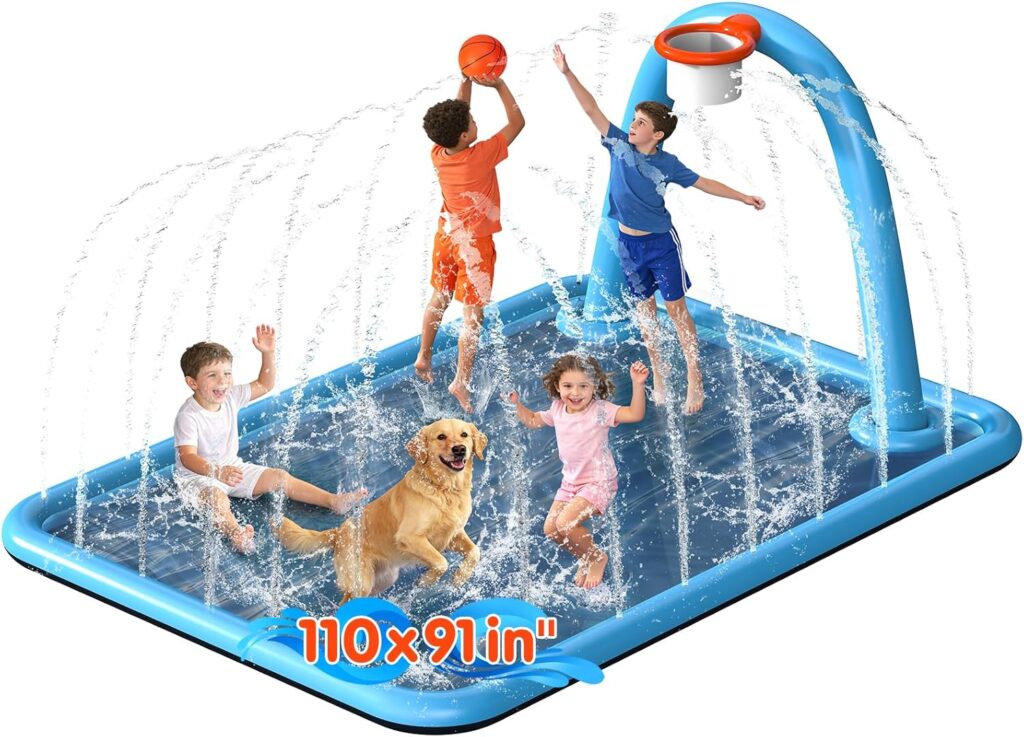
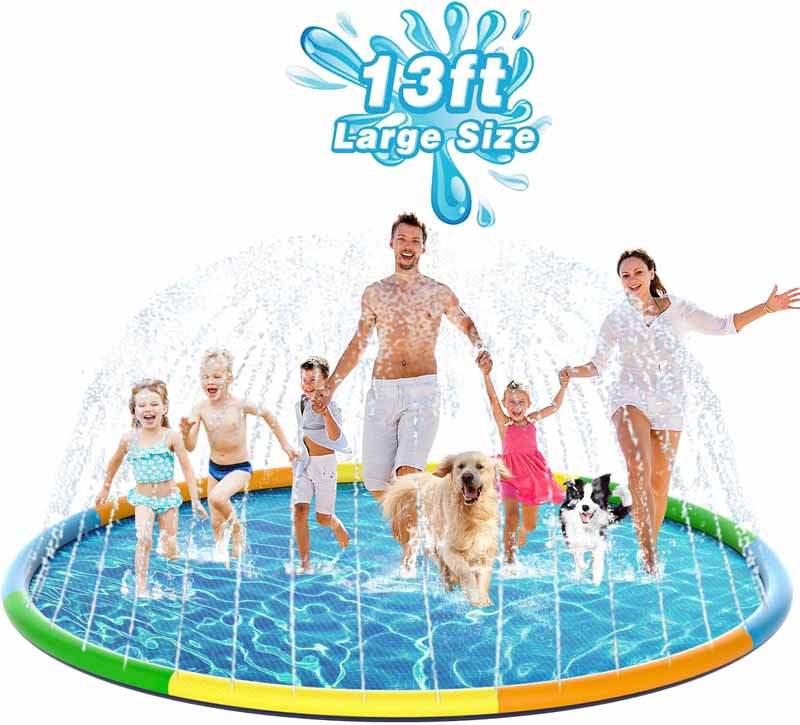
| Splash Pad for Kids and Dogs | Pet families with supervised use | More focus on wear resistance and larger play space | Pet nails, ground surface, material thickness | Medium |
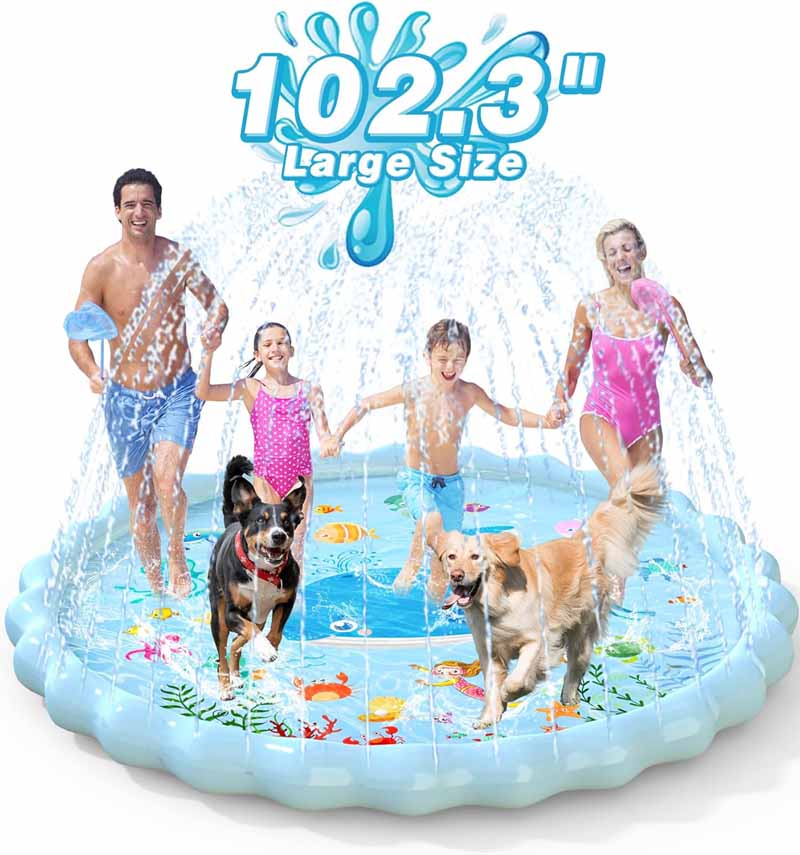
| Themed Splash Pad | Gifting, parties, and visual appeal | Animal, ocean, rainbow, or character-style patterns | Spray strength, surface grip, toddler comfort | Medium |
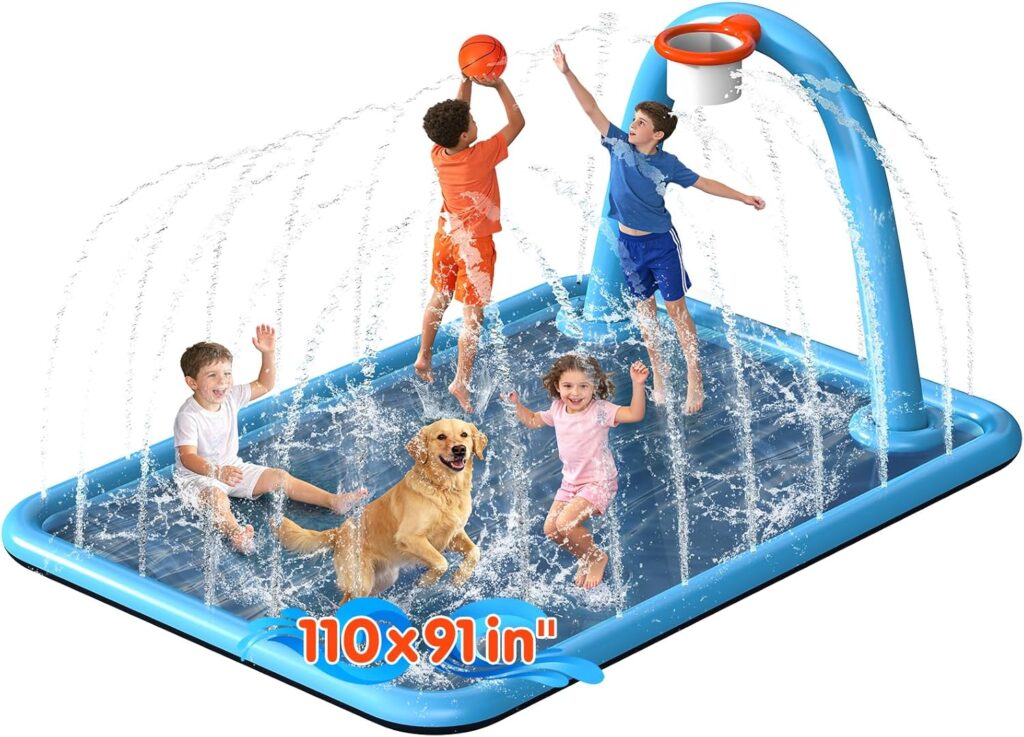
| Activity Splash Park | Toddlers with older siblings | More features, more interactive play | Setup time, space, supervision, age fit | Medium |
| Water Table + Splash Pad Combo | Toddlers who prefer sitting and pouring | Hands-on play with scooping and water toys | Storage space, cleaning effort, stability | High |
| Budget Seasonal Splash Pad | Occasional summer use | Lower cost and easy trial | Seam strength, hose inlet, PVC thickness | Medium |
| Premium PVC Splash Pad | Repeated summer use | Better material, seams, and edge structure | Care instructions, drying, storage | High |
| Travel-Friendly Splash Pad | Weekend trips and quick setup | Lightweight, foldable, easy to carry | Durability, connector fit, drying time | Medium to High |
| Custom Brand Splash Pad | Retailers, Amazon sellers, distributors | Size, print, packaging, and market positioning can be adjusted | MOQ, material plan, compliance documents, delivery schedule | High |
This comparison shows that the best splash pad for toddlers depends on the use scene. For one 2 year old, a compact or medium mat with gentle inward spray may be the better choice. For siblings, a larger splash pad with a stable edge may be more useful. For retailers or Amazon sellers planning a toddler water play line, custom size, PVC material direction, spray layout, packaging, and compliance documents may matter more than choosing a ready-made pattern.
Splash Pad for Toddlers FAQ
Are Splash Pads Safe for Toddlers?
Splash pads can be safe for toddlers when adults use low water pressure, choose clean flat ground, supervise closely, and drain the mat after play. The safest setup includes gentle spray, good swimwear, enough space around the mat, and short play sessions that match the child’s energy.
What Is the Best Material?
Soft but durable PVC or PVC-based composite material is a strong choice for toddler splash pads. Parents should check surface feel, thickness, seam strength, hose inlet stability, odor level, folding performance, and outdoor-use durability.
What Should a 2 Year Old Use?
A 2 year old can use a splash pad, water table, shallow kiddie pool, gentle sprinkler, or simple pouring toys with adult supervision. A splash pad is often useful because it offers shallow water play, movement, cooling, and fast setup.
What Should Toddlers Wear?
Toddlers should wear comfortable swimwear, a swim diaper if needed, and sun-protective clothing such as a rash guard. Water shoes may help on rough or slippery surfaces. A towel and sun hat should also be nearby.
Can It Be Used on Grass?
Yes, a splash pad can be used on grass when the area is flat, clean, and free of sharp objects. Grass often feels softer than patio surfaces, but parents should check for stones, sticks, roots, pet waste, and muddy drainage.
How Much Water Pressure Is Needed?
Low to medium water pressure is usually best for toddlers. Start low, then increase slowly until the spray reaches a comfortable height. Full pressure may feel too strong and can place unnecessary stress on seams and hose areas.
How Do You Prevent Splash Pad Leaks?
Choose a splash pad with reinforced seams, stable edge structure, and a secure hose inlet. Use it on a smooth surface, avoid sharp ground objects, control water pressure, dry before folding, and store it away from sharp tools or heavy items.
Is a Splash Pad Better Than a Kiddie Pool?
A splash pad is often better for quick cooling, shallow movement, and easy storage. A kiddie pool may be better for seated play, pouring, and longer water sessions. The better option depends on the child’s age, yard space, supervision, and play style.
Choose a Splash Pad for Toddlers That Fits Real Family Life
The best splash pad for toddlers is not always the largest, brightest, or cheapest option. It is the one that works well in daily family routines. It should be gentle enough for a 2 year old, strong enough for repeated summer use, easy to set up, simple to clean, and practical to store.
Parents should look closely at spray height, PVC material, seam quality, edge strength, hose connection, setup surface, and storage. These details decide whether a splash pad becomes a favorite backyard activity or something that gets used once and forgotten.
EPN, under American Epsilon Inc., develops PVC and composite products for family recreation, children’s toys, pet products, outdoor leisure, and seasonal sports. With 27 research and development team members, 18+ designers, 500+ annual material and product performance tests, and manufacturing experience across splash pads, inflatable pools, pet pools, water slides, floats, snow tubes, and other seasonal products, EPN focuses on practical product details that families notice during repeated use.
For families, retailers, distributors, Amazon sellers, and private-label brands, Epsilon can support:
- EPN branded splash pad product orders
- Toddler splash pad size planning
- PVC material matching
- Spray structure development
- Pattern and color design
- Packaging customization
- Multilingual instructions
- Compliance-oriented documentation
- OEM and ODM production
- Small test orders and scaled production
If you are looking for EPN branded splash pad products or want to develop a custom splash pad for toddlers, contact Epsilon with your target market, size range, design direction, packaging needs, order quantity, and delivery plan. Epsilon can help create a toddler splash pad that feels safer, lasts longer, stores easier, and fits real backyard family fun.