Skip to content
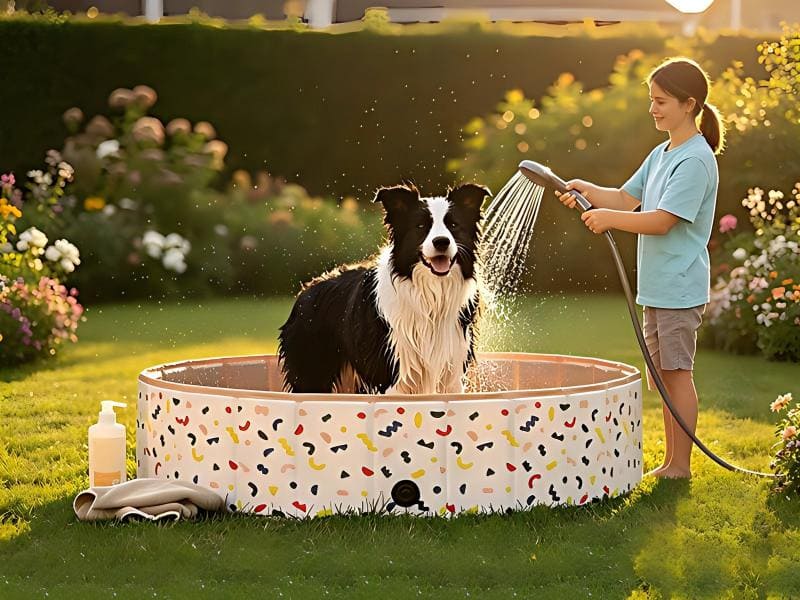
A lot of people think the best dog swimming pool is simply the cheapest pool that can hold water. That sounds practical, but it usually leads to the same result: a pool that bends too easily, punctures too fast, gets ignored by the dog, or becomes a hassle to clean after a few uses. Dogs do not use pools the way people do. They step in with claws, lean their body weight against the wall, scratch while turning, jump in suddenly, and often lie with their full belly pressed against the bottom. That means the best dog swimming pool is not just about water. It is about structure, material, stability, cooling performance, and daily usability.
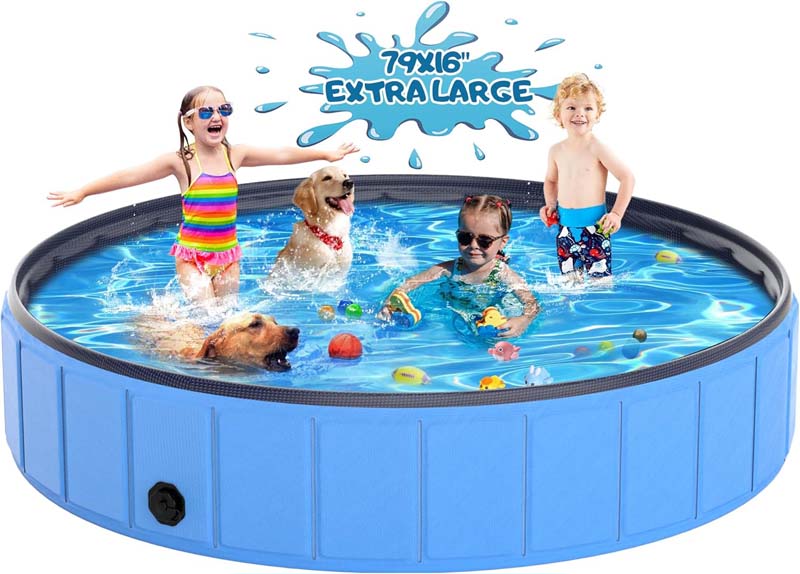
The best dog swimming pools are usually foldable, reinforced, and made from thicker PVC or composite materials that can handle scratching, repeated filling and draining, and regular outdoor use. The right pool depends on dog size, energy level, available space, and whether the goal is cooling, bathing, light swimming, or backyard play. A good dog pool should be easy to enter, easy to clean, stable under pressure, and durable enough to last through repeated summer use.
That difference becomes obvious in real life. One family may buy a low-cost inflatable pool for a Labrador, only to replace it two weeks later. Another chooses a reinforced foldable pool, uses it all season for cooling, rinsing, and play, and wonders why they did not start there in the first place. That small difference in product design changes the whole experience, and it is exactly why this topic deserves a closer look.
What Is a Dog Swimming Pool?
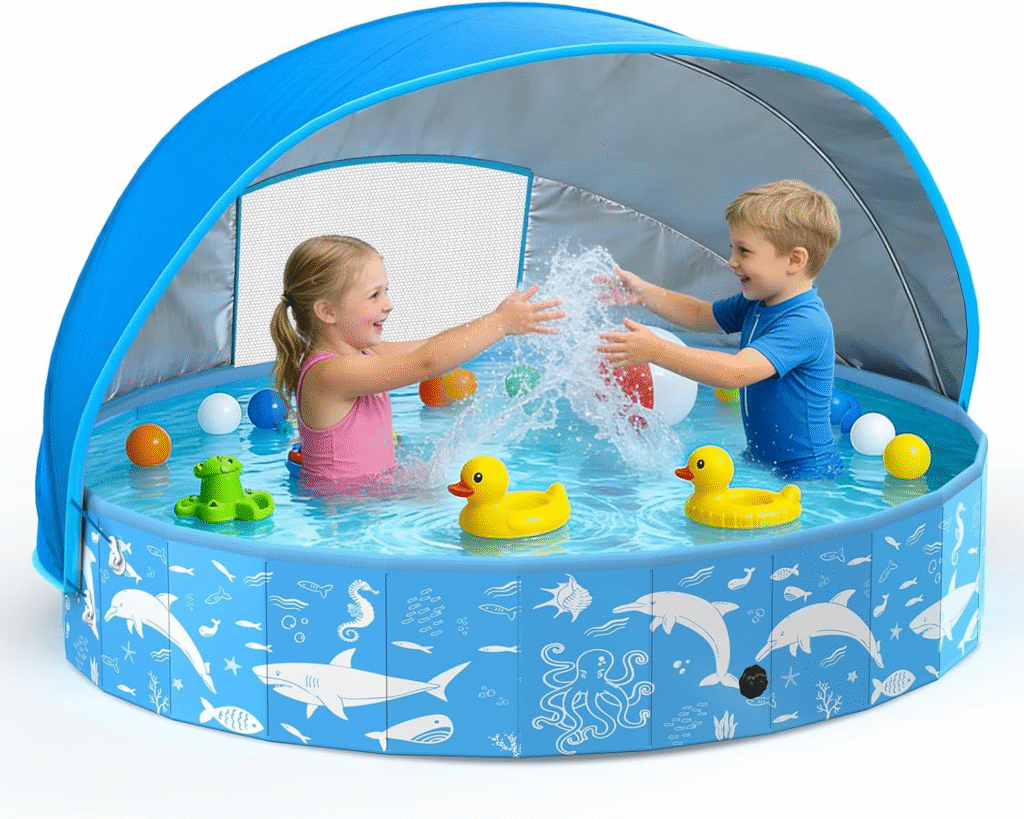
A dog swimming pool is a shallow water pool designed specifically for how dogs actually behave outdoors. It is not meant for traditional swimming like a human pool. Instead, it focuses on cooling, comfort, and safe movement in water.
Most dogs do not “swim” in backyard pools. They step in, turn around, splash with their paws, and often lie down with their belly in contact with the water. This behavior is the reason dog swimming pools are built differently from regular inflatable pools.
A well-designed dog swimming pool must handle three things at the same time:
- point pressure from claws
- shifting body weight
- repeated movement in a small space
Here is what that looks like in real use:
| Real Behavior | What Happens to the Pool | Why Design Matters |
|---|---|---|
| Dog steps in with claws | Pressure concentrated on small points | Weak material may puncture |
| Dog leans on wall | Side pressure increases | Unstable walls may collapse |
| Dog turns or spins | Friction and force increase | Pool must keep shape |
| Dog lies down | Full body weight applied | Bottom must be durable |
This is why a dog swimming pool is not just “a small pool for pets.” It is a product built around repeated mechanical stress in a wet environment.
What Is a Dog Swimming Pool for?
In everyday use, a dog swimming pool is mainly used for cooling, not for exercise swimming.
Dogs regulate heat differently than humans. They rely on panting, which becomes less effective in warm or humid conditions. Water contact gives them another way to reduce discomfort.
Most cooling happens through:
- paws
- belly
- lower chest
Even shallow water can make a difference.
| Water Depth | Cooling Effect |
|---|---|
| 5–10 cm | Light cooling |
| 10–20 cm | Effective cooling |
| 20–30 cm | Strong cooling + comfort |
In real situations, dog owners use pools in simple ways:
- after outdoor play
- during hot afternoons
- as a rest area in the yard
- for quick rinsing
Another important use is behavior control. Dogs are more likely to stay in a safe area when they have something engaging, like water. This reduces:
- running on hot surfaces
- overheating from continuous activity
So the pool becomes part of a daily routine, not just a one-time product.
How Is a Dog Swimming Pool Different?
The biggest difference between a dog swimming pool and a regular inflatable pool is how the structure handles pressure.
Regular pools are designed for light use. Dog pools are designed for repeated stress.
Here is a direct comparison:
| Feature | Dog Swimming Pool | Regular Pool |
|---|---|---|
| Wall structure | Reinforced panels or thick material | Air-filled walls |
| Pressure resistance | Designed for claw contact | Designed for soft use |
| Shape stability | Maintains shape under movement | Easily deforms |
| Entry support | Stable edge | Can collapse under weight |
One of the most common issues with standard pools is sidewall failure.
For example:
- a medium dog (20–30 kg) leans against the wall
- pressure is concentrated on one point
- air-supported wall bends or collapses
This creates an unstable experience and often leads to early damage.
Another difference is the bottom structure. Dog pools need:
- thicker base material
- better grip
- resistance to scratching
A weak bottom surface may:
- wear out quickly
- become slippery
- discourage the dog from using the pool
These details may not be visible when buying, but they become obvious after a few uses.
Are Dog Swimming Pools Good for Dogs?
Dog swimming pools are beneficial when they are used correctly and match the dog’s size and behavior. They help reduce heat stress, provide controlled outdoor activity, and improve comfort during warm conditions.
The key benefit is temperature regulation.
Dogs can start to experience discomfort when body temperature rises above normal levels. Without cooling, this can escalate quickly, especially during play.
Here is a simple comparison of cooling setups:
| Setup Type | Result for Dog |
|---|---|
| No water, no shade | High heat risk |
| Shade only | Limited cooling |
| Water only | Moderate cooling |
| Shade + water | Strong cooling support |
Another benefit is behavior balance.
Dogs often continue playing even when they are already overheating. A pool gives them a natural way to pause without stopping activity completely.
In real-life use, many dogs:
- step into water after running
- lie down briefly
- return to play
This creates a natural cycle:
activity → cooling → recovery
However, not every pool provides this benefit. A poorly designed pool may:
- feel unstable
- be too small
- become too warm in direct sun
In those cases, the dog may avoid using it.
A good dog swimming pool works because it fits how dogs actually behave. When that happens, it becomes part of daily use rather than something that sits unused in the yard.

Types of Dog Swimming Pools
At first glance, most dog swimming pools look similar. They all hold water, they all sit in a backyard, and they all seem to serve the same purpose. But after a few days of real use, the differences between pool types become very clear. Some pools start losing shape, some become unstable when the dog moves, and some remain solid and easy to use day after day. These differences are not random—they come from how each type is built and what kind of use it is designed for.
Most dog swimming pools fall into three main categories: foldable pools, inflatable pools, and rigid plastic pools. The real question is not which one looks better, but which one fits how your dog actually behaves.
What Types of Dog Swimming Pools Are There?
Each type of dog swimming pool is built with a different structure, and that structure determines how it performs under real conditions. A dog does not use a pool gently—it steps in with claws, shifts weight from side to side, turns in tight circles, and often leans against the wall when entering or exiting. These actions create repeated pressure in a small space, and not every pool handles that well.
There are three main types you will find in the market:
- foldable dog swimming pools with reinforced panels
- inflatable dog swimming pools supported by air
- rigid plastic pools with fixed hard shells
What matters is how each type responds to stress over time, not just how it looks when new.
| Type | Structure | Thickness Range | Typical Lifespan | Real-World Behavior |
|---|---|---|---|---|
| Foldable pool | Reinforced panels + thick PVC | 0.45–0.6 mm | 1–3 seasons | Holds shape, stable under movement |
| Inflatable pool | Air chambers + thin PVC | 0.25–0.4 mm | Weeks to months | Deforms easily under pressure |
| Rigid plastic pool | Hard molded shell | Fixed | Multiple seasons | Very stable but not flexible |
Foldable pools are designed to balance strength and storage. Inflatable pools focus on convenience but sacrifice durability. Rigid pools provide strength but reduce flexibility.
In real use, these differences show up quickly. A pool that looks fine on day one may behave very differently after repeated use.
Which Dog Swimming Pool Type Is Best?
The best dog swimming pool type depends on how the pool will actually be used, not just on price or appearance. A pool used occasionally by a small dog has very different requirements compared to one used daily by a large, active dog.
A useful way to approach this is to match pool type to real scenarios.
| Scenario | Recommended Pool Type | Reason |
|---|---|---|
| Large active dog | Foldable reinforced pool | Handles pressure and movement better |
| Small calm dog | Inflatable pool | Lower structural demand |
| Long-term outdoor setup | Rigid plastic pool | Stable and durable |
| Seasonal backyard use | Foldable pool | Easy to store and reuse |
Many buyers start with inflatable pools because they are cheaper and easy to set up. However, after a few weeks of use, they often notice issues:
- walls bending when the dog leans
- air loss after repeated use
- unstable shape during movement
This leads to a second purchase, usually a more durable foldable pool.
Here is how different types perform over time:
| Usage Pattern | Inflatable Pool | Foldable Pool |
|---|---|---|
| Daily use (2–3 weeks) | Shape becomes unstable | Remains consistent |
| Dog jumping in | High deformation risk | Maintains structure |
| Cleaning and draining | Difficult to control | Easy and stable |
| Long-term value | Lower | Higher |
So the “best” type is not just about initial use. It is about how the pool performs after repeated cycles of filling, use, and cleaning.
Are Foldable Dog Swimming Pools Better?
For most households, foldable dog swimming pools are the most practical choice because they are designed for repeated use rather than occasional use. The key difference is that they do not rely on air to maintain their structure. Instead, they use reinforced panels that allow the pool to hold its shape even when the dog moves, leans, or turns.
This creates a more stable and predictable experience for both the dog and the owner.
From a usage perspective, foldable pools offer several advantages:
- they remain stable when the dog enters or exits
- they resist deformation when weight shifts inside the pool
- they are easier to drain because the walls do not collapse
- they can be folded and stored after use
Here is a direct comparison based on daily use:
| Factor | Foldable Pool | Inflatable Pool |
|---|---|---|
| Wall stability | High | Low |
| Resistance to claws | Medium–high | Low |
| Shape consistency | Strong | Weak |
| Maintenance effort | Lower | Higher |
| Lifespan | Longer | Shorter |
Another important factor is how dogs respond to stability. Dogs prefer environments that feel consistent. If the pool wall collapses or shifts when they step in, they may hesitate or avoid using it altogether. A stable pool encourages more natural behavior, which leads to more frequent use and better cooling results.
In the end, foldable pools are not just stronger—they are easier to live with. They reduce the need for constant adjustment and make the pool feel like a reliable part of the daily routine rather than something that requires extra attention every time it is used.

Best Dog Swimming Pools
When people search for the best dog swimming pools, they are usually not looking for the most expensive option or the one with the most features. What they really want is something that works reliably every time their dog uses it—something that does not collapse, does not leak after a few uses, and does not require constant adjustment.
In real life, the “best” pool is the one that matches how your dog behaves and how often you plan to use it. A pool that works perfectly for a calm small dog may fail quickly with a large, active dog. That is why the best choice always comes down to use patterns, not just product descriptions.
A useful way to think about it is this:
👉 “Will this pool still perform the same after 10–20 uses?”
If the answer is yes, it is likely a good choice.
What Is the Best Dog Swimming Pool?
The best dog swimming pool is one that stays stable, resists damage, and remains easy to use over time. These three factors matter more than design or price.
From real usage, a good pool should handle:
- repeated stepping with claws
- shifting body weight
- leaning pressure on the walls
- daily filling and draining
These are not extreme situations—they happen every time a dog uses the pool.
Here is what separates a reliable pool from a weak one:
| Feature | Weak Pool | Good Dog Swimming Pool |
|---|---|---|
| Wall structure | Soft, collapses easily | Reinforced, holds shape |
| Material thickness | Thin | Thick and durable |
| Stability during use | Unstable | Consistent |
| Cleaning experience | Difficult | Simple and controlled |
| Lifespan | Short-term | Long-term use |
Another important factor is consistency. A pool that behaves differently every time—losing shape, shifting, or leaking—creates frustration. A stable pool becomes part of a routine.
Dogs also respond better to consistency. When the pool feels stable, they:
- enter more confidently
- stay longer
- use it more often
That is what makes a pool “best” in real life—not how it looks, but how it performs repeatedly.

Which Dog Swimming Pool Is Best for Large Dogs?
Large dogs create much more pressure on a pool than smaller dogs. A single step from a 30 kg dog can create strong point pressure, especially through claws. When that force is repeated across movement, weaker pools fail quickly.
For large dogs, the best dog swimming pool should focus on structure first.
Important features include:
- reinforced side walls
- thicker base material
- stable edge support
- anti-slip interior
Here is how different pool types perform with large dogs:
| Condition | Inflatable Pool | Reinforced Foldable Pool |
|---|---|---|
| Dog entering pool | Wall collapses easily | Stable |
| Dog leaning on edge | Deformation | Holds shape |
| Repeated daily use | Air loss / damage | Consistent performance |
| Lifespan | Short | Longer |
Another important factor is entry behavior. Large dogs often:
- step in with force
- push against the edge
- turn quickly once inside
If the pool cannot support this, it becomes unstable and the dog may:
- hesitate
- jump awkwardly
- avoid using it
A stable structure improves both safety and usability.
In most real households, large dog owners eventually move toward reinforced foldable pools because they provide:
- better durability
- easier maintenance
- more predictable performance

Which Dog Swimming Pool Is Best for Small Dogs?
Small dogs place less stress on the pool, which gives more flexibility in choosing a design. However, that does not mean every pool will work well.
Small dogs often behave differently:
- they may be more cautious
- they prefer stable surfaces
- they are sensitive to slipping
For small dogs, the best dog swimming pool should focus on comfort and ease of access.
Key considerations include:
- lower wall height
- stable base
- non-slip surface
- manageable size
Here is a practical comparison:
| Feature | Too Large Pool | Well-Fitted Pool |
|---|---|---|
| Movement | Limited control | Easy movement |
| Water distribution | Uneven | Balanced |
| Dog behavior | Hesitant | Comfortable |
| Usage frequency | Lower | Higher |
Another factor is space efficiency. A smaller pool that fits well in the environment is often used more frequently than a large pool that feels inconvenient.
Inflatable pools can work for small dogs, but only under certain conditions:
- low activity level
- supervised use
- smooth surfaces
However, even for small dogs, stability still matters. A pool that shifts or moves can reduce confidence and limit use.
How to Choose the Best Dog Swimming Pool?
Choosing the best dog swimming pool is easier when you focus on real usage instead of product descriptions. The goal is to match the pool to your dog, your space, and your routine.
A simple decision framework looks like this:
| Factor | What to Consider |
|---|---|
| Dog size | Does the dog have enough space to turn and lie down? |
| Activity level | Does the pool handle movement and pressure? |
| Usage frequency | Will it be used daily or occasionally? |
| Environment | Backyard, patio, or indoor space? |
| Maintenance | Is it easy to clean and drain? |
From real user experience, five factors make the biggest difference:
- structure stability → prevents collapse and improves usability
- material durability → reduces damage from claws and wear
- size fit → improves comfort and frequency of use
- ease of cleaning → determines long-term use
- setup simplicity → affects how often the pool is used
Here is how these factors affect real outcomes:
| Decision Factor | Poor Choice Result | Good Choice Result |
|---|---|---|
| Stability | Dog avoids pool | Dog uses regularly |
| Material | Early damage | Long-term use |
| Size | Limited movement | Comfortable use |
| Cleaning | Low usage frequency | Daily use possible |
| Setup | Inconvenience | Routine use |
Another practical insight:
The best pool is not the one you use once—it is the one you keep using.
Many buyers focus on price first, but over time, they prioritize:
- durability
- ease of use
- consistency
A pool that meets these needs becomes part of daily life. One that does not usually ends up unused after a short period.
The idea of the “best dog swimming pool” is not fixed. It changes depending on:
- the dog
- the environment
- the usage pattern
But across all situations, the same pattern holds true:
stable structure + durable material + practical size = better long-term use
When those three factors are aligned, the pool stops being just a product and becomes something your dog actually relies on during warm days.
Choose a Dog Swimming Pool
Choosing a dog swimming pool is less about finding “the best product” and more about finding the one that fits your dog, your space, and your daily routine. Many people only realize this after buying the wrong pool—either it is too small, too weak, or too inconvenient to use regularly.
In real situations, a dog pool is not used once. It is filled, used, drained, and reused over and over again. That means small differences—like how stable the wall is or how easy it is to drain—quickly become important. A pool that looks fine on day one can become frustrating after a week if it shifts, collapses, or takes too long to clean.
A good decision comes down to one question:
Will this pool still feel easy to use after multiple days in a row?
If the answer is yes, it is likely the right choice.
What Size Dog Swimming Pool Should You Choose?
Size is one of the most common mistakes when choosing a dog swimming pool. Many buyers either choose a pool that is too small for movement or too large for their space and daily use.
A well-sized pool allows the dog to:
- turn around comfortably
- lie down fully
- move without hitting the walls constantly
Here is a practical sizing guide based on real use:
| Dog Size | Recommended Pool Diameter | Real Experience |
|---|---|---|
| Small dogs (<10 kg) | 60–100 cm | Easy movement, less water needed |
| Medium dogs (10–25 kg) | 100–160 cm | Balanced space and usability |
| Large dogs (25 kg+) | 160–200 cm | Enough room for turning and cooling |
But size is not just about the dog—it is also about how the pool is used.
| Usage Type | Size Preference |
|---|---|
| Cooling only | Smaller size works well |
| Play + movement | Medium to large size |
| Multiple dogs | Larger pool required |
Another factor is water volume. Larger pools require:
- more water
- more time to fill
- more effort to drain
This affects how often the pool is actually used.
A slightly smaller pool that is used every day is usually more valuable than a large pool that feels inconvenient.
What Material Should a Dog Swimming Pool Be?
Material determines how the pool handles real-world stress. Dogs do not interact gently—they step with claws, shift weight, and move unpredictably. Weak materials show problems quickly.
Most pools use PVC or composite materials, but thickness and structure vary a lot.
Here is a clear comparison:
| Material Type | Thickness Range | Durability | Real Use Outcome |
|---|---|---|---|
| Thin PVC | 0.25–0.4 mm | Low | Prone to wear and deformation |
| Thick PVC | 0.45–0.6 mm | Medium–high | Handles regular use |
| Composite reinforced PVC | Multi-layer | High | Best for heavy use |
Material choice affects:
- resistance to scratching
- shape stability
- lifespan
- cleaning ease
Another important detail is surface texture. A good pool surface should:
- provide grip (not too slippery)
- be comfortable for lying down
- be easy to rinse clean
Poor surface design often leads to:
- dogs slipping or hesitating
- reduced usage
- faster wear
In real use, material quality is one of the first things users notice after a few days.
Where Should You Use a Dog Swimming Pool?
The environment where the pool is used has a direct impact on performance, safety, and durability. A pool that works well on grass may behave differently on concrete or tiles.
Here is how different environments affect pool use:
| Surface Type | Effect on Pool | Recommendation |
|---|---|---|
| Grass | Soft support, cooler surface | Ideal placement |
| Concrete | Hard, retains heat | Use partial shade |
| Tiles | Smooth, can be slippery | Ensure anti-slip base |
| Decking | Heat retention varies | Monitor temperature |
Location also affects how often the pool is used. A pool placed in a convenient, visible area is more likely to become part of daily routine.
Another key factor is sunlight.
| Placement | Result |
|---|---|
| Full sun all day | Water heats up quickly |
| Partial shade | Balanced cooling |
| Full shade | Slower heat buildup |
In real-life use, partial shade works best. It allows:
- comfortable water temperature
- better cooling effect
- longer usable time during the day
Accessibility matters too. If the pool is:
- easy to reach
- quick to set up
it will be used more often.
How Durable Should a Dog Swimming Pool Be?
Durability becomes important the moment the pool is used repeatedly. Many buyers underestimate this because the pool looks fine at the beginning.
A realistic way to think about durability is to match it with usage frequency.
| Usage Frequency | Required Durability Level |
|---|---|
| Occasional (weekends) | Medium |
| Weekly use | Medium–high |
| Daily summer use | High |
In daily use, the pool needs to handle:
- repeated filling and draining
- exposure to sunlight
- pressure from movement
- temperature changes
Lower durability pools often show issues such as:
- wall deformation
- small leaks
- difficulty maintaining shape
Higher durability pools:
- maintain structure
- require less adjustment
- last longer across seasons
Another factor is maintenance effort. A durable pool reduces the need for:
- repairs
- constant monitoring
- replacements
Over time, this makes a noticeable difference in user experience.
What Makes a Dog Swimming Pool Easy to Use?
Ease of use is often overlooked during purchase, but it determines whether the pool becomes part of a daily routine or something used occasionally.
A pool that is easy to use should be:
- quick to set up
- easy to fill
- simple to drain
- easy to clean
- convenient to store
Here is how usability affects real behavior:
| Feature | Hard-to-Use Pool | Easy-to-Use Pool |
|---|---|---|
| Setup | Time-consuming | Quick and simple |
| Draining | Requires lifting | Built-in drain |
| Cleaning | Effort required | Fast rinse |
| Storage | Bulky | Foldable |
If a pool takes too long to manage, people tend to:
- use it less often
- delay cleaning
- stop using it altogether
On the other hand, a simple and practical design encourages:
- daily use
- consistent cleaning
- better overall experience
Another important point is predictability. A pool that works the same way every time builds trust and becomes easier to manage.
Choosing a dog swimming pool is not about comparing features—it is about understanding how the product fits into daily life.
The best decisions usually come from focusing on:
- correct size for the dog
- durable material for repeated use
- suitable placement in the environment
- ease of setup and maintenance
When these factors are aligned, the pool becomes something you use naturally, without extra effort. When they are not, even a well-designed product can feel inconvenient.
In the end, the right pool is the one that:
gets used often, works consistently, and fits your routine without effort
Use a Dog Swimming Pool Safely
Using a dog swimming pool safely is not complicated, but it does require attention to small details that are easy to overlook. Most problems do not come from the pool itself, but from how it is placed, how long it is used, and how the dog behaves during use.
In real life, dogs do not use pools in a controlled way. They jump in, step in quickly, push against the sides, or lie down suddenly. These actions are normal, but they can create unstable situations if the pool setup is not right.
A safe setup is not about limiting the dog—it is about making sure the environment supports natural movement without risk.
How Deep Should a Dog Swimming Pool Be?
Water depth is one of the most important safety factors, yet many people assume deeper water is better. In reality, most dogs do not need deep water to cool down. Shallow water is safer and more effective for daily use.
Dogs cool primarily through:
- paw contact
- belly contact
- lower body exposure
Because of this, even a shallow layer of water can provide strong cooling.
| Dog Size | Safe Water Depth | Practical Effect |
|---|---|---|
| Small dogs | 5–15 cm | Comfortable standing and cooling |
| Medium dogs | 10–25 cm | Balanced cooling and movement |
| Large dogs | 15–30 cm | Effective cooling without instability |
Deeper water introduces several risks:
- reduced footing stability
- higher entry difficulty
- increased fatigue during movement
Another important point is control. In shallow water, the dog can:
- enter and exit easily
- lie down naturally
- regulate its own comfort level
In deeper water, dogs may become less stable, especially if they are not strong swimmers.
For everyday backyard use, shallow water is not only safer—it is also easier to manage and maintain.
Where Should You Place a Dog Swimming Pool?
Placement affects both safety and usability. A poorly placed pool can overheat, become slippery, or feel uncomfortable for the dog.
In real environments, three factors matter most:
- ground surface
- sunlight exposure
- accessibility
Here is how surface type affects safety:
| Surface Type | Risk Level | Real Impact |
|---|---|---|
| Grass | Low | Cooler, stable support |
| Concrete | Medium | Heat retention, harder surface |
| Tiles | Medium–high | Slippery when wet |
| Asphalt | High | Excessive heat buildup |
Surface heat is often underestimated. For example:
- air temperature: 86°F
- asphalt surface: can reach 120°F+
This means a pool placed on hot ground may:
- warm up quickly
- reduce cooling effect
- create discomfort for the dog
Sun exposure also plays a major role:
| Placement | Result |
|---|---|
| Full sun | Water heats quickly |
| Partial shade | Balanced temperature |
| Full shade | Cooler but slower drying |
Partial shade is usually the best option because it:
- keeps water cooler
- prevents overheating
- allows longer use time
Accessibility matters as well. A pool that is easy to reach is used more often and reduces sudden jumping or awkward entry.
How Long Should Dogs Stay in the Pool?
Time control is often ignored because dogs appear to enjoy water and may continue playing longer than they should. However, extended exposure without breaks can still lead to fatigue or overheating, especially in warm environments.
A practical approach is to use short, repeatable sessions instead of long continuous play.
| Activity Type | Recommended Duration |
|---|---|
| Light cooling | 5–10 minutes |
| Active play | 10–20 minutes |
| High-temperature days | Shorter sessions with breaks |
Dogs often do not stop on their own, especially when:
- playing with people
- interacting with other dogs
- feeling excited
Because of this, it is important to observe behavior.
Signs that a dog needs a break:
- heavy panting
- slowing movement
- lying down frequently
- reduced response to commands
A simple and effective routine looks like this:
play → cool → rest → repeat
This allows the dog to enjoy the pool without building up stress or fatigue.
How Do You Maintain Safe Water Conditions?
Water condition affects both hygiene and cooling performance. Many users underestimate how quickly water quality changes, especially in outdoor environments.
After a short period of use, water may contain:
- dirt from paws
- grass or debris
- saliva or fur
If not maintained, this can lead to:
- unpleasant odor
- reduced hygiene
- lower willingness for the dog to use the pool
Here is a simple maintenance routine:
| Task | Frequency | Result |
|---|---|---|
| Drain water | Every 1–2 days | Prevents buildup |
| Rinse pool | After draining | Keeps surface clean |
| Dry before storage | After use | Prevents odor |
Another important factor is water temperature.
| Water Condition | Effect |
|---|---|
| Cool water | Best cooling effect |
| Warm water (sun exposure) | Reduced effectiveness |
| Stagnant water | Poor hygiene |
If the pool is left in direct sun, water temperature can rise quickly, reducing its cooling benefit.
Refreshing water regularly helps maintain:
- cooling performance
- hygiene
- user experience
What Safety Risks Should You Avoid?
Most safety issues come from common mistakes rather than unusual situations. These risks are easy to prevent once they are understood.
The most common risks include:
- placing the pool on hot surfaces
- using deep water unnecessarily
- allowing continuous play without breaks
- ignoring early signs of fatigue
- using unstable or low-quality pools
Here is a simple risk overview:
| Risk Factor | Possible Issue |
|---|---|
| Hot ground | Paw discomfort, heat buildup |
| Deep water | Loss of footing |
| Long sessions | Fatigue or overheating |
| Poor stability | Hesitation or unsafe movement |
Another overlooked risk is pool instability. If the pool wall shifts or collapses when the dog enters, it can cause:
- sudden movement
- hesitation
- awkward entry or exit
A stable structure reduces these risks significantly.
Using a dog swimming pool safely is not about strict control—it is about creating an environment where the dog can move naturally without unnecessary risk.
The most important factors are:
- appropriate water depth
- stable and safe placement
- controlled usage time
- clean and cool water
When these are in place, the pool becomes a safe and reliable part of daily use.
In real life, the safest setup is also the simplest one:
shallow water + stable surface + short sessions + regular cleaning
When everything works together, dogs stay comfortable, active, and safe without needing constant intervention.
Dog Swimming Pool Manufacturer
When choosing a dog swimming pool manufacturer, the most important factor is not who can produce the lowest price, but who can deliver consistent quality across multiple batches. Many buyers only realize this after receiving products that look good in samples but perform poorly in real use.
In actual use, dog swimming pools are exposed to repeated pressure, water, sunlight, and movement. If the manufacturing process is not stable, small issues quickly become visible—such as weak seams, uneven thickness, or poor structural support.
A reliable manufacturer focuses on how the product performs after repeated use, not just how it looks when new.
What Makes a Reliable Dog Swimming Pool Manufacturer?
A reliable manufacturer is defined by how well it controls materials, structure, and production consistency over time. These three factors directly affect product durability and customer satisfaction.
In practical terms, a good manufacturer should be able to:
- maintain consistent material thickness across batches
- produce stable structures that hold shape under pressure
- ensure seam strength through controlled welding processes
- perform basic durability testing before shipment
Here is a comparison of manufacturing levels:
| Factor | Low-Control Supplier | Reliable Manufacturer |
|---|---|---|
| Material consistency | Varies between batches | Stable and controlled |
| Structure design | Standard templates | Optimized for use cases |
| Seam strength | Inconsistent | Tested and reinforced |
| Product lifespan | Unpredictable | More consistent |
Another key point is repeatability. A manufacturer that delivers one good batch but fails on the next creates long-term problems for brands and retailers.
Consistency matters more than initial performance.
How Are Dog Swimming Pools Manufactured?
Understanding how dog swimming pools are made helps explain why some products last longer than others. The production process is not complicated, but the details within each step determine final quality.
A typical manufacturing process includes:
- material preparation
- cutting and shaping
- high-frequency welding or heat sealing
- structural reinforcement
- air-tightness and pressure testing
Here is what each stage affects:
| Stage | What It Controls |
|---|---|
| Material preparation | Thickness and durability |
| Cutting | Shape accuracy |
| Welding | Seam strength and leak resistance |
| Reinforcement | Structural stability |
| Testing | Overall reliability |
High-frequency welding is especially important because it creates strong seams that hold under repeated stress. Weak welding often leads to:
- slow leaks
- seam separation
- reduced lifespan
Another important factor is thickness control. Even small variations in material thickness can affect:
- resistance to claws
- shape stability
- durability over time
In real production, quality comes from controlling these details consistently, not just completing the steps.
Can Dog Swimming Pools Be Customized?
Customization is common in this category, especially for brands and retailers that want to differentiate their products. However, not all manufacturers offer the same level of flexibility.
Most dog swimming pools can be customized in the following ways:
- size and diameter
- wall height and structure
- material thickness
- printed graphics and colors
- packaging and labeling
Here is how customization typically affects the product:
| Custom Option | Impact on Product |
|---|---|
| Size | Matches target dog category |
| Material thickness | Adjusts durability level |
| Structure design | Improves stability |
| Graphics | Enhances visual appeal |
| Packaging | Supports retail positioning |
Customization is especially useful when targeting different markets. For example:
- larger sizes for North America
- compact designs for limited-space environments
- reinforced structures for active dog use
Another important point is sampling speed. A manufacturer that can produce samples quickly allows brands to:
- test product performance
- adjust design before mass production
- reduce overall development risk
What Should You Check Before Choosing a Manufacturer?
Before working with a manufacturer, it is important to evaluate more than just pricing. Many problems in this category come from overlooking basic production capabilities.
Key factors to check include:
- material specification (thickness, type)
- seam quality and welding method
- structure stability under pressure
- sample consistency vs. production quality
- production lead time
Here is a practical evaluation checklist:
| Check Item | Why It Matters |
|---|---|
| Material thickness | Affects durability and lifespan |
| Seam strength | Prevents leaks and failure |
| Structure design | Determines usability |
| Sample quality | Reflects real performance |
| Production capacity | Ensures timely delivery |
Another useful approach is to ask simple, practical questions:
- How does the pool perform after repeated use?
- What testing is done before shipment?
- Can structure or material be adjusted if needed?
These questions reveal whether the manufacturer understands real-world usage or only focuses on production.
Why Manufacturing Experience Matters
Experience in this category makes a visible difference in product performance. Dog swimming pools may look simple, but they involve a combination of material behavior, structural support, and user interaction.
Manufacturers with more experience tend to:
- understand how dogs interact with the product
- adjust structure based on usage patterns
- improve durability through material selection
- reduce common failure points
Here is how experience affects outcomes:
| Experience Level | Product Result |
|---|---|
| Low experience | Higher defect rate, inconsistent performance |
| Moderate experience | Acceptable quality, limited optimization |
| High experience | Stable quality, optimized design |
Another important factor is testing frequency. Manufacturers with established processes often conduct:
- pressure testing
- leak testing
- durability checks
These tests reduce the risk of defects reaching the customer.
From a business perspective, working with an experienced manufacturer reduces:
- return rates
- customer complaints
- product replacement costs
Choosing a dog swimming pool manufacturer is not just about production—it is about long-term reliability.
A good manufacturer provides:
- consistent material quality
- stable product structure
- reliable production timelines
- flexibility for customization
In real-world terms, this means fewer problems after the product reaches the customer.
The difference between manufacturers becomes clear over time. A product that performs consistently across multiple uses and batches creates trust—not only with customers, but also within your own business operations.
Work With Epsilon for Dog Swimming Pools
For many brands, retailers, and online sellers, the biggest challenge is not finding a dog swimming pool—it is finding a product that stays consistent across real use and multiple batches. A pool that performs well in photos but fails after a few weeks quickly leads to returns, negative reviews, and lost customers.
Working with a manufacturer like American Epsilon Inc. helps reduce that uncertainty. Instead of focusing only on product appearance, the process is built around how the product performs after repeated use—under weight, movement, water exposure, and daily handling.
Epsilon focuses on making products that are used repeatedly, not just tested once.
Product Development and Manufacturing Capabilities
Epsilon supports both ready-stock supply and custom development. The process is designed to be straightforward so that businesses can move from idea to product without unnecessary delays.
Core capabilities include:
- custom size development based on dog categories
- reinforced structural design for repeated use
- multi-layer PVC and composite material options
- anti-slip surface optimization
- custom printing and branding
- packaging design for retail and e-commerce
Here is how these capabilities translate into real product outcomes:
| Capability | What It Means in Use |
|---|---|
| Material control | More consistent thickness and durability |
| Structural design | Pool holds shape under movement |
| Surface design | Better grip, improved safety |
| Printing | Clear branding, stronger shelf appeal |
| Packaging | Easier distribution and sales |
Typical Development Process
For businesses developing their own dog swimming pool products, the process is structured to reduce risk and improve efficiency.
| Stage | Timeline | What Happens |
|---|---|---|
| Concept | 1–2 days | Define size, structure, use case |
| Design | 2–3 days | Material and structure planning |
| Sampling | 3–5 days | Prototype production |
| Testing | 2–3 days | Leak, pressure, and durability checks |
| Production | 14–20 days | Scalable manufacturing |
This process allows brands to:
- test real product performance before scaling
- adjust structure or materials if needed
- move faster into market with fewer issues
Sampling plays a key role. Instead of relying on product descriptions, buyers can evaluate:
- wall stability
- material thickness
- ease of use
before committing to larger orders.
Why Consistency Matters in Dog Swimming Pools
In this category, small variations in production can lead to noticeable differences in product performance. For example:
- slightly thinner material → reduced durability
- weaker seams → higher risk of leaks
- unstable structure → lower user confidence
Here is how consistency affects business outcomes:
| Production Quality | Customer Experience |
|---|---|
| Inconsistent | Returns, complaints, low repeat orders |
| Stable | Better reviews, repeat purchases |
| Optimized | Strong brand trust and growth |
Epsilon focuses on:
- controlled material preparation
- consistent welding processes
- batch-level quality checks
This helps ensure that products behave the same way across different orders.
Ready-Stock Dog Swimming Pools (Amazon)
For businesses that need faster market entry or want to test demand, ready-stock products are available.
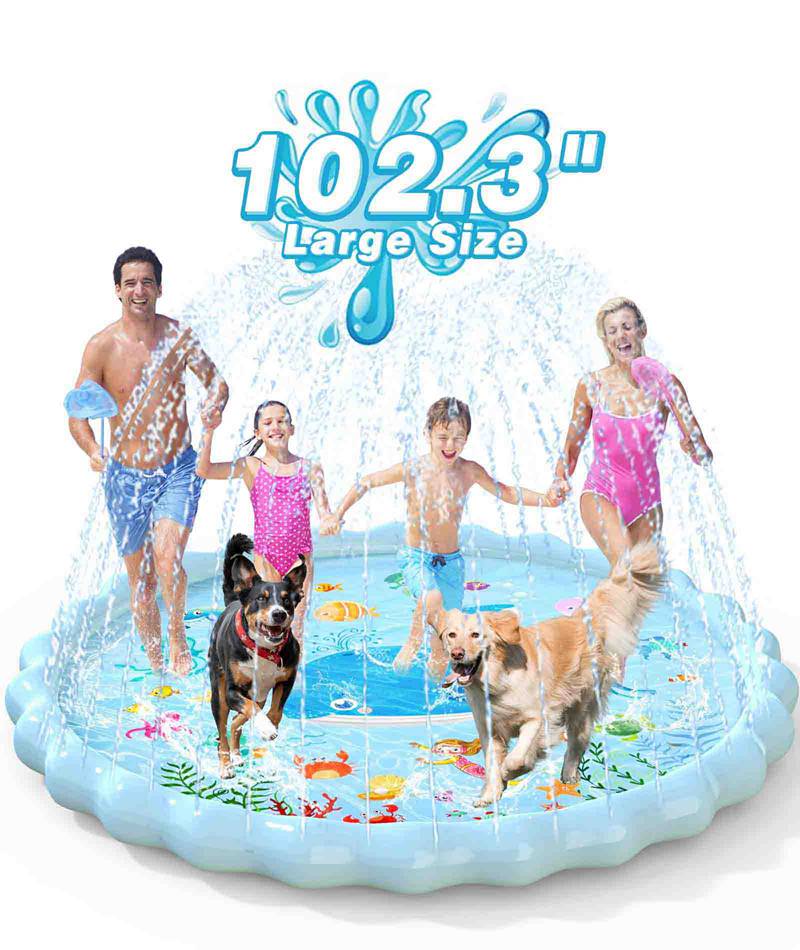
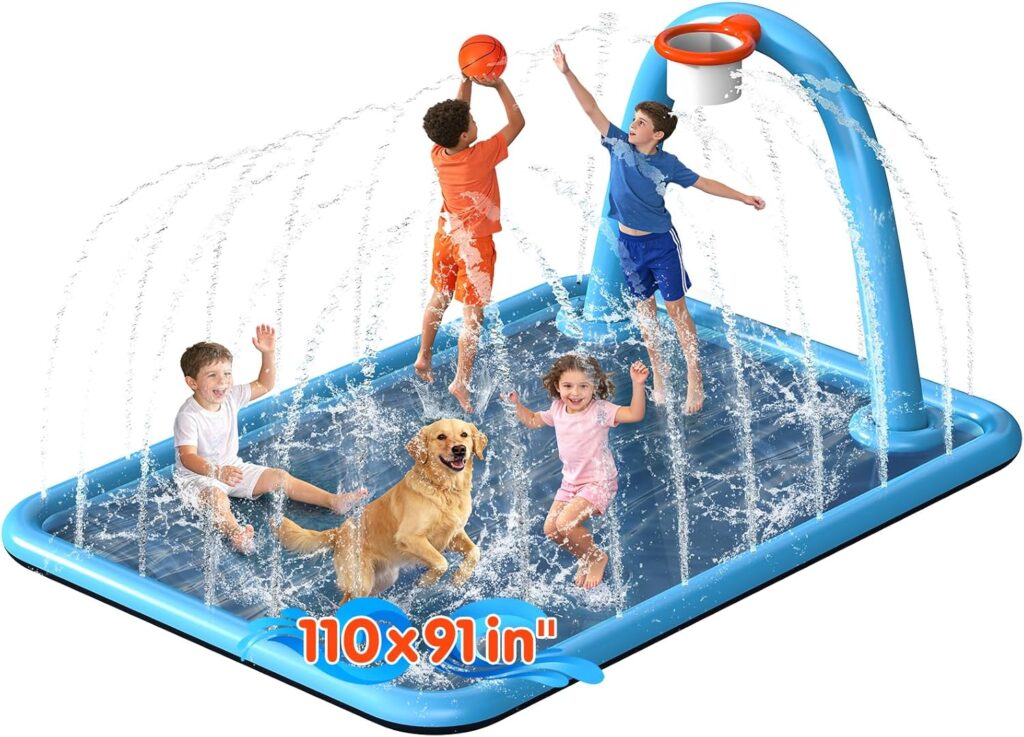
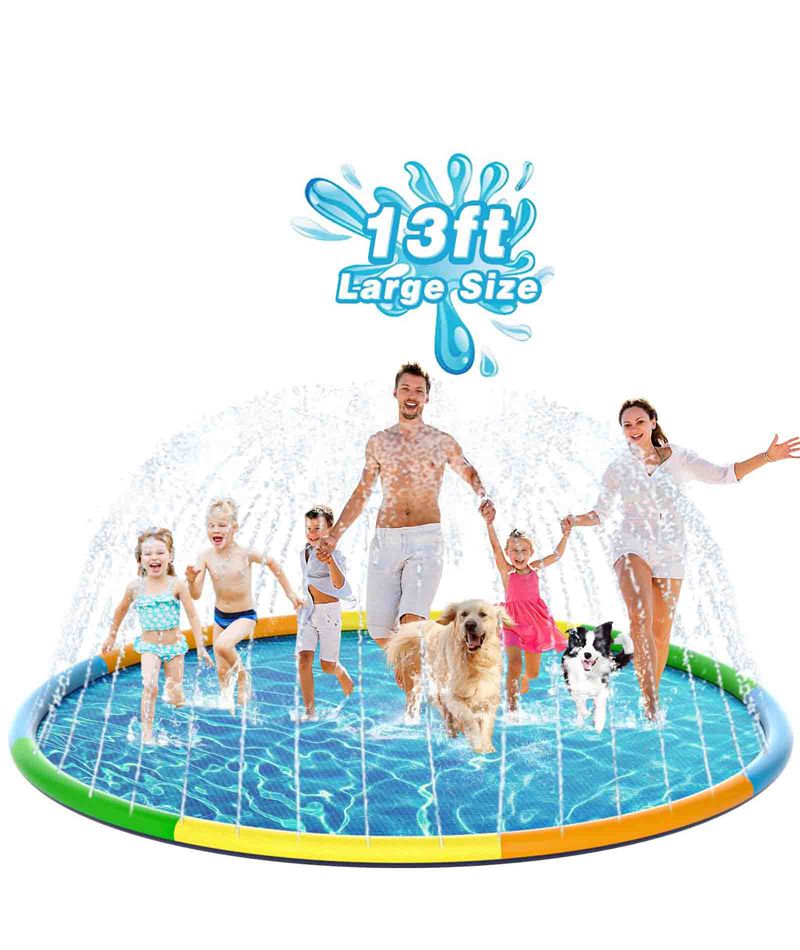
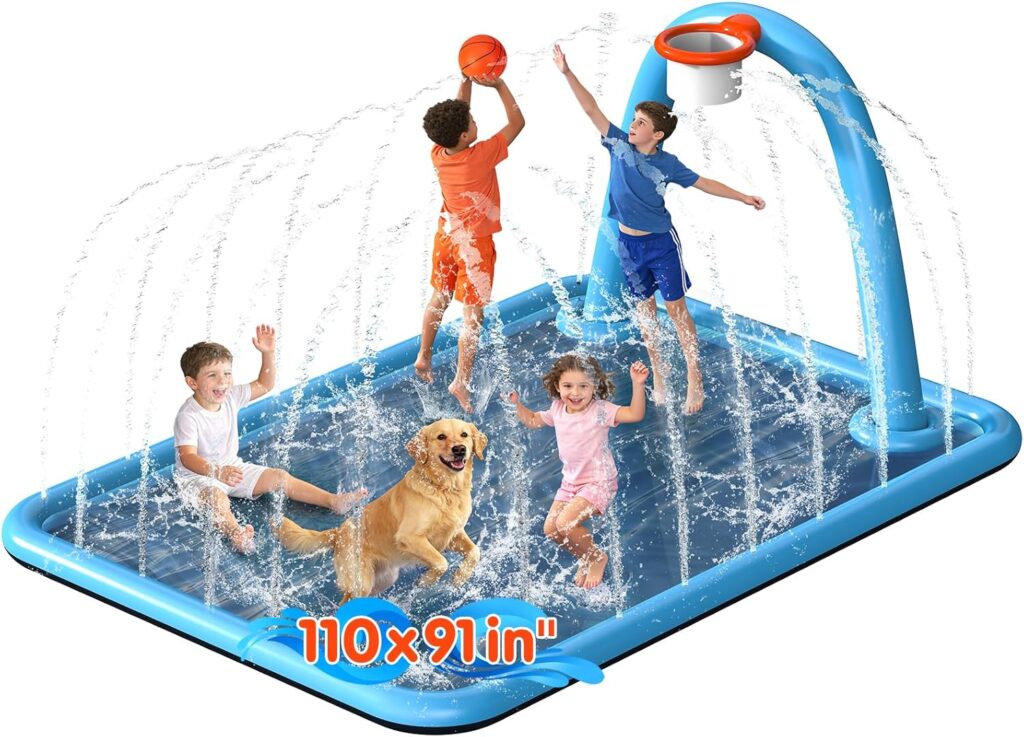
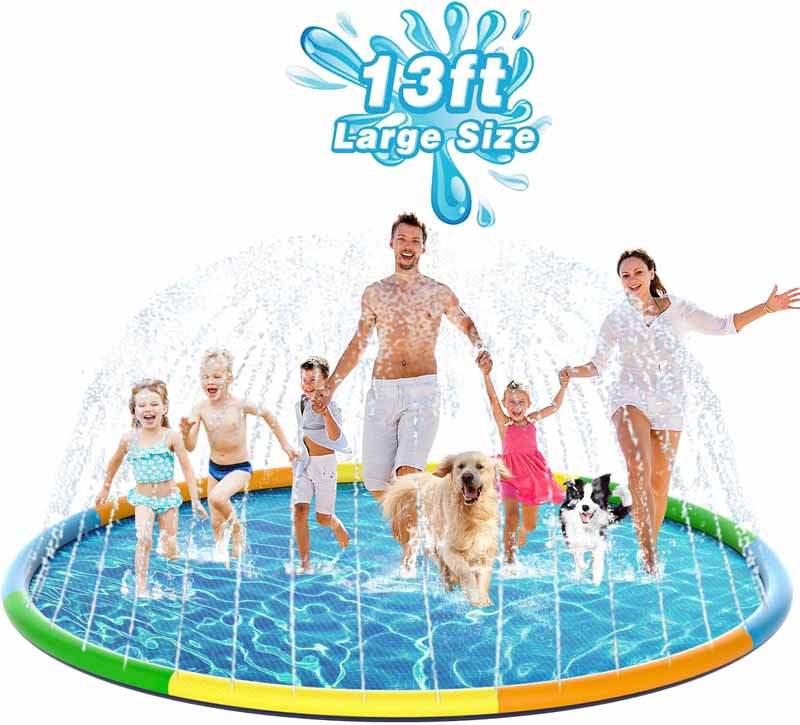
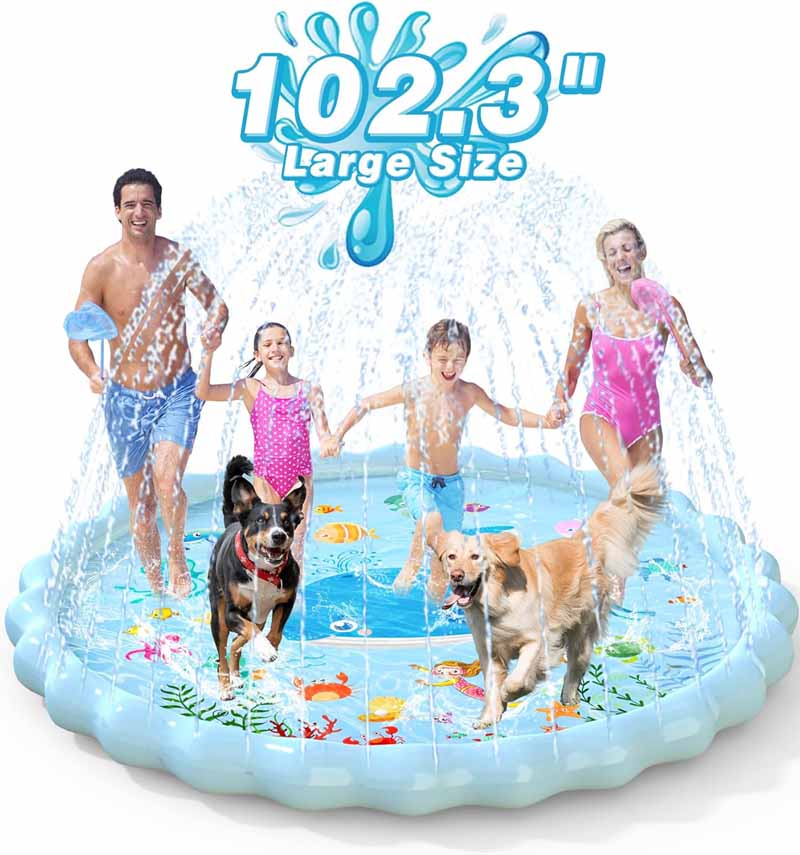
Dog Pool with Sprinkler (Amazon)
These products are already tested in real consumer markets and can be used for:
- quick resale
- market validation
- initial product testing
Request Custom Dog Swimming Pools
For brands that want to build their own product line, customization allows better control over positioning and performance.
Epsilon supports:
- product size adjustment
- material upgrades for durability
- structural reinforcement for active dogs
- branding and packaging customization
This is especially useful for:
- Amazon sellers building private label products
- retailers expanding pet categories
- distributors targeting specific markets
Request Custom Dog Swimming Pool Solutions
Request Product Samples
Before placing bulk orders, many businesses prefer to test the product in real conditions. This helps reduce uncertainty and avoid costly mistakes.
Sample evaluation usually focuses on:
- structure stability
- material feel and thickness
- ease of use and cleaning
- overall durability
Epsilon provides:
- fast sample production
- material verification
- structural evaluation
Request a Sample for Dog Swimming Pools
Explore More Inflatable Products by Epsilon
If you are expanding your product line beyond dog swimming pools, you may also consider related categories that share similar materials and customer demand.