Skip to content
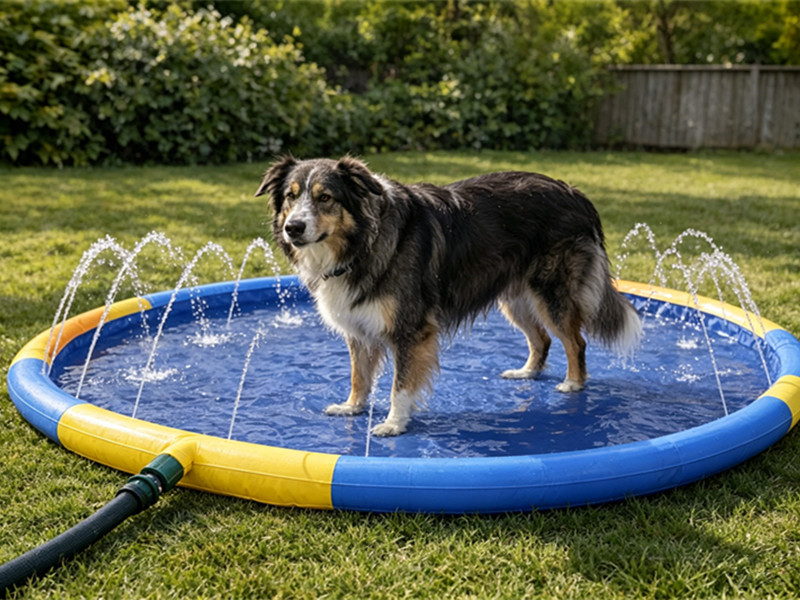
A dog splash pad looks simple on paper. Connect the hose, turn on the water, and give your dog a cooler place to play. But in real backyards, results can vary a lot. One family gets a clean, even spray ring. Another ends up with weak jets, uneven water, and a dog that loses interest after a few minutes. In most cases, the difference is not just the product. It is the full setup around it. Hose length, hose diameter, faucet pressure, fittings, yard slope, and surface stability all affect how a dog splash pad performs.
A dog splash pad can still work with low water pressure. The key is understanding what “working well” actually means. In many homes, the best result is not a high spray wall. It is a steady wet surface, lower and more even water flow, and a pad that feels easy and safe for the dog to use. Shorter hoses, wider hose diameters, flatter placement, cleaner connectors, and better surface grip usually matter more than simply turning the faucet harder.
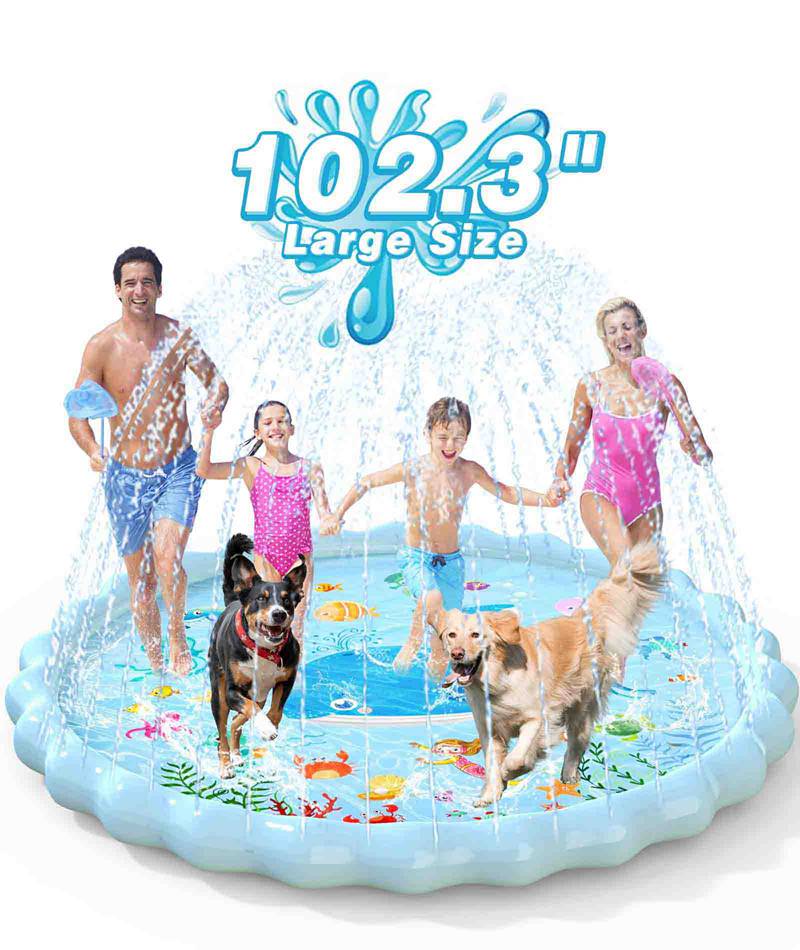
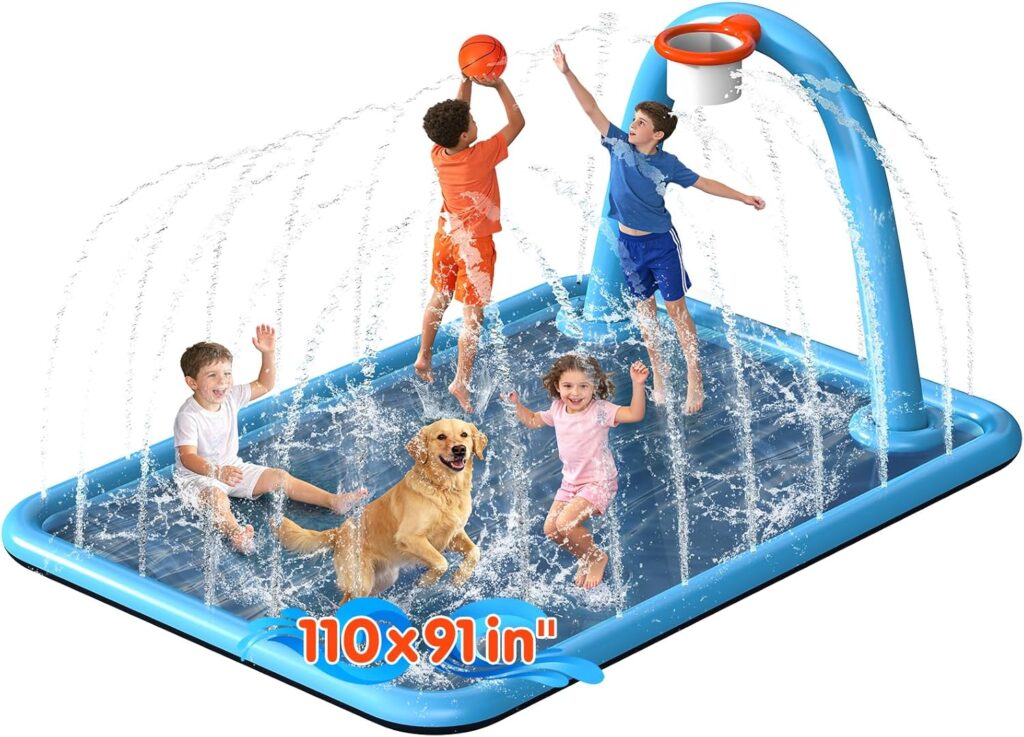
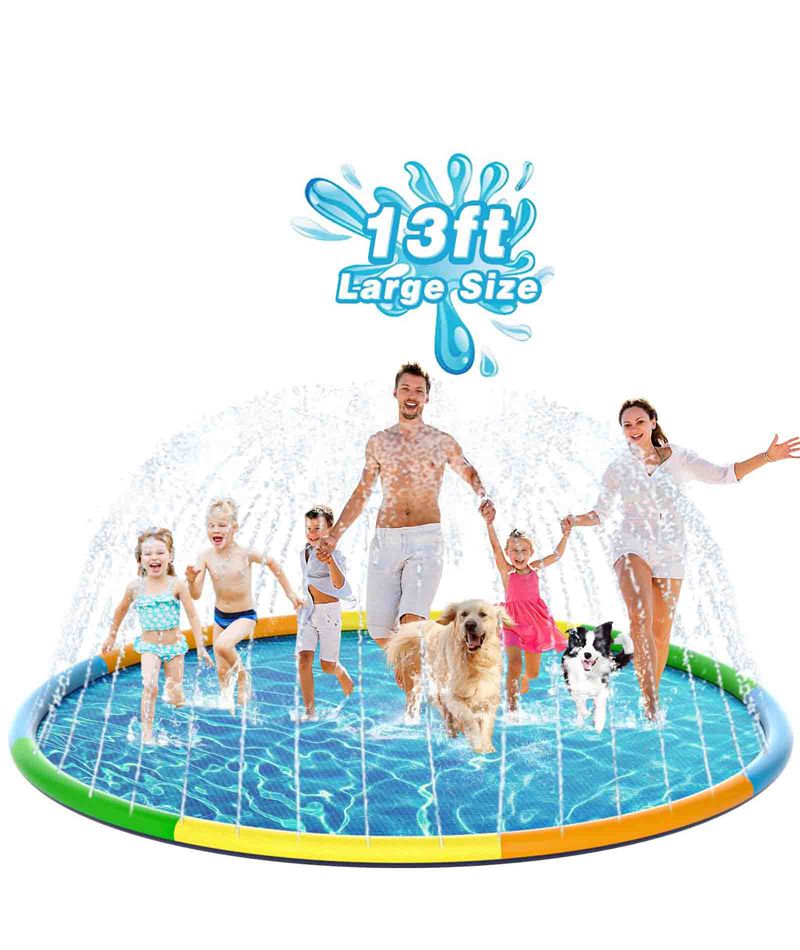
That matters because dogs usually do not care about dramatic spray the way people do. They care about comfort. They care about whether the surface feels stable, whether the water feels manageable, and whether the experience is easy enough to come back to tomorrow. For many dogs, especially first-time users, senior dogs, and more cautious dogs, a calmer splash pad is often the better splash pad. You can explore more options here:
Can a Dog Splash Pad Work with Low Pressure?
Yes. A dog splash pad can still work with low pressure if the setup protects enough usable flow and the pad can distribute water evenly. In a lower-pressure yard, the goal should not be maximum spray height. The goal should be reliable cooling, a usable wet surface, and a spray level the dog feels comfortable with.
What Low Pressure Means for a Dog Splash Pad
Low pressure is not only about a number. For most households, it shows up as weak spray, delayed ring fill, patchy jets, or one side of the splash pad looking stronger than the other. In practical use, lower pressure means the system has less room for error. Every restriction matters more. A longer hose, a narrow hose, a splitter, a timer, or even a partly kinked section can reduce the amount of water that actually reaches the pad.
That is why many owners misjudge the issue. They see low spray and assume the pad is defective. In reality, the splash pad may simply be receiving less working water than it needs. A dog splash pad does not need perfect pressure, but it does need enough steady flow to fill the outer ring and feed multiple spray holes at the same time.
This is also why two similar homes can get different results from similar products. One may be using a short 5/8-inch hose on level ground. The other may be using a 100-foot 1/2-inch hose through a splitter across a sloped lawn. The second setup will almost always feel weaker, even if the product itself is fine.
Why Dog Splash Pad Flow Matters More Than Spray Height
Spray height is the first thing people notice, but it is not the best way to judge performance. What matters more is how much water reaches the pad in a stable, usable way. A dog splash pad needs enough flow to keep the ring evenly supplied. Once the water path becomes too weak, the spray usually starts looking uneven before it disappears completely.
That is why hose setup matters so much. A long narrow hose can reduce usable flow enough to make a good splash pad look weak. A shorter or wider hose can make the same pad look much better without changing the product itself.
For customers, this changes what “good performance” should mean. A good dog splash pad is not only one that creates a dramatic photo. It is one that still forms a usable cooling zone in an ordinary yard, with ordinary water conditions, and without constant adjustment every time it is used.
When a Dog Splash Pad Still Works Fine
A splash pad does not need tall spray to be useful. For many dogs, a lightly spraying wet surface is already enough. Cooling comes from contact as much as visible spray. If the paws, belly, and lower coat are getting wet, the splash pad is still doing real work.
This is where owner expectations can get in the way. People often picture a splash pad as a small fountain. Dogs usually do not. Many dogs use it as a place to step on, sniff, paw at, circle around, cool off, and return to later. A lower-pressure setup may not look exciting in a product image, but it can still be the version the dog actually enjoys.
So if the surface stays wet, the water is reasonably even, and the dog is comfortable coming back to it, the splash pad may already be performing well. It does not need to look oversized or dramatic to be successful.
How Does a Dog Splash Pad Work?
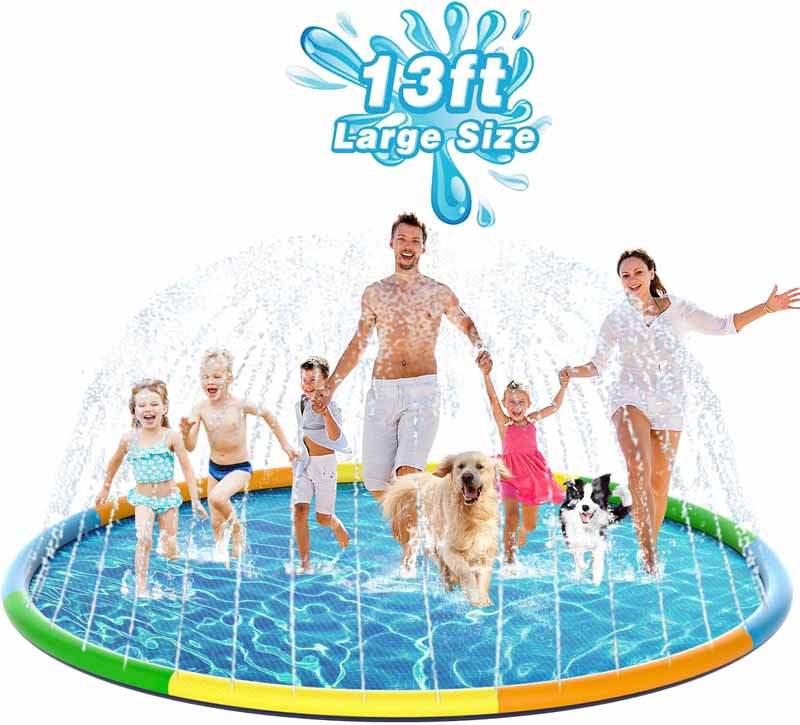
A dog splash pad works by sending fresh hose water into an outer ring and pushing that water out through small holes around the edge. It is not designed to hold a deep pool of water. It depends on steady incoming flow, which is why hose setup, ring fill, and ground position all have such a direct effect on performance.

How Water Moves Through a Dog Splash Pad
The basic water path is simple. Water enters through the hose connector, moves around the perimeter channel, and exits through evenly spaced spray holes. When the ring fills evenly, the spray looks balanced and the whole top surface stays more usable. When the ring fills unevenly, one side may spray harder while another side looks weak or flat.
That is why a dog splash pad should be judged as a water-distribution product, not just as a printed mat with holes. The ring, seam quality, connector position, and spray layout all affect whether the pad keeps performing under real use.
This matters even more when dogs are involved. Dogs do not stand still in one ideal position. They step on, step off, turn sharply, paw the water, and shift weight quickly. A splash pad that only works well in perfect conditions usually disappoints in real backyards.
Why a Dog Splash Pad Needs Steady Water Flow
A dog splash pad does not build up stored force. It works on live water supply. Once incoming flow becomes unstable, the ring loses energy and the spray starts to weaken. That is why owners often notice changes when someone inside the house uses water, when another outdoor line is running, or when the hose setup includes too many fittings.
This also changes how customers should evaluate the product. A splash pad should not be judged only by its best moment. It should be judged by how it performs in a normal yard with a normal hose setup and a dog actively using it.
For brands, this is also why better instructions matter. Clear setup guidance can improve the user experience just as much as material improvements. A good product still needs a good path for water to reach it.
Why a Dog Splash Pad Does Not Store Water Like a Pool
A dog splash pad is often confused with a shallow dog pool, but they work in very different ways. A pool holds water volume and stays usable after the hose is turned off. A splash pad depends on constant incoming water. Once the supply stops, the active spray stops as well.
That difference creates both benefits and trade-offs. A splash pad is usually quicker to set up, easier to supervise, easier to drain, and faster to dry. It also feels less intimidating to many dogs because it has no raised walls and no deep standing water. But because it does not store much water, it cannot hide a weak setup. Any weakness in the hose path shows up immediately.
That is why customers should match the product to the real use case. If the goal is quick cooling, daily backyard use, and light water play, a splash pad makes sense. If the goal is soaking or standing in water without active flow, a dog pool may be the better fit.
| Product type | How it works | Best for | Main limit |
|---|---|---|---|
| Dog splash pad | Continuous hose-fed spray | Quick cooling, light play, daily use | Sensitive to hose setup and flow |
| Dog pool | Holds water volume | Soaking, standing water play | Slower to fill and clean |
| Sprinkler play | Directional moving spray | Chasing and higher-energy play | Less surface cooling |
Does a Dog Splash Pad Recirculate Water?
Most dog splash pads do not recirculate water. They use fresh hose water in an open-flow design. Water enters through the connector, sprays out through the edge holes, lands on the surface, and runs off around the pad. This keeps the product simple, but it also means performance depends heavily on the hose setup.
Why Most Dog Splash Pad Models Use Fresh Hose Water
For home use, simplicity matters. A recirculating system would need a pump, more parts, more cleaning, and more maintenance. That would make the product less practical for most families and pet owners. The main appeal of a dog splash pad is that it can be used quickly and folded away just as easily.
Fresh water also feels cleaner in daily use. The dog is stepping into new flowing water, not water that has already gone through a loop and collected hair, grass, or dirt.
The trade-off is that the splash pad depends completely on incoming water quality. If the water path is weak, the whole product feels weaker right away.
How Dog Splash Pad Water Leaves the Surface
Once the water exits the spray holes, it creates two effects at the same time. Part of it stays visible as active spray. The rest lands back on the surface, spreads across the top, and runs off around the pad. That is important because cooling comes from both the spray and the wet surface itself.
This is one reason a splash pad can still feel useful even when the spray is not high. If the surface stays evenly wet and cool, the dog is still getting a meaningful cooling benefit. For many dogs, especially heavier or larger dogs, that contact cooling matters more than the height of the jets.
This is also why top-surface design matters. A flatter, more even splash pad usually feels better in real use than one that wrinkles, traps water, or creates slick pockets.
Why Dog Splash Pad Setup Matters More Without Recirculation
Because the pad is not recycling water internally, every small setup issue becomes more obvious. A kink, an extra connector, a narrow hose, or a slight slope in the yard can change the whole experience. That is why some owners feel the splash pad is inconsistent, when in reality the setup is changing from one use to the next.
For brands and sourcing teams, this matters a lot. A splash pad that only performs well under ideal conditions is much more likely to disappoint in real households. The better product is the one that tolerates average yards, everyday hose setups, and dogs that move unpredictably.
That is where structure, layout, and surface control become real product advantages. Customers may not describe those things in technical terms, but they notice the difference immediately when the splash pad feels easier to use.
How to Set Up a Dog Splash Pad Better
Most weak-spray problems improve when the setup improves. In many homes, a shorter hose, a wider hose diameter, fewer restrictive fittings, and flatter placement do more for a dog splash pad than simply turning the faucet harder.

How a Shorter Hose Helps a Dog Splash Pad
Hose length affects performance more than many owners expect. The longer the water has to travel, the more flow it can lose on the way. That is why a splash pad may feel stronger in one area of the yard than another, even when the faucet itself has not changed.
For customers, this is one of the easiest improvements to make. If the splash pad feels weak, move it closer to the faucet before assuming the product is the problem. Even reducing the hose distance by a small amount can help the ring fill faster and more evenly.
The simplest rule is also the best one: use the shortest hose that comfortably reaches the setup area.
How a Wider Hose Helps a Dog Splash Pad
When the hose run cannot be shortened, the next best step is often using a wider hose. A wider hose does not create more pressure on its own, but it preserves more usable flow along the route. That can make a major difference for larger splash pads, longer runs, and yards where the outdoor supply is already modest.
This is one of the most common hidden reasons for weak spray. Many families already own a 1/2-inch hose and use it automatically. But on a longer setup, that hose may be reducing the flow enough to make the splash pad feel much weaker than it should.
Moving to a 5/8-inch hose often improves ring fill and spray balance without requiring any change to the splash pad itself.
| Hose setup | Approx. effect on performance |
|---|---|
| Short 1/2-inch hose | Usually workable on small to medium pads |
| Short 5/8-inch hose | Better balance and steadier spray |
| Long 1/2-inch hose | Common reason for weak spray |
| Long 5/8-inch hose | Better for medium to large pads |
| Long 3/4-inch hose | Best for preserving flow over distance |
How to Place a Dog Splash Pad on Flat Ground
A splash pad should be placed on the flattest area available. That directly affects both ring fill and surface feel. If one side sits on a slope or raised patch of grass, the spray pattern often becomes uneven and the top becomes harder for the dog to use comfortably.
Flat placement also improves safety. A pad that wrinkles or shifts underfoot feels less predictable, especially for medium and large dogs. The flatter the base, the more stable the surface feels when the dog steps on, turns, or pauses.
Before turning on the water fully, clear the area, spread the pad flat, and make sure the connector side is not twisted. Those few seconds of setup can prevent most of the common performance issues.
How to Start a Dog Splash Pad at Low Spray First
A slower start is usually better than opening the faucet all the way at once. It gives the ring time to fill evenly, helps reveal kinks or twists early, and creates a calmer first experience for the dog.
This is especially useful for dogs that are new to moving water. A lighter spray lets the dog inspect the surface without being startled. Once the dog looks comfortable, the flow can be increased gradually.
In real use, this creates better results for both performance and behavior. A calm first session is much more likely to lead to repeat use than one overly intense session that makes the dog back away.
If your current setup still struggles after these adjustments, a flatter product with a more even spray layout may work better in a lower-pressure yard. See an example here:
How to Make a Dog Splash Pad Less Slippery
A dog splash pad becomes less slippery when the surface stays cleaner, the water level stays controlled, the pad sits flatter, and the top has enough grip for the paws. Slipperiness usually comes from several small issues working together, not just one problem.

How to Keep a Dog Splash Pad Surface Safer
The first layer of traction is the surface itself. A splash pad with more texture usually feels better under the paws than a glossy smooth one. But traction is not only about material. The pad also needs to stay stable. If it bunches, shifts, or folds under pressure, even a textured top can still feel unsafe.
This matters most for larger dogs, energetic dogs, and older dogs. They need the surface to feel predictable. Once a dog slips once or twice, many owners notice that the dog becomes more cautious around the pad.
When comparing products, safety should be judged as part of real usability. A splash pad that stays flatter and feels more controlled often performs better in daily use than one that only looks more exciting.
How to Reduce Standing Water on a Dog Splash Pad
A wet surface is good. A surface covered in pooled water is not always better. Too much water sitting on top can make the splash pad slick and unstable, especially if the yard dips slightly or the ring is overfilled on one side.
This is why turning the faucet up all the way is not always the best answer. Sometimes lowering the flow slightly creates a better balance: less dramatic spray, but better footing and a more usable cooling surface.
This also depends on the dog. A smaller cautious dog may be perfectly happy with light spray and a gently wet top. A larger energetic dog may need more room and better grip to stop and turn safely.
How to Clean a Dog Splash Pad for Better Grip
A dirty splash pad becomes slick faster. Mud, grass, fur, body oils, soap traces, and surface residue can all reduce traction over time. Because the change is gradual, many owners blame the product before realizing the surface simply needs cleaning.
Routine care helps more than most people expect. Rinse the pad after use, wipe away visible residue, let it dry fully, and avoid folding it away while still dirty. A cleaner splash pad grips better, dries better, and feels more inviting the next time it is used.
For repeat-use products, that matters a lot. A splash pad that feels easy to maintain is much more likely to stay part of a summer routine.
How a Textured Dog Splash Pad Helps Dogs Stand Better
Texture gives the paws a little extra control. Dogs notice that difference immediately when stepping from dry ground onto wet PVC. That extra grip matters when turning quickly, shifting weight, or simply standing still under moving water.
For pet-focused products, this should not be treated as a small feature. Dogs move differently than children on a splash toy. They plant harder, pivot faster, and depend more on paw traction. Better grip often improves the entire experience more than stronger spray.
For custom development, this is also one of the clearest ways to improve customer satisfaction over time.
| If you notice… | Likely cause | First fix |
|---|---|---|
| Dog hesitates to step on | Surface feels slick or unstable | Lower water and smooth the pad flat |
| Dog slips when turning | Pooling water or low grip | Reduce flow and clean the surface |
| One side feels wetter | Uneven ground or uneven ring fill | Reposition the pad |
| Pad feels worse than last week | Dirt film or residue buildup | Rinse, wipe, and dry fully |
What Helps a Dog Splash Pad Spray Better?
A dog splash pad usually sprays better when the water path improves. In most cases, the biggest gains come from shorter hose runs, wider hose diameter, fewer restrictive fittings, cleaner connections, and flatter layout.
Which Dog Splash Pad Fixes Usually Work First
Not every adjustment matters equally. The fixes with the biggest payoff are usually simple: shorten the hose, remove the splitter, switch to a wider hose if the run is long, and re-lay the splash pad fully flat.
These changes work because they target the real bottleneck. If the water is already losing strength before it reaches the ring, the spray cannot recover once it arrives at the splash pad.
For customers, the best order is practical: check the faucet, then the hose, then the fittings, then the splash pad itself.
Which Dog Splash Pad Hose Changes Matter Most
If one upgrade makes the biggest difference, it is usually the hose. A hose that is too long or too narrow can make a good splash pad look weak. Moving from a long 1/2-inch hose to a shorter or wider hose often creates the most visible improvement.
This matters even more on larger splash pads, because the bigger the pad, the more important stable ring fill becomes. If the hose limits the delivery, the pad can never show its real performance.
That is why the hose should be treated as part of the splash pad system, not as an afterthought.
Which Dog Splash Pad Setup Mistakes Reduce Spray
Three setup mistakes show up again and again. The first is using the longest hose available even when a shorter run is possible. The second is leaving a splitter or restrictive connector in the line because it is convenient. The third is laying the splash pad out quickly on uneven ground and assuming any spray imbalance must be a product flaw.
There is also a fourth mistake: judging the pad only by how dramatic it looks. Many customers keep chasing higher spray when the better answer is steadier spray and a more usable surface. In many homes, the splash pad already works well enough for the dog, and the real need is balance, not force.
| Priority | Change | Expected impact |
|---|---|---|
| 1 | Shorten hose length | High |
| 2 | Remove splitter or restrictive fitting | High |
| 3 | Switch from 1/2-inch to 5/8-inch hose | High |
| 4 | Re-lay the pad flat | Medium to high |
| 5 | Clean connector and spray path | Medium |
| 6 | Increase flow only after the ring fills | Medium |
How to Check a Dog Splash Pad Problem
The quickest way to solve a dog splash pad problem is to check the setup in order: water source, hose path, connector, pad position, then dog-use conditions. That makes it much easier to tell whether the problem is the product or the setup around it.
How to Test Dog Splash Pad Water Pressure
Start at the faucet, not the splash pad. If the home’s outdoor pressure is already low, the splash pad is only revealing a larger system issue. In that case, the goal should be reducing loss everywhere else, not trying to force dramatic spray.
If the faucet feels strong but the splash pad still looks weak, the problem is more likely happening after the water leaves the wall. That usually points to hose length, hose diameter, kinks, or fittings.
How to Measure Dog Splash Pad Water Flow
Pressure is only part of the story. Flow is what the splash pad actually uses. A yard can have acceptable pressure and still deliver weak real-world performance if the hose path is cutting too much usable water.
This is why customers should think beyond the faucet. Two yards can feel very different simply because one uses a better hose setup.
How to Read a Dog Splash Pad Spray Pattern
The spray pattern often shows the issue quickly. If the whole splash pad looks weak, the problem is usually low supply or too much loss in the hose path. If one side sprays strongly and the other side stays flat, the likely causes are a twist, uneven ground, or partial blockage near the connector. If the spray starts strong and then fades, look for a kink or restrictive fitting.
It also helps to watch the splash pad before the dog steps on it. Dog movement can hide the real issue. Checking the spray empty, then under light use, usually makes the pattern easier to understand.
How to Tell If a Dog Splash Pad Issue Is the Pad or the Hose
A quick field check saves time. If the hose itself feels weak before it reaches the splash pad, the hose path is the first suspect. If the hose looks strong but the pad fills unevenly or sprays only on one side, the issue is more likely in the pad layout, connector, or ring position.
This kind of check keeps customers from replacing products when the real limit is the setup around them.
| What you see | Most likely cause | First action |
|---|---|---|
| Weak spray everywhere | Low supply or hose flow loss | Test faucet and shorten hose |
| Strong on one side only | Twist, slope, or partial blockage | Re-lay the pad flat |
| Starts okay, then fades | Kink or restrictive fitting | Check hose path |
| Good spray, but dog avoids it | Too slippery or too loud | Lower water and improve footing |
Is Lower Spray Ever Better for a Dog Splash Pad?
Yes. Lower spray is often better for dogs that need confidence, calmer footing, or a gentler first introduction to water play. Not every dog enjoys strong jets. For many dogs, steady low spray creates a better experience than high spray.
Why a Dog Splash Pad Can Feel Better with Gentler Spray
People often judge a splash pad visually. Dogs judge it physically. Gentler spray feels quieter, more predictable, and less likely to hit the face suddenly. That makes the surface easier to trust.
A calmer splash pad also tends to create a more stable wet surface. On hot days, that can be more useful than a louder, more chaotic spray pattern that looks exciting but feels harder to manage.
Which Dogs Usually Prefer a Dog Splash Pad with Lower Spray
Lower spray often works better for puppies, senior dogs, rescue dogs, noise-sensitive dogs, and dogs that are curious about water but not ready for stronger streams. These dogs usually do better with a slower build in confidence.
Lower spray also makes sense when the goal is cooling rather than intense play. Short, calm, repeatable sessions are often better than one overstimulating session on a hot afternoon.
How to Introduce a Dog Splash Pad Step by Step
A good first session is simple. Let the dog inspect the splash pad dry or nearly dry. Turn the water on low. Reward calm interest. Let the dog decide how close to get. Increase the water only if the dog stays relaxed.
This works because it builds familiarity instead of pressure. The dog learns that the splash pad is a comfortable place to cool down, not a noisy surprise.
How to Choose a Dog Splash Pad for Low Pressure
If your home runs on lower pressure, the best dog splash pad is usually not the one that promises the biggest spray. It is the one that stays flat, distributes water evenly, gives better footing, and still creates a useful cooling surface when supply is only moderate.

Why an Even-Spray Dog Splash Pad Works Better
A splash pad that spreads water evenly is usually easier to use than one that depends on a few aggressive jets. With modest pressure, even distribution keeps more of the surface active and reduces the feeling that one side is working while the other side is dead.
That matters much more in daily use than one dramatic-looking section of spray. For a product built around repeat summer use, stable structure and even spray usually matter more than visual intensity. If you want to see that type of layout in a real product direction, visit [Internal Link:
【EPN Dog Splash Pad Product Page】
Why a Flat Dog Splash Pad Is Easier to Use
A flatter splash pad is easier to step on, easier to trust, and less likely to bunch up under movement. In lower-pressure homes, that matters even more because the product cannot afford to lose performance to wrinkles, unstable shape, or poor ring fill.
This is also why pet-focused splash pads should be designed around real dog movement, not just appearance.
Why a Textured Dog Splash Pad Is Safer for Dogs
Grip is part of usability. If the surface feels too slick, many dogs will hesitate even if the spray itself is fine. Better texture supports confidence, especially for larger dogs and older dogs.
For product development and sourcing, stronger structure, better traction, and steadier water distribution usually improve real customer response more than louder visual claims.
Why Dog Splash Pad Size Still Matters in Low Pressure Homes
Bigger is not always better. In a lower-pressure yard, an oversized splash pad can spread the available water too thinly and end up feeling weaker than a smaller, better-balanced option. The best size is the one that matches both the dog and the water setup.
That matters for retail and private-label projects too. Good sizing decisions help the product perform better under real conditions, not just in photos. For custom sizing, packaging, and product direction, you can guide readers here:
| If you need… | Prioritize… |
|---|---|
| Better low-pressure performance | Even spray layout and flatter structure |
| Better use for larger dogs | Stable standing area and stronger surface |
| Better use for nervous or older dogs | Lower spray profile and better grip |
| Better repeat summer use | Durable material and easier cleanup |
| Better retail or custom fit | Flexible sizing, graphics, logo, and packaging |
Dog Splash Pad FAQ
Why is my dog splash pad not spraying high?
The most common reasons are long hose runs, narrow hose diameter, lower incoming pressure, kinks, or restrictive fittings. In many cases, the problem is the water path, not the splash pad itself.
Does dog splash pad hose length really matter?
Yes. The longer the hose, the more flow can be lost before the water reaches the splash pad. That is why moving the setup closer to the faucet often improves the result.
What hose size works best for a dog splash pad?
For short runs, 1/2-inch may be workable. For longer runs or more moderate pressure, 5/8-inch or 3/4-inch usually performs better.
Can a dog splash pad still work with weak water flow?
Yes. A dog splash pad can still work well as a cooling surface even when the spray is not high. Many dogs do better with lower, steadier water.
Is a dog splash pad slippery for dogs?
It can be if the surface is too smooth, if too much water pools on top, or if dirt and residue build up. Better grip, flatter placement, controlled flow, and regular cleaning all help.

Final Take on a Dog Splash Pad
A dog splash pad does not need dramatic spray to be successful. In many homes, what matters more is whether the surface stays cool, feels stable, and gives the dog a place it wants to return to. Once you stop judging the product only by spray height, the setup becomes much easier to improve. Protect the water flow, keep the pad flatter, manage slipping, and match the session to the dog in front of you.
For customers who want ready-to-sell products, Epsilon can supply EPN Dog Splash Pads designed around stable structure, pet-friendly use, and repeat summer use. For brands, retailers, and sourcing teams that need a more tailored solution, Epsilon also supports OEM/ODM Custom Splash Pad across size, color, graphics, logo, packaging, and broader product direction.
If you are planning a new order or a custom inquiry, the most useful first message usually includes your target market, dog size range, preferred dimensions, logo or packaging needs, and estimated order quantity. To make the next step easier, add one final call to action here: