Skip to content

Backyard splash play looks simple at first. A hose connects to the edge, water sprays upward, children laugh, and the lawn turns into a summer play spot within minutes. For many families, that is exactly why a splash pad feels so appealing. It is easier to set up than a large inflatable pool, more exciting than a plain sprinkler, and less intimidating than deep water. But young children do not understand wet surfaces the way adults do. They run when the pad is slippery, step backward when spray touches their face, drink from the water because it looks fun, or copy older siblings before they understand the risk.
Backyard splash play is safer for young kids when adults control six things: supervision, ground setup, water pressure, slip prevention, hygiene, and product quality. A splash pad can reduce deep-water risk compared with a pool, but it still needs flat ground, gentle spray, clear movement rules, clean water habits, and close adult attention during every session.
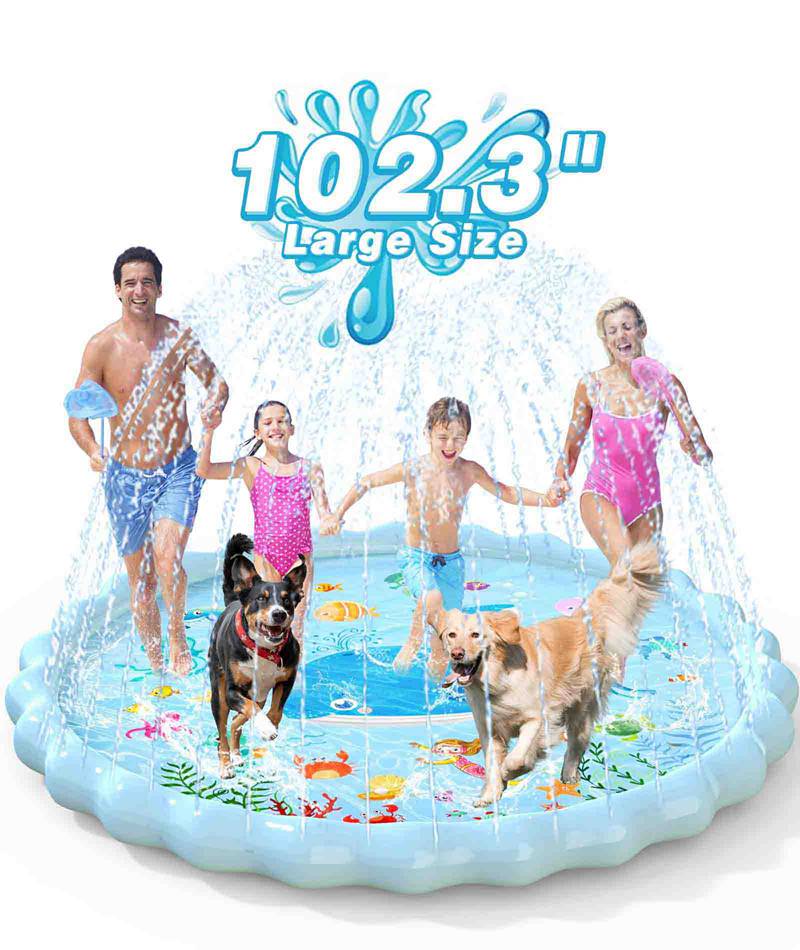
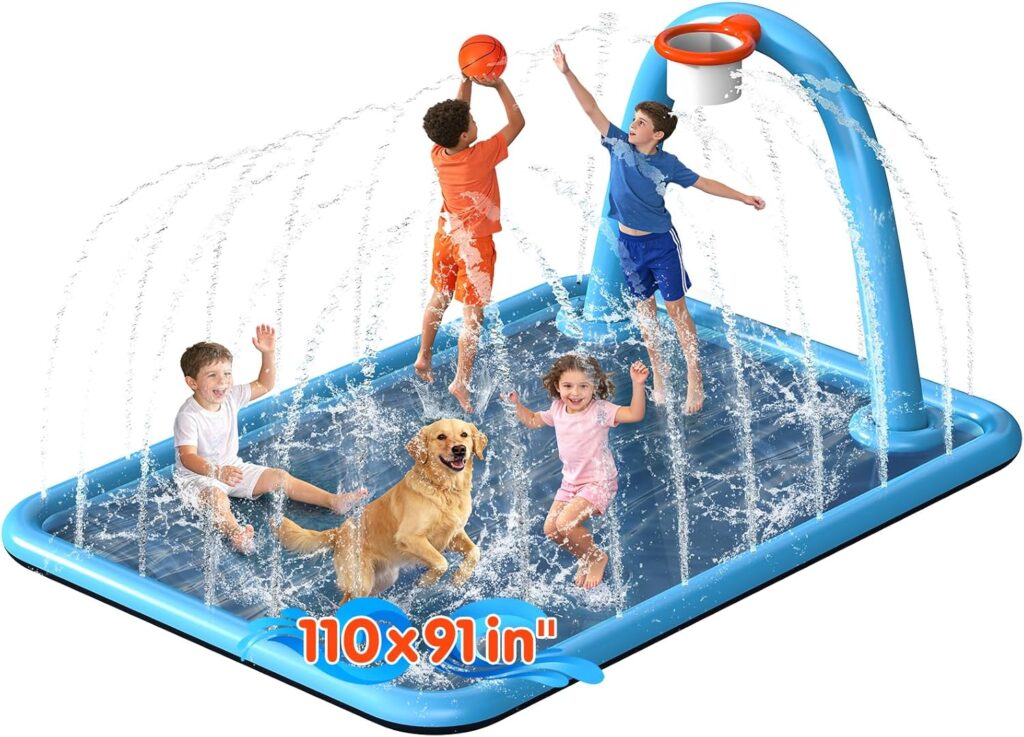
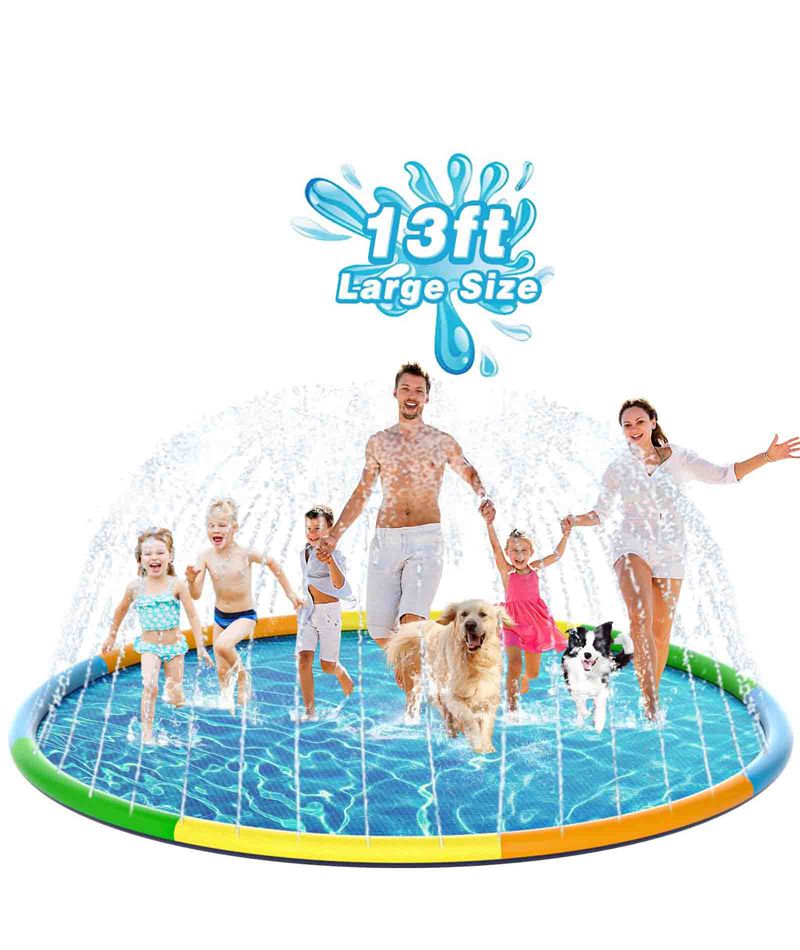
The goal is not to make summer play feel strict. The goal is to make it predictable. A good setup gives children space to splash, sit, step, cool down, and explore without turning the yard into a slippery race area. A well-made EPN splash pad can support that kind of play through stable PVC structure, controlled spray, reinforced edges, and easy storage. Still, the safest part of any splash play session is the adult who notices small problems early.
What Makes Backyard Splash Play Safer?
Backyard splash play can be safer than pool play because the water is usually shallow, moving, and easier to control. The main safety advantage is not only lower water depth. It is the ability to manage spray height, child movement, play time, and access before children become tired, crowded, or overexcited.
Is Splash Play Safer Than a Pool?
A splash pad is not a swimming pool. That difference matters. A pool contains standing water with depth, entry points, drains, walls, ladders, toys, and access risks. A backyard splash pad usually creates a shallow layer of water with spray coming from the edge. Children can splash, sit, step, and cool off without needing to swim.
For toddlers and preschoolers, the lower-water design gives adults more control. Parents can stand close, adjust the faucet, pause the water, move toys away, or help a child step off quickly. The play area is open and visible. There are no deep corners, no pool ladder, and no hidden underwater drop.
Still, splash play is not risk-free. Wet PVC can become slick, spray may hit a toddler’s face, hoses can become tripping points, and several children playing together may collide. The safest approach is to treat a splash pad as a supervised water-play area, not as a toy that can be left running on its own.
| Water Play Area | Main Risk | Best Adult Control |
|---|---|---|
| Splash pad | Slips, running, spray, hygiene | Stay nearby, control pressure, guide movement |
| Kiddie pool | Sitting water, tipping, slipping | Empty after use and watch closely |
| Full-size pool | Drowning, unsupervised access | Use barriers, locks, covers, and direct watching |
| Sprinkler | Running, hard-ground falls | Keep pressure low and place on soft ground |
| Slip-and-slide | Speed, impact, falls | Use only for older children as directed |
A splash pad is often a better first water-play choice for toddlers and preschoolers than a deeper pool because parents can reduce water pressure, limit running, shorten the session, and stop play instantly.
For families who already have a backyard pool, rules need to be stricter. A child who enjoys splash play may become curious about the pool nearby. Pools should stay fenced, covered, locked, or separated when not in active use. Splash play should never create an open path toward unsupervised pool access.
Are Splash Pads Safe for 1-Year-Olds?
Splash pads can be used around 1-year-olds only when the setup is gentle and the adult stays very close. At this age, children may crawl, sit suddenly, put their mouth near water, lean toward spray holes, or become overwhelmed by sound and movement.
A one-year-old does not need high spray, group games, or a long play session. Short, calm exposure works better. The child may sit near the center, touch shallow water with their hands, or step with adult support. If older siblings are running across the same pad, the 1-year-old should not be placed in the middle of that movement.
A safer setup for a 1-year-old usually means arm’s-reach supervision, very low pressure, 5–10 minutes of starting play, clean drinking water nearby, and a quick pause if the child rubs eyes, cries, shivers, turns away, or tries to crawl off.
The surface also matters. Very thin or glossy PVC may feel less controlled under wet hands and feet. EPN splash pads are designed around family water play, with attention to PVC feel, edge stability, and spray distribution. For very young children, comfort matters because they spend more time sitting, crawling, and touching the surface than older kids do.
What Risks Still Matter?
Most backyard splash play problems begin with small setup details. A hose crosses the walking path. The grass hides a stone. The faucet opens too fast. The pad wrinkles near the edge. A preschooler starts chasing spray. A toddler drinks from the water.
Common risk points include hidden ground debris, slippery grass, strong water pressure, crowded play, sharp toys, and unclear adult supervision. These problems are easy to miss because the play area looks harmless at first.
Parents can reduce most risks by checking the area before turning on the hose. Ground debris, mud, sharp toys, and poor hose placement can all be fixed before children get excited. Water temperature and sun exposure also matter. Very cold water can make younger children uncomfortable quickly, while direct afternoon sun may make children tired faster than adults expect.
A planned break every 20–30 minutes helps keep play calmer. During BBQs, birthdays, or family visits, one adult should be clearly responsible for watching the water area. Many adults nearby does not always mean someone is actively watching.
How Do Pools Change the Risk?
A backyard pool changes the safety picture completely. Splash play uses moving shallow water. A pool holds deeper standing water. For children ages 3 to 5, that difference must be clear every time.
Preschoolers can be confident without being safe. They may talk well, run fast, and follow simple instructions, but they still have weak judgment near water. A child who plays freely on a splash pad may think the pool is just another water toy. That is why pools need physical protection, not only reminders.
Families with children ages 3 to 5 should think in layers: fencing, self-closing gates, locked access, pool covers used correctly, no climbable furniture near barriers, and clear rules about never entering the pool area alone.
| Age Group | Splash Pad Concern | Pool Concern | Adult Priority |
|---|---|---|---|
| 1 year | Sitting, crawling, drinking water | Falling into water | Arm’s-reach supervision |
| 2 years | Sudden running, face spray | Climbing or slipping in | Locked access and close watching |
| 3 years | Copying older kids | Entering without permission | Clear rules and barriers |
| 4 years | Rough play, chasing | Overconfidence near water | Swim lessons plus supervision |
| 5 years | Group running | Weak judgment around depth | No unsupervised access |
If a pool is nearby, place the splash pad away from the pool gate, pool steps, deck edge, and pool toys. Do not let children run between the splash pad and pool. Two water zones should not blend into one open play route.

How Should Backyard Splash Play Start?
Backyard splash play should start with the ground, not the water. A safer session begins by choosing flat ground, removing debris, checking hose placement, spreading the pad smoothly, and starting with low pressure. Children should enter only after the pad sits flat and water flows evenly.
How to Make Splash Play Safe?
The first few minutes decide how the rest of the session feels. If children step onto the pad before the hose is secure, before the ground is checked, or before the water pressure is controlled, play can become messy quickly.
Before turning on the hose, parents should check the ground, remove stones and sticks, smooth the pad, make sure the hose is not stretched tight, and leave a dry towel area nearby. After that, open the faucet slowly and watch the spray for 30–60 seconds before children enter.
A simple setup routine works well:
- Choose a flat area with good visibility.
- Remove stones, sticks, toys, tools, and pet items.
- Unfold the splash pad fully and smooth the edge.
- Connect the hose without pulling the inlet.
- Open the faucet slowly.
- Let one child enter first.
- Adjust pressure only after the pad looks stable.
Parents often focus on the center of the splash pad, but the edge deserves just as much attention. Children step across the edge again and again. If the edge is raised, twisted, overfilled, or placed over a bump, it can become a trip point.
Outdoor play for preschoolers should also include simple boundaries. Children need to know where towels go, where shoes go, where adults sit, and where running stops. A clear yard layout helps them understand the play area without constant correction.
Which Ground Works Best?
Flat grass is often the most comfortable ground for backyard splash play. It feels softer around the pad, drains water more naturally, and reduces the hard-impact concern that comes with concrete or stone. Grass also makes the play space feel like part of the yard instead of a hard wet surface.
But grass still needs checking. A smooth lawn can hide small stones, roots, twigs, sprinkler heads, pet toys, and sharp mulch. Children step repeatedly on the same surface, and pressure from feet can push hidden debris into the underside of the PVC.
A patio can work when it is clean, flat, and not slippery. It may be easier to rinse after play, but hard surfaces increase the impact of falls. If using a patio, avoid outdoor outlets, sharp furniture legs, rough concrete, broken tiles, and steps.
| Surface | Use Level | Good Points | What to Watch |
|---|---|---|---|
| Flat grass | Best for young kids | Softer, natural, cooler | Hidden stones, sticks, roots |
| Smooth patio | Works with caution | Easy to clean, level | Slippery runoff, hard falls |
| Decking | Case by case | Raised, clean area | Splinters, gaps, slick boards |
| Artificial turf | Case by case | Even surface | Heat buildup, drainage |
| Gravel | Avoid | Not suitable for young kids | Punctures, falls, discomfort |
| Sloped lawn | Avoid | Water drains away | Uneven spray, unstable footing |
The best surface keeps the pad flat, gives children a safe exit path, and lets adults reach the play area quickly.
Can Splash Play Work on Grass?
Splash play can work very well on grass when the lawn is flat, short, and clean. Many families prefer grass because it feels softer underfoot and gives toddlers a more forgiving area when they step off the pad.
Before setup, walk across the grass slowly. Look for anything hard, sharp, raised, or loose. If young toddlers will sit or crawl, run your hand over the area. If the grass has recently been cut, remove clippings and small sticks because wet clippings can make the surface feel slick.
Grass changes after water runs for a while. The area around the pad may become muddy, especially near the hose connector or entry point. If children start slipping as they step on and off, pause the play and move the towel area farther from the wet edge.
After play, lift and move the splash pad instead of leaving it on wet grass for hours. Let the underside dry before folding. That helps reduce odor, mildew, and material stress.
How Much Space Is Enough?
A splash pad needs more room than its diameter. A 90-inch splash pad does not only need 90 inches of lawn. It also needs space for children to step out, adults to reach in, towels to stay dry, and the hose to sit safely.
For young children, leave at least 3 feet of clear space around the splash pad when possible. If several children are playing, 4–6 feet is better. Crowded yards make children turn sharply, step over towels, trip on hoses, or bump into chairs.
| Area | Recommended Distance | Purpose |
|---|---|---|
| Around splash pad | 3 ft minimum | Adult access and safer exits |
| Hose path | Side entry | Reduces tripping |
| Towels and shoes | 3–5 ft from water edge | Keeps dry area separate |
| Chairs and furniture | 5 ft or more | Prevents hard-edge collisions |
| Grill or fire pit | Far away | Keeps water play away from heat |
| Pool gate | Separate zone | Prevents mixed water access |
The adult should be able to see the whole pad, hose connector, entry point, and any nearby pool or patio step. A shaded chair is helpful only if it still gives a full view.

What Keeps Splash Play Slip-Free?
Splash play stays more stable when children walk instead of run, wear suitable water shoes, and play on a lightly textured surface. Slips often come from wet PVC, fast movement, sunscreen, grass, mud, and crowded play. Better traction comes from product design and adult rules working together.
Why Do Kids Slip?
Kids slip because wet play changes friction, and young children do not naturally adjust their movement. They run with the same speed they use on dry grass. They turn quickly. They chase spray. They step from wet PVC to muddy grass and back again. Their feet slide before they understand what happened.
Slipping is rarely caused by one thing. It usually comes from a mix of smooth wet surface, fast running, sunscreen or lotion, grass clippings, mud around the edge, loose water shoes, strong spray, and crowded play.
The entry and exit area is especially important. Children often slip when one foot is on the splash pad and the other is on grass. The surface changes under them. If the edge is wrinkled or the grass is muddy, the risk increases.
Parents can reduce slipping by setting short movement rules before turning on the hose: walk on the pad, step over the edge slowly, no pushing, no chasing, no jumping onto the edge, and one child enters at a time. Children listen better when the rules are short. “Walk feet only” works better than a long warning.

Do Water Shoes Help?
Water shoes can help because they add grip and protect small feet from hot patio, rough grass, small stones, and textured surfaces. They are especially useful when the splash pad sits on grass or when children move between the pad and a dry towel area.
The best water shoes for splash play are flexible, snug, and lightweight. Loose sandals can slide off. Heavy shoes can trip toddlers. Shoes with smooth soles may not add much grip. Textured soles are better for wet movement.
Good splash play shoes should have a snug fit, light material, textured soles, quick-dry fabric, and no trapped stones inside before play. They should protect feet without making toddlers feel heavy or clumsy.
Water shoes are helpful, but they do not make running safe. A child can still slip if moving too fast. Parents should treat shoes as one layer of protection, not the whole safety plan.
Is Texture Important?
Surface texture matters because young children sit, stand, crawl, turn, and step on the splash pad in different ways. A completely smooth surface may look clean, but once water, sunscreen, and grass enter the play area, it may feel too slick.
Light texture helps children feel more stable without making the surface uncomfortable. The texture should not be rough. Toddlers may sit in the center, kneel near the spray, or place their hands on the surface. Comfort still matters.
For EPN splash pads, wet-play surface feel is part of the design focus. A good children’s splash pad should feel soft enough for play but stable enough for repeated stepping. The right balance helps families use the pad more comfortably through the summer.
Texture also affects parent confidence. Many customers notice the feel of the pad as soon as they unfold it. If the material feels thin, overly glossy, or unstable, the whole setup feels less trustworthy. If the surface feels structured and the edge fills evenly, parents can focus more on guiding play.
How Should Kids Move?
Young kids need movement rules that sound simple and friendly. Long instructions disappear as soon as the water starts spraying. Short phrases work better.
Useful play rules include walking like a penguin, stepping in slowly, keeping hands away from spray holes, avoiding jumps on the edge, and stopping when the adult says stop. For toddlers, rules are not enough. Adults should stay close and guide movement with hands when needed.
For preschoolers, parents can turn safe movement into a game. Slow steps, animal walks, or “freeze and splash” games can keep play fun without encouraging speed. Group size also affects movement. Two children are easier to guide than six. Mixed ages need extra attention because younger children copy older ones.
When movement gets too wild, pause the water for one minute. Let children breathe, drink clean water, and reset the rules. Stopping early for a short break is better than waiting for a fall.
How Should Splash Play Water Be Controlled?
Splash play water should start low and increase slowly. Strong spray may look exciting, but it can hit faces, encourage running, stress the hose area, and make the play surface feel chaotic. Gentle spray gives young children more comfort and gives adults better control.
How High Should Spray Be?
For toddlers and preschoolers, spray should be gentle enough that children can see, breathe, and move calmly. The best spray height is not the highest spray the hose can produce. It is the height that keeps children comfortable.
A good starting point is low edge spray that rises only slightly above the child’s lower body. If children lean away, cover their eyes, cough, turn their face, or run from the spray, the pressure is too strong. For younger toddlers, even ankle-to-knee level spray may be enough.
Water pressure varies by home. Hose length, faucet strength, connector fit, and local water pressure all affect spray. That is why parents should adjust based on child reaction, not only appearance.
| Child Age | Better Spray Style | Watch For |
|---|---|---|
| Around 1 year | Very low, gentle spray | Face contact, crawling toward jets |
| 2 years | Low spray with adult nearby | Sudden running, sitting on spray holes |
| 3 years | Low to moderate spray | Chasing, slipping, group play |
| 4–5 years | Moderate controlled spray | Rough play, jumping, collisions |
| Mixed ages | Set for youngest child | Older kids overpowering younger kids |
If children ask for higher water, increase slowly. Wait 30 seconds after each adjustment. Watch the pad, edge, and children’s behavior.
Can Strong Spray Be Risky?
Strong spray can cause more problems than parents expect. It can surprise young children and make them step backward suddenly. It can hit faces and eyes. It can turn calm play into chasing, screaming, and running. It can also put more stress on the edge and hose connector.
Pressure may be too high when children turn their faces away, the edge bulges unevenly, spray shoots far outside the play area, the hose connector twists, or children start chasing the strongest spray.
Some families think stronger spray means better fun. For young kids, controlled spray is usually better. A preschooler who feels safe will often play longer. A toddler who gets sprayed in the face may leave after two minutes.
A well-built splash pad should not need extreme water pressure to work. EPN focuses on even spray distribution, stable edge structure, and reliable connector areas so the pad can support normal backyard use without relying on excessive pressure.
How Should Parents Start Low?
Starting low is a habit that prevents many small problems. Connect the hose first, then open the faucet slightly before children enter. Let the edge fill slowly. Watch whether the pad sits flat and the spray forms evenly.
A good low-start method is to open the faucet about one-quarter, wait for the edge to fill, check the hose connector, let one child step in, watch movement for 1 minute, and increase only if everything looks calm.
Parents should not turn the faucet fully open and then adjust backward after children react. By then, the play may already feel chaotic. Starting low gives children time to understand the water and gives adults time to correct setup issues.
Low pressure is especially helpful when children are new to splash pads. Some kids need time to approach the spray. They may touch the water with one hand first, then step in. That slow beginning builds comfort.
Which Splash Play Materials Matter?
Splash play materials matter because young children sit, step, crawl, pull, and repeat the same movements many times. A better splash pad should combine suitable PVC thickness, stable edge structure, reliable seams, and a strong hose area. These details affect comfort, leak resistance, spray control, and repeated summer use.

What PVC Thickness Helps?
PVC thickness affects how the splash pad feels during use. Very thin PVC may fold, wrinkle, stretch, or feel unstable when wet. Thicker PVC can provide a steadier feel, especially when paired with good surface texture and careful seam work.
Families often notice material quality when unfolding the splash pad, when children step on the wet surface, when the edge fills with water, when the hose connector is tightened, and when the same pad is used again several weeks later.
A splash pad that feels too thin may be easy to pack but may not inspire confidence for repeated play. A heavier material may feel more durable but still needs proper care, flat ground, and controlled pressure.
EPN develops PVC and composite-material water-play products across children’s toys, pet products, outdoor recreation, and seasonal pool accessories. For children’s splash pads, the material needs a balance of softness, low odor, flexibility, sun stability, and wear resistance. That product experience helps EPN match PVC material to real use instead of treating every water toy the same way.
Parents usually feel quality through several small details: PVC thickness, surface texture, seam width, edge structure, hose inlet design, spray hole layout, folding recovery, and resistance to repeated setup. No single number tells the whole story. The best splash pad feels stable during play and still folds cleanly after drying.
Which Edge Feels Safer?
The edge is one of the busiest parts of a splash pad. It carries water, feeds the spray holes, creates the boundary, and becomes the main step-over point. If the edge behaves poorly, the whole pad feels less controlled.
A safer-feeling edge should fill evenly, stay low enough to step over, avoid sharp bulging, keep spray direction consistent, and stay stable under normal pressure. Children interact with the edge constantly. They step over it, sit near it, splash toward it, and sometimes lean on it.
A raised or unstable edge can become a trip point. Uneven spray can also push children to run around the pad chasing the strongest water area.
EPN splash pad design pays attention to edge stability because it affects both safety and customer satisfaction. A stable edge helps create predictable spray and a clearer play boundary. It also reduces the frustration that comes when one side sprays well and another side barely sprays.
Do Seams Affect Leaks?
Seams are critical in PVC water-play products. A splash pad may look attractive when new, but weak seams often show problems after pressure, folding, sun exposure, and repeated use.
Leaks are not only annoying. They can change the way the pad performs. A leak near the edge may reduce spray height. A leak near the inlet may create muddy ground. A slow leak under the pad may make the surface feel uneven. These small issues can affect safety and play quality.
Better seam performance depends on clean heat sealing, enough bonding width, consistent production pressure, reinforced high-stress areas, good material compatibility, and proper user storage.
EPN conducts material and product performance testing across water-play and inflatable categories. The company’s development work includes attention to air and water tightness, pressure behavior, folding fatigue, UV exposure, and repeated-use stability. For splash pads, seam design and connector reliability are especially important because families expect the product to work repeatedly through summer.
Parents can help protect seams by avoiding sharp ground, not dragging the pad, not overpressurizing, draining fully, drying before folding, and storing away from heavy objects.
Is the Hose Area Strong?
The hose connection area carries a lot of stress. Water enters through a small point, and the hose may pull against the pad as children move around. If the inlet is weak, twisted, or poorly aligned, the splash pad may leak, shift, or spray unevenly.
A strong hose area should feel secure and easy to control. It should not require the hose to pull tightly across the yard. The connector should sit naturally, with enough slack so the pad can stay flat.
Parents should check that the hose is not stretched tight, the connector is not cross-threaded, the inlet area does not twist upward, children do not step on the hose, and the hose does not cross the main play path.
For custom product needs, EPN can support adjusted water inlet structures, packaging instructions, label content, and product configuration for different markets and use scenarios. These details can reduce avoidable complaints and improve the first-use experience.
What Rules Keep Splash Play Safe?
Splash play stays safer when rules are short, visible, and repeated before the water starts. Young kids should walk instead of run, avoid drinking spray water, keep away from spray holes, take breaks, and stop when an adult says stop. The rules should match the youngest child in the play group.
What Should Kids Avoid?
Young children need simple limits because water excitement rises quickly. The best rules are short enough for a preschooler to remember.
Kids should avoid running across the pad, pushing other children, jumping onto the edge, sitting directly on spray holes, drinking spray water, pulling the hose, bringing sharp toys onto the pad, or playing when sick.
Rules should be said before play begins, not only after something goes wrong. Parents can make them feel natural: water is for splashing, not drinking; feet walk on the pad; hands stay away from spray holes; soft toys only; no pushing friends; and we stop when the adult says stop.
If children break a rule, pause the water briefly. A short pause teaches better than shouting over the spray. Children learn that safe behavior keeps the water on.
For mixed-age play, set rules for the youngest child. Older children may want more speed and height, but the play area should not become unsafe for toddlers.
What Is the 3-3-3 Rule?
The 3-3-3 rule is often used as a calming tool for children. It is not a water safety rule by itself, but parents can adapt it during splash play when children become overstimulated, nervous, or too wild.
A simple splash play version is to ask the child to name 3 things they see, touch 3 safe things nearby, and take 3 slow breaths. This works well when a child starts running too much, gets upset by spray, or becomes overwhelmed by noise and movement.
For preschoolers, the method can feel like a game rather than a correction. It gives the child something clear to do with their eyes, hands, and breathing. It also gives the adult a calm moment to lower pressure, move toys, or separate children by age.
The 3-3-3 rule should not replace supervision, water barriers, or movement rules. It is a behavior tool. Used well, it helps children return to slower, safer play.
How Often Should Kids Rest?
Young kids should take breaks every 20–30 minutes during hot-weather splash play. Short breaks help reduce tired movement, sun stress, rough play, and overstimulation.
A good break includes clean drinking water, shade, sunscreen checks, bathroom or diaper checks, a quick towel dry if the child feels cold, and a short rule reminder before returning.
Children may need a break before they ask for one. Watch their behavior. If they start stumbling, rubbing eyes, crying, ignoring rules, shivering, or running more wildly than before, pause the session.
| Situation | Suggested Break Timing |
|---|---|
| 1-year-old play | Every 10–15 minutes |
| Toddler play | Every 15–20 minutes |
| Preschool play | Every 20–30 minutes |
| Hot afternoon | More frequent shade breaks |
| Mixed-age group | Break by youngest child’s needs |
| BBQ or party | Assigned adult supervision at all times |
Breaks do not ruin play. They help children come back calmer and safer.
How Should Parents Clean Up?
Cleanup affects the next play session. A splash pad that is folded wet, dragged across rough ground, or stored with grass inside may develop odor, mildew, creases, or early wear. Clean storage helps the pad feel better the next time it is used.
After play, turn off the water, disconnect the hose, drain the pad fully, rinse away grass and mud, check the seams and hose area, air-dry both sides, fold loosely, and store in a cool, dry place away from sharp tools and heavy boxes.
Do not fold tightly along the same crease every time. Sharp repeated folds can stress PVC over time. Loose folding is better for long-term use. Do not store the pad in direct heat, inside a damp outdoor bin, or under heavy garden equipment.
Parents should also check the pad before each new setup. Look for worn areas, weak seams, connector issues, or small punctures. Finding a problem before children enter is much better than discovering it during play.
For families who want a splash pad that lasts beyond one summer, daily care matters almost as much as material quality.
Why Choose EPN for Backyard Splash Play?
EPN, under American Epsilon Inc., develops PVC and composite-material products for family recreation, children’s toys, pet supplies, outdoor leisure, and seasonal water use. For backyard splash play, EPN focuses on real family concerns: stable materials, lower odor, controlled spray, reinforced edges, reliable hose areas, comfortable surface feel, and practical storage.
The EPN product range includes kids splash pads, pet splash pads, soccer splash pads, inflatable pools, children’s pools, pet pools, water slides, floating products, snow tubes, pool pillows, and other seasonal outdoor items. That product experience helps EPN pay attention to details families notice during real use, such as sealing, spray pressure, folding, sun exposure, surface wear, and repeated summer setup.
EPN splash pads are a strong fit for families and custom water-play projects that care about:
- Gentle backyard water play for young kids
- More stable PVC feel during repeated summer use
- Edge structure that supports controlled spray
- Hose-connected setup without complicated tools
- Foldable storage after draining and drying
- Size, color, pattern, and packaging flexibility
Behind the product line, EPN has 27 R&D professionals, 18+ designers, more than 500 material and product performance tests per year, and over 1,500 design projects per year. Regular sample development can often be arranged within 3–5 days, and standard production timing is commonly around 20–30 days depending on product details and order needs.
For families, EPN branded splash pads offer a practical way to create safer, more enjoyable summer water play at home. For custom orders, Epsilon can help adjust product size, color, pattern, packaging, labeling, and selected structure details based on different project needs.
The safest backyard splash play comes from three things working together: attentive adults, smart setup, and reliable product design. When the ground is flat, the spray is gentle, the surface feels stable, and the rules are clear, young kids can enjoy water play with more comfort and confidence.
To order EPN branded splash play products or request a custom Epsilon water-play project, contact the Epsilon team for current product options, sample details, packaging choices, and custom development support.