Skip to content


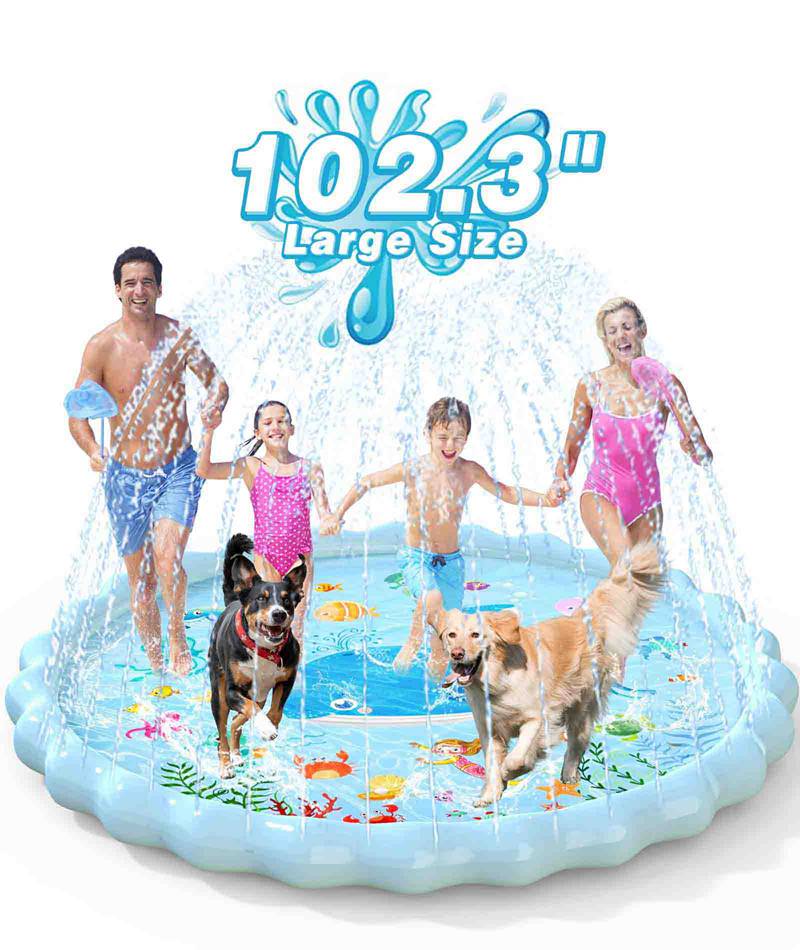
Most flat sprinkler-style kids splash pads do not need an air pump. They normally connect directly to a garden hose, allowing water to move into the outer sprinkler channel before escaping through a series of small spray holes. As water enters the perimeter, the flexible PVC channel becomes fuller and more rounded, which can make the edge look inflated even though it contains water rather than compressed air.
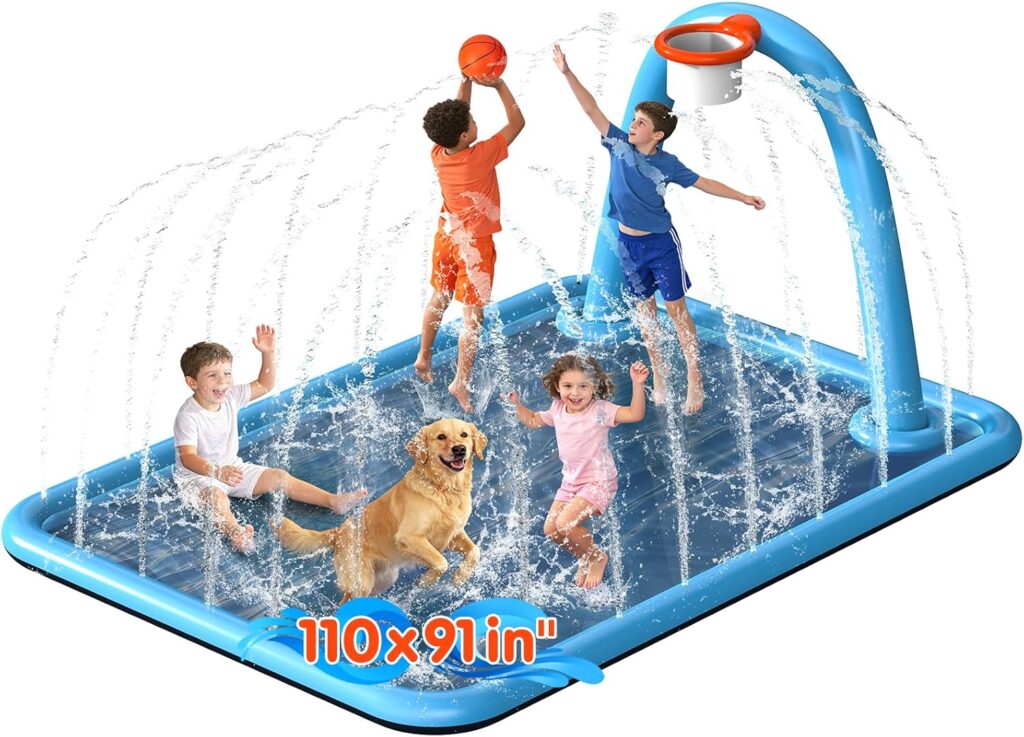
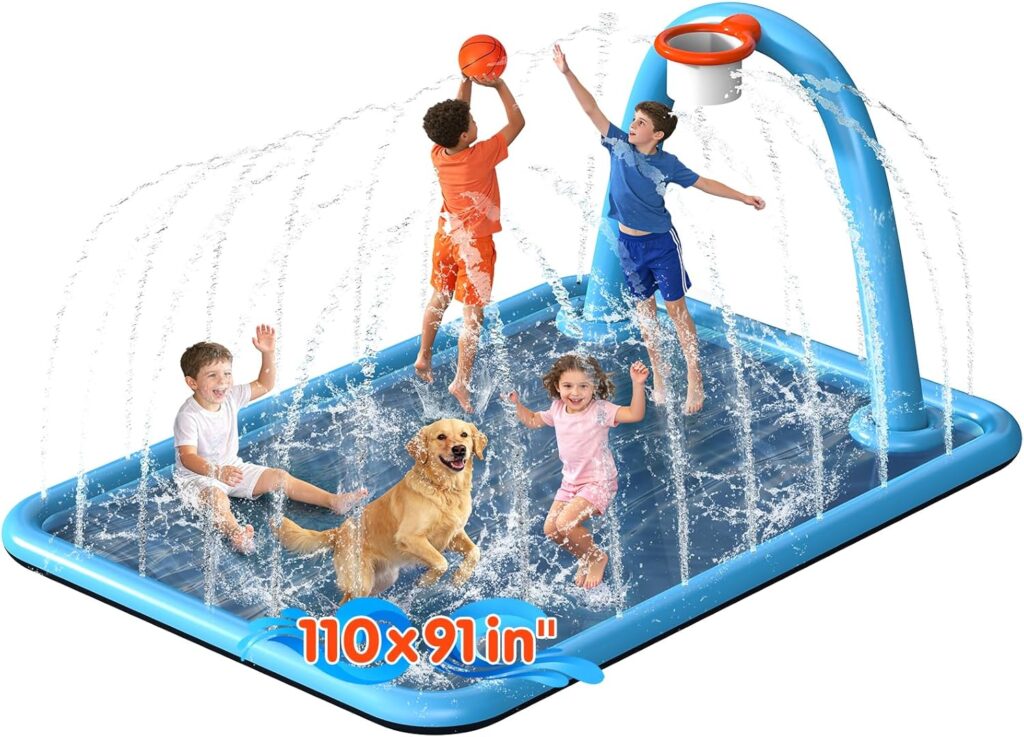
There are important exceptions. Products sold under the broad name “splash pad” are not all constructed in the same way. Some include inflatable outer rims, raised cushions, animal figures, arches, slides, or other sealed air chambers. Large inflatable water parks may go a step further and rely on a continuous electric blower to keep tall slides, climbing walls, towers, and surrounding structures upright during use.
For parents opening a splash pad for the first time, this distinction explains several common concerns. A flat product in the box does not automatically mean something is missing. An outer ring that does not stay upright when dry is not necessarily defective. A package without an air pump is not necessarily incomplete. The correct setup depends on whether the product is water-supported, air-inflated, or continuously air-supported.
From the perspective of PVC and coated-fabric product engineering, the most useful rule is simple: identify the structure before deciding what equipment it needs. A flat sprinkler mat and an eight-foot-high inflatable water park may both appear under the “splash pad” or “water play” category online, yet their internal construction, materials, valves, pressure systems, manufacturing processes, and setup requirements are fundamentally different.
A practical way to think about the category is:
- Flat sprinkler pad: usually garden hose only
- Splash pad with an inflatable feature: garden hose plus possible air pump
- Inflatable kiddie pool: air first, then water
- Large inflatable water park: usually continuous blower plus water supply
Understanding those differences will help you set up the product correctly, diagnose weak spray, avoid unnecessary equipment purchases, and recognize when an apparently “flat” splash pad is actually behaving exactly as designed.
Do Most Kids Splash Pads Need an Air Pump?
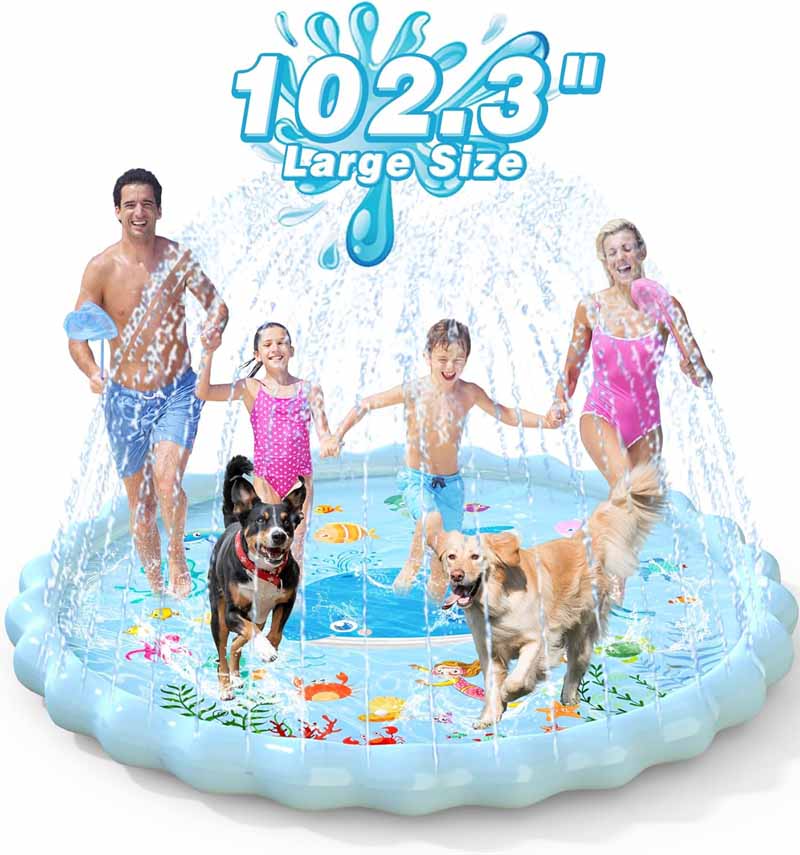
For the most common flat backyard sprinkler pads, no separate air pump is required. These products generally arrive folded flat because the PVC body and perimeter channel contain neither air nor water during storage. Once the pad is spread out and connected to a garden hose, household water flows into the perimeter. The channel takes shape as internal water pressure increases, while sprinkler openings release water upward or inward toward the play area.
Poolmaster provides a useful real-world example. Its Lil’ Splashers Spray & Play Pad is approximately five feet wide, uses 30 perimeter sprinkler outlets, connects to a standard garden hose, and specifically states that inflation is not necessary. Poolmaster also notes that performance can depend on the hose connection and recommends an appropriate washer where needed for a better seal.
- Evidence — Example of a true no-inflation sprinkler pad: Poolmaster explains that its pad connects to a standard garden hose and needs no inflation.
The language used on retail pages can still create confusion. A product might be categorized under “inflatables” even though its sprinkler ring uses water rather than air. This is one reason the product category shown in a navigation menu should never be treated as a technical description of the internal structure.
The opposite situation also occurs. Target currently lists a large Sun Squad splash-pad lawn water slide that connects to a garden hose but also requires an air pump. The retailer’s Q&A explains the reason: its outer perimeter is inflatable. In other words, the water system provides the sliding and spraying function, while air supports a separate structural component.
- Evidence — Example of a splash product requiring both water and air: The Target product listing identifies both a garden hose and air pump as required equipment, with the inflatable outer perimeter explaining the need for air.Source URL: https://www.target.com/p/-/A-94733086
This comparison shows why statements such as “splash pads never need pumps” are too broad. A better answer is: most flat sprinkler-style pads do not need air inflation, while models containing separate sealed air chambers can require a pump.
For a parent deciding what to buy, the distinction also affects convenience. A hose-only design normally has fewer setup steps because there is no inflation stage. A hybrid model adds another task before play, while a continuous-air water park adds an electric blower, power cord, anchoring system, drying considerations, and considerably more storage volume.
These differences do not make one design automatically better than another. They simply serve different kinds of backyard play. A low-profile flat pad may suit quick afternoon water play, while a large inflatable park provides slides and climbing structures but naturally requires more equipment and setup.

How Does a Splash Pad Work Without Air?
The working principle of a flat sprinkler splash pad is easier to understand once you stop thinking of its perimeter as an inflatable pool wall. In many designs, the outer channel behaves more like a flexible water manifold. Water from the garden hose enters the perimeter, travels around the product, and exits through deliberately positioned sprinkler openings.
The flow path can be summarized as:
Outdoor faucet → garden hose → connector → perimeter water channel → sprinkler holes
When the faucet is off, there is almost no internal force holding the channel open. Flexible PVC therefore lies flat or partially collapsed. Once water enters, pressure acts against the inside surfaces of the channel. The two layers separate, the perimeter becomes rounder, and the sprinkler outlets begin releasing water.
The Ring Can Look Inflated Without Containing Air
This visual effect is responsible for a surprising amount of consumer confusion. A circular PVC channel filled with water often develops the same rounded appearance people associate with inflatable pool walls. The important difference is what happens when the supply is removed. An air-filled chamber normally remains inflated after the pump is disconnected because the valve traps air inside. A hose-powered sprinkler ring loses its working pressure when water stops flowing and will gradually flatten again.
The behavior is intentional. A flat sprinkler pad is designed to be compact when stored. There is no engineering reason for its perimeter to stay rigid while dry if its primary function is to distribute flowing water around the play area.
Water Pressure Creates Both Shape and Spray
Incoming water performs two related jobs. Part of the pressure expands the perimeter channel, while the rest drives water through the sprinkler openings. The balance between those two jobs depends on several variables, including inlet size, perimeter length, number of holes, hole diameter, hole direction, supply flow, and resistance in the hose.
If the holes are very large relative to available flow, water can leave the system faster and individual jets may remain low. If the openings are smaller, jets may become more concentrated, although excessive restriction creates its own design challenges. Engineers therefore do not choose hole diameter independently from the rest of the structure.
For consumers, the main point is easier: a flat-looking ring before the faucet is turned on is usually normal for a water-powered design. The working shape should be evaluated while water is flowing rather than when the product is dry.
Water-Filled Does Not Mean “Fill It Like a Pool”
Another useful distinction is that the perimeter channel is not normally filled once and sealed. During operation, water continuously enters from the hose and continuously leaves through the sprinkler openings. The system therefore behaves as a flowing water circuit rather than a storage chamber.
This also explains why turning off the faucet changes the appearance quickly. Once incoming flow stops, pressure drops and water can drain away from the sprinkler openings and inlet path. The perimeter loses its rounded working shape without any need to open a separate air valve.
For custom PVC splash-pad development, understanding this mechanism is essential. Changing a product from 60 inches to more than 100 inches, for example, changes perimeter length considerably. Keeping exactly the same hole pattern, inlet configuration, and channel geometry may not produce the same spray behavior at the larger size. Scale changes should therefore be validated with actual water testing rather than artwork enlargement alone.

Which Splash Pads Need Water, Air, or a Blower?
The easiest way to understand the market is to divide backyard water-play products by how their structure is supported rather than by the name printed on the box. Four product types account for most of the confusion.
| Product Type | Air Pump | Continuous Blower | Garden Hose | What Primarily Holds Its Shape |
|---|---|---|---|---|
| Flat sprinkler splash pad | Usually no | No | Yes | Water pressure in perimeter |
| Splash pad with inflatable feature | Sometimes | Usually no | Usually yes | Air chamber plus water system |
| Inflatable kiddie pool | Usually yes | No | Used to fill pool | Sealed air chambers |
| Inflatable water park | Usually blower-supported | Usually yes | Usually yes | Continuous airflow |
Flat Sprinkler Splash Pads
A flat sprinkler pad typically consists of a play surface welded to an outer water channel. A garden-hose connector supplies water, and sprinkler openings are positioned around the perimeter. These products are easy to fold because there is no rigid internal support when water is turned off.
The pad itself may have colorful printed graphics, learning designs, road maps, sea animals, targets, or other themes, but artwork does not change the underlying operating principle. The important technical features are the hose connection, perimeter geometry, welded seams, and sprinkler-hole layout.
Splash Pads With Inflatable Features
Hybrid designs combine a hose-fed sprinkler system with one or more air-filled parts. Common examples include raised animals, arches, inflatable rings, water slides, or padded borders. The user may need to inflate one section before turning on the hose.
These products require clearer instructions because two different systems exist on one item. An air valve should not be confused with a hose inlet, and the water connector should not be treated as an inflation port. Well-designed instructions normally show each connection separately.
Inflatable Kiddie Pools
An inflatable pool behaves differently. Air pressure gives the walls their basic structure, then water is added to the interior basin. The pool can usually remain inflated even when no water is present because the air chambers are sealed.
A splash pad, by contrast, often remains almost completely flat until water is flowing. This visual difference is a useful clue for consumers comparing products before purchase.
Inflatable Water Parks
Large backyard water parks are another category entirely. Tall climbing walls, slides, towers, tunnels, and elevated platforms require much more structural support than a low-profile PVC sprinkler ring. Many therefore use PVC-coated polyester or similar reinforced fabrics along with a continuous electric blower.
Bestway’s H2OGO! Waterfall Waves provides a clear current example. Bestway lists dimensions of approximately 18 ft 8 in × 13 ft 1 in × 8 ft 10 in and states that an included heavy-duty blower inflates the structure in about two minutes. The same product also incorporates water-spray features, meaning air and water perform separate jobs.
- Evidence — Continuous-blower water park example: This large water park uses an included blower to support its structure while built-in sprayers handle water play.
This is also a good materials example. A flexible flat PVC splash pad does not experience the same loading conditions as a tall climbing structure. Reinforced coated fabric, stitching, seam reinforcement, anchoring, and continuous air supply become more important as the structure grows vertically and starts supporting dynamic body loads.
For companies developing customized PVC or composite-material water toys, product classification should therefore happen early. Choosing a material before deciding whether the structure is water-supported, sealed-air, or continuous-air can lead to unnecessary weight, poor folding behavior, unsuitable seams, or incorrect valve design.

How Can You Tell If Your Splash Pad Needs a Pump?
You normally do not need technical knowledge to answer this question. A one-minute inspection of the actual product, instructions, and connectors usually gives a more reliable answer than an online title.
Check for a Dedicated Air Valve
A sealed air chamber must have a way to receive and retain air. Depending on the design, you might see:
- Pinch valve
- Plug-style inflation valve
- Boston-style valve
- Screw-cap air valve
- Large one-way inflation valve
If you find an air valve, look at which part of the product it serves. A small decorative whale or arch may require inflation even though the perimeter sprinkler ring remains water-powered.
Find the Garden-Hose Inlet
A water-powered splash pad normally has a connector near the perimeter. The fitting may screw directly onto a hose or use an adapter supplied with the product.
A useful visual clue is the path leading away from the connector. A hose inlet generally feeds a broad perimeter channel containing multiple sprinkler outlets. An air valve feeds a closed chamber without sprinkler holes.
Read the Setup Sequence Instead of the Product Name
Instructions are often more useful than marketing labels. Search for phrases such as:
- “Connect to garden hose”
- “No inflation required”
- “Inflate before use”
- “Air pump required”
- “Pump not included”
- “Blower included”
- “Keep blower operating during use”
If the only setup instruction involves connecting a hose and adjusting water flow, an air pump is probably unnecessary. If the manual shows a separate inflation sequence, follow it.
Look at the Physical Height of the Product
Flat sprinkler mats rarely need a continuous blower because they have little vertical structure to support. A product with an eight-foot tower, tall slide, or climbing wall is a very different engineering problem.
Height alone is not an absolute rule, but it is a useful clue. The more a soft structure needs to stand vertically and support moving children, the more likely it is to rely on dedicated air support or reinforced construction.
Use a Simple Decision Table
| What You Find | Most Likely Product Type | What to Do Next |
|---|---|---|
| Hose inlet only, no air valves | Water-powered splash pad | Connect water gradually |
| Hose inlet plus small air valve | Hybrid splash pad | Inflate indicated feature |
| Multiple sealed air chambers | Inflatable product | Follow inflation sequence |
| Large fabric blower tube | Continuous-air water park | Use specified blower |
| “No inflation required” | Hose-powered design | No pump needed |
| “Pump required” | Air chamber present | Use compatible pump |
If a product was purchased secondhand and no instructions are available, avoid experimenting by forcing fittings together. A garden-hose fitting and an air valve serve completely different functions, and damaging either one can turn a simple identification problem into a repair problem.

How Do You Set Up a Splash Pad Without an Air Pump?
A no-pump splash pad can usually be ready quickly, but following the correct order makes setup more predictable and reduces unnecessary strain on the connector and seams.
Step 1: Choose the Surface Before Opening the Pad
Start with a reasonably level area. Grass is common, but some splash pads can also be used on other suitable outdoor surfaces if the manufacturer allows it. Remove stones, sharp twigs, metal fragments, hard-edged toys, broken plastic, and other debris before placing PVC on the ground.
Do not assume a wet PVC surface is “slip-proof.” Even a textured finish can become slippery when combined with sunscreen, soil, algae, soap residue, wet grass, or running feet. Treat all wet play surfaces with reasonable caution.
Step 2: Fully Unfold the Pad While It Is Dry
Open every folded section and confirm the outer ring is not trapped underneath the center mat. Flexible PVC can retain packaging creases temporarily, particularly after long storage in a compact carton.
Do not try to “inflate” a fold by applying excessive water pressure. First position the material correctly. Minor creases normally become less noticeable once the product warms slightly outdoors and water begins circulating.
Step 3: Connect the Garden Hose Before Turning on the Faucet
Attach the garden hose to the supplied fitting with the water turned off. Confirm any rubber washer is seated properly and the threaded connection is straight.
Cross-threading can cause leaks even when the product itself is completely intact. A leaking connection also reduces the amount of water available to the sprinkler ring, so poor connector alignment can create both a visible leak and weak spray at the same time.
Step 4: Open the Water Slowly
Start with a modest flow and observe the perimeter. The outer channel should gradually take shape while the sprinkler openings begin producing small streams.
Increase flow in steps rather than immediately opening the faucet to maximum output. This approach gives you time to identify a loose connection, unusual seam leak, trapped fold, or twisted hose before higher flow is introduced.
Step 5: Adjust for the Children, Not for the Highest Possible Spray
Once the sprinkler pattern stabilizes, increase or decrease water until the spray suits the play session. Young children may prefer lower, gentler jets. Older children may enjoy taller spray, provided the product is operating normally.
The maximum height shown in advertising photography should not become a household target. Local water systems vary, and a comfortable stable pattern is more useful than chasing the tallest possible jet.
Step 6: Test the Entire Pad Before Children Enter
Walk around the perimeter and look at:
- Connector stability
- Hose position
- Unexpected leaks
- Spray direction
- Ground condition
- Areas where the perimeter remains folded
- Trip hazards around the hose
Testing without children on the pad gives you a clearer view and prevents everyone from moving around while you are still adjusting water.
- Video — Water Watcher preparation before children enter the play area: CPSC explains the role of assigning a responsible adult to actively watch children around water. This is useful immediately after setup because the safest time to decide who is supervising is before play begins.
Once the pad is working properly, avoid repeatedly disconnecting and reconnecting the hose under pressure. Turn the faucet off before changing fittings or inspecting the connector.
How Do Water Pressure and Hose Flow Affect Spray Height?
For hose-powered splash pads, spray height is usually one of the first performance differences people notice. The same model can produce different spray patterns at two homes because the splash pad is only one part of the system. The household faucet, plumbing, hose, fittings, available flow, and simultaneous water use elsewhere all influence what reaches the sprinkler ring.
It helps to separate pressure from flow rate. Pressure describes the force available in the water system, while flow rate describes how much water moves during a period of time. Consumers often use the terms interchangeably, but a sprinkler pad ultimately needs adequate flowing water, not simply a high static pressure reading at an unused faucet.
Hose Length Can Reduce Available Flow
Water loses energy as it moves through a hose because of friction along the inner wall. Longer hose runs create more frictional resistance. Narrower hoses can also restrict flow more than larger hoses under otherwise similar conditions.
A 25-foot hose and a 100-foot hose connected to the same faucet may therefore behave differently, especially once the sprinkler pad adds additional resistance at the outlet.
Kinks create a much more obvious restriction. A single sharp bend near the hose reel, faucet, or splash-pad connector can reduce flow enough to make the sprinkler pattern appear weak.
Other Household Water Use Matters
Someone running irrigation, filling another pool, washing a car, or using multiple fixtures can change the available flow at an outdoor faucet. If a splash pad suddenly sprays lower than it did several minutes earlier, check whether another large water use has started before assuming the pad developed a fault.
A Bucket Test Gives You a Useful Number
Instead of saying “my hose seems weak,” you can measure approximate flow with a container of known volume and a timer. Oregon State University Extension describes a bucket-test method in which a known volume is collected and the fill time is recorded. Flow in gallons per minute can then be calculated using:
Flow Rate (GPM) = Bucket Volume (gal) ÷ Fill Time (sec) × 60.
For example, if a 5-gallon bucket fills in 60 seconds, the measured flow is approximately 5 GPM. If the same bucket fills in 30 seconds, the result is approximately 10 GPM. These are examples of hose measurements, not minimum splash-pad specifications.
- Evidence / measurement method — Oregon State University Extension: The extension publication explains the bucket-test method and the gallons-per-minute calculation.
The bucket test becomes especially useful when troubleshooting because you can compare configurations. Measure water directly from the faucet, then measure again through the hose. If the second reading is dramatically lower, investigate the hose, reel, fittings, or kinks before focusing on the splash pad.
Use Online Flow Calculators as Estimates, Not Product Requirements
Washington State University provides a garden-hose flow calculator using hose diameter, hose length, and supply pressure. The university specifically notes that the calculation assumes a free-flowing hose end rather than a hose attached to a sprinkler or similar device. Therefore, it is useful for understanding trends and estimating losses, but it should not be used as a promise of actual flow through a splash pad.
- External Tool — Washington State University Garden Hose Flow and Time Calculator: Useful for comparing how hose diameter, hose length, and pressure can affect free-flow estimates.
This distinction matters because a splash pad contains its own connector, internal channel, and dozens of sprinkler holes. Those components add resistance after water leaves the hose.
A Useful Video for Understanding Household Irrigation Components
Virginia Cooperative Extension publishes a garden-irrigation video explaining irrigation-system components and installation concepts. It is not a splash-pad-specific tutorial, but it is useful for homeowners who want a visual introduction to how hose-fed water systems, fittings, and irrigation components are arranged. The publication was reviewed in July 2026.
- Video — Virginia Cooperative Extension: Garden Irrigation: Best used beside the hose-flow explanation for readers who prefer seeing water-delivery components rather than reading hydraulic terminology.
There Is No Universal Splash-Pad GPM Number
One of the most misleading pieces of advice online is to give a single gallons-per-minute target for every sprinkler pad. A 60-inch pad with relatively few outlets and a 100-inch-plus pad with many outlets do not necessarily require the same flow.
Design variables include:
- Perimeter length
- Channel cross-section
- Inlet diameter
- Connector restriction
- Number of sprinkler holes
- Hole diameter
- Hole angle
- Desired spray height
- Material flexibility
- Intended age group
When custom splash pads are developed, these variables should be tested together using realistic household water supplies. A number produced in a factory under one faucet condition should not automatically become a universal consumer guarantee.
Why Is My Splash Pad Still Flat or Spraying Weakly?
A weak spray pattern is not automatically evidence of a bad pad. The most efficient troubleshooting method is to follow the water path from the house toward the product, eliminating simple supply issues before inspecting seams or internal construction.
| What You See | Common Possibility | First Check | Sensible Next Step |
|---|---|---|---|
| Entire perimeter stays flat | Little or no incoming flow | Faucet and hose | Confirm hose flow |
| Spray is low everywhere | Restricted supply | Hose and fittings | Perform bucket test |
| One section sprays lower | Fold, slope or orientation | Pad position | Flatten and reposition |
| Connector leaks heavily | Washer or thread issue | Hose connection | Reconnect with water off |
| Water escapes from seam | Puncture or seam damage | PVC surface | Stop water and inspect |
| Spray suddenly drops | Hose kink or water-use change | Hose route | Remove restriction |
The Pad Is Flat Before Water Is Turned On
For a hose-powered design, this is expected. Flexible PVC is supposed to collapse during storage. If the product remained rigid when dry, it would be far harder to fold into a retail box.
Do not look for an inflation valve simply because the perimeter appears flat. First confirm the exact setup method for the product.
Nothing Happens After You Turn on the Faucet
Check whether water is actually moving through the hose. A closed shutoff valve, kinked hose, blocked reel, or faulty connector can make the pad look inactive.
Turn the faucet off before disconnecting anything. Remove the hose from the pad, direct the hose somewhere safe, then briefly confirm normal flow. If water exits strongly, reconnect and move to the next check.
The Connector Leaks
A small amount of moisture around a threaded fitting can occur, but a strong continuous leak deserves attention. Check whether the washer is missing, twisted, worn, or incorrectly positioned. Also check whether the fitting has been cross-threaded.
A connector leak matters beyond the mess. Every gallon leaving at the connection is water no longer available to feed the sprinkler outlets.
One Side Sprays Higher Than the Other
Uneven spray does not always mean uneven hole manufacturing. Ground slope, temporary packaging folds, orientation of individual jets, and water distribution around a large perimeter can contribute.
Straighten the ring and move the pad to a flatter area before making conclusions. If one side remains dramatically weaker under multiple conditions, further inspection becomes more reasonable.
The Spray Was Strong and Suddenly Became Weak
A sudden change is often easier to diagnose than a consistently low spray. Walk backward along the hose looking for:
- A new kink
- A hose trapped under furniture
- A partially closed faucet
- A loose coupling
- Another sprinkler turned on
- Someone using substantial household water
Because household conditions can change while children play, a drop in spray does not necessarily originate inside the splash pad.
Water Is Escaping From a Seam
Sprinkler openings are intentional; seam leaks are not. If you see water escaping continuously from a welded edge or a visible puncture, turn off the faucet and inspect the location before continuing.
Small PVC punctures can sometimes be repaired with a compatible patch and adhesive system when the manufacturer permits it. Structural seam failures require more caution because the damage sits directly in a welded area under repeated pressure.
From a materials perspective, successful PVC repair depends on surface chemistry, coating compatibility, contamination, curing time, patch overlap, and local stress. “Waterproof glue” as a generic label is not enough information to guarantee a durable repair.
Is a Missing Air Pump Actually a Missing Part?
When a package arrives without an air pump, the first reaction is often to assume the box is incomplete. For a flat hose-powered sprinkler pad, however, there may never have been a pump in the product specification.
The correct check is to compare what you received with the exact model’s package contents, not with a similar product from another brand.
A typical hose-powered splash pad may include:
- Splash pad
- Hose connector or adapter
- Printed instructions
- Retail packaging
- Optional repair patches, depending on the model
An air pump may be absent because no air chamber exists.
When a Pump Really Is Required
If the instructions show an inflatable ring, raised arch, separate character, or another sealed chamber, an air pump may be necessary. The product listing may state “pump required but not included,” meaning the omission is intentional rather than a packing mistake.
Consumers should also distinguish between a pump required but sold separately and a pump or blower listed as included. Only the second case suggests a missing component if it is not present.
Continuous Blowers Are Different From Small Pumps
A compact electric or manual pump fills a sealed air chamber, after which the valve is closed. A continuous blower stays connected to the inflatable structure throughout operation.
This matters because using a small pool-float pump on a continuous-air water park is not an equivalent substitution. The blower is part of the structural operating system rather than a convenience accessory.
Check Before Opening a Support Case
Before reporting missing equipment, confirm:
- Does the product have an air valve?
- Does the manual mention inflation?
- Is the pump listed as included or merely required?
- Is a continuous blower specified?
- Does the product operate only by garden hose?
- Are you looking at instructions for the correct size and model?
A two-minute check can save time for both the household and the support team, especially in product categories where several visually similar models use different internal structures.
What Should Parents Check Before the First Water Play Session?
Understanding pumps and water pressure solves the technical side of setup, but a good first-use routine also needs to consider the play environment. A backyard splash pad can feel casual compared with a swimming pool, which sometimes makes adults less deliberate about preparation.
Run the Pad Before Children Step Onto It
Turn the water on and allow the sprinkler ring to stabilize before inviting children onto the surface. Walk around the product once and check the hose route, connector, spray direction, surrounding ground, and any unexpected leaks.
This short test is especially valuable during the first use because packaging folds and hose positioning are easiest to correct while no one is moving across the pad.
Treat Wet Surfaces as Potential Slip Areas
PVC texture varies between products, but no wet play surface should be treated as incapable of slipping. Sunscreen, grass, mud, soap residue, and running movement can all change traction.
Practical habits include keeping loose toys away from busy walking paths, routing the hose around rather than across the main entry area, clearing grass clippings, and stopping play if the surface becomes unusually slick.
Supervision Should Be Active, Not Nearby
The Canadian Red Cross specifically includes splash pads among summer water environments where active supervision matters and explains that being nearby is not the same as actively watching. Its 80-second video emphasizes the distraction created by phone use and other activities while children are around water.
- Video — Canadian Red Cross: Active Supervision Around Water: Particularly relevant because the accompanying guidance directly mentions splash pads and explains the difference between proximity and active watching.
Positioning also matters. An adult standing where most of the play area is visible can respond more effectively than someone seated behind furniture or facing away from the busiest section.
Head Start’s active-supervision training goes beyond water-specific guidance and discusses positioning, scanning, listening, anticipating behavior, engaging, and redirecting. Those techniques are useful for any active children’s play area, including a backyard sprinkler pad.
- Video — Head Start: Introduction to Active Supervision: Useful for understanding how adults can actively observe a play environment rather than simply remaining somewhere nearby.
Heat Still Matters When Children Are Playing With Water
Cool spray can make a hot day feel more comfortable, but children are still exposed to outdoor air temperature, humidity, direct sunlight, and physical activity. CDC notes that infants and young children rely on adults to help them stay cool and hydrated in hot weather.
Plan drinking-water breaks, use shade where practical, shorten play during extreme heat, and pay attention to how individual children are responding rather than assuming water spray removes heat risk.
CDC also provides a short public-service video about protecting children in hot conditions.
- Video — CDC: Protect Your Kids When It’s Hot Outside: A short reference suitable beside summer-use advice, reminding caregivers to plan for heat rather than focusing only on the temperature of the splash-pad water.
For a more objective check, the National Weather Service provides a Heat Index Calculator. Heat index combines air temperature and relative humidity to estimate how hot conditions feel. NWS also notes that standard heat-index values are based on shade and light wind, with direct sunshine capable of making conditions feel hotter.
- External Tool — National Weather Service Heat Index Calculator: Useful before longer summer play sessions when humidity is high and the air temperature alone may not reflect how hot conditions feel.
Keep a Broader Water-Safety Reference Available
Some pool-specific guidance does not apply directly to a shallow sprinkler pad, so readers should avoid transferring every pool rule mechanically. The broader principles of close supervision, learning CPR, and preparing for emergencies remain useful around many forms of children’s water play.
CPSC’s 2026 “5 Pool Safety Tips for Water Safety Month” video reviews supervision, swimming skills, drain safety, barriers, and CPR. For splash-pad users, the supervision and emergency-preparedness portions are the most directly transferable.
- Video — CPSC: 5 Pool Safety Tips for Water Safety Month: Use it as a general water-safety refresher while recognizing that pool-specific drain and barrier recommendations are not automatically splash-pad operating instructions.
CPSC also provides a printable Pool Safely tip card. It is intended for pool and spa safety rather than splash-pad-specific setup, but families who want a downloadable water-safety reference can keep the card with other summer safety materials.
What Makes a Well-Designed No-Pump Splash Pad Work Reliably?
A hose-powered splash pad looks simple from the outside, but consistent performance depends on more than connecting a piece of PVC to a faucet. Twenty years of experience with PVC film, coated fabrics, heat-sealed structures, inflatable products, and water-play items tends to reinforce one lesson: several small design decisions have to work together before the final product feels simple to the user.
Material Thickness Must Match the Structure
Thickness is often used as an easy marketing number, but it should not be treated as a universal measure of quality. A flat sprinkler mat and a tall inflatable structure experience different stresses.
PVC water-play products in the wider market can use film thicknesses around several tenths of a millimeter, while reinforced products can move into much heavier composite constructions. Choosing more material than necessary increases weight, packaging size, folding stiffness, and cost. Choosing too little can reduce puncture tolerance or seam durability.
The correct specification depends on:
- Product size
- Folding frequency
- Weld design
- Intended life cycle
- Surface use
- Operating pressure
- Expected handling
- Cost target
This is why simply copying a competitor’s material thickness without copying its structure, seam width, and testing conditions is not a reliable development method.
Spray-Hole Quantity Needs Functional Testing
Suppose two round splash pads use the same garden-hose connector. One has 30 sprinkler holes and the other has 60. If the holes are identical, the second design has twice as many outlets competing for the available supply.
Real behavior is more complicated because hole diameter, angle, channel dimensions, and perimeter length also matter, but the example illustrates an important principle: more spray holes do not automatically mean higher spray or better performance.
A manufacturer developing a custom pad should test:
- Hole count
- Hole diameter
- Hole angle
- Distance between holes
- Inlet position
- Spray direction
- Performance at lower flow
- Performance at higher household flow
Testing should happen on the physical sample, not only in CAD files.
Larger Sizes Need More Than Enlarged Artwork
Scaling a round splash pad from roughly five feet to more than eight feet creates a much longer water path. If everything else remains unchanged, the far side of the perimeter may behave differently.
The inlet location, hole spacing, and channel width may need revision. A balanced large pad is therefore a hydraulic-design problem as well as a graphic-design problem.
For private-label or custom products, this is an area where prototype testing adds real value. The most useful sample review does not ask only whether the logo and colors look right. It also checks whether water reaches the full perimeter consistently under realistic household conditions.
Connector Design Deserves More Attention
Consumers interact directly with the connector every time they set up the product. If the connection leaks, threads poorly, or does not match common hoses in the destination market, the user may assume the whole product is defective.
Garden-hose interfaces can differ by country and market. When developing a splash pad for multiple regions, connector standards and adapter strategy should be confirmed before mass production.
Useful checks include:
- Thread compatibility
- Washer specification
- Connector bore
- Hose pull resistance
- Leak behavior
- Adapter fit
- Packaging protection
Weld Quality Is More Important Than Decorative Complexity
Most flat PVC splash pads rely on heat-sealed or high-frequency-welded seams to create the perimeter water channel. The seam must keep water inside the intended path while tolerating folding, unfolding, handling, and repeated pressure cycles.
Decorative artwork can make a product appealing, but a beautiful print does not compensate for inconsistent weld width, contamination inside the seam, insufficient bonding, or poorly planned corner geometry.
In production, material inspection, welding parameters, seam appearance, leak testing, connector installation, and final functional checks deserve more attention than adding another visual feature.
Printing Must Work With Folding and Welding
Printed PVC water-play products often use bright graphics across a large surface. Artwork files should account for welded areas, folds, connector placement, warning labels, and any regions where printing might be stretched or visually distorted.
If artwork extends directly into a welded channel without planning, important design elements can disappear inside the seam. Large logos may also become difficult to read when the product is folded.
For customized products, a practical development sequence is usually:
- Confirm overall size and water-path concept
- Confirm material and seam structure
- Test connector and spray layout
- Approve physical sample
- Finalize artwork around confirmed technical zones
- Repeat functional testing after printing where needed
This sequence reduces the risk of allowing decoration to dictate technical construction.
Customization Can Add Value When It Solves a Real Use Case
Useful splash-pad customization does not have to mean adding more features. Some of the best design improvements are relatively simple:
- Larger usable center space
- Better spray direction
- More suitable connector for the destination market
- Easier folding pattern
- Clearer instructions
- Better packaging for e-commerce
- Brand-specific graphics
- Different shape
- Age-appropriate visual games
- More efficient perimeter layout
PVC and composite-material manufacturers can support projects involving custom size, shape, graphic printing, connector systems, material selection, packaging, and sample testing. The strongest projects normally begin with the intended user experience rather than a request to copy an existing product exactly.
A Final Pump-or-Hose Check Before You Start
Before turning on the water, it is useful to reduce the entire article to one simple check. Look at the physical product rather than the retail category.
If you find a garden-hose connector, a flat perimeter, sprinkler openings, and no dedicated air valve, you probably have a water-powered splash pad. Spread it out, connect the hose, introduce water gradually, and adjust flow.
If you find a sealed air valve on a raised section, inflate only the part identified in the instructions before adding water.
If you find a large fabric inflation tube connected to a tall slide, climbing wall, or water-park structure, check the instructions for a continuous blower. Do not assume a small air pump is an equivalent replacement.
If the package contains no pump and the instructions never mention air, do not treat the missing pump as a defect. A no-pump product is intentionally designed to work without one.
The most useful troubleshooting habit is equally simple: follow the water path in order. Start at the faucet, check the hose, inspect the connector, flatten the perimeter, observe the sprinkler ring, and only then consider a material or seam problem.
Conclusion
Most kids splash pads in the flat sprinkler-mat category do not need an air pump. Their working principle is based on flowing water: a garden hose supplies the perimeter channel, water pressure gives the ring its temporary shape, and sprinkler openings release the water into the play area. When the faucet is turned off, the ring can flatten again because no sealed air chamber is keeping it upright.
The important qualification is product type. A splash pad containing a separate inflatable perimeter, arch, cushion, animal figure, or slide may require a pump. A large inflatable water park with climbing structures may require a continuous electric blower. Names such as “splash pad,” “inflatable splash pad,” and “water park” overlap in retail listings, so the most reliable evidence comes from valves, hose fittings, product structure, package contents, and instructions.
When a hose-powered pad produces weak spray, avoid immediately blaming the product or opening the faucet as far as possible. Check the hose for kinks, confirm the connector is sealed, inspect the pad for folds, compare household water use, and perform a simple bucket test if you need a real flow measurement. There is no single universal household GPM target for every splash pad because size, hole layout, connector design, and local water supply differ.
A well-designed PVC splash pad should make the final experience feel straightforward even though material selection, welding, spray-hole layout, connector design, printing, folding, and water-flow testing sit behind the finished product. For families, the best setup is the one that works consistently without unnecessary equipment. For brands developing a custom water-play product, the same principle applies: start with how the product needs to work in a real yard, then build the material and construction around that use case.
FAQ
Do You Have to Blow Up a Kids Splash Pad?
Most flat sprinkler-style kids splash pads do not need to be blown up. They connect directly to a garden hose, and incoming water fills the outer perimeter channel before leaving through sprinkler openings. The edge may become rounded enough to look inflated while water is flowing, but no air pump is involved. Products with inflatable rings, arches, slides, or decorative air chambers are exceptions, so always check the specific model instructions before setup.
Does a Splash Pad Fill With Air or Water?
Many common backyard sprinkler splash pads use water inside their perimeter rather than air. Water enters through the hose connection, creates pressure inside the outer channel, and exits through small spray holes. Hybrid splash pads can contain both systems: water may operate the sprinklers while air supports a raised rim or decorative feature. Finding both a hose connection and a dedicated air valve is a strong sign that the product uses water and air for different functions.
Can You Use a Splash Pad Without an Air Pump?
Yes, provided the product is designed as a hose-powered sprinkler pad. These models normally require only a suitable garden hose and household water supply. You unfold the pad, connect the hose with the faucet off, introduce water gradually, and adjust the spray to a comfortable level. If the instructions identify an inflatable chamber or specifically state that an air pump is required, however, the product should be inflated according to those instructions before use.
Does More Water Pressure Make a Splash Pad Spray Higher?
Increasing available water flow often raises the sprinkler jets, but the relationship is not identical across every product or household. Hose diameter, length, kinks, fittings, perimeter size, sprinkler-hole quantity, hole diameter, and simultaneous household water use all influence the result. Increase faucet flow gradually and stop when the spray is stable and suitable. A taller jet is not automatically evidence that the product is operating more correctly.
How Do I Know if My Splash Pad Has an Inflatable Section?
Look for a dedicated air valve on any raised ring, arch, cushion, animal, slide, or decorative structure. Air valves are different from threaded garden-hose fittings and are designed to close after the pump nozzle is removed. Then read the setup instructions for phrases such as “inflate before use” or “air pump required.” If the product has only a hose inlet and the perimeter contains sprinkler holes, it is more likely to be a water-powered design.
Should an Air Pump Come With a Splash Pad?
Only if the manufacturer specifies that a pump is included. Some splash pads require no air pump at all, while some hybrid products require a pump but intentionally sell it separately. Large continuous-air water parks often include a purpose-built blower. Before reporting a missing item, check the exact model’s “what’s included” and “required equipment” sections. Comparing your package with another visually similar splash pad can easily lead to the wrong conclusion.
Is an Air Blower the Same as an Air Pump?
No. A small air pump usually fills a sealed chamber and is disconnected when inflation is complete. A continuous blower remains attached to a large inflatable structure during use, supplying air constantly to maintain its working shape. Backyard water parks with tall slides and climbing walls commonly use the continuous-air approach. A pump intended for pool floats should not be assumed to replace a blower specified for a large water-play structure.