Skip to content
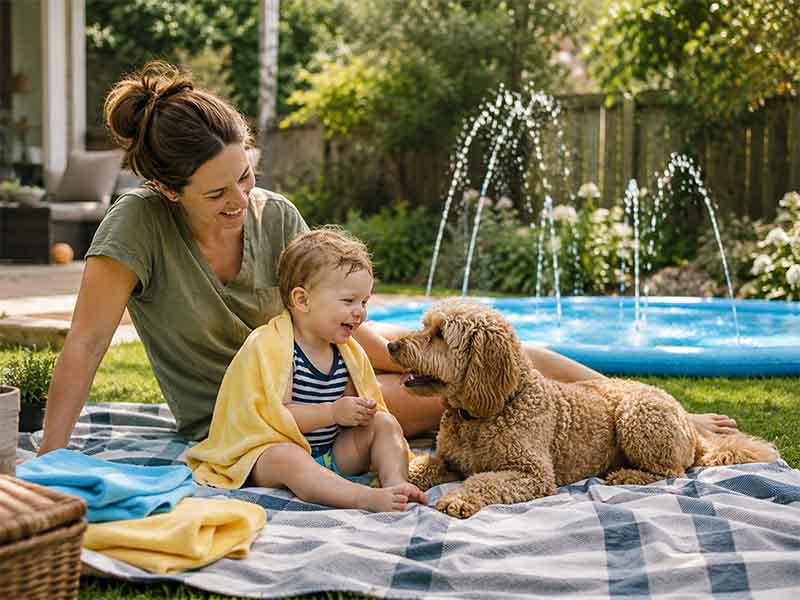
A backyard pool looks like a simple summer purchase until a dog steps into it. A child usually sits, splashes, pours water, and plays with small toys. A dog may jump in, turn quickly, scratch the bottom, push against the wall, shake water everywhere, and bring grass, dirt, and fur into the pool within minutes. That is why the choice between a dog pool and a kiddie pool is not just about shape, color, or price.
A dog pool is usually the better choice for pets because it is made for claws, paw pressure, repeated stepping, easier drainage, and outdoor wear. A kiddie pool can work well for children, light splashing, or occasional use by a calm small dog, but it is not always built for scratching, wall pressure, muddy paws, or frequent pet cooling.
The best choice depends on who will use the pool most. A family with one toddler may only need a shallow kiddie pool or splash pad. A family with a 70 lb Labrador may need a reinforced foldable dog pool with a textured bottom and drain valve. A home with both children and pets may need two separate water play areas to keep summer play safer, cleaner, and easier to manage.
The difference becomes clearer after several hot weekends. The pool is dragged across grass, filled with water, stepped on by wet paws, folded after use, dried in the sun, and stored in a garage. A good backyard pool should still feel stable, clean easily, and hold its shape after repeated use. That is where a well-built dog pool, especially one designed with pet movement and outdoor material performance in mind, can offer better long-term value.
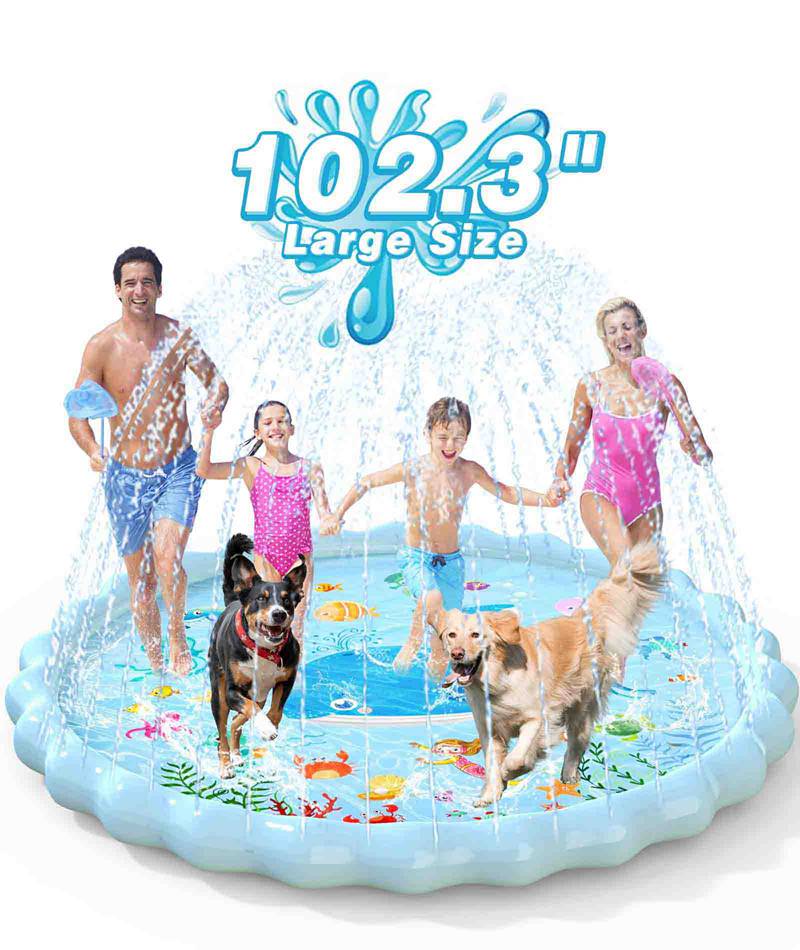
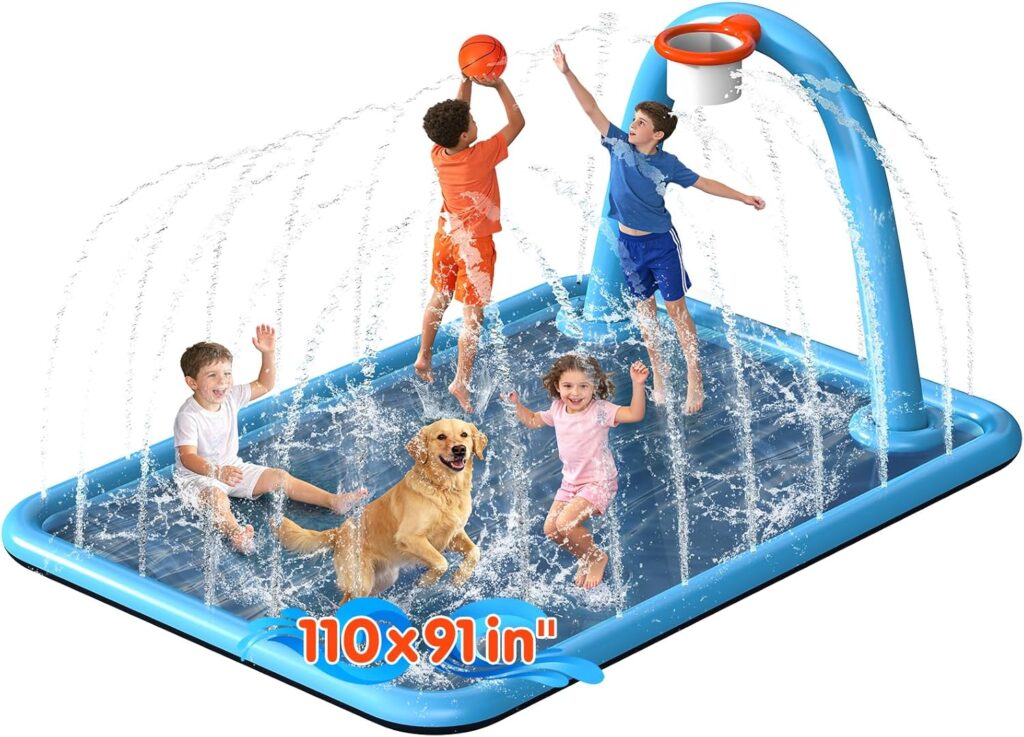
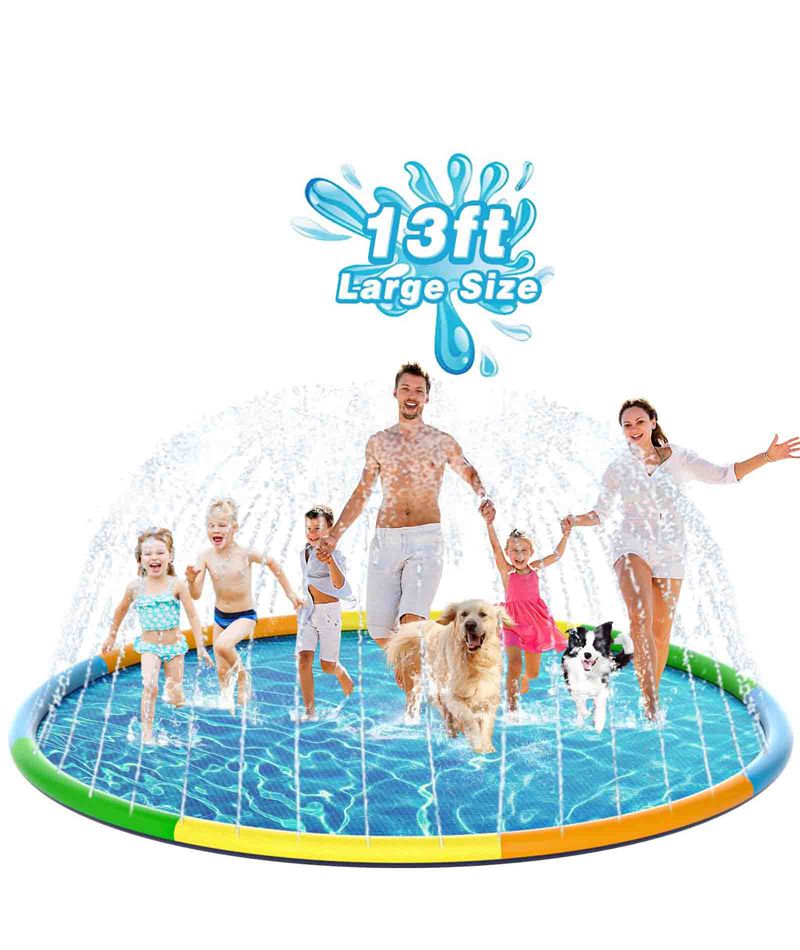
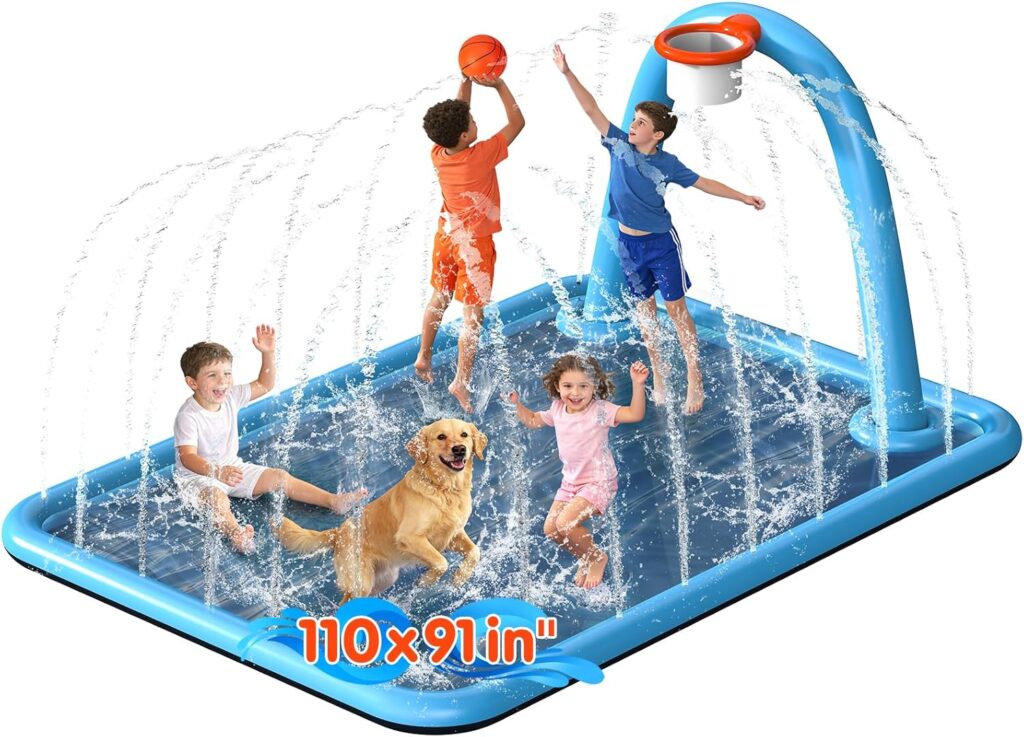
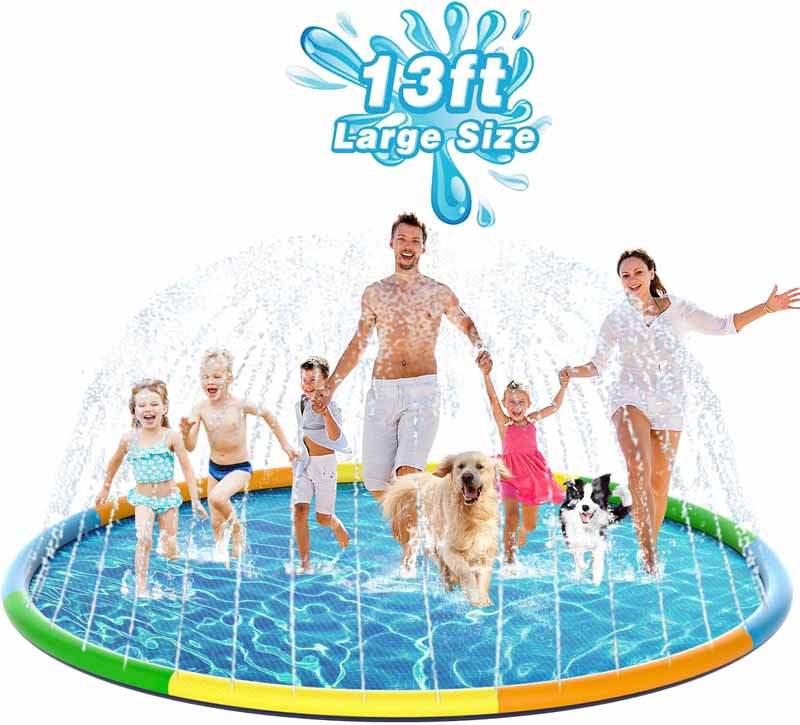
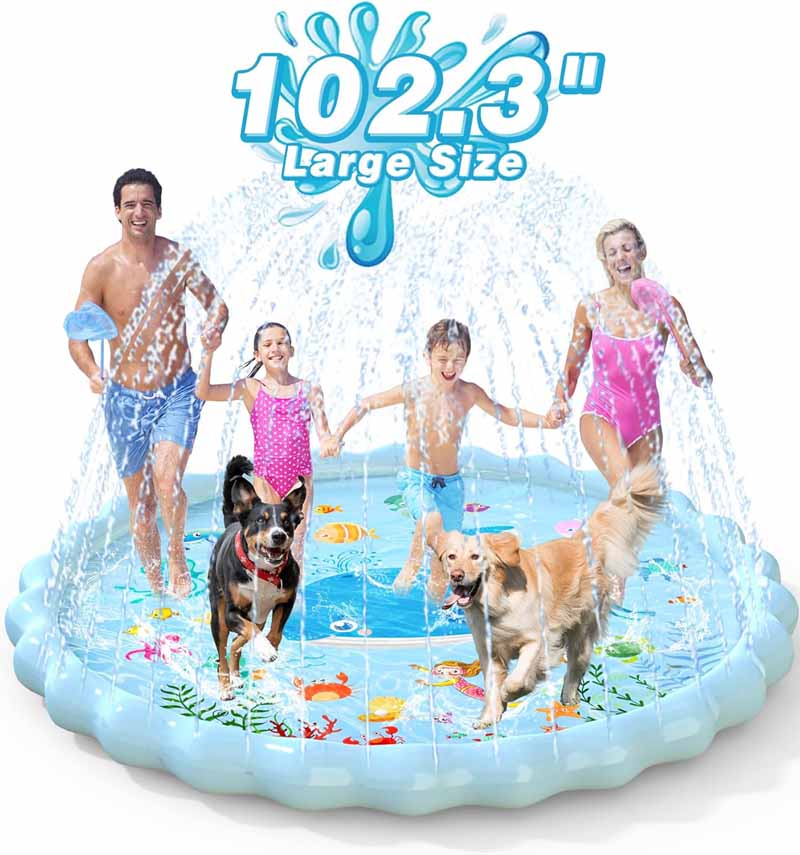
If you are comparing backyard water options for pets, you may also want to read our guide on what makes a dog splash pad durable before choosing between a pool and a splash pad. Dog pools are better for soaking and bathing, while splash pads are better for running, cooling, and shared backyard play.
Dog Pool vs Kiddie Pool Basics
Dog Pool vs Kiddie Pool basics start with one simple question: who will use the pool most? A dog pool is made for pets that step, turn, scratch, cool down, and bring outdoor dirt into the water. A kiddie pool is made mainly for children to sit, splash, and play in shallow water under adult supervision. Both may look similar in a backyard, but they are not built for the same kind of movement.
The biggest difference is pressure. A child usually sits, kneels, crawls, or splashes in one area. A dog steps in with concentrated paw pressure, turns in a tight circle, pushes against the sidewall, and may scratch the bottom when excited. Even a friendly dog can put more stress on the bottom of a pool than a child because claws and paws focus weight into smaller contact points.
For example, a 60 lb dog does not spread weight evenly across the whole pool surface. During a quick turn, most of that weight may shift through one or two paws. If the bottom material is thin, smooth, or placed over rough grass, wear can happen faster. That is why many inflatable kiddie pools fail quickly when used by dogs, even if they work well for children.
A kiddie pool still has a place in the backyard. For toddlers, young children, or occasional use by a calm small dog, a simple rigid kiddie pool may be enough. It can be affordable, lightweight, and easy to set up. The problem starts when the pool becomes a regular cooling spot for a medium or large dog. At that point, stronger material, better bottom grip, lower entry, stable walls, and easier drainage become more important than a low starting price.
A good way to decide is to look at the main use. Pet bathing, muddy paws, frequent weekend cooling, and medium-to-large dogs usually point toward a dog pool. Supervised child splashing, light toy play, and occasional seasonal use usually point toward a kiddie pool. For families with both children and pets, separate water areas often work better than one shared pool.
One detail many customers overlook is water weight. One gallon of water weighs about 8.34 lb. A pool with 25 gallons of water holds more than 200 lb of water. A larger pool with 50 gallons can hold more than 400 lb of water. If the pool does not have a drain valve, emptying it may require lifting, dragging, or tipping. That can be messy for the user and stressful for the pool seams.
| Basic Factor | Dog Pool | Kiddie Pool | What Customers Should Know |
|---|---|---|---|
| Main user | Dogs and pets | Children | Choose by the person or pet using it most |
| Main movement | Standing, turning, scratching | Sitting, splashing, crawling | Dogs create sharper bottom pressure |
| Best water depth | 2–8 in depending on dog size | Very shallow for children | More water is not always safer or better |
| Bottom need | Textured, stronger, paw-friendly | Smooth and child-friendly | Dogs need better grip |
| Wall need | Low entry with stable support | Smooth, safe edge | Dogs may push against the wall |
| Cleaning need | Fur, mud, grass, dirty water | Toys, light debris, sunscreen | Dog pools need easier drainage |
| Storage need | Foldable design often preferred | Rigid or inflatable options common | Storage space affects long-term use |
| Best use frequency | Weekend or repeated summer use | Occasional or light seasonal play | Frequent pet use needs stronger structure |
Before choosing between a dog pool and a kiddie pool, picture one real afternoon in your backyard. Will the pool sit on grass, patio, deck, or concrete? Will a dog step in after running through mud? Will a toddler sit and splash for 20 minutes? Will the pool need to be folded into a garage shelf after use? These small details usually matter more than the product photo.
Dog Pool Meaning
A dog pool is a shallow outdoor pool designed for pets to cool down, rinse off, bathe, or play in water. It usually has a lower sidewall than a regular family pool, making it easier for dogs to step in and out without jumping too high.
The best dog pool is not necessarily the deepest pool. Most dogs do not need swimming depth for backyard cooling. They need enough water to cool their paws, belly, and lower body while still standing comfortably. For small dogs, 2–4 inches of water may be enough. Medium dogs often use 3–6 inches well. Large dogs may need 4–8 inches, depending on size and comfort.
A useful dog pool should feel easy from the first setup to the final storage. The dog should be able to step in without fear, turn without bending the wall too much, stand without slipping, and exit without panic. The owner should be able to drain dirty water, rinse the bottom, dry the pool, and store it without fighting the material.
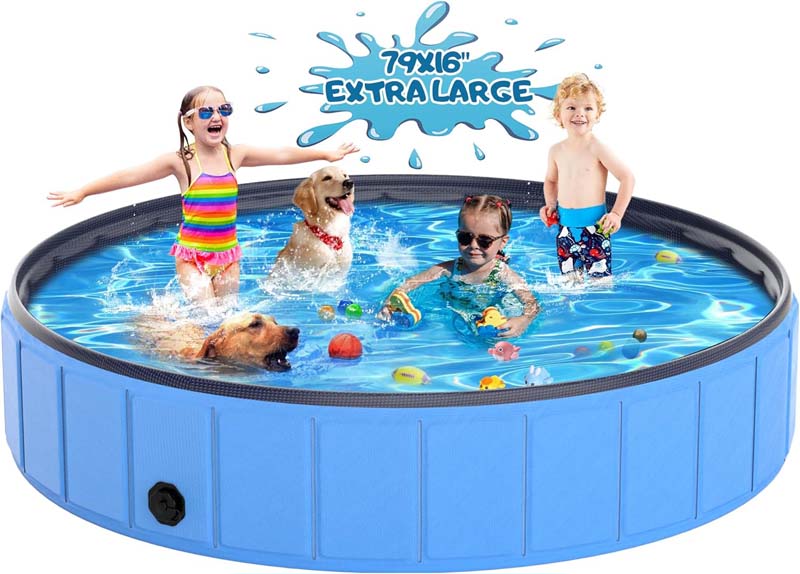
Common dog pool types include foldable PVC dog pools, hard plastic pet pools, reinforced panel dog pools, compact pet bath pools, and heavy-duty stock-tank-style pools. Foldable PVC dog pools are popular because they offer a practical balance between outdoor use and easy storage.
EPN dog pool design focuses on the way pets actually behave in water. That means the pool structure needs to handle stepping, turning, draining, cleaning, and storage. For pet products, material strength, wall support, bottom texture, and drain reliability are more important than decoration alone.
Kiddie Pool Meaning
A kiddie pool is a shallow backyard pool designed mainly for children’s supervised water play. It is usually used for sitting, splashing, toy play, and cooling off on warm days. The design focus is child comfort, shallow water, smooth surfaces, and easy adult supervision.
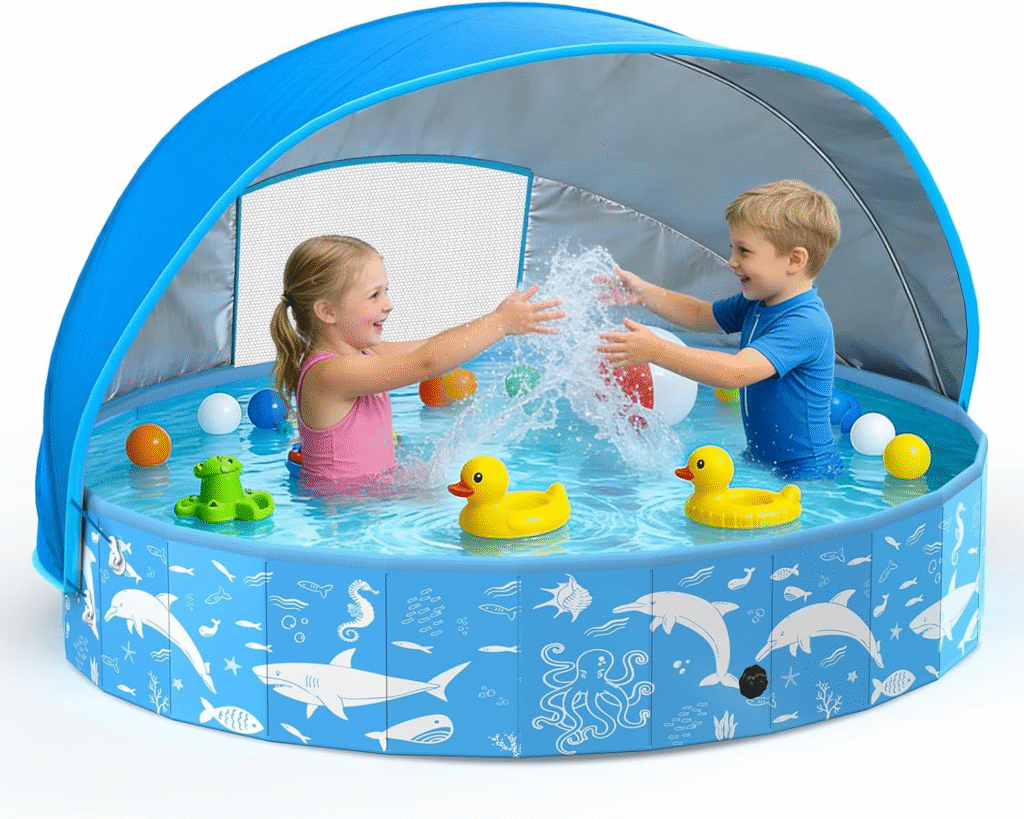
Kiddie pools are often hard plastic, inflatable, or soft-sided. A hard plastic kiddie pool can be simple and easy to rinse, but it may take up more storage space. An inflatable kiddie pool can be soft and compact when empty, but it is usually a poor choice for dogs because claws and teeth can puncture the air chambers.
A kiddie pool may work for a calm small dog, but it is not always the right choice for active dogs. If the dog scratches the bottom, pushes against the wall, or jumps in and out often, a child-focused pool may wear out faster. For larger dogs, a kiddie pool may also feel unstable if the sidewall is too flexible.
For families with both kids and dogs, a kiddie pool should not automatically become a shared pet-and-child pool. Children and dogs move differently, and shared play can become crowded or messy. In many homes, a dog pool for pets and a splash pad or kiddie pool for children is safer, cleaner, and easier to manage.
Difference Matters
The difference between a dog pool and a kiddie pool matters because the wrong pool can create problems after only a few uses. A pool that works well for a toddler may not hold up to a 70 lb dog. A pool that feels large enough in photos may still be too weak if the bottom is thin or the wall collapses when a dog steps over it.
Customers usually notice the same problems first: the bottom becomes scratched, the wall bends outward, the dog slips on a smooth surface, the water gets dirty too quickly, the pool is hard to empty, or the material feels too thin after a few uses. These issues are not always caused by misuse. Sometimes the pool was simply made for the wrong user.
A rigid kiddie pool may be durable but hard to store. A child-focused inflatable pool may be comfortable for kids but unsuitable for dog claws. A foldable dog pool may be more practical for pets because it is designed around paw pressure, drainage, and storage.
| Main Situation | Better Choice | Why |
|---|---|---|
| One toddler playing under supervision | Kiddie pool or splash pad | Child-focused shallow play |
| Calm small dog using water occasionally | Rigid kiddie pool or small dog pool | Light use may not need heavy structure |
| Medium dog using pool every weekend | Dog pool | Better grip, drainage, and durability |
| Large dog over 60 lb | Reinforced dog pool | Needs stronger wall and bottom |
| Dog bathing and rinsing | Dog pool | Easier drainage and cleaning |
| Kids and dogs using backyard together | Separate water areas | Cleaner and safer use |
| Limited storage space | Foldable dog pool | Easier seasonal storage |
| Retail or Amazon product planning | Pet-focused dog pool line | Stronger customer need and clearer positioning |
A dog pool and a kiddie pool can both be useful, but they should not be treated as the same product. The better choice depends on the main user, dog size, water depth, cleaning needs, storage space, and how often the pool will be used.
Dog Pool vs Kiddie Pool Materials
Dog Pool vs Kiddie Pool materials decide whether the pool can handle claws, water weight, outdoor ground, sunlight, folding, and repeated summer use. A dog pool usually needs stronger PVC, reinforced panels, or a tougher bottom structure. A kiddie pool may use hard plastic, inflatable vinyl, or lighter materials made mainly for children’s supervised play.
Material is where many wrong purchases start. Two pools may look almost the same online: round shape, bright color, shallow water, backyard setting. But after a dog steps in, the difference becomes clear. The bottom may feel too thin. The sidewall may fold when the dog enters. The surface may be too smooth for wet paws. The drain area may pull or leak after repeated use. These are material and structure problems, not just design details.
For dog use, the bottom panel is the first area customers should check. Dogs stand, turn, scratch, and push from the bottom. A child may sit or splash, but a dog’s weight is concentrated through paws and claws. A 60 lb dog can place strong pressure on a small contact area, especially when turning quickly. If the pool is made with very thin material or placed on rough grass, damage can happen faster.
For children’s use, the material priorities are different. A kiddie pool should feel smooth, comfortable, shallow, and easy to supervise. Low odor, soft contact, rounded edges, and stable placement matter more than claw resistance. That is why a material that works for toddlers may not work for dogs.
PVC is common in foldable dog pools because it can be waterproof, flexible, and easier to store. Better dog pools often use thicker PVC or PVC combined with support panels. For light pet use, material around 0.35–0.40 mm may be acceptable in smaller pools. For medium dogs, repeated weekend use, or outdoor pet cooling, 0.45–0.55 mm PVC is usually a more practical range. For larger dogs or commercial pet product lines, structure and reinforcement matter as much as thickness.
Hard plastic kiddie pools can be useful for simple child play and occasional use by calm small dogs. They do not deflate and can be rinsed quickly. The problem is storage and aging. A large rigid plastic pool takes space, and cheaper plastic may become brittle after long sun exposure or cold storage.
Inflatable kiddie pools are usually the weakest match for dogs. They are soft and easy to pack away, but air chambers can be punctured by claws, teeth, stones, or rough outdoor surfaces. Even if the bottom looks strong enough, the inflatable wall can lose air and collapse.
Material choice also matters for other backyard water toys. Families comparing PVC thickness, claw resistance, and outdoor wear can learn more in what material is best for a splash pad, especially if the same backyard is used by both kids and dogs.
| Material Type | Common Use | Strength | Weak Point | Better Fit |
|---|---|---|---|---|
| Foldable PVC | Dog pools, pet bath pools | Easy to store, waterproof, flexible | Quality depends on thickness and seam strength | Small to medium dogs, seasonal use |
| Reinforced PVC panels | Dog pools, large pet pools | Better wall support and shape holding | Heavier than thin foldable pools | Medium and large dogs |
| Hard plastic | Kiddie pools, light pet use | Simple, no inflation, quick rinse | Bulky, may crack after aging | Children, calm small dogs |
| Inflatable vinyl | Kids’ summer play | Soft, compact when empty | Easy to puncture or deflate | Children only |
| Composite structure | Higher-end pet pools | Better balance of support and flexibility | Higher production cost | Frequent pet use, stronger pool lines |
A useful material check should match the backyard situation. Small dogs under 25 lb may be fine with lightweight PVC or rigid plastic for light use. Medium dogs between 25–60 lb usually need stronger PVC and a textured bottom. Large dogs between 60–90 lb need reinforced wall support and a stronger bottom. For child-only use, smooth, shallow, easy-clean material is usually enough. For shared family use, the stronger structure is usually the safer direction, but water should still stay shallow.
Some pools look good online but feel weak during use. Warning signs include a very thin bottom that wrinkles easily, an inflatable wall used for active dogs, no texture on the bottom surface, a sidewall that folds when touched, no drain valve on a medium or large pool, strong odor that does not fade after airing out, narrow seams around the wall or drain area, and no clear size or use guidance for pets.
Claw Resistance
Claw resistance is one of the biggest differences between a dog pool and a kiddie pool. A dog pool should be able to handle normal paw pressure, stepping, turning, and light scratching better than a child-focused pool. A kiddie pool may work for children, but thin plastic or inflatable vinyl can fail quickly when used by active dogs.
Dog claws do not need to be extremely sharp to create wear. The problem is repeated pressure in small areas. When a dog turns, jumps in, or pushes off the bottom, the claws and paw pads create friction against the surface. Over time, this can cause scratches, thinning, stress marks, or small punctures.
No portable pool should be treated as chew-proof, dig-proof, or impossible to puncture. Even a stronger dog pool can be damaged by aggressive digging, sharp nails, rocks under the base, or biting along the edge. A better way to judge the pool is whether it is suitable for normal pet cooling, bathing, and supervised water play.
| Dog Size | Material Risk | Better Material Direction |
|---|---|---|
| Under 25 lb | Light scratching, low pressure | Standard foldable PVC or rigid plastic |
| 25–60 lb | More turning pressure and paw friction | Thicker PVC with textured bottom |
| 60–90 lb | Strong wall pressure and bottom wear | Reinforced PVC panels and stronger seams |
| Over 90 lb | Heavy pressure and higher damage risk | Heavy-duty reinforced structure |
Good claw resistance also depends on the customer. Dog nails should be trimmed before frequent pool use. The pool should not be placed over sharp rocks, broken branches, or rough concrete without protection. The dog should be supervised, especially if it likes to dig or bite.

Stable Feel
Stable feel comes from material thickness, wall support, bottom grip, and pool shape. A dog pool should not collapse every time a dog steps over the side. A kiddie pool may feel stable for sitting children, but it may not hold shape well under a dog’s stepping and turning pressure.
Customers often notice stability within the first few minutes. If the wall folds outward when the dog enters, water spills. If the bottom slides on the ground, the dog may become nervous. If the pool feels too soft, a large dog may push the side down when turning. These problems are not only annoying; they also affect safety and product confidence.
A stable dog pool should have a balanced structure. The wall needs to be low enough for easy entry but firm enough to hold shape. The bottom should stay flat on level ground. The material should not feel overly thin. The drain area should not weaken the wall, and the pool should not twist badly when partly filled.
| Setup Surface | Material Concern | Practical Tip |
|---|---|---|
| Grass | Hidden sticks, uneven ground | Clear the area before filling |
| Patio | Slipping and abrasion | Use shallow water and check movement |
| Concrete | Bottom wear | Add a protective mat if needed |
| Deck | Wet surface slipping | Keep towels nearby and avoid running |
| Camping ground | Stones and rough debris | Inspect the ground carefully |
EPN can adjust stable feel by changing PVC thickness, support panel stiffness, wall height, base diameter, and seam design. For a small dog pool, easy entry may matter more. For a large dog pool, wall support and bottom stability become more important.
Outdoor Durability
Outdoor durability is the ability of the pool material to handle sun, heat, water, folding, ground friction, and repeated seasonal use. A dog pool usually needs stronger outdoor durability than a kiddie pool because pets create more bottom wear and sidewall pressure.
A pool does not only age while in use. It also ages while sitting in the sun, drying on the patio, stored in a hot garage, folded tightly, or left outside overnight. Over time, low-quality material may fade, stiffen, crack, smell stronger, or lose flexibility. This is why outdoor material quality matters for both dog pools and kiddie pools.
Dog pools deal with paw pressure, claw friction, mud, grass, repeated washing, frequent draining, folding, heavy water movement, and wall pushing. Kiddie pools deal more with sun exposure, child movement, toy contact, water weight, storage stress, rigid plastic cracking, or inflatable puncture.
For repeated summer use, customers should look beyond the first-day appearance. A pool may look good when opened, but the real value is how it performs after 10, 20, or 30 uses. A family using the pool every weekend for a 10-week summer season may open, fill, drain, clean, and store it more than 20 times. That repeated cycle is where weak materials show problems.
| Use Frequency | Customer Situation | Material Recommendation |
|---|---|---|
| 1–3 times per season | Occasional backyard play | Basic kiddie pool or light pet pool may work |
| Weekly use | Regular summer cooling | Stronger PVC and better seams recommended |
| 2–4 times per week | Active dog or family use | Reinforced dog pool is better |
| Daily warm-weather use | High-frequency pet cooling | Heavy-duty structure and drain reinforcement needed |
EPN’s pool design can improve outdoor durability through better PVC selection, stronger seams, UV-aware material choices, reinforced drain areas, and structure matching by dog size. Customers usually do not complain because a pool is plain. They complain when it leaks, collapses, cracks, smells too strong, slips too much, or becomes hard to clean. Better material choices help reduce those problems before they happen.
Material Smell
Material smell is another detail customers notice quickly, especially when a pool is opened indoors or stored in a warm space. Both dog pools and kiddie pools can have a new-material smell, but a strong chemical-like odor can make customers question quality and safety.
A mild new-material smell may fade after airing out. A stronger odor can create a poor first impression, even if the pool works well. For children’s products, low odor is especially important because parents often connect smell with comfort and safety. For pet pools, odor still matters because the pool may be used on patios, in garages, or near family gathering areas.
Customers can reduce new-material smell by opening the pool outdoors before first use, letting it air out for several hours, rinsing the surface before filling, drying it fully after use, and storing it in a ventilated area.
For EPN, low-odor material control is part of product adaptation for family and pet use. A pool should feel acceptable for real home environments, not only pass a basic water-holding check. For OEM and ODM projects, material feel and odor can be considered during sample review before production.
Seam Strength
Seam strength is one of the hidden material details that affects how long a pool lasts. Customers may look at PVC thickness first, but a pool can still leak if the seam is narrow, uneven, or stressed during folding and draining.
Dog pools place extra pressure on seams because dogs push water and weight toward the wall. When a dog steps near the edge, the bottom-to-wall connection takes stress. When the pool is dragged or tipped while full, the seam may stretch. When the pool is folded repeatedly, the same areas may crease again and again.
A stronger seam supports water holding, wall stability, repeated folding, drain area support, bottom-to-wall connection, and resistance to minor pulling during setup. Customers can protect seams by not dragging the pool while full, not lifting it with water inside, keeping the ground clean, and folding it only after drying.
For EPN custom dog pools, seam width, heat-pressing quality, edge reinforcement, and stress-point design can be adjusted based on product size and use. For larger pet pools, seam strength should be treated as a core feature, not a hidden manufacturing detail.
Best Material Choice
The best material choice depends on who will use the pool, how often it will be used, where it will sit, and how much storage space the family has. A dog pool should use stronger, paw-friendly material. A kiddie pool should use smooth, child-friendly material with safe shallow design.
For most pet-focused use, a foldable PVC dog pool with reinforced panels, textured bottom, and drain valve is more practical than an inflatable kiddie pool. For child-focused light play, a simple kiddie pool or splash pad may be enough. For families with both kids and dogs, a stronger dog pool can handle pets better, but supervised child use still needs shallow water and careful behavior.
| Main Need | Better Material Choice | Why |
|---|---|---|
| Small dog cooling | Foldable PVC or rigid plastic | Easy setup and light use |
| Medium dog bathing | Thicker PVC with textured bottom | Better paw grip and wear resistance |
| Large dog water play | Reinforced PVC panels | Stronger wall and bottom support |
| Toddler splashing | Smooth hard plastic or kids splash pad | Child-focused shallow play |
| Dog and child backyard use | Stronger PVC dog pool plus separate kids area | Cleaner and safer setup |
| Limited storage | Foldable PVC | Easier off-season storage |
| Lowest cost | Basic kiddie pool | Works for light child use |
| Repeated summer use | Reinforced dog pool | Better long-term value |
EPN can support different material choices for different product levels. A basic model may focus on affordability and easy storage. A stronger pet model may use thicker PVC, better seam design, anti-slip texture, reinforced support panels, and improved drainage. A retail-ready line may include multiple sizes and packaging versions for different dog breeds, family sizes, and markets.
Dog Pool vs Kiddie Pool Safety
Dog Pool vs Kiddie Pool safety depends on water depth, wall height, bottom grip, pool stability, ground setup, and supervision. A dog pool is usually safer for pets when it has a low entry wall, textured bottom, stable structure, and shallow water. A kiddie pool is safer for children when it is smooth, shallow, age-appropriate, and always used with close adult supervision.
Safety is not decided by the name of the pool alone. A dog pool is not automatically safe for every dog, and a kiddie pool is not automatically safe for every child. The safer choice depends on how the pool is used in a real backyard. A nervous small dog, an excited large dog, a toddler, and a group of older children all create different safety concerns.
For dogs, the biggest safety risks are slipping, panic during entry, wall collapse, too much water, sharp ground under the pool, and rough play. A dog may step into the pool slowly at first, then suddenly jump out if it feels unstable. If the bottom is too smooth, wet paws can slide. If the sidewall is too soft, the dog may push it down while entering or turning. If the pool is too deep, small dogs, puppies, or senior dogs may feel unsafe.
For children, the biggest safety risks are water depth, lack of supervision, slippery surfaces, toy clutter, and overcrowding. Even shallow backyard water requires direct adult attention. A kiddie pool should never be left filled and unattended after play. Water should be emptied after use, especially when young children are nearby.
For families with both dogs and kids, safety becomes more complex. A child may want to hug the dog, grab a toy, or sit near the edge. A dog may splash, shake off water, step on toys, or knock into a smaller child by accident. Shared play can be fun, but it should stay calm, shallow, and supervised. In many homes, separate water areas are safer: one dog pool for pet cooling and one kiddie pool or splash pad for children.
Ground setup is another safety detail many families miss. If the pool or water toy will sit directly on lawn, the guide on can you use a splash pad on grass explains how grass, hidden sticks, soil, and water drainage can affect outdoor use.
| Main User | Suggested Water Depth | Safety Focus |
|---|---|---|
| Small dog under 25 lb | 2–4 in | Easy entry, low wall, no panic |
| Medium dog 25–60 lb | 3–6 in | Bottom grip, turning space |
| Large dog 60–90 lb | 4–8 in | Wall support, stable structure |
| Puppy | 1–3 in to start | Slow introduction, close supervision |
| Senior dog | 2–4 in | Low entry, strong grip |
| Toddler | Very shallow water | Constant adult supervision |
| Older child | Shallow, age-appropriate water | No running, no rough play |
| Dog and child together | Shallow only | Calm behavior and adult control |
One detail many people forget is water weight. One gallon of water weighs about 8.34 lb. A pool with 40 gallons of water holds more than 330 lb of water. That weight affects stability, drainage, and movement. A pool should be placed correctly before filling because moving it while full can damage the structure and create a slipping or spilling hazard.
| Pool Water Volume | Approx. Water Weight | Safety Meaning |
|---|---|---|
| 10 gallons | 83 lb | Still heavy for small users to move |
| 25 gallons | 209 lb | Should not be carried while full |
| 40 gallons | 334 lb | Drain valve becomes very useful |
| 60 gallons | 500 lb | Needs flat ground and stable walls |
| 80 gallons | 667 lb | Do not drag or lift while filled |
A safer backyard setup is usually simple: keep water shallow, place the pool on flat ground, remove sticks and stones before filling, trim dog nails before repeated use, avoid hard toys inside the pool, and drain the water after play. For toddlers and large dogs, separate water areas are often cleaner and safer than one shared pool.
Dog Safety
Dog safety starts with shallow water, easy entry, strong bottom grip, and enough room for the dog to move naturally. A dog pool should help the dog feel confident, not trapped. If the pool is too deep, too slippery, or too unstable, even a water-loving dog may become nervous.
Most dogs do not need deep water for backyard cooling. A small dog may only need 2–4 inches of water. A medium dog may be comfortable with 3–6 inches. A large dog may use 4–8 inches if the pool is wide and stable enough. The goal is not swimming depth. The goal is comfortable cooling while the dog can still stand.
Customers should watch the dog’s first reaction. If the dog steps in slowly, sniffs, and stands calmly, the pool feels more acceptable. If the dog jumps out quickly, slips, scratches heavily, or refuses to enter, the water level, surface feel, or wall height may not be right.
| Dog Type | Main Safety Concern | Better Pool Feature |
|---|---|---|
| Small dogs | High wall, fear of entry | Low sidewall and shallow water |
| Large dogs | Wall pressure and slipping | Reinforced wall and textured bottom |
| Puppies | Panic and overexcitement | Very shallow water and slow entry |
| Senior dogs | Joint strain and slipping | Low entry and stronger grip |
| Short-legged breeds | Difficult entry | Lower wall height |
| Active dogs | Scratching and splashing | Stronger bottom and supervision |
| Nervous dogs | Fear of water | Gradual introduction |
An inflatable kiddie pool is usually not the safest choice for dogs because claws and teeth can damage air chambers. A hard plastic kiddie pool may be better than an inflatable one for a calm dog, but it may still lack grip, drain convenience, and foldable storage. For repeated dog use, a pet-focused pool is usually safer and more practical.
Kid Safety
Kid safety starts with shallow water, direct adult supervision, smooth surfaces, and a stable pool setup. A kiddie pool should be used as a supervised play area, not a small swimming pool. Even a few inches of water require attention when young children are involved.
For toddlers and younger children, the safest water level is very shallow. The child should be able to sit and splash comfortably while an adult stays nearby. A larger pool may look more exciting, but it also increases water weight, slipping risk, and cleaning responsibility. For younger kids, simple and shallow is often better than large and deep.
Parents should check whether the pool is on flat ground, whether the water is shallow enough, whether the edges are smooth, whether the area around the pool is slippery, and whether the entire pool is visible to an adult. If dogs are nearby, the adult should also control the dog’s movement and toy use.
| Family Situation | Safer Setup |
|---|---|
| One toddler | Small kiddie pool or splash pad |
| Two young children | Shallow kiddie pool with adult supervision |
| Child and small dog | Separate areas or calm shared use |
| Child and large dog | Separate water play areas |
| Older kids and dog | Supervised shared play with shallow water |
| Backyard party | Separate pet pool and kids’ water play zone |
EPN’s wider product line can support different family setups, including pet pools, kiddie pools, splash pads, and sprinkler play products. For many households, the safest choice is not one pool for everyone. It is the right water product for each user.
Slip Control
Slip control is one of the most important safety differences between a dog pool and a kiddie pool. Dogs need a surface that gives wet paws more grip. Children need a stable pool area with fewer toys, shallow water, and no running around the pool.
Wet paws slide easily on smooth plastic. If a dog slips once, it may lose confidence and avoid the pool. A textured bottom can help dogs stand, turn, and step out more comfortably. This is especially important for senior dogs, large dogs, and dogs that are new to water.
A kiddie pool may have a smooth bottom because children usually sit and splash. That can be fine for child-focused use, but it may not be ideal for dogs. A dog that turns quickly on a smooth surface can slide, scratch, or push against the wall.
| Surface | Slip or Safety Risk | Practical Fix |
|---|---|---|
| Grass | Uneven ground, hidden sticks | Clear and flatten area before filling |
| Concrete | Abrasion and hard landing | Use a ground mat if needed |
| Patio tile | Slippery when wet | Keep water shallow and add towels nearby |
| Wood deck | Slick surface, water pooling | Avoid running and drain carefully |
| Outdoor mat | Better cushion | Check that the mat does not slide |
For EPN dog pool design, bottom texture and stable wall structure are important because they affect how secure pets feel during use. For children’s products, slip control also includes pool placement, water level, and clear safety instructions.

Wall Height
Wall height affects both comfort and safety. A dog pool should be low enough for pets to step in and out easily, but strong enough to hold water and resist bending. A kiddie pool should have a child-friendly wall height that supports shallow play and easy adult supervision.
If the wall is too high, small dogs, puppies, senior dogs, and short-legged breeds may hesitate or struggle. If the wall is too low, water may spill too easily. If the wall is too soft, a medium or large dog may push it down while entering.
| User | Better Wall Direction | Why |
|---|---|---|
| Small dog | Lower wall | Easier entry and exit |
| Senior dog | Lower, stable wall | Less joint strain |
| Medium dog | Moderate wall with support | Holds shape during turning |
| Large dog | Reinforced wall | Resists pressure |
| Toddler | Low, smooth wall | Easier supervision |
| Older child | Stable wall | Better play space control |
For EPN custom pool projects, wall height can be adjusted based on target users. A small pet bath pool may use a lower wall. A large dog pool may need reinforced panels. A family kiddie pool may need smoother edges and a more child-friendly structure.
Shared Use
Shared use between dogs and children should be handled carefully. A dog pool and kiddie pool may both support backyard fun, but kids and dogs do not always belong in the same pool at the same time.
The main concern is movement. Children may sit still or reach for toys. Dogs may splash, shake, turn, or step suddenly. A large dog can accidentally bump a child even without aggressive behavior. A child may also pull on the dog, crowd its space, or make the dog uncomfortable.
Shared use works better when the dog is calm, the child is old enough to follow rules, the water is shallow, the pool is not crowded, and adults supervise closely. It is less suitable when the dog is large and excited, the child is a toddler, the pool is small, the bottom is slippery, or the dog likes to jump or dig.
For many families, the safer choice is simple: use a dog pool for pets and a kiddie pool or splash pad for children. This keeps water cleaner, reduces accidental bumps, and lets each product work for its intended user.
Safe Setup
Safe setup is just as important as product design. Even a strong dog pool or well-made kiddie pool can become unsafe if it is placed on sharp ground, filled too deeply, left dirty, or stored incorrectly.
Before filling the pool, customers should choose a flat area, remove sharp objects, avoid slopes, check for hidden sticks or stones, keep the pool away from stairs and hard edges, and make sure the drain direction is safe. After use, the pool should be drained, rinsed, dried, and stored away from long-term direct sun.
EPN can support safer use through product design and packaging. A good pool should not only look appealing. It should also include clear instructions, practical warning labels, and a structure matched to real users. For OEM and ODM customers, safety-related details can be built into the pool from the start, including wall height, drain design, material thickness, bottom texture, and localized instructions.
Dog Pool vs Kiddie Pool Use
Dog Pool vs Kiddie Pool use is where the difference becomes obvious. A dog pool is usually easier for pet cooling, rinsing, bathing, draining, and repeated outdoor use. A kiddie pool is better for children’s supervised splashing, toy play, and light backyard water fun. Both can work in summer, but they are not equally convenient after the water gets dirty.
Many customers only think about setup before buying. They ask whether the pool is easy to unfold, easy to fill, or big enough for the backyard. Those questions matter, but the real test starts after use. A pool full of dog fur, grass, mud, paw prints, and warm water is very different from a clean product photo. If the pool is hard to drain, hard to rinse, or hard to store, it may be used only once or twice before being left in the garage.
Dogs create a heavier use pattern than children. A dog may enter the pool after running on grass, digging in soil, or walking on a dusty patio. It may shake water onto the ground, step out, roll in the yard, and step back in again. Within 10–20 minutes, the water may contain fur, grass, dirt, saliva, sunscreen residue from nearby family use, and small outdoor debris. That is why a dog pool needs to be judged by cleaning and drainage, not only size.
Children use kiddie pools differently. A child may sit, splash, play with cups, float small toys, or cool off under supervision. The water can still get dirty, especially during backyard parties, but the mess is usually lighter than active pet use. For child-focused play, smooth edges, shallow water, stable placement, and easy supervision matter more than pet-level drainage or claw resistance.
Water weight is one of the biggest hidden problems. One gallon of water weighs about 8.34 lb. A small pool with 10 gallons already holds about 83 lb of water. A medium pool with 25 gallons holds about 209 lb. A larger pool with 50 gallons holds about 417 lb. That means most filled pools should not be lifted, dragged, or flipped while full.
| Water Volume | Approx. Water Weight | What It Means for Daily Use |
|---|---|---|
| 10 gallons | 83 lb | Small pool, still awkward to lift |
| 25 gallons | 209 lb | Tipping becomes difficult |
| 40 gallons | 334 lb | Drain valve strongly recommended |
| 50 gallons | 417 lb | Do not drag or lift while full |
| 75 gallons | 626 lb | Needs flat setup and planned drainage |
| 100 gallons | 834 lb | Requires careful placement before filling |
A dog pool is usually more practical when the pool will be used several times per week, used by medium or large dogs, or used for pet bathing. A kiddie pool may be enough when the main use is light child play, short summer sessions, or occasional use by a calm small dog.
| Use Situation | Better Choice | Why |
|---|---|---|
| Child splashing for 20–30 minutes | Kiddie pool | Shallow, simple, child-focused |
| Small dog cooling once in a while | Small dog pool or rigid kiddie pool | Light use does not need heavy structure |
| Medium dog cooling every weekend | Dog pool | Better bottom grip and drainage |
| Large dog entering and turning often | Reinforced dog pool | Stronger wall and bottom support |
| Pet bathing outdoors | Dog pool | Easier to drain and rinse |
| Backyard party with kids and pets | Separate pools | Cleaner and easier to supervise |
| Camping or RV use | Foldable dog pool | Easier storage and transport |
| Daily summer pet cooling | Durable dog pool | Better for repeated use |
After a few hot weekends, families usually notice the practical differences. A dog pool with a drain is easier to empty. A textured bottom helps wet paws feel more stable. A foldable pool is easier to store after drying. A larger pool uses more water than expected. A pool without a drain becomes frustrating fast. Mud, fur, grass, and paw marks make cleaning a real part of ownership.
EPN develops pet and family water products with repeated use in mind. For dog pools, the pool should open easily, hold shape, fill safely, drain cleanly, rinse quickly, dry fully, and fold without feeling fragile. For kiddie pools and children’s water play products, the focus is more on shallow play, smooth contact, family convenience, and easy supervision.
Easy Cleaning
Easy cleaning is one of the strongest reasons to choose a dog pool over a kiddie pool for pet use. A dog pool should be able to handle fur, grass, mud, paw marks, and dirty water without becoming a chore after every use. A small kiddie pool can be easy to rinse, but larger or inflatable kiddie pools may become frustrating after dogs use them.
After a dog plays in water, the mess is usually not just water. Loose fur, muddy paw marks, grass clippings, leaves, cloudy water, saliva around toys, and odor from wet storage can all appear quickly. A good dog pool should have a smooth inner surface that can be rinsed with a hose and a drain area that allows dirty water to leave without lifting the entire pool.
| Dog Size or Use | Cleaning Level | Practical Cleaning Tip |
|---|---|---|
| Small dog under 25 lb | Light to moderate | Rinse after each use, dry before storage |
| Medium dog 25–60 lb | Moderate | Drain and rinse after muddy use |
| Large dog 60–90 lb | Higher | Use a drain valve and rinse bottom carefully |
| Multiple dogs | High | Replace water more often |
| Pet bathing | High | Drain immediately after washing |
| Child-only play | Light to moderate | Empty after play and rinse toys |
| Dog plus child use | High | Use shallow water and clean after each session |
A dog pool can also work as an outdoor pet bath. This is useful for dogs that dislike indoor bathtubs or for quick rinsing after muddy walks. In this case, drainage matters even more because soapy water, loose fur, and dirt need to leave the pool quickly.
Fast Drainage
Fast drainage is one of the most practical differences between a dog pool and a kiddie pool. A dog pool often includes a drain valve because pet water gets dirty faster and needs to be changed more often. A kiddie pool without a drain may need to be tipped, lifted, or flipped, which becomes difficult as the pool gets larger.
A drain valve becomes especially useful when the dog has muddy paws, the pool is used for bathing, the pool holds more than 25 gallons, the pool is used several times per week, or the water needs to be changed quickly. Drainage is not only about speed. It also protects the pool because dragging or tipping a filled pool can stress seams and rub the bottom against rough ground.
The drain design should open easily, close securely, sit in a reinforced area, avoid leaking during play, and stay usable after repeated opening and closing. A kiddie pool can still work without a drain when it is small and used lightly. Once the water volume reaches 25–50 gallons, drainage becomes a major convenience feature rather than a small detail.
For EPN dog pool design, drain placement and reinforcement can be adjusted based on size and use. A small pet bath pool may use a simple drain. A large dog pool may need a stronger outlet area because customers will open and close it more often.
Simple Storage
Simple storage matters because backyard pools are seasonal products. A pool may be used heavily in summer, then stored for months. A foldable dog pool usually stores better than a hard kiddie pool because it can collapse into a smaller shape after drying. A rigid kiddie pool can be easy to rinse, but it may take up too much garage or shed space.
Customers often underestimate storage before buying. A large rigid kiddie pool may be cheap, but it may not fit neatly in a small garage, apartment balcony, RV compartment, or retail storage area. If it is left outdoors all season, long sun exposure, rain, dirt, and temperature changes may shorten its life.
| Storage Type | Advantage | Weak Point | Best For |
|---|---|---|---|
| Foldable dog pool | Compact, portable, seasonal storage | Needs good fold-line quality | Pet owners, small storage spaces |
| Hard plastic kiddie pool | Simple and no folding needed | Bulky and awkward | Kids, yards with storage space |
| Inflatable kiddie pool | Compact when deflated | Puncture and air leaks | Child-only light use |
| Stock tank style | Very durable | Heavy and hard to move | Permanent pet cooling area |
| Splash pad | Very flat storage | Not a pool for soaking | Kids’ water play |
For retailers, Amazon sellers, and distributors, storage affects more than home use. Foldable pools can reduce carton size, warehouse pressure, shipping difficulty, and retail display challenges. Epsilon supports packaging, carton, label, and instruction customization, which helps sellers make the pool easier to store both before and after purchase.

Backyard Surfaces
The surface under the pool affects daily use, safety, and durability. Dog pools and kiddie pools can be used on grass, patios, decks, and camping areas, but each surface has different risks.
Grass is the most common backyard surface. It feels softer and cooler, but it may hide sticks, small stones, roots, or uneven ground. Concrete and patios are flatter, but they can be abrasive. Decks can be convenient, but wet wood or composite decking may become slippery. Camping ground is more unpredictable because it may have stones, hard soil, sticks, or uneven areas.
| Surface | Main Risk | Better Practice |
|---|---|---|
| Grass | Hidden sticks, uneven ground | Clear debris before filling |
| Concrete | Abrasion under the pool | Use a ground mat if needed |
| Patio tile | Slipping around the pool | Keep towels nearby |
| Wood deck | Wet surface and water pooling | Drain carefully and avoid running |
| Camping ground | Stones and rough soil | Inspect ground before setup |
| Balcony | Drainage and weight limits | Use small pools and shallow water |
Customers should also think about drainage direction. Dirty water should not drain toward doors, furniture, electrical outlets, or neighbor property. A pool should be placed where emptying the water is easy and safe.
EPN can support different pool designs for different surfaces. A patio-focused pet pool may need better bottom wear resistance. A camping-friendly model may need stronger folding and compact packaging. A backyard family model may need larger size, stable walls, and easy drainage.
Use Frequency
Use frequency should guide the pool choice. A pool used once or twice per summer does not need the same structure as a dog pool used every weekend. The more often the pool is filled, drained, cleaned, and folded, the more important material strength and structure become.
Light use usually means 1–3 times per season. Weekly use means the pool may be opened, filled, drained, cleaned, and stored 10–20 times during summer. High-frequency use means several times per week or even daily use during hot weather. This requires stronger construction.
| Use Frequency | Typical Situation | Better Pool Choice |
|---|---|---|
| 1–3 times per season | Occasional backyard play | Basic kiddie pool or light pet pool |
| 1 time per week | Weekend child or pet cooling | Stronger PVC dog pool for pets |
| 2–3 times per week | Active summer pet use | Reinforced dog pool |
| 4–5 times per week | Hot climate or multiple dogs | Heavy-duty dog pool |
| Daily summer use | High-frequency pet cooling | Strong PVC, reinforced wall, drain valve |
| Seasonal retail product | Amazon or retail summer category | Clear size range and strong packaging |
Frequent use also increases cleaning needs. A dog pool used daily should be drained and rinsed more often than a child-only pool used once on the weekend. Water should not be left dirty for long periods, especially in hot weather.
Travel and Camping
A foldable dog pool is usually better than a kiddie pool for travel, camping, RV use, and outdoor pet events. It can be packed smaller, opened quickly, and used as a cooling spot, wash basin, or temporary water area for pets.
Travel use creates different needs from backyard use. The pool may be placed on dirt, campsite grass, gravel nearby, or a patio area at a vacation home. It may need to dry quickly and fit back into a car. A rigid kiddie pool is usually too bulky for this kind of use. An inflatable kiddie pool packs small but is more vulnerable to punctures.
A travel-friendly dog pool should have foldable structure, moderate weight, easy drainage, strong bottom, quick-rinse surface, compact storage size, clear folding lines, and durable carry packaging if needed. For camping, customers should avoid placing the pool directly on sharp gravel or rough ground. A mat, tarp, or cleared grass area can help protect the bottom.
Pet Bath Use
A dog pool can often double as an outdoor pet bath, especially for medium and large dogs that are difficult to wash indoors. A kiddie pool can sometimes be used for this, but a dog pool is usually better because it is lower, more stable, easier to drain, and more suitable for paw movement.
Pet bathing creates more stress than simple cooling. The dog may move around, shake water, step repeatedly, and try to exit. Soap, fur, and dirt collect quickly. A drain valve helps remove water without tipping the pool. A textured bottom helps the dog stand more comfortably during washing.
A small dog may be washed in a compact pet pool. A large dog needs more room and stronger wall support. For senior dogs, low entry is especially important because stepping over a high wall can strain joints.
EPN pet pools can be developed for both cooling and bathing use. For markets where customers value multi-use pools, packaging can clearly show pet cooling, paw rinsing, bath use, and backyard play as practical use situations.
Shared Family Use
Shared family use can work, but it needs planning. Dogs and children can both enjoy backyard water play, but they do not always need to use the same pool at the same time. A dog pool may be better for pets, while a kiddie pool or splash pad may be better for kids.
Shared use creates three common problems: water gets dirty faster, space becomes crowded, and movement becomes unpredictable. A dog may step on toys, splash a toddler, or shake water suddenly. A child may grab the dog’s toy, crowd the dog, or fall near the edge.
For larger family gatherings, separate water zones are usually easier. The dog can cool off in its own pool while children use a splash pad or kiddie pool nearby. This keeps the water cleaner and reduces crowding.
EPN’s product range supports this kind of family setup. Pet pools, kids’ pools, splash pads, and sprinkler water toys can be developed as a coordinated backyard water play line for retailers and brands.
Daily Care
Daily care decides how long the pool stays useful. A strong dog pool or kiddie pool can still wear out early if it is dragged while full, folded wet, stored in strong sun, or placed on sharp ground.
A simple care routine works best: clear the ground before setup, fill with shallow water, supervise pets and children, drain after use, rinse dirt and fur, let the pool dry fully, fold or store carefully, and check the bottom and seams before reuse.
| Common Mistake | Why It Causes Problems | Better Habit |
|---|---|---|
| Dragging pool while full | Stresses bottom and seams | Drain first |
| Folding while wet | Can cause odor and buildup | Dry before storage |
| Placing on rough ground | Increases puncture risk | Clear surface first |
| Overfilling | Adds weight and risk | Keep water shallow |
| Leaving outside all season | Speeds aging | Store when not in use |
| Letting dogs dig inside | Damages bottom | Supervise play |
| Using inflatable pool for dogs | High puncture risk | Choose pet-focused pool |
For EPN and Epsilon, care instructions are part of product value. A better pool should be supported by clear packaging, user instructions, warning labels, and realistic use guidance. This helps customers use the pool correctly and helps sellers reduce avoidable complaints.
Dog Pool vs Kiddie Pool Size
Dog Pool vs Kiddie Pool size should be chosen by user size, movement space, water depth, backyard space, cleaning effort, and storage needs. Dogs need enough floor area to stand, turn, and lie down without pressing the wall too hard. Children need shallow, supervised play space. A bigger pool is not always better if it becomes too heavy to drain, too wide to clean, or too bulky to store.
Many customers choose a pool by diameter alone. That is a common mistake. A 48-inch pool and a 63-inch pool may not look very different in a product photo, but they feel very different in real use. A small dog may feel safe in a compact pool. A large dog may need more turning room. A toddler may only need a small shallow pool. Two kids and a dog may need separate water areas rather than one oversized pool.
For dogs, the most important size question is not “Can the dog fit inside?” It is “Can the dog move naturally?” A dog should be able to step in, stand, turn, lower its body, and step out without constantly folding the sidewall. If the dog has to step on the wall every time it turns, the pool is either too small, too soft, or not well matched to the dog’s body size.
For children, the most important size question is water control. A larger kiddie pool may look more exciting, but more water means more weight, more cleaning, and more supervision responsibility. Young children need shallow water and clear adult visibility, not maximum diameter. For toddlers, a splash pad or small kiddie pool may be easier to manage than a deep or oversized pool.
Water volume is one of the hidden problems in size selection. One gallon of water weighs about 8.34 lb. A pool filled with 25 gallons holds about 209 lb of water. A pool filled with 50 gallons holds about 417 lb. A larger backyard pool can easily hold several hundred pounds of water, even when the water looks shallow. That affects drainage, ground placement, and whether the pool can be moved after filling.
| Water Volume | Approx. Water Weight | What Customers Should Know |
|---|---|---|
| 10 gallons | 83 lb | Small but still awkward to lift |
| 25 gallons | 209 lb | Should be drained before moving |
| 40 gallons | 334 lb | Drain valve is very useful |
| 50 gallons | 417 lb | Do not drag or flip while full |
| 75 gallons | 626 lb | Needs flat ground and planned drainage |
| 100 gallons | 834 lb | Better for fixed backyard use, not frequent moving |
Do not choose size only by the product photo. A pool should fit the user, the yard, and the cleaning routine. Too small means the dog cannot turn comfortably. Too large can make toddler supervision harder, increase water use, block patio space, and make storage more difficult. A practical pool leaves room around the edge, drains safely, and can be stored after use.
EPN develops pet pools, kiddie pools, splash pads, and backyard water products in different sizes because families do not all use pools the same way. A small patio home, a large U.S. backyard, a dog grooming setup, and a family party product line all need different size logic. For OEM and ODM projects, Epsilon can adjust pool diameter, wall height, PVC thickness, drain position, packaging size, and pool structure based on the target user.
| Main User | Suggested Pool Size | Suggested Water Depth | Better Use |
|---|---|---|---|
| Small dog under 25 lb | 32–48 in | 2–4 in | Cooling, paw rinse, patio use |
| Medium dog 25–60 lb | 48–63 in | 3–6 in | Backyard cooling, pet bath |
| Large dog 60–90 lb | 63–79 in | 4–8 in | More turning space, stronger support |
| Extra-large dog over 90 lb | 79 in or larger | 4–8 in | Needs heavy-duty structure |
| One toddler | 36–48 in | Very shallow | Sitting and splashing |
| Two young children | 48–63 in | Shallow only | Supervised play |
| Dog and child together | 63 in or larger | Shallow only | Only with close adult control |
| Camping or RV use | 32–48 in | Low water level | Easy transport and storage |

Small Dog Size
Small dogs usually fit well in a 32–48 inch pool with 2–4 inches of water. The pool should be low enough for easy entry and wide enough for the dog to stand, turn, and lie down without feeling trapped.
Small dogs do not always need a large dog pool. In many cases, a smaller pool is safer and more comfortable. Toy breeds, puppies, senior small dogs, and short-legged breeds may feel nervous in a pool that is too wide or too deep. A compact pool with shallow water gives the dog more control.
A small dog pool works well for patio cooling, paw rinsing after walks, light backyard play, outdoor pet bathing, apartment balcony use where allowed, camping, RV use, and senior dog cooling. Customers should still check the wall height. A small dog may struggle if the sidewall is too tall. A wall that looks low for a medium dog may feel high for a dachshund, corgi, puppy, or toy breed.
| Small Dog Situation | Better Size Direction | Why |
|---|---|---|
| Puppy first water play | 32–40 in | Less intimidating |
| Toy breed cooling | 32–40 in | Easy entry and low water |
| Small senior dog | 32–48 in | More stable and easier to exit |
| Small dog bath | 40–48 in | Enough room for washing |
| Two small dogs | 48–63 in | Reduces crowding |
For EPN compact pet pool design, small-size models can be positioned around easy storage, patio use, travel, and quick pet care. These models should focus on low wall height, light weight, fast drainage, and a foldable structure.
Medium Dog Size
Medium dogs usually need a 48–63 inch pool with 3–6 inches of water. This size range gives most 25–60 lb dogs enough room to stand, turn, cool down, and be rinsed without making the pool too large for regular backyard use.
Medium dogs are where many customers start to notice the difference between a kiddie pool and a dog pool. A calm 30 lb dog may do fine in a rigid kiddie pool for occasional use. A 55 lb active dog that jumps in and turns quickly needs better bottom grip, more wall support, and easier drainage.
A medium dog pool should have enough floor area for natural movement. If the dog enters and immediately presses against the wall, the pool may be too small. If the dog turns and the wall folds outward, the pool may be too soft. If the dog slips during turns, the bottom may be too smooth.
For many households, 48–63 inches is a practical balance. It is large enough for medium dogs but still manageable for draining, rinsing, and storage. Once the pool becomes larger than this, water volume and storage needs increase quickly.
For EPN dog pools, medium sizes are often strong retail choices because they serve many common family dogs while keeping packaging and shipping more manageable than oversized pet pools.
Large Dog Size
Large dogs usually need a 63–79 inch pool or larger, with 4–8 inches of water depending on comfort and activity level. The pool should have enough floor area for standing, turning, lying down, and exiting without pushing the wall too hard.
Large dogs create more stress on the pool than small dogs. A 70 lb dog stepping into a pool can press strongly against the bottom and wall. When it turns quickly, water moves, the wall takes pressure, and the bottom surface must handle paw friction. Size alone is not enough. A large dog pool also needs stronger material and structure.
| Large Dog Weight | Suggested Size | Important Feature |
|---|---|---|
| 60–70 lb | 63 in or larger | Textured bottom and stable wall |
| 70–90 lb | 63–79 in | Reinforced wall and drain valve |
| 90 lb+ | 79 in or larger | Heavy-duty structure |
| Two large dogs | 79 in or larger | Extra room and stronger support |
A large thin pool is not automatically better than a smaller reinforced pool. Customers should avoid buying only by diameter. A 79-inch pool with weak walls may disappoint faster than a 63-inch pool with stronger structure. For large dogs, wall support and bottom durability are part of size selection.
For EPN and Epsilon OEM and ODM projects, large dog pool design can include thicker PVC, reinforced support panels, wider seams, stronger drain placement, and larger packaging solutions. These upgrades help meet customer needs in pet retail and online channels.
Kids Pool Size
Kids pool size depends on age, number of children, water depth, and supervision. A toddler usually needs a small, shallow pool or splash pad. Older children may enjoy more space, but the pool should still be easy for adults to supervise, drain, and clean.
For children, bigger is not always safer. A small pool with very shallow water may be better for a young child than a larger pool with more water. Parents need clear visibility of the entire play area. The pool should not be so large that children spread out beyond easy supervision.
| Child Use | Suggested Size | Water Level | Notes |
|---|---|---|---|
| One toddler | 36–48 in | Very shallow | Adult must stay close |
| Two toddlers | 48–63 in | Very shallow | Avoid overcrowding |
| One older child | 48–63 in | Shallow | Toy play and splashing |
| Two older children | 63 in or larger | Shallow | Needs more supervision |
| Backyard party | Multiple water zones | Shallow | Separate kids and pets if possible |
A kiddie pool should not be chosen only for large capacity. Parents should think about where the pool will sit, how quickly it can be emptied, and whether it can be stored safely after play. Standing water should not be left unattended after use.
If dogs and children will share the backyard, the pool size should reduce crowding. A small child and a large dog should not be packed into a tight pool together. In many homes, a splash pad for children and a dog pool for pets is a better arrangement.
Shared Use Size
Shared use size is more complicated because dogs and children need different types of space. A pool that fits one dog may not be safe or comfortable for a child and dog together. A pool that fits two children may not handle a large dog’s movement.
For shared use, the pool should be large enough to reduce crowding but shallow enough to keep play controlled. A 63-inch or larger pool may work for a calm small or medium dog and an older child under close supervision. For toddlers or large dogs, separate water areas are usually safer.
Shared use works better when the dog is calm, the child is old enough to follow rules, the pool is not crowded, water stays shallow, the bottom has grip, adults supervise closely, dog nails are trimmed, and hard toys are removed. It is not ideal when the dog is large and excited, the child is very young, the pool is small, the bottom is slippery, the wall bends easily, or the water gets dirty quickly.
A better shared backyard setup may include one dog pool for pets, one splash pad for young children, one kiddie pool for supervised child splashing, towels and shaded rest areas, separate toys for dogs and kids, and shallow water in all areas. This setup keeps water cleaner and reduces accidental bumps.
Backyard Fit
Backyard fit is an important part of size selection. A pool should leave enough walking space around it, sit on flat ground, and allow water to drain safely. A pool that barely fits the yard may create more problems than fun.
Before choosing a size, customers should measure the usable area, not just the total yard. The pool should not block doors, walkways, grills, electrical outlets, stairs, or garden tools. There should be space for adults to supervise and for dogs or children to enter and exit safely.
A practical rule is to leave at least 2–3 feet of open space around the pool when possible. This gives room for towels, supervision, safe entry, and drainage. For large dogs, more open space is better because they may shake off water, step out quickly, or circle around the pool.
| Space Available | Better Pool Direction |
|---|---|
| Small balcony or patio | 32–40 in compact pool |
| Small backyard | 40–48 in pool or splash pad |
| Medium backyard | 48–63 in pool |
| Large backyard | 63–79 in pool |
| Family party area | Multiple water zones |
| Camping or RV space | Foldable 32–48 in pool |
For EPN pool planning, backyard fit can guide regional development. U.S. customers may prefer larger backyard dog pools. European markets may prefer compact, foldable sizes. Online channels may need multiple sizes to cover both small-space and large-yard users.
Storage Size
Storage size matters after the first use. A large pool may look attractive online, but it still needs to be dried, folded, carried, and stored. If the pool is too bulky, customers may leave it outside, which can shorten its life.
Foldable dog pools usually have a storage advantage over rigid kiddie pools. A rigid pool may be simple, but it can take up wall space in a garage or shed. A foldable pool can be stored on a shelf or in a seasonal storage bin after drying.
Customers should think about whether one person can carry the empty pool, whether it folds small enough for storage, whether it needs to fit in a car or RV, whether it will be stored indoors during winter, and whether the material feels strong at fold lines. Larger pools are harder to store even when foldable. A 79-inch dog pool may be practical for a large dog, but it will still be heavier and bulkier than a 48-inch model.
For retailers, Amazon sellers, and distributors, storage size affects packaging, shipping, warehouse space, and fulfillment. Epsilon can support carton design, folded dimensions, packaging materials, labels, and retail presentation to help the pool fit the intended sales channel.
Size Mistakes
The most common size mistake is buying too small for the dog’s movement. The second mistake is buying too large for the yard, water use, and storage. A good pool should match the user, not just look impressive in photos.
| Mistake | Why It Causes Problems | Better Choice |
|---|---|---|
| Buying by photo only | Scale can be misleading | Check diameter and wall height |
| Choosing too small for large dogs | Dog pushes wall and cannot turn | Choose wider reinforced pool |
| Choosing too deep for small dogs | Dog may feel unsafe | Use shallow water |
| Buying biggest size for toddlers | More water and harder supervision | Choose smaller shallow pool |
| Ignoring water weight | Hard to drain or move | Plan drainage before filling |
| Ignoring storage | Pool gets left outside | Choose foldable size |
| Using one pool for everyone | Crowding and dirty water | Separate dog and child areas |
| Ignoring ground space | Pool blocks walkways | Measure usable area first |
Size should also match the pool material. A larger pool needs stronger structure. As diameter increases, wall support and drain design become more important. A small thin pool may work for light use, but a large thin pool may collapse or feel unstable.
Dog Pool vs Kiddie Pool Buying Tips
Dog Pool vs Kiddie Pool buying tips should start with the main user, not the lowest price or the biggest size. Choose a dog pool when pets will use the pool often, especially medium and large dogs. Choose a kiddie pool when the main purpose is supervised child play. For mixed family use, check material strength, water depth, bottom grip, drainage, storage, and backyard space before buying.
Many customers make the same mistake: they see a shallow pool, assume it works for both kids and dogs, and only notice the problem after the first few uses. A pool that works for a toddler may not hold up to a 70 lb dog. A pool that looks large enough may still be too slippery. A pool that looks affordable may become frustrating if it has no drain valve and holds hundreds of pounds of water.
A better buying decision starts with real use. Ask how the pool will be used on a hot afternoon. Will a child sit and splash for 20 minutes? Will a dog jump in after running on grass? Will the pool be used once for a backyard party or every weekend during summer? Will it sit on grass, concrete, patio tile, or a deck? Will one person need to drain and fold it alone?
These questions matter more than the product photo. A good dog pool should handle paw pressure, muddy water, fur, repeated draining, and folding. A good kiddie pool should support shallow child play, smooth contact, easy supervision, and safe emptying after use. A shared family pool needs even more careful planning because dogs and children move differently.
For families who want a water toy that can survive more than one season, how to choose a splash pad that lasts more than one summer offers useful checks on PVC thickness, seams, UV exposure, folding, and storage.
| Buying Point | Why It Matters | Better Choice |
|---|---|---|
| Main user | Dogs and children use pools differently | Match the pool to the main user |
| Dog size | Bigger dogs create more wall and bottom pressure | Stronger dog pool for medium and large dogs |
| Material | Thin or inflatable material may puncture faster | PVC, reinforced PVC, or rigid plastic based on use |
| Bottom grip | Wet paws and feet can slip | Textured or non-slip bottom |
| Wall support | Weak walls may fold when dogs enter | Reinforced or stable sidewall |
| Drainage | Water becomes too heavy to dump safely | Drain valve for medium and large pools |
| Storage | Large rigid pools are bulky | Foldable pool for limited space |
| Use frequency | Frequent use increases wear | Stronger structure for weekly or daily use |
Water weight is one of the most overlooked buying details. One gallon of water weighs about 8.34 lb. A pool with 25 gallons holds about 209 lb of water. A pool with 50 gallons holds about 417 lb. Once a pool is filled, it should not be dragged, flipped, or carried. This is why drain design becomes more important as pool size increases.
| Water Volume | Approx. Water Weight | Buying Meaning |
|---|---|---|
| 10 gallons | 83 lb | Small pool, still awkward to lift |
| 25 gallons | 209 lb | Drainage starts to matter |
| 40 gallons | 334 lb | Drain valve strongly recommended |
| 50 gallons | 417 lb | Do not lift or drag while full |
| 75 gallons | 626 lb | Needs planned setup and drainage |
| 100 gallons | 834 lb | Better for fixed backyard use |
A pool that is too large can create new problems. It takes more water, more time to fill, more effort to drain, and more storage space. A pool that is too small can also disappoint because the dog cannot turn comfortably or children feel crowded. The best pool is the one that matches the user, space, and cleaning routine.
For EPN and Epsilon pool design, buying tips are also development tips. A pool that solves real customer problems should be built around material strength, stable walls, easy drainage, size clarity, storage convenience, and localized instructions. These details help end customers choose correctly and help sellers reduce complaints during peak summer sales.
First Check
The first check is the main user. If the pool is mainly for dogs, choose a dog pool. If the pool is mainly for children, choose a kiddie pool or splash pad. If both dogs and children will use the backyard water area, consider separate products or a stronger shared-use setup with shallow water and close supervision.
For a calm small dog under 25 lb, a rigid kiddie pool may work for occasional cooling. For a medium dog between 25–60 lb, a dedicated dog pool is usually more practical. For a large dog over 60 lb, a reinforced dog pool with better wall support, textured bottom, and drain valve is usually the safer buying direction.
| Main Situation | Better Choice | Why |
|---|---|---|
| One toddler playing with water | Kiddie pool or splash pad | Child-focused shallow play |
| Small calm dog cooling occasionally | Small dog pool or rigid kiddie pool | Light use may not need heavy structure |
| Medium dog using water every weekend | Dog pool | Better grip, drainage, and durability |
| Large dog over 60 lb | Reinforced dog pool | Stronger wall and bottom needed |
| Dog bath after muddy walks | Dog pool | Easier cleaning and drainage |
| Kids and dogs using the yard together | Separate water areas | Cleaner and safer |
| Limited storage space | Foldable dog pool | Easier seasonal storage |
The first check should also include the setup surface. A pool used on grass needs a stronger bottom than one used on a soft mat. A pool used on concrete may need added protection underneath. A pool used on a balcony or deck should stay small, shallow, and easy to drain.
Key Features
The key features to check are material strength, bottom texture, wall support, drain valve, size, water depth, storage, and care instructions. A dog pool should be judged by how it handles movement and cleaning. A kiddie pool should be judged by shallow play, smooth contact, and adult supervision.
For dog pools, the most important feature is not decoration. It is structure. The pool should feel stable when filled, not floppy. The wall should stay upright when a dog steps in. The bottom should offer grip when wet. The drain should close securely during use and open easily after play.
For shared family use, the pool should meet the stricter requirement. If a dog will use it, the bottom and wall must handle pet movement. If a child will use it, the water must stay shallow and play must be supervised. A shared-use pool should not be chosen only because it is large.
| Feature | Why Customers Notice It | What to Look For |
|---|---|---|
| Bottom texture | Dogs may slip on smooth surfaces | Paw-friendly grip |
| Wall support | Dogs push against the side | Reinforced or panel-supported wall |
| Drain valve | Dirty water is hard to dump | Easy-open, secure-close drain |
| Material thickness | Thin pools wear faster | Stronger PVC for pet use |
| Foldability | Storage affects long-term use | Folds cleanly after drying |
| Seam quality | Weak seams can leak | Wider, reinforced seams |
| Size guide | Wrong size causes returns | Clear dog weight and use guidance |
| Care instructions | Misuse causes damage | Clear setup, drain, dry, store steps |
For EPN custom projects, these features can be adjusted by market level. A basic model can focus on affordability, foldability, and simple drainage. A stronger pet model can use thicker PVC, reinforced panels, upgraded texture, stronger drain placement, and improved packaging. A premium retail line can include multiple sizes, better graphics, multilingual instructions, and stronger shelf presentation.
Material Check
Material check is one of the most important buying steps. Customers should avoid choosing a pool only by color or photo. A pool may look strong online but feel thin in real use. The better question is whether the material matches the user.
For dogs, avoid inflatable kiddie pools unless pet use is not expected. Inflatable walls can be damaged by claws, teeth, hard toys, or rough ground. A hard plastic kiddie pool may be better for calm small dogs, but it can be bulky and may not include a drain. A foldable PVC dog pool is often a more balanced choice for pet cooling because it offers waterproof material, easier storage, and better pet-focused structure.
| User Type | Better Material Direction | Avoid |
|---|---|---|
| Small dog | Foldable PVC or rigid plastic | Thin inflatable pools |
| Medium dog | Thicker PVC with textured bottom | Very thin soft pools |
| Large dog | Reinforced PVC panels | Weak sidewalls |
| Toddler | Smooth hard plastic or child splash pad | Oversized deep pools |
| Kids and dog | Stronger PVC with shallow use | Crowded inflatable pools |
| Camping use | Foldable PVC | Bulky rigid pools |
| Frequent use | Reinforced dog pool | Low-cost thin material |
Customers should also check material smell. A mild new-material smell may fade after airing out, but a strong odor can create a poor first impression. For family and pet products, low odor matters because the pool is often opened near children, pets, patios, or indoor storage areas.
Size Check
Size check should include dog weight, child age, number of users, yard space, water volume, and storage. Bigger is not automatically better. A large pool can be harder to fill, harder to drain, harder to clean, and harder to store.
For dogs, the pool should allow standing, turning, and lying down. If the dog cannot turn without pressing against the wall, the pool is too small. If the pool is so large that it becomes difficult to drain and clean, it may be too large for daily use.
| Main User | Suggested Size | Suggested Water Depth |
|---|---|---|
| Small dog under 25 lb | 32–48 in | 2–4 in |
| Medium dog 25–60 lb | 48–63 in | 3–6 in |
| Large dog 60–90 lb | 63–79 in | 4–8 in |
| Extra-large dog over 90 lb | 79 in or larger | 4–8 in |
| One toddler | 36–48 in | Very shallow |
| Two young children | 48–63 in | Shallow only |
| Dog and child together | 63 in or larger | Shallow only |
Customers should measure the usable backyard area before buying. The pool should leave enough space around it for adults to supervise, dogs to enter and exit, towels to be placed nearby, and water to drain safely. A practical goal is to leave at least 2–3 feet of open space around the pool when possible.
Drainage Check
Drainage check is essential for dog pools and large kiddie pools. If the pool holds more than 25 gallons, a drain valve becomes much more useful. If the pool is used by dogs, drainage becomes important even at smaller sizes because pet water gets dirty faster.
A good drain valve should open easily, close securely, sit in a reinforced area, avoid leaking during use, allow dirty water to exit smoothly, rinse clean after use, and stay durable after repeated opening.
Customers should think about where the water will go. Dirty pet water should not drain toward doors, furniture, electrical outlets, outdoor rugs, or neighbor property. If the pool is on a deck or patio, drainage direction becomes even more important.
Without a drain valve, users may need to lift or tip the pool. This may be acceptable for a tiny kiddie pool with very shallow water, but it becomes difficult and risky with larger pools. Tipping a full pool can stress seams, bend the wall, and flood the surrounding area.
Safety Check
Safety check should include water depth, bottom grip, wall height, user age, dog size, and supervision. A pool should make water play easier to control, not harder.
For dogs, the main questions are whether the dog can enter without jumping too high, stand without slipping, exit easily when wet, and use shallow water without feeling trapped. For children, the main questions are whether the water is shallow, whether an adult can see the entire pool, whether the edges are smooth, whether the ground is flat, and whether the pool can be emptied immediately after play.
For shared use, the safety level should be higher. Dogs and children should not crowd each other. A large dog and toddler should usually use separate water areas. Even friendly dogs can knock into small children by accident during water play.
EPN’s pool design can support safer use through wall height, bottom texture, drain structure, material selection, and localized instructions. For retailers, Amazon sellers, and distributors, safety information should also appear clearly on packaging and manuals.

Storage Check
Storage check matters because backyard pools are seasonal. A pool that is easy to use but hard to store may still disappoint customers after summer. Before buying, customers should ask where the pool will go after use and during winter.
Foldable dog pools usually store better than rigid kiddie pools. They can be dried, folded, and placed in a garage, shelf, RV, or storage bin. Hard plastic kiddie pools are simple, but they take up more space and are often left outdoors, which can speed aging.
Customers should think about whether one person can carry the empty pool, whether it folds easily after drying, whether the folded size is practical, whether it can fit in a garage or RV, whether it will be stored indoors during winter, and whether the material feels strong at fold lines.
For sellers and brand owners, folded size affects carton design, shipping cost, warehouse use, and retail presentation. Epsilon can support packaging and carton customization for different markets and sales channels.
Use Frequency Check
Use frequency should guide how strong the pool needs to be. A pool used once for a party does not need the same structure as a dog pool used every hot weekend. More frequent use means more filling, draining, cleaning, drying, and folding.
| Use Frequency | Typical Customer | Better Pool Direction |
|---|---|---|
| 1–3 times per season | Occasional child play | Basic kiddie pool or light pet pool |
| Once per week | Weekend backyard cooling | Stronger PVC for pet use |
| 2–3 times per week | Active dog family | Reinforced dog pool |
| 4–5 times per week | Hot climate, multiple dogs | Heavy-duty pet pool |
| Daily summer use | High-frequency pet cooling | Reinforced wall, textured bottom, drain valve |
| Retail seasonal item | Amazon or store category | Clear size range and packaging |
Customers using the pool often should not choose the thinnest option. Frequent use increases wear on the bottom, seams, wall, drain, and fold lines. A stronger dog pool may cost more, but it can be more practical across a full summer.
Best Choice
The best choice depends on the main user and real use frequency. For dogs, especially medium and large dogs, a dog pool is usually the better choice. For children’s shallow water play, a kiddie pool or splash pad is usually better. For homes with both children and pets, separate water areas may be the most practical option.
Choose a dog pool when pets use water often, the dog weighs over 25 lb, the dog likes to turn or lie down in water, pet bathing is part of the plan, drainage matters, storage is limited, or the pool will sit on grass or patio. Choose a kiddie pool when children are the main users, play is shallow and supervised, pet use is rare, and the family wants a simple seasonal water toy. Choose separate products when toddlers and dogs share the yard, the dog is large or excited, clean water matters, or the backyard is used for gatherings.
| Situation | Better Choice | Why |
|---|---|---|
| One toddler splashing | Kiddie pool or splash pad | Shallow and easy to supervise |
| Calm small dog | Small dog pool or rigid kiddie pool | Light use may be enough |
| Medium dog using water weekly | Dog pool | Better grip and drainage |
| Large dog over 60 lb | Reinforced dog pool | Stronger wall and bottom needed |
| Pet bathing | Dog pool | Easier to drain and rinse |
| Kids and dogs together | Separate water areas | Cleaner and safer |
| Small patio or RV use | Foldable dog pool | Easier to store |
| Frequent summer use | Durable PVC dog pool | Better long-term value |
For retailers, Amazon sellers, distributors, and pet brands, the better opportunity is to build pools around these real buying concerns. Customers are not only looking for a pool. They are looking for a pool that does not leak quickly, does not feel slippery, drains without a struggle, stores without taking over the garage, and fits the dog or child they actually have.
EPN, under American Epsilon Inc., can support branded product orders and OEM/ODM dog pool and kiddie pool development. Custom options can include size, wall height, PVC thickness, bottom texture, drain valve position, reinforcement, color, pattern, packaging, labels, and multilingual instructions. For retailers, Amazon sellers, pet brands, and seasonal product buyers, these details can help create a pool that is easier to sell and easier for customers to trust.
Final Thoughts: Dog Pool vs Kiddie Pool
Dog Pool vs Kiddie Pool is not only a question of which one holds water. It is a question of who uses the pool, how they move, how often the pool is cleaned, how much outdoor wear it faces, and whether the structure can keep up after several hot weekends.
A kiddie pool is usually better for child-focused summer play. It can be simple, affordable, and fun for supervised splashing. A dog pool is usually better for pets because it can be designed around claws, paws, dirt, drainage, wall pressure, and repeated outdoor use.
For most dog owners, the better pool has a textured or non-slip bottom, low and stable entry wall, strong PVC or reinforced structure, suitable size for standing and turning, drain valve for easier cleaning, foldable design for storage, and clear care instructions.
For families with children, the better pool has shallow water design, smooth edges, stable placement, easy supervision, age-appropriate size, simple cleaning, and safe storage after play.
For retailers, Amazon sellers, distributors, and pet product brands, a better pool should also have clear user positioning, reliable material structure, retail-ready packaging, localized instructions, consistent production quality, reasonable carton size, seasonal inventory planning, and stronger differentiation from low-cost generic pools.
EPN, under American Epsilon Inc., develops and manufactures PVC and composite-material products for family entertainment, pet cooling, outdoor leisure, and seasonal use. Product categories include pet pools, kiddie pools, splash pads, sprinkler toys, inflatable water products, floats, snow tubes, pool pillows, and other backyard and seasonal products.
Epsilon supports pool design, material matching, structural design, packaging localization, OEM and ODM customization, and multi-market delivery. The company has 27 R&D staff, 18+ designers, more than 500 annual material and product tests, over 1500 annual design projects, and annual capacity up to 12 million units.
For dog pool and kiddie pool projects, Epsilon can support customization in pool size, wall height, PVC thickness, material feel, bottom texture, anti-slip design, foldable or rigid structure, drain valve position, reinforcement, color, pattern, retail box, shipping carton, warning labels, user instructions, EN/DE/FR localized packaging, and OEM or ODM brand development.
Regular sample development can usually be arranged within 3–5 days. Standard production often takes about 20–30 days depending on pool type, structure, packaging, order quantity, and seasonal capacity. Faster timelines may be discussed when material, tooling, and production conditions match.
If you are looking for a durable dog pool, a family-friendly kiddie pool, or a custom backyard water product line, Epsilon can help you develop a pool that fits your market. You can request EPN branded product information, wholesale pricing, OEM and ODM customization, packaging options, and bulk production support.
A better backyard pool is not just a summer item. It makes hot days easier, cleaner, safer, and more enjoyable for both pets and families. Contact Epsilon to discuss EPN dog pools, kiddie pools, splash pads, or a custom water play product line for your market.