Skip to content
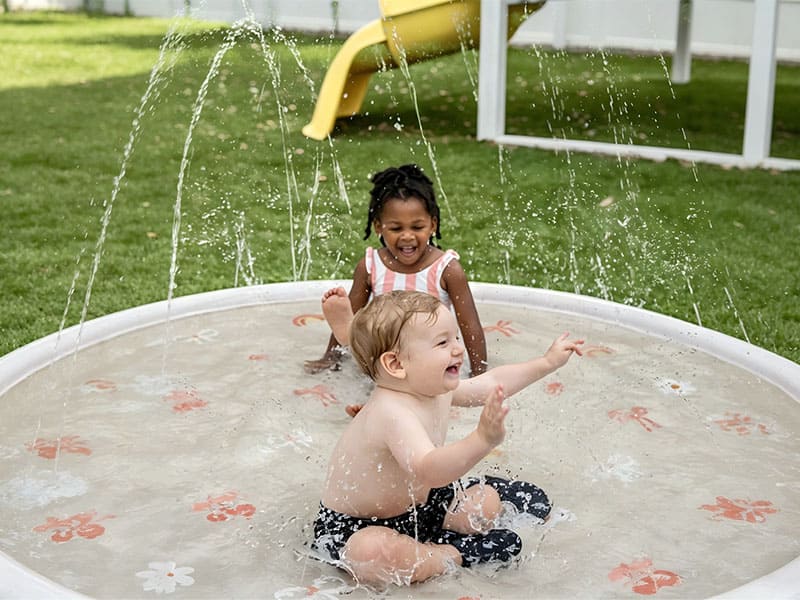
Choosing a splash pad sounds easy until you start comparing real products. At first, many parents think the decision is mostly about color, print, and size. Then the practical questions show up. Will it fit the yard? Is it too small for two kids? Is the spray too high for a toddler? Will the material feel flimsy after a few weeks? Can the dog use it too? Is it going to slide around on the patio? And if the product looks almost the same as ten others online, how do you know which one is actually the better choice?
A good splash pad is not just a cute summer item. It is a product that has to work well under real backyard conditions. That means the right splash pad should match the child’s age, the number of users, the yard surface, the home water setup, and the family’s expectations for durability and cleaning. In practice, the best choice usually comes down to five things: size, material, thickness, spray style, and how well the product fits the place where it will actually be used.
That is why a splash pad that looks great in a product photo can still feel like the wrong purchase later. The families who feel happiest with their splash pad are usually not the ones who bought the biggest or cheapest one. They are the ones who chose a splash pad that fits their actual summer life. Once you look at the product through that lens, the decision becomes much easier and much smarter.
How to Choose a Splash Pad
Choosing a splash pad sounds simple at first, but for most families it becomes confusing very quickly. One product looks brighter. Another looks bigger. Another says “thickened PVC.” Another shows taller spray. Another seems cheaper. If parents only compare pictures, they often end up choosing the wrong splash pad for their actual home. The better way to choose a splash pad is to stop asking, “Which one looks best online?” and start asking, “Which one fits the way my family will really use it?” That is the question that usually leads to a better purchase.
A splash pad is a better choice when it matches five real conditions at the same time:
- the age of the child
- the number of users
- the yard space
- the ground surface
- the family’s expectations for durability, cleaning, and daily convenience
This matters because a splash pad can fail as a purchase in several ways without being a “bad” product. It may simply be the wrong fit.
For example:
- a splash pad may be too large for a small patio
- the spray may be too active for a toddler
- the material may feel too light for daily sibling play
- the splash area may feel too cramped for two children
- the product may be hard to dry and store, so the family stops using it often
That is why smart selection is not just about fun. It is about fit.
A practical buying framework looks like this:
| Main Question | Why It Matters |
|---|---|
| Who will use the splash pad? | Changes size, spray style, and durability needs |
| How often will it be used? | Changes how important material and seam quality become |
| Where will it be used? | Changes grip, wear, and yard fit |
| How much space is available? | Changes whether play feels easy or cramped |
| What kind of experience does the family want? | Changes whether the best choice is calm, active, large, simple, or shared-use |
For most homes, the best splash pad is not the biggest one, not the cheapest one, and not the one with the loudest product claims. It is the one that still feels easy, fun, and worthwhile after the first few uses.
What Makes a Splash Pad Worth It?
A splash pad feels worth it when it solves the right problem for the family. That may sound obvious, but this is where many disappointing purchases begin. Some parents buy a splash pad only because the graphics are attractive or the diameter sounds large. But a splash pad becomes a good purchase only when it fits real summer life.
A splash pad usually feels worth the money when it gives the family:
- easy setup
- easy supervision
- enough room for the intended users
- a spray level that matches the child’s age
- a material feel that inspires confidence
- cleanup and storage that do not become annoying
Families usually regret a splash pad for one of these reasons:
- it is used less often than expected
- it feels too weak or too slippery
- it does not fit the yard well
- the child is too young or too old for the spray style
- it wears faster than the family expected
A practical value table:
| What Families Want | What the Splash Pad Should Give Them |
|---|---|
| Quick backyard fun | Fast hose hookup and simple setup |
| Safe-feeling play | Good grip and manageable spray |
| Enough play room | Size matched to child count |
| Better long-term use | Better material and structure |
| Less regret later | Better match to yard and routine |
In other words, a splash pad feels worth it when it becomes something the family naturally wants to use again, not something that feels like effort after the first weekend.
How Big Should a Splash Pad Be?
Size is one of the first things families look at, but also one of the easiest things to misjudge. Many people assume bigger is better. In real backyard use, size should be matched to the number of children, the children’s ages, and the amount of open space around the splash pad.
A splash pad that is too small often causes:
- children stepping on the outer ring too often
- crowding during play
- more conflict between siblings
- faster wear in one small area
A splash pad that is too large can also create problems:
- it may overwhelm a toddler
- it may be hard to fit naturally into the yard
- it may spread water beyond the intended area
- it may take longer to rinse, dry, and store
A practical size guide:
| Household Situation | Better Size Direction |
|---|---|
| One toddler | Small to medium |
| One toddler + one older child | Medium |
| Two children close in age | Medium to large |
| Three or more children | Large, if the yard supports it |
| Patio or smaller backyard | Small to medium |
The smartest way to choose size is not to ask only, “How wide is the splash pad?” The better question is, “How much comfortable play space will this give my children once the water is on?” For many homes, a medium splash pad is often the easiest balance. It usually gives enough room for fun without becoming too hard to manage.
What Age Fits a Splash Pad?
Not every splash pad fits every age equally well. This is why age should be one of the first filters in the buying process.
For toddlers and younger children, parents usually want:
- gentler spray
- easier supervision
- a calmer play pattern
- a product that does not feel overwhelming
- a more stable, less slippery experience
For older children, families often want:
- stronger spray
- more movement room
- more active play
- more visual excitement
- more shared-use space with siblings or friends
A practical age-fit guide:
| Age Group | Better Splash Pad Direction |
|---|---|
| 1–2 years | Smaller, gentler, easier to supervise |
| 2–4 years | Small to medium, moderate spray |
| 4–7 years | Medium to large, more active play |
| Mixed-age siblings | Medium to large, balanced design |
A common mistake is buying for the oldest child only. That can lead to a splash pad that feels too intense for younger children in the same home. The better approach is usually to buy first for the youngest regular user, then check whether older children can still enjoy it. That usually gives the family a longer usable window and a more comfortable everyday experience.
How Should Daily Use Change the Choice?
A splash pad should not only match the child. It should also match the household routine. This is one of the most practical but overlooked parts of choosing well. A family that uses the splash pad only on weekends may be happy with a different product than a family that expects to use it almost every warm afternoon. More frequent use changes what matters most.
For light occasional use, families can often focus more on:
- size
- ease of setup
- general fun factor
For frequent use, families usually need to care more about:
- material feel
- seam quality
- surface stability
- ring balance
- how easy the splash pad is to clean and store
A useful daily-use table:
| Use Pattern | What Matters More |
|---|---|
| Occasional weekend play | Simplicity and fun |
| Weekly family use | Balance of size, spray, and material |
| Frequent summer use | Durability and ease of maintenance |
| Sibling-heavy use | Space and stronger real-use structure |
| Kids plus dog use | Material, wear tolerance, and cleanup |
This is why some families love a splash pad that another family finds disappointing. The difference is often not the product alone. It is the match between the product and the household routine.
What Should Parents Check Before They Buy?
Before buying a splash pad, parents usually make better decisions when they stop looking only at the listing images and start checking a few real-life conditions.
A strong pre-buy checklist includes:
- How old are the main users?
- How many children will use it at once?
- Will it be used on grass, patio, or another surface?
- Is the backyard large enough for safe play around it?
- Will the splash pad be used occasionally or often?
- Does the family want calmer toddler play or more active running play?
- Could pets use it too?
- Will someone actually rinse, dry, and store it properly?
A practical final checklist:
| Checkpoint | Why It Helps |
|---|---|
| User age | Helps match spray and size |
| User count | Helps avoid overcrowding |
| Yard surface | Helps predict grip and wear |
| Available space | Helps avoid awkward setup |
| Frequency of use | Helps choose better durability level |
| Dog or pet use | Helps avoid underestimating wear |
That is the real way to choose a splash pad well. A good splash pad is not just a fun product. It is a product that fits the children, the yard, the family routine, and the level of use closely enough that it still feels like a smart choice after the excitement of the first setup is over.

Which Splash Pad Material Is Better?
For most families, the better splash pad material is the one that gives the best balance of durability, flexibility, comfort, grip, and everyday practicality. That is the real answer. Many customers start by asking, “Is thicker better?” or “Is PVC better?” Those are useful questions, but they are only part of the decision. In actual backyard use, people do not experience material as a technical label. They experience it in much simpler ways:
- Does it feel too thin?
- Does it feel slippery when wet?
- Does it look like it can handle repeated use?
- Will it wear out fast on grass or patio?
- Does it still feel good after being folded and reused many times?
That is why the best splash pad material is usually not the one with the most dramatic product claim. It is the one that fits how the splash pad will really be used.
A good splash pad material usually needs to do several jobs at the same time:
- stay flexible enough to fold and store
- feel soft enough for children to stand and sit on comfortably
- resist wear from repeated stepping
- support strong welded seams
- tolerate outdoor heat, water, and repeated backyard use
- avoid feeling too flimsy or too stiff
This matters because families do not buy splash pads to admire the material. They buy them to use them over and over again in real summer conditions. A material that looks fine in a listing photo can still feel disappointing later if it becomes too stiff, wears too quickly underneath, or feels unstable during play.
A practical material comparison looks like this:
| Material Quality Question | What Families Usually Notice in Real Use |
|---|---|
| Is it flexible enough? | Easier folding, easier storage, less stress when reopened |
| Is it thick enough for the use case? | More confidence under repeated stepping |
| Does the surface feel stable when wet? | Better comfort and safer-feeling play |
| Does it support strong seams? | Better ring stability and lower leak risk |
| Does it feel too light? | Often makes families worry about durability |
For most households, the better splash pad material is the one that still feels dependable after repeated use, not just the one that sounds impressive in a short product description.
Which Splash Pad Material Lasts?
For most family-use splash pads, PVC and similar flexible composite materials remain the most practical choice because they balance water resistance, softness, print quality, and structural performance well. But even here, not all PVC splash pads feel the same in real life. Some feel soft but too light. Some feel thick but awkward. Some look durable at first but age faster than expected after a few weeks of backyard use. That is why families should not stop at the word “PVC.” They should think about how the material is likely to behave during actual use.
A splash pad material usually lasts better when it offers:
- enough flexibility for repeated folding
- enough toughness for stepping and kneeling
- enough bottom-surface resistance for grass, lawn, or patio use
- enough stability to support an even spray ring
- enough quality consistency that the whole pad feels balanced
A practical “lasting material” table:
| Material Character | Why It Matters for Lifespan |
|---|---|
| Better flexibility | Helps reduce hard crease stress |
| Better surface toughness | Helps slow down wear from repeated play |
| Better bottom feel | Helps the splash pad cope with real yard surfaces |
| Better seam support | Helps the ring stay stable longer |
| Better outdoor feel | Helps the splash pad stay usable through the season |
Families often judge material life in simple ways:
- does it still feel soft enough?
- does the ring still feel trustworthy?
- does the bottom still look okay?
- does the splash pad still seem worth taking out again?
That is the real measure of whether the material lasts.
How Thick Should a Splash Pad Be?
Thickness matters, but it should not be treated like the only sign of quality. This is one of the biggest mistakes people make when comparing splash pads. They see one product described as thicker and assume it must be the better option. Sometimes that is true. But thickness without good material balance, good seams, and a sensible design can still lead to disappointment.
A thicker splash pad may help more in these situations:
- frequent family use
- heavier sibling play
- rougher backyard surfaces
- mixed use with pets
- repeated seasonal use rather than occasional weekend use
But thicker is not automatically better if:
- the splash pad becomes too stiff
- the folding and storage become awkward
- the seam quality is only average
- the connector area is weak
- the material quality is inconsistent
A practical thickness guide:
| Use Condition | How Important Thickness Becomes |
|---|---|
| One toddler on lawn | Moderate |
| Weekend family use | Moderate |
| Two or more children often | Higher |
| Patio or harder surface use | Higher |
| Kids plus dog use | Higher |
| Frequent summer use | Higher |
So the better question is not: “Which splash pad is thickest?” The better question is: “Which thickness makes sense for the way my family will use it?” That usually leads to a better purchase than chasing the biggest thickness claim.
Is a Non-Slip Splash Pad Better?
In most homes, yes, a non-slip splash pad is the better choice. Once water is running, grip becomes one of the most important parts of the play experience. Families often focus on size and print first, but daily comfort and confidence often come from the surface feel.
A splash pad with a better non-slip surface usually helps with:
- more confident toddler movement
- less “slide” feeling when children run through the spray
- easier supervision for parents
- a calmer experience on smoother ground like patio or deck areas
- better comfort when children sit or kneel on the surface
A practical non-slip table:
| Surface Feel | What Families Usually Experience |
|---|---|
| Better grip when wet | Easier, safer-feeling movement |
| More stable underfoot | Better for toddlers and younger kids |
| Less slippery ring area | More comfortable active play |
| Poor wet grip | More parental worry and less relaxed use |
For many parents, non-slip is not just a nice extra feature. It is one of the product details that changes whether the splash pad feels easy to trust.
Which Splash Pad Material Feels Better for Toddlers?
For toddlers, the better material is usually not the hardest one and not the most aggressive heavy-duty one. It is the one that feels soft enough, stable enough, and comfortable enough for gentle early play. Parents shopping for toddlers usually care most about these material traits:
- soft-feeling play surface
- good grip when wet
- no harsh or stiff feel under bare feet
- a ring that does not feel unstable
- enough durability without becoming too rigid
A toddler-material guide:
| Toddler Need | Better Material Direction |
|---|---|
| Softer underfoot feel | More comfortable early play |
| Better wet grip | Easier movement and supervision |
| Moderate thickness | Good balance of comfort and confidence |
| Flexible ring structure | Less intimidating and easier-looking play pattern |
This is why the “best material” depends partly on the user. A splash pad material that feels right for active older kids may feel less ideal for a very young child if it is too stiff or too harsh-looking in use.
Which Splash Pad Material Works Better for Dogs?
If a dog may use the splash pad too, material choice becomes even more important. Dog use changes the wear pattern quickly because dogs bring:
- nails
- sharper turning movement
- more concentrated pressure
- scratching or pawing at one area
- faster repeated motion
A splash pad material that works better for occasional dog use usually needs:
- stronger surface toughness
- better bottom wear tolerance
- stronger seam support
- a little more confidence in overall structure
A practical dog-use material table:
| Dog-Use Situation | Better Material Direction |
|---|---|
| Small calm dog, occasional use | Moderate durability may be enough |
| Medium dog, shared family use | Better toughness matters more |
| Large dog or rough dog use | Stronger material becomes much more important |
| Kids plus dog use | Balanced comfort plus better wear tolerance |
This does not mean every family with a dog needs the heaviest splash pad possible. But it does mean material should be judged more seriously once pet use becomes part of the plan.
How Should Families Compare Splash Pad Materials Before Buying?
Most families cannot physically test the material before buying online, so they need a smarter way to compare options. The best approach is to compare materials through real-use questions instead of vague claims.
Useful questions include:
- Does this splash pad sound suited to light use or repeated use?
- Is the thickness matched to the use case?
- Does it mention non-slip or textured play surface?
- Does it seem designed for toddlers, older kids, or mixed use?
- Would this material still make sense on my yard surface?
- Could this material handle dog use if needed?
A practical material-check table:
| What to Compare | Why It Helps |
|---|---|
| Thickness description | Helps judge confidence level for the use case |
| Surface feel or grip wording | Helps predict wet stability |
| Intended user age | Helps match softness and spray style |
| Durability wording | Helps judge whether it fits light or frequent use |
| Yard surface fit | Helps predict bottom wear |
| Dog-use possibility | Helps avoid underestimating wear needs |
That is the real way to decide which splash pad material is better. The better material is usually not the one with the loudest wording. It is the one that best matches the child, the yard, the frequency of use, and the family’s expectations for comfort and durability.

Which Splash Pad Design Is Better?
The better splash pad design is the one that matches how the product will actually be used in a real backyard, by real children, on a real surface, with real water pressure. That is the most useful way to think about it. Many families choose a splash pad by looking first at color, cartoon print, or how exciting the product photo looks. But after the first few uses, those are usually not the details that decide whether the splash pad still feels like a good purchase. What matters more in daily use is design fit.
A splash pad design changes:
- how children move across the play area
- how much usable space the pad really gives
- how evenly the spray feels around the ring
- how easy the product is to supervise
- how much pressure goes into the edges and seams
- how well the splash pad works for toddlers, siblings, or shared family use
This is why two splash pads can look similarly “fun” online and still perform very differently once the water is on.
A practical design view looks like this:
| Design Factor | What It Changes in Real Use |
|---|---|
| Shape | Movement flow, supervision, usable area |
| Spray layout | Comfort, fun level, age fit |
| Ring structure | Stability, spray balance, wear pattern |
| Print layout | Visual appeal and how open the play zone feels |
| Multi-user fit | Whether siblings can play comfortably together |
The best splash pad design is usually not the most dramatic one. It is the one that still feels easy, playful, and low-stress after the first weekend excitement is over.
Which Splash Pad Shape Is Best?
There is no single best shape for every family, but some shapes work better in some situations than others. Most families will end up choosing between a round splash pad and a square splash pad, and the better choice usually depends on the yard layout, the number of users, and how the family wants the play space to feel.
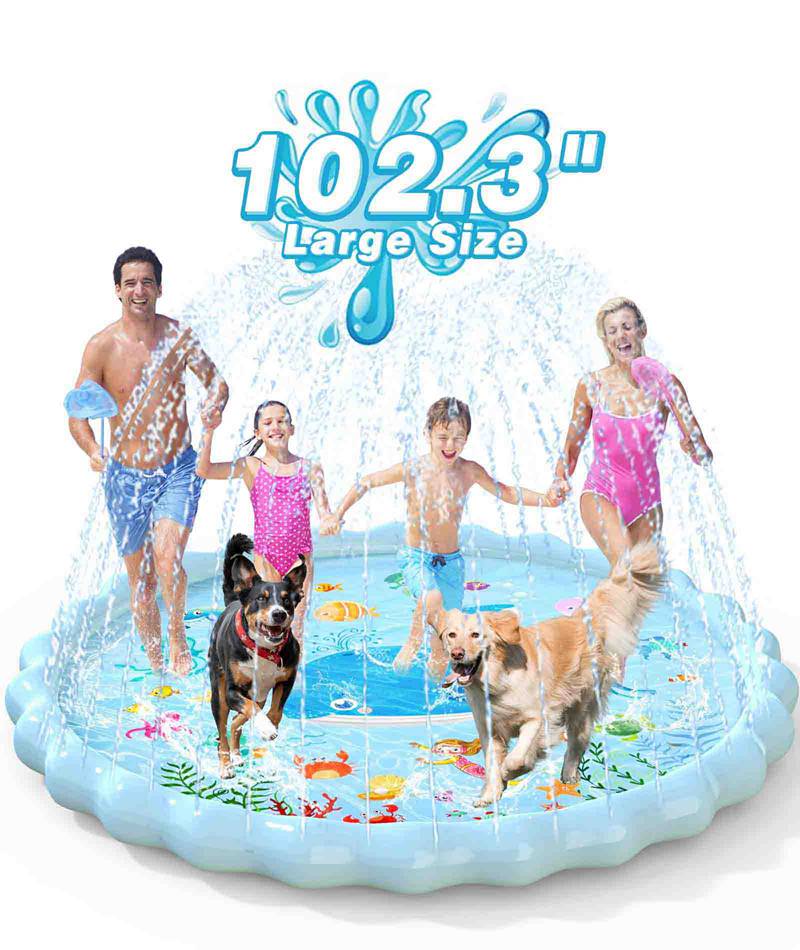
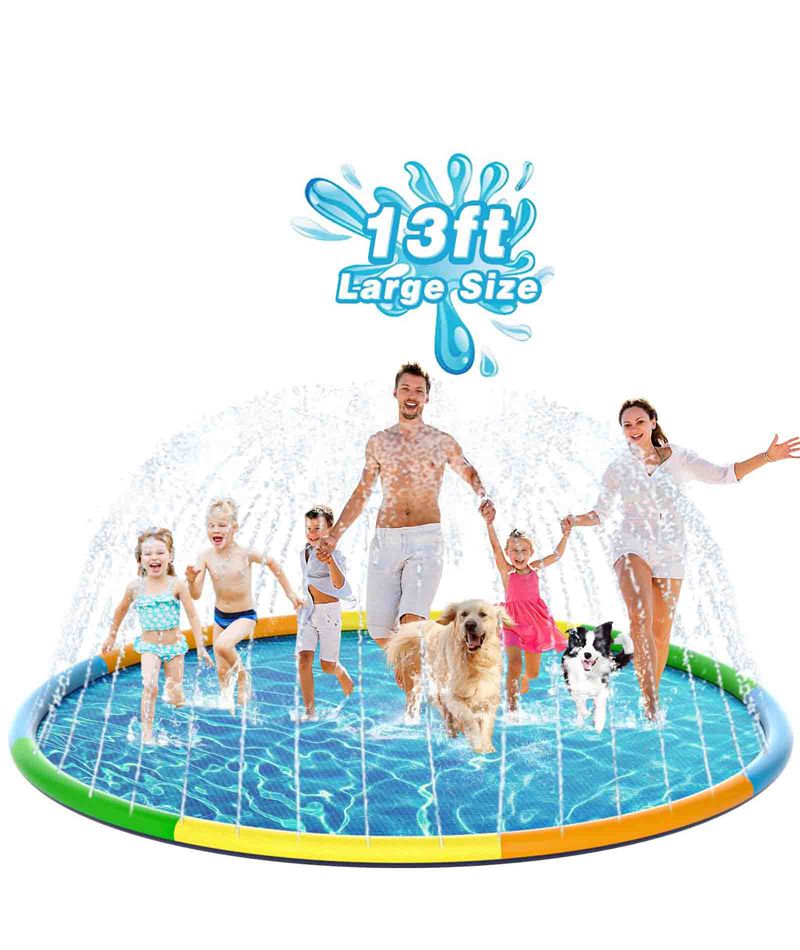
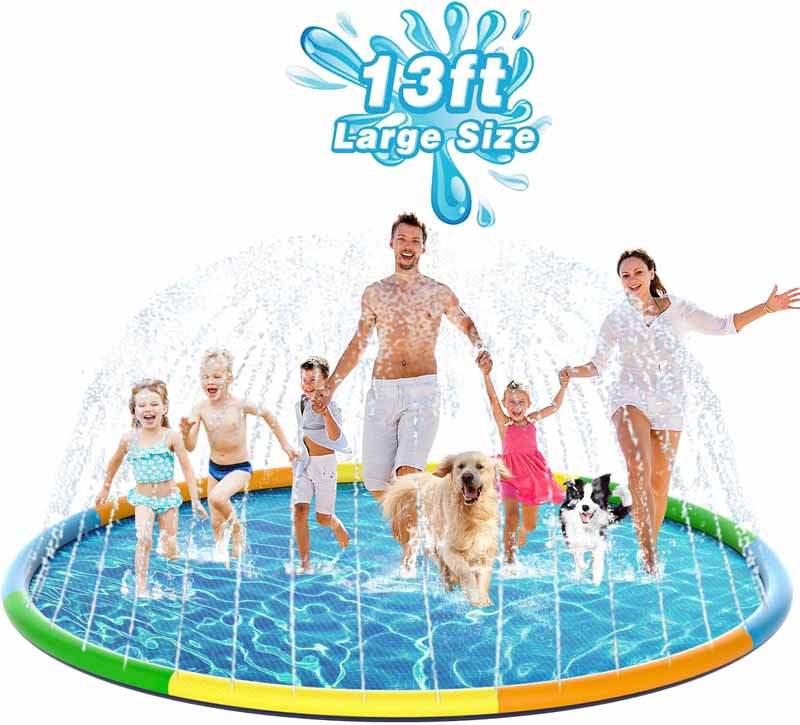
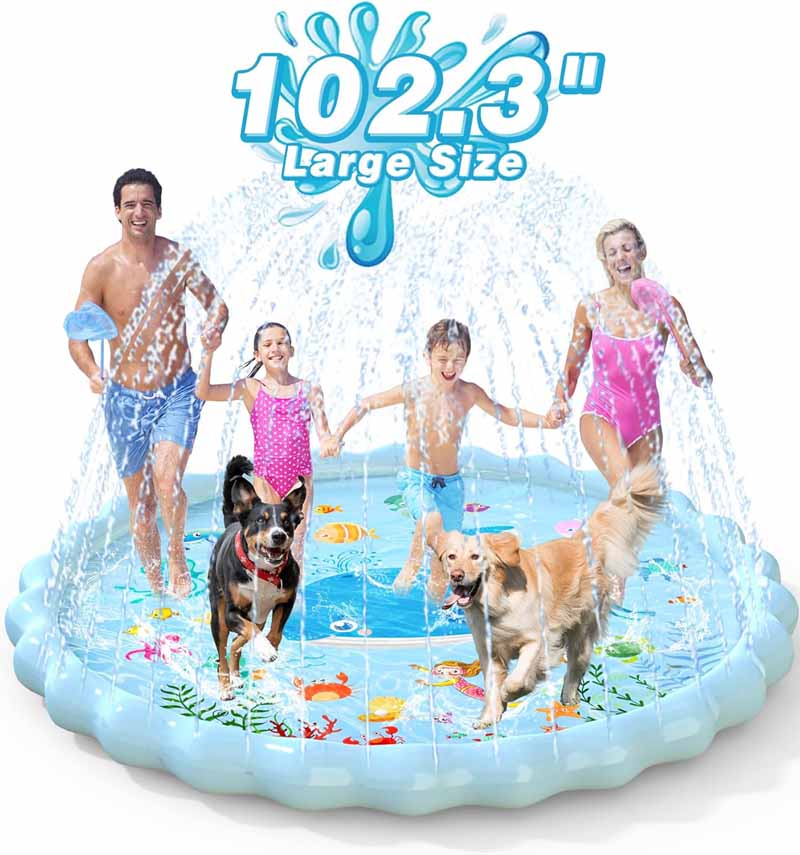
A round splash pad often works well because it feels balanced. Children can run through it from different directions, the spray ring usually feels visually even, and the play pattern feels natural for one or two children. This is one reason round splash pads remain one of the easiest general family-use formats.
A square splash pad can work very well too, especially when:
- the yard or patio is more rectangular
- the family wants the splash pad to fit neatly into a corner or tighter area
- the product is being placed in a more structured outdoor layout
A practical shape guide looks like this:
| Splash Pad Shape | Better For |
|---|---|
| Round splash pad | General backyard family use |
| Square splash pad | Patio-friendly or tighter layout use |
| Large themed shape | More visual excitement, but check usable play area carefully |
The more useful question is not just “Which shape looks nicer?” The better question is “Which shape gives my children the easiest movement and the most comfortable play space?” In many homes, round is the easier all-purpose answer. But square can be the smarter choice when the yard layout matters just as much as the play style.
How High Should a Splash Pad Spray?
Spray height should match the age of the users and the kind of play the family wants. This is one of the most common places where families accidentally buy the wrong design. A splash pad with a very active spray may look exciting in a listing image, but it can feel too intense for a toddler. On the other hand, a splash pad with a very low spray may feel underwhelming for older children who want more movement and interaction.
For younger children, parents usually prefer:
- lower to medium spray
- softer spray feel
- easier first-time comfort
- less water hitting the face too aggressively
For older children, families often prefer:
- medium to stronger spray
- more lively movement
- more run-through energy
- more excitement in the water pattern
A practical spray-height guide:
| User Type | Better Spray Direction |
|---|---|
| Toddlers | Lower to medium |
| Preschool children | Medium |
| Older kids | Medium to higher |
| Mixed-age siblings | Medium, balanced spray is usually best |
It is also important to remember that the product design and the home water pressure work together. A splash pad may be designed for a moderate spray experience, but if the home water pressure is strong, the spray may feel much taller and more forceful. If water pressure is low, even a lively design may feel softer than expected. So the best spray height is not the highest one. It is the one that matches the child’s age, the family’s comfort level, and the actual backyard setup.
Which Splash Pad Works for Dogs?
A splash pad can work for dogs, but the design has to make sense once dog movement becomes part of the use pattern. This is where many families underestimate the difference between a child-only design and a shared-use design. A dog changes the way the splash pad is used because dogs bring:
- nails
- sharper turns
- more concentrated pressure
- scratching or pawing at the spray
- faster repeated movement across one area
That means a splash pad that works perfectly for children may not always feel like the best long-term design if a dog becomes a regular user too. A splash pad design usually works better for occasional dog use when it has:
- enough room for movement
- a stronger-feeling ring area
- a layout that does not crowd the edges too much
- a surface that is easier to rinse and clean afterward
A practical dog-use design guide looks like this:
| Use Situation | Better Design Direction |
|---|---|
| Child only | Standard family splash pad |
| Child plus calm small dog | Medium-size splash pad may work |
| Child plus large active dog | Roomier, stronger-feeling design preferred |
| Dog-focused use | Pet-oriented design is often better |
For many homes, a dog can absolutely enjoy a kids splash pad. But if the dog becomes a frequent or rough user, design choice becomes much more important. The better splash pad is the one that still feels manageable once dog wear, dog cleanup, and dog movement are all part of the routine.
How Does the Ring Design Change Real Use?
The ring design is one of the most important but least discussed parts of a splash pad. Most families do not think about it directly, but they feel its effect immediately.
A better ring design usually helps with:
- more even spray around the pad
- better shape stability during use
- less bunching or twisting
- a more balanced feel when children move near the edge
- more confidence that the splash pad is built well
A weaker ring design may lead to:
- uneven spray
- one side feeling more active than the other
- edge areas getting stepped on too much
- more visible stress where children or pets move most
A practical ring-design table:
| Ring Design Quality | What Families Usually Notice |
|---|---|
| Better balanced ring | More even spray and more natural play |
| More stable edge feel | Better confidence during use |
| Poorer ring balance | Uneven water pattern and less satisfying play |
| Weak edge structure | Faster frustration and rougher wear pattern |
This matters because the ring is not only where the water travels. It is also one of the most stressed parts of the whole splash pad. Children step on it, dogs may cross it, and water pressure is moving through it the entire time the product is on. So a better splash pad design is often a better ring design, even if customers do not describe it that way.
How Does the Print Layout Affect Play?
Print layout may seem like a smaller detail compared with material or size, but it can actually change how the splash pad feels in use. A good print layout does not only make the splash pad look fun. It also helps shape the visual play zone.
A more open print layout often feels better because:
- the center looks clearer and less crowded
- children can move more naturally
- the play area feels larger
- the product looks easier to understand for younger kids
A busier print layout may still be attractive, but sometimes it can make the splash pad feel:
- visually crowded
- smaller than expected
- more decorative than practical
A simple print-layout guide:
| Print Style | Real-Use Effect |
|---|---|
| Open, balanced print | Cleaner play feel and easier movement |
| Themed but well-spaced print | Good mix of fun and usability |
| Very dense print layout | Can feel smaller or busier |
For many families, the best-looking splash pad online is not always the easiest splash pad to enjoy in person. The best design usually balances visual fun with real open play space.
Which Splash Pad Design Works Best for Siblings?
When more than one child will use the splash pad regularly, design matters even more. A splash pad for one toddler does not need to solve the same problems as a splash pad for two or three siblings playing together. For sibling use, a better design usually offers:
- enough room for more than one play pattern at once
- a ring that does not force everyone to the same spot
- a spray layout that feels balanced from different sides
- enough open center space that play does not feel crowded immediately
A practical sibling-use guide looks like this:
| Household Situation | Better Design Direction |
|---|---|
| One child | Smaller or medium design may be enough |
| Two siblings | Medium to large, balanced shape works well |
| Three or more children | Larger play zone and stronger shared-use logic matter more |
| Mixed ages | Medium to large, moderate spray and open layout help most |
This is why some families feel a splash pad is “too small” even when the diameter sounded reasonable. The issue is not always the number on the listing. The issue is that the design does not create enough comfortable shared-use space once children actually start moving.
What Design Mistakes Cause the Most Regret?
Most splash pad regret does not come from one huge failure. It usually comes from small design mismatches that become obvious after a few uses.
The most common design-related regrets are:
- the spray feels too strong for the child’s age
- the splash pad is too small for more than one child
- the shape does not fit the yard naturally
- the outer ring gets stepped on constantly
- the design looks fun but feels harder to supervise
- the splash pad does not make enough usable play space
A practical regret table:
| Design Mistake | What Families Usually Feel Later |
|---|---|
| Too much spray for toddlers | Child avoids part of the splash pad |
| Too little space | Play feels cramped and less fun |
| Wrong shape for the yard | Setup feels awkward |
| Ring area too exposed | More wear and more stepping stress |
| Busy design with less open space | Product feels smaller than expected |
That is why the better splash pad design is rarely the most dramatic one. It is usually the one that quietly makes everyday play feel easier, safer, and more enjoyable.
How to Match a Splash Pad to Your Yard
A splash pad should fit the yard just as well as it fits the children. This is one of the biggest reasons some families love their purchase and others stop using it much sooner than expected. A splash pad can be the right size, the right material, and the right price, but still feel wrong if the yard surface is too rough, the setup area is too tight, the water collects in the wrong place, or the hose connection makes the spray feel weak and uneven. For most families, yard matching comes down to five practical questions:
- Is the ground comfortable and stable when wet?
- Is there enough open space around the splash pad?
- Will the yard drain water well after play?
- Will the splash pad sit in strong sun all day?
- Is the hose and faucet setup simple enough for repeated use?
These questions matter because a splash pad is not just a product. It becomes part of the yard routine. If the setup feels awkward, messy, slippery, or hard to manage, families usually use it less often, even if the splash pad itself is decent.
A practical yard-fit table looks like this:
| Yard Factor | Why It Matters in Real Use |
|---|---|
| Ground surface | Changes grip, comfort, and bottom wear |
| Open clearance | Changes supervision and movement |
| Drainage | Changes puddling, cleanup, and mess |
| Sun exposure | Changes comfort and material aging |
| Hose position | Changes setup ease and spray stability |
A better splash pad is often not the one with the flashiest design. It is the one that feels easy in the actual place where it will be used.
What Is the Best Splash Pad Surface?
For most homes, the best splash pad surface is the one that balances grip, comfort, cleanliness, and product life. A splash pad always creates a wet play area, so the ground under it changes the whole experience very quickly. Wet-play guidance consistently emphasizes that surfaces in splash areas should be slip-resistant and free from trip hazards, while playground surfacing guidance also favors softer, safer-feeling surfaces for active family use.
In real backyard use, the easiest surfaces are usually:
- smooth grass
- level lawn
- soft outdoor play surfacing
- a smooth patio with a protective layer underneath when needed
The harder surfaces are usually:
- rough concrete
- exposed stone
- gravel
- cracked patio areas
- uneven hard ground with grit or small sharp debris
A practical surface guide looks like this:
| Surface Type | Better or Worse for Splash Pads |
|---|---|
| Smooth grass | Often one of the easiest choices |
| Level lawn | Very good balance of comfort and use |
| Soft outdoor mat over patio | Often workable |
| Smooth patio | Usable, but watch grip and heat |
| Rough concrete | Harder on both children and product |
| Gravel or stone | Usually a poor fit |
Families often assume that the cleanest-looking hard surface is the best one, but that is not always true. A rough patio may look neat, yet feel harsher underfoot, wear the splash pad faster underneath, and make slips feel more serious. In many homes, level grass or lawn ends up being the most forgiving choice because it is softer, easier for children to enjoy, and easier on the splash pad’s bottom surface.
How Much Space Does a Splash Pad Need?
A splash pad needs more room than its listed diameter. This is one of the most common setup mistakes. Families measure the splash pad itself, then forget that children do not stay neatly inside the printed circle. They run in and out, step beyond the edge, and often need clear approach space from more than one side.
Wet-play area guidance often calls for clear deck or surrounding space around splash zones so the play area stays safer and easier to move through. While those standards are written for larger facilities, the principle is very useful for home yards too: the splash pad should not be crowded against walls, furniture, planters, steps, or sharp hardscape edges.
A practical spacing guide looks like this:
| Splash Pad Size | Better Yard Planning |
|---|---|
| Small splash pad | Leave a modest clear zone around it |
| Medium splash pad | Leave enough room for entry, exit, and supervision |
| Large splash pad | Needs a noticeably open surrounding play area |
A good home rule is to think beyond the product edge. The real question is not, “Can this splash pad physically fit here?” The better question is, “Can children run, step out, re-enter, and be supervised comfortably once the water is on?” That difference matters a lot. A splash pad that barely fits often feels less fun, more chaotic, and harder to trust.
How Does Water Pressure Change a Splash Pad?
Water pressure changes how the splash pad actually feels in the yard. A product can be the right size and the right material and still feel disappointing if the home setup gives weak, uneven, or overly harsh spray. In home outdoor water use, pressure and flow work together. EPA guidance for residential water systems notes that household water pressure above about 60 psi may require regulation in some contexts, and WaterSense materials commonly frame normal residential performance around moderate pressure rather than extremes.
In real splash pad use, lower pressure usually means:
- lower spray height
- softer water feel
- less excitement for older children
Moderate, stable pressure usually means:
- more even spray
- better balance between fun and comfort
- easier family use across age groups
Very high pressure can mean:
- harsher spray
- more splash outside the intended area
- more stress on the ring and connector
A practical pressure guide looks like this:
| Water Pressure Situation | What Families Usually Notice |
|---|---|
| Lower pressure | Softer, lower spray |
| Moderate stable pressure | Better balance of comfort and play |
| High pressure | Stronger spray, but not always better |
| Unstable pressure | Uneven or inconsistent spray |
This is why splash pad matching is not only about the yard surface. It is also about the yard water setup. A splash pad works best when the hose route is simple, the faucet is easy to access, and the pressure feels steady enough that the spray pattern stays pleasant.
How Should Drainage Change the Choice?
Drainage changes the splash pad experience more than many families expect. A splash pad that sits in a low spot, on compacted soil, or near a patio area where water has nowhere to go can quickly turn from fun to messy. Backyard drainage guidance consistently recommends sloping water away from the house and addressing low spots where water pools, because standing water can create mud, slippery zones, and repeated cleanup issues.
This matters for splash pads because poor drainage often creates:
- muddy play around the splash zone
- slippery re-entry areas
- water tracking back onto patios or indoor floors
- a less pleasant setup the next time the family wants to use it
A practical drainage guide looks like this:
| Yard Drainage Condition | What Families Usually Experience |
|---|---|
| Slight slope away from the house | Easier cleanup and less pooling |
| Level lawn with decent absorption | Usually workable |
| Low spot in the yard | More puddling and mud |
| Hard patio with nowhere for water to run | More surface water and mess |
For many homes, the smartest setup spot is not the most visible one. It is the one where water can drain or soak away reasonably well without creating a muddy ring or a slippery traffic path.
How Should Sun and Shade Change the Setup?
Sun exposure changes both comfort and product life. A splash pad in full summer sun may look like the most obvious choice, but it can also make the play area hotter before and after the water runs. Strong sun can make patios or dark surfaces hotter underfoot, and repeated full-sun exposure can also age flexible outdoor materials faster over time. Playground and outdoor surfacing guidance also highlights surface temperature and comfort as practical safety considerations in family play spaces.
A practical sun-and-shade guide looks like this:
| Yard Light Condition | Better or Worse for Splash Pad Use |
|---|---|
| Partial sun with some shade nearby | Often the easiest balance |
| Full lawn sun | Fine for play, but watch heat and comfort |
| Full patio sun | Harder underfoot and often hotter |
| Too much shade | Cooler, but sometimes less inviting for water play |
For many families, the best splash pad spot is not the hottest, brightest part of the yard. It is the place that still feels comfortable after 20 or 30 minutes of summer play, with enough openness for supervision and enough relief from heat that the setup stays pleasant.
What Yard Mistakes Cause the Most Regret?
Most splash pad regret comes from yard mismatch, not from one dramatic product failure. The product may be fine, but the setup makes it frustrating.
The most common yard-fit mistakes are:
- placing the splash pad on rough concrete
- choosing a low spot where water pools
- leaving too little clearance around the pad
- setting it too close to hard edges or furniture
- ignoring how strong or weak the hose setup feels
- using a spot that becomes too hot in direct afternoon sun
A practical regret table looks like this:
| Yard Mistake | What Families Usually Feel Later |
|---|---|
| Wrong ground surface | The splash pad feels harsher and less comfortable |
| Too little surrounding space | Play feels cramped and harder to supervise |
| Poor drainage | The area becomes muddy or messy too fast |
| Too much hardscape heat | Children enjoy it less over time |
| Awkward hose setup | The spray feels less satisfying or less reliable |
That is why matching a splash pad to the yard is not a small detail. It is one of the biggest parts of choosing well. The better splash pad setup is usually the one that quietly makes family use easier every time the hose is turned on.

Ready to Buy Splash Pads or Start Your Custom Project?
If you are looking for a splash pad that is not only fun, but also better matched to real family use, yard conditions, and everyday durability needs, Epsilon is ready to help. American Epsilon Inc. is a U.S.-registered company specializing in PVC and composite material products for children’s water play, family entertainment, pet products, and seasonal outdoor categories. Under the EPN brand, we offer ready-to-ship splash pad products and also support OEM and ODM development for brands, retailers, distributors, and importers.
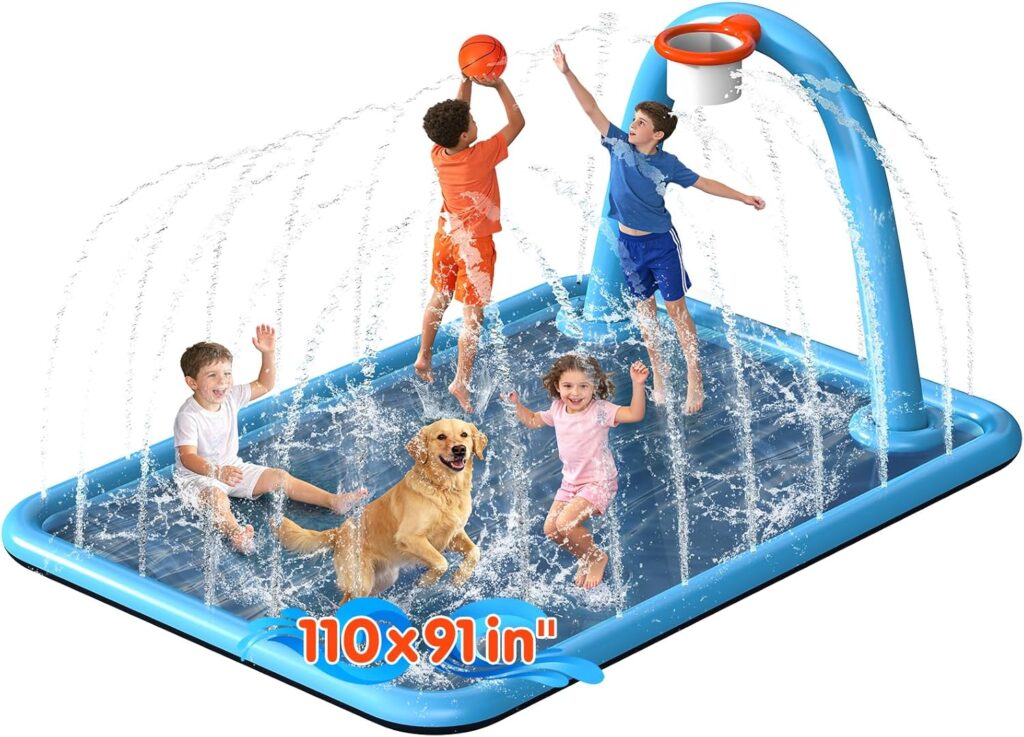
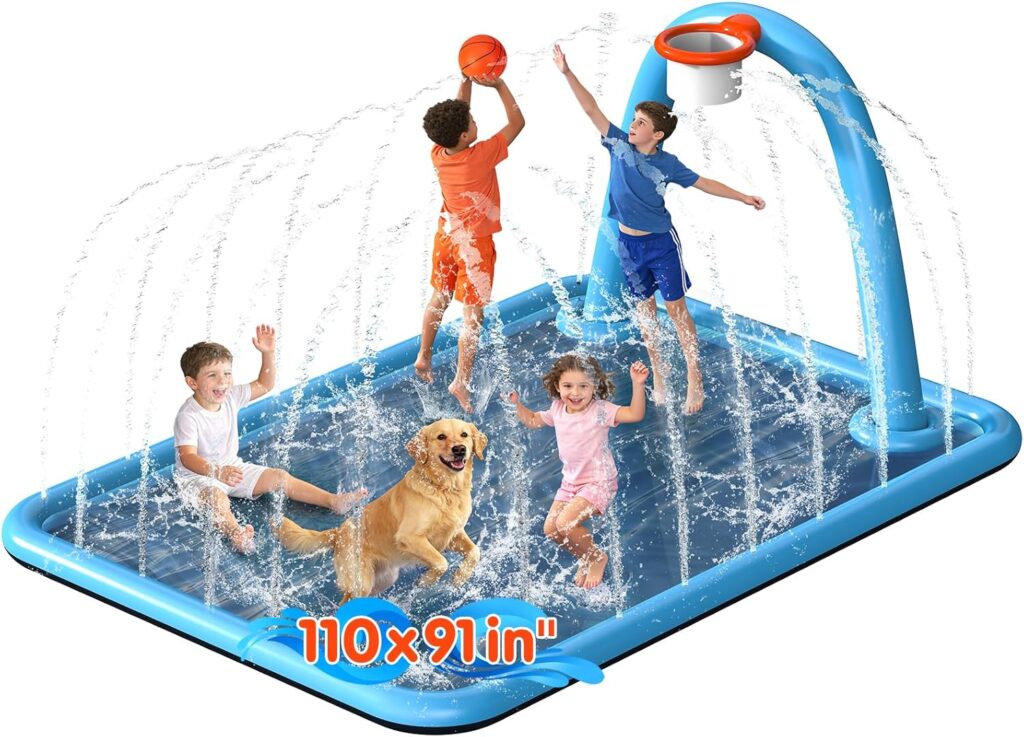
Our splash pad range includes round splash pads, square splash pads, dog splash pads, soccer splash pads, and splash pads with basketball hoops. Beyond splash pads, we also support related seasonal categories such as dog pools, dog pools with sprinklers, pool pillows, snow tubes, and punching bags.
What makes Epsilon valuable is not only manufacturing capacity. We combine material planning, size development, thickness selection, spray-structure design, testing support, packaging capability, and multi-market experience, so customers can move more smoothly from product idea to finished goods. For retail customers, we offer in-stock splash pad products that are ready to buy now.
For business customers, we support:
- custom splash pad sizes
- custom material and thickness planning
- custom colors and print themes
- logo printing
- packaging customization
- OEM and ODM projects
- sample development
- production planning
- market-specific splash pad positioning
If you want a faster and more accurate reply, it helps to share:
- your target market
- user group or age focus
- preferred size range
- material expectations
- yard or surface conditions
- artwork direction
- packaging requirements
- estimated order quantity
- expected timeline
Shop In-Stock Splash Pad Products
- Buy Round Splash Pad
- Buy Square Splash Pad
- Buy Dog Splash Pad
- Buy Soccer Splash Pad
- Buy Splash Pad with Basketball Hoop
Start a Custom Splash Pad Project
- Contact Us for Custom Splash Pads
Request a Sample
- Request a Splash Pad Sample
Explore More Related Product Pages
If you want to explore more seasonal PVC and outdoor family-use categories, you can continue browsing these related pages:
Whether you want to buy ready-to-ship splash pad products, request samples, or develop a custom splash pad line for your market, Epsilon is ready to discuss your project in detail.