Skip to content
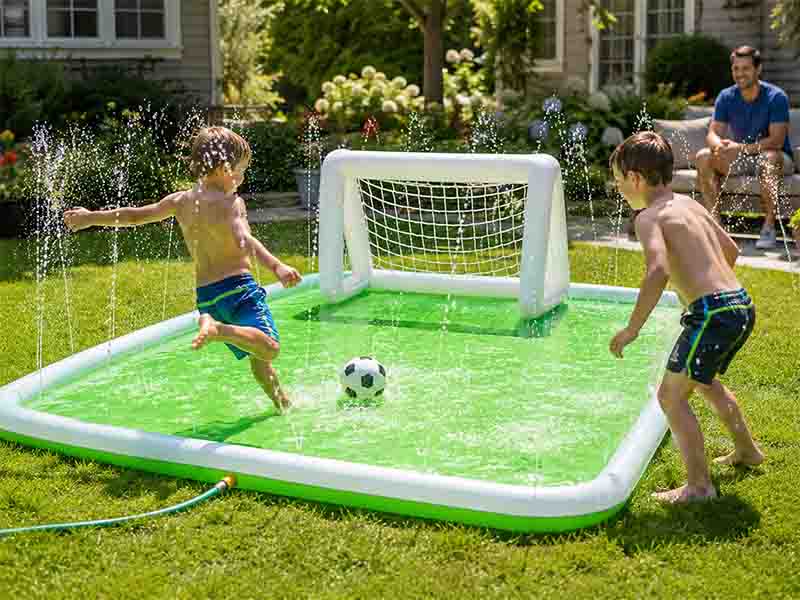
A soccer splash pad looks like a simple summer toy, but parents usually care about something more practical: will kids use it again after the first afternoon? Many backyard water toys look exciting online, yet some lose their appeal quickly because setup takes too long, cleanup feels annoying, or the play gets repetitive. A soccer splash pad has a better chance of becoming part of regular summer play because it offers two things children naturally enjoy: cool water and a clear game.
A soccer splash pad is worth buying when children enjoy active outdoor play, the yard has flat open space, and parents want a water toy that does more than spray water. It combines cooling, movement, and soccer-style play in one setup. Compared with a plain sprinkler, it gives kids a reason to keep playing. Compared with a pool, it needs less space, less water, and less cleanup.
The strongest value comes from repeat use. A splash pad used once feels like a toy. A splash pad used for hot afternoons, weekend games, playdates, and birthday parties becomes part of a family’s summer routine. Kids may not remember the PVC thickness or connector design, but they will remember scoring a goal through the spray while everyone laughed in the backyard.
What Is a Soccer Splash Pad?
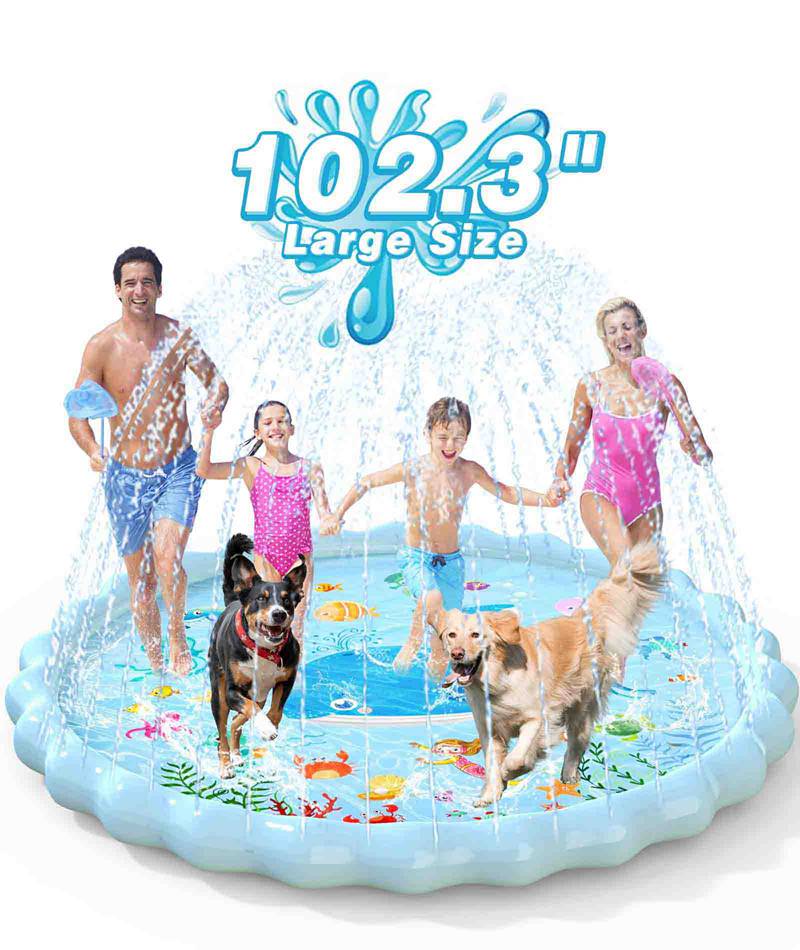
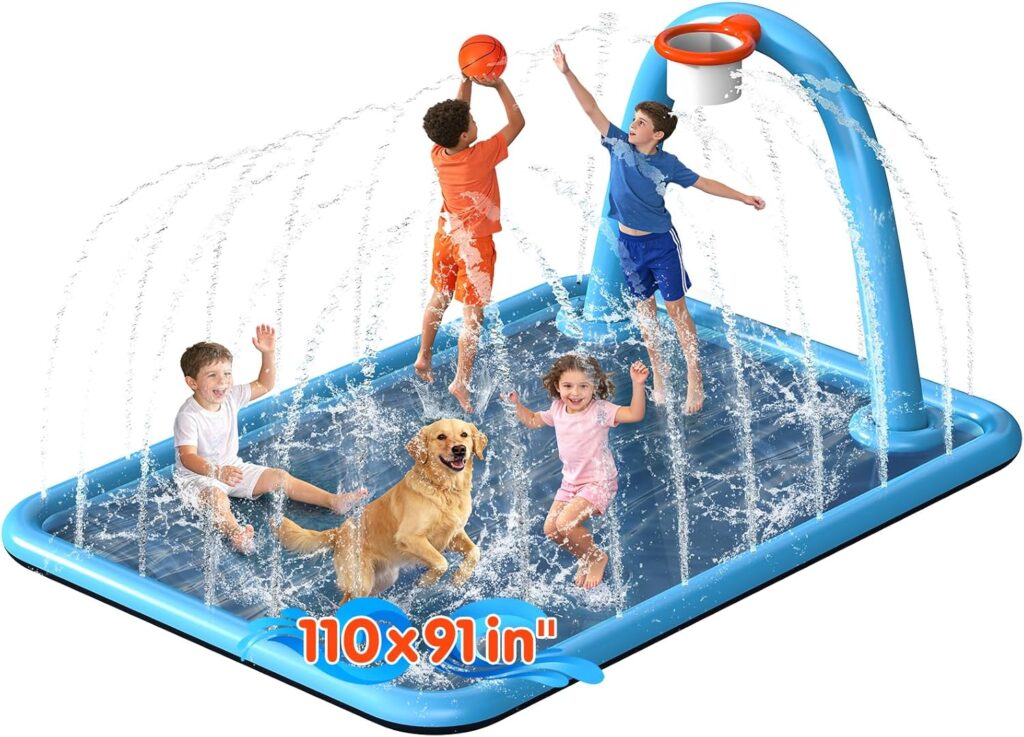
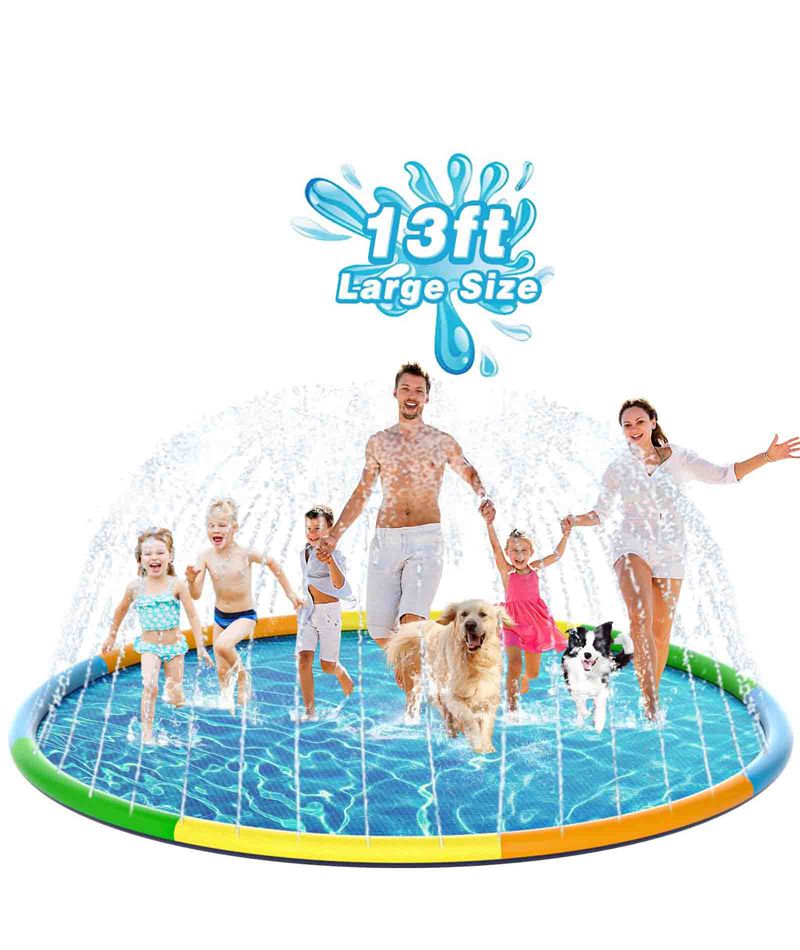
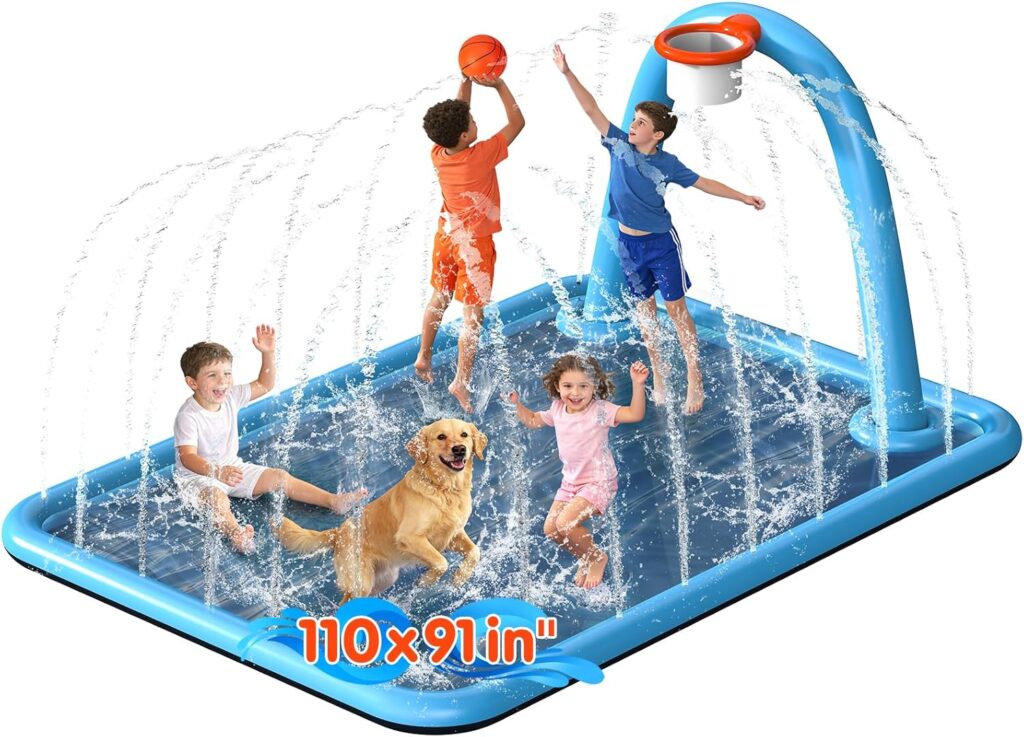
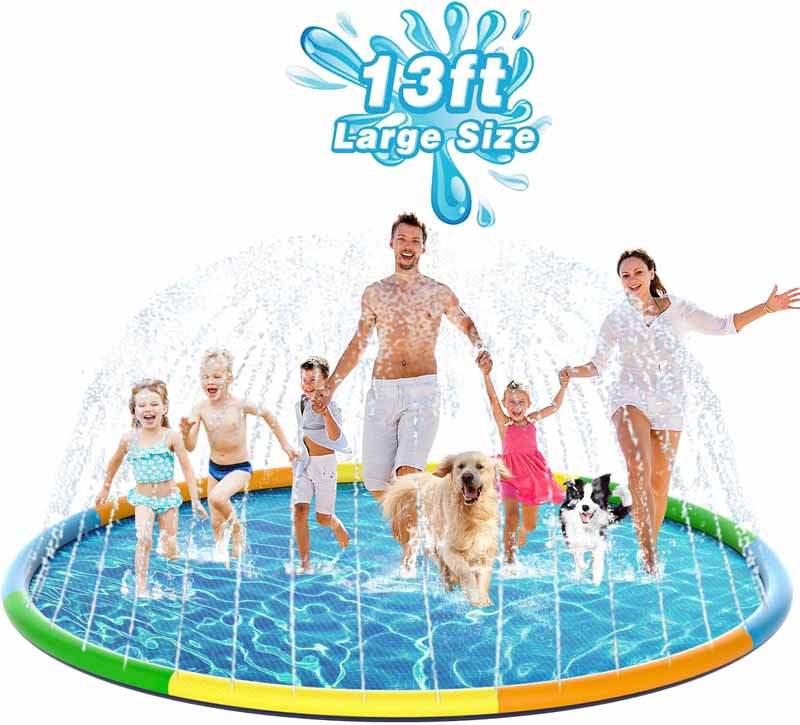
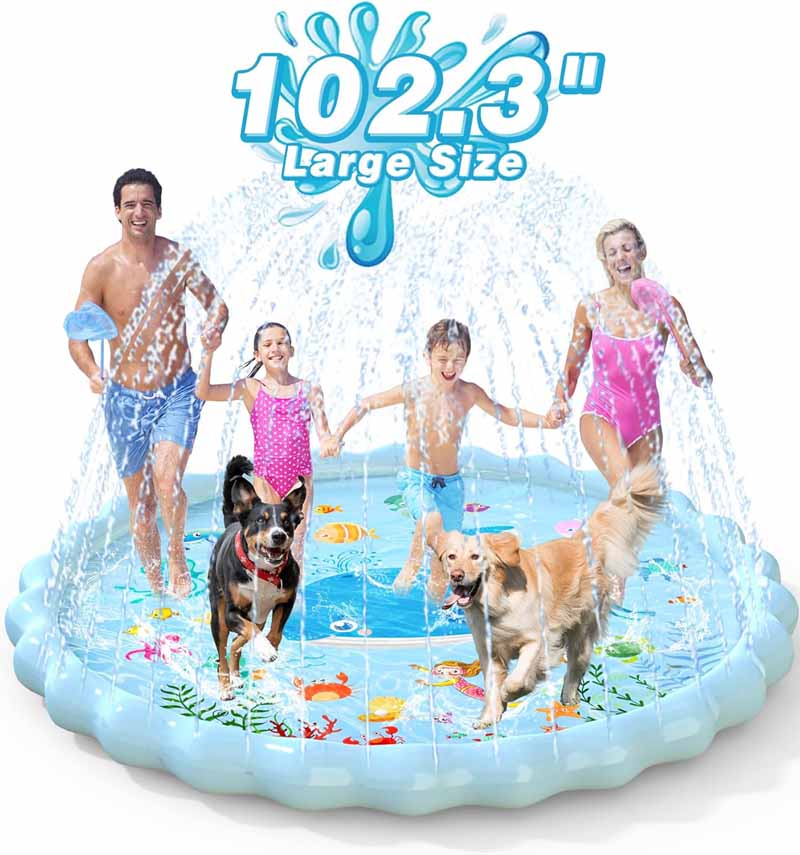
A soccer splash pad is a hose-connected outdoor water toy that combines a splash mat with a soccer goal, target, or game area. Water sprays from the edge while children kick, run, and play simple soccer-style games. It is made for active summer play instead of still water soaking.
Soccer Splash Pad Basics
A soccer splash pad usually includes a flat PVC water play surface and a soccer-themed feature such as an inflatable goal, printed target, or soft goal frame. Parents connect the mat to a garden hose. Water fills the outer edge, then sprays through small holes around the mat.
The biggest difference between a soccer splash pad and a regular splash pad is the game structure. A regular splash pad gives kids water. A soccer splash pad gives them water plus a reason to move. Children can kick toward the goal, take turns, count points, block the ball, or create backyard rules with siblings and friends.
That extra play direction matters. Water alone may keep a child busy for a short time. Water plus a game often keeps children engaged longer because they are not just standing in spray; they are doing something with a clear goal.
A soccer splash pad works especially well for families who want quick backyard cooling, kids who enjoy ball games, parents who do not want to fill a large pool, and playdates where children need a shared outdoor activity.
Soccer Splash Pad Play
The best soccer splash pad play is active but not complicated. Kids do not need strong soccer skills. They can roll the ball, kick gently, run through the spray, stand as goalie, or take turns scoring. The water keeps the activity exciting, while the goal gives the play a clear purpose.
Parents can change the game based on age and energy level. Younger kids can stand closer to the goal and use soft kicks. Older kids can stand farther back, count goals, or play short team rounds. The same mat can feel gentle in the morning and more exciting during a weekend playdate.
A soccer splash pad also gives parents flexible play options. It can work as a 10-minute cooling break, a 30-minute backyard game, a birthday party activity, or a simple parent-child shooting challenge. For families trying to reduce screen time during summer, active water play can be easier to offer than a full sports setup.
Soccer Splash Pad Age Fit
Most soccer splash pads are better for children ages 3 and up, with adult supervision. Age fit depends less on the printed age range and more on balance, comfort with water spray, and the ability to follow simple rules.
A cautious three-year-old may enjoy walking through low spray and rolling the ball slowly. A six-year-old may want to kick, chase, and score. An eight-year-old may turn the same mat into a backyard challenge game.
| Age Group | Better Play Style | Water Pressure | Parent Tip |
|---|---|---|---|
| 3–4 years | Walking, soft kicks, simple goal play | Low | Keep play calm and close |
| 5–6 years | Light running, target kicks, turns | Low to medium | Set rules before play starts |
| 7–9 years | Scoring games, goalie play, team rounds | Medium | Leave more space around the mat |
| Mixed ages | Turn-based play | Low to medium | Let younger kids go first |
For mixed-age families, the safest approach is to start with lower water pressure. Once children understand the rules and surface feel, parents can increase the spray slightly if needed. A good first session should feel easy, not wild.
Is a Soccer Splash Pad Worth It?
A soccer splash pad is worth it when it gets used often and fits the family’s yard, water pressure, and play style. It offers more repeat play than a plain sprinkler and less setup work than a pool. The value is highest for active kids who enjoy kicking games and outdoor movement.
Soccer Splash Pad Value
The value of a soccer splash pad should be measured by use, not only by price. A cheap water toy used once can still feel wasteful. A better-designed toy used across many summer afternoons can feel like a smart purchase.
A soccer splash pad creates value in three practical ways. It cools children down, keeps them moving, and gives them a game they can repeat. That combination helps the toy stay useful beyond the first day.
For parents, convenience also matters. A soccer splash pad does not require filling a deep pool, carrying heavy water buckets, or cleaning a large liner. It connects to a hose, creates an activity quickly, then folds away after drying.
A simple cost-per-use calculation makes the value easier to judge.
| Splash Pad Price | Summer Uses | Cost Per Use |
|---|---|---|
| $40 | 5 uses | $8.00 |
| $40 | 10 uses | $4.00 |
| $60 | 12 uses | $5.00 |
| $60 | 20 uses | $3.00 |
| $80 | 20 uses | $4.00 |
A soccer splash pad becomes more worthwhile when it is not saved only for special occasions. The more often it appears in normal summer routines, the more practical the purchase becomes.
Soccer Splash Pad Cost
The cost of a soccer splash pad depends on size, material thickness, goal structure, connector quality, spray design, and packaging. Portable hose-connected splash pads cost far less than permanent backyard splash pad systems.
A permanent backyard splash pad can involve plumbing, drainage, pumps, surfacing, and labor. That is a home improvement project. A soccer splash pad is a portable seasonal product. It is designed to unfold, connect, play, drain, dry, and store.
| Product Type | Cost Level | Setup Work | Storage Need | Best Use |
|---|---|---|---|---|
| Basic sprinkler | Low | Very low | Very low | Quick cooling |
| Plain splash pad | Low to moderate | Low | Low | Toddlers and simple water play |
| Soccer splash pad | Moderate | Low | Low to medium | Active kids and backyard games |
| Inflatable water slide | Moderate to high | Medium to high | High | Large yards and parties |
| Permanent splash pad | Very high | Professional work | None after installation | Long-term outdoor renovation |
For many families, the soccer splash pad sits in a practical middle range. It costs more than a basic sprinkler, but it gives more structured play. It costs much less than a large inflatable water slide or permanent system, while still creating a strong summer activity.
Soccer Splash Pad Uses
A soccer splash pad becomes more valuable when it fits real family life. The best use cases are not rare events. They are normal hot-weather moments when kids need to cool down and parents want an easy activity close to home.
It works well after school, during weekend play, at birthday parties, during family cookouts, and for playdates where children need a shared outdoor activity. The soccer element helps because it gives children a repeatable reason to return. Instead of only walking through spray, they can create small challenges: five shots each, goalie turns, target kicks, parent versus child, or team rounds.
A product with more than one use scene usually performs better for families. Parents are more willing to bring it out again when it can serve quick play, group play, and special occasions.

A soccer splash pad is not ideal for every home. It needs flat ground, garden hose access, enough open space, and children who enjoy water spray. If the yard is narrow, rocky, sloped, or full of sharp debris, the play experience may be less enjoyable.
Water pressure also affects satisfaction. Weak pressure may create low spray. Very strong pressure may overwhelm younger children. Parents should turn on the water slowly and find the right level for the child’s age.
A soccer splash pad may not be the best choice when the yard has no flat area, children dislike spray water, outdoor water pressure is weak, or parents cannot dry and store the mat after play. The best purchase is not the biggest or brightest model. It is the one that fits the child, yard, water pressure, and cleanup habits.
How Does a Soccer Splash Pad Work?
A soccer splash pad works by connecting to a garden hose. Water fills the edge channel and sprays through small holes around the mat. Parents control spray height by adjusting water pressure. After play, the mat should be drained, rinsed, dried, and stored away from heat or sharp objects.
Soccer Splash Pad Setup
Setup should feel simple, but the first few minutes affect the whole play session. A careful setup helps prevent uneven spray, slipping, hose stress, and early wear.
Choose a flat area first. Grass is often comfortable because it is softer underfoot. A smooth patio can work too, but it should not be too hot or slippery. Avoid gravel, rough concrete, wood chips, exposed roots, sharp mulch, and sloped ground.
Before turning on water, remove sticks, stones, toys, pet items, and garden tools. Unfold the mat fully and smooth out large wrinkles. Connect the hose firmly and place the hose in a relaxed curve so it does not pull against the connector.
| Setup Step | Time Needed | What to Check |
|---|---|---|
| Clear the ground | 1–2 minutes | No stones, sticks, or sharp debris |
| Unfold the mat | 1 minute | Mat lies flat |
| Connect hose | 1 minute | Connector is straight and secure |
| Start water slowly | 30–60 seconds | Edge fills evenly |
| Adjust spray | 30 seconds | Spray fits child age |
Parents should watch the spray pattern before children step on. If one side sprays too high or the mat shifts, adjust the water pressure or placement before play begins.

Spray height depends on water pressure, hose flow, hole design, and how evenly the outer edge fills. A home with stronger outdoor water pressure may produce higher spray. A long or narrow hose may reduce spray performance.
Higher spray is not always better. Younger children often enjoy lower spray because it feels gentler and less surprising. Older children may prefer medium spray because it makes the soccer game more exciting.
Even spray matters more than dramatic height. If one side sprays strongly and another side barely sprays, children gather in one area and the soccer game feels uneven. A balanced spray pattern helps kids use more of the mat.
For better spray performance, use a garden hose in good condition, remove hose kinks before play, turn water on gradually, and keep the mat flat while the edge fills. EPN focuses on multi-point spray design so water can spread more evenly across the play area. For a soccer splash pad, balanced spray supports better movement and better game flow.
Soccer Splash Pad Cleanup
Cleanup is one of the biggest reasons parents either reuse a water toy or stop using it. If a soccer splash pad drains and dries easily, it is more likely to become part of the family’s summer routine.
After play, turn off the water first. Disconnect the hose and let remaining water drain from the mat. Rinse off grass, mud, leaves, sunscreen, and dirt. Check the underside too, especially if the pad was used on grass.
Drying is important. Folding a wet splash pad can lead to odor, water spots, and material stress. Let both sides dry before storage. Shade drying is usually better than leaving warm PVC in strong sun for too long.
| Cleanup Task | Recommended Time | Why It Matters |
|---|---|---|
| Drain water | 2–5 minutes | Reduces mess and weight |
| Rinse dirty areas | 1–3 minutes | Removes grass, mud, sunscreen |
| Air dry | 20–60 minutes | Helps prevent odor |
| Loose fold | 1–2 minutes | Reduces crease stress |
| Dry storage | Ongoing | Protects material and seams |
A simple cleanup routine keeps the next setup easier. Clean, dry products are more likely to be used again.
Soccer Splash Pad Storage
Storage affects durability. PVC water toys should not be stored wet, tightly crushed, or placed near sharp tools. A dry garage shelf, storage bin, closet, or shaded utility area works better than leaving the mat outdoors.
Avoid folding along the exact same hard crease every time. Repeated pressure on the same line can stress material and seams. A loose fold or soft roll is better for repeated summer use.
Store small parts together. If the soccer splash pad includes a ball, repair patch, hose adapter, goal piece, or instruction sheet, keep them in one bag or bin. Losing a small adapter can make the next setup frustrating.
Good storage habits make the product feel easier to own. When a splash pad is clean, dry, and easy to find, parents are more likely to bring it out again.
Which Soccer Splash Pad Features Matter?
The most important soccer splash pad features are durable PVC, strong seams, balanced spray, a secure hose connector, practical size, and a simple goal design. Parents should choose a product that feels fun for kids but still easy to set up, clean, dry, fold, and store.
Soccer Splash Pad Material
Material quality decides how the splash pad feels during play and how well it handles repeated use. A soccer splash pad is more active than a basic water mat. Kids step, kick, turn, chase the ball, and move through water. The material must handle water pressure, foot traffic, ground contact, sunlight, and folding.
PVC thickness matters, but thickness alone is not enough. A splash pad also needs flexibility, seam stability, low odor, and a surface that feels suitable for wet play. Material that is thick but too stiff may crease poorly. Material that is too thin may be easier to puncture or stretch.
EPN develops PVC and composite material products across children’s splash pads, pet splash pads, inflatable pools, water toys, snow tubes, and pool pillows. For splash pad products, EPN pays close attention to material thickness, soft feel, low odor, sunlight stability, seam strength, and flexibility after storage.
That experience matters because a soccer splash pad must feel playful while still handling active movement.
Soccer Splash Pad Size
Size should match the yard and the number of children using it. Larger splash pads may look more exciting, but they need more flat space, stronger water flow, and more drying room. Smaller pads may fit patios better but can feel crowded during group play.
Parents should measure the real play area before buying. The mat itself is only part of the needed space. Kids need room to kick, step back, move around the goal, and leave the mat safely. Adults need space to supervise. The hose also needs a safe path.
| Family Situation | Suggested Size Logic | Reason |
|---|---|---|
| One young child | Compact to medium | Easier to manage |
| Two children | Medium | Better turn-taking space |
| Three or more children | Larger mat | Reduces crowding |
| Small patio | Compact | Easier drying and storage |
| Backyard party | Medium to large | More shared play value |
A soccer splash pad should feel open, not squeezed into the yard. If children have no room to move, the soccer feature loses much of its value.

The hose connector is a small part with a large effect on user experience. Many splash pad issues start near the connector because that area handles water pressure, hose pulling, twisting, and movement during play.
A good connector should attach securely and sit in a position that reduces stress. Parents should not need to force the hose into place. The hose should not pull sideways or lift the mat edge. A relaxed hose curve helps reduce strain.
During soccer play, children may step near the hose, move around the edge, or kick close to the connector. That makes connector strength more important than on a basic splash mat.
EPN uses standardized water-inlet and valve development across outdoor water products because stable connection points improve daily use. For families, that means less frustration during setup. For custom water-toy projects, connector structure can be reviewed early during development instead of being treated as a small accessory.
Soccer Splash Pad Goal
The goal is the reason to choose a soccer splash pad instead of a plain splash pad. A good goal should be easy to understand, stable enough for casual play, and interesting enough for repeat use.
For younger children, the goal should support close-range rolling kicks and simple scoring. For older children, it should create enough challenge to make the game fun. The design should not require complicated setup or too much instruction from parents.
| Goal Style | Benefit | Possible Concern |
|---|---|---|
| Printed target | Easy to store | Less 3D play feeling |
| Inflatable goal | Stronger game appeal | Needs stable structure |
| Soft frame goal | Good visual focus | Should stay upright |
| Wide target zone | Easier for young kids | Less challenge for older kids |
For EPN custom projects, goal design can be adjusted based on market needs. Stores, outdoor brands, and seasonal project teams may request different colors, prints, shapes, logo placement, packaging styles, or summer sports themes.
Is a Soccer Splash Pad Safe?
A soccer splash pad can be safe for backyard play when adults supervise, water pressure is controlled, the ground is flat, and the mat is cleaned and dried after use. The main concerns are slipping, rough play, dirty water habits, hot ground, sharp debris, and poor storage.
Soccer Splash Pad Hygiene
Many parents wonder how clean splash pads really are. The answer depends on where and how they are used. Public splash pads may carry more hygiene concerns because many children share the same space. A home soccer splash pad is easier to manage because parents control the water source, users, cleaning, and storage.
Any wet play surface can collect grass, dirt, sunscreen, body oils, pet hair, and germs. Children may sit, step, crawl, or fall on the mat. They may touch the water and then touch their face. Good hygiene habits make a real difference.
For cleaner home use, use clean hose water, rinse children’s feet when needed, keep pets off the mat during kids’ play, avoid use when a child has stomach illness, stop children from drinking spray water, rinse the pad after play, and dry it fully before folding.
A home soccer splash pad does not need complicated cleaning. It does need consistent draining, rinsing, and drying.

Kids may need water shoes depending on the ground. Water shoes are helpful on hot patios, rough grass, concrete, or yards with small stones. They protect feet from heat, scratches, and uncomfortable surfaces.
Bare feet may be fine on clean, soft grass, especially for younger children who move slowly. Parents should still check the ground first. Once water starts spraying and children get excited, they may not notice small sticks or rocks.
| Ground Type | Bare Feet | Water Shoes | Parent Note |
|---|---|---|---|
| Soft clean grass | Usually fine | Optional | Check for hidden debris |
| Hot patio | Not recommended | Recommended | Test surface heat first |
| Rough grass | Risky | Recommended | Protects from scratches |
| Concrete | Less comfortable | Recommended | Watch heat and slipping |
| Mulch nearby | Not ideal | Recommended | Keep debris away from mat |
Water shoes can also help children feel more confident during soccer-style movement. Choose lightweight, flexible shoes with grip. Heavy shoes can make kids move awkwardly.
Soccer Splash Pad Slips
Wet play can be slippery, especially when children run, turn quickly, or chase a ball. A soccer splash pad adds movement, so parents should set simple rules before the water turns on.
Flat ground is the first step. Sloped areas can make water collect on one side and may cause the mat to shift. Uneven ground can create uncomfortable pressure points under the pad. High water pressure can also make children more excited and harder to control.
Parents can reduce slipping by using moderate spray, limiting the number of children at one time, keeping the mat on flat ground, avoiding rough running starts, creating turn-based games, and stopping play if the mat shifts.
A simple rule works well: if children start pushing, sprinting, or sliding on purpose, pause the game and reset.
Soccer Splash Pad Rules
A soccer splash pad needs rules children can remember. Complicated instructions do not work well during outdoor water play. Short rules work better.
The most useful rules are simple: no pushing, no diving, no hard kicks at people, no pulling the hose, no stepping on the connector, no sharp toys on the mat, no drinking spray water, and stop if the mat moves.
Adult supervision is still required. Shallow water does not remove slipping, bumping, rough play, or hygiene concerns.
For mixed-age play, parents can adjust distance. Younger children can shoot closer to the goal. Older children can stand farther back. That keeps the game fair without making it unsafe.
Do You Need a Soccer Splash Pad?
You may need a soccer splash pad if your child likes active outdoor games, your yard has flat space, and you want a reusable summer water toy that is easier than a pool. It is less suitable for very small yards, weak water pressure, rough ground, or children who dislike water spray.
Soccer Splash Pad Yard Fit
A soccer splash pad works best in a yard with flat, open space and nearby hose access. Grass is often a comfortable choice because it feels softer underfoot, but the area still needs to be checked. A patio can work too, but heat and slipping need more attention.
Parents should look at the full play zone, not only the mat size. Kids need extra room around the pad to kick, step back, move to the goal, and exit safely. Adults need space to supervise. The hose also needs a clean path that does not create a tripping risk.
A good yard fit includes a flat surface, no sharp debris, enough space around the mat, good drainage, hose access nearby, and no furniture too close to the play area.
If the mat barely fits, the soccer feature may feel cramped. A soccer splash pad needs movement space to show its full value.
Soccer Splash Pad Kid Fit
The best child fit is an active child who likes movement, water, and simple games. Kids who enjoy soccer, ball games, sprinklers, outdoor play, and friendly challenges are more likely to use the pad many times.
For cautious children, start slowly. Use low water pressure. Let the child walk around first. Try soft rolling kicks before faster play. Allow the child to get comfortable with the spray.
For families with siblings, the soccer format can create order. Children can take turns shooting, blocking, counting points, or setting small challenges. That structure helps reduce arguments and keeps the activity moving.
A soccer splash pad gives children more to do than a plain mat. That extra activity can make the difference between ten minutes of play and a full afternoon of backyard fun.
Soccer Splash Pad Checklist
Before choosing a soccer splash pad, parents should check more than color and size. The best option should match the yard, child age, water pressure, storage space, and cleanup routine.
Check whether the splash pad fits the yard with extra space around it, whether the material is thick and flexible enough for repeated use, whether the hose connector is secure, whether the spray height can be adjusted through water pressure, whether the goal design adds real play value, and whether the mat can drain and dry easily after play.
For custom splash pad projects, planning should also include PVC thickness, spray hole layout, connector structure, goal shape, color design, retail packaging, warning label language, repair patch options, carton size, and market-specific requirements.
Soccer Splash Pad Verdict
A soccer splash pad is worth buying when it solves a real summer problem: children need outdoor activity, parents want easy setup, and the backyard can support safe water play. It offers more play value than a basic sprinkler because it adds a soccer game. It is easier than most pools because there is no deep water filling, large liner cleaning, or bulky storage.
The best soccer splash pad should feel fun for children and practical for adults. It should connect easily, spray evenly, stay stable during play, feel comfortable underfoot, drain without trouble, and store without taking too much space.
EPN develops PVC and composite outdoor products for family entertainment, children’s water play, pet cooling, outdoor leisure, and seasonal recreation. As part of American Epsilon Inc., EPN supports product development through material selection, structure design, testing, packaging adaptation, and custom manufacturing.
EPN’s product development team includes 27 R&D members and more than 18 designers. The company carries out over 500 material and product performance tests each year and develops more than 1,500 design projects annually. For splash pad products, EPN focuses on spray balance, edge stability, connector reliability, PVC flexibility, seam strength, and repeated summer use.
Families can choose EPN soccer splash pads for active backyard cooling and easy summer play. Stores, outdoor brands, seasonal product teams, and custom project partners can contact Epsilon for ready product ordering, custom colors, size adjustment, pattern development, retail packaging, logo placement, and project quotation.