Skip to content
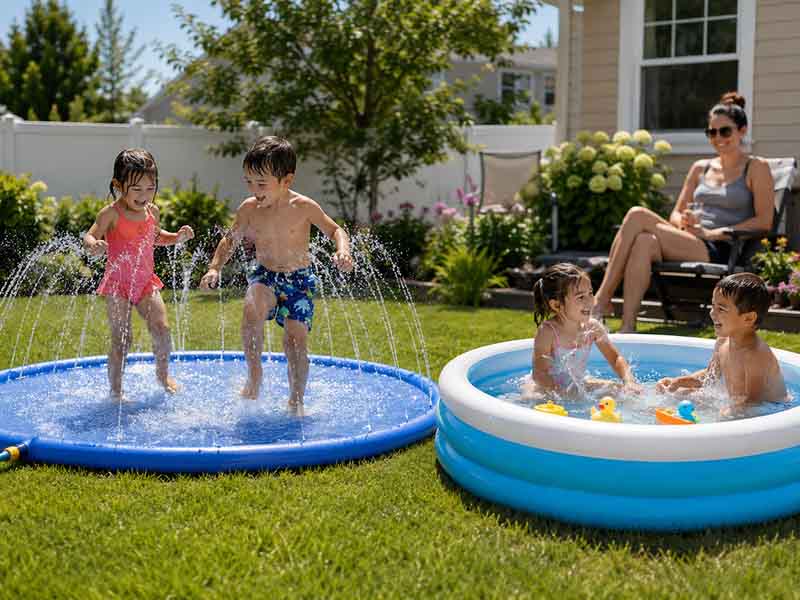
A hot backyard afternoon can make a simple water toy feel like a real family decision. Parents want kids to cool down, laugh, move, and enjoy outdoor play, but they also think about water depth, slipping, cleanup, storage, and how much work the toy will create after playtime ends. That is why comparing a kids splash pad vs inflatable pool matters more than it first appears. Both can bring summer fun, but they fit different children, yards, and routines.
A kids splash pad is usually better for quick setup, shallow water play, active sprinkler fun, easier draining, and compact storage. An inflatable pool is better when children want to sit, soak, and play with standing water. For toddlers and busy families, a splash pad often feels easier to manage. For slower weekend play, an inflatable pool can create a mini pool experience.
The best choice comes down to how your children actually play. Some kids want to run through spray, chase water streams, and jump back in again. Others want cups, floating toys, and time to sit in the water. Once you compare safety, setup, cleaning, cost, and durability, the answer becomes much clearer.
What Is a Kids Splash Pad vs Inflatable Pool?
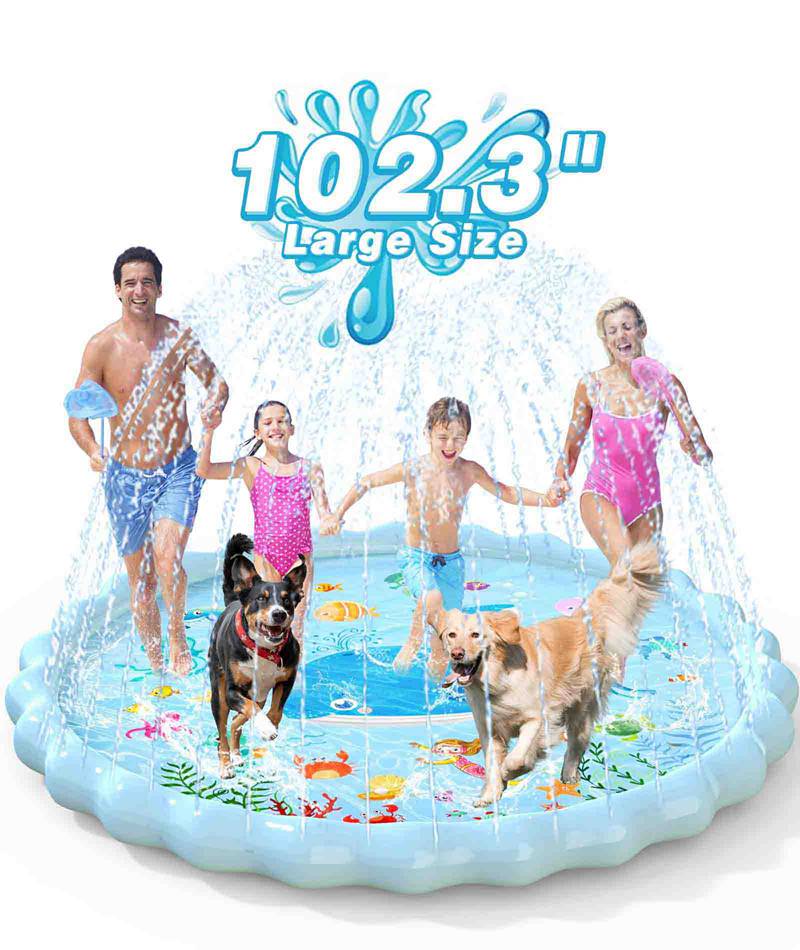
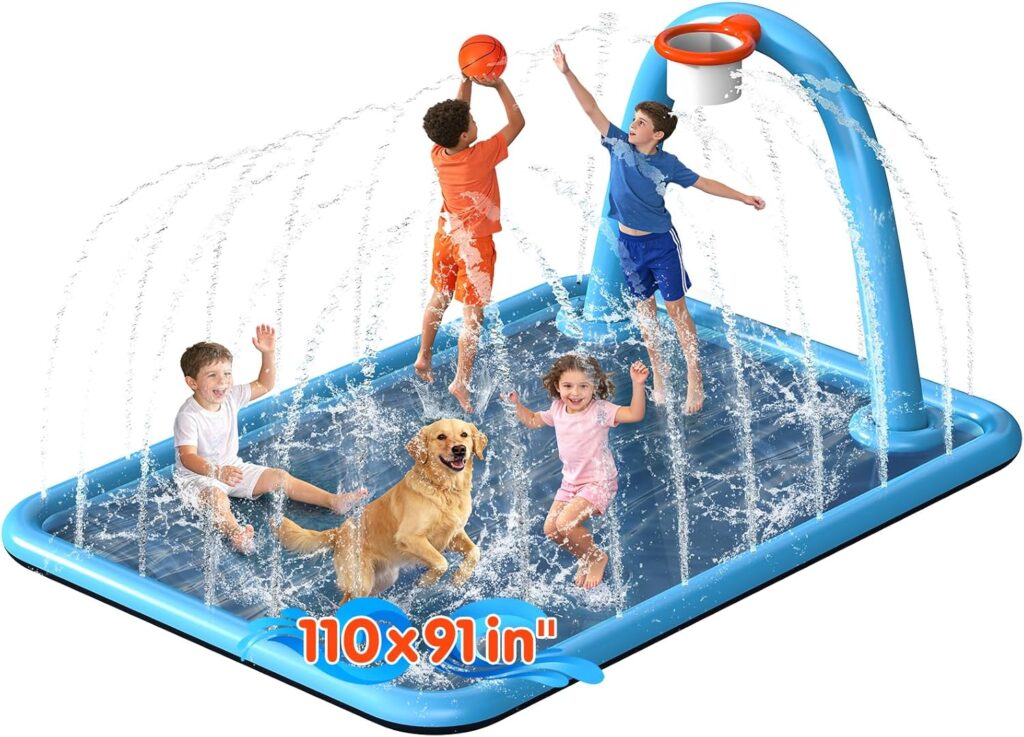
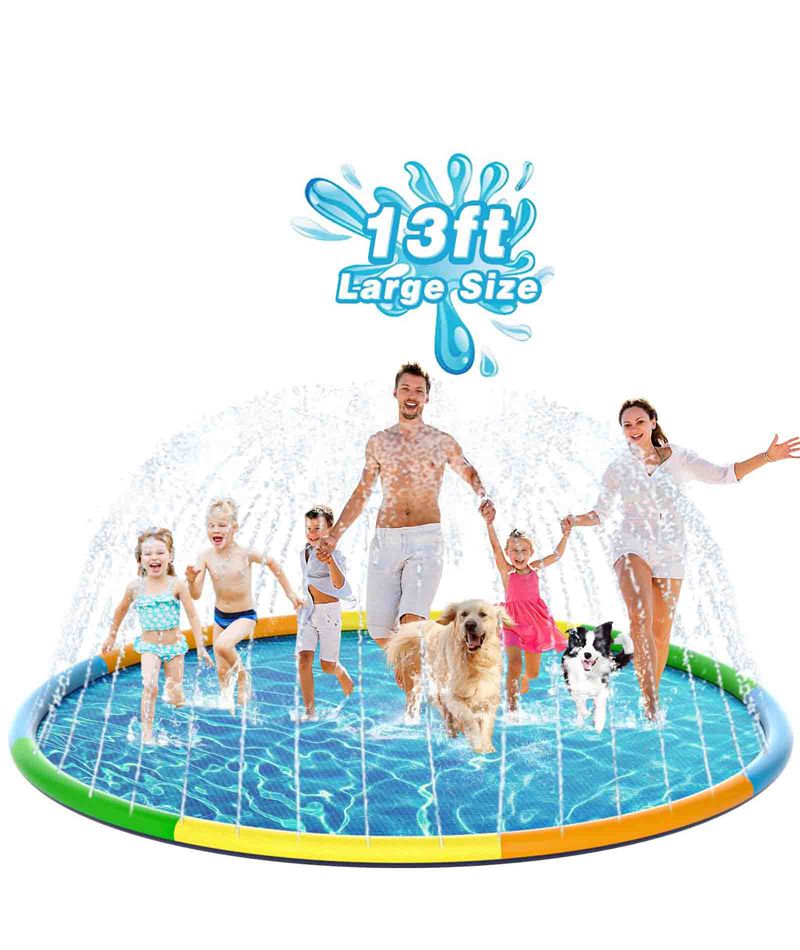
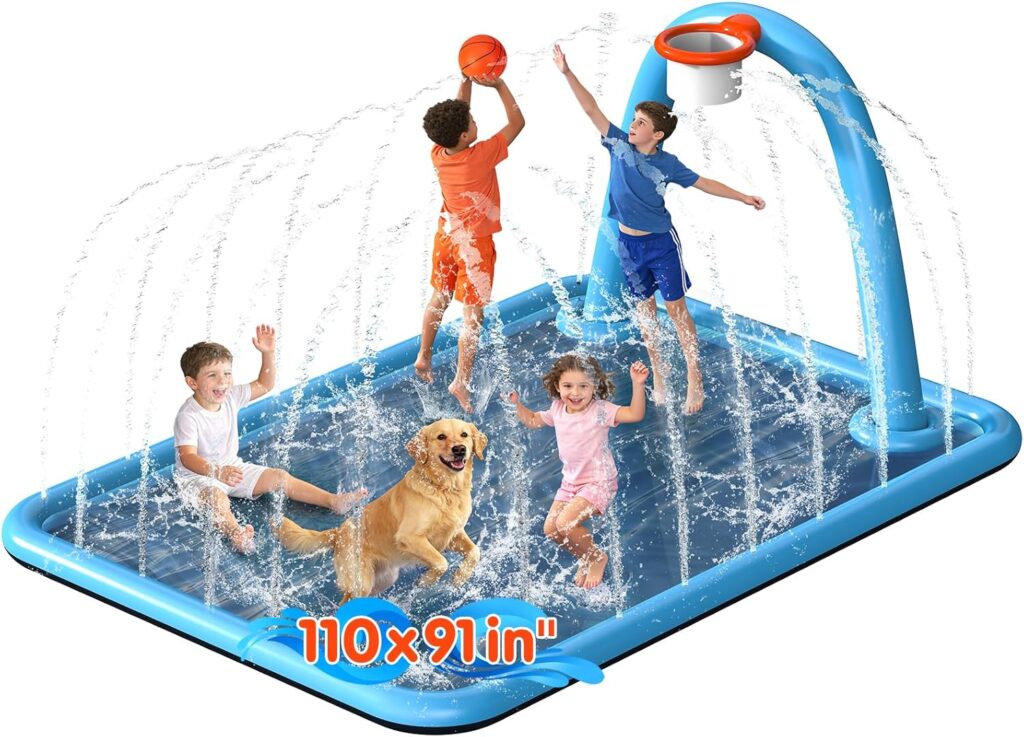
A kids splash pad is a flat PVC sprinkler mat that connects to a garden hose and creates shallow spray play. An inflatable pool uses air-filled walls to hold standing water for sitting, soaking, and toy play. The main difference is water depth and play style.
A kids splash pad is built for movement. Children step, run, sit briefly, chase spray, and cool down without being placed in deeper water. Water usually moves through the edge or inner channel, then sprays upward through small holes. Spray height depends on household water pressure, so parents can start low for younger children and raise it for more active play.
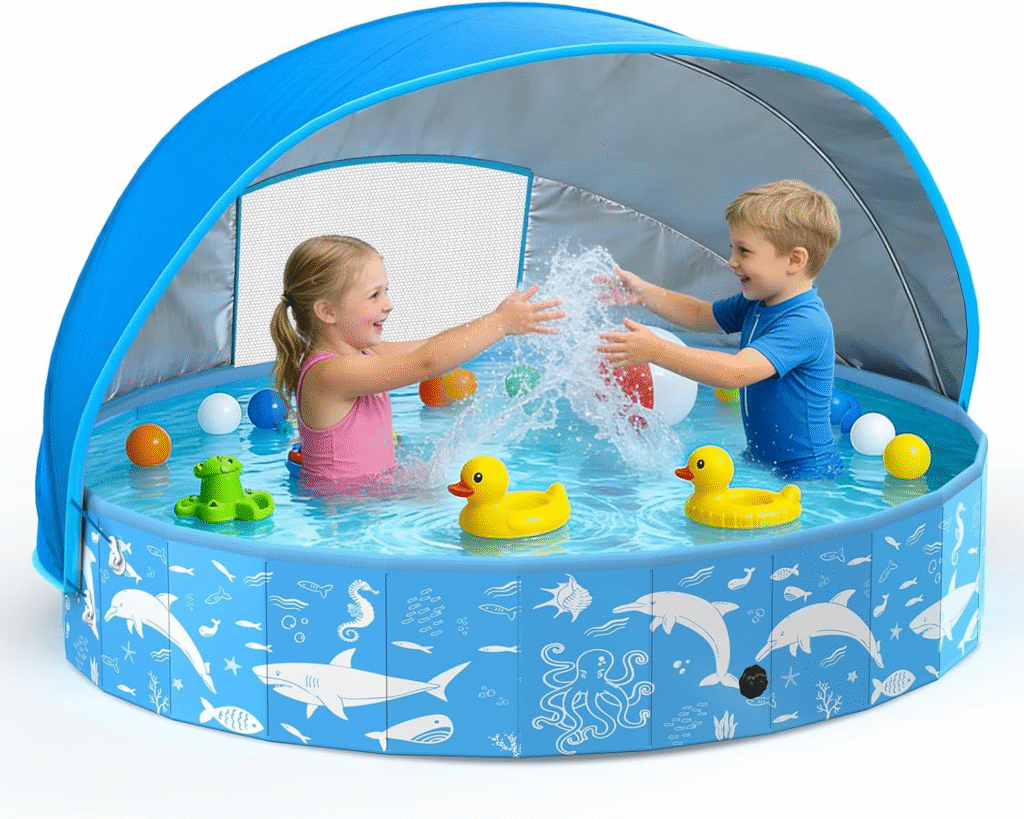
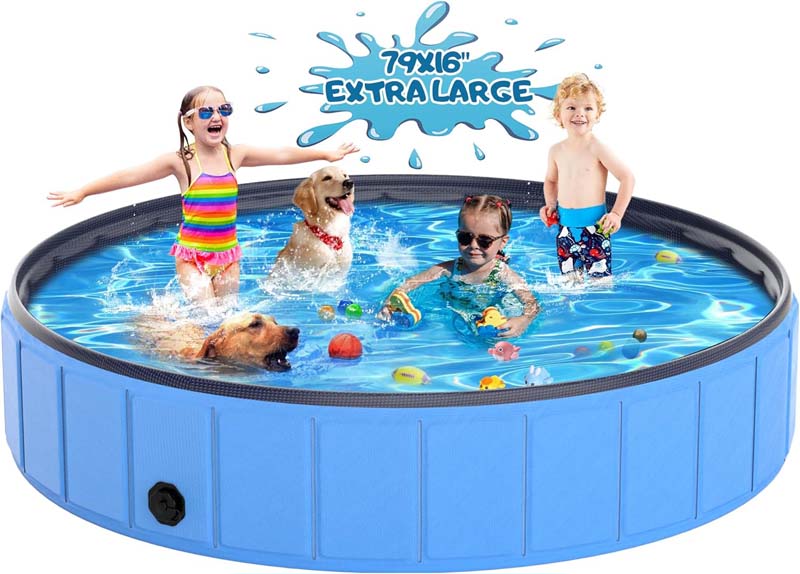
An inflatable pool is built for contained water play. It needs air to create the pool shape and water to fill the inside. Children can sit in the pool, pour water from cups, float small toys, or relax in one place. It feels more like a small backyard pool, even when the water is only a few inches deep.
For daily family use, the difference feels simple:
- Choose a kids splash pad when children want to move.
- Choose an inflatable pool when children want to sit.
- Choose a splash pad when setup time matters.
- Choose an inflatable pool when longer soaking play matters.
- Choose a splash pad when storage space is limited.
- Choose an inflatable pool when water depth is part of the fun.
| Comparison Point | Kids Splash Pad | Inflatable Pool |
|---|---|---|
| Main water style | Spray and shallow surface water | Standing water |
| Common play behavior | Running, stepping, chasing spray | Sitting, soaking, toy play |
| Setup equipment | Garden hose | Air pump plus water hose |
| Water depth | Very shallow | Several inches or more |
| Cleanup effort | Lower | Higher |
| Storage shape | Folds flat | Bulkier due to air chambers |
| Best routine | Short, frequent play | Longer supervised sessions |

What Is a Kids Splash Pad?
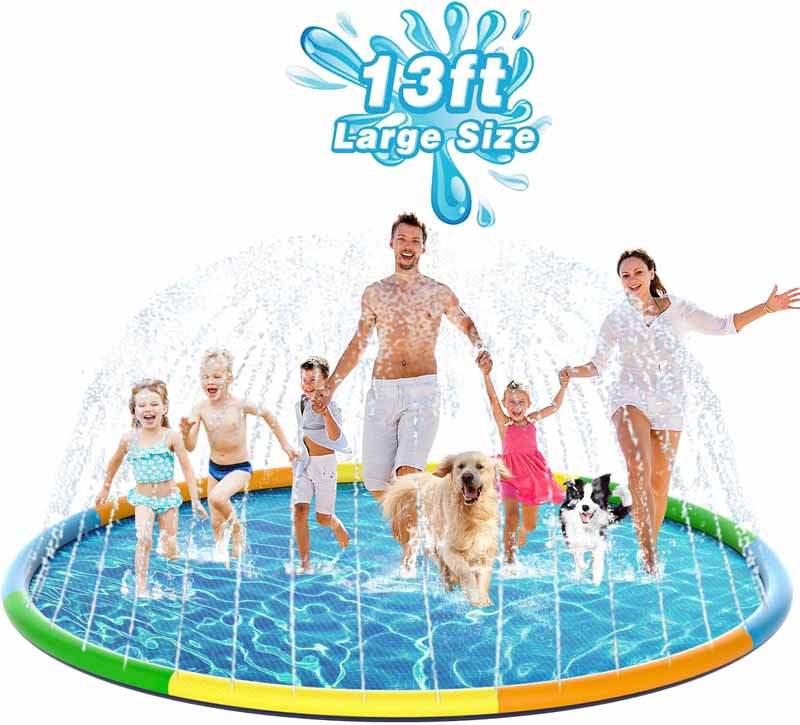
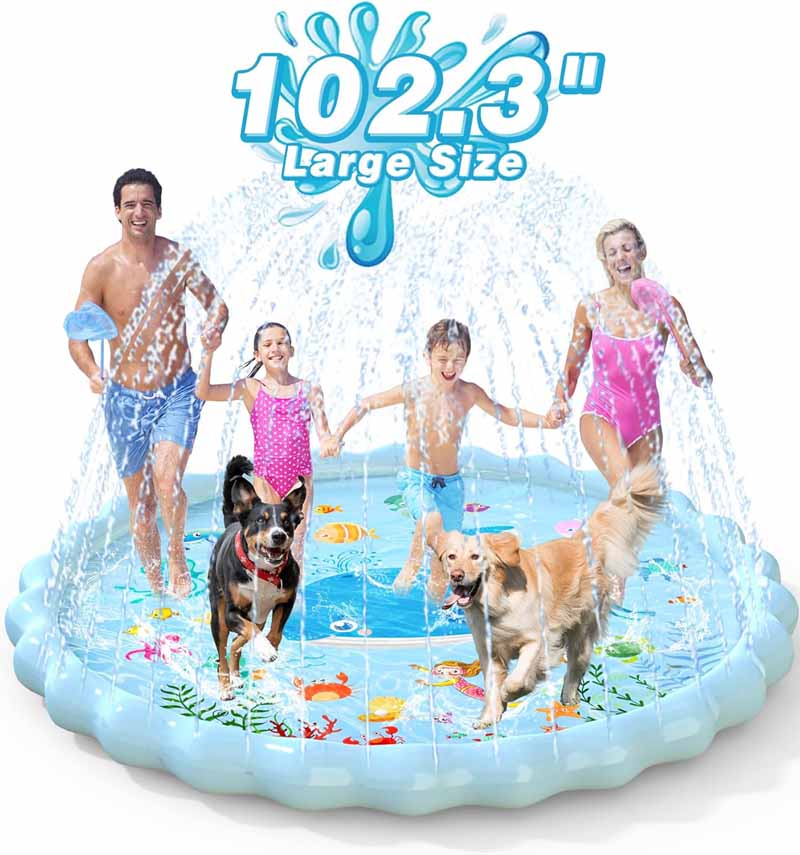
A kids splash pad is a foldable water play mat made for sprinkler-style backyard play. Most home splash pads connect directly to a garden hose. When water flows through the mat, small spray holes create a sprinkler effect. Children can run through the spray, sit in the shallow water layer, or play simple outdoor water games.
The biggest advantage is ease of use. A splash pad does not need inflation, a pump, or long filling time. In many backyards, setup can take about 3–5 minutes once the play area is clear. That makes it easier for families to use on hot weekdays, after school, or during short outdoor breaks.
For EPN splash pads, practical details matter:
- PVC feel and thickness
- Welded edge stability
- Water inlet strength
- Spray hole balance
- Foldable storage
- Low-odor material selection
- Smooth surface for supervised play
These details affect whether the mat lies flat, sprays evenly, and handles repeated summer use.

What Is an Inflatable Pool?
An inflatable pool is a small backyard pool supported by air-filled walls or rings. After inflation, the pool is filled with water and used as a contained play area. Children usually sit inside the water instead of running through it, so the play style is slower and more water-focused.
The appeal is clear. An inflatable pool gives kids a place to sit, scoop, pour, splash, and cool down. It works well for floating toys, small balls, water cups, and relaxed weekend play. For children who enjoy staying in water, an inflatable pool may feel more satisfying than spray play.
The tradeoff is effort. Parents need to inflate it, fill it, monitor the water level, empty it, rinse it, dry it, and store it properly. The larger the pool, the more these steps matter. A pool that looks fun online can become frustrating if setup and cleanup take longer than the actual playtime.
How Do Kids Splash Pad and Inflatable Pool Differ?
The biggest difference is how water behaves. A kids splash pad uses moving water. An inflatable pool stores water. That one difference affects safety, cleaning, water use, space, and how often families are willing to bring the toy outside.
A splash pad may run water continuously while children play, but it does not hold much water at one time. Once the hose is turned off, most water drains away quickly. An inflatable pool may use a larger amount of water at the start and keep that water inside until it is emptied.
For parents, the daily choice often looks like this:
| Family Question | Better Fit |
|---|---|
| Can we set it up fast? | Kids splash pad |
| Can kids sit in water? | Inflatable pool |
| Can we store it in a small space? | Kids splash pad |
| Can children float toys? | Inflatable pool |
| Can we clean it quickly? | Kids splash pad |
| Can we use it for longer weekend play? | Inflatable pool |
A splash pad usually fits short, repeated play. An inflatable pool usually fits longer planned play.
Is a Kids Splash Pad vs Inflatable Pool Safer?
A kids splash pad can be easier to manage for younger children because it usually has very little standing water. An inflatable pool offers deeper water play, but even shallow water needs constant adult supervision. The safer choice depends on water depth, surface grip, child age, and adult attention.
Safety is one of the main reasons families compare a kids splash pad vs inflatable pool. A splash pad feels easier for many parents because children are playing through spray instead of sitting in a filled pool. That can make it a practical choice for toddlers and preschool children who want water play but may not be ready for a small pool setting.
An inflatable pool creates a different safety situation. Even a few inches of water changes how parents need to supervise. Children can lose balance, lean forward, slip while getting in or out, or try to climb over soft sidewalls. If water remains in the pool after play, it can also attract children later when adults are not prepared to watch them.
A safer backyard setup should include:
- Flat ground
- Clear space around the play area
- Adult supervision within close reach
- Low starting water pressure for younger kids
- No running onto hard surfaces
- No jumping into inflatable pools
- No standing water left unattended after play
Surface control matters for both options. A wet PVC surface can become slippery if children run too aggressively. A splash pad should be placed on flat grass or another clean, level area with enough open space around it. An inflatable pool should also sit on level ground because uneven water depth can create unstable play conditions.
Are Splash Pads Safer Than Pools?
Splash pads are often easier to supervise because they have less standing water. That does not make them risk-free, but it reduces one major concern: children are not climbing into a filled pool. Once the hose is turned off and water drains away, the play area also becomes less attractive than a pool that still holds water.
Many families choose a splash pad for toddlers because the child can enjoy water, movement, and cooling without sitting in deeper water. The open layout also makes it easier for adults to see the child’s movement and reaction to the spray.
A safer splash pad routine includes:
- Start with low water pressure.
- Keep children within sight and reach.
- Place the hose away from the running path.
- Stop pushing, diving, or rough play early.
- Dry the mat before folding.
- Store it where children cannot pull it out alone.
A splash pad is better described as a lower standing-water option, not a no-risk toy.
How Does Inflatable Pool Water Depth Matter?
Inflatable pool water depth matters because children behave differently around standing water. A few inches may look harmless, but young children can still fall forward, slip while sitting down, or struggle if they lose balance. The deeper the water, the more serious the supervision needs to be.
Water depth also affects the pool structure. A pool filled too high places more weight on the bottom and more outward force on the sidewalls. If children lean on the wall or climb over it, the seam area can take extra stress.
A practical water-depth approach:
| Child Stage | Water Play Suggestion |
|---|---|
| Toddler | Very shallow water, close adult reach |
| Preschool child | Low water level, simple toys, no climbing |
| Older child | Moderate depth only with clear rules |
| Mixed-age play | Use the safest level for the youngest child |
More water does not always mean better play. For younger children, lower water levels are often easier to supervise and easier to clean.
Do Kids Splash Pads Still Need Supervision?
Yes, kids splash pads still need active supervision. The main risks are slipping, bumping into another child, tripping over the hose, pulling the connector, or playing too roughly near the edge. Water depth is lower, but movement is higher.
Parents should place the splash pad where the full play area is visible. A good setup leaves about 2–3 feet of open space around the mat when possible. The hose should run to the side instead of crossing the main play path. Water pressure should start low and increase only if children are comfortable.
If pets join the splash pad, supervision becomes even more important. Dogs may dig, bite, or run faster than children expect. Pet nails should be trimmed before play, and rough clawing should be stopped early to protect both the mat and the children sharing the space.
How Easy Is a Kids Splash Pad vs Inflatable Pool?
A kids splash pad is usually easier to set up because it only needs unfolding, hose connection, and water pressure adjustment. An inflatable pool needs inflation, filling, ground leveling, and more cleanup planning. For busy families, the easier option is often the one that gets used more often.
Ease of use is not a small detail. Many summer water toys fail in real family life because they take too much effort. Parents may buy the larger option, then avoid using it because setup and cleanup feel like a project.
A kids splash pad usually works well for quick backyard play. The steps are direct: choose a flat area, remove sharp objects, unfold the mat, connect the hose, turn on the water slowly, and adjust spray height. If the splash pad folds flat and the hose connector works smoothly, the whole process can feel simple enough for frequent use.
An inflatable pool takes more planning. Parents need to inflate the walls, check air firmness, fill the pool, manage water depth, and keep the area around the pool clear. If the pool is large, filling time can be much longer. If the weather is very hot, air expansion can also make overinflation a concern.
| Setup Detail | Kids Splash Pad | Inflatable Pool |
|---|---|---|
| Main steps | Unfold, connect, adjust water | Inflate, fill, check level |
| Pump needed | No | Usually yes |
| Best ground | Flat grass or smooth clean surface | Flat, level, debris-free ground |
| Setup feel | Quick and simple | More planned |
| Hose position | Should avoid play path | Used mainly during filling |
| Best routine | Short daily play | Planned longer play |

How Fast Is Kids Splash Pad Setup?
A kids splash pad can be ready quickly when the ground is already prepared. In many home settings, setup takes about 3–5 minutes. The biggest time savers are a flat foldable design, a secure hose connection, and spray holes that work evenly without repeated adjustment.
A better setup routine looks like this:
- Check the ground by hand.
- Remove small stones, sticks, and hard toys.
- Spread the mat fully flat.
- Connect the hose without forcing the threads.
- Start with low water pressure.
- Raise the spray only after children are ready.
EPN designs splash pads for repeat backyard use, not only first-day appearance. The hose connection, welded edge, water channel, and foldability all matter after many uses. A splash pad should feel easy on the tenth play day, not only when it is new.
How Long Does Inflatable Pool Setup Take?
An inflatable pool takes longer because it has two setup stages: air and water. First, the pool needs to be inflated. Then it needs to be filled. A small pool may be manageable, but a larger pool can take enough time that parents think twice before setting it up for short play.
Air pressure needs attention. The walls should be firm enough to hold shape but not stretched too tight. Direct sun can warm the air inside the chambers, causing expansion. If the pool starts the day overinflated, seams may face extra pressure later.
A practical inflatable pool setup includes:
- Place before filling.
- Inflate moderately, not tightly.
- Check that the ground is level.
- Fill only to the needed depth.
- Keep towels and cleaning cloths nearby.
- Empty after play if it is a small pool without filtration.
The key issue is not whether an inflatable pool is difficult. It is whether the family is willing to repeat the full routine many times during summer.
Which Surface Fits Kids Splash Pad or Inflatable Pool?
The best surface is flat, clean, and comfortable. For kids splash pads, grass is often the most family-friendly option because it cushions movement and stays cooler than concrete. A smooth patio can work, but it should not have sharp edges, rough texture, or hot surface temperatures.
For inflatable pools, level ground is even more important. Water weight pushes down on the base, and uneven ground can make one side deeper than the other. A small slope may not look serious before filling, but it becomes more obvious once the pool holds water.
Before setting up either option, check for:
- Rocks
- Sticks
- Gravel
- Garden tools
- Sprinkler heads
- Thorny grass
- Uneven lawn patches
- Rough patio edges
- Hot concrete in direct sun
The play surface should protect both children and the water toy. A safe-looking yard can still hide small objects that damage PVC.
How Clean Is a Kids Splash Pad vs Inflatable Pool?
A kids splash pad is usually easier to keep clean because it does not hold much standing water and drains quickly after play. An inflatable pool needs more cleaning because water can collect sunscreen, grass, dirt, leaves, and body oils. Small inflatable pools should be emptied and dried often.
Cleaning is one of the biggest ownership differences between a splash pad and an inflatable pool. A splash pad may look messy during play, but most of the water moves through and drains away. Parents still need to rinse the surface, clear grass from the edge, and let both sides dry before folding, but the cleaning process is usually lighter.
An inflatable pool holds water in one place. That water changes quickly once children get in. Dirt from feet, sunscreen, leaves, hair, grass, and outdoor debris all collect inside. Warm weather speeds up odor and surface film. If the water looks cloudy, smells unpleasant, or feels slippery, it should be emptied immediately.
| Cleaning Point | Kids Splash Pad | Inflatable Pool |
|---|---|---|
| Water storage | Very little | Holds standing water |
| Cleaning after play | Rinse and dry | Empty, rinse, wipe, dry |
| Odor risk | Mainly from wet folding | Higher if water sits |
| Slime risk | Edge and surface film | Walls, bottom, seams |
| Drying speed | Faster | Slower |
| Best storage habit | Fold only when fully dry | Deflate after drying fully |
For families with toddlers, cleaning matters even more. Younger children may sit lower in the water, touch the surface often, and put hands near their mouths. Clean water and dry storage are part of safe use, not just appearance.
How Many Days Can Inflatable Pool Water Stay?
For a small inflatable pool without filtration, water should not sit for several days. A practical home-use habit is to empty it after play or at least daily during active use. Warm backyard water changes quickly, especially when children bring in grass, sunscreen, dirt, and body oils.
Parents sometimes want to save water by keeping the pool filled. That may feel convenient, but the water can become unpleasant fast. Cloudy water, floating debris, slippery walls, odor, or visible dirt are signs that the pool needs to be emptied immediately.
A simple water check:
| Water Condition | What To Do |
|---|---|
| Clear but used by kids | Empty after play when possible |
| Cloudy water | Empty immediately |
| Grass or dirt inside | Empty and rinse |
| Slippery pool wall | Empty, wipe, dry |
| Odor appears | Empty and clean |
| Water left overnight | Replace before the next play session |
If a family wants water to stay longer, they need a pool system designed for water treatment and filtration. A simple inflatable kiddie pool is not the same as a maintained swimming pool.
Can Splash Pad Water Cause Legionnaires?
A home kids splash pad connected to fresh hose water is different from a public recirculating splash pad. The higher concern is usually with poorly maintained public water systems that recirculate warm water and spray it into the air. Home splash pads should still be used with clean habits, but the risk situation is not the same.
For backyard use, parents can reduce water-quality concerns with simple steps:
- Use fresh water each time.
- Do not leave stagnant water inside the mat.
- Keep children from drinking spray water.
- Rinse the mat after play.
- Drain the mat fully.
- Dry both sides before folding.
- Store it in a clean, dry place.
The goal is not to make families worry about every splash. The goal is to understand the difference between fresh moving water and warm standing water. Fresh water that drains after play is easier to manage than water that sits dirty and uncovered.

How Do Kids Splash Pad and Inflatable Pool Dry?
A kids splash pad usually dries faster because it is flat. After play, turn off the hose, disconnect gently, lift the edge to release trapped water, and lay it open until both sides feel dry. Folding while wet can create odor and mildew marks.
An inflatable pool takes longer because water hides in corners, valves, seams, and bottom folds. It should be drained fully, tilted to remove remaining water, wiped if needed, and left inflated until the surfaces dry. Deflating too early can press wet surfaces together.
A better drying routine:
- Drain water fully.
- Wipe corners and connectors.
- Let the surface air dry.
- Flip once if needed.
- Check seams before folding.
- Store away from direct sun and damp floors.
Drying also protects durability. PVC water toys last longer when they are stored clean and dry. Repeated wet folding can weaken fold lines, create smell, and make the next play day less pleasant.
Which Lasts Longer: Kids Splash Pad or Inflatable Pool?
A kids splash pad may last longer when it uses thicker PVC, reinforced hose connection, balanced spray holes, and strong welded edges. An inflatable pool may last longer when air chambers, valves, sidewalls, and bottom seams are reinforced. Durability depends more on structure and use habits than product type.
Durability is often judged too quickly. Families may look at size and price first, but the weak points are usually smaller details: the hose connector, valve, seam width, bottom material, spray holes, and fold lines. These parts decide whether the water toy survives repeated summer use.
For a kids splash pad, the water inlet area is one of the most important parts. It handles hose pressure, twisting, pulling, and repeated connection. If the inlet area is weak, the splash pad may leak even if the rest of the mat looks fine. Spray holes also matter. Uneven spray can mean pressure is not distributing well through the water channel.
For an inflatable pool, valves and seams matter most. The sidewalls expand with air, and the bottom holds water weight. If children lean heavily on the sidewall, climb over it, or drag the pool while filled, the seams take more stress. Heat can also expand air inside the chambers, which is why overinflation should be avoided.
| Durability Area | Kids Splash Pad Concern | Inflatable Pool Concern |
|---|---|---|
| Connector or valve | Hose inlet stress | Air valve leakage |
| Seam area | Welded edge pressure | Sidewall and base seam pressure |
| Water behavior | Spray balance | Water weight |
| User movement | Running and stepping | Sitting, leaning, climbing |
| Storage risk | Fold-line cracking if stored wet | Moisture trapped in folds |
| Heat concern | Sun aging on PVC surface | Air expansion in chambers |
EPN develops PVC and composite outdoor recreation products with a focus on repeated use. For splash pads, pet splash pads, pools, and other water-play products, EPN pays attention to material feel, welded seam quality, water distribution, low-odor material selection, reinforced edges, and storage performance.
What PVC Matters in Kids Splash Pad?
PVC for a kids splash pad should feel flexible, stable, and strong enough for repeated stepping. If the material is too thin, it may fold easily but feel weak around edges and connectors. If it is too stiff, it may not lay flat or store easily.
A practical splash pad needs balance. Nearly 0.5mm PVC can give the mat a more durable feel while still allowing folding. For children’s water toys, low odor also matters because parents often notice strong plastic smell immediately after opening the package.
Material details worth checking:
- PVC thickness around 0.45–0.5mm for stronger summer use
- Wider welded edge rather than narrow heat seam
- Reinforced hose inlet area
- Smooth edge structure
- No sharp printing texture
- No strong plastic smell after airing
- Fold lines that do not turn white or brittle quickly
PVC should also work with the structure. Stronger material should be paired with wider welded seams, smooth edges, and a stable water channel. Otherwise, the splash pad may still fail at the weakest connection point.
How Do Inflatable Pool Seams Fail?
Inflatable pool seams often fail because of pressure, movement, heat, or poor storage. When a pool is overinflated, the air chamber stretches. When direct sun heats the air inside, pressure increases further. If children lean on the sidewall or climb over it, the seam can stretch unevenly.
Bottom seams face a different stress. Water weight pushes downward, especially if the ground is uneven. A filled pool should not be dragged because that can scrape the base and pull against welded areas. Even a small sharp object under the pool can create pressure damage over time.
Common seam problems include:
- Air leakage around valves
- Sidewall seam stretching
- Bottom seam wear from rough ground
- Corner pressure from uneven filling
- Heat expansion damage
- Fold cracks after wet storage
To extend use life, inflate the pool moderately, place it on level ground, avoid dragging it when filled, empty it after use, and dry it fully before storage.
Are Splash Pad Hose Parts Durable?
Splash pad hose parts need to handle more stress than many parents realize. The hose connector is twisted during setup, pulled during play, and exposed to water pressure every time the splash pad is used. A weak connector can make the entire mat frustrating.
A better hose area should feel secure, reinforced, and positioned away from the main play path. Parents should avoid forcing the connection, cross-threading the hose, or pulling the mat by the hose. Reducing water pressure before disconnecting also helps protect the inlet.
Before play, check:
- Whether the hose threads connect smoothly
- Whether water leaks from the inlet
- Whether the hose pulls the mat out of shape
- Whether spray holes work evenly
- Whether the edge fills without twisting
- Whether the connector sits away from children’s feet
Even spray around the play area usually means water is moving through the mat properly. If one side sprays high and another barely sprays, the water channel may be blocked, folded, or unevenly pressured.
Which Kids Splash Pad vs Inflatable Pool Should You Choose?
Choose a kids splash pad for quick setup, active sprinkler play, easier draining, smaller storage, and lower standing-water concerns. Choose an inflatable pool for sitting, soaking, floating toys, and longer supervised water play. The right choice depends on child age, play style, yard size, cleaning habits, and total summer effort.
The final decision should be based on how the water toy will be used after the first day. A kids splash pad is often better for families who want water play without a long setup routine. It works well for children who like to move, laugh, run through spray, and cool down quickly. It also fits parents who want a water toy that can be used often without feeling like a full pool setup.
An inflatable pool is better for children who enjoy sitting in water. It creates a more relaxed play style and gives children space for cups, boats, balls, and floating toys. For a weekend afternoon, that may be exactly what the family wants. But the extra water depth, cleaning, and drying work need to be part of the decision.
| Family Situation | Better Choice | Reason |
|---|---|---|
| Toddler needs shallow water play | Kids splash pad | Less standing water and easier spray control |
| Children want to sit in water | Inflatable pool | Better for soaking and toy play |
| Parents want quick weekday use | Kids splash pad | Faster setup and cleanup |
| Family wants weekend water time | Inflatable pool | More contained water play |
| Small backyard | Kids splash pad | Flatter shape and easier storage |
| Limited cleanup time | Kids splash pad | Drains faster |
| Floating toys are important | Inflatable pool | Holds enough water |
| Active kids need movement | Kids splash pad | Better for running and sprinkler games |
Are Kids Splash Pads Cheaper Than Pools?
Kids splash pads are often cheaper when total summer effort is considered. The purchase price matters, but it is only one part of the cost. Parents should also count water use, pump needs, setup time, cleaning time, drying space, storage room, and replacement risk.
An inflatable pool may look like a stronger value because it holds more water and feels larger. But if it takes too long to set up, needs frequent cleaning, and is used only a few times, the real value drops. A water toy used 20 times in one summer is usually a better purchase than a larger one used twice.
Cost comparison should include:
| Cost Factor | Kids Splash Pad | Inflatable Pool |
|---|---|---|
| First purchase cost | Often moderate | Varies by size |
| Air pump need | No | Usually yes |
| Water use pattern | Continuous during play | Larger fill volume |
| Cleaning time | Lower | Higher |
| Storage space | Smaller | Larger |
| Repeat-use convenience | Strong | Depends on family routine |
A splash pad often wins on repeat use because it is easier to start. When the setup feels simple, parents are more willing to bring it out on hot afternoons.
Which Is Better for Toddlers?
A kids splash pad is often the better choice for toddlers because the water stays shallow and the spray can be adjusted. Toddlers can explore water while standing, sitting briefly, or stepping in and out. Parents can stay close and see the child’s movement clearly.
The best toddler setup starts with low water pressure. Strong spray may feel exciting to adults, but it can overwhelm younger children. A gentle spray, flat grass surface, and clear adult reach make the experience more comfortable.
For toddlers, look for:
- Gentle adjustable spray
- Very shallow water play
- Soft but stable PVC feel
- Enough space for adult reach
- No hard objects nearby
- Easy drainage after play
- Clear view from all sides
An inflatable pool can work for toddlers, but water depth must stay low and supervision must be constant. The pool should be emptied right after use so children cannot return to standing water later.
Which Is Better for Older Kids?
Older kids may enjoy either option. Active children often prefer a splash pad because it gives them space to run, chase spray, and play simple water games. A larger splash pad can also support siblings or friends when adults are watching.
Children who like calmer play may prefer an inflatable pool. They can sit, soak, float toys, and create water games that do not require constant running. For longer backyard sessions, a pool may hold their attention better.
For older kids, durability becomes more important because they may:
- Step harder
- Run faster
- Pull water toys across the surface
- Lean on pool walls
- Play with more force
- Use the water toy for longer sessions
Stronger PVC, reinforced seams, and clear play rules matter more as children become more energetic.
Which Fits Small Backyards Better?
A kids splash pad usually fits small backyards better because it lies flat, stores smaller, and does not need tall sidewalls. It can work on a clean grass area, smooth patio, or open backyard corner as long as the surface is safe and level.
An inflatable pool needs more controlled space. It requires room for the pool body, adult access, safe entry and exit, and water draining. If it sits too close to steps, furniture, walls, or hard edges, supervision becomes harder.
A small-yard checklist:
- Measure the size before buying.
- Leave about 2–3 feet of open space when possible.
- Check where water will drain.
- Keep play away from stairs and sharp corners.
- Avoid placing water toys near outdoor furniture.
- Make sure adults can reach children quickly.
A water toy should fit not only the yard size, but also the family’s cleanup routine.
Order EPN Products or Request a Custom Epsilon Quote
An EPN kids splash pad is a strong choice for families who want shallow backyard water play, fast setup, adjustable spray fun, easier draining, and practical summer storage. It works especially well for parents who want children to cool down outdoors without preparing a full inflatable pool every time.
American Epsilon Inc. also supports custom development for brands, retailers, distributors, online sellers, and seasonal product projects. Epsilon works with PVC and composite materials across kids splash pads, pet splash pads, inflatable pools, children’s pools, pet pools, floating products, snow tubes, pool pillows, and other outdoor recreation items.
Custom options can include:
- Product size and shape adjustment
- PVC thickness and material feel selection
- Color, pattern, and artwork development
- Hose connector, valve, edge, and seam structure review
- Retail box, instruction sheet, label, and carton customization
- Multi-language packaging support
- Small test orders and staged volume planning
- Compliance support for different market requirements
For available EPN products, families and retail channels can choose water-play options based on age range, yard size, play style, and summer use frequency. For custom projects, send target dimensions, market, quantity, packaging needs, material requirements, and design direction to Epsilon for evaluation.
A good backyard water toy should still feel easy after the first few uses. It should be easy to set up, easy to supervise, easy to clean, easy to store, and strong enough for repeat summer play.