Skip to content
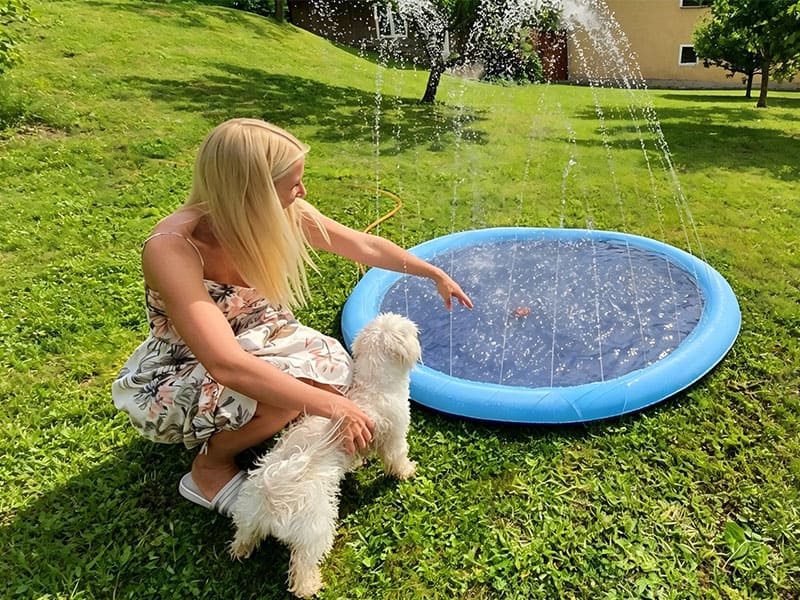
A splash pad can look perfect in photos and still disappoint a family in the first five minutes of setup. The hose is connected, the water is turned on, and instead of a lively spray, the water barely rises, sprays unevenly, or only dribbles around the ring. That moment is when many parents realize the real question is not just whether the splash pad looks fun. The real question is whether the home water pressure, hose setup, and splash pad design can actually deliver the play experience they expected.
For most home-use splash pads, the good news is that you usually do not need unusually high water pressure. In many homes, around 40 to 60 PSI is a comfortable working zone, and 40 PSI is often enough for a splash pad to work well when the hose, connector, and spray holes are all in decent shape. On the other hand, 120 PSI is usually too high for normal residential splash pad use because it can make the spray too aggressive and put more strain on the product and plumbing. EPA WaterSense guidance says home water-using fixtures generally operate best when incoming service pressure is 45 to 60 PSI, and many plumbing references also treat pressures above 80 PSI as high enough to require pressure control in residential systems.
That is why this topic matters so much for both families and sellers. Parents want to know whether their backyard setup will actually work. Retailers and brands want to know how to explain spray performance honestly and reduce avoidable complaints. Once you understand how PSI, hose setup, nozzle condition, and splash pad design work together, the whole category becomes much easier to explain and much easier to buy with confidence.
How Much Splash Pad Pressure Is Enough?
For most home backyards, a splash pad does not need extreme water pressure to feel fun. What it needs is steady pressure, enough flow, and a clean, low-resistance setup. In practical family use, a splash pad usually works best when the pressure is strong enough to lift the spray clearly, but not so strong that the water feels harsh, wastes water outside the play area, or puts extra strain on the ring and connector. In many homes, a working range around 40 to 60 PSI is a very comfortable zone for backyard splash pad use, and broader residential guidance also treats 45 to 60 PSI as an efficient target range for household water performance. Pressures above 80 PSI are commonly treated as high enough to need pressure control in residential plumbing, which is one reason extremely high pressure is not the goal for a splash pad.
This is the part many customers care about most. They are not trying to calculate a plumbing system. They are asking practical questions:
- Will my splash pad spray high enough to feel fun?
- Is my house pressure good enough?
- Why does the spray look weaker than the photos?
- Will more pressure make the splash pad better?
- Is my hose reducing the performance?
The honest answer is that pressure alone is not the full story. A family can have decent house pressure and still get weak splash pad spray if the hose is too long, the hose is too narrow, the connector is restrictive, or some of the spray holes are partly blocked. Hose-flow references and pressure-loss charts both show that longer hose runs and smaller hose diameters reduce delivered flow, even when source pressure seems acceptable. That is why a splash pad may perform very differently from one yard to another even when both homes “have water pressure.”
A practical pressure guide looks like this:
| Water Pressure Level | What Families Usually Experience |
|---|---|
| Below 30 PSI | Spray often feels too low or weak |
| Around 40 PSI | Often workable for home splash pads |
| Around 45–60 PSI | Usually the best balance for many homes |
| Around 70–80 PSI | Stronger spray, but often more than needed |
| Around 120 PSI | Usually too aggressive for normal splash pad use |
This is why the best question is not: “What is the highest pressure a splash pad can handle?”
The better question is: “What pressure gives my family a steady, playful spray without making the product harsher, messier, or more stressed than it needs to be?” That is the real answer to “how much splash pad pressure is enough.”
How Much Splash Pad Pressure Is Enough?
For most families, enough splash pad pressure means enough water to create a visible and even spray around the ring without turning the water into something sharp or uncomfortable. In real backyard use, that usually means moderate household pressure, not maximum household pressure. EPA WaterSense guidance points to 45 to 60 PSI as an efficient and well-functioning range for household water service, and that fits well with how many families experience splash pads in normal use.
There is also a useful lower-end reference point from product installation guidance. One splash-pad-style instruction guide states that water pressure should be at least 1.5 bar for normal operation, which is about 21.8 PSI. That does not mean every splash pad will feel exciting at that level, but it does show that splash pad operation often begins well below the very high pressure numbers many customers worry about. The bigger issue is usually whether the product is getting enough stable flow after hose loss, connectors, and setup restrictions are taken into account.
A practical “enough pressure” table looks like this:
| Pressure Situation | What It Usually Means for a Splash Pad |
|---|---|
| Around 20–25 PSI | May run, but often softer and less lively |
| Around 30–40 PSI | Usually workable, especially with a good setup |
| Around 45–60 PSI | Often the most comfortable performance zone |
| Above 80 PSI | Often stronger than needed for home use |
So in real family terms, enough splash pad pressure usually means:
- the spray rises clearly
- the ring sprays evenly
- the water feels playful, not harsh
- the splash pad does not seem under strain
That is what families usually want, and they usually do not need extreme pressure to get it.
Is 40 PSI Low for a Splash Pad?
In most homes, 40 PSI is not too low for a splash pad. In fact, it often sits inside a very workable range for ordinary backyard use. Many families worry when they hear “40 PSI” because they assume splash pads need unusually strong pressure to look fun. In many cases, 40 PSI is enough to produce a good result when the hose, connector, and spray holes are all helping rather than hurting performance. Broader household guidance commonly treats the 45 to 60 PSI zone as ideal, but 40 PSI is still close enough to that range that it can perform well in many real setups.
The reason 40 PSI sometimes feels disappointing has less to do with the number itself and more to do with what happens after the water leaves the faucet. At around 40 PSI, hose-flow references show that a 5/8-inch hose can still move a strong amount of water, but hose size, hose length, fittings, and restrictions all change the outcome. Some hose references place 5/8-inch garden hose delivery around 17 to 24 GPM at 40 to 50 PSI, while other flow charts show that longer runs and smaller inside diameters reduce what reaches the end of the hose.
A practical “40 PSI” guide looks like this:
| 40 PSI Condition | Likely Result |
|---|---|
| 40 PSI + short full-size hose | Usually good for family use |
| 40 PSI + long hose run | Lower spray height likely |
| 40 PSI + narrow hose | Weaker spray feel |
| 40 PSI + good ring design | Often a very usable result |
| 40 PSI + clogged spray holes | Weak or uneven spray |
So the honest answer is: 40 PSI is usually not the problem by itself. If the spray still feels weak at 40 PSI, the next thing to examine is the setup.
How Does Splash Pad Pressure Change Spray?
Splash pad pressure changes almost everything families notice during play. It changes:
- spray height
- spray strength
- spray width
- spray consistency
- how lively the ring feels
- how much water escapes outside the play zone
That is why water pressure feels so important in real use. Parents do not usually care about the number on its own. They care about what the number looks like and feels like once the children are standing in the splash pad.
As pressure rises, a splash pad usually produces:
- higher spray
- stronger water output
- quicker ring response
- a more dramatic look
But that does not mean higher pressure is always better. At higher pressure, families may also notice:
- the spray feels too strong for younger children
- more water splashes outside the play area
- the pad feels louder and harsher
- the connector and ring seem under more strain
A simple spray-performance table:
| Pressure Effect | What Families Usually See |
|---|---|
| Lower pressure | Lower, softer spray |
| Moderate pressure | Best balance of height and comfort |
| Higher pressure | Stronger spray, but not always better |
| Very high pressure | Harsher feel and more splash-out |
This is one reason some commercial or built-in splash pad systems are deliberately set much lower than homeowners might expect. One installation document for a fixed splash pad system instructs installers to set incoming cold water pressure between 30 and 40 PSI before start-up, showing that even dedicated splash pad systems are often tuned for controlled spray rather than brute force.
So the real goal is not maximum spray. The real goal is:
- enough spray for fun
- enough comfort for the child’s age
- enough control that the splash pad still feels easy to use
That is why steady moderate pressure is usually the best answer for home splash pad play.

Why Is Splash Pad Pressure Low?
When a splash pad sprays too low, most families assume the house does not have enough water pressure. Sometimes that is true, but very often it is only part of the story. In real backyard use, a splash pad usually loses performance because the water is being slowed down, restricted, or scattered before it reaches the ring in a clean, even way. That is why parents often say, “The faucet seems fine, but the splash pad still looks weak.” What they are seeing is not always a pressure problem at the house. It is often a delivery problem at the splash pad.
This is one of the most useful things customers can understand. A splash pad does not care only about the pressure number at the home. It cares about what pressure and flow are left after the water has traveled through:
- the outdoor faucet
- the hose
- the hose length
- the hose diameter
- the connector
- the adapter
- the ring entry point
- the spray holes
That means a family can have workable household pressure and still get poor splash pad performance if the setup is reducing water flow along the way. EPA WaterSense guidance treats 45 to 60 PSI as a strong operating range for home water performance, which means a lot of households already start from a usable place. But hose flow charts and pressure-loss guides also make it clear that longer hose runs, smaller hose diameters, and added restrictions can reduce final delivery before the water even reaches the splash pad ring.
A practical low-pressure breakdown looks like this:
| Low-Pressure Cause | What Families Usually Notice |
|---|---|
| Long hose | Lower spray height |
| Narrow hose | Weaker overall spray |
| Kinked hose | Uneven or changing spray |
| Poor adapter fit | Leakage or restricted flow |
| Partly blocked spray holes | Gaps or weak spots in the ring |
| Shared outdoor water use | Spray drops during use |
That is why solving low splash pad pressure is usually not about chasing maximum PSI. It is about removing the small restrictions that are quietly taking performance away.
Why Is a Splash Pad Spray Weak?
A weak splash pad spray usually means the splash pad is not getting enough effective flow, even if water is technically coming through. This is one of the most common family complaints because the splash pad may still spray, but not high enough or evenly enough to feel exciting.
The most common reasons are:
- the source pressure is on the low side
- the hose run is too long
- the hose is too narrow
- the splash pad ring is not filling evenly
- some spray holes are partly blocked
- the outdoor line is being shared with another water use at the same time
This is where many families confuse water presence with water performance. Water coming out does not automatically mean the splash pad should feel strong. The ring still needs enough steady delivery to push water upward through all the holes with reasonable force.
A practical weak-spray table:
| Weak Spray Reason | What It Often Looks Like |
|---|---|
| Low effective pressure | Spray stays low |
| Uneven ring fill | One side sprays better than the other |
| Partly clogged holes | Gaps or patchy spray |
| Long hose run | Lower overall spray energy |
| Shared faucet demand | Spray drops while another outlet is used |
In many homes, weak spray is not a sign that the splash pad is bad. It is a sign that the setup is taking away too much of the water before the splash pad can use it properly.
Does a Hose Affect Splash Pad Pressure?
Yes, very often it does. In fact, the hose is one of the biggest real-world reasons one splash pad performs better in one yard than in another. Families often assume any garden hose will deliver basically the same result, but hose length and hose diameter both matter a lot.
Pressure-loss guides and hose-flow charts show the same basic pattern:
- longer hoses lose more pressure and flow over distance
- smaller inside diameters reduce delivery more than larger ones
- the same source pressure can feel very different at the end of the hose depending on the setup
A practical hose guide:
| Hose Setup | Effect on Splash Pad Spray |
|---|---|
| Short full-size hose | Better flow delivery |
| Long hose run | Lower spray height likely |
| Narrow hose | Weaker spray feel |
| Kinked hose | Inconsistent spray |
| Older hose with collapse or restriction | Lower effective output |
This is why two families can both say “my house has decent pressure” and still get very different splash pad results. The hidden difference is often the hose.
Do Adapters Affect Splash Pad Pressure?
Yes, they can, and this is one of the most overlooked causes of weak splash pad performance. Families usually think of the adapter as a small connector piece that either fits or does not. But in real use, a poor adapter can do three different kinds of damage to performance:
- it can leak water
- it can restrict flow
- it can feed the ring unevenly if the fit is poor
This matters because the splash pad does not need much to start losing performance. A small amount of restriction or leakage at the connection point can noticeably lower spray height or make the spray feel less lively.
A practical adapter guide:
| Adapter Condition | Likely Result |
|---|---|
| Good fit, clean seal | Better flow consistency |
| Loose fit | Leakage and lower final pressure |
| Restrictive opening | Lower effective flow |
| Poor thread match | Unstable setup and wasted water |
For many families, the adapter is not the first thing they blame, but it should be high on the checklist. A splash pad cannot spray as well as it should if part of the water is already being lost or slowed at the connection.
Why Does a Splash Pad Work Fine at One House but Not Another?
This is one of the most useful questions in the whole topic, because it explains why customers can feel so confused. One family buys a splash pad and gets a lively spray. Another buys a similar one and says it barely works. That does not always mean one product is good and the other is bad. Often, it means the home setup is different in one or more important ways.
The biggest house-to-house differences are usually:
- different source pressure
- different hose length
- different hose diameter
- different faucet flow
- different adapter fit
- different outdoor water sharing during use
A practical comparison table:
| Yard Condition | Likely Splash Pad Result |
|---|---|
| Moderate pressure + short hose | Better |
| Moderate pressure + long narrow hose | Weaker |
| Good pressure + clogged spray holes | Uneven |
| Good pressure + poor adapter | Reduced spray |
| Good setup + no other water demand | More stable spray |
This is why families should be careful about comparing splash pad performance only by videos or product photos. The same splash pad can behave differently depending on the yard setup.
What Should Families Check First When Splash Pad Pressure Feels Low?
When splash pad pressure feels low, families usually get the best results by checking the simplest things first. This avoids unnecessary frustration and often fixes the problem faster than assuming the product itself is faulty.
A smart first-check list looks like this:
- make sure the faucet is fully open
- shorten the hose if possible
- remove any hose kinks
- check whether the hose is unusually narrow
- look for leakage at the adapter or connector
- inspect the spray holes for dirt or blockage
- stop using other outdoor water sources at the same time
A practical first-check table:
| First Check | Why It Matters |
|---|---|
| Faucet fully open | Maximizes available supply |
| Hose length | Reduces unnecessary loss |
| Hose kinks | Restores smoother delivery |
| Adapter seal | Prevents leakage |
| Spray holes | Restores even spray |
| Shared water use | Prevents pressure drop during play |
That is the real answer to why splash pad pressure is low. In many homes, the pressure is not truly “missing.” It is being reduced step by step before it ever reaches the splash pad in a useful way.

How Does Splash Pad Pressure Affect Use?
Splash pad pressure changes much more than spray height. It changes how the water feels on children’s skin, how evenly the ring sprays, how much water lands inside the play area versus outside it, how noisy the splash pad feels, and even how much stress goes into the seams and connector over time. In real family use, the difference between “this is fun” and “this is disappointing” is often not the product alone. It is the combination of pressure, flow, hose setup, and ring design working together. EPA WaterSense guidance recommends incoming residential service pressure in the 45 to 60 PSI range for efficient home water performance, and residential plumbing guidance commonly treats pressure above 80 PSI as high enough to require pressure reduction.
That is why customers should not think about pressure only as a technical number. In practical terms, pressure affects these daily-use questions:
- does the spray rise high enough to feel fun
- does the spray feel soft enough for younger children
- does the water stay mostly inside the splash pad zone
- does the splash pad feel stable and even around the ring
- does the product seem relaxed in use, or overly stressed
A practical use-impact table looks like this:
| Pressure Level | What Families Usually Experience |
|---|---|
| Lower pressure | Softer spray, but sometimes too weak |
| Moderate pressure | Better balance of comfort and play value |
| Higher pressure | Stronger spray, but not always more enjoyable |
| Very high pressure | Harsher feel, more splash-out, more product stress |
That is the real reason pressure matters. It does not only decide whether water comes out. It decides what kind of backyard experience the splash pad creates.
Is Higher Splash Pad Pressure Better?
Not always. Higher pressure can make the spray rise more and feel more energetic, but after a certain point it often stops improving the play experience and starts creating trade-offs. This is especially important for younger children, because a splash pad that feels exciting to an older child can feel too forceful or less comfortable to a toddler. EPA guidance links higher service pressure with higher flow and higher water use, and plumbing references also note that excessively high residential pressure can contribute to leaks, dripping, and stress on fittings.
Higher pressure can improve:
- spray height
- spray energy
- ring response speed
- visual excitement in photos and first impressions
But it can also create drawbacks:
- a sharper spray feel
- more water thrown outside the intended play zone
- more noise and splash around the yard
- more stress on the connector and ring seams
A practical comparison helps:
| Pressure Direction | Main Effect |
|---|---|
| Slightly higher | More visible spray |
| Moderately higher | Often better for older children |
| Much higher | More force, but not always better comfort |
| Excessively high | More waste and more product stress |
So the better answer is not “higher is better.” The better answer is “higher is only better until it stops improving the real family experience.”
Is 120 PSI Too Much for a Splash Pad?
In normal home use, 120 PSI is usually too much for a splash pad. It is far above the range commonly recommended for stable and efficient residential performance, and it is well above the 80 PSI threshold where many plumbing references and codes start calling for pressure-reducing valves. EPA WaterSense guidance recommends incoming service pressure between 45 and 60 PSI, and residential water-pressure guidance repeatedly warns that pressure above 80 PSI can damage plumbing, increase water use, and increase leak risk.
At around 120 PSI, a splash pad may show:
- spray that feels too aggressive
- more water flying beyond the splash zone
- more strain on the hose connection
- more long-term stress on seams and ring construction
- less comfortable play for small children
A practical “120 PSI” guide looks like this:
| 120 PSI Situation | Likely Result |
|---|---|
| No pressure control | Usually too strong for normal splash pad use |
| Younger children using the pad | Often harsher than needed |
| Small yard or tighter play area | More splash-out and mess |
| Long-term product care | More stress than necessary |
So while 120 PSI may sound powerful, it is usually not the target. Splash pads usually perform better with steady moderate pressure than with extreme pressure.
How Much Water Does a Small Splash Pad Use?
A small splash pad’s water use depends on more than size. It depends on pressure, hose diameter, hose length, faucet opening, and how long the family keeps it running. That is why there is no single number that fits every home. Published hose-flow charts show that 5/8-inch and 3/4-inch hoses can deliver very different gallons-per-minute rates under the same source conditions, and longer hose runs also reduce delivered flow. For example, one hose comparison chart shows about 11.9 GPM from a 5/8-inch, 100-foot hose at 65 PSI, while a 3/4-inch, 100-foot hose at 65 PSI in the same chart shows about 17.1 GPM.
That means a small splash pad can use very different amounts of water depending on setup. A practical household view looks like this:
| Setup Condition | Water-Use Direction |
|---|---|
| Lower pressure + small splash pad | Lower total use |
| Moderate pressure + small splash pad | Moderate use |
| High pressure + small splash pad | Higher use than many families expect |
| Longer play session | Total water use rises with time |
For families, the more useful question is often not “What is the exact number?” It is:
- is the spray strong enough at a reasonable setting
- is the pressure higher than we actually need
- are we using a hose setup that delivers more water than necessary
That usually leads to a smarter setup than simply opening the faucet as far as possible.
What Splash Pad Pressure Is Best for Kids?
For most children, especially younger ones, the best splash pad pressure is moderate, even, and comfortable, not extreme. This is one of the most practical points in the whole topic. Parents often focus first on spray height because that is what looks exciting in photos and videos. But once children start using the splash pad, comfort matters just as much as height.
A good kid-friendly spray usually feels:
- lively enough to be fun
- soft enough not to sting
- even enough that the whole ring feels active
- controlled enough that most of the water stays in the play zone
EPA and residential guidance around service pressure supports the idea that moderate household pressure, especially around the 45 to 60 PSI range, is usually a strong balance point for efficient water delivery without unnecessary excess.
A practical kid-use table looks like this:
| Child Use Situation | Better Pressure Direction |
|---|---|
| Toddlers and younger children | Lower to moderate |
| Mixed-age family use | Moderate |
| Older kids wanting more active spray | Moderate to somewhat higher |
| Small yard or tight play space | Moderate, to limit splash-out |
So the best splash pad pressure for kids is usually the pressure that creates fun without harshness and energy without waste. That is why moderate pressure usually wins in real family use.

How to Fix Splash Pad Pressure Problems
Most splash pad pressure problems can be improved without replacing the product. This is good news for families, because weak spray does not automatically mean the splash pad is bad. In many backyards, the real issue is simpler: the water is losing strength somewhere between the faucet and the spray ring. That loss can come from a long hose, a kink, a narrow hose, a weak adapter, clogged spray holes, or water being shared with another outdoor use at the same time.
This is why splash pad pressure should be fixed in a practical order. Do not start by assuming the house has bad plumbing. Do not start by assuming the splash pad is defective. Start by checking the setup step by step.
For most households, pressure problems usually show up in one of these ways:
- the spray stays too low
- one side sprays weaker than the other
- the splash pad worked well before, but now feels weaker
- the connector leaks while the ring sprays poorly
- the spray changes when another tap or hose is used
A practical troubleshooting table looks like this:
| Pressure Problem | Most Likely Real Cause |
|---|---|
| Spray is too low | Not enough effective flow reaching the ring |
| Spray is uneven | Partial clog or uneven ring fill |
| Spray used to be better | Build-up, kink, or connector issue |
| Spray drops during use | Shared water demand or unstable source flow |
| Water leaks at the connection | Adapter or connector problem |
The goal is simple: help the splash pad receive steady, clean, unrestricted water flow. In most homes, once that happens, performance improves noticeably.
How Do You Improve Low Splash Pad Pressure?
If a splash pad feels weak, the smartest approach is to improve the final water delivery first. In many cases, the source pressure is acceptable, but the splash pad still underperforms because too much of that pressure is lost on the way.
The most useful fixes usually come from these areas:
- hose length
- hose diameter
- hose condition
- faucet opening
- connector fit
- competing water use outdoors
A good step-by-step routine looks like this:
- Make sure the faucet is fully open
- Check the hose for kinks or tight bends
- Use a shorter hose if possible
- Avoid very narrow hoses if a larger hose is available
- Make sure no water is leaking at the connector
- Do not run sprinklers or another hose from the same supply at the same time
- Test the splash pad again after each change
A practical improvement table:
| Fix Step | Why It Helps |
|---|---|
| Fully open the faucet | Maximizes available supply |
| Straighten the hose | Restores smoother water delivery |
| Shorten the hose run | Reduces flow loss |
| Use a wider hose | Helps improve final flow |
| Stop shared outdoor water use | Keeps pressure steadier |
| Improve connector seal | Reduces water loss |
This matters because pressure loss is often not dramatic. A family may lose a little flow at the hose, a little at the adapter, and a little at the spray holes. By the time the water reaches the splash pad, the result feels much weaker than expected. That is why low pressure usually improves most when small restrictions are removed one by one.
How Do You Check Splash Pad Nozzles?
The spray holes should be checked early whenever the splash pad spray feels weak, patchy, or uneven. This is especially true if the splash pad sprayed better before and now feels worse. In many homes, this is one of the most common real causes of poor performance.
Spray holes or nozzle openings can lose performance because of:
- dirt
- grass debris
- mineral build-up
- dried residue after storage
- small particles from outdoor use
Families usually notice nozzle problems in these ways:
- one section sprays lower than the rest
- some holes barely spray
- the ring has visible dead spots
- the pressure at the faucet feels fine, but the splash pad still looks weak
A practical nozzle-check guide:
| Nozzle Sign | What It Usually Means |
|---|---|
| One side sprays lower | Partial blockage in that section |
| Several missing spray points | Multiple blocked holes |
| Full ring sprays weakly | Broader flow issue or many small restrictions |
| Spray got worse over time | Dirt or build-up likely |
A careful nozzle-check routine usually works best:
- turn off the water
- inspect the spray ring visually
- look for obvious dirt or blockage
- rinse the ring carefully
- test again at moderate pressure
- compare weak areas to stronger areas
Families usually do better when they clean gently instead of forcing sharp tools into the holes. Rough poking can damage the opening shape and create a new problem. A useful rule is this: if one section sprays much lower than the rest, check the holes there before blaming the whole splash pad.
When Does a Splash Pad Need a Reducer?
A splash pad needs pressure reduction when the water is coming in too aggressively, not when it is coming in too weakly. This is less common than low-pressure complaints, but when it happens, families notice it quickly.
Signs that pressure may be too high include:
- the spray feels too sharp for younger children
- water flies far outside the play area
- the ring seems overstressed during use
- the connector area feels under strain
- the splash pad is much louder and rougher than expected
This is important because more pressure does not always create a better experience. At a certain point, it simply creates:
- more splash-out
- more waste
- more force on the ring
- more long-term stress on seams and fittings
A practical reducer guide:
| Sign of Too Much Pressure | What It Suggests |
|---|---|
| Harsh spray feel | Pressure may be higher than needed |
| Excessive splash beyond the pad | Flow is stronger than useful |
| Connector strain or movement | Setup may need pressure control |
| Very forceful ring output | Pressure may be above the best play range |
For many families, the best splash pad spray is not the strongest possible spray. It is the spray that feels:
- lively enough to be fun
- soft enough for the children’s age
- controlled enough to stay in the play area
- stable enough not to stress the product
That is why a reducer can be helpful in homes where water pressure is unusually high. It does not make the splash pad weaker in a bad way. It often makes it more usable.
How Do You Know the Problem Is the Setup, Not the Splash Pad?
This is one of the most useful questions in the whole topic. Families often want to know whether they should keep troubleshooting or conclude that the product itself is the issue.
In many backyards, the problem is more likely the setup when:
- the splash pad improves after hose or connector changes
- one side is weak but the rest still works
- the spray changes depending on which faucet is used
- the product used to spray better before
- the pressure drops when another outdoor water source is turned on
The problem is more likely product-related when:
- the hose setup is already short, open, and correct
- the connector is sealed properly
- the spray holes are clear
- the splash pad still fills unevenly every time
- the ring never seems to distribute water properly
A practical comparison table:
| Situation | More Likely Cause |
|---|---|
| Weak spray improves after setup changes | Setup issue |
| Spray changes with different hose or faucet | Setup issue |
| Dead spots stay after cleaning and testing | Product issue more likely |
| Ring always fills unevenly despite good setup | Product issue more likely |
This is why step-by-step testing matters. It helps families avoid two common mistakes:
- blaming the home too quickly
- blaming the splash pad too quickly
A splash pad pressure problem is often easiest to solve when the family checks the setup in a simple order and watches which change actually improves the result.
What Is the Best Order to Troubleshoot a Splash Pad?
The best troubleshooting order is the one that moves from the easiest, cheapest fixes to the bigger conclusions. This helps families save time and avoid replacing products or parts too early.
A practical troubleshooting order looks like this:
- Fully open the faucet
- Check the hose for kinks
- Shorten the hose if possible
- Check for leaks at the connection
- Inspect the spray holes
- Stop using other outdoor water sources
- Retest the splash pad
- Compare results on another faucet if available
A final troubleshooting table:
| Troubleshooting Step | Main Goal |
|---|---|
| Faucet check | Confirm full water access |
| Hose check | Remove obvious flow restrictions |
| Connector check | Stop leakage and poor feed |
| Spray-hole check | Restore even output |
| Shared-use check | Prevent pressure drop from other water uses |
| Retest | Identify what actually fixed the problem |
How to Pick a Splash Pad for Your Pressure
Picking a splash pad for your water pressure is really about matching the product to the way your backyard actually works. This is where a lot of families make a preventable mistake. They buy only by print, diameter, or theme, then feel disappointed later because the spray is weaker than expected. In many homes, the problem is not that the splash pad is bad. The problem is that the splash pad and the water setup were never a good match.
A splash pad should not be chosen only by how it looks in photos. It should be chosen by asking a few more realistic questions first:
- Is your home water pressure usually on the low side, average, or very strong?
- Will you use a short hose or a long hose?
- Do you want a softer spray for toddlers or a more active spray for older kids?
- Will the splash pad be used on grass, patio, or concrete?
- Do you want easy everyday family use, or are you chasing the highest possible spray?
These questions matter because splash pad performance is shaped by two things together:
- the water available at the faucet
- the way the splash pad turns that water into spray
That means the best splash pad is usually not the one with the boldest product promise. It is the one that works well under the conditions the family already has.
A practical matching guide looks like this:
| Backyard Condition | Better Splash Pad Direction |
|---|---|
| Lower household pressure | Simpler, balanced spray ring |
| Average household pressure | Most family splash pads can work well |
| Higher household pressure | Stable design and comfortable spray control matter more |
| Long hose setup | More forgiving ring design matters more |
| Toddler-focused use | Softer, even spray matters more than height |
| Older kids wanting more action | Slightly livelier spray design may fit better |
For most customers, this is the most useful buying shift: stop asking only “Will this spray high?” and start asking “Will this spray well in my yard?” That usually leads to a much better purchase.
Which Splash Pad Works Better at Low Pressure?
At lower pressure, the splash pads that usually work best are the ones with a more balanced ring layout and a design that still feels fun without needing a very high spray arc. This is important because lower-pressure homes do not always need a completely different product, but they do benefit from a product that uses the available water more efficiently.
A lower-pressure-friendly splash pad usually has these advantages:
- the ring fills evenly
- the spray holes are distributed in a balanced way
- the fun comes from full-ring play, not only from tall spray
- the connector area does not create unnecessary restriction
- the product still feels lively at moderate flow
Families with lower or borderline pressure usually get better results when they avoid expecting a dramatic fountain effect. A splash pad can still feel fun when the spray is lower, as long as it is:
- even
- comfortable
- consistent
- spread well around the play area
A practical low-pressure table:
| Splash Pad Trait | Better or Worse at Lower Pressure |
|---|---|
| Even hole spacing | Better |
| Balanced outer ring | Better |
| Moderate spray style | Better |
| Needs very tall arcs to feel exciting | Worse |
| Simple, full-ring play pattern | Better |
That is why some splash pads feel “more powerful” than others even when the house pressure is the same. The difference is often not more PSI. It is a better match between the ring design and the available flow.
What Should You Check Before Buying a Splash Pad?
Before buying a splash pad, customers usually do better when they check a few practical things about their home setup instead of buying only on impulse. This usually prevents the most common disappointment: a splash pad that technically works, but does not feel as lively or satisfying as the family expected.
The most useful things to check are:
- your approximate home water pressure if you know it
- whether your outdoor faucet usually feels strong or average
- how long the hose run will be
- whether your hose is full-size or narrow
- the age of the children using the splash pad
- how important spray height really is to your family
A useful pre-buy checklist looks like this:
| Checkpoint | Why It Matters |
|---|---|
| Home pressure reality | Helps set honest spray expectations |
| Hose length | Longer runs often reduce final performance |
| Hose diameter | Narrow hoses can weaken spray feel |
| Child age | Younger kids often need softer spray |
| Yard size | More splash-out matters in smaller spaces |
| Real use goal | Helps choose between comfort and dramatic spray |
This is also where expectation matters. Many parents imagine the splash pad needs to spray as high as possible to feel fun. In real use, that is often not true. For many toddlers and younger children, a lower but even spray is actually the better experience because it feels:
- less harsh
- easier to step through
- more comfortable for longer play
- less messy outside the splash zone
So before buying, families should ask themselves: Do we really need the highest spray, or do we need the most usable spray? That question often leads to a better product choice.
How Should Families Match Splash Pad Type to Child Age?
Child age changes what “good pressure performance” actually means. This is an important buying point because families often use one pressure expectation for every child, even though the best spray feel is not the same for a toddler and an older child.
For toddlers and younger children, the better splash pad usually offers:
- softer spray
- lower and more even water output
- less harsh direct spray
- a calmer feel across the ring
For older children, families may want:
- a slightly stronger spray feel
- more visible spray height
- a more active running-through experience
A practical age-based guide:
| Child Age Use | Better Splash Pad Direction |
|---|---|
| Toddlers | Softer, even spray |
| Preschool-age children | Balanced spray and comfort |
| Mixed-age family use | Moderate spray works best |
| Older kids | Slightly more energetic spray can feel better |
This is why “best splash pad for your pressure” is not only a plumbing question. It is also a family-use question. The splash pad should fit the age group just as much as it fits the faucet.
What Mistakes Do Families Make When Picking for Pressure?
There are a few common mistakes that lead to disappointment even when the splash pad itself is decent.
The biggest mistakes are usually:
- choosing only by graphics or theme
- expecting maximum spray from a long hose setup
- ignoring hose size
- assuming higher pressure is always better
- buying for toddler use but wanting very forceful spray
- blaming the splash pad without checking the setup
A practical mistake table:
| Common Mistake | What It Often Causes |
|---|---|
| Buying for looks only | Mismatch between product and real use |
| Ignoring hose length | Weaker spray than expected |
| Chasing highest spray only | Harsher feel and more splash-out |
| Ignoring child age | Less comfortable play experience |
| Assuming all splash pads respond the same | Wrong expectations from the start |
That is why the best buying decision usually comes from looking at the whole picture: pressure, hose, yard, child age, and product design.
What Is the Smartest Way to Choose a Splash Pad for Real Backyard Use?
The smartest way is to choose for reliable everyday performance, not for the most dramatic first impression.
For most families, that means looking for a splash pad that offers:
- steady spray at normal household pressure
- a balanced ring design
- comfortable play for the child’s age
- less dependence on extreme water pressure
- a setup that works well with the hose and yard they already have
A final real-use guide:
| Real Backyard Goal | Better Product Direction |
|---|---|
| Easy setup and reliable spray | Balanced family splash pad |
| Lower-pressure home | More forgiving, even-spray design |
| Toddler-focused use | Softer spray layout |
| Mixed-age use | Moderate, stable spray |
| Smaller yard | Controlled spray with less splash-out |
That is the real answer to how to pick a splash pad for your pressure. The best splash pad is usually not the one that promises the biggest spray. It is the one that still feels fun, even, and easy to use once it is connected in a real backyard.
Why Choose Epsilon Splash Pads?
When customers ask why they should choose Epsilon splash pads, they are usually asking a much more practical question underneath: Why should I trust this splash pad to work well in a real backyard, under real household water conditions, and not just look good in a product photo? That is exactly the right question. A splash pad can seem simple on the surface, but in actual use it has to do a lot of things at once:
- take water from an ordinary garden hose
- fill the ring evenly
- spray consistently around the play area
- stay comfortable for children
- avoid wasting too much water outside the splash zone
- hold up under repeated setup, folding, sun, and daily summer use
That is why supplier quality matters much more than many families expect. A splash pad is not only a printed mat with water holes. It is a pressure-and-flow product. If the ring layout is poor, if the connector feed is weak, if the seam quality is inconsistent, or if the material loses shape too easily, the whole user experience falls apart very quickly. The splash may be uneven, the ring may feel weak, the connector may become annoying, and the product may never feel as lively in real use as it looked online. This is where Epsilon becomes different. American Epsilon Inc. is a U.S.-registered company focused on PVC and composite material products for children’s water play, family entertainment, pet products, and seasonal outdoor use. That matters because splash pads perform better when the supplier understands the whole chain behind the product:
- material behavior
- seam performance
- connector structure
- ring balance
- spray-hole distribution
- child-use comfort
- outdoor durability
- packaging and market fit
From the company information you provided, Epsilon’s strengths are not built on one point alone. They come from multiple layers working together:
| Epsilon Capability | Why It Matters for Splash Pads |
|---|---|
| U.S.-registered company | Gives customers more business confidence |
| Strong PVC and composite focus | Helps improve real product durability |
| 27-person R&D team | Supports better engineering decisions |
| 18+ designers | Improves usability, graphics, and market fit |
| 500+ tests per year | Helps reduce avoidable weak points |
| 1,500+ design projects annually | Shows strong product-development depth |
| 1,000+ new products yearly | Shows active category innovation |
| Up to 12 million units annual output | Supports both retail and wholesale demand |
| OEM/ODM capability | Helps brands build custom splash pad lines |
| Multi-platform sales experience | Helps products fit real market demand |
This matters for both customer groups. For retail customers, it means:
- a better chance of getting a splash pad that actually works well at home
- a better chance of stable spray and more reliable everyday use
- more confidence that the product was developed around real family conditions
For business customers, it means:
- better support for product development
- better control over size, graphics, packaging, and performance direction
- better alignment between splash pad design and actual market expectations
That is the real reason Epsilon matters. It is not only supplying a summer item. It is supplying a product that needs to perform under everyday backyard conditions, where water pressure, hose setup, comfort, durability, and customer expectations all meet at once.
What Makes Epsilon Splash Pads More Reliable?
Epsilon splash pads are more reliable because the company is not treating splash pads as simple novelty items. It is treating them as outdoor-use products that need to work consistently under normal household conditions.
That means reliability depends on several hidden parts working well together:
- the material has to keep its shape
- the seams have to stay stable under pressure
- the connector has to feed water cleanly into the ring
- the ring has to fill evenly
- the spray holes have to create a balanced pattern
- the product has to remain usable after repeated setup and storage
This is why a splash pad that looks bright and fun can still feel disappointing later if the supplier only focused on graphics instead of structure.
From the company details you shared, Epsilon has:
- polymer and material expertise
- structure and mold engineering support
- testing capability
- child-use product understanding
- pet-use and family-use product background
- strong production coordination from material to packaging
That combination matters because splash pad reliability is not one single feature. It is the result of many correct decisions being made at once.
A practical reliability table:
| Reliability Area | Why Families and Brands Notice It |
|---|---|
| Better material planning | Helps the ring stay more stable |
| Better seam planning | Helps reduce leaks and weak sections |
| Better connector design | Helps reduce pressure loss and frustration |
| Better ring balance | Helps spray stay more even |
| Better product consistency | Helps reduce “one unit is good, one unit is weak” complaints |
For families, this usually shows up as a splash pad that feels easier to trust. For retailers and brand owners, it shows up as fewer complaints around weak spray, uneven output, and disappointing setup results.
How Does Epsilon Test Splash Pad Performance?
Testing is one of the clearest reasons to trust Epsilon more, because splash pad performance is not only about whether water comes out. It is about whether the spray feels stable, usable, and consistent under real conditions. From your company information, Epsilon conducts more than 500 material and product tests each year. That matters because splash pads do not fail in theory. They fail in real use. They face:
- changing outdoor temperatures
- sunlight and UV exposure
- repeated hose connections
- water pressure through the ring
- folding and storage
- child stepping and movement
- repeated daily summer use
A practical test-value guide looks like this:
| Test Focus | Why It Matters for Splash Pads |
|---|---|
| Material testing | Helps improve consistency from batch to batch |
| Leak testing | Helps the ring and seams stay dependable |
| Durability testing | Helps the product stay usable after repeated use |
| UV and weather testing | Helps outdoor performance last longer |
| Safety evaluation | Helps the splash pad stay family-friendly |
This is especially important for a topic like water pressure. Families often assume weak spray means “bad pressure” when in reality stable performance also depends on:
- how evenly the ring fills
- whether the ring holds shape under pressure
- whether the connector feeds water properly
- whether the spray layout stays balanced across the whole product
That is why testing matters so much. It helps turn a splash pad from a simple printed item into a more dependable product.
Which Splash Pads Can Epsilon Customize?
One of Epsilon’s biggest strengths is that splash pads are not treated as one flat category. The company can support different splash pad types depending on the use case, customer group, and market goal. From the information you shared, Epsilon can support:
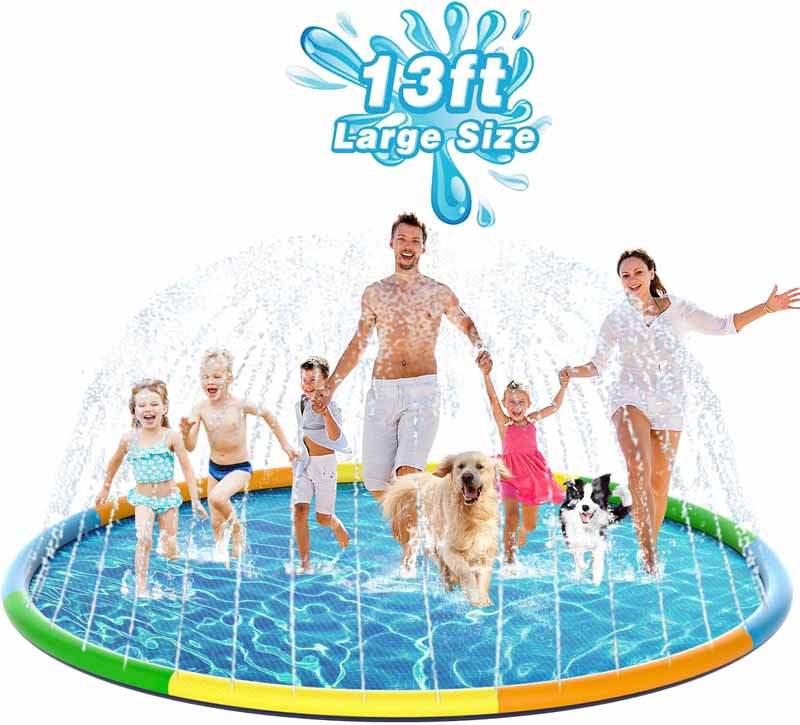
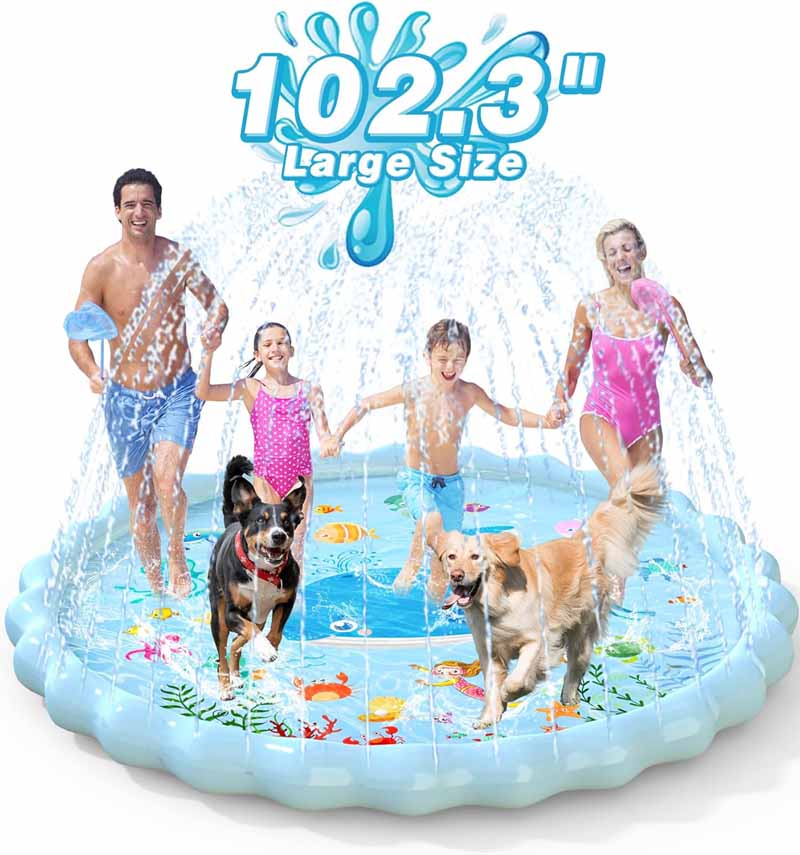
- round splash pads
- square splash pads
- dog splash pads
- soccer splash pads
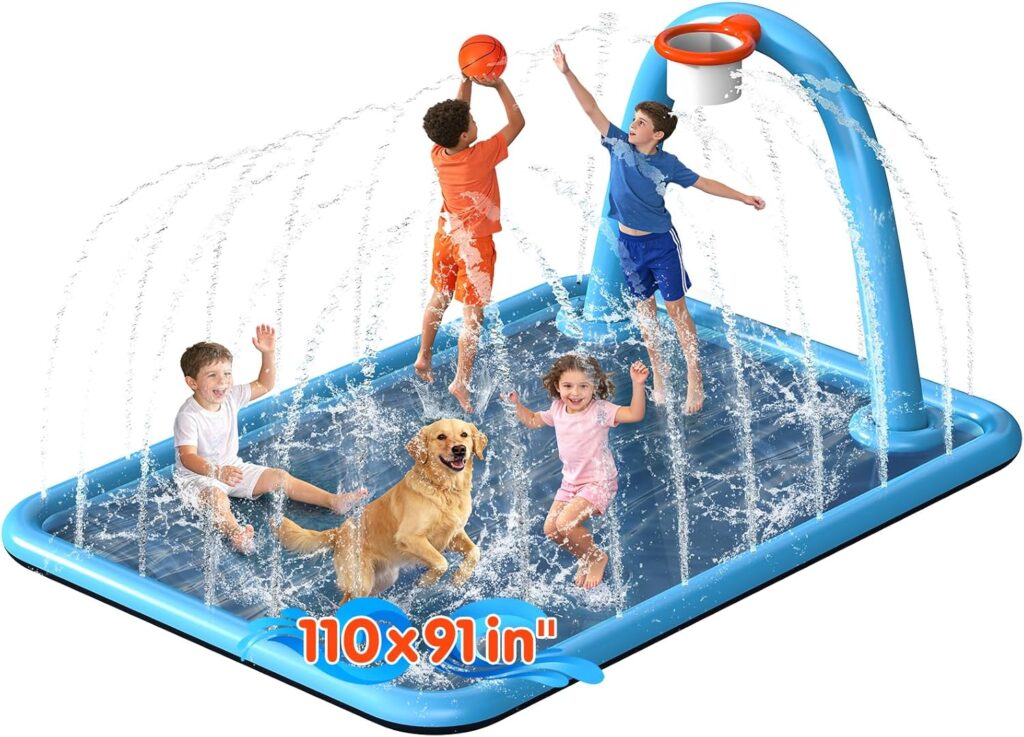
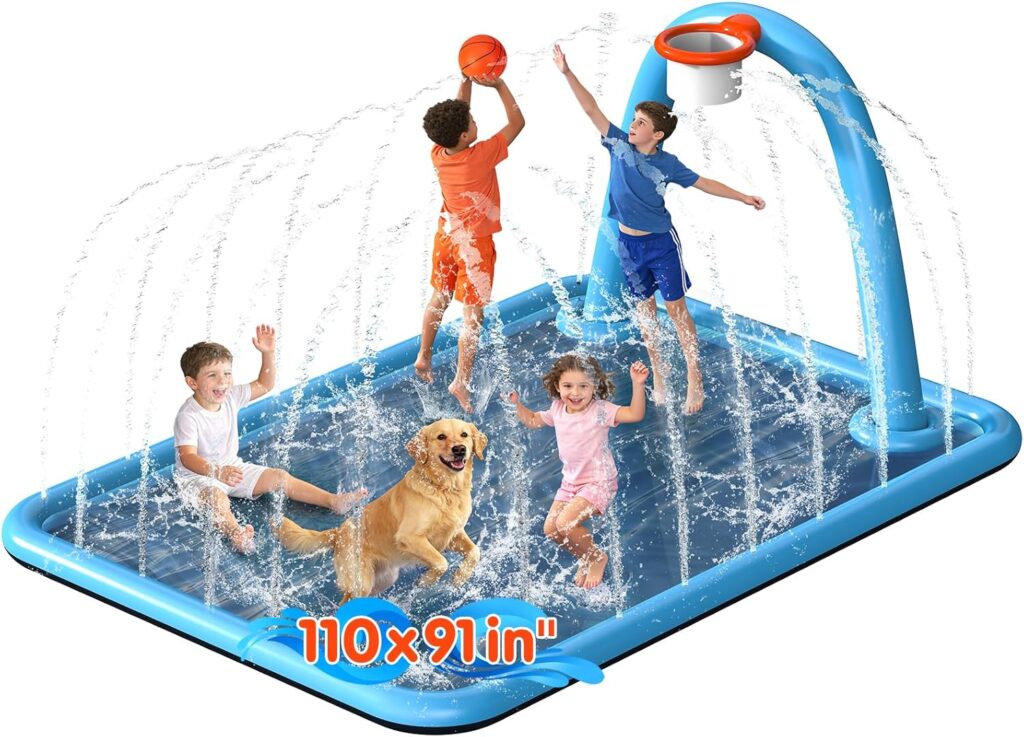
- splash pads with basketball hoops
- toddler-oriented splash pads
- private-label splash pads
- custom OEM/ODM splash pads
This matters because water-pressure expectations are not the same for every splash pad style.
For example:
- a toddler splash pad often needs softer, more even spray
- a sports splash pad may need a more active visual feel
- a shared family-use splash pad may need balanced spray and easier control
- a private-label product may need to fit a specific customer market or platform expectation
A practical customization guide:
| Splash Pad Type | Main Product Focus |
|---|---|
| Kids splash pad | Easy family use and balanced spray |
| Square splash pad | Space fit and layout flexibility |
| Sports splash pad | More active play positioning |
| Toddler splash pad | Softer, more manageable spray feel |
| Private-label splash pad | Market-specific design and packaging |
For B2B customers, this creates real value. It means the splash pad line can be built with more intention instead of relying on one general design for every market.
Why Is Epsilon a Better Choice for OEM and ODM Splash Pads?
For brand owners, sellers, importers, and retailers, this is often one of the most important reasons to choose Epsilon. A lot of suppliers can manufacture a splash pad. Fewer can help shape it into something more competitive, more stable in use, and more suitable for the actual customer and sales channel. Epsilon’s OEM and ODM value matters because the company can support much more than printing a logo. It can support:
- custom splash pad sizes
- custom graphics and print themes
- connector and layout planning
- packaging customization
- multilingual packaging support
- sample development
- mass production planning
- market-specific product positioning
From your company information, Epsilon can often support:
- rapid sampling in around 3–5 days
- standard production in around 20 days
- rush production in around 14 days in some cases
That is highly useful for:
- Amazon sellers
- Shopify and independent-site brands
- distributors
- retail importers
- startup brands building private-label outdoor water-play lines
A practical OEM/ODM value table:
| Business Need | Why Epsilon Helps |
|---|---|
| Faster product testing | Quick sample development |
| Better differentiation | Size, graphics, and packaging support |
| Better retail fit | Market-specific product direction |
| Easier scaling | Strong production capacity |
| Better long-term cooperation | Factory plus development support |
This is why Epsilon is not only useful as a factory. It is useful as a product-development partner for customers who want a splash pad that is easier to position, easier to explain, and more dependable in real backyard use.
Ready to Buy Splash Pads or Start Your Custom Project?
If you are looking for a splash pad that is not only fun, but also designed to work better under real household water conditions, Epsilon is ready to help.
American Epsilon Inc. is a U.S.-registered company specializing in PVC and composite material products for children’s water play, family entertainment, pet products, and seasonal outdoor categories. Under the EPN brand, we offer ready-to-ship splash pad products and also support OEM and ODM development for brands, retailers, distributors, and importers.
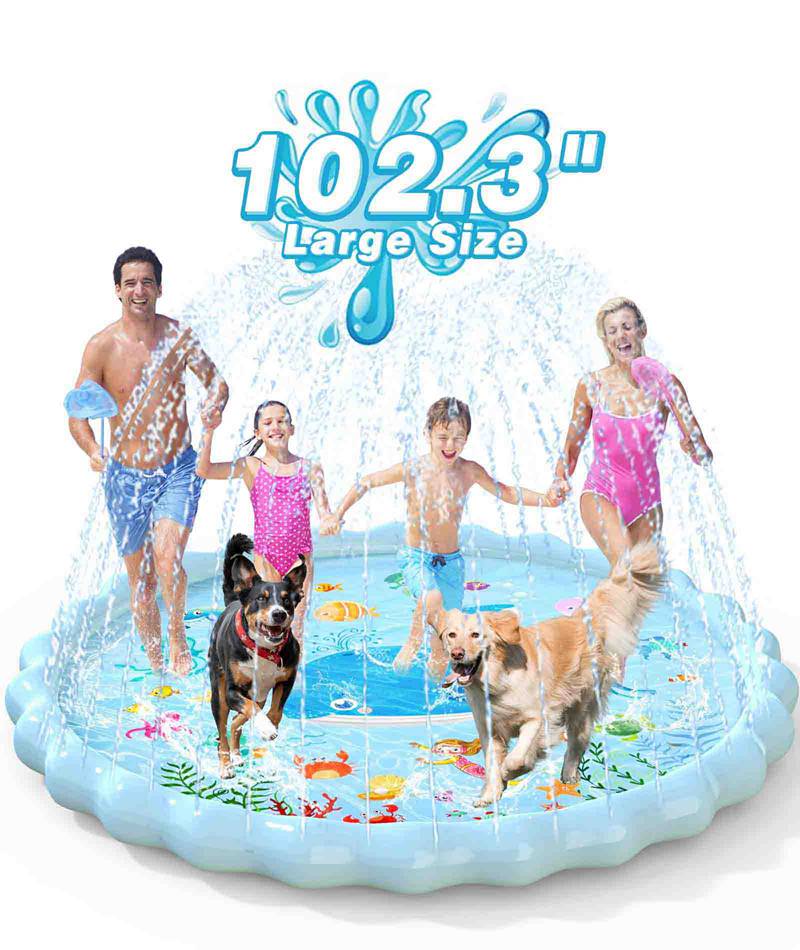
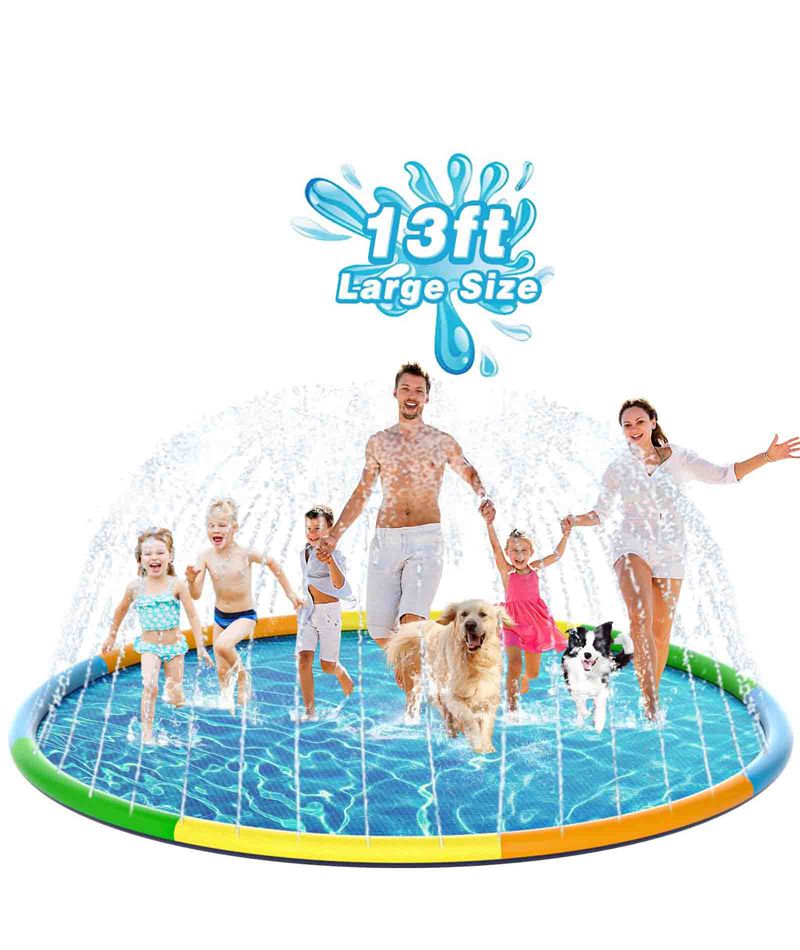
EPN splash pad range includes round splash pads, square splash pads, dog splash pads, soccer splash pads, and splash pads with basketball hoops. Beyond splash pads, we also support related seasonal categories such as dog pools, dog pools with sprinklers, pool pillows, snow tubes, and punching bags.
Shop In-Stock Splash Pad Products
- Buy Round Splash Pad
- Buy Square Splash Pad
- Buy Dog Splash Pad
- Buy Soccer Splash Pad
- Buy Splash Pad with Basketball Hoop
Start a Custom Splash Pad Project
Request a Sample
Explore More Related Product Pages
If you want to explore more seasonal PVC and outdoor family-use categories, you can continue browsing these related pages:
Whether you want to buy ready-to-ship splash pad products, request samples, or develop a custom splash pad line designed for more stable spray performance, Epsilon is ready to discuss your project in detail.