Skip to content
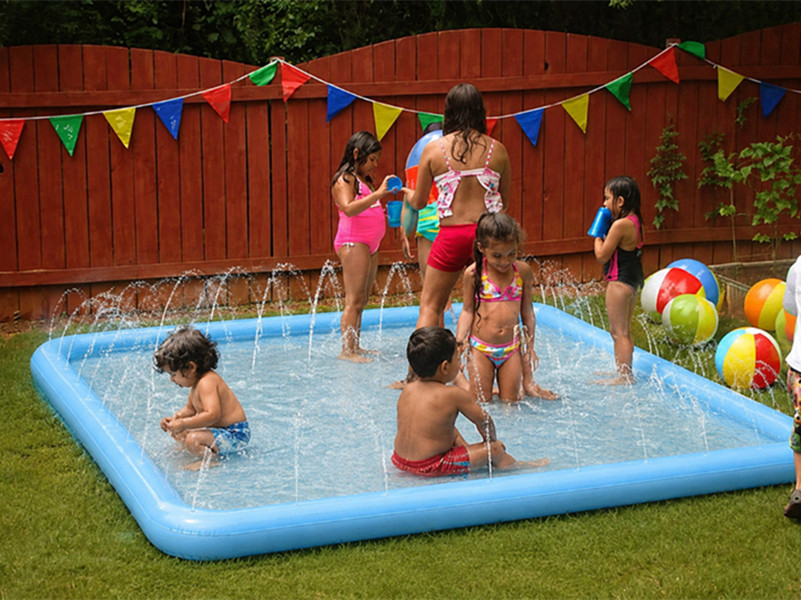
Choosing a kids splash pad should not start with the cutest print, the brightest color, or the biggest number on the box. Age should come first. A 2-year-old who is just getting comfortable with water does not play the same way as a 6-year-old who wants to run through spray with a sibling. A toddler may enjoy touching soft water streams with one hand. An older child may jump, turn, chase friends, and use the whole pad within minutes. When the splash pad does not match the child’s age, the problem shows up quickly: the spray feels too strong, the play area feels crowded, the surface feels unstable, or the pad does not last through repeated summer use.
The best way to choose a kids splash pad by age is to match the pad’s size, spray height, PVC thickness, seam strength, and setup surface to how children actually move. Toddlers need low spray, soft water contact, close adult guidance, and a smaller controlled play area. Older kids need more space, stronger seams, balanced inward spray, and a pad that can handle active summer movement.
A good kids splash pad should feel simple for adults and exciting for children. It should connect easily to a garden hose, spray evenly, stay flat on clean ground, dry without much trouble, and fold away for the next hot afternoon. EPN, under American Epsilon Inc., develops PVC and composite material products for family recreation, children’s toys, pet products, outdoor leisure, and seasonal play. For kids splash pads, EPN pays attention to the details families notice after several uses: low-odor PVC, edge stability, spray direction, water pressure control, hose connection, UV exposure, and storage convenience.
Before choosing a size or design, families usually need answers to practical questions:
- Will the spray feel comfortable for a toddler?
- Is the pad large enough for siblings?
- Can the water pressure be adjusted easily?
- Does the PVC feel soft enough for barefoot play?
- Are the seams strong enough for repeated summer use?
- Can the pad be drained, dried, folded, and stored without extra work?
Families often bring a splash pad out many times during the same summer, so weak seams, poor spray balance, or difficult storage can become noticeable after only a few uses. The right choice should fit the child’s age, the backyard space, and the way the family actually spends summer days.
For first-time backyard splash pad setup, a flat lawn, controlled hose pressure, and enough dry space around the play area can make the pad easier to manage from the start.
Kids Splash Pad by Age
A kids splash pad can work for toddlers, preschoolers, and older children, but each age group needs a different setup. Younger children need low water pressure, a calmer spray pattern, softer play, and closer adult guidance. Older children need more room, stronger structure, and spray that supports movement without making the whole yard wet.
What Age Is Best for Splash Pads?
A kids splash pad is often suitable for children who can sit, stand, or walk steadily with adult supervision. Many families begin using splash pads with toddlers around 12–18 months, but age alone should not be the only deciding factor. Balance, water confidence, spray tolerance, and ability to follow simple guidance matter just as much.
A toddler may be physically old enough for water play but still nervous around spray. Another child of the same age may happily sit near the water and splash for 15 minutes. For that reason, adults should start with very low water pressure and let the child approach the spray gradually.
Age changes water play in clear ways:
| Child Age | Common Play Style | Better Spray Level | Better Pad Direction | Main Concern |
|---|---|---|---|---|
| 12–24 months | Sitting, touching water, slow stepping | Very low | Small, easy to supervise | Comfort and balance |
| 2–3 years | Gentle walking, sensory play | Low | Small to medium | Soft spray and close guidance |
| 4–6 years | Running, simple games, sibling play | Low to medium | Medium | Space and spray control |
| 7+ years | Active movement and group play | Medium | Large | Durability and room |
| Mixed ages | Shared backyard play | Start low | Large | Protect youngest child |
The safest choice usually respects two children at once: the youngest child and the most active child. The youngest child decides the starting water pressure. The most active child helps decide how much space and durability the pad needs.
A practical age-based choice should consider:
- Balance: younger children need a flatter, calmer play area
- Water confidence: some toddlers need time to accept spray
- Movement speed: older kids need more room to turn and run
- Group size: siblings and playdates need a larger surface
- Supervision distance: toddlers need adults much closer
- Spray tolerance: low spray is better for younger children
For EPN kids splash pads, age fit is closely connected with spray control, edge stability, and PVC flexibility. These details help the splash pad feel easier to manage in real backyard use.

Are Splash Pads Good for Toddlers?
A kids splash pad can be a good toddler water toy when it is used as a shallow, controlled play area. Unlike deeper pool-style products, a splash pad usually creates surface-level water play. Adults can adjust the hose pressure, stay nearby, and stop the water quickly if the child feels uncomfortable.
Toddlers often enjoy water through small experiences rather than intense play. They may tap the spray, sit near the outer ring, step through shallow water, or watch water move across the surface. A splash pad can support gentle sensory play without requiring deep water.
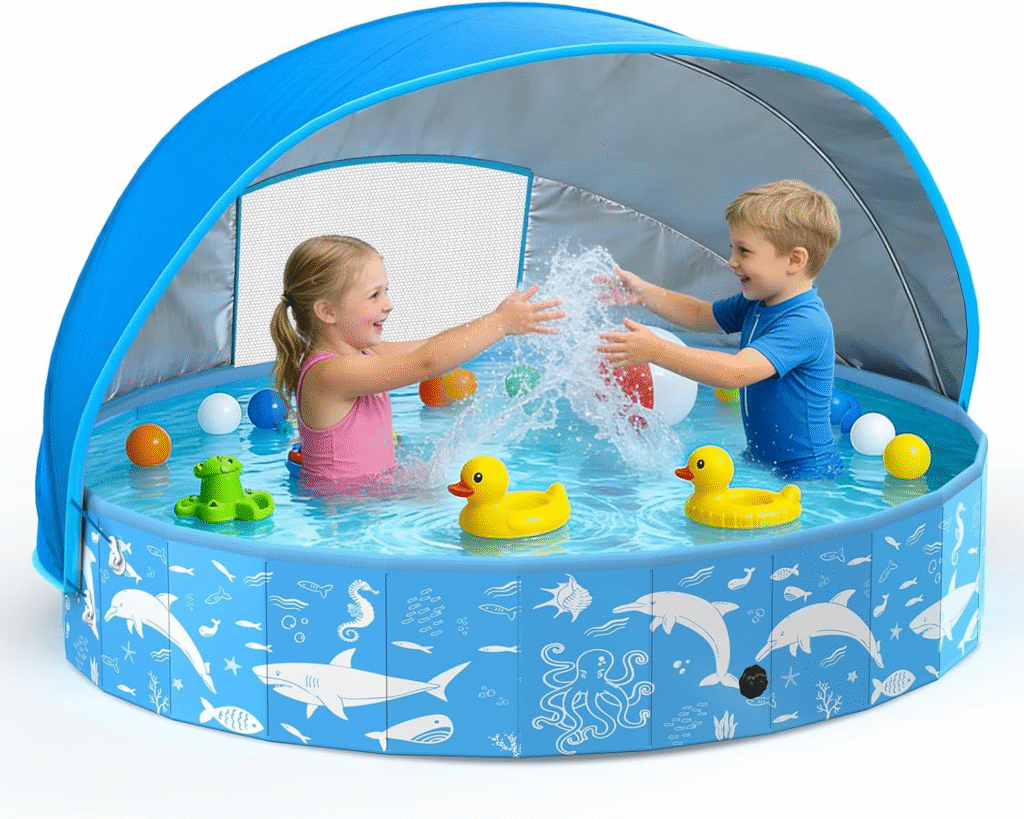
Some families compare a splash pad with a kiddie pool when choosing water play for toddlers. A splash pad usually creates shallow surface-level play, while a kiddie pool holds more standing water and needs a different level of attention.
For toddlers, comfort matters more than excitement. Strong spray may look fun in photos, but water hitting the face or eyes can make younger children avoid the pad. Low inward spray usually works better because it creates a softer play zone and keeps more water inside the pad area.
A toddler-friendly setup should include:
- Low water pressure at the start
- A flat and clean lawn surface
- Adult supervision within close reach
- Water shoes for better grip
- A towel and dry clothes nearby
- Shorter sessions, usually around 10–20 minutes
- Shade or sun protection during hot afternoons
EPN splash pad development takes toddler use into account through low-odor PVC, flexible material feel, stable seam structure, and controlled spray direction. Young children touch the surface directly with hands, feet, knees, and sometimes elbows, so material feel and edge comfort are important.
Which Splash Pads Fit Older Kids?
Older kids need a splash pad that supports movement. They are less likely to sit calmly in the center and more likely to run across the pad, chase siblings, play water games, and step heavily near the edge. A pad that works well for one toddler may feel too small or too light for older children.
For ages 5–7, a medium-to-large kids splash pad is usually more practical. It gives children enough space to move without constantly stepping off the wet surface. For ages 7 and above, larger pads are often better, especially when more than one child will use the same play area.
Older kids also create more stress on the pad. They may pull the hose by accident, step on the outer ring, drag toys across the surface, or fold the pad roughly after use. Material thickness, seam strength, and hose connection quality become more important as children become more active.
A splash pad for older kids should have:
| Feature | Why It Matters |
|---|---|
| Larger play area | Reduces crowding during active play |
| Inward spray | Keeps water closer to the play zone |
| Strong welded seams | Helps handle water pressure and foot traffic |
| Secure hose connection | Reduces twisting and leaking |
| Foldable PVC body | Makes storage easier after use |
| UV-aware material | Helps with repeated outdoor exposure |
Families with mixed ages should not choose only for the youngest child. A larger pad can still be used gently with low water pressure, but a very small pad may not grow well with siblings.

Kids Splash Pad Size
The right kids splash pad size depends on age, number of children, backyard space, and play style. Smaller pads are easier for toddlers and close supervision. Larger pads are better for older kids, siblings, and active play. A useful size gives children room to move without crowding the edge or constantly stepping off the pad.
How Big Should a Splash Pad Be?
A kids splash pad should be large enough for safe movement but not so large that adults lose control of the play area. Product size should be judged by usable play space, not only the outer diameter printed on the packaging. The outer water ring, spray area, and hose connection all take up space.
A 60-inch splash pad does not always provide 60 inches of open center space. Part of that size belongs to the water-filled edge. Families should consider how much room the child has to sit, stand, turn, and move inside the spray area.
Size should also match the number of children:
| Use Situation | Suggested Size Direction | Reason |
|---|---|---|
| One toddler | 40–60 in | Easy to supervise and control |
| Two toddlers | 60 in+ | More room for sitting and stepping |
| One child age 4–6 | 60–67 in | Supports light running and games |
| Two children age 4–6 | 67–79 in | Reduces crowding |
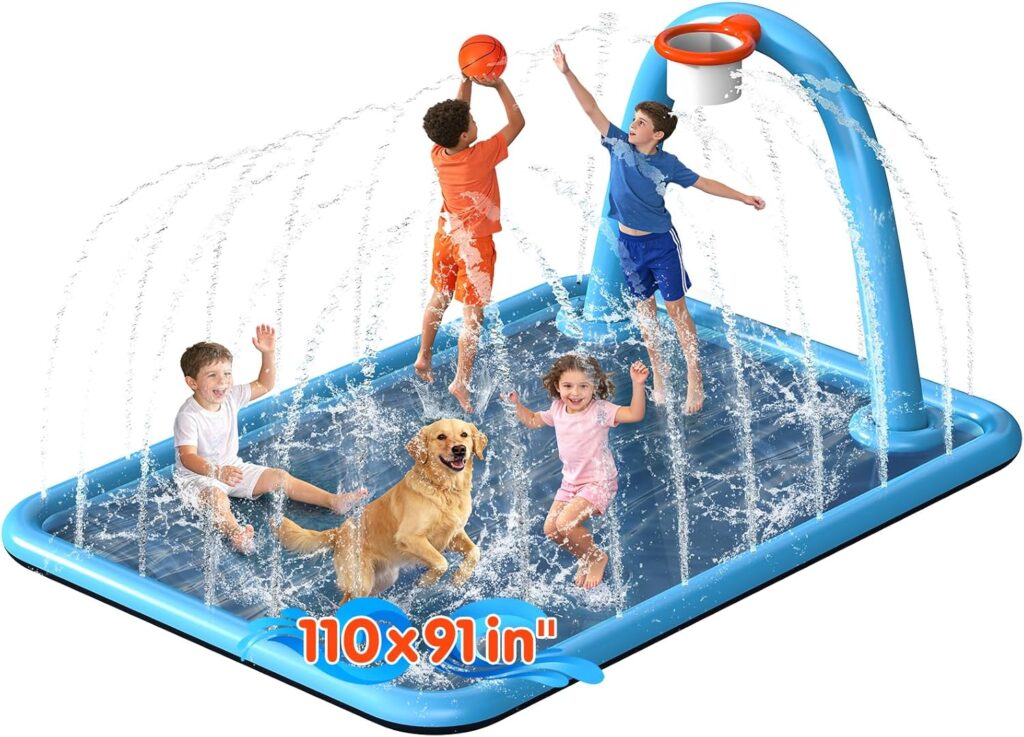
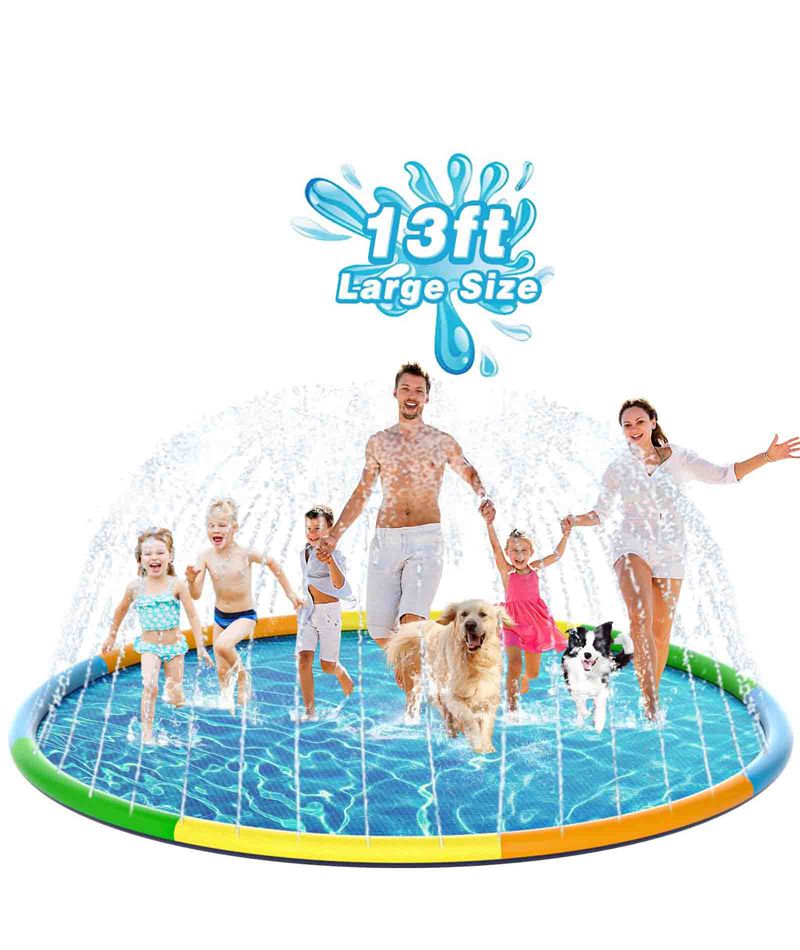
| Ages 7+ or group play | 79 in+ | Better for active movement |
| Siblings with mixed ages | 79 in+ | Gives older kids room while protecting younger kids |
A larger kids splash pad is usually better when:
- More than one child will use it
- The child is older than 5
- Siblings have different ages
- The yard has enough flat open space
- The pad will be used for parties or BBQs
- Pets may join under supervision
- The family wants the pad to stay useful beyond one summer
A smaller splash pad may still be the better choice for one toddler, a compact patio, or short supervised play. Bigger is not always better for younger children. The best size gives enough room without making the water play feel hard to control.
Best Size for Ages 1–3
For ages 1–3, the best kids splash pad is usually small to medium. Toddlers do not need a huge spray zone. They need a comfortable space where water feels playful, not overwhelming. A pad around 40–60 inches often works well for one toddler or a toddler with one adult sitting nearby.
A smaller pad is easier to manage. It fills faster, drains faster, dries faster, and lets adults stay close. It also helps keep play calmer. Toddlers are still developing balance, so too much open wet space can increase slipping or sudden falls.
For toddler use, families should focus on:
| Selection Point | Better Direction |
|---|---|
| Spray height | Low, below face level |
| Surface | Flat clean grass |
| Pad feel | Soft and flexible |
| Play time | Short sessions |
| Adult position | Very close |
| Clothing | Swim diaper, rash guard, water shoes |
The ground under the pad is very important for this age group. Grass should be clean, flat, and free from stones or sticks. Patio use should be handled carefully because hard surfaces may become slippery and hot in summer.
A toddler splash pad should feel easy to enter and easy to leave. If the child wants to step out after a few minutes, that is normal. The goal is gentle water confidence, not intense play.
Best Size for Ages 4–6
Children ages 4–6 need more space because they begin using the splash pad as a play zone, not only a water surface. They may run in circles, jump lightly through the spray, sit in the center, or play with a sibling. A pad around 60–79 inches is often a better fit for this stage.
At this age, children may also begin inviting friends or cousins to join. A splash pad that feels roomy for one child can quickly feel crowded with two or three. Choosing a slightly larger size can make the pad more useful for more than one season.
Size also affects pad stress. When the pad is too small, children often step on the outer ring, pull the edges, or crowd around the hose area. A larger pad spreads movement across the surface instead of concentrating pressure on one area.
For ages 4–6, families should look for:
| Feature | Recommended Direction |
|---|---|
| Pad size | Medium to large |
| Spray style | Inward and even |
| Water pressure | Low to medium |
| PVC thickness | Around 0.35–0.45 mm or stronger by model |
| Seams | Stable heat-sealed edges |
| Storage | Easy drain, dry, and fold |
A splash pad for this age group should balance fun and control. It should feel active enough for play but not so strong that water pressure or spray height becomes hard to manage.
Best Size for Ages 7+
For ages 7 and above, a larger kids splash pad is usually the better choice. Older children move faster, take longer steps, and often play with other children. A pad of 79 inches or above gives more usable space for active summer play.
Older children are also more likely to use the splash pad during family parties, BBQs, school breaks, and weekend gatherings. In these settings, the pad may be used by several children at once. A larger surface reduces crowding and makes it easier for children to create their own games.
Durability becomes more important for this age range. Older kids may put more weight and movement force on the pad. The pad should have stronger welded seams, a secure hose connection, and PVC that can handle repeated folding and outdoor use.
For older kids, families should pay attention to:
| Product Detail | Why It Matters |
|---|---|
| Larger size | Allows running and group play |
| Strong seams | Supports repeated pressure |
| Stable water ring | Keeps spray more consistent |
| Medium water pressure | Creates fun without harsh spray |
| Thicker PVC | Helps with long-term use |
| Easy cleanup | Makes frequent use more likely |
A large splash pad should still be used on flat ground. Size alone does not make the play safer. Surface, supervision, and water pressure remain important.
Kids Splash Pad Spray
Spray height should match age and comfort level. Toddlers need low, gentle spray. Older kids can enjoy medium spray, but even water distribution matters more than maximum height. Inward spray is usually more practical for backyard use because it keeps water closer to the play area and reduces overspray.
How Does a Splash Pad Work?
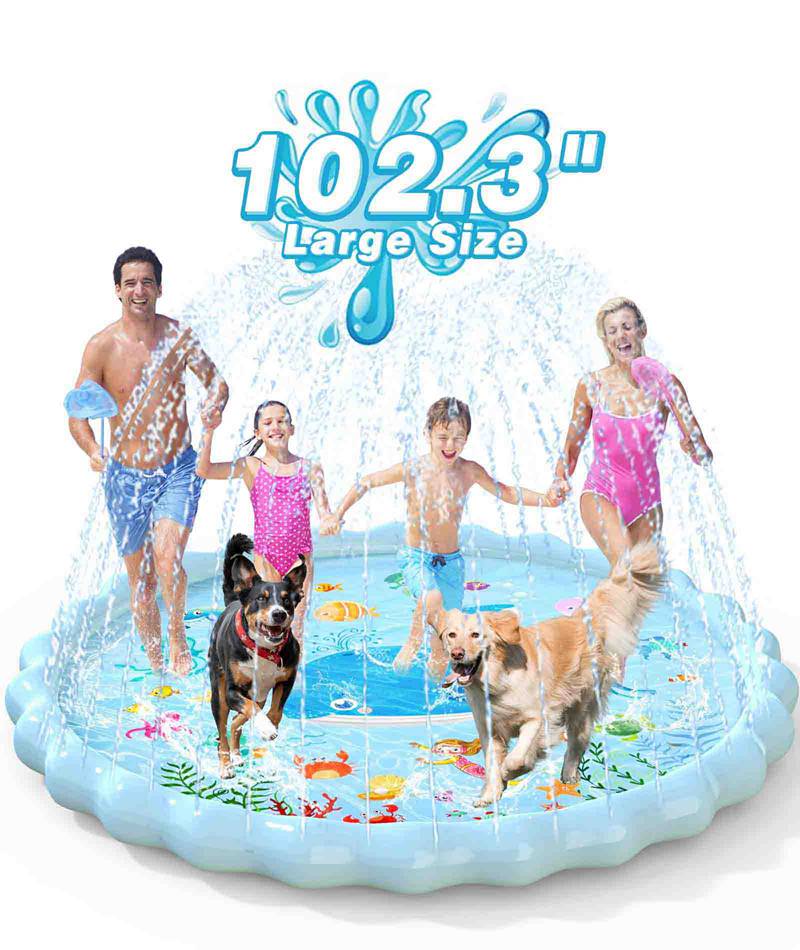
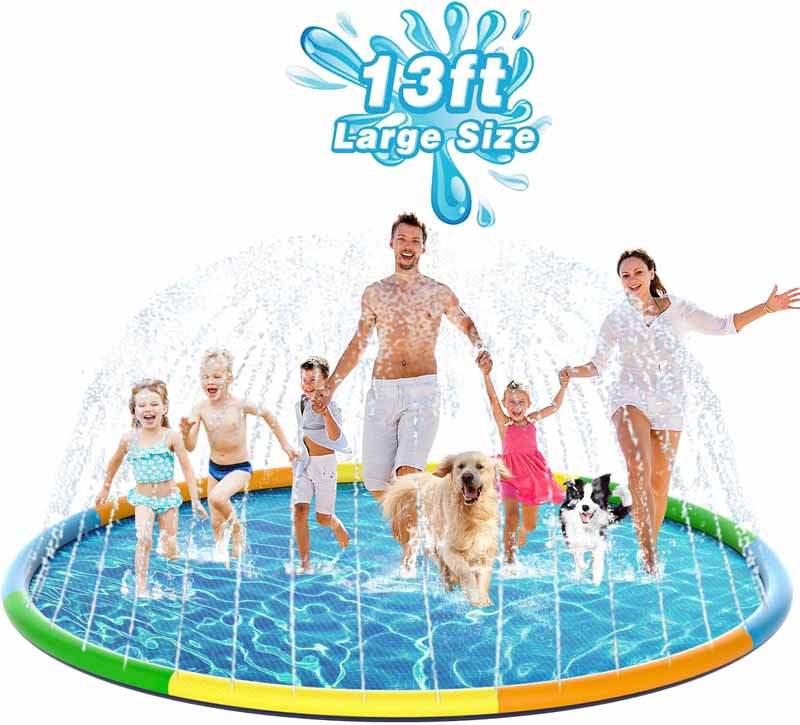
A kids splash pad usually works by connecting to a standard garden hose. Water flows into the outer ring or edge channel, then sprays through small holes around the perimeter. Many family splash pads are designed with inward spray, meaning the water streams point toward the center rather than outward into the yard.
The spray height depends on water pressure. If the hose is opened slightly, the spray stays low. If water pressure increases, the spray becomes taller and stronger. Pressure control is one of the most useful features for families with children of different ages.
A good splash pad needs balanced water flow. If the edge fills unevenly, one side may spray higher than another. If the holes are poorly placed, children may crowd one area and avoid another. If the hose connector is weak, leaking or twisting can affect performance.
EPN splash pad development pays attention to water inlet structure, multi-point spray distribution, edge stability, and long-time pressure performance. A more balanced spray pattern helps children move naturally across the pad instead of crowding around one strong water stream.
Is Low Spray Better for Toddlers?
Low spray is usually better for toddlers because it feels calmer and easier to accept. Many toddlers enjoy touching water with their hands and feet, but they may not like strong spray hitting their face. A low stream lets them explore the water without feeling startled.
Low spray also gives adults more control over the play area. It reduces water splashing outside the pad, keeps nearby grass or patio from becoming overly wet, and makes the pad feel less chaotic for young children. A toddler may be more willing to stay and play when the water feels soft.
Low spray is especially useful when:
| Situation | Why Low Spray Helps |
|---|---|
| First-time water play | Reduces fear and surprise |
| Younger toddlers | Keeps water away from face |
| Small patios | Limits overspray |
| Mixed-age use | Protects the youngest child |
| Short play sessions | Keeps the setup calm |
Adults should always start with the lowest useful water pressure. Let the child observe the spray before stepping in. Some toddlers may first want to stand beside the pad, then touch the water, then step on it. Gradual water contact is normal.

How Much Water Pressure Is Needed?
Most kids splash pads do not need high water pressure. The right pressure is the lowest setting that fills the outer ring and creates an even spray. Higher pressure may look more exciting, but it can also make the water uncomfortable, increase overspray, and add stress to seams.
Water pressure affects spray height, water spread, edge firmness, comfort, water use, and seam stress. Families should not judge the splash pad only by how high it can spray. A lower, steady spray is often more useful than a tall spray that children avoid.
| Pressure Level | Spray Result | Best For | Watch Point |
|---|---|---|---|
| Very low | Short, soft streams | Toddlers | May not fill large pads evenly |
| Low | Gentle inward spray | Ages 1–4 | Best starting point |
| Medium | Playful spray height | Ages 4–8 | Check comfort and slipping |
| High | Tall, strong streams | Limited use | May stress seams and waste water |
For mixed ages, start low and increase slowly only if the youngest child is comfortable. Water pressure should also be checked during play. If the hose shifts, the connector twists, or children step heavily near the edge, the spray may change. Adults should pause and adjust instead of letting the pad run unevenly.
Which Spray Pattern Feels Safer?
An inward spray pattern is usually better for a family kids splash pad. It sends water toward the center of the pad, creating a clearer play zone. Children can understand where to play, and adults can keep more water within a controlled backyard area.
Outward spray may look wide, but it can wet surrounding grass, patio furniture, dry towels, and walkways. It can also make the area around the pad slippery. For toddlers and mixed-age families, inward spray is often more practical.
Even spray distribution matters as much as spray direction. A pad with uneven spray may create one strong area and one weak area. Children may crowd the strongest spray zone or avoid it entirely. Balanced spray makes play smoother.
A safer-feeling spray pattern usually has:
| Spray Detail | Better Direction |
|---|---|
| Spray angle | Inward toward center |
| Spray height | Adjustable by water pressure |
| Spray spacing | Even around edge |
| Spray strength | Soft to medium |
| Water spread | Mostly inside play area |
EPN focuses on water distribution and edge stability because spray quality affects both comfort and pad performance. A kids splash pad should create fun water movement without feeling harsh or uncontrolled.

Kids Splash Pad Material
Material affects how a kids splash pad feels, folds, smells, resists leaks, and handles outdoor use. PVC thickness, seam strength, hose connection, UV resistance, and edge design all matter. A good splash pad should be soft enough for children and strong enough for repeated summer use.
Is PVC Better for Splash Pads?
PVC is commonly used for kids splash pads because it is water-resistant, flexible, foldable, and suitable for heat-sealed structures. It allows the pad to hold water in the outer ring, support printed designs, and fold down for storage after use.
For children’s products, PVC needs the right balance. If it is too thin, the pad may feel flimsy and wear faster. If it is too stiff, it may be less comfortable for sitting, kneeling, or barefoot play. A family splash pad should feel flexible but not weak.
Low-odor material is also important. Families often notice smell when opening a new water toy. A lighter odor can make the first setup more comfortable, especially for toddler products. Surface feel also matters because children touch the material directly with hands, feet, knees, and sometimes elbows.
Experience across splash pads, pet pools, inflatable pools, water slides, and seasonal PVC products gives EPN a clearer understanding of how material thickness, welding, pressure, and storage affect outdoor use. A toddler splash pad, a pet cooling pad, and a winter pool pillow all require different material choices, but the same engineering logic applies: match the material to the real use environment.
How Thick Should PVC Be?
For many kids splash pads, PVC thickness may fall around 0.35–0.50 mm depending on size, model, and target use. A thicker material can support repeated use, but thickness should be considered together with seam quality, edge design, and storage habits.
A 0.35 mm splash pad may be suitable for lighter family use or smaller pads. A 0.45–0.50 mm structure may be more suitable for larger pads, siblings, active children, or frequent summer use. However, a thicker number does not automatically mean a better pad if the seams or connector are weak.
| PVC Thickness | Best Use Direction | Strength | Watch Point |
|---|---|---|---|
| 0.30–0.35 mm | Light use, smaller pads | Easy to fold | Less suited for rough use |
| 0.35–0.45 mm | Regular family use | Balanced feel | Needs proper drying |
| 0.45–0.50 mm | Larger pads, active play | Stronger repeated-use feel | Slightly heavier |
| 0.50 mm+ | Heavy-duty designs | Higher structure support | Not always needed for toddlers |
Families should also consider the surface under the pad. Even thicker PVC can be damaged by sharp stones, gravel, rough concrete, or dragging. Material strength and proper use must work together.
For EPN splash pads, PVC choice is not based on thickness alone. The design also considers softness for children, folding convenience, spray pressure, edge welding, and whether the pad is meant for toddler use, family use, or larger backyard scenes.
Do Strong Seams Prevent Leaks?
Strong seams are one of the most important details in a kids splash pad. The outer edge holds water pressure, supports spray, and receives foot traffic. If the seam is weak or narrow, leaks may appear near the edge, corners, hose area, or folded points.
Heat-sealed seams are commonly used because they join PVC layers without creating stitching holes. Wider welded edges can help spread pressure across a larger area. Reinforced hose connection areas are also important because the connector often experiences twisting, pulling, and repeated setup.
Many leak issues are caused by a combination of product stress and use conditions. High water pressure, rough ground, dragging while filled, folding while wet, or stepping heavily on the edge can all increase wear.
A stronger seam design should support:
| Use Pressure | Seam Requirement |
|---|---|
| Water filling the edge | Stable welded structure |
| Children stepping near edge | Wider pressure area |
| Repeated folding | Flexible but sealed material |
| Hose movement | Reinforced connection zone |
| Summer reuse | Good resistance to small stress cycles |
EPN’s splash pad design approach includes widened seam attention, stable edge structure, standardized water inlet modules, and pressure-related checks. These details support more reliable use across real backyard conditions.
Does UV Resistance Help Outdoors?
UV resistance helps because kids splash pads are used outdoors under sunlight. Sun, heat, water, and folding can slowly affect PVC material, color, surface feel, and seam areas. A splash pad left outside for days may age faster than one that is dried and stored properly.
UV-aware material does not mean the pad should stay in direct sunlight all season. It means the material is better prepared for normal outdoor use. Families should still drain, dry, fold, and store the splash pad after play.
Outdoor exposure affects splash pads in several ways:
| Outdoor Factor | Possible Effect |
|---|---|
| Direct sunlight | Color fading and material aging |
| High temperature | PVC softening or surface change |
| Wet storage | Odor or mildew risk |
| Repeated folding | Stress on seams and printed areas |
| Grass debris | Dirt buildup on bottom surface |
EPN product development may include UV exposure checks, high-temperature aging tests, water pressure performance checks, and repeated-use simulations depending on the model. These tests matter because family water toys are used on grass, under sun, near pets, during parties, and across many summer days.
Kids Splash Pad Safety
A kids splash pad is safer when the ground is flat, the water pressure is controlled, children wear suitable clothing, and adults supervise based on age. It may be shallow, but it is still a wet play surface. Toddlers need close guidance, while older kids need space and clear play rules.
Where Should a Splash Pad Go?
A kids splash pad should be placed on a flat, clean, open surface. Grass is often a good choice because it feels softer underfoot. Before setup, remove stones, sticks, roots, garden tools, small toys, and anything sharp from the area.
The ground should be level. A slope can cause water to collect on one side and make the pad feel uneven. It can also pull children toward one area, increasing crowding. Flat ground helps the water spread more evenly and keeps the pad more stable.
Patios can be used carefully, but they require more attention. Smooth concrete may become slippery when wet. Rough concrete may wear the bottom of the pad. Hot patio surfaces can also be uncomfortable for children’s feet.
A better splash pad setup should include:
- Flat lawn or smooth clean surface
- No stones, sticks, roots, or sharp debris underneath
- Hose placed to the side instead of across the play path
- Enough dry space around the pad for towels and walking
- Adult visibility from one clear position
- Shade nearby for breaks on very hot days
The hose should not run through the main play path. A hose crossing the play area can cause tripping, especially for toddlers. Leave enough space around the pad so children can step off safely and adults can walk around the play zone.
Are Splash Pads Slippery?
Yes, a kids splash pad can become slippery because water changes the surface. Sunscreen, grass, wet feet, and running can make slipping more likely. Families do not need to avoid splash pads because of that, but setup and play rules should match the child’s age.
For toddlers, slipping risk is mostly about balance. They may squat, stand, turn, or step backward suddenly. Water shoes can help provide grip and protect feet from grass, patio edges, or hot ground. Adults should stay close enough to support them.
For older children, slipping risk is usually caused by speed. They may run from dry grass onto the wet pad, jump over the spray, or push each other during games. Adults should set simple rules before play starts.
Useful safety rules include:
- Walk slowly when entering the pad
- No pushing or chasing near the edge
- No jumping onto the water-filled outer ring
- No dragging the pad while water is inside
- No sharp toys, hard shoes, or rough objects on the surface
- Take breaks when children become tired or too excited
Wet outdoor play always needs better slip control, especially when toddlers and older siblings use the same space.
Surface control is also important. The pad should be smoothed out before use. Wrinkles, folds, or uneven ground can make the surface less stable. If the pad shifts during play, pause the water and reset it.
What Should Toddlers Wear?
Toddlers should wear clothing that supports water play, sun protection, and easy movement. A swim diaper is useful for children who are not fully potty trained. A rash guard or swim shirt helps protect shoulders and back from the sun. Water shoes help with grip and foot protection.
A good toddler splash pad outfit can include:
| Item | Why It Helps |
|---|---|
| Swim diaper | Easier water play and quick changes |
| Rash guard | Covers shoulders, back, and arms |
| Water shoes | Adds grip and protects feet |
| Sun hat | Helps reduce direct sun exposure |
| Towel nearby | Makes breaks easier |
| Dry clothes | Helps after short sessions |
Avoid heavy cotton clothing because it becomes heavy when wet and may restrict movement. Loose long pants can also make toddlers uncomfortable. Lightweight swimwear is usually better because it dries faster and allows easier movement.
Adults should also watch body temperature. Toddlers can become cold even on warm days, especially when wind and water are combined. Shorter sessions with breaks can make the experience more enjoyable.
How Should Parents Supervise?
Adults should supervise based on the youngest child using the splash pad. If a toddler is on the pad, an adult should stay very close. For preschoolers, adults should remain nearby and actively watch water pressure, movement, and group play. For older children, adults can allow more freedom but should still stay within sight.
Good supervision focuses on four checks:
| Checkpoint | What to Watch |
|---|---|
| Child comfort | Is the spray too strong or too cold? |
| Water pressure | Is the spray height still controlled? |
| Surface stability | Is the pad flat and not shifting? |
| Group behavior | Are kids pushing, crowding, or running too hard? |
Supervision also includes knowing when to stop. If children become tired, cold, rough, or overstimulated, it is time for a break. Water play should feel refreshing, not exhausting.
Families should also check the pad after play. Look near the hose connector, seams, and bottom surface. Small issues caught early are easier to manage than problems found after repeated use.
Kids Splash Pad Buying Tips
The best kids splash pad is the one that fits age, space, spray comfort, material quality, and use frequency. Families should check size, PVC thickness, seam strength, hose connection, spray direction, and storage needs before buying. A good pad should be easy to use more than once.
What Should Parents Check First?
Families should first check who will use the splash pad. One toddler, two preschoolers, and a group of older children need different choices. Age affects size, spray height, supervision, and durability.
After age, check the actual size. A splash pad may look large in photos but feel smaller once the outer ring and spray area are considered. Families should choose based on usable play space, not only the full product diameter.
Next, check spray control. A splash pad connected to a garden hose should allow water pressure adjustment. This is especially important for toddlers and mixed-age families. Inward spray is usually better because it keeps water closer to the pad.
Then check material and construction. Look for PVC thickness, stable seams, secure hose connection, and easy storage. These details affect repeated use more than color or graphics.
| Buying Check | Better Choice | Why It Matters |
|---|---|---|
| Age fit | Match youngest child first | Keeps play comfortable |
| Size | Allow movement space | Reduces crowding |
| Spray | Adjustable by hose pressure | Fits different ages |
| Spray direction | Inward spray | Better backyard control |
| Material | 0.35–0.50 mm PVC range by model | Supports repeated use |
| Seams | Heat-sealed, stable edges | Helps reduce leaks |
| Connector | Secure hose area | Reduces twisting and dripping |
| Storage | Drain, dry, fold | Extends pad life |
A good splash pad should fit the family’s real routine. If setup is difficult, drying takes too much effort, or the surface feels too small for siblings, the pad may not be used often.
Which Features Last Longer?
The features that support longer use are stronger PVC, reinforced seams, stable edge structure, a reliable hose connector, inward spray, and easy storage. These details work together. A thick material will not help enough if the seam is weak. A strong seam will not last as long if the pad is dragged over rough ground.
PVC thickness matters most when the pad is used often, used by older children, or placed in busy backyard settings. A 0.45–0.50 mm structure may be more suitable for active use than a thinner entry-level design. For toddlers, softness and comfort still matter, so the material should not feel overly stiff.
The hose connector is another important detail. Many families twist, pull, or move the hose during setup. A weak connector can leak or stress the surrounding PVC. A stronger connection area makes repeated setup easier.
Storage also affects pad life. A splash pad folded while wet, left in direct sunlight, or stored with dirt on the surface may age faster. A simple care routine helps:
| Stage | What to Do | Benefit |
|---|---|---|
| Before use | Clear the ground | Reduces puncture risk |
| Setup | Raise pressure slowly | Protects seams |
| During use | Avoid rough play on edge | Reduces stress |
| After use | Drain fully | Prevents trapped water |
| Drying | Air dry before folding | Reduces odor and mildew |
| Storage | Keep away from direct sun | Slows material aging |
EPN develops splash pads with attention to PVC material, water pressure, heat-sealed seams, connector structure, and repeated outdoor use. These details are useful for families who want more than one weekend of water play.
Is One Pad Enough for Siblings?
One kids splash pad can be enough for siblings if it is large enough and the spray can be adjusted. The common mistake is choosing a pad only for the youngest child. A small toddler pad may become crowded when an older sibling joins.
For two young children, a medium pad may work. For mixed ages or three children, a large pad is more practical. Older kids need room to move, while younger children need space away from fast movement. A larger pad helps separate play styles.
| Family Setup | Better Pad Choice | Water Pressure |
|---|---|---|
| One toddler | Small to medium | Low |
| Two toddlers | Medium | Low |
| Toddler + older sibling | Large | Start low |
| Two kids age 4–6 | Medium to large | Low to medium |
| Three or more kids | Large | Medium with control |
| Kids + pet | Large and durable | Low to medium |
Adults should always set the pressure for the youngest child first. Older children can still enjoy lower spray, but toddlers may not tolerate strong spray. If pets join, supervision becomes even more important. Keep nails trimmed, avoid rough running, and make sure the surface is not scratched by sharp claws.

How to Use It All Summer?
A kids splash pad can be used all summer when families follow a simple care routine. Most problems come from rough ground, high pressure, poor drying, or careless storage. A few minutes of care after each use can make a big difference.
Before use, inspect the ground and remove debris. Connect the hose carefully and turn on the water slowly. Let the edge fill and watch the spray pattern. If one side is uneven, adjust pressure or reposition the pad.
During play, keep sharp toys away. Avoid shoes with hard soles. Do not let children drag the pad while water is inside. Keep pressure within a comfortable range.
After use, drain all water, rinse off grass or dirt, and follow a simple cleaning and storage routine before folding the pad away. Folding while wet can lead to odor or mildew. Store it indoors, in a shaded area, or in a dry storage bag when possible.
| Use Step | Action | Suggested Time |
|---|---|---|
| Ground check | Remove sticks, stones, and toys | 2–3 min |
| Hose setup | Connect and test spray slowly | 2–5 min |
| Play | Keep pressure controlled | 15–45 min |
| Drain | Turn off water and empty pad | 2–5 min |
| Dry | Air dry fully | 20–60 min |
| Store | Fold loosely and keep dry | 2–3 min |
A splash pad should make summer easier. When setup and cleanup become part of the routine, families are more likely to use it again and again.
Common Buying Mistakes
Many splash pad problems start before the first setup. Families may choose by pattern, price, or size alone, then discover that the pad does not fit their child’s age, yard space, or use frequency.
| Common Mistake | Why It Causes Problems | Better Choice |
|---|---|---|
| Choosing only by cute graphics | Pattern does not show size, spray, or strength | Check size, PVC, and spray direction |
| Buying the largest pad for a toddler | Spray zone may feel overwhelming | Start with low spray and controlled space |
| Using high water pressure | May stress seams and increase slipping | Use the lowest even spray setting |
| Setting up on rough ground | Can damage the bottom surface | Use flat grass or a smooth clean surface |
| Folding while wet | May cause odor or mildew | Drain and dry before storage |
| Ignoring sibling play | Small pads become crowded quickly | Choose a larger pad for mixed ages |
| Leaving it in sun for days | Speeds up material aging | Store dry and shaded after use |
A better choice comes from matching the pad to the real summer routine. A family using the splash pad twice a week needs stronger material and easier storage than a family using it only once or twice during the season.
EPN Splash Pad Selection Guide
EPN kids splash pads are designed for real backyard water play, not only product photos. For families, the focus is age fit, comfort, spray control, and repeated use. For retailers and private-label customers, the focus also includes product positioning, material choice, packaging, compliance, and supply stability.
For Family Use
Families should choose an EPN kids splash pad based on age, space, and use frequency. For toddlers, choose soft spray, low pressure, and easy supervision. For preschoolers, choose more room and stable inward spray. For older children, choose a larger pad with stronger seams and more durable PVC.
A family may use the same splash pad in many ways:
| Family Scene | Product Need |
|---|---|
| Toddler water play | Low spray and soft PVC feel |
| After-school cooling | Fast setup and easy storage |
| Weekend backyard play | Medium size and steady spray |
| Sibling play | Larger surface and strong seams |
| Summer parties | Larger pad and reliable connector |
| Pet cooling | Durable setup and supervised use |
For families with dogs, a dog splash pad should also consider paw contact, nail trimming, surface durability, and supervision.
EPN’s experience with PVC products supports these different scenes. The brand considers material flexibility, water flow, seam strength, and storage because these details affect how often families can comfortably use the pad.
For EPN, a kids splash pad is not only a printed water mat. It is a PVC structure that needs to handle water pressure, sunlight, folding, grass contact, and repeated movement from children. Material thickness, edge welding, spray hole layout, and hose connector design are all part of the product decision.
For Retail and Custom Projects
For retailers, Amazon sellers, distributors, and private-label brands, a kids splash pad should be planned by target age group. A toddler splash pad, a sibling-size splash pad, and a large backyard splash pad should not use the same selling points.
| Product Direction | Target Customer | Key Product Focus |
|---|---|---|
| Toddler splash pad | Parents of ages 1–3 | Low spray, soft feel, close control |
| Preschool splash pad | Ages 3–6 | Medium size, colorful play, easy setup |
| Large kids splash pad | Ages 5–10 | Group play, stronger seams, larger area |
| Pet-friendly splash pad | Families with dogs | Durable surface and careful spray |
| Custom splash pad | Brand or retail project | Size, print, packaging, market fit |
EPN splash pads can support scenes such as:
- Backyard play for toddlers and older kids
- Short after-school cooling sessions
- Weekend family gatherings
- Sibling and playdate use
- Pet-friendly cooling scenes under supervision
- Seasonal retail and Amazon sales projects
Epsilon supports OEM and ODM projects, including product size, shape, color, printed pattern, PVC thickness, spray layout, packaging, labels, instructions, and market adaptation. For seasonal products, support across sampling, packaging, compliance documents, and production schedule can help brands prepare before peak summer demand.
Kids Splash Pad Buying Checklist
A kids splash pad should match the child, the yard, and the way the family actually plays. Toddlers need low spray, short sessions, soft material, and close supervision. Preschoolers need more space, controlled spray, and a stable surface. Older kids need larger play areas, stronger seams, and durable PVC for repeated summer movement.
The most useful choice comes from balancing six details:
| Decision Point | What to Choose |
|---|---|
| Age | Match the youngest child first |
| Size | Choose enough usable play space |
| Spray | Start low and adjust slowly |
| Material | Look for suitable PVC thickness |
| Seams | Choose stable heat-sealed edges |
| Setup | Use flat, clean ground |
For families, EPN branded kids splash pads offer practical options for backyard water play, toddler-friendly use, sibling play, and repeated summer activities. For business customers, Epsilon can support custom kids splash pad development with OEM and ODM services, including PVC thickness selection, spray design, size planning, print design, packaging, labels, and market-ready product development.
For EPN branded splash pad orders or custom OEM/ODM projects, contact Epsilon with your target age range, preferred size, order quantity, packaging needs, and sales channel. The team can help match the right splash pad direction to family use, Amazon sales, retail projects, seasonal promotions, or private-label outdoor toy programs.