Skip to content

A kids splash pad is one of the most practical summer water toys for young families. It is easy to set up, does not require a large pool space, and can turn a backyard or patio into a gentle outdoor play area. For children ages 1–3, however, choosing the right splash pad requires more than checking the size, color, or spray height. Toddlers are still learning how to walk on wet surfaces, react to moving water, follow simple play rules, and stay balanced when they become excited.
The best kids splash pad for ages 1–3 should create gentle, shallow, easy-to-supervise water play. It should have a soft PVC surface, stable outer ring, inward spray, adjustable hose pressure, low-odor material, and a size that fits the real backyard or patio space. The goal is not the highest spray or the largest play mat. The goal is a comfortable water play area that toddlers can enjoy under close adult supervision.
For many families, the value of a splash pad is measured by repeated use. It should be easy enough to bring out after nap time, before dinner, during a weekend barbecue, or when siblings need a cooling outdoor activity. A well-designed kids splash pad should make these moments easier without making setup, cleaning, or storage feel like extra work.
What Is the Best Kids Splash Pad?
The best kids splash pad for ages 1–3 is shallow, soft, stable, and easy for parents to control. It should offer gentle spray, a comfortable play surface, enough space for toddler movement, and a simple drain-and-dry routine after use.
What Age Fits a Kids Splash Pad?
A kids splash pad can work for different age groups, but ages 1–3 need a more controlled setup than older children. A 1-year-old may sit, crawl, or touch the spray with one hand. A 2-year-old may walk across the pad and suddenly sit down. A 3-year-old may want to run, jump, or play with siblings, but still needs close adult attention.
For toddlers, a splash pad works best when the water level stays shallow and the spray remains soft. Parents should not choose only by color, size, or product photo appeal. The more important question is whether the play experience feels manageable for the child’s stage.
Useful toddler-fit signals include:
- The spray height can be lowered through hose pressure.
- The center play area stays shallow and open.
- The surface feels soft enough for sitting and stepping.
- The outer ring does not feel overly raised or unstable.
- Parents can reach the child quickly from outside the pad.
- The pad is easy to drain, rinse, dry, and store after play.
| Toddler Age | Common Play Behavior | Better Splash Pad Setup | Parent Focus |
|---|---|---|---|
| 12–18 months | Sitting, crawling, assisted standing | Very low spray and short sessions | Stay within arm’s reach |
| 18–24 months | Walking, touching water, sitting suddenly | Gentle spray and soft surface | Watch balance and reaction |
| 2–3 years | Stepping through spray, light running | Adjustable spray and more open space | Control speed and crowding |
| 3+ years | More active movement | Larger area if supervised | Set simple play rules |
A good kids splash pad should support gradual confidence. Starting with low spray helps toddlers become comfortable with water movement before parents increase the pressure.
Are Kids Splash Pads Safer?
Kids splash pads are often easier to manage than pools because they offer shallow surface water instead of deep standing water. There is no ladder, no deep end, and no large body of water left open after play. Once the water is turned off and drained, the backyard returns to a dry play space.
Even with shallow water, a splash pad still needs close adult supervision. Toddlers can slip, fall, drink spray water, bump into siblings, or become overwhelmed by strong pressure. Safety depends on the whole setup, not the pad alone.
Parents usually care about these risk points:
- Can the child slip on wet ground?
- Is the spray too strong for the toddler’s face?
- Is the play area crowded?
- Is the ground flat and free from sharp debris?
- Can an adult reach the child immediately?
- Is the pad cleaned and dried after use?
| Safety Concern | What Helps |
|---|---|
| Deep water risk | Choose shallow surface play instead of pool-style depth |
| Slipping | Place the pad on flat ground and limit rough running |
| Strong spray | Start with low hose pressure |
| Crowding | Limit the number of children on the pad |
| Dirty water | Drain, rinse, and dry after use |
| Sun exposure | Use shade breaks, rash guards, and sunscreen |
Parents comparing a splash pad and kiddie pool often care about supervision, water depth, cleanup, and backyard convenience. For ages 1–3, a splash pad can be a more manageable choice for short water play, but adult supervision is still essential.

Do Toddlers Need Supervision?
Toddlers need close supervision every time they use a kids splash pad. The adult should stay close enough to step in immediately, especially when the child is under 3 years old, still building balance, or playing with older siblings.
Supervision includes more than watching from a chair. Parents should check the ground, adjust water pressure, guide movement, and stop rough play before it becomes risky. A splash pad may look simple, but wet surfaces change how toddlers move.
A practical supervision routine:
| Before Play | During Play | After Play |
|---|---|---|
| Place pad on flat ground | Stay close and watch movement | Turn off water first |
| Remove stones and sticks | Keep spray gentle | Drain the pad fully |
| Check hose connection | Limit running and pushing | Rinse dirt and grass |
| Start with low pressure | Watch for tiredness or chills | Dry before folding |
| Keep towel nearby | Offer breaks | Store in a dry area |
Parents can also reduce slipping by using a smoother play setup and better ground preparation. Simple anti-slip habits such as clearing debris, controlling running, and choosing the right surface can make toddler play feel much calmer.
Which Kids Splash Pad Material Works Best?
The best kids splash pad material should feel soft, flexible, low-odor, water-resistant, and strong enough for repeated outdoor use. PVC is widely used because it supports foldable structure, heat-sealed seams, waterproof performance, and stable water channels.
Is PVC Good for Kids?
PVC is a practical material for kids splash pads because it can handle water, folding, outdoor setup, and heat-sealed construction. A splash pad needs to hold water in the outer ring, spray through small openings, lie flat on grass or patio surfaces, and fold away after use. PVC can support these needs when the thickness, flexibility, and seams are properly designed.
For ages 1–3, surface feel is especially important. Toddlers may sit, crawl, kneel, or lean down near the spray. A surface that feels too stiff, rough, or thin may make play less comfortable. Parents often notice material quality through touch, smell, stability, and how the pad behaves after several uses.
Good PVC material should support:
- Comfortable contact with bare feet and knees
- Enough flexibility for folding and storage
- Water resistance for repeated hose use
- Stable edge structure during spraying
- Lower odor during warm-weather play
- Smooth surface feel for toddler movement
EPN focuses on PVC and composite-material outdoor products, including kids splash pads, pet splash pads, inflatable pools, water slides, pet pools, water toys, pool pillows, snow tubes, and seasonal recreation items. This material background matters because a splash pad combines several details at once: softness, spray control, seam strength, water connection, and repeated-use performance.

How Thick Should It Be?
For a kids splash pad, a practical PVC thickness range is often around 0.35 mm–0.50 mm, depending on the product size, structure, market, and use scenario. Thickness matters, but it should not be the only standard. A thicker pad with weak seams may still fail. A moderate-thickness pad with better structure can perform more reliably for family use.
Parents usually want a splash pad that feels durable without becoming difficult to fold. If the material is too thin, it may wrinkle easily, shift under movement, or feel less stable when the water is on. If the material is too stiff, it may be harder to store and less comfortable for toddlers.
| Material Factor | What to Look For | Why Parents Care |
|---|---|---|
| PVC thickness | 0.35 mm–0.50 mm | Balances softness, flexibility, and durability |
| Surface feel | Smooth and comfortable | Better for sitting, crawling, and stepping |
| Flexibility | Easy to unfold and fold | Makes repeated use easier |
| Seam quality | Even heat-sealed structure | Helps reduce weak points |
| Edge design | Stable outer water ring | Helps control spray shape |
| Hose fit | Standard 3/4 inch garden hose connection | Easier backyard setup |
| Spray holes | Small and evenly placed | Helps improve spray distribution |
| Storage behavior | Folds without hard stress points | Supports longer seasonal use |
A toddler splash pad may be used many times across one summer. It may be placed on grass, exposed to sunlight, drained, dried, folded, and stored repeatedly. Material choice should support those normal family habits.
Does Low Odor Matter?
Low odor matters because toddlers play close to the splash pad surface. A 1-year-old may place hands directly on the pad. A 2-year-old may sit in the center and lean toward the spray. A 3-year-old may crawl, kneel, or lie down during play. If the material has a strong plastic smell, parents may feel less comfortable using it for young children.
Outdoor water toys can warm under sunlight, and heat may make odor more noticeable. A low-odor PVC direction helps improve first-use comfort and makes the product feel more suitable for toddlers.
Parents often judge material comfort through these details:
- Does the pad smell strong when opened?
- Does the surface feel soft enough for bare feet?
- Does the outer edge feel stable when filled?
- Does the material fold without cracking or hard creases?
- Does the print feel smooth rather than rough?
- Does the pad still feel usable after several rounds of drying and storage?
A good kids splash pad should not feel like a short-term seasonal toy. It should feel like a reusable summer play mat that families can bring out again and again.
How Should a Kids Splash Pad Spray?
A kids splash pad for ages 1–3 should spray gently, inward, and at an adjustable height. Lower spray is easier for toddlers to approach and easier for adults to supervise. Parents should be able to control the spray through garden hose pressure.
Is Lower Spray Better?
Lower spray is usually better for ages 1–3 because toddlers can be surprised by strong jets. A high spray may look exciting in product photos, but it can hit a toddler’s face, make the child step backward, or cause discomfort during the first play session.
Gentle spray allows different types of toddler play:
- Younger toddlers can sit near the center and touch the water.
- New walkers can step slowly through light spray.
- Confident 2-year-olds can move around without being overwhelmed.
- Older siblings can join if the pressure stays controlled.
- Parents can see the child’s movement more clearly.
| Spray Quality | Good for Ages 1–3? | Why It Helps |
|---|---|---|
| Low and soft | Yes | Less startling and easier to supervise |
| Adjustable | Yes | Matches different comfort levels |
| Inward-facing | Yes | Keeps water more controlled |
| Strong vertical jets | Use carefully | May overwhelm younger toddlers |
| Random outward spray | Less ideal | Harder to manage in small spaces |
The best kids splash pad is not the model with the highest spray. It is the one that lets parents start low, observe the child, and adjust slowly.
How Does Pressure Help?
Water pressure helps parents control the splash pad experience. Most home splash pads connect to a garden hose, so spray height changes as the water flow changes. Lower hose pressure creates softer streams. Higher pressure creates a stronger sprinkler effect.
This control matters because ages 1–3 include very different stages. A 12-month-old may only need light spray. A 2-year-old may enjoy walking through gentle streams. A 3-year-old may want more active play, especially with siblings.
| Hose Pressure | Spray Behavior | Best For |
|---|---|---|
| Low | Soft, short water streams | First-time play and younger toddlers |
| Medium | Clearer spray and more movement | Confident toddlers |
| Medium-high | More active sprinkler effect | Older siblings with supervision |
| Too high | Overspray, uneven flow, discomfort | Reduce immediately |
Parents should always start with low pressure. If water sprays too far, the edge looks overfilled, or the child moves away from the streams, the pressure should be lowered.
For families setting up a splash pad for the first time, a clear setup routine can help avoid common problems such as uneven ground, overly strong pressure, or poor hose positioning.

Is Inward Spray Better?
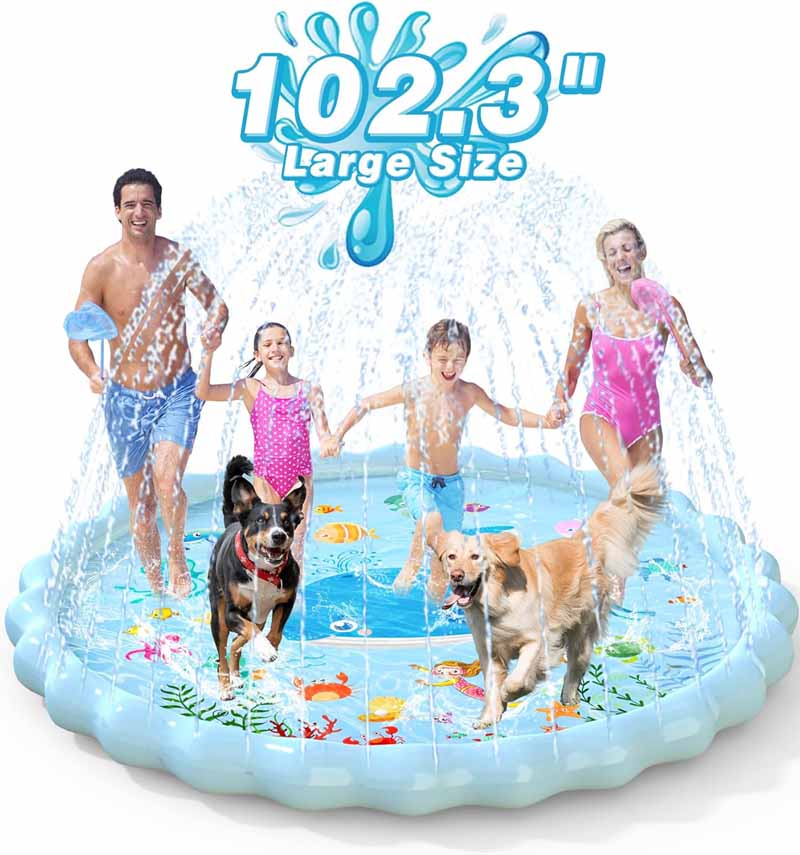
Inward spray is often better for toddler splash pads because it directs water toward the center play area. This creates a clearer, easier-to-manage water zone. Parents can see where the water is going, and toddlers can better understand where to play.
Outward spray can waste water, soak nearby patios, hit supervising adults, and make small yards harder to manage. Inward spray helps keep the focus on the pad. It can also reduce the chance of toddlers chasing water away from the play surface.
A good inward spray design should include:
| Spray Detail | Why It Helps Families |
|---|---|
| Outer ring spray direction | Sends water toward the center |
| Even spray holes | Reduces dry spots and heavy splash zones |
| Controlled height | Helps parents manage comfort |
| Stable edge | Keeps the water channel in shape |
| Standard hose connection | Makes setup simpler |
EPN splash pads are designed with attention to spray distribution, water pressure behavior, and edge stability. For toddler use, these details help create a calmer play environment that parents can manage with confidence.
What Kids Splash Pad Size Fits?
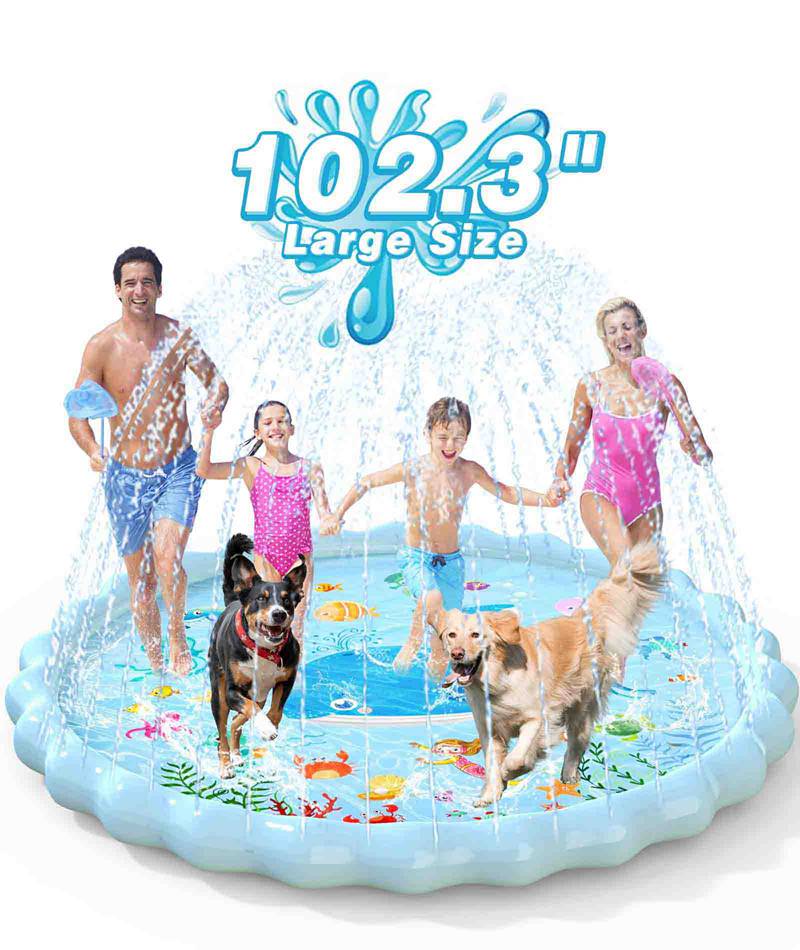
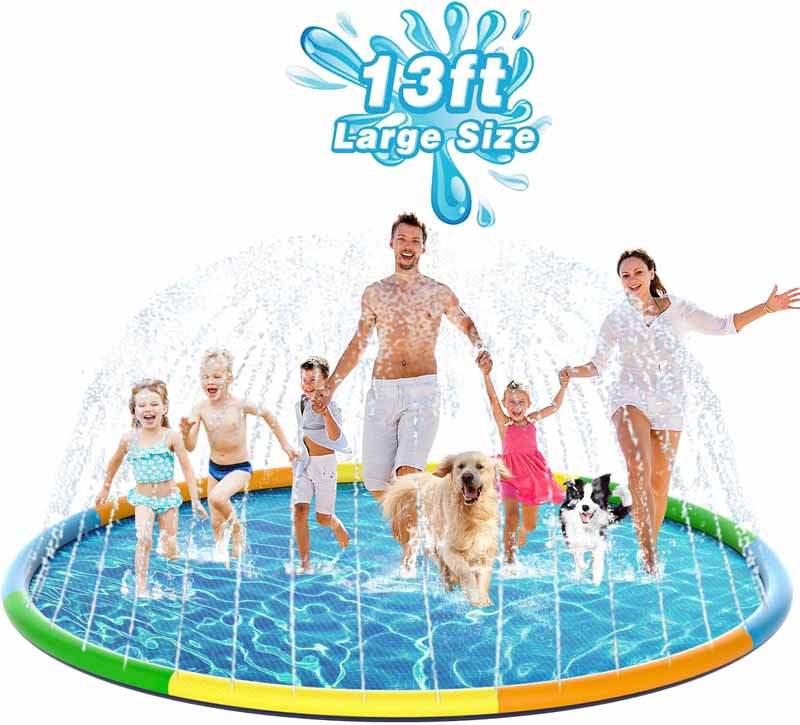
The right kids splash pad size depends on the child’s age, number of children, outdoor space, and supervision level. A compact or medium pad often works well for one toddler. A larger pad can support siblings or group play when the ground is flat and adults can supervise closely.
Which Size Fits One Toddler?
For one toddler, a compact or medium kids splash pad is usually enough. A 1- or 2-year-old does not need a very large water play area. Many toddlers are happy sitting, stepping, touching water streams, and walking short distances.
A smaller splash pad can make play easier to supervise and cleanup faster. It also works better for patios, small lawns, side yards, and quick summer play after nap time or before dinner.
| Outdoor Space | Better Size Direction | Why It Helps |
|---|---|---|
| Small patio | Compact | Easier to place and drain |
| Small lawn | Compact to medium | Keeps supervision simple |
| Medium backyard | Medium | Allows gentle movement |
| Large backyard | Medium or larger | Leaves room around the pad |
| Shared family play | Medium to large | Better for siblings |
For one toddler, easy control is more important than maximum size. Parents should leave enough dry space around the pad to stand, adjust the hose, hold a towel, or step in quickly.
Which Size Fits Siblings?
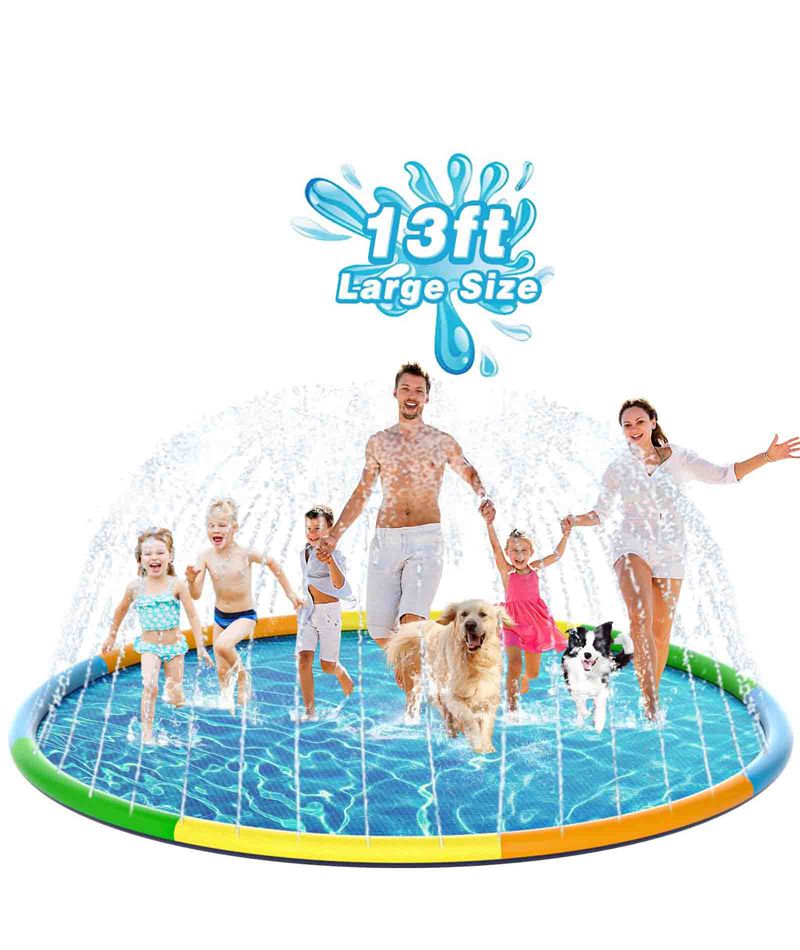
For siblings, a medium or larger kids splash pad can work better because children need room to move without stepping on each other. This is especially useful when one child is ages 1–3 and another child is older. Older siblings may move faster, splash harder, or want stronger water pressure.
A larger splash pad can reduce crowding, but it does not automatically make play safer. Parents still need to set rules before water play begins.
Simple sibling rules help:
- No pushing.
- No jumping onto another child.
- No sitting on the hose connector.
- No running across the pad when a younger toddler is sitting.
- Stop play if someone slips or becomes upset.
- Take turns if the area becomes crowded.
| Use Case | Better Pad Size | Parent Tip |
|---|---|---|
| One toddler | Compact to medium | Keep spray soft |
| Two toddlers | Medium | Leave enough center space |
| Toddler + older sibling | Medium to large | Set clear rules before play |
| Backyard party | Larger pad with open area | Assign one adult to watch water play |
| Pet and child use | Separate play times preferred | Clean between uses when needed |
A larger pad should create comfort, not chaos. If the play area becomes crowded, reduce water pressure, limit the number of children, or create shorter play turns.
What Should Toddlers Wear?
Toddlers should wear clothing that supports water play, sun protection, and safe movement. A good splash pad outfit helps children stay comfortable while reducing slipping, sun exposure, and soaked heavy clothing.
Recommended toddler splash pad clothing:
| Item | Why It Helps |
|---|---|
| Swim diaper | Useful for children who are not fully potty trained |
| Soft swimsuit | Allows easy movement |
| Rash guard | Adds sun coverage for shoulders and upper body |
| Water shoes | Helps on wet grass, patio, or textured ground |
| Sun hat | Protects head and face |
| Towel nearby | Helps warm the child after play |
| Dry change of clothes | Prevents chills after water time |
Avoid heavy cotton clothing because it absorbs water and may make toddlers cold or uncomfortable. Loose clothing that drags on the ground can also interfere with movement. Water shoes should fit properly, since oversized shoes may trip a toddler instead of helping.
Parents should also plan for sunscreen, shade breaks, and drinking water. Splash pad play often happens during hot weather, and toddlers may not notice when they are tired or overheated.
Are Kids Splash Pads Healthy?
Kids splash pads can support healthy outdoor play when they are used with fresh water, close supervision, clean surfaces, and proper storage. Parents should prevent toddlers from drinking spray water, clean the pad after use, dry it fully, and avoid use when children are sick.
Is the Water Clean?
At home, a kids splash pad usually connects to a garden hose, which gives families more control than public water play areas. Parents can choose when to use it, clean the pad before play, and drain the water after use. Still, splash pad water should not be treated as drinking water.
Toddlers often explore with their mouths. They may lean toward spray streams, lick wet hands, or try to catch water. Parents should gently redirect this behavior.
Clean water habits include:
- Use fresh water each time.
- Keep sick children off the pad.
- Change diapers away from the play area.
- Keep snacks away from the splash pad.
- Rinse the surface after use.
- Dry the pad fully before folding.
- Store the pad in a clean, dry place.
| Habit | Why It Matters |
|---|---|
| Use fresh water each time | Avoids stale water sitting on the pad |
| Keep sick children off the pad | Helps reduce germ spread |
| Change diapers away from play area | Keeps water cleaner |
| Keep snacks away from the pad | Reduces dirt and residue |
| Rinse after use | Removes grass, soil, and sunscreen |
| Dry fully before storage | Helps reduce odor and storage issues |
If pets use the same outdoor area, families may want separate play times or extra cleaning between uses. EPN also develops pet splash pad products, but toddler play should stay clean, controlled, and supervised.
How Do You Clean It?
A kids splash pad should be cleaned after use, especially when toddlers sit, crawl, or play close to the surface. The routine should be simple enough for families to repeat every time.
A practical cleaning routine:
- Turn off the hose.
- Disconnect the hose carefully.
- Let water drain from the pad.
- Rinse away grass, mud, leaves, or sunscreen residue.
- Wipe visible marks with a soft cloth.
- Let the pad dry fully on both sides.
- Fold loosely after drying.
- Store in a cool, dry place.
The most important step is drying. Folding a wet splash pad can lead to odor and poor storage conditions. If the top side is dry but the bottom is still damp, flip the pad and wait longer before folding.
Families who use splash pads several times a week may benefit from a simple cleaning and storage routine. A clean pad is more pleasant for toddlers and more reassuring for parents.

How Should You Store It?
Storage affects how long a kids splash pad remains pleasant to use. A pad that is folded wet, left in direct sun, dragged over rough surfaces, or stored under heavy items may wear faster.
Better storage habits:
| Storage Habit | Benefit |
|---|---|
| Dry fully before folding | Helps prevent odor |
| Fold loosely | Reduces stress on the same crease lines |
| Avoid heavy pressure | Protects seams and spray holes |
| Store away from direct sun | Helps protect material feel and color |
| Keep away from sharp tools | Reduces puncture risk |
| Check before next use | Finds small issues early |
Parents should avoid leaving the splash pad outdoors for days after play. Sun exposure during use is normal, but long-term outdoor exposure can affect PVC products over time. A garage shelf, storage bin, deck box, or dry indoor utility area is usually better.
Good storage also makes the next use easier. When the pad is clean, dry, and neatly folded, parents are more likely to bring it out again.
Why Choose EPN Kids Splash Pad?
EPN kids splash pads are designed around PVC material experience, family water play, spray control, stable structure, and repeated outdoor use. Under American Epsilon Inc., EPN focuses on PVC and composite-material products for children, pets, outdoor leisure, and seasonal play, with development, testing, manufacturing, packaging, and OEM/ODM support.
What Does EPN Focus On?
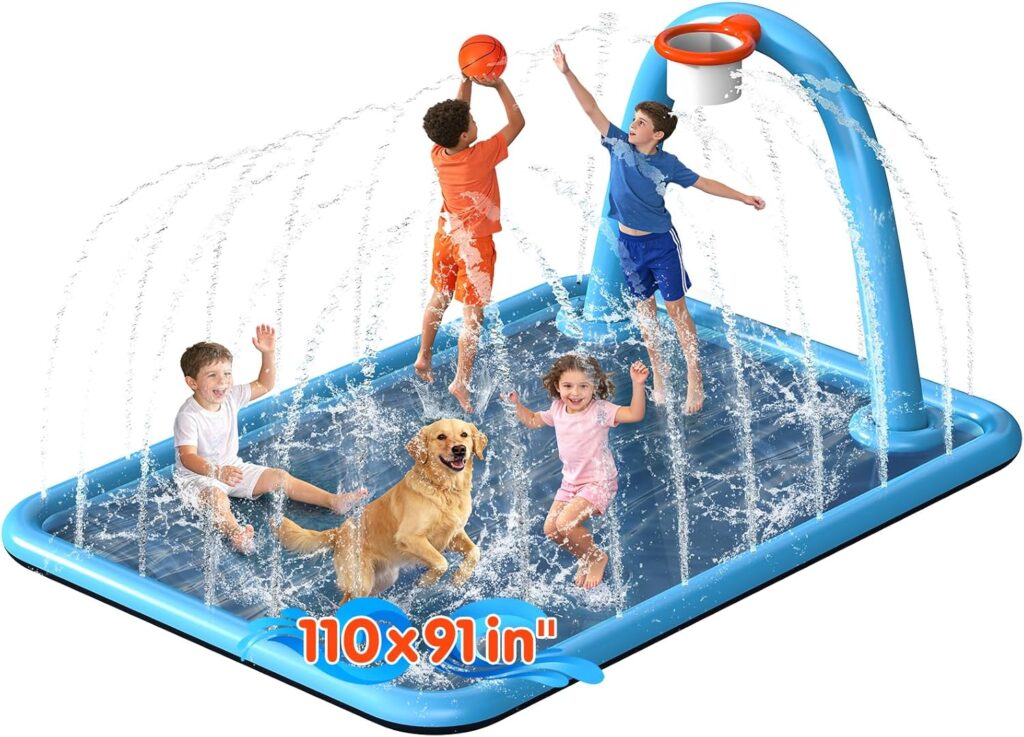
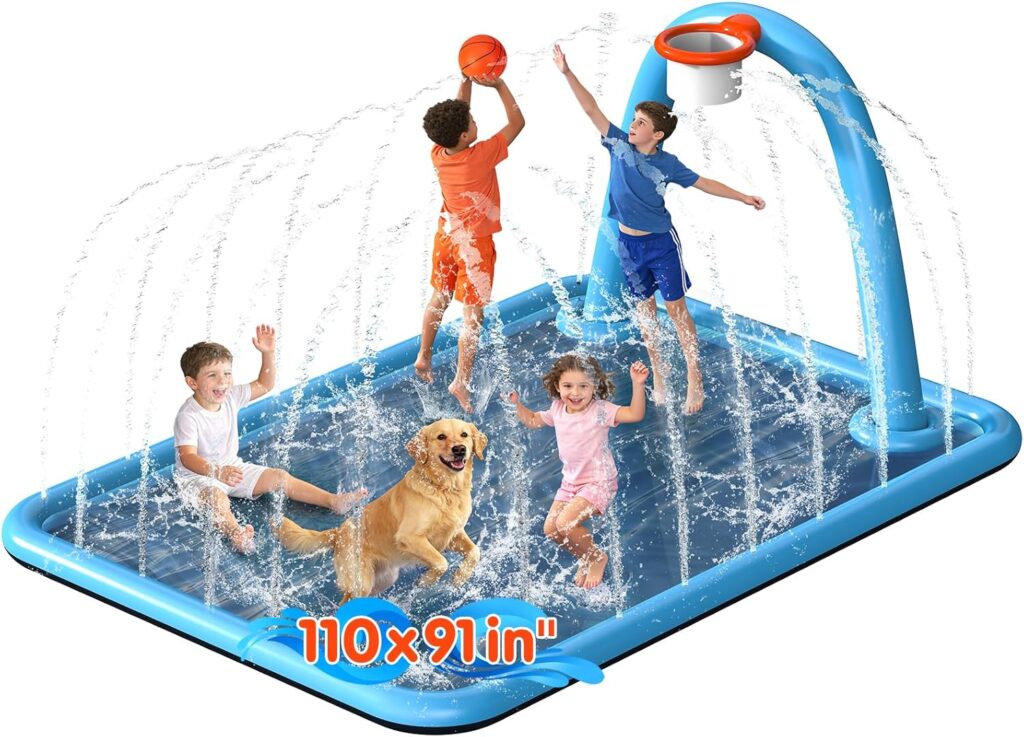
EPN belongs to American Epsilon Inc., a U.S.-registered company focused on PVC and composite-material products. The broader product range includes kids splash pads, pet splash pads, basketball splash pads, inflatable pools, kids pools, pet pools, water slides, water hammocks, floats, pool pillows, snow tubes, and other seasonal outdoor products.
For families, this experience matters because a kids splash pad needs more than attractive graphics. It needs a stable outer ring, comfortable PVC surface, reliable hose connection, controlled spray, durable seams, clear packaging, and easy storage. These capabilities show up in smaller details parents can feel during use: a softer surface, steadier spray, cleaner seams, and a product that is easier to bring out more than once.
For business customers, EPN’s wider product system also supports project flexibility. Retailers, distributors, Amazon sellers, and brand teams may need different sizes, patterns, packaging designs, labels, language versions, compliance documents, and shipping plans.
Core EPN strengths include:
| Capability | What It Supports |
|---|---|
| PVC and composite-material experience | Better material matching for outdoor water play |
| Product development support | More practical structure, spray, and storage design |
| Testing process | Checks for leaks, spray balance, seams, and repeated use |
| Packaging and localization | Better fit for different retail and online channels |
| OEM/ODM support | Custom sizes, colors, patterns, labels, and packaging |
Together, these capabilities support both ready-to-sell EPN splash pads and custom splash pad projects for different markets.
What Details Matter?
For ages 1–3, the most important EPN kids splash pad details are soft PVC feel, stable outer ring, inward spray, reinforced seams, low-odor material direction, standard hose connection, and simple after-use storage.
A toddler splash pad should work well in a real yard. The hose should connect without confusion. The edge should hold water evenly. The spray should move inward instead of randomly outward. The center should stay shallow. The surface should feel comfortable for small feet. After play, the pad should drain and fold without turning cleanup into a long task.
Key EPN product details for toddler use:
| Product Detail | Customer Value |
|---|---|
| Soft PVC surface | More comfortable for bare feet, sitting, and crawling |
| Stable outer water ring | Helps maintain shape during water flow |
| Inward spray design | Keeps play more centered and controlled |
| Reinforced seam areas | Supports repeated filling, draining, and folding |
| Low-odor material direction | Better for close toddler play |
| Standard hose connection | Easier for home backyard setup |
| Foldable structure | Convenient for storage |
| Bright child-friendly design | Makes summer play more inviting |
| Size options | Supports different yard and family needs |
For retailers and online sellers, these details can affect reviews, return rates, and repeat purchase confidence. A low-cost splash pad that sprays unevenly, smells strong, leaks early, or feels too thin may create customer complaints. A better-structured splash pad can support stronger customer satisfaction through the summer season.
How Is It Tested?
Epsilon’s development process includes material review, product performance checks, structural evaluation, water pressure observation, UV exposure consideration, folding-use review, and aging-related assessment. The goal is not only to see whether a splash pad works when it is new, but how it performs after normal family use.
For kids splash pads, testing may focus on:
| Test Area | Why It Matters |
|---|---|
| Leak testing | Helps identify weak points before shipment |
| Water pressure stability | Supports controlled spray performance |
| Spray distribution | Helps create a more even play area |
| Seam strength | Supports repeated filling and draining |
| UV exposure | Reviews outdoor sun-use performance |
| Folding test | Checks repeated storage behavior |
| High-temperature aging | Reviews material response to heat |
| Wear resistance | Supports lawn and patio use |
| Connector check | Helps reduce hose connection problems |
Epsilon also supports packaging and localization needs for different markets. Packaging, labels, instructions, warning content, and retail presentation may be adjusted based on channel expectations and market requirements. For business customers, this helps reduce project communication costs and makes launch planning easier.
Custom project support may include:
| Custom Direction | Example Options |
|---|---|
| Size | Compact toddler size, family size, large backyard size |
| Shape | Round, square, rectangular, themed layout |
| Color | Blue, ocean style, animal theme, custom palette |
| Pattern | Letters, animals, sea life, sports, brand graphics |
| Packaging | Retail box, mailer box, display-ready packaging |
| Label | Brand label, barcode, warning label, platform label |
| Material | Thickness and surface feel adjustment |
| Market support | U.S., Canada, Europe, and other regions |
| Order plan | Low MOQ test order or phased scaling |
For brand teams and distributors, this level of support can make the difference between simply sourcing a splash pad and building a more complete seasonal product line.
How to Choose the Right Kids Splash Pad
The right kids splash pad for ages 1–3 is not the option with the highest spray, largest size, or most colorful print. It is the splash pad that helps toddlers enjoy water safely, comfortably, and repeatedly under adult supervision. Parents should look for gentle spray, adjustable water pressure, soft PVC, stable outer ring, low odor, suitable size, easy cleaning, and dry storage.
A good toddler splash pad should answer the questions parents actually care about:
| Parent Question | What to Look For |
|---|---|
| Will it feel comfortable for my toddler? | Soft PVC, smooth surface, low odor |
| Can I control the spray? | Adjustable hose pressure and inward spray |
| Is it easy to supervise? | Shallow center, clear play area, suitable size |
| Will it fit my space? | Compact or medium size for patios and small lawns |
| Can siblings use it? | Larger size with enough room and clear rules |
| Is cleaning difficult? | Drain, rinse, dry, fold routine |
| Will it last through summer? | Reinforced seams, stable edge, proper storage |
| Is it suitable for business sourcing? | OEM/ODM support, packaging options, production capacity |
For families, EPN kids splash pads offer a practical way to create backyard water play for toddlers, siblings, and summer gatherings. They are designed for the kind of use that happens in real homes: short play sessions, hose setup, sunny lawns, quick cleanup, and repeat use through warm weather.
For retailers, distributors, Amazon sellers, and brand customers, Epsilon can support EPN branded product orders and customized splash pad projects. Available support may include OEM/ODM development, size adjustment, pattern design, packaging customization, label adaptation, material selection, sample development, and phased production planning.
To order EPN branded kids splash pads or request a custom splash pad project, contact Epsilon with your target market, age group, size range, packaging style, order quantity, compliance direction, and delivery needs. Epsilon can help review suitable material options, product structure, sample timing, packaging presentation, and production solutions for your business.