Skip to content
Which Dog Splash Pad on Amazon Is Best for Your Dog?
# Your Trusted Inflatable Supplier In US

Shopping for a dog splash pad on Amazon looks simple at first. Most listings promise the same things: cooling relief, summer fun, durable PVC, easy hose connection, and a safe non-slip surface. But once a dog actually steps onto the product, the real differences become obvious. Some pads feel too slick under wet paws. Some spray too hard for cautious dogs. Some look spacious in the photos but feel much smaller once the water starts running and the dog begins stepping back from the edge, circling, or avoiding the spray ring.
The best dog splash pad on Amazon is usually not the one with the boldest print or the tallest spray. In real backyard use, the better choice is usually a flat, shallow splash pad with a secure walking surface, enough usable space for the dog’s size, controlled spray, and material strength that can handle repeated summer use. The right product should feel easy for the dog to understand, safe enough for the owner to trust, and simple enough to use again next weekend.
That difference matters because people are not really buying a graphic or a novelty toy. They are buying a routine. They want something that can come out on a warm afternoon, help the dog cool down without a struggle, rinse clean without too much work, and still feel worth using a few weeks later. That is why choosing well means looking beyond the first product image and thinking about how the splash pad will actually perform with a real dog, in a real yard, during ordinary summer use.
Is a Dog Splash Pad on Amazon Worth Buying?
A dog splash pad on Amazon is worth buying when your dog enjoys moving water, needs light outdoor cooling, and your household wants something easier to set up and clean than a full dog pool. It usually works best for dogs that like stepping, pacing, pawing, and short water-play sessions instead of soaking in deeper water for long periods.
For many homes, the biggest advantage is not just fun. It is convenience. A splash pad can usually be unfolded, connected, used, rinsed, and put away much faster than a pool. That makes it easier to use on ordinary weekdays instead of only on special occasions. Products that are easy to use tend to become part of real routines. Products that feel like a project often do not.
A splash pad can also be a smart choice for dogs that are curious about water but not fully comfortable with immersion. A shallow, open layout feels less demanding than a deeper pool because the dog can approach, retreat, and re-approach without climbing into a contained water space. That simple difference often decides whether a cautious dog investigates the product or avoids it.
How a dog splash pad works
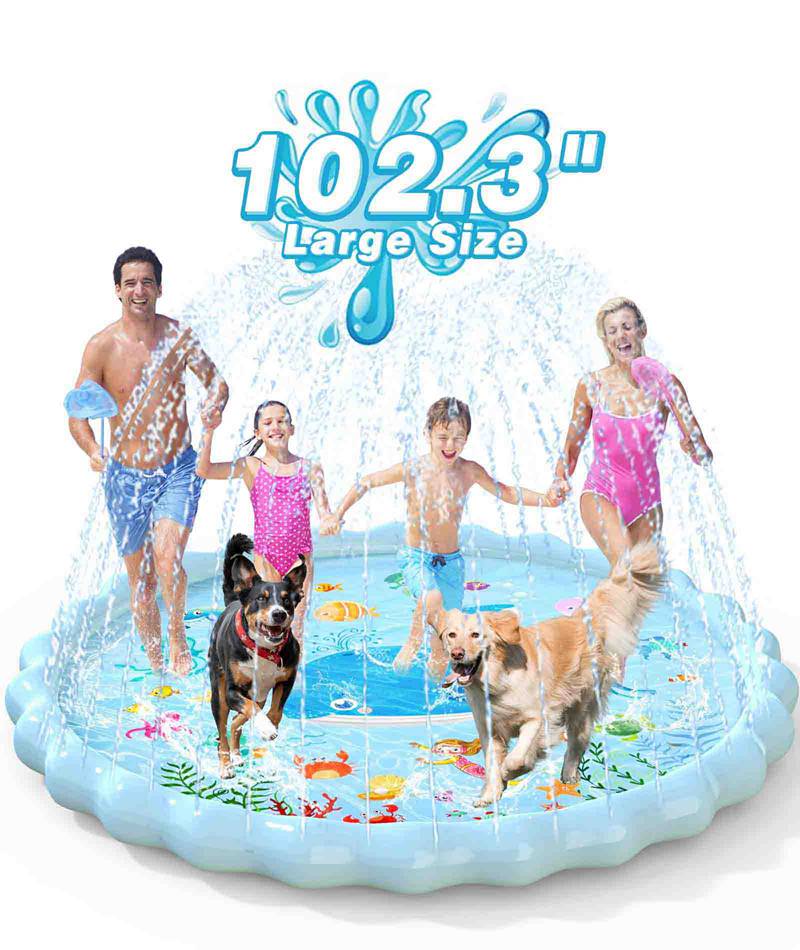
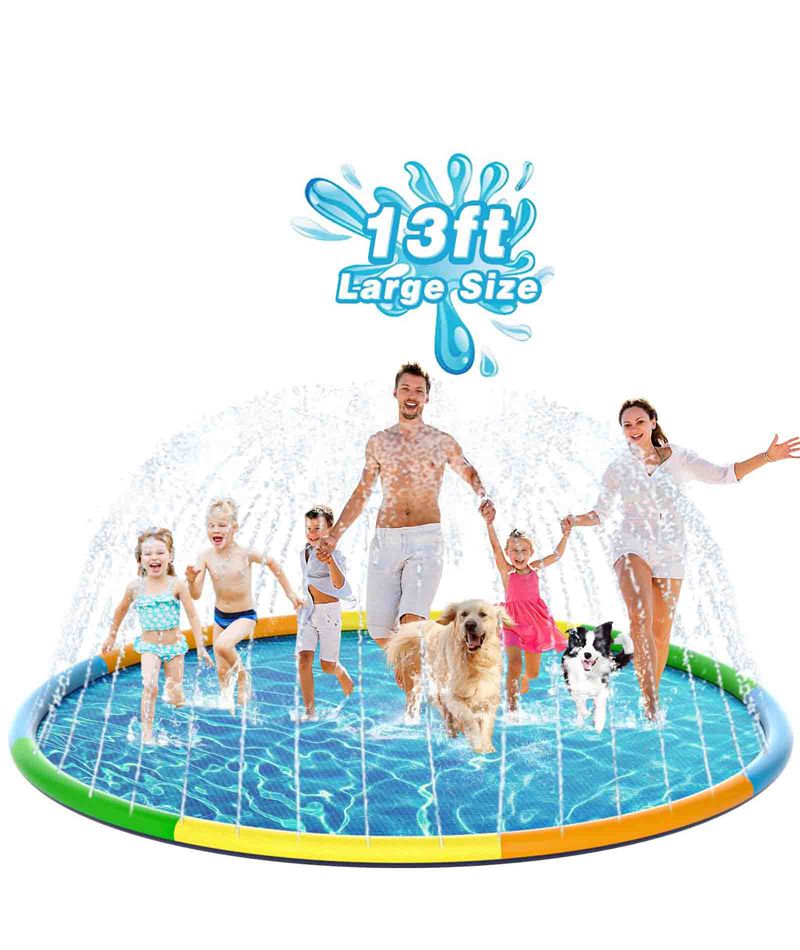
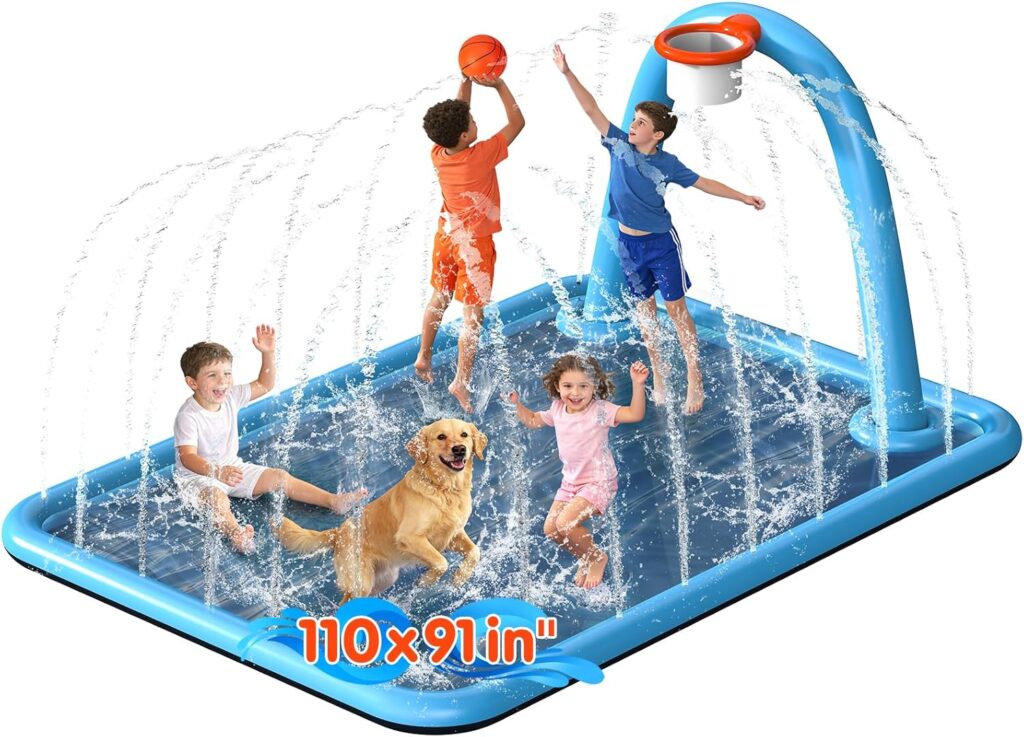
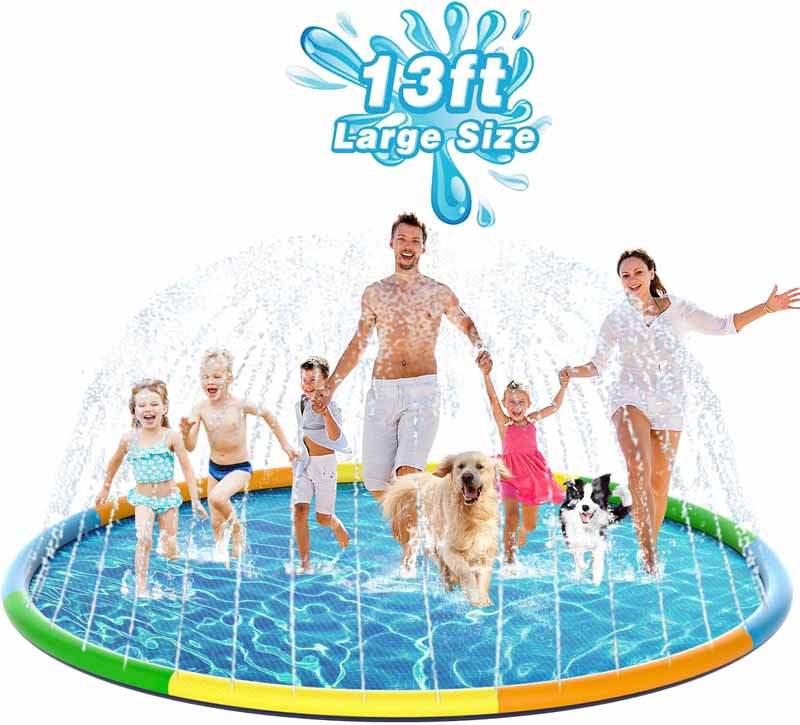
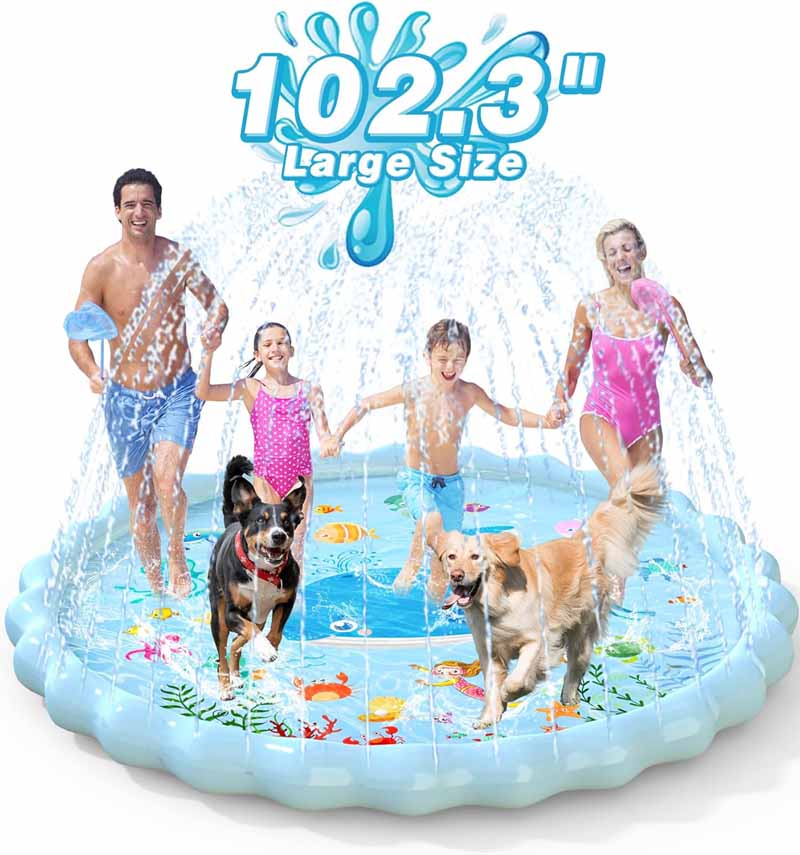
A dog splash pad is a flat water mat that connects to a standard garden hose. Water moves through the outer ring and sprays inward through small holes along the edge. The dog stays on a shallow, open surface instead of stepping into a deeper basin.
That design solves a very practical problem. Many dogs are interested in water, but not all of them want to stand inside it. A splash pad makes the experience feel easier because the dog can:
- step in and step out freely
- stay near the edge without being fully wet
- test the water without committing to a container
- move around while cooling off
This is one reason splash pads often work better than expected for dogs that dislike tubs or hesitate around pools. The product feels less demanding from the start.
It also helps owners. Setup is usually simple, water depth stays minimal, and cleanup is much lighter than a pool. That combination of low effort and light cooling is one of the main reasons splash pads perform well in real homes.

Which dogs usually enjoy it most
A splash pad is usually a strong fit for dogs that like movement more than soaking. That includes many small and medium dogs, active family dogs, and larger dogs that enjoy walking through water rather than lying down in it.
It can also be a good fit for dogs that are still learning to trust water. Because the format is open and shallow, the dog can explore at its own pace. That matters more than many owners expect. A dog that is unsure about water often handles a splash pad better than a pool simply because it does not feel trapped.
Dogs that often do well with splash pads include:
- dogs that like hose spray or wet grass
- dogs that cool off in short bursts
- dogs that pace or circle instead of settling
- dogs that need a lighter water experience
Dogs that may prefer something else include:
- dogs that want to sit or lie in water
- dogs that use water mainly for deep cooling
- dogs with very rough play habits that need heavier structure
| Dog type | Why a splash pad can work well | What to watch |
|---|---|---|
| Small dogs | Easy entry, shallow water, less intimidating | Surface grip still matters |
| Medium dogs | Good balance of cooling and play | Needs enough turning room |
| Large active dogs | Useful for movement and quick cooling | Needs more space and stronger build |
| Cautious dogs | Gentler introduction to water | Start with low spray |
| Soaking-oriented dogs | May enjoy brief play | A dog pool may suit them better |
Why some dogs like splash pads right away
Dogs do not all enjoy splash pads for the same reason. Some are drawn to movement. Some respond to the cool surface under their paws. Some like chasing the spray. Others simply enjoy a new outdoor activity that helps them stay active in warm weather.
What makes splash pads effective is that they give the dog options. The dog can:
- step onto the center
- circle the edge
- move away from the spray
- come back again when ready
That freedom is one of the category’s biggest strengths.
Another reason splash pads work well is predictability. Once the water pressure is set, the layout stays easy to understand. The water comes from the edge. The center stays open. There is no hidden depth and no sudden shift into a container of water. For cautious dogs, that helps build confidence faster.
What Should You Check Before You Buy?

Before buying, look past the first product image. The details that affect real use are surface grip, material strength, edge construction, spray control, connection quality, and usable center space. These are the things that decide whether the splash pad feels safe, lasts through the season, and stays worth using.
A splash pad can look attractive in the listing and still disappoint in actual use. The main reason is that dogs notice the functional parts immediately. They notice whether the surface feels secure. They notice whether the spray feels too aggressive. They notice whether there is enough room to move naturally. Those factors matter far more than color or print once the water is running.
Material, surface, and edge build
For dog use, the real material question is not just whether the pad is made from PVC. The better question is whether the product feels thick enough, stable enough, and well-finished enough to handle repeated paw traffic, folding, sun exposure, and water pressure.
Even calm dogs do more than stand still. They step, brace, pivot, and circle. More active dogs do all of that harder. When the material is too light, the problem usually appears in small ways first:
- the surface feels less stable once wet
- the outer ring feels weaker under pressure
- fold lines become more obvious after repeated use
- the product starts to feel less trustworthy overall
The center surface matters just as much as the body material. Wet paws need grip. A splash pad can look attractive in the listing and still perform poorly if the dog hesitates the moment the surface gets wet.
That is why stronger splash pads usually feel calmer and more stable when the water is on. In real use, material quality affects several things at once:
- how secure the dog feels
- how well the pad handles repeated use
- how easy the product is to clean and store
- how long the splash pad stays presentable
| What to check | Why it matters |
|---|---|
| Body material | Affects durability under paw traffic and folding |
| Center surface | Affects grip and confidence when wet |
| Outer ring build | Affects pressure stability and edge wear |
| Seam finish | Affects long-term leakage risk |
| Surface feel | Affects whether the dog wants to step back on |
For branded and custom development, this part becomes even more important. Epsilon’s internal system includes 27 R&D staff, more than 500 material and product performance tests each year, and annual production capacity of around 12 million pieces. Those numbers matter because they speak to repeatability, not just product concept. A splash pad needs more than a good-looking sample. It needs consistent material and structure across production.
Spray control and connection quality
Spray behavior changes the whole product experience. A gentle, even spray makes the splash pad feel calm and approachable. A high, noisy spray can make it feel busy and harder for the dog to trust, especially during the first few sessions.
This is why adjustable spray matters so much. It gives the owner control over how the dog experiences the product.
A good spray setup usually helps the dog:
- understand where the water is coming from
- approach without being startled
- stay longer on the surface
- build confidence gradually
A poor spray setup often does the opposite:
- too much noise
- too much splashback
- too much pressure at the edge
- too little control for the owner
Connection quality matters more than many buyers expect too. Hose fitting problems do not always show up in the main image, but they show up quickly in real use. If setup feels awkward, water pressure is inconsistent, or the connection leaks, the product becomes less convenient very fast.
These small friction points are often what decide whether a product gets used again next week or stays folded in storage.
DIY or ready-made?
It is possible to make a simple DIY dog splash pad using a tarp, PVC pipe, and perimeter spray holes. For some owners, that can be a useful way to test whether a dog likes this kind of water play before buying a finished product.
As a quick trial, DIY can answer one useful question: does the dog enjoy moving water on a flat surface at all?
But a homemade version usually solves only the most basic part of the problem. It does not automatically solve:
- traction under wet paws
- balanced spray distribution
- stronger edge construction
- cleaner hose connection
- long-term folding durability
That is why DIY often works better as a test than as a finished answer. A ready-made splash pad makes more sense when the goal is repeatable use rather than one experiment.
| Option | Strength | Limitation |
|---|---|---|
| DIY splash pad | Good for quick testing | Less consistent spray and finish |
| Ready-made splash pad | Easier repeat use | Higher upfront purchase cost |
| DIY build | More flexible as a project | Harder to optimize for dogs |
| Ready-made build | Better overall user experience | Requires better selection up front |
What Size Dog Splash Pad on Amazon Is Right?
The right size is the one that gives the dog enough room to step, turn, pause, and move away from the spray without constantly backing into the outer ring. This is where many purchases go wrong. People often choose by flat diameter alone, but once the water is on, the usable center becomes smaller than the listing image suggests.
The outer ring is active space. The spray edge becomes something the dog may avoid, step around, or interact with carefully. That makes the center the real comfort zone. For small dogs, that space loss may not matter much. For medium and large dogs, it matters a lot.
| Dog size and use | Suggested size range | Why it works better |
|---|---|---|
| Small dogs | 59 in | Easy to read and easy to enter |
| Small to medium dogs | 67 in | Better turning room |
| Medium to large dogs | 80–95 in | More usable center space |
| Large active dogs | 95 in+ | Better for circling and repeated movement |
| Shared use | 87–130 in | Better for multi-dog or family use |
Best size for small dogs
For many small dogs, a 59-inch splash pad is a practical starting point. A smaller dog usually does not need a wide turning radius, and a more compact pad can feel easier to understand during the first few uses.
This can be especially useful for cautious dogs because a simpler visual layout often feels more manageable. The dog can:
- approach the edge
- test the spray
- step into the center
- move back without feeling surrounded
Still, the smallest workable size is not always the best size. A very playful small dog may enjoy more room than a calm one. If the dog likes circling and stepping around the spray, moving up one size can improve comfort and reduce crowding near the edge.
Best size for large dogs
Large dogs need more than a “large” label. They need enough room to turn through the shoulders, step away from the spray, and stand without crowding the perimeter.
This is why larger dogs often outgrow entry-level splash pad sizes faster than owners expect. A large dog usually does more than stand and look at the water. It pivots, braces, steps wide, and often circles before settling. That movement puts repeated force on the surface and on the outer ring.
For large breeds, sizing up usually improves:
- movement comfort
- edge loading
- overall stability
- long-term usability
A splash pad that feels slightly oversized on day one is often much easier to live with through the whole season than one that already feels tight at the start.
When sizing up makes sense
You should size up when the dog is:
- broad-bodied
- fast-moving
- unsure around spray
- likely to share the pad with another dog or a child
You should also size up when the splash pad will be used on a patio or deck rather than soft lawn. Harder surfaces can make dogs more aware of footing, so a little more room often helps.
A simple fit test works well here. Imagine your dog:
- stepping into the center
- backing off the spray
- turning once before standing still
If that already feels cramped, the pad is probably too small.
Dog Splash Pad or Dog Pool?
A splash pad and a dog pool solve different problems. A splash pad is usually better for light cooling, movement, and quick everyday use. A dog pool is better for deeper cooling, longer rest, and dogs that want to sit or lie down in water.
They are both useful summer products, but they create very different routines.
| Comparison point | Splash pad | Dog pool |
|---|---|---|
| Main use | Light cooling and active play | Soaking and deeper cooling |
| Water depth | Very shallow | Deeper |
| Setup speed | Faster | Slower |
| Storage | Easier | Bulkier |
| Best fit | Curious, active dogs | Soaking-oriented dogs |
| Cleanup | Usually easier | Usually more involved |

Better for play
For active play, the splash pad usually wins. It keeps the dog moving, reacting, and choosing how much to engage. That makes it ideal for dogs that enjoy chasing spray, stepping through water, or turning cooling into a game.
It also works well for family use because it fits easily into shorter backyard sessions. There is less setup, less water to manage, and less cleanup afterward.
Better for cooling
For deeper and longer cooling, the dog pool often has the advantage. A pool lets the dog lower more of the body into the water and stay there. That suits dogs that cool themselves by settling down rather than moving through water.
A splash pad still cools effectively, but in a lighter way. It works through:
- wet paws
- cooler standing surface
- light spray across the legs and underside
For some dogs, that is exactly right. For others, especially dogs that prefer staying in water, it may not be enough.
Easier to clean
A splash pad is usually easier to clean because there is less standing water to manage. Once the hose is off, there is less draining, less dumping, and usually less residue left in the yard.
That matters because ease of care strongly affects repeat use. A product that is easier to rinse and dry is much more likely to come back out next week.
How Do You Use a Dog Splash Pad Safely?
A dog splash pad is safest when it is introduced slowly, used under supervision, and treated as one useful part of a summer routine rather than the whole solution. The goal is not only to get the dog wet. The goal is to help the dog stay comfortable and relaxed while using the product.
How to start the first time
The best first session starts with the splash pad dry. Lay it flat and let the dog inspect it without pressure. Let the dog sniff it, step around it, and decide whether to touch it.
Once the dog is comfortable around the dry pad:
- turn the water on at the lowest useful setting
- keep the spray low and even
- let the dog choose how close to get
- stop before the dog becomes overwhelmed
A calm first session usually creates better long-term acceptance than a dramatic one.
How to get a dog to like it
Dogs usually learn to like a splash pad through repetition, reward, and control. Treats help. Toys help. Calm praise helps. What usually does not help is forcing the dog onto the surface or holding it in the spray.
Reward small progress:
- looking at the pad
- stepping onto the dry center
- staying near low spray
- returning to the pad calmly
These small moments build the right association. That is what creates real comfort over time.
Best water pressure
Lower pressure is usually better, especially at the beginning. High spray may look more exciting, but it often startles cautious dogs and makes the edge harder to approach.
A practical rule is simple: use the lowest pressure that still gives a clear, even spray.
If the dog keeps returning, the setting is probably working.
If the dog keeps backing away or avoiding the edge entirely, the pressure is likely too strong.
Safety rules that matter most
Keep drinking water nearby. Make sure shade is available. Keep sessions short enough that the dog stays comfortable rather than overly tired or overstimulated. Supervise every session, especially during the first few uses.
Placement matters too. Clear away sharp objects and rough debris. Put the pad on a reasonably stable surface. Trim very sharp nails before regular use, especially for heavier dogs.
After play, rinse and dry the pad rather than leaving it dirty and folded wet. Good maintenance helps preserve the material, reduce odor, and make the next session easier to start.
| Safe-use point | Why it matters |
|---|---|
| Start dry | Builds confidence first |
| Use low spray | Reduces startle and confusion |
| Keep shade nearby | Helps prevent overheating |
| Offer drinking water | Supports proper cooling |
| Supervise play | Reduces risk and overexcitement |
| Rinse and dry after use | Keeps the product cleaner and more reliable |
What Matters Most Before You Choose?
What matters most is not one isolated feature. It is the way size, grip, material strength, spray behavior, and daily usability work together. A splash pad can look impressive in the listing and still feel wrong in real use if the surface is too slick, the spray too aggressive, or the usable area too tight.
For home use
For home use, the best choice is the one that fits the dog’s behavior and the owner’s routine.
The most useful questions are usually these:
- Does the dog like moving water or still water?
- Does the dog need more room to circle?
- Will the splash pad be used on grass, patio, or deck?
- Does the household want fast weekday use or longer water sessions?
These questions are more useful than chasing the longest feature list. In most homes, the winning product is the one that feels easy to set up, easy to trust, and easy to bring back out again.
For branded and custom programs
For retailers, distributors, importers, and pet brands, the decision goes beyond basic function. Size range, spray style, surface texture, packaging direction, and selling-channel fit all matter.
This is where Epsilon’s broader system becomes useful. Based on the company profile, Epsilon supports:
- 27 R&D staff
- 500+ material and product performance tests per year
- 18+ professional designers
- 1,500+ new product design projects each year
- 5,000+ packaging adaptation tests annually
- annual production capacity of around 12 million pieces
Those numbers matter because they speak to repeatability, not just concept. For a branded or OEM/ODM pet water-play product, the real question is not only whether the first sample looks good. It is whether the product can stay consistent across material, structure, packaging, and channel presentation at scale.
Conclusion
The best dog splash pad on Amazon is usually the one that gives the dog enough room, enough grip, enough stability, and a spray pattern gentle enough to enjoy. For many homes, that means a flat, shallow splash pad with a secure walking surface, controlled spray, and material strength that can handle repeat summer use. For some dogs, especially those that prefer to sit in water rather than move through it, a dog pool may still be the better option.
If you are choosing for home use, buy with real backyard behavior in mind. If you are choosing for retail, private label, or a custom product line, build around fit, usability, and repeat performance rather than surface-level claims.

Get A Fast quote
Here, bringing your inflatable concepts to life is no longer a challenge—it’s a collaborative journey where American Epsilon helps families, outdoor enthusiasts, and global brands transform creative ideas into safe, certified, and market-ready inflatable solutions.


Partner With Epsilon
Whether you are a family looking for safe backyard fun or a brand seeking large-scale OEM/ODM solutions, American Epsilon Inc. guarantees every inflatable is built with safety, durability, and excitement in mind. With flexible low MOQs, strategically placed warehouses in the U.S., Canada, U.K., and Germany, plus 24/7 professional support, we ensure smooth delivery and reliable service worldwide.
Ready to bring your inflatable ideas to life? Request free samples, fast prototypes, and customized designs today—your trusted inflatable journey starts here.