Skip to content
Splash Pad vs Sprinkler Mat: Which One Is Better?
# Your Trusted Inflatable Supplier In US

When families shop for a summer water toy, they are rarely comparing product names alone. They are comparing routines, mess, comfort, and whether the toy will still feel worth using after the first exciting afternoon. That is why Splash Pad vs Sprinkler Mat is such an important comparison. On a screen, both can look bright, fun, and easy. In a real backyard, the difference shows up much faster. One may feel calm, open, and welcoming for a toddler who wants to step in slowly. The other may feel more reactive, more spray-driven, and more dependent on water pressure than expected. That difference affects everything that matters to parents: how easy the toy is to set up, how long children actually stay engaged, how wet the surrounding area becomes, how easy cleanup feels, and whether the product ends up being used five times or fifty.
For most families, a splash pad is usually the better all-around choice when the goal is a wider play zone, gentler first-time water play, and more consistent everyday use. A sprinkler mat can still be a good option for short, energetic play sessions, but it is often more sensitive to pressure and less forgiving for younger children. The best choice depends on the child’s age, the available outdoor space, the home’s water pressure, and how much cleanup the family is willing to handle after each use.
That is also why this topic matters beyond a simple retail comparison. Parents are not only buying a product. They are buying a version of summer that needs to fit real life. If the toy feels easy to trust, easy to repeat, and easy to store, it becomes part of the family routine. If it feels fussy, messy, or unpredictable, it usually disappears into storage much earlier than expected.
What Is Splash Pad vs Sprinkler Mat?
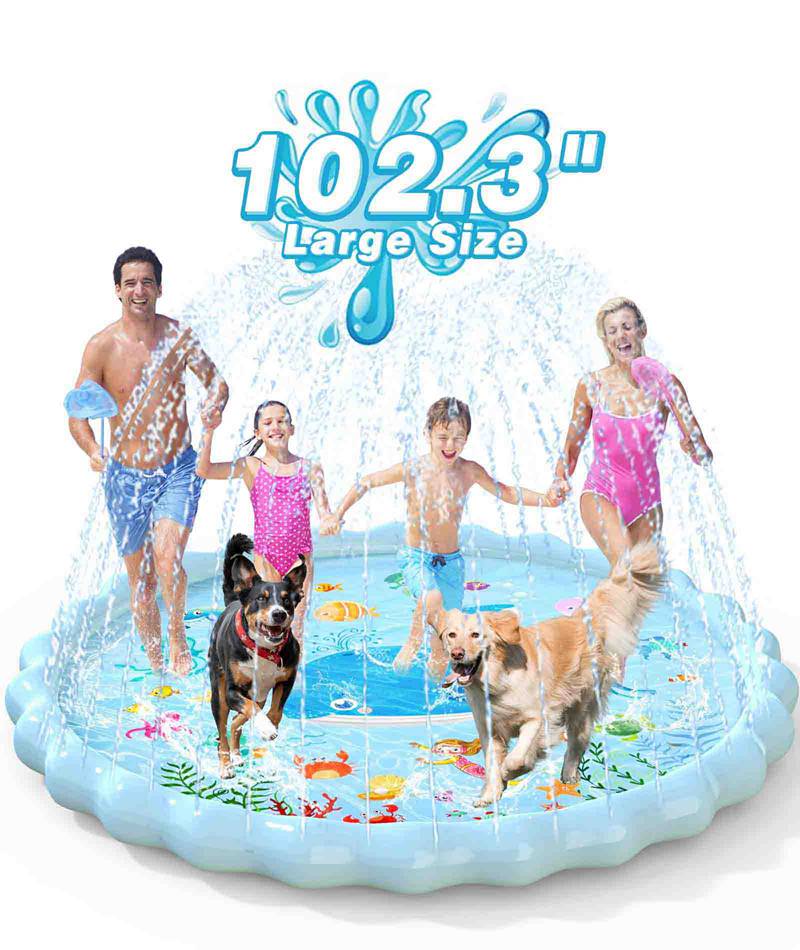
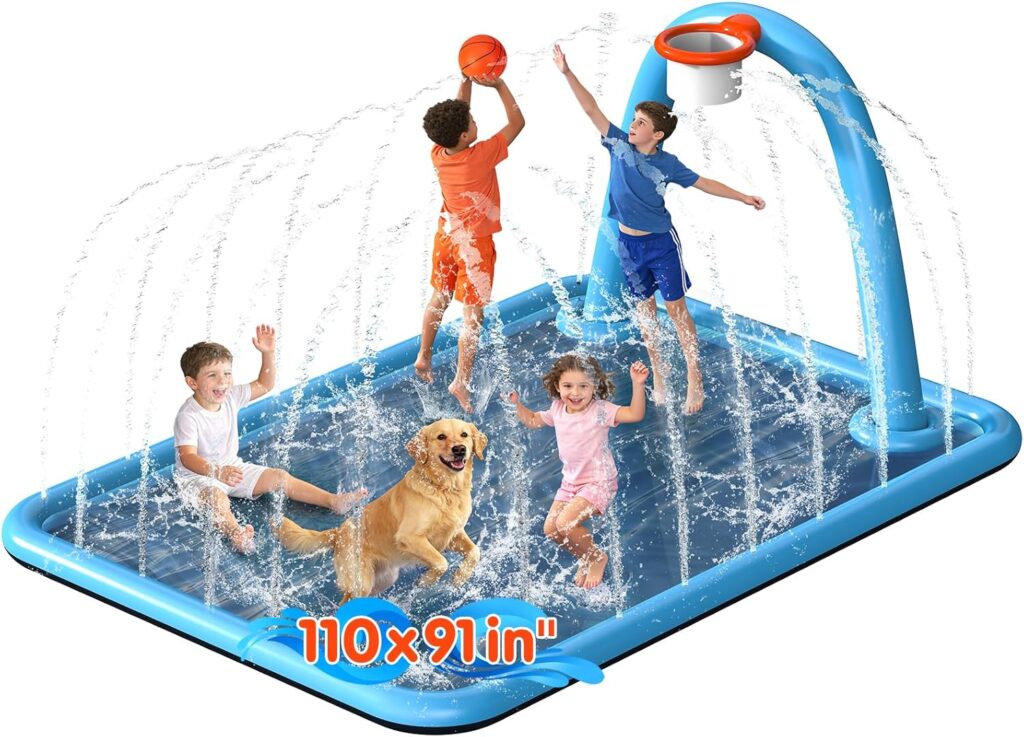
Splash Pad vs Sprinkler Mat is a comparison between two hose-fed backyard water toys that can look similar in product photos but create very different experiences in real use. A splash pad usually works like a flat, defined water-play area. A sprinkler mat usually feels more like a spray effect built into a ground mat. That difference shapes comfort, control, and how long children stay engaged.
A useful way to understand the difference is to think about what the child is actually doing on the product. With a splash pad, the child usually plays on the surface and with the water at the same time. The mat itself becomes a play zone. A child can step onto it, sit on it, stomp through it, and move within a visible area where the water is part of the environment. That creates a more grounded kind of play. The product feels like a little destination in the backyard.
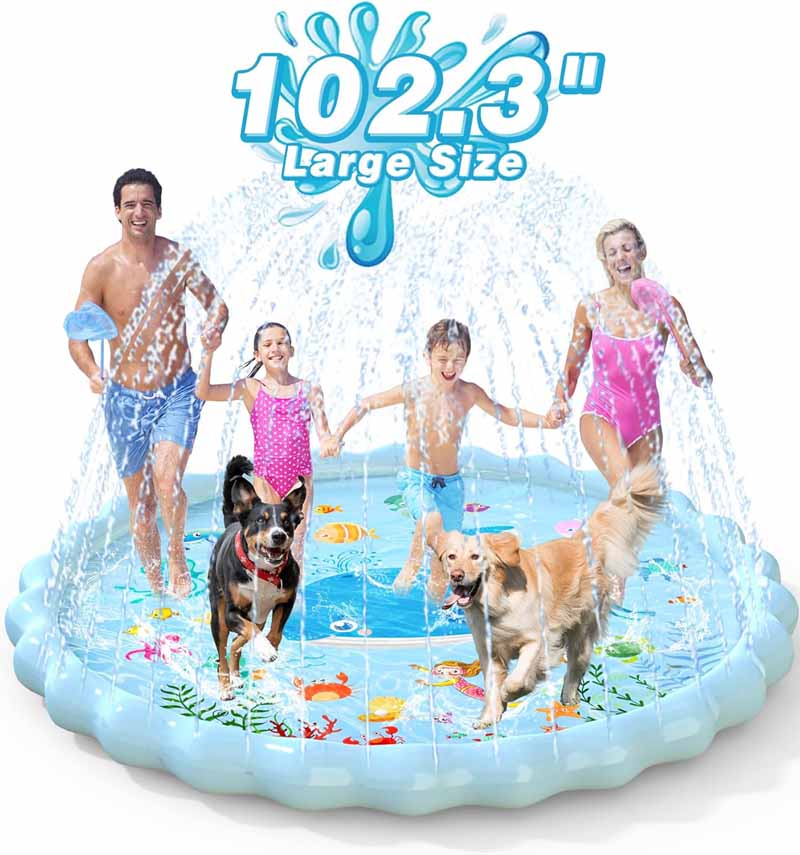
A sprinkler mat often works differently. It still lies on the ground and still connects to a hose, but the main event is usually the spray. The mat is more of a base for the water effect than a defined play area in its own right. For some children, that feels exciting and active. For others, especially younger children, it can feel less predictable and less inviting.
This is one reason the two products tend to perform differently in real homes even when they are sold in the same category. Families are not just choosing between two water toys. They are choosing between two different play rhythms. One is usually more about staying in the zone. The other is more about reacting to the spray.
| Comparison Point | Splash Pad | Sprinkler Mat | Real-Life Effect |
|---|---|---|---|
| Core experience | Water-play area | Spray-driven toy | Splash pads feel more complete |
| Child movement | Step, sit, stomp, stay inside zone | Run through, dodge, react | Sprinkler mats often feel more active |
| Spray behavior | Usually more even and controlled | Usually more pressure-sensitive | Sprinkler mats can change faster with water pressure |
| First use for younger kids | Often easier | Can feel more sudden | Splash pads are often more approachable |
| Shared play | Better for multiple children | Better for quick bursts of play | Splash pads usually last longer per session |
| Retail feel | More premium and giftable | More basic and simple | Splash pads often support stronger product positioning |
What Is a Splash Pad vs Sprinkler Mat?
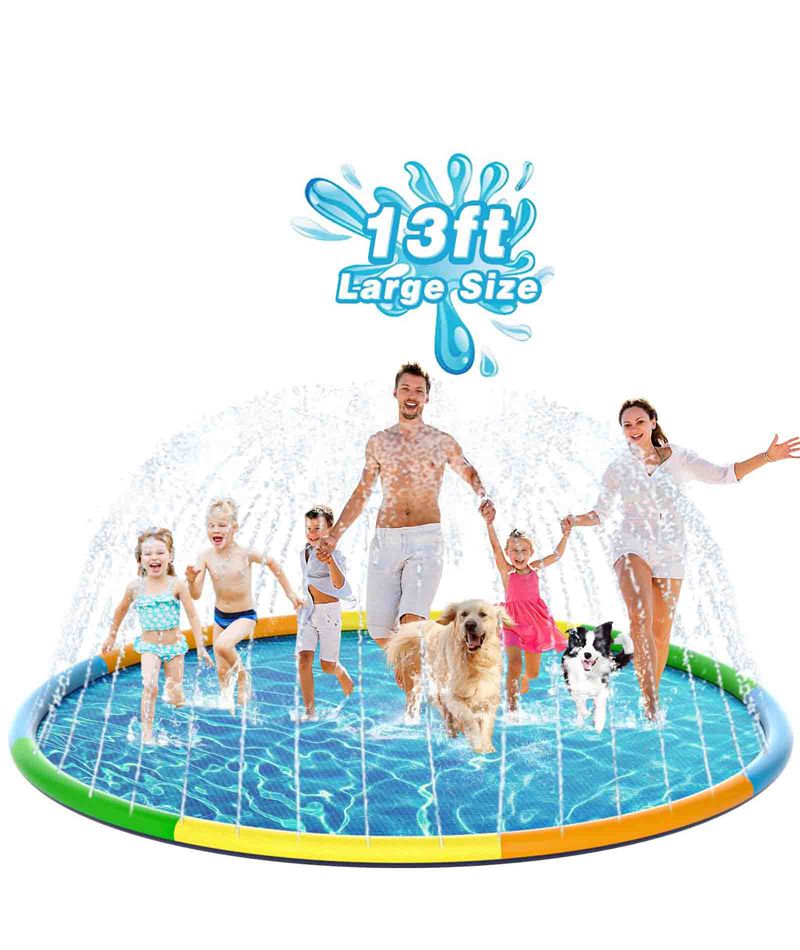
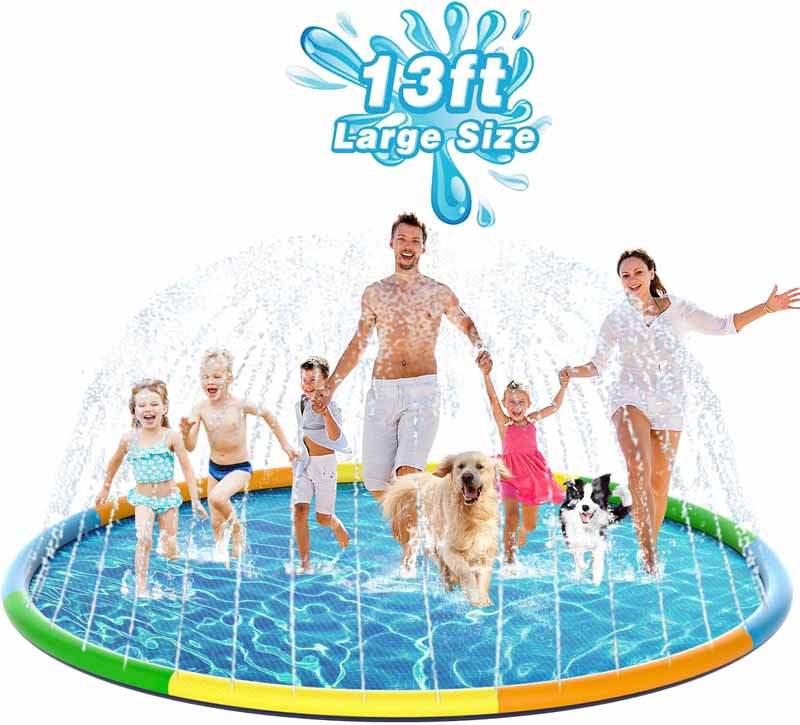
A splash pad is usually designed as a flat or low-profile surface with water spraying from the outer ring or selected channels. The child uses the space as a play area, not just a place where water appears. This changes the emotional feel of the product. It tends to feel calmer, more structured, and easier to understand.
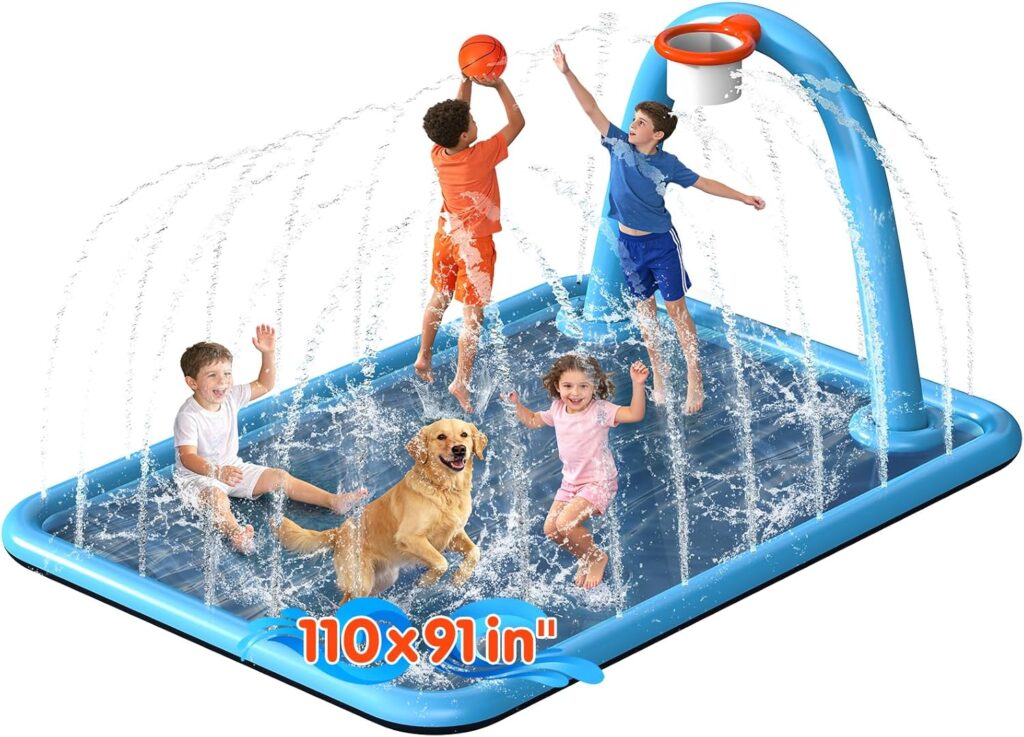
A sprinkler mat is usually simpler in concept. Water feeds into the edge, the spray rises or angles outward, and the play effect depends more heavily on that moving water. The child is often reacting to the jets rather than settling into a defined play zone. This can be fun and lively, but it also makes the experience more dependent on spray behavior and hose pressure.
That distinction matters because many purchase decisions are made with a toddler or mixed-age family in mind. Parents are not only asking which toy looks fun. They are asking which toy feels manageable in a real yard on a real afternoon.
How Does Splash Pad vs Sprinkler Mat Work?
Both products connect to a hose, but the way they deliver play is not exactly the same. In a splash pad, water is often distributed through a perimeter channel or a more balanced spray layout. That usually creates a broader and steadier effect. Even when the water pressure is not very high, the toy can still feel complete because the child is playing across the surface as much as with the jets themselves.
In a sprinkler mat, the pressure often drives more of the experience directly. If the edge fills unevenly or the hose pressure shifts, the water effect can change quickly. That makes the product feel more sensitive. In one yard it may feel gentle and fun. In another, it may feel weak at low pressure and overly sharp at higher pressure.
This is why a good-looking product photo is never the whole story. A water toy succeeds when it performs well under ordinary household conditions, not just when it is shown under ideal setup. The most successful designs are the ones that still feel enjoyable at moderate pressure and still keep the play area useful when families turn the water down.
How Does Splash Pad vs Sprinkler Mat Feel?
The difference in feel is often what decides whether children ask to use the toy again. A splash pad usually feels easier to enter. The child can walk in, test the water, pause, and stay within a visible zone. That matters because many younger children do not want water blasting them in the face the moment they step near the toy. They want to explore the experience gradually.
A sprinkler mat often feels more immediate. The water effect can be more active from the start, which some children love. Others may hesitate, circle the outside, or avoid the strongest spray altogether. That does not automatically make a sprinkler mat a worse product. It simply makes it a different kind of product.
In practical terms, many families discover that comfort matters more than drama. A toy that looks exciting for ten seconds is not always the one that creates the longest or happiest play session. Products that feel easier often stay in rotation longer.
Which Splash Pad vs Sprinkler Mat Is Easier to Control?
For most families, the easier product to control is the one that still works well when conditions are ordinary. That includes average hose pressure, slightly uneven grass, children with different comfort levels, and parents who do not want to spend the whole session adjusting the setup.
Splash pads usually do better here. Parents can lower the water pressure and still keep the product enjoyable because the larger play area remains part of the fun. A sprinkler mat may feel less satisfying when the pressure is turned down, which can tempt families to keep raising the flow until the spray becomes less comfortable.
Control also means how predictable the product feels once it is running. A splash pad may take a little more care to lay flat at the start, but once adjusted, it often feels more stable. A sprinkler mat can look simpler at first and still end up demanding more attention once the water is on.
That difference matters because convenience is not only about speed. It is about whether the toy feels easy to live with once the session has started.

Which Splash Pad vs Sprinkler Mat Is Better for Kids?
Splash Pad vs Sprinkler Mat is easier to answer when the child’s age, comfort level, and play style are placed at the center of the decision. In many homes, a splash pad is the better choice for younger children because it feels calmer, gives them more room to approach at their own pace, and creates a play area that is easier for parents to supervise. A sprinkler mat can still be a good option for children who already enjoy faster, more spray-driven play.
Parents often ask which one is more fun, but children usually respond to a different question first: does this feel comfortable enough to stay on? That is why age fit matters so much. A water toy can be colorful, affordable, and well photographed, yet still be wrong for the child if the spray feels too sudden or the play area feels too chaotic.
Splash pads usually support a wider range of behavior. A child can enter slowly, stand still, sit down, walk across the surface, or play around the edge. Sprinkler mats often reward a child who likes immediate activity. That can be a good fit for some families, especially with older kids, but it is not always the best match for toddlers or cautious children.
| Child Situation | Better Fit | Why |
|---|---|---|
| First backyard water toy | Splash Pad | Gentler introduction to water play |
| Cautious toddler | Splash Pad | Easier to step in slowly |
| Preschooler who likes movement | Either | Depends on spray strength and child temperament |
| Two children sharing one toy | Splash Pad | More usable play area |
| Child who dislikes water on the face | Splash Pad | Usually more predictable spray pattern |
| Child who loves fast, active spray | Sprinkler Mat | More immediate water action |
Is Splash Pad vs Sprinkler Mat Better for Toddlers?
For toddlers, splash pads usually have the advantage. The biggest reason is pacing. Toddlers often need time to understand the toy before they enjoy it. They like to approach, observe, test the water with a hand or foot, and decide how much they want to engage. A splash pad supports that learning process naturally.
A sprinkler mat can work for toddlers too, but it tends to be less forgiving when the spray is strong or uneven. Some toddlers will laugh and run right in. Others will hesitate, avoid the center, or back away after the first surprise burst. That first impression matters more than many listings suggest. If the first session feels too intense, the toy may never become part of the regular backyard routine.
That is why splash pads often perform better as first-time summer water toys. They lower the barrier to entry. They make it easier for parents to keep the pressure moderate. They let the child feel in control.

Which Splash Pad vs Sprinkler Mat Feels Safer?
Neither product removes the need for close supervision, but some products feel safer because they create a more readable play environment. Splash pads often do this better. The play area is usually clearer, the child tends to stay more centered, and the water effect feels easier to predict.
A sprinkler mat can still be safe when well designed and well supervised, but it can feel less forgiving when pressure is high or when the spray pattern encourages children to dart around the edge. That can increase the sense of chaos, especially in homes with more than one child using the toy at the same time.
Surface choice also matters. Grass is usually more forgiving than smooth patio tile. A product that feels manageable on a lawn can feel very different on hard surfaces where surrounding overspray creates a slick zone. In practice, the safer-feeling product is usually the one that combines calmer spray, better play-zone definition, and more predictable movement.
Which Splash Pad vs Sprinkler Mat Feels Less Slippery?
No water toy should be treated as slip-proof, but some layouts feel more stable than others. Splash pads often feel less slippery because children tend to stay inside a broader, flatter active area. Their steps are easier to predict, and the toy usually keeps more of the activity centered.
With sprinkler mats, the active spray is often concentrated around the edge. That can lead to quick turns, reactive movement, and more water outside the intended area. Even when the material is similar, the way children move on the product changes how secure it feels.
Build quality matters here too. A flatter surface, cleaner seam finish, and a body that does not wrinkle or lift too easily all improve confidence underfoot. That is why the better product is usually the one that keeps children centered and keeps water better contained, not the one that creates the highest spray.
How Much Supervision Does Splash Pad vs Sprinkler Mat Need?
Both products need full, active supervision. These are still wet surfaces connected to running water, and excited children can slip, sit down suddenly, or put their faces too close to the spray. The difference is not whether one product needs supervision and the other does not. The difference is how demanding that supervision feels.
A splash pad usually makes supervision easier because it creates a more defined play zone. Parents can more easily see where the child is likely to stand, move, or pause. A sprinkler mat can create more scattered movement if the child is constantly reacting to stronger or less predictable spray.
Good supervision also includes managing the session itself. Parents may need to lower the pressure, move the toy away from a slick area, stop a session before the child gets overtired, and make sure the surrounding space remains safe. The better water toy is often the one that makes those small decisions easier.
How Does Splash Pad vs Sprinkler Mat Use Water?
Splash Pad vs Sprinkler Mat does not have one fixed water-use answer because actual consumption depends on hose flow rate, water pressure, spray height, and how long the water stays on. In many homes, the more important difference is not which toy is technically bigger. It is which one uses water in a way that creates more useful play and less wasted overspray.
Families usually notice this quickly. A product can look small and still feel wasteful if it only becomes fun at very high pressure or if half the spray lands outside the usable area. On the other hand, a product can be slightly larger and still feel more efficient if it keeps children engaged inside the play zone at moderate flow.
A practical way to judge water use is to think in terms of usable play per minute of water. If the child stays engaged, the spray remains manageable, and the surrounding area does not become overly wet, the session usually feels worthwhile. If the water shoots too far, soaks nearby walkways, and forces constant adjustment, it feels less efficient even if the toy itself is not large.
| Approx. Hose Flow | 10 Minutes | 20 Minutes | 30 Minutes | Practical Feel |
|---|---|---|---|---|
| 2–3 gal/min | 20–30 gal | 40–60 gal | 60–90 gal | Gentle, lower-use session |
| 4–5 gal/min | 40–50 gal | 80–100 gal | 120–150 gal | Common family use range |
| 6–8 gal/min | 60–80 gal | 120–160 gal | 180–240 gal | Bigger spray, more oversplash risk |

The best-performing product is often not the one with the biggest visual spray. It is the one that still feels fun at moderate water pressure.
Does Splash Pad vs Sprinkler Mat Need More Space?
A sprinkler mat may look like the smaller-space option, but the real question is not only product size. It is how much surrounding area becomes part of the wet zone. A toy can be physically compact and still make a large area around it slippery if the spray spreads too far outward.
A splash pad usually asks for a clearer footprint because it functions as a defined play area. That can actually help many families because the activity feels more contained. The child stays closer to the center, and parents can manage the play zone more easily.
A sprinkler mat may take up less formal space and still create more scattered movement. Children may run around the edge, avoid certain jets, or treat the surrounding yard as part of the game. In a larger lawn, that may not matter much. In a small patio or side yard, it matters a lot.
For many homes, the better product is the one that keeps water where the family expects it to be.
How Does Splash Pad vs Sprinkler Mat Change with Water Pressure?
Water pressure is one of the biggest reasons real-life customer experience can vary so much. Two households can buy similar-looking products and report completely different results because one hose setup runs stronger than the other. This is especially important with spray-based products, because small pressure changes can dramatically affect comfort.
Splash pads usually handle pressure changes better because the experience does not rely only on spray height. The child is still using the surface as a play area. That means the product can remain enjoyable even when the water is turned down.
Sprinkler mats are often more pressure-sensitive. At low pressure they may feel underwhelming. At higher pressure they may become too sharp, too outward, or too chaotic for younger children. That narrower comfort range can make them harder to fine-tune.
For families, this matters because the best product is not the one that looks impressive only under ideal conditions. It is the one that still works well in an ordinary backyard with ordinary hose pressure.
Which Splash Pad vs Sprinkler Mat Is Faster to Set Up?
Sprinkler mats often feel faster in the first minute. Unfold, connect, and start the water. But speed at the beginning is not the whole story. The more useful question is which product reaches a stable, enjoyable setup with fewer interruptions.
A splash pad may take slightly more care at the start. Families may need to spread it fully flat and make one or two pressure adjustments. But once it is properly set, it often stays more consistent through the session.
A sprinkler mat can feel instant at first and still end up needing more attention after the water is already on. Parents may need to keep adjusting because the spray is too high, too uneven, or too outward. That can make the product feel less convenient over time.
Real convenience is not just fast startup. It is fewer frustrating interruptions once play begins.
Does Splash Pad vs Sprinkler Mat Waste More Water?
Neither product is automatically wasteful. Water waste usually comes from how the toy is used. If the spray is too strong, the child avoids the center, and the hose keeps running while adults keep adjusting, the session will feel wasteful regardless of the category.
In many homes, a splash pad can feel less wasteful because more of the water contributes directly to play. The child stays inside the active zone, and the product remains enjoyable at moderate pressure. That usually leads to better value from each session.
A sprinkler mat can still be a good option, especially when well designed, but it may start to feel less efficient if it depends heavily on high pressure to create excitement. At that point, more water is going into bigger spray, not necessarily better play.
Families who want better water efficiency usually do three things naturally: they keep sessions intentional, they use moderate pressure, and they turn the water off during longer breaks. The product that supports those habits most easily often feels like the smarter buy.
Is Splash Pad vs Sprinkler Mat Easy to Clean?
Splash Pad vs Sprinkler Mat is easy to clean only when the product is designed to rinse, drain, and dry without trapping too much moisture. In real family use, that is one of the biggest factors in whether a summer water toy keeps feeling worth owning. Fun matters on day one. Cleanliness and drying matter by week three.
Parents often focus first on size, color, and spray height, but repeated use changes the buying equation. Once the toy has been used several times, new questions take over. Does it collect grass and dirt easily? Does it rinse clean without effort? Does the underside stay wet longer than expected? Does it smell strange after storage? These are the questions that decide whether the toy stays in rotation or gets left in a corner of the garage.
Both splash pads and sprinkler mats sit directly on the ground. Both get stepped on with dirty feet. Both pick up debris, sunscreen residue, pet hair, and outdoor dust. The difference is usually not whether they get dirty. It is how easy they are to restore to a clean, dry, pleasant condition.
| Maintenance Factor | Splash Pad | Sprinkler Mat | Real-Use Impact |
|---|---|---|---|
| Surface dirt after play | Moderate | Moderate | Both need a rinse after use |
| Hidden moisture risk | Higher in larger edge channels | Higher in trapped ring designs | Drying matters more than wiping |
| Drying behavior | Good if laid flat | Good if water does not stay in ring | Construction matters more than size |
| Storage odor risk | Medium if folded damp | Medium if folded damp | Damp folding is the main problem |
| Ease of cleanup | Usually good on flat surfaces | Usually good on smooth surfaces | Both stay better with routine rinse and dry |
The water toy that feels easier to own is usually the one that makes cleanup feel obvious, not annoying.

Is Splash Pad vs Sprinkler Mat Dirtier Than a Pool?
That depends on what kind of pool is being used for comparison. Compared with a kiddie pool that holds standing water, a splash pad or sprinkler mat can feel cleaner simply because water is not sitting in one place as long. Kiddie pools often collect leaves, dirt, grass, and residue in a way that quickly feels stale if the water is not emptied and refreshed often.
Splash pads and sprinkler mats avoid some of that problem because the water shuts off with the hose. But that does not mean they stay clean automatically. They still collect dirt from the ground, from feet, from pets, and from repeated outdoor use. If they are stored damp, they can become unpleasant in a different way.
So the more useful question is not which category sounds cleaner. It is which one is easier for the family to keep clean with the routine they are actually willing to follow.
Can Splash Pad vs Sprinkler Mat Spread Norovirus?
Any shared water-play surface can become a hygiene problem if sick children use it or if play water regularly gets into mouths. Families sometimes assume that moving water is clean water, but that is not a safe assumption. Spray is not the same thing as sanitation.
At home, the practical rule is simple. If a child is sick, especially with stomach-related illness, the water toy should not be shared. If several children are playing together, the surface should be rinsed after use and dried fully before storage. Parents should also discourage children from treating the spray like drinking water.
The easier the product is to pause, rinse, and dry, the easier it is to use with confidence.
Does Splash Pad vs Sprinkler Mat Get Moldy?
Yes, both can get moldy or develop mildew odor if they are folded while damp. This is one of the most common reasons a summer water toy starts feeling unpleasant before the season is even halfway over. The issue is usually not the material alone. It is trapped moisture.
Splash pads can be more vulnerable when the perimeter channel or larger surface area hides dampness after the visible top seems dry. Sprinkler mats can have the same problem if the outer ring holds water or if the underside stays wet in folds.
This is why drying matters more than many customers expect. A product that rinses easily but dries poorly will still become frustrating to own. Once odor begins, families often stop bringing the toy out as often, even if it still works.
Which Splash Pad vs Sprinkler Mat Dries Faster?
A smaller sprinkler mat may dry faster in ideal conditions, but drying speed is not only about size. It is about where water hides, how flat the product can open, and whether the edge design traps moisture.
A large splash pad spread completely flat in sun can dry quickly if the whole surface gets airflow. A smaller mat can actually take longer if water stays inside an inflated ring or trapped seam. That is why drying behavior matters more than simple listed dimensions.
For daily use, the fastest-drying product is usually the one with the least hidden water, not necessarily the smallest one on paper.
How Can Splash Pad vs Sprinkler Mat Last Longer?
Longer life usually comes from a few simple habits. Moderate pressure protects seams and connectors. A quick rinse removes grass, dirt, and sunscreen residue. Full drying prevents odor and mildew. Clean storage helps preserve material feel and appearance.
Durability also depends on design. A product lasts longer when it lies flat, distributes stress well, and does not depend on extreme water pressure to feel fun. That is why the best summer toys often feel better not because they are louder, but because they are easier to use and easier to maintain.
The products that last longest are usually the ones families enjoy enough to care for properly.
Which Splash Pad vs Sprinkler Mat Should You Buy?
For most families, Splash Pad vs Sprinkler Mat comes down to one practical decision: do you want a calmer, more usable backyard water-play area, or a lighter, more spray-driven toy for shorter bursts of fun? In many cases, a splash pad is the better long-term choice because it offers a more complete play zone, easier toddler use, and better repeat value over the course of the summer. A sprinkler mat can still be a good fit when the goal is quick setup, lower entry cost, and a more active spray experience.
The smartest buying decision usually happens when parents think beyond the first afternoon. The right product is the one that still feels worth setting up after several weekends. It is the one that the child still enjoys, the adults still trust, and the household can still clean and store without frustration.
| Buying Situation | Better Choice | Why |
|---|---|---|
| First summer water toy | Splash Pad | Easier to approach and enjoy gradually |
| Quick weekend spray play | Sprinkler Mat | Simple, light, low-commitment |
| Daily backyard use | Splash Pad | Better comfort and repeat-use value |
| Two or more children | Splash Pad | More shared play space |
| Limited storage | Sprinkler Mat | Often easier to fold smaller |
| Parents focused on control | Splash Pad | Usually better at moderate pressure |
| Budget-first shopping | Sprinkler Mat | Often lower upfront price |
| Stronger retail presentation | Splash Pad | Better product story and premium feel |

Which Splash Pad vs Sprinkler Mat Fits Your Child’s Age?
Age fit matters more than many listings admit. A toddler, a preschooler, and an older child do not use water toys in the same way. Younger children often need a slower and more comfortable introduction. They want to watch, test, and enter at their own pace. Older children are more likely to enjoy direct spray and fast movement.
That is why splash pads usually work better for toddlers and younger preschoolers. The surface feels more like a place to play. The water does not have to do all the work. A sprinkler mat can be a better match when the child already likes active spray play and enjoys the excitement of stronger water movement.
For mixed-age households, splash pads are often the easier compromise because they support more than one style of play at the same time.
Is Splash Pad vs Sprinkler Mat Better Than a Kiddie Pool?
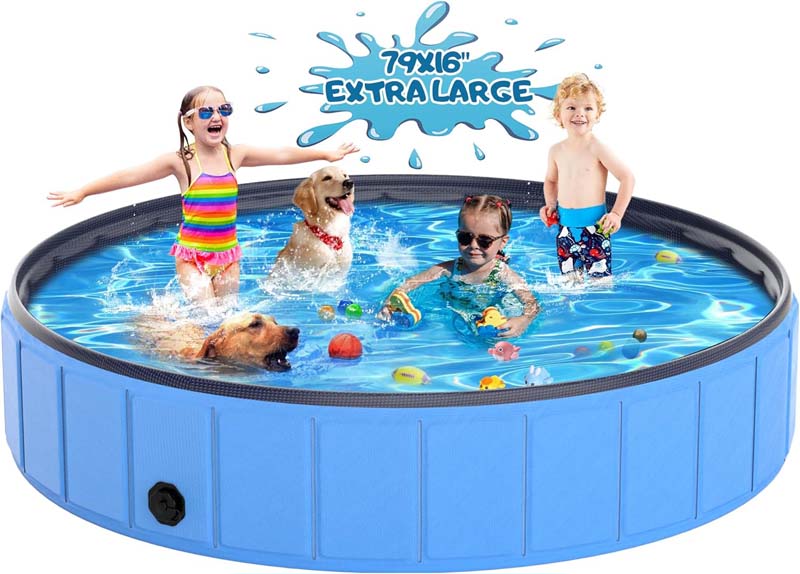
For many homes, yes. A splash pad or sprinkler mat is often easier to live with than a kiddie pool because it avoids the larger burden of standing water. Kiddie pools may seem simple, but they often ask more from the household in setup, draining, cleaning, and daily management.
Splash-style products usually create a lighter routine. Turn on the hose, let the child play, shut it off, rinse the toy, let it dry, and put it away. That works especially well for families who want spontaneous backyard fun without turning each use into a larger maintenance project.
Kiddie pools still make sense when the child wants sitting play or floating toys, but when the goal is cooling, movement, and a shorter cleanup cycle, splash-style products often fit daily family life better.
Is Splash Pad vs Sprinkler Mat Better for Dogs?
For dogs, especially medium and larger breeds, a splash pad is usually the better option. Most dogs prefer a cooling space they can test on their own terms. They step in, step out, circle, paw at the water, and decide how close they want to get. A splash pad supports that behavior naturally.
A sprinkler mat can work for playful dogs that enjoy chasing spray, but many dogs dislike direct jets hitting the face. They may circle the toy without really using it, or lose interest quickly. A flatter splash pad with lower, more even water action is often easier for dogs to trust.
That is why pet splash products have become their own product category rather than simply copying children’s spray toys.
What Should You Check Before Buying Splash Pad vs Sprinkler Mat?
Before buying, look past the main image and focus on the details that affect actual ownership. First, check where the spray seems to go. Does it stay near the play area, or does it look like it will wet everything around it? Next, check whether the body looks flat and stable or overly dependent on pressure to hold shape.
Then consider the full ownership cycle. Will this feel comfortable for the child after the first minute? Will it be easy to supervise in the available yard space? Will it dry without becoming annoying? Will the household still want to use it again next week?
Those questions usually lead to a much better purchase than price alone. They matter for retailers and brand owners too. A product that performs well in real life is easier to review well, easier to reorder, and easier to build into a stronger seasonal product line.
When the goal is a more complete, more dependable backyard water-play product, EPN offers a stronger path for both ready-to-sell items and custom development. From PVC and composite material selection to spray layout, graphics, packaging, and scalable production, EPN can support projects built for family summer play, pet cooling products, seasonal retail programs, and differentiated private-label lines.

Get A Fast quote
Here, bringing your inflatable concepts to life is no longer a challenge—it’s a collaborative journey where American Epsilon helps families, outdoor enthusiasts, and global brands transform creative ideas into safe, certified, and market-ready inflatable solutions.


Partner With Epsilon
Whether you are a family looking for safe backyard fun or a brand seeking large-scale OEM/ODM solutions, American Epsilon Inc. guarantees every inflatable is built with safety, durability, and excitement in mind. With flexible low MOQs, strategically placed warehouses in the U.S., Canada, U.K., and Germany, plus 24/7 professional support, we ensure smooth delivery and reliable service worldwide.
Ready to bring your inflatable ideas to life? Request free samples, fast prototypes, and customized designs today—your trusted inflatable journey starts here.