Skip to content
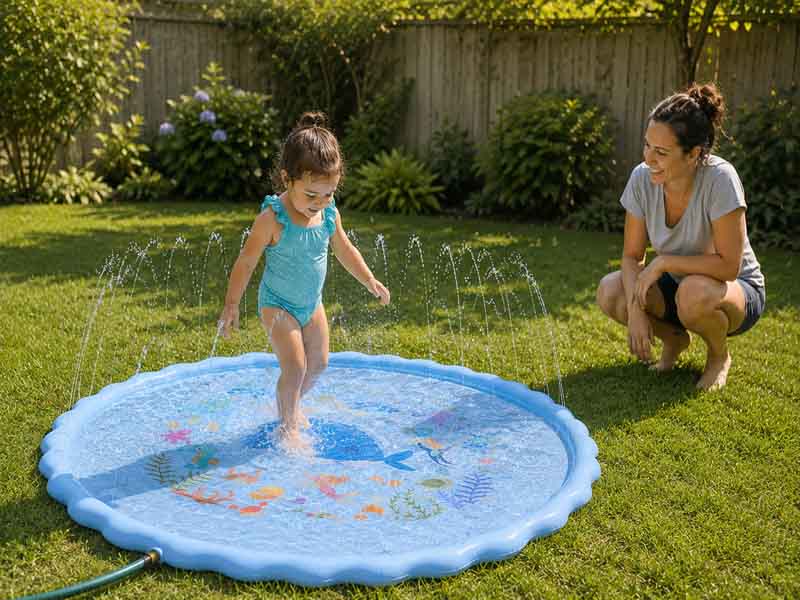
A splash pad spends most of its life in the exact conditions that make outdoor materials age faster: sunlight, heat, water pressure, grass, patio surfaces, bare feet, pet paws, folding, and storage. Many families choose a splash pad by size, spray height, pattern, or price. Those details matter, but they do not answer a more practical question: what will the splash pad look and feel like after several sunny weekends?
UV-resistant splash pads are useful for families who use water toys often in sunny backyards, lawns, patios, gardens, or poolside areas. UV resistance helps slow fading, surface aging, cracking, and early brittleness. It does not make a splash pad sun-proof forever, but it can help the mat stay better for repeated summer use.
Think about a splash pad left outside after a Saturday afternoon. The children go inside, the hose is turned off, but the mat still sits on warm grass. The printed surface dries under the sun. The outer ring softens, cools, and later gets folded. One weekend may not change much. But after repeated use, weak material starts to show signs: dull colors, stiff folds, stressed seams, or a surface that no longer feels as smooth. A good UV-resistant splash pad is not about chasing one label. It is about choosing a backyard water toy that can handle real summer use better.
What Are UV-Resistant Splash Pads?
UV-resistant splash pads are water-play mats made with materials and surface designs that handle sunlight better than ordinary thin plastic. UV resistance helps slow color fading, surface hardening, brittleness, and early aging. It does not make a splash pad last forever, but it supports better performance when the mat is used often in sunny outdoor spaces.
UV-Resistant Splash Pads Basics
UV means ultraviolet light from the sun. It is not the same as heat, although both often appear together during summer play. UV rays can affect many outdoor materials over time, including flexible PVC. For splash pads, the first visible sign may be fading graphics. The deeper concern is material aging: the surface may become less flexible, the printed layer may look dull, and folded areas may show stress faster.
A UV-resistant splash pad is designed to slow that process. The PVC material, printed surface, and outer spray ring should be better suited for outdoor exposure than ordinary thin plastic. This matters because a splash pad is not only a flat printed mat. It is a water-pressure structure with sealed edges, spray holes, a hose connector, and a center play area where children may sit, crawl, or run.
Waterproofing and UV resistance are different. A splash pad can hold water but still age quickly under strong sun. A better family splash pad should manage both: water performance during play and sun stability during repeated outdoor use.
UV-Resistant Splash Pads in Sun
Splash pads are usually used in places with direct sunlight: lawns, patios, gardens, decks, driveways, and poolside areas. Families often set them up during warm hours when children want to cool off. That means the mat may face strong sun, moving water, bare feet, pet paws, sunscreen, and ground friction at the same time.
Sun exposure can affect the printed surface first. Bright colors may look dull after repeated use. Over time, lower-quality PVC may feel less flexible, especially around folds and edges. That matters because splash pads are usually drained, folded, stored, and brought out again. A surface that becomes stiff too quickly may show crease marks or stress near the spray ring.
UV resistance is most useful when the splash pad is used more than a few times. A family that uses the mat once in shaded grass may not notice the difference immediately. A family that uses it every weekend in a sunny backyard is more likely to benefit from stronger sun stability.
UV-Resistant Splash Pads Limits
UV resistance has limits. It does not mean the splash pad can stay outside all season without care. It does not stop all fading, prevent every crack, or protect the mat from sharp ground, pet nails, dragging, or too much water pressure.
A UV-resistant splash pad still needs normal care:
- Drain it after each play session.
- Rinse off grass, mud, sunscreen, and pet residue.
- Air-dry before folding.
- Store in a cool, dry place.
- Avoid leaving it in direct sun all day after play.
- Keep it away from sharp tools, rough concrete edges, and chewing pets.
The best result comes from combining UV-resistant material with good structure. That includes stable PVC thickness, sealed edges, inward spray, smooth surface feel, easy drainage, and sensible storage habits. UV resistance is useful, but it works best when the whole splash pad is designed for real outdoor use.

Do UV-Resistant Splash Pads Last Longer?
UV-resistant splash pads can last longer when sunlight is one of the main stress factors. They help slow fading, surface aging, brittleness, and cracking caused by repeated sun exposure. However, lifespan also depends on PVC thickness, seam quality, water pressure, ground surface, cleaning, drying, and storage habits.
UV-Resistant Splash Pads Fading
Fading is often the first sign families notice. A splash pad may still spray water normally, but the printed pattern starts to look pale. For a backyard water toy, appearance matters more than many people think. Children are drawn to bright designs, and parents often judge product quality by how it looks after several uses.
UV-resistant material and printing can help slow color loss. This is especially important for splash pads with colorful themes, animal prints, ocean scenes, sports graphics, or large play patterns. If the design fades quickly, families may feel that the mat is aging even when the structure is still usable.
A simple way to understand fading risk:
| Use Pattern | Fading Risk | Better Habit |
|---|---|---|
| Occasional shaded use | Lower | Dry and store after use |
| Weekend lawn use | Medium | Avoid all-day sun exposure |
| Daily patio use | Higher | Use shade and store dry |
| Poolside use | Higher | Rinse, dry, and move out of direct sun |
| Kids and pets shared use | Medium to higher | Rinse residue and check surface wear |
For retail products, fading also affects customer satisfaction and repeat-use confidence. A splash pad that looks good out of the box but dull after a few sunny weekends may create disappointment. A better UV-resistant splash pad should keep its visual appeal longer under normal summer use, especially when families avoid leaving it outside all day after play.
UV-Resistant Splash Pads and Real Summer Use
Another reason UV-resistant splash pads matter is that backyard water play rarely happens under perfect conditions. A splash pad may sit on warm grass, stay on a patio after play, or be used several weekends in a row during peak summer. Sun exposure, water pressure, folding, and ground contact often happen together.
UV resistance is especially important for:
- Families who use the splash pad every weekend during summer
- Homes with open lawns and limited shade
- Patios, decks, and poolside areas that heat up quickly
- Kids who play for 20–40 minutes at a time
- Pet owners who use splash pads for supervised dog cooling
- Retail customers who expect the printed pattern to stay bright longer
- Private-label sellers who need better long-term product feedback
This is also why UV resistance has strong retail value. Families may not use the words “UV aging,” but they notice faded colors, stiff folds, rough edges, and a mat that feels older than expected. A splash pad that handles sun exposure better is more likely to feel like a repeat-use summer item rather than a short-lived backyard toy.
Families comparing long-term durability can also read our guide on how to choose a splash pad that lasts more than one summer, especially when checking UV stability, PVC thickness, edge structure, and storage habits.
UV-Resistant Splash Pads Cracking
Cracking is usually more serious than fading. When flexible PVC loses softness, it may become more likely to crease, split, or crack under stress. This can happen faster when lower-quality plastic is exposed repeatedly to sunlight, heat, folding, and water pressure.
Splash pads are folded more often than many outdoor products. Families unfold them for play, fill the edge ring with water pressure, drain them, dry them, and fold them again. If the material has become stiff from sun exposure, those folds can become weak points.
The edge ring deserves special attention. It holds water pressure and controls spray direction. If the edge material becomes brittle, seam stress can increase. A UV-resistant splash pad helps reduce this risk by supporting better material stability during normal sun exposure.
Still, UV resistance alone cannot fix poor structure. A splash pad with weak seams, rough spray holes, or a thin edge ring may fail even if the surface claims UV resistance. Families should judge UV resistance together with thickness, seam quality, water pressure control, and storage guidance.
UV-Resistant Splash Pads Heat
UV and heat are not the same, but they often work together. The UV Index is measured on a 1–11+ scale, with higher numbers showing stronger ultraviolet intensity. Midday sun is usually stronger than morning or late afternoon, and patios can become hotter than grass.
Heat can make a splash pad harder to handle. A hot patio may warm the underside. A water-filled mat may become heavier to move. Folding, dragging, or overpressuring the edge ring during high heat can put extra stress on PVC.
For families, the solution is not complicated. Use the splash pad during cooler parts of the day when possible, especially for toddlers and pets. Morning and late afternoon play can be more comfortable. If the patio is too hot for bare feet, it is probably not the best surface for a child’s water play session.
UV-resistant splash pads are helpful because they are designed for outdoor use, but smart play timing and proper storage still make a big difference.

Which UV-Resistant Splash Pads Fit Best?
UV-resistant splash pads fit best in sunny backyards, lawns, patios, poolside spaces, and pet-friendly outdoor areas. They are especially useful for families who use a splash pad repeatedly across summer, leave it outside for short periods during play, or need better resistance to fading and material aging.
UV-Resistant Splash Pads for Lawns
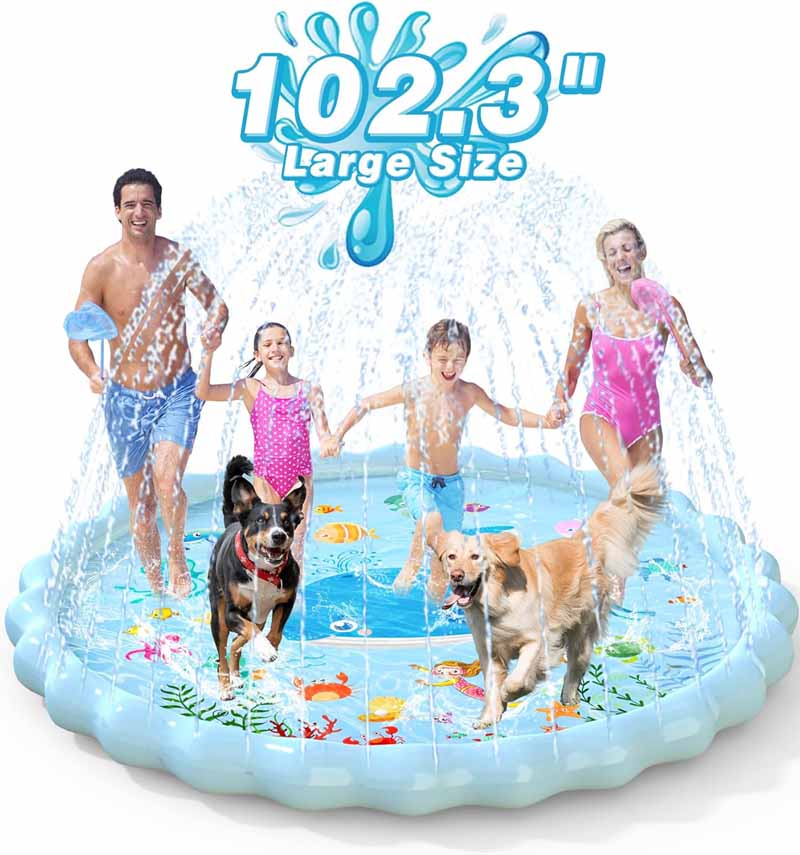
Lawns are one of the most common places to use a splash pad. Grass feels softer than concrete, and it gives children more room to run around the water area. But lawns also come with direct sunlight, uneven spots, dry roots, stones, and ground friction.
A UV-resistant splash pad can help with sun exposure, but families still need to prepare the surface. Before setup, check the lawn for small rocks, sharp twigs, dry patches, pet debris, and uneven ground. These can stress the underside or cause the mat to shift during play.
Grass can also trap moisture under the mat. After play, lift and dry the splash pad instead of leaving it sitting on wet lawn for hours. Sun stability helps the top surface, but trapped moisture and rough ground can still affect long-term use.
UV-Resistant Splash Pads for Patios
Patios are convenient because they are flat, clean, and close to the house. They also make setup easier for parents who want quick hose access. But patios can become much hotter than grass, especially under midday sun.
A UV-resistant splash pad is useful on patios because the mat may face both direct sun and heated ground. However, UV resistance does not replace smooth placement. Rough concrete, brick edges, and textured stone can increase underside wear if the splash pad moves during play.
Parents should avoid dragging a water-filled mat across patio surfaces. If the splash pad needs to be moved, drain it first. For toddlers, check the patio temperature before play. If the ground feels too hot for bare feet, move the mat to a shaded area or wait until later in the day.
A patio setup works best when the splash pad is flat, the spray is gentle, and the surface is clean before children step onto it. Families planning regular patio use can also read how to use a splash pad on a patio for surface checks, heat control, and safer setup habits.
UV-Resistant Splash Pads for High-Sun Backyards
Not every backyard has the same sun exposure. Some families use splash pads under trees or shade sails, while others place them in open lawns, driveways, patios, or poolside areas where sunlight is stronger for several hours.
UV-resistant splash pads are more useful for:
- Backyards with little natural shade
- South-facing lawns or patios
- Poolside areas with reflected sunlight
- Homes in warmer summer climates
- Families who set up water play during midday
- Outdoor parties where the mat stays out longer
- Seasonal sellers targeting summer backyard products
For these users, UV resistance is not only about keeping colors bright. It helps the PVC surface stay more stable under repeated sun exposure. This matters when the splash pad is folded, moved, dried, and stored many times during one season.
A family that uses a splash pad once or twice in shaded grass may not notice the difference quickly. A family that uses it every weekend in open sun is much more likely to care about fading, brittleness, and edge stress.
UV-Resistant Splash Pads for Pets
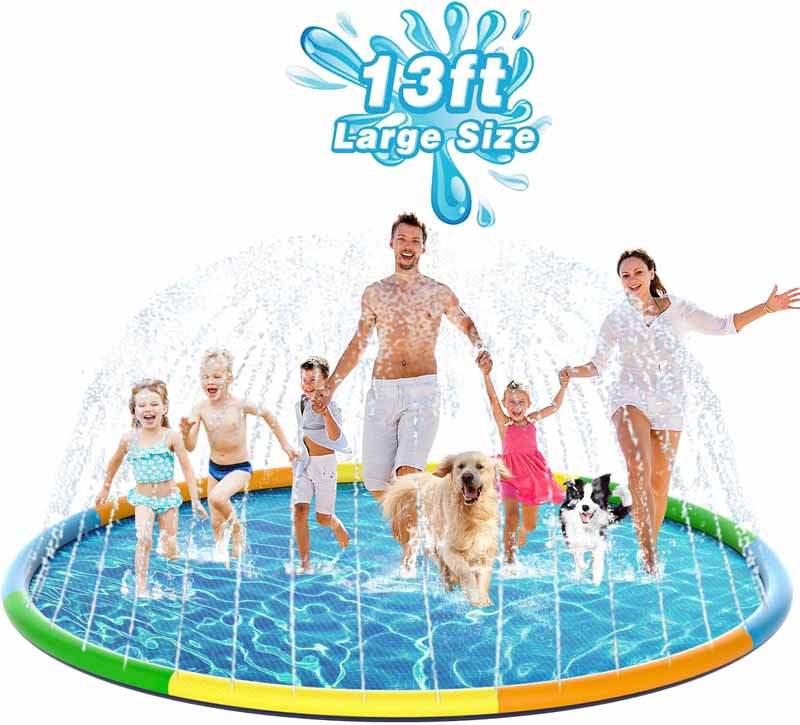
Pet owners often look for splash pads as a simple cooling option for dogs. A shallow water surface and gentle spray can be more approachable than a deep pool. UV resistance is useful because pet splash pads are usually used outdoors in warm weather.
However, dogs create different stress than children. Pet nails, repeated stepping, sudden turns, and scratching can increase wear. UV resistance helps the material handle sunlight, but it does not replace wear-resistant PVC or good surface care.
For pet-friendly use, families should look for:
- Stable PVC thickness
- Smooth but durable surface
- Reinforced edge structure
- Easy rinsing after pet use
- Good drainage before storage
- Placement on smooth grass or clean patio
- Supervised play only
Trim pet nails before use, and do not let dogs chew the hose connector or spray ring. After pet play, rinse off hair, dirt, and paw residue before children use the splash pad again.
UV-Resistant Splash Pads for Toddlers
UV-resistant splash pads can be toddler-friendly when the setup is right. Toddler safety depends on supervision, gentle spray height, shallow water, clean surface conditions, and proper sun protection. UV resistance helps the mat handle sunlight better, but it does not replace adult attention.
Toddlers may sit, crawl, touch the mat, and put their hands near their mouth. That makes surface cleanliness important. Use fresh hose water, rinse the mat before play, and keep the spray height gentle. Start with low water pressure and increase slowly only if the child is comfortable.
During strong sun, toddlers need breaks. Shade, hats, sunscreen, and shorter play sessions can make water play more comfortable. A UV-resistant splash pad may handle sun better, but children still need protection from heat and UV exposure.
A good toddler setup should include:
- Smooth lawn or clean patio
- Gentle inward spray
- Low water depth
- Fresh water
- No sharp toys on the mat
- Close adult supervision
- Dry storage after use
How to Choose UV-Resistant Splash Pads?
Choose UV-resistant splash pads by looking beyond the label. The best options combine UV-stable PVC, suitable thickness, reinforced seams, inward spray, smooth surface feel, easy drainage, and clear care instructions. Thick PVC alone does not guarantee UV resistance, and “outdoor use” claims should still come with realistic storage guidance.
UV-Resistant Splash Pads Material
Material is the foundation of UV performance. Many family splash pads use PVC around 0.35 mm to 0.50 mm, depending on size, structure, and product positioning. This range can balance flexibility, foldability, and durability for common backyard use.
Thick PVC may feel stronger, but thickness alone does not mean UV resistance. UV stability depends on the material formula, surface treatment, printing process, and testing direction. A thin splash pad may fade or become brittle faster under repeated sunlight. A thick splash pad may still age poorly if the PVC is not suited for outdoor exposure.
Families should also consider low odor and flexibility. A splash pad used in summer heat should not feel overly stiff, sticky, or harsh-smelling after opening. For children and pets, material comfort matters as much as technical strength.
UV-Resistant Splash Pads Design
Design affects how UV-resistant materials perform in real use. A good splash pad should not rely on material alone. The structure needs to support water pressure, repeated setup, and outdoor movement.
| Feature | Why It Matters |
|---|---|
| UV-resistant PVC | Helps slow fading and aging |
| 0.35 mm–0.50 mm PVC | Balances flexibility and durability |
| Inward spray | Keeps water play focused |
| Reinforced edge | Supports water pressure |
| Stable hose connector | Makes setup easier |
| Smooth underside | Reduces ground wear |
| Easy drainage | Reduces trapped water |
| Foldable design | Makes storage easier |
The outer ring is especially important. It holds water pressure and controls spray direction. If the edge is weak, the splash pad may leak, bulge unevenly, or spray poorly. UV resistance helps with sun stability, but reinforced edge sealing helps with pressure stability.
A good design also drains easily. Trapped water can lead to odor, residue, and storage problems. If the mat folds while damp, even UV-resistant material may become harder to manage over time.
UV-Resistant Splash Pads Claims
Many splash pads use similar words on packaging, but those words do not always tell families how the mat will perform in the sun. “Heavy duty” does not automatically mean UV resistant. “Thickened” does not always mean sun stable. “Outdoor use” does not mean the mat can stay outside every day without care.
Families should look for claims that explain real use:
- UV-resistant material or surface
- Suitable PVC thickness
- Reinforced edge
- Inward spray design
- Standard garden hose compatibility
- Easy drainage
- Cleaning and storage guidance
- Outdoor-use testing direction
A clear product page should not overpromise. It should explain how the splash pad performs under sunlight and how families should care for it after play. This helps customers understand that durability is a mix of material quality and use habits.
For retailers and private-label brands, clear claims are also easier to sell. UV resistance, thickness, spray direction, and storage guidance are more useful than vague words that do not show how the splash pad works in a real backyard.
UV-Resistant Splash Pads Buying Checklist
A good UV-resistant splash pad should be easy for families to judge before purchase. The best product pages do not rely only on words like “heavy duty” or “outdoor.” They explain what the mat is made for, how it should be used, and how families can make it last longer.
Before choosing a UV-resistant splash pad, families should check:
- Is the splash pad made with UV-resistant PVC or outdoor-use material?
- Is the PVC thickness clearly listed, such as 0.35 mm–0.50 mm for many family-use models?
- Does it connect to a standard 3/4 inch garden hose?
- Does the spray go inward from the outer ring?
- Does the outer edge look reinforced?
- Are there clear drying and storage instructions?
- Is the mat suitable for grass, patio, or garden use?
- Does the product explain how to avoid fading, cracking, and trapped water?
| Buying Detail | Why It Matters |
|---|---|
| UV-resistant PVC | Helps slow fading and surface aging |
| Listed thickness | Helps compare durability |
| Reinforced edge | Supports water pressure |
| Inward spray | Keeps water inside the play area |
| Easy drainage | Reduces trapped water after use |
| Storage guidance | Helps prevent heat and moisture damage |
| Smooth surface | Better for toddlers, pets, and bare feet |
For families still comparing PVC options, what material is best for a splash pad can help explain how thickness, flexibility, surface feel, and outdoor stability work together.
UV-Resistant Splash Pads Hygiene
UV resistance is about sunlight stability, not sanitation. A UV-resistant splash pad still needs fresh water, rinsing, drainage, and dry storage. Families should not assume that a sun-stable mat is automatically cleaner.
Home splash pads are easier to manage than public splash pads because families control the water source, play time, users, and cleanup. Most backyard splash pads connect to a garden hose and use fresh water during play. Public splash pads may involve shared users and different water systems, including recirculating systems.
For daily family use, hygiene depends on habits:
- Use fresh hose water.
- Keep sick children out of water play.
- Do not let children swallow spray water.
- Rinse after pets, mud, sunscreen, or food contact.
- Drain fully after play.
- Dry before folding.
- Store in a cool, dry place.
UV resistance can help the material stay better in sunlight, but cleanliness comes from water flow, surface rinsing, and dry storage.
How to Use UV-Resistant Splash Pads?
Use UV-resistant splash pads on smooth, clean surfaces, connect them to a standard garden hose, start with low water pressure, and avoid leaving them in direct sun after play. UV resistance supports outdoor durability, but proper setup, gentle pressure, fresh water, full drainage, and dry storage help the splash pad last longer.
UV-Resistant Splash Pads Setup
Setup has a big effect on how long a splash pad lasts. Use the mat on smooth grass, a clean patio, or a flat backyard surface. Before connecting the hose, remove stones, sticks, sharp debris, rough toys, and anything that may press into the underside.
Most splash pads connect to a standard 3/4 inch garden hose. Start with low water pressure for the first 1–2 minutes. This gives parents time to check the hose connector, edge ring, spray direction, and surface position. Increase spray height slowly instead of turning the hose on full power immediately.
Avoid dragging the splash pad when it is filled with water. A filled mat is heavier, and dragging can stress the underside and edge seams. If it needs to be moved, drain it first, reposition it, and then reconnect the hose.
For toddlers, keep the spray gentle. A high spray height may look exciting in photos, but younger children often prefer lower water pressure and a calmer play surface.

UV-Resistant Splash Pads Care
Smart sun care helps both the splash pad and the family. Morning or late afternoon play can reduce heat exposure. Shade can make the setup more comfortable for children, pets, and adults watching nearby.
UV-resistant material can help slow sun-related aging, but it does not mean the mat should stay outside all day. After play, drain it and move it out of direct sun when possible. Let it dry in a well-ventilated area before folding.
If the patio feels too hot for bare feet, the splash pad should not be used there for toddlers or pets. Move to grass, add shade, or wait for cooler hours. Sun stability matters, but the user’s comfort comes first.
A simple care routine works well:
| Care Step | Why It Helps |
|---|---|
| Play during cooler hours | Reduces heat stress |
| Use shade when possible | Helps kids, pets, and material |
| Drain after use | Prevents standing water |
| Rinse residue | Removes grass, mud, and sunscreen |
| Dry before folding | Reduces musty odor |
| Store indoors or shaded | Helps protect material |
UV-Resistant Splash Pads Germs
Norovirus and other stomach-related germs can spread if contaminated water gets into the mouth. With splash pads, the main concern is dirty water or sick users, not the UV-resistant material itself. A clean mat can still become less sanitary if a sick child uses it or if children swallow contaminated spray water.
Shared splash pads may carry higher hygiene concerns because many children may use the same water-play area in a short time. Some public splash pads also use recirculating water systems, which require proper water management. Home splash pads are easier to manage because families can use fresh hose water and drain the mat after play.
For home use, keep children with vomiting or diarrhea away from water play, change diapers away from the splash pad, and teach children not to drink the spray water.
A practical home routine includes:
- Use fresh hose water.
- Keep sick children away from water play.
- Take bathroom breaks before play.
- Check diapers often.
- Change diapers away from the mat.
- Do not allow children to drink spray water.
- Drain the splash pad after play.
- Dry before storage.
The goal is not to make backyard play feel complicated. Fresh water, clean users, bathroom breaks, and full drainage can prevent many common hygiene problems.
UV-Resistant Splash Pads Mist
Legionnaires’ disease is linked to breathing in small water droplets containing Legionella bacteria. The risk is more closely connected to poorly maintained water systems that create contaminated mist, such as some fountains, hot tubs, cooling towers, or complex recirculating systems.
A simple home splash pad using fresh hose water is different from a poorly maintained public recirculating system. Still, families should avoid warm standing water, dirty hose connectors, and damp storage. These habits are good for both hygiene and material care.
After play, drain the splash pad, rinse the connector area if needed, and let the mat dry. Do not fold and seal it while wet, especially in a hot garage or storage bin. Clean, moving water and dry storage are easier to manage than warm water trapped in folds.
For most home users, the practical rule is simple: avoid standing water, keep the hose area clean, and store the splash pad dry. Those steps help reduce both odor and hygiene concerns.
UV-Resistant Splash Pads Storage
Storage is where many splash pads lose life quickly. Even a UV-resistant splash pad can age faster if it is left outside for days, folded while damp, or stored in a hot place with water trapped inside.
After use, drain the edge ring and center surface fully. Rinse off grass, mud, sunscreen, food residue, and pet hair. Let the splash pad air-dry before folding. If water remains trapped between folds for 24 hours or longer, musty odor and material stress become more likely.
Good storage habits include:
- Drain fully after every play session.
- Rinse after lawn, patio, or pet use.
- Dry until the surface feels dry to the touch.
- Fold loosely instead of forcing sharp creases.
- Store in a cool, dry place.
- Avoid long-term direct sun exposure.
- Keep away from sharp tools and chewing pets.
UV-Resistant Splash Pads Storage Mistakes
Many splash pads do not fail during play. They lose quality during storage. A mat that is folded while wet, left in direct sun, or stored in a hot garage can age faster even if it is made with UV-resistant material.
Common storage mistakes include:
- Leaving the splash pad outside for several days after play
- Folding the mat while the surface is still damp
- Storing it in a sealed box with trapped water
- Placing heavy items on top of the folded edge ring
- Leaving it near sharp tools, pet toys, or rough garden equipment
- Storing it in a high-heat area for long periods
A better storage routine is simple:
- Turn off the water and disconnect the hose.
- Let the edge ring drain fully.
- Rinse off grass, dirt, sunscreen, and pet residue.
- Air-dry until the surface feels dry to the touch.
- Fold loosely without forcing sharp creases.
- Store in a cool, dry place away from direct sun.

Are EPN UV-Resistant Splash Pads Better?
EPN UV-resistant splash pads are developed around material stability, sun exposure, water pressure, seam strength, spray balance, and repeated outdoor use. EPN treats UV resistance as one part of the full splash pad system, along with PVC matching, low odor, edge sealing, inward spray, drainage, folding, and storage performance.
EPN UV-Resistant Splash Pads Focus
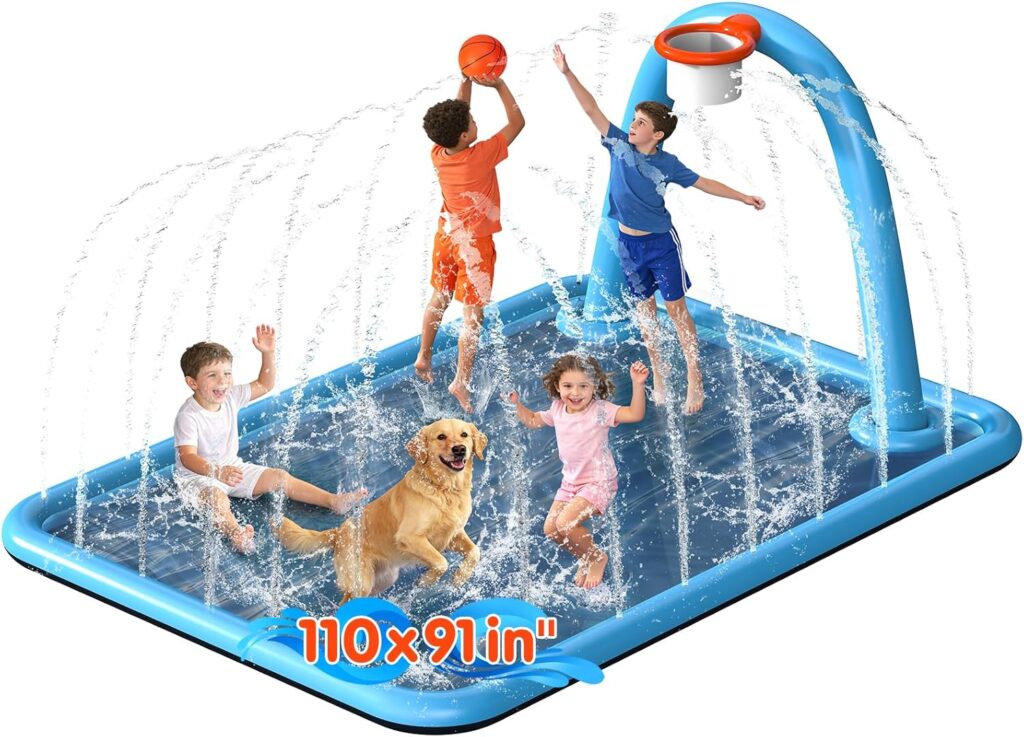
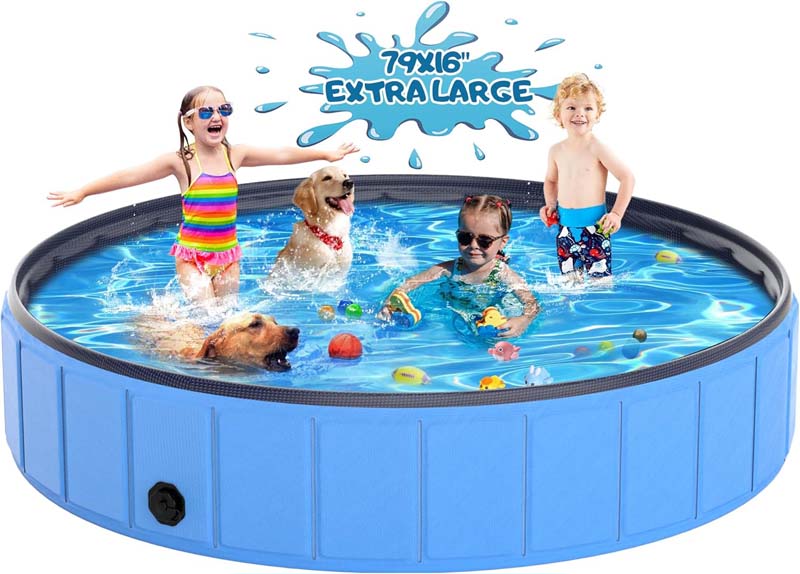
EPN belongs to American Epsilon Inc., a U.S.-registered company focused on PVC and composite outdoor recreation products. The product range includes kids’ splash pads, pet splash pads, basketball splash pads, water slides, inflatable pools, kids’ pools, pet pools, floating products, snow tubes, punching columns, spray arches, and pool pillows.
For splash pads, EPN does not develop products only around colors and printed patterns. The team looks at how the mat performs in sunlight, how the edge handles water pressure, whether the spray ring distributes water evenly, how the surface feels for children and pets, and how the mat folds after drying.
For EPN, UV resistance works together with PVC thickness, sealed edges, inward spray, drainage, and foldable storage. A splash pad should stay more stable under sun, but it should also connect easily to a hose, spray inward, drain properly, and store without creating unnecessary creases or trapped water.
This matters for families who want a reliable backyard water toy and for retailers who need products with clear, useful selling points.
EPN UV-Resistant Splash Pads Testing
EPN’s splash pad development direction includes testing that reflects real summer use. A backyard splash pad is exposed to sunlight, water pressure, ground friction, folding, pet contact, children’s movement, and storage. Testing should not only look at the mat when it is new, but also how it behaves after repeated outdoor use.
| Test Focus | Why It Matters |
|---|---|
| UV exposure testing | Reviews color and material stability |
| High-temperature aging | Checks warm-weather performance |
| Leak testing | Helps reduce edge failure |
| Spray ring testing | Supports even water distribution |
| Folding checks | Reviews repeated storage stress |
| Ground friction checks | Helps judge lawn and patio wear |
| Hose connector review | Supports daily setup |
| Odor review | Improves first-use comfort |
| Drainage review | Helps reduce trapped water |
| Pet-use wear review | Supports supervised pet cooling |
EPN’s R&D team covers polymer materials, structure, mold development, children’s play, pet use, and outdoor recreation needs. This helps the team match different splash pad designs to different use cases.
A toddler splash pad may need softer feel and lower spray comfort. A pet splash pad may need more attention to wear resistance and cleaning. A large family splash pad may need better edge stability, stronger spray balance, and improved foldability.
EPN UV-Resistant Splash Pads for Real Use
EPN develops UV-resistant splash pads around real backyard use, not only product photos. A splash pad has to handle water pressure, sunlight, folding, grass, patios, pet paws, and repeated summer setup. These are the details families notice after the first few uses.
EPN pays attention to:
- UV exposure and color stability
- High-temperature aging
- Water pressure around the spray ring
- Edge sealing and leak resistance
- Hose connector reliability
- Surface feel for children and pets
- Drainage after play
- Folding and storage stress
- Ground friction from lawns and patios
- Low-odor material comfort after opening
This is also useful for retail and private-label projects. A product with clear UV-resistant material, stable PVC thickness, inward spray, and practical storage guidance is easier to explain to customers. It also gives Amazon sellers, retailers, and distributors stronger content for product pages, packaging, images, and customer Q&A.
If water pressure or edge leakage is a common concern, families can also read why some splash pads leak easily to understand how seams, pressure, and storage affect long-term performance.
EPN UV-Resistant Splash Pads for Retail
For family customers, UV-resistant splash pads can support better summer use, less concern about fading, more confidence for repeated backyard play, and easier storage after each play session. They fit lawns, patios, gardens, and poolside areas where sun exposure is part of normal use.
For retail and private-label customers, UV resistance also creates a stronger product story. It gives sellers more to explain than size and pattern. A well-positioned splash pad can highlight sun stability, PVC thickness, inward spray, foldable storage, family use, pet cooling, and repeated summer play.
EPN can support:
- OEM / ODM splash pad projects
- Low MOQ trial orders
- Fast sampling
- Seasonal product planning
- Packaging localization
- Multi-market delivery
- Custom size and artwork
- Retail box, label, and instruction support
- Amazon, Walmart, independent site, and retail product-line use
For brands, distributors, Amazon sellers, and retail customers, EPN can help develop UV-resistant splash pad projects from material selection to packaging presentation. Standard product orders, private-label programs, seasonal collections, and customized PVC outdoor recreation projects can be planned around size, pattern, structure, testing direction, MOQ, sampling, and delivery schedule.
FAQ
Are UV-resistant splash pads worth it?
Yes. UV-resistant splash pads are worth it for families who use splash pads often in direct sun, warm climates, lawns, patios, gardens, or poolside areas. They help slow fading, surface aging, and early brittleness compared with ordinary thin plastic.
Do UV-resistant splash pads last longer?
They can last longer when UV resistance is combined with suitable PVC thickness, sealed edges, cleaning, drainage, and dry storage. UV resistance helps with sunlight exposure, but it does not prevent damage from sharp ground, dragging, pet nails, or poor storage.
Are UV-resistant splash pads safe for toddlers?
They can be toddler-friendly when adults supervise, use gentle water pressure, keep the surface clean, and avoid hot or rough ground. UV resistance helps the material stay more stable in sunlight, but toddler safety also depends on setup and supervision.
Are UV-resistant splash pads sanitary?
They can stay cleaner when families use fresh hose water, rinse the mat, drain after play, and dry before storage. UV resistance helps with sun stability, but sanitation depends on water habits and surface care.
Can UV-resistant splash pads spread norovirus?
Any splash pad can spread germs if contaminated water gets into the mouth. Fresh water, no sick users, bathroom breaks, and full drainage help reduce risk. Children should not swallow splash pad water.
Can UV-resistant splash pads cause Legionnaires?
A home splash pad with fresh hose water is different from a poorly maintained recirculating public water system. Families should still avoid standing water, keep hose connectors clean, drain fully, and store the mat dry.
Do UV-resistant splash pads fade?
They can still fade over time, but UV-resistant material and printing help slow color loss under repeated sunlight. Families should avoid leaving the splash pad under direct sun all day after play.
Is thick PVC the same as UV resistant?
No. Thick PVC may feel stronger, but UV resistance depends on material stability, surface treatment, testing direction, and care habits. A better splash pad combines suitable thickness, UV resistance, sealed edges, and proper storage guidance.
Should UV-resistant splash pads stay outside?
It is better to drain, dry, and store them after play. Long-term outdoor exposure can still shorten product life, even if the splash pad is UV-resistant.
What makes EPN UV-resistant splash pads different?
EPN focuses on PVC material matching, UV exposure testing, high-temperature aging, leak testing, spray ring performance, folding checks, drainage, and real backyard use. For retail and private-label customers, EPN also supports OEM / ODM, packaging customization, low MOQ trial orders, and multi-market delivery.
Choosing a UV-Resistant Splash Pad for Long-Term Summer Use
UV-resistant splash pads are not only about keeping colors bright. They are about helping a summer water toy handle the real conditions of backyard play: sunlight, heat, water pressure, grass, patios, pets, folding, and storage. For families who use splash pads often, UV resistance can make the difference between a mat that feels worn out quickly and one that stays more reliable across the season.
For family users, the best choice is a splash pad that combines UV-resistant PVC, stable thickness, inward spray, reinforced edges, easy drainage, and dry storage habits. For retailers, distributors, Amazon sellers, and private-label brands, UV resistance can become a strong selling point when it is backed by real material matching, testing, packaging clarity, and reliable production support.
EPN supports branded UV-resistant splash pads and custom PVC outdoor recreation projects for family, pet, and seasonal markets. Customers can contact Epsilon for standard product orders, OEM / ODM development, packaging customization, private-label projects, material options, size planning, artwork direction, testing needs, MOQ, sampling, and delivery schedules.